Chủ đề về outdoor market (chợ ngoài trời) là một trong những đề bài thường xuyên xuất hiện trong IELTS Speaking, đặc biệt ở Part 2 và Part 3. Đây là chủ đề gần gũi với cuộc sống hàng ngày, cho phép bạn chia sẻ về trải nghiệm thực tế và thể hiện khả năng miêu tả chi tiết về địa điểm, không khí, cảm xúc cá nhân.
Tần suất xuất hiện: Chủ đề này xuất hiện với tần suất trung bình đến cao trong các kỳ thi IELTS từ năm 2020 đến nay, thường được phối hợp với các chủ đề về shopping, local culture, và daily activities. Dự đoán khả năng xuất hiện trong tương lai vẫn ở mức cao do tính phổ biến và đa dạng của góc nhìn có thể khai thác.
Những gì bạn sẽ học được trong bài viết này:
- Câu hỏi thường gặp trong cả 3 Part về chủ đề outdoor markets
- Bài mẫu chi tiết theo nhiều band điểm từ 6-7, 7.5-8 đến 8.5-9
- Từ vựng và cụm từ ăn điểm để miêu tả chợ, hàng hóa, không khí
- Chiến lược trả lời hiệu quả cho từng dạng câu hỏi
- Lời khuyên từ góc nhìn của một Examiner với hơn 20 năm kinh nghiệm
Nếu bạn đang tìm kiếm cách để mở rộng vốn từ vựng về các địa điểm khác, hãy tham khảo thêm Describe a place where you go to feel inspired để có thêm ý tưởng về cách miêu tả địa điểm một cách sinh động.
IELTS Speaking Part 1: Introduction and Interview
Tổng Quan Về Part 1
Part 1 của IELTS Speaking kéo dài 4-5 phút với các câu hỏi ngắn về cuộc sống hàng ngày. Đây là phần “warm-up” để bạn làm quen với giọng nói của examiner và tạo ấn tượng ban đầu. Với chủ đề outdoor markets, câu hỏi thường xoay quanh thói quen mua sắm, sở thích cá nhân và kinh nghiệm đi chợ.
Chiến lược: Trả lời tự nhiên, mở rộng ý với 2-3 câu (không chỉ Yes/No), thêm lý do hoặc ví dụ ngắn gọn.
Lỗi thường gặp của học viên Việt Nam:
- Trả lời quá ngắn: “Yes, I like it” mà không giải thích tại sao
- Dùng từ vựng quá đơn giản: “good”, “nice”, “interesting” lặp đi lặp lại
- Thiếu ví dụ cụ thể từ kinh nghiệm bản thân
- Sử dụng thì động từ không chính xác (nhầm lẫn giữa hiện tại và quá khứ)
Các Câu Hỏi Thường Gặp
Question 1: Do you like shopping at outdoor markets?
Question 2: Are outdoor markets popular in your country?
Question 3: How often do you visit outdoor markets?
Question 4: What do people usually buy at outdoor markets in your area?
Question 5: Do you prefer shopping at markets or supermarkets? Why?
Question 6: What’s the difference between markets and shops in your town?
Question 7: Did you go to markets when you were a child?
Question 8: What’s special about outdoor markets compared to indoor ones?
Phân Tích và Gợi Ý Trả Lời Chi Tiết
Question: Do you like shopping at outdoor markets?
🎯 Cách tiếp cận:
- Trả lời trực tiếp (Yes/No hoặc It depends)
- Đưa ra lý do cụ thể
- Thêm ví dụ ngắn từ kinh nghiệm bản thân
📝 Sample Answer – Band 6-7:
“Yes, I quite like shopping at outdoor markets. They usually have fresh vegetables and fruits at good prices. I sometimes go to the local market near my house on weekends to buy food for my family.”
Phân tích:
- Điểm mạnh: Trả lời rõ ràng, có lý do (fresh products, good prices), có ví dụ cụ thể (local market, weekends)
- Hạn chế: Từ vựng cơ bản (good, sometimes, usually), cấu trúc câu đơn giản, thiếu chi tiết về cảm xúc hoặc trải nghiệm
- Tại sao Band 6-7: Đáp ứng đủ yêu cầu với ngữ pháp chính xác nhưng từ vựng và cấu trúc chưa đa dạng
📝 Sample Answer – Band 8-9:
“Absolutely! I’m quite fond of browsing through outdoor markets because they offer such a vibrant atmosphere that you just can’t find in sterile supermarkets. There’s something incredibly authentic about haggling with vendors over the price of fresh produce, and I find the hustle and bustle quite energizing. Plus, the fruits and vegetables are usually locally sourced and much fresher than what you’d get in chain stores.”
Phân tích:
- Điểm mạnh:
- Từ vựng phong phú: “fond of”, “vibrant atmosphere”, “sterile”, “haggling”, “hustle and bustle”, “locally sourced”
- Cấu trúc đa dạng: relative clause (that you just can’t find), gerund (browsing, haggling), comparative (fresher than)
- Ý tưởng sâu sắc: so sánh market với supermarket, đề cập đến yếu tố văn hóa (haggling), authentic experience
- Tại sao Band 8-9:
- Fluency: Trôi chảy với discourse marker “Absolutely”, “Plus”
- Vocabulary: Precise và varied với collocations tự nhiên
- Grammar: Complex structures được sử dụng chính xác
- Pronunciation: Natural linking (can’t find, hustle and bustle)
💡 Key Vocabulary & Expressions:
- be fond of: thích, yêu thích (trang trọng hơn “like”)
- vibrant atmosphere: bầu không khí sôi động, sinh động
- haggling with vendors: mặc cả với người bán
- hustle and bustle: sự nhộn nhịp, ồn ào (theo nghĩa tích cực)
- locally sourced: có nguồn gốc địa phương
Question: How often do you visit outdoor markets?
🎯 Cách tiếp cận:
- Nêu tần suất rõ ràng (daily, weekly, occasionally…)
- Giải thích lý do cho tần suất đó
- Có thể thêm sự thay đổi theo thời gian hoặc tình huống
📝 Sample Answer – Band 6-7:
“I go to outdoor markets about once or twice a month. I usually go there when I need to buy fresh vegetables for cooking. Sometimes I go more often if there’s a special market selling unique things.”
Phân tích:
- Điểm mạnh: Tần suất cụ thể (once or twice a month), có lý do (buy vegetables), đề cập đến variation (sometimes more often)
- Hạn chế: Từ vựng lặp lại (go), cấu trúc đơn giản, “unique things” quá chung chung
- Tại sao Band 6-7: Trả lời đầy đủ nhưng thiếu sophistication trong cách diễn đạt
📝 Sample Answer – Band 8-9:
“Well, it really varies depending on my schedule, but I’d say I make it a point to visit my local outdoor market at least twice a month. I find it’s the perfect way to stock up on seasonal produce and support local vendors. That said, during holiday seasons or when there are special pop-up markets featuring artisan goods, I might drop by more frequently – probably every other week or so.”
Phân tích:
- Điểm mạnh:
- Discourse marker natural: “Well”, “That said”
- Varied frequency expressions: “at least twice a month”, “every other week”, “varies depending on”
- Rich vocabulary: “make it a point to”, “stock up on”, “seasonal produce”, “support local vendors”, “pop-up markets”, “drop by”
- Shows flexibility and nuance (not just one fixed answer)
- Tại sao Band 8-9:
- Fluency: Hesitation marker “Well” sounds natural, smooth transitions
- Vocabulary: Topic-specific (seasonal produce, artisan goods, pop-up markets)
- Grammar: Complex conditional-like structure, might + base verb
- Ideas: Shows awareness of different contexts (regular vs special occasions)
💡 Key Vocabulary & Expressions:
- varies depending on: thay đổi tùy thuộc vào
- make it a point to: cố gắng, quyết tâm làm gì
- stock up on: dự trữ, mua nhiều (để dùng dần)
- pop-up market: chợ tạm thời, chợ phiên
- drop by: ghé qua (informal but acceptable in Speaking)
Question: What do people usually buy at outdoor markets in your area?
🎯 Cách tiếp cận:
- Liệt kê các loại hàng hóa phổ biến
- Có thể phân nhóm (food items, clothes, household goods…)
- Thêm chi tiết về đặc điểm của những mặt hàng này
📝 Sample Answer – Band 6-7:
“People in my area usually buy fresh food like vegetables, fruits, and meat at outdoor markets. Some markets also sell clothes and shoes at cheap prices. There are also things for the house like cleaning products and kitchen tools.”
Phân tích:
- Điểm mạnh: Liệt kê rõ ràng các loại hàng (food, clothes, household items), đề cập đến giá cả (cheap prices)
- Hạn chế: Từ vựng cơ bản (things, cheap), thiếu chi tiết về quality hoặc variety, cấu trúc câu đơn điệu
- Tại sao Band 6-7: Adequate response nhưng thiếu depth và sophisticated vocabulary
📝 Sample Answer – Band 8-9:
“The merchandise at outdoor markets in my neighborhood is quite diverse. Most vendors specialize in fresh produce – you’ll find everything from seasonal vegetables and exotic fruits to freshly caught seafood and free-range poultry. Beyond groceries, there’s usually a dedicated section for clothing and accessories, where you can snag bargains on everything from traditional garments to trendy items. What’s particularly interesting is that many markets now feature stalls selling handcrafted goods and artisanal products, which really adds to the charm of the shopping experience.”
Phân tích:
- Điểm mạnh:
- Varied vocabulary: “merchandise”, “diverse”, “specialize in”, “exotic fruits”, “free-range poultry”, “snag bargains”, “handcrafted goods”, “artisanal products”
- Organization: Phân loại rõ ràng (produce → clothing → artisan goods)
- Detail: “seasonal vegetables”, “freshly caught seafood”, “traditional garments”, “trendy items”
- Personal observation: “What’s particularly interesting is…”
- Tại sao Band 8-9:
- Fluency: Smooth flow với connectors (Beyond, What’s particularly interesting)
- Vocabulary: Precise và topic-specific (merchandise, exotic, free-range, artisanal)
- Grammar: Complex structures (relative clauses, present perfect)
- Ideas: Shows detailed knowledge và ability to categorize
💡 Key Vocabulary & Expressions:
- merchandise: hàng hóa (formal hơn “things” hoặc “products”)
- specialize in: chuyên về
- exotic fruits: trái cây ngoại, lạ
- free-range poultry: gia cầm thả vườn
- snag bargains: mua được hàng giá rẻ, săn được món hời
- feature stalls: có các quầy hàng
- artisanal products: sản phẩm thủ công chất lượng cao
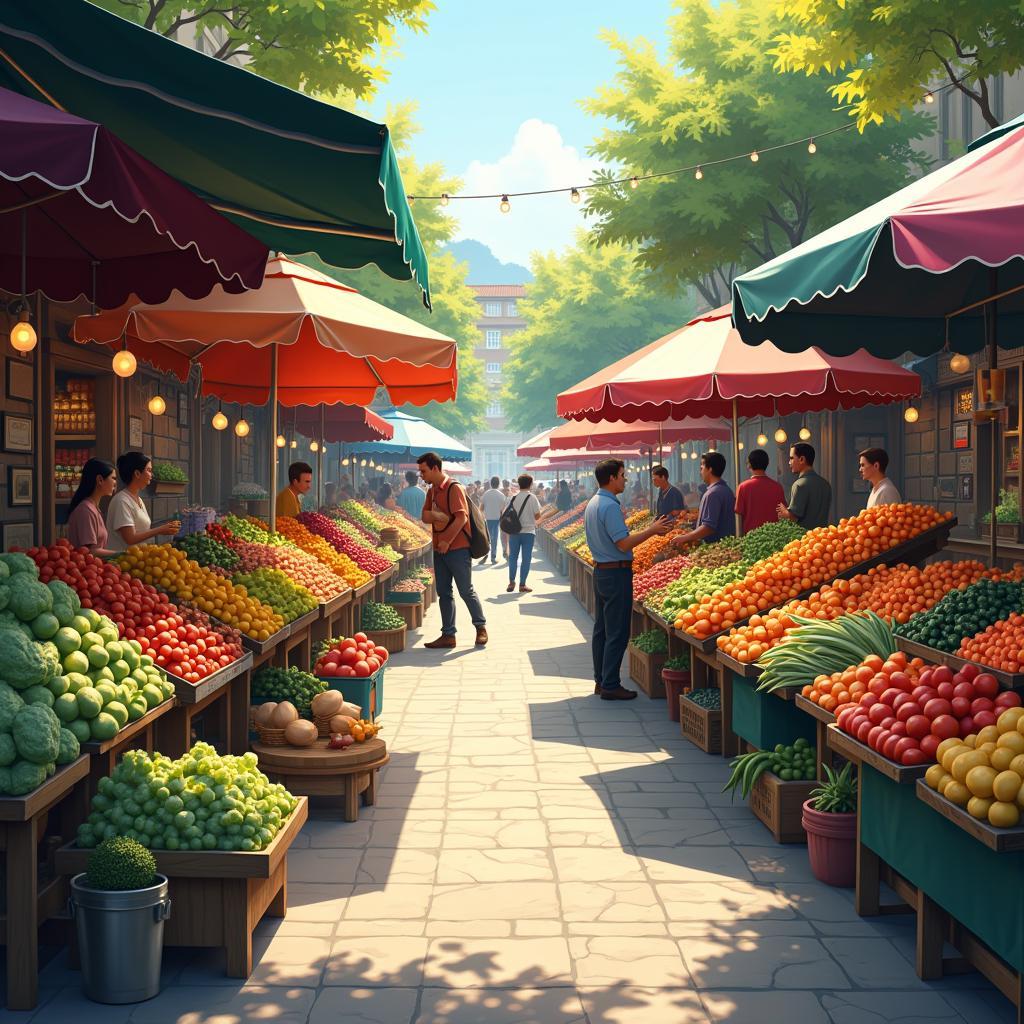 Khung cảnh chợ trời nhộn nhịp với hàng hóa tươi sống và người mua bán tấp nập trong IELTS Speaking
IELTS Speaking Part 2: Long Turn (Cue Card)
Tổng Quan Về Part 2
Part 2 là phần độc thoại quan trọng nhất, chiếm 2-3 phút trong đó bạn nói liên tục không bị gián đoạn. Đây là cơ hội để bạn thể hiện khả năng tổ chức ý tưởng, sử dụng từ vựng phong phú và kể chuyện một cách mạch lạc.
Thời gian chuẩn bị: 1 phút để đọc đề và ghi chú
Thời gian nói: 2-3 phút (tối thiểu 1.5 phút)
Chiến lược:
- Sử dụng hết 1 phút để ghi chú keywords (KHÔNG viết câu hoàn chỉnh)
- Lên kế hoạch cover đủ tất cả bullet points
- Nói đủ 2 phút bằng cách thêm chi tiết, ví dụ, cảm xúc
- Sử dụng thì quá khứ khi kể về trải nghiệm đã xảy ra
- Dùng discourse markers để nối ý mượt mà
Lỗi thường gặp:
- Không sử dụng hết thời gian chuẩn bị → nói ngắn, thiếu ý tưởng
- Nói dưới 1.5 phút → mất điểm Fluency
- Bỏ sót bullet points → không trả lời đủ yêu cầu
- Nói lan man không theo logic → mất điểm Coherence
- Dùng quá nhiều filler words (um, uh, you know)
Cue Card
Describe An Outdoor Market You Visited Recently
You should say:
- Where this market is located
- When you went there and who you went with
- What you saw and did at this market
- And explain how you felt about this outdoor market
Phân Tích Đề Bài
Dạng câu hỏi: Describe a place/experience (kết hợp)
Thì động từ: Quá khứ đơn chủ yếu (visited, went, saw, did, felt)
Bullet points phải cover:
- Location – Địa điểm cụ thể (tên chợ, khu vực, thành phố)
- When & Who – Thời gian và người đi cùng (context của chuyến đi)
- What you saw and did – Chi tiết về trải nghiệm (đây là phần QUAN TRỌNG nhất, cần nhiều detail)
- Explain how you felt – Cảm xúc, đánh giá cá nhân (câu này thường ghi điểm cao nếu trả lời sâu sắc)
Câu “explain” quan trọng: Đây là bullet point giúp bạn thể hiện vocabulary về feelings, opinions, và critical thinking. Đừng chỉ nói “I felt happy” mà hãy giải thích TẠI SAO bạn cảm thấy như vậy, nó có ý nghĩa gì với bạn.
📝 Sample Answer – Band 6-7
Thời lượng: Khoảng 1.5-2 phút
“I’d like to talk about a local outdoor market that I visited last month. It’s located in the center of my hometown, near the old bus station. The market opens every weekend.
I went there with my mother on a Sunday morning. We wanted to buy some fresh vegetables and fruits for the week. The market was quite big and there were many vendors selling different things.
When we arrived, I saw lots of stalls with colorful vegetables and fruits. There were also stalls selling clothes, shoes, and household items. The market was very crowded and noisy. People were talking loudly and vendors were calling out to attract customers. We walked around and looked at different stalls. My mother bought some tomatoes, cucumbers, and apples. I tried some street food from a small stall – it was fried chicken and it tasted really good.
I felt quite happy about visiting this market. The atmosphere was lively and it was interesting to see so many people shopping. The prices were cheaper than in supermarkets, so my mother was satisfied. I also enjoyed eating the street food. Overall, it was a good experience and I think I will go back there again with my family.”
Phân Tích Band Điểm
| Tiêu chí | Band | Nhận xét |
|---|---|---|
| Fluency & Coherence | 6-7 | Nói mạch lạc với sequencing rõ ràng (When we arrived, Overall), nhưng thiếu varied discourse markers. Đủ thời lượng nhưng chưa đạt 2 phút đầy đủ. |
| Lexical Resource | 6-7 | Từ vựng adequate và appropriate (vendors, stalls, household items, atmosphere, lively) nhưng còn basic. Có một số less common vocabulary nhưng không nhiều. |
| Grammatical Range & Accuracy | 6-7 | Sử dụng đúng thì quá khứ, có một số complex sentences (when clauses, so clauses) nhưng chủ yếu là simple và compound sentences. Ít lỗi ngữ pháp. |
| Pronunciation | 6-7 | Rõ ràng và dễ hiểu, word stress chính xác, nhưng có thể thiếu intonation range. |
Điểm mạnh:
- ✅ Cover đầy đủ cả 4 bullet points
- ✅ Cấu trúc rõ ràng theo chronological order
- ✅ Có chi tiết cụ thể (tomatoes, cucumbers, fried chicken)
- ✅ Ngữ pháp chính xác với thì quá khứ
Hạn chế:
- ⚠️ Từ vựng còn basic (good, very, quite, really lặp lại)
- ⚠️ Thiếu descriptive language (màu sắc, âm thanh, mùi vị chi tiết)
- ⚠️ Cảm xúc được miêu tả đơn giản (happy, satisfied, good)
- ⚠️ Thiếu personal reflection sâu sắc ở phần explain
📝 Sample Answer – Band 7.5-8
Thời lượng: Khoảng 2-2.5 phút
“I’d like to describe a bustling outdoor market I visited just a couple of weeks ago. It’s called the Ben Thanh Market area, which is situated right in the heart of District 1 in Ho Chi Minh City, surrounded by countless shops and colonial-era buildings.
I went there on a rather humid Saturday afternoon with my cousin, who was visiting from abroad and was eager to experience authentic Vietnamese culture. We thought it would be the perfect opportunity to immerse ourselves in the local shopping scene.
The moment we stepped into the market, we were immediately struck by the sensory overload. The market was teeming with vendors selling everything you could imagine – from vibrant tropical fruits piled high on wooden carts to aromatic street food sizzling on portable grills. The air was thick with the smell of grilled meat, fresh herbs, and various spices. We navigated through narrow aisles, dodging other shoppers and motorcycles that somehow managed to squeeze through.
My cousin was fascinated by the traditional handicrafts section, where artisans were selling hand-woven bags, lacquerware, and silk products. We spent quite a bit of time haggling with vendors over prices – something that I initially found a bit awkward, but my cousin seemed to really enjoy the experience. We also sampled several local delicacies, including fresh spring rolls and sugarcane juice, which were incredibly refreshing in the heat.
What really struck me about this market was how it encapsulated the essence of Vietnamese daily life. Despite the chaos and commotion, there was a certain rhythm and authenticity to it all. I felt both energized by the vibrant atmosphere and slightly overwhelmed by the sheer number of people and sounds. It was a stark contrast to the sterile, air-conditioned shopping malls I usually frequent. The experience made me appreciate the cultural significance of these traditional markets and their role in preserving local heritage. I left feeling more connected to my city’s roots and with a newfound respect for the vendors who work there daily.”
Phân Tích Band Điểm
| Tiêu chí | Band | Nhận xét |
|---|---|---|
| Fluency & Coherence | 7.5-8 | Trôi chảy với minimal hesitation, sử dụng varied discourse markers (The moment, Despite, What really struck me), logical progression từ location → experience → feelings. |
| Lexical Resource | 7.5-8 | Wide range of vocabulary với nhiều collocations tự nhiên (bustling market, teeming with, sensory overload, stark contrast). Less common words được dùng chính xác (encapsulated, commotion, heritage). |
| Grammatical Range & Accuracy | 7.5-8 | Variety of complex structures (relative clauses, participial phrases, despite + noun phrase). Majority of sentences error-free với occasional minor slips. |
| Pronunciation | 7.5-8 | Clear pronunciation với good stress, rhythm và intonation. Maintain fluent speech throughout. |
So Sánh Với Band 6-7
| Khía cạnh | Band 6-7 | Band 7.5-8 |
|---|---|---|
| Vocabulary | “very crowded”, “noisy”, “good experience” | “teeming with vendors”, “sensory overload”, “chaos and commotion”, “stark contrast” |
| Grammar | “When we arrived, I saw…” (simple structure) | “The moment we stepped into the market, we were immediately struck by…” (complex with passive) |
| Ideas | Surface-level description (what you see) | Deeper reflection (cultural significance, personal growth, contrasts) |
| Details | General (vegetables, fruits, street food) | Specific (aromatic street food sizzling, hand-woven bags, lacquerware) |
Khi nghĩ về những trải nghiệm đáng nhớ tại các địa điểm đặc biệt, bạn cũng có thể tham khảo cách miêu tả describe a memorable weekend you had recently để mở rộng kỹ năng kể chuyện của mình.
📝 Sample Answer – Band 8.5-9
Thời lượng: 2.5-3 phút đầy đủ
“I’d like to talk about a particularly memorable visit to Chatuchak Weekend Market in Bangkok, which I had the pleasure of exploring about three months ago. This market is renowned throughout Southeast Asia as one of the largest and most eclectic outdoor markets, sprawling across over 35 acres in the northern part of the Thai capital.
I went there on a sweltering Sunday morning with two close friends who share my penchant for exploring local markets whenever we travel. We’d heard rave reviews about this place and were keen to see if it lived up to its reputation. Getting there itself was an adventure – we hopped on the BTS Skytrain, which was already packed to the brim with both locals and tourists, all converging on this shopping mecca.
The moment we set foot in the market, we were completely engulfed by an overwhelming tapestry of sights, sounds, and smells that bordered on sensory overload. The market is divided into 27 sections, each dedicated to different categories of goods, from vintage clothing and quirky home décor to exotic plants and even live animals. What particularly captivated me was the sheer diversity of merchandise – one minute you’re browsing through intricately designed hand-painted ceramics, and the next you’re marveling at cutting-edge street fashion that wouldn’t look out of place in Tokyo or Seoul.
We meandered through the labyrinthine alleyways, occasionally getting disoriented but thoroughly enjoying the experience. The vendors were remarkably friendly and many spoke enough English to engage in light banter while we perused their wares. I was particularly drawn to a small stall selling handcrafted leather goods, where a elderly artisan was working on a bag right before our eyes. We struck up a conversation and I learned he’d been plying his trade at the market for over three decades. I ended up purchasing a beautifully embossed leather journal that he’d made himself – it felt like more than just a transaction; it was a tangible connection to the craftsmanship and heritage that these markets represent.
Food-wise, we were spoiled for choice. The market boasts countless food stalls offering everything from traditional Thai coconut ice cream served in coconut shells to fusion dishes that blend Eastern and Western flavors. We indulged in mango sticky rice, pad thai, and some deliciously spicy som tam that left us reaching for the sugarcane juice vendor.
Reflecting on the experience, I found myself profoundly moved by how these traditional markets serve as the beating heart of local culture and commerce. In an era where shopping has become increasingly digitized and impersonal, places like Chatuchak remind us of the irreplaceable value of human interaction and community. The market embodies a beautiful paradox – it’s simultaneously chaotic yet organized, commercial yet culturally rich, touristy yet authentically Thai.
I left the market feeling physically exhausted but mentally invigorated. The experience reinforced my belief that outdoor markets are living museums of culture, where every stall tells a story and every transaction is an exchange of more than just goods and money. It made me acutely aware of how much we stand to lose if we allow these spaces to be replaced by homogeneous shopping centers. I came away with not just souvenirs, but a deepened appreciation for the resilience and creativity of small-scale vendors, and a commitment to supporting such grassroots economies whenever I travel.”
Phân Tích Band Điểm
| Tiêu chí | Band | Nhận xét |
|---|---|---|
| Fluency & Coherence | 8.5-9 | Speaks fluently với minimal repetition or self-correction. Uses wide range of cohesive devices naturally (The moment, Reflecting on, In an era where). Ideas logically sequenced với sophisticated linking. |
| Lexical Resource | 8.5-9 | Uses vocabulary với full flexibility and precision. Wide range of idiomatic language (packed to the brim, rave reviews, serve as the beating heart). Collocation natural (strike up a conversation, ply his trade, spoiled for choice). |
| Grammatical Range & Accuracy | 8.5-9 | Uses full range of structures naturally và appropriately. Consistent grammatical control với only rare minor errors. Complex conditional, participial phrases, passive constructions used accurately. |
| Pronunciation | 8.5-9 | Sustained use of appropriate features. Easy to understand với L1 accent having minimal effect. Excellent stress, rhythm và intonation throughout. |
Tại Sao Bài Này Xuất Sắc
🎯 Fluency Hoàn Hảo:
- Nói liên tục trong 2.5-3 phút không hesitation
- Natural discourse markers (The moment, Reflecting on, In an era where, It made me)
- Smooth transitions giữa các ý (từ description → experience → food → reflection)
📚 Vocabulary Tinh Vi:
- Idiomatic expressions: “packed to the brim”, “rave reviews”, “bordered on sensory overload”, “serve as the beating heart”, “spoiled for choice”
- Advanced collocations: “penchant for exploring”, “converging on”, “labyrinthine alleyways”, “struck up a conversation”, “ply his trade”, “tangible connection”
- Topic-specific vocabulary: “eclectic market”, “quirky home décor”, “handcrafted leather goods”, “embossed journal”, “fusion dishes”, “grassroots economies”
- Sophisticated adjectives: “sweltering”, “eclectic”, “intricately designed”, “remarkably friendly”, “profoundly moved”
📝 Grammar Đa Dạng:
- Participial phrases: “Getting there itself was an adventure”, “occasionally getting disoriented but thoroughly enjoying”
- Relative clauses: “where every stall tells a story”, “that he’d made himself”, “that wouldn’t look out of place”
- Passive constructions: “is renowned throughout”, “is divided into”, “was working on”
- Conditional-like structures: “In an era where shopping has become…”, “if we allow these spaces to be replaced”
- Complex noun phrases: “an overwhelming tapestry of sights, sounds, and smells”, “the irreplaceable value of human interaction”
💡 Ideas Sâu Sắc:
- Không chỉ miêu tả mà còn phân tích deeper meaning (cultural significance, paradox of chaos vs organization)
- Personal reflection sâu sắc về digitization vs human interaction
- Awareness về social issues (grassroots economy, cultural preservation)
- Philosophical perspective (living museums, exchange beyond commerce)
- Shows critical thinking (paradox, contrast, broader implications)
Follow-up Questions (Rounding Off Questions)
Examiner thường hỏi thêm 1-2 câu ngắn sau Part 2 để chuyển sang Part 3:
Question 1: Do you think you’ll visit this market again?
Band 6-7 Answer:
“Yes, I think so. The market was interesting and I enjoyed the experience. If I have the chance, I will go there again to buy more things.”
Band 8-9 Answer:
“Absolutely! I’m already planning another visit, actually. There were so many sections we didn’t get around to exploring, and I’d love to dedicate more time to the artisan crafts area. Plus, the experience was so enriching that I’d like to bring other friends who appreciate authentic cultural experiences.”
Question 2: What was the most interesting thing you bought there?
Band 6-7 Answer:
“The most interesting thing was a leather journal. It was made by hand by an old man at the market. I liked it because it was unique and good quality.”
Band 8-9 Answer:
“Without a doubt, it was the hand-embossed leather journal I mentioned. What made it truly special wasn’t just the exquisite craftsmanship, but the story behind it – watching the artisan work on similar pieces and learning about his three-decade-long dedication to his craft. It’s something that mass-produced items simply can’t replicate.”
 Người thợ thủ công đang làm việc tại quầy hàng chợ trời với sản phẩm da thủ công trong IELTS Speaking
IELTS Speaking Part 3: Two-way Discussion
Tổng Quan Về Part 3
Part 3 kéo dài 4-5 phút với các câu hỏi trừu tượng, mang tính phân tích cao hơn về chủ đề đã thảo luận trong Part 2. Đây là phần khó nhất, nơi examiner đánh giá khả năng critical thinking và sử dụng ngôn ngữ academic của bạn.
Yêu cầu:
- Phân tích, so sánh, đánh giá các vấn đề xã hội
- Đưa ra quan điểm cá nhân có lý lẽ rõ ràng
- Xem xét nhiều góc độ của vấn đề (advantages/disadvantages, different perspectives)
- Sử dụng examples từ society, không chỉ cá nhân
Chiến lược:
- Mở rộng câu trả lời với 3-5 câu trở lên
- Structure: Direct answer → Reason 1 + example → Reason 2 + example → Conclusion/nuance
- Sử dụng discourse markers (Well, Actually, On the one hand…)
- Thừa nhận complexity: “It’s a complex issue…”, “It depends on various factors…”
- Dùng tentative language: “I would say…”, “It seems to me…”, “To some extent…”
Lỗi thường gặp của học viên Việt Nam:
- Trả lời quá ngắn (1-2 câu) thiếu elaboration
- Không đưa ra lý lẽ rõ ràng, chỉ nói general statements
- Thiếu từ vựng trừu tượng (abstract nouns: sustainability, prosperity, diversity…)
- Không acknowledge different viewpoints
- Sử dụng examples quá personal thay vì societal
Các Câu Hỏi Thảo Luận Sâu
Theme 1: Economic and Social Impact
Question 1: Why do you think outdoor markets are still popular despite the growth of supermarkets?
🎯 Phân tích câu hỏi:
- Dạng: Cause-Effect / Explanation
- Key words: “still popular”, “despite”, “growth of supermarkets”
- Cách tiếp cận: Explain multiple reasons (cultural, economic, social, experiential)
📝 Sample Answer – Band 6-7:
“I think outdoor markets are still popular because they offer cheaper prices than supermarkets. Many people like to buy fresh food from markets because it’s fresher. Also, markets have a special atmosphere that supermarkets don’t have. People enjoy walking around and talking to vendors. So even though supermarkets are more convenient, many people still prefer markets for these reasons.”
Phân tích:
- Structure: Có main idea → several reasons → conclusion, nhưng còn basic
- Vocabulary: Adequate (cheaper, fresher, special atmosphere, convenient) nhưng chưa sophisticated
- Tại sao Band 6-7: Trả lời đúng câu hỏi với lý do rõ ràng nhưng thiếu depth và advanced language
📝 Câu trả lời mẫu – Band 8-9:
“Well, I think there are several compelling reasons why outdoor markets continue to thrive despite the proliferation of supermarkets. First and foremost, markets offer an authenticity and cultural experience that sterile, air-conditioned supermarkets simply cannot replicate. Shopping at a market is not merely a transaction – it’s a social activity where people engage with vendors, haggle over prices, and connect with their community. This human element is something that self-service checkouts and impersonal shopping experiences lack entirely.
From an economic perspective, markets often provide more affordable options, particularly for fresh produce and seasonal items, because there are fewer intermediaries in the supply chain. Vendors often source their goods directly from farmers or produce them themselves, which translates into better value for consumers. Moreover, markets play a crucial role in supporting small-scale entrepreneurs and preserving traditional livelihoods, which resonates with consumers who are increasingly conscious about sustainable and ethical consumption.
That said, I think the continued popularity also stems from a growing counter-movement against homogenization and corporate retail dominance. Many people are seeking out authentic, local experiences as a reaction to the standardization we see in modern shopping.”
Phân tích:
- Structure: Well-organized với clear progression: Direct statement → Cultural reason + explanation → Economic reason + explanation → Broader societal trend → Balanced conclusion
- Vocabulary: Sophisticated và precise (proliferation, authenticity, intermediaries, supply chain, homogenization, counter-movement, standardization)
- Grammar: Wide range of complex structures (despite + noun phrase, not merely…but, which translates into, that said, stems from)
- Critical Thinking: Multiple perspectives (cultural, economic, social), acknowledgement of broader trends
💡 Key Language Features:
- Discourse markers: “First and foremost”, “From an economic perspective”, “Moreover”, “That said”
- Tentative language: “I think”, “often”, “seems to”
- Abstract nouns: “authenticity”, “proliferation”, “homogenization”, “standardization”, “counter-movement”
- Hedging language: “to some extent”, “increasingly”, “tend to”
Question 2: Do you think traditional markets will disappear in the future?
🎯 Phân tích câu hỏi:
- Dạng: Prediction / Opinion về future trends
- Key words: “traditional markets”, “disappear”, “future”
- Cách tiếp cận: Present different scenarios, factors influencing survival, balanced view
📝 Sample Answer – Band 6-7:
“I don’t think traditional markets will completely disappear. They are part of our culture and many people still like them. However, some markets might close because of modern shopping centers. The markets that survive will probably be the ones in tourist areas or places where people value tradition. So I believe markets will still exist but maybe there will be fewer of them in the future.”
Phân tích:
- Structure: Clear opinion → reason → condition → conclusion
- Vocabulary: Adequate but basic (completely disappear, part of culture, modern shopping centers)
- Tại sao Band 6-7: Logical answer với basic reasoning nhưng thiếu nuanced analysis
📝 Câu trả lời mẫu – Band 8-9:
“I’d say it’s unlikely that traditional markets will vanish entirely, but their future certainly depends on several critical factors. On the one hand, we’re witnessing a troubling trend in many developed countries where markets are struggling to compete with the convenience and efficiency of modern retail. Rising property values in urban areas often make it economically unviable for markets to operate in prime locations, and changing consumer habits – particularly among younger generations who prioritize convenience over experience – pose a significant threat.
However, on the other hand, there’s growing recognition of markets’ cultural and social value, which could prove to be their saving grace. Many governments are now implementing policies to preserve and revitalize traditional markets, recognizing them as intangible cultural heritage. We’re also seeing a generational shift where millennials and Gen Z consumers are increasingly drawn to authentic, sustainable, and locally-sourced products – values that markets inherently embody.
I believe the markets that will thrive are those that successfully adapt without losing their essence – perhaps by incorporating digital payment systems, improving hygiene standards, or marketing themselves as cultural destinations rather than just shopping venues. Rather than disappearing, I think we’ll see a transformation where markets evolve to meet contemporary needs while retaining their traditional character. In essence, their survival will depend on finding that delicate balance between preservation and innovation.”
Phân tích:
- Structure: Sophisticated với balanced argument: Thesis → Challenge (On the one hand) → Counter-argument (However, on the other hand) → Personal prediction → Nuanced conclusion
- Vocabulary: Advanced và topic-specific (vanish entirely, economically unviable, intangible cultural heritage, generational shift, inherently embody)
- Grammar: Complex structures throughout (relative clauses, conditional phrases, participial phrases)
- Critical Thinking: Considers multiple factors (economic, cultural, generational), provides balanced view, offers nuanced prediction rather than black-and-white answer
💡 Key Language Features:
- Balanced discourse markers: “On the one hand”, “However, on the other hand”
- Hedging and prediction language: “I’d say it’s unlikely”, “I believe”, “we’ll see”, “could prove to be”
- Academic vocabulary: “unviable”, “intangible heritage”, “inherently embody”, “delicate balance”
Theme 2: Comparing Shopping Experiences
Question 3: What are the main differences between shopping at outdoor markets and shopping in supermarkets?
🎯 Phân tích câu hỏi:
- Dạng: Compare and Contrast
- Key words: “main differences”, “outdoor markets”, “supermarkets”
- Cách tiếp cận: Systematic comparison across different dimensions (atmosphere, pricing, products, experience)
📝 Sample Answer – Band 6-7:
“There are several differences between markets and supermarkets. First, the atmosphere is different – markets are more crowded and noisy, while supermarkets are quiet and organized. Second, the prices at markets are often cheaper and you can bargain with sellers, but supermarket prices are fixed. Third, products at markets are usually fresher, especially vegetables and fruits. However, supermarkets have more variety and are more convenient with air conditioning and parking. So both have advantages depending on what you need.”
Phân tích:
- Structure: Clear comparison với several points
- Vocabulary: Basic comparison language (different, more…than, while, however)
- Tại sao Band 6-7: Organized answer với multiple points of comparison nhưng thiếu sophisticated analysis
📝 Câu trả lời mẫu – Band 8-9:
“Well, the differences are quite stark and span multiple dimensions. Perhaps the most obvious contrast lies in the shopping experience itself. Outdoor markets offer a sensory-rich environment – you’re immersed in the sights, sounds, and smells of fresh produce, street food, and bustling crowds. There’s a certain vibrancy and spontaneity to it. Supermarkets, in stark contrast, provide a controlled, predictable environment with standardized layouts and climate control, which some people find more comfortable but others might consider sterile or impersonal.
From a transactional standpoint, markets operate on a more flexible pricing model where haggling is not only accepted but expected, creating a dynamic and sometimes entertaining interaction between buyers and sellers. Supermarkets, conversely, have fixed pricing and minimal human interaction – you scan, pay, and leave, which is undeniably more efficient but lacks that personal touch.
In terms of product offerings, markets typically excel in fresh, locally-sourced produce and specialty items that reflect regional cuisine and seasonal availability. The turnover tends to be rapid, ensuring freshness. Supermarkets, on the other hand, prioritize convenience and variety, offering packaged goods, imported products, and consistent availability regardless of season, though this often comes at the cost of freshness and local connection.
There’s also a significant difference in their social function. Markets serve as community gathering spaces where social bonds are formed and maintained, whereas supermarkets are primarily transactional spaces with limited social interaction. This distinction becomes particularly important when we consider the role of retail spaces in maintaining social cohesion in communities.”
Phân tích:
- Structure: Systematic comparison với clear categories (experience → transaction → products → social function), each with detailed analysis
- Vocabulary: Sophisticated comparison language (stark contrast, conversely, on the other hand, whereas) và rich descriptive vocabulary (sensory-rich, vibrancy, sterile, dynamic)
- Grammar: Complex comparative structures, relative clauses, participial phrases
- Critical Thinking: Goes beyond surface differences to explore deeper implications (social function, community cohesion)
💡 Key Language Features:
- Comparison phrases: “in stark contrast”, “conversely”, “on the other hand”, “whereas”
- Academic language: “span multiple dimensions”, “transactional standpoint”, “excel in”, “prioritize”
- Descriptive vocabulary: “sensory-rich”, “vibrancy”, “spontaneity”, “sterile”, “impersonal”, “dynamic”
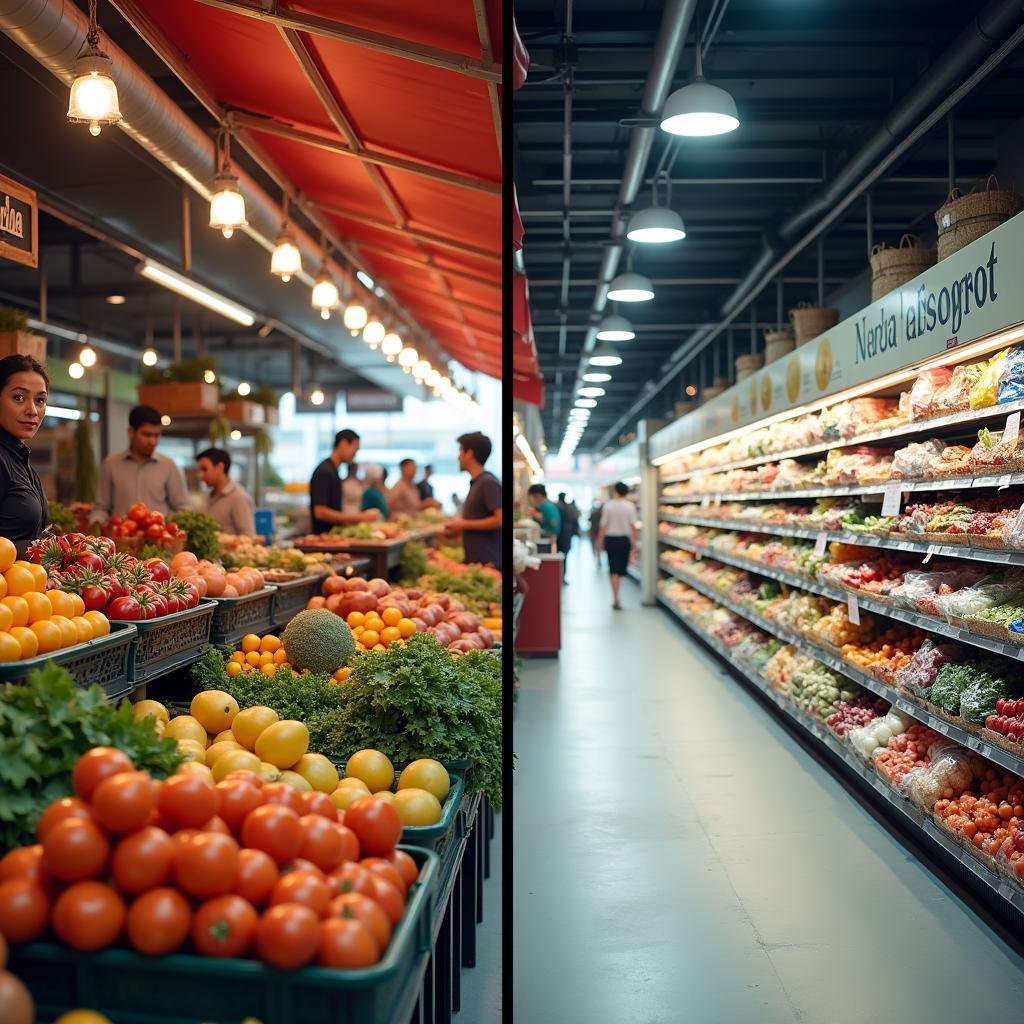 So sánh trải nghiệm mua sắm giữa chợ trời truyền thống và siêu thị hiện đại trong IELTS Speaking
Việc so sánh các không gian và trải nghiệm khác nhau cũng liên quan đến cách chúng ta cảm nhận về môi trường xung quanh. Để tìm hiểu thêm về cách miêu tả các không gian công cộng, bạn có thể xem what would your town or village be improved ielts để có thêm góc nhìn về phát triển đô thị.
Theme 3: Cultural and Tourism Aspects
Question 4: Do you think outdoor markets are important for tourism? Why?
🎯 Phân tích câu hỏi:
- Dạng: Opinion + Justification về tourism value
- Key words: “important for tourism”, “why”
- Cách tiếp cận: State position → explain cultural/experiential value → economic impact → examples
📝 Sample Answer – Band 6-7:
“Yes, I think outdoor markets are very important for tourism. Tourists like to visit local markets because they can see the real culture of a place. Markets sell traditional products and local food that tourists want to try. They also offer good photo opportunities and chances to buy souvenirs. Many tourists prefer visiting markets to shopping malls because markets are more interesting and authentic. So markets help attract tourists and contribute to the local economy.”
Phân tích:
- Structure: Clear position → several reasons → conclusion
- Vocabulary: Adequate (real culture, traditional products, authentic, contribute to economy)
- Tại sao Band 6-7: Logical argument với relevant points nhưng thiếu depth và sophisticated language
📝 Câu trả lời mẫu – Band 8-9:
“Absolutely, I’d argue that outdoor markets are absolutely crucial to the tourism sector, and their importance extends far beyond mere commerce. First and foremost, markets function as living cultural museums where tourists can witness and participate in authentic daily life rather than experiencing a sanitized, curated version of a destination. They offer unfiltered glimpses into local customs, culinary traditions, and social dynamics – the kind of genuine cultural immersion that modern travelers increasingly crave.
From an experiential standpoint, markets engage all the senses in a way that sterile tourist attractions simply cannot. The cacophony of haggling, the aroma of street food, the riot of colors from textiles and produce – these create indelible memories that resonate far more deeply than, say, visiting another cookie-cutter shopping mall. This sensory richness makes markets Instagram-worthy and highly shareable, which in turn generates organic marketing for destinations through social media.
Economically speaking, markets represent a form of inclusive tourism where spending directly benefits local vendors and small-scale entrepreneurs rather than international hotel chains or corporate retailers. This grassroots economic impact aligns perfectly with the growing trend toward sustainable and responsible tourism. When tourists patronize markets, they’re contributing to economic diversification and helping preserve traditional livelihoods that might otherwise succumb to modernization pressures.
Moreover, many destinations have successfully leveraged their markets as flagship tourist attractions. Think of Bangkok’s Chatuchak Weekend Market or Istanbul’s Grand Bazaar – these aren’t just shopping venues; they’re cultural landmarks that feature prominently in destination marketing and attract millions of visitors annually. The presence of a vibrant market scene can serve as a differentiator in an increasingly competitive global tourism landscape.
That being said, there’s also a delicate balance to maintain. Over-touristed markets can lose their authenticity, becoming performative spaces that cater exclusively to tourists rather than serving local communities. The challenge lies in managing tourism growth in ways that preserve the genuine character that makes markets attractive in the first place.”
Phân tích:
- Structure: Comprehensive argument với multiple dimensions (cultural → experiential → economic → strategic → caveat), shows sophisticated thinking
- Vocabulary: Advanced và precise (crucial, sanitized, curated, unfiltered glimpses, indelible memories, cookie-cutter, grassroots impact, flagship attractions, performative spaces)
- Grammar: Full range of complex structures (relative clauses, participial phrases, cleft sentences, conditional-like structures)
- Critical Thinking: Goes beyond simple yes/no to explore multiple facets, provides specific examples, acknowledges potential drawbacks (balanced view)
💡 Key Language Features:
- Strong opinion markers: “Absolutely”, “I’d argue that”, “absolutely crucial”
- Discourse structuring: “First and foremost”, “From an experiential standpoint”, “Economically speaking”, “Moreover”, “That being said”
- Abstract nouns: “authenticity”, “immersion”, “diversification”, “modernization”, “differentiator”
- Sophisticated phrases: “extends far beyond”, “increasingly crave”, “aligns perfectly with”, “succumb to”, “feature prominently”
Question 5: How do you think outdoor markets might change in the next 20 years?
🎯 Phân tích câu hỏi:
- Dạng: Prediction / Future trends
- Key words: “might change”, “next 20 years”
- Cách tiếp cận: Predict trends based on current developments, consider technology, sustainability, consumer behavior
📝 Sample Answer – Band 6-7:
“I think outdoor markets will change in several ways. First, they might use more technology like digital payment systems instead of only cash. Some markets might have websites or apps for ordering. Second, markets will probably need to improve cleanliness and hygiene to meet modern standards. Third, I believe markets will become more focused on organic and local products because people care more about health. However, I hope they will keep their traditional atmosphere because that’s what makes them special.”
Phân tích:
- Structure: Clear prediction với several aspects of change
- Vocabulary: Adequate (technology, digital payment, organic, local products, traditional atmosphere)
- Tại sao Band 6-7: Logical predictions nhưng thiếu detailed analysis of driving forces và nuanced scenarios
📝 Câu trả lời mẫu – Band 8-9:
“Well, predicting the future is always somewhat speculative, but I can envision several likely transformations based on current trends. I imagine we’ll see a hybrid model emerging where markets integrate digital technologies while retaining their physical, experiential essence. We’re already witnessing early iterations of this – markets offering contactless payments, QR code-based vendor information, and even pre-ordering systems that allow customers to reserve items online and pick them up at stalls. This digitalization will likely accelerate, making markets more accessible and convenient without sacrificing their tactile, sensory appeal.
Sustainability will undoubtedly play a central role in markets’ evolution. I anticipate we’ll see stricter regulations around single-use plastics, waste management, and food safety standards. Markets that adapt proactively by implementing eco-friendly practices – such as composting programs, reusable packaging, and zero-waste initiatives – will likely thrive, while those that resist change may struggle to survive. There’s also likely to be growing emphasis on transparency regarding product sourcing and supply chains, driven by increasingly conscientious consumers.
From a demographic perspective, I think markets will need to cater to evolving consumer preferences, particularly those of younger generations. This might manifest in more Instagram-worthy designs, fusion food offerings that blend traditional and contemporary flavors, and experiential elements like cooking demonstrations or artisan workshops. At the same time, there will probably be deliberate efforts to preserve and showcase traditional crafts and practices, perhaps through cultural programming or heritage designations.
Urban planning will also influence markets’ trajectory. As cities grapple with gentrification and rising property values, we might see markets being displaced from prime locations or reimagined as formal community spaces with municipal support. Some cities are already pioneering purpose-built market complexes that combine modern infrastructure with traditional market culture – a trend that could gain traction globally.
However, I believe the most successful markets will be those that manage to be adaptive without becoming homogenized. The challenge lies in embracing innovation – whether technological, environmental, or operational – while preserving the authenticity, cultural richness, and community function that make markets irreplaceable. It’s a delicate balancing act, but one that I’m cautiously optimistic many markets will successfully navigate.”
Phân tích:
- Structure: Sophisticated predictions organized thematically (technology → sustainability → demographics → urban planning → synthesis), shows deep analysis
- Vocabulary: Advanced future-oriented language (envision, hybrid model, iterations, undoubtedly, anticipate, manifest in, trajectory, pioneering)
- Grammar: Future predictions with varied structures (will likely, I imagine we’ll see, I anticipate, might manifest in, will probably)
- Critical Thinking: Considers multiple driving forces, acknowledges uncertainty, provides balanced view with both opportunities and challenges
💡 Key Language Features:
- Prediction language: “I can envision”, “I imagine we’ll see”, “will undoubtedly”, “I anticipate”, “I believe”, “I’m cautiously optimistic”
- Tentative language: “somewhat speculative”, “likely”, “probably”, “might”
- Academic vocabulary: “hybrid model”, “iterations”, “manifest in”, “trajectory”, “grapple with”, “pioneering”, “homogenized”
- Balanced conclusion: Acknowledges complexity with “challenge lies in”, “delicate balancing act”
Theme 4: Environmental and Health Considerations
Question 6: Are there any disadvantages to shopping at outdoor markets?
🎯 Phân tích câu hỏi:
- Dạng: Critical analysis / Balanced view
- Key words: “disadvantages”, “outdoor markets”
- Cách tiếp cận: Acknowledge drawbacks fairly while maintaining balanced perspective
📝 Sample Answer – Band 6-7:
“Yes, there are some disadvantages to outdoor markets. First, they can be less hygienic than supermarkets because food is exposed to air and insects. Second, markets are often uncomfortable in bad weather – it’s too hot in summer or rainy in monsoon season. Third, bargaining can be tiring and time-consuming for some people. Also, there might be concerns about food safety and quality control. However, despite these problems, many people still enjoy shopping at markets because of the benefits they offer.”
Phân tích:
- Structure: Lists disadvantages systematically → acknowledges despite drawbacks
- Vocabulary: Adequate (hygiene, exposed, uncomfortable, time-consuming, quality control)
- Tại sao Band 6-7: Fair assessment với specific points nhưng thiếu nuanced analysis
📝 Câu trả lời mẫu – Band 8-9:
“Certainly, while I’m generally an advocate for outdoor markets, it would be disingenuous to ignore their shortcomings. Perhaps the most significant concern revolves around hygiene and food safety standards. Unlike supermarkets with their temperature-controlled environments and stringent quality controls, market produce is often exposed to ambient temperatures, dust, and potential contaminants. This lack of regulated storage can raise legitimate concerns about food-borne illnesses, particularly in warmer climates or during peak summer months.
Weather dependency is another notable drawback. Shopping at an outdoor market during a torrential downpour or in sweltering heat can be decidedly unpleasant, if not entirely impractical. This lack of climate control makes the shopping experience highly variable and unpredictable, which doesn’t align well with contemporary expectations of comfort and convenience. Elderly shoppers or those with mobility issues may find the uneven surfaces, crowded aisles, and lack of facilities particularly challenging.
From a transactional efficiency standpoint, markets can be time-consuming. The haggling process, while culturally significant and potentially enjoyable for some, can be exhausting or even stressful for those who prefer straightforward pricing. Moreover, the need to visit multiple vendors for different items lacks the convenience of one-stop shopping that supermarkets offer.
There are also concerns regarding standardization and quality consistency. Without formal regulation and quality assurance mechanisms, product quality can vary significantly between vendors, and there’s limited recourse if you’re sold substandard goods. Weighing accuracy, pricing transparency, and fair trade practices can sometimes be questionable, particularly in markets that primarily target tourists.
That said, it’s important to contextualize these disadvantages. Many of the hygiene concerns can be mitigated through personal vigilance – choosing vendors carefully, washing produce thoroughly. The weather issue is offset by the fact that markets typically operate during optimal hours. And for many shoppers, the experiential richness and cost savings more than compensate for the logistical inconveniences. It ultimately comes down to individual priorities – whether you value efficiency and predictability over authenticity and community connection.”
Phân tích:
- Structure: Comprehensive analysis with balanced perspective (disadvantages → contextualization → final balanced view)
- Vocabulary: Sophisticated (disingenuous, shortcomings, stringent, ambient, contaminants, torrential, sweltering, decidedly, recourse, substandard, mitigated)
- Grammar: Complex structures throughout (participial phrases, relative clauses, conditional-like constructions)
- Critical Thinking: Acknowledges problems fairly, provides nuance, contextualizes issues, shows balanced judgment
💡 Key Language Features:
- Concession language: “Certainly”, “while I’m generally an advocate”, “it would be disingenuous to ignore”
- Hedging: “perhaps”, “can be”, “potentially”, “may find”
- Abstract nouns: “shortcomings”, “contaminants”, “efficiency”, “recourse”, “vigilance”
- Balancing phrases: “That said”, “it’s important to contextualize”, “offset by”, “more than compensate for”
Khi nghĩ về các địa điểm công cộng và trải nghiệm ở đó, bạn có thể so sánh với Describe a place you would like to visit with your family để thấy sự khác biệt trong cách miêu tả các địa điểm khác nhau với các mục đích khác nhau.
Từ vựng và cụm từ quan trọng
Topic-Specific Vocabulary
| Từ vựng/Cụm từ | Loại từ | Phiên âm | Nghĩa tiếng Việt | Ví dụ | Collocation |
|---|---|---|---|---|---|
| bustling market | adj + n | /ˈbʌslɪŋ ˈmɑːkɪt/ | chợ nhộn nhịp | The bustling market was filled with shoppers every weekend. | bustling atmosphere, bustling crowd, bustling scene |
| vendor | n | /ˈvendə(r)/ | người bán hàng, tiểu thương | Local vendors sell fresh produce at affordable prices. | street vendor, market vendor, food vendor, negotiate with vendors |
| haggle | v | /ˈhæɡl/ | mặc cả, trả giá | Customers love to haggle over prices at traditional markets. | haggle over prices, haggle with vendors, haggle for bargains |
| merchandise | n | /ˈmɜːtʃəndaɪs/ | hàng hóa (formal) | The market offers diverse merchandise from clothes to handicrafts. | display merchandise, sell merchandise, quality merchandise |
| stall | n | /stɔːl/ | quầy hàng, gian hàng | Each stall specializes in different types of products. | market stall, food stall, vendor stall, set up a stall |
| fresh produce | adj + n | /freʃ ˈprɒdjuːs/ | nông sản tươi sống | The market is renowned for its fresh produce delivered daily. | sell fresh produce, buy fresh produce, locally-sourced produce |
| vibrant atmosphere | adj + n | /ˈvaɪbrənt ˈætməsfɪə(r)/ | bầu không khí sôi động | The vibrant atmosphere makes shopping at markets enjoyable. | create a vibrant atmosphere, vibrant colors, vibrant scene |
| artisan goods | adj + n | /ˈɑːtɪzæn ɡʊdz/ | hàng thủ công chất lượng cao | Many tourists seek out artisan goods as unique souvenirs. | handcrafted artisan goods, authentic artisan goods, artisan craftsmanship |
| hustle and bustle | n phrase | /ˈhʌsl ənd ˈbʌsl/ | sự nhộn nhịp, ồn ào | I enjoy the hustle and bustle of the weekend market. | amidst the hustle and bustle, escape the hustle and bustle |
| browse through | phrasal v | /braʊz θruː/ | xem qua, lướt xem | We spent hours browsing through various stalls. | browse through items, browse through merchandise, browse through shops |
| seasonal items | adj + n | /ˈsiːzənl ˈaɪtəmz/ | hàng hóa theo mùa | The market features seasonal items that change throughout the year. | offer seasonal items, sell seasonal produce, seasonal availability |
| bargain | n/v | /ˈbɑːɡɪn/ | món hời, mặc cả | You can find real bargains if you know where to look. | snag a bargain, bargain hunter, great bargain, strike a bargain |
| locally sourced | adv + adj | /ˈləʊkəli sɔːst/ | có nguồn gốc địa phương | All vegetables are locally sourced from nearby farms. | locally sourced produce, locally sourced ingredients, locally sourced products |
| pop-up market | adj + n | /pɒp ʌp ˈmɑːkɪt/ | chợ tạm thời, chợ phiên | The city hosts pop-up markets every month featuring different themes. | seasonal pop-up market, weekend pop-up market, artisan pop-up market |
| eclectic | adj | /ɪˈklektɪk/ | đa dạng, chiết trung | The market offers an eclectic mix of traditional and modern goods. | eclectic collection, eclectic mix, eclectic range |
Idiomatic Expressions & Advanced Phrases
| Cụm từ | Nghĩa | Ví dụ sử dụng | Band điểm |
|---|---|---|---|
| packed to the brim | chật cứng, đông nghẹt | The market was packed to the brim with shoppers during the holiday season. | 7.5-9 |
| a feast for the senses | bữa tiệc cho các giác quan (rất sống động) | The outdoor market is truly a feast for the senses with its colors and aromas. | 8-9 |
| the beating heart of | trái tim đập, trung tâm sống động của | Traditional markets serve as the beating heart of local communities. | 8-9 |
| a stone’s throw from | rất gần (chỉ cách vài bước chân) | The market is located just a stone’s throw from the city center. | 7-8 |
| worth its weight in gold | vô cùng quý giá | The authentic cultural experience at markets is worth its weight in gold. | 7.5-8.5 |
| strike up a conversation | bắt chuyện, mở đầu cuộc trò chuyện | It’s easy to strike up a conversation with friendly vendors. | 7-8 |
| have a finger on the pulse | nắm bắt xu hướng, hiểu rõ tình hình | Market vendors have their finger on the pulse of local consumer preferences. | 8-9 |
| from all walks of life | từ mọi tầng lớp xã hội | Markets attract people from all walks of life. | 7.5-8 |
| the best of both worlds | lợi ích của cả hai mặt | Modern markets offer the best of both worlds: tradition and convenience. | 7-8 |
| spoiled for choice | có quá nhiều sự lựa chọn | Shoppers are spoiled for choice with dozens of food stalls. | 7-8 |
| get caught up in | bị cuốn vào, bị hấp dẫn bởi | It’s easy to get caught up in the excitement of market bargaining. | 7-7.5 |
| a world away from | hoàn toàn khác biệt với | Shopping at outdoor markets is a world away from sterile supermarkets. | 7.5-8.5 |
Discourse Markers (Từ Nối Ý Trong Speaking)
Để bắt đầu câu trả lời:
- 📝 Well,… – Khi cần suy nghĩ hoặc bắt đầu một ý phức tạp
- 📝 Actually,… – Khi đưa ra góc nhìn khác hoặc điều chỉnh thông tin
- 📝 To be honest,… – Khi nói thật hoặc chia sẻ quan điểm cá nhân
- 📝 I’d say that… – Khi đưa ra quan điểm hoặc nhận định
- 📝 From my perspective,… – Để thể hiện góc nhìn cá nhân (formal)
Để bổ sung ý:
- 📝 On top of that,… – Thêm vào đó, hơn nữa
- 📝 What’s more,… – Hơn nữa (slightly formal)
- 📝 Not to mention… – Chưa kể đến
- 📝 Moreover,… / Furthermore,… – Hơn nữa (formal, Part 3)
- 📝 In addition to this,… – Thêm vào điều này
Để đưa ra quan điểm cân bằng:
- 📝 On the one hand,… On the other hand,… – Một mặt… mặt khác
- 📝 While it’s true that…, we also need to consider… – Mặc dù đúng là… nhưng cũng cần xem xét
- 📝 That said,… / That being said,… – Tuy nhiên, điều đó nói rằng
- 📝 Having said that,… – Đã nói như vậy nhưng
- 📝 Conversely,… – Ngược lại (formal, Part 3)
Để kết luận:
- 📝 All in all,… – Tóm lại, nhìn chung
- 📝 At the end of the day,… – Cuối cùng thì, xét cho cùng
- 📝 In essence,… – Về bản chất, tóm gọn lại
- 📝 Overall,… – Nhìn chung
- 📝 To sum up,… – Tóm lại (có thể hơi formal cho Speaking)
Để đưa ra ví dụ:
- 📝 For instance,… / For example,… – Ví dụ như
- 📝 Such as… – Như là
- 📝 Take… for example – Lấy… làm ví dụ
- 📝 A good case in point is… – Một ví dụ điển hình là (formal, Part 3)
 Infographic từ vựng quan trọng cho chủ đề chợ ngoài trời IELTS Speaking
Grammatical Structures Ấn Tượng
1. Conditional Sentences (Câu điều kiện):
Mixed conditional:
- Formula: If + Past Perfect, would/could + bare infinitive (mixing time frames)
- Ví dụ: “If I hadn’t visited that market last year, I wouldn’t appreciate traditional shopping culture as much as I do now.”
Inversion for emphasis:
- Formula: Were/Should/Had + subject + verb
- Ví dụ: “Were markets to disappear completely, we would lose an irreplaceable part of our cultural heritage.”
2. Relative Clauses (Mệnh đề quan hệ):
Non-defining relative clauses:
- Formula: …, which/who/where + clause, …
- Ví dụ: “The market, which has been operating for over a century, attracts thousands of visitors weekly.”
- Ví dụ: “Traditional markets, where human interaction is central, offer experiences that online shopping cannot replicate.”
3. Passive Voice (Câu bị động):
Impersonal passive structures:
- It is thought/believed/said that…: Người ta nghĩ/tin/nói rằng
- Ví dụ: “It is widely believed that outdoor markets will remain relevant despite modernization.”
4. Cleft Sentences (Câu chẻ):
What-cleft:
- Formula: What + clause + is/was + focus
- Ví dụ: “What I find most appealing about markets is the authentic cultural experience they provide.”
It-cleft:
- Formula: It + is/was + focus + that/who + clause
- Ví dụ: “It was the vibrant atmosphere that made my market visit truly memorable.”
5. Participle Clauses (Mệnh đề phân từ):
Present participle:
- Ví dụ: “Walking through the narrow aisles, I was struck by the diversity of products on offer.”
Perfect participle:
- Ví dụ: “Having visited numerous markets across Asia, I can confidently say that Vietnamese markets are among the most vibrant.”
6. Advanced Comparison Structures:
The more…, the more…
- Ví dụ: “The more time I spend at traditional markets, the more I appreciate their cultural significance.”
Nowhere/Rarely + inversion:
- Ví dụ: “Nowhere else can you find such authentic cultural experiences as in traditional outdoor markets.”
Nếu bạn đang tìm kiếm những địa điểm yên bình hơn để thư giãn sau những trải nghiệm mua sắm nhộn nhịp, hãy xem describe a peaceful place in your neighborhood để có thêm ý tưởng về cách miêu tả các không gian khác nhau.
Lời khuyên từ Examiner
Với hơn 20 năm kinh nghiệm chấm thi IELTS Speaking, tôi muốn chia sẻ những lời khuyên thực tế giúp bạn tối ưu hóa band điểm khi nói về chủ đề outdoor markets:
Về việc chuẩn bị:
-
Đừng học thuộc template – Examiners dễ dàng nhận ra và điều này sẽ ảnh hưởng tiêu cực đến điểm Fluency. Thay vào đó, chuẩn bị ý tưởng và từ vựng linh hoạt có thể áp dụng cho nhiều tình huống.
-
Tập trung vào trải nghiệm thật – Những câu chuyện chân thực với chi tiết cụ thể luôn ấn tượng hơn những câu trả lời generic. Nếu bạn chưa từng đi chợ gần đây, hãy đi một lần để có trải nghiệm thực tế.
-
Luyện tập mở rộng ý – Đừng chỉ trả lời câu hỏi mà hãy thêm lý do, ví dụ, hoặc consequences. Mỗi câu trả lời Part 1 nên 2-3 câu, Part 3 nên 4-6 câu.
Về từ vựng:
-
Chất hơn lượng – Sử dụng 5-6 từ vựng nâng cao chính xác tốt hơn là cố nhồi nhét 20 từ khó mà dùng sai ngữ cảnh. Từ vựng phải tự nhiên trong câu, không gượng ép.
-
Collocations là chìa khóa – Thay vì học từ đơn lẻ, hãy học cụm từ đi cùng nhau: “bustling market” tốt hơn “busy market”, “strike up a conversation” tốt hơn “start talking”.
-
Tránh lặp từ – Nếu đã dùng “interesting”, lần sau hãy thử “fascinating”, “captivating”, hay “intriguing”. Sự đa dạng từ vựng là yếu tố quan trọng.
Về ngữ pháp:
-
Mix simple và complex structures – Không phải câu nào cũng cần phức tạp. Sự kết hợp tự nhiên giữa câu đơn và câu phức thể hiện grammatical range tốt hơn.
-
Chú ý thì động từ – Đây là lỗi phổ biến của học viên Việt Nam. Khi kể về market visit (Part 2), phải dùng past tense consistently. Part 3 thường là present hoặc future.
Về Fluency:
-
Hesitation markers tự nhiên được chấp nhận – “Well”, “Actually”, “Let me think” là okay nếu dùng đúng chỗ. Điều quan trọng là sau đó bạn phải nói smoothly, không bị stuck.
-
Đừng ngừng lại quá lâu – 2-3 giây suy nghĩ là okay, nhưng 5-10 giây silence sẽ ảnh hưởng điểm Fluency. Nếu không biết từ, hãy paraphrase hoặc giải thích.
Về chiến thuật thi:
-
Part 2 timing rất quan trọng – Nói ít nhất 1 phút 45 giây, tối ưu là 2 phút. Nếu bạn nói xong sau 1 phút, examiner sẽ nghĩ bạn thiếu ideas hoặc vocabulary để develop.
-
Part 3 is where you shine – Đây là phần phân biệt Band 7 và Band 8+. Hãy thể hiện critical thinking, acknowledge complexity, đưa ra multiple perspectives.
-
Eye contact và body language – Mặc dù không được chấm điểm trực tiếp, maintaining eye contact và speaking with confidence tạo positive impression.
Lỗi cần tránh:
❌ Nói quá nhanh để thể hiện fluency – Điều này thường dẫn đến pronunciation issues và grammatical errors
❌ Sử dụng từ vựng quá academic không phù hợp Speaking – Ví dụ “purchase” thay vì “buy” trong Part 1 nghe unnatural
❌ Memorizing answers word-for-word – Examiners sẽ hỏi thêm câu để check, và bạn sẽ bối rối nếu không thuộc
❌ Changing topic – Trả lời đúng câu hỏi được hỏi, đừng nói về điều bạn đã chuẩn bị
❌ Yes/No answers trong Part 1 – Luôn luôn expand với ít nhất 2 câu
Chủ đề outdoor markets là một trong những đề bài thực tế và dễ điểm cao nếu bạn chuẩn bị tốt. Hãy tận dụng trải nghiệm thực tế của bản thân, kết hợp với từ vựng và cấu trúc nâng cao, và nhớ rằng naturalness và authenticity luôn được đánh giá cao hơn là mechanical perfection. Chúc bạn thi tốt!