
Mở Bài
Tự động hóa trong ngành dịch vụ đang là một trong những chủ đề nóng hổi nhất trong các kỳ thi IELTS Reading gần đây. Chủ đề về tác động kinh tế của automation thường xuyên xuất hiện trong các đề thi IELTS chính thức, đặc biệt là ở Passage 2 và 3 với độ khó từ trung bình đến cao. Điều này phản ánh sự quan tâm toàn cầu về cuộc cách mạng công nghệ đang định hình lại nền kinh tế dịch vụ.
Trong bài viết này, bạn sẽ được trải nghiệm một bộ đề thi IELTS Reading hoàn chỉnh với ba passages được thiết kế theo đúng chuẩn Cambridge IELTS. Bạn sẽ học được cách xử lý các dạng câu hỏi phức tạp như True/False/Not Given, Matching Headings, Summary Completion và nhiều dạng khác. Mỗi passage được xây dựng với độ khó tăng dần, giúp bạn làm quen với cấu trúc thi thật – từ bài đọc dễ hiểu về khái niệm cơ bản đến phân tích học thuật sâu sắc về tác động kinh tế-xã hội.
Đề thi này đặc biệt phù hợp cho học viên từ band 5.0 trở lên, với đáp án chi tiết kèm giải thích và bảng từ vựng quan trọng giúp bạn nâng cao kỹ năng đọc hiểu một cách bài bản và hiệu quả.
1. Hướng Dẫn Làm Bài IELTS Reading
Tổng Quan Về IELTS Reading Test
IELTS Reading Test là một phần thi quan trọng trong kỳ thi IELTS Academic, đánh giá khả năng đọc hiểu và phân tích thông tin của thí sinh. Bài thi kéo dài 60 phút và bao gồm 40 câu hỏi được chia đều qua 3 passages với độ khó tăng dần.
Phân bổ thời gian khuyến nghị:
- Passage 1: 15-17 phút (độ khó dễ, dành cho band 5.0-6.5)
- Passage 2: 18-20 phút (độ khó trung bình, dành cho band 6.0-7.5)
- Passage 3: 23-25 phút (độ khó cao, dành cho band 7.0-9.0)
Mỗi câu trả lời đúng được tính là 1 điểm, không có điểm âm cho câu trả lời sai. Điều quan trọng là bạn phải chuyển đáp án vào Answer Sheet trong thời gian quy định, vì vậy nên dành 2-3 phút cuối để kiểm tra và ghi chép cẩn thận.
Các Dạng Câu Hỏi Trong Đề Này
Đề thi mẫu này bao gồm 7 dạng câu hỏi phổ biến nhất trong IELTS Reading:
- Multiple Choice Questions – Câu hỏi trắc nghiệm
- True/False/Not Given – Xác định thông tin đúng/sai/không được đề cập
- Matching Information – Nối thông tin với đoạn văn
- Sentence Completion – Hoàn thành câu
- Matching Headings – Nối tiêu đề với đoạn văn
- Summary Completion – Hoàn thành đoạn tóm tắt
- Short-answer Questions – Câu hỏi trả lời ngắn
2. IELTS Reading Practice Test
PASSAGE 1 – The Dawn of Automation in Service Industries
Độ khó: Easy (Band 5.0-6.5)
Thời gian đề xuất: 15-17 phút
The service sector has long been considered resistant to automation, primarily because it relies heavily on human interaction and personalized customer experiences. However, recent technological advancements are challenging this assumption. From self-checkout systems in supermarkets to automated kiosks at airports, automation is steadily transforming how services are delivered across various industries.
One of the earliest adopters of automation in the service industry was the banking sector. Automated Teller Machines (ATMs), first introduced in the 1960s, revolutionized how customers accessed their money. What was once a task requiring face-to-face interaction with a bank teller could now be completed independently at any time of day. This technological innovation not only provided convenience for customers but also allowed banks to reduce operational costs significantly. Today, ATMs handle millions of transactions daily, processing everything from cash withdrawals to bill payments without human intervention.
The hospitality industry has also embraced automation in recent years. Many hotels now feature self-service check-in terminals, allowing guests to bypass the traditional reception desk entirely. These systems can process reservations, issue room keys, and provide information about hotel facilities within minutes. Similarly, restaurants are increasingly adopting digital ordering systems where customers use tablets or smartphones to place their orders directly to the kitchen. This streamlined approach reduces waiting times and minimizes errors that can occur during manual order-taking. Some establishments have even introduced robotic servers that deliver food to tables, creating a novel dining experience while addressing labor shortages.
Retail environments are experiencing perhaps the most visible wave of automation. Self-service checkout lanes have become commonplace in supermarkets and department stores worldwide. These systems allow shoppers to scan and pay for items without cashier assistance, significantly reducing queue times during busy periods. More recently, companies like Amazon have pioneered cashierless stores where customers simply walk in, take what they need, and leave, with purchases automatically charged to their accounts through sophisticated sensor technology. This seamless shopping experience represents a radical departure from traditional retail models.
The transportation sector is another area witnessing substantial automation. Ride-sharing applications have transformed how people book and pay for taxi services, reducing the need for phone operators and dispatchers. Public transportation systems increasingly rely on automated ticketing machines and contactless payment systems, eliminating the need for ticket office staff. Airports have implemented automated passport control gates and baggage drop systems, allowing travelers to complete many processes independently. These innovations have made travel more efficient while reducing operational costs for service providers.
Despite these advances, automation in services faces several challenges. The most significant concern is the potential displacement of workers, particularly those in entry-level positions. A study by the consulting firm McKinsey estimated that approximately 23% of work hours in the service sector could be automated using current technology. This has sparked debates about the future of employment and the need for workforce retraining programs. Additionally, some customers, particularly older demographics, prefer traditional human interaction and may find automated systems impersonal or difficult to use. Service providers must therefore balance automation with maintaining human touchpoints for customers who value personal assistance.
The economic benefits of automation are nonetheless compelling. Businesses can operate with reduced labor costs, extend service hours without overtime expenses, and maintain consistent service quality. Automated systems don’t require breaks, holidays, or health benefits, making them attractive from a cost-efficiency perspective. Furthermore, automation can improve data collection and analytics capabilities, allowing businesses to better understand customer behavior and preferences. This information can be used to optimize operations and create more targeted marketing strategies, potentially increasing revenue.
Looking ahead, experts predict that automation will continue to expand throughout the service sector. Artificial intelligence and machine learning technologies are making it possible to automate increasingly complex tasks that were once thought to require uniquely human capabilities. Virtual assistants and chatbots are handling customer service inquiries with growing sophistication, while algorithmic systems are making decisions about credit approvals, insurance claims, and investment portfolios. As these technologies mature, the line between automated and human-delivered services will become increasingly blurred.
Questions 1-13
Questions 1-5: Multiple Choice
Choose the correct letter, A, B, C, or D.
-
According to the passage, what was the main reason service industries were considered resistant to automation?
A) High costs of implementing technology
B) Government regulations preventing automation
C) The importance of human interaction in services
D) Lack of suitable technology -
When were ATMs first introduced?
A) 1950s
B) 1960s
C) 1970s
D) 1980s -
What percentage of service sector work hours could be automated according to McKinsey?
A) 15%
B) 20%
C) 23%
D) 30% -
Which sector is described as experiencing the “most visible” wave of automation?
A) Banking
B) Hospitality
C) Retail
D) Transportation -
What do automated systems allow businesses to improve besides cost efficiency?
A) Employee satisfaction
B) Data collection capabilities
C) Building facilities
D) Customer complaints
Questions 6-10: True/False/Not Given
Do the following statements agree with the information given in the passage?
Write:
- TRUE if the statement agrees with the information
- FALSE if the statement contradicts the information
- NOT GIVEN if there is no information on this
- ATMs can only be used for cash withdrawals.
- All hotel guests prefer using self-service check-in terminals.
- Amazon has created stores without cashiers.
- Automation in transportation has made travel more expensive.
- Older customers generally prefer interacting with human staff.
Questions 11-13: Sentence Completion
Complete the sentences below.
Choose NO MORE THAN TWO WORDS from the passage for each answer.
- Digital ordering systems in restaurants create a __ that reduces waiting times.
- Automated systems don’t need breaks or __, making them cost-effective.
- Future technologies like __ are handling customer service with increasing sophistication.
PASSAGE 2 – Economic Restructuring Through Service Automation
Độ khó: Medium (Band 6.0-7.5)
Thời gian đề xuất: 18-20 phút
The integration of automation into service industries represents more than a simple technological upgrade; it constitutes a fundamental restructuring of economic relationships and labor market dynamics. While the immediate effects of automation are often measured in terms of cost savings and operational efficiency, the broader economic implications extend far beyond individual businesses to affect entire sectors, regional economies, and socioeconomic structures. Understanding these multifaceted impacts requires examination of both the disruptive challenges and transformative opportunities that automation presents.
A. The Productivity Paradox
Economic theory traditionally suggests that technological innovation should lead to increased productivity and, consequently, economic growth. However, the relationship between automation in services and productivity gains has proven more complex than anticipated. Despite substantial investments in service automation technologies, many economies have experienced what economists call the “productivity paradox”—a situation where technological advancement does not translate into measurable productivity increases. This phenomenon may be partially explained by the transition costs associated with implementing new systems, including training expenses, infrastructure upgrades, and workflow disruptions. Additionally, some service tasks that appear simple to automate actually involve nuanced human judgment that is difficult to replicate effectively, leading to implementation challenges that offset initial efficiency gains.
B. Labor Market Transformation
The impact of automation on employment patterns has become a subject of intense scrutiny and debate. While automation inevitably displaces workers in certain roles, it simultaneously creates demand for new types of expertise. The net employment effect depends largely on the pace of automation adoption and the economy’s capacity to absorb displaced workers into emerging roles. Research by the World Economic Forum suggests that while automation may eliminate approximately 85 million jobs globally by 2025, it could simultaneously create 97 million new positions requiring different skill sets. These new roles often demand higher levels of technical literacy, analytical capability, and creative problem-solving—competencies that command premium wages in the labor market. However, this skills mismatch between displaced workers and emerging opportunities creates transitional unemployment and exacerbates income inequality unless addressed through comprehensive retraining programs.
C. Wage Dynamics and Income Distribution
Automation’s influence on wage structures within the service sector reveals a polarizing trend. Middle-skill positions—those involving routine cognitive tasks that can be easily codified—face the greatest automation risk. Customer service representatives, data entry clerks, and administrative assistants increasingly find their functions performed by algorithmic systems. Meanwhile, demand grows for both high-skill positions requiring specialized knowledge and low-skill positions involving manual dexterity or emotional intelligence that remain difficult to automate. This “hollowing out” of middle-tier employment contributes to widening income gaps and reduced economic mobility. Studies indicate that regions with higher rates of service automation have experienced more pronounced wage inequality, with earnings growth concentrated among top quintile workers while median wages stagnate or decline.
D. Consumer Welfare Considerations
From a consumer perspective, automation in services generates mixed outcomes. The efficiency gains and cost reductions enabled by automation often translate into lower prices for consumers, effectively increasing purchasing power and material welfare. Automated banking services, for instance, have dramatically reduced transaction costs, making financial services more accessible to lower-income populations. Similarly, automated logistics networks have enabled rapid delivery services at affordable prices, expanding consumer choice and convenience. However, these benefits must be weighed against potential quality degradation and reduced personal service. Automated systems, despite increasing sophistication, often struggle with complex queries or unusual situations that deviate from programmed parameters, leading to customer frustration. The optimal balance between automated efficiency and human flexibility remains sector-specific and context-dependent.
E. Regional Economic Impacts
The geographic distribution of automation’s effects creates significant spatial inequalities. Urban centers with diversified economies and robust educational infrastructure are better positioned to benefit from automation-driven economic transformation. These regions can more readily redeploy workers into emerging sectors and attract companies developing automation technologies. Conversely, regions heavily dependent on service employment in automatable roles—particularly areas with limited economic diversity—face substantial adjustment challenges. The concentration of call centers, back-office operations, and routine administrative functions in specific locations means that automation can devastate local economies that lack alternative employment opportunities. This geographic dimension of automation necessitates place-based economic policies that address regional vulnerabilities and facilitate economic diversification.
F. Investment Patterns and Capital Allocation
Automation is fundamentally altering investment dynamics within the service sector. Companies increasingly allocate capital expenditures toward technological infrastructure rather than physical assets or human capital development. This shift reflects the declining cost of automation technologies relative to labor expenses, particularly in high-wage economies. The financial calculus favoring automation becomes more compelling as artificial intelligence capabilities expand and implementation costs decrease. However, this capital reallocation has macroeconomic implications. Reduced labor demand potentially diminishes aggregate consumer purchasing power, creating a demand-side constraint on economic growth. Some economists argue that the productivity gains from automation must be broadly distributed through mechanisms such as profit-sharing arrangements, enhanced social safety nets, or even universal basic income proposals to maintain sufficient consumer demand and economic dynamism.
The economic impacts of service automation ultimately depend on policy choices and institutional frameworks that shape how technological change is managed. Countries that invest in education systems, support worker transitions, and ensure equitable distribution of automation benefits are more likely to experience positive aggregate outcomes. Those that allow market forces to operate without compensatory mechanisms risk increased inequality, social disruption, and underutilized human potential. The challenge for policymakers is crafting approaches that harness automation’s efficiency advantages while mitigating its distributional consequences and ensuring inclusive economic prosperity.
Questions 14-26
Questions 14-18: Matching Headings
The passage has seven sections, A-F.
Choose the correct heading for each section from the list of headings below.
List of Headings:
i. The effect of automation on different geographic areas
ii. How automation changes company spending priorities
iii. Why technology hasn’t increased efficiency as expected
iv. The creation and loss of jobs due to automation
v. Price benefits and service quality concerns for customers
vi. Training requirements for future employment
vii. How automation affects salary levels across job types
viii. Government responses to technological change
- Section A
- Section B
- Section C
- Section D
- Section E
Questions 19-23: Yes/No/Not Given
Do the following statements agree with the claims of the writer in the passage?
Write:
- YES if the statement agrees with the claims of the writer
- NO if the statement contradicts the claims of the writer
- NOT GIVEN if it is impossible to say what the writer thinks about this
- The productivity paradox shows that automation always leads to reduced economic output.
- The World Economic Forum predicts that automation will create more jobs than it eliminates.
- Middle-skill positions face the highest risk of being automated.
- All consumers prefer automated services to human interaction.
- Urban areas typically adapt better to automation than rural regions.
Questions 24-26: Summary Completion
Complete the summary below.
Choose NO MORE THAN TWO WORDS from the passage for each answer.
Automation is changing how companies invest their money, with more spending going toward 24. __ rather than physical buildings or employee development. This shift makes economic sense as technology becomes cheaper compared to 25. __. However, this creates a potential problem because reduced labor demand might decrease overall 26. __, which could slow down economic growth.
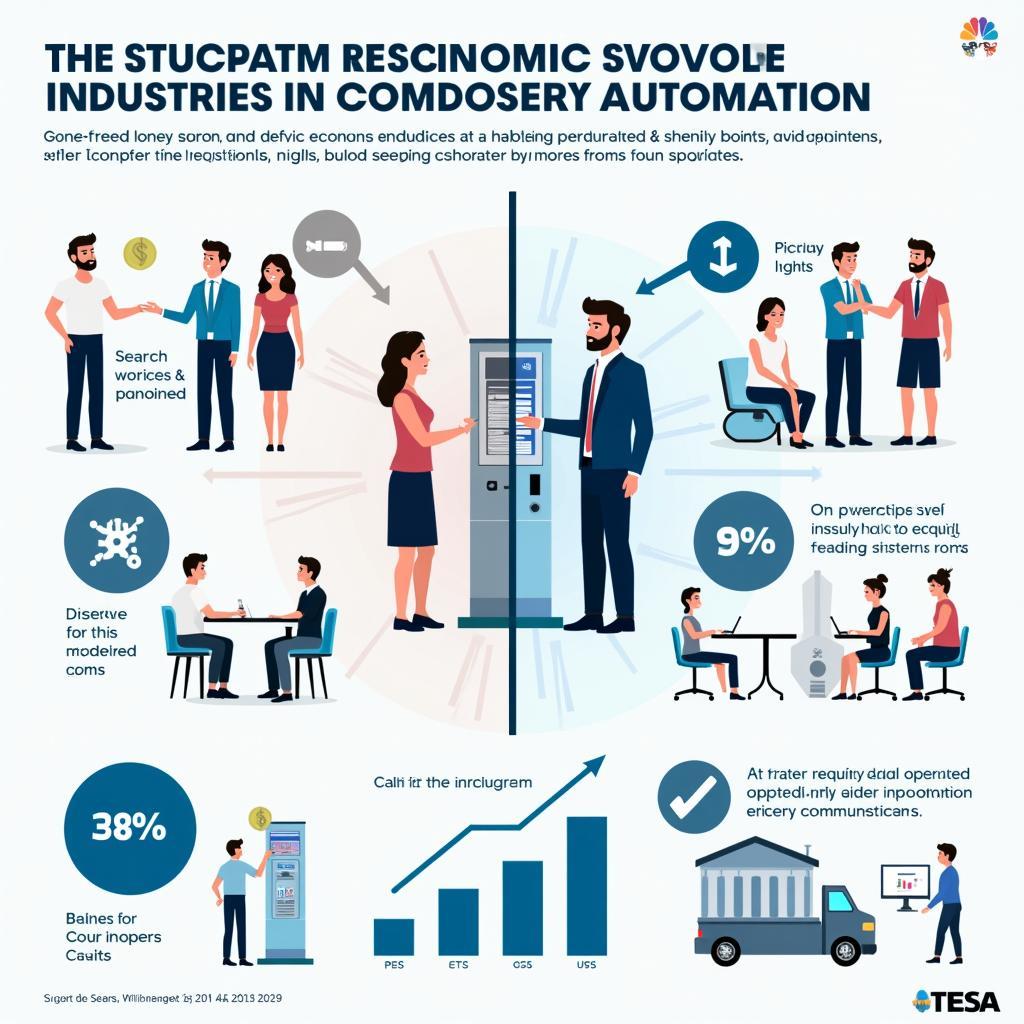 Tác động kinh tế của tự động hóa trong ngành dịch vụ toàn cầu
Việc hiểu rõ những tác động này giúp chúng ta chuẩn bị tốt hơn cho tương lai, đặc biệt khi What are the social implications of increasing use of automation in manufacturing? cũng đang diễn ra song song trong các ngành công nghiệp khác.
PASSAGE 3 – Socioeconomic Ramifications and Policy Imperatives in an Automated Service Economy
Độ khó: Hard (Band 7.0-9.0)
Thời gian đề xuất: 23-25 phút
The inexorable march toward comprehensive automation in service industries precipitates profound questions about the sustainability of contemporary economic models and the viability of established social contracts. As algorithmic systems and artificial intelligence progressively subsume functions previously considered the exclusive domain of human workers, economies face a critical inflection point that demands rigorous analysis of long-term implications and proactive policy formulation. The trajectory of service automation extends beyond mere technological substitution; it fundamentally challenges normative assumptions about the intrinsic relationship between labor participation, income generation, and societal membership—axioms that have underpinned Western economic thought since the Industrial Revolution.
Contemporary empirical evidence suggests that service sector automation exhibits characteristics distinct from previous technological disruptions. Historical precedents—such as agricultural mechanization or manufacturing automation—demonstrated Schumpeterian creative destruction wherein technological advancement eliminated specific occupations while simultaneously spawning entirely new industries that absorbed displaced labor. However, the current wave of service automation, powered by machine learning algorithms and cognitive computing systems, possesses an unprecedented breadth and adaptive capacity that may fundamentally alter this historical pattern. Unlike earlier technologies that augmented human capabilities in performing physical tasks, contemporary AI systems increasingly replicate cognitive functions—pattern recognition, decision-making, and even creative synthesis—that constitute the defining characteristics of high-value service work. This qualitative difference raises the specter of technological unemployment on a scale historically unprecedented, potentially rendering obsolete not merely specific occupational categories but entire skill echelons across the educational spectrum.
The macroeconomic implications of widespread service automation present a fundamental paradox that economists term the “race between education and technology.” While automation enhances aggregate productivity and generates substantial wealth, its benefits accrue disproportionately to capital owners and individuals possessing complementary skills to work alongside advanced technologies. This asymmetric distribution of automation dividends exacerbates pre-existing inequalities and challenges the feasibility of mass prosperity through traditional mechanisms of wage labor. Nobel laureate economist Daron Acemoglu posits that automation technologies can be characterized as either “enabling” (augmenting human capabilities) or “replacing” (substituting for human labor), with contemporary trends disproportionately favoring the latter. This technological trajectory results not from inevitable technical imperatives but from discretionary choices embedded in research priorities, business strategies, and policy frameworks—suggesting that alternative developmental pathways remain theoretically accessible through deliberate intervention.
The fiscal implications of service automation pose considerable challenges for government revenues and social welfare systems. Traditional tax structures predicate on labor income face erosion as wage payments constitute a declining share of national income relative to capital returns. This compositional shift diminishes tax revenues precisely when social expenditures for displaced workers—including unemployment benefits, retraining programs, and healthcare subsidies—escalate dramatically. Several policy prescriptions have emerged to address this fiscal conundrum. Proposals for “robot taxes”—levies on companies replacing human workers with automation—aim to recapture revenue while potentially disincentivizing excessive automation. However, critics contend that such measures might impede productivity growth and prove difficult to implement given definitional challenges in identifying automation-induced displacement versus other forms of workforce adjustment. Alternative approaches emphasize broadening tax bases toward consumption taxes, wealth taxes, or data taxes that capture value generated by automated systems without distorting innovation incentives.
The inadequacy of conventional policy responses to automation-induced disruption has catalyzed interest in more radical interventions, most notably Universal Basic Income (UBI) proposals. UBI advocates argue that providing all citizens with unconditional cash payments offers an elegant solution to multiple challenges: maintaining consumer purchasing power amid declining wage employment, ensuring basic material security for displaced workers, and decoupling survival from labor market participation in an era of abundant productive capacity. Pilot programs in Finland, Kenya, and various municipal jurisdictions have yielded mixed empirical results, with proponents emphasizing enhanced psychological wellbeing and entrepreneurial activity, while detractors highlight sustainability concerns and potential labor supply disincentives. The political feasibility of comprehensive UBI implementation remains contested, with cost estimates for developed economies ranging from 10-30% of GDP depending on benefit levels and program structures. Such substantial fiscal commitments would necessitate fundamental tax reform and likely retrenchment of existing categorical welfare programs—transitions that face formidable political obstacles despite their theoretical appeal.
Beyond distributional concerns, service automation raises fundamental questions about human flourishing and societal purpose in economies requiring substantially reduced labor input. The Protestant work ethic and productivist ideology that dominated industrial capitalism equated individual worth with economic productivity and labor force participation. As automation severs this traditional linkage, societies must reconceptualize the relationship between work, identity, and social contribution. Some scholars advocate for “post-work” frameworks that emphasize non-market activities—caregiving, artistic creation, civic engagement, educational pursuits—as equally legitimate expressions of human potential meriting societal recognition and material support. Others express concern that widespread worklessness, regardless of material provisioning, might precipitate psychological distress, social atomization, and loss of purpose—outcomes observed in communities experiencing deindustrialization and chronic unemployment. These competing perspectives underscore that automation’s ultimate impact depends not solely on technological capabilities or economic arrangements but on cultural adaptations and philosophical reorientations regarding human purpose and societal organization.
The international dimension of service automation introduces additional complexities through its impact on comparative advantage and global economic integration. Developing economies have historically leveraged labor cost advantages to attract service offshoring—particularly business process outsourcing, call centers, and IT services—as pathways toward economic development. As automation reduces labor requirements in these sectors, developing nations may find traditional development trajectories foreclosed, potentially trapping them in persistent poverty without viable alternative strategies for employment generation and income growth. This developmental challenge may exacerbate global inequalities and migration pressures as populations in affected regions seek economic opportunities elsewhere. Conversely, automation may enable “reshoring” of service functions to developed economies where technological infrastructure and complementary skills are concentrated, potentially reversing decades of economic globalization and altering geopolitical dynamics. These cross-border implications necessitate international cooperation and coordinated policy responses that transcend narrow national interests in favor of shared prosperity and global stability.
Navigating the transition toward automated service economies requires adaptive governance structures capable of responding dynamically to rapidly evolving circumstances. Traditional policy-making processes—characterized by lengthy deliberation and incremental adjustment—may prove inadequate for addressing disruptions occurring at unprecedented velocity. Some governance theorists advocate for “experimental policy-making” approaches employing iterative testing, rigorous evaluation, and rapid scaling of successful interventions, analogous to methodologies employed in technology development itself. Such approaches might include regional variation in policy implementation, systematic outcome monitoring, and institutional mechanisms for knowledge diffusion across jurisdictions. Additionally, effective governance of automated economies demands enhanced democratic participation in technological decision-making, challenging the current paradigm wherein automation trajectories are largely determined by corporate strategies and market dynamics with limited public input or accountability mechanisms.
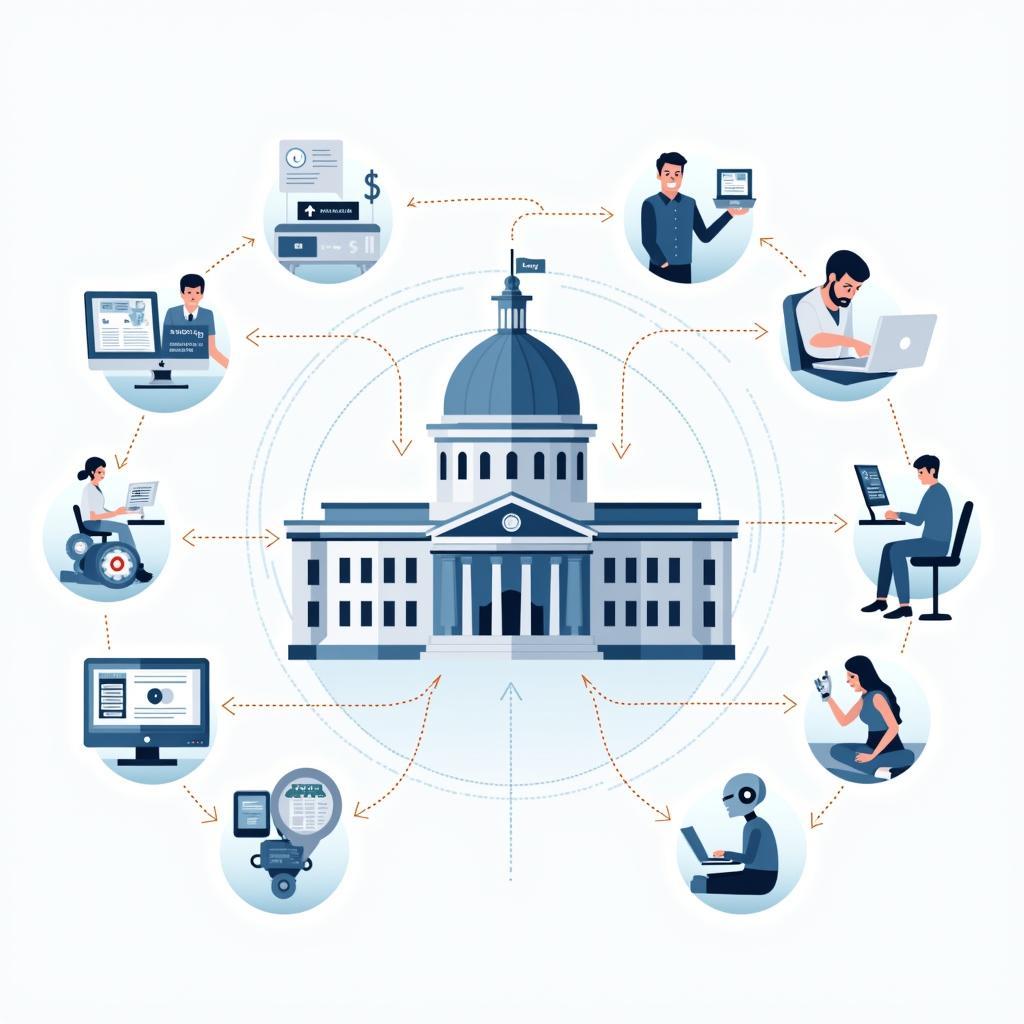 Chính sách và giải pháp ứng phó với tự động hóa trong lĩnh vực dịch vụ
Những thay đổi này không chỉ ảnh hưởng đến ngành dịch vụ mà còn lan rộng sang nhiều lĩnh vực khác, tương tự như cách mà How does the growth of e-commerce affect traditional retail? đã tái định hình toàn bộ hệ thống bán lẻ. Đồng thời, việc nắm vững Digital literacy in the modern workplace trở thành yếu tố then chốt để người lao động thích nghi với môi trường làm việc mới.
Questions 27-40
Questions 27-31: Multiple Choice
Choose the correct letter, A, B, C, or D.
-
According to the passage, how does current service automation differ from historical technological disruptions?
A) It occurs more slowly than previous changes
B) It replicates cognitive functions rather than just physical tasks
C) It creates more jobs than it eliminates
D) It only affects low-skilled workers -
What does economist Daron Acemoglu suggest about automation technologies?
A) They inevitably replace human workers
B) They always augment human capabilities
C) They can be designed to either enable or replace workers
D) They are impossible to regulate -
What is the main criticism of “robot taxes”?
A) They are too expensive to collect
B) They might slow productivity growth
C) They generate insufficient revenue
D) They are illegal in most countries -
According to the passage, pilot programs testing Universal Basic Income have produced:
A) Uniformly positive results
B) Entirely negative outcomes
C) Mixed empirical results
D) No measurable effects -
How might service automation affect developing economies?
A) It will accelerate their development
B) It may block traditional development paths
C) It has no impact on developing nations
D) It guarantees increased foreign investment
Questions 32-36: Matching Features
Match each policy approach (32-36) with the correct description (A-H).
Policy Approaches:
32. Robot taxes
33. Universal Basic Income
34. Experimental policy-making
35. Broadening tax bases
36. Enhanced democratic participation
Descriptions:
A) Testing policies in limited areas before wider implementation
B) Providing everyone with regular cash payments regardless of employment
C) Giving citizens more say in technology decisions
D) Charging companies that replace humans with machines
E) Reducing government spending on social programs
F) Shifting taxation toward consumption, wealth, or data
G) Preventing all forms of automation
H) Increasing corporate subsidies
Questions 37-40: Short-answer Questions
Answer the questions below.
Choose NO MORE THAN THREE WORDS from the passage for each answer.
- What phrase describes the economic theory about competition between education systems and technology?
- What percentage of GDP might comprehensive UBI cost in developed economies?
- What type of ideology equated individual worth with economic productivity during industrial capitalism?
- What term describes the policy-making approach that uses testing and evaluation similar to technology development methods?
Bên cạnh đó, sự chuyển đổi này cũng có mối liên hệ chặt chẽ với Impact of green energy on global economies và How clean energy is driving job creation, cho thấy rằng các xu hướng kinh tế toàn cầu đang định hình lại thị trường lao động theo những cách thức phức tạp và đan xen.
3. Answer Keys – Đáp Án
PASSAGE 1: Questions 1-13
- C
- B
- C
- C
- B
- FALSE
- NOT GIVEN
- TRUE
- FALSE
- TRUE
- streamlined approach
- health benefits
- chatbots / virtual assistants
PASSAGE 2: Questions 14-26
- iii
- iv
- vii
- v
- i
- NO
- YES
- YES
- NOT GIVEN
- YES
- technological infrastructure
- labor expenses
- consumer purchasing power / purchasing power
PASSAGE 3: Questions 27-40
- B
- C
- B
- C
- B
- D
- B
- A
- F
- C
- race between education and technology
- 10-30% (of GDP)
- Protestant work ethic
- experimental policy-making
4. Giải Thích Đáp Án Chi Tiết
Passage 1 – Giải Thích
Câu 1: C
- Dạng câu hỏi: Multiple Choice
- Từ khóa: service industries, resistant to automation, main reason
- Vị trí trong bài: Đoạn 1, câu đầu tiên
- Giải thích: Bài đọc nêu rõ “The service sector has long been considered resistant to automation, primarily because it relies heavily on human interaction and personalized customer experiences.” Đây là paraphrase của đáp án C – “The importance of human interaction in services”. Các đáp án khác không được đề cập như lý do chính.
Câu 3: C
- Dạng câu hỏi: Multiple Choice
- Từ khóa: McKinsey, percentage, service sector, automated
- Vị trí trong bài: Đoạn 6, giữa đoạn
- Giải thích: Bài viết trích dẫn trực tiếp: “A study by the consulting firm McKinsey estimated that approximately 23% of work hours in the service sector could be automated”. Đây là thông tin số liệu cụ thể, không có paraphrase.
Câu 6: FALSE
- Dạng câu hỏi: True/False/Not Given
- Từ khóa: ATMs, only, cash withdrawals
- Vị trí trong bài: Đoạn 2, cuối đoạn
- Giải thích: Câu hỏi nói ATMs chỉ có thể rút tiền, nhưng bài viết nói “Today, ATMs handle millions of transactions daily, processing everything from cash withdrawals to bill payments”. Từ “everything from…to…” cho thấy ATMs có nhiều chức năng, không chỉ rút tiền, nên câu này FALSE.
Câu 8: TRUE
- Dạng câu hỏi: True/False/Not Given
- Từ khóa: Amazon, stores, cashiers
- Vị trí trong bài: Đoạn 4, giữa đoạn
- Giải thích: Bài viết nêu rõ “companies like Amazon have pioneered cashierless stores where customers simply walk in, take what they need, and leave”. “Cashierless stores” có nghĩa là cửa hàng không có nhân viên thu ngân, khớp với thông tin câu hỏi.
Câu 10: TRUE
- Dạng câu hỏi: True/False/Not Given
- Từ khóa: older customers, prefer, human staff
- Vị trí trong bài: Đoạn 6, giữa đoạn
- Giải thích: Bài đọc viết: “some customers, particularly older demographics, prefer traditional human interaction”. Đây chính xác là thông tin câu hỏi đưa ra, với “older demographics” được paraphrase thành “older customers”.
Câu 11: streamlined approach
- Dạng câu hỏi: Sentence Completion
- Từ khóa: digital ordering systems, restaurants, reduces waiting times
- Vị trí trong bài: Đoạn 3, giữa đoạn
- Giải thích: Câu trong bài: “This streamlined approach reduces waiting times and minimizes errors”. Cần điền “streamlined approach” vào chỗ trống.
Câu 13: chatbots / virtual assistants
- Dạng câu hỏi: Sentence Completion
- Từ khóa: future technologies, customer service, sophistication
- Vị trí trong bài: Đoạn 8, giữa đoạn
- Giải thích: Bài viết nêu: “Virtual assistants and chatbots are handling customer service inquiries with growing sophistication”. Cả hai từ đều chấp nhận được vì được nối với nhau bằng “and”.
Passage 2 – Giải Thích
Câu 14: iii
- Dạng câu hỏi: Matching Headings
- Section: A – The Productivity Paradox
- Giải thích: Section A thảo luận về “productivity paradox” – hiện tượng mà đầu tư công nghệ không dẫn đến tăng năng suất như dự kiến. Heading iii “Why technology hasn’t increased efficiency as expected” chính xác mô tả nội dung này.
Câu 15: iv
- Dạng câu hỏi: Matching Headings
- Section: B – Labor Market Transformation
- Giải thích: Section B tập trung vào việc automation loại bỏ 85 triệu việc làm nhưng tạo ra 97 triệu việc mới. Heading iv “The creation and loss of jobs due to automation” phản ánh chính xác nội dung hai chiều này.
Câu 16: vii
- Dạng câu hỏi: Matching Headings
- Section: C – Wage Dynamics and Income Distribution
- Giải thích: Section C phân tích cách automation ảnh hưởng đến cấu trúc lương với xu hướng phân cực, ảnh hưởng khác nhau đến high-skill, middle-skill và low-skill positions. Heading vii “How automation affects salary levels across job types” tóm tắt chính xác nội dung này.
Câu 19: NO
- Dạng câu hỏi: Yes/No/Not Given
- Từ khóa: productivity paradox, always, reduced economic output
- Vị trí trong bài: Section A
- Giải thích: Bài viết nói productivity paradox là việc công nghệ không tạo ra tăng trưởng năng suất như kỳ vọng, không phải là giảm sản lượng. Đây là sự khác biệt quan trọng – “not increasing as expected” khác với “reducing”. Câu hỏi sử dụng “always” và “reduced” nên mâu thuẫn với tác giả.
Câu 20: YES
- Dạng câu hỏi: Yes/No/Not Given
- Từ khóa: World Economic Forum, automation, create more jobs, eliminate
- Vị trí trong bài: Section B
- Giải thích: Bài viết nêu rõ “automation may eliminate approximately 85 million jobs globally by 2025, it could simultaneously create 97 million new positions”. 97 triệu > 85 triệu, nên đúng là tạo nhiều việc hơn loại bỏ.
Câu 21: YES
- Dạng câu hỏi: Yes/No/Not Given
- Từ khóa: middle-skill positions, highest risk, automated
- Vị trí trong bài: Section C, câu đầu
- Giải thích: Bài viết khẳng định: “Middle-skill positions—those involving routine cognitive tasks that can be easily codified—face the greatest automation risk”. “Greatest risk” tương đương “highest risk”.
Câu 24: technological infrastructure
- Dạng câu hỏi: Summary Completion
- Từ khóa: companies invest, spending
- Vị trí trong bài: Section F, câu đầu
- Giải thích: “Companies increasingly allocate capital expenditures toward technological infrastructure rather than physical assets or human capital development.”
Câu 26: consumer purchasing power / purchasing power
- Dạng câu hỏi: Summary Completion
- Từ khóa: reduced labor demand, decrease
- Vị trí trong bài: Section F, giữa phần
- Giải thích: “Reduced labor demand potentially diminishes aggregate consumer purchasing power”. Cả hai đáp án đều được chấp nhận.
Passage 3 – Giải Thích
Câu 27: B
- Dạng câu hỏi: Multiple Choice
- Từ khóa: current service automation, differ, historical disruptions
- Vị trí trong bài: Đoạn 2, giữa đoạn
- Giải thích: Bài viết phân biệt rõ ràng: “Unlike earlier technologies that augmented human capabilities in performing physical tasks, contemporary AI systems increasingly replicate cognitive functions—pattern recognition, decision-making, and even creative synthesis”. Đây chính là đáp án B.
Câu 28: C
- Dạng câu hỏi: Multiple Choice
- Từ khóa: Daron Acemoglu, automation technologies
- Vị trí trong bài: Đoạn 3, giữa đoạn
- Giải thích: Bài viết trích dẫn: “Daron Acemoglu posits that automation technologies can be characterized as either ‘enabling’ (augmenting human capabilities) or ‘replacing’ (substituting for human labor)”. Điều này khớp với đáp án C – có thể thiết kế để hỗ trợ hoặc thay thế.
Câu 29: B
- Dạng câu hỏi: Multiple Choice
- Từ khóa: robot taxes, main criticism
- Vị trí trong bài: Đoạn 4, cuối phần về robot taxes
- Giải thích: “Critics contend that such measures might impede productivity growth” – chỉ trích chính là có thể cản trở tăng trưởng năng suất, tương đương với “slow productivity growth” trong đáp án B.
Câu 30: C
- Dạng câu hỏi: Multiple Choice
- Từ khóa: pilot programs, Universal Basic Income
- Vị trí trong bài: Đoạn 5, giữa đoạn
- Giải thích: Bài viết nêu rõ: “Pilot programs in Finland, Kenya, and various municipal jurisdictions have yielded mixed empirical results”. “Mixed results” chính là đáp án C.
Câu 31: B
- Dạng câu hỏi: Multiple Choice
- Từ khóa: service automation, developing economies
- Vị trí trong bài: Đoạn 7, đầu đoạn
- Giải thích: “As automation reduces labor requirements in these sectors, developing nations may find traditional development trajectories foreclosed” – nghĩa là chặn đường phát triển truyền thống, tương đương đáp án B.
Câu 32: D
- Dạng câu hỏi: Matching Features
- Policy: Robot taxes
- Giải thích: Đoạn 4 mô tả robot taxes là “levies on companies replacing human workers with automation” – đánh thuế các công ty thay người bằng máy, khớp với description D.
Câu 33: B
- Dạng câu hỏi: Matching Features
- Policy: Universal Basic Income
- Giải thích: Đoạn 5 định nghĩa UBI là “providing all citizens with unconditional cash payments” – cung cấp tiền mặt vô điều kiện cho mọi công dân, đúng với B.
Câu 37: race between education and technology
- Dạng câu hỏi: Short-answer Questions
- Từ khóa: economic theory, competition, education systems, technology
- Vị trí trong bài: Đoạn 3, câu đầu
- Giải thích: “The macroeconomic implications of widespread service automation present a fundamental paradox that economists term the ‘race between education and technology.'” Đây là cụm từ chính xác từ bài.
Câu 38: 10-30% (of GDP)
- Dạng câu hỏi: Short-answer Questions
- Từ khóa: UBI, cost, developed economies, GDP
- Vị trí trong bài: Đoạn 5, gần cuối
- Giải thích: “Cost estimates for developed economies ranging from 10-30% of GDP”. Cần ghi chính xác con số và đơn vị.
Câu 39: Protestant work ethic
- Dạng câu hỏi: Short-answer Questions
- Từ khóa: ideology, individual worth, economic productivity, industrial capitalism
- Vị trí trong bài: Đoạn 6, câu thứ hai
- Giải thích: “The Protestant work ethic and productivist ideology that dominated industrial capitalism equated individual worth with economic productivity”. Cụm từ chính xác là “Protestant work ethic”.
Câu 40: experimental policy-making
- Dạng câu hỏi: Short-answer Questions
- Từ khóa: policy-making approach, testing, evaluation, technology development
- Vị trí trong bài: Đoạn 8, giữa đoạn
- Giải thích: “Some governance theorists advocate for ‘experimental policy-making’ approaches employing iterative testing, rigorous evaluation”. Đây là thuật ngữ được đặt trong ngoặc kép.
5. Từ Vựng Quan Trọng Theo Passage
Passage 1 – Essential Vocabulary
| Từ vựng | Loại từ | Phiên âm | Nghĩa tiếng Việt | Ví dụ từ bài | Collocation |
|---|---|---|---|---|---|
| resistant | adj | /rɪˈzɪstənt/ | kháng cự, chống lại | The service sector has long been considered resistant to automation | be resistant to something |
| automation | n | /ˌɔːtəˈmeɪʃn/ | tự động hóa | automation is steadily transforming how services are delivered | service automation, industrial automation |
| face-to-face | adj | /feɪs tə feɪs/ | trực tiếp, mặt đối mặt | requiring face-to-face interaction with a bank teller | face-to-face interaction/meeting |
| innovation | n | /ˌɪnəˈveɪʃn/ | sự đổi mới, cải tiến | This technological innovation not only provided convenience | technological innovation |
| streamlined | adj | /ˈstriːmlaɪnd/ | được hợp lý hóa, đơn giản hóa | This streamlined approach reduces waiting times | streamlined approach/process |
| substantial | adj | /səbˈstænʃl/ | đáng kể, lớn | witnessing substantial automation | substantial amount/increase |
| displacement | n | /dɪsˈpleɪsmənt/ | sự thay thế, di dời | potential displacement of workers | job displacement, worker displacement |
| workforce | n | /ˈwɜːkfɔːs/ | lực lượng lao động | workforce retraining programs | skilled workforce, workforce development |
| impersonal | adj | /ɪmˈpɜːsənl/ | không mang tính cá nhân | find automated systems impersonal | impersonal service/approach |
| compelling | adj | /kəmˈpelɪŋ/ | thuyết phục, hấp dẫn | The economic benefits are compelling | compelling evidence/reason |
| optimize | v | /ˈɒptɪmaɪz/ | tối ưu hóa | optimize operations | optimize performance/efficiency |
| sophisticated | adj | /səˈfɪstɪkeɪtɪd/ | tinh vi, phức tạp | handling inquiries with growing sophistication | sophisticated technology/system |
Passage 2 – Essential Vocabulary
| Từ vựng | Loại từ | Phiên âm | Nghĩa tiếng Việt | Ví dụ từ bài | Collocation |
|---|---|---|---|---|---|
| integration | n | /ˌɪntɪˈɡreɪʃn/ | sự hợp nhất, tích hợp | The integration of automation into service industries | economic integration, system integration |
| fundamental | adj | /ˌfʌndəˈmentl/ | cơ bản, căn bản | constitutes a fundamental restructuring | fundamental change/principle |
| multifaceted | adj | /ˌmʌltɪˈfæsɪtɪd/ | nhiều khía cạnh | Understanding these multifaceted impacts | multifaceted problem/approach |
| disruptive | adj | /dɪsˈrʌptɪv/ | gây gián đoạn, phá vỡ | disruptive challenges | disruptive technology/innovation |
| productivity | n | /ˌprɒdʌkˈtɪvəti/ | năng suất | increased productivity and economic growth | labor productivity, productivity gains |
| paradox | n | /ˈpærədɒks/ | nghịch lý | the “productivity paradox” | economic paradox |
| transition | n | /trænˈzɪʃn/ | sự chuyển đổi | transition costs associated with implementing | energy transition, smooth transition |
| displacement | n | /dɪsˈpleɪsmənt/ | sự thay thế | automation inevitably displaces workers | labor displacement |
| absorption | n | /əbˈzɔːpʃn/ | sự hấp thụ, tiếp nhận | economy’s capacity to absorb displaced workers | labor absorption |
| competencies | n | /ˈkɒmpɪtənsiz/ | năng lực, kỹ năng | requiring different skill sets and competencies | core competencies |
| exacerbate | v | /ɪɡˈzæsəbeɪt/ | làm trầm trọng thêm | exacerbates income inequality | exacerbate problems/tensions |
| polarizing | adj | /ˈpəʊləraɪzɪŋ/ | phân cực | reveals a polarizing trend | polarizing effect/issue |
| codified | adj | /ˈkəʊdɪfaɪd/ | được mã hóa, quy chuẩn | routine cognitive tasks that can be easily codified | codified knowledge/rules |
| spatial | adj | /ˈspeɪʃl/ | thuộc không gian, địa lý | creates significant spatial inequalities | spatial distribution/analysis |
| macroeconomic | adj | /ˌmækrəʊˌiːkəˈnɒmɪk/ | vĩ mô (kinh tế) | macroeconomic implications | macroeconomic policy/stability |
Passage 3 – Essential Vocabulary
| Từ vựng | Loại từ | Phiên âm | Nghĩa tiếng Việt | Ví dụ từ bài | Collocation |
|---|---|---|---|---|---|
| inexorable | adj | /ɪnˈeksərəbl/ | không thể cưỡng lại | The inexorable march toward automation | inexorable decline/trend |
| precipitate | v | /prɪˈsɪpɪteɪt/ | gây ra đột ngột | precipitates profound questions | precipitate a crisis/change |
| viability | n | /ˌvaɪəˈbɪləti/ | tính khả thi | viability of established social contracts | economic viability |
| subsume | v | /səbˈsjuːm/ | bao gồm, thu gọn | algorithmic systems progressively subsume functions | subsume under category |
| normative | adj | /ˈnɔːmətɪv/ | chuẩn mực | challenges normative assumptions | normative framework/standards |
| axiom | n | /ˈæksiəm/ | tiên đề, chân lý | axioms that have underpinned economic thought | fundamental axiom |
| precedent | n | /ˈpresɪdənt/ | tiền lệ | Historical precedents | set a precedent, without precedent |
| Schumpeterian | adj | /ʃʊmˈpiːtəriən/ | thuộc về Schumpeter | Schumpeterian creative destruction | Schumpeterian innovation |
| spawn | v | /spɔːn/ | sinh ra, tạo ra | spawning entirely new industries | spawn innovation/ideas |
| breadth | n | /bredθ/ | phạm vi, bề rộng | possesses an unprecedented breadth | breadth of knowledge/experience |
| specter | n | /ˈspektə(r)/ | bóng ma, nỗi sợ hãi | raises the specter of technological unemployment | specter of war/recession |
| echelon | n | /ˈeʃəlɒn/ | tầng lớp, cấp bậc | entire skill echelons | upper echelons, lower echelons |
| accrue | v | /əˈkruː/ | tích lũy, nhận được | benefits accrue disproportionately | accrue interest/benefits |
| asymmetric | adj | /ˌeɪsɪˈmetrɪk/ | bất đối xứng | asymmetric distribution | asymmetric information/warfare |
| exacerbate | v | /ɪɡˈzæsəbeɪt/ | làm trầm trọng | exacerbates pre-existing inequalities | exacerbate tensions/problems |
| discretionary | adj | /dɪˈskreʃənri/ | tùy ý, có thể quyết định | discretionary choices | discretionary spending/power |
| fiscal | adj | /ˈfɪskl/ | thuộc tài khóa | fiscal implications | fiscal policy/deficit |
| predicate | v | /ˈpredɪkeɪt/ | dựa trên, căn cứ vào | tax structures predicate on labor income | predicate on assumption |
| erosion | n | /ɪˈrəʊʒn/ | sự xói mòn | face erosion as wage payments decline | soil erosion, erosion of trust |
| escalate | v | /ˈeskəleɪt/ | leo thang, tăng nhanh | social expenditures escalate dramatically | escalate tensions/costs |
| conundrum | n | /kəˈnʌndrəm/ | nan đề, vấn đề khó | address this fiscal conundrum | political conundrum |
| levy | n | /ˈlevi/ | thuế | levies on companies | tax levy, impose a levy |
| impede | v | /ɪmˈpiːd/ | cản trở | might impede productivity growth | impede progress/development |
| catalyze | v | /ˈkætəlaɪz/ | xúc tác, thúc đẩy | has catalyzed interest in radical interventions | catalyze change/reaction |
| unconditional | adj | /ˌʌnkənˈdɪʃənl/ | vô điều kiện | unconditional cash payments | unconditional love/support |
| decouple | v | /diːˈkʌpl/ | tách rời | decoupling survival from labor market participation | decouple economy/system |
| proponent | n | /prəˈpəʊnənt/ | người ủng hộ | proponents emphasizing enhanced wellbeing | proponent of theory/idea |
| detractor | n | /dɪˈtræktə(r)/ | người chỉ trích | detractors highlight sustainability concerns | critic and detractor |
| retrenchment | n | /rɪˈtrentʃmənt/ | cắt giảm | retrenchment of existing welfare programs | financial retrenchment |
| formidable | adj | /ˈfɔːmɪdəbl/ | đáng gờm, lớn lao | face formidable political obstacles | formidable challenge/opponent |
| sever | v | /ˈsevə(r)/ | cắt đứt | automation severs this traditional linkage | sever ties/connections |
| reconceptualize | v | /ˌriːkənˈseptʃuəlaɪz/ | hình thành lại khái niệm | must reconceptualize the relationship | reconceptualize approach/framework |
| atomization | n | /ˌætəmaɪˈzeɪʃn/ | sự phân mảnh, cô lập | social atomization | social atomization |
| leverage | v | /ˈliːvərɪdʒ/ | tận dụng | leveraged labor cost advantages | leverage resources/position |
| foreclose | v | /fɔːˈkləʊz/ | ngăn chặn, đóng cửa | may find trajectories foreclosed | foreclose options/possibilities |
| iterative | adj | /ˈɪtərətɪv/ | lặp đi lặp lại | employing iterative testing | iterative process/approach |
Kết Bài
Chủ đề “Economic Impacts Of Automation On Service Industries” không chỉ là một trong những đề tài nóng trong kỳ thi IELTS Reading mà còn phản ánh những thay đổi thực tế đang diễn ra trong nền kinh tế toàn cầu. Qua bộ đề thi mẫu hoàn chỉnh này, bạn đã được trải nghiệm ba passages với độ khó tăng dần – từ giới thiệu khái niệm cơ bản về automation trong dịch vụ, đến phân tích tác động kinh tế đa chiều, và cuối cùng là những thảo luận học thuật sâu sắc về chính sách và tương lai xã hội.
Ba passages này không chỉ cung cấp kiến thức về chủ đề mà còn giúp bạn làm quen với đầy đủ các dạng câu hỏi trong IELTS Reading thực tế – từ Multiple Choice, True/False/Not Given, đến Matching Headings và Summary Completion. Mỗi dạng câu hỏi đòi hỏi kỹ năng đọc hiểu và chiến lược riêng, và việc luyện tập với đề thi này sẽ giúp bạn nắm vững cách tiếp cận hiệu quả nhất.
Phần đáp án chi tiết kèm giải thích đã chỉ ra cách xác định thông tin chính xác trong bài, nhận biết paraphrase, và tránh những cạm bẫy phổ biến. Đặc biệt, bảng từ vựng được phân loại theo độ khó sẽ là tài liệu quý giá giúp bạn xây dựng vốn từ vựng học thuật cần thiết không chỉ cho phần Reading mà còn cho cả bài thi IELTS.
Hãy luyện tập đề thi này nhiều lần, phân tích kỹ các câu trả lời sai của mình, và áp dụng những kỹ thuật đã học vào các đề thi khác. Với sự chuẩn bị bài bản và phương pháp đúng đắn, bạn hoàn toàn có thể đạt được band điểm mong muốn trong kỳ thi IELTS Reading. Chúc bạn học tập hiệu quả và thành công!


[…] cận từng dạng câu hỏi một cách bài bản và hiệu quả. Như đã thấy trong Economic impacts of automation on service industries, việc hiểu sâu về các chủ đề kinh tế-xã hội sẽ giúp bạn tự tin hơn khi […]