Mở đầu
Chủ đề về tự động hóa (automation) và ảnh hưởng của nó đến việc tạo ra việc làm là một trong những đề tài nóng hổi và xuất hiện thường xuyên trong kỳ thi IELTS Writing Task 2 những năm gần đây. Với sự phát triển vượt bậc của công nghệ, trí tuệ nhân tạo và robot, câu hỏi về tương lai của thị trường lao động đã trở thành mối quan tâm toàn cầu, khiến đề tài này trở nên cực kỳ phù hợp và thời sự.
Theo thống kê từ các trung tâm thi IELTS uy tín, chủ đề liên quan đến công nghệ và việc làm xuất hiện trung bình 2-3 lần mỗi năm, đặc biệt tập trung vào các kỳ thi từ 2020 đến nay khi đại dịch COVID-19 đẩy nhanh quá trình chuyển đổi số. Đây là một chủ đề mà các giám khảo đánh giá cao vì nó yêu cầu thí sinh phải có tư duy phản biện, khả năng phân tích nhiều khía cạnh và đưa ra quan điểm cân bằng.
Trong bài viết này, bạn sẽ được học:
- 3 bài mẫu hoàn chỉnh cho các band điểm 5-6, 6.5-7 và 8-9 với phân tích chi tiết
- Bảng chấm điểm cụ thể theo 4 tiêu chí của IELTS để hiểu rõ điểm mạnh và điểm yếu
- Kho từ vựng chuyên sâu về chủ đề tự động hóa và việc làm
- Cấu trúc câu nâng cao giúp bạn ghi điểm cao
- Những lỗi thường gặp của học viên Việt Nam và cách khắc phục
Một số đề thi thực tế đã xuất hiện:
- “Some people believe that automation will lead to massive job losses, while others think it will create more employment opportunities. Discuss both views and give your opinion.” (British Council, tháng 9/2022)
- “The increasing use of robots and AI in the workplace is inevitable. To what extent do you think the advantages outweigh the disadvantages?” (IDP, tháng 3/2023)
- “Automation is affecting many industries and will soon replace numerous jobs. What are the effects of this trend and what measures can be taken?” (BC, tháng 11/2023)
Đề Writing Part 2 thực hành
Some people think that automation and artificial intelligence will lead to widespread unemployment and should be limited. Others believe these technologies will create new job opportunities and improve productivity. Discuss both views and give your own opinion.
Dịch đề: Một số người cho rằng tự động hóa và trí tuệ nhân tạo sẽ dẫn đến thất nghiệp trên diện rộng và nên được hạn chế. Những người khác tin rằng những công nghệ này sẽ tạo ra cơ hội việc làm mới và cải thiện năng suất. Thảo luận cả hai quan điểm và đưa ra ý kiến của bạn.
Phân tích đề bài:
Dạng câu hỏi: Đây là dạng “Discuss both views and give your opinion” – một trong những dạng phổ biến nhất trong IELTS Writing Task 2. Bạn cần:
- Trình bày rõ ràng quan điểm thứ nhất (tự động hóa gây thất nghiệp)
- Trình bày quan điểm thứ hai (tự động hóa tạo việc làm mới)
- Đưa ra ý kiến cá nhân của bạn (có thể thiên về một bên hoặc cân bằng)
Các thuật ngữ quan trọng:
- Automation: Quá trình sử dụng máy móc và công nghệ để thực hiện công việc mà trước đây do con người làm
- Artificial Intelligence (AI): Trí tuệ nhân tạo – khả năng của máy tính mô phỏng tư duy con người
- Widespread unemployment: Thất nghiệp trên diện rộng
- Job opportunities: Cơ hội việc làm
- Productivity: Năng suất lao động
Những lỗi thường gặp của học viên Việt Nam:
- Chỉ tập trung vào một quan điểm và quên phân tích quan điểm còn lại một cách cân bằng
- Không đưa ra ý kiến cá nhân rõ ràng hoặc đưa ý kiến quá muộn (ở kết bài)
- Dùng ví dụ chung chung thay vì ví dụ cụ thể về các ngành nghề bị ảnh hưởng
- Lạm dụng cụm “In my opinion” mà không sử dụng các cách diễn đạt đa dạng hơn
- Lỗi về mạo từ khi nói về công nghệ (the automation, an AI)
Cách tiếp cận chiến lược:
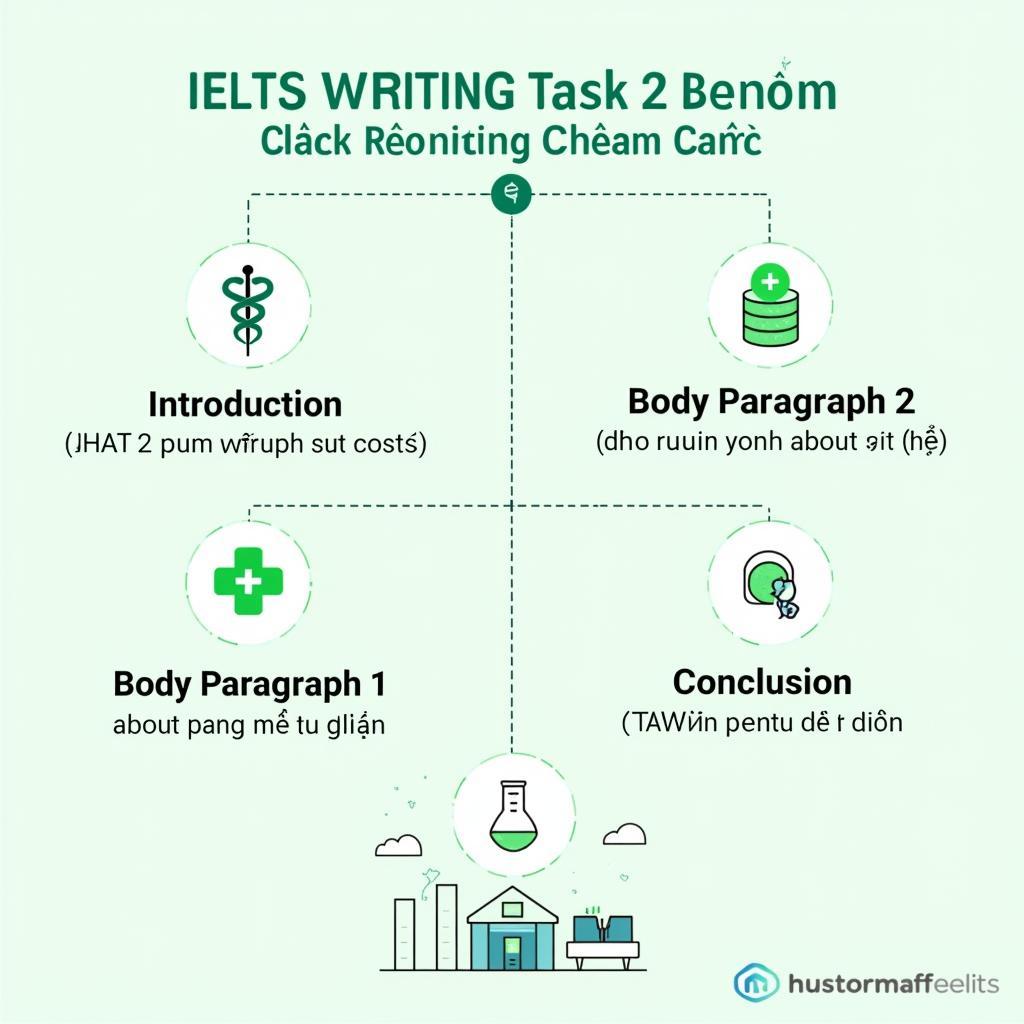
Cấu trúc 4 đoạn (khuyến nghị):
- Mở bài: Paraphrase đề + thesis statement (nêu rõ bạn sẽ thảo luận cả hai và có quan điểm gì)
- Thân bài 1: Quan điểm 1 – tự động hóa gây thất nghiệp (2-3 lý do + ví dụ)
- Thân bài 2: Quan điểm 2 – tự động hóa tạo việc làm mới (2-3 lý do + ví dụ)
- Kết bài: Tóm tắt + ý kiến cá nhân rõ ràng
Lưu ý quan trọng:
- Ý kiến cá nhân nên được thể hiện ngay từ mở bài và nhắc lại ở kết bài
- Cần có sự cân bằng giữa hai body paragraphs (độ dài tương đương nhau)
- Sử dụng các linking words để tạo sự mạch lạc
 Phân tích đề bài IELTS Writing Task 2 về tự động hóa và việc làm với sơ đồ tư duy chi tiết
Bài mẫu Band 8-9
Giới thiệu: Bài viết Band 8-9 dưới đây thể hiện sự tinh tế trong cách triển khai ý tưởng, sử dụng từ vựng học thuật phong phú và đa dạng cấu trúc ngữ pháp phức tạp. Đặc biệt, bài viết có thesis statement rõ ràng ngay từ đầu, phát triển luận điểm logic và có kết luận mạch lạc, thể hiện quan điểm cá nhân nhất quán xuyên suốt.
The rapid advancement of automation and artificial intelligence has sparked heated debate regarding its impact on employment. While some argue that these technologies pose a serious threat to job security, others contend that they will generate unprecedented opportunities for workforce development. In my view, although certain sectors will inevitably face disruption, the overall effect will be positive if societies adapt proactively.
Those who fear widespread unemployment have legitimate concerns rooted in observable trends. Manufacturing industries have already witnessed significant job displacement, with automated assembly lines replacing thousands of factory workers across developed nations. Furthermore, artificial intelligence is now capable of performing cognitive tasks previously thought to be exclusively human, such as data analysis, legal research, and even medical diagnostics. The transportation sector faces similar upheaval, as autonomous vehicles threaten the livelihoods of millions of professional drivers globally. These disruptions disproportionately affect low-skilled workers who lack the resources to retrain, potentially exacerbating social inequality and creating a permanently unemployed underclass.
However, history demonstrates that technological revolutions consistently create more jobs than they eliminate. The Industrial Revolution, despite initial resistance, ultimately raised living standards and expanded employment opportunities exponentially. Similarly, automation today is generating entirely new industries and professions that were unimaginable a decade ago. The burgeoning fields of AI ethics, robotics maintenance, data science, and renewable energy technology require millions of skilled workers. Moreover, by handling repetitive and dangerous tasks, automation liberates human workers to focus on creative, strategic, and interpersonal activities where human judgment remains irreplaceable. Increased productivity resulting from automation also drives economic growth, which naturally generates demand for additional goods, services, and consequently, employment.
In conclusion, while the transition period will undoubtedly challenge certain demographics, the long-term trajectory suggests that automation will enhance rather than diminish overall employment prospects. The crucial factor is not whether to embrace these technologies, but rather how governments and educational institutions can facilitate workforce adaptation through comprehensive retraining programs and forward-thinking policies. Those societies that invest in human capital development will thrive in the automated economy, while those that resist change risk being left behind.
(Word count: 348)
Phân tích Band điểm
| Tiêu chí | Band | Nhận xét |
|---|---|---|
| Task Response (Hoàn thành yêu cầu) | 9 | Bài viết hoàn thành xuất sắc tất cả yêu cầu: thảo luận cân bằng cả hai quan điểm với độ sâu tương đương, đưa ra ý kiến cá nhân rõ ràng ngay từ mở bài và nhất quán xuyên suốt. Mỗi quan điểm được phát triển đầy đủ với ví dụ cụ thể và lập luận thuyết phục. Quan điểm cá nhân được tích hợp khéo léo, không đơn thuần là “tôi đồng ý”. |
| Coherence & Cohesion (Mạch lạc & Liên kết) | 9 | Tổ chức bài viết logic hoàn hảo với progression tự nhiên từ ý này sang ý khác. Sử dụng linking devices tinh tế (However, Furthermore, Similarly, Moreover) không máy móc. Mỗi đoạn có topic sentence rõ ràng và phát triển ý mạch lạc. Tham chiếu (these disruptions, these technologies) được sử dụng chính xác tạo sự liên kết trong và giữa các đoạn. |
| Lexical Resource (Từ vựng) | 9 | Phạm vi từ vựng rộng và chính xác với nhiều collocations học thuật tự nhiên (sparked heated debate, unprecedented opportunities, legitimate concerns, observable trends, exacerbating social inequality, burgeoning fields). Sử dụng từ vựng chuyên ngành phù hợp (autonomous vehicles, cognitive tasks, workforce adaptation) và paraphrasing hiệu quả (job security → livelihoods → employment prospects). Không có lỗi từ vựng. |
| Grammatical Range & Accuracy (Ngữ pháp) | 9 | Sử dụng đa dạng và chính xác các cấu trúc phức tạp: mệnh đề quan hệ rút gọn (rooted in observable trends), câu phức nhiều mệnh đề (while…who lack…), cấu trúc so sánh (more…than), câu chẻ (The crucial factor is not…but rather), mệnh đề danh từ (how governments can…). Các câu dài được kiểm soát tốt, không có lỗi ngữ pháp đáng kể. Sử dụng thì và thể động từ chính xác. |
Các yếu tố giúp bài này được chấm điểm cao
-
Thesis statement mạnh mẽ và nuanced: Thay vì đơn giản đồng ý hoàn toàn một bên, bài viết thừa nhận cả hai mặt (“although certain sectors will inevitably face disruption, the overall effect will be positive if societies adapt proactively”), thể hiện tư duy phê phán cao.
-
Sử dụng ví dụ cụ thể và thời sự: Không dừng lại ở lý thuyết chung chung, bài viết đưa ra các ví dụ thực tế như “autonomous vehicles threaten the livelihoods of millions of professional drivers”, “AI ethics, robotics maintenance, data science” – những lĩnh vực đang nổi lên.
-
Kết nối logic giữa các ý: Mỗi ý không đứng riêng lẻ mà được nối với nhau bằng các liên từ tinh tế và tham chiếu chính xác. Ví dụ, “these disruptions disproportionately affect…” tham chiếu trực tiếp đến các ví dụ trước đó.
-
Sử dụng evidence từ lịch sử: Việc đề cập đến “Industrial Revolution” không chỉ thể hiện kiến thức rộng mà còn tăng tính thuyết phục cho lập luận rằng công nghệ cuối cùng tạo ra nhiều việc làm hơn.
-
Ngôn ngữ học thuật tự nhiên: Các cụm như “unprecedented opportunities”, “observable trends”, “burgeoning fields” không bị lạm dụng mà xuất hiện đúng ngữ cảnh, thể hiện vốn từ vựng thực sự thay vì học thuộc lòng.
-
Kết bài không lặp lại mà mở rộng: Thay vì chỉ tóm tắt, kết bài đưa ra insight mới về vai trò của chính phủ và giáo dục, đồng thời cảnh báo về hậu quả của việc không thích ứng – tạo ấn tượng mạnh với giám khảo.
-
Cân bằng độ dài và chiều sâu: Cả hai body paragraphs đều dài tương đương nhau (khoảng 110-120 từ mỗi đoạn) và phát triển ý với độ sâu như nhau, cho thấy khả năng thảo luận khách quan.
Bài mẫu Band 6.5-7
Giới thiệu: Bài viết Band 6.5-7 dưới đây thể hiện khả năng hoàn thành tốt yêu cầu đề bài với ý tưởng rõ ràng và tổ chức hợp lý. Tuy nhiên, so với bài Band 8-9, từ vựng và cấu trúc ngữ pháp đơn giản hơn, ít sophisticated hơn. Bài viết vẫn mạch lạc nhưng thiếu sự tinh tế trong cách diễn đạt.
The development of automation and AI has created a big debate about jobs. Some people think these technologies will cause many people to lose their jobs, while others believe they will create new employment chances. I think both sides have good points, but overall, automation will bring more benefits than problems.
On one hand, automation can definitely reduce the number of available jobs in some industries. For example, many factories now use robots instead of human workers to make products, which means fewer people are needed. In addition, self-driving cars are being developed, and if they become common, many taxi and truck drivers will lose their jobs. This is particularly worrying for people who do not have high education or skills, because it is difficult for them to find new work. When many people lose jobs at the same time, it can cause serious economic and social problems in society.
On the other hand, new technologies also create many new types of jobs that did not exist before. Companies need people who can design, program, and maintain robots and AI systems. The technology industry is growing very fast and needs thousands of new workers every year. Furthermore, when companies become more productive because of automation, they can grow bigger and need more employees in different areas like marketing, customer service, and management. History shows us that when new technologies appear, they usually create more jobs than they destroy. For instance, when computers were first introduced, many people worried about job losses, but actually the computer industry created millions of new jobs.
In conclusion, although automation will cause some job losses in traditional industries, I believe the positive effects will be greater if people are willing to learn new skills. Governments should help workers by providing training programs so they can adapt to the changing job market. If we prepare properly, automation can improve our economy and create better opportunities for everyone.
(Word count: 337)
Phân tích Band điểm
| Tiêu chí | Band | Nhận xét |
|---|---|---|
| Task Response (Hoàn thành yêu cầu) | 7 | Bài viết hoàn thành đầy đủ yêu cầu: thảo luận cả hai quan điểm và đưa ra ý kiến cá nhân rõ ràng. Tuy nhiên, sự phát triển ý còn khá cơ bản, các ví dụ tuy relevant nhưng chưa được elaborated đầy đủ. Quan điểm cá nhân có nhưng chưa được weave xuyên suốt như bài Band 9. |
| Coherence & Cohesion (Mạch lạc & Liên kết) | 6.5 | Tổ chức bài rõ ràng với cấu trúc 4 đoạn hợp lý. Sử dụng linking words cơ bản (On one hand, On the other hand, For example, In addition) nhưng còn mechanical. Mỗi đoạn có topic sentence nhưng việc phát triển ý chưa thực sự smooth, một số chỗ nhảy từ ý này sang ý khác hơi đột ngột. |
| Lexical Resource (Từ vựng) | 6.5 | Từ vựng đủ để diễn đạt ý nhưng còn khá basic (big debate, good points, definitely reduce). Có một số collocations tốt (lose their jobs, job market, training programs) nhưng thiếu các từ vựng sophisticated. Có attempt to use less common vocabulary (elaborate, productive) nhưng không nhiều. Paraphrasing còn hạn chế (automation được lặp lại nhiều lần). |
| Grammatical Range & Accuracy (Ngữ pháp) | 7 | Sử dụng mix của câu đơn và câu phức, có một số cấu trúc tốt (when many people lose jobs, if they become common, when companies become more productive). Phần lớn các câu đúng ngữ pháp, có một số lỗi nhỏ không ảnh hưởng communication. Tuy nhiên, thiếu các cấu trúc phức tạp như bài Band 9. |
So sánh với bài Band 8-9
1. Về mở bài:
Band 6.5-7: “The development of automation and AI has created a big debate about jobs.”
- Từ “big debate” quá informal và đơn giản
Band 8-9: “The rapid advancement of automation and artificial intelligence has sparked heated debate regarding its impact on employment.”
- Sử dụng “sparked heated debate” – collocation mạnh hơn, “regarding its impact” – academic hơn
2. Về thesis statement:
Band 6.5-7: “I think both sides have good points, but overall, automation will bring more benefits than problems.”
- Quá đơn giản, “good points”, “benefits than problems” – ngôn ngữ cơ bản
- Thiếu điều kiện (conditional element)
Band 8-9: “In my view, although certain sectors will inevitably face disruption, the overall effect will be positive if societies adapt proactively.”
- Nuanced hơn với “certain sectors…inevitably”, có điều kiện “if societies adapt proactively”
- Từ vựng sophisticated: disruption, adapt proactively
3. Về phát triển ý:
Band 6.5-7: “For example, many factories now use robots instead of human workers to make products, which means fewer people are needed.”
- Ví dụ đúng nhưng được diễn đạt đơn giản
- “make products” – quá general
Band 8-9: “Manufacturing industries have already witnessed significant job displacement, with automated assembly lines replacing thousands of factory workers across developed nations.”
- Cụ thể hơn với “automated assembly lines”, “thousands of factory workers across developed nations”
- “Witnessed significant job displacement” – language của academic writing
4. Về linking:
Band 6.5-7: Sử dụng “On one hand…On the other hand” – standard nhưng predictable
Band 8-9: Sử dụng “However” kết hợp với ý logic hơn, không dựa vào công thức cứng nhắc
5. Về độ sâu lập luận:
Band 6.5-7: Đưa ra ý tưởng nhưng không phát triển sâu. Ví dụ về tài xế được đề cập nhưng không nói rõ tác động xã hội cụ thể.
Band 8-9: Mỗi ý được extend với consequences: “potentially exacerbating social inequality and creating a permanently unemployed underclass” – cho thấy hiểu biết sâu về vấn đề.
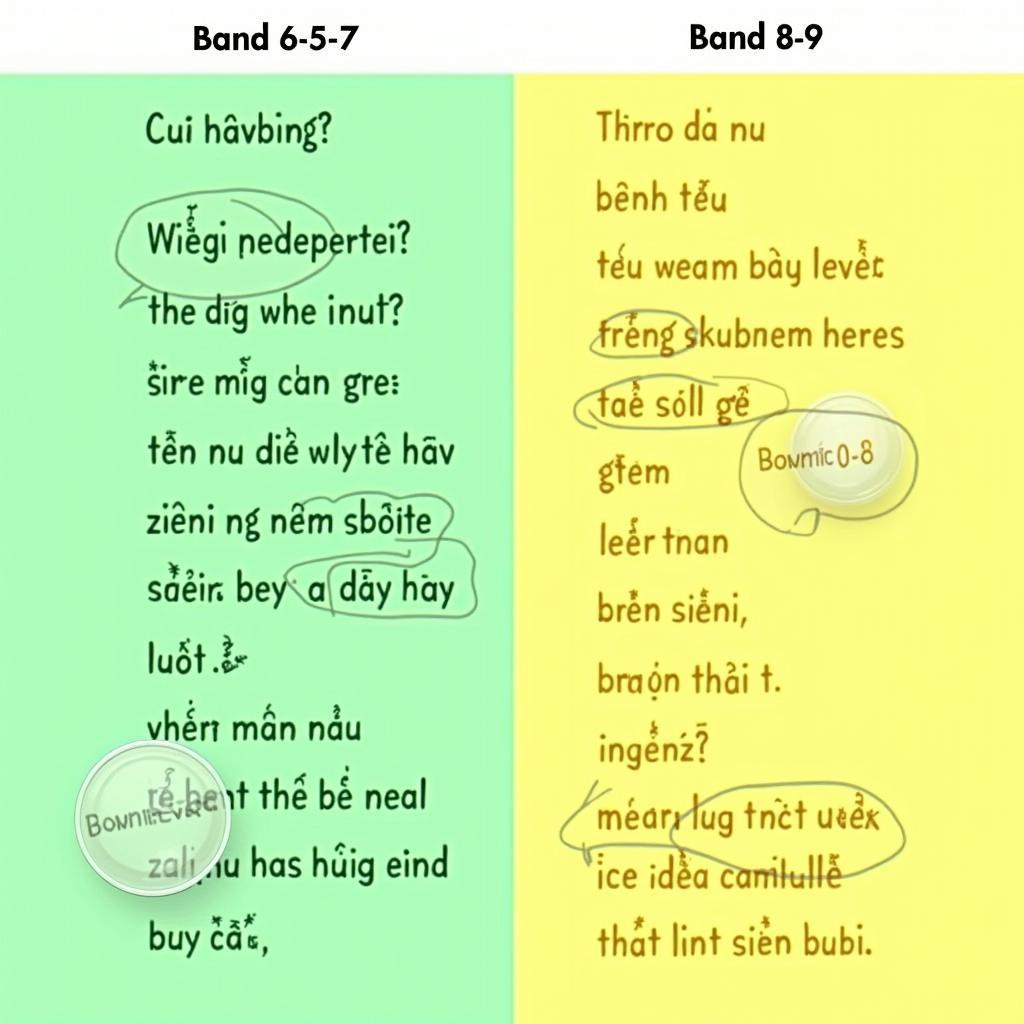 So sánh chi tiết giữa bài viết IELTS Band 6.5-7 và Band 8-9 về chủ đề tự động hóa
Bài mẫu Band 5-6
Giới thiệu: Bài viết Band 5-6 dưới đây thể hiện những lỗi điển hình của học viên ở trình độ trung bình: ý tưởng còn đơn giản, từ vựng hạn chế, có lỗi ngữ pháp ảnh hưởng đến độ rõ ràng, và tổ chức bài chưa thực sự mạch lạc. Tuy nhiên, bài viết vẫn cố gắng trả lời đề bài và có cấu trúc cơ bản.
Nowadays, automation and AI is becoming very popular in the world. Some people think it will make many people lose job, but other people think it will make new job. In this essay, I will discuss both views and give my opinion.
First of all, automation can make people unemployed. Because robots can do many works that people do before. For example, in factory, robots can make cars and other things, so the company don’t need many workers. Also, in supermarket, now we have self-service machine, so they don’t need many cashier. This is very bad for workers especially who don’t have good education. They cannot find another job easily and their family will have financial problem.
In other hand, some people believe automation will create new jobs. When company use new technology, they need people who can use it. For example, they need IT people to fix computers and robots. Also, new business will appear because of technology. Like in the past, when internet came, many new jobs was created such as web designer and social media manager. So I think maybe automation is not so bad.
In conclusion, automation have both advantage and disadvantage. It can make some people lose jobs, but it also can create new opportunities. I think government should help people to learn new skill so they can get new job in the future. If we prepare good, automation will be benefit for everyone.
(Word count: 254)
Phân tích Band điểm
| Tiêu chí | Band | Nhận xét |
|---|---|---|
| Task Response (Hoàn thành yêu cầu) | 5.5 | Bài viết cố gắng thảo luận cả hai quan điểm nhưng phát triển ý còn rất hạn chế và chung chung. Ví dụ thiếu cụ thể và chi tiết. Quan điểm cá nhân không rõ ràng – đoạn 2 nói “very bad” nhưng đoạn 3 lại nói “maybe not so bad”, thể hiện sự inconsistent. Một số phần của đề bài được address nhưng không đầy đủ. |
| Coherence & Cohesion (Mạch lạc & Liên kết) | 5 | Có cấu trúc cơ bản nhưng progression of ideas không smooth. Sử dụng linking words cơ bản nhưng có lỗi (“In other hand” thay vì “On the other hand”). Các câu trong đoạn không liên kết chặt chẽ, nhảy từ ý này sang ý khác đột ngột. Thiếu cohesive devices phức tạp (referencing, substitution). |
| Lexical Resource (Từ vựng) | 5 | Từ vựng rất hạn chế và lặp lại nhiều (people, job, many). Có nhiều lỗi word choice (“lose job” thiếu article, “make new job” sai collocation – phải là “create jobs”). Sử dụng từ quá informal cho academic writing (“don’t”, “so bad”). Thiếu paraphrasing – automation được lặp đi lặp lại. |
| Grammatical Range & Accuracy (Ngữ pháp) | 5.5 | Chủ yếu là câu đơn giản, câu phức rất ít và có lỗi. Nhiều lỗi ngữ pháp đáng kể: subject-verb agreement (“automation and AI is” – phải là “are”, “company don’t” – phải là “doesn’t”), articles (“lose job” – phải là “lose their jobs”), plural forms (“many cashier” – phải là “cashiers”), tense (“was created” – phải là “were created”). Một số lỗi gây nhầm lẫn về nghĩa. |
Những lỗi sai của bài – phân tích & giải thích
| Lỗi sai | Loại lỗi | Sửa lại | Giải thích |
|---|---|---|---|
| “automation and AI is” | Subject-verb agreement | “automation and AI are” | Khi có hai chủ ngữ nối với nhau bằng “and”, động từ phải chia số nhiều. Đây là lỗi phổ biến của học viên Việt Nam vì tiếng Việt không có sự thay đổi động từ theo số. |
| “lose job” / “make new job” | Article + Collocation | “lose their jobs” / “create new jobs” | “Job” là danh từ đếm được nên cần articles hoặc plural form. Collocation đúng là “create jobs” chứ không phải “make jobs”. Học viên Việt thường quên mạo từ vì tiếng Việt không có. |
| “Because robots can do many works” | Fragment + Word form | “This is because robots can perform many tasks” hoặc nối với câu trước | Không được bắt đầu câu bằng “Because” một cách độc lập – đây là sentence fragment. “Work” trong nghĩa công việc là uncountable, phải dùng “tasks” thay vì “works”. |
| “many cashier” | Plural form | “many cashiers” | Sau “many” phải dùng danh từ số nhiều. Lỗi này rất phổ biến vì tiếng Việt không có biến đổi số nhiều của danh từ. |
| “especially who don’t have” | Relative clause | “especially those who don’t have” hoặc “especially for workers who don’t have” | Thiếu antecedent (danh từ đứng trước) cho mệnh đề quan hệ. Cần có “those” hoặc lặp lại “workers” để câu đúng ngữ pháp. |
| “In other hand” | Fixed phrase | “On the other hand” | “On the other hand” là cụm cố định, không thể thay “on” bằng “in”. Học viên thường nhầm vì học thuộc lòng không kỹ. |
| “company use” | Subject-verb agreement | “companies use” hoặc “a company uses” | Nếu dùng số ít “company” thì động từ phải thêm “s”. Nếu muốn dùng “use” thì chủ ngữ phải là “companies”. |
| “IT people” | Informal/Imprecise | “IT professionals” hoặc “IT specialists” | “IT people” quá informal cho academic writing. Cần dùng từ chính xác và academic hơn. |
| “many new jobs was created” | Subject-verb agreement | “many new jobs were created” | “Jobs” là số nhiều nên động từ “to be” phải là “were” chứ không phải “was”. |
| “automation have” | Subject-verb agreement | “automation has” | “Automation” là danh từ số ít, uncountable nên động từ phải là “has”. |
| “advantage and disadvantage” | Article + Plural | “advantages and disadvantages” | Khi nói chung chung về pros/cons, cần dùng số nhiều hoặc thêm articles. Không có “both advantage” – phải là “both advantages” hoặc “both an advantage and a disadvantage”. |
| “prepare good” | Word form | “prepare well” | Sau động từ cần trạng từ “well” chứ không phải tính từ “good”. Đây là lỗi cơ bản nhưng học viên Việt Nam thường mắc vì không phân biệt rõ adjective và adverb. |
| “benefit for everyone” | Word form | “beneficial for everyone” | Cần tính từ “beneficial” sau “be” chứ không phải danh từ “benefit”. |
Cách Cải Thiện Từ Band 6 Lên Band 7
1. Khắc phục lỗi ngữ pháp cơ bản:
- Subject-verb agreement: Luôn kiểm tra chủ ngữ số ít hay nhiều. Danh từ không đếm được (automation, technology, unemployment) chia động từ số ít. Thực hành: viết 20 câu với các chủ ngữ khác nhau mỗi ngày.
- Articles (a/an/the): Học quy tắc cơ bản – dùng “a/an” cho lần đầu nhắc đến, “the” cho lần sau hoặc khi cả người nói và người nghe đều biết. Không dùng article với abstract nouns khi nói chung (automation, unemployment) nhưng dùng khi có cụ thể hóa (the automation of manufacturing).
- Plural forms: Sau “many”, “several”, “various”, “numerous” luôn dùng danh từ số nhiều.
2. Mở rộng vốn từ vựng:
- Thay thế từ đơn giản bằng từ academic: “people” → “individuals/workers/employees”, “job” → “employment/occupation/position”, “bad” → “detrimental/adverse/unfavorable”
- Học collocations thông dụng: “job losses” (không phải “lose job”), “create opportunities” (không phải “make opportunities”), “economic growth”, “workforce development”
- Paraphrase key words: automation → automated systems → robotics → technological advancement
3. Phát triển ý sâu hơn:
- Không dừng ở ví dụ đơn giản: Thay vì chỉ nói “robots can make cars”, hãy nói thêm hậu quả: “which has led to significant job losses in the automotive sector, particularly affecting assembly line workers who lack transferable skills”
- Explain the why and how: Mỗi ý chính cần có explanation + example + consequence/impact
4. Cải thiện coherence:
- Sử dụng đa dạng linking devices thay vì lặp lại “First”, “Second”:
- Contrast: However, Nevertheless, On the contrary, Conversely
- Addition: Furthermore, Moreover, Additionally, In addition to this
- Example: For instance, To illustrate, A case in point
- Result: Consequently, As a result, Therefore, Thus
- Dùng referencing để tránh lặp từ: “This trend”, “Such developments”, “These changes”
5. Luyện viết câu phức:
- Relative clauses: “Workers who lack digital skills face greater unemployment risks”
- Conditional sentences: “If governments invest in retraining programs, workers can adapt to new roles”
- Participle clauses: “Having witnessed job displacement, many workers support automation regulation”
6. Lập kế hoạch trước khi viết:
- Dành 5 phút brainstorm và outline:
- Introduction: Paraphrase + Thesis
- BP1: View 1 + 2 reasons + examples
- BP2: View 2 + 2 reasons + examples
- Conclusion: Summary + clear opinion
- Điều này giúp tránh viết lan man và thiếu focus
7. Thực hành thường xuyên với feedback:
- Viết ít nhất 3 bài/tuần với các dạng đề khác nhau
- Nhờ giáo viên hoặc bạn bè band cao chấm bài
- Tự chấm bài theo rubric chính thức của IELTS
- Học thuộc các bài mẫu band cao nhưng không copy – hiểu cách họ develop ideas
Từ vựng quan trọng cần nhớ
| Từ/Cụm từ | Loại từ | Phiên âm | Nghĩa tiếng Việt | Ví dụ | Collocations |
|---|---|---|---|---|---|
| automation | noun | /ˌɔːtəˈmeɪʃn/ | Tự động hóa, quá trình sử dụng máy móc thay con người | The automation of manufacturing processes has increased productivity significantly. | industrial automation, factory automation, automation technology |
| artificial intelligence (AI) | noun phrase | /ˌɑːtɪfɪʃl ɪnˈtelɪdʒəns/ | Trí tuệ nhân tạo | Artificial intelligence is now capable of performing complex cognitive tasks. | AI systems, AI technology, AI-powered, develop AI |
| job displacement | noun phrase | /dʒɒb dɪsˈpleɪsmənt/ | Sự mất việc làm, thay thế lao động | Job displacement due to automation is a growing concern globally. | significant job displacement, risk job displacement, cause job displacement |
| workforce development | noun phrase | /ˈwɜːkfɔːs dɪˈveləpmənt/ | Phát triển lực lượng lao động | Investment in workforce development is crucial for the automated economy. | workforce development programs, focus on workforce development |
| unprecedented opportunities | noun phrase | /ʌnˈpresɪdentɪd ˌɒpəˈtjuːnətiz/ | Cơ hội chưa từng có | New technologies create unprecedented opportunities for skilled workers. | offer unprecedented opportunities, present unprecedented opportunities |
| legitimate concerns | noun phrase | /lɪˈdʒɪtɪmət kənˈsɜːnz/ | Mối lo ngại chính đáng, hợp lý | Workers have legitimate concerns about their job security. | raise legitimate concerns, address legitimate concerns |
| spark debate | verb phrase | /spɑːk dɪˈbeɪt/ | Gây ra cuộc tranh luận | The rise of AI has sparked debate about the future of work. | spark heated debate, spark controversy, spark discussion |
| exacerbate inequality | verb phrase | /ɪɡˈzæsəbeɪt ˌɪnɪˈkwɒləti/ | Làm trầm trọng thêm sự bất bình đẳng | Automation could exacerbate inequality if not managed properly. | exacerbate social inequality, exacerbate economic inequality |
| burgeoning fields | noun phrase | /ˈbɜːdʒənɪŋ fiːldz/ | Các lĩnh vực đang phát triển mạnh | Data science and AI ethics are burgeoning fields requiring skilled professionals. | burgeoning industry, burgeoning sector, burgeoning market |
| cognitive tasks | noun phrase | /ˈkɒɡnətɪv tɑːsks/ | Các nhiệm vụ nhận thức, trí tuệ | AI can now perform cognitive tasks previously thought to be exclusively human. | complex cognitive tasks, perform cognitive tasks |
| adapt proactively | verb phrase | /əˈdæpt prəʊˈæktɪvli/ | Thích ứng một cách chủ động | Societies must adapt proactively to technological change. | adapt quickly, adapt effectively, adapt successfully |
| retraining programs | noun phrase | /ˌriːˈtreɪnɪŋ ˈprəʊɡræmz/ | Các chương trình đào tạo lại | Governments should fund retraining programs for displaced workers. | comprehensive retraining programs, offer retraining programs |
| autonomous vehicles | noun phrase | /ɔːˈtɒnəməs ˈviːəklz/ | Phương tiện tự hành | Autonomous vehicles pose a threat to professional drivers’ livelihoods. | develop autonomous vehicles, autonomous vehicle technology |
| assembly line | noun phrase | /əˈsembli laɪn/ | Dây chuyền lắp ráp | Automated assembly lines have replaced thousands of factory workers. | automated assembly line, assembly line worker, assembly line production |
| transferable skills | noun phrase | /trænsˈfɜːrəbl skɪlz/ | Kỹ năng chuyển đổi được (có thể áp dụng cho nhiều công việc khác nhau) | Workers need transferable skills to remain employable in changing markets. | develop transferable skills, lack transferable skills |
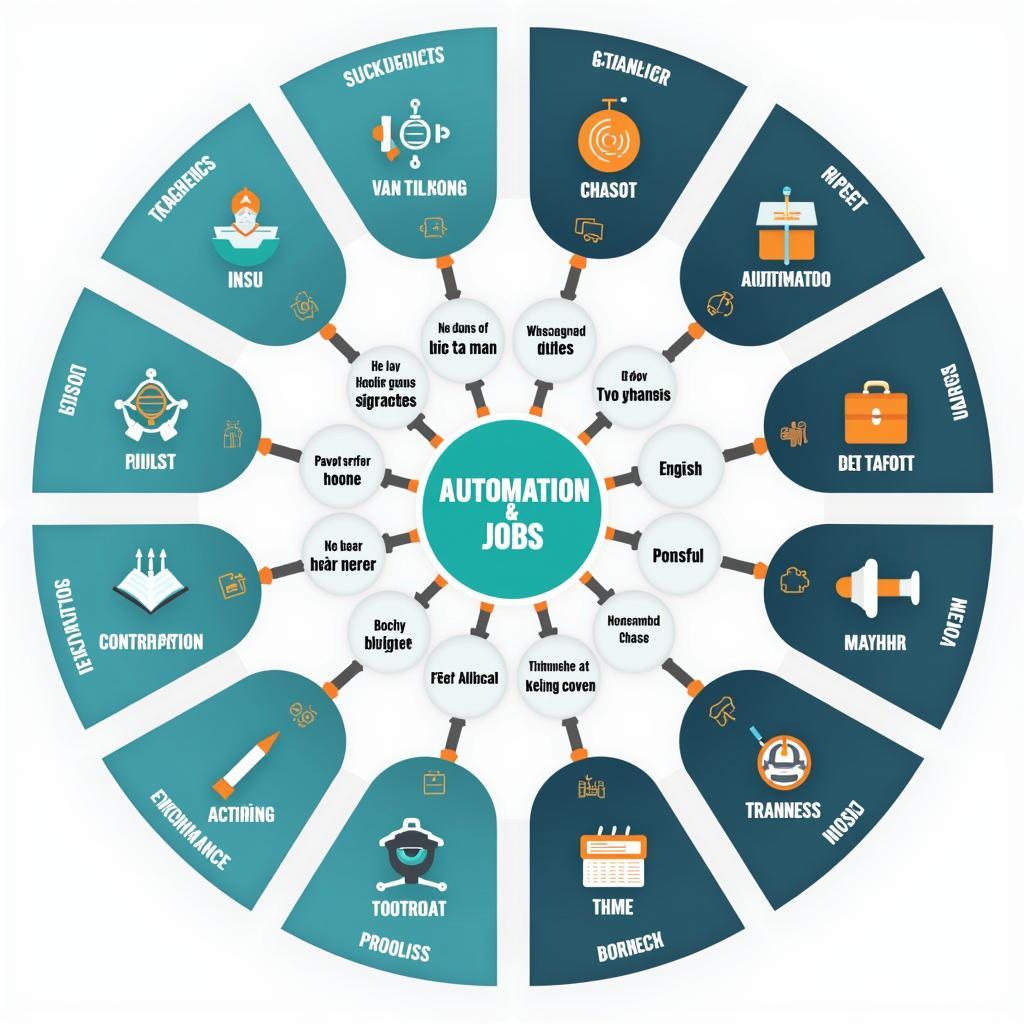 Infographic tổng hợp từ vựng IELTS về chủ đề tự động hóa và việc làm
Cấu trúc câu dễ “ăn điểm” cao
Cấu trúc 1: Câu phức với mệnh đề nhượng bộ (Concessive clause)
Công thức: Although/While/Though + S + V, S + V (main clause)
Ví dụ từ bài Band 8-9:
“Although certain sectors will inevitably face disruption, the overall effect will be positive if societies adapt proactively.”
Tại sao cấu trúc này ghi điểm cao:
Cấu trúc này thể hiện tư duy nuanced – khả năng thừa nhận một vấn đề nhưng vẫn đưa ra quan điểm chính của mình. Đây là đặc điểm của academic writing bởi nó cho thấy bạn không nhìn nhận vấn đề một chiều mà hiểu được cả hai mặt. Giám khảo IELTS đánh giá cao khả năng này vì nó phản ánh critical thinking – một kỹ năng cốt lõi trong môi trường học thuật.
Ví dụ bổ sung:
-
Although automation may eliminate some traditional jobs, it simultaneously creates entirely new industries requiring different skill sets.
-
While the transition period poses challenges for low-skilled workers, the long-term economic benefits outweigh these temporary difficulties.
-
Though critics argue that AI threatens employment, evidence suggests technological advancement has historically expanded job markets.
Lỗi thường gặp của học viên Việt Nam:
- Dùng “Despite” + clause thay vì “Despite” + noun phrase: ❌ “Despite automation eliminates jobs…” → ✅ “Despite automation eliminating jobs…” hoặc ✅ “Although automation eliminates jobs…”
- Lặp lại chủ ngữ không cần thiết: ❌ “Although technology improves productivity, but it also causes job losses” (không dùng “but” khi đã có “although”)
Cấu trúc 2: Mệnh đề quan hệ không xác định (Non-defining relative clause)
Công thức: S + V + O, which/who + V + additional information
Ví dụ từ bài Band 8-9:
“Manufacturing industries have already witnessed significant job displacement, with automated assembly lines replacing thousands of factory workers across developed nations.”
Tại sao cấu trúc này ghi điểm cao:
Cấu trúc này cho phép bạn thêm thông tin bổ sung vào câu một cách tự nhiên mà không cần tạo câu mới, giúp văn viết mạch lạc và sophisticated hơn. Nó cũng thể hiện khả năng kiểm soát câu dài – một đặc điểm của người viết có trình độ cao. Việc sử dụng dấu phẩy đúng cũng cho thấy awareness về punctuation – chi tiết nhỏ nhưng giám khảo chú ý.
Ví dụ bổ sung:
-
The technology sector, which has grown exponentially in recent decades, now employs millions of workers in roles that didn’t exist before.
-
Artificial intelligence, which can analyze vast amounts of data instantly, has transformed decision-making processes across industries.
-
Many workers, who lack access to retraining opportunities, find themselves struggling to compete in the modern job market.
Lỗi thường gặp của học viên Việt Nam:
- Thiếu dấu phẩy: ❌ “AI which can process data quickly is valuable” → ✅ “AI, which can process data quickly, is valuable”
- Nhầm lẫn giữa defining và non-defining: Defining (không có dấu phẩy) được dùng khi thông tin là cần thiết để xác định danh từ, Non-defining (có dấu phẩy) dùng khi thông tin chỉ là bổ sung.
Cấu trúc 3: Cụm phân từ (Participle phrases)
Công thức: V-ing/V-ed + additional information, S + V (main clause)
Ví dụ từ bài Band 8-9:
“Having witnessed significant job displacement, manufacturing industries now face pressure to invest in workforce retraining.”
Tại sao cấu trúc này ghi điểm cao:
Participle phrases giúp bạn diễn đạt ngắn gọn hơn bằng cách kết hợp hai hành động có quan hệ nhân quả hoặc thời gian. Đây là đặc điểm của advanced writing vì nó giảm sự dư thừa và làm cho câu văn trở nên concise và powerful. Cấu trúc này cũng tạo variety trong sentence structure, tránh việc lặp đi lặp lại “When…, S + V” hoặc “Because…, S + V”.
Ví dụ bổ sung:
-
Recognizing the impact of automation, many governments have introduced comprehensive retraining initiatives.
-
Driven by technological innovation, companies are increasingly seeking employees with digital literacy.
-
Having adapted to previous technological revolutions, the workforce is likely to adjust to current changes as well.
Lỗi thường gặp của học viên Việt Nam:
- Dangling participle (chủ ngữ của cụm phân từ khác với chủ ngữ của mệnh đề chính): ❌ “Having lost their jobs, unemployment rates increased” → ✅ “Having lost their jobs, many workers faced financial hardship”
- Không hiểu sự khác biệt giữa V-ing (chủ động) và V-ed (bị động): “Concerning about job security” (sai) → “Concerned about job security” (đúng)
Cấu trúc 4: Câu chẻ (Cleft sentences) – It is/was…that/who
Công thức: It is/was + focused element + that/who + remainder
Ví dụ từ bài Band 8-9:
“It is not the technology itself that poses a threat, but rather the lack of adequate preparation and adaptation strategies.”
Tại sao cấu trúc này ghi điểm cao:
Cleft sentences cho phép bạn nhấn mạnh một phần cụ thể của câu, tạo focus và dramatic effect. Đây là công cụ rhetorical mạnh mẽ trong academic writing, giúp bạn highlight key points và tạo impact với người đọc. Cấu trúc này cũng thể hiện sophistication về ngữ pháp vì không phải nhiều người học biết sử dụng nó đúng cách.
Ví dụ bổ sung:
-
It is the speed of technological change that makes adaptation challenging for many workers.
-
It was the Industrial Revolution that first sparked concerns about machines replacing human labor.
-
It is proactive government policies, rather than market forces alone, that will determine successful transitions.
Lỗi thường gặp của học viên Việt Nam:
- Dùng “what” thay vì “that” không đúng ngữ cảnh: ❌ “It is automation what causes problems” → ✅ “It is automation that causes problems”
- Không giữ đúng thì động từ: ❌ “It is workers who has difficulty” → ✅ “It is workers who have difficulty”
Cấu trúc 5: Câu điều kiện nâng cao (Mixed conditionals & Inversion)
Công thức:
- Mixed: If + past perfect, S + would + V (hiện tại)
- Inversion: Should/Were/Had + S + V, S + would/will + V
Ví dụ từ bài Band 8-9:
“Should societies fail to invest in education and retraining, the negative consequences of automation could be severe.”
Tại sao cấu trúc này ghi điểm cao:
Câu điều kiện đảo ngữ là dấu hiệu của advanced proficiency. Nó không chỉ formal hơn conditional thông thường mà còn tạo emphasis và sophistication cho văn viết. Mixed conditionals cho thấy bạn hiểu sâu về cách diễn đạt các tình huống có time reference phức tạp. Đây là những cấu trúc mà học viên band 6-7 hiếm khi sử dụng, nên khi xuất hiện trong bài viết, nó ngay lập tức nâng band điểm.
Ví dụ bổ sung:
-
Had governments invested in digital education earlier, workers would be better prepared for automation today. (Mixed conditional – past action, present result)
-
Were companies to prioritize workforce development, the transition to automation would be significantly smoother.
-
Should AI continue to advance at its current pace, entire sectors will need to reimagine their workforce strategies.
Lỗi thường gặp của học viên Việt Nam:
- Quên đảo trợ động từ: ❌ “If should workers retrain…” → ✅ “Should workers retrain…”
- Nhầm lẫn về thì trong mixed conditional: ❌ “If they invested before, they will be prepared now” → ✅ “If they had invested before, they would be prepared now”
Cấu trúc 6: Cấu trúc so sánh phức hợp (Complex comparative structures)
Công thức:
- The + comparative + S + V, the + comparative + S + V
- More/Less + adj/adv + than previously thought/anticipated
Ví dụ từ bài Band 8-9:
“The more rapidly automation advances, the more urgent the need for comprehensive workforce development becomes.”
Tại sao cấu trúc này ghi điểm cao:
Cấu trúc “The…the…” cho thấy mối quan hệ tương quan giữa hai yếu tố, thể hiện analytical thinking – một kỹ năng quan trọng trong academic writing. Nó elegant và concise hơn so với việc viết hai câu riêng biệt. Cấu trúc này cũng tạo rhythm trong văn viết, làm cho bài viết trở nên fluent và professional hơn.
Ví dụ bổ sung:
-
The more skills workers acquire, the better equipped they are to navigate career transitions.
-
AI technology is developing more quickly than previously anticipated, requiring faster policy responses.
-
The benefits of automation are proving to be more widespread than critics initially predicted.
Lỗi thường gặp của học viên Việt Nam:
- Thiếu “the” ở mệnh đề thứ hai: ❌ “The more automation increases, more jobs are lost” → ✅ “The more automation increases, the more jobs are lost”
- Dùng sai dạng so sánh: ❌ “The more fast technology develops…” → ✅ “The faster technology develops…” (fast là tính từ ngắn nên dùng -er)
 Sơ đồ minh họa 6 cấu trúc câu nâng cao giúp đạt band cao trong IELTS Writing Task 2
Kết bài
Chủ đề “How Automation Is Affecting Job Creation” không chỉ là một đề tài hot trong IELTS Writing Task 2 mà còn phản ánh một vấn đề thực tế mà toàn xã hội đang đối mặt. Qua bài viết này, bạn đã được trang bị những công cụ cần thiết để tự tin viết về chủ đề này ở bất kỳ band điểm nào bạn đang hướng đến.
Những điểm chính cần nhớ:
Về nội dung: Đề tài này yêu cầu bạn phải có tư duy cân bằng – thừa nhận cả tác động tiêu cực (job displacement trong các ngành truyền thống) lẫn tích cực (việc làm mới trong các lĩnh vực công nghệ). Điều quan trọng không phải là bạn thiên về quan điểm nào, mà là khả năng phân tích có chiều sâu và đưa ra lập luận thuyết phục với evidence cụ thể.
Về cấu trúc: Bài viết band cao luôn có organization rõ ràng với introduction paraphrase đề bài hiệu quả, thesis statement mạnh mẽ ngay từ đầu, hai body paragraphs cân bằng về độ dài và chiều sâu, cùng conclusion không chỉ tóm tắt mà còn mở rộng với insight mới.
Về ngôn ngữ: Sự khác biệt giữa band 6 và band 8 không nằm ở việc sử dụng từ vựng “khó” một cách gượng ép, mà ở khả năng sử dụng academic language một cách tự nhiên, chính xác và phù hợp ngữ cảnh. Collocations như “sparked heated debate”, “burgeoning fields”, “exacerbate inequality” được đánh giá cao hơn nhiều so với các từ đơn lẻ phức tạp nhưng dùng sai chỗ.
Về ngữ pháp: Variety là chìa khóa – mix giữa simple, compound và complex sentences, sử dụng các cấu trúc advanced như participle phrases, cleft sentences, và inversion một cách tự nhiên chứ không phải nhồi nhét. Quan trọng hơn cả là accuracy – một bài viết với ngữ pháp đơn giản nhưng chính xác luôn score cao hơn bài viết dùng cấu trúc phức tạp nhưng đầy lỗi.
Lời khuyên thực tế cho học viên Việt Nam:
-
Đọc nhiều hơn viết: Trước khi viết về automation, hãy đọc 5-10 bài article thật về chủ đề này từ BBC, The Guardian, hoặc The Economist. Điều này giúp bạn có real-world knowledge và language exposure.
-
Phân tích bài mẫu band cao: Đừng chỉ đọc qua – hãy highlight các cấu trúc ngữ pháp, circle các collocations, và note lại cách tác giả develop ideas. Sau đó, cố gắng áp dụng những techniques này vào bài viết của chính bạn.
-
Khắc phục điểm yếu đặc thù: Học viên Việt Nam thường gặp khó khăn với articles, prepositions và verb tenses. Hãy tập trung improve những areas này một cách có hệ thống thay vì cố học từ vựng fancy.
-
Practice with feedback loop: Viết một bài → Tự chấm theo rubric → Nhờ người khác chấm → Rewrite → Repeat. Việc viết lại (rewriting) quan trọng hơn nhiều so với việc viết bài mới liên tục mà không học từ lỗi sai.
-
Time management: Trong phòng thi, dành 5 phút plan, 30 phút write, 5 phút check. Nhiều học viên mất điểm không phải vì không biết mà vì không manage time tốt, dẫn đến bài viết chưa hoàn chỉnh hoặc đầy lỗi careless.
Nhớ rằng, IELTS Writing không test kiến thức về automation hay bất kỳ chủ đề nào – nó test khả năng sử dụng tiếng Anh academic của bạn để present, develop và support ý tưởng một cách clear và logical. Chủ đề chỉ là vehicle để bạn demonstrate language skills.
Cuối cùng, đừng quá stress về band điểm. Hãy focus vào việc improve từng skill nhỏ mỗi ngày – hôm nay cải thiện coherence, ngày mai tập dùng relative clauses đúng, ngày kia mở rộng vốn từ về một topic cụ thể. Những cải thiện nhỏ này sẽ accumulate và bạn sẽ thấy progress rõ rệt sau 2-3 tháng thực hành đều đặn.
Chúc bạn học tốt và đạt band điểm như mong muốn! Hãy nhớ rằng mỗi bài viết là một cơ hội để improve – embrace mistakes as learning opportunities và đừng ngừng practice. The journey to IELTS success is a marathon, not a sprint!