
Mở Bài
Chủ đề biến đổi khí hậu và tác động của nó đến đại dương thế giới là một trong những chủ đề xuất hiện thường xuyên nhất trong các đề thi IELTS Reading thực tế. Từ Cambridge IELTS 10 đến các đề thi gần đây nhất, các bài đọc về môi trường biển, sự ấm lên của đại dương và hệ sinh thái biển luôn chiếm tỷ lệ đáng kể. Điều này phản ánh tầm quan trọng toàn cầu của vấn đề và yêu cầu người học IELTS phải nắm vững cả nội dung chuyên môn lẫn kỹ năng đọc hiểu học thuật.
Trong bài viết này, bạn sẽ được thực hành với một đề thi IELTS Reading hoàn chỉnh gồm 3 passages với độ khó tăng dần từ Easy đến Hard, bao gồm tất cả 40 câu hỏi như trong kỳ thi thật. Mỗi passage được thiết kế dựa trên format chuẩn Cambridge, với các dạng câu hỏi đa dạng như Multiple Choice, True/False/Not Given, Yes/No/Not Given, Matching Headings, và Summary Completion. Bên cạnh đề thi, bạn sẽ nhận được đáp án chi tiết kèm giải thích cụ thể, phân tích kỹ thuật paraphrase, và bộ từ vựng quan trọng được trích xuất từng passage.
Đề thi này phù hợp cho học viên từ band 5.0 trở lên, đặc biệt hữu ích cho những bạn đang hướng đến band 6.5-7.5 và cần làm quen với các chủ đề môi trường học thuật.
1. Hướng Dẫn Làm Bài IELTS Reading
Tổng Quan Về IELTS Reading Test
IELTS Reading Test kéo dài 60 phút với 3 passages và tổng cộng 40 câu hỏi. Đây là bài thi không có thời gian chuyển đáp án riêng, vì vậy bạn phải quản lý thời gian một cách khoa học.
Phân bổ thời gian khuyến nghị:
- Passage 1 (Easy): 15-17 phút – Đây là passage dễ nhất, bạn cần tận dụng để ghi điểm tối đa
- Passage 2 (Medium): 18-20 phút – Độ khó trung bình, yêu cầu kỹ năng paraphrase tốt
- Passage 3 (Hard): 23-25 phút – Passage khó nhất, cần thời gian phân tích và suy luận
Lưu ý quan trọng: Luôn dành 2-3 phút cuối để kiểm tra và chuyển đáp án vào Answer Sheet một cách cẩn thận.
Các Dạng Câu Hỏi Trong Đề Này
Đề thi mẫu này bao gồm 7 dạng câu hỏi phổ biến nhất trong IELTS Reading:
- Multiple Choice – Câu hỏi trắc nghiệm với 3-4 lựa chọn
- True/False/Not Given – Xác định thông tin đúng, sai hay không được đề cập
- Yes/No/Not Given – Xác định quan điểm của tác giả
- Matching Headings – Nối tiêu đề với đoạn văn
- Sentence Completion – Hoàn thành câu với từ trong bài
- Summary Completion – Điền từ vào tóm tắt
- Short-answer Questions – Trả lời câu hỏi ngắn
Mỗi dạng câu hỏi yêu cầu kỹ năng khác nhau: scanning cho thông tin cụ thể, skimming cho ý chính, và close reading cho phân tích chi tiết.
2. IELTS Reading Practice Test
PASSAGE 1 – The Ocean’s Changing Temperature
Độ khó: Easy (Band 5.0-6.5)
Thời gian đề xuất: 15-17 phút
The world’s oceans are experiencing unprecedented changes in temperature, and these shifts are having profound effects on marine life and global weather patterns. Scientists have been monitoring ocean temperatures for decades, and the data reveals a clear and concerning trend: our oceans are getting warmer at an accelerating rate.
Surface waters in most parts of the world have increased in temperature by approximately 0.13 degrees Celsius per decade over the past century. While this might seem like a small number, it represents an enormous amount of heat energy being absorbed by the oceans. In fact, the oceans have absorbed more than 90% of the excess heat trapped by greenhouse gases in Earth’s atmosphere. This heat absorption has helped to slow the rate of atmospheric warming, but it comes at a significant cost to marine ecosystems.
The warming of ocean waters affects marine life in multiple ways. Many fish species are highly sensitive to temperature changes and are now migrating toward cooler waters near the poles. This migration pattern disrupts traditional fishing grounds and affects the livelihoods of millions of people who depend on fishing. Coral reefs, which are among the most biodiverse ecosystems on the planet, are particularly vulnerable. When water temperatures rise just 1-2 degrees above normal summer maximums, corals experience bleaching events. During bleaching, corals expel the symbiotic algae living in their tissues, turning white and often dying if conditions don’t improve quickly.
Ocean circulation patterns are also being altered by warming waters. The thermohaline circulation, sometimes called the “global conveyor belt,” is a system of ocean currents that distributes heat around the planet. This circulation is driven by differences in water temperature and salinity. As polar ice melts due to warming, it adds fresh water to the oceans, which can disrupt these circulation patterns. Scientists worry that significant changes to ocean circulation could lead to dramatic shifts in regional climates, particularly in Europe, which is kept relatively warm by the Gulf Stream.
The relationship between ocean temperature and weather is complex but crucial. Warmer oceans provide more energy for storms, leading to more intense hurricanes and typhoons. The water vapor evaporating from warm ocean surfaces becomes fuel for these powerful weather systems. Records show that the number of Category 4 and 5 hurricanes has increased in recent decades, and many scientists link this trend to rising ocean temperatures.
Coastal communities around the world are already experiencing the effects of warmer oceans. Thermal expansion – the tendency of water to expand as it warms – is one of the main contributors to sea-level rise. As ocean water warms, it takes up more space, causing sea levels to increase even before accounting for melting ice sheets and glaciers. This expansion has contributed to approximately one-third of the observed sea-level rise over the past century.
Some regions are warming faster than others. The Arctic Ocean, for example, is warming at roughly twice the global average rate. This phenomenon, known as Arctic amplification, creates a feedback loop: as ice melts, it exposes darker ocean water that absorbs more sunlight than reflective ice, leading to even more warming. The consequences extend far beyond the Arctic itself, influencing weather patterns across the Northern Hemisphere.
Despite these challenges, there is hope. Understanding ocean temperature changes helps scientists make better predictions about future climate scenarios. International cooperation on reducing greenhouse gas emissions could slow the rate of ocean warming. Additionally, some marine species show remarkable adaptability, and conservation efforts focused on protecting critical habitats can help ecosystems become more resilient to temperature changes. However, the window for effective action is narrowing, and the decisions made in the coming decades will determine the future health of our oceans and the billions of people who depend on them.
 Hình ảnh minh họa đại dương nóng lên do biến đổi khí hậu với nhiệt độ tăng cao ảnh hưởng hệ sinh thái biển
Questions 1-13
Questions 1-5: Multiple Choice
Choose the correct letter, A, B, C or D.
1. According to the passage, surface ocean temperatures have risen by
- A. 0.13 degrees per year
- B. 0.13 degrees per decade
- C. 1.3 degrees per century
- D. 13 degrees per century
2. What percentage of excess atmospheric heat have the oceans absorbed?
- A. More than 50%
- B. Exactly 75%
- C. More than 90%
- D. 100%
3. Coral bleaching occurs when
- A. water becomes too salty
- B. temperatures rise 1-2 degrees above normal
- C. fish migrate to new areas
- D. ocean currents change direction
4. The thermohaline circulation is driven by differences in
- A. temperature and salinity
- B. wave height and depth
- C. wind speed and direction
- D. sunlight and darkness
5. Thermal expansion contributes to sea-level rise by approximately
- A. one-quarter
- B. one-third
- C. one-half
- D. two-thirds
Questions 6-9: True/False/Not Given
Do the following statements agree with the information given in the passage?
Write:
- TRUE if the statement agrees with the information
- FALSE if the statement contradicts the information
- NOT GIVEN if there is no information on this
6. Fish species moving toward polar regions are helping fishing communities earn more income.
7. The Gulf Stream helps keep Europe’s climate relatively warm.
8. The number of powerful hurricanes has decreased in recent decades.
9. The Arctic Ocean is warming at approximately twice the global average rate.
Questions 10-13: Sentence Completion
Complete the sentences below.
Choose NO MORE THAN THREE WORDS from the passage for each answer.
10. Corals expel _____ from their tissues during bleaching events.
11. Warmer oceans provide more _____ for storms to develop.
12. Arctic amplification creates a _____ that leads to more warming.
13. Some marine species demonstrate _____ to changing conditions.
PASSAGE 2 – Ocean Acidification: The Other CO2 Problem
Độ khó: Medium (Band 6.0-7.5)
Thời gian đề xuất: 18-20 phút
While much attention has been focused on the atmospheric accumulation of carbon dioxide and its role in global warming, a parallel crisis is unfolding beneath the ocean’s surface. The world’s oceans are becoming more acidic at a rate unprecedented in at least 300 million years, and this chemical transformation poses a fundamental threat to marine ecosystems. Scientists refer to this phenomenon as “the other CO2 problem,” and its consequences could be as catastrophic as those of atmospheric warming.
The chemistry behind ocean acidification is relatively straightforward. When carbon dioxide from the atmosphere dissolves in seawater, it forms carbonic acid, which releases hydrogen ions. These hydrogen ions bond with carbonate ions in the water, reducing the availability of carbonate for marine organisms. This process has caused ocean pH levels to drop by approximately 0.1 units since the Industrial Revolution – a change that represents a 30% increase in acidity. While the ocean remains slightly alkaline overall, the trend is clearly toward greater acidity, and the rate of change is what concerns scientists most.
The implications of this chemical shift are far-reaching. Many marine organisms, including corals, mollusks, and certain plankton species, build their shells and skeletons from calcium carbonate. As carbonate ions become less available, these organisms face increasing difficulty in forming and maintaining their structures. Laboratory experiments have shown that shellfish larvae exposed to more acidic conditions produce thinner, weaker shells and experience higher mortality rates. Some species of pteropods – tiny swimming snails that form a crucial part of the ocean food web – already show signs of shell dissolution in waters off the Pacific Northwest.
Coral reefs, already stressed by warming waters, face an additional challenge from acidification. The process of calcification, through which corals build their limestone skeletons, becomes more difficult in acidic conditions. Research conducted on the Great Barrier Reef has revealed that calcification rates have declined by 14% since 1990. If current trends continue, many coral species may be unable to build their structures faster than erosion breaks them down, leading to the gradual disintegration of reef systems that support approximately 25% of all marine species.
The effects extend beyond organisms with shells. Ocean acidification can affect the sensory systems of fish, particularly their ability to detect predators and navigate using chemical cues. Studies on clownfish larvae have demonstrated that exposure to elevated CO2 levels impairs their sense of smell, making them more vulnerable to predation. This could have cascading effects throughout marine food webs, as changes in predator-prey relationships ripple through ecosystems.
Regional variations in ocean acidification add complexity to the problem. Upwelling zones, where deep, CO2-rich waters rise to the surface, experience particularly high acidity levels. The Southern Ocean around Antarctica is acidifying more rapidly than other regions due to its cold waters, which absorb CO2 more readily. These variations mean that some marine communities will face acute challenges before others, potentially leading to abrupt ecosystem changes in vulnerable areas.
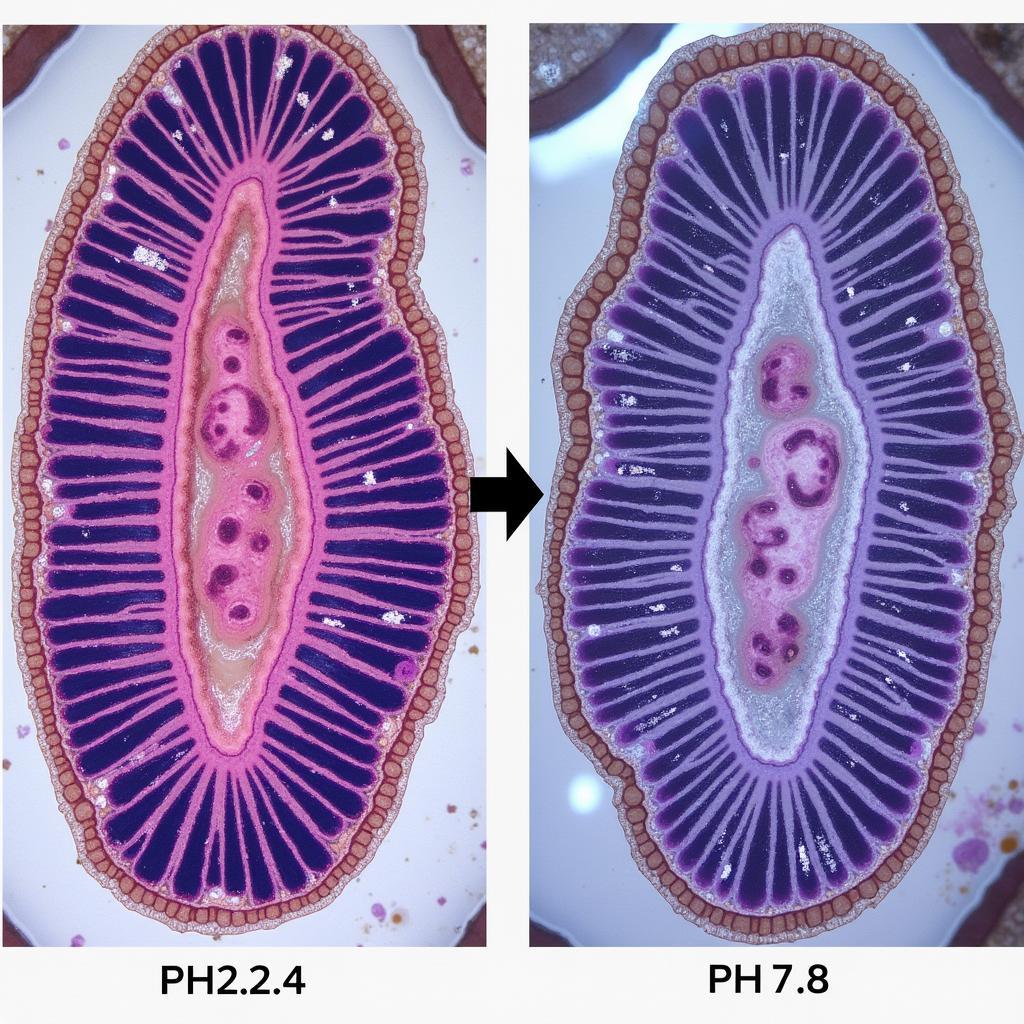 San hô bị ảnh hưởng bởi quá trình axit hóa đại dương với cấu trúc vôi bị suy yếu do pH nước biển giảm
The economic implications are substantial. The global shellfish industry, valued at billions of dollars annually, is particularly vulnerable. Oyster hatcheries in Oregon and Washington have already experienced massive die-offs linked to acidified water. These commercial operations have had to adapt by monitoring water chemistry carefully and timing their production cycles to avoid periods when upwelling brings particularly acidic water to the surface. The costs of such adaptations, along with potential production losses, could transform the industry.
Perhaps most concerning is the pace of change. During previous periods of ocean acidification in Earth’s history, the process unfolded over thousands or millions of years, allowing marine life time to adapt through evolutionary processes. The current rate of acidification is occurring over decades, leaving little time for adaptation. Paleontological evidence from past acidification events suggests that recovery of marine ecosystems can take hundreds of thousands of years after conditions stabilize.
Despite this sobering picture, research into ocean acidification is advancing rapidly, and some mitigation strategies are being explored. Reducing CO2 emissions remains the most crucial step. Some scientists are investigating whether adding alkaline materials to seawater could counteract acidification locally, though the feasibility and ecological impacts of such geoengineering approaches remain uncertain. Others focus on identifying naturally resilient species and understanding the mechanisms that allow some organisms to thrive in more acidic conditions.
International scientific collaboration has intensified, with research programs monitoring acidification globally and developing more sophisticated models to predict future changes. Understanding regional differences and identifying refugia – areas where conditions may remain more favorable – could help prioritize conservation efforts. Meanwhile, some marine organisms have shown surprising physiological plasticity, suggesting that adaptation may be possible for certain species if emission reduction efforts succeed in slowing the rate of change.
The challenge of ocean acidification underscores the interconnected nature of Earth’s systems. Actions taken on land, primarily the burning of fossil fuels, have consequences that ripple through ocean chemistry, affecting life forms from microscopic plankton to the humans who depend on healthy marine ecosystems. Addressing this challenge requires not only scientific understanding but also political will and coordinated global action on an unprecedented scale.
Questions 14-26
Questions 14-18: Yes/No/Not Given
Do the following statements agree with the claims of the writer in the passage?
Write:
- YES if the statement agrees with the claims of the writer
- NO if the statement contradicts the claims of the writer
- NOT GIVEN if it is impossible to say what the writer thinks about this
14. Ocean acidification is receiving more public attention than atmospheric carbon dioxide accumulation.
15. The rate of ocean acidification is faster than anything seen in the last 300 million years.
16. The ocean has already become fully acidic rather than alkaline.
17. Pteropods play an important role in ocean food webs.
18. All fish species are equally affected by ocean acidification.
Questions 19-22: Matching Headings
The passage has nine paragraphs (excluding the first paragraph). Choose the correct heading for paragraphs B, D, F, and H from the list of headings below.
List of Headings:
- i. Economic consequences for marine industries
- ii. The basic chemistry of carbon absorption
- iii. Variations across different ocean regions
- iv. Effects on fish behavior and senses
- v. Potential solutions and ongoing research
- vi. Threats to shell-building organisms
- vii. Historical comparison of acidification events
- viii. Impact on coral reef structures
- ix. The role of ocean currents
19. Paragraph B (starts with “The chemistry behind…”)
20. Paragraph D (starts with “Coral reefs, already stressed…”)
21. Paragraph F (starts with “Regional variations…”)
22. Paragraph H (starts with “Perhaps most concerning…”)
Questions 23-26: Summary Completion
Complete the summary below.
Choose NO MORE THAN TWO WORDS from the passage for each answer.
Ocean acidification occurs when CO2 dissolves in seawater and forms 23 . This reduces the availability of carbonate ions that marine creatures need to build shells. The ocean’s pH has decreased by 0.1 units since the 24 , representing a 30% increase in acidity. Organisms such as 25 are already showing signs of shell dissolution in some areas. The shellfish industry has been forced to monitor 26 carefully to avoid the most acidic conditions.
PASSAGE 3 – Marine Ecosystem Transformations and Cascading Effects
Độ khó: Hard (Band 7.0-9.0)
Thời gian đề xuất: 23-25 phút
The synergistic impacts of ocean warming and acidification are precipitating comprehensive transformations in marine ecosystems that extend far beyond the direct physiological effects on individual species. These changes manifest through complex ecological cascades that restructure food webs, alter biogeochemical cycles, and fundamentally reshape the spatial distribution of marine biodiversity. Understanding these systemic shifts requires an integrated perspective that considers not merely isolated environmental stressors but rather their cumulative and interactive effects on intricate biological networks.
Contemporary research has revealed that ocean warming is driving poleward migrations at an average rate of 72 kilometers per decade for numerous marine species, a velocity that substantially exceeds the migration rates observed in terrestrial ecosystems. This redistributive phenomenon is not occurring uniformly across taxonomic groups; different species respond according to their thermal tolerances, reproductive strategies, and ecological relationships. The result is the formation of “no-analog communities” – assemblages of species that have no historical precedent and whose ecological dynamics are fundamentally unpredictable. These novel ecosystems challenge traditional conservation approaches predicated on maintaining historical baselines and raise profound questions about the very concept of ecosystem restoration in a rapidly changing ocean.
The trophic cascades initiated by these redistributions can be particularly disruptive. Consider the case of the Northwest Atlantic, where warming waters have facilitated the northward expansion of subtropical predators while simultaneously reducing the abundance of cold-adapted prey species. This has resulted in dietary shifts for commercially important fish stocks, alterations in energy transfer efficiency between trophic levels, and changes in the nutritional quality of prey available to higher-order consumers. In some instances, the arrival of new predators has triggered trophic downgrading, whereby top predators exert disproportionate control over ecosystem structure, leading to the suppression of intermediate consumer species and sometimes resulting in the proliferation of their prey.
Oxygen depletion, or hypoxia, represents another critical consequence of ocean warming that acts synergistically with other stressors. Warmer water holds less dissolved oxygen, while simultaneously, higher temperatures increase the metabolic demands of marine organisms, creating a physiological squeeze. Furthermore, warming enhances stratification – the formation of distinct water layers that resist mixing – which reduces the transfer of oxygen from surface waters to deeper layers. The expansion of oxygen minimum zones has been documented across multiple ocean basins, creating physiological barriers that compress the viable habitat for numerous species into progressively narrower vertical ranges. This “habitat compression” increases vulnerability to both fishing pressure and predation while reducing the environmental refugia available during extreme conditions.
The implications for primary productivity – the foundation of marine food webs – are complex and regionally variable. While some models predict that warming might enhance productivity in certain high-latitude regions through extended growing seasons and reduced ice cover, evidence suggests that nutrient limitations may constrain such increases. Ocean stratification impedes the vertical mixing that brings nutrients from deeper waters to the euphotic zone where phytoplankton conduct photosynthesis. Consequently, while some regions may experience transient productivity gains, many subtropical and tropical regions are expected to face long-term productivity declines. These shifts have ramifications that extend throughout food webs, ultimately affecting fisheries yields and the provisioning services that oceans provide to human populations.
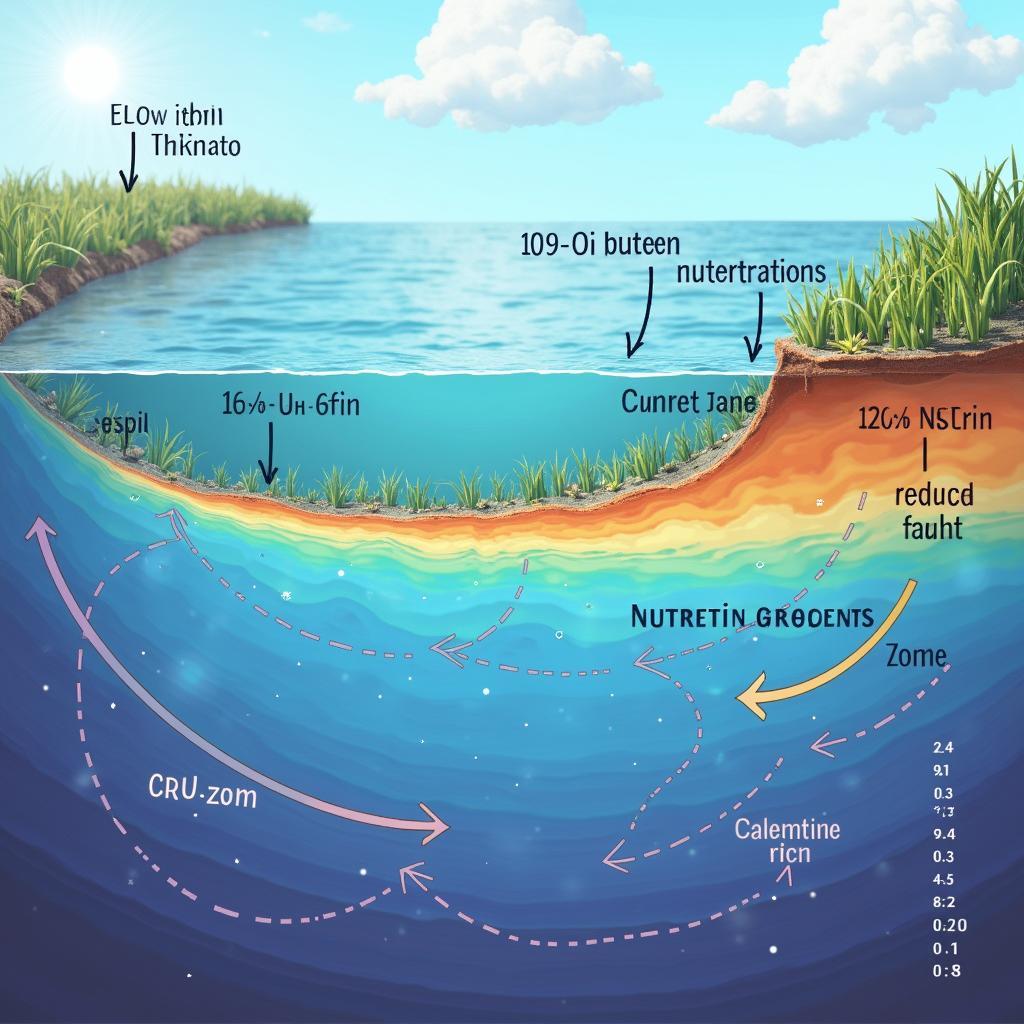 Thực vật phiêu lưu biển đóng vai trò quan trọng trong chuỗi thức ăn đại dương bị ảnh hưởng bởi biến đổi nhiệt độ
The phenomenon of marine heatwaves – prolonged periods of anomalously warm ocean temperatures – has emerged as a particularly pernicious manifestation of climate change. These events, which have increased in frequency and intensity, can cause acute ecological disruptions that persist long after temperatures normalize. The 2011 heatwave off Western Australia resulted in the loss of over 90% of a kelp forest that supported a diverse community of species, with the ecosystem state shifting to a turf algae dominated system. Similarly, marine heatwaves in the Northeast Pacific between 2013 and 2016, colloquially termed “the Blob,” triggered unprecedented harmful algal blooms, seabird die-offs, and the redistribution of commercially important fish species, generating profound consequences for both ecosystems and fishing-dependent communities.
Evolutionary responses to rapidly changing ocean conditions represent a crucial area of inquiry. While some species demonstrate phenotypic plasticity – the capacity to adjust physiological or behavioral traits within a single generation – the extent to which genetic adaptation can occur at rates commensurate with environmental change remains uncertain. Research on marine copepods and other organisms with short generation times suggests that adaptive evolution may be possible for some taxa. However, many long-lived species with extended reproductive cycles, including numerous commercially important fish and many marine mammals, may lack the evolutionary velocity necessary to keep pace with changing conditions. The selective pressures imposed by multiple simultaneous stressors may also result in maladaptive trait combinations or genetic bottlenecks that reduce population viability.
From a biogeochemical perspective, changes in ocean ecosystems have implications that extend to global carbon cycling. The ocean’s biological carbon pump – whereby carbon fixed through photosynthesis in surface waters is transported to the deep ocean through sinking particles and migrating organisms – plays a crucial role in regulating atmospheric CO2 concentrations. Alterations in phytoplankton community composition, changes in the efficiency of carbon export from surface to deep waters, and modifications to the abundance and distribution of calcifying organisms all have the potential to affect the ocean’s capacity to absorb and sequester carbon. While uncertainties remain regarding the magnitude and directionality of these effects, the potential for positive feedback loops – wherein ocean changes reduce carbon uptake, leading to accelerated atmospheric warming – represents a significant concern.
The challenge of managing marine resources amid these transformative changes has necessitated a shift toward more adaptive and integrated approaches. Traditional fisheries management, which often relied on assumptions of environmental stationarity and species distributions, must now incorporate considerations of dynamic baselines and shifting ecological relationships. Marine spatial planning increasingly recognizes the need for climate-adaptive designs that account for distributional shifts and the potential for ecosystem reorganization. The concept of resilience-based management – focusing on maintaining ecosystem functions and the capacity to absorb disturbances rather than preserving specific species compositions – has gained prominence as a pragmatic framework for navigating ecological uncertainty.
Perhaps most fundamentally, the comprehensive restructuring of marine ecosystems underscores the profound interconnectedness between ocean health and human well-being. Oceans provide essential services including food security, climate regulation, coastal protection, and cultural values to billions of people. The cascading effects of climate change on marine ecosystems thus represent not merely an environmental challenge but a multifaceted crisis with humanitarian dimensions. Addressing this crisis requires transdisciplinary collaboration that integrates ecological science, social science, economics, and policy expertise to develop solutions that are both ecologically sound and socially equitable. The decisions made in the coming decades will determine whether humanity can forge a sustainable relationship with the marine realm or whether we will witness the irreversible degradation of one of Earth’s most vital life-support systems.
Questions 27-40
Questions 27-31: Multiple Choice
Choose the correct letter, A, B, C or D.
27. According to the passage, “no-analog communities” are
- A. communities that have existed in the past
- B. species assemblages without historical precedent
- C. communities that resist climate change
- D. groups of species from the same taxonomic family
28. The passage suggests that ocean stratification
- A. increases oxygen levels in deep water
- B. improves nutrient distribution
- C. reduces vertical mixing of water layers
- D. enhances phytoplankton growth throughout the ocean
29. “Habitat compression” refers to
- A. the expansion of available living space
- B. the narrowing of viable habitat ranges for marine species
- C. the compression of water due to pressure
- D. the reduction in ocean depth
30. The 2011 marine heatwave off Western Australia resulted in
- A. increased kelp forest coverage
- B. the recovery of diverse marine species
- C. a shift to a turf algae dominated ecosystem
- D. improved fishing conditions
31. According to the passage, evolutionary adaptation to changing ocean conditions
- A. is occurring equally across all species
- B. is more feasible for short-lived species with rapid reproduction
- C. is impossible for any marine organisms
- D. only affects phytoplankton communities
Questions 32-36: Matching Features
Match the following concepts with their correct descriptions.
Write the correct letter, A-H, next to questions 32-36.
Concepts:
-
- Trophic cascades
-
- Phenotypic plasticity
-
- Biological carbon pump
-
- Marine spatial planning
-
- Resilience-based management
Descriptions:
- A. The ability to adjust traits within one generation
- B. The process of carbon transport from surface to deep ocean
- C. Managing ecosystems by preserving specific historical species
- D. Disruptions in food webs caused by species redistributions
- E. Designing marine protected areas to account for climate change
- F. The warming of surface ocean waters
- G. Focusing on maintaining ecosystem functions rather than species composition
- H. The migration of species toward the equator
Questions 37-40: Short-answer Questions
Answer the questions below.
Choose NO MORE THAN THREE WORDS from the passage for each answer.
37. At what average rate (per decade) are many marine species migrating toward the poles?
38. What term describes prolonged periods of unusually warm ocean temperatures?
39. What was the nickname given to marine heatwaves in the Northeast Pacific between 2013-2016?
40. What type of organisms, when their abundance changes, can affect the ocean’s capacity to absorb carbon?
3. Answer Keys – Đáp Án
PASSAGE 1: Questions 1-13
- B
- C
- B
- A
- B
- FALSE
- TRUE
- FALSE
- TRUE
- symbiotic algae
- energy
- feedback loop
- remarkable adaptability
PASSAGE 2: Questions 14-26
- NO
- YES
- NO
- YES
- NOT GIVEN
- ii
- viii
- iii
- vii
- carbonic acid
- Industrial Revolution
- pteropods
- water chemistry
PASSAGE 3: Questions 27-40
- B
- C
- B
- C
- B
- D
- A
- B
- E
- G
- 72 kilometers / seventy-two kilometers
- marine heatwaves
- the Blob
- calcifying organisms
4. Giải Thích Đáp Án Chi Tiết
Passage 1 – Giải Thích
Câu 1: B
- Dạng câu hỏi: Multiple Choice
- Từ khóa: surface ocean temperatures, risen
- Vị trí trong bài: Đoạn 2, dòng 1-2
- Giải thích: Bài viết nêu rõ “Surface waters in most parts of the world have increased in temperature by approximately 0.13 degrees Celsius per decade over the past century.” Đáp án B chính xác là “per decade” (mỗi thập kỷ).
Câu 2: C
- Dạng câu hỏi: Multiple Choice
- Từ khóa: percentage, excess atmospheric heat, absorbed
- Vị trí trong bài: Đoạn 2, dòng 3-4
- Giải thích: Đoạn văn cho biết “the oceans have absorbed more than 90% of the excess heat trapped by greenhouse gases.” Chú ý từ khóa “more than 90%” tương ứng với đáp án C.
Câu 3: B
- Dạng câu hỏi: Multiple Choice
- Từ khóa: Coral bleaching, occurs when
- Vị trí trong bài: Đoạn 3, dòng 5-6
- Giải thích: Bài viết nêu “When water temperatures rise just 1-2 degrees above normal summer maximums, corals experience bleaching events.” Đây là paraphrase của đáp án B.
Câu 6: FALSE
- Dạng câu hỏi: True/False/Not Given
- Từ khóa: Fish species, polar regions, fishing communities, earn more income
- Vị trí trong bài: Đoạn 3, dòng 2-4
- Giải thích: Bài viết nói rằng sự di cư của cá “disrupts traditional fishing grounds and affects the livelihoods of millions of people.” Điều này mâu thuẫn với việc giúp cộng đồng đánh cá kiếm được nhiều thu nhập hơn.
Câu 7: TRUE
- Dạng câu hỏi: True/False/Not Given
- Từ khóa: Gulf Stream, Europe’s climate, warm
- Vị trí trong bài: Đoạn 4, dòng cuối
- Giải thích: Đoạn văn nêu rõ “particularly in Europe, which is kept relatively warm by the Gulf Stream.” Đây là thông tin khớp hoàn toàn với phát biểu.
Câu 10: symbiotic algae
- Dạng câu hỏi: Sentence Completion
- Từ khóa: Corals expel, tissues, bleaching events
- Vị trí trong bài: Đoạn 3, dòng 6-7
- Giải thích: “During bleaching, corals expel the symbiotic algae living in their tissues” – cụm “symbiotic algae” là đáp án chính xác.
Câu 12: feedback loop
- Dạng câu hỏi: Sentence Completion
- Từ khóa: Arctic amplification, creates
- Vị trí trong bài: Đoạn 7, dòng 2-3
- Giải thích: Bài viết nêu “This phenomenon, known as Arctic amplification, creates a feedback loop” – cần chú ý đến cấu trúc câu và từ khóa “creates”.
 Học viên đang làm bài thi IELTS Reading với kỹ thuật scanning và skimming để tìm đáp án
Passage 2 – Giải Thích
Câu 14: NO
- Dạng câu hỏi: Yes/No/Not Given
- Từ khóa: Ocean acidification, more public attention, atmospheric carbon dioxide
- Vị trí trong bài: Đoạn 1, câu đầu
- Giải thích: Đoạn mở bài nói “While much attention has been focused on the atmospheric accumulation of carbon dioxide” – từ “while” cho thấy sự tương phản, nghĩa là axit hóa đại dương nhận được ít sự chú ý hơn, không phải nhiều hơn.
Câu 15: YES
- Dạng câu hỏi: Yes/No/Not Given
- Từ khóa: rate, faster, 300 million years
- Vị trí trong bài: Đoạn 1, dòng 2-3
- Giải thích: Bài viết khẳng định “The world’s oceans are becoming more acidic at a rate unprecedented in at least 300 million years” – “unprecedented” có nghĩa là chưa từng có, tức là nhanh nhất.
Câu 16: NO
- Dạng câu hỏi: Yes/No/Not Given
- Từ khóa: ocean, fully acidic, alkaline
- Vị trí trong bài: Đoạn 2, dòng cuối
- Giải thích: Đoạn văn nói rõ “While the ocean remains slightly alkaline overall” – điều này mâu thuẫn trực tiếp với phát biểu rằng đại dương đã trở nên hoàn toàn axit.
Câu 19: ii
- Dạng câu hỏi: Matching Headings
- Từ khóa: chemistry, carbon dioxide, carbonic acid
- Vị trí trong bài: Đoạn B (đoạn thứ hai)
- Giải thích: Đoạn này bắt đầu với “The chemistry behind ocean acidification is relatively straightforward” và giải thích chi tiết về quá trình hóa học khi CO2 hòa tan trong nước biển. Heading “The basic chemistry of carbon absorption” phù hợp nhất.
Câu 20: viii
- Dạng câu hỏi: Matching Headings
- Từ khóa: coral reefs, calcification, limestone skeletons
- Vị trí trong bài: Đoạn D (đoạn thứ tư)
- Giải thích: Toàn bộ đoạn này tập trung vào tác động của axit hóa lên rạn san hô, đặc biệt là quá trình vôi hóa và cấu trúc xương đá vôi. Heading “Impact on coral reef structures” phản ánh chính xác nội dung.
Câu 23: carbonic acid
- Dạng câu hỏi: Summary Completion
- Từ khóa: CO2 dissolves, seawater, forms
- Vị trí trong bài: Đoạn 2, dòng 1-2
- Giải thích: “When carbon dioxide from the atmosphere dissolves in seawater, it forms carbonic acid” – đáp án là “carbonic acid”, cần chú ý viết đúng cả hai từ.
Câu 26: water chemistry
- Dạng câu hỏi: Summary Completion
- Từ khóa: shellfish industry, monitor, carefully
- Vị trí trong bài: Đoạn 7, dòng 3-5
- Giải thích: “These commercial operations have had to adapt by monitoring water chemistry carefully” – cụm “water chemistry” là đáp án chính xác.
Passage 3 – Giải Thích
Câu 27: B
- Dạng câu hỏi: Multiple Choice
- Từ khóa: no-analog communities
- Vị trí trong bài: Đoạn 2, dòng 4-6
- Giải thích: Bài viết định nghĩa rõ ràng: “no-analog communities – assemblages of species that have no historical precedent.” Đây là paraphrase trực tiếp của đáp án B “species assemblages without historical precedent”.
Câu 28: C
- Dạng câu hỏi: Multiple Choice
- Từ khóa: ocean stratification
- Vị trí trong bài: Đoạn 4, dòng 3-5
- Giải thích: Đoạn văn giải thích “warming enhances stratification – the formation of distinct water layers that resist mixing – which reduces the transfer of oxygen from surface waters to deeper layers.” Điều này tương ứng với đáp án C về việc giảm sự trộn lẫn theo chiều dọc.
Câu 30: C
- Dạng câu hỏi: Multiple Choice
- Từ khóa: 2011 marine heatwave, Western Australia
- Vị trí trong bài: Đoạn 6, dòng 3-5
- Giải thích: Bài viết nêu rõ “The 2011 heatwave off Western Australia resulted in the loss of over 90% of a kelp forest… with the ecosystem state shifting to a turf algae dominated system.” Đáp án C chính xác mô tả sự chuyển đổi này.
Câu 32: D
- Dạng câu hỏi: Matching Features
- Từ khóa: Trophic cascades
- Vị trí trong bài: Đoạn 3
- Giải thích: Đoạn 3 mô tả “The trophic cascades initiated by these redistributions can be particularly disruptive” và tiếp tục giải thích về các gián đoạn trong chuỗi thức ăn. Mô tả D “Disruptions in food webs caused by species redistributions” phù hợp chính xác.
Câu 33: A
- Dạng câu hỏi: Matching Features
- Từ khóa: Phenotypic plasticity
- Vị trí trong bài: Đoạn 7, dòng 2-3
- Giải thích: Bài viết định nghĩa rõ ràng: “phenotypic plasticity – the capacity to adjust physiological or behavioral traits within a single generation.” Đây là paraphrase của mô tả A.
Câu 37: 72 kilometers
- Dạng câu hỏi: Short-answer Questions
- Từ khóa: average rate, per decade, migrating toward poles
- Vị trí trong bài: Đoạn 2, dòng 1-2
- Giải thích: “ocean warming is driving poleward migrations at an average rate of 72 kilometers per decade” – đáp án có thể viết là “72 kilometers” hoặc “seventy-two kilometers”.
Câu 39: the Blob
- Dạng câu hỏi: Short-answer Questions
- Từ khóa: nickname, Northeast Pacific, 2013-2016
- Vị trí trong bài: Đoạn 6, dòng 6-7
- Giải thích: “marine heatwaves in the Northeast Pacific between 2013 and 2016, colloquially termed ‘the Blob'” – cần viết chính xác “the Blob” bao gồm cả mạo từ “the”.
Câu 40: calcifying organisms
- Dạng câu hỏi: Short-answer Questions
- Từ khóa: abundance changes, affect, ocean’s capacity, absorb carbon
- Vị trí trong bài: Đoạn 8, dòng 4-6
- Giải thích: Bài viết đề cập “modifications to the abundance and distribution of calcifying organisms all have the potential to affect the ocean’s capacity to absorb and sequester carbon.” Đáp án là “calcifying organisms”.
5. Từ Vựng Quan Trọng Theo Passage
Passage 1 – Essential Vocabulary
| Từ vựng | Loại từ | Phiên âm | Nghĩa tiếng Việt | Ví dụ từ bài | Collocation |
|---|---|---|---|---|---|
| unprecedented | adj | /ʌnˈpresɪdentɪd/ | chưa từng có, chưa có tiền lệ | unprecedented changes in temperature | unprecedented scale/level/rate |
| profound | adj | /prəˈfaʊnd/ | sâu sắc, to lớn | profound effects on marine life | profound impact/effect/influence |
| accelerating | adj | /əkˈseləreɪtɪŋ/ | đang tăng tốc | at an accelerating rate | accelerating pace/trend/rate |
| greenhouse gases | n | /ˈɡriːnhaʊs ˌɡæsɪz/ | khí nhà kính | trapped by greenhouse gases | emit/reduce greenhouse gases |
| migration pattern | n | /maɪˈɡreɪʃn ˈpætən/ | mô hình di cư | This migration pattern disrupts fishing | follow/track migration patterns |
| biodiverse | adj | /ˌbaɪəʊdaɪˈvɜːs/ | đa dạng sinh học | most biodiverse ecosystems | biodiverse region/area/habitat |
| bleaching events | n | /ˈbliːtʃɪŋ ɪˈvents/ | sự kiện tẩy trắng (san hô) | corals experience bleaching events | coral bleaching events |
| symbiotic | adj | /ˌsɪmbaɪˈɒtɪk/ | cộng sinh | symbiotic algae living in tissues | symbiotic relationship/association |
| thermohaline circulation | n | /ˌθɜːməʊˈheɪlaɪn ˌsɜːkjʊˈleɪʃn/ | tuần hoàn nhiệt muối | The thermohaline circulation is driven | affect/disrupt thermohaline circulation |
| disrupt | v | /dɪsˈrʌpt/ | phá vỡ, gián đoạn | can disrupt these circulation patterns | disrupt patterns/systems/processes |
| thermal expansion | n | /ˈθɜːməl ɪkˈspænʃn/ | sự giãn nở nhiệt | Thermal expansion causes sea-level rise | contribute to thermal expansion |
| phenomenon | n | /fəˈnɒmɪnən/ | hiện tượng | This phenomenon is known as Arctic amplification | natural/observed phenomenon |
Passage 2 – Essential Vocabulary
| Từ vựng | Loại từ | Phiên âm | Nghĩa tiếng Việt | Ví dụ từ bài | Collocation |
|---|---|---|---|---|---|
| atmospheric accumulation | n | /ˌætməsˈferɪk əˌkjuːmjʊˈleɪʃn/ | sự tích tụ trong khí quyển | atmospheric accumulation of carbon dioxide | lead to atmospheric accumulation |
| chemical transformation | n | /ˈkemɪkl ˌtrænsfəˈmeɪʃn/ | sự biến đổi hóa học | this chemical transformation poses a threat | undergo chemical transformation |
| fundamental threat | n | /ˌfʌndəˈmentl θret/ | mối đe dọa căn bản | poses a fundamental threat | represent/pose a fundamental threat |
| catastrophic | adj | /ˌkætəˈstrɒfɪk/ | thảm khốc | could be as catastrophic as | catastrophic consequences/effects |
| carbonic acid | n | /kɑːˌbɒnɪk ˈæsɪd/ | axit cacbonic | it forms carbonic acid | produce/form carbonic acid |
| hydrogen ions | n | /ˈhaɪdrədʒən ˈaɪɒnz/ | ion hydro | releases hydrogen ions | release/produce hydrogen ions |
| alkaline | adj | /ˈælkəlaɪn/ | kiềm | the ocean remains slightly alkaline | alkaline conditions/environment |
| mortality rates | n | /mɔːˈtæləti reɪts/ | tỷ lệ tử vong | experience higher mortality rates | increase/reduce mortality rates |
| calcification | n | /ˌkælsɪfɪˈkeɪʃn/ | quá trình vôi hóa | The process of calcification becomes difficult | coral/reef calcification |
| limestone skeletons | n | /ˈlaɪmstəʊn ˈskelɪtnz/ | bộ xương đá vôi | corals build their limestone skeletons | form limestone skeletons |
| gradual disintegration | n | /ˈɡrædʒuəl dɪsˌɪntɪˈɡreɪʃn/ | sự tan rã dần dần | leading to the gradual disintegration | gradual disintegration of structures |
| cascading effects | n | /kæsˈkeɪdɪŋ ɪˈfekts/ | hiệu ứng dây chuyền | could have cascading effects | trigger/cause cascading effects |
| upwelling zones | n | /ˈʌpwelɪŋ zəʊnz/ | vùng nước trồi | Upwelling zones experience high acidity | coastal upwelling zones |
| mitigation strategies | n | /ˌmɪtɪˈɡeɪʃn ˈstrætədʒiz/ | chiến lược giảm thiểu | some mitigation strategies are explored | develop/implement mitigation strategies |
| geoengineering | n | /ˌdʒiːəʊˌendʒɪˈnɪərɪŋ/ | kỹ thuật địa cầu | such geoengineering approaches | geoengineering solutions/techniques |
 Bảng từ vựng chuyên ngành môi trường biển cho IELTS Reading về biến đổi khí hậu và đại dương
Passage 3 – Essential Vocabulary
| Từ vựng | Loại từ | Phiên âm | Nghĩa tiếng Việt | Ví dụ từ bài | Collocation |
|---|---|---|---|---|---|
| synergistic impacts | n | /ˌsɪnəˈdʒɪstɪk ˈɪmpækts/ | tác động cộng hưởng | synergistic impacts of warming and acidification | produce synergistic impacts |
| comprehensive transformations | n | /ˌkɒmprɪˈhensɪv ˌtrænsfəˈmeɪʃnz/ | những biến đổi toàn diện | precipitating comprehensive transformations | undergo comprehensive transformations |
| ecological cascades | n | /ˌiːkəˈlɒdʒɪkl kæsˈkeɪdz/ | các dây chuyền sinh thái | through complex ecological cascades | trigger ecological cascades |
| biogeochemical cycles | n | /ˌbaɪəʊdʒiːəʊˈkemɪkl ˈsaɪklz/ | chu trình sinh địa hóa | alter biogeochemical cycles | affect/disrupt biogeochemical cycles |
| spatial distribution | n | /ˈspeɪʃl ˌdɪstrɪˈbjuːʃn/ | phân bố không gian | reshape the spatial distribution | change spatial distribution |
| cumulative effects | n | /ˈkjuːmjʊlətɪv ɪˈfekts/ | tác động tích lũy | their cumulative and interactive effects | assess cumulative effects |
| poleward migrations | n | /ˈpəʊlwəd maɪˈɡreɪʃnz/ | di cư về phía cực | driving poleward migrations at 72km/decade | accelerate poleward migrations |
| taxonomic groups | n | /ˌtæksəˈnɒmɪk ɡruːps/ | nhóm phân loại | not occurring uniformly across taxonomic groups | different taxonomic groups |
| thermal tolerances | n | /ˈθɜːməl ˈtɒlərənsɪz/ | khả năng chịu nhiệt | according to their thermal tolerances | exceed thermal tolerances |
| no-analog communities | n | /nəʊ ˈænəlɒɡ kəˈmjuːnətiz/ | cộng đồng không tương tự | formation of no-analog communities | create no-analog communities |
| trophic cascades | n | /ˈtrɒfɪk kæsˈkeɪdz/ | dây chuyền dinh dưỡng | The trophic cascades can be disruptive | initiate trophic cascades |
| dietary shifts | n | /ˈdaɪətri ʃɪfts/ | sự thay đổi chế độ ăn | resulted in dietary shifts for fish | cause/trigger dietary shifts |
| trophic downgrading | n | /ˈtrɒfɪk ˈdaʊnɡreɪdɪŋ/ | sự suy giảm dinh dưỡng | triggered trophic downgrading | lead to trophic downgrading |
| hypoxia | n | /haɪˈpɒksiə/ | thiếu oxy | Oxygen depletion, or hypoxia | experience/suffer hypoxia |
| metabolic demands | n | /ˌmetəˈbɒlɪk dɪˈmɑːndz/ | nhu cầu trao đổi chất | increase metabolic demands | meet metabolic demands |
| stratification | n | /ˌstrætɪfɪˈkeɪʃn/ | phân tầng | warming enhances stratification | ocean/water stratification |
| habitat compression | n | /ˈhæbɪtæt kəmˈpreʃn/ | sự nén ép môi trường sống | This habitat compression increases vulnerability | experience habitat compression |
| primary productivity | n | /ˈpraɪməri ˌprɒdʌkˈtɪvəti/ | năng suất sơ cấp | implications for primary productivity | affect/reduce primary productivity |
| euphotic zone | n | /juːˈfəʊtɪk zəʊn/ | tầng ánh sáng | brings nutrients to the euphotic zone | within the euphotic zone |
| phytoplankton | n | /ˌfaɪtəʊˈplæŋktən/ | thực vật phiêu lưu | where phytoplankton conduct photosynthesis | phytoplankton blooms/communities |
| marine heatwaves | n | /məˈriːn ˈhiːtweɪvz/ | sóng nhiệt biển | The phenomenon of marine heatwaves | experience marine heatwaves |
| pernicious manifestation | n | /pəˈnɪʃəs ˌmænɪfeˈsteɪʃn/ | biểu hiện có hại | particularly pernicious manifestation | pernicious manifestation of change |
| phenotypic plasticity | n | /ˌfiːnəˈtɪpɪk plæˈstɪsəti/ | tính dẻo kiểu hình | demonstrate phenotypic plasticity | show/exhibit phenotypic plasticity |
| evolutionary velocity | n | /ˌiːvəˈluːʃənri vəˈlɒsəti/ | tốc độ tiến hóa | may lack the evolutionary velocity | require evolutionary velocity |
| biological carbon pump | n | /ˌbaɪəˈlɒdʒɪkl ˈkɑːbən pʌmp/ | bơm carbon sinh học | The ocean’s biological carbon pump | strengthen biological carbon pump |
| resilience-based management | n | /rɪˈzɪliəns beɪst ˈmænɪdʒmənt/ | quản lý dựa trên khả năng phục hồi | concept of resilience-based management | adopt resilience-based management |
| transdisciplinary collaboration | n | /ˌtrænzdɪsəˈplɪnəri kəˌlæbəˈreɪʃn/ | hợp tác liên ngành | requires transdisciplinary collaboration | foster transdisciplinary collaboration |
Kết Bài
Chủ đề “How Climate Change Is Affecting The World’s Oceans” không chỉ là một nội dung thường xuyên xuất hiện trong IELTS Reading mà còn phản ánh một trong những thách thức cấp bách nhất của nhân loại hiện nay. Qua bộ đề thi mẫu này, bạn đã được trải nghiệm đầy đủ cấu trúc của một bài thi IELTS Reading thực tế với ba passages tăng dần về độ khó.
Passage 1 giúp bạn làm quen với thông tin cơ bản về sự nóng lên của đại dương, Passage 2 đi sâu vào vấn đề axit hóa với các dạng câu hỏi yêu cầu kỹ năng paraphrase cao, và Passage 3 thách thức khả năng phân tích các khái niệm phức tạp về biến đổi hệ sinh thái biển. Tổng cộng 40 câu hỏi với 7 dạng khác nhau đã cung cấp cho bạn cơ hội luyện tập toàn diện các kỹ năng cần thiết.
Phần đáp án chi tiết kèm giải thích không chỉ cho bạn biết đáp án đúng mà còn hướng dẫn cách xác định vị trí thông tin, nhận diện paraphrase và áp dụng kỹ thuật làm bài hiệu quả. Bộ từ vựng được phân loại theo từng passage với hơn 60 từ và cụm từ quan trọng sẽ giúp bạn xây dựng vốn từ vựng học thuật vững chắc, đặc biệt hữu ích cho các chủ đề môi trường và khoa học.
Hãy nhớ rằng, thành công trong IELTS Reading không chỉ đến từ việc làm nhiều bài tập mà còn từ việc phân tích kỹ lưỡng mỗi câu trả lời sai, hiểu rõ lý do tại sao mình chọn nhầm và rút ra bài học cho những lần sau. Với đề thi mẫu chất lượng cao này, bạn đã có trong tay một công cụ luyện tập hiệu quả để tự tin bước vào phòng thi IELTS thực tế.
Chúc bạn học tập tốt và đạt được band điểm mong muốn trong kỳ thi IELTS sắp tới!


