
Trí tuệ nhân tạo (AI) đang ngày càng đóng vai trò quan trọng trong lĩnh vực y tế, đặc biệt là trong việc hỗ trợ các bác sĩ và chuyên gia y tế đưa ra những quyết định lâm sàng. Chủ đề này xuất hiện khá thường xuyên trong IELTS Reading, đặc biệt ở Passage 2 và 3 với độ khó từ trung bình đến cao. Hiểu rõ về chủ đề này không chỉ giúp bạn cải thiện band điểm mà còn mở rộng kiến thức về một xu hướng công nghệ đang định hình tương lai ngành y tế.
Trong bài viết này, bạn sẽ được thực hành với một bộ đề thi IELTS Reading hoàn chỉnh bao gồm 3 passages với độ khó tăng dần từ Easy đến Hard. Mỗi passage được thiết kế dựa trên cấu trúc đề thi Cambridge IELTS thực tế, kèm theo 40 câu hỏi đa dạng về dạng bài. Bạn cũng sẽ nhận được đáp án chi tiết với giải thích cụ thể, từ vựng quan trọng được phân loại theo độ khó, và các chiến lược làm bài hiệu quả.
Bộ đề này phù hợp cho học viên có trình độ từ band 5.0 trở lên, giúp bạn làm quen với các dạng câu hỏi phổ biến như True/False/Not Given, Matching Headings, Summary Completion và Multiple Choice. Hãy dành 60 phút để hoàn thành toàn bộ bài thi trong điều kiện như thi thật để đánh giá chính xác năng lực của mình.
Hướng Dẫn Làm Bài IELTS Reading
Tổng Quan Về IELTS Reading Test
IELTS Reading Test kéo dài 60 phút với 3 passages và tổng cộng 40 câu hỏi. Mỗi câu trả lời đúng tương đương 1 điểm, không bị trừ điểm khi sai. Điểm số sau đó được quy đổi thành band điểm từ 0-9.
Phân bổ thời gian khuyến nghị cho từng passage:
- Passage 1: 15-17 phút (độ khó thấp, nên hoàn thành nhanh để dành thời gian cho các passage khó hơn)
- Passage 2: 18-20 phút (độ khó trung bình, yêu cầu đọc hiểu sâu hơn)
- Passage 3: 23-25 phút (độ khó cao nhất, cần thời gian phân tích và suy luận)
Lưu ý quan trọng: Không có thời gian riêng để chuyển đáp án sang answer sheet trong phiên thi trên giấy, vì vậy bạn cần chuyển đáp án ngay trong 60 phút làm bài.
Các Dạng Câu Hỏi Trong Đề Này
Đề thi mẫu này bao gồm 7 dạng câu hỏi phổ biến nhất trong IELTS Reading:
- Multiple Choice – Câu hỏi trắc nghiệm với 3-4 phương án
- True/False/Not Given – Xác định thông tin đúng, sai hoặc không được đề cập
- Matching Information – Ghép thông tin với đoạn văn tương ứng
- Sentence Completion – Hoàn thành câu với từ trong bài
- Matching Headings – Ghép tiêu đề với đoạn văn
- Summary Completion – Hoàn thành đoạn tóm tắt
- Short-answer Questions – Trả lời ngắn theo yêu cầu từ câu hỏi
IELTS Reading Practice Test
PASSAGE 1 – The Introduction of AI in Medical Diagnosis
Độ khó: Easy (Band 5.0-6.5)
Thời gian đề xuất: 15-17 phút
The integration of artificial intelligence (AI) into healthcare has been one of the most significant technological advances of the 21st century. In recent years, AI systems have begun to revolutionise the way medical professionals approach diagnosis and treatment planning. These intelligent systems are designed to analyse vast amounts of medical data, including patient records, laboratory results, and medical imaging, to help doctors make more informed decisions about patient care.
One of the primary advantages of AI in medical diagnosis is its ability to process information at unprecedented speeds. While a human doctor might take hours to review hundreds of pages of medical literature to inform a diagnosis, an AI system can scan through thousands of research papers in seconds. This capability is particularly valuable in emergency situations where time-sensitive decisions can mean the difference between life and death. For example, in stroke cases, AI algorithms can quickly analyse brain scans to identify the type of stroke and recommend the most appropriate treatment, potentially saving crucial minutes that could prevent permanent brain damage.
Machine learning algorithms, a subset of AI, have proven especially effective in identifying patterns that might be invisible to the human eye. In radiology, AI systems have been trained on millions of medical images to detect abnormalities such as tumours, fractures, and internal bleeding. Studies have shown that in certain cases, these systems can match or even exceed the accuracy of experienced radiologists. However, it is important to note that AI is not intended to replace human doctors but rather to serve as a powerful diagnostic tool that complements their expertise.
The use of AI in healthcare also addresses a critical challenge facing many healthcare systems: the shortage of medical specialists. In rural or underserved areas, patients often have limited access to specialists such as cardiologists or oncologists. AI-powered diagnostic tools can help bridge this gap by providing preliminary assessments that can guide general practitioners in deciding whether a patient needs to be referred to a specialist. This triage function can significantly reduce waiting times and ensure that patients receive appropriate care more quickly.
Despite these benefits, the implementation of AI in medical decision-making is not without challenges. One significant concern is the potential for algorithmic bias. AI systems learn from the data they are trained on, and if this data is not representative of diverse patient populations, the AI may perform poorly for certain groups. For instance, if an AI diagnostic tool is primarily trained on data from one ethnic demographic, it may be less accurate when used with patients from different backgrounds. Healthcare institutions must ensure that AI systems are trained on diverse, high-quality datasets to minimise such biases.
Another consideration is the legal and ethical framework surrounding AI-assisted diagnosis. Questions arise about liability when an AI system makes an incorrect recommendation that leads to patient harm. Is the responsibility with the doctor who followed the AI’s advice, the institution that implemented the system, or the company that developed the AI? Regulatory bodies around the world are working to establish guidelines that address these concerns while allowing innovation to continue.
Data privacy is also a paramount concern in the age of AI healthcare. AI systems require access to large amounts of patient data to function effectively, raising questions about how this sensitive information is stored, protected, and used. Healthcare providers must implement robust security measures to prevent data breaches and ensure compliance with privacy regulations such as GDPR in Europe or HIPAA in the United States.
Looking forward, the role of AI in medical decision-making is likely to expand. Researchers are developing AI systems that can predict disease progression, personalise treatment plans based on individual patient characteristics, and even suggest preventive measures before symptoms appear. As these technologies mature and become more integrated into clinical practice, they have the potential to transform healthcare from a reactive system that treats illness to a proactive one that prevents it.
Questions 1-5
Do the following statements agree with the information given in Passage 1?
Write:
- TRUE if the statement agrees with the information
- FALSE if the statement contradicts the information
- NOT GIVEN if there is no information on this
- AI systems can review medical literature faster than human doctors.
- AI algorithms are currently being used to treat stroke patients without human supervision.
- Machine learning algorithms have demonstrated the ability to identify patterns in medical images that humans cannot see.
- AI diagnostic tools are specifically designed to replace human doctors in rural areas.
- All regulatory bodies worldwide have established comprehensive guidelines for AI use in healthcare.
Questions 6-9
Complete the sentences below.
Choose NO MORE THAN TWO WORDS from the passage for each answer.
- AI systems in healthcare can analyse various types of medical information including patient records and __.
- The shortage of medical specialists is particularly problematic in rural and __ areas.
- Algorithmic bias can occur when AI is trained on data that is not __ of diverse populations.
- Healthcare providers must implement strong __ to protect patient data from unauthorised access.
Questions 10-13
Choose the correct letter, A, B, C or D.
-
According to the passage, what is one main advantage of AI in emergency medical situations?
A. It eliminates the need for human doctors
B. It can process information extremely quickly
C. It is more accurate than all human specialists
D. It reduces hospital costs significantly -
The passage suggests that AI in radiology:
A. has completely replaced human radiologists
B. is less accurate than human doctors
C. works alongside human expertise
D. only works with certain types of images -
What does the passage identify as a concern regarding AI training data?
A. There is not enough data available
B. The data may not represent all patient groups equally
C. The data is too expensive to collect
D. Doctors refuse to share patient data -
According to the passage, future AI systems in healthcare may focus on:
A. replacing all medical specialists
B. reducing the cost of medical equipment
C. preventing diseases before symptoms appear
D. eliminating the need for hospitals
PASSAGE 2 – AI-Powered Clinical Decision Support Systems
Độ khó: Medium (Band 6.0-7.5)
Thời gian đề xuất: 18-20 phút
Clinical Decision Support Systems (CDSS) empowered by artificial intelligence represent a paradigm shift in how healthcare professionals navigate the complexities of modern medicine. These sophisticated platforms leverage machine learning algorithms to synthesise information from multiple sources, including electronic health records (EHRs), genomic databases, pharmaceutical research, and real-time patient monitoring systems. By integrating these disparate data streams, AI-powered CDSS can provide clinicians with actionable insights that enhance both the accuracy and efficiency of medical decision-making.
The evolution of CDSS has been marked by several distinct phases. Early systems, developed in the 1970s and 1980s, relied on rule-based logic where human experts manually programmed decision trees based on established medical protocols. While these systems proved useful for straightforward scenarios, they struggled with the nuanced complexity inherent in many clinical situations. Contemporary AI-driven CDSS, in contrast, employ deep learning neural networks that can identify subtle patterns and correlations within vast datasets, effectively learning from millions of past cases to inform present decisions. This adaptive capacity enables modern systems to handle ambiguity and consider multiple variables simultaneously, mimicking the intuitive reasoning that experienced physicians develop over years of practice.
One particularly promising application of AI-CDSS lies in the realm of precision oncology. Cancer treatment has traditionally followed a “one-size-fits-all” approach, where patients with similar cancer types receive comparable treatment regimens. However, research has revealed that tumours with identical histological appearances can behave dramatically differently at the molecular level. AI systems can analyse a patient’s tumour genomics, proteomics, and even the microenvironment of the tumour to predict which treatments are most likely to be effective for that specific individual. This personalised approach has shown remarkable success in improving treatment outcomes while minimising unnecessary side effects from therapies that would have proven ineffective.
 Hệ thống hỗ trợ quyết định lâm sàng sử dụng trí tuệ nhân tạo trong bệnh viện hiện đại
The implementation of AI-CDSS has also proven instrumental in addressing medication safety, a critical concern given that adverse drug events rank among the leading causes of preventable patient harm. These systems can cross-reference a patient’s complete medication list, allergies, laboratory values, and concurrent medical conditions to identify potential drug interactions or contraindications that might be overlooked by busy clinicians managing multiple patients. Some advanced systems even consider pharmacogenomic data – information about how a patient’s genetic makeup affects their response to medications – to recommend optimal dosing strategies. This level of comprehensive analysis would be virtually impossible for a human to perform consistently and rapidly in a clinical setting.
However, the integration of AI-CDSS into clinical workflows has encountered resistance from some healthcare professionals. A phenomenon known as “alert fatigue” occurs when systems generate excessive warnings, many of which may be clinically insignificant. When clinicians are bombarded with constant alerts, they may become desensitised and begin to ignore or override warnings, including those that are genuinely important. Striking the right balance between sensitivity and specificity in AI-CDSS alerts remains an ongoing challenge. Developers are increasingly employing contextual algorithms that consider the clinical scenario and the individual clinician’s specialty and experience level before generating alerts, thereby reducing unnecessary interruptions while maintaining patient safety.
The epistemological implications of AI in medical decision-making also warrant consideration. Medicine has traditionally been considered both an art and a science, with experienced physicians relying on clinical intuition developed through years of pattern recognition and tacit knowledge. There is concern that over-reliance on AI systems might lead to deskilling of healthcare professionals or a diminished ability to recognise and respond to unusual presentations that fall outside the AI’s training data. Medical education is beginning to adapt to this new reality, emphasising not only traditional diagnostic skills but also AI literacy – the ability to understand, critically evaluate, and effectively utilise AI tools while maintaining independent clinical judgment.
Economic considerations further complicate the landscape of AI-CDSS adoption. While proponents argue that these systems can reduce healthcare costs by preventing errors, optimising resource utilisation, and expediting diagnosis, the initial investment required for implementation is substantial. Healthcare institutions must invest not only in the technology itself but also in the infrastructure needed to support it, including robust data systems, cybersecurity measures, and staff training programmes. Cost-effectiveness analyses have yielded mixed results, with benefits often depending on the specific application and healthcare setting. In resource-limited environments, questions arise about whether funds might be better allocated to more fundamental healthcare needs.
Looking ahead, the next generation of AI-CDSS is likely to incorporate natural language processing (NLP) capabilities that can extract and interpret information from unstructured clinical notes, greatly expanding the data available for decision support. Additionally, federated learning approaches may allow AI systems to learn from data across multiple institutions without compromising patient privacy, creating more robust and generalisable algorithms. As these technologies mature, the distinction between AI as a decision support tool and AI as an autonomous decision-maker will become increasingly blurred, necessitating ongoing dialogue about appropriate boundaries and governance frameworks.
Questions 14-18
Choose the correct letter, A, B, C or D.
-
According to the passage, what is a key difference between early CDSS and modern AI-driven systems?
A. Early systems were more expensive to implement
B. Modern systems can learn from previous cases and handle complexity
C. Early systems were only used in oncology
D. Modern systems require less computing power -
In the context of precision oncology, AI systems analyse:
A. only the visual appearance of tumours
B. tumour characteristics at multiple molecular levels
C. historical treatment records exclusively
D. the patient’s family medical history -
What problem does “alert fatigue” refer to?
A. Doctors becoming tired from working long hours
B. AI systems failing to generate important warnings
C. Clinicians ignoring warnings due to excessive alerts
D. Patients refusing to take their medications -
The passage suggests that over-reliance on AI might lead to:
A. increased healthcare costs
B. more accurate diagnoses in all cases
C. deterioration of clinical skills among doctors
D. complete elimination of medical errors -
What does the passage indicate about the economic impact of AI-CDSS?
A. It always reduces healthcare costs significantly
B. Results vary depending on application and setting
C. It is too expensive for any healthcare system
D. It eliminates the need for staff training
Questions 19-23
Complete the summary below.
Choose NO MORE THAN TWO WORDS from the passage for each answer.
Modern AI-powered Clinical Decision Support Systems differ significantly from earlier versions. While early systems used 19. __ programmed by experts, current systems employ deep learning that can identify patterns in large datasets. These systems are particularly useful in precision oncology, where they analyse various characteristics of tumours including 20. __ to recommend personalised treatments. AI-CDSS also help with medication safety by identifying 21. __ between different drugs. However, implementation faces challenges including alert fatigue and concerns about 22. __ among healthcare professionals. Future systems will likely incorporate 23. __ to extract information from clinical notes.
Questions 24-26
Do the following statements agree with the information given in Passage 2?
Write:
- YES if the statement agrees with the views of the writer
- NO if the statement contradicts the views of the writer
- NOT GIVEN if it is impossible to say what the writer thinks about this
- AI systems in precision oncology have completely eliminated the need for traditional cancer treatments.
- Medical education programmes are starting to include training on how to understand and use AI tools effectively.
- Federated learning will make patient data less secure than current systems.
PASSAGE 3 – The Ethical and Philosophical Dimensions of AI in Healthcare Decision-Making
Độ khó: Hard (Band 7.0-9.0)
Thời gian đề xuất: 23-25 phút
The inexorable integration of artificial intelligence into healthcare decision-making processes has precipitated a profound re-examination of the foundational principles that govern medical practice and patient-physician relationships. While the technical capabilities of AI systems continue to advance at an exponential rate, the ethical, legal, and philosophical frameworks necessary to guide their appropriate use have struggled to keep pace. This temporal disconnect between technological capability and normative governance has created a landscape rife with moral ambiguity and unresolved tensions that demand careful consideration from clinicians, policymakers, ethicists, and society at large.
Central to this discourse is the question of moral agency and accountability in AI-mediated medical decisions. Traditional medical ethics, crystallised in principles such as autonomy, beneficence, non-maleficence, and justice, presupposes human actors as the locus of moral responsibility. However, as AI systems become increasingly sophisticated and autonomous in their functioning, the attribution of responsibility for outcomes becomes problematically diffuse. When an AI algorithm recommends a course of treatment that subsequently results in patient harm, the distribution of culpability across the various stakeholders – the AI developers, the healthcare institution, the regulatory bodies that approved the system, and the clinician who accepted the recommendation – becomes exceedingly complex. Some scholars have proposed the concept of “distributed morality,” wherein responsibility is shared proportionately among all agents in the decision-making chain, though operationalising such a framework in legal and professional contexts remains challenging.
The epistemological opacity inherent in many contemporary AI systems presents another vexing dilemma. Deep learning neural networks, while remarkably effective at pattern recognition and predictive modelling, often function as “black boxes” whose internal reasoning processes are inscrutable even to their creators. This lack of explainability or interpretability poses significant problems in medical contexts where justification for decisions is not merely desirable but ethically imperative and often legally mandated. Patients have a well-established right to understand the basis for medical recommendations affecting their care, yet an AI system may arrive at a diagnosis or treatment suggestion through a convoluted pathway of weighted connections and multidimensional transformations that defies straightforward articulation. This tension has spawned an entire subfield of AI research focused on “explainable AI” (XAI), which seeks to develop models that can provide human-comprehensible rationales for their outputs without sacrificing predictive performance.
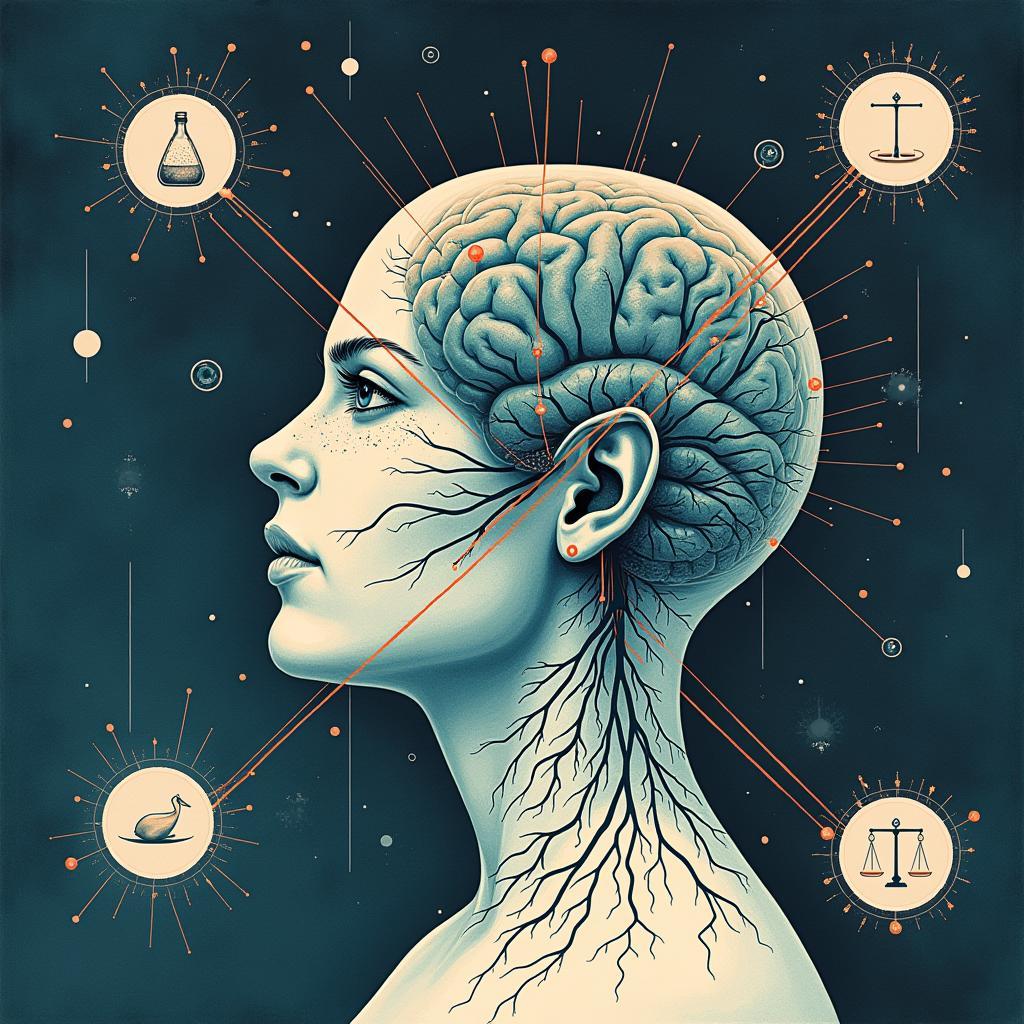 Các khía cạnh đạo đức và triết học của trí tuệ nhân tạo trong quyết định y tế
The principle of patient autonomy faces particular strain under AI-augmented decision-making paradigms. Informed consent, a cornerstone of contemporary medical ethics, requires that patients receive adequate information about their condition and treatment options to make voluntary, uncoerced decisions about their care. However, when treatment recommendations derive from AI analyses of vast datasets incorporating thousands of variables, conveying this information in a manner that enables genuine understanding becomes practically untenable. Moreover, the probabilistic nature of AI predictions – often expressed as confidence intervals or likelihood ratios rather than certainties – may be difficult for patients to integrate into their decision-making frameworks, particularly when facing serious or life-threatening conditions. There is also concern that the perceived objectivity and scientific authority of AI recommendations might unduly influence patients or even physicians, creating a subtle form of technological paternalism that undermines authentic autonomous choice.
Algorithmic bias and its implications for health equity represent perhaps the most pressing ethical concern surrounding AI in healthcare. AI systems are inevitably shaped by the data upon which they are trained, and healthcare data reflects and perpetuates the systemic inequalities that characterise healthcare systems worldwide. Marginalised populations have historically been underrepresented in medical research and clinical datasets, meaning AI algorithms may perform suboptimally or even perpetuate discriminatory practices when applied to these groups. Studies have documented instances where diagnostic algorithms showed differential accuracy across racial groups, and risk prediction models systematically underestimated illness severity in minority patients. These disparities arise not from explicit programming but from patterns latent in the training data itself, making them particularly insidious and difficult to detect and correct. Ensuring algorithmic fairness requires not only diverse training datasets but also careful consideration of how fairness itself is defined and operationalised – whether as equal accuracy across groups, equal treatment recommendations for similar cases regardless of demographic characteristics, or some other criterion.
The transformation of the physician’s role in an AI-augmented healthcare system also merits philosophical scrutiny. Medicine has traditionally been understood as a fundamentally human endeavour, grounded in interpersonal relationships, empathy, and the application of judgment in situations characterised by uncertainty and value conflicts. As AI systems assume increasing responsibility for diagnostic and therapeutic decision-making, questions arise about the essential nature of medical practice and whether certain aspects of clinical judgment are irreducibly human or can be adequately replicated by artificial systems. Some theorists argue for a model of “centaur healthcare” – named after the mythological creature combining human and animal attributes – wherein physicians and AI systems work in symbiotic partnership, each contributing their distinctive strengths. In this conception, AI would handle data-intensive analytical tasks while physicians would provide holistic patient understanding, ethical reasoning, empathetic communication, and navigation of value-laden decisions. However, critics worry that such a division risks creating a deprofessionalised medical workforce and diminishing the cultivation of the tacit knowledge and clinical wisdom that have traditionally defined medical expertise.
Finally, the commodification of health data necessary to train and improve AI systems raises profound questions about privacy, consent, and collective versus individual rights. AI algorithms require enormous quantities of patient data to function effectively, yet individuals may reasonably object to their personal health information being used in this way, particularly if such use generates commercial profit for private companies. Some jurisdictions have implemented frameworks for collective or solidarity-based consent, wherein communities or populations agree to data usage that serves the common good even if some individuals would prefer to opt out. However, such approaches sit uneasily with Western liberal traditions that privilege individual autonomy over communitarian values. Furthermore, as AI systems increasingly operate across international boundaries, harmonising these divergent ethical frameworks and regulatory approaches becomes exponentially more complex.
Navigating these multifaceted ethical challenges will require sustained interdisciplinary dialogue and the development of adaptive governance structures that can evolve alongside rapidly advancing technologies. The stakes are considerable: appropriately deployed, AI has the potential to democratise access to high-quality healthcare and significantly improve patient outcomes; poorly governed, it risks exacerbating existing inequalities and undermining the therapeutic relationship that lies at the heart of medical practice. The path forward demands not merely technical innovation but moral imagination and a commitment to ensuring that technological capabilities serve genuinely human ends.
Questions 27-30
Choose the correct letter, A, B, C or D.
-
According to the passage, what is the main problem with attributing responsibility for AI-related medical errors?
A. AI systems are too expensive to regulate
B. Responsibility is spread across multiple parties
C. Doctors refuse to use AI systems
D. AI systems never make mistakes -
The term “black boxes” in the passage refers to:
A. storage devices for medical records
B. AI systems whose decision-making processes are unclear
C. experimental treatment methods
D. devices used to record medical errors -
What does the passage suggest about informed consent in AI-augmented medicine?
A. It is easier to obtain than in traditional medicine
B. It becomes challenging due to the complexity of AI analyses
C. It is no longer necessary with AI systems
D. Patients always understand AI recommendations clearly -
The concept of “centaur healthcare” describes:
A. a mythological approach to medicine
B. replacement of doctors with AI systems
C. collaborative partnership between physicians and AI
D. ancient medical practices combined with modern technology
Questions 31-35
Complete each sentence with the correct ending, A-H, below.
- Traditional medical ethics principles assume
- Explainable AI research aims to
- The probabilistic nature of AI predictions may
- Algorithmic bias occurs because
- Some theorists propose that in AI-augmented healthcare, physicians should focus on
A. training data reflects existing healthcare inequalities
B. create models that can justify their recommendations clearly
C. tasks requiring empathy and ethical reasoning
D. human actors are responsible for moral decisions
E. eliminate the need for human doctors entirely
F. be difficult for patients to understand and use in decisions
G. reduce the cost of medical treatments significantly
H. improve patient outcomes without any ethical concerns
Questions 36-40
Do the following statements agree with the claims of the writer in Passage 3?
Write:
- YES if the statement agrees with the claims of the writer
- NO if the statement contradicts the claims of the writer
- NOT GIVEN if it is impossible to say what the writer thinks about this
- Ethical frameworks for AI in healthcare have developed as quickly as the technology itself.
- Some AI diagnostic algorithms have shown different levels of accuracy when used with different racial groups.
- All patients prefer AI-generated medical recommendations over those made by human doctors.
- The use of health data for AI training raises questions about individual privacy rights versus collective benefits.
- International harmonisation of AI governance in healthcare will be easy to achieve due to shared ethical values.
Answer Keys – Đáp Án
PASSAGE 1: Questions 1-13
- TRUE
- NOT GIVEN
- TRUE
- FALSE
- NOT GIVEN
- medical imaging
- underserved
- representative
- security measures
- B
- C
- B
- C
PASSAGE 2: Questions 14-26
- B
- B
- C
- C
- B
- rule-based logic
- tumour genomics
- drug interactions
- over-reliance
- natural language processing
- NO
- YES
- NOT GIVEN
PASSAGE 3: Questions 27-40
- B
- B
- B
- C
- D
- B
- F
- A
- C
- NO
- YES
- NOT GIVEN
- YES
- NO
Giải Thích Đáp Án Chi Tiết
Passage 1 – Giải Thích
Câu 1: TRUE
- Dạng câu hỏi: True/False/Not Given
- Từ khóa: AI systems, review medical literature, faster than human doctors
- Vị trí trong bài: Đoạn 2, dòng 1-4
- Giải thích: Bài đọc nêu rõ “While a human doctor might take hours to review hundreds of pages of medical literature to inform a diagnosis, an AI system can scan through thousands of research papers in seconds.” Điều này khẳng định AI có thể xem xét tài liệu y khoa nhanh hơn bác sĩ con người.
Câu 2: NOT GIVEN
- Dạng câu hỏi: True/False/Not Given
- Từ khóa: AI algorithms, treat stroke patients, without human supervision
- Vị trí trong bài: Đoạn 2, dòng 5-8
- Giải thích: Bài chỉ đề cập AI có thể phân tích quét não và đề xuất phương pháp điều trị, nhưng không nói rằng AI điều trị bệnh nhân đột quỵ mà không có sự giám sát của con người.
Câu 3: TRUE
- Dạng câu hỏi: True/False/Not Given
- Từ khóa: Machine learning algorithms, identify patterns, humans cannot see
- Vị trí trong bài: Đoạn 3, dòng 1-2
- Giải thích: Câu “Machine learning algorithms have proven especially effective in identifying patterns that might be invisible to the human eye” xác nhận rõ ràng khả năng này.
Câu 4: FALSE
- Dạng câu hỏi: True/False/Not Given
- Từ khóa: AI diagnostic tools, replace human doctors, rural areas
- Vị trí trong bài: Đoạn 3, cuối cùng và đoạn 4
- Giải thích: Bài đọc rõ ràng nói “AI is not intended to replace human doctors but rather to serve as a powerful diagnostic tool that complements their expertise” và “help bridge this gap” – điều này mâu thuẫn với việc thay thế bác sĩ.
Câu 6: medical imaging
- Dạng câu hỏi: Sentence Completion
- Từ khóa: patient records, analyse
- Vị trí trong bài: Đoạn 1, dòng 3-5
- Giải thích: Bài viết liệt kê “patient records, laboratory results, and medical imaging” là các loại dữ liệu mà AI phân tích.
Câu 10: B
- Dạng câu hỏi: Multiple Choice
- Từ khóa: main advantage, emergency medical situations
- Vị trí trong bài: Đoạn 2
- Giải thích: Đoạn văn nhấn mạnh khả năng “process information at unprecedented speeds” và trong các tình huống khẩn cấp “time-sensitive decisions can mean the difference between life and death”. Đáp án A sai vì AI không loại bỏ nhu cầu bác sĩ, C sai vì không nói chính xác hơn tất cả chuyên gia, D không được đề cập.
Câu 12: B
- Dạng câu hỏi: Multiple Choice
- Từ khóa: concern, AI training data
- Vị trí trong bài: Đoạn 5, dòng 3-6
- Giải thích: Bài viết nêu rõ “if this data is not representative of diverse patient populations, the AI may perform poorly for certain groups” – dữ liệu có thể không đại diện đồng đều cho tất cả các nhóm bệnh nhân.
 Hướng dẫn chi tiết giải thích đáp án bài thi IELTS Reading về AI trong y tế
Passage 2 – Giải Thích
Câu 14: B
- Dạng câu hỏi: Multiple Choice
- Từ khóa: key difference, early CDSS, modern AI-driven systems
- Vị trí trong bài: Đoạn 2, toàn bộ
- Giải thích: Đoạn văn giải thích hệ thống đầu tiên dùng “rule-based logic” trong khi “Contemporary AI-driven CDSS employ deep learning neural networks that can identify subtle patterns…effectively learning from millions of past cases” và “This adaptive capacity enables modern systems to handle ambiguity.”
Câu 15: B
- Dạng câu hỏi: Multiple Choice
- Từ khóa: precision oncology, AI systems analyse
- Vị trí trong bài: Đoạn 3, dòng 6-8
- Giải thích: Bài viết nêu “AI systems can analyse a patient’s tumour genomics, proteomics, and even the microenvironment of the tumour” – đây là nhiều mức độ phân tử khác nhau, không chỉ hình thức bên ngoài.
Câu 16: C
- Dạng câu hỏi: Multiple Choice
- Từ khóa: alert fatigue
- Vị trí trong bài: Đoạn 5, dòng 2-5
- Giải thích: “Alert fatigue” được định nghĩa là “When clinicians are bombarded with constant alerts, they may become desensitised and begin to ignore or override warnings, including those that are genuinely important.”
Câu 19: rule-based logic
- Dạng câu hỏi: Summary Completion
- Từ khóa: early systems used
- Vị trí trong bài: Đoạn 2, dòng 1-2
- Giải thích: “Early systems…relied on rule-based logic where human experts manually programmed decision trees.”
Câu 25: YES
- Dạng câu hỏi: Yes/No/Not Given
- Từ khóa: Medical education programmes, training, AI tools
- Vị trí trong bài: Đoạn 6, cuối cùng
- Giải thích: Bài viết khẳng định “Medical education is beginning to adapt to this new reality, emphasising not only traditional diagnostic skills but also AI literacy.”
Passage 3 – Giải Thích
Câu 27: B
- Dạng câu hỏi: Multiple Choice
- Từ khóa: main problem, attributing responsibility, AI-related medical errors
- Vị trí trong bài: Đoạn 2, dòng 4-8
- Giải thích: Đoạn văn giải thích “the attribution of responsibility for outcomes becomes problematically diffuse” và “the distribution of culpability across the various stakeholders…becomes exceedingly complex” – trách nhiệm được phân tán qua nhiều bên.
Câu 28: B
- Dạng câu hỏi: Multiple Choice
- Từ khóa: “black boxes” refers to
- Vị trí trong bài: Đoạn 3, dòng 1-4
- Giải thích: Bài viết giải thích “Deep learning neural networks…often function as ‘black boxes’ whose internal reasoning processes are inscrutable” – hệ thống AI có quy trình lý luận không rõ ràng.
Câu 29: B
- Dạng câu hỏi: Multiple Choice
- Từ khóa: informed consent, AI-augmented medicine
- Vị trí trong bài: Đoạn 4, dòng 3-7
- Giải thích: “When treatment recommendations derive from AI analyses of vast datasets incorporating thousands of variables, conveying this information in a manner that enables genuine understanding becomes practically untenable” – việc truyền đạt thông tin trở nên phức tạp.
Câu 30: C
- Dạng câu hỏi: Multiple Choice
- Từ khóa: “centaur healthcare” describes
- Vị trí trong bài: Đoạn 6, dòng 5-9
- Giải thích: “A model of ‘centaur healthcare’…wherein physicians and AI systems work in symbiotic partnership, each contributing their distinctive strengths” – sự hợp tác giữa bác sĩ và AI.
Câu 31: D
- Dạng câu hỏi: Matching Sentence Endings
- Từ khóa: Traditional medical ethics principles assume
- Vị trí trong bài: Đoạn 2, dòng 1-3
- Giải thích: “Traditional medical ethics…presupposes human actors as the locus of moral responsibility” khớp với đáp án D về trách nhiệm đạo đức của con người.
Câu 34: A
- Dạng câu hỏi: Matching Sentence Endings
- Từ khóa: Algorithmic bias occurs because
- Vị trí trong bài: Đoạn 5, dòng 2-4
- Giải thích: “AI systems are inevitably shaped by the data upon which they are trained, and healthcare data reflects and perpetuates the systemic inequalities” – phù hợp với đáp án A.
Câu 36: NO
- Dạng câu hỏi: Yes/No/Not Given
- Từ khóa: Ethical frameworks, developed as quickly as technology
- Vị trí trong bài: Đoạn 1, dòng 2-4
- Giải thích: Bài viết nói “the ethical, legal, and philosophical frameworks necessary to guide their appropriate use have struggled to keep pace” – mâu thuẫn với phát biểu.
Câu 37: YES
- Dạng câu hỏi: Yes/No/Not Given
- Từ khóa: AI diagnostic algorithms, different levels of accuracy, different racial groups
- Vị trí trong bài: Đoạn 5, dòng 8-10
- Giải thích: “Studies have documented instances where diagnostic algorithms showed differential accuracy across racial groups” – khẳng định rõ ràng điều này.
Câu 39: YES
- Dạng câu hỏi: Yes/No/Not Given
- Từ khóa: health data, AI training, privacy rights, collective benefits
- Vị trí trong bài: Đoạn 7, dòng 1-3
- Giải thích: “The commodification of health data…raises profound questions about privacy, consent, and collective versus individual rights” – đồng ý với phát biểu.
Từ Vựng Quan Trọng Theo Passage
Passage 1 – Essential Vocabulary
| Từ vựng | Loại từ | Phiên âm | Nghĩa tiếng Việt | Ví dụ từ bài | Collocation |
|---|---|---|---|---|---|
| revolutionise | v | /ˌrevəˈluːʃənaɪz/ | cách mạng hóa, thay đổi hoàn toàn | AI systems have begun to revolutionise the way medical professionals approach diagnosis | revolutionise healthcare/industry |
| unprecedented | adj | /ʌnˈpresɪdentɪd/ | chưa từng có | process information at unprecedented speeds | unprecedented rate/level |
| algorithm | n | /ˈælɡərɪðəm/ | thuật toán | AI algorithms can quickly analyse brain scans | machine learning algorithm |
| abnormality | n | /ˌæbnɔːˈmæləti/ | bất thường, dị tật | detect abnormalities such as tumours | detect/identify abnormalities |
| underserved | adj | /ˌʌndəˈsɜːvd/ | thiếu dịch vụ, chưa được phục vụ đầy đủ | patients in rural or underserved areas | underserved communities/populations |
| triage | n | /ˈtriːɑːʒ/ | sàng lọc ưu tiên (bệnh nhân) | This triage function can reduce waiting times | triage system/process |
| algorithmic bias | n phrase | /ˌælɡəˈrɪðmɪk ˈbaɪəs/ | thiên lệch thuật toán | potential for algorithmic bias | address/reduce algorithmic bias |
| demographic | n | /ˌdeməˈɡræfɪk/ | nhóm dân số | trained on data from one ethnic demographic | target demographic |
| liability | n | /ˌlaɪəˈbɪləti/ | trách nhiệm pháp lý | questions arise about liability | legal/professional liability |
| paramount | adj | /ˈpærəmaʊnt/ | tối quan trọng | Data privacy is a paramount concern | of paramount importance |
| robust | adj | /rəʊˈbʌst/ | mạnh mẽ, vững chắc | implement robust security measures | robust system/framework |
| reactive | adj | /riˈæktɪv/ | phản ứng, thụ động | transform healthcare from a reactive system | reactive approach/response |
Passage 2 – Essential Vocabulary
| Từ vựng | Loại từ | Phiên âm | Nghĩa tiếng Việt | Ví dụ từ bài | Collocation |
|---|---|---|---|---|---|
| paradigm shift | n phrase | /ˈpærədaɪm ʃɪft/ | sự thay đổi mô hình tư duy | represent a paradigm shift in healthcare | undergo a paradigm shift |
| leverage | v | /ˈlevərɪdʒ/ | tận dụng, khai thác | leverage machine learning algorithms | leverage technology/resources |
| genomic | adj | /dʒiːˈnəʊmɪk/ | thuộc về gen | including genomic databases | genomic data/information |
| disparate | adj | /ˈdɪspərət/ | khác biệt, không đồng nhất | integrating these disparate data streams | disparate sources/systems |
| actionable | adj | /ˈækʃənəbl/ | có thể hành động được | provide clinicians with actionable insights | actionable information/data |
| nuanced | adj | /ˈnjuːɑːnst/ | tinh tế, nhiều sắc thái | the nuanced complexity inherent in clinical situations | nuanced understanding/approach |
| precision oncology | n phrase | /prɪˈsɪʒn ɒŋˈkɒlədʒi/ | điều trị ung thư chính xác | application in precision oncology | precision medicine/treatment |
| proteomics | n | /ˌprəʊtiˈɒmɪks/ | khoa học về protein | analyse proteomics and genomics | proteomics research/analysis |
| adverse drug event | n phrase | /ədˈvɜːs drʌɡ ɪˈvent/ | tác dụng phụ của thuốc | adverse drug events rank among leading causes | prevent adverse drug events |
| contraindication | n | /ˌkɒntrəˌɪndɪˈkeɪʃn/ | chống chỉ định | identify contraindications | absolute/relative contraindication |
| alert fatigue | n phrase | /əˈlɜːt fəˈtiːɡ/ | mệt mỏi cảnh báo | phenomenon known as alert fatigue | experience/reduce alert fatigue |
| epistemological | adj | /ɪˌpɪstɪməˈlɒdʒɪkl/ | thuộc nhận thức luận | epistemological implications | epistemological issues/concerns |
| tacit knowledge | n phrase | /ˈtæsɪt ˈnɒlɪdʒ/ | kiến thức ngầm | relying on tacit knowledge | acquire/transfer tacit knowledge |
| deskilling | n | /diːˈskɪlɪŋ/ | mất kỹ năng | concern about deskilling of healthcare professionals | prevent/avoid deskilling |
| federated learning | n phrase | /ˈfedəreɪtɪd ˈlɜːnɪŋ/ | học liên kết | federated learning approaches | federated learning system |
Passage 3 – Essential Vocabulary
| Từ vựng | Loại từ | Phiên âm | Nghĩa tiếng Việt | Ví dụ từ bài | Collocation |
|---|---|---|---|---|---|
| inexorable | adj | /ɪnˈeksərəbl/ | không thể cưỡng lại | the inexorable integration of AI | inexorable advance/trend |
| precipitate | v | /prɪˈsɪpɪteɪt/ | gây ra, đẩy nhanh | has precipitated a profound re-examination | precipitate a crisis/change |
| foundational | adj | /faʊnˈdeɪʃənl/ | nền tảng, cơ bản | foundational principles that govern medical practice | foundational concept/element |
| exponential | adj | /ˌekspəˈnenʃl/ | theo cấp số nhân | advance at an exponential rate | exponential growth/increase |
| normative | adj | /ˈnɔːmətɪv/ | quy phạm, chuẩn mực | normative governance | normative framework/standard |
| moral ambiguity | n phrase | /ˈmɒrəl æmˈbɪɡjuəti/ | sự mơ hồ đạo đức | landscape rife with moral ambiguity | create moral ambiguity |
| moral agency | n phrase | /ˈmɒrəl ˈeɪdʒənsi/ | quyền tự chủ đạo đức | question of moral agency | exercise moral agency |
| crystallised | v | /ˈkrɪstəlaɪzd/ | kết tinh, cụ thể hóa | principles crystallised in medical ethics | crystallised beliefs/ideas |
| beneficence | n | /bɪˈnefɪsns/ | từ thiện, lòng tốt | principles such as beneficence | principle of beneficence |
| non-maleficence | n | /nɒn məˈlefɪsns/ | không gây hại | principles of non-maleficence | commitment to non-maleficence |
| locus | n | /ˈləʊkəs/ | trung tâm, vị trí | locus of moral responsibility | locus of control/power |
| culpability | n | /ˌkʌlpəˈbɪləti/ | lỗi lầm, trách nhiệm | distribution of culpability | establish/determine culpability |
| exceedingly | adv | /ɪkˈsiːdɪŋli/ | cực kỳ, vô cùng | becomes exceedingly complex | exceedingly difficult/rare |
| epistemological opacity | n phrase | /ɪˌpɪstɪməˈlɒdʒɪkl əʊˈpæsəti/ | sự mờ đục về nhận thức | epistemological opacity inherent in AI | challenge of epistemological opacity |
| inscrutable | adj | /ɪnˈskruːtəbl/ | khó hiểu, bí ẩn | internal reasoning processes are inscrutable | remain inscrutable |
| explainable AI | n phrase | /ɪkˈspleɪnəbl eɪ aɪ/ | AI có thể giải thích | subfield focused on explainable AI | develop explainable AI |
| untenable | adj | /ʌnˈtenəbl/ | không thể chấp nhận | becomes practically untenable | untenable position/situation |
| paternalism | n | /pəˈtɜːnəlɪzəm/ | chủ nghĩa gia trưởng | technological paternalism | medical/professional paternalism |
| marginalised | adj | /ˈmɑːdʒɪnəlaɪzd/ | bị gạt ra ngoài lề | marginalised populations | marginalised groups/communities |
| insidious | adj | /ɪnˈsɪdiəs/ | âm hiểm, ngấm ngầm | particularly insidious and difficult to detect | insidious effects/influence |
| symbiotic | adj | /ˌsɪmbaɪˈɒtɪk/ | cộng sinh | work in symbiotic partnership | symbiotic relationship |
| deprofessionalised | adj | /diːprəˈfeʃənəlaɪzd/ | mất tính chuyên nghiệp | creating a deprofessionalised workforce | become deprofessionalised |
| commodification | n | /kəˌmɒdɪfɪˈkeɪʃn/ | sự thương mại hóa | commodification of health data | commodification of information |
| communitarian | adj | /kəˌmjuːnɪˈteəriən/ | thuộc cộng đồng chủ nghĩa | communitarian values | communitarian approach/ethic |
| harmonising | v | /ˈhɑːmənaɪzɪŋ/ | hài hòa hóa, điều phối | harmonising divergent ethical frameworks | harmonising regulations/standards |
Kết Luận
Bài thi mẫu IELTS Reading về chủ đề “How Does AI Impact Decision-making In Healthcare?” vừa được trình bày phản ánh chính xác cấu trúc và độ khó của bài thi IELTS thực tế. Ba passages với độ khó tăng dần từ Easy sang Medium và Hard đã cung cấp cho bạn một bức tranh toàn diện về cách AI đang thay đổi ngành y tế, từ những ứng dụng cơ bản trong chẩn đoán đến những thách thức đạo đức và triết học phức tạp.
Chủ đề về AI trong y tế không chỉ phổ biến trong kỳ thi IELTS mà còn là một trong những xu hướng quan trọng nhất của thế kỷ 21. Việc hiểu rõ các khía cạnh khác nhau của chủ đề này – từ lợi ích kỹ thuật, thách thức về thiên lệch thuật toán, cho đến các vấn đề về trách nhiệm pháp lý và quyền riêng tư – sẽ giúp bạn không chỉ làm tốt bài thi Reading mà còn chuẩn bị tốt hơn cho các phần Writing và Speaking khi gặp chủ đề tương tự.
Đáp án chi tiết kèm giải thích đã cung cấp cho bạn cái nhìn sâu sắc về cách paraphrase từ khóa, xác định vị trí thông tin và áp dụng chiến lược cho từng dạng câu hỏi. Hãy dành thời gian xem lại những câu trả lời sai để hiểu rõ nguyên nhân và tránh lặp lại sai lầm trong tương lai. Bảng từ vựng theo từng passage với collocation và ví dụ cụ thể sẽ giúp bạn mở rộng vốn từ học thuật một cách có hệ thống.
Để đạt band điểm cao trong IELTS Reading, hãy thực hành thường xuyên với các đề thi đa dạng chủ đề, phát triển kỹ năng đọc lướt và đọc kỹ, và luôn kiểm soát thời gian làm bài. Chúc bạn đạt được kết quả như mong muốn trong kỳ thi IELTS sắp tới!


