Mở bài
Chủ đề về cách truyền thông đại diện và ảnh hưởng đến các nhóm thiểu số (How Does Media Representation Affect Minority Groups?) là một trong những đề tài xã hội quan trọng thường xuyên xuất hiện trong IELTS Reading. Với sự phát triển của truyền thông hiện đại, việc hiểu rõ tác động của hình ảnh truyền thông đối với cộng đồng thiểu số không chỉ là vấn đề học thuật mà còn phản ánh thực tế xã hội đương đại.
Trong bài viết này, bạn sẽ được thực hành với một đề thi IELTS Reading hoàn chỉnh gồm 3 passages với độ khó tăng dần từ Easy đến Hard. Đề thi bao gồm 40 câu hỏi đa dạng với các dạng bài phổ biến nhất trong kỳ thi thật, kèm theo đáp án chi tiết và giải thích cụ thể. Bạn cũng sẽ học được những từ vựng học thuật quan trọng và kỹ thuật làm bài hiệu quả.
Đề thi này phù hợp cho học viên từ band 5.0 trở lên, giúp bạn làm quen với format thi thật, rèn luyện kỹ năng đọc hiểu và quản lý thời gian một cách bài bản.
Hướng dẫn làm bài IELTS Reading
Tổng Quan Về IELTS Reading Test
IELTS Reading Test là một phần quan trọng trong kỳ thi IELTS Academic, đánh giá khả năng đọc hiểu tiếng Anh học thuật của thí sinh. Cấu trúc bài thi như sau:
- Thời gian: 60 phút cho 3 passages (không có thời gian chuyển đáp án)
- Tổng số câu hỏi: 40 câu
- Phân bổ thời gian khuyến nghị:
- Passage 1: 15-17 phút (độ khó Easy)
- Passage 2: 18-20 phút (độ khó Medium)
- Passage 3: 23-25 phút (độ khó Hard)
Mỗi câu trả lời đúng được 1 điểm, và tổng điểm sẽ được quy đổi thành band score từ 0-9. Đặc biệt, bạn cần lưu ý rằng spelling phải chính xác 100% và tuân thủ chặt chẽ word limit trong các câu hỏi dạng điền từ.
Các Dạng Câu Hỏi Trong Đề Này
Đề thi mẫu này bao gồm đầy đủ các dạng câu hỏi phổ biến trong IELTS Reading:
- Multiple Choice – Trắc nghiệm nhiều lựa chọn
- True/False/Not Given – Xác định thông tin đúng/sai/không có trong bài
- Yes/No/Not Given – Xác định quan điểm tác giả
- Matching Headings – Ghép tiêu đề với đoạn văn
- Sentence Completion – Hoàn thành câu
- Summary Completion – Hoàn thành đoạn tóm tắt
- Matching Features – Ghép đặc điểm
- Short-answer Questions – Câu hỏi ngắn
IELTS Reading Practice Test
PASSAGE 1 – Media Portrayal of Minorities in Popular Culture
Độ khó: Easy (Band 5.0-6.5)
Thời gian đề xuất: 15-17 phút
The relationship between media and minority groups has become an increasingly important topic in modern society. Mass media, including television, films, newspapers, and digital platforms, play a crucial role in shaping public perceptions and attitudes toward different communities. Understanding how minorities are represented in media is essential for recognizing both progress and ongoing challenges in achieving fair and accurate portrayals.
Historically, minority groups have often been underrepresented or misrepresented in mainstream media. In the early days of cinema and television, ethnic minorities, religious groups, and other marginalized communities frequently appeared in stereotypical roles that reinforced negative perceptions. For example, certain ethnic groups were consistently portrayed as criminals, servants, or comic relief characters, while others were simply invisible from media narratives altogether. These limited portrayals did not reflect the diversity and complexity of real minority communities.
The impact of such representation extends far beyond entertainment. Research has shown that media portrayals can significantly influence how majority populations view minority groups. When people have limited personal contact with certain communities, they often rely on media representations to form their opinions and attitudes. Stereotypical depictions can lead to prejudice, discrimination, and the perpetuation of harmful myths about minority groups. Children and young people are particularly susceptible to these influences, as they are still developing their understanding of the world and different cultures.
However, the landscape of media representation has been gradually changing. In recent decades, there has been growing awareness of the importance of diverse representation in media content. Many film studios, television networks, and publishing companies have made commitments to include more diverse voices both in front of and behind the camera. This shift has resulted in more nuanced and authentic portrayals of minority experiences, moving away from one-dimensional stereotypes toward more complex and realistic characters.
Social media platforms have also emerged as powerful tools for minority communities to tell their own stories. Unlike traditional media, which was controlled by a small number of gatekeepers, social media allows individuals and communities to create and share content directly with audiences worldwide. This democratization of media has enabled minority voices to challenge mainstream narratives, share authentic experiences, and build supportive communities online. Hashtag movements and viral campaigns have brought attention to issues affecting minority groups and pressured traditional media outlets to improve their representation practices.
Despite these positive developments, significant challenges remain. Studies continue to show that minority groups are underrepresented in many forms of media relative to their population size. When minorities do appear, they are often cast in supporting rather than leading roles. Furthermore, certain minority groups receive far less media attention than others, making them virtually invisible in popular culture. Media diversity extends beyond race and ethnicity to include representations of people with disabilities, LGBTQ+ individuals, religious minorities, and other marginalized groups, all of whom deserve fair and accurate portrayal.
The economic aspects of media representation also deserve consideration. Some argue that the lack of diversity in media reflects market forces and audience preferences. However, the commercial success of diverse films and television shows in recent years has challenged this assumption. Movies with predominantly minority casts and stories centered on minority experiences have achieved both critical acclaim and box office success, demonstrating that audiences are eager for diverse content when given the opportunity.
Media literacy education has become increasingly important in addressing the effects of media representation. Teaching people to critically analyze media messages, recognize stereotypes, and understand whose voices are included or excluded from media narratives empowers individuals to become more discerning consumers of media content. Schools, community organizations, and parents all play roles in developing these critical thinking skills, particularly among young people who are exposed to media messages daily.
Looking forward, continued progress in media representation requires sustained effort from multiple stakeholders. Media producers must commit to hiring diverse talent and telling diverse stories authentically. Audiences can support diverse content through their viewing choices and feedback. Researchers and advocates must continue monitoring representation patterns and holding media industries accountable. Only through these combined efforts can media truly reflect the diversity of modern society and contribute to greater understanding among different communities.
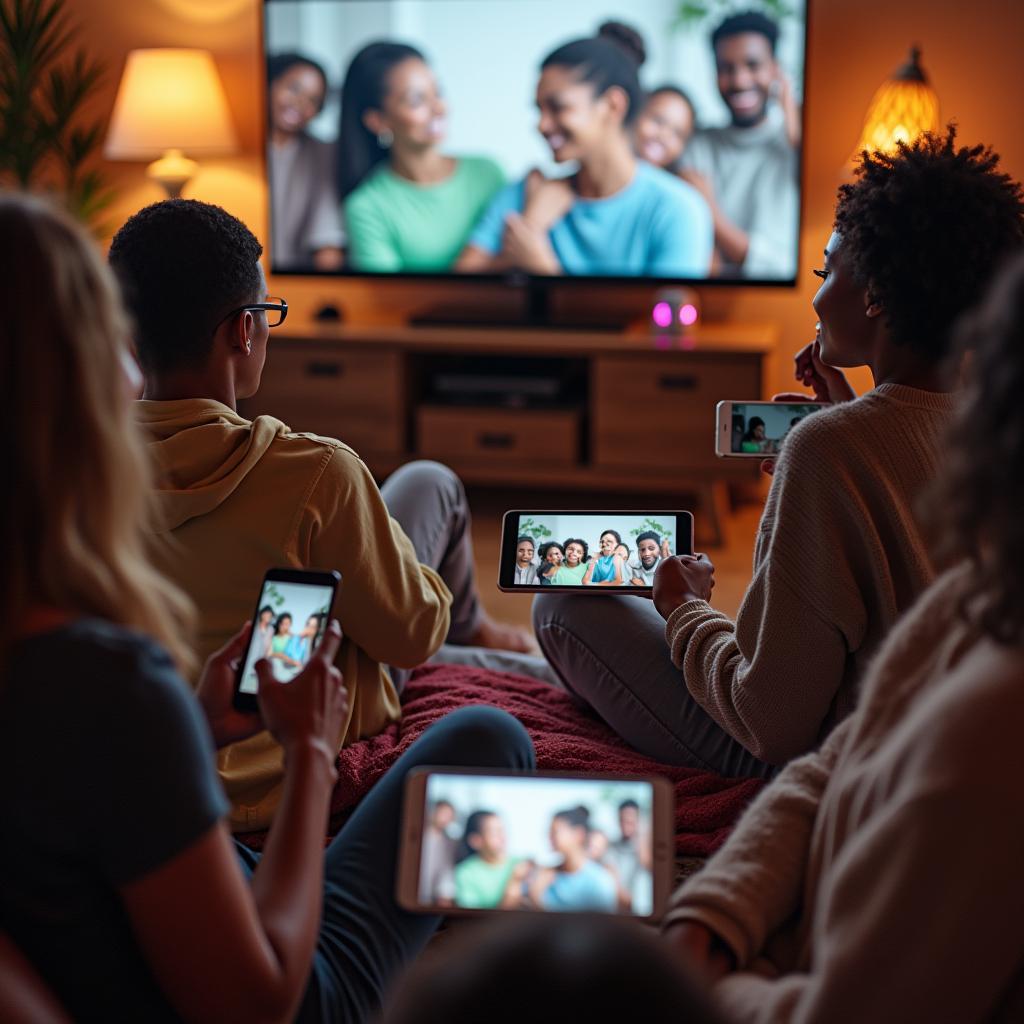 Hình ảnh minh họa về sự đa dạng trong cách truyền thông đại diện cho các nhóm thiểu số
Questions 1-13
Questions 1-5: Multiple Choice
Choose the correct letter, A, B, C, or D.
1. According to the passage, mass media’s main influence on minority groups is:
A. purely entertainment-based
B. shaping how the public perceives them
C. providing employment opportunities
D. creating educational content
2. In early cinema and television, minority groups were typically:
A. shown in leadership positions
B. portrayed accurately and fairly
C. presented in stereotypical roles
D. given equal screen time
3. The passage suggests that stereotypical media depictions are most harmful to:
A. media producers
B. adult audiences
C. children and young people
D. film critics
4. Social media platforms differ from traditional media because they:
A. are more expensive to use
B. allow direct content creation by individuals
C. have fewer users
D. only show entertainment content
5. The commercial success of diverse films demonstrates that:
A. audiences prefer stereotypical content
B. market forces prevent diversity
C. only minority audiences watch diverse content
D. audiences want diverse content
Questions 6-9: True/False/Not Given
Do the following statements agree with the information given in the passage?
Write:
- TRUE if the statement agrees with the information
- FALSE if the statement contradicts the information
- NOT GIVEN if there is no information on this
6. Limited personal contact with minority groups causes people to depend more on media representations.
7. All minority groups receive equal attention in modern media.
8. Media literacy education is taught in every school worldwide.
9. Diverse films have achieved both critical and commercial success in recent years.
Questions 10-13: Sentence Completion
Complete the sentences below.
Choose NO MORE THAN TWO WORDS from the passage for each answer.
10. In the past, minority groups appeared in __ that strengthened negative views.
11. The __ has allowed minority communities to share their stories directly with global audiences.
12. Studies show minorities are often given __ rather than main roles in media.
13. Multiple __ including producers, audiences, and advocates must work together to improve media representation.
PASSAGE 2 – The Psychological and Social Effects of Media Stereotyping
Độ khó: Medium (Band 6.0-7.5)
Thời gian đề xuất: 18-20 phút
The pervasive influence of media stereotypes on minority communities extends deeply into psychological wellbeing and social functioning, creating what researchers term “representational harm.” This phenomenon occurs when distorted or limited portrayals of specific groups in media content result in tangible negative consequences for members of those communities. Understanding these effects requires examination of both individual psychological impacts and broader societal implications, as media representations function as a powerful socializing agent that shapes attitudes, beliefs, and behaviors across populations.
At the individual level, repeated exposure to negative media stereotypes can trigger what social psychologists call “stereotype threat” – a phenomenon where individuals become anxious about confirming negative stereotypes about their group, which paradoxically can impair their performance and behavior. For instance, research conducted by Claude Steele and his colleagues demonstrated that when African American students were reminded of racial stereotypes before taking tests, their performance declined significantly compared to control conditions. This effect has been replicated across various minority groups and contexts, suggesting that media stereotypes create an invisible psychological burden that can undermine achievement and wellbeing.
The concept of “symbolic annihilation” provides another framework for understanding media representation effects. Coined by George Gerbner in the 1970s, this term describes the absence, trivialization, or marginalization of certain groups in media content. When minorities rarely see themselves represented in media, or see only demeaning portrayals, it sends an implicit message about their value and place in society. This absence can contribute to feelings of invisibility and invalidation, particularly among young people who are developing their sense of identity and self-worth. The psychological toll of not seeing oneself reflected in cultural narratives should not be underestimated.
Cultivation theory, developed by media scholar George Gerbner, offers insights into how media representations shape broader social perceptions. This theory posits that heavy television viewers develop perceptions of reality that align with the distorted world portrayed on screen rather than actual statistical realities. When media disproportionately depicts minority groups as criminals, for example, heavy media consumers may overestimate crime rates among those communities and harbor unfounded fears. These cultivated perceptions can manifest in real-world discrimination, from everyday microaggressions to institutional policies that disadvantage minority groups.
The internalization of negative stereotypes represents another serious psychological consequence. When minority individuals are repeatedly exposed to negative portrayals of their own group, they may begin to accept these stereotypes as valid, a process called “internalized oppression” or “internalized racism.” This internalization can lead to reduced self-esteem, limited aspirations, and even self-sabotaging behaviors. Studies have documented how exposure to stereotypical media content correlates with minority individuals reporting lower career ambitions, increased body dissatisfaction, and diminished sense of belonging in various social contexts.
Intersectionality adds further complexity to understanding media representation effects. Individuals who belong to multiple minority groups – for example, a person who is both an ethnic minority and LGBTQ+ – face compounded stereotypes and even more limited representation. The media industry’s tendency toward “diversity tokens” – including one type of minority representation while ignoring others – fails to capture the multifaceted identities that many people hold. Research indicates that individuals with intersecting minority identities experience particularly acute psychological distress from media misrepresentation.
However, positive media representation can serve as a protective factor against these harms. Studies have shown that when minority individuals see authentic, complex, and empowered representations of people like themselves in media, it correlates with improved self-esteem, higher aspirations, and greater sense of social belonging. The “role model effect” is particularly strong among children and adolescents, who benefit from seeing diverse individuals in positions of authority, expertise, and heroism. This suggests that improving media representation is not merely about fairness but constitutes a public health intervention with measurable benefits.
The digital media landscape has introduced new dynamics to these issues. While social media platforms offer opportunities for counter-narratives and community building, they also enable the rapid spread of stereotypical content and algorithmic amplification of divisive representations. Viral videos depicting minorities in negative situations can reinforce stereotypes on an unprecedented scale, while algorithm-driven content recommendations may create “echo chambers” that intensify biased perceptions. Understanding media representation effects in the digital age requires considering these technological dimensions.
Media literacy interventions have emerged as one strategy for mitigating representational harm. Educational programs that teach critical analysis of media messages, recognition of stereotypes, and understanding of media production processes can reduce the negative psychological effects of stereotypical content. Research indicates that individuals trained in media literacy demonstrate greater resilience against stereotype threat and are more likely to challenge rather than accept media stereotypes. However, while media literacy is valuable, it cannot substitute for fundamental improvements in how media industries represent minority communities.
The economic consequences of media stereotyping extend beyond psychological wellbeing. Stereotypical representations can influence hiring decisions, with research showing that exposure to media stereotypes affects employers’ perceptions of minority candidates’ suitability for various positions. Real estate studies have found that negative media coverage of minority communities correlates with property value changes and neighborhood investment patterns. These findings illustrate how media representations translate into material disadvantages that perpetuate inequality across generations.
Addressing these multifaceted harms requires systemic changes within media industries. Increasing diversity among media creators, executives, and decision-makers represents a crucial step, as research consistently shows that diverse production teams create more authentic and varied representations. Accountability mechanisms, including regular monitoring of representation patterns and transparent reporting of diversity statistics, can maintain pressure for continued improvement. Additionally, supporting independent minority-owned media outlets provides alternative platforms for authentic storytelling outside mainstream constraints.
Questions 14-26
Questions 14-18: Yes/No/Not Given
Do the following statements agree with the views of the writer in the passage?
Write:
- YES if the statement agrees with the views of the writer
- NO if the statement contradicts the views of the writer
- NOT GIVEN if it is impossible to say what the writer thinks about this
14. Media stereotypes create psychological pressure that can negatively affect minority individuals’ performance.
15. Stereotype threat only affects academic performance, not other areas of life.
16. Media literacy education can completely eliminate the harmful effects of stereotypical content.
17. Individuals belonging to multiple minority groups face more severe representation challenges.
18. All social media platforms have implemented effective policies against stereotypical content.
Questions 19-23: Matching Headings
The passage has eleven paragraphs. Choose the correct heading for paragraphs marked below from the list of headings.
List of Headings:
i. The role of technology in modern stereotyping
ii. Economic impacts of biased representations
iii. Individual psychological consequences
iv. The power of positive portrayals
v. How absence affects identity
vi. Media’s influence on social perceptions
vii. The complexity of multiple identities
viii. Solutions through industry reform
19. Paragraph 2 (starting with “At the individual level…”)
20. Paragraph 3 (starting with “The concept of symbolic annihilation…”)
21. Paragraph 4 (starting with “Cultivation theory…”)
22. Paragraph 5 (starting with “The internalization…”)
23. Paragraph 6 (starting with “Intersectionality…”)
Questions 24-26: Summary Completion
Complete the summary below.
Choose NO MORE THAN TWO WORDS from the passage for each answer.
Media stereotypes cause various psychological harms to minority groups. Research on (24) __ showed that reminding students of racial stereotypes before tests decreased their performance. The absence of representation, called (25) __, can make minorities feel invisible. However, when minorities see (26) __ representations in media, it can improve their self-esteem and aspirations.
PASSAGE 3 – Transforming Media Representation: Policy, Industry Practice, and Cultural Change
Độ khó: Hard (Band 7.0-9.0)
Thời gian đề xuất: 23-25 phút
The transformation of media representation from a landscape dominated by stereotypical and exclusionary portrayals to one characterized by authentic diversity requires multifaceted interventions spanning regulatory frameworks, industry practices, and broader cultural shifts. This complex undertaking involves navigating tensions between creative freedom and social responsibility, market imperatives and ethical obligations, as well as balancing the legitimate desire of minority communities for self-representation against the practical realities of commercial media production. The evolving discourse surrounding media representation increasingly recognizes that superficial “diversity initiatives” are insufficient; instead, structural changes in how media institutions operate are necessary to achieve lasting transformation.
Regulatory approaches to media representation vary considerably across national contexts, reflecting different legal traditions, constitutional frameworks, and cultural values regarding state intervention in media content. In many European countries, public service broadcasters operate under explicit mandates to serve diverse audiences and provide programming that reflects their societies’ demographic composition. The United Kingdom’s Office of Communications (Ofcom) enforces diversity requirements and conducts regular audits of representation patterns across television and radio. These regulatory frameworks rest on the premise that media, particularly publicly funded media, have fiduciary obligations to serve entire populations rather than merely pursuing commercial objectives. However, critics argue that such regulations may constitute unwarranted state interference in creative decisions and potentially lead to “quota-based” tokenism rather than authentic representation.
The North American context presents a contrasting approach, where First Amendment protections in the United States and analogous free expression guarantees in Canada create constitutional constraints on government regulation of media content. Consequently, improvements in representation have relied more heavily on market pressures, public advocacy, and voluntary industry initiatives rather than binding regulatory requirements. Organizations such as the Geena Davis Institute on Gender in Media and Color of Change have leveraged research and consumer activism to pressure entertainment companies toward better representation practices. This approach emphasizes that authentic diversity can be a competitive advantage rather than merely a compliance burden, with studies demonstrating that diverse content often achieves superior commercial performance relative to homogeneous offerings.
Within media industries themselves, the movement toward improved representation has increasingly focused on “diversity behind the camera” – the recognition that authentic and nuanced portrayals emerge more readily when minority individuals occupy positions of creative control and decision-making authority. Research by scholars such as Darnell Hunt at UCLA has consistently documented the correlation between diversity among directors, writers, producers, and executives and the quality of on-screen representation. When minorities are involved in story development, character creation, and final editing decisions, the resulting content tends to avoid stereotypical tropes and present more complex, humanized portrayals. This finding has prompted major studios and networks to implement “diversity riders” in talent contracts, establishment of mentorship programs for minority creatives, and creation of dedicated “diversity and inclusion” executive positions.
The economics of representation present both obstacles and opportunities. Traditional industry wisdom held that diverse content appealed only to “niche audiences” and therefore represented financial risks that justified their exclusion from mainstream media. However, the remarkable success of productions such as “Black Panther,” which grossed over $1.3 billion globally, “Crazy Rich Asians,” “Coco,” and television series like “Pose” and “Reservation Dogs” has fundamentally challenged this assumption. These successes demonstrate that audiences across demographic groups respond enthusiastically to well-crafted stories featuring minority protagonists and cultural specificity. The “universality of the specific” – the paradoxical finding that culturally particular stories often resonate more broadly than supposedly “universal” (but actually culturally specific) mainstream content – has significant implications for understanding audience preferences and commercial viability.
Algorithmic systems employed by streaming platforms and social media networks have emerged as important, if often opaque, influences on representation. These systems make consequential decisions about which content is recommended to users, which creators receive platform promotion, and which productions receive financing based on predictive analytics. Research has revealed that these algorithms can perpetuate and amplify existing biases, creating feedback loops where limited representation in training data leads to systems that recommend stereotypical content, which in turn influences production decisions. The “algorithmic accountability” movement advocates for greater transparency in how these systems function and opportunities for external auditing to identify and address representational biases embedded in recommendation algorithms.
The rise of streaming services and digital production platforms has democratized content creation to an unprecedented degree, enabling minority creators to bypass traditional gatekeepers and reach audiences directly. Platforms such as YouTube, Netflix, and Amazon Prime have funded productions that mainstream studios and networks declined, sometimes achieving both critical acclaim and substantial viewership. This disintermediation of traditional media gatekeepers has created space for authentic minority voices and experimental storytelling that challenges conventional narrative structures. However, these same platforms face criticism for algorithmic discrimination, inadequate content moderation that allows hate speech targeting minorities, and recommendation systems that sometimes “ghettoize” diverse content rather than promoting it to broad audiences.
Intersectional representation – portrayals that acknowledge and explore the complexity of individuals holding multiple marginalized identities – remains an underdeveloped area in media content. Most diversity discussions focus on single-axis identities (race or gender or sexuality or disability), but many individuals experience the world through the lens of multiple marginalized positions simultaneously. A queer woman of color with a disability experiences specific forms of marginalization that differ qualitatively from those experienced by individuals with only one of these identities. Media content that addresses intersectional experiences remains rare, and when attempted, often relies on creators from those communities who bring lived experience and cultural competence to the portrayal.
Global dimensions of media representation add further layers of complexity. Hollywood’s international dominance means that American media representations of minorities circulate globally, influencing perceptions in countries with different racial formations and social contexts. Meanwhile, growing media industries in countries such as Nigeria (Nollywood), India (Bollywood), and South Korea have their own representation challenges regarding ethnic, religious, and caste minorities within their societies. The transnational circulation of media content creates opportunities for cross-cultural understanding but also risks imposing specific cultural frameworks onto contexts where they may not apply, potentially obscuring local representation issues.
The measurement and assessment of representation progress present methodological challenges. Early efforts focused on simple “counting and categorizing” – quantifying how many minority characters appeared and in what roles. While such quantitative monitoring remains valuable, scholars increasingly recognize its limitations. A production might achieve numerical diversity while still presenting stereotypical portrayals or relegating minority characters to subordinate narrative positions. More sophisticated content analysis methodologies examine dialogue distribution, character development depth, narrative centrality, and whether minority characters are defined primarily by their minority status or portrayed as fully realized individuals with diverse motivations and relationships. These qualitative dimensions prove more difficult to measure but ultimately more important for assessing authentic representation.
Looking toward the future, sustained progress requires institutional commitment extending beyond temporary initiatives or responses to immediate public pressure. Media companies must integrate representation goals into corporate governance structures, establish transparent accountability mechanisms, and align executive compensation with diversity achievements. Educational institutions training future media professionals need curricula that foreground representation issues and cultivate cultural competence alongside technical skills. Audiences can exercise power through viewing choices, social media advocacy, and supporting independent minority creators. The transformation of media representation ultimately reflects and contributes to broader social changes in how diverse societies understand and value all their members.
 Sự chuyển đổi của ngành công nghiệp truyền thông hướng tới sự đa dạng và đại diện chân thực
Questions 27-40
Questions 27-31: Multiple Choice
Choose the correct letter, A, B, C, or D.
27. According to the passage, regulatory approaches to media representation in Europe:
A. are identical across all countries
B. completely prohibit stereotypical content
C. often involve mandates for public broadcasters
D. have been universally unsuccessful
28. The North American approach to improving representation relies primarily on:
A. strict government regulations
B. market forces and voluntary initiatives
C. constitutional requirements
D. international agreements
29. The phrase “diversity behind the camera” refers to:
A. technical equipment improvements
B. minority individuals in creative control positions
C. physical camera placement
D. special filming techniques
30. The “universality of the specific” describes:
A. culturally particular stories resonating broadly
B. mainstream content appealing to everyone
C. universal themes in all cultures
D. specific content for niche audiences only
31. Algorithmic systems in streaming platforms have been criticized for:
A. being too transparent
B. promoting too much diverse content
C. perpetuating existing biases
D. eliminating all stereotypes
Questions 32-36: Matching Features
Match each concept (32-36) with the correct description (A-H).
Concepts:
32. Intersectional representation
33. Algorithmic accountability
34. Disintermediation
35. Diversity riders
36. Content analysis methodologies
Descriptions:
A. Contractual provisions for ensuring diverse production teams
B. Bypassing traditional gatekeepers to reach audiences
C. Simple counting of minority characters
D. Portraying individuals with multiple marginalized identities
E. Transparency in how recommendation systems function
F. Government censorship of media content
G. Examining dialogue distribution and character development depth
H. International media trade agreements
Questions 37-40: Short-answer Questions
Answer the questions below.
Choose NO MORE THAN THREE WORDS from the passage for each answer.
37. What type of obligations do public service broadcasters have to serve diverse audiences?
38. Which UCLA scholar’s research documented the correlation between crew diversity and representation quality?
39. What film about a Marvel superhero grossed over $1.3 billion globally?
40. What type of competence do educational institutions need to teach alongside technical skills for future media professionals?
Answer Keys – Đáp Án
PASSAGE 1: Questions 1-13
- B
- C
- C
- B
- D
- TRUE
- FALSE
- NOT GIVEN
- TRUE
- stereotypical roles
- democratization of media / social media
- supporting roles
- stakeholders
PASSAGE 2: Questions 14-26
- YES
- NO
- NO
- YES
- NOT GIVEN
- iii
- v
- vi
- iii (also acceptable: related to internalization)
- vii
- stereotype threat
- symbolic annihilation
- authentic, complex (either word acceptable)
PASSAGE 3: Questions 27-40
- C
- B
- B
- A
- C
- D
- E
- B
- A
- G
- fiduciary obligations
- Darnell Hunt
- Black Panther
- cultural competence
Giải Thích Đáp Án Chi Tiết
Passage 1 – Giải Thích
Câu 1: B
- Dạng câu hỏi: Multiple Choice
- Từ khóa: mass media, main influence, minority groups
- Vị trí trong bài: Đoạn 1, dòng 2-3
- Giải thích: Bài đọc nói rõ “Mass media… play a crucial role in shaping public perceptions and attitudes toward different communities.” Đây là paraphrase của đáp án B “shaping how the public perceives them.” Các đáp án khác không được nhấn mạnh là ảnh hưởng chính.
Câu 2: C
- Dạng câu hỏi: Multiple Choice
- Từ khóa: early cinema, television, minority groups
- Vị trí trong bài: Đoạn 2, dòng 1-4
- Giải thích: Câu “ethnic minorities… frequently appeared in stereotypical roles” chính xác trùng với đáp án C. Từ “portrayed” trong đáp án là paraphrase của “appeared in.”
Câu 6: TRUE
- Dạng câu hỏi: True/False/Not Given
- Từ khóa: limited personal contact, depend, media representations
- Vị trí trong bài: Đoạn 3, dòng 2-3
- Giải thích: Bài viết nói “When people have limited personal contact with certain communities, they often rely on media representations” – “rely on” đồng nghĩa với “depend on,” khớp hoàn toàn với statement.
Câu 7: FALSE
- Dạng câu hỏi: True/False/Not Given
- Từ khóa: all minority groups, equal attention
- Vị trí trong bài: Đoạn 6, dòng 2-4
- Giải thích: Bài đọc nói rõ “certain minority groups receive far less media attention than others, making them virtually invisible” – điều này trái ngược hoàn toàn với câu statement về “equal attention.”
Câu 10: stereotypical roles
- Dạng câu hỏi: Sentence Completion
- Từ khóa: In the past, appeared in, strengthened negative views
- Vị trí trong bài: Đoạn 2, dòng 2-3
- Giải thích: “Minorities appeared in stereotypical roles that reinforced negative perceptions” – “reinforced” paraphrase “strengthened,” answer là “stereotypical roles.”
Passage 2 – Giải Thích
Câu 14: YES
- Dạng câu hỏi: Yes/No/Not Given
- Từ khóa: media stereotypes, psychological pressure, affect performance
- Vị trí trong bài: Đoạn 2, dòng 1-5
- Giải thích: Tác giả trình bày rõ quan điểm qua việc giới thiệu “stereotype threat” và nghiên cứu của Claude Steele cho thấy stereotypes “can impair their performance.” Đây là quan điểm của writer được hỗ trợ bằng evidence.
Câu 15: NO
- Dạng câu hỏi: Yes/No/Not Given
- Từ khóa: stereotype threat, only academic performance
- Vị trí trong bài: Đoạn 2, dòng 6-7
- Giải thích: Bài viết nói effect “has been replicated across various minority groups and contexts” – điều này cho thấy không chỉ academic performance, mâu thuẫn với statement “only.”
Câu 16: NO
- Dạng câu hỏi: Yes/No/Not Given
- Từ khóa: media literacy education, completely eliminate
- Vị trí trong bài: Đoạn 9, dòng cuối
- Giải thích: Tác giả nói rõ “while media literacy is valuable, it cannot substitute for fundamental improvements” – từ “cannot substitute” cho thấy media literacy không thể hoàn toàn giải quyết vấn đề, trái với “completely eliminate.”
Câu 19: iii (Individual psychological consequences)
- Dạng câu hỏi: Matching Headings
- Vị trí: Đoạn 2
- Giải thích: Cả đoạn tập trung vào “stereotype threat” và tác động psychological ở individual level, với research examples về test performance của students.
Câu 24: stereotype threat
- Dạng câu hỏi: Summary Completion
- Từ khóa: reminding students, racial stereotypes, decreased performance
- Vị trí trong bài: Đoạn 2, dòng 3-5
- Giải thích: Summary paraphrase nghiên cứu của Claude Steele về “stereotype threat,” đây là term chính xác từ passage.
Passage 3 – Giải Thích
Câu 27: C
- Dạng câu hỏi: Multiple Choice
- Từ khóa: regulatory approaches, Europe
- Vị trí trong bài: Đoạn 2, dòng 2-5
- Giải thích: Passage nói “public service broadcasters operate under explicit mandates to serve diverse audiences” ở many European countries, khớp với đáp án C.
Câu 29: B
- Dạng câu hỏi: Multiple Choice
- Từ khóa: diversity behind the camera
- Vị trí trong bài: Đoạn 4, dòng 1-2
- Giải thích: Bài viết giải thích rõ term này nghĩa là “minority individuals occupy positions of creative control and decision-making authority,” chính xác là đáp án B.
Câu 30: A
- Dạng câu hỏi: Multiple Choice
- Từ khóa: universality of the specific
- Vị trí trong bài: Đoạn 5, dòng 7-9
- Giải thích: Passage định nghĩa: “culturally particular stories often resonate more broadly than supposedly universal content” – đây chính xác là đáp án A, một paradox về cultural specificity creating broad appeal.
Câu 32: D
- Dạng câu hỏi: Matching Features
- Từ khóa: Intersectional representation
- Vị trí trong bài: Đoạn 8, dòng 1-2
- Giải thích: Passage định nghĩa intersectional representation là “portrayals that acknowledge… individuals holding multiple marginalized identities,” khớp với description D.
Câu 37: fiduciary obligations
- Dạng câu hỏi: Short-answer Questions
- Từ khóa: public service broadcasters, obligations, diverse audiences
- Vị trí trong bài: Đoạn 2, dòng 5-6
- Giải thích: Câu trả lời chính xác từ passage: “media… have fiduciary obligations to serve entire populations.”
Câu 38: Darnell Hunt
- Dạng câu hỏi: Short-answer Questions
- Từ khóa: UCLA scholar, research, correlation, crew diversity
- Vị trí trong bài: Đoạn 4, dòng 3-4
- Giải thích: Passage nêu tên cụ thể: “Research by scholars such as Darnell Hunt at UCLA has consistently documented the correlation…”
Từ Vựng Quan Trọng Theo Passage
Passage 1 – Essential Vocabulary
| Từ vựng | Loại từ | Phiên âm | Nghĩa tiếng Việt | Ví dụ từ bài | Collocation |
|---|---|---|---|---|---|
| underrepresented | adj | /ˌʌndərˌreprɪˈzentɪd/ | bị thiếu đại diện, không được thể hiện đầy đủ | minority groups have been underrepresented in mainstream media | underrepresented communities/groups |
| stereotypical | adj | /ˌsteriəˈtɪpɪkl/ | mang tính khuôn mẫu, rập khuôn | appeared in stereotypical roles | stereotypical portrayal/depiction |
| marginalized | adj | /ˈmɑːrdʒɪnəlaɪzd/ | bị gạt ra lề, bị xã hội bỏ rơi | other marginalized communities | marginalized groups/populations |
| perpetuation | n | /pərˌpetʃuˈeɪʃn/ | sự duy trì, tiếp diễn | perpetuation of harmful myths | perpetuation of stereotypes/discrimination |
| susceptible | adj | /səˈseptəbl/ | dễ bị ảnh hưởng, nhạy cảm | particularly susceptible to these influences | susceptible to influence/pressure |
| nuanced | adj | /ˈnuːɑːnst/ | tinh tế, nhiều sắc thái | more nuanced and authentic portrayals | nuanced understanding/portrayal |
| democratization | n | /dɪˌmɑːkrətaɪˈzeɪʃn/ | sự dân chủ hóa | democratization of media | democratization of access/information |
| authentic | adj | /ɔːˈθentɪk/ | chân thực, xác thực | share authentic experiences | authentic representation/voice |
| discerning | adj | /dɪˈsɜːrnɪŋ/ | sáng suốt, có nhãn quan | become more discerning consumers | discerning audience/consumer |
| stakeholders | n | /ˈsteɪkhoʊldərz/ | các bên liên quan | multiple stakeholders | key stakeholders/involved stakeholders |
| diversity | n | /daɪˈvɜːrsəti/ | sự đa dạng | media diversity extends beyond race | cultural diversity/diversity initiatives |
| mainstream | adj | /ˈmeɪnstriːm/ | chủ đạo, phổ biến | underrepresented in mainstream media | mainstream media/culture |
Passage 2 – Essential Vocabulary
| Từ vựng | Loại từ | Phiên âm | Nghĩa tiếng Việt | Ví dụ từ bài | Collocation |
|---|---|---|---|---|---|
| pervasive | adj | /pərˈveɪsɪv/ | lan tỏa rộng rãi, phổ biến | the pervasive influence of media | pervasive influence/problem |
| representational harm | n phrase | /ˌreprɪzenˈteɪʃənl hɑːrm/ | tác hại từ sự đại diện thiếu chính xác | creating representational harm | cause/experience representational harm |
| socializing agent | n phrase | /ˈsoʊʃəlaɪzɪŋ ˈeɪdʒənt/ | tác nhân xã hội hóa | powerful socializing agent | important socializing agent |
| stereotype threat | n phrase | /ˈsteriətaɪp θret/ | đe dọa từ khuôn mẫu | trigger stereotype threat | experience/suffer stereotype threat |
| symbolic annihilation | n phrase | /sɪmˈbɑːlɪk əˌnaɪəˈleɪʃn/ | sự xóa bỏ mang tính biểu tượng | concept of symbolic annihilation | experience symbolic annihilation |
| marginalization | n | /ˌmɑːrdʒɪnəlaɪˈzeɪʃn/ | sự đẩy ra lề | marginalization of certain groups | social marginalization/economic marginalization |
| cultivation theory | n phrase | /ˌkʌltɪˈveɪʃn ˈθɪəri/ | lý thuyết nuôi dưỡng/trau dồi | cultivation theory developed by Gerbner | apply cultivation theory |
| disproportionately | adv | /ˌdɪsprəˈpɔːrʃənətli/ | không cân đối, quá mức | disproportionately depicts minority groups | disproportionately affected/represented |
| microaggressions | n | /ˌmaɪkroʊəˈɡreʃnz/ | hành vi vi phạm nhỏ, tinh vi | everyday microaggressions | experience/face microaggressions |
| internalized oppression | n phrase | /ɪnˈtɜːrnəlaɪzd əˈpreʃn/ | sự áp bức được nội tâm hóa | process called internalized oppression | suffer from internalized oppression |
| intersectionality | n | /ˌɪntərsekʃəˈnæləti/ | tính giao thoa (của các yếu tố phân biệt) | intersectionality adds complexity | understand intersectionality/intersectionality framework |
| compounded | adj | /kəmˈpaʊndɪd/ | chồng chất, tích lũy | face compounded stereotypes | compounded problems/effects |
| protective factor | n phrase | /prəˈtektɪv ˈfæktər/ | yếu tố bảo vệ | serve as a protective factor | important protective factor |
| algorithmic amplification | n phrase | /ˌælɡəˈrɪðmɪk ˌæmplɪfɪˈkeɪʃn/ | sự khuếch đại bằng thuật toán | algorithmic amplification of divisive content | enable algorithmic amplification |
| resilience | n | /rɪˈzɪliəns/ | khả năng phục hồi, sức bền | demonstrate greater resilience | build resilience/psychological resilience |
Passage 3 – Essential Vocabulary
| Từ vựng | Loại từ | Phiên âm | Nghĩa tiếng Việt | Ví dụ từ bài | Collocation |
|---|---|---|---|---|---|
| multifaceted | adj | /ˌmʌltiˈfæsɪtɪd/ | đa diện, nhiều khía cạnh | multifaceted interventions | multifaceted approach/problem |
| self-representation | n | /self ˌreprɪzenˈteɪʃn/ | tự đại diện | legitimate desire for self-representation | right to self-representation |
| fiduciary obligations | n phrase | /fɪˈduːʃieri ˌɑːblɪˈɡeɪʃnz/ | nghĩa vụ tín thác | media have fiduciary obligations | fulfill fiduciary obligations |
| tokenism | n | /ˈtoʊkənɪzəm/ | chủ nghĩa chiếu lệ (làm cho có) | lead to quota-based tokenism | avoid tokenism/accusations of tokenism |
| constitutional constraints | n phrase | /ˌkɑːnstɪˈtuːʃənl kənˈstreɪnts/ | các ràng buộc hiến định | constitutional constraints on regulation | face constitutional constraints |
| competitive advantage | n phrase | /kəmˈpetətɪv ədˈvæntɪdʒ/ | lợi thế cạnh tranh | diversity can be a competitive advantage | gain/provide competitive advantage |
| correlation | n | /ˌkɔːrəˈleɪʃn/ | mối tương quan | documented the correlation between diversity | positive correlation/correlation between |
| niche audiences | n phrase | /niːʃ ˈɔːdiənsɪz/ | khán giả ngách | appealed only to niche audiences | target niche audiences/serve niche audiences |
| predictive analytics | n phrase | /prɪˈdɪktɪv ˌænəˈlɪtɪks/ | phân tích dự đoán | financing based on predictive analytics | use/apply predictive analytics |
| feedback loops | n phrase | /ˈfiːdbæk luːps/ | vòng phản hồi | creating feedback loops | create/perpetuate feedback loops |
| algorithmic accountability | n phrase | /ˌælɡəˈrɪðmɪk əˌkaʊntəˈbɪləti/ | trách nhiệm giải trình thuật toán | algorithmic accountability movement | demand algorithmic accountability |
| disintermediation | n | /ˌdɪsˌɪntərˌmiːdiˈeɪʃn/ | sự loại bỏ trung gian | disintermediation of traditional gatekeepers | enable disintermediation/process of disintermediation |
| ghettoize | v | /ˈɡetoʊaɪz/ | gây cô lập, tách biệt | systems that ghettoize diverse content | ghettoize communities/content |
| lived experience | n phrase | /lɪvd ɪkˈspɪriəns/ | kinh nghiệm sống thực tế | bring lived experience | share lived experience/value lived experience |
| cultural competence | n phrase | /ˈkʌltʃərəl ˈkɑːmpɪtəns/ | năng lực văn hóa | bring cultural competence | develop/demonstrate cultural competence |
| transnational circulation | n phrase | /trænsˈnæʃnəl ˌsɜːrkjəˈleɪʃn/ | sự lưu thông xuyên quốc gia | transnational circulation of media | enable transnational circulation |
| quantitative monitoring | n phrase | /ˈkwɑːntɪteɪtɪv ˈmɑːnɪtərɪŋ/ | giám sát định lượng | quantitative monitoring remains valuable | conduct quantitative monitoring |
| institutional commitment | n phrase | /ˌɪnstɪˈtuːʃənl kəˈmɪtmənt/ | cam kết thể chế | requires institutional commitment | demonstrate institutional commitment |
 Học viên đang luyện tập IELTS Reading với tài liệu về đại diện truyền thông cho nhóm thiểu số
Kết bài
Chủ đề về cách truyền thông ảnh hưởng đến các nhóm thiểu số là một trong những đề tài xã hội học quan trọng và thường xuyên xuất hiện trong IELTS Reading. Qua bài thi mẫu hoàn chỉnh này với 3 passages và 40 câu hỏi đa dạng, bạn đã có cơ hội trải nghiệm một bài thi IELTS Reading chân thực với độ khó tăng dần từ Easy đến Hard.
Ba passages đã cung cấp góc nhìn toàn diện về vấn đề: từ những tác động cơ bản của media representation (Passage 1), đến các hệ quả tâm lý và xã hội sâu sắc (Passage 2), cho đến những giải pháp mang tính chính sách và chuyển đổi ngành công nghiệp (Passage 3). Mỗi passage không chỉ giúp bạn rèn luyện kỹ năng đọc hiểu mà còn mở rộng hiểu biết về một chủ đề có tính thời sự cao.
Đáp án chi tiết kèm giải thích cụ thể đã giúp bạn hiểu rõ tại sao mỗi câu trả lời đúng và cách paraphrase được sử dụng như thế nào trong IELTS Reading. Phần từ vựng được tổng hợp theo từng passage với phiên âm, nghĩa và collocations sẽ là tài liệu quý giá cho việc mở rộng vốn từ học thuật của bạn.
Hãy thực hành đề thi này trong điều kiện thi thật với thời gian 60 phút, sau đó đối chiếu đáp án và học từ những sai lầm. Việc làm quen với các dạng câu hỏi đa dạng và phát triển kỹ thuật làm bài bài bản sẽ giúp bạn tự tin hơn khi bước vào phòng thi IELTS thực sự. Chúc bạn ôn tập hiệu quả và đạt band điểm mong muốn!