Mở Bài
Chủ đề về ảnh hưởng của mạng xã hội đến phân cực chính trị đang trở thành một trong những chủ đề nóng hổi và xuất hiện ngày càng nhiều trong các đề thi IELTS Reading gần đây. Đây là một chủ đề thuộc nhóm Social Issues và Technology, hai lĩnh vực được giám khảo IELTS đánh giá cao vì tính thời sự và tầm quan trọng toàn cầu. Qua hơn 20 năm giảng dạy, tôi nhận thấy các bài đọc về chủ đề này thường xuất hiện ở cả ba mức độ khó, đặc biệt phổ biến trong Passage 2 và Passage 3 của Cambridge IELTS từ quyển 14 trở đi.
Trong bài viết này, bạn sẽ được luyện tập với một bộ đề thi IELTS Reading hoàn chỉnh bao gồm ba passages với độ khó tăng dần từ Easy đến Hard. Đề thi được thiết kế giống 100% với format thi thật, bao gồm đầy đủ 40 câu hỏi với 7 dạng bài khác nhau. Bạn cũng sẽ nhận được đáp án chi tiết kèm giải thích cụ thể về vị trí thông tin, kỹ thuật paraphrase và chiến lược làm bài hiệu quả. Cuối cùng là bảng từ vựng quan trọng được tổng hợp từ cả ba passages giúp bạn mở rộng vốn từ học thuật.
Bộ đề này phù hợp cho học viên từ band 5.0 trở lên, đặc biệt hữu ích cho những bạn đang nhắm đến band điểm 6.5-7.5 và muốn làm quen với các chủ đề xã hội đương đại trong IELTS Reading.
Hướng Dẫn Làm Bài IELTS Reading
Tổng Quan Về IELTS Reading Test
IELTS Reading test bao gồm 3 passages với tổng cộng 40 câu hỏi phải hoàn thành trong 60 phút. Đây là thử thách lớn về quản lý thời gian, đòi hỏi bạn phải đọc khoảng 2,750-3,000 từ và trả lời câu hỏi một cách chính xác.
Phân bổ thời gian khuyến nghị:
- Passage 1 (Easy): 15-17 phút – Bài đọc ngắn nhất với từ vựng và cấu trúc câu đơn giản
- Passage 2 (Medium): 18-20 phút – Bài đọc có độ phức tạp trung bình với yêu cầu suy luận cao hơn
- Passage 3 (Hard): 23-25 phút – Bài đọc học thuật với từ vựng chuyên ngành và cấu trúc phức tạp
Lưu ý rằng cả ba passages đều có giá trị điểm như nhau, vì vậy đừng dành quá nhiều thời gian cho Passage 3 mà bỏ qua các câu dễ ở Passage 1 và 2.
Các Dạng Câu Hỏi Trong Đề Này
Đề thi mẫu này bao gồm 7 dạng câu hỏi phổ biến nhất trong IELTS Reading:
- Multiple Choice – Câu hỏi trắc nghiệm nhiều lựa chọn
- True/False/Not Given – Xác định tính đúng sai của thông tin
- Matching Information – Nối thông tin với đoạn văn
- Yes/No/Not Given – Xác định quan điểm của tác giả
- Matching Headings – Chọn tiêu đề phù hợp cho đoạn văn
- Summary Completion – Hoàn thành đoạn tóm tắt
- Matching Features – Nối đặc điểm với người/tổ chức
Mỗi dạng câu hỏi yêu cầu kỹ năng đọc khác nhau: skimming, scanning, hiểu chi tiết, hoặc suy luận. Đa dạng dạng bài giúp bạn rèn luyện toàn diện các kỹ năng cần thiết.
IELTS Reading Practice Test
PASSAGE 1 – The Rise of Social Media and Its Initial Promise
Độ khó: Easy (Band 5.0-6.5)
Thời gian đề xuất: 15-17 phút
The emergence of social media platforms in the early 2000s was heralded as a revolutionary development in human communication. Websites like Facebook, Twitter, and later Instagram promised to connect people across geographical boundaries, allowing individuals to share ideas, experiences, and opinions with unprecedented ease. Early advocates of these platforms believed they would create a more informed and connected society, where information could flow freely and democratic participation would flourish. The initial years seemed to confirm this optimistic vision, as social media played crucial roles in organizing social movements and spreading awareness about important issues.
During this honeymoon period, social media appeared to be a powerful tool for civic engagement. In many countries, activists used these platforms to coordinate protests, share information that mainstream media might ignore, and give voice to marginalized communities. The Arab Spring of 2011 became a defining moment, with observers noting how Facebook and Twitter helped protesters organize demonstrations and share their experiences with the world. Similarly, movements advocating for social justice found new life online, reaching audiences that traditional media channels had never accessed. This period reinforced the belief that social media would be a net positive for society, promoting transparency, accountability, and global understanding.
However, the optimistic narrative began to shift as researchers and journalists started noticing troubling patterns in how people interacted on these platforms. Unlike face-to-face conversations or even traditional media consumption, social media created echo chambers – virtual spaces where users primarily encountered information and opinions that reinforced their existing beliefs. The platforms’ algorithms, designed to maximize user engagement, would show people content similar to what they had previously liked, shared, or commented on. This meant that users were increasingly exposed to a narrow range of perspectives, rather than the diverse viewpoints that early advocates had anticipated.
The business model underlying most social media platforms contributed significantly to these dynamics. Unlike traditional media, which generated revenue through subscriptions or straightforward advertising, social media companies relied on keeping users engaged for as long as possible. The more time users spent on the platform, the more advertisements they would see, and the more data the companies could collect about their preferences and behaviors. To achieve this goal, platforms developed sophisticated algorithms that learned what type of content would most likely keep each individual user scrolling. Psychological research has shown that content triggering strong emotions – particularly anger, outrage, or anxiety – tends to generate more engagement than neutral or positive content.
This algorithmic amplification of emotionally charged content had profound implications for political discourse. Posts expressing extreme views or containing controversial statements received more likes, shares, and comments than moderate, nuanced perspectives. Users who posted such content were rewarded with greater visibility and influence, creating incentives for increasingly polarized expression. Meanwhile, those attempting to present balanced viewpoints or acknowledge complexity often found their posts receiving little attention. Over time, this created a feedback loop where the most successful strategy for gaining attention and influence was to express increasingly strong, one-sided political opinions.
The design features of social media platforms also played a role in promoting divisive content. The character limits on platforms like Twitter encouraged simple, punchy statements rather than detailed arguments. The emphasis on visual content meant that complex policy discussions were often reduced to shareable memes or emotionally manipulative images. The speed at which information spread made fact-checking difficult, allowing misinformation to reach millions before corrections could be issued. Perhaps most significantly, the anonymity or psychological distance of online interaction reduced the social costs of aggressive or inflammatory language, leading to a coarsening of political debate.
Questions 1-13
Questions 1-5
Do the following statements agree with the information given in the reading passage?
Write:
- TRUE if the statement agrees with the information
- FALSE if the statement contradicts the information
- NOT GIVEN if there is no information on this
-
Social media platforms were initially expected to improve democratic participation and create a better-informed society.
-
The Arab Spring of 2011 demonstrated that social media could be used effectively by activists to organize protests.
-
Traditional media channels reached larger audiences than social media during the Arab Spring.
-
Social media algorithms were specifically designed to create echo chambers and limit diverse viewpoints.
-
The business model of social media companies depends on maximizing the time users spend on their platforms.
Questions 6-9
Complete the sentences below.
Choose NO MORE THAN TWO WORDS from the passage for each answer.
-
Social media created virtual spaces called __ where users mainly saw content that confirmed their existing opinions.
-
Content that triggers strong emotions like anger receives more __ than neutral content.
-
The __ on Twitter made it difficult for users to present detailed arguments.
-
The __ of online communication reduced the social consequences of using aggressive language.
Questions 10-13
Choose the correct letter, A, B, C or D.
-
According to the passage, what was the main reason early advocates were optimistic about social media?
A. It would replace traditional media entirely
B. It would allow free flow of information across borders
C. It would generate significant revenue for tech companies
D. It would eliminate the need for face-to-face communication -
What did the algorithms primarily show to users?
A. Content from government sources
B. Content different from their interests
C. Content similar to what they had previously engaged with
D. Content from verified news organizations -
Why did extreme political views receive more attention on social media?
A. They were more accurate than moderate views
B. They generated higher levels of engagement
C. They were promoted by social media companies
D. They were easier to understand than complex arguments -
What made fact-checking difficult on social media platforms?
A. The anonymity of users
B. The visual nature of content
C. The speed of information spread
D. The character limits on posts
PASSAGE 2 – Mechanisms of Political Polarization in the Digital Age
Độ khó: Medium (Band 6.0-7.5)
Thời gian đề xuất: 18-20 phút
The relationship between social media and political polarization operates through several interconnected mechanisms that have been extensively studied by political scientists, psychologists, and communication researchers. Understanding these mechanisms is crucial for comprehending why digital platforms have contributed to the widening ideological divides observed in many democracies over the past decade. While correlation does not imply causation, a growing body of empirical evidence suggests that social media plays a significant causal role in accelerating political polarization, though the exact magnitude of this effect remains subject to scholarly debate.
One of the most thoroughly documented mechanisms is selective exposure, a psychological phenomenon where individuals preferentially seek information that confirms their pre-existing beliefs while avoiding contradictory evidence. Social media platforms dramatically facilitate selective exposure by providing users with unprecedented control over their information environment. Unlike traditional media, where editors and journalists determined what content audiences would see, social media users can curate their feeds by choosing whom to follow, what groups to join, and which sources to trust. This self-selection process naturally leads to the creation of homogeneous networks where like-minded individuals reinforce each other’s viewpoints while dissenting voices are systematically excluded.
Research conducted by scholars at major universities has revealed that political homogeneity in online networks has increased substantially since 2010. A longitudinal study tracking Facebook users’ friend networks found that the average ideological distance between a user and their connections decreased by approximately 30% over a five-year period. This suggests that users are actively unfriending or muting those with different political views, creating increasingly insular communities. The researchers termed this phenomenon “digital sorting,” drawing parallels to the geographic sorting observed in physical communities where people increasingly live near those who share their political preferences.
The second major mechanism involves motivated reasoning and confirmation bias, cognitive processes that are amplified in the social media environment. When individuals encounter political information online, they do not process it objectively; instead, their evaluation is heavily influenced by their pre-existing political identity. Information supporting their preferred party or ideology is accepted with minimal scrutiny, while contradictory information triggers skepticism and counter-argumentation. Social media exacerbates this tendency by presenting information in emotionally charged contexts – surrounded by comments from like-minded individuals expressing outrage or approval – which further biases cognitive processing.
Experimental studies have demonstrated the power of this effect. In one notable experiment, researchers presented participants with identical policy proposals, varying only whether the proposal was attributed to their preferred party or the opposing party. Participants evaluated proposals much more favorably when they believed their own party had proposed them, regardless of the actual policy content. This partisan motivated reasoning was significantly stronger among participants who reported high levels of social media usage, suggesting that digital platforms may be intensifying the role of political identity in information processing.
A third mechanism centers on the phenomenon of affective polarization – the tendency for individuals to develop increasingly negative feelings toward members of opposing political groups. While ideological polarization (disagreement on policy issues) has increased modestly in recent decades, affective polarization has skyrocketed. Social media appears to play a crucial role in this trend by making the outgroup more visible and threatening. Before social media, individuals with different political views might rarely interact or discuss politics; now, they encounter each other constantly in comment sections and heated online debates.
These online interactions often take on a confrontational character that would be unusual in face-to-face settings. The disinhibition effect – the tendency for people to say things online they would never say in person – means that political disagreements quickly escalate into personal attacks and tribal warfare. Moreover, social media’s emphasis on viral content means that users are disproportionately exposed to the most extreme and objectionable statements from the other side. A single offensive tweet from a member of the opposing party can be shared thousands of times, creating the impression that such views are representative of all members of that group.
The algorithmic curation of content further amplifies these polarizing tendencies. Platforms like Facebook and Twitter use complex machine learning algorithms to determine what content appears in each user’s feed. These algorithms are optimized for engagement, meaning they prioritize content that users are likely to interact with through likes, shares, or comments. Research has shown that politically divisive content generates significantly more engagement than neutral or consensus-building content. Consequently, the algorithms systematically overrepresent polarizing material, creating a distorted view of political reality where conflict and disagreement appear more prevalent than they actually are.
Critics of the “social media polarization thesis” argue that several factors complicate the causal story. They point out that political polarization began increasing in the United States before social media became widespread, suggesting that other factors – such as partisan news media, geographic sorting, or economic inequality – may be more fundamental causes. Additionally, some studies have found that elderly citizens, who use social media least, have experienced the greatest increases in polarization, casting doubt on social media’s causal role. These scholars argue that social media may be a symptom rather than a cause of deeper societal divisions.
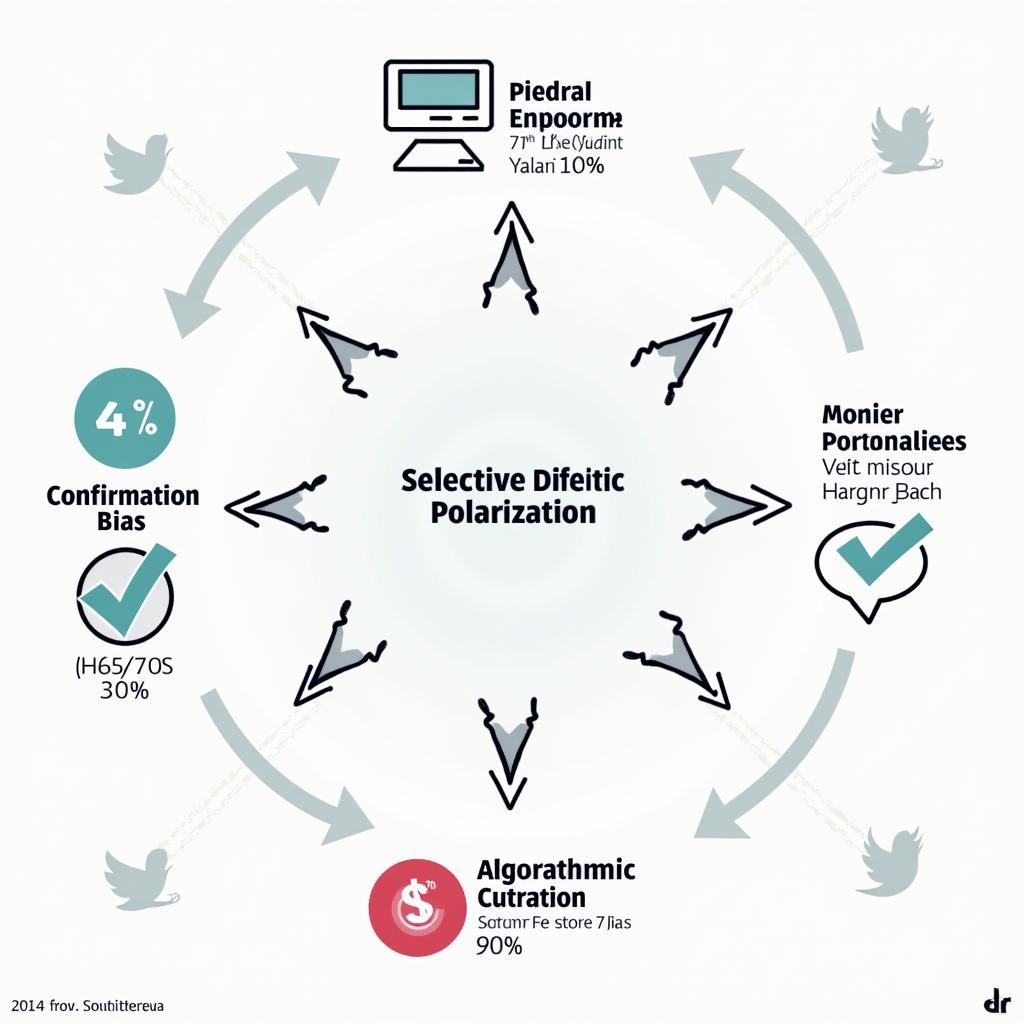 Sơ đồ phân tích các cơ chế ảnh hưởng của mạng xã hội đến phân cực chính trị trong thời đại số
Questions 14-26
Questions 14-18
The reading passage has nine paragraphs, A-I.
Which paragraph contains the following information?
Write the correct letter, A-I.
-
A description of how people evaluate political information based on their existing beliefs
-
Evidence that elderly people have experienced significant increases in polarization
-
An explanation of why extreme content from opposing groups becomes widely visible
-
Research findings about changes in the ideological similarity of social media connections
-
A discussion of how social media differs from traditional media in terms of content control
Questions 19-22
Choose the correct letter, A, B, C or D.
-
What does “digital sorting” refer to?
A. The process of organizing social media posts chronologically
B. The tendency to connect with politically similar people online
C. The algorithm’s method of filtering content
D. The geographic distribution of social media users -
According to the passage, what effect does high social media usage have on partisan motivated reasoning?
A. It eliminates the effect completely
B. It weakens the effect significantly
C. It strengthens the effect considerably
D. It has no measurable impact -
What is the main difference between ideological polarization and affective polarization?
A. Ideological polarization is about policies; affective polarization is about emotions
B. Ideological polarization is increasing faster than affective polarization
C. Affective polarization only occurs online
D. Ideological polarization has decreased while affective polarization increased -
Critics of the social media polarization thesis argue that:
A. Social media has no effect on political behavior
B. Other factors may be more important causes of polarization
C. Polarization is not actually increasing
D. Social media reduces polarization
Questions 23-26
Complete the summary below.
Choose NO MORE THAN TWO WORDS AND/OR A NUMBER from the passage for each answer.
Social media contributes to political polarization through several mechanisms. First, 23. __ allows users to seek information that matches their beliefs. Research shows that the 24. __ between users and their online connections has decreased by about 30% over five years. Second, social media intensifies 25. __, where people evaluate information based on political identity. Finally, 26. __ makes opposing groups seem more threatening by increasing their visibility online.
PASSAGE 3 – Mitigating Polarization: Interventions and Future Directions
Độ khó: Hard (Band 7.0-9.0)
Thời gian đề xuất: 23-25 phút
The pernicious effects of social media-driven polarization have prompted researchers, policymakers, and technology companies to explore potential interventions that might ameliorate these trends without compromising the legitimate benefits of digital communication platforms. This endeavor, however, faces substantial challenges, both technical and philosophical, that reflect fundamental tensions between competing social values such as free expression, algorithmic transparency, user autonomy, and public welfare. The search for effective interventions must navigate these complexities while acknowledging that social media platforms are now deeply embedded in the social fabric of contemporary democracies, making radical restructuring politically and practically difficult.
One promising avenue for intervention involves algorithmic modification – redesigning the recommendation systems that determine what content users see. Several researchers have proposed that platforms should deprioritize polarizing content and instead amplify materials that promote cross-cutting exposure to diverse perspectives. A team of computer scientists at a leading research institution developed an experimental algorithm that deliberately introduced users to ideologically diverse content while maintaining engagement levels. In a randomized controlled trial involving 20,000 Twitter users, participants exposed to the modified algorithm showed modest but statistically significant reductions in animosity toward political opponents compared to a control group receiving standard algorithmic curation. Participants also demonstrated improved accuracy in understanding opposing viewpoints, though the effect sizes were relatively small and decayed within weeks after the intervention ended.
However, this approach faces several formidable obstacles. First, there exists a principal-agent problem: platforms’ economic interests may not align with societal welfare. Engagement-maximizing algorithms generate more advertising revenue, creating perverse incentives against implementing changes that might reduce user activity even if such changes would benefit democratic discourse. While some executives have publicly committed to prioritizing social responsibility over profit maximization, skeptics note that these statements often emerge following public relations crises and may represent symbolic gestures rather than genuine policy shifts. Moreover, any algorithm attempting to identify and counteract polarizing content must make normative judgments about what constitutes healthy political discourse – a role that many critics argue should not be delegated to private companies or automated systems.
A second category of interventions focuses on digital literacy education designed to enhance users’ capacity for critical evaluation of online information. Proponents of this approach argue that rather than relying on platforms to curate content, society should invest in developing citizens’ metacognitive skills – their ability to recognize their own biases, evaluate source credibility, and resist emotional manipulation. Several large-scale implementations of digital literacy programs have shown encouraging results. A comprehensive study in Finland, where media literacy has been integrated into the national curriculum, found that students who received such instruction demonstrated significantly greater resistance to misinformation and greater willingness to consider alternative viewpoints compared to students in countries without similar programs.
Yet scaling such educational interventions presents considerable difficulties. The Finnish program succeeded partly because of the country’s strong education system, high social trust, and relative cultural homogeneity – conditions that may not obtain in larger, more diverse nations. Furthermore, adults who have already developed entrenched patterns of motivated reasoning may be resistant to educational interventions, as defensive cognition can actually intensify when one’s worldview is challenged. A meta-analysis of 45 studies on debiasing interventions found that while such programs can improve critical thinking skills among younger participants, effects are substantially weaker and often statistically insignificant among older adults, precisely the demographic showing the highest rates of polarization in some countries.
Structural interventions represent a third approach, involving regulatory frameworks that would mandate specific design features or prohibit certain practices. Some scholars have proposed treating social media platforms as public utilities subject to common carrier obligations, requiring them to provide equal access to diverse viewpoints. Others have suggested antitrust measures to reduce platform concentration, reasoning that a more competitive marketplace would allow users to migrate to platforms with healthier discourse norms. The European Union’s Digital Services Act represents the most comprehensive regulatory attempt to date, imposing transparency requirements on algorithmic systems and establishing oversight mechanisms for content moderation decisions.
Critics of regulatory approaches raise several concerns. They argue that government intervention in content curation raises First Amendment concerns (in the U.S. context) and could create dangerous precedents for state control over digital communication. There is also considerable uncertainty about whether regulations can keep pace with rapidly evolving technology – rules designed for current platforms may become obsolete or counterproductive as new forms of social media emerge. Additionally, regulatory approaches typically focus on large platforms, potentially creating competitive advantages for smaller platforms that evade scrutiny despite potentially propagating similar polarizing dynamics.
A more radical proposal involves fundamental redesign of social media architecture itself. Some researchers advocate for federated or decentralized social networks that would distribute control away from centralized corporations. Under such systems, users or communities would have greater autonomy over moderation policies and algorithmic design, potentially allowing the emergence of healthier discourse norms through grassroots experimentation. Platforms like Mastodon have attempted to implement this vision, creating interconnected communities with localized governance. Preliminary research suggests these platforms may indeed feature less toxic political discourse, though they also face challenges of sustainability, user adoption, and potential fragmentation that could paradoxically intensify rather than reduce polarization by creating isolated and self-reinforcing communities.
The intractable nature of social media polarization reflects deeper tensions in contemporary society between individual liberty and collective well-being, between technological innovation and social stability, and between market efficiency and democratic values. No single intervention is likely to provide a panacea; instead, addressing this challenge will require coordinated efforts across multiple domains – technological, educational, regulatory, and cultural. Moreover, effectiveness of interventions may vary significantly across different political and cultural contexts, necessitating tailored approaches rather than universal solutions. As social media continues to evolve, so too must our strategies for harnessing its potential while mitigating its corrosive effects on democratic discourse.
Longitudinal research tracking polarization trends over the coming decade will be crucial for evaluating which interventions prove most effective. Some scholars remain cautiously optimistic that a combination of thoughtful regulation, platform design improvements, and enhanced digital literacy can bend the curve toward healthier political discourse. Others express profound pessimism, arguing that the fundamental architecture of attention-economy-driven social media is inherently incompatible with the deliberative norms required for functional democracy. This debate itself reflects the high stakes involved – nothing less than the viability of democratic governance in an age of ubiquitous digital connectivity.
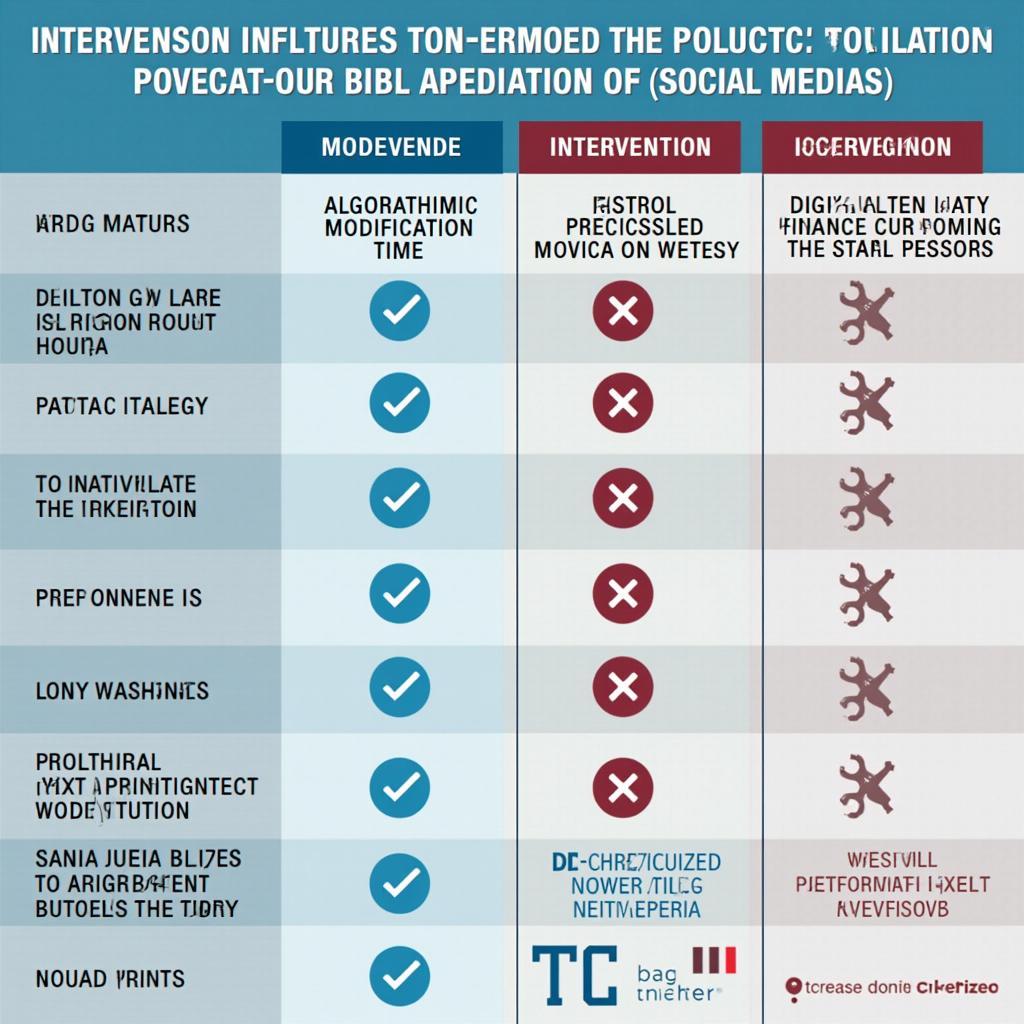 So sánh các phương pháp can thiệp giảm thiểu phân cực chính trị trên mạng xã hội và hiệu quả
Questions 27-40
Questions 27-30
Choose the correct letter, A, B, C or D.
-
According to the passage, what was the result of the Twitter algorithm experiment?
A. Participants showed permanent changes in political attitudes
B. Participants displayed modest improvements that faded quickly
C. Participants became more polarized in their views
D. Participants stopped using Twitter entirely -
What does the passage suggest about platforms’ economic interests?
A. They perfectly align with promoting healthy discourse
B. They may conflict with reducing polarization
C. They have no impact on algorithmic design
D. They prioritize user welfare over profits -
Why was Finland’s digital literacy program successful?
A. It was implemented only among young students
B. It received significant funding from tech companies
C. The country had favorable existing conditions
D. It was mandatory for all citizens regardless of age -
What concern do critics have about regulatory approaches?
A. They are too expensive to implement
B. They may create dangerous precedents for government control
C. They will completely eliminate social media usage
D. They favor large platforms over small ones
Questions 31-35
Complete the table below.
Choose NO MORE THAN THREE WORDS from the passage for each answer.
| Intervention Type | Main Approach | Key Challenge |
|---|---|---|
| Algorithmic modification | Introducing users to 31. __ content | Principal-agent problem and 32. __ |
| Digital literacy education | Developing citizens’ 33. __ | Difficulty scaling and resistance from 34. __ |
| Structural interventions | Treating platforms as 35. __ | First Amendment concerns |
Questions 36-40
Do the following statements agree with the claims of the writer in the reading passage?
Write:
- YES if the statement agrees with the claims of the writer
- NO if the statement contradicts the claims of the writer
- NOT GIVEN if it is impossible to say what the writer thinks about this
-
A single intervention strategy will be sufficient to solve the polarization problem completely.
-
Decentralized social networks like Mastodon may have less toxic political discourse than traditional platforms.
-
Educational interventions are more effective with younger participants than older adults.
-
The European Union’s Digital Services Act has completely solved polarization problems in Europe.
-
Future research tracking polarization trends will be important for evaluating intervention effectiveness.
Answer Keys – Đáp Án
PASSAGE 1: Questions 1-13
- TRUE
- TRUE
- NOT GIVEN
- FALSE
- TRUE
- echo chambers
- engagement
- character limits
- psychological distance / anonymity
- B
- C
- B
- C
PASSAGE 2: Questions 14-26
- D (Paragraph 4)
- I (Paragraph 9)
- G (Paragraph 7)
- C (Paragraph 3)
- B (Paragraph 2)
- B
- C
- A
- B
- selective exposure
- ideological distance / average ideological distance
- motivated reasoning / confirmation bias
- affective polarization
PASSAGE 3: Questions 27-40
- B
- B
- C
- B
- ideologically diverse
- normative judgments
- metacognitive skills
- older adults
- public utilities
- NO
- YES
- YES
- NOT GIVEN
- YES
Giải Thích Đáp Án Chi Tiết
Passage 1 – Giải Thích
Câu 1: TRUE
- Dạng câu hỏi: True/False/Not Given
- Từ khóa: initially expected, improve democratic participation, better-informed society
- Vị trí trong bài: Đoạn 1, dòng 3-5
- Giải thích: Bài đọc nói rõ “Early advocates of these platforms believed they would create a more informed and connected society, where information could flow freely and democratic participation would flourish.” Đây là paraphrase của câu hỏi về việc social media được kỳ vọng cải thiện sự tham gia dân chủ và tạo ra xã hội có nhiều thông tin hơn.
Câu 4: FALSE
- Dạng câu hỏi: True/False/Not Given
- Từ khóa: algorithms, specifically designed, create echo chambers
- Vị trí trong bài: Đoạn 3, dòng 4-7
- Giải thích: Bài đọc nói “The platforms’ algorithms, designed to maximize user engagement, would show people content similar to what they had previously liked.” Algorithms được thiết kế để tối đa hóa sự tương tác của người dùng, không phải để cố ý tạo echo chambers. Echo chambers là kết quả không mong muốn, không phải mục đích thiết kế ban đầu. Do đó câu này là FALSE.
Câu 7: engagement
- Dạng câu hỏi: Sentence Completion
- Từ khóa: content, strong emotions, anger, receives more
- Vị trí trong bài: Đoạn 4, dòng 10-11
- Giải thích: Câu trong bài viết “content triggering strong emotions – particularly anger, outrage, or anxiety – tends to generate more engagement than neutral or positive content.” Từ cần điền là “engagement” vì đây là từ chính xác được sử dụng trong bài.
Câu 12: B
- Dạng câu hỏi: Multiple Choice
- Từ khóa: extreme political views, more attention
- Vị trí trong bài: Đoạn 5, dòng 2-4
- Giải thích: Bài viết nói “Posts expressing extreme views or containing controversial statements received more likes, shares, and comments than moderate, nuanced perspectives.” Điều này có nghĩa là extreme views nhận được nhiều engagement hơn, đó là lý do chúng được chú ý nhiều hơn. Đáp án B là chính xác.
 Hướng dẫn chi tiết các bước làm bài IELTS Reading về chủ đề mạng xã hội và phân cực chính trị
Passage 2 – Giải Thích
Câu 14: D (Paragraph 4)
- Dạng câu hỏi: Matching Information
- Từ khóa: evaluate political information, existing beliefs
- Giải thích: Đoạn 4 bắt đầu với “The second major mechanism involves motivated reasoning and confirmation bias” và giải thích cách mọi người đánh giá thông tin chính trị dựa trên political identity của họ. Câu “When individuals encounter political information online, they do not process it objectively; instead, their evaluation is heavily influenced by their pre-existing political identity” chính xác mô tả nội dung câu hỏi.
Câu 19: B
- Dạng câu hỏi: Multiple Choice
- Từ khóa: digital sorting
- Vị trí trong bài: Đoạn 3, câu cuối
- Giải thích: Bài viết định nghĩa “digital sorting” là “users are actively unfriending or muting those with different political views, creating increasingly insular communities.” Đây là xu hướng kết nối với những người có quan điểm chính trị tương tự trên mạng, tương ứng với đáp án B.
Câu 23: selective exposure
- Dạng câu hỏi: Summary Completion
- Từ khóa: allows users, seek information, matches beliefs
- Vị trí trong bài: Đoạn 2, dòng 1-3
- Giải thích: Đoạn 2 giới thiệu “selective exposure, a psychological phenomenon where individuals preferentially seek information that confirms their pre-existing beliefs.” Đây chính xác là cơ chế đầu tiên được đề cập trong tóm tắt.
Câu 24: ideological distance
- Dạng câu hỏi: Summary Completion
- Từ khóa: between users, online connections, decreased, 30%
- Vị trí trong bài: Đoạn 3, dòng 2-4
- Giải thích: Bài viết nói “the average ideological distance between a user and their connections decreased by approximately 30% over a five-year period.” Đây là chứng cứ nghiên cứu cụ thể về sự thay đổi trong mạng lưới trực tuyến.
Passage 3 – Giải Thích
Câu 27: B
- Dạng câu hỏi: Multiple Choice
- Từ khóa: Twitter algorithm experiment, result
- Vị trí trong bài: Đoạn 2, dòng 6-10
- Giải thích: Bài viết nói participants “showed modest but statistically significant reductions in animosity” nhưng “effect sizes were relatively small and decayed within weeks after the intervention ended.” Điều này có nghĩa là có cải thiện nhỏ nhưng mất đi nhanh chóng, tương ứng với đáp án B.
Câu 28: B
- Dạng câu hỏi: Multiple Choice
- Từ khóa: platforms’ economic interests
- Vị trí trong bài: Đoạn 3, dòng 2-4
- Giải thích: Đoạn văn nói về “principal-agent problem: platforms’ economic interests may not align with societal welfare” và “Engagement-maximizing algorithms generate more advertising revenue, creating perverse incentives against implementing changes that might reduce user activity.” Điều này rõ ràng chỉ ra xung đột giữa lợi ích kinh tế và việc giảm phân cực.
Câu 36: NO
- Dạng câu hỏi: Yes/No/Not Given
- Từ khóa: single intervention, sufficient, solve completely
- Vị trí trong bài: Đoạn 9, dòng 2-4
- Giải thích: Tác giả nói rõ “No single intervention is likely to provide a panacea; instead, addressing this challenge will require coordinated efforts across multiple domains.” Điều này trực tiếp phủ nhận ý kiến rằng một can thiệp đơn lẻ là đủ, do đó đáp án là NO.
Câu 37: YES
- Dạng câu hỏi: Yes/No/Not Given
- Từ khóa: decentralized networks, Mastodon, less toxic
- Vị trí trong bài: Đoạn 8, dòng 7-9
- Giải thích: Bài viết nói “Preliminary research suggests these platforms may indeed feature less toxic political discourse.” Từ “may” cho thấy tính không chắc chắn, nhưng đây vẫn là claim của writer, do đó đáp án là YES.
Từ Vựng Quan Trọng Theo Passage
Passage 1 – Essential Vocabulary
| Từ vựng | Loại từ | Phiên âm | Nghĩa tiếng Việt | Ví dụ từ bài | Collocation |
|---|---|---|---|---|---|
| revolutionary | adj | /ˌrevəˈluːʃəneri/ | mang tính cách mạng | revolutionary development in human communication | revolutionary change, revolutionary idea |
| advocates | n | /ˈædvəkəts/ | người ủng hộ, người biện hộ | Early advocates of these platforms believed | strong advocates, advocates for change |
| civic engagement | n phrase | /ˈsɪvɪk ɪnˈɡeɪdʒmənt/ | sự tham gia công dân | a powerful tool for civic engagement | promote civic engagement, increase civic engagement |
| marginalized | adj | /ˈmɑːrdʒɪnəlaɪzd/ | bị gạt ra ngoài lề | give voice to marginalized communities | marginalized groups, marginalized population |
| echo chambers | n phrase | /ˈekoʊ ˈtʃeɪmbərz/ | không gian vọng lại ý kiến, buồng văng vọng | social media created echo chambers | trapped in echo chambers, online echo chambers |
| reinforced | v | /ˌriːɪnˈfɔːrst/ | củng cố, tăng cường | reinforced their existing beliefs | reinforced the idea, reinforced behavior |
| sophisticated | adj | /səˈfɪstɪkeɪtɪd/ | tinh vi, phức tạp | sophisticated algorithms | sophisticated technology, sophisticated approach |
| amplification | n | /ˌæmplɪfɪˈkeɪʃn/ | sự khuếch đại | algorithmic amplification of content | signal amplification, amplification effect |
| incentives | n | /ɪnˈsentɪvz/ | động lực, khuyến khích | creating incentives for polarized expression | financial incentives, provide incentives |
| feedback loop | n phrase | /ˈfiːdbæk luːp/ | vòng phản hồi | created a feedback loop | positive feedback loop, negative feedback loop |
| divisive | adj | /dɪˈvaɪsɪv/ | gây chia rẽ | promoting divisive content | divisive issue, divisive rhetoric |
| coarsening | n | /ˈkɔːrsənɪŋ/ | sự thô kệch hóa | coarsening of political debate | coarsening of discourse, cultural coarsening |
Passage 2 – Essential Vocabulary
| Từ vựng | Loại từ | Phiên âm | Nghĩa tiếng Việt | Ví dụ từ bài | Collocation |
|---|---|---|---|---|---|
| interconnected | adj | /ˌɪntərkəˈnektɪd/ | liên kết với nhau | interconnected mechanisms | interconnected systems, interconnected world |
| empirical | adj | /ɪmˈpɪrɪkl/ | thực nghiệm | empirical evidence | empirical research, empirical data |
| selective exposure | n phrase | /sɪˈlektɪv ɪkˈspoʊʒər/ | tiếp xúc có chọn lọc | selective exposure to information | practice selective exposure, selective exposure theory |
| curate | v | /kjʊˈreɪt/ | tuyển chọn, sắp xếp | curate their feeds | curate content, carefully curated |
| homogeneous | adj | /ˌhoʊməˈdʒiːniəs/ | đồng nhất | homogeneous networks | homogeneous group, homogeneous society |
| insular | adj | /ˈɪnsələr/ | cô lập, khép kín | increasingly insular communities | insular mentality, insular culture |
| motivated reasoning | n phrase | /ˈmoʊtɪveɪtɪd ˈriːzənɪŋ/ | lý luận có động cơ | motivated reasoning and confirmation bias | engage in motivated reasoning, motivated reasoning process |
| exacerbates | v | /ɪɡˈzæsərbeɪts/ | làm trầm trọng thêm | Social media exacerbates this tendency | exacerbate the problem, exacerbate tensions |
| affective polarization | n phrase | /əˈfektɪv ˌpoʊlərəˈzeɪʃn/ | phân cực về cảm xúc | phenomenon of affective polarization | rising affective polarization, measure affective polarization |
| confrontational | adj | /ˌkɑːnfrənˈteɪʃənl/ | mang tính đối đầu | confrontational character | confrontational approach, confrontational tone |
| disinhibition | n | /ˌdɪsɪnhɪˈbɪʃn/ | mất tự kiềm chế | the disinhibition effect | online disinhibition, disinhibition effect |
| tribal warfare | n phrase | /ˈtraɪbl ˈwɔːrfer/ | cuộc chiến bộ lạc | escalate into tribal warfare | political tribal warfare, engage in tribal warfare |
| algorithmic curation | n phrase | /ˌælɡəˈrɪðmɪk kjʊˈreɪʃn/ | sắp xếp thuật toán | algorithmic curation of content | automated algorithmic curation, algorithmic curation systems |
| overrepresent | v | /ˌoʊvərˌreprɪˈzent/ | thể hiện quá mức | systematically overrepresent polarizing material | overrepresent certain views, overrepresented in media |
| partisan | adj | /ˈpɑːrtəzn/ | thiên vị đảng phái | partisan news media | partisan politics, partisan divide |
Passage 3 – Essential Vocabulary
| Từ vựng | Loại từ | Phiên âm | Nghĩa tiếng Việt | Ví dụ từ bài | Collocation |
|---|---|---|---|---|---|
| pernicious | adj | /pərˈnɪʃəs/ | có hại, độc hại | pernicious effects of social media | pernicious influence, pernicious impact |
| ameliorate | v | /əˈmiːliəreɪt/ | cải thiện, làm dịu đi | interventions that might ameliorate these trends | ameliorate the situation, ameliorate conditions |
| legitimate | adj | /lɪˈdʒɪtəmət/ | chính đáng, hợp pháp | legitimate benefits of digital communication | legitimate concerns, legitimate interest |
| deprioritize | v | /diːpraɪˈɒrɪtaɪz/ | hạ thấp mức ưu tiên | platforms should deprioritize polarizing content | deprioritize certain content, deprioritize tasks |
| cross-cutting exposure | n phrase | /krɒs ˈkʌtɪŋ ɪkˈspoʊʒər/ | tiếp xúc đa chiều | promote cross-cutting exposure to diverse perspectives | increase cross-cutting exposure, cross-cutting exposure theory |
| formidable | adj | /ˈfɔːrmɪdəbl/ | ghê gớm, đáng gờm | formidable obstacles | formidable challenge, formidable opponent |
| principal-agent problem | n phrase | /ˈprɪnsəpl ˈeɪdʒənt ˈprɑːbləm/ | vấn đề chính – đại lý | principal-agent problem in economics | address principal-agent problem, classic principal-agent problem |
| perverse incentives | n phrase | /pərˈvɜːrs ɪnˈsentɪvz/ | động lực sai lệch | creating perverse incentives | produce perverse incentives, perverse incentives structure |
| normative judgments | n phrase | /ˈnɔːrmətɪv ˈdʒʌdʒmənts/ | phán đoán định chuẩn | make normative judgments | involve normative judgments, normative judgments about ethics |
| metacognitive skills | n phrase | /ˌmetəˈkɑːɡnətɪv skɪlz/ | kỹ năng siêu nhận thức | developing citizens’ metacognitive skills | enhance metacognitive skills, metacognitive skills training |
| entrenched | adj | /ɪnˈtrentʃt/ | ăn sâu, bám rễ | entrenched patterns of reasoning | entrenched beliefs, deeply entrenched |
| debiasing | n | /diːˈbaɪəsɪŋ/ | giảm thiên kiến | debiasing interventions | debiasing strategies, debiasing techniques |
| common carrier | n phrase | /ˈkɑːmən ˈkæriər/ | nhà cung cấp công cộng | treating platforms as common carrier | common carrier obligations, common carrier status |
| antitrust | adj | /ˌæntiˈtrʌst/ | chống độc quyền | antitrust measures | antitrust laws, antitrust regulation |
| federated | adj | /ˈfedəreɪtɪd/ | liên bang, phi tập trung | federated social networks | federated systems, federated architecture |
| grassroots | adj | /ˈɡræsruːts/ | cơ sở, quần chúng | grassroots experimentation | grassroots movement, grassroots level |
| intractable | adj | /ɪnˈtræktəbl/ | khó giải quyết | intractable nature of the problem | intractable problem, intractable conflict |
| panacea | n | /ˌpænəˈsiːə/ | thuốc chữa bách bệnh | provide a panacea | universal panacea, seek a panacea |
 Bộ sưu tập từ vựng IELTS Reading chủ đề phân cực chính trị và mạng xã hội với phiên âm và ví dụ
Kết Bài
Chủ đề về ảnh hưởng của mạng xã hội đến phân cực chính trị không chỉ là một trong những chủ đề nóng trong IELTS Reading mà còn phản ánh những vấn đề quan trọng của xã hội đương đại. Qua bộ đề thi mẫu này, bạn đã được trải nghiệm một bài thi IELTS Reading hoàn chỉnh với ba passages có độ khó tăng dần, từ Easy (Band 5.0-6.5) đến Hard (Band 7.0-9.0), giúp bạn làm quen với cách thức ra đề và yêu cầu của kỳ thi thực tế.
Ba passages đã cung cấp góc nhìn đa chiều về vấn đề: Passage 1 giới thiệu sự phát triển và những hứa hẹn ban đầu của mạng xã hội, Passage 2 phân tích sâu các cơ chế tâm lý và xã hội tạo nên phân cực, và Passage 3 khám phá các giải pháp can thiệp cũng như thách thức trong việc giải quyết vấn đề này. Sự kết hợp này không chỉ giúp bạn rèn luyện kỹ năng đọc hiểu mà còn mở rộng kiến thức về một chủ đề xã hội quan trọng.
Phần đáp án chi tiết với giải thích cụ thể về vị trí thông tin, kỹ thuật paraphrase và lý do các đáp án đúng/sai sẽ giúp bạn tự đánh giá chính xác năng lực của mình. Đặc biệt, việc hiểu rõ tại sao một đáp án đúng và tại sao các đáp án khác sai là chìa khóa để cải thiện band điểm Reading. Hãy dành thời gian xem lại những câu bạn làm sai và phân tích kỹ lưỡng giải thích để tránh lặp lại sai lầm tương tự.
Bảng từ vựng tổng hợp hơn 40 từ và cụm từ quan trọng từ cả ba passages, bao gồm phiên âm, nghĩa tiếng Việt, ví dụ sử dụng và collocations phổ biến. Đây là kho tài nguyên quý giá để bạn xây dựng vốn từ vựng học thuật, không chỉ cho Reading mà còn cho Writing và Speaking. Hãy tạo flashcards hoặc sổ tay từ vựng riêng để ôn tập thường xuyên.
Để đạt hiệu quả tối đa từ bộ đề này, tôi khuyên bạn nên làm bài trong điều kiện thi thật: 60 phút không bị gián đoạn, không tra từ điển, và tự chấm điểm nghiêm túc. Sau đó, dành thêm 30-45 phút để đọc lại passages, phân tích câu hỏi và học từ vựng. Lặp lại quá trình này với các chủ đề khác nhau sẽ giúp bạn xây dựng sự tự tin và kỹ năng cần thiết để chinh phục IELTS Reading với band điểm mong muốn.