Chủ đề về cách các phương tiện điện đang giảm thiểu tắc nghẽn giao thông (How Electric Vehicles Are Reducing Traffic Congestion) đang trở thành một chủ đề phổ biến trong IELTS Reading những năm gần đây. Xu hướng này phản ánh mối quan tâm toàn cầu về công nghệ xanh, phát triển bền vững và các giải pháp đô thị thông minh. Trong các đề thi IELTS thực tế, chủ đề về phương tiện điện thường xuất hiện ở cả ba mức độ khó, với các khía cạnh từ lợi ích môi trường, công nghệ pin, hạ tầng sạc, đến tác động kinh tế xã hội.
Bài viết này cung cấp một đề thi IELTS Reading hoàn chỉnh với ba passages tăng dần độ khó, từ mức Easy (Band 5.0-6.5) đến Hard (Band 7.0-9.0). Bạn sẽ được luyện tập với 40 câu hỏi đa dạng theo đúng format thi thật, bao gồm Multiple Choice, True/False/Not Given, Matching Headings, Summary Completion và nhiều dạng khác. Mỗi câu hỏi đều có đáp án chi tiết kèm giải thích vị trí trong bài và cách paraphrase, giúp bạn hiểu rõ phương pháp làm bài hiệu quả. Ngoài ra, bài viết còn tổng hợp từ vựng quan trọng theo từng passage với phiên âm, nghĩa tiếng Việt và ví dụ cụ thể.
Đề thi này phù hợp với học viên từ band 5.0 trở lên, giúp bạn làm quen với chủ đề công nghệ – giao thông đô thị và nâng cao kỹ năng đọc hiểu học thuật một cách toàn diện.
Hướng Dẫn Làm Bài IELTS Reading
Tổng Quan Về IELTS Reading Test
IELTS Reading Test kéo dài 60 phút với 3 passages và tổng cộng 40 câu hỏi. Mỗi câu trả lời đúng được tính 1 điểm, không bị trừ điểm khi sai. Độ khó tăng dần từ Passage 1 đến Passage 3, do đó bạn cần phân bổ thời gian hợp lý:
Phân bổ thời gian khuyến nghị:
- Passage 1 (Easy): 15-17 phút
- Passage 2 (Medium): 18-20 phút
- Passage 3 (Hard): 23-25 phút
Lưu ý dành 3-5 phút cuối để chuyển đáp án vào answer sheet, đảm bảo viết đúng chính tả và format.
Các Dạng Câu Hỏi Trong Đề Này
Đề thi mẫu này bao gồm 7 dạng câu hỏi phổ biến nhất trong IELTS Reading:
- Multiple Choice – Chọn đáp án đúng từ các lựa chọn A, B, C, D
- True/False/Not Given – Xác định thông tin đúng, sai hay không được đề cập
- Matching Information – Nối thông tin với đoạn văn tương ứng
- Yes/No/Not Given – Đánh giá ý kiến/quan điểm của tác giả
- Matching Headings – Chọn tiêu đề phù hợp cho mỗi đoạn
- Summary Completion – Điền từ vào đoạn tóm tắt
- Short-answer Questions – Trả lời câu hỏi ngắn với giới hạn số từ
IELTS Reading Practice Test
PASSAGE 1 – The Rise of Electric Vehicles in Urban Areas
Độ khó: Easy (Band 5.0-6.5)
Thời gian đề xuất: 15-17 phút
Electric vehicles (EVs) are rapidly transforming urban transportation systems around the world. In cities from Oslo to Shanghai, these battery-powered cars are becoming an increasingly common sight on roads that were once dominated by traditional petrol and diesel vehicles. The adoption rate of electric vehicles has accelerated dramatically over the past decade, with global sales reaching over 10 million units in 2022 alone. This remarkable growth is not merely a technological trend but represents a fundamental shift in how cities approach the persistent problem of traffic congestion.
One of the most significant advantages of electric vehicles in reducing traffic congestion is their integration with smart city infrastructure. Modern EVs are equipped with advanced connectivity features that allow them to communicate with traffic management systems. Through vehicle-to-infrastructure (V2I) technology, electric cars can receive real-time information about traffic conditions, optimal routes, and available parking spaces. This seamless communication enables drivers to avoid congested areas and find parking more efficiently, thereby reducing the time spent circulating in busy districts. In Copenhagen, for instance, a pilot program using V2I technology showed a 15% reduction in average journey times for electric vehicle users during peak hours.
The compact design of many electric vehicles also contributes to alleviating congestion. Without the need for large combustion engines and complex transmission systems, EV manufacturers have been able to create smaller, more maneuverable vehicles that are particularly well-suited to crowded urban environments. Car-sharing schemes featuring electric vehicles have become especially popular in cities like Paris and Berlin. These programs allow multiple users to access a single vehicle throughout the day, effectively reducing the total number of cars on the road. Studies indicate that each shared electric vehicle can replace up to eight privately owned cars, significantly decreasing the demand for parking space and road capacity.
Battery technology improvements have addressed one of the early concerns about electric vehicles: range anxiety. Modern EVs can travel between 300 and 500 kilometers on a single charge, making them perfectly adequate for most urban journeys. The development of rapid charging stations throughout cities has further enhanced their practicality. In Amsterdam, the municipal government has installed over 3,000 public charging points, creating a network that ensures EV drivers are never more than 350 meters from a charging facility. This extensive infrastructure encourages more people to switch to electric vehicles, knowing they can easily recharge when needed.
The environmental benefits of electric vehicles indirectly contribute to reducing congestion by making urban areas more livable. Cities with high EV adoption rates report improved air quality, which encourages more people to spend time outdoors and use alternative transportation methods such as walking and cycling. In Oslo, where electric vehicles account for over 60% of new car sales, the city has seen a 30% increase in bicycle usage since 2015. This modal shift away from private car ownership for every journey helps to ease pressure on road networks during peak times.
Government incentives have played a crucial role in promoting electric vehicle adoption in urban areas. Many cities offer preferential treatment for EVs, including access to bus lanes, exemption from congestion charges, and free or discounted parking. London’s Ultra Low Emission Zone (ULEZ) charges conventional vehicles up to £12.50 per day to enter certain areas, while electric vehicles are exempt. Such policies create a strong financial incentive for city dwellers to choose electric over conventional vehicles. The revenue generated from these charges is often reinvested in public transport infrastructure, creating a virtuous cycle that benefits all road users.
Electric vehicle technology also enables innovative solutions to last-mile delivery challenges in congested urban centers. Many logistics companies are now deploying electric delivery vans and cargo bikes to transport goods in city centers. These vehicles produce zero tailpipe emissions and operate more quietly than diesel alternatives, allowing deliveries to be made during off-peak hours without disturbing residents. In Barcelona, the introduction of electric delivery vehicles for e-commerce parcels has reduced delivery-related traffic during daytime hours by approximately 20%, contributing significantly to smoother traffic flow.
Questions 1-5: Multiple Choice
Choose the correct letter, A, B, C, or D.
1. According to the passage, global electric vehicle sales in 2022 were:
A. less than 5 million units
B. exactly 10 million units
C. more than 10 million units
D. declining compared to previous years
2. Vehicle-to-infrastructure (V2I) technology helps reduce congestion by:
A. making electric vehicles faster
B. providing drivers with real-time traffic information
C. eliminating the need for parking spaces
D. replacing traffic police officers
3. In Copenhagen, the V2I technology pilot program resulted in:
A. a 15% increase in electric vehicle sales
B. a 15% reduction in average journey times
C. 15% fewer cars on the road
D. 15% more charging stations
4. Car-sharing schemes featuring electric vehicles are popular because they:
A. are completely free to use
B. only operate during peak hours
C. reduce the total number of cars needed
D. require no driving license
5. Modern electric vehicles can typically travel on a single charge:
A. less than 200 kilometers
B. between 300 and 500 kilometers
C. more than 1,000 kilometers
D. only 100 kilometers in cities
Questions 6-10: True/False/Not Given
Do the following statements agree with the information given in Passage 1?
Write:
- TRUE if the statement agrees with the information
- FALSE if the statement contradicts the information
- NOT GIVEN if there is no information on this
6. Electric vehicles have completely replaced petrol vehicles in Oslo.
7. Amsterdam has more than 3,000 public charging points for electric vehicles.
8. Cities with more electric vehicles experience improved air quality.
9. Electric vehicles are more expensive to maintain than conventional cars.
10. Barcelona saw a 20% reduction in daytime delivery traffic after introducing electric delivery vehicles.
Questions 11-13: Sentence Completion
Complete the sentences below. Choose NO MORE THAN THREE WORDS from the passage for each answer.
11. In London, conventional vehicles must pay up to £12.50 per day to enter the __.
12. Each shared electric vehicle can replace up to __ privately owned cars.
13. Electric delivery vehicles allow deliveries during __ without disturbing residents.
 Xe điện hiện đại giảm tắc nghẽn giao thông đô thị thông minh
PASSAGE 2 – The Technological Infrastructure Behind Electric Mobility
Độ khó: Medium (Band 6.0-7.5)
Thời gian đề xuất: 18-20 phút
The proliferation of electric vehicles represents more than simply a change in propulsion systems; it necessitates a comprehensive reimagining of urban infrastructure and transportation management. As cities worldwide grapple with the dual challenges of traffic congestion and environmental degradation, the technological ecosystem surrounding electric mobility has emerged as a multifaceted solution that addresses both concerns simultaneously. The synergy between electric vehicles and smart grid technology, autonomous driving systems, and data-driven traffic management creates opportunities for unprecedented efficiency in urban transportation networks.
Central to this transformation is the concept of Vehicle-to-Grid (V2G) technology, which allows electric vehicles to not only draw power from the electrical grid but also return it when needed. This bidirectional energy flow turns EVs into mobile energy storage units that can help stabilize the power grid during peak demand periods. When large numbers of electric vehicles are strategically charged during off-peak hours—typically overnight—they can absorb excess electricity that might otherwise be wasted. During peak demand times, these vehicles can then feed electricity back into the grid, alleviating strain on power generation facilities. In Denmark, pilot projects have demonstrated that coordinated V2G systems involving just 1,000 vehicles can provide grid stabilization services equivalent to a small power plant, while simultaneously reducing electricity costs for EV owners through time-of-use pricing schemes.
The integration of electric vehicles with autonomous driving technology promises to revolutionize urban traffic management. Self-driving electric vehicles can communicate with each other through vehicle-to-vehicle (V2V) networks, sharing information about speed, position, and intended maneuvers. This constant data exchange enables platooning—a technique where vehicles travel in closely-spaced convoys with synchronized acceleration and braking. Platooning can increase road capacity by up to 30% while simultaneously improving fuel efficiency by reducing aerodynamic drag. When applied to electric vehicles, this technology becomes even more potent because EVs’ instantaneous torque response allows for more precise speed synchronization than conventional vehicles can achieve.
Sophisticated traffic management systems that leverage electric vehicle data are already yielding measurable results in reducing congestion. In Singapore, the Land Transport Authority has implemented an adaptive traffic signal system that uses real-time data from connected electric vehicles to optimize traffic light timing. The system prioritizes roads with higher traffic volumes and adjusts signal phases dynamically based on actual demand rather than predetermined schedules. This responsive approach has reduced intersection waiting times by an average of 25% and improved overall traffic flow by 18% in areas with high EV penetration. The system’s effectiveness increases proportionally with the number of connected vehicles on the road, creating a positive feedback loop that encourages further EV adoption.
The spatial efficiency of electric vehicles extends beyond their smaller physical size to encompass innovative parking solutions that traditional vehicles cannot match. Automated valet parking (AVP) systems designed for electric vehicles allow cars to drop off passengers at building entrances and then autonomously navigate to parking facilities, which may be located further from prime locations. Because EVs can park themselves with centimeter-level precision, parking spaces can be designed up to 20% smaller than conventional spaces, while the absence of drivers exiting vehicles allows for even tighter configurations. In Stuttgart, Germany, a pilot AVP system in a Mercedes-Benz museum parking garage has increased parking capacity by 60% while reducing the average time drivers spend searching for spaces from 10 minutes to zero.
However, the realization of these benefits requires substantial investment in what experts term “charging infrastructure topology”—not merely the number of charging stations, but their strategic placement and technological capabilities. Fast-charging stations located at strategic nodes in transportation networks can mitigate range anxiety while encouraging longer electric vehicle trips. Wireless charging systems embedded in roadways, though still experimental, could eliminate the need for vehicles to stop for charging altogether. In a pilot project in Sweden, a 2-kilometer stretch of road near Stockholm has been equipped with inductive charging technology that automatically charges electric vehicles as they drive, demonstrating that dynamic charging could extend vehicle range indefinitely for routes equipped with such infrastructure.
The economic implications of this infrastructural shift are profound. Cities that invest heavily in EV infrastructure and supportive policies are experiencing tangible economic benefits beyond congestion reduction. A comprehensive study of Oslo’s electric vehicle ecosystem found that every 1,000 additional EVs on the road generated approximately €2.3 million in economic value through reduced healthcare costs from improved air quality, decreased road maintenance expenses (EVs cause less road wear than heavier diesel vehicles), and increased retail activity in areas with EV charging facilities. Paradoxically, despite concerns that reduced fuel tax revenue would diminish public budgets, cities with high EV adoption have found alternative revenue streams through congestion pricing, dynamic parking fees, and grid services revenue that often exceed lost fuel tax income.
Questions 14-18: Yes/No/Not Given
Do the following statements agree with the views of the writer in Passage 2?
Write:
- YES if the statement agrees with the views of the writer
- NO if the statement contradicts the views of the writer
- NOT GIVEN if it is impossible to say what the writer thinks about this
14. Vehicle-to-Grid technology could completely replace traditional power plants in the future.
15. Platooning technology is more effective with electric vehicles than with conventional vehicles.
16. The Singapore traffic management system becomes more effective as more electric vehicles use the roads.
17. Automated valet parking systems only work in specially designed parking facilities.
18. Cities with high electric vehicle adoption always experience reduced public revenue.
Questions 19-23: Matching Information
Match the following statements (19-23) with the correct location (A-G). You may use any letter more than once.
A. Denmark
B. Singapore
C. Stuttgart, Germany
D. Stockholm, Sweden
E. Oslo
F. Copenhagen
G. London
19. A pilot project demonstrated that coordinated electric vehicle systems can provide power grid stabilization.
20. A traffic management system reduced intersection waiting times by 25%.
21. An automated parking system increased parking capacity by 60%.
22. A road section was equipped with wireless charging technology for moving vehicles.
23. A study found each 1,000 additional EVs generated €2.3 million in economic value.
Questions 24-26: Summary Completion
Complete the summary below. Choose NO MORE THAN TWO WORDS from the passage for each answer.
Vehicle-to-vehicle networks allow autonomous electric vehicles to share data and travel in closely-spaced groups called (24)__. This technique can increase road capacity by up to 30% while improving efficiency by reducing (25)__. Electric vehicles are particularly suited to this technology because their (26)__ ____ allows for more precise speed control than conventional vehicles.
PASSAGE 3 – Socioeconomic Dimensions of Electric Vehicle Adoption and Urban Planning
Độ khó: Hard (Band 7.0-9.0)
Thời gian đề xuất: 23-25 phút
The transition toward electric vehicle predominance in urban environments transcends purely technological considerations, encompassing complex socioeconomic dynamics that fundamentally reshape urban planning paradigms and exacerbate or ameliorate existing spatial inequalities. While proponents of electric mobility emphasize its potential to alleviate congestion through technological integration and enhanced efficiency, critical scholars have drawn attention to the distributional consequences of EV adoption policies and the ways in which infrastructural investments may perpetuate or challenge established patterns of urban inequality. The nexus between electric vehicle adoption, traffic congestion reduction, and social equity thus represents a contested terrain where technological optimism must be tempered by rigorous analysis of differential impacts across socioeconomic strata.
Empirical evidence suggests that the congestion-reducing effects of electric vehicles are contingent upon their integration into comprehensive mobility ecosystems rather than functioning as mere substitutes for conventional vehicles. Research conducted by the Institute for Transportation Studies at the University of California, Berkeley, has demonstrated that electric vehicles contribute to congestion reduction most effectively when embedded within multimodal transportation networks that prioritize public transit, cycling infrastructure, and pedestrian-friendly urban design. In cities where EV adoption has occurred concomitantly with disinvestment in public transportation, the net effect on congestion has been negligible or even counterproductive, as the lowered operational costs of electric vehicles may induce additional vehicle trips—a phenomenon known as the “rebound effect” in transportation economics. This finding underscores the imperative of holistic urban planning that situates electric vehicle infrastructure within broader sustainability objectives rather than treating it as a panacea for congestion in isolation.
The spatial distribution of charging infrastructure epitomizes the equity dimensions of electric mobility transitions. A comprehensive analysis of charging station placement in major American cities reveals pronounced disparities along racial and socioeconomic lines. Neighborhoods with median household incomes above $75,000 have, on average, 4.7 times more public charging stations per capita than neighborhoods where median incomes fall below $35,000. This infrastructural inequality creates a self-reinforcing cycle: affluent neighborhoods with abundant charging infrastructure experience higher rates of EV adoption, which generates data demonstrating demand that justifies further investment, while lower-income areas remain underserved, perpetuating their reliance on aging conventional vehicles that contribute disproportionately to both air pollution and congestion. Some scholars have characterized this phenomenon as “electric vehicle gentrification”, whereby EV infrastructure investments catalyze neighborhood transformation that displaces existing lower-income residents even as it ostensibly serves environmental objectives.
The temporal dynamics of congestion reduction through electric vehicles also warrant careful examination. While V2G technology and smart charging systems can theoretically optimize electricity demand and enhance grid stability, the actual behavioral patterns of EV owners frequently diverge from optimization models. Longitudinal studies in Norway—which boasts the world’s highest per-capita EV adoption rate—indicate that despite time-of-use electricity pricing designed to incentivize overnight charging, approximately 35% of EV owners regularly charge their vehicles during peak demand periods, often at workplace charging stations during mid-afternoon hours. This discrepancy between theoretical potential and actual practice illustrates the limitations of technocratic solutions that fail to account for the complexities of human behavior and the constraints imposed by daily routines. The congestion-reducing benefits of coordinated charging and V2G systems thus remain partially unrealized, contingent upon policy interventions that more effectively align individual incentives with collective benefits.
From an urban planning perspective, the ascendance of electric vehicles presents both opportunities and risks for spatial organization. The reduced space requirements for EV parking—owing to automated parking capabilities and smaller vehicle footprints—could theoretically liberate substantial urban land currently devoted to parking for alternative uses such as housing, green space, or commercial development. However, empirical observations from cities with advanced EV infrastructure suggest that these potential gains are often offset by induced demand for vehicle ownership. In Amsterdam, where electric vehicles receive preferential parking treatment and extensive charging infrastructure has been deployed, overall vehicle ownership rates have declined only marginally despite significant EV adoption, as the convenience and cost-effectiveness of electric mobility have attracted some new car owners who might otherwise have relied exclusively on public transportation or cycling. This outcome challenges simplistic narratives that posit electric vehicles as unambiguously beneficial for urban density and underscores the necessity of coupling EV policies with deliberate constraints on overall vehicle access to city centers.
The interaction between autonomous vehicle technology and electric propulsion systems introduces additional layers of complexity to congestion projections. While individual autonomous electric vehicles can undoubtedly operate more efficiently than human-driven cars through optimized routing and platooning, the widespread availability of autonomous EVs may paradoxically increase total vehicle miles traveled by making car travel more accessible to demographics currently excluded from driving, such as children, elderly individuals, and people with disabilities. Furthermore, the possibility of zero-occupancy trips—wherein autonomous vehicles return home after dropping off passengers or reposition themselves for optimal pickup locations—could substantially increase traffic volumes despite individual vehicles operating efficiently. Modeling studies conducted by the University of Leeds suggest that without proactive regulatory frameworks that discourage zero-occupancy trips and prioritize shared autonomous electric vehicles over private ownership, the net impact on urban congestion could be a 35-60% increase in vehicle miles traveled by 2045, notwithstanding the efficiency gains of individual vehicles.
The fiscal implications of electric vehicle adoption for urban congestion management extend beyond direct infrastructure costs to encompass the erosion of traditional transportation funding mechanisms. As electric vehicles displace conventional vehicles, fuel tax revenues—which have historically constituted a primary funding source for road maintenance and public transportation—decline proportionally. This fiscal challenge has prompted various jurisdictions to explore alternative revenue models, including vehicle miles traveled (VMT) taxes, congestion pricing schemes, and annual electric vehicle registration fees. However, these alternatives raise their own equity concerns: flat registration fees impose proportionally greater burdens on lower-income EV owners, while VMT taxes without spatial differentiation fail to capture the differential congestion impacts of urban versus rural driving. Sophisticated congestion pricing systems that dynamically adjust based on real-time traffic conditions and vehicle occupancy represent the most economically efficient approach but require substantial investment in monitoring infrastructure and confront political resistance from constituencies opposed to usage-based charges.
Questions 27-31: Multiple Choice
Choose the correct letter, A, B, C, or D.
27. According to the passage, electric vehicles reduce congestion most effectively when:
A. they completely replace all conventional vehicles
B. they are integrated into comprehensive multimodal transportation systems
C. operational costs are as high as possible
D. they are used exclusively by wealthy residents
28. The “rebound effect” in transportation economics refers to:
A. vehicles bouncing back after crashes
B. increased vehicle trips due to lower operational costs
C. the return of conventional vehicles to the market
D. elastic demand for public transportation
29. In major American cities, neighborhoods with incomes above $75,000 have how many times more charging stations per capita than those below $35,000?
A. 2.7 times
B. 3.5 times
C. 4.7 times
D. 5.7 times
30. Studies in Norway found that approximately what percentage of EV owners charge during peak demand periods?
A. 25%
B. 35%
C. 45%
D. 55%
31. According to University of Leeds modeling, without proper regulation, vehicle miles traveled could increase by:
A. 15-30% by 2045
B. 25-40% by 2045
C. 35-60% by 2045
D. 65-80% by 2045
Questions 32-36: Matching Features
Match the following concepts (32-36) with the correct description (A-H). You may use any letter more than once.
Concepts:
32. Electric vehicle gentrification
33. Zero-occupancy trips
34. Vehicle miles traveled (VMT) taxes
35. Platooning
36. Time-of-use electricity pricing
Descriptions:
A. A pricing strategy designed to encourage off-peak charging
B. Autonomous vehicles traveling without passengers
C. Infrastructure investments that lead to displacement of lower-income residents
D. Vehicles traveling in synchronized convoys
E. A tax based on distance traveled rather than fuel consumed
F. The complete replacement of conventional vehicles
G. Free charging for electric vehicles
H. Government subsidies for EV manufacturers
Questions 37-40: Short-answer Questions
Answer the questions below. Choose NO MORE THAN THREE WORDS AND/OR A NUMBER from the passage for each answer.
37. What term describes the phenomenon where electric vehicles function merely as replacements for conventional vehicles?
38. Which university’s Institute for Transportation Studies conducted research on electric vehicles and multimodal networks?
39. In Amsterdam, what has happened to overall vehicle ownership rates despite EV adoption?
40. What type of pricing system is described as the most economically efficient approach to congestion management?
 Hệ thống hạ tầng sạc xe điện thông minh tại khu đô thị
Answer Keys – Đáp Án
PASSAGE 1: Questions 1-13
- C
- B
- B
- C
- B
- FALSE
- TRUE
- TRUE
- NOT GIVEN
- TRUE
- Ultra Low Emission Zone
- eight
- off-peak hours
PASSAGE 2: Questions 14-26
- NOT GIVEN
- YES
- YES
- NOT GIVEN
- NO
- A
- B
- C
- D
- E
- platooning/platoons/convoys
- aerodynamic drag
- instantaneous torque response
PASSAGE 3: Questions 27-40
- B
- B
- C
- B
- C
- C
- B
- E
- D
- A
- mere substitutes
- University of California, Berkeley
- declined only marginally
- dynamic/congestion pricing (systems)
Giải Thích Đáp Án Chi Tiết
Passage 1 – Giải Thích
Câu 1: C
- Dạng câu hỏi: Multiple Choice
- Từ khóa: global electric vehicle sales, 2022
- Vị trí trong bài: Đoạn 1, dòng 4-5
- Giải thích: Bài viết nói “global sales reaching over 10 million units in 2022” – từ “over” có nghĩa là “hơn, nhiều hơn”, do đó đáp án C “more than 10 million units” là chính xác. Đáp án B sai vì không có từ “exactly”, A và D trái với thông tin trong bài.
Câu 2: B
- Dạng câu hỏi: Multiple Choice
- Từ khóa: V2I technology, reduce congestion
- Vị trí trong bài: Đoạn 2, dòng 4-6
- Giải thích: Bài viết giải thích “electric cars can receive real-time information about traffic conditions, optimal routes, and available parking spaces” – V2I cung cấp thông tin thời gian thực về giao thông. Đây là paraphrase của đáp án B.
Câu 3: B
- Dạng câu hỏi: Multiple Choice
- Từ khóa: Copenhagen, V2I technology, pilot program
- Vị trí trong bài: Đoạn 2, dòng 9-10
- Giải thích: Thông tin rõ ràng: “showed a 15% reduction in average journey times” – giảm 15% thời gian di chuyển trung bình, chính xác là đáp án B.
Câu 6: FALSE
- Dạng câu hỏi: True/False/Not Given
- Từ khóa: electric vehicles, completely replaced, Oslo
- Vị trí trong bài: Đoạn 1 và đoạn 5
- Giải thích: Đoạn 5 nói “electric vehicles account for over 60% of new car sales” – chỉ chiếm 60% xe mới, không phải thay thế hoàn toàn (completely replaced). Do đó đáp án là FALSE.
Câu 7: TRUE
- Dạng câu hỏi: True/False/Not Given
- Từ khóa: Amsterdam, 3,000 public charging points
- Vị trí trong bài: Đoạn 4, dòng 5-6
- Giải thích: Câu trong bài: “installed over 3,000 public charging points” – “over” có nghĩa “hơn”, tương đương với “more than” trong câu hỏi. TRUE.
Câu 10: TRUE
- Dạng câu hỏi: True/False/Not Given
- Từ khóa: Barcelona, 20% reduction, daytime delivery traffic
- Vị trí trong bài: Đoạn 7, dòng 5-6
- Giải thích: Thông tin trực tiếp: “reduced delivery-related traffic during daytime hours by approximately 20%” – khớp chính xác với câu hỏi.
Câu 11: Ultra Low Emission Zone
- Dạng câu hỏi: Sentence Completion
- Từ khóa: London, £12.50 per day, conventional vehicles
- Vị trí trong bài: Đoạn 6, dòng 3-4
- Giải thích: Câu trong bài: “London’s Ultra Low Emission Zone (ULEZ) charges conventional vehicles up to £12.50 per day to enter certain areas” – đáp án chính xác là “Ultra Low Emission Zone”.
Câu 12: eight
- Dạng câu hỏi: Sentence Completion
- Từ khóa: shared electric vehicle, replace, privately owned cars
- Vị trí trong bài: Đoạn 3, dòng 6-7
- Giải thích: Thông tin: “each shared electric vehicle can replace up to eight privately owned cars” – đáp án là số “eight”.
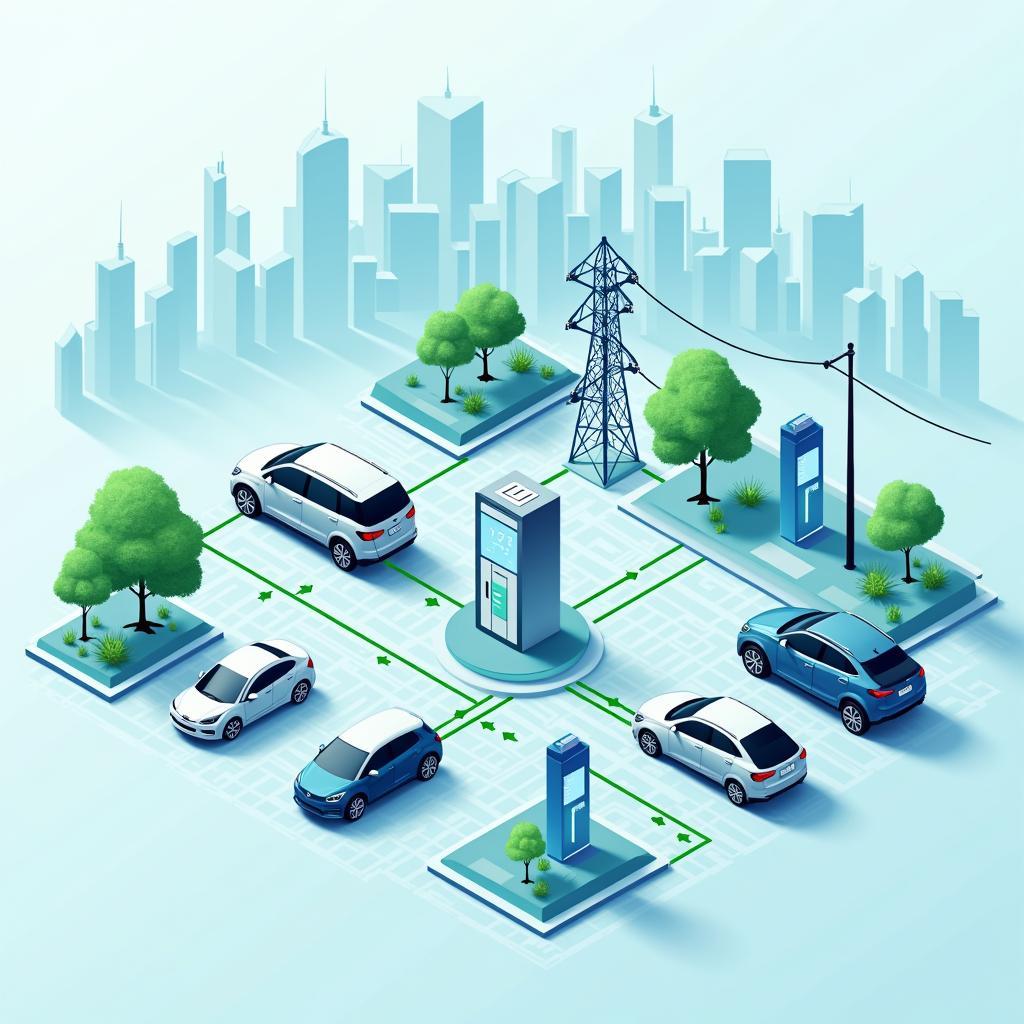 Công nghệ Vehicle to Grid kết nối xe điện với lưới điện thông minh
Passage 2 – Giải Thích
Câu 14: NOT GIVEN
- Dạng câu hỏi: Yes/No/Not Given
- Từ khóa: V2G technology, completely replace, traditional power plants
- Vị trí trong bài: Đoạn 2
- Giải thích: Bài viết chỉ nói V2G có thể “provide grid stabilization services equivalent to a small power plant” nhưng không bao giờ đề cập đến việc thay thế hoàn toàn các nhà máy điện truyền thống. Do đó là NOT GIVEN.
Câu 15: YES
- Dạng câu hỏi: Yes/No/Not Given
- Từ khóa: platooning technology, more effective, electric vehicles, conventional vehicles
- Vị trí trong bài: Đoạn 3, dòng 7-9
- Giải thích: Bài viết khẳng định “this technology becomes even more potent because EVs’ instantaneous torque response allows for more precise speed synchronization than conventional vehicles can achieve” – công nghệ này hiệu quả hơn với EV. Đây là quan điểm của tác giả, do đó đáp án là YES.
Câu 16: YES
- Dạng câu hỏi: Yes/No/Not Given
- Từ khóa: Singapore traffic management system, more effective, more electric vehicles
- Vị trí trong bài: Đoạn 4, dòng 6-8
- Giải thích: Câu trong bài: “The system’s effectiveness increases proportionally with the number of connected vehicles on the road” – hiệu quả tăng tỷ lệ thuận với số xe được kết nối. Đây chính là quan điểm của tác giả, đáp án YES.
Câu 18: NO
- Dạng câu hỏi: Yes/No/Not Given
- Từ khóa: cities, high EV adoption, reduced public revenue
- Vị trí trong bài: Đoạn 7, dòng 6-9
- Giải thích: Bài viết nói “cities with high EV adoption have found alternative revenue streams… that often exceed lost fuel tax income” – các thành phố tìm được nguồn thu thay thế thường vượt quá thuế nhiên liệu bị mất. Điều này mâu thuẫn với câu hỏi nói về “reduced revenue”, do đó đáp án là NO.
Câu 19: A (Denmark)
- Dạng câu hỏi: Matching Information
- Từ khóa: coordinated electric vehicle systems, power grid stabilization
- Vị trí trong bài: Đoạn 2, dòng 8-11
- Giải thích: “In Denmark, pilot projects have demonstrated that coordinated V2G systems… can provide grid stabilization services” – thông tin khớp với Denmark.
Câu 24: platooning/platoons/convoys
- Dạng câu hỏi: Summary Completion
- Từ khóa: closely-spaced groups
- Vị trí trong bài: Đoạn 3, dòng 3-4
- Giải thích: Bài viết giải thích: “platooning—a technique where vehicles travel in closely-spaced convoys” – đáp án có thể là platooning, platoons, hoặc convoys đều đúng.
Câu 25: aerodynamic drag
- Dạng câu hỏi: Summary Completion
- Từ khóa: improving efficiency, reducing
- Vị trí trong bài: Đoạn 3, dòng 5-6
- Giải thích: “improving fuel efficiency by reducing aerodynamic drag” – giảm lực cản khí động học (aerodynamic drag).
Passage 3 – Giải Thích
Câu 27: B
- Dạng câu hỏi: Multiple Choice
- Từ khóa: electric vehicles, reduce congestion, most effectively
- Vị trí trong bài: Đoạn 2, dòng 1-4
- Giải thích: “electric vehicles contribute to congestion reduction most effectively when embedded within multimodal transportation networks that prioritize public transit, cycling infrastructure, and pedestrian-friendly urban design” – cần tích hợp vào hệ thống giao thông đa phương thức, chính xác là đáp án B.
Câu 28: B
- Dạng câu hỏi: Multiple Choice
- Từ khóa: rebound effect, transportation economics
- Vị trí trong bài: Đoạn 2, dòng 6-8
- Giải thích: Bài viết giải thích “the lowered operational costs of electric vehicles may induce additional vehicle trips—a phenomenon known as the ‘rebound effect'” – chi phí vận hành thấp dẫn đến nhiều chuyến đi hơn, đáp án B.
Câu 29: C
- Dạng câu hỏi: Multiple Choice
- Từ khóa: American cities, incomes above $75,000, charging stations, below $35,000
- Vị trí trong bài: Đoạn 3, dòng 3-5
- Giải thích: Con số chính xác: “4.7 times more public charging stations per capita” – đáp án C.
Câu 37: mere substitutes
- Dạng câu hỏi: Short-answer
- Từ khóa: electric vehicles, replacements for conventional vehicles
- Vị trí trong bài: Đoạn 2, dòng 2-3
- Giải thích: “functioning as mere substitutes for conventional vehicles” – cụm từ chính xác là “mere substitutes”.
Câu 38: University of California, Berkeley
- Dạng câu hỏi: Short-answer
- Từ khóa: Institute for Transportation Studies, research
- Vị trí trong bài: Đoạn 2, dòng 2
- Giải thích: “Institute for Transportation Studies at the University of California, Berkeley” – tên đầy đủ của trường.
Câu 40: dynamic/congestion pricing (systems)
- Dạng câu hỏi: Short-answer
- Từ khóa: most economically efficient, congestion management
- Vị trí trong bài: Đoạn 7, dòng 7-9
- Giải thích: “Sophisticated congestion pricing systems that dynamically adjust… represent the most economically efficient approach” – có thể trả lời là “dynamic pricing” hoặc “congestion pricing” đều được chấp nhận.
Từ Vựng Quan Trọng Theo Passage
Passage 1 – Essential Vocabulary
| Từ vựng | Loại từ | Phiên âm | Nghĩa tiếng Việt | Ví dụ từ bài | Collocation |
|---|---|---|---|---|---|
| adoption rate | n | /əˈdɒpʃən reɪt/ | tỷ lệ áp dụng/sử dụng | The adoption rate of electric vehicles has accelerated dramatically | high/low adoption rate, rapid adoption |
| integration | n | /ˌɪntɪˈɡreɪʃən/ | sự tích hợp, hội nhập | integration with smart city infrastructure | full integration, seamless integration |
| vehicle-to-infrastructure | n | /ˈviːɪkəl tuː ˈɪnfrəstrʌktʃər/ | công nghệ xe kết nối hạ tầng | Through vehicle-to-infrastructure (V2I) technology | V2I technology, V2I communication |
| congested areas | n | /kənˈdʒestɪd ˈeəriəz/ | khu vực tắc nghẽn | drivers avoid congested areas | heavily congested, congested traffic |
| maneuver | v/n | /məˈnuːvər/ | di chuyển khéo léo, cơ động | more maneuverable vehicles | difficult maneuver, parking maneuver |
| car-sharing scheme | n | /kɑː ˈʃeərɪŋ skiːm/ | chương trình chia sẻ xe | Car-sharing schemes featuring electric vehicles | popular scheme, implement a scheme |
| range anxiety | n | /reɪndʒ æŋˈzaɪəti/ | lo lắng về quãng đường di chuyển | range anxiety about electric vehicles | overcome range anxiety, reduce anxiety |
| charging facility | n | /ˈtʃɑːdʒɪŋ fəˈsɪləti/ | cơ sở/trạm sạc điện | never far from a charging facility | public charging facility, install facilities |
| modal shift | n | /ˈməʊdəl ʃɪft/ | sự thay đổi phương thức (đi lại) | This modal shift away from private car ownership | encourage modal shift, achieve shift |
| congestion charge | n | /kənˈdʒestʃən tʃɑːdʒ/ | phí ùn tắc giao thông | exemption from congestion charges | pay congestion charge, introduce charge |
| financial incentive | n | /faɪˈnænʃəl ɪnˈsentɪv/ | ưu đãi tài chính | create a strong financial incentive | offer incentive, provide incentive |
| tailpipe emissions | n | /ˈteɪlpaɪp ɪˈmɪʃənz/ | khí thải từ ống xả | produce zero tailpipe emissions | reduce emissions, emission-free |
Passage 2 – Essential Vocabulary
| Từ vựng | Loại từ | Phiên âm | Nghĩa tiếng Việt | Ví dụ từ bài | Collocation |
|---|---|---|---|---|---|
| proliferation | n | /prəˌlɪfəˈreɪʃən/ | sự gia tăng nhanh | The proliferation of electric vehicles | rapid proliferation, nuclear proliferation |
| propulsion system | n | /prəˈpʌlʃən ˈsɪstəm/ | hệ thống động lực | change in propulsion systems | electric propulsion, advanced propulsion |
| synergy | n | /ˈsɪnədʒi/ | sự cộng hưởng, hiệu ứng tổng hợp | The synergy between electric vehicles and smart grid | create synergy, achieve synergy |
| bidirectional | adj | /ˌbaɪdɪˈrekʃənəl/ | hai chiều | bidirectional energy flow | bidirectional charging, bidirectional communication |
| grid stabilization | n | /ɡrɪd ˌsteɪbɪlaɪˈzeɪʃən/ | ổn định lưới điện | provide grid stabilization services | ensure stabilization, improve stability |
| platooning | n | /pləˈtuːnɪŋ/ | di chuyển theo đội hình | platooning—a technique where vehicles travel | vehicle platooning, truck platooning |
| aerodynamic drag | n | /ˌeərəʊdaɪˈnæmɪk dræɡ/ | lực cản khí động học | reducing aerodynamic drag | minimize drag, reduce drag |
| instantaneous torque | n | /ˌɪnstənˈteɪniəs tɔːk/ | mô-men xoắn tức thời | EVs’ instantaneous torque response | deliver torque, maximum torque |
| adaptive traffic signal | n | /əˈdæptɪv ˈtræfɪk ˈsɪɡnəl/ | tín hiệu giao thông thích ứng | adaptive traffic signal system | install signals, intelligent signals |
| automated valet parking | n | /ˈɔːtəmeɪtɪd ˈvæleɪ ˈpɑːkɪŋ/ | đỗ xe tự động (dịch vụ) | Automated valet parking (AVP) systems | AVP system, implement AVP |
| inductive charging | n | /ɪnˈdʌktɪv ˈtʃɑːdʒɪŋ/ | sạc điện cảm ứng | equipped with inductive charging technology | wireless inductive charging |
| infrastructural shift | n | /ˌɪnfrəˈstrʌktʃərəl ʃɪft/ | sự thay đổi về hạ tầng | economic implications of this infrastructural shift | major shift, gradual shift |
| tangible benefit | n | /ˈtændʒəbəl ˈbenɪfɪt/ | lợi ích hữu hình | experiencing tangible economic benefits | provide tangible benefits, measurable benefits |
| congestion pricing | n | /kənˈdʒestʃən ˈpraɪsɪŋ/ | định giá ùn tắc | alternative revenue streams through congestion pricing | implement pricing, dynamic pricing |
Passage 3 – Essential Vocabulary
| Từ vựng | Loại từ | Phiên âm | Nghĩa tiếng Việt | Ví dụ từ bài | Collocation |
|---|---|---|---|---|---|
| predominance | n | /prɪˈdɒmɪnəns/ | sự chiếm ưu thế | electric vehicle predominance | achieve predominance, maintain predominance |
| transcend | v | /trænˈsend/ | vượt qua, vượt xa | The transition transcends technological considerations | transcend boundaries, transcend limitations |
| socioeconomic dynamics | n | /ˌsəʊsiəʊˌiːkəˈnɒmɪk daɪˈnæmɪks/ | động lực kinh tế-xã hội | complex socioeconomic dynamics | understand dynamics, affect dynamics |
| spatial inequality | n | /ˈspeɪʃəl ˌɪnɪˈkwɒləti/ | bất bình đẳng không gian | exacerbate existing spatial inequalities | reduce inequality, address inequality |
| distributional consequences | n | /ˌdɪstrɪˈbjuːʃənəl ˈkɒnsɪkwənsɪz/ | hậu quả phân phối | distributional consequences of EV adoption policies | consider consequences, negative consequences |
| contingent upon | prep phrase | /kənˈtɪndʒənt əˈpɒn/ | phụ thuộc vào | effects are contingent upon integration | be contingent on, contingent factor |
| multimodal network | n | /ˌmʌltiˈməʊdəl ˈnetwɜːk/ | mạng lưới đa phương thức | embedded within multimodal transportation networks | develop network, integrated network |
| rebound effect | n | /ˈriːbaʊnd ɪˈfekt/ | hiệu ứng bật lại/phản tác dụng | a phenomenon known as the “rebound effect” | experience rebound, mitigate effect |
| epitomize | v | /ɪˈpɪtəmaɪz/ | tiêu biểu hóa, là hình mẫu | spatial distribution epitomizes equity dimensions | epitomize success, perfectly epitomize |
| pronounced disparity | n | /prəˈnaʊnst dɪˈspærəti/ | sự chênh lệch rõ rệt | reveals pronounced disparities | reduce disparity, income disparity |
| self-reinforcing cycle | n | /self ˌriːɪnˈfɔːsɪŋ ˈsaɪkəl/ | chu trình tự củng cố | creates a self-reinforcing cycle | break the cycle, vicious cycle |
| longitudinal study | n | /ˌlɒndʒɪˈtjuːdɪnəl ˈstʌdi/ | nghiên cứu dọc/theo thời gian | Longitudinal studies in Norway | conduct study, comprehensive study |
| technocratic solution | n | /ˌteknəˈkrætɪk səˈluːʃən/ | giải pháp kỹ trị | limitations of technocratic solutions | propose solution, simple solution |
| induced demand | n | /ɪnˈdjuːst dɪˈmɑːnd/ | nhu cầu cảm ứng/được tạo ra | offset by induced demand | create demand, increase demand |
| zero-occupancy trip | n | /ˈzɪərəʊ ˈɒkjʊpənsi trɪp/ | chuyến đi không hành khách | possibility of zero-occupancy trips | prevent trips, reduce trips |
| proactive regulatory framework | n | /ˌprəʊˈæktɪv ˈreɡjʊlətəri ˈfreɪmwɜːk/ | khung quy định chủ động | without proactive regulatory frameworks | establish framework, effective framework |
| fiscal implication | n | /ˈfɪskəl ˌɪmplɪˈkeɪʃən/ | hàm ý/tác động tài khóa | fiscal implications of EV adoption | consider implications, serious implications |
| vehicle miles traveled | n | /ˈviːɪkəl maɪlz ˈtrævəld/ | số dặm xe di chuyển (VMT) | vehicle miles traveled (VMT) taxes | reduce VMT, total VMT |
 Đô thị thông minh tương lai với hệ sinh thái xe điện hoàn chỉnh
Kết Bài
Chủ đề về cách xe điện đang giảm tắc nghẽn giao thông (How electric vehicles are reducing traffic congestion) không chỉ phổ biến trong IELTS Reading mà còn phản ánh những xu hướng phát triển thực tế của đô thị hiện đại. Qua ba passages với độ khó tăng dần, bạn đã được tiếp cận với đầy đủ các khía cạnh từ lợi ích cơ bản của xe điện, công nghệ hạ tầng thông minh, đến những vấn đề phức tạp về kinh tế xã hội và bất bình đẳng không gian.
Đề thi mẫu này cung cấp 40 câu hỏi với 7 dạng khác nhau, hoàn toàn giống với format thi thật, giúp bạn làm quen với nhiều kỹ thuật làm bài từ scanning, skimming đến phân tích sâu. Phần đáp án chi tiết không chỉ cho biết câu trả lời đúng mà còn giải thích cách xác định vị trí thông tin, nhận diện paraphrase, và tránh những cạm bẫy phổ biến. Điều này đặc biệt quan trọng để bạn tự đánh giá năng lực và cải thiện điểm số.
Từ vựng được tổng hợp trong bài bao gồm hơn 40 từ và cụm từ quan trọng về công nghệ, giao thông và phát triển đô thị, với phiên âm, nghĩa tiếng Việt và collocations thực tế. Những từ vựng này không chỉ hữu ích cho bài thi Reading mà còn có thể áp dụng cho Writing Task 2 và Speaking Part 3 khi thảo luận về chủ đề công nghệ xanh và phát triển bền vững. Tương tự như Impact of automation on public transportation systems, xu hướng tự động hóa và điện khí hóa đang định hình lại cách chúng ta di chuyển trong đô thị.
Để tối ưu kết quả học tập, hãy làm đề này trong điều kiện thi thật với đồng hồ bấm giờ 60 phút, sau đó đối chiếu đáp án và đọc kỹ phần giải thích. Đối với những ai quan tâm đến What are the challenges of regulating autonomous vehicles?, Passage 3 trong đề thi này cung cấp góc nhìn sâu sắc về những thách thức pháp lý và xã hội khi công nghệ tự lái kết hợp với xe điện. Lặp lại việc làm bài nhiều lần với các chủ đề khác nhau sẽ giúp bạn nâng cao tốc độ đọc và độ chính xác, từ đó tự tin đạt band điểm mục tiêu trong kỳ thi IELTS Reading.
Việc hiểu rõ Smart cities and data privacy cũng giúp bạn nắm bắt tốt hơn bối cảnh của các công nghệ V2I và V2G được đề cập trong đề thi này. Đối với những người học muốn mở rộng kiến thức về Impact of smart technologies on urban living, nội dung về hạ tầng thông minh và quản lý giao thông trong bài thi này sẽ cung cấp nền tảng từ vựng và ý tưởng phong phú. Hơn nữa, việc tìm hiểu về Impact of electric aviation on global air travel cho thấy xu hướng điện khí hóa không chỉ giới hạn ở giao thông mặt đất mà đang mở rộng ra toàn bộ hệ thống vận tải toàn cầu, tạo nên một bức tranh hoàn chỉnh về tương lai giao thông bền vững.
Chúc bạn học tốt và đạt kết quả cao trong kỳ thi IELTS!