Mở Bài
Chủ đề xe điện và sự thay đổi trong hệ thống giao thông đang trở thành một trong những nội dung phổ biến nhất trong các đề thi IELTS Reading những năm gần đây. Với xu hướng toàn cầu hóa chuyển đổi xanh và phát triển bền vững, Cambridge IELTS và các tổ chức ra đề thi thường xuyên đưa các bài đọc liên quan đến công nghệ giao thông, năng lượng sạch và tác động môi trường vào đề thi chính thức.
Bài viết này cung cấp cho bạn một bộ đề thi IELTS Reading hoàn chỉnh với 3 passages có độ khó tăng dần từ Easy đến Hard, phù hợp với học viên từ band 5.0 đến 9.0. Đề thi bao gồm 40 câu hỏi đa dạng các dạng bài như Multiple Choice, True/False/Not Given, Matching Headings, Summary Completion và nhiều dạng khác – hoàn toàn giống với format thi thật.
Bạn sẽ nhận được đáp án chi tiết kèm giải thích cụ thể về cách paraphrase, vị trí thông tin trong bài, cùng với bảng từ vựng quan trọng được phân loại theo từng passage. Đây là tài liệu luyện tập lý tưởng giúp bạn làm quen với chủ đề công nghệ – môi trường, nâng cao kỹ năng đọc hiểu và quản lý thời gian hiệu quả.
1. Hướng Dẫn Làm Bài IELTS Reading
Tổng Quan Về IELTS Reading Test
IELTS Reading Test là phần thi kéo dài 60 phút với 3 passages và tổng cộng 40 câu hỏi. Điểm số được tính dựa trên số câu trả lời đúng, không bị trừ điểm với câu sai. Mỗi passage có độ dài khoảng 700-1000 từ và độ khó tăng dần.
Phân bổ thời gian khuyến nghị:
- Passage 1: 15-17 phút (13 câu hỏi)
- Passage 2: 18-20 phút (13 câu hỏi)
- Passage 3: 23-25 phút (14 câu hỏi)
Lưu ý dành 2-3 phút cuối để chuyển đáp án vào Answer Sheet. Không có thời gian bổ sung như phần Listening.
Các Dạng Câu Hỏi Trong Đề Này
Đề thi mẫu này bao gồm các dạng câu hỏi phổ biến nhất:
- Multiple Choice – Câu hỏi trắc nghiệm
- True/False/Not Given – Xác định thông tin đúng/sai/không có trong bài
- Matching Information – Nối thông tin với đoạn văn
- Sentence Completion – Hoàn thành câu
- Matching Headings – Nối tiêu đề với đoạn văn
- Summary Completion – Hoàn thành đoạn tóm tắt
- Short-answer Questions – Câu hỏi trả lời ngắn
2. IELTS Reading Practice Test
PASSAGE 1 – The Dawn of Electric Mobility
Độ khó: Easy (Band 5.0-6.5)
Thời gian đề xuất: 15-17 phút
The transformation of global transportation systems through electric vehicles (EVs) represents one of the most significant technological shifts of the 21st century. What began as a niche market for environmentally conscious consumers has evolved into a mainstream movement that is reshaping urban planning, energy infrastructure, and automotive manufacturing worldwide.
Electric vehicles are not entirely new. In fact, they predate petrol-powered cars, with the first practical electric automobile appearing in the 1880s. However, the dominance of internal combustion engines throughout the 20th century meant that electric cars remained largely experimental until recent decades. The resurgence of interest in EVs began in the early 2000s, driven by growing concerns about climate change, air pollution, and fossil fuel dependency.
Modern electric vehicles offer several compelling advantages over traditional petrol and diesel cars. First and foremost, they produce zero direct emissions, making them particularly valuable in urban areas where air quality is a pressing concern. Cities like London, Paris, and Beijing have introduced strict emission zones where older polluting vehicles face charges or bans, creating strong incentives for EV adoption. Additionally, electric motors are inherently more efficient than combustion engines, converting approximately 90% of electrical energy into movement compared to just 20-30% for petrol engines.
The economic case for electric vehicles has strengthened considerably in recent years. While the upfront purchase price of EVs remains higher than comparable petrol models, the total cost of ownership often favors electric options. Electricity is generally cheaper than petrol per kilometer traveled, and electric vehicles require significantly less maintenance due to fewer moving parts. There are no oil changes, spark plugs, or exhaust systems to replace. Many countries also offer substantial financial incentives, including purchase grants, tax exemptions, and reduced registration fees, to accelerate the transition to electric mobility.
Battery technology represents the heart of the electric vehicle revolution. The energy density of lithium-ion batteries has improved dramatically over the past decade, while costs have fallen by approximately 90% since 2010. This has enabled manufacturers to produce vehicles with practical driving ranges exceeding 400 kilometers on a single charge – sufficient for the vast majority of daily journeys. Fast-charging infrastructure is expanding rapidly, with some systems now capable of adding 200 kilometers of range in just 15 minutes.
However, challenges remain in the widespread adoption of electric vehicles. The availability of charging infrastructure, particularly in rural areas and apartment buildings, continues to be a barrier for many potential buyers. Range anxiety – the fear of running out of charge before reaching a destination – remains a psychological hurdle, even as real-world ranges improve. The environmental impact of battery production, particularly the mining of lithium, cobalt, and other materials, raises questions about the overall sustainability of electric vehicles.
The automotive industry has responded to these challenges with unprecedented investment. Major manufacturers have announced plans to phase out combustion engines entirely within the next 10-20 years. Traditional car companies are being challenged by new entrants who design vehicles specifically around electric powertrains, offering innovative features like over-the-air software updates and advanced driver assistance systems. This competition is driving rapid improvements in performance, design, and affordability.
Government policies play a crucial role in the transition to electric mobility. Many countries have set ambitious targets for EV adoption and announced dates after which the sale of new petrol and diesel vehicles will be prohibited. Norway leads the way, with over 80% of new car sales in 2023 being fully electric. The United Kingdom, France, and several other European nations have committed to banning new combustion engine sales by 2030 or 2035. These regulatory frameworks provide certainty for manufacturers and consumers alike.
Questions 1-5: Multiple Choice
Choose the correct letter, A, B, C, or D.
1. According to the passage, electric vehicles first appeared:
A. in the early 2000s
B. in the 1880s
C. in the mid-20th century
D. after petrol-powered cars
2. What percentage of electrical energy do electric motors convert into movement?
A. 20-30%
B. 50%
C. 80%
D. 90%
3. The cost of lithium-ion batteries since 2010 has:
A. increased dramatically
B. remained stable
C. decreased by approximately 90%
D. decreased by 50%
4. What is “range anxiety”?
A. Fear of high charging costs
B. Concern about battery lifespan
C. Fear of running out of charge before reaching a destination
D. Worry about finding charging stations
5. In 2023, what percentage of new car sales in Norway were fully electric?
A. Over 50%
B. Over 60%
C. Over 70%
D. Over 80%
Questions 6-9: True/False/Not Given
Do the following statements agree with the information in the passage?
Write:
- TRUE if the statement agrees with the information
- FALSE if the statement contradicts the information
- NOT GIVEN if there is no information on this
6. Electric vehicles were completely unknown before the year 2000.
7. EVs require significantly less maintenance than petrol cars.
8. All countries offer the same financial incentives for purchasing electric vehicles.
9. Fast-charging systems can now add 200 kilometers of range in 15 minutes.
Questions 10-13: Sentence Completion
Complete the sentences below using NO MORE THAN THREE WORDS from the passage.
10. Cities like London and Paris have introduced _____ where polluting vehicles face charges or restrictions.
11. The _____ of battery production raises sustainability questions about electric vehicles.
12. New car manufacturers are challenging traditional companies by designing vehicles specifically around electric _____.
13. Many European nations have committed to _____ new combustion engine sales by 2030 or 2035.
PASSAGE 2 – Infrastructure Transformation and Urban Planning
Độ khó: Medium (Band 6.0-7.5)
Thời gian đề xuất: 18-20 phút
The proliferation of electric vehicles is catalyzing a fundamental reconfiguration of urban infrastructure that extends far beyond the automotive sector. City planners, energy providers, and policymakers are grappling with the multifaceted challenges and opportunities presented by this transition, which necessitates a holistic approach to transportation, energy distribution, and urban design.
Charging infrastructure represents the most visible aspect of this transformation. Unlike petrol stations, which are centralized facilities requiring specialized safety measures and substantial land allocation, EV charging can occur at multiple scales and locations. Residential charging – typically overnight at home – accounts for approximately 80% of current charging behavior in developed markets. This paradigm shift has profound implications for electricity grid management, as millions of vehicles simultaneously charging during off-peak hours could either strain or stabilize the grid, depending on implementation strategies.
Smart charging systems are emerging as a critical solution to optimize grid interaction. These systems use sophisticated algorithms to coordinate charging times based on electricity demand, renewable energy availability, and individual user requirements. Vehicle-to-grid (V2G) technology takes this concept further by enabling EVs to discharge electricity back into the grid during peak demand periods, effectively transforming vehicles into mobile energy storage units. This bidirectional flow could help integrate higher proportions of intermittent renewable energy sources like solar and wind power, which produce electricity when conditions are favorable rather than when demand is highest.
The spatial distribution of public charging infrastructure requires careful consideration of equity and accessibility. Disparities in charging availability between affluent and disadvantaged neighborhoods risk creating a two-tier system where EV ownership remains disproportionately accessible to wealthier residents with private parking. Progressive cities are addressing this through mandated charging installations in new developments, retrofitting existing parking facilities, and deploying rapid chargers in strategic locations accessible via public transportation.
Urban planning is being reconceptualized to accommodate the unique characteristics of electric mobility. The reduced noise of electric vehicles enables more flexible zoning regulations, potentially allowing mixed-use developments where residential and commercial spaces coexist more harmoniously. Some forward-thinking cities are repurposing former petrol stations – which are becoming obsolete – into pocket parks, community spaces, or high-density charging hubs. The decreased need for exhaust ventilation in parking structures allows for more cost-effective underground parking and residential integration.
Fleet electrification – the conversion of buses, delivery vehicles, and taxis to electric power – presents both challenges and opportunities distinct from private vehicle adoption. These vehicles travel considerably higher annual distances, making the economic benefits of lower operating costs more pronounced. However, they also require specialized charging infrastructure capable of rapid turnover and predictable availability. Several cities have implemented dedicated charging depots for buses that combine slow overnight charging with opportunity charging during scheduled breaks.
The interplay between electric vehicles and renewable energy generation is creating new synergies in urban energy systems. Photovoltaic installations on residential and commercial buildings can directly supply charging infrastructure, reducing grid dependency and enabling greater energy autonomy. Some innovative developments integrate EV charging with community solar projects, where residents collectively invest in local renewable generation. This decentralized model contrasts sharply with the centralized fossil fuel distribution system it replaces.
Data privacy and cybersecurity have emerged as critical considerations in the development of smart charging networks. Charging infrastructure generates detailed information about vehicle usage patterns, location history, and energy consumption – data that could be exploited for commercial profiling or surveillance if inadequately protected. Regulatory frameworks are evolving to establish standards for data handling and user consent, though international coordination remains limited.
The economic implications of transportation electrification extend to municipal revenues. Many cities derive substantial income from parking fees, traffic fines, and fuel taxes – revenue streams that may be disrupted as transportation patterns shift. Some jurisdictions are exploring alternative funding mechanisms, including distance-based charging or dynamic road pricing, though these approaches raise their own equity concerns and implementation challenges.
Questions 14-18: Yes/No/Not Given
Do the following statements agree with the views of the writer in the passage?
Write:
- YES if the statement agrees with the views of the writer
- NO if the statement contradicts the views of the writer
- NOT GIVEN if it is impossible to say what the writer thinks about this
14. Residential charging currently represents the majority of EV charging behavior in developed countries.
15. Vehicle-to-grid technology can only charge vehicles, not discharge electricity.
16. All cities have equal charging infrastructure across different neighborhoods.
17. Electric vehicles produce less noise than conventional vehicles.
18. International coordination on data privacy standards for EV charging is comprehensive.
Questions 19-23: Matching Information
Match the following statements (19-23) with the correct paragraph (A-I). You may use any letter more than once.
A. Paragraph 1
B. Paragraph 2
C. Paragraph 3
D. Paragraph 4
E. Paragraph 5
F. Paragraph 6
G. Paragraph 7
H. Paragraph 8
I. Paragraph 9
19. A description of how EVs can function as energy storage devices
20. Discussion of potential inequality in access to charging facilities
21. Explanation of how cities might replace lost revenue from traditional sources
22. Information about the benefits of fleet electrification for commercial vehicles
23. Details about integrating solar power with EV charging
Questions 24-26: Summary Completion
Complete the summary below using words from the box.
Words: algorithms, centralized, charging, disadvantaged, equity, infrastructure, parking, renewable, residential, urban
Electric vehicle adoption requires significant changes to 24) infrastructure. Unlike petrol stations which are 25) facilities, EV charging can happen at home, work, and public locations. Ensuring 26) _____ in access to charging facilities between wealthy and poorer neighborhoods is an important consideration for city planners.
PASSAGE 3 – Systemic Implications and Future Trajectories
Độ khó: Hard (Band 7.0-9.0)
Thời gian đề xuất: 23-25 phút
The ascendancy of electric vehicles as the dominant paradigm in personal transportation represents not merely a technological substitution but a fundamental restructuring of socioeconomic systems that have coalesced around hydrocarbon-based mobility for over a century. This transition engenders cascading effects across industrial supply chains, geopolitical relationships, labor markets, and environmental systems, necessitating analytical frameworks that transcend simple comparisons of vehicle performance metrics to encompass the holistic transformation of transportation ecosystems.
The reconfiguration of automotive manufacturing ecosystems exemplifies the profound industrial implications of electrification. Traditional internal combustion engine production involves intricate supply networks spanning thousands of specialized components – from precision-engineered cylinder blocks to sophisticated fuel injection systems – manufactured by established tier-one suppliers whose expertise and capital investments are becoming progressively obsolete. Electric powertrains, by contrast, exhibit substantially reduced mechanical complexity, centralizing value creation around battery cell production and power electronics – domains where traditional automotive manufacturers possess limited competitive advantages relative to electronics and chemical companies.
This industrial transformation precipitates significant labor market disruptions. Empirical analyses suggest that electric vehicle production requires approximately 30-40% fewer manufacturing hours than equivalent combustion vehicles, disproportionately affecting workers in machining, assembly, and component manufacturing roles that have constituted the backbone of automotive employment for generations. The geographic concentration of these impacts exacerbates regional vulnerabilities, particularly in areas where automotive manufacturing represents a dominant economic sector. Transition management strategies, including comprehensive retraining programs and diversification initiatives, are imperative to mitigate socioeconomic dislocation, yet their implementation remains fragmented and inadequate relative to the scale and velocity of industrial change.
Geopolitical dimensions of transportation electrification center on the redistribution of resource dependencies and strategic vulnerabilities. While electrification reduces dependence on petroleum – a commodity whose extraction and distribution have shaped international relations and conflict dynamics throughout the modern era – it simultaneously creates new dependencies on critical minerals essential for battery production. Lithium, cobalt, nickel, and rare earth elements required for permanent magnets in electric motors are geographically concentrated in ways that mirror or exceed the concentration of petroleum reserves. The Democratic Republic of Congo accounts for approximately 70% of global cobalt production, while China dominates refining capacity across multiple critical minerals and controls substantial lithium reserves in South America through strategic investments.
These emerging dependencies raise pertinent questions about whether electrification merely substitutes one form of resource geopolitics for another, potentially reproducing power asymmetries and security concerns in different configurations. Diversification of mineral supply chains, development of alternative battery chemistries that reduce or eliminate critical mineral requirements, and establishment of comprehensive recycling systems represent strategic priorities for nations seeking to enhance energy security through transportation electrification. However, the temporal horizons for these mitigation strategies extend across decades, creating transitional vulnerabilities that require careful diplomatic and economic management.
The environmental calculus of electric vehicle adoption demonstrates considerable complexity that defies simplistic characterization. While EVs produce zero tailpipe emissions, their lifecycle environmental impacts depend critically on upstream factors including electricity generation sources, battery production processes, and end-of-life disposal or recycling practices. In regions where electricity generation remains predominantly coal-based, the net carbon emissions associated with electric vehicle operation may approximate or even exceed those of efficient conventional vehicles, particularly when accounting for battery manufacturing emissions. Conversely, in jurisdictions with decarbonized electricity grids dominated by renewable or nuclear generation, electric vehicles offer substantial emissions reductions across their operational lifecycle.
Battery production represents a particularly emissions-intensive process, with current manufacturing methods generating approximately 60-100 kilograms of CO2 equivalent per kilowatt-hour of battery capacity – implying that a typical 60 kWh battery incurs 3.6-6 metric tons of CO2 emissions before the vehicle travels a single kilometer. This manufacturing burden means that electric vehicles require substantial operational mileage – typically 20,000-100,000 kilometers depending on regional electricity carbon intensity – before achieving net emissions benefits relative to conventional alternatives. Ongoing innovations in battery production, including use of renewable energy in manufacturing facilities and development of lower-impact cathode materials, are progressively reducing these embedded emissions, though significant challenges remain.
The circular economy dimensions of battery lifecycle management present both opportunities and imperatives. Current battery recycling rates remain disappointingly low – below 5% globally – primarily because the installed base of electric vehicles only recently reached sufficient scale to generate meaningful volumes of end-of-life batteries. However, technical capabilities for recovering valuable materials from spent batteries are advancing rapidly, with some processes now achieving over 95% recovery rates for critical metals. Establishing comprehensive collection systems, standardized disassembly procedures, and economically viable recycling operations could substantially mitigate resource dependencies and environmental impacts while creating new industrial sectors and employment opportunities.
Behavioral dimensions of transportation electrification introduce additional complexities often underestimated in technocentric analyses. The advent of vehicles capable of autonomous operation – a capability particularly synergistic with electric powertrains due to the precise control afforded by electric motors and the computational resources enabled by large battery capacities – could fundamentally alter transportation demand patterns. Autonomous electric vehicles might encourage increased travel through reduced perceived costs and enhanced convenience, potentially offsetting emissions reductions through induced demand effects. Alternatively, if deployed primarily through shared mobility services rather than private ownership, autonomous EVs could reduce total vehicle populations and associated resource consumption, though this outcome depends on regulatory frameworks, business models, and cultural preferences that remain uncertain.
The trajectory of transportation electrification ultimately depends on coordinated evolution across technological, infrastructural, regulatory, and behavioral dimensions. Piecemeal approaches that address isolated aspects – such as focusing exclusively on vehicle technology while neglecting charging infrastructure or electricity grid decarbonization – risk suboptimal outcomes and unintended consequences. Comprehensive strategies that integrate these multiple dimensions while remaining adaptive to evolving technologies and societal priorities offer the greatest potential for realizing the transformative benefits of electric mobility while mitigating associated challenges and disruptions.
Questions 27-31: Multiple Choice
Choose the correct letter, A, B, C, or D.
27. According to the passage, electric powertrains compared to combustion engines:
A. require more mechanical components
B. have substantially reduced mechanical complexity
C. need the same number of parts
D. are more difficult to manufacture
28. Research suggests electric vehicle production requires:
A. 10-20% fewer manufacturing hours
B. 20-30% fewer manufacturing hours
C. 30-40% fewer manufacturing hours
D. 50-60% fewer manufacturing hours
29. What percentage of global cobalt production comes from the Democratic Republic of Congo?
A. Approximately 50%
B. Approximately 60%
C. Approximately 70%
D. Approximately 80%
30. Current battery manufacturing generates approximately how much CO2 per kilowatt-hour?
A. 20-40 kg
B. 40-60 kg
C. 60-100 kg
D. 100-140 kg
31. Current global battery recycling rates are:
A. below 5%
B. around 10%
C. approximately 20%
D. over 30%
Questions 32-36: Matching Features
Match the following statements (32-36) with the correct category (A-E).
A. Labor market impacts
B. Geopolitical concerns
C. Environmental considerations
D. Industrial transformation
E. Behavioral factors
32. Traditional automotive suppliers’ expertise becoming obsolete
33. China’s dominance in critical mineral refining capacity
34. Manufacturing burden requiring substantial operational mileage for net benefits
35. Workers in machining and assembly facing disproportionate effects
36. Autonomous vehicles potentially encouraging increased travel
Questions 37-40: Short-answer Questions
Answer the questions below using NO MORE THAN THREE WORDS AND/OR A NUMBER from the passage for each answer.
37. What three materials are mentioned as critical minerals concentrated in specific geographic locations?
38. What percentage recovery rates can some battery recycling processes now achieve?
39. What type of mobility services might reduce total vehicle populations if autonomous EVs are deployed through them?
40. What must comprehensive strategies integrate to realize the benefits of electric mobility?
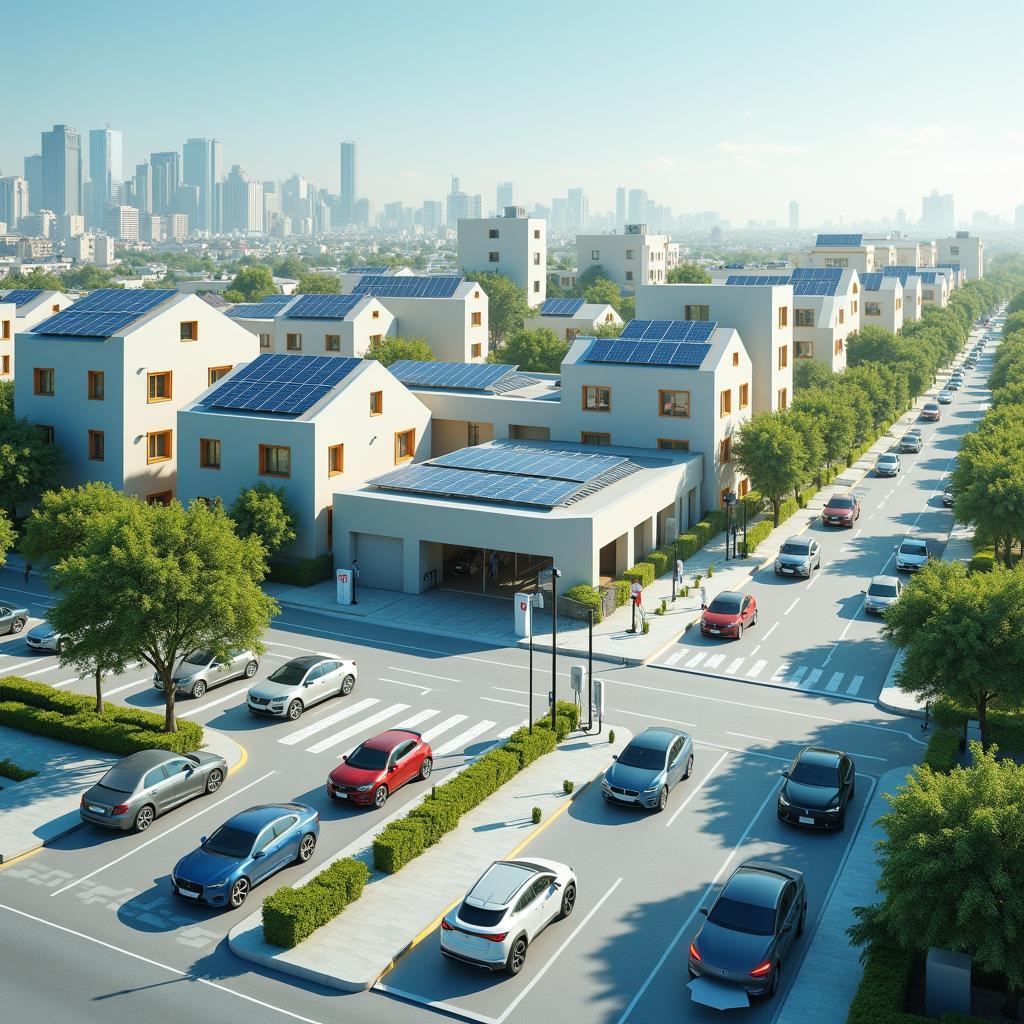 Xe điện đang thay đổi cách thức quy hoạch và phát triển hệ thống giao thông đô thị hiện đại
3. Answer Keys – Đáp Án
PASSAGE 1: Questions 1-13
- B
- D
- C
- C
- D
- FALSE
- TRUE
- NOT GIVEN
- TRUE
- strict emission zones
- environmental impact
- powertrains
- banning
PASSAGE 2: Questions 14-26
- YES
- NO
- NO
- YES
- NO
- C
- D
- I
- F
- G
- urban
- centralized
- equity
PASSAGE 3: Questions 27-40
- B
- C
- C
- C
- A
- D
- B
- C
- A
- E
- Lithium, cobalt, nickel (hoặc bất kỳ 3 trong số: lithium, cobalt, nickel, rare earth elements)
- over 95% / 95%
- shared mobility services
- multiple dimensions
4. Giải Thích Đáp Án Chi Tiết
Passage 1 – Giải Thích
Câu 1: B
- Dạng câu hỏi: Multiple Choice
- Từ khóa: electric vehicles, first appeared
- Vị trí trong bài: Đoạn 2, dòng 1-2
- Giải thích: Bài đọc nói rõ “the first practical electric automobile appearing in the 1880s”, do đó đáp án B là chính xác. Đáp án A sai vì đó là thời điểm xe điện tái xuất hiện, không phải lần đầu tiên.
Câu 2: D
- Dạng câu hỏi: Multiple Choice
- Từ khóa: percentage, electrical energy, convert, movement
- Vị trí trong bài: Đoạn 3, dòng 5-7
- Giải thích: Câu văn “electric motors…converting approximately 90% of electrical energy into movement” đưa ra con số chính xác là 90%.
Câu 5: D
- Dạng câu hỏi: Multiple Choice
- Từ khóa: 2023, Norway, new car sales, fully electric
- Vị trí trong bài: Đoạn 8, dòng 3-4
- Giải thích: Bài viết nêu rõ “Norway leads the way, with over 80% of new car sales in 2023 being fully electric.”
Câu 7: TRUE
- Dạng câu hỏi: True/False/Not Given
- Từ khóa: EVs, maintenance, less, petrol cars
- Vị trí trong bài: Đoạn 4, dòng 4-5
- Giải thích: Thông tin “electric vehicles require significantly less maintenance due to fewer moving parts” khớp hoàn toàn với phát biểu trong câu hỏi.
Câu 9: TRUE
- Dạng câu hỏi: True/False/Not Given
- Từ khóa: fast-charging systems, 200 kilometers, 15 minutes
- Vị trí trong bài: Đoạn 5, dòng cuối
- Giải thích: Câu “some systems now capable of adding 200 kilometers of range in just 15 minutes” xác nhận thông tin này là đúng.
Câu 10: strict emission zones
- Dạng câu hỏi: Sentence Completion
- Từ khóa: London, Paris, polluting vehicles, charges
- Vị trí trong bài: Đoạn 3, dòng 4-5
- Giải thích: Cụm từ “strict emission zones” là đáp án chính xác xuất hiện trong câu về các thành phố như London và Paris.
Câu 13: banning
- Dạng câu hỏi: Sentence Completion
- Từ khóa: European nations, committed, combustion engine sales, 2030, 2035
- Vị trí trong bài: Đoạn 8, dòng 4-5
- Giải thích: Động từ “banning” (từ “ban” trong bài) diễn đạt cam kết cấm bán xe động cơ đốt trong.
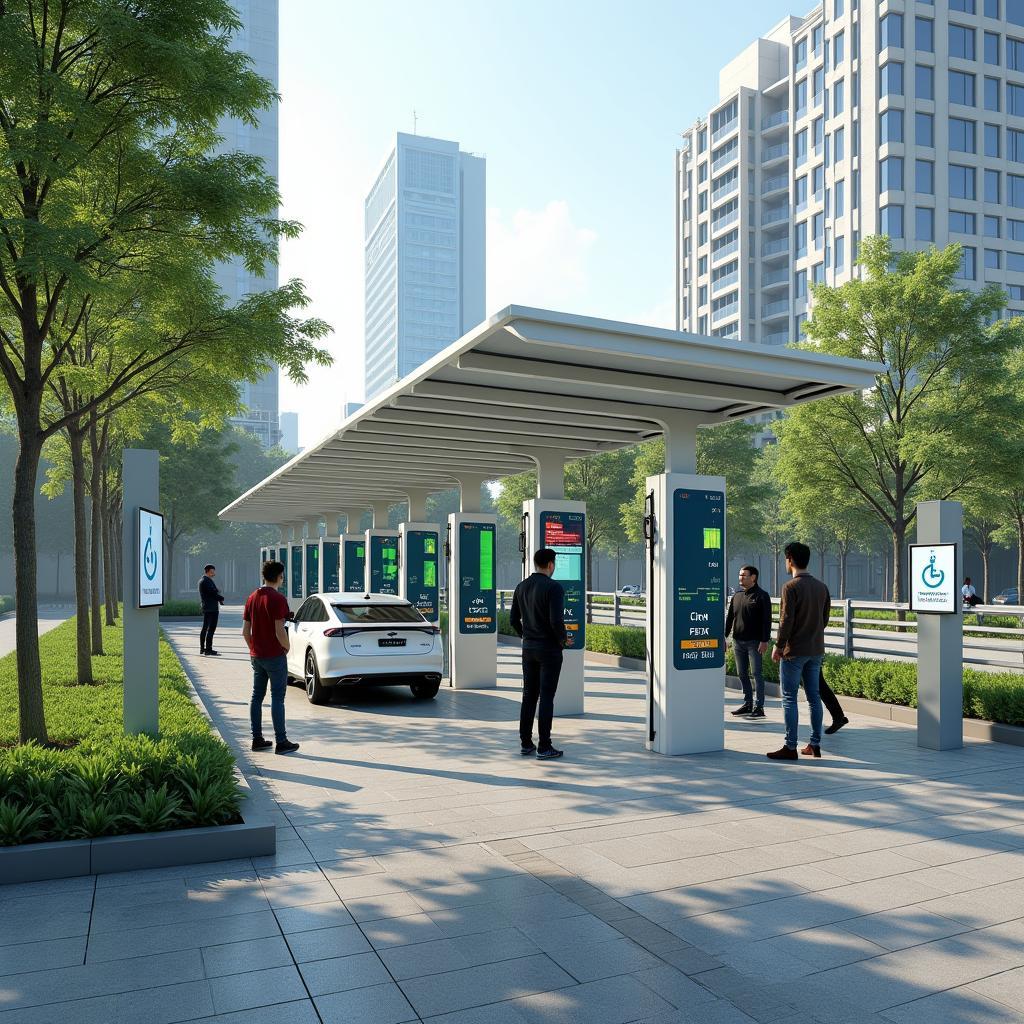 Trạm sạc xe điện công cộng hiện đại với công nghệ sạc nhanh phục vụ cộng đồng
Passage 2 – Giải Thích
Câu 14: YES
- Dạng câu hỏi: Yes/No/Not Given
- Từ khóa: residential charging, majority, developed countries
- Vị trí trong bài: Đoạn 2, dòng 3-4
- Giải thích: Bài viết nêu rõ “Residential charging…accounts for approximately 80% of current charging behavior in developed markets”, cho thấy tác giả xác nhận residential charging chiếm đa số.
Câu 15: NO
- Dạng câu hỏi: Yes/No/Not Given
- Từ khóa: vehicle-to-grid technology, only charge, not discharge
- Vị trí trong bài: Đoạn 3, dòng 3-5
- Giải thích: Bài viết mô tả V2G “enabling EVs to discharge electricity back into the grid”, trực tiếp mâu thuẫn với phát biểu rằng công nghệ này chỉ sạc mà không xả điện.
Câu 16: NO
- Dạng câu hỏi: Yes/No/Not Given
- Từ khóa: all cities, equal charging infrastructure, different neighborhoods
- Vị trí trong bài: Đoạn 4, dòng 2-4
- Giải thích: Tác giả nói về “Disparities in charging availability between affluent and disadvantaged neighborhoods”, cho thấy không phải tất cả thành phố có cơ sở hạ tầng bình đẳng.
Câu 19: C (Paragraph 3)
- Dạng câu hỏi: Matching Information
- Giải thích: Đoạn 3 thảo luận về vehicle-to-grid technology và cách xe điện có thể hoạt động như “mobile energy storage units”.
Câu 20: D (Paragraph 4)
- Dạng câu hỏi: Matching Information
- Giải thích: Đoạn 4 nói về disparities và equity trong việc tiếp cận cơ sở hạ tầng sạc điện giữa các khu vực giàu nghèo.
Câu 26: equity
- Dạng câu hỏi: Summary Completion
- Vị trí trong bài: Đoạn 4
- Giải thích: Từ “equity” xuất hiện trong ngữ cảnh thảo luận về sự công bằng trong tiếp cận cơ sở hạ tầng sạc giữa các khu vực.
Passage 3 – Giải Thích
Câu 27: B
- Dạng câu hỏi: Multiple Choice
- Từ khóa: electric powertrains, compared to, combustion engines
- Vị trí trong bài: Đoạn 2, dòng 5-6
- Giải thích: Bài viết nêu “Electric powertrains…exhibit substantially reduced mechanical complexity”, khớp với đáp án B.
Câu 28: C
- Dạng câu hỏi: Multiple Choice
- Từ khóa: production requires, fewer manufacturing hours
- Vị trí trong bài: Đoạn 3, dòng 2-3
- Giải thích: Thông tin “electric vehicle production requires approximately 30-40% fewer manufacturing hours” cho đáp án chính xác là C.
Câu 29: C
- Dạng câu hỏi: Multiple Choice
- Từ khóa: cobalt production, Democratic Republic of Congo
- Vị trí trong bài: Đoạn 4, dòng 7-8
- Giải thích: Con số “approximately 70%” được nêu rõ trong bài.
Câu 32: D (Industrial transformation)
- Dạng câu hỏi: Matching Features
- Giải thích: Việc chuyên môn của nhà cung cấp ô tô truyền thống trở nên lỗi thời thuộc về sự chuyển đổi công nghiệp, được thảo luận trong đoạn 2.
Câu 35: A (Labor market impacts)
- Dạng câu hỏi: Matching Features
- Giải thích: Đoạn 3 nói về tác động đến công nhân trong các lĩnh vực gia công và lắp ráp, thuộc về tác động thị trường lao động.
Câu 38: over 95% / 95%
- Dạng câu hỏi: Short-answer Question
- Từ khóa: recovery rates, battery recycling processes
- Vị trí trong bài: Đoạn 8, dòng 5-6
- Giải thích: Bài viết nêu “some processes now achieving over 95% recovery rates for critical metals.”
Câu 40: multiple dimensions
- Dạng câu hỏi: Short-answer Question
- Từ khóa: comprehensive strategies, integrate, realize benefits
- Vị trí trong bài: Đoạn 10, dòng 3-5
- Giải thích: Câu cuối đoạn 10 nói về “Comprehensive strategies that integrate these multiple dimensions.”
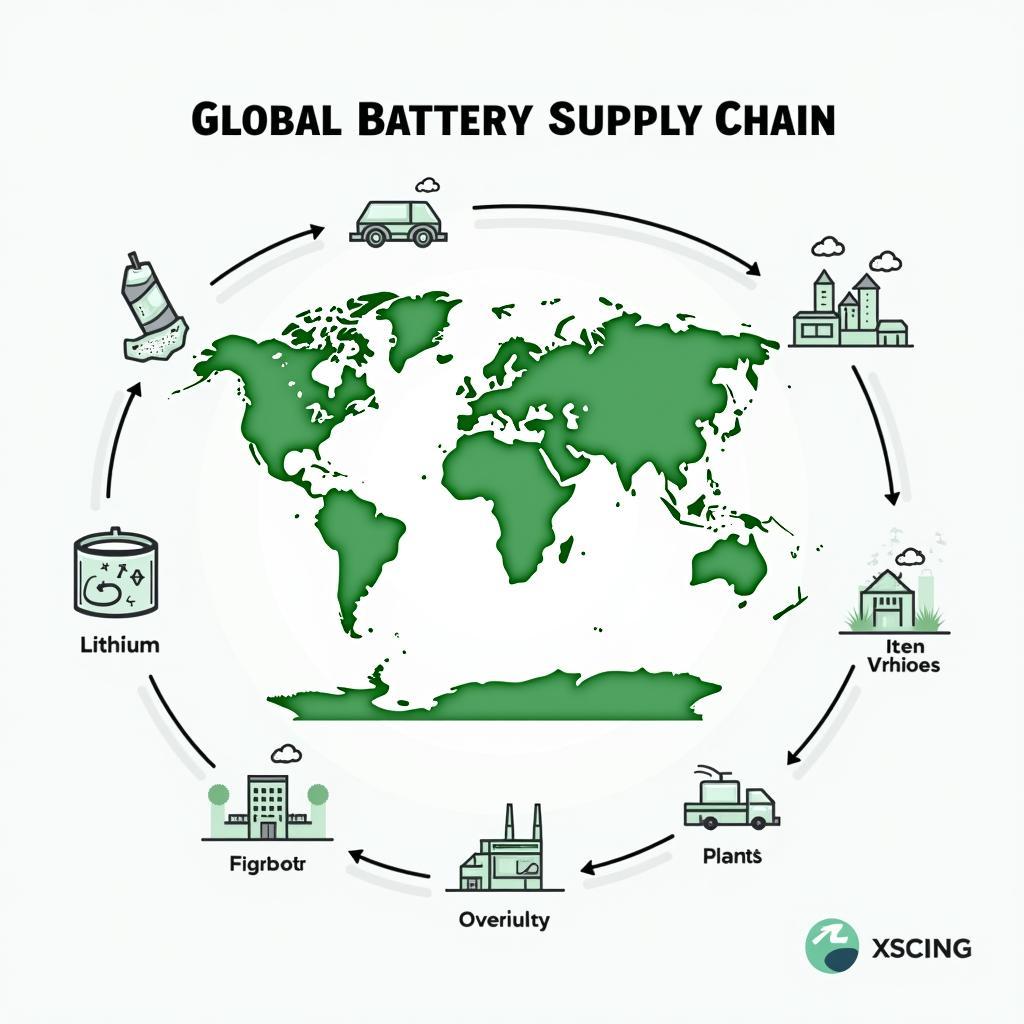 Chuỗi cung ứng toàn cầu của pin xe điện từ khai thác khoáng sản đến tái chế
5. Từ Vựng Quan Trọng Theo Passage
Passage 1 – Essential Vocabulary
| Từ vựng | Loại từ | Phiên âm | Nghĩa tiếng Việt | Ví dụ từ bài | Collocation |
|---|---|---|---|---|---|
| transformation | n | /ˌtrænsfəˈmeɪʃn/ | sự chuyển đổi, biến đổi | the transformation of global transportation systems | digital transformation, undergo transformation |
| significant | adj | /sɪɡˈnɪfɪkənt/ | đáng kể, quan trọng | significant technological shifts | significant impact, significant change |
| compelling | adj | /kəmˈpelɪŋ/ | thuyết phục, hấp dẫn | compelling advantages | compelling evidence, compelling reason |
| emission | n | /ɪˈmɪʃn/ | khí thải, sự phát thải | zero direct emissions | carbon emission, emission zone |
| inherently | adv | /ɪnˈherəntli/ | vốn có, tự nhiên | inherently more efficient | inherently difficult, inherently risky |
| upfront | adj | /ˌʌpˈfrʌnt/ | trả trước, ban đầu | upfront purchase price | upfront cost, upfront payment |
| incentive | n | /ɪnˈsentɪv/ | động lực, khuyến khích | financial incentives | tax incentive, provide incentive |
| accelerate | v | /əkˈseləreɪt/ | đẩy nhanh, tăng tốc | accelerate the transition | accelerate growth, accelerate progress |
| energy density | n phrase | /ˈenədʒi ˈdensəti/ | mật độ năng lượng | energy density of batteries | high energy density, improve energy density |
| infrastructure | n | /ˈɪnfrəstrʌktʃə(r)/ | cơ sở hạ tầng | charging infrastructure | develop infrastructure, infrastructure investment |
| barrier | n | /ˈbæriə(r)/ | rào cản, trở ngại | barrier for buyers | overcome barrier, trade barrier |
| phase out | phrasal v | /feɪz aʊt/ | loại bỏ dần | phase out combustion engines | phase out gradually, phase out production |
Passage 2 – Essential Vocabulary
| Từ vựng | Loại từ | Phiên âm | Nghĩa tiếng Việt | Ví dụ từ bài | Collocation |
|---|---|---|---|---|---|
| proliferation | n | /prəˌlɪfəˈreɪʃn/ | sự gia tăng nhanh | proliferation of electric vehicles | nuclear proliferation, rapid proliferation |
| catalyze | v | /ˈkætəlaɪz/ | xúc tác, thúc đẩy | catalyzing a fundamental reconfiguration | catalyze change, catalyze growth |
| multifaceted | adj | /ˌmʌltiˈfæsɪtɪd/ | đa diện, nhiều khía cạnh | multifaceted challenges | multifaceted problem, multifaceted approach |
| holistic | adj | /həʊˈlɪstɪk/ | toàn diện | holistic approach | holistic view, holistic method |
| paradigm shift | n phrase | /ˈpærədaɪm ʃɪft/ | sự thay đổi mô hình | paradigm shift in charging | paradigm shift in thinking |
| sophisticated | adj | /səˈfɪstɪkeɪtɪd/ | tinh vi, phức tạp | sophisticated algorithms | sophisticated technology, sophisticated system |
| bidirectional | adj | /ˌbaɪdəˈrekʃənl/ | hai chiều | bidirectional flow | bidirectional communication, bidirectional charging |
| intermittent | adj | /ˌɪntəˈmɪtənt/ | không liên tục, ngắt quãng | intermittent renewable energy | intermittent supply, intermittent problem |
| disparity | n | /dɪˈspærəti/ | sự chênh lệch, khác biệt | disparities in charging availability | income disparity, disparity between |
| affluent | adj | /ˈæfluənt/ | giàu có, thịnh vượng | affluent neighborhoods | affluent society, affluent area |
| retrofit | v | /ˈretrəʊfɪt/ | cải tạo, lắp thêm | retrofitting existing facilities | retrofit buildings, retrofit technology |
| obsolete | adj | /ˈɒbsəliːt/ | lỗi thời, cũ kỹ | becoming obsolete | become obsolete, obsolete technology |
| synergy | n | /ˈsɪnədʒi/ | sự cộng hưởng, tương tác | creating new synergies | create synergy, synergy between |
| exploit | v | /ɪkˈsplɔɪt/ | khai thác, lạm dụng | could be exploited | exploit resources, exploit opportunity |
| jurisdiction | n | /ˌdʒʊərɪsˈdɪkʃn/ | quyền tài phán, thẩm quyền | some jurisdictions | legal jurisdiction, under jurisdiction |
Passage 3 – Essential Vocabulary
| Từ vựng | Loại từ | Phiên âm | Nghĩa tiếng Việt | Ví dụ từ bài | Collocation |
|---|---|---|---|---|---|
| ascendancy | n | /əˈsendənsi/ | sự thống trị, lên ngôi | ascendancy of electric vehicles | political ascendancy, gain ascendancy |
| coalesce | v | /ˌkəʊəˈles/ | liên kết, hợp nhất | systems that have coalesced | coalesce around, coalesce into |
| engender | v | /ɪnˈdʒendə(r)/ | gây ra, tạo ra | engenders cascading effects | engender trust, engender conflict |
| transcend | v | /trænˈsend/ | vượt qua, siêu việt | transcend simple comparisons | transcend boundaries, transcend limitations |
| encompass | v | /ɪnˈkʌmpəs/ | bao gồm, bao quát | encompass the holistic transformation | encompass all aspects, encompass a range |
| intricate | adj | /ˈɪntrɪkət/ | phức tạp, rắc rối | intricate supply networks | intricate details, intricate design |
| obsolete | adj | /ˈɒbsəliːt/ | lỗi thời | becoming progressively obsolete | become obsolete, obsolete technology |
| precipitate | v | /prɪˈsɪpɪteɪt/ | gây ra đột ngột | precipitates significant disruptions | precipitate crisis, precipitate change |
| disproportionately | adv | /ˌdɪsprəˈpɔːʃənətli/ | không cân xứng, quá mức | disproportionately affecting workers | disproportionately affected, disproportionately high |
| imperative | adj/n | /ɪmˈperətɪv/ | cấp thiết, bắt buộc | strategies are imperative | moral imperative, economic imperative |
| mitigate | v | /ˈmɪtɪɡeɪt/ | giảm nhẹ, làm dịu | mitigate socioeconomic dislocation | mitigate risk, mitigate impact |
| fragmented | adj | /ˈfræɡmentɪd/ | rời rạc, phân mảnh | implementation remains fragmented | fragmented market, fragmented approach |
| pertinent | adj | /ˈpɜːtɪnənt/ | thích hợp, liên quan | raises pertinent questions | pertinent information, pertinent issue |
| defy | v | /dɪˈfaɪ/ | thách thức, không tuân theo | defies simplistic characterization | defy expectations, defy logic |
| embedded | adj | /ɪmˈbedɪd/ | gắn liền, nhúng vào | embedded emissions | embedded system, deeply embedded |
| circular economy | n phrase | /ˈsɜːkjələr ɪˈkɒnəmi/ | nền kinh tế tuần hoàn | circular economy dimensions | circular economy model, transition to circular economy |
| synergistic | adj | /ˌsɪnəˈdʒɪstɪk/ | mang tính cộng hưởng | particularly synergistic | synergistic effect, synergistic relationship |
| piecemeal | adj | /ˈpiːsmiːl/ | lẻ tẻ, từng mảnh | piecemeal approaches | piecemeal reform, piecemeal solution |
Kết Bài
Chủ đề xe điện đang định hình lại hệ thống giao thông không chỉ là một nội dung thú vị trong IELTS Reading mà còn phản ánh những thay đổi quan trọng đang diễn ra trên toàn cầu. Qua bộ đề thi mẫu này, bạn đã được làm quen với ba passages có độ khó tăng dần, từ mức Easy phù hợp cho band 5.0-6.5, Medium cho band 6.0-7.5, đến Hard dành cho band 7.0-9.0.
Ba passages đã cung cấp cái nhìn đa chiều về chủ đề này: từ những khái niệm cơ bản về xe điện và lợi ích của chúng (Passage 1), đến sự chuyển đổi cơ sở hạ tầng đô thị và các vấn đề công bằng xã hội (Passage 2), cho đến những tác động sâu rộng về kinh tế, địa chính trị và môi trường (Passage 3). Đề thi bao gồm đầy đủ 40 câu hỏi với 7 dạng khác nhau – hoàn toàn giống format thi thật của IELTS.
Phần đáp án chi tiết kèm giải thích đã chỉ ra cách xác định thông tin trong bài, kỹ thuật paraphrase và chiến lược làm bài cho từng dạng câu hỏi. Bảng từ vựng được phân loại theo từng passage giúp bạn học theo ngữ cảnh, với tổng cộng hơn 35 từ vựng quan trọng cùng cách sử dụng thực tế.
Hãy luyện tập đề này trong điều kiện như thi thật: 60 phút cho cả 3 passages, không tra từ điển. Sau đó đối chiếu đáp án, phân tích những câu sai và học từ vựng mới. Với việc luyện tập đều đặn và có phương pháp, bạn sẽ tự tin hơn khi đối mặt với bất kỳ chủ đề nào trong phòng thi IELTS Reading thực tế.
Chúc bạn đạt band điểm cao trong kỳ thi IELTS sắp tới! Hãy nhớ rằng, thành công đến từ sự chuẩn bị kỹ lưỡng và luyện tập kiên trì.