
Trong những năm gần đây, chủ đề về green buildings (công trình xanh) và sustainable urban living (lối sống đô thị bền vững) xuất hiện ngày càng nhiều trong kỳ thi IELTS Reading. Đây là một chủ đề thời sự, phản ánh mối quan tâm toàn cầu về môi trường và phát triển bền vững. Theo thống kê từ Cambridge IELTS và British Council, các bài đọc về kiến trúc xanh, công nghệ tiết kiệm năng lượng và quy hoạch đô thị bền vững chiếm khoảng 15-20% trong các đề thi thực tế.
Bài viết này cung cấp một đề thi IELTS Reading hoàn chỉnh với 3 passages từ dễ đến khó, bao gồm 40 câu hỏi đa dạng giống như trong kỳ thi thật. Bạn sẽ được luyện tập với các dạng câu hỏi phổ biến như Multiple Choice, True/False/Not Given, Matching Headings, và Summary Completion. Mỗi passage đi kèm với đáp án chi tiết, giải thích cụ thể về cách tìm thông tin, paraphrase, và các từ vựng quan trọng kèm theo phiên âm và ví dụ thực tế.
Đề thi này phù hợp cho học viên có trình độ từ band 5.0 trở lên, giúp bạn làm quen với độ khó tăng dần và rèn luyện kỹ năng quản lý thời gian hiệu quả cho phần thi Reading.
Hướng Dẫn Làm Bài IELTS Reading
Tổng Quan Về IELTS Reading Test
IELTS Reading Test kéo dài 60 phút và bao gồm 3 passages với tổng cộng 40 câu hỏi. Mỗi câu trả lời đúng được tính 1 điểm, và band điểm cuối cùng được quy đổi theo thang điểm từ 0-9.
Phân bổ thời gian khuyến nghị:
- Passage 1: 15-17 phút (độ khó dễ, band 5.0-6.5)
- Passage 2: 18-20 phút (độ khó trung bình, band 6.0-7.5)
- Passage 3: 23-25 phút (độ khó cao, band 7.0-9.0)
Lưu ý rằng không có thời gian bổ sung để chép đáp án sang phiếu trả lời, vì vậy bạn cần viết trực tiếp vào answer sheet trong khi làm bài.
Các Dạng Câu Hỏi Trong Đề Này
Đề thi mẫu này bao gồm 7 dạng câu hỏi phổ biến nhất trong IELTS Reading:
- Multiple Choice – Chọn đáp án đúng từ các lựa chọn cho sẵn
- True/False/Not Given – Xác định thông tin đúng, sai hoặc không được đề cập
- Yes/No/Not Given – Xác định quan điểm của tác giả
- Matching Headings – Ghép tiêu đề phù hợp với từng đoạn văn
- Sentence Completion – Hoàn thành câu với thông tin từ bài đọc
- Summary Completion – Điền từ vào chỗ trống trong đoạn tóm tắt
- Matching Features – Ghép đặc điểm với các mục trong danh sách
IELTS Reading Practice Test
PASSAGE 1 – The Rise of Green Buildings in Modern Cities
Độ khó: Easy (Band 5.0-6.5)
Thời gian đề xuất: 15-17 phút
The concept of green buildings has transformed from a niche idea into a mainstream architectural movement over the past two decades. These structures are designed to minimize environmental impact while maximizing energy efficiency and occupant comfort. As urban populations continue to grow, with an estimated 68% of the world’s population expected to live in cities by 2050, the importance of sustainable construction has never been more critical.
Green buildings incorporate various features that set them apart from conventional structures. The most visible aspect is often the use of renewable energy sources, such as solar panels installed on rooftops or integrated into building facades. These photovoltaic systems can generate a significant portion of a building’s electricity needs, reducing reliance on fossil fuels and lowering carbon emissions. In some cases, buildings produce more energy than they consume, earning the designation of “net-zero” or even “net-positive” structures.
Water conservation is another crucial element of green building design. Modern sustainable structures employ rainwater harvesting systems that collect precipitation from roofs and store it for later use in irrigation, toilet flushing, and other non-potable applications. Additionally, greywater recycling systems treat water from sinks, showers, and washing machines, making it suitable for reuse. These measures can reduce a building’s water consumption by up to 50%, a significant achievement in regions facing water scarcity.
The materials used in green buildings are carefully selected for their environmental credentials. Recycled steel, reclaimed wood, and low-emission concrete are common choices. Many architects now favor locally sourced materials to reduce the carbon footprint associated with transportation. Furthermore, the use of volatile organic compounds (VOCs) in paints, adhesives, and finishes is minimized to improve indoor air quality and protect occupant health.
Natural ventilation and daylighting are design principles that have been rediscovered and refined in modern green buildings. By strategically positioning windows, atriums, and ventilation shafts, architects can reduce the need for artificial lighting and mechanical cooling systems. Some buildings incorporate green roofs – living layers of vegetation that provide insulation, absorb rainwater, and create urban habitats for birds and insects. These features not only reduce energy consumption but also contribute to the psychological well-being of occupants by maintaining a connection to nature.
The economic case for green buildings has strengthened considerably as construction techniques have improved and economies of scale have been achieved. While initial construction costs may be 5-10% higher than conventional buildings, the operational savings typically offset this premium within 5-7 years. Lower energy and water bills, reduced maintenance costs, and higher property values all contribute to the financial viability of sustainable construction. Moreover, many governments now offer tax incentives, grants, and expedited permitting processes for green building projects.
Certification systems such as LEED (Leadership in Energy and Environmental Design), BREEAM (Building Research Establishment Environmental Assessment Method), and Green Star provide standardized frameworks for assessing building sustainability. These programs evaluate projects across multiple criteria, including energy efficiency, water conservation, material selection, and indoor environmental quality. Achieving certification not only validates a building’s green credentials but also serves as a marketing tool that can attract environmentally conscious tenants and investors.
Despite these advances, challenges remain in the widespread adoption of green building practices. The fragmented nature of the construction industry, with its many specialized trades and suppliers, can make it difficult to implement integrated design approaches. Additionally, building codes and regulations in many jurisdictions have not kept pace with sustainable construction innovations, sometimes creating bureaucratic obstacles. Education and training are also critical factors; architects, engineers, and construction workers need specialized knowledge to design and build green structures effectively.
Looking forward, the integration of smart technology promises to enhance the performance of green buildings even further. Internet of Things (IoT) sensors can monitor and optimize energy use, air quality, and occupant comfort in real-time. Artificial intelligence algorithms can learn from usage patterns and adjust building systems accordingly, achieving levels of efficiency that would be impossible through manual control. As these technologies become more affordable and accessible, they are likely to become standard features in sustainable construction.
Questions 1-13
Questions 1-5: Multiple Choice
Choose the correct letter, A, B, C, or D.
-
According to the passage, what percentage of the global population is predicted to live in urban areas by 2050?
A. 50%
B. 58%
C. 68%
D. 78% -
What term is used to describe buildings that generate more energy than they use?
A. Net-zero
B. Net-positive
C. Energy-surplus
D. Carbon-neutral -
Green buildings can reduce water consumption by approximately:
A. 30%
B. 40%
C. 50%
D. 60% -
How long does it typically take for operational savings to offset the higher initial costs of green buildings?
A. 3-5 years
B. 5-7 years
C. 7-9 years
D. 9-11 years -
Which of the following is NOT mentioned as a green building certification system?
A. LEED
B. BREEAM
C. Green Star
D. ISO 14001
Questions 6-9: True/False/Not Given
Do the following statements agree with the information given in the passage?
Write:
- TRUE if the statement agrees with the information
- FALSE if the statement contradicts the information
- NOT GIVEN if there is no information on this
-
Solar panels can only be installed on the roofs of green buildings.
-
Greywater recycling systems treat water from toilets.
-
Green buildings always use materials sourced from within the local region.
-
Green roofs provide benefits for urban wildlife.
Questions 10-13: Sentence Completion
Complete the sentences below. Choose NO MORE THAN TWO WORDS from the passage for each answer.
-
The use of __ in paints and finishes is reduced to improve air quality inside buildings.
-
Strategic design of windows and ventilation allows buildings to reduce dependence on __ systems.
-
The construction industry’s __ makes it challenging to adopt comprehensive green building practices.
-
__ can monitor building performance and make automatic adjustments to improve efficiency.
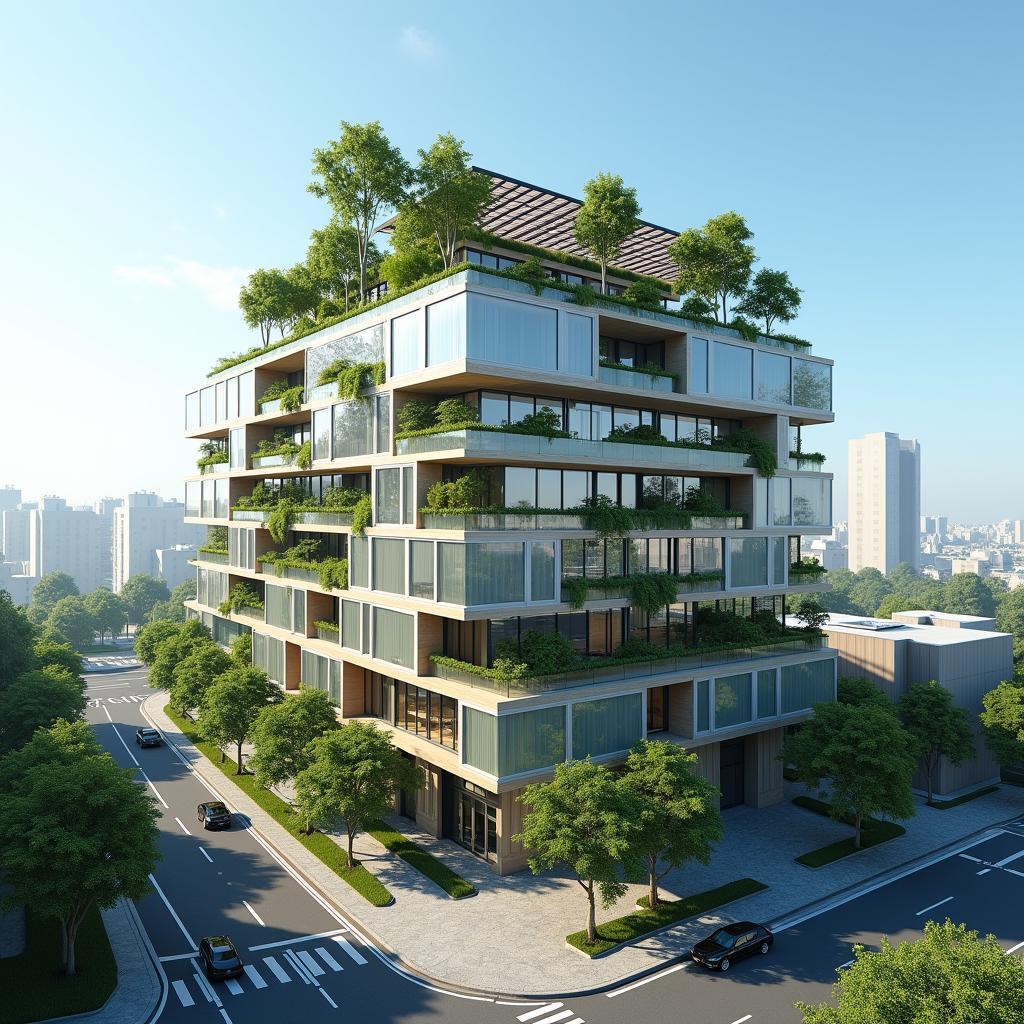 Tòa nhà xanh hiện đại với hệ thống năng lượng mặt trời và vườn treo đô thị
PASSAGE 2 – Economic and Social Impacts of Sustainable Architecture
Độ khó: Medium (Band 6.0-7.5)
Thời gian đề xuất: 18-20 phút
The proliferation of green buildings across urban landscapes represents more than an architectural trend; it constitutes a fundamental shift in how societies conceptualize the relationship between the built environment and ecological sustainability. While the environmental benefits of these structures are well-documented, the economic and social ramifications deserve equally thorough examination. Recent research suggests that sustainable architecture catalyzes multifaceted transformations that extend far beyond energy conservation and emissions reduction.
From an economic perspective, green buildings have demonstrated remarkable capacity to enhance property valuations and generate superior returns on investment. A comprehensive study conducted across 8,000 commercial buildings in twelve countries revealed that LEED-certified structures commanded rental premiums averaging 7% higher than comparable conventional buildings, while sale prices exceeded benchmarks by 10-16%. These figures challenge the longstanding perception that sustainable construction represents a financial sacrifice in favor of environmental ethics. Instead, the data indicate that green features have become market differentiators that appeal to increasingly sophisticated tenants and investors.
The employment implications of the green building sector merit particular attention. According to the International Labour Organization, the transition to sustainable construction could generate approximately 6.5 million additional jobs globally by 2030. These positions span a diverse spectrum, from architects and engineers specializing in energy-efficient design to technicians trained in the installation and maintenance of renewable energy systems. Significantly, many of these roles cannot be easily outsourced or automated, providing relatively stable career pathways in an era of economic volatility. Furthermore, green building programs have proven effective at creating opportunities for marginalized communities when paired with targeted training initiatives.
However, the transition toward sustainable architecture is not without its distributional challenges. Critics point to the phenomenon of “green gentrification,” whereby investments in sustainable infrastructure and eco-friendly buildings drive up property values and rents, potentially displacing lower-income residents from neighborhoods undergoing environmental improvement. This paradox highlights the necessity of implementing equitable development policies that ensure the benefits of green buildings are shared broadly rather than accruing primarily to affluent populations. Some cities have responded by mandating that a percentage of units in new sustainable developments be designated as affordable housing, though the effectiveness of such measures remains contested.
The health and productivity benefits associated with green buildings constitute another dimension of their social value. Extensive research has documented that occupants of sustainable structures experience fewer respiratory ailments, reduced sick building syndrome symptoms, and improved cognitive function compared to those in conventional buildings. One landmark study found that employees in green-certified offices demonstrated 26% higher cognitive scores on decision-making tasks and reported 30% fewer health complaints. These improvements translate into substantial economic gains through reduced absenteeism, lower healthcare costs, and enhanced productivity. The mechanism behind these benefits includes superior indoor air quality, better thermal comfort, increased access to natural light, and reduced exposure to toxic materials.
Educational institutions have emerged as particularly compelling case studies for green building implementation. Schools designed according to sustainable principles consistently demonstrate improved student outcomes. Research indicates that students in daylit classrooms progress 20% faster in math and 26% faster in reading compared to peers in classrooms without adequate natural lighting. Similarly, improved ventilation rates correlate with better standardized test scores and reduced absence rates. These findings have catalyzed a movement toward sustainable school construction, with some jurisdictions mandating green certification for all new educational facilities.
The psychological dimensions of sustainable architecture represent a burgeoning area of inquiry. Environmental psychologists have identified what they term the “biophilic response” – an innate human affinity for natural elements and patterns. Green buildings that incorporate features such as living walls, natural materials, organic forms, and views of vegetation appear to activate this response, promoting feelings of calm, restoration, and connection. While quantifying these subjective experiences presents methodological challenges, preliminary evidence suggests they contribute to occupant satisfaction, stress reduction, and even social cohesion within communities.
Cultural factors significantly influence the adoption and design of green buildings across different regions. In Scandinavian countries, where environmental consciousness is deeply embedded in national identity, sustainable construction has achieved near-universal acceptance. By contrast, in rapidly developing nations facing pressure to accommodate burgeoning urban populations, green building principles sometimes conflict with priorities for speed and cost containment. Nonetheless, innovative financing mechanisms, such as green bonds and performance-based contracts, are helping to bridge these gaps by aligning environmental objectives with economic incentives.
The integration of traditional ecological knowledge with contemporary green building techniques offers promising avenues for culturally appropriate sustainable architecture. Indigenous communities have practiced resource-efficient construction for millennia, employing techniques such as passive solar design, natural ventilation, and use of local materials long before these became hallmarks of the modern green building movement. Architects increasingly recognize the value of these time-tested approaches, adapting them to contemporary contexts and combining them with advanced technologies to create buildings that are both sustainable and culturally resonant.
Looking ahead, the trajectory of green building development appears poised to accelerate, driven by converging forces: tightening environmental regulations, growing investor demand for ESG (Environmental, Social, and Governance) compliance, advancing construction technologies, and heightened public awareness of climate change. The question is no longer whether sustainable architecture will become mainstream but rather how quickly the transition will occur and whether its benefits will be distributed equitably across all segments of society.
Questions 14-26
Questions 14-18: Yes/No/Not Given
Do the following statements agree with the views of the writer in the passage?
Write:
- YES if the statement agrees with the views of the writer
- NO if the statement contradicts the views of the writer
- NOT GIVEN if it is impossible to say what the writer thinks about this
-
Green buildings are primarily beneficial for environmental reasons rather than economic ones.
-
The jobs created in the green building sector are relatively protected from automation.
-
Green gentrification is an inevitable consequence of sustainable urban development.
-
Students perform better academically in classrooms with more natural light.
-
Traditional building methods from indigenous cultures have little relevance to modern green architecture.
Questions 19-22: Matching Headings
The passage has ten paragraphs. Choose the correct heading for paragraphs B, D, F, and H from the list of headings below.
List of Headings:
i. The biophilic response in architectural design
ii. Employment generation through sustainable construction
iii. Financial performance of certified green buildings
iv. The challenge of equitable access to green buildings
v. Government regulations driving green adoption
vi. Cultural variations in green building acceptance
vii. Health and cognitive improvements in sustainable structures
viii. Educational facilities as green building models
- Paragraph B
- Paragraph D
- Paragraph F
- Paragraph H
Questions 23-26: Summary Completion
Complete the summary below. Choose NO MORE THAN TWO WORDS from the passage for each answer.
Green buildings offer multiple benefits beyond environmental protection. Economically, they generate higher (23) __ and better investment returns. Studies show that occupants experience improved (24) __ and fewer health problems, leading to reduced absenteeism. In educational settings, students in classrooms with better (25) __ demonstrate faster learning progress. However, there are concerns about (26) __, which can displace lower-income residents when neighborhoods become more sustainable.
PASSAGE 3 – Technological Innovation and the Future of Sustainable Urban Environments
Độ khó: Hard (Band 7.0-9.0)
Thời gian đề xuất: 23-25 phút
The confluence of digital technology and sustainable architecture is precipitating a paradigm shift in how urban environments are conceived, constructed, and operated. This transformation extends beyond mere incremental improvements in energy efficiency or material selection; rather, it represents a holistic reconceptualization of buildings as dynamic, responsive systems embedded within larger ecological and social networks. The implications of this evolution are profound, potentially redefining humanity’s relationship with the built environment and establishing new benchmarks for urban habitability in an era of accelerating climate change and resource constraints.
At the forefront of this transformation is the emergence of “smart green buildings” – structures that integrate advanced sensing technologies, data analytics, and automated control systems with sustainable design principles. These buildings employ distributed networks of sensors that continuously monitor dozens of parameters: indoor and outdoor temperature, humidity, air quality, occupancy patterns, energy consumption, and water usage. This granular, real-time data feeds into machine learning algorithms that optimize building performance with a sophistication unattainable through conventional building management systems. For instance, predictive algorithms can anticipate occupancy patterns based on historical data and calendar events, preemptively adjusting heating, cooling, and lighting to maximize comfort while minimizing energy waste. Some systems have demonstrated the ability to reduce energy consumption by 30-40% compared to similar buildings with standard controls, even when those buildings incorporate green design features.
The integration of renewable energy generation, energy storage systems, and intelligent distribution networks enables buildings to participate actively in the broader electrical grid. During periods of peak solar generation, smart green buildings can channel excess electricity to battery storage systems or even sell power back to the grid. Conversely, when renewable generation is low or grid demand is high, buildings can draw upon stored energy or reduce non-essential loads. This bidirectional relationship with the electrical infrastructure represents a fundamental departure from the traditional model of buildings as passive energy consumers. As this distributed generation model scales, it promises to enhance grid resilience, reduce reliance on peaking power plants (typically the most polluting), and facilitate higher penetrations of intermittent renewable energy sources.
Building Information Modeling (BIM) and digital twin technology are revolutionizing both the design and operational phases of green building development. BIM enables architects, engineers, and contractors to create detailed virtual models of buildings before construction begins, allowing them to simulate energy performance, test different design scenarios, and identify potential problems. This iterative design process typically results in buildings that perform closer to their intended specifications, addressing the “performance gap” that has plagued green building projects. Digital twins extend this concept throughout a building’s lifecycle; these virtual replicas continuously update themselves with data from the physical structure, enabling operators to experiment with different management strategies, predict maintenance needs, and optimize performance without disrupting actual operations. The predictive maintenance capabilities alone can extend equipment lifespan by 20-30% while reducing energy consumption associated with degraded or failing systems.
The application of advanced materials science to sustainable construction is yielding innovations that were scarcely imaginable a decade ago. Transparent photovoltaic glass can generate electricity while maintaining the aesthetic and functional properties of conventional windows. Phase-change materials embedded in walls and ceilings absorb excess heat during the day and release it at night, dramatically reducing heating and cooling loads. Self-healing concrete incorporates bacterial spores that activate in the presence of water, producing limestone to seal cracks and extending structural lifespan while reducing maintenance requirements. Perhaps most ambitiously, researchers are developing carbon-negative building materials that actually sequester more CO2 during their production and lifecycle than they emit, potentially transforming buildings from carbon sources into carbon sinks.
The concept of circular economy principles applied to architecture challenges the traditional linear model of resource extraction, construction, use, and disposal. Instead, buildings are conceived as “material banks” – temporary assemblages of components that can be disassembled, refurbished, and reused in future construction projects. This approach requires fundamental changes in design philosophy and construction techniques, favoring modular systems, reversible connections, and material transparency (documentation of exactly what materials are used and where). Several pioneering projects in Europe have demonstrated the feasibility of this approach, achieving near-zero waste in construction and designing for eventual deconstruction rather than demolition. If widely adopted, circular architecture could dramatically reduce the construction sector’s material footprint – currently accounting for approximately 40% of global resource extraction – while creating new economic opportunities in component refurbishment and material logistics.
However, the realization of these technological possibilities confronts numerous systemic obstacles. The fragmented governance of urban development, with responsibilities divided among multiple agencies and jurisdictions, often impedes the integrated planning that smart green buildings require. Interoperability challenges between different technology platforms and standards can prevent buildings from communicating with each other and with urban infrastructure systems. Moreover, the collection and analysis of detailed building performance data raise legitimate privacy concerns; occupancy sensors and environmental monitors can potentially reveal sensitive information about individuals’ behaviors and routines. Establishing robust data governance frameworks that protect privacy while enabling performance optimization remains an ongoing challenge.
The economic viability of advanced green building technologies depends significantly on policy frameworks and market structures. In jurisdictions where electricity prices are low and carbon externalities are not internalized through taxation or regulation, the economic case for sophisticated energy management systems weakens. Conversely, policies such as feed-in tariffs for renewable energy, time-of-use electricity pricing, and carbon pricing create powerful incentives for investment in smart green technologies. Additionally, split incentive problems – whereby building owners make investment decisions but tenants pay energy bills – can discourage adoption of efficiency measures. Innovative contractual arrangements such as green leases, where landlords and tenants share both the costs and benefits of sustainability investments, are emerging as partial solutions.
The democratization of green building technologies represents both an opportunity and a challenge. As sensor costs decline and open-source platforms proliferate, these tools are becoming accessible to a broader range of building owners and operators, not just flagship corporate developments. Community-driven projects have employed crowdsourced data collection and participatory design processes to create sustainable buildings tailored to specific neighborhood needs. However, this democratization also risks creating a “two-tier system” where technologically sophisticated buildings in affluent areas pull further ahead in performance while structures serving lower-income populations lack access to these beneficial technologies.
Looking toward mid-century, the buildings that best exemplify sustainable urban living may bear little resemblance to current paradigms. Proposals for “living buildings” that function as genuine ecosystems, cycling nutrients and producing food alongside shelter, are progressing from theoretical concepts to experimental implementations. Bio-integrated design incorporates living organisms – from air-purifying algae facades to mycelium-based structural materials – directly into architectural systems. While such visions remain largely speculative, they represent logical extensions of current trajectories in green building innovation. Whether pursuing such radical transformations or more incremental enhancements, the trajectory is clear: buildings are evolving from static shelters into dynamic, intelligent systems that actively contribute to the sustainability and livability of urban environments.
Questions 27-40
Questions 27-31: Multiple Choice
Choose the correct letter, A, B, C, or D.
-
According to the passage, smart green buildings can reduce energy consumption by:
A. 20-30% compared to conventional buildings
B. 30-40% compared to similar buildings with standard controls
C. 40-50% compared to older buildings
D. 50-60% compared to non-green buildings -
What does the term “performance gap” refer to in the context of green buildings?
A. The difference between rich and poor areas
B. The difference between intended and actual building performance
C. The gap between current and future technologies
D. The difference between energy generation and consumption -
Self-healing concrete works by:
A. Using bacterial spores that produce limestone to seal cracks
B. Employing phase-change materials
C. Incorporating transparent photovoltaic cells
D. Utilizing advanced polymer compounds -
The circular economy approach to architecture views buildings as:
A. Permanent structures
B. Carbon sinks
C. Material banks
D. Energy generators -
According to the passage, what percentage of global resource extraction is attributed to the construction sector?
A. 20%
B. 30%
C. 40%
D. 50%
Questions 32-36: Matching Features
Match each technology or concept (Questions 32-36) with its correct description (A-H).
Technologies/Concepts:
32. Digital twin technology
33. Phase-change materials
34. Building Information Modeling (BIM)
35. Feed-in tariffs
36. Green leases
Descriptions:
A. Policy mechanism that incentivizes renewable energy generation
B. Virtual replicas that enable performance optimization without disrupting operations
C. Materials that absorb and release heat to reduce temperature fluctuations
D. Sensors that monitor building occupancy patterns
E. Design tool that allows testing scenarios before construction begins
F. Contractual arrangements where costs and benefits are shared between parties
G. System for recycling water within buildings
H. Technology for converting windows into energy generators
Questions 37-40: Short-answer Questions
Answer the questions below. Choose NO MORE THAN THREE WORDS from the passage for each answer.
-
What kind of relationship do smart green buildings have with the electrical grid?
-
What legitimate concerns are raised by collecting detailed building performance data?
-
What economic problem occurs when building owners invest but tenants pay utility costs?
-
What term describes building designs that incorporate living organisms as functional components?
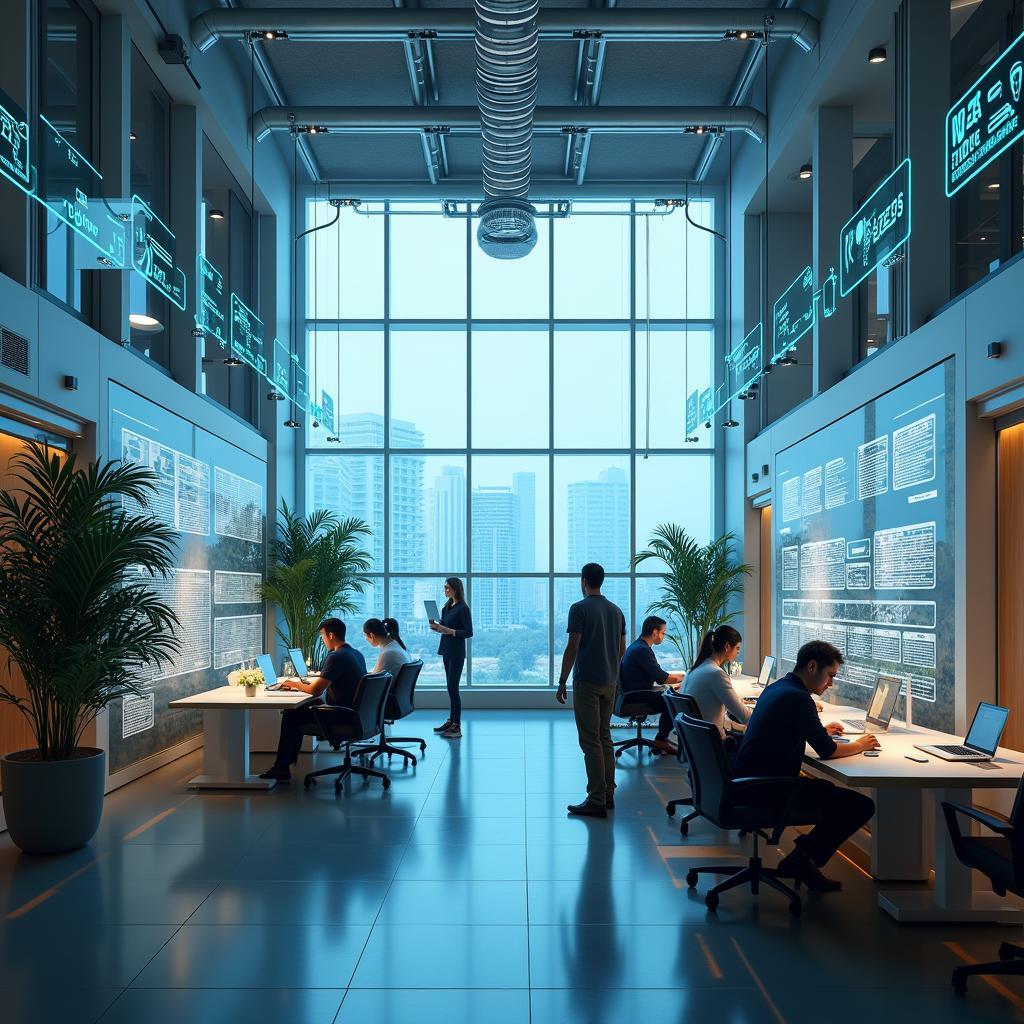 Hệ thống công nghệ thông minh trong tòa nhà xanh với cảm biến IoT và quản lý năng lượng
Answer Keys – Đáp Án
PASSAGE 1: Questions 1-13
- C
- B
- C
- B
- D
- FALSE
- FALSE
- NOT GIVEN
- TRUE
- volatile organic compounds / VOCs
- mechanical cooling / artificial lighting
- fragmented nature
- IoT sensors / Smart technology
PASSAGE 2: Questions 14-26
- NO
- YES
- NOT GIVEN
- YES
- NO
- iii
- iv
- viii
- vi
- rental premiums / property valuations
- cognitive function
- natural lighting / natural light
- green gentrification
PASSAGE 3: Questions 27-40
- B
- B
- A
- C
- C
- B
- C
- E
- A
- F
- bidirectional relationship
- privacy concerns
- split incentive problems
- bio-integrated design
Giải Thích Đáp Án Chi Tiết
Passage 1 – Giải Thích
Câu 1: C
- Dạng câu hỏi: Multiple Choice
- Từ khóa: percentage, global population, urban areas, 2050
- Vị trí trong bài: Đoạn A, dòng 3-4
- Giải thích: Bài viết nói rõ “with an estimated 68% of the world’s population expected to live in cities by 2050”. Đây là thông tin trực tiếp không cần paraphrase phức tạp.
Câu 2: B
- Dạng câu hỏi: Multiple Choice
- Từ khóa: generate more energy than they use
- Vị trí trong bài: Đoạn B, dòng cuối
- Giải thích: Câu “buildings produce more energy than they consume, earning the designation of ‘net-zero’ or even ‘net-positive’ structures” cho thấy “net-positive” là thuật ngữ dùng cho tòa nhà tạo ra nhiều năng lượng hơn mức tiêu thụ.
Câu 3: C
- Dạng câu hỏi: Multiple Choice
- Từ khóa: reduce water consumption, approximately
- Vị trí trong bài: Đoạn C, dòng 5-6
- Giải thích: Bài viết đề cập “These measures can reduce a building’s water consumption by up to 50%”. Từ “up to” cho thấy mức tối đa là 50%, và đây là đáp án chính xác.
Câu 6: FALSE
- Dạng câu hỏi: True/False/Not Given
- Từ khóa: solar panels, only, roofs
- Vị trí trong bài: Đoạn B, dòng 2-3
- Giải thích: Bài viết nói “solar panels installed on rooftops or integrated into building facades” – tức là có thể lắp trên mái hoặc mặt ngoài tòa nhà, không chỉ trên mái. Câu này mâu thuẫn với thông tin nên là FALSE.
Câu 7: FALSE
- Dạng câu hỏi: True/False/Not Given
- Từ khóa: greywater recycling, toilets
- Vị trí trong bài: Đoạn C, dòng 4-5
- Giải thích: “Greywater recycling systems treat water from sinks, showers, and washing machines” – không bao gồm nước từ toilet. Nước từ toilet được gọi là “blackwater” và không phải là greywater.
Câu 9: TRUE
- Dạng câu hỏi: True/False/Not Given
- Từ khóa: green roofs, benefits, urban wildlife
- Vị trí trong bài: Đoạn E, dòng 4-5
- Giải thích: Bài viết nói green roofs “create urban habitats for birds and insects” – tức là tạo môi trường sống cho động vật hoang dã đô thị. Đây là lợi ích rõ ràng nên đáp án là TRUE.
Câu 10: volatile organic compounds / VOCs
- Dạng câu hỏi: Sentence Completion
- Từ khóa: paints, finishes, reduced, air quality
- Vị trí trong bài: Đoạn D, dòng cuối
- Giải thích: Câu “the use of volatile organic compounds (VOCs) in paints, adhesives, and finishes is minimized to improve indoor air quality” chứa đầy đủ thông tin cần thiết.
Câu 12: fragmented nature
- Dạng câu hỏi: Sentence Completion
- Từ khóa: construction industry, makes it challenging
- Vị trí trong bài: Đoạn H, dòng 2-3
- Giải thích: “The fragmented nature of the construction industry…can make it difficult to implement integrated design approaches” – cụm “fragmented nature” là chủ ngữ chính gây ra khó khăn.
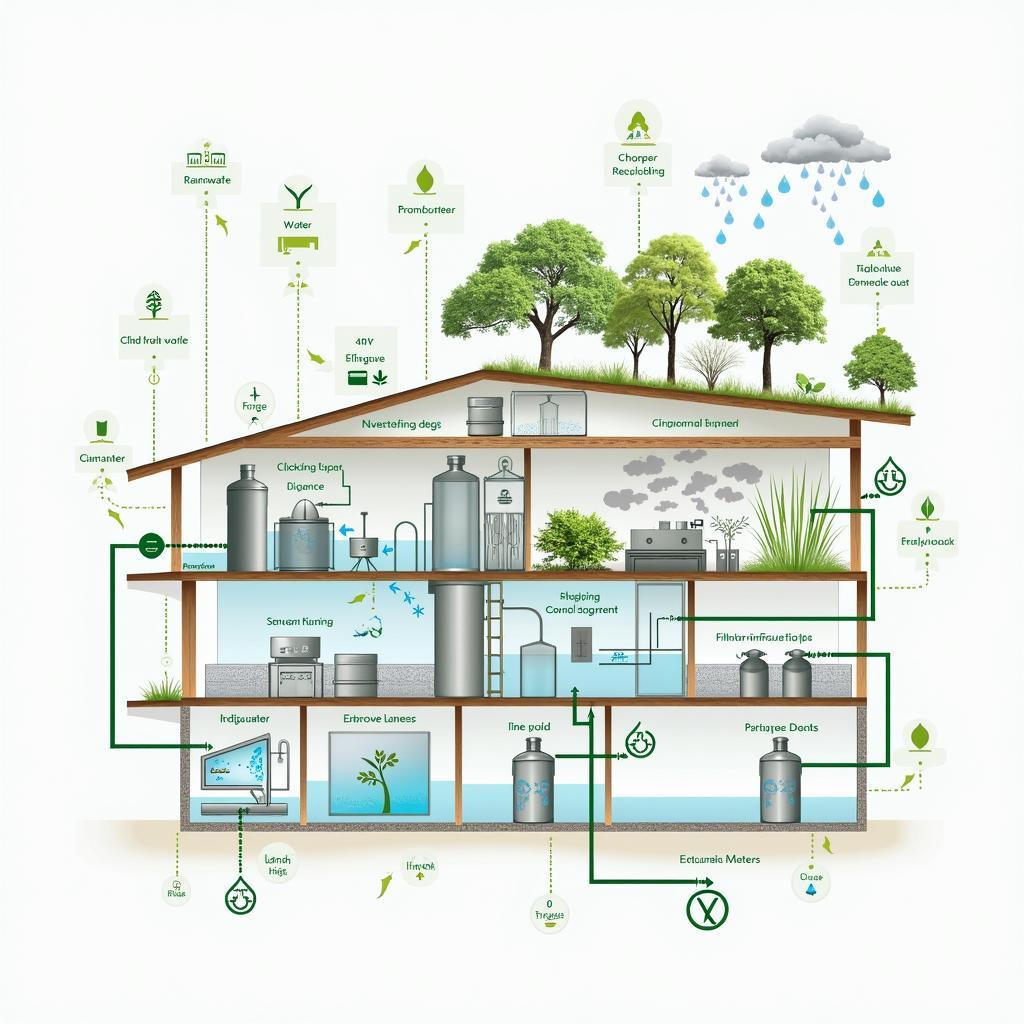 Hệ thống tái chế nước và thu gom nước mưa trong công trình xanh bền vững
Passage 2 – Giải Thích
Câu 14: NO
- Dạng câu hỏi: Yes/No/Not Given
- Từ khóa: primarily beneficial, environmental reasons, economic ones
- Vị trí trong bài: Đoạn B, toàn bộ đoạn
- Giải thích: Tác giả phản bác quan điểm này bằng câu “These figures challenge the longstanding perception that sustainable construction represents a financial sacrifice” và đưa ra nhiều bằng chứng về lợi ích kinh tế. Quan điểm tác giả TRÁI NGƯỢC với phát biểu này.
Câu 15: YES
- Dạng câu hỏi: Yes/No/Not Given
- Từ khóa: jobs, green building sector, protected, automation
- Vị trí trong bài: Đoạn C, dòng 5-6
- Giải thích: “Many of these roles cannot be easily outsourced or automated, providing relatively stable career pathways” – tác giả đồng ý rằng công việc này khó bị thay thế bởi tự động hóa.
Câu 17: YES
- Dạng câu hỏi: Yes/No/Not Given
- Từ khóa: students, perform better, natural light
- Vị trí trong bài: Đoạn F, dòng 3-5
- Giải thích: “Students in daylit classrooms progress 20% faster in math and 26% faster in reading” – tác giả rõ ràng ủng hộ quan điểm này với số liệu cụ thể.
Câu 18: NO
- Dạng câu hỏi: Yes/No/Not Given
- Từ khóa: traditional building methods, indigenous cultures, little relevance
- Vị trí trong bài: Đoạn I, toàn bộ đoạn
- Giải thích: Tác giả viết “Architects increasingly recognize the value of these time-tested approaches” – thể hiện rằng phương pháp truyền thống RẤT CÓ LIÊN QUAN đến kiến trúc xanh hiện đại, trái ngược hoàn toàn với phát biểu.
Câu 19: iii (Financial performance of certified green buildings)
- Dạng câu hỏi: Matching Headings
- Vị trí: Đoạn B
- Giải thích: Đoạn B tập trung vào “property valuations”, “returns on investment”, “rental premiums”, “sale prices” – tất cả liên quan đến hiệu quả tài chính của các tòa nhà xanh có chứng nhận.
Câu 20: iv (The challenge of equitable access to green buildings)
- Dạng câu hỏi: Matching Headings
- Vị trí: Đoạn D
- Giải thích: Đoạn này thảo luận về “green gentrification”, “displacing lower-income residents”, “distributional challenges”, và “equitable development policies” – tất cả về vấn đề công bằng trong tiếp cận tòa nhà xanh.
Câu 23: rental premiums / property valuations
- Dạng câu hỏi: Summary Completion
- Từ khóa: economically, higher, investment returns
- Vị trí trong bài: Đoạn B, dòng 2-3
- Giải thích: Context yêu cầu một lợi ích kinh tế. Cả “rental premiums” và “property valuations” đều được đề cập là tăng cao hơn trong đoạn B.
Câu 24: cognitive function
- Dạng câu hỏi: Summary Completion
- Từ khóa: occupants, improved, fewer health problems
- Vị trí trong bài: Đoạn E, dòng 2-3
- Giải thích: “Improved cognitive function” là một trong những lợi ích sức khỏe được đề cập rõ ràng.
Câu 26: green gentrification
- Dạng câu hỏi: Summary Completion
- Từ khóa: concerns, displace, lower-income residents
- Vị trí trong bài: Đoạn D, dòng 2-3
- Giải thích: Thuật ngữ “green gentrification” được định nghĩa chính xác trong맥 lock này – quá trình làm tăng giá nhà và dẫn đến di dời cư dân thu nhập thấp.
Passage 3 – Giải Thích
Câu 27: B
- Dạng câu hỏi: Multiple Choice
- Từ khóa: smart green buildings, reduce energy consumption
- Vị trí trong bài: Đoạn B, dòng cuối
- Giải thích: “Some systems have demonstrated the ability to reduce energy consumption by 30-40% compared to similar buildings with standard controls” – đây là thông tin cụ thể và chính xác.
Câu 28: B
- Dạng câu hỏi: Multiple Choice
- Từ khóa: performance gap, green buildings
- Vị trí trong bài: Đoạn D, dòng 4-5
- Giải thích: “Addressing the ‘performance gap’ that has plagued green building projects” được giải thích là khoảng cách giữa thiết kế dự kiến và hiệu suất thực tế.
Câu 29: A
- Dạng câu hỏi: Multiple Choice
- Từ khóa: self-healing concrete, works by
- Vị trí trong bài: Đoạn E, dòng 4-5
- Giải thích: “Self-healing concrete incorporates bacterial spores that activate in the presence of water, producing limestone to seal cracks” – mô tả rõ ràng cơ chế hoạt động.
Câu 30: C
- Dạng câu hỏi: Multiple Choice
- Từ khóa: circular economy approach, views buildings as
- Vị trí trong bài: Đoạn F, dòng 2-3
- Giải thích: “Buildings are conceived as ‘material banks’ – temporary assemblages of components” – khái niệm “material banks” là cốt lõi của circular economy trong kiến trúc.
Câu 31: C
- Dạng câu hỏi: Multiple Choice
- Từ khóa: percentage, global resource extraction, construction sector
- Vị trí trong bài: Đoạn F, dòng 7-8
- Giải thích: “Currently accounting for approximately 40% of global resource extraction” – con số được nêu rõ ràng.
Câu 32: B (Digital twin technology)
- Dạng câu hỏi: Matching Features
- Vị trí trong bài: Đoạn D, dòng 5-8
- Giải thích: “Digital twins…these virtual replicas continuously update themselves with data from the physical structure, enabling operators to experiment with different management strategies…without disrupting actual operations.”
Câu 33: C (Phase-change materials)
- Dạng câu hỏi: Matching Features
- Vị trí trong bài: Đoạn E, dòng 2-3
- Giải thích: “Phase-change materials embedded in walls and ceilings absorb excess heat during the day and release it at night, dramatically reducing heating and cooling loads.”
Câu 34: E (Building Information Modeling)
- Dạng câu hỏi: Matching Features
- Vị trí trong bài: Đoạn D, dòng 2-4
- Giải thích: “BIM enables architects, engineers, and contractors to create detailed virtual models of buildings before construction begins, allowing them to simulate energy performance, test different design scenarios.”
Câu 37: bidirectional relationship
- Dạng câu hỏi: Short-answer Questions
- Từ khóa: smart green buildings, electrical grid
- Vị trí trong bài: Đoạn C, dòng 5-6
- Giải thích: “This bidirectional relationship with the electrical infrastructure represents a fundamental departure from the traditional model” – thuật ngữ chính xác mô tả mối quan hệ hai chiều.
Câu 38: privacy concerns
- Dạng câu hỏi: Short-answer Questions
- Từ khóa: legitimate concerns, collecting detailed building performance data
- Vị trí trong bài: Đoạn G, dòng 4-5
- Giải thích: “The collection and analysis of detailed building performance data raise legitimate privacy concerns” – cụm từ chính xác trong bài.
Câu 39: split incentive problems
- Dạng câu hỏi: Short-answer Questions
- Từ khóa: owners invest, tenants pay utility costs
- Vị trí trong bài: Đoạn H, dòng 4-5
- Giải thích: “Split incentive problems – whereby building owners make investment decisions but tenants pay energy bills – can discourage adoption of efficiency measures.”
Câu 40: bio-integrated design
- Dạng câu hỏi: Short-answer Questions
- Từ khóa: designs, incorporate living organisms, functional components
- Vị trí trong bài: Đoạn J, dòng 4-5
- Giải thích: “Bio-integrated design incorporates living organisms…directly into architectural systems” – thuật ngữ kỹ thuật chính xác.
Từ Vựng Quan Trọng Theo Passage
Passage 1 – Essential Vocabulary
| Từ vựng | Loại từ | Phiên âm | Nghĩa tiếng Việt | Ví dụ từ bài | Collocation |
|---|---|---|---|---|---|
| minimize | v | /ˈmɪnɪmaɪz/ | giảm thiểu xuống mức tối thiểu | designed to minimize environmental impact | minimize impact/risk/costs |
| mainstream | adj | /ˈmeɪnstriːm/ | phổ biến, chính thống | mainstream architectural movement | mainstream media/culture |
| renewable | adj | /rɪˈnjuːəbl/ | có thể tái tạo | renewable energy sources | renewable energy/resources |
| photovoltaic | adj | /ˌfəʊtəʊvɒlˈteɪɪk/ | quang điện, chuyển ánh sáng thành điện | photovoltaic systems | photovoltaic cells/panels |
| fossil fuels | n | /ˈfɒsl fjuːəlz/ | nhiên liệu hóa thạch | reducing reliance on fossil fuels | burn/use fossil fuels |
| carbon emissions | n | /ˈkɑːbən ɪˈmɪʃənz/ | khí thải carbon | lowering carbon emissions | reduce/cut carbon emissions |
| harvesting | n | /ˈhɑːvɪstɪŋ/ | thu gom, thu hoạch | rainwater harvesting systems | rainwater/energy harvesting |
| scarcity | n | /ˈskeəsəti/ | sự khan hiếm | regions facing water scarcity | water/food scarcity |
| credentials | n | /krɪˈdenʃəlz/ | chứng chỉ, uy tín | environmental credentials | green/environmental credentials |
| volatile organic compounds | n | /ˈvɒlətaɪl ɔːˈɡænɪk ˈkɒmpaʊndz/ | hợp chất hữu cơ dễ bay hơi | use of volatile organic compounds | low-VOC products |
| offset | v | /ˈɒfset/ | bù đắp, san lấp | operational savings offset this premium | offset costs/emissions |
| expedited | adj | /ˈekspədaɪtɪd/ | được đẩy nhanh, ưu tiên xử lý | expedited permitting processes | expedited processing/shipping |
Passage 2 – Essential Vocabulary
| Từ vựng | Loại từ | Phiên âm | Nghĩa tiếng Việt | Ví dụ từ bài | Collocation |
|---|---|---|---|---|---|
| proliferation | n | /prəˌlɪfəˈreɪʃən/ | sự gia tăng nhanh chóng | proliferation of green buildings | nuclear/weapons proliferation |
| conceptualize | v | /kənˈseptʃuəlaɪz/ | hình thành khái niệm | conceptualize the relationship | conceptualize ideas/problems |
| ramifications | n | /ˌræmɪfɪˈkeɪʃənz/ | hậu quả, tác động | social ramifications | legal/political ramifications |
| catalyze | v | /ˈkætəlaɪz/ | xúc tác, thúc đẩy | catalyzes multifaceted transformations | catalyze change/growth |
| rental premium | n | /ˈrentl ˈpriːmiəm/ | mức phí thuê cao hơn | commanding rental premiums | charge/command a premium |
| longstanding | adj | /ˌlɒŋˈstændɪŋ/ | lâu đời, tồn tại từ lâu | longstanding perception | longstanding tradition/problem |
| outsourced | v | /ˈaʊtsɔːst/ | thuê ngoài | cannot be easily outsourced | outsource production/services |
| marginalized | adj | /ˈmɑːdʒɪnəlaɪzd/ | bị gạt ra ngoài lề | marginalized communities | marginalized groups/populations |
| gentrification | n | /ˌdʒentrɪfɪˈkeɪʃən/ | quá trình cao cấp hóa khu dân cư | green gentrification | urban gentrification |
| contested | adj | /kənˈtestɪd/ | gây tranh cãi | effectiveness remains contested | hotly/fiercely contested |
| respiratory ailments | n | /ˈrespərətri ˈeɪlmənts/ | bệnh về hô hấp | fewer respiratory ailments | suffer from respiratory ailments |
| absenteeism | n | /ˌæbsənˈtiːɪzəm/ | tình trạng vắng mặt | reduced absenteeism | high rates of absenteeism |
| biophilic | adj | /ˌbaɪəʊˈfɪlɪk/ | yêu thiên nhiên | biophilic response | biophilic design/elements |
| cohesion | n | /kəʊˈhiːʒən/ | sự gắn kết | social cohesion | social/community cohesion |
| burgeoning | adj | /ˈbɜːdʒənɪŋ/ | đang phát triển nhanh | burgeoning urban populations | burgeoning industry/market |
Passage 3 – Essential Vocabulary
| Từ vựng | Loại từ | Phiên âm | Nghĩa tiếng Việt | Ví dụ từ bài | Collocation |
|---|---|---|---|---|---|
| confluence | n | /ˈkɒnfluəns/ | sự hội tụ, giao thoa | confluence of digital technology | confluence of factors/events |
| paradigm shift | n | /ˈpærədaɪm ʃɪft/ | sự thay đổi mô hình tư duy | precipitating a paradigm shift | represent/undergo a paradigm shift |
| holistic | adj | /həʊˈlɪstɪk/ | toàn diện, tổng thể | holistic reconceptualization | holistic approach/view |
| granular | adj | /ˈɡrænjələ/ | chi tiết, cụ thể | granular, real-time data | granular data/detail |
| preemptively | adv | /priˈemptɪvli/ | một cách phòng ngừa trước | preemptively adjusting | preemptively strike/act |
| bidirectional | adj | /ˌbaɪdəˈrekʃənəl/ | hai chiều | bidirectional relationship | bidirectional communication |
| distributed generation | n | /dɪˈstrɪbjuːtɪd ˌdʒenəˈreɪʃən/ | phát điện phân tán | distributed generation model | distributed generation systems |
| iterative | adj | /ˈɪtərətɪv/ | lặp đi lặp lại, cải tiến dần | iterative design process | iterative process/approach |
| performance gap | n | /pəˈfɔːməns ɡæp/ | khoảng cách hiệu suất | addressing the performance gap | close/bridge the performance gap |
| phase-change materials | n | /feɪz tʃeɪndʒ məˈtɪəriəlz/ | vật liệu thay đổi pha | phase-change materials embedded | phase-change technology |
| sequester | v | /sɪˈkwestə/ | cô lập, lưu giữ | sequester more CO2 | sequester carbon/emissions |
| disassembled | v | /ˌdɪsəˈsembld/ | tháo rời | components can be disassembled | easily disassembled |
| interoperability | n | /ˌɪntərˌɒpərəˈbɪləti/ | khả năng tương tác | interoperability challenges | ensure/improve interoperability |
| externalities | n | /ˌekstɜːˈnælətiz/ | yếu tố bên ngoài | carbon externalities | negative/positive externalities |
| internalized | v | /ɪnˈtɜːnəlaɪzd/ | nội bộ hóa | externalities not internalized | internalize costs/values |
| democratization | n | /dɪˌmɒkrətaɪˈzeɪʃən/ | quá trình dân chủ hóa | democratization of technologies | democratization of information |
| mycelium | n | /maɪˈsiːliəm/ | sợi nấm | mycelium-based materials | mycelium network/structure |
| livability | n | /ˌlɪvəˈbɪləti/ | khả năng sinh sống | livability of urban environments | improve/enhance livability |
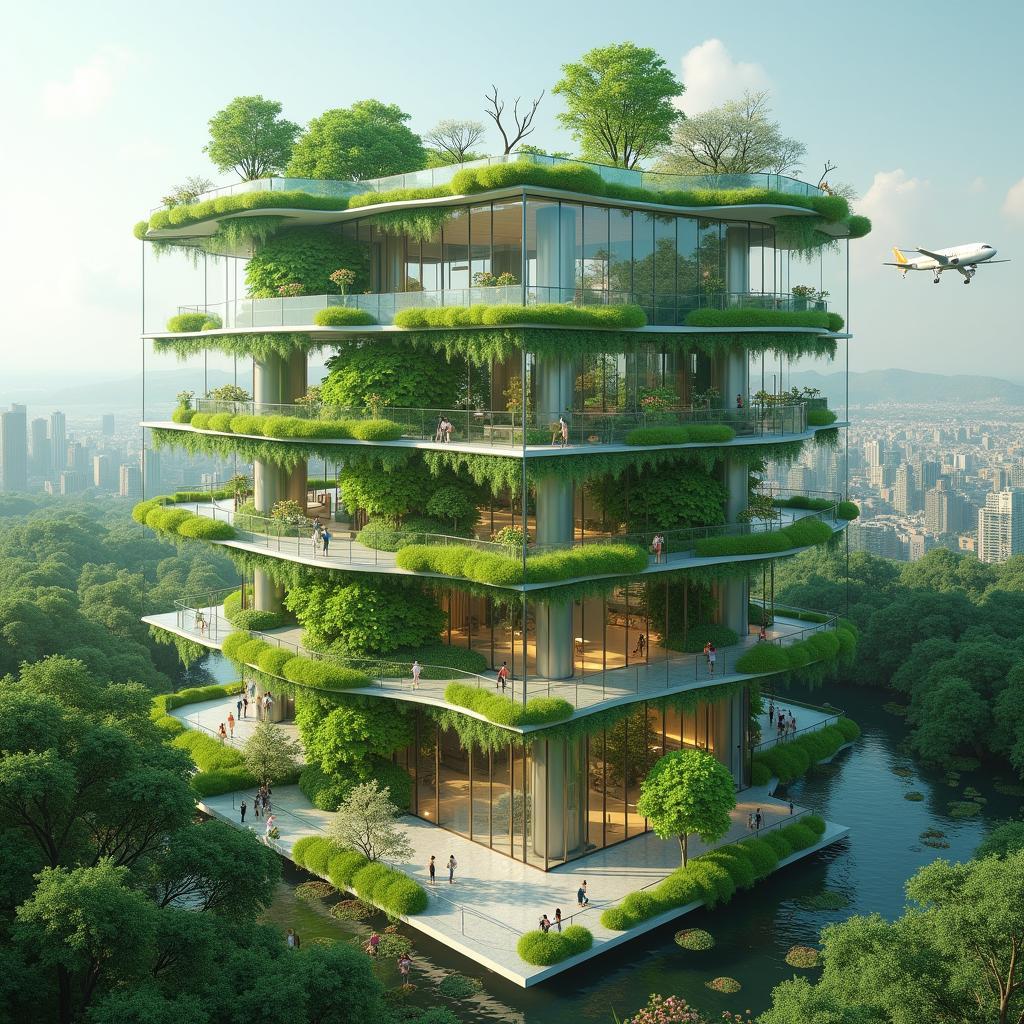 Kiến trúc xanh tương lai với công nghệ sinh học và vật liệu bền vững tiên tiến
Kết Bài
Chủ đề “How Green Buildings Are Promoting Sustainable Urban Living” không chỉ phản ánh xu hướng phát triển bền vững toàn cầu mà còn là một trong những topic thường xuyên xuất hiện trong IELTS Reading. Qua ba passages với độ khó tăng dần từ band 5.0-6.5, 6.0-7.5, đến 7.0-9.0, bạn đã được trải nghiệm một bài thi hoàn chỉnh với 40 câu hỏi đa dạng, bao gồm tất cả các dạng câu hỏi phổ biến trong kỳ thi thực tế.
Đề thi này đã cung cấp cho bạn không chỉ là bài luyện tập mà còn là kiến thức sâu rộng về công trình xanh, từ các khái niệm cơ bản như thu gom nước mưa và năng lượng mặt trời, đến những công nghệ tiên tiến như digital twin, bio-integrated design và circular economy. Phần đáp án chi tiết kèm giải thích đã chỉ ra cách xác định thông tin trong bài, cách paraphrase được sử dụng, và vị trí chính xác của từng câu trả lời.
Hơn 60 từ vựng quan trọng được tổng hợp trong các bảng từ vựng sẽ giúp bạn không chỉ làm tốt bài đọc về chủ đề này mà còn có thể áp dụng trong Writing Task 2 khi viết về môi trường và phát triển bền vững. Đây là nội dung tương tự như How smart cities are promoting sustainable living, nơi các công nghệ thông minh được tích hợp vào quy hoạch đô thị. Các vấn đề về Challenges of urban planning in growing cities cũng được đề cập thông qua việc thảo luận về green gentrification và vấn đề công bằng trong tiếp cận công trình xanh.
Để hiểu rõ hơn về bối cảnh rộng hơn của phát triển đô thị bền vững, bạn có thể tham khảo thêm về Smart cities and their impact on modern living, nơi công nghệ và bền vững được kết hợp một cách toàn diện. Ngoài ra, khía cạnh giáo dục về bền vững trong How to promote sustainability in education cũng liên quan mật thiết đến vai trò của các công trình giáo dục xanh được đề cập trong Passage 2. Đặc biệt, mối quan hệ giữa phát triển đô thị và bảo tồn thiên nhiên trong Impact of urbanization on wildlife conservation thể hiện tầm quan trọng của green roofs và urban habitats mà bài đọc đã nhấn mạnh.
Hãy sử dụng đề thi này như một công cụ đánh giá năng lực hiện tại của bạn. Nếu bạn đạt được 30-35 câu đúng, bạn đang ở mức band 7.0-8.0. Từ 25-29 câu đúng tương đương band 6.0-6.5, và từ 20-24 câu là band 5.5-6.0. Dù kết quả của bạn như thế nào, hãy xem giải thích chi tiết để hiểu rõ cách tiếp cận mỗi dạng câu hỏi và không ngừng luyện tập. Chúc bạn thành công trong kỳ thi IELTS sắp tới!



[…] đáp án, phân tích các câu sai, và học thuộc từ vựng. Nếu bạn quan tâm đến How green buildings are promoting sustainable urban living, đây cũng là một chủ đề liên quan mà bạn nên tìm hiểu thêm để mở rộng […]
[…] tự như how green buildings are promoting sustainable urban living, the integration of automated transit into urban ecosystems represents a holistic approach to […]