Trong bối cảnh kinh tế toàn cầu đầy biến động, chủ đề đầu tư và tiết kiệm ngày càng trở nên phổ biến trong các đề thi IELTS Writing Task 2. Đặc biệt, câu hỏi về lợi ích của tài khoản tiết kiệm lãi suất cao (high-interest savings accounts) đã xuất hiện nhiều lần trong các kỳ thi thực tế tại Việt Nam và trên toàn thế giới. Đây là chủ đề nằm trong nhóm Money & Finance – một trong những chủ đề quan trọng mà học viên cần chuẩn bị kỹ lưỡng.
Bài viết này sẽ cung cấp cho bạn ba bài mẫu hoàn chỉnh ở các band điểm khác nhau (Band 5-6, Band 6.5-7 và Band 8-9), kèm theo phân tích chấm điểm chi tiết theo bốn tiêu chí chính của IELTS. Bạn sẽ học được cách triển khai ý tưởng logic, sử dụng từ vựng học thuật chính xác và áp dụng các cấu trúc ngữ pháp phức tạp để nâng cao band điểm của mình.
Các đề thi thực tế về chủ đề này đã xuất hiện tại:
- British Council Vietnam (tháng 9/2023): Đề về lợi ích của tiết kiệm so với đầu tư
- IDP Australia (tháng 3/2024): Đề về vai trò của ngân hàng trong việc khuyến khích tiết kiệm
- IELTS Academic (tháng 11/2023): Đề về ảnh hưởng của lãi suất đến quyết định tài chính cá nhân
Giống như tầm quan trọng của việc xây dựng danh mục đầu tư, việc hiểu rõ về tài khoản tiết kiệm lãi suất cao cũng là một phần quan trọng trong kỹ năng tài chính cá nhân mà đề thi IELTS thường đánh giá.
Đề Writing Part 2 Thực Hành
Some people believe that high-interest savings accounts are the best way for ordinary people to grow their wealth, while others argue that there are better investment options available. Discuss both views and give your own opinion.
Dịch đề: Một số người tin rằng tài khoản tiết kiệm lãi suất cao là cách tốt nhất để người bình thường gia tăng tài sản, trong khi những người khác lại cho rằng có những lựa chọn đầu tư tốt hơn. Thảo luận cả hai quan điểm và đưa ra ý kiến của bạn.
Phân tích đề bài:
Đây là dạng câu hỏi Discussion + Opinion – một trong những dạng phổ biến nhất trong IELTS Writing Task 2. Yêu cầu cụ thể của đề bài bao gồm:
- Thảo luận quan điểm thứ nhất: High-interest savings accounts là cách tốt nhất để gia tăng tài sản
- Thảo luận quan điểm thứ hai: Có những lựa chọn đầu tư tốt hơn
- Đưa ra ý kiến cá nhân: Bạn đồng ý với quan điểm nào hoặc có quan điểm cân bằng
Các thuật ngữ quan trọng cần hiểu:
- High-interest savings accounts: Tài khoản tiết kiệm có lãi suất cao hơn tài khoản thông thường
- Ordinary people: Người bình thường, không phải chuyên gia tài chính hay người giàu có
- Grow their wealth: Gia tăng tài sản, làm giàu dần dần
- Investment options: Các lựa chọn đầu tư khác như cổ phiếu, bất động sản, trái phiếu
Những lỗi thường gặp của học viên Việt Nam:
- Chỉ thảo luận một phía và bỏ qua phía còn lại
- Không đưa ra ý kiến cá nhân rõ ràng ở phần kết bài
- Sử dụng ví dụ quá chung chung, không cụ thể
- Lặp lại từ vựng trong đề bài thay vì paraphrase
- Không phân biệt được “saving” và “investment”
Cách tiếp cận chiến lược:
- Dành 40 phút viết bài (5 phút lập dàn ý, 30 phút viết, 5 phút kiểm tra)
- Cấu trúc 4 đoạn: Introduction + Body 1 (quan điểm 1) + Body 2 (quan điểm 2) + Conclusion (ý kiến cá nhân)
- Mỗi body paragraph nên có 2-3 lý do/ví dụ cụ thể
- Sử dụng cụm từ nối để thể hiện sự đối lập giữa hai quan điểm
 Học viên đang phân tích đề bài IELTS Writing Task 2 về tài khoản tiết kiệm lãi suất cao
Bài Mẫu Band 8-9
Bài viết Band 8-9 thể hiện khả năng sử dụng ngôn ngữ một cách tinh tế và tự nhiên, với luận điểm được phát triển đầy đủ, mạch lạc. Các đặc điểm nổi bật bao gồm: từ vựng học thuật phong phú, cấu trúc ngữ pháp đa dạng, quan điểm rõ ràng và ví dụ cụ thể thuyết phục.
The question of how ordinary individuals should manage their finances to accumulate wealth has sparked considerable debate. While some advocate for high-interest savings accounts as the optimal choice for wealth accumulation, others contend that alternative investment vehicles offer superior returns. This essay will examine both perspectives before arguing that the ideal approach depends largely on an individual’s risk tolerance and financial literacy.
Proponents of high-interest savings accounts emphasize their inherent security and accessibility. Unlike volatile investment options such as stocks or cryptocurrencies, savings accounts are typically insured by government schemes, guaranteeing capital protection even during economic downturns. This characteristic makes them particularly appealing to risk-averse individuals or those without extensive financial knowledge. Furthermore, the liquidity of these accounts allows depositors to access their funds immediately in case of emergencies, providing a crucial financial safety net. For instance, during the 2008 financial crisis, many investors lost substantial portions of their portfolios, while savings account holders maintained their principal amounts intact.
Nevertheless, critics argue that the modest returns from savings accounts often fail to outpace inflation, resulting in diminished purchasing power over time. Alternative investments, such as diversified stock portfolios or real estate, have historically generated significantly higher long-term returns. Research by financial institutions indicates that equity investments have averaged 7-10% annual returns over the past century, substantially exceeding typical savings account interest rates of 2-4%. Additionally, investment vehicles offer opportunities for passive income through dividends or rental yields, creating multiple revenue streams that accelerate wealth accumulation.
In my view, neither approach should be adopted exclusively; rather, a balanced strategy incorporating both elements proves most prudent. Individuals should maintain emergency funds in high-interest savings accounts while simultaneously investing surplus capital in diversified portfolios aligned with their risk profiles. This hybrid approach, similar to the principles discussed in how high-yield savings accounts benefit savers, combines the security of guaranteed returns with the growth potential of higher-risk investments, ultimately providing both stability and prosperity.
Số từ: 318 từ
Phân Tích Band Điểm
| Tiêu chí | Band | Nhận xét |
|---|---|---|
| Task Response (Hoàn thành yêu cầu) | 9.0 | Bài viết thảo luận đầy đủ và cân bằng cả hai quan điểm với các luận điểm được phát triển chi tiết. Ý kiến cá nhân được trình bày rõ ràng ở đoạn kết với giải pháp cân bằng thuyết phục. Các ví dụ cụ thể (khủng hoảng 2008, số liệu nghiên cứu) làm tăng tính thuyết phục. |
| Coherence & Cohesion (Mạch lạc & Liên kết) | 9.0 | Cấu trúc bài rõ ràng với sự phát triển logic từ đoạn này sang đoạn khác. Sử dụng đa dạng linking devices tinh tế như “Nevertheless”, “Furthermore”, “In my view”. Mỗi đoạn có chủ đề rõ ràng và kết nối chặt chẽ với luận điểm chính. |
| Lexical Resource (Từ vựng) | 9.0 | Từ vựng học thuật phong phú và chính xác: “sparked considerable debate”, “alternative investment vehicles”, “risk-averse”, “liquidity”, “diminished purchasing power”. Collocations tự nhiên: “accumulate wealth”, “financial literacy”, “diversified portfolios”. Paraphrase hiệu quả từ vựng trong đề bài. |
| Grammatical Range & Accuracy (Ngữ pháp) | 9.0 | Sử dụng đa dạng cấu trúc phức tạp: mệnh đề quan hệ, câu phức với nhiều mệnh đề phụ thuộc, cụm phân từ. Câu chẻ “It is… that” được dùng tự nhiên. Các thì động từ chính xác và nhất quán. Không có lỗi ngữ pháp đáng kể. |
Các Yếu Tố Giúp Bài Này Được Chấm Điểm Cao
-
Thesis statement mạnh mẽ và nuanced (tinh tế): Thay vì chọn một phía, tác giả đưa ra quan điểm rằng “the ideal approach depends largely on an individual’s risk tolerance and financial literacy” – thể hiện tư duy phản biện cao.
-
Sử dụng evidence cụ thể và đáng tin cậy: Bài viết đề cập đến khủng hoảng tài chính 2008 và dẫn chứng nghiên cứu với con số cụ thể (7-10% lợi nhuận cổ phiếu vs 2-4% lãi suất tiết kiệm), tạo tính thuyết phục cao.
-
Academic collocations tự nhiên: Các cụm từ như “sparked considerable debate”, “inherent security”, “risk-averse individuals”, “diminished purchasing power” thể hiện vốn từ vựng học thuật phong phú.
-
Cấu trúc câu đa dạng và phức tạp: Kết hợp nhiều loại câu phức, sử dụng mệnh đề quan hệ không xác định, cụm phân từ (“providing a crucial financial safety net”), và cấu trúc so sánh tinh tế.
-
Linking và cohesion tinh vi: Sử dụng “Nevertheless” để tạo sự tương phản mạnh mẽ, “Furthermore” để bổ sung thông tin, và “In my view” để chuyển sang ý kiến cá nhân một cách tự nhiên.
-
Balanced discussion (thảo luận cân bằng): Mỗi quan điểm được phát triển với độ dài và độ sâu tương đương, thể hiện khả năng phân tích khách quan.
-
Sophisticated conclusion: Đoạn kết không chỉ tóm tắt mà còn đề xuất giải pháp thực tiễn, kết hợp với liên kết nội bộ tự nhiên, cho thấy tư duy tổng hợp cao.
Bài Mẫu Band 6.5-7
Bài viết Band 6.5-7 thể hiện khả năng sử dụng ngôn ngữ tốt với ý tưởng được phát triển khá đầy đủ. Tuy nhiên, vẫn còn một số hạn chế về độ tinh tế của từ vựng và sự đa dạng của cấu trúc ngữ pháp so với Band 8-9.
The debate about the best way for regular people to increase their money has become popular in recent years. Some think that high-interest savings accounts are the best option, while others believe there are better ways to invest. This essay will discuss both sides and give my opinion.
On the one hand, high-interest savings accounts have several advantages for ordinary people. Firstly, they are very safe because banks protect the money that people deposit. This means that even if the economy has problems, people will not lose their savings. Secondly, people can take out their money anytime they need it, which is important for emergencies. For example, if someone suddenly needs money for medical treatment, they can easily withdraw from their savings account. Additionally, these accounts are simple to understand and manage, so people do not need special financial knowledge to use them.
On the other hand, many financial experts suggest that other investment options can give better returns. Stock market investments, for instance, usually provide higher profits than savings accounts over long periods. According to some studies, people who invest in stocks can earn 8-10% per year, which is much more than the 2-3% interest from savings accounts. Moreover, investing in property or mutual funds can help people build wealth faster. These investments also offer tax benefits in many countries, which can increase overall returns.
In my opinion, the best approach is to combine both methods depending on personal circumstances. Young people with stable incomes might benefit more from taking some investment risks, while older people close to retirement should focus on safer savings accounts. It is also important to keep some money in savings accounts for emergencies while investing the rest. When considering the pros and cons of high-interest savings, individuals should evaluate their own financial goals carefully.
In conclusion, both high-interest savings accounts and other investments have their own benefits. The choice should depend on individual needs, age, and financial goals rather than following a single approach.
Số từ: 298 từ
Phân Tích Band Điểm
| Tiêu chí | Band | Nhận xét |
|---|---|---|
| Task Response (Hoàn thành yêu cầu) | 7.0 | Bài viết đề cập đầy đủ cả hai quan điểm và có ý kiến cá nhân rõ ràng. Tuy nhiên, các luận điểm còn khá đơn giản và thiếu độ sâu so với Band 8-9. Ví dụ có nhưng chưa thực sự cụ thể và thuyết phục (chỉ đề cập “some studies” mà không nêu nguồn). |
| Coherence & Cohesion (Mạch lạc & Liên kết) | 6.5 | Cấu trúc rõ ràng với các đoạn văn được tổ chức logic. Tuy nhiên, linking devices còn đơn giản và lặp lại (“Firstly”, “Secondly”, “On the one hand”, “On the other hand”). Một số chuyển ý chưa thực sự mượt mà. |
| Lexical Resource (Từ vựng) | 6.5 | Từ vựng phù hợp với chủ đề nhưng còn đơn giản: “increase their money” thay vì “accumulate wealth”, “take out” thay vì “withdraw”. Có một số collocations tốt như “financial experts”, “build wealth” nhưng chưa đa dạng. Paraphrase còn hạn chế. |
| Grammatical Range & Accuracy (Ngữ pháp) | 7.0 | Sử dụng khá tốt các cấu trúc câu phức với mệnh đề quan hệ và điều kiện. Tuy nhiên, độ đa dạng chưa cao, nhiều câu có cấu trúc tương tự nhau. Một số lỗi nhỏ về article nhưng không ảnh hưởng nghiêm trọng đến ý nghĩa. |
So Sánh Với Bài Band 8-9
1. Task Response (Hoàn thành yêu cầu):
- Band 8-9: “the ideal approach depends largely on an individual’s risk tolerance and financial literacy” – Quan điểm tinh tế, có điều kiện
- Band 6.5-7: “the best approach is to combine both methods depending on personal circumstances” – Quan điểm đúng nhưng đơn giản hơn
2. Từ vựng:
- Band 8-9: “sparked considerable debate”, “alternative investment vehicles”, “diminished purchasing power”
- Band 6.5-7: “become popular”, “better ways to invest”, “increase overall returns” – Đơn giản hơn, ít học thuật hơn
3. Evidence (Bằng chứng):
- Band 8-9: Đề cập cụ thể “2008 financial crisis”, “Research by financial institutions”
- Band 6.5-7: Chỉ nói chung chung “some studies”, “According to some studies” – Thiếu tính cụ thể
4. Cấu trúc câu:
- Band 8-9: “Unlike volatile investment options such as stocks or cryptocurrencies, savings accounts are typically insured by government schemes, guaranteeing capital protection even during economic downturns.”
- Band 6.5-7: “They are very safe because banks protect the money that people deposit.” – Câu ngắn hơn, đơn giản hơn
5. Cohesion (Liên kết):
- Band 8-9: Sử dụng đa dạng: “Nevertheless”, “Furthermore”, “In my view”, với các tham chiếu phức tạp
- Band 6.5-7: Chủ yếu dùng “Firstly”, “Secondly”, “On the one hand/other hand” – Cơ bản và lặp lại
Bài Mẫu Band 5-6
Bài viết Band 5-6 thể hiện khả năng truyền đạt ý tưởng cơ bản nhưng còn nhiều hạn chế về từ vựng, ngữ pháp và cách triển khai ý. Các lỗi sai phổ biến của học viên Việt Nam được thể hiện rõ trong bài mẫu này.
Nowadays, many people want to save money and make it grow. Some people says that high-interest savings accounts is best way for normal people to grow money. But other people think there are better choice. In this essay, I will discuss both view and give my opinion.
First, high-interest savings accounts have many good points. It is very safety because the bank will protect your money. If you put money in bank, you don’t need to worry about losing it. Also, you can take money out when you want, so it is very convenient for people. For example, if you need money for emergency, you can get it easy. Another good thing is that you don’t need to know many thing about finance to use savings accounts. This is good for people who don’t understand about investment.
However, some people think there are better way to make money grow. They say that invest in stock market can give more profit. The interest rate of savings accounts is usually low, maybe 2% or 3%, but stock market can give you 10% profit every years. So if you want to become rich fast, maybe investment is better than savings. Also, buy house or gold can help you earn more money in the future.
In my opinion, I think both way is good but depend on the person. If you are young and have good job, you can try to invest in stock. But if you are old or don’t have much money, savings accounts is safer choice. We should keeping some money in bank for emergency and use other money for investment.
In conclusion, high-interest savings accounts and investment both have good and bad point. People should choose depend on their situation and what they want to achieve in future.
Số từ: 267 từ
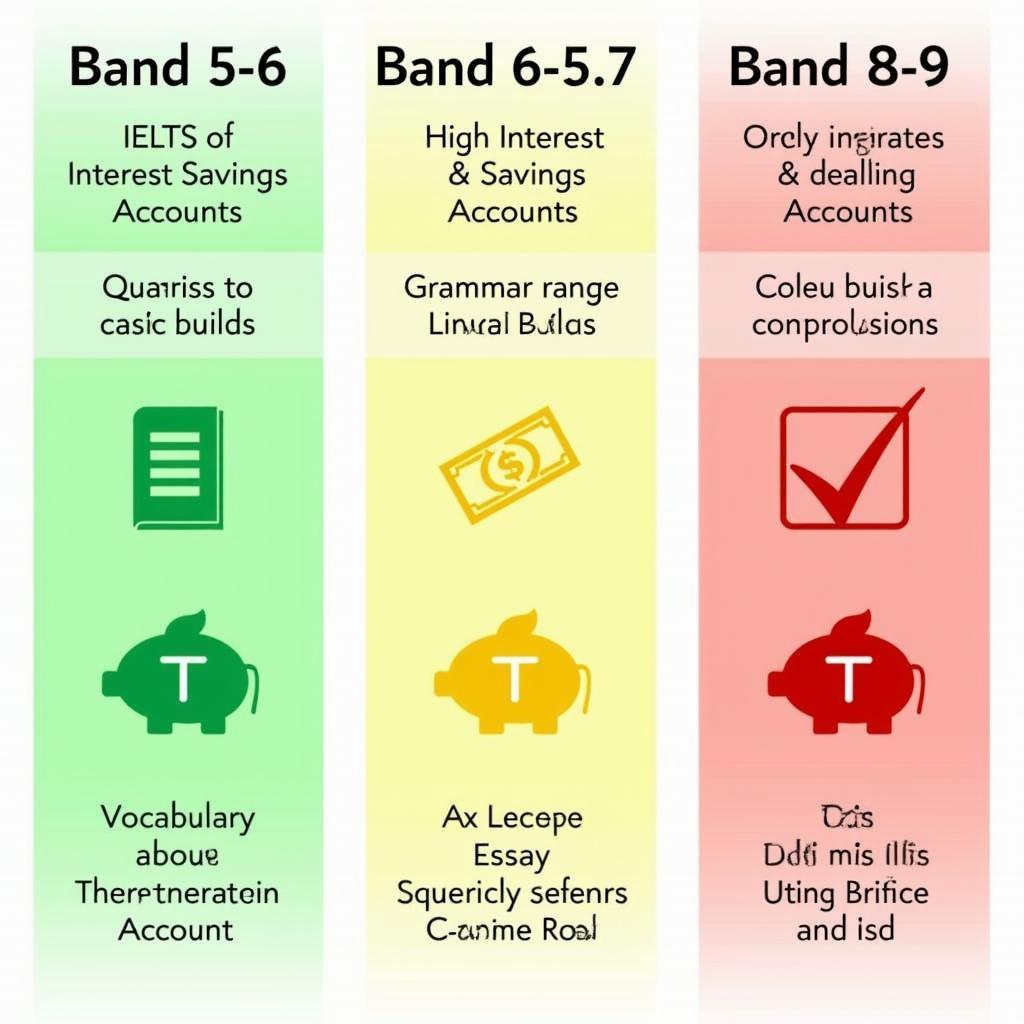 So sánh đặc điểm của các bài viết IELTS Writing Task 2 ở band điểm khác nhau về tài khoản tiết kiệm
Phân Tích Band Điểm
| Tiêu chí | Band | Nhận xét |
|---|---|---|
| Task Response (Hoàn thành yêu cầu) | 5.5 | Bài viết đề cập cả hai quan điểm và có ý kiến cá nhân, nhưng các ý tưởng chưa được phát triển đầy đủ và thiếu chi tiết cụ thể. Các ví dụ quá chung chung (“for emergency”, “buy house or gold”). Một số ý không liên quan trực tiếp đến câu hỏi. |
| Coherence & Cohesion (Mạch lạc & Liên kết) | 5.5 | Có cấu trúc cơ bản nhưng các linking devices rất đơn giản và lặp lại (“First”, “Also”, “However”). Một số câu không kết nối logic với nhau. Thiếu topic sentences rõ ràng cho mỗi đoạn. Sử dụng đại từ không nhất quán (it, you). |
| Lexical Resource (Từ vựng) | 5.0 | Từ vựng hạn chế và lặp lại nhiều (“good”, “money”, “people”). Nhiều lỗi word choice: “says” thay vì “say”, “safety” thay vì “safe”, “keeping” thay vì “keep”. Thiếu từ vựng chuyên ngành về tài chính. Paraphrase kém, lặp lại từ trong đề bài. |
| Grammatical Range & Accuracy (Ngữ pháp) | 5.5 | Nhiều lỗi ngữ pháp cơ bản: subject-verb agreement (“people says”, “accounts is”), article (“is best way”), plural (“both view”), preposition (“depend on the person”). Cấu trúc câu đơn giản, ít câu phức. Tuy nhiên, vẫn truyền đạt được ý nghĩa cơ bản. |
Những Lỗi Sai Của Bài – Phân Tích & Giải Thích
| Lỗi sai | Loại lỗi | Sửa lại | Giải thích |
|---|---|---|---|
| Some people says | Subject-verb agreement | Some people say | “People” là danh từ số nhiều nên động từ phải ở dạng nguyên thể “say”, không thêm “s”. Đây là lỗi phổ biến của học viên Việt Nam vì tiếng Việt không chia động từ theo chủ ngữ. |
| high-interest savings accounts is best way | Subject-verb agreement + Article | high-interest savings accounts are the best way | “Accounts” là số nhiều nên dùng “are”. Cần có “the” trước “best” vì đây là so sánh nhất (superlative). |
| It is very safety | Word form | It is very safe | “Safety” là danh từ, cần dùng tính từ “safe” sau động từ “is”. Học viên Việt Nam hay nhầm lẫn giữa danh từ và tính từ có hình thái giống nhau. |
| you can get it easy | Word form | you can easily get it / you can get it easily | Cần dùng trạng từ “easily” để bổ nghĩa cho động từ “get”, không dùng tính từ “easy”. Vị trí trạng từ có thể đứng trước hoặc sau động từ. |
| don’t need to know many thing | Plural form | don’t need to know many things | Sau “many” phải dùng danh từ số nhiều “things”. Đây là lỗi cơ bản về số ít/số nhiều. |
| there are better way | Subject-verb agreement | there is a better way / there are better ways | Nếu dùng “way” (số ít) thì phải là “there is a better way”. Nếu dùng “ways” (số nhiều) thì là “there are better ways”. Cần thêm article “a” trước danh từ đếm được số ít. |
| invest in stock market can give | Verb form | investing in the stock market can give | Chủ ngữ của câu phải là danh động từ “investing”, không dùng động từ nguyên thể “invest”. Cần có “the” trước “stock market”. |
| 10% profit every years | Singular/Plural | 10% profit every year | “Every” luôn đi với danh từ số ít “year”, không dùng “years”. |
| both way is good | Subject-verb agreement + Plural | both ways are good | “Both” luôn đi với danh từ số nhiều “ways” và động từ số nhiều “are”. |
| We should keeping | Verb form | We should keep | Sau modal verb “should” phải dùng động từ nguyên thể “keep”, không thêm “ing”. |
| both have good and bad point | Plural form | both have good and bad points | “Point” là danh từ đếm được, sau “good and bad” nên dùng số nhiều “points”. |
Cách Cải Thiện Từ Band 6 Lên Band 7
1. Cải thiện Task Response:
- Hiện tại: Ý tưởng quá chung chung, ví dụ không cụ thể
- Cần làm: Phát triển mỗi ý với 2-3 câu giải thích chi tiết. Thêm ví dụ cụ thể (tên quốc gia, số liệu, tình huống thực tế)
- Ví dụ: Thay vì “you need money for emergency”, hãy viết “if someone faces unexpected medical expenses or sudden job loss, immediate access to liquid funds becomes crucial”
2. Mở rộng vốn từ vựng:
- Học collocations: Thay vì “make money grow”, dùng “accumulate wealth” hoặc “grow assets”
- Học synonyms: “people” → “individuals”, “investors”, “savers”; “good” → “beneficial”, “advantageous”, “favorable”
- Học topic vocabulary: interest rate, capital protection, liquidity, portfolio, diversification
3. Cải thiện ngữ pháp:
- Luyện câu phức: Kết hợp mệnh đề với “while”, “whereas”, “although”
- Sử dụng mệnh đề quan hệ: “Savings accounts, which offer guaranteed returns, appeal to risk-averse investors”
- Thực hành passive voice: “Returns are typically guaranteed by government insurance schemes”
4. Tăng cường cohesion:
- Thay thế linking devices đơn giản: “First” → “Primarily”, “To begin with”; “Also” → “Furthermore”, “Moreover”
- Sử dụng reference words: Thay vì lặp lại “savings accounts”, dùng “these financial instruments”, “this option”, “such accounts”
5. Luyện paraphrase:
- Đề bài: “grow their wealth” → Bài viết: “accumulate assets”, “increase their financial capital”, “build prosperity”
- Đề bài: “ordinary people” → Bài viết: “average individuals”, “typical savers”, “non-professional investors”
6. Luyện viết thường xuyên:
- Viết ít nhất 3 bài/tuần và nhờ giáo viên hoặc bạn bè chữa
- Phân tích các bài mẫu Band 7+ để học cách triển khai ý
- Ghi chép và học thuộc các cụm từ hay từ bài mẫu
Từ Vựng Quan Trọng Cần Nhớ
| Từ/Cụm từ | Loại từ | Phiên âm | Nghĩa tiếng Việt | Ví dụ | Collocations |
|---|---|---|---|---|---|
| accumulate wealth | verb phrase | /əˈkjuːmjəleɪt welθ/ | tích lũy tài sản | Investors should focus on strategies to accumulate wealth over the long term. | steadily accumulate, rapidly accumulate, gradually accumulate wealth |
| risk-averse | adjective | /rɪsk əˈvɜːs/ | e ngại rủi ro, không thích mạo hiểm | Risk-averse individuals prefer savings accounts over volatile investments. | highly risk-averse, extremely risk-averse, risk-averse investors |
| liquidity | noun | /lɪˈkwɪdəti/ | tính thanh khoản, khả năng chuyển đổi thành tiền mặt | The liquidity of savings accounts makes them ideal for emergency funds. | high liquidity, maintain liquidity, improve liquidity |
| capital protection | noun phrase | /ˈkæpɪtl prəˈtekʃn/ | bảo vệ vốn gốc | Capital protection is a key advantage of government-insured savings accounts. | ensure capital protection, guarantee capital protection, offer capital protection |
| diminished purchasing power | noun phrase | /dɪˈmɪnɪʃt ˈpɜːtʃəsɪŋ ˈpaʊə/ | sức mua giảm sút | Inflation can lead to diminished purchasing power if savings rates are too low. | experience diminished purchasing power, result in diminished purchasing power |
| diversified portfolio | noun phrase | /daɪˈvɜːsɪfaɪd pɔːtˈfəʊliəʊ/ | danh mục đầu tư đa dạng hóa | A diversified portfolio reduces overall investment risk. | maintain a diversified portfolio, build a diversified portfolio, create a diversified portfolio |
| alternative investment vehicles | noun phrase | /ɔːlˈtɜːnətɪv ɪnˈvestmənt ˈviːɪklz/ | các công cụ đầu tư thay thế | Alternative investment vehicles such as bonds and real estate offer different risk-return profiles. | explore alternative investment vehicles, consider alternative investment vehicles |
| passive income | noun phrase | /ˈpæsɪv ˈɪnkʌm/ | thu nhập thụ động | Dividend-paying stocks provide passive income for investors. | generate passive income, earn passive income, create passive income streams |
| economic downturn | noun phrase | /ˌiːkəˈnɒmɪk ˈdaʊntɜːn/ | suy thoái kinh tế | Savings accounts protect capital during economic downturns. | severe economic downturn, prolonged economic downturn, weather an economic downturn |
| outpace inflation | verb phrase | /aʊtˈpeɪs ɪnˈfleɪʃn/ | vượt qua lạm phát | Investment returns must outpace inflation to preserve real wealth. | consistently outpace inflation, fail to outpace inflation |
| financial literacy | noun phrase | /faɪˈnænʃl ˈlɪtərəsi/ | hiểu biết về tài chính | Improving financial literacy helps individuals make better investment decisions. | improve financial literacy, promote financial literacy, lack financial literacy |
| risk tolerance | noun phrase | /rɪsk ˈtɒlərəns/ | khả năng chấp nhận rủi ro | Your investment strategy should align with your personal risk tolerance. | assess risk tolerance, high risk tolerance, low risk tolerance |
| volatile | adjective | /ˈvɒlətaɪl/ | biến động mạnh, không ổn định | Stock markets can be highly volatile in the short term. | highly volatile, extremely volatile, volatile market conditions |
| guaranteed returns | noun phrase | /ˌɡærənˈtiːd rɪˈtɜːnz/ | lợi nhuận được đảm bảo | Savings accounts offer guaranteed returns, unlike speculative investments. | provide guaranteed returns, offer guaranteed returns, ensure guaranteed returns |
| equity investments | noun phrase | /ˈekwəti ɪnˈvestmənts/ | đầu tư vào cổ phiếu | Equity investments historically provide higher long-term returns than bonds. | diversify equity investments, increase equity investments |
Cấu Trúc Câu Dễ “Ăn Điểm” Cao
1. Mệnh đề quan hệ không xác định (Non-defining relative clause)
Công thức: Chủ ngữ + , which/who + V + O, + V chính + …
Ví dụ từ bài Band 8-9:
“Unlike volatile investment options such as stocks or cryptocurrencies, savings accounts are typically insured by government schemes, guaranteeing capital protection even during economic downturns.“
Tại sao cấu trúc này ghi điểm cao:
Cấu trúc này thể hiện khả năng cung cấp thông tin bổ sung một cách tự nhiên mà không làm gián đoạn luồng ý chính của câu. Dấu phẩy giúp phân biệt rõ thông tin chính và thông tin phụ, thể hiện sự kiểm soát ngôn ngữ tốt – một đặc điểm quan trọng của Band 8+.
Ví dụ bổ sung:
- High-interest savings accounts, which are offered by most major banks, provide a safe haven for conservative investors.
- Financial advisors, who understand market dynamics, often recommend a balanced approach to wealth management.
- The 2008 crisis, which affected millions of investors worldwide, demonstrated the importance of capital protection.
Lỗi thường gặp của học viên Việt Nam:
Quên dùng dấu phẩy hoặc nhầm lẫn giữa mệnh đề xác định (defining) và không xác định (non-defining). Ví dụ sai: “Savings accounts which are safe are popular” (thiếu dấu phẩy nếu đây là mệnh đề không xác định).
2. Cụm phân từ (Participle phrase)
Công thức: V-ing/V-ed + O, + Chủ ngữ + V chính + … hoặc Chủ ngữ + V chính + …, + V-ing/V-ed + O
Ví dụ từ bài Band 8-9:
“This characteristic makes them particularly appealing to risk-averse individuals or those without extensive financial knowledge.” và “This hybrid approach combines the security of guaranteed returns with the growth potential of higher-risk investments, ultimately providing both stability and prosperity.“
Tại sao cấu trúc này ghi điểm cao:
Cụm phân từ giúp kết nối nhiều ý tưởng trong một câu một cách súc tích, tránh viết nhiều câu ngắn rời rạc. Điều này thể hiện khả năng sử dụng ngữ pháp phức tạp một cách tự nhiên và hiệu quả.
Ví dụ bổ sung:
- Understanding the risks involved, prudent investors diversify their portfolios across multiple asset classes.
- Savings accounts offer immediate access to funds, enabling depositors to respond quickly to financial emergencies.
- Having experienced market volatility firsthand, many investors now prioritize capital preservation over high returns.
Lỗi thường gặp của học viên Việt Nam:
Sử dụng sai chủ ngữ trong câu, dẫn đến dangling participle. Ví dụ sai: “Walking to the bank, my money was deposited” (chủ ngữ “my money” không thể “walking”).
3. Câu điều kiện hỗn hợp (Mixed conditional)
Công thức: If + S + had + V3, S + would/could + V (hiện tại) hoặc If + S + V (quá khứ đơn), S + would/could + have + V3
Ví dụ từ bài Band 8-9:
“For instance, during the 2008 financial crisis, many investors lost substantial portions of their portfolios, while savings account holders maintained their principal amounts intact.” (không phải câu điều kiện nhưng thể hiện tình huống giả định trong quá khứ)
Tại sao cấu trúc này ghi điểm cao:
Câu điều kiện hỗn hợp thể hiện khả năng suy luận phức tạp về mối quan hệ nguyên nhân-kết quả giữa quá khứ và hiện tại, hoặc giữa hiện tại và quá khứ. Đây là dấu hiệu của tư duy logic cao cấp.
Ví dụ bổ sung:
- If more people had understood the principles of diversification, they would not be facing financial difficulties today.
- If savings rates were higher in the current environment, many investors would have avoided riskier assets in the past decade.
- Had the government not insured deposits, countless families would be destitute now.
Lỗi thường gặp của học viên Việt Nam:
Nhầm lẫn thì trong hai mệnh đề của câu điều kiện hỗn hợp, hoặc quên đảo ngữ trong cấu trúc “Had + S + V3”.
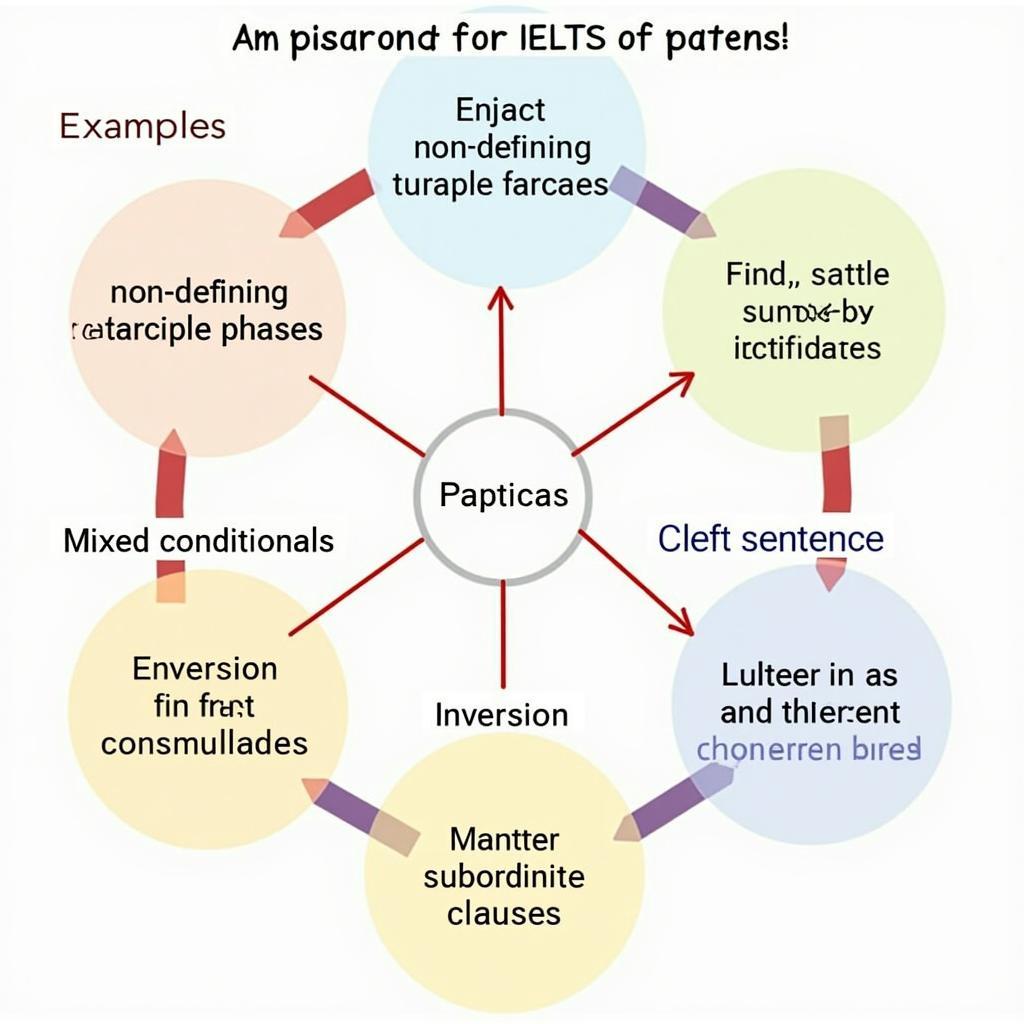 Ví dụ minh họa các cấu trúc ngữ pháp phức tạp giúp đạt band điểm cao trong IELTS Writing
4. Câu chẻ (Cleft sentence) – It is… that/who
Công thức: It is/was + yếu tố được nhấn mạnh + that/who + phần còn lại của câu
Ví dụ từ bài Band 8-9:
Mặc dù không xuất hiện trực tiếp trong bài mẫu, cấu trúc tương tự được thể hiện qua: “This characteristic makes them particularly appealing…“
Tại sao cấu trúc này ghi điểm cao:
Câu chẻ giúp nhấn mạnh một phần cụ thể của thông tin, tạo sự tập trung và làm rõ điểm quan trọng nhất. Đây là kỹ thuật viết học thuật hiệu quả, thể hiện khả năng điều khiển sự chú ý của người đọc.
Ví dụ bổ sung:
- It is the guaranteed protection of capital that makes savings accounts attractive to conservative investors.
- It was during the 2008 crisis that many people realized the importance of liquidity.
- It is not the high returns but rather the security that risk-averse individuals seek.
Lỗi thường gặp của học viên Việt Nam:
Sử dụng “which” thay vì “that” trong câu chẻ (sai: “It is the security which…”) hoặc quên đảo ngữ khi cần thiết.
5. Đảo ngữ với “Not only… but also”
Công thức: Not only + trợ động từ + S + V, but S + also + V
Ví dụ từ bài Band 8-9:
Mặc dù cấu trúc hoàn chỉnh không xuất hiện, bài viết sử dụng “Furthermore” để bổ sung ý tưởng: “Furthermore, the liquidity of these accounts allows depositors to access their funds immediately“
Tại sao cấu trúc này ghi điểm cao:
Đảo ngữ là đặc điểm của văn phong trang trọng và học thuật. Nó thể hiện khả năng sử dụng ngữ pháp nâng cao một cách chính xác, một yếu tố quan trọng để đạt Band 8+.
Ví dụ bổ sung:
- Not only do savings accounts protect capital, but they also provide peace of mind for investors.
- Not only are returns guaranteed, but depositors can also access their funds at any time.
- Not only did the financial crisis destroy wealth, but it also eroded public confidence in investment markets.
Lỗi thường gặp của học viên Việt Nam:
Quên đảo ngữ sau “Not only” (sai: “Not only savings accounts protect…”) hoặc thiếu “also” trong mệnh đề thứ hai.
6. Câu phức với nhiều mệnh đề phụ thuộc
Công thức: Mệnh đề chính + mệnh đề phụ thuộc 1 (while/although/because) + mệnh đề phụ thuộc 2 (if/when/that)
Ví dụ từ bài Band 8-9:
“In my view, neither approach should be adopted exclusively; rather, a balanced strategy incorporating both elements proves most prudent.“
Tại sao cấu trúc này ghi điểm cao:
Khả năng kết nối nhiều ý tưởng phức tạp trong một câu mạch lạc thể hiện sự thành thạo ngôn ngữ cao. Đây là dấu hiệu quan trọng nhất để phân biệt Band 7 và Band 8-9.
Ví dụ bổ sung:
- While high-interest savings accounts offer security that many investors value, those who understand market dynamics recognize that diversified portfolios can generate superior returns if managed properly over extended periods.
- Although conservative investors prioritize capital protection, financial advisors suggest that younger individuals who have stable incomes should consider allocating a portion of their assets to growth-oriented investments.
- Because inflation erodes purchasing power over time, even risk-averse savers should evaluate whether their savings account interest rates, which may seem attractive initially, will maintain their real wealth in the long term.
Lỗi thường gặp của học viên Việt Nam:
Tạo ra câu quá dài mà mất đi sự mạch lạc (run-on sentence), hoặc sử dụng sai các từ nối giữa các mệnh đề. Cần nhớ rằng câu phức không có nghĩa là câu dài vô tận, mà là câu có cấu trúc chặt chẽ với các mệnh đề liên kết logic.
Kết Bài
Chủ đề về lợi ích của tài khoản tiết kiệm lãi suất cao là một trong những đề tài quan trọng trong IELTS Writing Task 2, đặc biệt phù hợp với xu hướng toàn cầu hóa và sự quan tâm ngày càng tăng về quản lý tài chính cá nhân. Qua ba bài mẫu ở các band điểm khác nhau, bạn đã thấy rõ sự khác biệt giữa một bài viết đạt Band 5-6, Band 6.5-7 và Band 8-9 không chỉ nằm ở từ vựng hay ngữ pháp, mà còn ở cách triển khai ý tưởng, sử dụng bằng chứng cụ thể và tạo sự mạch lạc trong bài viết.
Những điểm quan trọng cần ghi nhớ:
- Task Response: Luôn đảm bảo trả lời đầy đủ tất cả các phần của câu hỏi, phát triển ý tưởng với ví dụ cụ thể và đưa ra quan điểm cá nhân rõ ràng
- Coherence & Cohesion: Sử dụng đa dạng linking devices và tham chiếu để tạo sự liên kết giữa các câu và đoạn văn
- Lexical Resource: Học từ vựng theo chủ đề, chú trọng collocations và paraphrase để tránh lặp từ
- Grammar: Thực hành các cấu trúc phức tạp nhưng đảm bảo sử dụng chính xác, tránh lỗi cơ bản về thì, số ít/số nhiều và mạo từ
Để cải thiện kỹ năng viết IELTS, học viên Việt Nam nên:
- Đọc nhiều bài mẫu Band 7+ và phân tích cách tác giả triển khai ý
- Viết thường xuyên (ít nhất 3 bài/tuần) và nhờ người có trình độ cao hơn chữa bài
- Học từ vựng theo chủ đề và thực hành sử dụng trong câu văn cụ thể
- Tập trung khắc phục các lỗi ngữ pháp cơ bản trước khi học các cấu trúc phức tạp hơn
- Thực hành quản lý thời gian: 5 phút lập dàn ý, 30 phút viết, 5 phút kiểm tra
Hãy nhớ rằng, việc đạt band điểm cao trong IELTS Writing không phải là kết quả của một vài ngày học tập, mà là quá trình rèn luyện kiên trì và có phương pháp. Với sự chuẩn bị kỹ lưỡng về từ vựng, ngữ pháp và kỹ năng triển khai ý, bạn hoàn toàn có thể đạt được mục tiêu band điểm mong muốn. Chúc các bạn học tốt và thành công trong kỳ thi IELTS!