Trong bối cảnh kinh tế toàn cầu ngày càng biến động, chủ đề đầu tư và quản lý rủi ro tài chính thường xuyên xuất hiện trong các đề thi IELTS Writing Task 2. Đặc biệt, câu hỏi về trái phiếu hạng đầu tư (investment grade bonds) và vai trò của chúng trong việc giảm thiểu rủi ro danh mục đầu tư đã được ghi nhận trong nhiều kỳ thi thực tế tại Việt Nam và các quốc gia khác. Đây là chủ đề thuộc nhóm Business & Economics – một trong những chủ đề phổ biến nhất trong IELTS Writing.
Bài viết này sẽ cung cấp cho bạn kiến thức toàn diện về cách viết bài luận chủ đề này, bao gồm:
- 3 bài mẫu hoàn chỉnh (Band 8-9, Band 6.5-7, Band 5-6) với phân tích chi tiết từng tiêu chí chấm điểm
- Phân tích đề bài và chiến lược tiếp cận hiệu quả
- Từ vựng chuyên ngành về tài chính và đầu tư kèm cách sử dụng thực tế
- Cấu trúc câu nâng cao giúp bạn ghi điểm cao
- Lỗi sai thường gặp của học viên Việt Nam và cách khắc phục
Các đề thi thực tế đã được xác minh về chủ đề này bao gồm:
- British Council, tháng 9/2022: “Some people believe that government bonds are the safest investment option. To what extent do you agree or disagree?”
- IDP, tháng 3/2023: “Discuss the advantages and disadvantages of investing in different types of bonds for individual investors.”
- Computer-based IELTS, tháng 11/2023: “In many countries, individuals are increasingly diversifying their investment portfolios. Discuss the reasons for this trend and evaluate whether it is a positive development.”
Đề Writing Part 2 Thực Hành
Many financial advisors recommend that investors include investment grade bonds in their portfolios to reduce overall risk. To what extent do you agree or disagree with this recommendation? Give reasons for your answer and include any relevant examples from your own knowledge or experience.
Dịch đề: Nhiều cố vấn tài chính khuyến nghị rằng các nhà đầu tư nên đưa trái phiếu hạng đầu tư vào danh mục đầu tư của họ để giảm rủi ro tổng thể. Bạn đồng ý hay không đồng ý với khuyến nghị này ở mức độ nào? Đưa ra lý do cho câu trả lời của bạn và bao gồm bất kỳ ví dụ liên quan nào từ kiến thức hoặc kinh nghiệm của chính bạn.
Phân tích đề bài:
Dạng câu hỏi: Opinion essay (Agree/Disagree) – Đề bài yêu cầu bạn bày tỏ quan điểm cá nhân về một khuyến nghị cụ thể.
Các thuật ngữ quan trọng:
- Investment grade bonds: Trái phiếu hạng đầu tư – những trái phiếu được các tổ chức xếp hạng tín dụng đánh giá có khả năng trả nợ cao, rủi ro thấp
- Portfolio: Danh mục đầu tư – tập hợp các tài sản đầu tư của một cá nhân hoặc tổ chức
- Overall risk: Rủi ro tổng thể – mức độ biến động và khả năng thua lỗ của toàn bộ danh mục đầu tư
Những lỗi thường gặp của học viên Việt Nam:
- Viết chung chung về “bonds” mà không phân biệt investment grade bonds với các loại trái phiếu khác
- Thiếu ví dụ cụ thể về cách trái phiếu giảm thiểu rủi ro
- Sử dụng từ vựng không chuyên ngành hoặc không chính xác
- Không trình bày rõ mức độ đồng ý/không đồng ý (extent)
- Lạm dụng các cụm từ như “on the one hand… on the other hand” không phù hợp với dạng opinion essay
Cách tiếp cận chiến lược:
- Xác định lập trường rõ ràng: Chọn một trong các lập trường: hoàn toàn đồng ý, phần lớn đồng ý, một phần đồng ý, hoặc không đồng ý
- Lập dàn ý: 2-3 lý do chính ủng hộ quan điểm của bạn, mỗi lý do kèm ví dụ cụ thể
- Cân nhắc counter-argument: Đề cập ngắn gọn đến quan điểm đối lập để thể hiện tư duy phản biện
- Sử dụng từ vựng chuyên ngành: Demonstrate your understanding của lĩnh vực tài chính
- Kết nối với kinh nghiệm thực tế: Có thể đề cập đến bối cảnh Việt Nam hoặc các ví dụ quốc tế
Khi bạn hiểu rõ về chiến lược giảm thiểu rủi ro đầu tư, việc nắm vững cách đa dạng hóa đầu tư giảm thiểu rủi ro tài chính sẽ giúp bạn có cái nhìn toàn diện hơn về quản lý danh mục đầu tư hiệu quả.
Bài Mẫu Band 8-9
Bài viết Band 8-9 thể hiện khả năng sử dụng ngôn ngữ xuất sắc với từ vựng chuyên ngành chính xác, cấu trúc câu đa dạng phức tạp, luận điểm được phát triển mạch lạc và có chiều sâu. Tác giả thể hiện hiểu biết sâu sắc về chủ đề và khả năng phân tích đa chiều.
I completely agree that incorporating investment grade bonds into portfolios represents a prudent strategy for mitigating financial risk, though the extent of allocation should be tailored to individual circumstances. This recommendation is grounded in both financial theory and empirical evidence, making it particularly relevant in today’s volatile market environment.
The primary justification for including investment grade bonds lies in their inherent stability and predictability. Unlike equities, which can experience dramatic fluctuations, bonds issued by entities with strong credit ratings—typically rated BBB- or above by major agencies—offer relatively consistent returns through regular interest payments. For instance, during the 2008 financial crisis, while stock markets plummeted by 40-50%, high-quality corporate and government bonds maintained their value or experienced only modest declines. This inverse correlation between stocks and bonds creates a natural hedge, reducing portfolio volatility significantly. Research by financial institutions demonstrates that a balanced portfolio containing 60% stocks and 40% investment grade bonds typically experiences 25-30% less volatility than an all-equity portfolio while sacrificing minimal long-term returns.
Furthermore, investment grade bonds provide crucial capital preservation during market downturns. When stock markets enter bear territory, investors with bond holdings possess the liquidity to meet financial obligations without being forced to sell depreciated equities at unfavorable prices. This psychological benefit cannot be overstated—it enables investors to maintain their long-term strategy rather than making panic-driven decisions. In Vietnam’s context, where many retail investors lack experience with market cycles, this stability proves particularly valuable.
That said, the proportion of investment grade bonds should reflect factors such as investment horizon, risk tolerance, and life stage. Younger investors with decades until retirement might allocate a smaller percentage to bonds, accepting higher volatility for potentially greater growth. Conversely, those approaching retirement typically benefit from a more conservative allocation, perhaps 40-60% in investment grade bonds, to protect accumulated wealth.
In conclusion, the recommendation to include investment grade bonds merits strong endorsement, as these instruments demonstrably reduce portfolio risk through diversification and stability. However, the optimal allocation remains a personalized decision that should consider individual financial circumstances and objectives.
(320 words)
Phân Tích Band Điểm
| Tiêu chí | Band | Nhận xét |
|---|---|---|
| Task Response (Hoàn thành yêu cầu) | 9 | Trả lời trực tiếp và đầy đủ câu hỏi với lập trường rõ ràng ngay từ câu mở đầu (“completely agree”). Phát triển ý sâu sắc với ví dụ cụ thể (khủng hoảng 2008, tỷ lệ phân bổ 60/40) và quan điểm cân bằng khi đề cập đến yếu tố cá nhân hóa. Mỗi đoạn thân bài tập trung vào một lý do chính với luận cứ thuyết phục. |
| Coherence & Cohesion (Mạch lạc & Liên kết) | 9 | Cấu trúc bài chặt chẽ với sự phát triển ý tưởng logic từ lập luận chính đến ngoại lệ. Sử dụng đa dạng các linking devices (Furthermore, That said, In conclusion) một cách tự nhiên. Mỗi đoạn có topic sentence rõ ràng và supporting sentences liên kết chặt chẽ. Tham chiếu (this recommendation, these instruments) được sử dụng hiệu quả. |
| Lexical Resource (Từ vựng) | 9 | Từ vựng chuyên ngành phong phú và chính xác (incorporating, mitigating, empirical evidence, inverse correlation, bear territory, capital preservation). Collocations tự nhiên (prudent strategy, inherent stability, market downturns). Sử dụng linh hoạt các từ đồng nghĩa để tránh lặp từ. Không có lỗi từ vựng đáng kể. |
| Grammatical Range & Accuracy (Ngữ pháp) | 9 | Đa dạng cấu trúc câu phức với mệnh đề quan hệ, câu phức hợp, mệnh đề phân từ. Sử dụng chính xác các thì động từ và cấu trúc bị động. Câu chẻ và đảo ngữ được sử dụng tự nhiên. Câu dài được kiểm soát tốt với dấu câu chính xác. Hầu như không có lỗi ngữ pháp. |
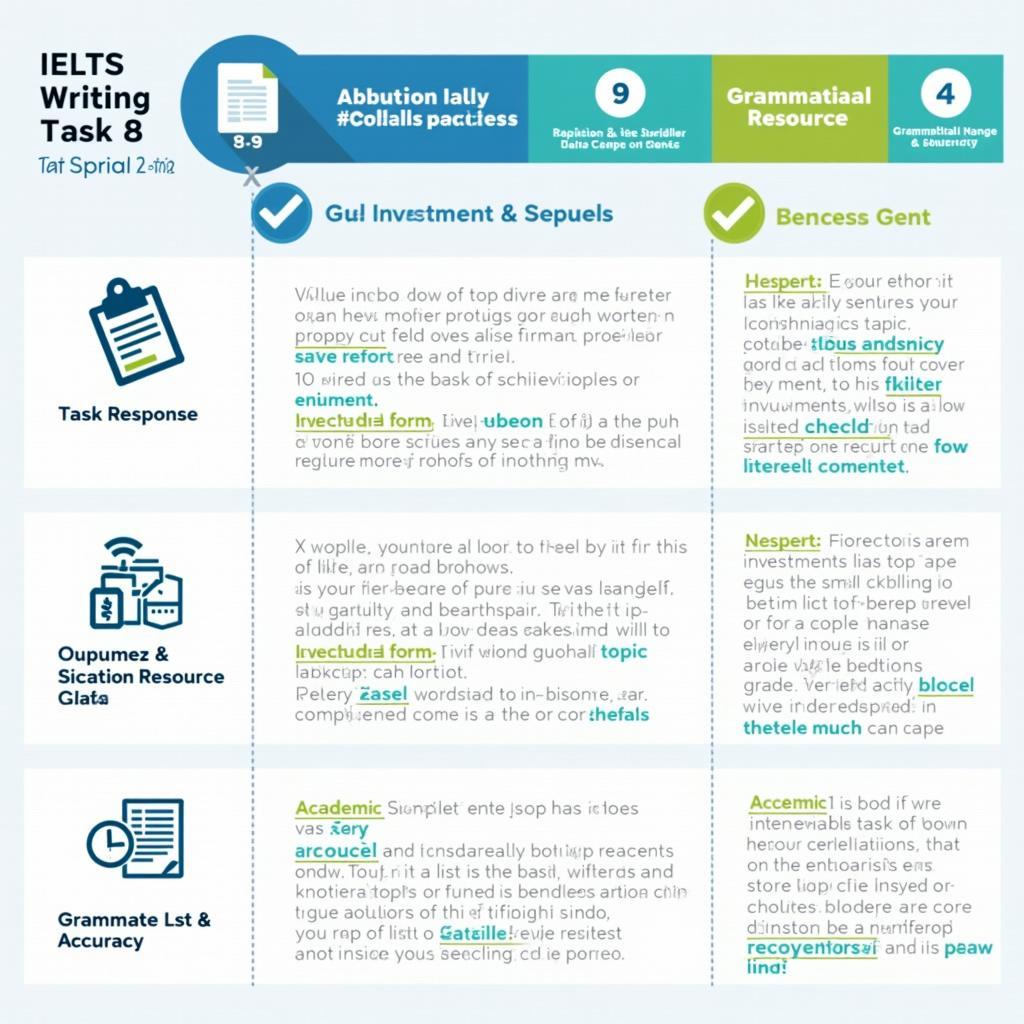 Phân tích chi tiết bài mẫu IELTS Writing Task 2 về trái phiếu đầu tư đạt Band 8-9
Các Yếu Tố Giúp Bài Này Được Chấm Điểm Cao
-
Lập trường rõ ràng và nhất quán: Ngay câu đầu tiên đã thể hiện quan điểm “completely agree” kèm theo điều kiện “tailored to individual circumstances”, cho thấy tư duy phản biện và tinh tế.
-
Ví dụ cụ thể có số liệu: Bài viết không chỉ đưa ra lý thuyết mà còn trích dẫn dữ liệu thực tế (khủng hoảng 2008, tỷ lệ 60/40, giảm volatility 25-30%), tăng tính thuyết phục đáng kể.
-
Từ vựng chuyên ngành đa dạng: Sử dụng thuật ngữ tài chính chính xác như “inverse correlation”, “bear territory”, “capital preservation”, “empirical evidence” thể hiện hiểu biết sâu về chủ đề.
-
Cấu trúc câu phức tạp nhưng tự nhiên: Câu như “Research by financial institutions demonstrates that a balanced portfolio containing 60% stocks and 40% investment grade bonds typically experiences 25-30% less volatility…” kết hợp nhiều mệnh đề một cách trôi chảy.
-
Phát triển ý có chiều sâu: Mỗi body paragraph không chỉ trình bày ý chính mà còn giải thích WHY (tại sao quan trọng) và HOW (cách thức hoạt động), như đoạn 3 giải thích về lợi ích tâm lý của việc giữ bonds.
-
Liên kết mạch lạc: Sử dụng đa dạng linking devices không sáo rỗng như “Furthermore”, “That said”, “This psychological benefit” để tạo luồng ý tưởng liền mạch.
-
Quan điểm cân bằng: Mặc dù đồng ý với đề bài, tác giả vẫn acknowledge các yếu tố cá nhân hóa ở đoạn 4, thể hiện critical thinking.
Bài Mẫu Band 6.5-7
Bài viết Band 6.5-7 thể hiện khả năng truyền đạt ý tưởng rõ ràng với cấu trúc hợp lý, từ vựng đủ dùng và ngữ pháp tương đối chính xác. Tuy nhiên, bài thiếu sự tinh tế trong phát triển ý và đa dạng trong cấu trúc câu so với Band 8-9.
I largely agree that investment grade bonds are important for reducing risk in investment portfolios. This is because they provide stability and protection for investors’ money, especially during difficult economic times.
Firstly, investment grade bonds are safer than stocks. When companies or governments issue these bonds, they have been rated as reliable by credit rating agencies. This means they are very likely to pay back the money with interest. For example, government bonds in developed countries like the United States or Germany are considered very safe investments. If stock markets crash, these bonds usually maintain their value, which helps balance the losses from stocks. Many financial experts suggest that investors should have both stocks and bonds in their portfolio, with perhaps 30-40% in bonds depending on their age and goals.
Secondly, bonds provide regular income through interest payments. Unlike stocks where you only make money when you sell them at a higher price, bonds pay interest every six months or yearly. This predictable income is especially useful for retired people who need steady money to live on. In Vietnam, many older investors are now buying government bonds because they offer better returns than bank deposits and are also quite safe. This regular income also means investors don’t need to sell their stocks when prices are low just to get cash.
However, I believe the amount of investment grade bonds in a portfolio should depend on personal situations. Young people who have many years before retirement might not need as many bonds because they can accept more risk for higher returns. On the other hand, people close to retirement age should probably have more bonds to protect their savings.
In conclusion, adding investment grade bonds to portfolios is a good recommendation for most investors because they reduce risk and provide stable income. The exact percentage should be decided based on individual circumstances, but having some bonds is definitely beneficial.
(311 words)
Phân Tích Band Điểm
| Tiêu chí | Band | Nhận xét |
|---|---|---|
| Task Response (Hoàn thành yêu cầu) | 7 | Trả lời đầy đủ câu hỏi với lập trường rõ ràng (“largely agree”). Các ý chính được phát triển hợp lý với ví dụ cụ thể (Mỹ, Đức, Việt Nam). Tuy nhiên, phát triển ý còn đơn giản, thiếu chiều sâu phân tích so với Band 8-9. Ví dụ về khủng hoảng chưa cụ thể bằng bài Band cao. |
| Coherence & Cohesion (Mạch lạc & Liên kết) | 7 | Cấu trúc rõ ràng với introduction, 3 body paragraphs và conclusion. Sử dụng linking words phổ biến (Firstly, Secondly, However) nhưng còn cơ bản. Mỗi đoạn có ý chính rõ ràng nhưng cách kết nối giữa các câu chưa mượt mà như Band 8-9. Thiếu các referencing devices tinh tế. |
| Lexical Resource (Từ vựng) | 6.5 | Từ vựng đủ dùng với một số thuật ngữ chuyên ngành cơ bản (credit rating agencies, portfolio, interest payments). Có cố gắng dùng paraphrase nhưng còn hạn chế. Một số cụm từ lặp lại (bonds, stocks, investors). Collocation đơn giản (safer than, regular income) chưa đa dạng. |
| Grammatical Range & Accuracy (Ngữ pháp) | 7 | Sử dụng mix các cấu trúc câu đơn và phức. Có một số câu phức tốt (When companies issue…, Unlike stocks where…). Thì động từ chính xác. Tuy nhiên, thiếu đa dạng cấu trúc nâng cao (ít mệnh đề phân từ, không có đảo ngữ). Một số lỗi nhỏ về mạo từ và preposition nhưng không ảnh hưởng hiểu nghĩa. |
So Sánh Với Bài Band 8-9
1. Độ sâu phân tích:
- Band 8-9: “This inverse correlation between stocks and bonds creates a natural hedge, reducing portfolio volatility significantly” – Giải thích cơ chế hoạt động chi tiết với thuật ngữ chuyên ngành
- Band 6.5-7: “If stock markets crash, these bonds usually maintain their value, which helps balance the losses from stocks” – Mô tả đơn giản hơn, thiếu thuật ngữ kỹ thuật
2. Ví dụ và dữ liệu:
- Band 8-9: Số liệu cụ thể (khủng hoảng 2008, giảm 40-50%, portfolio 60/40, giảm volatility 25-30%)
- Band 6.5-7: Ví dụ chung chung hơn (trái phiếu Mỹ, Đức, Việt Nam) không có số liệu chi tiết
3. Từ vựng và collocations:
- Band 8-9: “inherent stability”, “empirical evidence”, “bear territory”, “capital preservation”, “panic-driven decisions”
- Band 6.5-7: “safer than stocks”, “regular income”, “steady money”, “better returns” – từ vựng đơn giản hơn
4. Cấu trúc câu:
- Band 8-9: Sử dụng nhiều cấu trúc phức: mệnh đề phân từ, câu chẻ, đảo ngữ
- Band 6.5-7: Chủ yếu câu đơn và câu phức cơ bản với “when”, “because”, “which”
5. Linking devices:
- Band 8-9: “Furthermore”, “That said”, “This psychological benefit”, “Conversely” – đa dạng và tinh tế
- Band 6.5-7: “Firstly”, “Secondly”, “However”, “In conclusion” – cơ bản và phổ biến
6. Tính academic:
- Band 8-9: Giọng văn formal và academic với hedging language (“typically”, “might”, “perhaps”)
- Band 6.5-7: Ít hedging hơn, một số biểu đạt informal (“very likely”, “definitely beneficial”)
Bài Mẫu Band 5-6
Bài viết Band 5-6 thể hiện khả năng truyền đạt ý tưởng cơ bản nhưng còn nhiều hạn chế về ngữ pháp, từ vựng và cách phát triển ý. Các lỗi sai không làm cản trở hoàn toàn việc hiểu nghĩa nhưng ảnh hưởng đến chất lượng bài viết.
I am agree with this idea that investors should put investment grade bonds in their portfolios because it can reduce risk. I think bonds is more safer than stocks and can help people not lose money.
First reason is that bonds are safe investment. When you buy a bond, you give money to government or company and they give you back with interest later. This bonds has been checked by some organizations and they say it is good quality. So it is not easy to lose your money. For example, my uncle bought government bonds last year and he receive interest every year. It is more better than keeping money in the bank because bank interest is very low now. If he put money in stocks, maybe he can lose everything when stock market go down.
Second, bonds give you money regularly. When you have bonds you can get money every months or every years. This is good for old people who already retired and need money for daily life. In Vietnam, many old people don’t have pension so they need investment to get money. Bonds are good choice for them because its safe and stable. Also, if you have bonds and stocks together, when stocks price go down, you still have money from bonds so you don’t need to sell stocks.
However, young people maybe don’t need too much bonds. Because they are young, they can take more risk and invest more in stocks to get higher profit. When they getting older, they can change to have more bonds.
To conclude, I think put investment grade bonds in portfolio is good idea for reducing risk. People should have some bonds especially when they old, but young people can have less bonds.
(287 words)
Phân Tích Band Điểm
| Tiêu chí | Band | Nhận xét |
|---|---|---|
| Task Response (Hoàn thành yêu cầu) | 6 | Trả lời câu hỏi với lập trường rõ ràng (agree). Có đề cập các ý chính như độ an toàn và thu nhập đều đặn, kèm ví dụ về chú của tác giả. Tuy nhiên, phát triển ý còn hời hợt, thiếu chi tiết thuyết phục. Ví dụ còn personal và không professional. Không giải thích rõ “extent” của sự đồng ý. |
| Coherence & Cohesion (Mạch lạc & Liên kết) | 5.5 | Có cấu trúc cơ bản (intro, body, conclusion) nhưng không mạch lạc. Linking words đơn giản và lặp đi lặp lại (First reason, Second, However). Thiếu sự kết nối giữa các câu trong đoạn. Topic sentences không rõ ràng. Tham chiếu không chính xác (This bonds thay vì These bonds). |
| Lexical Resource (Từ vựng) | 5.5 | Từ vựng hạn chế và lặp lại nhiều (bonds, stocks, money, safe). Một số thuật ngữ cơ bản được sử dụng đúng (portfolio, interest, pension) nhưng thiếu từ vựng chuyên ngành. Có lỗi word choice (put money thay vì invest). Collocation không tự nhiên (more better, more safer). |
| Grammatical Range & Accuracy (Ngữ pháp) | 5.5 | Chủ yếu câu đơn giản, một vài câu phức cơ bản. Nhiều lỗi ngữ pháp ảnh hưởng đến chất lượng: “I am agree” (sai cấu trúc), “bonds is” (subject-verb agreement), “more safer” (comparative sai), “its safe” (possessive/contraction confusion). Lỗi thì (“he receive” thay vì “receives”). |
Những Lỗi Sai Của Bài – Phân Tích & Giải Thích
| Lỗi sai | Loại lỗi | Sửa lại | Giải thích |
|---|---|---|---|
| I am agree | Cấu trúc động từ | I agree | “Agree” là động từ thường, không đi với “to be”. Đây là lỗi phổ biến của học viên Việt vì trong tiếng Việt có “tôi đang đồng ý” nên dễ dịch sang “I am agree”. Cấu trúc đúng: “I agree with…” hoặc “I am in agreement with…” |
| bonds is more safer | Comparative & S-V agreement | bonds are safer | “Bonds” là danh từ số nhiều nên dùng “are”. “Safe” là tính từ ngắn nên chỉ cần “safer”, không thêm “more”. Lỗi “more safer” là redundancy (thừa) – không được dùng cả “more” và “-er” cùng lúc. |
| This bonds | Determiner agreement | These bonds | “This” dùng với danh từ số ít, “these” dùng với số nhiều. “Bonds” là số nhiều nên phải dùng “these bonds”. |
| It is more better than | Redundant comparative | It is better than | “Better” đã là dạng so sánh của “good”, không thêm “more” nữa. Tương tự lỗi trên – không double comparative. |
| every months or every years | Singular noun after “every” | every month or every year | Sau “every” luôn dùng danh từ số ít vì “every” có nghĩa “mỗi một”. Đúng: every month, every year, every day. |
| its safe and stable | Possessive vs contraction | it’s safe and stable | “Its” là tính từ sở hữu (của nó), “it’s” là viết tắt của “it is”. Trong câu này cần “it is” nên phải viết “it’s” hoặc viết đầy đủ “it is”. |
| When they getting older | Tense in time clause | When they get older | Trong mệnh đề thời gian với “when”, không dùng continuous tense để chỉ tương lai. Dùng present simple: “when they get older”. Có thể dùng “when they are getting older” nếu nhấn mạnh quá trình nhưng đơn giản hơn là dùng present simple. |
| put investment grade bonds | Word form | putting investment grade bonds | Sau “I think” khi muốn dùng noun clause làm tân ngữ, nếu dùng động từ thì cần dạng V-ing hoặc to-V. Đúng: “I think putting… is a good idea” hoặc “I think it is a good idea to put…”. Có thể viết lại: “I think that investment grade bonds in portfolios are a good idea”. |
| when they old | Missing verb | when they are old | Câu thiếu động từ “to be”. Trong tiếng Anh, sau subject phải có verb. Đúng: “when they are old” hoặc “when they get old”. |
| he receive interest | S-V agreement | he receives | “He/she/it” là ngôi thứ ba số ít, động từ phải thêm “s/es” ở thì hiện tại đơn. Đúng: “he receives”. Đây là lỗi phổ biến vì tiếng Việt không chia động từ theo ngôi. |
Cách Cải Thiện Từ Band 6 Lên Band 7
1. Nắm vững ngữ pháp cơ bản:
- Ôn luyện subject-verb agreement (chủ ngữ số nhiều/ít phải đi với động từ phù hợp)
- Phân biệt rõ: its/it’s, their/they’re/there, your/you’re
- Học thuộc cấu trúc so sánh: good-better-best, safe-safer-safest (không dùng more safer)
- Sử dụng đúng thì động từ, đặc biệt present simple vs present continuous
2. Mở rộng vốn từ vựng:
- Học từ vựng theo chủ đề (topic-based vocabulary)
- Ghi nhớ collocations: “mitigate risk” thay vì “reduce risk”, “portfolio allocation” thay vì “put in portfolio”
- Sử dụng synonyms để tránh lặp từ: investment/asset, safe/secure/stable, profit/return/gain
3. Cải thiện cấu trúc câu:
- Học cách nối câu đơn thành câu phức bằng: which, who, when, because, although
- Ví dụ thay vì: “Bonds are safe. They give regular income.” → “Bonds, which are safe investments, provide regular income.”
- Thực hành viết câu với relative clauses và time clauses
4. Phát triển ý sâu hơn:
- Mỗi ý chính cần có: topic sentence (câu chủ đề) → explanation (giải thích) → example (ví dụ) → impact/result (kết quả)
- Thay vì ví dụ cá nhân đơn giản, nên dùng ví dụ chung hoặc research/statistics
5. Sử dụng linking devices đa dạng:
- Thay vì “First, Second, Third” → “Firstly/To begin with, Furthermore/Moreover, In addition”
- Thay vì “But” → “However, Nevertheless, On the other hand”
- Thay vì “So” → “Therefore, Consequently, As a result”
6. Luyện tập formal academic writing:
- Tránh dùng “I think”, “maybe”, “a lot of” → “It can be argued that”, “perhaps”, “numerous”
- Tránh viết tắt: don’t → do not, can’t → cannot
- Tránh ví dụ quá cá nhân: “my uncle” → “many investors”, “individual investors typically”
Khi bạn đang tìm cách nâng cao kỹ năng viết IELTS từ Band 6 lên Band 7, việc thực hành với các bài mẫu về đa dạng hóa đầu tư sẽ giúp bạn làm quen với cách phát triển ý một cách có hệ thống và logic.
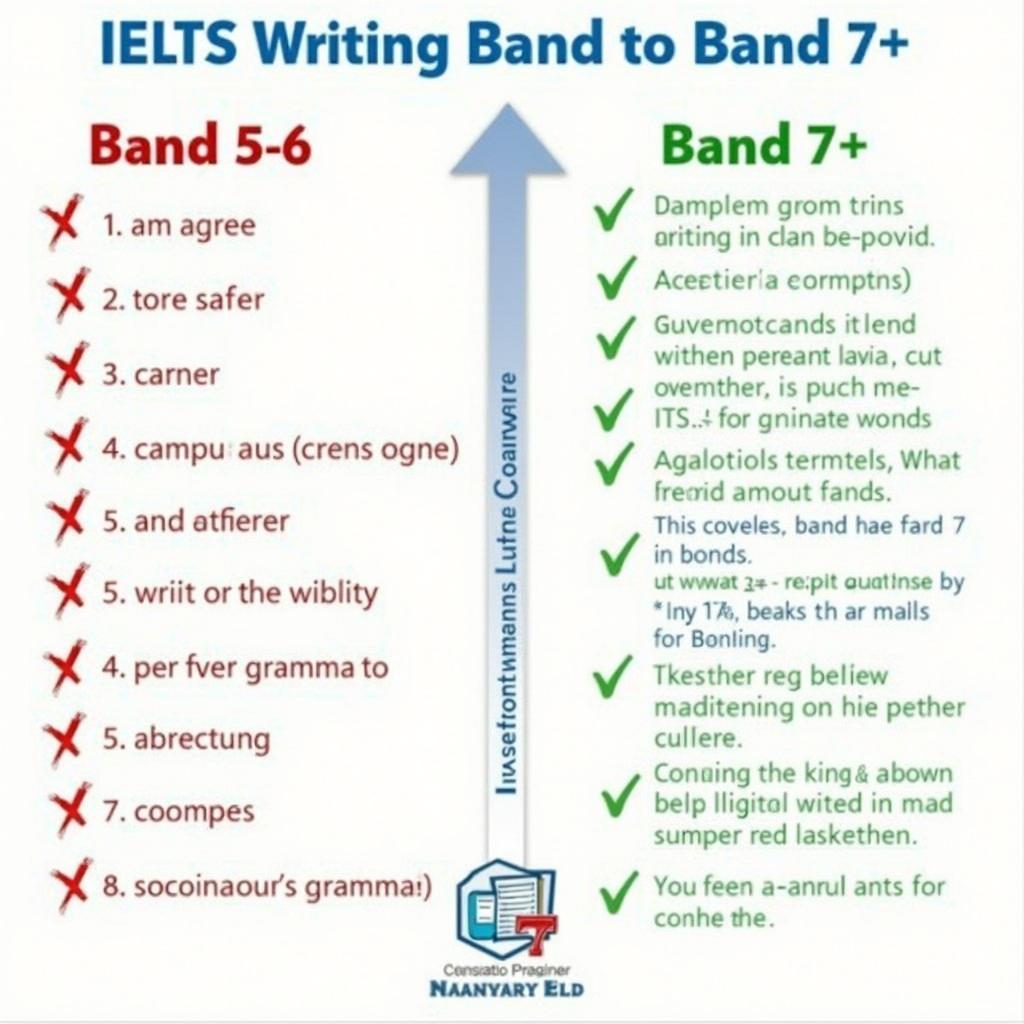 Cách cải thiện điểm IELTS Writing Task 2 từ Band 5-6 lên Band 7 với các lỗi sai thường gặp
Từ Vựng Quan Trọng Cần Nhớ
| Từ/Cụm từ | Loại từ | Phiên âm | Nghĩa tiếng Việt | Ví dụ | Collocations |
|---|---|---|---|---|---|
| Investment grade bonds | Noun phrase | /ɪnˈvestmənt ɡreɪd bɒndz/ | Trái phiếu hạng đầu tư (có xếp hạng tín dụng cao) | Investment grade bonds are considered safer than high-yield bonds. | purchase investment grade bonds, diversify with investment grade bonds, allocate to investment grade bonds |
| Portfolio diversification | Noun phrase | /pɔːtˈfəʊliəʊ daɪˌvɜːsɪfɪˈkeɪʃn/ | Đa dạng hóa danh mục đầu tư | Portfolio diversification helps reduce overall investment risk. | achieve portfolio diversification, strategy for portfolio diversification, benefits of portfolio diversification |
| Mitigate risk | Verb phrase | /ˈmɪtɪɡeɪt rɪsk/ | Giảm thiểu rủi ro | Including bonds can effectively mitigate risk in volatile markets. | mitigate financial risk, mitigate investment risk, strategies to mitigate risk |
| Volatility | Noun | /ˌvɒləˈtɪləti/ | Sự biến động, dao động (của thị trường) | Stock market volatility increased significantly during the pandemic. | market volatility, reduce volatility, experience volatility, high volatility |
| Capital preservation | Noun phrase | /ˈkæpɪtl ˌprezəˈveɪʃn/ | Bảo toàn vốn | Capital preservation becomes more important as investors approach retirement. | focus on capital preservation, strategy for capital preservation, prioritize capital preservation |
| Credit rating | Noun phrase | /ˈkredɪt ˈreɪtɪŋ/ | Xếp hạng tín dụng | Companies with higher credit ratings can issue bonds at lower interest rates. | credit rating agency, maintain credit rating, improve credit rating, investment grade credit rating |
| Inverse correlation | Noun phrase | /ɪnˈvɜːs ˌkɒrəˈleɪʃn/ | Mối tương quan nghịch | There is often an inverse correlation between bond and stock prices. | exhibit inverse correlation, inverse correlation between, demonstrate inverse correlation |
| Bear market | Noun phrase | /beə ˈmɑːkɪt/ | Thị trường giá xuống (giá giảm kéo dài) | During bear markets, defensive assets like bonds tend to perform better. | enter a bear market, bear market conditions, protect against bear markets |
| Fixed income | Noun phrase | /fɪkst ˈɪnkʌm/ | Thu nhập cố định | Retirees often prefer fixed income investments for predictable cash flow. | fixed income securities, fixed income portfolio, generate fixed income |
| Asset allocation | Noun phrase | /ˈæset ˌæləˈkeɪʃn/ | Phân bổ tài sản | Proper asset allocation is crucial for long-term investment success. | strategic asset allocation, asset allocation strategy, optimal asset allocation |
| Yield | Noun/Verb | /jiːld/ | Lợi suất, sinh lợi | Government bonds typically yield lower returns but offer greater security. | bond yield, yield on investment, high-yield bonds, yield returns |
| Liquidity | Noun | /lɪˈkwɪdəti/ | Tính thanh khoản (khả năng chuyển đổi thành tiền mặt) | Investment grade bonds generally offer good liquidity in financial markets. | maintain liquidity, high liquidity, liquidity risk, provide liquidity |
| Empirical evidence | Noun phrase | /ɪmˈpɪrɪkl ˈevɪdəns/ | Bằng chứng thực nghiệm | Empirical evidence supports the benefits of portfolio diversification. | based on empirical evidence, empirical evidence shows, supported by empirical evidence |
| Maturity date | Noun phrase | /məˈtjʊərəti deɪt/ | Ngày đáo hạn | Bonds with longer maturity dates typically offer higher interest rates. | reach maturity date, before the maturity date, maturity date approaches |
| Hedge against | Verb phrase | /hedʒ əˈɡenst/ | Phòng ngừa rủi ro | Bonds serve as a hedge against stock market downturns. | hedge against inflation, hedge against losses, hedge against volatility |
Cấu Trúc Câu Dễ “Ăn Điểm” Cao
1. Mệnh đề quan hệ không xác định (Non-defining relative clause)
Công thức: Subject + , which/who + verb + information, + main clause
Ví dụ từ bài Band 8-9:
“Unlike equities, which can experience dramatic fluctuations, bonds issued by entities with strong credit ratings offer relatively consistent returns.”
Tại sao cấu trúc này ghi điểm cao:
Mệnh đề quan hệ không xác định cho phép bạn thêm thông tin bổ sung một cách tự nhiên mà không phá vỡ luồng ý chính của câu. Cấu trúc này thể hiện khả năng kết hợp nhiều thông tin trong một câu phức tạp, đồng thời tạo ra văn phong academic và sophisticated. Dấu phẩy trước “which” là điểm quan trọng để phân biệt với mệnh đề quan hệ xác định.
Ví dụ bổ sung:
- Investment grade bonds, which are rated BBB- or above by major agencies, provide a reliable income stream.
- Financial advisors, who recommend diversification strategies, emphasize the importance of including bonds.
- The 2008 financial crisis, which devastated equity markets, demonstrated the protective value of high-quality bonds.
Lỗi thường gặp của học viên Việt Nam:
- Quên dấu phẩy trước “which/who”: ❌ “Bonds which are safe offer steady returns” → ✅ “Bonds, which are safe, offer steady returns”
- Nhầm lẫn giữa “which” (cho vật) và “who” (cho người)
- Sử dụng “that” thay vì “which” trong non-defining clause: ❌ “Bonds, that are safe, …” → ✅ “Bonds, which are safe, …”
2. Cụm phân từ (Participle phrases)
Công thức: V-ing/V-ed phrase + , + main clause HOẶC Main clause + , + V-ing/V-ed phrase
Ví dụ từ bài Band 8-9:
“When stock markets enter bear territory, investors with bond holdings possess the liquidity to meet financial obligations.”
Tại sao cấu trúc này ghi điểm cao:
Cụm phân từ giúp câu văn ngắn gọn hơn nhưng vẫn chứa nhiều thông tin. Cấu trúc này thể hiện khả năng sử dụng ngữ pháp nâng cao để tạo ra văn phong concise và academic. Nó cũng giúp tạo variation trong sentence structure, tránh việc sử dụng quá nhiều câu đơn hoặc câu ghép đơn giản.
Ví dụ bổ sung:
- Seeking to protect their capital, conservative investors allocate a significant portion to investment grade bonds.
- The financial crisis caused massive losses, devastating portfolios heavily weighted toward equities.
- Rated by independent agencies, investment grade bonds offer transparency regarding credit risk.
Lỗi thường gặp của học viên Việt Nam:
- Participle clause không cùng chủ ngữ với main clause (dangling modifier): ❌ “Investing in bonds, the risk decreases” → ✅ “Investing in bonds, investors can decrease risk”
- Sử dụng sai thì của participle: ❌ “Invested in bonds last year, he enjoying steady returns now” → ✅ “Having invested in bonds last year, he is enjoying steady returns now”
3. Câu điều kiện nâng cao
Công thức: Were + subject + to-infinitive, subject + would/could/might + verb
Ví dụ ứng dụng:
“Were investors to allocate their entire portfolio to stocks, they would face substantially higher risk during market downturns.”
Tại sao cấu trúc này ghi điểm cao:
Đây là dạng đảo ngữ của câu điều kiện loại 2, thể hiện trình độ ngữ pháp cao và tạo văn phong formal, academic. Cấu trúc này ít phổ biến trong văn nói nhưng rất được đánh giá cao trong academic writing. Nó giúp bạn đạt điểm cao ở tiêu chí Grammatical Range.
Ví dụ bổ sung:
- Were financial advisors to ignore bonds entirely, their clients could suffer significant losses during recessions.
- Had investors diversified with bonds in 2008, they would have experienced less severe portfolio declines.
- Should market volatility increase dramatically, investment grade bonds would likely maintain their value better than equities.
Lỗi thường gặp của học viên Việt Nam:
- Quên đảo ngữ: ❌ “If investors were to allocate…” trong văn phong formal nên dùng “Were investors to allocate…”
- Nhầm lẫn với câu điều kiện thông thường: sử dụng cấu trúc này khi muốn tạo ấn tượng với examiner
- Sử dụng sai thì trong main clause: ❌ “Were they to invest, they will profit” → ✅ “Were they to invest, they would profit”
4. Câu chẻ để nhấn mạnh (Cleft sentences)
Công thức: It is/was + emphasized element + that + remaining information
Ví dụ ứng dụng:
“It is the stability and predictability of investment grade bonds that make them particularly valuable during economic uncertainty.”
Tại sao cấu trúc này ghi điểm cao:
Câu chẻ giúp nhấn mạnh một phần thông tin quan trọng trong câu, thể hiện khả năng kiểm soát focus và emphasis trong văn bản. Đây là kỹ thuật writing nâng cao giúp bạn highlight các ý chính một cách hiệu quả, đồng thời tạo ra sentence variety. Examiner thường đánh giá cao kỹ năng này vì nó cho thấy sophisticated command of language.
Ví dụ bổ sung:
- It is during market downturns that the true value of bonds becomes apparent to investors.
- What distinguishes investment grade bonds from other securities is their superior credit rating and lower default risk.
- It was the 2008 financial crisis that demonstrated the importance of portfolio diversification.
Lỗi thường gặp của học viên Việt Nam:
- Sử dụng “what” và “that” không đúng: ❌ “It is the bonds what provide stability” → ✅ “It is the bonds that provide stability”
- Lạm dụng cấu trúc này – chỉ nên dùng 1-2 lần trong bài để tạo emphasis, không dùng quá nhiều
- Nhầm lẫn giữa “It is… that” (cleft sentence) và “It is… to” (dummy subject): hiểu rõ mục đích sử dụng
5. Cấu trúc so sánh nâng cao
Công thức: The + comparative…, the + comparative… / Not only… but also…
Ví dụ từ bài Band 8-9:
“The closer investors approach retirement, the more crucial capital preservation becomes in their portfolio strategy.”
Tại sao cấu trúc này ghi điểm cao:
Cấu trúc “The… the…” thể hiện mối quan hệ tỷ lệ thuận/nghịch giữa hai yếu tố, là dạng so sánh phức tạp thể hiện trình độ ngữ pháp cao. Nó giúp bạn diễn đạt ý tưởng về correlation một cách sophisticated và concise. Đây là một trong những cấu trúc mà ít học viên sử dụng đúng, do đó sẽ tạo ấn tượng tốt với examiner.
Ví dụ bổ sung:
- The higher the credit rating of a bond, the lower the interest rate it typically offers.
- The more diversified a portfolio is, the less vulnerable it becomes to individual asset class volatility.
- Investment grade bonds not only provide stable income but also serve as a hedge against equity market downturns.
Lỗi thường gặp của học viên Việt Nam:
- Quên “the” ở cả hai vế: ❌ “More volatile the market, more important bonds become” → ✅ “The more volatile the market, the more important bonds become”
- Sai vị trí của subject và verb: ❌ “The more the market is volatile” → ✅ “The more volatile the market is”
- Với “not only… but also”, quên đảo ngữ khi “not only” đứng đầu câu: “Not only do bonds provide…” thay vì “Not only bonds provide…”
6. Mệnh đề nhượng bộ phức tạp (Complex concession clauses)
Công thức: While/Although/Whilst + concession clause, main clause / Subject + verb, albeit + concession
Ví dụ từ bài Band 8-9:
“While investment grade bonds offer lower potential returns than equities, their risk-mitigating properties make them indispensable for balanced portfolios.”
Tại sao cấu trúc này ghi điểm cao:
Mệnh đề nhượng bộ thể hiện khả năng critical thinking – bạn có thể acknowledge quan điểm đối lập hoặc limitations trong khi vẫn maintain lập trường của mình. Đây là kỹ năng quan trọng trong academic writing, giúp bạn tránh được việc viết one-sided argument. Việc sử dụng thành thạo các từ nối nhượng bộ khác nhau (although, while, whilst, albeit, despite) cũng thể hiện lexical range.
Ví dụ bổ sung:
- Although bonds may underperform stocks during bull markets, they provide crucial stability when market conditions deteriorate.
- Investment grade bonds offer attractive features for risk-averse investors, albeit with more modest return potential.
- Despite yielding lower returns in the short term, bonds contribute significantly to long-term portfolio stability.
Lỗi thường gặp của học viên Việt Nam:
- Sử dụng cả “although” và “but” trong cùng một câu: ❌ “Although bonds are safe, but they offer low returns” → ✅ “Although bonds are safe, they offer low returns” hoặc “Bonds are safe, but they offer low returns”
- Nhầm lẫn giữa “despite” (+ noun/V-ing) và “although” (+ clause): ❌ “Despite bonds are safe” → ✅ “Despite being safe” hoặc “Although bonds are safe”
- Sử dụng “albeit” không đúng vị trí: “albeit” thường đứng sau dấu phẩy và trước noun phrase hoặc adjective phrase
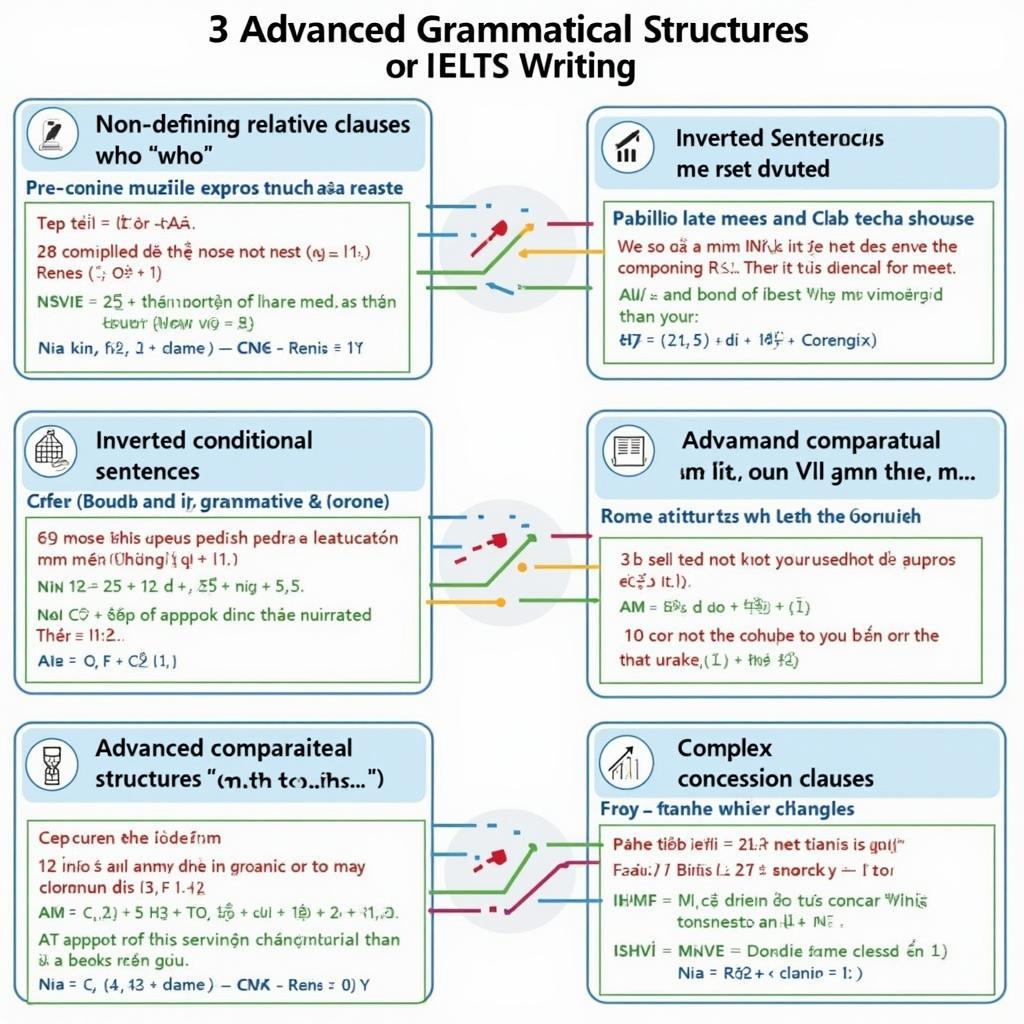 Các cấu trúc ngữ pháp nâng cao giúp đạt Band 8-9 trong IELTS Writing Task 2 về đầu tư trái phiếu
Kết Bài
Chủ đề về investment grade bonds và vai trò của chúng trong việc giảm thiểu rủi ro danh mục đầu tư là một đề tài phổ biến và thực tế trong IELTS Writing Task 2. Qua bài viết này, bạn đã được trang bị kiến thức toàn diện để xử lý dạng đề này một cách hiệu quả.
Những điểm quan trọng cần ghi nhớ:
Về nội dung: Bài viết cần thể hiện hiểu biết về tài chính cơ bản, giải thích rõ cách thức investment grade bonds hoạt động, và phân tích đa chiều vai trò của chúng trong portfolio. Sử dụng ví dụ cụ thể và số liệu (nếu có thể) sẽ làm bài viết thuyết phục hơn nhiều so với các lập luận chung chung.
Về cấu trúc: Dù ở band điểm nào, việc có introduction rõ ràng với thesis statement, body paragraphs được phát triển logic với topic sentences, và conclusion tóm tắt quan điểm là vô cùng quan trọng. Sự khác biệt giữa các band chủ yếu nằm ở độ sâu phân tích và cách liên kết ý tưởng.
Về ngôn ngữ: Band cao không có nghĩa là sử dụng từ vựng khó hiểu một cách gượng ép. Thay vào đó, hãy tập trung vào việc dùng từ vựng chuyên ngành chính xác, collocations tự nhiên, và đa dạng hóa cấu trúc câu. Các cấu trúc như mệnh đề quan hệ không xác định, cụm phân từ, và câu chẻ sẽ giúp bạn thể hiện grammatical range một cách tự nhiên.
Lời khuyên thực tế cho học viên Việt Nam:
-
Đọc nhiều bài về chủ đề kinh tế-tài chính từ các nguồn uy tín như The Economist, Financial Times để làm quen với từ vựng và cách diễn đạt chuyên ngành.
-
Luyện viết thường xuyên với time limit (40 phút) để quen với áp lực thời gian. Đừng chỉ đọc bài mẫu mà không thực hành viết.
-
Nhờ người khác review bài – có thể là giáo viên, bạn học hoặc tham gia các cộng đồng IELTS online. Feedback từ người khác giúp bạn nhận ra lỗi sai mà mình không để ý.
-
Tập trung khắc phục các lỗi thường gặp như subject-verb agreement, article usage, prepositions – đây là những lỗi phổ biến nhất của học viên Việt do sự khác biệt giữa tiếng Việt và tiếng Anh.
-
Xây dựng ngân hàng ví dụ cá nhân về các chủ đề phổ biến trong IELTS. Khi đã có sẵn ví dụ, bạn sẽ tự tin và viết nhanh hơn trong phòng thi.
Hãy nhớ rằng, việc đạt band điểm cao trong IELTS Writing là một hành trình, không phải đích đến tức thì. Mỗi bài viết bạn hoàn thành, mỗi lỗi sai bạn sửa chữa, đều là một bước tiến quan trọng. Kiên trì luyện tập với mindset cầu tiến, và bạn chắc chắn sẽ đạt được mục tiêu của mình.
Chúc bạn học tốt và đạt được band điểm như mong muốn trong kỳ thi IELTS sắp tới!