
Mở Bài
Chủ đề biến đổi khí hậu và tác động của nó đến nông nghiệp, đặc biệt là sản xuất cà phê toàn cầu, đã trở thành một đề tài xuất hiện thường xuyên trong các kỳ thi IELTS Reading những năm gần đây. Với tư cách là một giảng viên IELTS với hơn 20 năm kinh nghiệm, tôi nhận thấy các đề thi về biến đổi khí hậu và nông nghiệp bền vững chiếm khoảng 15-20% các bài đọc trong phần thi Reading.
Trong bài viết này, bạn sẽ được trải nghiệm một đề thi IELTS Reading hoàn chỉnh gồm 3 passages với độ khó tăng dần từ Easy đến Hard, hoàn toàn phù hợp với format thi thật. Bạn sẽ học được cách xử lý 40 câu hỏi với 7 dạng bài khác nhau, từ True/False/Not Given, Multiple Choice, đến Matching Headings và Summary Completion. Mỗi câu hỏi đều có đáp án chi tiết kèm giải thích về vị trí thông tin, kỹ thuật paraphrase và cách tư duy để tìm ra đáp án đúng.
Đề thi này phù hợp cho học viên từ band 5.0 trở lên, giúp bạn làm quen với chủ đề khoa học môi trường và nâng cao kỹ năng đọc hiểu học thuật – một yếu tố then chốt để đạt band điểm cao trong IELTS Reading.
1. Hướng Dẫn Làm Bài IELTS Reading
Tổng Quan Về IELTS Reading Test
IELTS Reading Test kéo dài 60 phút với 3 passages và tổng cộng 40 câu hỏi. Điểm đặc biệt là bạn không có thời gian riêng để chuyển đáp án sang phiếu trả lời, vì vậy kỹ năng quản lý thời gian là vô cùng quan trọng.
Phân bổ thời gian khuyến nghị:
- Passage 1: 15-17 phút (độ khó thấp nhất)
- Passage 2: 18-20 phút (độ khó trung bình)
- Passage 3: 23-25 phút (độ khó cao nhất)
Luôn dành 2-3 phút cuối để kiểm tra lại đáp án, đặc biệt chú ý đến số lượng từ yêu cầu và chính tả.
Các Dạng Câu Hỏi Trong Đề Này
Đề thi mẫu này bao gồm 7 dạng câu hỏi phổ biến nhất trong IELTS Reading:
- True/False/Not Given – Kiểm tra khả năng xác định thông tin chính xác
- Multiple Choice – Đánh giá kỹ năng hiểu ý chính và chi tiết
- Matching Headings – Yêu cầu nắm bắt ý chính của từng đoạn
- Summary Completion – Kiểm tra khả năng tìm từ vựng chính xác
- Sentence Completion – Đánh giá kỹ năng paraphrase
- Matching Features – Kiểm tra khả năng liên kết thông tin
- Short-answer Questions – Yêu cầu trả lời ngắn gọn và chính xác
 Học viên đang luyện thi IELTS Reading với chủ đề biến đổi khí hậu và sản xuất cà phê toàn cầu
2. IELTS Reading Practice Test
PASSAGE 1 – The Coffee Belt and Changing Climate Patterns
Độ khó: Easy (Band 5.0-6.5)
Thời gian đề xuất: 15-17 phút
Coffee is one of the world’s most beloved beverages, with over 2.25 billion cups consumed daily across the globe. However, the delicate balance required to grow high-quality coffee beans is increasingly threatened by climate change. The majority of the world’s coffee comes from a narrow band around the equator known as the “Coffee Belt” or “Bean Belt”, which extends approximately 30 degrees north and south of the equator. This region provides the ideal combination of temperature, rainfall, and altitude that coffee plants need to thrive.
Arabica coffee, which accounts for about 60% of global coffee production, is particularly vulnerable to temperature fluctuations. These plants grow best at temperatures between 18°C and 21°C and require consistent rainfall patterns. In contrast, Robusta coffee can tolerate warmer conditions and is generally more resilient, but even this hardier variety faces challenges as temperatures continue to rise. Scientific studies have shown that a temperature increase of just 2°C could reduce the land suitable for coffee cultivation by up to 50% by 2050.
The impact of climate change on coffee production manifests in several ways. First, rising temperatures directly affect the physiological processes of coffee plants, including photosynthesis and flowering patterns. When temperatures exceed the optimal range, coffee plants experience heat stress, which reduces their ability to produce beans and makes them more susceptible to diseases. Second, irregular rainfall patterns disrupt the carefully timed growing cycles that farmers have relied upon for generations. Extended dry periods can cause drought stress, while excessive rainfall can lead to fungal infections and soil erosion.
In Central America, coffee farmers have already observed significant changes in their growing conditions over the past two decades. In countries like Guatemala, Honduras, and Costa Rica, the optimal altitude for growing coffee has shifted upward by approximately 300 meters. Farmers who once cultivated coffee at 900 meters above sea level now find that they need to move to 1,200 meters or higher to achieve the same quality. This upward migration presents serious challenges, as higher elevations often mean more fragile ecosystems and less available farmland.
Brazil, the world’s largest coffee producer, responsible for approximately one-third of global coffee supplies, faces particularly acute challenges. The country has experienced more frequent and severe droughts in recent years, with the 2014-2015 drought being one of the worst in decades. These dry conditions not only reduce coffee yields but also increase the risk of frost damage in southern growing regions. Brazilian coffee farmers have reported yield reductions of 20-30% in some areas, leading to volatile global coffee prices and concerns about long-term supply stability.
In Africa, where coffee cultivation supports the livelihoods of approximately 25 million families, the situation is equally concerning. Ethiopia, considered the birthplace of Arabica coffee and home to thousands of unique coffee varieties, could lose up to 60% of its suitable coffee-growing areas by 2100 if current climate trends continue. This loss would not only devastate the country’s economy but also threaten the genetic diversity of coffee plants that scientists rely upon to develop more climate-resilient varieties.
The economic implications of declining coffee production extend far beyond the farms. The global coffee industry is valued at over $100 billion annually and provides employment for more than 125 million people worldwide. Many coffee-producing countries depend heavily on coffee exports for their foreign exchange earnings. For instance, coffee accounts for approximately 30% of Ethiopia’s export revenue and 20% of Rwanda’s. Any significant reduction in coffee production could therefore have devastating socioeconomic consequences for these nations.
Climate change also affects coffee quality, not just quantity. Coffee flavour is influenced by numerous environmental factors, including temperature, rainfall, and soil conditions. As these factors shift, the distinctive taste profiles that consumers have come to expect from specific regions may change or disappear entirely. This threatens the specialty coffee market, where consumers pay premium prices for beans with unique flavour characteristics tied to their geographic origin.
Questions 1-6
Do the following statements agree with the information given in Passage 1?
Write:
- TRUE if the statement agrees with the information
- FALSE if the statement contradicts the information
- NOT GIVEN if there is no information on this
- More than two billion cups of coffee are drunk worldwide every day.
- Robusta coffee is more resistant to high temperatures than Arabica coffee.
- A 2°C temperature increase could halve the available land for coffee growing by 2050.
- Coffee farmers in Central America have moved their farms approximately 500 meters higher in altitude.
- The 2014-2015 drought in Brazil was the worst drought in the country’s history.
- Ethiopia could lose more than half of its coffee-growing areas by the end of this century.
Questions 7-10
Complete the sentences below.
Choose NO MORE THAN TWO WORDS from the passage for each answer.
- The region around the equator where most coffee is grown is called the __.
- When coffee plants experience excessive heat, they suffer from __, which reduces bean production.
- High levels of rainfall can cause __ and damage to soil in coffee-growing regions.
- Coffee provides work for more than __ people around the world.
Questions 11-13
Choose the correct letter, A, B, C or D.
- According to the passage, Arabica coffee plants grow best at temperatures of:
- A. 15°C to 18°C
- B. 18°C to 21°C
- C. 21°C to 24°C
- D. 24°C to 27°C
- What percentage of global coffee production does Brazil account for?
- A. One-quarter
- B. One-third
- C. One-half
- D. Two-thirds
- The specialty coffee market is threatened because climate change affects:
- A. the price of coffee beans
- B. the number of coffee farmers
- C. the distinctive taste of regional coffees
- D. the speed of coffee production
PASSAGE 2 – Agricultural Adaptation Strategies in Coffee Farming
Độ khó: Medium (Band 6.0-7.5)
Thời gian đề xuất: 18-20 phút
As the inexorable effects of climate change continue to reshape global agricultural landscapes, coffee farmers and researchers worldwide are developing and implementing innovative adaptation strategies to safeguard the future of coffee production. These approaches range from traditional farming wisdom to cutting-edge biotechnology, reflecting both the urgency and complexity of the challenges facing the coffee industry.
One of the most promising avenues involves agroforestry systems, which integrate coffee plants with other tree species to create more resilient and diverse agricultural ecosystems. Unlike conventional monoculture plantations, where coffee is grown as the sole crop, agroforestry systems provide multiple benefits that help mitigate climate impacts. The canopy cover created by taller shade trees moderates temperature extremes, reduces water evaporation from soil, and creates microclimates that buffer coffee plants from harsh weather conditions. Studies conducted in Colombian coffee farms have demonstrated that well-designed agroforestry systems can reduce temperatures by 2-3°C compared to full-sun plantations, significantly improving coffee plant health during heat waves.
Furthermore, these polyculture systems enhance biodiversity, attracting beneficial insects that provide natural pest control while reducing the need for chemical pesticides. The fallen leaves and organic matter from shade trees improve soil quality and water retention capacity, making farms more resistant to drought. Research from the World Coffee Research organization indicates that agroforestry farms show 30-40% higher resilience to extreme weather events compared to conventional farms. Additionally, the diversification of income sources – through the sale of fruits, timber, or other products from shade trees – provides farmers with economic buffers against volatile coffee prices.
Genetic research and breeding programs represent another critical frontier in climate adaptation. Scientists are working to develop coffee varieties that can withstand higher temperatures, resist diseases, and maintain quality under changing conditions. The process involves both traditional selective breeding and modern genetic analysis to identify and propagate plants with desirable traits. In 2022, researchers at the Royal Botanic Gardens, Kew, in collaboration with Ethiopian scientists, discovered several wild coffee species in remote forests that show remarkable heat tolerance – thriving at temperatures that would be lethal to commercial varieties.
However, developing new varieties is a time-consuming process, typically requiring 20-30 years from initial crossbreeding to commercial release. This lengthy timeline has prompted some researchers to explore more controversial approaches, including genetic modification. While genetically modified (GM) coffee remains largely hypothetical and faces significant regulatory and consumer acceptance hurdles, proponents argue that it could offer a faster route to developing climate-resilient varieties. Critics, however, raise concerns about potential ecological impacts and the ethics of modifying a crop with such deep cultural significance.
Precision agriculture technologies are also playing an increasingly important role in helping farmers adapt to changing conditions. Satellite imagery, drone surveillance, and sensor networks allow farmers to monitor crop health, soil moisture, and microclimate variations with unprecedented accuracy. This real-time data enables more efficient use of water and fertilizers, reducing costs while minimizing environmental impact. In Brazil, large-scale coffee producers have invested heavily in these technologies, using predictive analytics to optimize planting schedules and anticipate pest outbreaks before they become severe.
For smallholder farmers, who produce approximately 80% of the world’s coffee but often lack access to advanced technologies, more accessible innovations are crucial. Organizations like Technoserve and Catholic Relief Services have developed smartphone applications that provide farmers with weather forecasts, market prices, and agronomic advice tailored to their specific locations. These digital extension services help farmers make better decisions about when to plant, irrigate, and harvest, even in remote areas with limited infrastructure.
Water management has emerged as a paramount concern in many coffee-growing regions experiencing altered rainfall patterns. Traditional irrigation methods are often water-intensive and economically unfeasible for small farms. Consequently, farmers are adopting more efficient systems such as drip irrigation, which delivers water directly to plant roots, reducing consumption by up to 60%. In regions facing water scarcity, some farmers are constructing rainwater harvesting systems and retention ponds to capture and store water during wet periods for use during dry spells.
The concept of “climate-smart agriculture” encompasses these various approaches, emphasizing the need for integrated strategies that simultaneously address productivity, adaptation, and mitigation. This holistic framework recognizes that successful adaptation requires not just technological solutions but also supportive policies, farmer education, and financial mechanisms that enable farmers to invest in long-term improvements. Several coffee-producing countries have developed National Adaptation Plans that specifically address agricultural vulnerabilities, allocating resources for research, infrastructure development, and farmer training programs.
Despite these encouraging developments, significant challenges remain. The adoption rate of new practices and technologies varies widely, influenced by factors such as initial investment costs, access to credit, land tenure security, and cultural preferences. Many adaptation strategies require substantial upfront investments that smallholder farmers cannot afford without financial assistance. Moreover, the rapidity of climate change may outpace the adaptive capacity of both plants and farming communities, particularly in the most vulnerable regions.
Questions 14-19
Choose the correct heading for paragraphs B-G from the list of headings below.
Write the correct number, i-x, in boxes 14-19.
List of Headings:
- i. The limitations of current adaptation efforts
- ii. Traditional versus modern breeding techniques
- iii. Benefits of growing coffee with other trees
- iv. Financial challenges for small-scale coffee producers
- v. The role of smartphone technology in farming
- vi. Water conservation techniques for coffee cultivation
- vii. Scientific approaches to developing stronger coffee plants
- viii. Digital tools for large commercial farms
- ix. A comprehensive approach to agricultural change
- x. Government support for climate adaptation
Example: Paragraph A – Answer: The introduction of adaptation strategies
- Paragraph B
- Paragraph C
- Paragraph D
- Paragraph E
- Paragraph F
- Paragraph G
Questions 20-23
Complete the summary below.
Choose NO MORE THAN TWO WORDS from the passage for each answer.
Agroforestry systems offer multiple advantages for coffee farming in changing climates. The 20. __ provided by larger trees helps to control temperature variations and reduces the loss of water from the ground. These systems also promote 21. __, which brings helpful insects that naturally control pests. Research shows that farms using this approach have 22. __ that is 30-40% higher when facing extreme weather. Additionally, farmers can benefit from 23. __ by selling products from the shade trees alongside coffee.
Questions 24-26
Do the following statements agree with the information given in Passage 2?
Write:
- YES if the statement agrees with the views of the writer
- NO if the statement contradicts the views of the writer
- NOT GIVEN if it is impossible to say what the writer thinks about this
- Genetically modified coffee varieties are currently widely available to farmers.
- Precision agriculture technologies are only useful for large-scale coffee producers.
- The speed of climate change may be faster than the ability of farmers to adapt.
PASSAGE 3 – The Global Coffee Value Chain and Climate Vulnerability
Độ khó: Hard (Band 7.0-9.0)
Thời gian đề xuất: 23-25 phút
The intricate nexus between climate change and global coffee production extends far beyond the immediate agricultural challenges confronting farmers, permeating every echelon of the coffee value chain and revealing systemic vulnerabilities that threaten the sustainability of the entire industry. As anthropogenic climate disruption intensifies, the ramifications cascade through a complex network of producers, processors, traders, roasters, and retailers, each facing distinct yet interconnected challenges that demand comprehensive and coordinated responses. Understanding these multifaceted dynamics is essential for developing robust strategies that can ensure the long-term viability of coffee as both an economic commodity and a cultural touchstone.
The asymmetric distribution of climate risks and adaptive capacity within the coffee supply chain represents one of the most pressing equity concerns. Smallholder farmers, who constitute the vast majority of coffee producers globally and operate on marginal profit margins, bear the disproportionate burden of climate impacts while possessing the least financial resilience to withstand shocks or invest in adaptation measures. This structural inequity is exacerbated by the inherent volatility of global coffee prices, which are determined by commodity markets largely divorced from the on-the-ground realities of production costs and climate challenges. When climate-induced yield reductions occur, farmers face a double bind: decreased production volumes coupled with insufficient price premiums to compensate for losses or fund necessary adaptations.
Research conducted by the Sustainable Food Lab has illuminated the stark disparities in value capture along the coffee chain. While retail prices for specialty coffee have risen substantially in consuming countries – with consumers in the United States and Europe routinely paying $4-6 for a cup of coffee – farmers typically receive less than 10% of this final retail value. This inequitable distribution means that even significant increases in consumer prices may not translate into meaningful improvements in farmer incomes or enhanced capacity to implement climate adaptation strategies. The situation is further complicated by the fact that many smallholder farmers lack direct market access and must sell their coffee to intermediaries at prices that offer minimal margins above production costs.
Climate change-induced quality degradation presents nuanced challenges that ripple through the entire value chain. Coffee’s organoleptic properties – the sensory characteristics that determine flavor, aroma, and overall quality – are exquisitely sensitive to environmental variables during cultivation, processing, and storage. As temperature and precipitation patterns shift, the biochemical composition of coffee beans changes, altering the metabolic pathways that produce volatile compounds responsible for coffee’s distinctive taste profiles. Research published in the journal Climate Change has documented measurable changes in acidity, body, and aromatic complexity in coffees from regions experiencing significant climate shifts.
These quality changes have profound implications for the specialty coffee sector, where terroir – the unique combination of geography, climate, and cultivation practices that gives coffee from each region its characteristic flavor – is paramount. As microclimates shift and traditional growing regions become less suitable, the geographical indications and appellations that command premium prices may become obsolete. Ethiopian Yirgacheffe, Jamaican Blue Mountain, and Colombian Supremo – names that signify specific flavor profiles and quality standards – may lose their distinctive characteristics, undermining the branding strategies and market positioning that specialty roasters and retailers have built around regional distinctions.
The temporal dimension of climate impacts introduces additional complexity. Coffee trees require 3-4 years after planting before they begin producing commercially viable yields, and they remain productive for 20-30 years under optimal conditions. This extended production cycle means that adaptation decisions made today will have consequences that unfold over decades. Farmers considering whether to replant their farms face profound uncertainty: Will the varieties they choose remain viable as conditions continue to change? Will their land remain suitable for coffee cultivation at all? These questions involve long-term commitments with irreversible consequences in a context of accelerating environmental change and imperfect predictive capacity.
The financial architecture supporting the coffee industry has been slow to incorporate climate risks into lending and investment decisions. Traditional agricultural lending models assess creditworthiness based primarily on historical production data and current asset values, frameworks that fail to account for forward-looking climate vulnerabilities. This analytical blind spot means that farmers in regions facing increasing climate risks may find it progressively more difficult to access credit, creating a vicious cycle where those most in need of resources to adapt are least able to obtain them. Conversely, financial institutions’ exposure to climate-related agricultural risks remains largely unquantified, representing a potential source of systemic financial instability as climate impacts intensify.
Some pioneering initiatives are attempting to recalibrate these financial dynamics. Climate risk insurance products, including parametric insurance that pays out based on objective triggers such as rainfall levels or temperature extremes rather than assessed losses, are being piloted in several coffee-growing regions. These instruments can provide farmers with rapid compensation following climate events, enabling quicker recovery and reducing the likelihood that temporary shocks will force farmers to abandon coffee cultivation entirely. However, the actuarial challenges of pricing these products in conditions of unprecedented climate change remain substantial, and questions about affordability and accessibility persist, particularly for the smallest producers.
The concept of “climate attribution” – determining the extent to which specific weather events or trends can be linked to anthropogenic climate change – has emerged as a contentious issue with potential legal and financial ramifications. As scientific methods for attributing climate impacts become more sophisticated, questions arise about liability and responsibility for climate-related losses in agricultural sectors. Could major carbon emitters be held accountable for damages to coffee farmers? Might coffee-producing nations seek compensation through international mechanisms? While such scenarios remain largely speculative, they reflect growing recognition that climate change is not merely an environmental phenomenon but also a matter of economic justice and intergenerational equity.
The confluence of climate pressures, market dynamics, and social factors is driving significant demographic shifts in coffee-growing regions. Younger generations, observing the declining profitability and increasing risks associated with coffee farming, are increasingly choosing to pursue alternative livelihoods, often migrating to urban areas. This rural exodus threatens to deplete the human capital necessary for coffee production, regardless of technological innovations or climate adaptations. In Vietnam, the world’s second-largest coffee producer, surveys indicate that over 60% of coffee farmers’ children do not intend to continue in coffee cultivation. This generational discontinuity raises profound questions about the social sustainability of coffee production systems and the preservation of tacit knowledge and traditional practices that have been refined over centuries.
Questions 27-31
Choose the correct letter, A, B, C or D.
- According to the passage, the main problem with the distribution of climate risks in coffee production is that:
- A. large coffee companies face the greatest financial losses
- B. smallholder farmers suffer most but have the least resources to adapt
- C. climate change affects all participants in the supply chain equally
- D. government policies fail to address climate change impacts
- The passage suggests that increases in retail coffee prices:
- A. always benefit coffee farmers directly
- B. are caused primarily by climate change
- C. often do not result in significantly higher farmer incomes
- D. have been limited to specialty coffee only
- Coffee’s organoleptic properties refer to its:
- A. economic value in international markets
- B. resistance to diseases and pests
- C. sensory characteristics like flavor and aroma
- D. nutritional content and health benefits
- The passage indicates that the challenge of coffee trees’ long production cycle is that:
- A. it takes too long for farmers to receive any income
- B. farmers must make long-term decisions with uncertain future outcomes
- C. replanting trees is technically too difficult for most farmers
- D. coffee quality decreases as trees get older
- Traditional agricultural lending models are inadequate because they:
- A. charge excessive interest rates to coffee farmers
- B. only provide short-term loans
- C. fail to consider future climate-related risks
- D. are unavailable in most coffee-growing countries
Questions 32-36
Complete the summary using the list of words/phrases, A-L, below.
The specialty coffee market depends heavily on 32. __, which refers to the unique characteristics that coffee from each region possesses due to local geography and climate. However, as 33. __ change due to climate impacts, these distinctive regional flavors may disappear. Coffee trees have an 34. __ that lasts several decades, meaning farmers must make planting decisions today that will affect production for many years. The 35. __ used by banks to assess loans do not adequately account for climate risks, creating difficulties for farmers seeking credit. New 36. __ products are being tested to help farmers recover quickly from climate-related events.
A. financial models
B. terroir
C. insurance
D. microclimates
E. production cycle
F. commodity prices
G. processing methods
H. quality standards
I. marketing strategies
J. growing seasons
K. retail value
L. profit margins
Questions 37-40
Do the following statements agree with the claims of the writer in Passage 3?
Write:
- YES if the statement agrees with the claims of the writer
- NO if the statement contradicts the claims of the writer
- NOT GIVEN if it is impossible to say what the writer thinks about this
-
Climate attribution science may eventually lead to legal claims for compensation by coffee farmers against major carbon emitters.
-
Parametric insurance is more effective than traditional insurance for protecting coffee farmers from climate risks.
-
The movement of young people away from coffee farming poses a threat to the future of coffee production.
-
Climate change has already made coffee cultivation completely impossible in some previously productive regions.
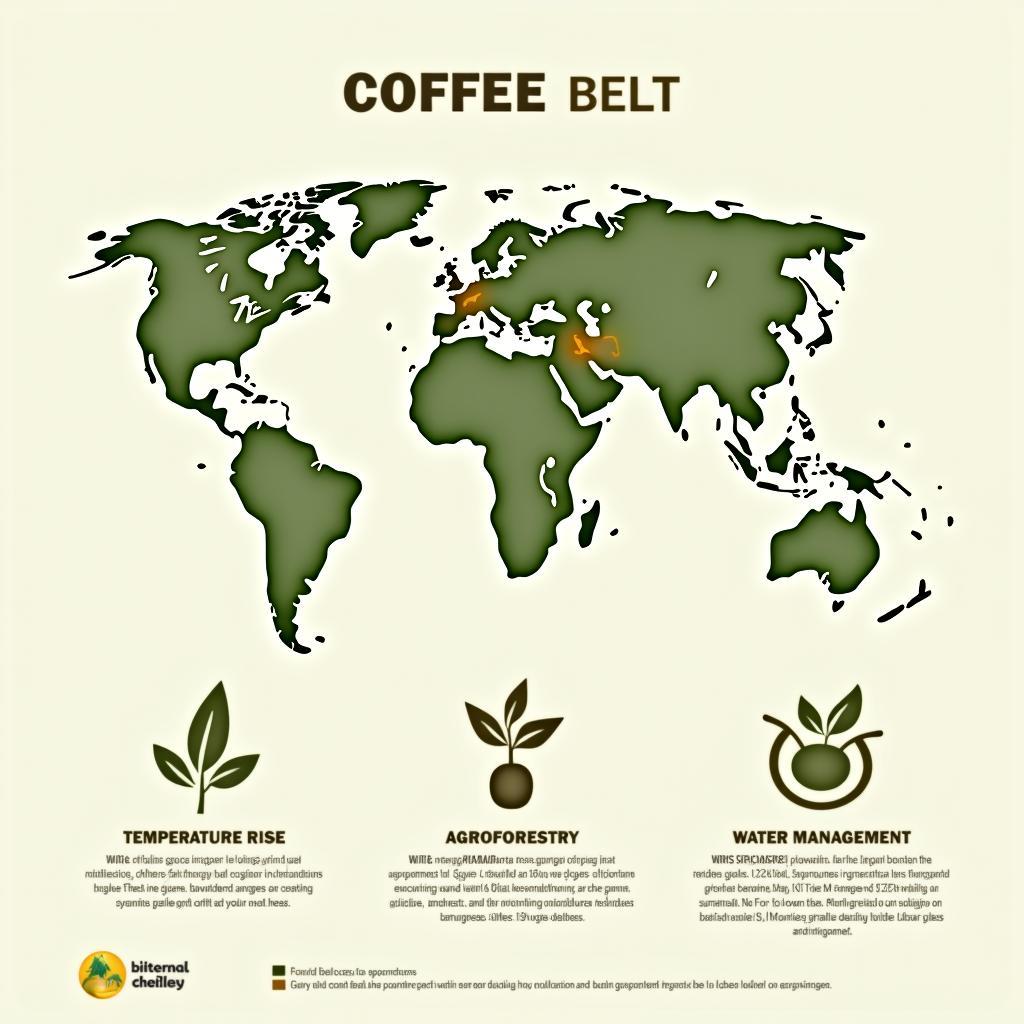 Biểu đồ minh họa tác động của biến đổi khí hậu lên các vùng trồng cà phê toàn cầu và chiến lược thích ứng
3. Answer Keys – Đáp Án
PASSAGE 1: Questions 1-13
- TRUE
- TRUE
- TRUE
- FALSE
- NOT GIVEN
- TRUE
- Coffee Belt (hoặc Bean Belt)
- heat stress
- fungal infections
- 125 million
- B
- B
- C
PASSAGE 2: Questions 14-26
- iii
- vii
- ii
- viii
- vi
- ix
- canopy cover
- biodiversity
- resilience
- diversification (hoặc economic buffers)
- NO
- NOT GIVEN
- YES
PASSAGE 3: Questions 27-40
- B
- C
- C
- B
- C
- B
- D
- E
- A
- C
- YES
- NOT GIVEN
- YES
- NOT GIVEN
4. Giải Thích Đáp Án Chi Tiết
Passage 1 – Giải Thích
Câu 1: TRUE
- Dạng câu hỏi: True/False/Not Given
- Từ khóa: more than two billion cups, worldwide, every day
- Vị trí trong bài: Đoạn 1, câu đầu tiên
- Giải thích: Bài đọc nói “over 2.25 billion cups consumed daily across the globe”. Con số 2.25 billion lớn hơn 2 billion, nên câu trả lời là TRUE. Đây là dạng paraphrase về con số.
Câu 2: TRUE
- Dạng câu hỏi: True/False/Not Given
- Từ khóa: Robusta coffee, more resistant, high temperatures, Arabica
- Vị trí trong bài: Đoạn 2
- Giải thích: Bài viết nói “Robusta coffee can tolerate warmer conditions and is generally more resilient”. Từ “tolerate warmer conditions” được paraphrase thành “more resistant to high temperatures” và “more resilient” khẳng định điều này.
Câu 4: FALSE
- Dạng câu hỏi: True/False/Not Given
- Từ khóa: Central America, 500 meters higher
- Vị trí trong bài: Đoạn 4
- Giải thích: Bài đọc nói “optimal altitude for growing coffee has shifted upward by approximately 300 meters”, không phải 500 meters như câu hỏi. Do đó đáp án là FALSE.
Câu 5: NOT GIVEN
- Dạng câu hỏi: True/False/Not Given
- Từ khóa: 2014-2015 drought, Brazil, worst in history
- Vị trí trong bài: Đoạn 5
- Giải thích: Bài viết chỉ nói đây là “one of the worst in decades” (tệ nhất trong vài thập kỷ), không nói là worst in history (tệ nhất trong lịch sử). Đây là sự khác biệt quan trọng.
Câu 7: Coffee Belt
- Dạng câu hỏi: Sentence Completion
- Từ khóa: region around equator, most coffee grown
- Vị trí trong bài: Đoạn 1
- Giải thích: “Coffee Belt” hoặc “Bean Belt” được nhắc đến như là vùng trồng cà phê chính. Chú ý viết hoa chữ cái đầu.
Câu 11: B
- Dạng câu hỏi: Multiple Choice
- Từ khóa: Arabica coffee, best temperature
- Vị trí trong bài: Đoạn 2
- Giải thích: Bài viết rõ ràng nói “grow best at temperatures between 18°C and 21°C”. Đây là câu hỏi trực tiếp không có paraphrase.
Passage 2 – Giải Thích
Câu 14: iii (Benefits of growing coffee with other trees)
- Dạng câu hỏi: Matching Headings
- Vị trí: Paragraph B
- Giải thích: Đoạn B tập trung vào agroforestry systems và các lợi ích của việc trồng cà phê cùng với cây khác như tạo bóng mát, giảm nhiệt độ, cải thiện đất. Tiêu đề iii mô tả chính xác nội dung này.
Câu 15: vii (Scientific approaches to developing stronger coffee plants)
- Dạng câu hỏi: Matching Headings
- Vị trí: Paragraph C
- Giải thích: Đoạn C thảo luận về nghiên cứu di truyền và các chương trình nhân giống để phát triển giống cà phê chống chịu tốt hơn với biến đổi khí hậu.
Câu 20: canopy cover
- Dạng câu hỏi: Summary Completion
- Từ khóa: provided by larger trees, control temperature
- Vị trí: Paragraph B
- Giải thích: “The canopy cover created by taller shade trees moderates temperature extremes” – cụm từ này khớp chính xác với ngữ cảnh của câu hỏi.
Câu 24: NO
- Dạng câu hỏi: Yes/No/Not Given
- Từ khóa: genetically modified coffee, widely available
- Vị trí: Paragraph D
- Giải thích: Bài viết nói “genetically modified (GM) coffee remains largely hypothetical” – nghĩa là nó vẫn còn mang tính giả thuyết, chưa có thực tế, chứ không phải widely available (có sẵn rộng rãi).
Câu 26: YES
- Dạng câu hỏi: Yes/No/Not Given
- Từ khóa: speed of climate change, faster than adaptation
- Vị trí: Paragraph I
- Giải thích: “The rapidity of climate change may outpace the adaptive capacity” – câu này rõ ràng đồng ý với ý kiến trong câu hỏi.
Passage 3 – Giải Thích
Câu 27: B
- Dạng câu hỏi: Multiple Choice
- Từ khóa: main problem, distribution of climate risks
- Vị trí: Đoạn B
- Giải thích: Đoạn văn nói rõ “Smallholder farmers… bear the disproportionate burden of climate impacts while possessing the least financial resilience”. Đây chính là ý B: smallholder farmers suffer most but have the least resources.
Câu 28: C
- Dạng câu hỏi: Multiple Choice
- Từ khóa: increases in retail coffee prices
- Vị trí: Đoạn C
- Giải thích: Bài viết chỉ ra rằng mặc dù giá bán lẻ tăng nhưng “farmers typically receive less than 10% of this final retail value” và “even significant increases in consumer prices may not translate into meaningful improvements in farmer incomes”.
Câu 29: C
- Dạng câu hỏi: Multiple Choice
- Từ khóa: organoleptic properties
- Vị trí: Đoạn D
- Giải thích: Bài viết định nghĩa rõ: “organoleptic properties – the sensory characteristics that determine flavor, aroma, and overall quality”. Đây là từ vựng chuyên ngành cần ghi nhớ.
Câu 32: B (terroir)
- Dạng câu hỏi: Summary Completion với word list
- Từ khóa: unique characteristics, each region, geography and climate
- Vị trí: Đoạn E
- Giải thích: “Terroir” được định nghĩa trong bài là “the unique combination of geography, climate, and cultivation practices that gives coffee from each region its characteristic flavor”.
Câu 37: YES
- Dạng câu hỏi: Yes/No/Not Given
- Từ khóa: climate attribution, legal claims, compensation
- Vị trí: Đoạn H
- Giải thích: Bài viết nói “questions arise about liability and responsibility” và đề cập đến khả năng “Could major carbon emitters be held accountable for damages to coffee farmers?”. Mặc dù nói “largely speculative” nhưng tác giả thừa nhận đây là một khả năng.
Câu 39: YES
- Dạng câu hỏi: Yes/No/Not Given
- Từ khóa: young people, moving away, threat to future
- Vị trí: Đoạn I
- Giải thích: Tác giả nói rõ “This rural exodus threatens to deplete the human capital necessary for coffee production” và “raises profound questions about the social sustainability of coffee production systems”.
Câu 40: NOT GIVEN
- Dạng câu hỏi: Yes/No/Not Given
- Từ khóa: completely impossible, previously productive regions
- Vị trí: Toàn bài
- Giải thích: Mặc dù bài viết nói về việc giảm diện tích trồng cà phê và các khu vực trở nên kém phù hợp hơn, nhưng không có thông tin nào nói rằng việc trồng cà phê đã trở nên “completely impossible” ở bất kỳ khu vực nào.
 Hướng dẫn kỹ thuật làm bài IELTS Reading hiệu quả với các dạng câu hỏi phổ biến về biến đổi khí hậu
5. Từ Vựng Quan Trọng Theo Passage
Passage 1 – Essential Vocabulary
| Từ vựng | Loại từ | Phiên âm | Nghĩa tiếng Việt | Ví dụ từ bài | Collocation |
|---|---|---|---|---|---|
| vulnerable | adj | /ˈvʌlnərəbl/ | dễ bị tổn thương, yếu ớt | Arabica coffee is particularly vulnerable to temperature fluctuations | vulnerable to (something), highly vulnerable |
| resilient | adj | /rɪˈzɪliənt/ | có khả năng phục hồi, bền bỉ | Robusta coffee is generally more resilient | resilient to, remain resilient |
| manifest | verb | /ˈmænɪfest/ | biểu hiện, thể hiện | The impact manifests in several ways | manifest in/as, clearly manifest |
| physiological | adj | /ˌfɪziəˈlɒdʒɪkl/ | thuộc về sinh lý | Affects physiological processes of plants | physiological processes, physiological changes |
| susceptible | adj | /səˈseptəbl/ | dễ bị ảnh hưởng | Makes them more susceptible to diseases | susceptible to, highly susceptible |
| drought stress | noun phrase | /draʊt stres/ | căng thẳng do hạn hán | Extended dry periods can cause drought stress | experience drought stress, reduce drought stress |
| optimal | adj | /ˈɒptɪml/ | tối ưu, thuận lợi nhất | The optimal altitude for growing coffee | optimal conditions, optimal temperature |
| acute | adj | /əˈkjuːt/ | nghiêm trọng, cấp tính | Brazil faces particularly acute challenges | acute problem, acute shortage |
| livelihoods | noun | /ˈlaɪvlihʊdz/ | sinh kế, kế sinh nhai | Supports the livelihoods of 25 million families | rural livelihoods, sustainable livelihoods |
| genetic diversity | noun phrase | /dʒəˈnetɪk daɪˈvɜːsəti/ | đa dạng di truyền | Threaten the genetic diversity of coffee | preserve genetic diversity, maintain genetic diversity |
| implications | noun | /ˌɪmplɪˈkeɪʃnz/ | hệ quả, ý nghĩa | The economic implications extend far beyond | have implications, serious implications |
| devastating | adj | /ˈdevəsteɪtɪŋ/ | tàn phá, hủy hoại | Could have devastating socioeconomic consequences | devastating impact, devastating effects |
Passage 2 – Essential Vocabulary
| Từ vựng | Loại từ | Phiên âm | Nghĩa tiếng Việt | Ví dụ từ bài | Collocation |
|---|---|---|---|---|---|
| inexorable | adj | /ɪnˈeksərəbl/ | không thể cưỡng lại, tất yếu | The inexorable effects of climate change | inexorable decline, inexorable process |
| innovative | adj | /ˈɪnəveɪtɪv/ | đổi mới, sáng tạo | Developing innovative adaptation strategies | innovative approach, innovative solutions |
| agroforestry | noun | /ˌæɡrəʊˈfɒrɪstri/ | nông lâm kết hợp | Agroforestry systems integrate coffee with trees | agroforestry practices, agroforestry systems |
| monoculture | noun | /ˈmɒnəʊkʌltʃə/ | canh tác đơn cây | Unlike conventional monoculture plantations | monoculture farming, monoculture system |
| mitigate | verb | /ˈmɪtɪɡeɪt/ | giảm thiểu, làm dịu | Help mitigate climate impacts | mitigate risks, mitigate effects |
| canopy cover | noun phrase | /ˈkænəpi ˈkʌvə/ | tán lá che phủ | The canopy cover created by taller trees | dense canopy cover, provide canopy cover |
| biodiversity | noun | /ˌbaɪəʊdaɪˈvɜːsəti/ | đa dạng sinh học | These systems enhance biodiversity | preserve biodiversity, rich biodiversity |
| breeding programs | noun phrase | /ˈbriːdɪŋ ˈprəʊɡræmz/ | chương trình nhân giống | Genetic research and breeding programs | selective breeding, plant breeding |
| propagate | verb | /ˈprɒpəɡeɪt/ | nhân giống, lan truyền | Identify and propagate plants with desirable traits | propagate plants, propagate species |
| precision agriculture | noun phrase | /prɪˈsɪʒn ˈæɡrɪkʌltʃə/ | nông nghiệp chính xác | Precision agriculture technologies play an important role | precision agriculture techniques, precision agriculture systems |
| paramount | adj | /ˈpærəmaʊnt/ | quan trọng nhất, tối cao | Water management has emerged as a paramount concern | paramount importance, paramount concern |
| holistic | adj | /həˈlɪstɪk/ | toàn diện, tổng thể | This holistic framework recognizes… | holistic approach, holistic view |
| adoption rate | noun phrase | /əˈdɒpʃn reɪt/ | tỷ lệ áp dụng | The adoption rate of new practices varies | increase adoption rate, low adoption rate |
| upfront investments | noun phrase | /ˌʌpˈfrʌnt ɪnˈvestmənts/ | đầu tư ban đầu | Require substantial upfront investments | require upfront investment, initial upfront costs |
| adaptive capacity | noun phrase | /əˈdæptɪv kəˈpæsəti/ | khả năng thích ứng | May outpace the adaptive capacity | enhance adaptive capacity, limited adaptive capacity |
Passage 3 – Essential Vocabulary
| Từ vựng | Loại từ | Phiên âm | Nghĩa tiếng Việt | Ví dụ từ bài | Collocation |
|---|---|---|---|---|---|
| intricate nexus | noun phrase | /ˈɪntrɪkət ˈneksəs/ | mối liên hệ phức tạp | The intricate nexus between climate change and coffee production | complex nexus, intricate connection |
| permeating | verb | /ˈpɜːmieɪtɪŋ/ | thấm, lan tràn | Permeating every echelon of the coffee value chain | permeate through, permeate society |
| echelon | noun | /ˈeʃəlɒn/ | cấp bậc, tầng lớp | Every echelon of the coffee value chain | upper echelon, lower echelon |
| systemic vulnerabilities | noun phrase | /sɪˈstemɪk ˌvʌlnərəˈbɪlətiz/ | điểm yếu hệ thống | Revealing systemic vulnerabilities | systemic risks, systemic problems |
| anthropogenic | adj | /ˌænθrəpəˈdʒenɪk/ | do con người gây ra | Anthropogenic climate disruption intensifies | anthropogenic activities, anthropogenic impact |
| ramifications | noun | /ˌræmɪfɪˈkeɪʃnz/ | hậu quả, phân nhánh | The ramifications cascade through… | serious ramifications, long-term ramifications |
| asymmetric distribution | noun phrase | /ˌæsɪˈmetrɪk ˌdɪstrɪˈbjuːʃn/ | phân bổ không đối xứng | The asymmetric distribution of climate risks | asymmetric information, unequal distribution |
| disproportionate burden | noun phrase | /ˌdɪsprəˈpɔːʃənət ˈbɜːdn/ | gánh nặng không cân xứng | Bear the disproportionate burden of impacts | carry disproportionate burden, face disproportionate impact |
| exacerbated | verb | /ɪɡˈzæsəbeɪtɪd/ | làm trầm trọng thêm | This inequity is exacerbated by… | exacerbate problems, significantly exacerbated |
| divorced from | phrase | /dɪˈvɔːst frɒm/ | tách rời khỏi | Largely divorced from on-the-ground realities | divorced from reality, completely divorced |
| organoleptic properties | noun phrase | /ɔːɡənəʊˈleptɪk ˈprɒpətiz/ | đặc tính cảm quan | Coffee’s organoleptic properties are sensitive | organoleptic characteristics, organoleptic quality |
| terroir | noun | /terˈwɑː/ | phong thổ (đặc điểm địa phương) | Terroir is paramount in specialty coffee | unique terroir, express terroir |
| temporal dimension | noun phrase | /ˈtempərəl dɪˈmenʃn/ | chiều hướng thời gian | The temporal dimension of climate impacts | temporal aspects, temporal factors |
| creditworthiness | noun | /ˈkredɪtwɜːðinəs/ | độ tín nhiệm tín dụng | Assess creditworthiness based on historical data | establish creditworthiness, evaluate creditworthiness |
| vicious cycle | noun phrase | /ˈvɪʃəs ˈsaɪkl/ | vòng luẩn quẩn | Creating a vicious cycle where… | break vicious cycle, trapped in vicious cycle |
| parametric insurance | noun phrase | /ˌpærəˈmetrɪk ɪnˈʃʊərəns/ | bảo hiểm tham số | Parametric insurance that pays out based on triggers | parametric insurance products, parametric coverage |
| actuarial challenges | noun phrase | /ˌæktʃuˈeəriəl ˈtʃælɪndʒɪz/ | thách thức về toán bảo hiểm | The actuarial challenges of pricing remain substantial | actuarial analysis, actuarial science |
| confluence | noun | /ˈkɒnfluəns/ | sự hội tụ, giao thoa | The confluence of climate pressures and market dynamics | confluence of factors, confluence of events |
Kết Bài
Chủ đề biến đổi khí hậu và tác động của nó đến sản xuất cà phê toàn cầu không chỉ là một vấn đề môi trường cấp bách mà còn là một chủ đề quan trọng thường xuyên xuất hiện trong IELTS Reading. Qua đề thi mẫu này, bạn đã được trải nghiệm một bài thi hoàn chỉnh với 3 passages có độ khó tăng dần từ Easy (Band 5.0-6.5), Medium (Band 6.0-7.5) đến Hard (Band 7.0-9.0), phản ánh chính xác cấu trúc của bài thi IELTS thực tế.
Đề thi đã bao quát 7 dạng câu hỏi phổ biến nhất trong IELTS Reading, từ True/False/Not Given, Multiple Choice, Matching Headings đến Summary Completion và Short-answer Questions. Mỗi câu hỏi được thiết kế để kiểm tra các kỹ năng khác nhau: khả năng tìm thông tin chi tiết, hiểu ý chính của đoạn văn, nhận biết paraphrase, và suy luận logic. Phần đáp án chi tiết không chỉ cung cấp đáp án đúng mà còn giải thích vị trí thông tin trong bài, cách paraphrase được sử dụng, và lý do tại sao các đáp án khác là sai.
Bảng từ vựng theo từng passage cung cấp hơn 40 từ vựng quan trọng với phiên âm, nghĩa tiếng Việt, ví dụ sử dụng và collocations. Đây là những từ vựng học thuật có khả năng cao xuất hiện không chỉ trong chủ đề về môi trường mà còn trong nhiều bài đọc IELTS khác. Việc nắm vững những từ này sẽ giúp bạn đọc hiểu nhanh hơn và chính xác hơn.
Để đạt kết quả tốt nhất, hãy làm lại đề thi này nhiều lần, mỗi lần tập trung vào một kỹ năng khác nhau. Lần đầu, hãy làm bài trong điều kiện thi thật với thời gian 60 phút. Lần thứ hai, hãy phân tích kỹ các câu paraphrase và cách thông tin được diễn đạt khác đi. Lần thứ ba, tập trung vào việc học và sử dụng từ vựng mới trong ngữ cảnh. Chúc bạn ôn tập hiệu quả và đạt band điểm mong muốn trong kỳ thi IELTS sắp tới!



[…] […]