Chủ đề năng lượng tái tạo và tác động của nó đến thị trường việc làm toàn cầu đã và đang trở thành một trong những chủ đề phổ biến nhất trong các kỳ thi IELTS Reading gần đây. Theo thống kê, các passage liên quan đến renewable energy, job creation, economic transformation xuất hiện với tần suất ngày càng tăng, đặc biệt trong Cambridge IELTS từ quyển 14 trở đi. Chủ đề này không chỉ có tính thời sự cao mà còn kết hợp đa dạng các khía cạnh: kinh tế, môi trường, công nghệ và xã hội.
Trong bài viết này, bạn sẽ được trải nghiệm một bộ đề thi IELTS Reading hoàn chỉnh gồm 3 passages với độ khó tăng dần từ Easy đến Hard, hoàn toàn giống với đề thi thực tế. Bạn sẽ học được cách xử lý các dạng câu hỏi đa dạng như Multiple Choice, True/False/Not Given, Matching Headings, Summary Completion và nhiều dạng khác. Đặc biệt, mỗi câu hỏi đều có đáp án chi tiết kèm giải thích cụ thể về vị trí thông tin, kỹ thuật paraphrase và chiến lược làm bài hiệu quả.
Bộ đề này phù hợp cho học viên từ band 5.0 trở lên, giúp bạn làm quen với độ khó thực tế của kỳ thi, nâng cao kỹ năng đọc hiểu và tích lũy vốn từ vựng học thuật quan trọng về lĩnh vực năng lượng bền vững và kinh tế lao động.
Hướng Dẫn Làm Bài IELTS Reading
Tổng Quan Về IELTS Reading Test
IELTS Reading Test kéo dài 60 phút cho tổng cộng 3 passages với 40 câu hỏi. Đây là bài thi đòi hỏi khả năng quản lý thời gian chặt chẽ và kỹ năng đọc lướt, đọc kỹ linh hoạt.
Phân bổ thời gian khuyến nghị:
- Passage 1 (Easy): 15-17 phút – Dành cho những câu hỏi dễ để tích lũy điểm số nhanh
- Passage 2 (Medium): 18-20 phút – Độ khó vừa phải, yêu cầu đọc hiểu sâu hơn
- Passage 3 (Hard): 23-25 phút – Dành thời gian nhiều nhất cho passage khó nhất
Lưu ý: Không có thời gian bổ sung để chuyển đáp án, vì vậy bạn nên ghi đáp án trực tiếp vào answer sheet trong khi làm bài.
Các Dạng Câu Hỏi Trong Đề Này
Đề thi mẫu này bao gồm 7 dạng câu hỏi phổ biến nhất:
- Multiple Choice – Chọn đáp án đúng trong số các phương án cho sẵn
- True/False/Not Given – Xác định thông tin đúng, sai hoặc không được đề cập
- Yes/No/Not Given – Xác định ý kiến của tác giả
- Matching Headings – Ghép tiêu đề với các đoạn văn
- Summary Completion – Hoàn thành đoạn tóm tắt
- Matching Features – Ghép thông tin với các đối tượng
- Short-answer Questions – Trả lời câu hỏi ngắn
IELTS Reading Practice Test
PASSAGE 1 – The Green Job Revolution: A New Era of Employment
Độ khó: Easy (Band 5.0-6.5)
Thời gian đề xuất: 15-17 phút
The transition to renewable energy sources is reshaping the global employment landscape in unprecedented ways. Over the past decade, the renewable energy sector has emerged as one of the fastest-growing industries worldwide, creating millions of jobs across various skill levels and disciplines. According to the International Renewable Energy Agency (IRENA), the sector employed approximately 12 million people globally in 2020, a figure that has more than doubled since 2012. This remarkable growth trajectory shows no signs of slowing down, with projections suggesting that renewable energy could employ over 40 million people by 2050.
Solar photovoltaic (PV) installation represents the largest employment category within the renewable sector, accounting for nearly one-third of all renewable energy jobs. In countries like China, the United States, and India, solar panel manufacturing and installation have become major sources of employment, particularly in regions where traditional manufacturing industries have declined. The appeal of solar jobs lies not only in their numbers but also in their accessibility. Many positions in solar installation require relatively short training periods, making them available to workers transitioning from other industries. A typical solar installer can complete certification programs in as little as six months, opening pathways for individuals without university degrees to enter a growing field with competitive wages.
Wind energy has similarly demonstrated impressive job creation potential. The development, construction, and maintenance of wind farms create diverse employment opportunities ranging from turbine technicians to project managers. Denmark, a pioneer in wind energy, has built an entire export industry around wind turbine manufacturing, with companies like Vestas becoming global leaders. The wind sector requires a skilled workforce capable of working at significant heights and in challenging weather conditions, leading to the development of specialized training programs. In Texas, USA, wind turbine technician has been identified as one of the fastest-growing occupations, with median salaries exceeding those of many traditional trades.
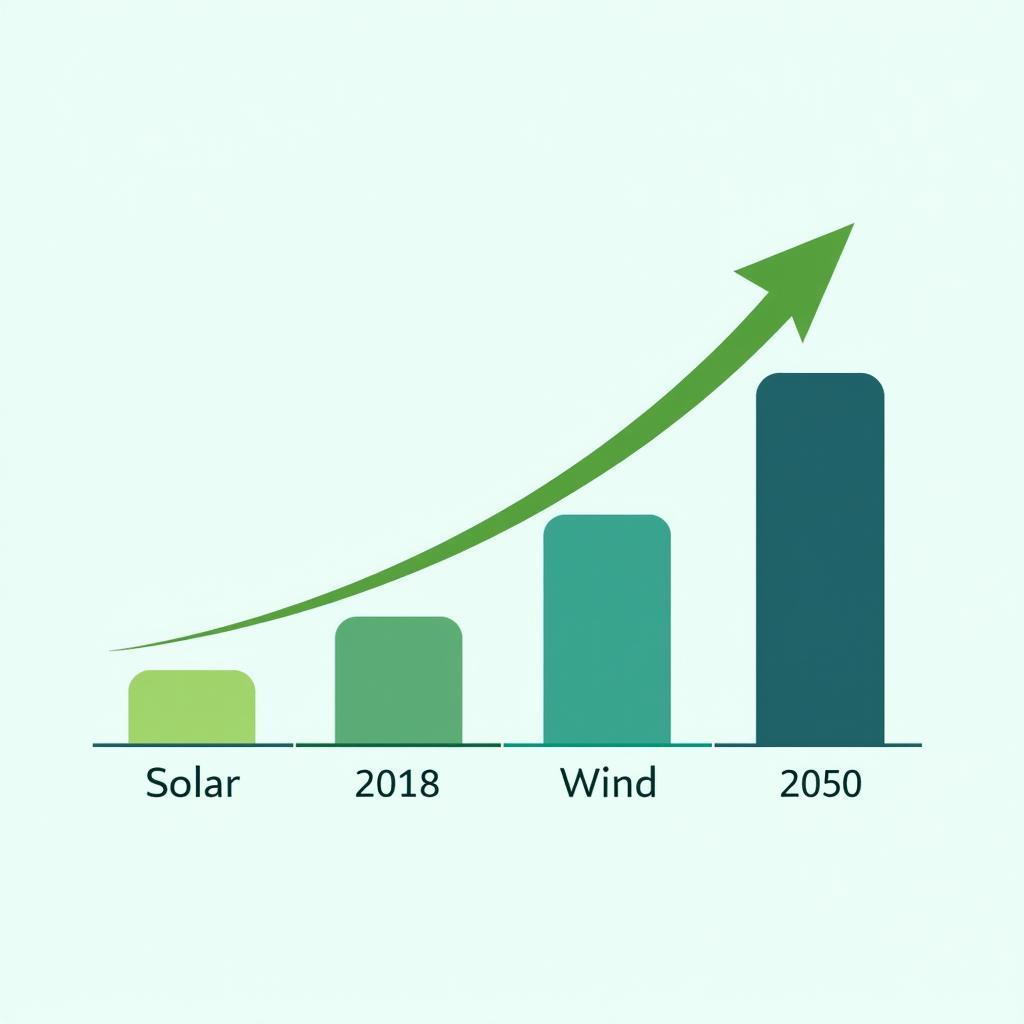 Biểu đồ tăng trưởng việc làm trong ngành năng lượng tái tạo toàn cầu từ 2012 đến 2050
Beyond direct employment in energy generation, the renewable transition is creating substantial indirect job opportunities. The manufacturing of components such as batteries, inverters, and smart grid technologies has spawned entirely new industries. Battery production facilities for electric vehicles and energy storage systems are being established globally, with companies investing billions in new plants. These facilities require workers skilled in chemistry, engineering, and advanced manufacturing techniques. Additionally, the research and development sector continues to expand, employing scientists, engineers, and technicians working to improve renewable technologies and reduce costs.
The renewable energy boom is also revitalizing rural economies. Many wind and solar farms are located in rural areas where agricultural income has traditionally dominated. Landowners can now lease their land for renewable installations, providing stable supplementary income while continuing farming activities. This arrangement, sometimes called “energy farming,” has proven particularly beneficial in regions experiencing agricultural decline. Communities hosting renewable projects also benefit from increased tax revenues, which fund schools, infrastructure, and public services. Small towns that were once economically struggling have found new life as renewable energy hubs.
However, the transition is not without challenges. Workers in traditional fossil fuel industries face uncertain futures as coal mines and oil refineries scale back operations. The concept of a “just transition” has gained prominence, emphasizing the need to support workers and communities dependent on fossil fuel industries. Governments and organizations are implementing retraining programs designed to help coal miners, oil rig workers, and others transition into renewable energy roles. These programs recognize that while new jobs are being created, they often require different skills and may be located in different regions. The success of the renewable energy job revolution will ultimately depend on how effectively societies manage this transition, ensuring that the benefits are widely distributed and that displaced workers receive adequate support.
Questions 1-6
Do the following statements agree with the information given in Passage 1?
Write:
- TRUE if the statement agrees with the information
- FALSE if the statement contradicts the information
- NOT GIVEN if there is no information on this
- The renewable energy sector employed 12 million people worldwide in 2020.
- Solar panel installation requires at least two years of specialized training.
- Denmark has successfully developed an export industry based on wind turbine manufacturing.
- Wind turbine technicians in Texas earn more than workers in most other traditional trades.
- Battery production facilities only employ workers with advanced engineering degrees.
- Some landowners can continue farming while also hosting renewable energy installations.
Questions 7-10
Complete the sentences below.
Choose NO MORE THAN TWO WORDS from the passage for each answer.
- Solar photovoltaic installation accounts for approximately __ of all renewable energy jobs globally.
- A typical solar installer can complete __ in as little as six months.
- The practice of leasing land for renewable energy projects while maintaining farming activities is sometimes called __.
- The concept of a __ emphasizes providing support for workers leaving fossil fuel industries.
Questions 11-13
Choose the correct letter, A, B, C or D.
- According to the passage, renewable energy employment is projected to reach what figure by 2050?
- A. 12 million people
- B. 20 million people
- C. 40 million people
- D. 50 million people
- What makes solar installation jobs particularly accessible to workers?
- A. They pay the highest wages in the renewable sector
- B. They require relatively short training periods
- C. They are only available in urban areas
- D. They require university degrees
- What benefit do rural communities gain from hosting renewable energy projects?
- A. Free electricity for all residents
- B. Guaranteed employment for every citizen
- C. Increased tax revenues for public services
- D. Ownership of energy companies
PASSAGE 2 – Economic Transformation Through Renewable Energy Employment
Độ khó: Medium (Band 6.0-7.5)
Thời gian đề xuất: 18-20 phút
The emergence of renewable energy as a dominant force in global job markets represents far more than simple numerical job creation; it signifies a fundamental restructuring of economic relationships, skill requirements, and regional development patterns. While conventional analyses focus on aggregate employment figures, a deeper examination reveals that the renewable energy sector is catalyzing a transformation in the very nature of work, demanding new competency frameworks and challenging established labour market dynamics. This shift carries profound implications for educational institutions, workforce development programs, and economic planning strategies worldwide.
One of the most significant yet underappreciated aspects of renewable energy employment is its skill diversity requirement. Unlike traditional energy sectors, which often concentrated expertise in specific engineering disciplines or trades, renewable energy demands a convergence of competencies spanning electrical engineering, environmental science, data analytics, project management, and even social engagement skills. A single large-scale solar farm project might employ civil engineers to prepare the site, electrical engineers to design the system, software developers to create monitoring platforms, environmental specialists to ensure regulatory compliance, and community liaison officers to maintain positive local relations. This interdisciplinary nature creates opportunities for professionals from diverse backgrounds to participate in the sector, but it also presents challenges for educational institutions attempting to prepare students adequately.
The geographical distribution of renewable energy jobs differs markedly from fossil fuel employment patterns, with significant implications for regional economic development. Fossil fuel extraction has historically been concentrated in specific geological locations—coal regions, oil fields, natural gas deposits—creating concentrated employment centers but also leaving surrounding areas economically marginalized. Renewable energy, by contrast, can be harvested across much broader territories. Wind resources exist along coastlines and across plains; solar potential spans vast areas in sunny climates; geothermal energy can be accessed in tectonically active regions; and biomass production can occur wherever organic materials grow. This geographic dispersion enables more equitable distribution of economic benefits, potentially reducing regional inequalities that have characterized energy economies for generations.
However, this geographic advantage comes with a significant caveat: renewable energy jobs are often location-dependent in ways that create new challenges. A wind technician must work where wind farms are located, typically in remote or rural settings far from urban centers. Solar farm operations require presence in areas with optimal solar irradiance, which may not correspond to existing population centers. This spatial dynamic creates a paradox: while renewable energy can spread economic benefits more widely, it may also require workers to relocate or accept long commutes, potentially limiting the pool of available labour and creating workforce development obstacles. Some regions have responded by developing residential infrastructure and community amenities near renewable installations, essentially building new settlement patterns around energy production sites.
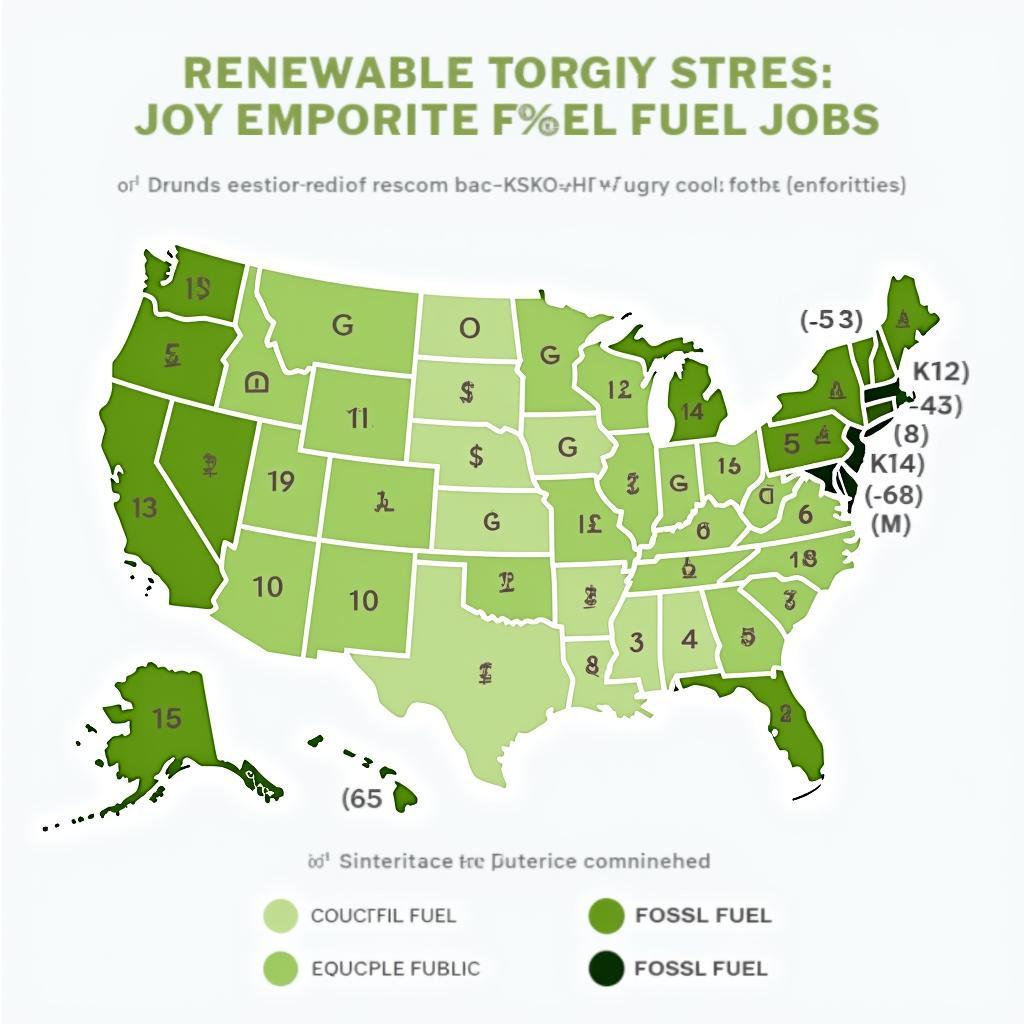 Bản đồ phân bố địa lý việc làm trong ngành năng lượng tái tạo so với nhiên liệu hóa thạch
The wage dynamics within renewable energy employment present a complex picture that defies simplistic characterization. While advocates often highlight competitive salaries in the sector, the reality varies considerably across job categories and geographic contexts. High-skilled positions—such as renewable energy engineers, project developers, and specialized technicians—typically command salaries competitive with or exceeding those in traditional energy sectors. However, many entry-level positions, particularly in solar panel installation and basic maintenance, may offer wages only marginally better than other manual labour categories. A comprehensive study by the Brookings Institution found that while median wages in clean energy sectors slightly exceeded national averages, the distribution was highly uneven, with significant variation based on unionization rates, regional cost of living, and company ownership structures.
The question of job quality extends beyond mere compensation to encompass employment stability, benefits, and working conditions. Critics of renewable energy employment note that many jobs, particularly in construction and installation, are inherently temporary or project-based, lacking the long-term stability that characterized traditional power plant or mining employment. A coal miner might reasonably expect decades of continuous employment at a single location; a solar installation worker might move from project to project, experiencing periods of unemployment between assignments. This structural precariousness has led some labour economists to question whether renewable energy jobs truly represent equivalent economic security to the fossil fuel positions they replace. Proponents counter that this concern conflates the characteristics of an emerging industry with inherent sector attributes, arguing that as the renewable energy market matures, employment will stabilize and companies will develop more permanent workforce structures.
The renewable energy transition is also reshaping gender dynamics in energy sector employment. Historically, fossil fuel industries have been overwhelmingly male-dominated, with women comprising less than 20 percent of the workforce in most oil, gas, and coal operations. Renewable energy presents an opportunity to establish more gender-balanced employment patterns from the sector’s inception. According to IRENA data, women currently represent approximately 32 percent of renewable energy employment globally—significantly higher than in conventional energy but still far from parity. This relative improvement stems partly from renewable energy’s emphasis on diverse skill sets, which creates entry points for professionals in fields like environmental science, community relations, and project administration where women have stronger representation. However, achieving genuine gender equity will require deliberate policy interventions, workplace culture reforms, and addressing persistent barriers in technical trades and engineering disciplines.
Questions 14-19
Choose the correct letter, A, B, C or D.
- According to the passage, what makes renewable energy employment different from traditional energy sectors?
- A. It pays significantly higher wages
- B. It requires a convergence of diverse competencies
- C. It only employs people with engineering backgrounds
- D. It is concentrated in urban areas
- The geographical distribution of renewable energy jobs is described as:
- A. More concentrated than fossil fuel jobs
- B. Limited to coastal regions only
- C. More widely dispersed across territories
- D. Exclusively in urban centers
- What paradox does the passage identify regarding renewable energy job locations?
- A. They pay well but require no skills
- B. They spread benefits widely but may require worker relocation
- C. They are urban-based but require rural skills
- D. They are temporary but pay permanent wages
- According to the Brookings Institution study mentioned in the passage:
- A. All clean energy wages exceed national averages
- B. Wage distribution in clean energy is highly uneven
- C. Entry-level renewable jobs pay better than high-skilled positions
- D. Renewable energy wages are lower than fossil fuel wages
- What concern do critics raise about renewable energy employment stability?
- A. The jobs are too difficult to perform
- B. Many positions are temporary or project-based
- C. Workers are paid too frequently
- D. There are too many permanent positions available
- What percentage of the renewable energy workforce globally consists of women?
- A. Less than 20 percent
- B. Approximately 32 percent
- C. Exactly 50 percent
- D. More than 60 percent
Questions 20-23
Complete the summary below.
Choose NO MORE THAN TWO WORDS from the passage for each answer.
Renewable energy employment requires a broad range of skills, creating what the passage calls a 20. __ of competencies. Unlike fossil fuel jobs that were concentrated in specific geological locations, renewable energy can be harvested across 21. __, enabling more equitable economic benefits. However, this creates challenges as jobs are 22. __, often in remote settings. While high-skilled positions offer competitive salaries, many 23. __ may only provide marginally better wages than other manual labour.
Questions 24-26
Do the following statements agree with the claims of the writer in Passage 2?
Write:
- YES if the statement agrees with the claims of the writer
- NO if the statement contradicts the claims of the writer
- NOT GIVEN if it is impossible to say what the writer thinks about this
- Educational institutions are fully prepared to train students for renewable energy sector requirements.
- The temporary nature of some renewable energy jobs is necessarily an inherent characteristic of the sector rather than a feature of an emerging industry.
- Achieving gender equity in renewable energy will require deliberate policy interventions and workplace reforms.
PASSAGE 3 – The Macroeconomic Implications of Renewable Energy Labor Market Disruption
Độ khó: Hard (Band 7.0-9.0)
Thời gian đề xuất: 23-25 phút
The proliferation of renewable energy employment constitutes not merely a sectoral shift but a fundamental reorganization of labour market structures with ramifications extending far beyond immediate job creation metrics. Contemporary discourse on renewable energy and employment tends toward reductionist quantification—comparing job numbers in solar versus coal, calculating net employment changes, projecting future workforce requirements—while overlooking the qualitative transformation occurring within labour markets themselves. This transformation encompasses alterations in human capital formation, regional economic multipliers, social stratification patterns, and the very conceptualization of energy sector employment. A rigorous examination of these dynamics reveals that renewable energy is precipitating a paradigm shift in how societies organize productive labour around energy systems, with implications that challenge established economic theories and policy frameworks.
The concept of “just transition” has emerged as a central organizing principle in discussions of renewable energy employment, yet the term itself obscures significant theoretical and practical ambiguities. In its weakest formulation, just transition implies merely providing retraining opportunities and temporary financial support to displaced fossil fuel workers—a compensatory framework that treats job displacement as an unfortunate but manageable externality of necessary environmental policy. More robust interpretations conceptualize just transition as requiring structural economic transformation that addresses underlying power asymmetries, distributional inequities, and the social reproduction of labour. From this perspective, the transition to renewable energy presents an opportunity to fundamentally reimagine labour relations, moving away from the extractive, hierarchical models that characterized fossil fuel industries toward more democratic, participatory employment structures. However, current policy implementations predominantly reflect the weaker interpretation, focusing on individualized skill adaptation rather than systemic economic restructuring, thereby potentially reproducing existing inequalities within new energy systems.
The spatial economics of renewable energy employment introduce novel dynamics into regional development theory. Classical location theory, developed primarily to explain manufacturing and resource extraction patterns, proves inadequate for analyzing renewable energy employment distribution. Unlike fossil fuels, which create intense agglomeration effects around extraction sites, renewable energy generates distributed employment networks that follow resource availability rather than transportation efficiency or market proximity. This spatial logic disrupts traditional core-periphery models of regional development, potentially enabling peripheral regions to capture value from energy production in unprecedented ways. However, empirical evidence suggests that peripheral locations often lack the institutional capacity, educational infrastructure, and complementary industries necessary to maximize local economic benefits from renewable installations. Consequently, many benefits leak to metropolitan centers where equipment manufacturing, financial services, and high-skilled technical services remain concentrated, creating a paradox wherein geographically dispersed energy production nonetheless reinforces existing spatial inequalities.
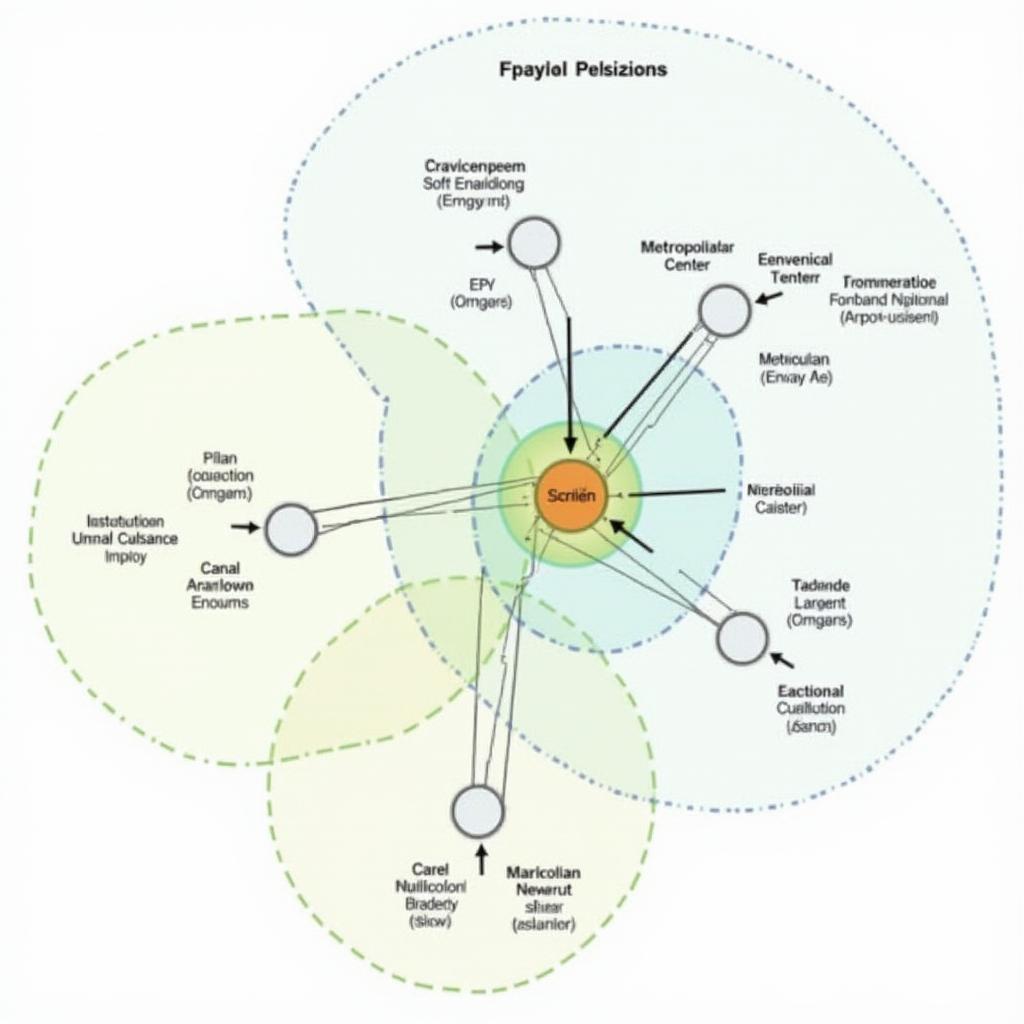 Sơ đồ mô hình kinh tế không gian của việc làm năng lượng tái tạo và tác động phát triển khu vực
The human capital implications of renewable energy employment extend beyond simple skill requirements to encompass epistemological shifts in how energy sector knowledge is produced, validated, and transmitted. Fossil fuel industries developed highly specialized knowledge systems—geological survey methodologies, petroleum engineering protocols, coal chemistry expertise—that were largely proprietary, institutionally bounded, and reproduced through apprenticeship models within corporate or union-controlled training structures. Renewable energy, by contrast, tends toward more democratized knowledge production, with significant innovation occurring in open-source contexts, academic-industry partnerships, and distributed experimental settings. This shift has democratizing potential, enabling broader participation in energy sector employment, but it also creates validation challenges. How do employers assess competency when traditional credentialing mechanisms may not exist? How do workers demonstrate expertise in rapidly evolving technological contexts? These questions have given rise to new certification industries and skills assessment frameworks, which themselves become sites of political contestation over who controls knowledge validation in emerging energy systems.
The labour process within renewable energy presents distinctive characteristics that complicate traditional industrial relations frameworks. Unlike fossil fuel extraction, which involved continuous operation of large facilities with stable workforces, renewable energy often combines distributed installation phases with minimal operational labour requirements. A solar farm might require hundreds of workers during construction but only a handful for ongoing maintenance. This temporal concentration of labour demand creates challenges for workforce planning, union organization, and community integration. Moreover, the relative simplicity of renewable energy operation—compared to the complex processes of oil refining or coal-fired power generation—reduces organizational bargaining power for operational workers while shifting employment weight toward construction and installation phases, where labour organization has historically been weaker. Consequently, the renewable transition may inadvertently diminish organized labour’s influence within the energy sector unless deliberate institutional innovations create new forms of worker organization appropriate to renewable energy’s distinctive labour process characteristics.
The intersectional dimensions of renewable energy employment—how the transition differentially affects workers based on overlapping identities of class, gender, race, geography, and age—remain insufficiently theorized despite their profound policy significance. Older fossil fuel workers face particularly acute challenges, as cognitive flexibility and physical demands of retraining decrease with age, while the temporal horizon for return on retraining investment shortens. Racialized workers in fossil fuel industries, who often occupied the most precarious and hazardous positions, may find themselves disproportionately excluded from renewable energy opportunities if credentialism and social networks mediate access to training programs and employment. Women entering renewable energy sectors encounter persistent occupational segregation, with representation concentrated in administrative and outreach roles rather than technical and leadership positions. Indigenous communities in resource-rich regions face complex negotiations over renewable energy development on their territories, balancing economic opportunities against concerns about environmental justice, sovereignty, and the repetition of extractive colonial patterns under ostensibly sustainable frameworks. A genuine just transition must address these intersectional complexities through targeted interventions that recognize how structural inequalities shape differential access to renewable energy employment benefits.
The question of whether renewable energy employment represents quantitative addition or qualitative transformation of labour market opportunities remains contested. Optimistic assessments emphasize gross job creation figures, projecting millions of new positions in solar, wind, and related sectors. Skeptical analyses note that many renewable energy jobs are replacing positions in declining fossil fuel industries, making net employment gains more modest than headline figures suggest, and potentially involving “deskilling” dynamics where complex, high-wage fossil fuel jobs are replaced by simpler, lower-wage renewable positions. More nuanced evaluations recognize that the relevant metric is not simply job quantity but comprehensive livelihood quality, encompassing wage levels, employment stability, workplace conditions, community impacts, and broader social benefits. From this perspective, the success of renewable energy as an employment strategy depends not on inevitable technological trajectories but on deliberate political choices about how societies structure ownership, governance, and benefit distribution within emerging energy systems. The renewable energy employment revolution will ultimately be judged not by the number of jobs created but by whether those jobs contribute to more equitable, democratic, and sustainable forms of economic organization.
Questions 27-31
Choose the correct letter, A, B, C or D.
- According to the passage, contemporary discourse on renewable energy employment tends to:
- A. Focus too heavily on quantitative comparisons
- B. Emphasize qualitative transformation adequately
- C. Ignore job creation metrics entirely
- D. Provide comprehensive policy frameworks
- The passage suggests that the weakest interpretation of “just transition” involves:
- A. Fundamental restructuring of economic power relations
- B. Creating democratic employment structures
- C. Providing retraining and temporary financial support
- D. Addressing social reproduction of labour
- What does the passage identify as a paradox in renewable energy’s spatial economics?
- A. All benefits remain in metropolitan areas
- B. Geographically dispersed production may reinforce spatial inequalities
- C. Peripheral regions capture all economic value
- D. Urban centers receive no benefits from renewable energy
- How does knowledge production in renewable energy differ from fossil fuel industries?
- A. It is entirely proprietary and restricted
- B. It tends toward more democratized and open-source contexts
- C. It relies exclusively on apprenticeship models
- D. It eliminates the need for certification
- What challenge does the temporal concentration of renewable energy labour demand create?
- A. Too many permanent jobs
- B. Excessive worker bargaining power
- C. Difficulties for workforce planning and union organization
- D. Simplified industrial relations
Questions 32-36
Complete each sentence with the correct ending, A-H, below.
- Classical location theory is inadequate for analyzing renewable energy because
- Peripheral regions often fail to maximize local economic benefits because
- Older fossil fuel workers face acute transition challenges because
- Women in renewable energy encounter persistent problems because
- Indigenous communities negotiating renewable development must balance
A. they lack institutional capacity and complementary industries.
B. renewable energy follows resource availability rather than market proximity.
C. they are concentrated in administrative rather than technical positions.
D. cognitive flexibility decreases with age and retraining investment horizons shorten.
E. economic opportunities against environmental justice and sovereignty concerns.
F. they possess excessive bargaining power in negotiations.
G. traditional credentialing mechanisms are universally accepted.
H. all knowledge production occurs in corporate settings.
Questions 37-40
Do the following statements agree with the claims of the writer in Passage 3?
Write:
- YES if the statement agrees with the claims of the writer
- NO if the statement contradicts the claims of the writer
- NOT GIVEN if it is impossible to say what the writer thinks about this
-
Current policy implementations of just transition predominantly focus on systemic economic restructuring rather than individual skill adaptation.
-
The relative simplicity of renewable energy operations compared to fossil fuel processes may reduce organizational bargaining power for operational workers.
-
Renewable energy employment has completely eliminated racial discrimination in the energy sector.
-
The success of renewable energy as an employment strategy depends on deliberate political choices about ownership and governance structures rather than inevitable technological progress.
Answer Keys – Đáp Án
PASSAGE 1: Questions 1-13
- TRUE
- FALSE
- TRUE
- NOT GIVEN
- NOT GIVEN
- TRUE
- one-third / one third
- certification programs
- energy farming
- just transition
- C
- B
- C
PASSAGE 2: Questions 14-26
- B
- C
- B
- B
- B
- B
- convergence
- broader territories / much broader territories
- location-dependent
- entry-level positions
- NOT GIVEN
- NO
- YES
PASSAGE 3: Questions 27-40
- A
- C
- B
- B
- C
- B
- A
- D
- C
- E
- NO
- YES
- NOT GIVEN
- YES
Giải Thích Đáp Án Chi Tiết
Passage 1 – Giải Thích
Câu 1: TRUE
- Dạng câu hỏi: True/False/Not Given
- Từ khóa: 12 million people, 2020
- Vị trí trong bài: Đoạn 1, dòng 4-5
- Giải thích: Câu trong bài viết rõ ràng: “the sector employed approximately 12 million people globally in 2020” khớp chính xác với thông tin trong câu hỏi.
Câu 2: FALSE
- Dạng câu hỏi: True/False/Not Given
- Từ khóa: solar panel installation, two years, training
- Vị trí trong bài: Đoạn 2, dòng 7-9
- Giải thích: Bài viết nói “A typical solar installer can complete certification programs in as little as six months” (6 tháng), không phải hai năm như câu hỏi, nên đây là thông tin sai.
Câu 3: TRUE
- Dạng câu hỏi: True/False/Not Given
- Từ khóa: Denmark, export industry, wind turbine manufacturing
- Vị trí trong bài: Đoạn 3, dòng 3-5
- Giải thích: “Denmark, a pioneer in wind energy, has built an entire export industry around wind turbine manufacturing” khớp hoàn toàn với câu hỏi.
Câu 4: NOT GIVEN
- Dạng câu hỏi: True/False/Not Given
- Từ khóa: wind turbine technicians, Texas, earn more, most other traditional trades
- Vị trí trong bài: Đoạn 3, dòng 7-9
- Giải thích: Bài viết chỉ nói “median salaries exceeding those of many traditional trades” (nhiều nghề) chứ không nói “most” (hầu hết), không đủ thông tin để xác định.
Câu 5: NOT GIVEN
- Dạng câu hỏi: True/False/Not Given
- Từ khóa: battery production facilities, only, advanced engineering degrees
- Vị trí trong bài: Đoạn 4, dòng 3-5
- Giải thích: Bài viết nói facilities “require workers skilled in chemistry, engineering, and advanced manufacturing techniques” nhưng không nói “only” hoặc “advanced degrees”, không đủ cơ sở kết luận.
Câu 6: TRUE
- Dạng câu hỏi: True/False/Not Given
- Từ khóa: landowners, continue farming, renewable energy installations
- Vị trí trong bài: Đoạn 5, dòng 2-4
- Giải thích: “Landowners can now lease their land for renewable installations, providing stable supplementary income while continuing farming activities” khớp với câu hỏi.
Câu 7: one-third / one third
- Dạng câu hỏi: Sentence Completion
- Từ khóa: solar photovoltaic installation, accounts for
- Vị trí trong bài: Đoạn 2, dòng 1-2
- Giải thích: “accounting for nearly one-third of all renewable energy jobs” là thông tin trực tiếp.
Câu 8: certification programs
- Dạng câu hỏi: Sentence Completion
- Từ khóa: typical solar installer, complete, six months
- Vị trí trong bài: Đoạn 2, dòng 8-9
- Giải thích: “A typical solar installer can complete certification programs in as little as six months” cung cấp đáp án chính xác.
Câu 9: energy farming
- Dạng câu hỏi: Sentence Completion
- Từ khóa: leasing land, renewable projects, farming activities
- Vị trí trong bài: Đoạn 5, dòng 3-4
- Giải thích: “This arrangement, sometimes called ‘energy farming,'” là định nghĩa trực tiếp của khái niệm trong câu hỏi.
Câu 10: just transition
- Dạng câu hỏi: Sentence Completion
- Từ khóa: concept, support, workers leaving fossil fuel industries
- Vị trí trong bài: Đoạn 6, dòng 2-3
- Giải thích: “The concept of a ‘just transition’ has gained prominence, emphasizing the need to support workers and communities dependent on fossil fuel industries” khớp với yêu cầu.
Câu 11: C
- Dạng câu hỏi: Multiple Choice
- Từ khóa: projected, 2050
- Vị trí trong bài: Đoạn 1, dòng 6-7
- Giải thích: “projections suggesting that renewable energy could employ over 40 million people by 2050” cho thấy đáp án C là chính xác.
Câu 12: B
- Dạng câu hỏi: Multiple Choice
- Từ khóa: solar installation jobs, accessible
- Vị trí trong bài: Đoạn 2, dòng 6-8
- Giải thích: “Many positions in solar installation require relatively short training periods, making them available to workers” là lý do khiến công việc này dễ tiếp cận.
Câu 13: C
- Dạng câu hỏi: Multiple Choice
- Từ khóa: rural communities, benefit, hosting renewable projects
- Vị trí trong bài: Đoạn 5, dòng 5-6
- Giải thích: “Communities hosting renewable projects also benefit from increased tax revenues, which fund schools, infrastructure, and public services” là lợi ích được nêu rõ.
Passage 2 – Giải Thích
Câu 14: B
- Dạng câu hỏi: Multiple Choice
- Từ khóa: renewable energy employment, different from traditional
- Vị trí trong bài: Đoạn 2, dòng 1-4
- Giải thích: “renewable energy demands a convergence of competencies spanning electrical engineering, environmental science, data analytics…” cho thấy sự khác biệt chính là yêu cầu kết hợp nhiều năng lực đa dạng.
Câu 15: C
- Dạng câu hỏi: Multiple Choice
- Từ khóa: geographical distribution
- Vị trí trong bài: Đoạn 3, dòng 1-6
- Giải thích: “Renewable energy, by contrast, can be harvested across much broader territories” và “This geographic dispersion” xác nhận việc làm phân tán rộng hơn.
Câu 16: B
- Dạng câu hỏi: Multiple Choice
- Từ khóa: paradox, job locations
- Vị trí trong bài: Đoạn 4, dòng 1 và 6-9
- Giải thích: “This spatial dynamic creates a paradox: while renewable energy can spread economic benefits more widely, it may also require workers to relocate” là mâu thuẫn được nêu rõ.
Câu 17: B
- Dạng câu hỏi: Multiple Choice
- Từ khóa: Brookings Institution study
- Vị trí trong bài: Đoạn 5, dòng 5-8
- Giải thích: “the distribution was highly uneven, with significant variation based on unionization rates, regional cost of living, and company ownership structures” khẳng định sự phân bố không đồng đều.
Câu 18: B
- Dạng câu hỏi: Multiple Choice
- Từ khóa: critics, concern, employment stability
- Vị trí trong bài: Đoạn 6, dòng 2-4
- Giải thích: “Critics of renewable energy employment note that many jobs, particularly in construction and installation, are inherently temporary or project-based” là mối lo ngại được nhắc đến.
Câu 19: B
- Dạng câu hỏi: Multiple Choice
- Từ khóa: percentage, women, globally
- Vị trí trong bài: Đoạn 7, dòng 4-5
- Giải thích: “women currently represent approximately 32 percent of renewable energy employment globally” cung cấp số liệu chính xác.
Câu 20: convergence
- Dạng câu hỏi: Summary Completion
- Từ khóa: broad range of skills, competencies
- Vị trí trong bài: Đoạn 2, dòng 3
- Giải thích: “renewable energy demands a convergence of competencies” là cụm từ cần điền.
Câu 21: broader territories / much broader territories
- Dạng câu hỏi: Summary Completion
- Từ khóa: harvested across
- Vị trí trong bài: Đoạn 3, dòng 4-5
- Giải thích: “can be harvested across much broader territories” khớp với ngữ cảnh tóm tắt.
Câu 22: location-dependent
- Dạng câu hỏi: Summary Completion
- Từ khóa: jobs are, often in remote settings
- Vị trí trong bài: Đoạn 4, dòng 1
- Giải thích: “renewable energy jobs are often location-dependent” là thuật ngữ chính xác.
Câu 23: entry-level positions
- Dạng câu hỏi: Summary Completion
- Từ khóa: many, marginally better wages
- Vị trí trong bài: Đoạn 5, dòng 3-4
- Giải thích: “many entry-level positions, particularly in solar panel installation and basic maintenance, may offer wages only marginally better” cung cấp đáp án.
Câu 24: NOT GIVEN
- Dạng câu hỏi: Yes/No/Not Given
- Từ khóa: educational institutions, fully prepared
- Vị trí trong bài: Đoạn 2, dòng 9-11
- Giải thích: Bài viết chỉ nói institutions gặp “challenges” khi cố gắng chuẩn bị sinh viên, không khẳng định hoặc phủ nhận việc họ đã sẵn sàng đầy đủ.
Câu 25: NO
- Dạng câu hỏi: Yes/No/Not Given
- Từ khóa: temporary nature, inherent characteristic
- Vị trí trong bài: Đoạn 6, dòng 7-9
- Giải thích: Tác giả nói “Proponents counter that this concern conflates the characteristics of an emerging industry with inherent sector attributes” – phản bác quan điểm cho rằng tính tạm thời là đặc điểm cố hữu.
Câu 26: YES
- Dạng câu hỏi: Yes/No/Not Given
- Từ khóa: gender equity, deliberate policy interventions
- Vị trí trong bài: Đoạn 7, dòng 9-11
- Giải thích: “achieving genuine gender equity will require deliberate policy interventions, workplace culture reforms” khớp hoàn toàn với quan điểm tác giả.
Passage 3 – Giải Thích
Câu 27: A
- Dạng câu hỏi: Multiple Choice
- Từ khóa: contemporary discourse, tends to
- Vị trí trong bài: Đoạn 1, dòng 2-4
- Giải thích: “Contemporary discourse on renewable energy and employment tends toward reductionist quantification—comparing job numbers” chỉ ra xu hướng tập trung vào so sánh định lượng.
Câu 28: C
- Dạng câu hỏi: Multiple Choice
- Từ khóa: weakest interpretation, just transition
- Vị trí trong bài: Đoạn 2, dòng 2-4
- Giải thích: “In its weakest formulation, just transition implies merely providing retraining opportunities and temporary financial support” định nghĩa rõ ràng.
Câu 29: B
- Dạng câu hỏi: Multiple Choice
- Từ khóa: paradox, spatial economics
- Vị trí trong bài: Đoạn 3, dòng 9-12
- Giải thích: “creating a paradox wherein geographically dispersed energy production nonetheless reinforces existing spatial inequalities” mô tả chính xác nghịch lý này.
Câu 30: B
- Dạng câu hỏi: Multiple Choice
- Từ khóa: knowledge production, differs from fossil fuel
- Vị trí trong bài: Đoạn 4, dòng 5-7
- Giải thích: “Renewable energy, by contrast, tends toward more democratized knowledge production, with significant innovation occurring in open-source contexts” là sự khác biệt chính.
Câu 31: C
- Dạng câu hỏi: Multiple Choice
- Từ khóa: temporal concentration, challenge
- Vị trí trong bài: Đoạn 5, dòng 4-6
- Giải thích: “This temporal concentration of labour demand creates challenges for workforce planning, union organization, and community integration” liệt kê các thách thức.
Câu 32: B
- Dạng câu hỏi: Matching Sentence Endings
- Từ khóa: Classical location theory, inadequate
- Vị trí trong bài: Đoạn 3, dòng 2-4
- Giải thích: “renewable energy generates distributed employment networks that follow resource availability rather than transportation efficiency or market proximity” giải thích tại sao lý thuyết cổ điển không phù hợp.
Câu 33: A
- Dạng câu hỏi: Matching Sentence Endings
- Từ khóa: Peripheral regions, fail to maximize
- Vị trí trong bài: Đoạn 3, dòng 7-9
- Giải thích: “peripheral locations often lack the institutional capacity, educational infrastructure, and complementary industries necessary to maximize local economic benefits” là nguyên nhân trực tiếp.
Câu 34: D
- Dạng câu hỏi: Matching Sentence Endings
- Từ khóa: Older fossil fuel workers, acute challenges
- Vị trí trong bài: Đoạn 6, dòng 2-4
- Giải thích: “cognitive flexibility and physical demands of retraining decrease with age, while the temporal horizon for return on retraining investment shortens” giải thích thách thức đặc biệt cho công nhân lớn tuổi.
Câu 35: C
- Dạng câu hỏi: Matching Sentence Endings
- Từ khóa: Women, persistent problems
- Vị trí trong bài: Đoạn 6, dòng 6-8
- Giải thích: “Women entering renewable energy sectors encounter persistent occupational segregation, with representation concentrated in administrative and outreach roles rather than technical and leadership positions” mô tả vấn đề phân biệt giới tính.
Câu 36: E
- Dạng câu hỏi: Matching Sentence Endings
- Từ khóa: Indigenous communities, balance
- Vị trí trong bài: Đoạn 6, dòng 8-11
- Giải thích: “Indigenous communities in resource-rich regions face complex negotiations over renewable energy development on their territories, balancing economic opportunities against concerns about environmental justice, sovereignty” nêu rõ sự cân bằng cần thiết.
Câu 37: NO
- Dạng câu hỏi: Yes/No/Not Given
- Từ khóa: current policy, systemic restructuring
- Vị trí trong bài: Đoạn 2, dòng 8-10
- Giải thích: “current policy implementations predominantly reflect the weaker interpretation, focusing on individualized skill adaptation rather than systemic economic restructuring” – tác giả khẳng định các chính sách tập trung vào cá nhân hóa, không phải tái cấu trúc hệ thống, trái với câu hỏi.
Câu 38: YES
- Dạng câu hỏi: Yes/No/Not Given
- Từ khóa: relative simplicity, reduce bargaining power
- Vị trí trong bài: Đoạn 5, dòng 6-9
- Giải thích: “the relative simplicity of renewable energy operation…reduces organizational bargaining power for operational workers” – tác giả đồng ý với quan điểm này.
Câu 39: NOT GIVEN
- Dạng câu hỏi: Yes/No/Not Given
- Từ khóa: completely eliminated, racial discrimination
- Vị trí trong bài: Đoạn 6, dòng 4-6
- Giải thích: Bài viết đề cập “Racialized workers…may find themselves disproportionately excluded” nhưng không khẳng định hoặc phủ nhận việc phân biệt chủng tộc đã được loại bỏ hoàn toàn.
Câu 40: YES
- Dạng câu hỏi: Yes/No/Not Given
- Từ khóa: success depends on, political choices, ownership governance
- Vị trí trong bài: Đoạn 7, dòng 6-9
- Giải thích: “the success of renewable energy as an employment strategy depends not on inevitable technological trajectories but on deliberate political choices about how societies structure ownership, governance” – tác giả khẳng định rõ ràng quan điểm này.
Từ Vựng Quan Trọng Theo Passage
Passage 1 – Essential Vocabulary
| Từ vựng | Loại từ | Phiên âm | Nghĩa tiếng Việt | Ví dụ từ bài | Collocation |
|---|---|---|---|---|---|
| unprecedented | adj | /ʌnˈpresɪdentɪd/ | chưa từng có, chưa có tiền lệ | reshaping…in unprecedented ways | unprecedented growth/change/scale |
| trajectory | n | /trəˈdʒektəri/ | quỹ đạo, xu hướng phát triển | remarkable growth trajectory | growth trajectory, career trajectory |
| accessibility | n | /əkˌsesəˈbɪləti/ | khả năng tiếp cận, tính dễ tiếp cận | The appeal…lies in their accessibility | accessibility to education/jobs |
| median salary | n phrase | /ˈmiːdiən ˈsæləri/ | mức lương trung vị | with median salaries exceeding | above/below median salary |
| substantial | adj | /səbˈstænʃl/ | đáng kể, quan trọng | creating substantial indirect job opportunities | substantial evidence/impact/investment |
| revitalizing | v | /ˌriːˈvaɪtəlaɪzɪŋ/ | hồi sinh, làm sống lại | revitalizing rural economies | revitalize the economy/community |
| supplementary | adj | /ˌsʌplɪˈmentri/ | bổ sung, phụ trợ | providing stable supplementary income | supplementary income/information |
| agricultural decline | n phrase | /ˌæɡrɪˈkʌltʃərəl dɪˈklaɪn/ | suy giảm nông nghiệp | regions experiencing agricultural decline | industrial/economic decline |
| scale back | phrasal v | /skeɪl bæk/ | cắt giảm, thu hẹp | coal mines…scale back operations | scale back production/operations |
| displaced workers | n phrase | /dɪsˈpleɪst ˈwɜːkəz/ | công nhân bị di dời/thất nghiệp | ensuring that displaced workers receive | displaced persons/communities |
| retraining programs | n phrase | /ˌriːˈtreɪnɪŋ ˈprəʊɡræmz/ | chương trình đào tạo lại | implementing retraining programs | vocational/skills training programs |
| widely distributed | adj phrase | /ˈwaɪdli dɪˈstrɪbjuːtɪd/ | phân bổ rộng rãi | benefits are widely distributed | evenly/broadly distributed |
Passage 2 – Essential Vocabulary
| Từ vựng | Loại từ | Phiên âm | Nghĩa tiếng Việt | Ví dụ từ bài | Collocation |
|---|---|---|---|---|---|
| restructuring | n | /ˌriːˈstrʌktʃərɪŋ/ | tái cấu trúc, sắp xếp lại | fundamental restructuring of economic relationships | economic/corporate restructuring |
| competency frameworks | n phrase | /ˈkɒmpɪtənsi ˈfreɪmwɜːks/ | khung năng lực | demanding new competency frameworks | establish/develop frameworks |
| convergence | n | /kənˈvɜːdʒəns/ | sự hội tụ, kết hợp | convergence of competencies | technological/economic convergence |
| interdisciplinary | adj | /ˌɪntədɪsəˈplɪnəri/ | liên ngành, đa ngành | This interdisciplinary nature | interdisciplinary approach/research |
| geographical distribution | n phrase | /ˌdʒiːəˈɡræfɪkl ˌdɪstrɪˈbjuːʃn/ | phân bố địa lý | geographical distribution of renewable energy jobs | spatial/regional distribution |
| marginalized | adj | /ˈmɑːdʒɪnəlaɪzd/ | bị gạt ra ngoài lề, thiệt thòi | leaving surrounding areas economically marginalized | marginalized communities/groups |
| geographic dispersion | n phrase | /ˌdʒiːəˈɡræfɪk dɪˈspɜːʃn/ | sự phân tán địa lý | This geographic dispersion | population/resource dispersion |
| location-dependent | adj | /ləʊˈkeɪʃn dɪˈpendənt/ | phụ thuộc vị trí | renewable energy jobs are often location-dependent | context/time-dependent |
| workforce development | n phrase | /ˈwɜːkfɔːs dɪˈveləpmənt/ | phát triển lực lượng lao động | creating workforce development obstacles | workforce planning/training |
| wage dynamics | n phrase | /weɪdʒ daɪˈnæmɪks/ | động lực tiền lương | wage dynamics within renewable energy | market/price dynamics |
| employment stability | n phrase | /ɪmˈplɔɪmənt stəˈbɪləti/ | ổn định việc làm | lacking the long-term employment stability | job/economic stability |
| structural precariousness | n phrase | /ˈstrʌktʃərəl prɪˈkeəriəsnəs/ | tính bấp bênh về cấu trúc | This structural precariousness | economic/social precariousness |
| gender-balanced | adj | /ˈdʒendə ˈbælənst/ | cân bằng giới | establish more gender-balanced employment patterns | gender-neutral/gender-equal |
| deliberate policy interventions | n phrase | /dɪˈlɪbərət ˈpɒləsi ˌɪntəˈvenʃnz/ | can thiệp chính sách có chủ đích | require deliberate policy interventions | government/regulatory intervention |
| workplace culture reforms | n phrase | /ˈwɜːkpleɪs ˈkʌltʃə rɪˈfɔːmz/ | cải cách văn hóa nơi làm việc | workplace culture reforms | organizational/institutional reforms |
Passage 3 – Essential Vocabulary
| Từ vựng | Loại từ | Phiên âm | Nghĩa tiếng Việt | Ví dụ từ bài | Collocation |
|---|---|---|---|---|---|
| proliferation | n | /prəˌlɪfəˈreɪʃn/ | sự gia tăng nhanh chóng | The proliferation of renewable energy employment | nuclear proliferation, cell proliferation |
| ramifications | n | /ˌræmɪfɪˈkeɪʃnz/ | hậu quả, tác động | with ramifications extending far beyond | legal/political ramifications |
| reductionist | adj | /rɪˈdʌkʃənɪst/ | chủ nghĩa giản lược, đơn giản hóa | tends toward reductionist quantification | reductionist approach/view |
| qualitative transformation | n phrase | /ˈkwɒlɪtətɪv ˌtrænsfəˈmeɪʃn/ | chuyển đổi chất lượng | overlooking the qualitative transformation | qualitative change/difference |
| paradigm shift | n phrase | /ˈpærədaɪm ʃɪft/ | thay đổi mô hình tư duy | precipitating a paradigm shift | paradigm change/transformation |
| theoretical ambiguities | n phrase | /ˌθɪəˈretɪkl æmbɪˈɡjuːətiz/ | những mơ hồ lý thuyết | significant theoretical and practical ambiguities | conceptual/linguistic ambiguities |
| compensatory framework | n phrase | /kəmˈpensətri ˈfreɪmwɜːk/ | khung bồi thường | a compensatory framework | regulatory/analytical framework |
| power asymmetries | n phrase | /ˈpaʊər əˈsɪmətriz/ | sự bất cân xứng quyền lực | addresses underlying power asymmetries | information asymmetry |
| distributional inequities | n phrase | /ˌdɪstrɪˈbjuːʃənl ɪnɪˈkwɪtiz/ | bất công phân phối | distributional inequities | social/economic inequities |
| extractive models | n phrase | /ɪkˈstræktɪv ˈmɒdlz/ | mô hình khai thác | extractive, hierarchical models | extractive industries/practices |
| agglomeration effects | n phrase | /əˌɡlɒməˈreɪʃn ɪˈfekts/ | hiệu ứng tập tụ | create intense agglomeration effects | urban agglomeration |
| core-periphery models | n phrase | /kɔː pəˈrɪfəri ˈmɒdlz/ | mô hình trung tâm-ngoại vi | traditional core-periphery models | center-periphery relationship |
| institutional capacity | n phrase | /ˌɪnstɪˈtjuːʃənl kəˈpæsəti/ | năng lực thể chế | lack the institutional capacity | organizational/administrative capacity |
| epistemological shifts | n phrase | /ɪˌpɪstɪməˈlɒdʒɪkl ʃɪfts/ | thay đổi nhận thức luận | encompass epistemological shifts | paradigmatic/methodological shifts |
| democratized knowledge | n phrase | /dɪˈmɒkrətaɪzd ˈnɒlɪdʒ/ | tri thức dân chủ hóa | tends toward more democratized knowledge production | accessible/shared knowledge |
| credentialing mechanisms | n phrase | /krɪˈdenʃəlɪŋ ˈmekənɪzmz/ | cơ chế cấp chứng chỉ | traditional credentialing mechanisms | certification/accreditation mechanisms |
| temporal concentration | n phrase | /ˈtempərəl ˌkɒnsenˈtreɪʃn/ | tập trung về thời gian | temporal concentration of labour demand | spatial/geographical concentration |
| intersectional dimensions | n phrase | /ˌɪntəˈsekʃənl daɪˈmenʃnz/ | các chiều kích giao thoa | The intersectional dimensions | intersectional analysis/approach |
| cognitive flexibility | n phrase | /ˈkɒɡnətɪv ˌfleksəˈbɪləti/ | linh hoạt nhận thức | cognitive flexibility…decrease with age | mental/behavioral flexibility |
| occupational segregation | n phrase | /ˌɒkjuˈpeɪʃənl ˌseɡrɪˈɡeɪʃn/ | phân biệt nghề nghiệp | encounter persistent occupational segregation | gender/racial segregation |
Chiến Lược Làm Bài IELTS Reading Hiệu Quả
Sau khi hoàn thành bộ đề thi mẫu này, bạn cần rút ra những bài học quan trọng để áp dụng vào kỳ thi thực tế. Đối với chủ đề năng lượng tái tạo và thị trường việc làm, có một số điểm cần lưu ý đặc biệt.
Kỹ thuật Skimming và Scanning
Với các passage về kinh tế và công nghệ như bộ đề này, việc xác định cấu trúc bài đọc ngay từ đầu là then chốt. Hãy dành 1-2 phút đầu để đọc lướt toàn bộ passage, chú ý đến:
- Câu chủ đề của mỗi đoạn văn
- Các từ khóa được nhấn mạnh hoặc in đậm
- Số liệu thống kê và năm tháng
- Tên riêng của các tổ chức, quốc gia
Xử lý Paraphrase
Một trong những thách thức lớn nhất của IELTS Reading là khả năng nhận diện paraphrase. Ví dụ trong đề thi này:
- “renewable energy sector” có thể được paraphrase thành “clean energy industries” hoặc “sustainable power generation”
- “job creation” có thể là “employment opportunities” hoặc “workforce expansion”
- “fossil fuel industries” có thể được thay bằng “traditional energy sectors” hoặc “coal, oil, and gas operations”
Để cải thiện kỹ năng này, hãy chú ý học từ vựng theo nhóm từ đồng nghĩa và các cụm collocation thường gặp.
Quản lý Thời gian Thông minh
Đừng mắc kẹt quá lâu ở một câu hỏi khó. Nếu sau 2-3 phút vẫn không tìm ra đáp án, hãy đánh dấu và chuyển sang câu tiếp theo. Khi hoàn thành tất cả câu hỏi dễ và trung bình, bạn sẽ có cái nhìn tổng thể hơn về bài đọc và có thể quay lại giải quyết những câu khó một cách hiệu quả hơn.
Đọc Hiểu Từ Ngữ Cảnh
Nhiều câu hỏi trong IELTS Reading kiểm tra khả năng hiểu nghĩa của từ vựng qua ngữ cảnh. Ngay cả khi bạn chưa biết một số từ khó như “epistemological,” “agglomeration,” hay “precariousness,” bạn vẫn có thể đoán nghĩa dựa vào:
- Các từ xung quanh
- Cấu trúc câu
- Ví dụ minh họa
- Logic của đoạn văn
Lời Kết
Chủ đề năng lượng tái tạo và tác động của nó đến thị trường việc làm không chỉ là một topic phổ biến trong IELTS Reading mà còn phản ánh những thay đổi thực tế đang diễn ra trên toàn cầu. Việc làm quen với loại bài đọc này giúp bạn không chỉ chuẩn bị tốt cho kỳ thi mà còn mở rộng hiểu biết về các vấn đề kinh tế, xã hội và môi trường quan trọng.
Bộ đề thi mẫu này đã cung cấp cho bạn trải nghiệm hoàn chỉnh với ba passages có độ khó tăng dần, tái hiện chính xác cấu trúc và yêu cầu của IELTS Reading thực tế. Với 40 câu hỏi đa dạng về dạng bài, đáp án chi tiết kèm giải thích cụ thể, và hệ thống từ vựng phong phú được tổ chức khoa học, bạn đã có trong tay một công cụ luyện tập vô cùng hiệu quả.
Hãy nhớ rằng, thành công trong IELTS Reading không đến từ việc học thuộc lòng đáp án mà từ việc hiểu rõ phương pháp làm bài, rèn luyện kỹ năng đọc hiểu một cách có hệ thống và tích lũy vốn từ vựng học thuật theo các chủ đề. Tương tự như việc theo dõi các xu hướng kinh tế toàn cầu, việc nắm vững chủ đề năng lượng tái tạo sẽ giúp bạn tự tin hơn khi đối mặt với các dạng bài tương tự trong kỳ thi.
Chúc bạn đạt được band điểm mong muốn trong kỳ thi IELTS sắp tới. Hãy luyện tập đều đặn, phân tích kỹ những lỗi sai, và không ngừng cải thiện phương pháp làm bài của mình!