
Mở bài
Chủ đề về xe điện (electric vehicles) và tác động của chúng đến thị trường dầu mỏ toàn cầu đang ngày càng trở nên phổ biến trong các kỳ thi IELTS Reading gần đây. Đây là một trong những chủ đề thuộc lĩnh vực công nghệ xanh, năng lượng và môi trường – những chủ đề nóng hổi được Cambridge và IDP ưa chuộng trong các đề thi từ năm 2020 đến nay.
Bài viết này cung cấp cho bạn một bộ đề thi IELTS Reading hoàn chỉnh về chủ đề “How Is The Rise Of Electric Vehicles Impacting Global Oil Markets?” với đầy đủ 3 passages từ dễ đến khó, 40 câu hỏi đa dạng dạng và đáp án chi tiết kèm giải thích. Bạn sẽ học được:
- Đề thi đầy đủ 3 passages với độ khó tăng dần (Easy → Medium → Hard) giống thi thật 100%
- 40 câu hỏi đa dạng bao gồm 7-8 dạng câu hỏi phổ biến nhất trong IELTS Reading
- Đáp án chi tiết với giải thích vị trí trong bài, kỹ thuật paraphrase và cách tìm đáp án
- Từ vựng chuyên ngành về năng lượng, công nghệ và kinh tế với phiên âm và ví dụ thực tế
- Chiến lược làm bài hiệu quả cho từng dạng câu hỏi
Bộ đề này phù hợp cho học viên có trình độ từ band 5.0 trở lên và muốn làm quen với chủ đề năng lượng – môi trường trong IELTS Reading.
1. Hướng Dẫn Làm Bài IELTS Reading
Tổng Quan Về IELTS Reading Test
IELTS Reading Test là bài thi kéo dài 60 phút với 3 passages và tổng cộng 40 câu hỏi. Đây là bài thi kiểm tra khả năng đọc hiểu, tìm kiếm thông tin và phân tích của bạn trên các văn bản học thuật.
Phân bổ thời gian khuyến nghị:
- Passage 1 (Easy): 15-17 phút (13 câu hỏi)
- Passage 2 (Medium): 18-20 phút (13 câu hỏi)
- Passage 3 (Hard): 23-25 phút (14 câu hỏi)
Lưu ý quan trọng: Không có thời gian riêng để chép đáp án vào answer sheet, vì vậy bạn cần ghi đáp án trong khi làm bài.
Các Dạng Câu Hỏi Trong Đề Này
Bộ đề thi mẫu này bao gồm 7 dạng câu hỏi phổ biến nhất trong IELTS Reading:
- Multiple Choice – Câu hỏi trắc nghiệm
- True/False/Not Given – Xác định thông tin đúng/sai/không đề cập
- Yes/No/Not Given – Xác định quan điểm tác giả
- Matching Headings – Nối tiêu đề với đoạn văn
- Summary Completion – Điền từ vào tóm tắt
- Matching Features – Nối thông tin với đối tượng
- Short-answer Questions – Câu hỏi trả lời ngắn
Mỗi dạng câu hỏi đòi hỏi kỹ năng đọc khác nhau: scanning (tìm kiếm thông tin cụ thể), skimming (nắm ý chính), detailed reading (đọc chi tiết) và inferencing (suy luận).
2. IELTS Reading Practice Test
PASSAGE 1 – The Electric Vehicle Revolution Begins
Độ khó: Easy (Band 5.0-6.5)
Thời gian đề xuất: 15-17 phút
The world of transportation is undergoing a dramatic transformation. For over a century, vehicles powered by internal combustion engines have dominated our roads, consuming vast quantities of petroleum and releasing carbon emissions into the atmosphere. However, a new technology is rapidly gaining ground: electric vehicles (EVs). These battery-powered cars are no longer a futuristic concept but an increasingly common sight on streets worldwide, and their growing popularity is beginning to reshape the global energy landscape.
The rise of electric vehicles can be traced back to growing concerns about climate change and air pollution. Traditional gasoline and diesel vehicles are major contributors to greenhouse gas emissions, which scientists link to rising global temperatures. Governments around the world have responded by introducing stricter environmental regulations and offering financial incentives to encourage consumers to switch to cleaner alternatives. In many countries, buyers of electric vehicles can receive tax credits, rebates, or access to special carpool lanes. Some cities have even announced plans to ban the sale of new gasoline-powered vehicles within the next two decades.
Technological advancements have made electric vehicles more practical and appealing to everyday drivers. Early electric cars suffered from limited range – they could only travel 80-100 kilometers before needing to recharge. Modern EVs, however, can cover 400-500 kilometers on a single charge, making them suitable for most daily commuting needs and even longer journeys. Battery technology has improved significantly, with costs falling by nearly 90% since 2010. This reduction in battery prices has made electric vehicles more affordable, bringing them within reach of middle-class consumers rather than just wealthy early adopters.
The automotive industry has taken notice of this shift in consumer preferences. Major car manufacturers like Tesla, Volkswagen, General Motors, and Toyota have all announced plans to expand their electric vehicle production. Tesla, once a small startup, has become one of the world’s most valuable car companies entirely by focusing on electric vehicles. Traditional automakers are now investing billions of dollars in developing their own electric models and building the necessary charging infrastructure. By 2025, industry experts predict that electric vehicles will account for 20% of all new car sales globally, up from just 4% in 2020.
This rapid adoption of electric vehicles is beginning to have measurable effects on oil demand. Transportation accounts for approximately 60% of global oil consumption, with passenger vehicles representing the largest portion. Each electric vehicle that replaces a conventional car eliminates the need for roughly 10-15 barrels of oil per year. While current EV numbers represent only a small fraction of the total vehicle fleet, their impact is growing. The International Energy Agency estimates that electric vehicles displaced approximately 1.5 million barrels of oil per day in 2022 – equivalent to the entire oil consumption of a country like Greece.
Oil companies are certainly paying attention to these trends. Major petroleum producers in the Middle East, Russia, and North America have begun to acknowledge that peak oil demand may occur sooner than previously expected. Some companies are diversifying their portfolios, investing in renewable energy projects and electric charging networks. Others are focusing on producing petrochemicals and other oil-based products that won’t be affected by the shift to electric transportation. However, the pace of this transition remains a subject of intense debate among industry analysts.
Consumer attitudes toward electric vehicles are also evolving. Early concerns about charging times, battery life, and the availability of charging stations are gradually being addressed. Fast-charging technology can now replenish an EV battery to 80% capacity in just 30 minutes. Many governments and private companies are expanding public charging networks, making it easier for EV owners to travel long distances. Additionally, most EV owners charge their vehicles at home overnight, which proves more convenient than visiting gas stations. Surveys show that customer satisfaction rates among EV owners are typically higher than those of conventional car owners, with many saying they would never return to gasoline vehicles.
Despite this progress, challenges remain. The electricity grid in many countries needs upgrading to handle increased demand from millions of charging vehicles. There are also concerns about the environmental impact of battery production, particularly the mining of lithium, cobalt, and other materials. Furthermore, electric vehicles remain more expensive upfront than comparable gasoline models, even though their lower operating costs eventually offset this difference. Addressing these challenges will be crucial for accelerating the transition to electric transportation.
 Xe điện đang sạc pin tại trạm sạc công cộng hiện đại với cơ sở hạ tầng năng lượng xanh
Questions 1-13
Questions 1-5: Multiple Choice
Choose the correct letter, A, B, C, or D.
1. According to the passage, what is the main reason governments are promoting electric vehicles?
A. To reduce dependence on foreign oil
B. To address climate change and air pollution
C. To support the automotive industry
D. To create jobs in new industries
2. How has battery technology improved according to the text?
A. Batteries now last twice as long
B. Battery costs have decreased by nearly 90% since 2010
C. Batteries are now completely recyclable
D. Batteries can charge in under 10 minutes
3. What percentage of new car sales will electric vehicles represent by 2025?
A. 4%
B. 10%
C. 20%
D. 60%
4. How much oil does one electric vehicle eliminate annually?
A. 5-8 barrels
B. 10-15 barrels
C. 20-25 barrels
D. 30-40 barrels
5. What do surveys reveal about electric vehicle owners?
A. They miss driving gasoline vehicles
B. They experience more mechanical problems
C. They have higher satisfaction rates than conventional car owners
D. They prefer charging at public stations
Questions 6-9: True/False/Not Given
Do the following statements agree with the information in the passage?
Write:
- TRUE if the statement agrees with the information
- FALSE if the statement contradicts the information
- NOT GIVEN if there is no information on this
6. Early electric vehicles could travel further than modern electric vehicles.
7. Tesla became successful by exclusively focusing on electric vehicles.
8. All oil companies are investing equally in renewable energy projects.
9. Electric vehicles are cheaper to purchase than gasoline vehicles.
Questions 10-13: Sentence Completion
Complete the sentences below.
Choose NO MORE THAN TWO WORDS from the passage for each answer.
10. Traditional vehicles powered by internal combustion engines release __ into the atmosphere.
11. Many governments offer __ to encourage people to buy electric vehicles.
12. Transportation accounts for approximately 60% of global __.
13. The electricity __ in many countries needs improvement to support more electric vehicles.
PASSAGE 2 – Economic Disruption in the Oil Industry
Độ khó: Medium (Band 6.0-7.5)
Thời gian đề xuất: 18-20 phút
The accelerating adoption of electric vehicles represents far more than a simple technological substitution; it constitutes a fundamental restructuring of the global energy economy. For decades, the oil industry has been one of the world’s most powerful economic forces, shaping geopolitical relationships, driving stock market indices, and determining the prosperity of entire nations. The prospect of declining oil demand caused by electric vehicle proliferation is therefore triggering a complex series of strategic responses across the energy sector, with implications that extend far beyond the automotive market.
Financial markets have begun to recalibrate their valuations of oil-related assets. The concept of “stranded assets” – fossil fuel reserves that may never be economically extracted – has gained prominence among investors. Climate-conscious institutional investors, including pension funds and sovereign wealth funds, are increasingly incorporating ESG criteria (Environmental, Social, and Governance) into their investment decisions. This shift has led to divestment campaigns against fossil fuel companies and a reallocation of capital toward clean energy technologies. Some analysts argue that oil company stock prices no longer fully reflect the long-term risks associated with the energy transition, suggesting that a significant market correction may lie ahead.
The pricing dynamics of oil markets are also being influenced by electric vehicle trends, though the relationship is complex and indirect. Oil prices are determined by a multitude of factors including OPEC production decisions, geopolitical tensions, economic growth rates, and seasonal demand variations. Nevertheless, the gradual erosion of demand from the transportation sector is beginning to create a structural shift in the supply-demand balance. The International Energy Agency’s projections suggest that even under conservative scenarios for EV adoption, oil demand growth will plateau by 2030 and potentially decline thereafter. This outlook has prompted oil-producing nations, particularly those heavily dependent on petroleum revenues, to accelerate their economic diversification strategies.
Saudi Arabia, the world’s largest oil exporter, provides a compelling case study in adaptation. The kingdom’s “Vision 2030” initiative explicitly acknowledges the need to reduce dependence on oil income, targeting development of tourism, entertainment, technology sectors, and renewable energy industries. The Saudi government has invested billions in creating NEOM, a futuristic city powered entirely by renewable energy, and has become one of the world’s largest investors in clean energy projects abroad. This represents a remarkable strategic pivot for a nation whose identity and wealth have been intertwined with oil for three-quarters of a century.
Russia, another petroleum superpower, faces different challenges in adapting to the electric vehicle era. With a less diversified economy and greater fiscal dependence on oil and gas revenues, Russia is more vulnerable to sustained demand reductions. The country has been slower to embrace renewable energy, instead focusing on maintaining its market share in oil and gas while developing downstream industries such as petrochemical manufacturing. However, Russian energy analysts increasingly acknowledge that the country’s long-term economic security requires industrial modernization and diversification beyond hydrocarbon exports.
The United States presents yet another adaptation model. As both a major oil producer and a leader in technological innovation, the U.S. is simultaneously expanding its domestic oil production while pioneering electric vehicle technology. American oil companies have taken varied approaches: some, like ExxonMobil, remain primarily focused on oil and gas; others, like Chevron, are making substantial investments in renewable energy and carbon capture technologies. Meanwhile, American EV manufacturers like Tesla and newer entrants like Rivian and Lucid Motors are pushing the boundaries of battery technology and charging infrastructure.
The employment implications of the shift from oil to electricity are profound and geographically uneven. Oil industry jobs, from drilling operations to refinery work, are concentrated in specific regions and often provide high wages with relatively modest educational requirements. The transition to electric transportation may eliminate many of these positions while creating new opportunities in battery manufacturing, software development, and renewable energy infrastructure. However, these new jobs may require different skills and emerge in different locations, creating potential workforce displacement challenges. Governments and industry leaders are grappling with how to manage a “just transition” that doesn’t leave oil-dependent communities behind.
Developing nations face particular complexities in navigating the electric vehicle revolution. Many emerging economies have invested heavily in oil refining capacity and related infrastructure, expecting decades of continued use. If the transition to electric vehicles occurs faster than anticipated, these nations could face significant stranded investments. Conversely, some developing countries see electric vehicle adoption as an opportunity to leapfrog traditional automotive development stages, avoiding the need to build extensive gasoline distribution networks. Countries like India and Indonesia are actively promoting both domestic EV manufacturing and adoption through subsidies and infrastructure investment.
The geopolitical ramifications of declining oil importance extend beyond economics. Oil has been a source of international conflict, diplomatic leverage, and strategic competition for over a century. A world less dependent on oil might experience reduced tensions over Middle Eastern politics or control of strategic waterways like the Strait of Hormuz. However, new geopolitical dynamics would emerge around the supply of critical minerals for battery production, potentially shifting strategic focus to countries like the Democratic Republic of Congo (cobalt), Chile (lithium), and China (battery manufacturing and rare earth elements). The energy transition doesn’t eliminate resource geopolitics; it transforms them.
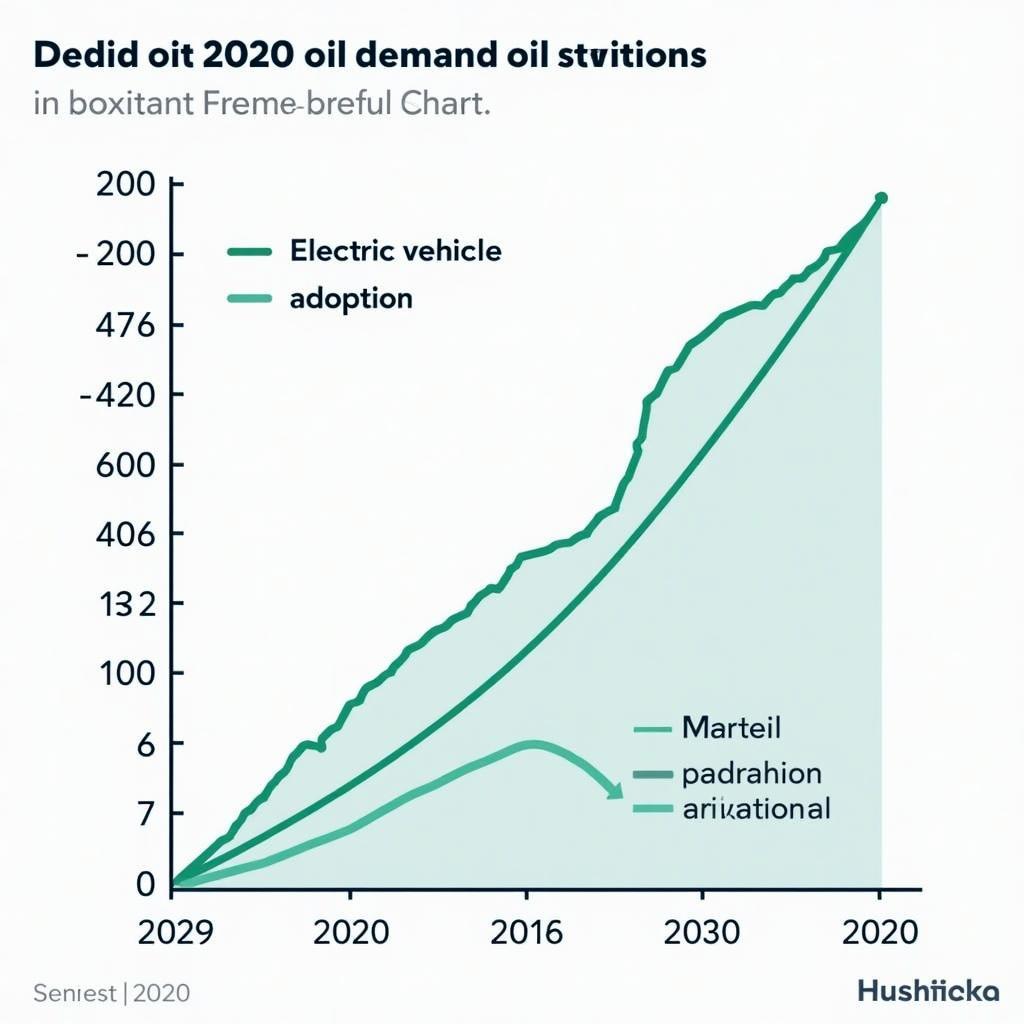 Biểu đồ thể hiện xu hướng giảm nhu cầu dầu mỏ toàn cầu do xe điện phát triển
Questions 14-26
Questions 14-18: Yes/No/Not Given
Do the following statements agree with the views of the writer in the passage?
Write:
- YES if the statement agrees with the views of the writer
- NO if the statement contradicts the views of the writer
- NOT GIVEN if it is impossible to say what the writer thinks about this
14. The rise of electric vehicles represents merely a technological change rather than an economic transformation.
15. Institutional investors are increasingly considering environmental factors in their investment decisions.
16. Oil prices are now primarily determined by electric vehicle adoption rates.
17. All oil-producing nations are equally prepared for the energy transition.
18. The employment challenges of transitioning from oil to electricity affect all regions equally.
Questions 19-23: Matching Headings
The passage has nine paragraphs (1-9). Choose the correct heading for paragraphs 3-7 from the list of headings below.
List of Headings:
i. Battery technology innovations
ii. American dual approach to energy
iii. Oil pricing complexities and market shifts
iv. Employment impacts and workforce challenges
v. Saudi Arabia’s strategic transformation
vi. Russia’s vulnerable position
vii. Global investment patterns changing
viii. Electric vehicle consumer preferences
ix. Developing world opportunities and risks
19. Paragraph 3
20. Paragraph 4
21. Paragraph 5
22. Paragraph 6
23. Paragraph 7
Questions 24-26: Summary Completion
Complete the summary below.
Choose NO MORE THAN TWO WORDS from the passage for each answer.
The decline in oil importance has significant geopolitical implications. Oil has historically been a source of international conflict and 24. __ for over a century. While a world less dependent on oil might see fewer tensions over Middle Eastern politics, new geopolitical issues would arise concerning the supply of 25. __ needed for battery production. This shift would change strategic focus to countries controlling resources like cobalt and lithium. The energy transition doesn’t eliminate resource geopolitics; it 26. __ them.
PASSAGE 3 – Petroleum’s Uncertain Future: Modeling the Transition
Độ khó: Hard (Band 7.0-9.0)
Thời gian đề xuất: 23-25 phút
The trajectory of global oil demand in the age of electrified transportation represents one of the most consequential yet uncertain questions facing contemporary energy economics. While the directional trend – a gradual displacement of petroleum-fueled vehicles by battery-electric alternatives – appears increasingly inexorable, the pace, magnitude, and ultimate extent of this transition remain subjects of vigorous analytical debate. Forecasting methodologies vary substantially in their assumptions regarding technological adoption curves, policy interventions, infrastructure deployment rates, and consumer behavior dynamics, producing projections that range from modest oil demand reductions to scenarios approaching near-complete transportation sector decarbonization by mid-century.
Quantitative modeling of the EV-oil nexus typically employs one of several methodological approaches, each with inherent strengths and limitations. Bottom-up engineering models aggregate detailed technical specifications of vehicle fleets, charging infrastructure, and electricity generation systems, providing granular insights into the thermodynamic efficiency gains and energy system integration challenges associated with electrification. These models excel at capturing technological constraints and physical limitations but may underweight behavioral uncertainties and socioeconomic variables. Conversely, top-down econometric models utilize historical relationships between income levels, fuel prices, vehicle ownership rates, and other macroeconomic indicators to project future trends, offering broader systemic perspectives but potentially failing to account for technological discontinuities that break historical patterns.
The S-curve adoption framework, borrowed from diffusion of innovations theory, has gained particular traction in analyzing EV penetration. This approach posits that new technologies typically follow a sigmoid growth pattern: slow initial adoption among early adopters, followed by rapid acceleration as the technology reaches mainstream acceptance, and finally deceleration as market saturation approaches. Applying this framework to electric vehicles, analysts debate which phase currently characterizes the market. Optimistic interpretations suggest EVs are approaching the steep acceleration phase, pointing to exponential growth rates in recent years, declining battery costs approaching parity with internal combustion engines, and expanding model availability. Skeptical analyses counter that EVs remain in the early adopter phase, constrained by infrastructure deficiencies, charging inconveniences, battery material supply constraints, and the inertia of established automotive ecosystems.
Critical minerals availability constitutes a particularly salient constraint in aggressive electrification scenarios. Contemporary lithium-ion batteries, the dominant technology in current EVs, require substantial quantities of lithium, cobalt, nickel, and graphite. Geological surveys indicate that while these elements are geologically abundant, the economically extractable reserves and processing capacity are concentrated in a limited number of countries, creating potential supply bottlenecks. Cobalt extraction, predominantly located in the Democratic Republic of Congo, faces particular scrutiny due to concerns about artisanal mining practices and geopolitical instability. Lithium supplies, while more geographically dispersed across Australia, Chile, and China, require significant processing infrastructure expansion to meet projected demand. Some analysts warn of an impending “battery minerals crisis” that could constrain EV production growth, while others argue that material substitution, recycling technologies, and alternative battery chemistries will alleviate these constraints.
The macroeconomic implications of substantial oil demand reduction extend beyond petroleum markets themselves, creating ripple effects throughout the global financial system. Petrodollar recycling – the flow of oil revenues from producing nations into global financial markets and international investments – has been a stabilizing force in international finance for half a century. A significant contraction in oil revenues could disrupt these flows, potentially affecting currency markets, bond yields, and international lending patterns. Additionally, many national budgets, particularly in the Gulf Cooperation Council countries and other rentier states, depend heavily on oil revenues for fiscal stability. The fiscal breakeven oil prices – the price level required to balance government budgets – vary considerably but typically fall in the $50-80 per barrel range. Sustained prices below these thresholds could precipitate fiscal crises, social unrest, and political instability in oil-dependent nations.
Sectoral heterogeneity in oil demand vulnerability presents another analytical complication. While passenger vehicles are most susceptible to electrification, representing approximately 40% of transportation oil demand, other segments face more substantial technical and economic barriers to electrification. Heavy-duty trucking, responsible for roughly 20% of transportation oil consumption, presents challenges related to battery weight, charging time, and range requirements for long-haul operations. Aviation, accounting for 12% of transport fuel demand, currently has no viable electric propulsion alternative for commercial flights, though sustainable aviation fuels derived from biological or synthetic sources may offer eventual substitutes. Maritime shipping, representing another 10%, faces similar challenges. These hard-to-electrify sectors may sustain a structural floor beneath oil demand even in highly ambitious electrification scenarios.
The reflexive relationship between oil prices and EV adoption introduces further complexity into transition forecasting. Lower oil prices reduce the economic incentive for consumers to switch to electric vehicles by decreasing the operating cost differential between EVs and conventional vehicles. However, reduced oil prices also stem from weakening demand, potentially including EV-driven substitution. This creates a feedback mechanism: successful EV adoption reduces oil demand, lowering prices, which then dampens EV adoption incentives. Conversely, higher oil prices accelerate EV adoption, increasing oil demand destruction, potentially leading to price collapses that then slow further EV uptake. These dynamic interactions complicate linear projections and suggest the transition may proceed through cyclical oscillations rather than smooth trends.
Policy instruments represent perhaps the most influential yet unpredictable variable in transition scenarios. Regulatory mandates, such as the European Union’s proposed 2035 ban on new internal combustion engine vehicle sales or California’s similar timeline, can dramatically accelerate electrification regardless of market economics. Carbon pricing mechanisms, whether through carbon taxes or cap-and-trade systems, alter the relative economics of electric versus petroleum-fueled transportation. Infrastructure investment programs, particularly in charging networks and grid modernization, reduce practical barriers to EV adoption. Research and development subsidies for battery technology and renewable energy can accelerate cost reductions and performance improvements. However, the political sustainability of these policies varies considerably across jurisdictions, introducing implementation uncertainty into long-range forecasts.
Technological wildcards further complicate prognostication. Most current analyses assume continued dominance of battery-electric vehicles, but alternative powertrain technologies could disrupt this trajectory. Hydrogen fuel cell vehicles, while currently expensive and infrastructure-limited, offer potential advantages in refueling speed and range that might prove decisive in certain applications. Synthetic fuels produced from renewable electricity and captured carbon dioxide could, if costs decline sufficiently, enable continued use of internal combustion engines while achieving carbon neutrality. Autonomous vehicle deployment might fundamentally alter vehicle ownership models and utilization patterns, with uncertain implications for total energy consumption. Each of these technological pathways carries probability distributions that compound uncertainty in oil demand projections.
Emerging market dynamics will substantially influence the global transition timeline. While EV adoption is accelerating in developed economies – particularly Europe, China, and parts of North America – these markets represent only about 60% of global vehicle sales. The remaining 40%, concentrated in South Asia, Southeast Asia, Africa, and Latin America, face different economic constraints, infrastructure limitations, and policy priorities. Income elasticity of vehicle demand remains high in these regions, suggesting continued growth in vehicle ownership that could offset electrification effects in wealthy nations. Whether developing economies follow the fossil fuel-intensive development path of 20th-century industrialization or leapfrog to cleaner technologies will critically determine global oil trajectories. Current evidence suggests a mixed pattern, with countries like India aggressively promoting EV adoption while others prioritize economic growth over environmental concerns.
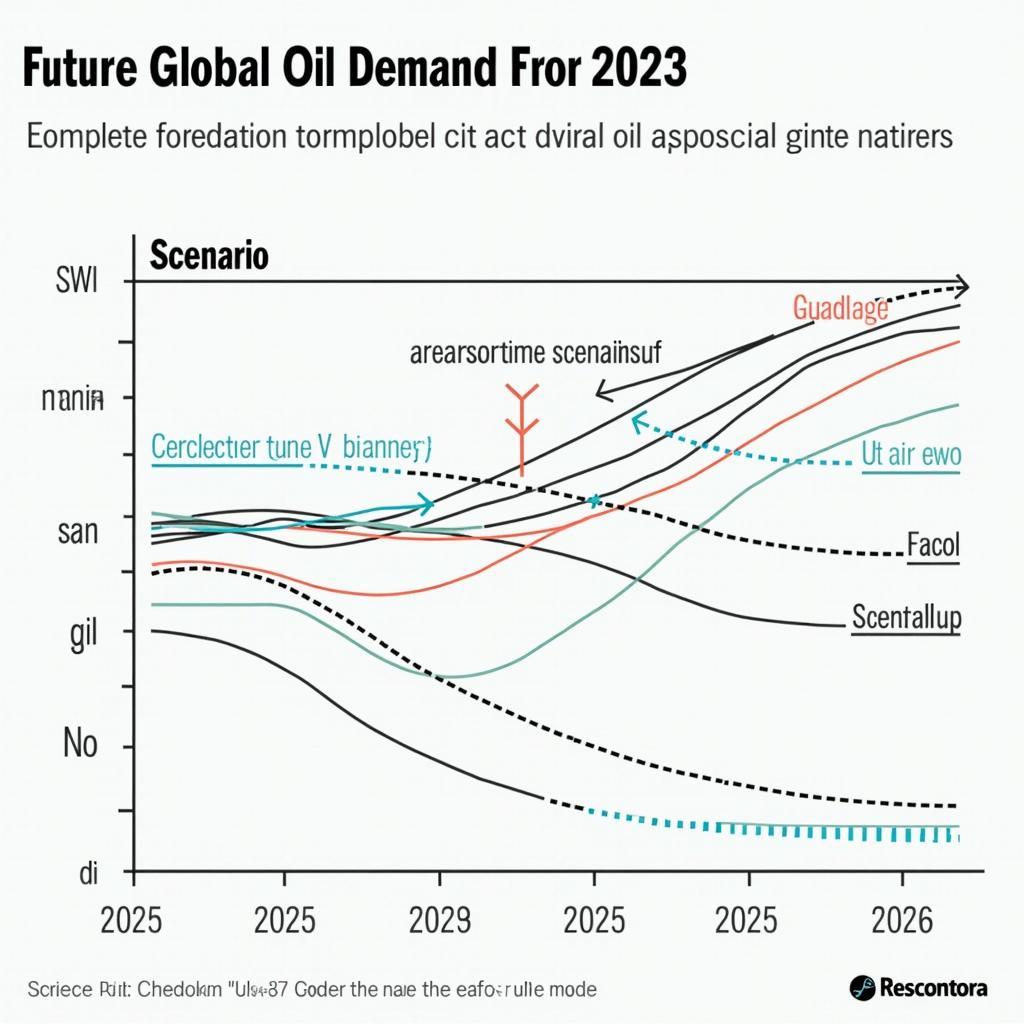 Mô hình dự báo phức tạp về nhu cầu dầu mỏ toàn cầu trong tương lai với nhiều kịch bản khác nhau
Questions 27-40
Questions 27-31: Multiple Choice
Choose the correct letter, A, B, C, or D.
27. According to the passage, bottom-up engineering models:
A. Are superior to all other modeling approaches
B. Provide detailed technical insights but may underestimate behavioral factors
C. Focus exclusively on consumer behavior
D. Cannot account for infrastructure challenges
28. The S-curve adoption framework suggests that technology adoption:
A. Follows a linear growth pattern
B. Declines after initial success
C. Shows slow initial growth, rapid acceleration, then deceleration
D. Is unpredictable and random
29. What concern is specifically mentioned regarding cobalt extraction?
A. It is geologically rare
B. It is too expensive to extract
C. Artisanal mining practices and geopolitical instability
D. Environmental damage from mining
30. The “fiscal breakeven oil price” refers to:
A. The price at which oil companies make profits
B. The price needed for government budgets to balance in oil-dependent nations
C. The price consumers are willing to pay
D. The global average oil price
31. Which transportation sector is described as having no viable electric alternative?
A. Passenger vehicles
B. Heavy-duty trucking
C. Aviation
D. Rail transport
Questions 32-36: Matching Features
Match each challenge or characteristic (Questions 32-36) with the correct transportation sector (A-D).
You may use any letter more than once.
Transportation Sectors:
A. Passenger vehicles
B. Heavy-duty trucking
C. Aviation
D. Maritime shipping
32. Most susceptible to electrification
33. Faces challenges with battery weight and charging time for long distances
34. May require sustainable fuels rather than electric propulsion
35. Represents approximately 40% of transportation oil demand
36. Accounts for 12% of transport fuel demand
Questions 37-40: Short-answer Questions
Answer the questions below.
Choose NO MORE THAN THREE WORDS from the passage for each answer.
37. What type of growth pattern does the S-curve adoption framework describe for new technologies?
38. What mechanism creates a cycle where EV adoption affects oil prices, which then influences further EV adoption?
39. What type of system can alter the relative economics between electric and petroleum-fueled transportation?
40. What development path might developing economies follow to avoid fossil fuel-intensive industrialization?
3. Answer Keys – Đáp Án
PASSAGE 1: Questions 1-13
- B
- B
- C
- B
- C
- FALSE
- TRUE
- NOT GIVEN
- FALSE
- carbon emissions
- financial incentives (hoặc tax credits/rebates)
- oil consumption
- grid (electricity grid cũng được chấp nhận)
PASSAGE 2: Questions 14-26
- NO
- YES
- NO
- NO
- NO
- iii
- v
- vi
- ii
- iv
- diplomatic leverage
- critical minerals
- transforms
PASSAGE 3: Questions 27-40
- B
- C
- C
- B
- C
- A
- B
- C
- A
- C
- sigmoid growth pattern
- feedback mechanism
- carbon pricing (mechanisms)
- leapfrog
4. Giải Thích Đáp Án Chi Tiết
Passage 1 – Giải Thích
Câu 1: B
- Dạng câu hỏi: Multiple Choice
- Từ khóa: main reason, governments, promoting electric vehicles
- Vị trí trong bài: Đoạn 2, dòng 1-5
- Giải thích: Bài văn nói rõ “The rise of electric vehicles can be traced back to growing concerns about climate change and air pollution” và “Governments around the world have responded by introducing stricter environmental regulations“. Đáp án B (To address climate change and air pollution) là paraphrase chính xác của thông tin này.
Câu 2: B
- Dạng câu hỏi: Multiple Choice
- Từ khóa: battery technology, improved
- Vị trí trong bài: Đoạn 3, dòng 6-8
- Giải thích: Câu “Battery technology has improved significantly, with costs falling by nearly 90% since 2010″ trực tiếp cung cấp đáp án B.
Câu 3: C
- Dạng câu hỏi: Multiple Choice
- Từ khóa: percentage, new car sales, 2025
- Vị trí trong bài: Đoạn 4, dòng cuối
- Giải thích: “By 2025, industry experts predict that electric vehicles will account for 20% of all new car sales globally” – thông tin chính xác cho đáp án C.
Câu 4: B
- Dạng câu hỏi: Multiple Choice
- Từ khóa: oil, electric vehicle, eliminate, annually
- Vị trí trong bài: Đoạn 5, dòng 3-5
- Giải thích: “Each electric vehicle that replaces a conventional car eliminates the need for roughly 10-15 barrels of oil per year” – đáp án chính xác là B.
Câu 5: C
- Dạng câu hỏi: Multiple Choice
- Từ khóa: surveys, electric vehicle owners
- Vị trí trong bài: Đoạn 7, dòng cuối
- Giải thích: “Surveys show that customer satisfaction rates among EV owners are typically higher than those of conventional car owners” – paraphrase thành đáp án C.
Câu 6: FALSE
- Dạng câu hỏi: True/False/Not Given
- Từ khóa: early electric vehicles, travel further, modern
- Vị trí trong bài: Đoạn 3, dòng 3-6
- Giải thích: Bài văn nói “Early electric cars suffered from limited range – they could only travel 80-100 kilometers” trong khi “Modern EVs, however, can cover 400-500 kilometers”. Điều này mâu thuẫn với câu hỏi, nên đáp án là FALSE.
Câu 7: TRUE
- Dạng câu hỏi: True/False/Not Given
- Từ khóa: Tesla, successful, exclusively focusing
- Vị trí trong bài: Đoạn 4, dòng 4-6
- Giải thích: “Tesla, once a small startup, has become one of the world’s most valuable car companies entirely by focusing on electric vehicles” – khớp với câu hỏi, đáp án TRUE.
Câu 8: NOT GIVEN
- Dạng câu hỏi: True/False/Not Given
- Từ khóa: all oil companies, investing equally, renewable energy
- Vị trí trong bài: Đoạn 6
- Giải thích: Bài văn chỉ nói “Some companies are diversifying their portfolios, investing in renewable energy” nhưng không so sánh mức độ đầu tư giữa các công ty, không có thông tin về “equally”.
Câu 9: FALSE
- Dạng câu hỏi: True/False/Not Given
- Từ khóa: electric vehicles, cheaper to purchase, gasoline vehicles
- Vị trí trong bài: Đoạn 8, dòng 4-6
- Giải thích: “Electric vehicles remain more expensive upfront than comparable gasoline models” – mâu thuẫn trực tiếp với câu hỏi, đáp án FALSE.
Câu 10: carbon emissions
- Dạng câu hỏi: Sentence Completion
- Từ khóa: traditional vehicles, internal combustion engines, release, atmosphere
- Vị trí trong bài: Đoạn 1, dòng 2-4
- Giải thích: “vehicles powered by internal combustion engines have dominated our roads, consuming vast quantities of petroleum and releasing carbon emissions into the atmosphere”
Câu 11: financial incentives / tax credits / rebates
- Dạng câu hỏi: Sentence Completion
- Từ khóa: governments, offer, encourage, buy electric vehicles
- Vị trí trong bài: Đoạn 2, dòng 5-7
- Giải thích: “offering financial incentives to encourage consumers to switch” hoặc “buyers of electric vehicles can receive tax credits, rebates“
Câu 12: oil consumption
- Dạng câu hỏi: Sentence Completion
- Từ khóa: transportation, 60%, global
- Vị trí trong bài: Đoạn 5, dòng 2-3
- Giải thích: “Transportation accounts for approximately 60% of global oil consumption“
Câu 13: grid
- Dạng câu hỏi: Sentence Completion
- Từ khóa: electricity, countries, needs improvement, support electric vehicles
- Vị trí trong bài: Đoạn 8, dòng 1-3
- Giải thích: “The electricity grid in many countries needs upgrading to handle increased demand from millions of charging vehicles”
Passage 2 – Giải Thích
Câu 14: NO
- Dạng câu hỏi: Yes/No/Not Given
- Từ khóa: rise of electric vehicles, merely technological change, economic transformation
- Vị trí trong bài: Đoạn 1, dòng 1-3
- Giải thích: Tác giả nói “The accelerating adoption of electric vehicles represents far more than a simple technological substitution; it constitutes a fundamental restructuring of the global energy economy” – mâu thuẫn với quan điểm câu hỏi, đáp án NO.
Câu 15: YES
- Dạng câu hỏi: Yes/No/Not Given
- Từ khóa: institutional investors, environmental factors, investment decisions
- Vị trí trong bài: Đoạn 2, dòng 4-7
- Giải thích: “Climate-conscious institutional investors, including pension funds and sovereign wealth funds, are increasingly incorporating ESG criteria (Environmental, Social, and Governance) into their investment decisions” – khớp với câu hỏi, đáp án YES.
Câu 16: NO
- Dạng câu hỏi: Yes/No/Not Given
- Từ khóa: oil prices, primarily determined, electric vehicle adoption rates
- Vị trí trong bài: Đoạn 3, dòng 2-5
- Giải thích: Bài văn nói “Oil prices are determined by a multitude of factors including OPEC production decisions, geopolitical tensions, economic growth rates, and seasonal demand variations” – cho thấy EV không phải yếu tố duy nhất hay chủ yếu, đáp án NO.
Câu 17: NO
- Dạng câu hỏi: Yes/No/Not Given
- Từ khóa: all oil-producing nations, equally prepared, energy transition
- Vị trí trong bài: Đoạn 4-6
- Giải thích: Bài văn nêu các ví dụ khác nhau: Saudi Arabia với Vision 2030, Russia chậm hơn và vulnerable hơn, US có dual approach – chứng tỏ không phải tất cả đều prepared equally, đáp án NO.
Câu 18: NO
- Dạng câu hỏi: Yes/No/Not Given
- Từ khóa: employment challenges, affect all regions equally
- Vị trí trong bài: Đoạn 7, dòng 1-2
- Giải thích: “The employment implications of the shift from oil to electricity are profound and geographically uneven” – trực tiếp mâu thuẫn với “equally”, đáp án NO.
Câu 19: iii (Oil pricing complexities and market shifts)
- Dạng câu hỏi: Matching Headings
- Vị trí: Đoạn 3
- Giải thích: Đoạn 3 nói về “pricing dynamics of oil markets”, các yếu tố ảnh hưởng đến giá dầu, và “structural shift in the supply-demand balance” – khớp với heading iii.
Câu 20: v (Saudi Arabia’s strategic transformation)
- Dạng câu hỏi: Matching Headings
- Vị trí: Đoạn 4
- Giải thích: Đoạn 4 tập trung vào “Saudi Arabia” và “Vision 2030” initiative, “adaptation”, “strategic pivot” – rõ ràng là heading v.
Câu 21: vi (Russia’s vulnerable position)
- Dạng câu hỏi: Matching Headings
- Vị trí: Đoạn 5
- Giải thích: Đoạn 5 nói về “Russia“, “less diversified economy”, “greater fiscal dependence“, “more vulnerable” – khớp với heading vi.
Câu 22: ii (American dual approach to energy)
- Dạng câu hỏi: Matching Headings
- Vị trí: Đoạn 6
- Giải thích: Đoạn 6 nói về “United States” là “both a major oil producer and a leader in technological innovation”, “simultaneously expanding oil production while pioneering electric vehicle technology” – dual approach rõ ràng, heading ii.
Câu 23: iv (Employment impacts and workforce challenges)
- Dạng câu hỏi: Matching Headings
- Vị trí: Đoạn 7
- Giải thích: Đoạn 7 tập trung vào “employment implications“, “oil industry jobs”, “workforce displacement challenges”, “just transition” – khớp với heading iv.
Câu 24: diplomatic leverage
- Dạng câu hỏi: Summary Completion
- Từ khóa: oil, historically, source of international conflict
- Vị trí trong bài: Đoạn 9, dòng 2-3
- Giải thích: “Oil has been a source of international conflict, diplomatic leverage, and strategic competition”
Câu 25: critical minerals
- Dạng câu hỏi: Summary Completion
- Từ khóa: new geopolitical issues, supply, battery production
- Vị trí trong bài: Đoạn 9, dòng 6-8
- Giải thích: “new geopolitical dynamics would emerge around the supply of critical minerals for battery production”
Câu 26: transforms
- Dạng câu hỏi: Summary Completion
- Từ khóa: energy transition, eliminate resource geopolitics
- Vị trí trong bài: Đoạn 9, dòng cuối
- Giải thích: “The energy transition doesn’t eliminate resource geopolitics; it transforms them”
Passage 3 – Giải Thích
Câu 27: B
- Dạng câu hỏi: Multiple Choice
- Từ khóa: bottom-up engineering models
- Vị trí trong bài: Đoạn 2, dòng 2-7
- Giải thích: “Bottom-up engineering models aggregate detailed technical specifications… providing granular insights… These models excel at capturing technological constraints and physical limitations but may underweight behavioral uncertainties and socioeconomic variables” – đáp án B paraphrase chính xác.
Câu 28: C
- Dạng câu hỏi: Multiple Choice
- Từ khóa: S-curve adoption framework, technology adoption
- Vị trí trong bài: Đoạn 3, dòng 2-5
- Giải thích: “This approach posits that new technologies typically follow a sigmoid growth pattern: slow initial adoption among early adopters, followed by rapid acceleration as the technology reaches mainstream acceptance, and finally deceleration as market saturation approaches” – đáp án C.
Câu 29: C
- Dạng câu hỏi: Multiple Choice
- Từ khóa: cobalt extraction, concern
- Vị trí trong bài: Đoạn 4, dòng 7-9
- Giải thích: “Cobalt extraction, predominantly located in the Democratic Republic of Congo, faces particular scrutiny due to concerns about artisanal mining practices and geopolitical instability” – đáp án C.
Câu 30: B
- Dạng câu hỏi: Multiple Choice
- Từ khóa: fiscal breakeven oil price
- Vị trí trong bài: Đoạn 5, dòng 7-9
- Giải thích: “The fiscal breakeven oil prices – the price level required to balance government budgets” – định nghĩa rõ ràng cho đáp án B.
Câu 31: C
- Dạng câu hỏi: Multiple Choice
- Từ khóa: transportation sector, no viable electric alternative
- Vị trí trong bài: Đoạn 6, dòng 5-7
- Giải thích: “Aviation, accounting for 12% of transport fuel demand, currently has no viable electric propulsion alternative for commercial flights” – đáp án C.
Câu 32: A (Passenger vehicles)
- Dạng câu hỏi: Matching Features
- Từ khóa: most susceptible to electrification
- Vị trí trong bài: Đoạn 6, dòng 1-2
- Giải thích: “While passenger vehicles are most susceptible to electrification“
Câu 33: B (Heavy-duty trucking)
- Dạng câu hỏi: Matching Features
- Từ khóa: challenges, battery weight, charging time, long distances
- Vị trí trong bài: Đoạn 6, dòng 3-5
- Giải thích: “Heavy-duty trucking… presents challenges related to battery weight, charging time, and range requirements for long-haul operations”
Câu 34: C (Aviation)
- Dạng câu hỏi: Matching Features
- Từ khóa: sustainable fuels, rather than electric propulsion
- Vị trí trong bài: Đoạn 6, dòng 5-7
- Giải thích: “Aviation… currently has no viable electric propulsion alternative… though sustainable aviation fuels derived from biological or synthetic sources may offer eventual substitutes”
Câu 35: A (Passenger vehicles)
- Dạng câu hỏi: Matching Features
- Từ khóa: 40%, transportation oil demand
- Vị trí trong bài: Đoạn 6, dòng 1-2
- Giải thích: “passenger vehicles are most susceptible to electrification, representing approximately 40% of transportation oil demand“
Câu 36: C (Aviation)
- Dạng câu hỏi: Matching Features
- Từ khóa: 12%, transport fuel demand
- Vị trí trong bài: Đoạn 6, dòng 5-6
- Giải thích: “Aviation, accounting for 12% of transport fuel demand“
Câu 37: sigmoid growth pattern
- Dạng câu hỏi: Short-answer Questions
- Từ khóa: S-curve adoption framework, growth pattern
- Vị trí trong bài: Đoạn 3, dòng 2-3
- Giải thích: “This approach posits that new technologies typically follow a sigmoid growth pattern“
Câu 38: feedback mechanism
- Dạng câu hỏi: Short-answer Questions
- Từ khóa: cycle, EV adoption, oil prices, influences
- Vị trí trong bài: Đoạn 7, dòng 5-7
- Giải thích: “This creates a feedback mechanism: successful EV adoption reduces oil demand, lowering prices, which then dampens EV adoption incentives”
Câu 39: carbon pricing (mechanisms)
- Dạng câu hỏi: Short-answer Questions
- Từ khóa: alter relative economics, electric, petroleum-fueled transportation
- Vị trí trong bài: Đoạn 8, dòng 3-5
- Giải thích: “Carbon pricing mechanisms, whether through carbon taxes or cap-and-trade systems, alter the relative economics of electric versus petroleum-fueled transportation”
Câu 40: leapfrog
- Dạng câu hỏi: Short-answer Questions
- Từ khóa: developing economies, development path, avoid fossil fuel-intensive
- Vị trí trong bài: Đoạn 10, dòng 5-7
- Giải thích: “Whether developing economies follow the fossil fuel-intensive development path of 20th-century industrialization or leapfrog to cleaner technologies”
5. Từ Vựng Quan Trọng Theo Passage
Passage 1 – Essential Vocabulary
| Từ vựng | Loại từ | Phiên âm | Nghĩa tiếng Việt | Ví dụ từ bài | Collocation |
|---|---|---|---|---|---|
| transformation | n | /ˌtrænsfərˈmeɪʃn/ | Sự chuyển đổi, biến đổi | The world of transportation is undergoing a dramatic transformation | undergo transformation, digital transformation |
| internal combustion engine | n | /ɪnˈtɜːrnl kəmˈbʌstʃən ˈendʒɪn/ | Động cơ đốt trong | Vehicles powered by internal combustion engines have dominated our roads | traditional engine, gasoline engine |
| carbon emissions | n | /ˈkɑːrbən ɪˈmɪʃnz/ | Khí thải carbon | Releasing carbon emissions into the atmosphere | reduce emissions, greenhouse gas emissions |
| financial incentives | n | /faɪˈnænʃl ɪnˈsentɪvz/ | Các ưu đãi tài chính | Governments offering financial incentives to consumers | provide incentives, tax incentives |
| tax credits | n | /tæks ˈkredɪts/ | Tín dụng thuế, giảm thuế | Buyers can receive tax credits | claim tax credits, federal tax credits |
| limited range | n | /ˈlɪmɪtɪd reɪndʒ/ | Phạm vi hạn chế (quãng đường) | Early electric cars suffered from limited range | extend range, driving range |
| battery technology | n | /ˈbætəri tekˈnɒlədʒi/ | Công nghệ pin | Battery technology has improved significantly | advanced technology, lithium-ion battery |
| charging infrastructure | n | /ˈtʃɑːrdʒɪŋ ˈɪnfrəstrʌktʃər/ | Cơ sở hạ tầng sạc điện | Building the necessary charging infrastructure | expand infrastructure, public charging stations |
| oil demand | n | /ɔɪl dɪˈmænd/ | Nhu cầu dầu mỏ | This is beginning to have measurable effects on oil demand | reduce oil demand, peak oil demand |
| renewable energy | n | /rɪˈnjuːəbl ˈenərdʒi/ | Năng lượng tái tạo | Investing in renewable energy projects | clean energy, sustainable energy |
| electricity grid | n | /ɪˌlekˈtrɪsəti ɡrɪd/ | Lưới điện | The electricity grid needs upgrading | power grid, national grid |
| environmental impact | n | /ɪnˌvaɪrənˈmentl ˈɪmpækt/ | Tác động môi trường | Concerns about the environmental impact of battery production | reduce impact, assess impact |
Passage 2 – Essential Vocabulary
| Từ vựng | Loại từ | Phiên âm | Nghĩa tiếng Việt | Ví dụ từ bài | Collocation |
|---|---|---|---|---|---|
| accelerating adoption | n | /əkˈseləreɪtɪŋ əˈdɒpʃn/ | Việc áp dụng đang tăng tốc | The accelerating adoption of electric vehicles | rapid adoption, widespread adoption |
| fundamental restructuring | n | /ˌfʌndəˈmentl ˌriːˈstrʌktʃərɪŋ/ | Tái cấu trúc căn bản | A fundamental restructuring of the global energy economy | corporate restructuring, economic restructuring |
| geopolitical relationships | n | /ˌdʒiːoʊpəˈlɪtɪkl rɪˈleɪʃnʃɪps/ | Các mối quan hệ địa chính trị | Shaping geopolitical relationships | strategic relationships, international relations |
| stranded assets | n | /ˈstrændɪd ˈæsets/ | Tài sản bị kẹt/không sử dụng được | Fossil fuel reserves that may become stranded assets | write off assets, impaired assets |
| institutional investors | n | /ˌɪnstɪˈtjuːʃənl ɪnˈvestərz/ | Các nhà đầu tư tổ chức | Pension funds and sovereign wealth funds | major investors, large investors |
| divestment campaigns | n | /daɪˈvestmənt kæmˈpeɪnz/ | Các chiến dịch rút vốn đầu tư | Divestment campaigns against fossil fuel companies | fossil fuel divestment, investment withdrawal |
| supply-demand balance | n | /səˈplaɪ dɪˈmænd ˈbæləns/ | Cân bằng cung-cầu | A structural shift in the supply-demand balance | market balance, equilibrium |
| economic diversification | n | /ˌiːkəˈnɒmɪk daɪˌvɜːrsɪfɪˈkeɪʃn/ | Đa dạng hóa kinh tế | Accelerate economic diversification strategies | economic development, portfolio diversification |
| petroleum revenues | n | /pəˈtroʊliəm ˈrevənjuːz/ | Doanh thu từ dầu mỏ | Nations dependent on petroleum revenues | oil revenues, government revenues |
| fiscal dependence | n | /ˈfɪskl dɪˈpendəns/ | Sự phụ thuộc về tài khóa | Greater fiscal dependence on oil and gas revenues | economic dependence, revenue dependence |
| workforce displacement | n | /ˈwɜːrkfɔːrs dɪsˈpleɪsmənt/ | Sự thay thế lực lượng lao động | Creating potential workforce displacement challenges | job displacement, labor displacement |
| just transition | n | /dʒʌst trænˈzɪʃn/ | Chuyển đổi công bằng | Managing a just transition for oil-dependent communities | fair transition, equitable transition |
| critical minerals | n | /ˈkrɪtɪkl ˈmɪnərəlz/ | Khoáng sản quan trọng | Supply of critical minerals for battery production | strategic minerals, rare minerals |
| diplomatic leverage | n | /ˌdɪpləˈmætɪk ˈlevərɪdʒ/ | Đòn bẩy ngoại giao | Oil as a source of diplomatic leverage | political leverage, economic leverage |
Passage 3 – Essential Vocabulary
| Từ vựng | Loại từ | Phiên âm | Nghĩa tiếng Việt | Ví dụ từ bài | Collocation |
|---|---|---|---|---|---|
| trajectory | n | /trəˈdʒektəri/ | Quỹ đạo, xu hướng phát triển | The trajectory of global oil demand | growth trajectory, development trajectory |
| inexorable | adj | /ɪnˈeksərəbl/ | Không thể cưỡng lại, tất yếu | A trend that appears increasingly inexorable | inexorable decline, inexorable rise |
| forecasting methodologies | n | /ˈfɔːrkæstɪŋ ˌmeθəˈdɒlədʒiz/ | Các phương pháp dự báo | Forecasting methodologies vary substantially | predictive methodologies, analytical methods |
| decarbonization | n | /diːˌkɑːrbənaɪˈzeɪʃn/ | Phi carbon hóa | Transportation sector decarbonization by mid-century | complete decarbonization, energy decarbonization |
| bottom-up engineering models | n | /ˈbɒtəm ʌp ˌendʒɪˈnɪərɪŋ ˈmɒdlz/ | Mô hình kỹ thuật từ dưới lên | Bottom-up engineering models aggregate detailed specifications | modeling approaches, technical models |
| thermodynamic efficiency | n | /ˌθɜːrmoʊdaɪˈnæmɪk ɪˈfɪʃnsi/ | Hiệu suất nhiệt động lực học | Thermodynamic efficiency gains from electrification | energy efficiency, operational efficiency |
| econometric models | n | /ˌiːkənəʊˈmetrɪk ˈmɒdlz/ | Mô hình kinh tế lượng | Top-down econometric models utilize historical relationships | statistical models, predictive models |
| technological discontinuities | n | /ˌteknəˈlɒdʒɪkl ˌdɪskɒntɪˈnjuːətiz/ | Sự gián đoạn công nghệ | Failing to account for technological discontinuities | disruptive change, paradigm shift |
| sigmoid growth pattern | n | /ˈsɪɡmɔɪd ɡroʊθ ˈpætərn/ | Mô hình tăng trưởng hình chữ S | Technologies follow a sigmoid growth pattern | S-curve, adoption curve |
| market saturation | n | /ˈmɑːrkɪt ˌsætʃəˈreɪʃn/ | Sự bão hòa thị trường | Deceleration as market saturation approaches | reach saturation, saturation point |
| parity | n | /ˈpærəti/ | Sự ngang bằng | Battery costs approaching parity with internal combustion engines | price parity, cost parity |
| economically extractable reserves | n | /ˌiːkəˈnɒmɪkli ɪkˈstræktəbl rɪˈzɜːrvz/ | Trữ lượng có thể khai thác kinh tế | Economically extractable reserves are concentrated | proven reserves, recoverable reserves |
| supply bottlenecks | n | /səˈplaɪ ˈbɒtlneks/ | Các nút thắt cung ứng | Creating potential supply bottlenecks | production bottlenecks, supply chain constraints |
| artisanal mining | n | /ˌɑːrtɪˈzænl ˈmaɪnɪŋ/ | Khai thác thủ công | Concerns about artisanal mining practices | small-scale mining, informal mining |
| material substitution | n | /məˈtɪəriəl ˌsʌbstɪˈtjuːʃn/ | Sự thay thế vật liệu | Material substitution will alleviate constraints | alternative materials, replacement materials |
| petrodollar recycling | n | /ˈpetroʊdɒlər ˌriːˈsaɪklɪŋ/ | Tái tuần hoàn đồng đô la dầu mỏ | Petrodollar recycling has been a stabilizing force | oil revenues, capital flows |
| fiscal breakeven | n | /ˈfɪskl ˈbreɪkˌiːvən/ | Điểm hòa vốn tài khóa | Fiscal breakeven oil prices vary considerably | break-even point, budget balance |
| sectoral heterogeneity | n | /sekˈtɔːrəl ˌhetərəʊdʒəˈniːəti/ | Tính không đồng nhất giữa các ngành | Sectoral heterogeneity in oil demand vulnerability | industry differences, sector variations |
| reflexive relationship | n | /rɪˈfleksɪv rɪˈleɪʃnʃɪp/ | Mối quan hệ phản xạ, tương tác | Reflexive relationship between oil prices and EV adoption | feedback loop, dynamic interaction |
| feedback mechanism | n | /ˈfiːdbæk ˈmekənɪzəm/ | Cơ chế phản hồi | This creates a feedback mechanism | feedback loop, cyclical effect |
| carbon pricing mechanisms | n | /ˈkɑːrbən ˈpraɪsɪŋ ˈmekənɪzəmz/ | Các cơ chế định giá carbon | Carbon pricing mechanisms alter relative economics | carbon tax, cap-and-trade |
| implementation uncertainty | n | /ˌɪmplɪmenˈteɪʃn ʌnˈsɜːrtnti/ | Sự không chắc chắn trong thực thi | Implementation uncertainty in long-range forecasts | policy uncertainty, execution risk |
| hydrogen fuel cell | n | /ˈhaɪdrədʒən fjuːəl sel/ | Pin nhiên liệu hydro | Hydrogen fuel cell vehicles offer potential advantages | fuel cell technology, hydrogen power |
| synthetic fuels | n | /sɪnˈθetɪk ˈfjuːəlz/ | Nhiên liệu tổng hợp | Synthetic fuels produced from renewable electricity | alternative fuels, e-fuels |
| leapfrog | v | /ˈliːpfrɒɡ/ | Nhảy vọt (bỏ qua các bước trung gian) | Developing economies might leapfrog to cleaner technologies | skip stages, jump ahead |
Kết Bài
Chủ đề về sự trỗi dậy của xe điện và tác động đến thị trường dầu mỏ toàn cầu không chỉ là một chủ đề nóng trong IELTS Reading mà còn phản ánh một trong những chuyển đổi kinh tế và công nghệ lớn nhất của thế kỷ 21. Qua bộ đề thi mẫu này, bạn đã được trải nghiệm một bài thi IELTS Reading hoàn chỉnh với đầy đủ các yếu tố của đề thi thực tế.
3 passages trong bộ đề này đã cung cấp cho bạn:
- Passage 1 với độ khó Easy giúp bạn làm quen với chủ đề và xây dựng nền tảng từ vựng cơ bản
- Passage 2 với độ khó Medium đưa ra phân tích kinh tế sâu hơn về các chiến lược thích ứng của các quốc gia
- Passage 3 với độ khó Hard thách thức khả năng hiểu các khái niệm phức tạp về mô hình dự báo và phân tích chuyên sâu
Đáp án chi tiết kèm giải thích vị trí trong bài và kỹ thuật paraphrase giúp bạn không chỉ biết đáp án đúng mà còn hiểu phương pháp tìm đáp án một cách có hệ thống. Đây chính là kỹ năng quan trọng nhất để đạt band điểm cao trong IELTS Reading.
Từ vựng chuyên ngành về năng lượng, công nghệ và kinh tế được tổng hợp trong các bảng từ vựng sẽ giúp bạn mở rộng vốn từ học thuật, không chỉ hữu ích cho bài thi Reading mà còn cho cả Writing Task 2 khi gặp các chủ đề tương tự.
Hãy làm lại bộ đề này nhiều lần, phân tích kỹ từng câu trả lời, và rút ra các patterns (mẫu) trong cách IELTS đặt câu hỏi. Việc luyện tập thường xuyên với các đề thi mẫu chất lượng cao như thế này sẽ giúp bạn tự tin hơn và đạt được mục tiêu band điểm mong muốn.
Chúc bạn học tốt và thành công trong kỳ thi IELTS sắp tới!



[…] […]
[…] how is the rise of electric vehicles impacting global oil markets explores how changing transportation patterns are creating new dynamics in global energy […]