Mở bài
Công nghệ thực tế ảo (Virtual Reality – VR) đang tạo nên một cuộc cách mạng trong lĩnh vực giáo dục toàn cầu, mang đến những trải nghiệm học tập chưa từng có. Chủ đề “How Is Virtual Reality Transforming Education?” là một trong những chủ đề công nghệ – giáo dục xuất hiện ngày càng thường xuyên trong IELTS Reading, đặc biệt từ sau năm 2020.
Bài viết này cung cấp một đề thi IELTS Reading hoàn chỉnh với 3 passages từ dễ đến khó, phản ánh đúng cấu trúc và độ khó của đề thi thật. Bạn sẽ được thực hành với 40 câu hỏi đa dạng, bao gồm Multiple Choice, True/False/Not Given, Yes/No/Not Given, Matching Headings, Summary Completion và nhiều dạng khác. Đi kèm là đáp án chi tiết với giải thích về vị trí thông tin, cách paraphrase và kỹ thuật làm bài hiệu quả.
Đề thi này phù hợp cho học viên từ band 5.0 trở lên, giúp bạn làm quen với chủ đề công nghệ trong giáo dục, nâng cao vốn từ vựng học thuật và rèn luyện kỹ năng đọc hiểu ở mọi cấp độ. Hãy dành đúng 60 phút để hoàn thành bài thi trong điều kiện giống thực tế nhất.
Hướng dẫn làm bài IELTS Reading
Tổng Quan Về IELTS Reading Test
IELTS Reading Test kéo dài 60 phút với 3 passages và tổng cộng 40 câu hỏi. Mỗi câu trả lời đúng được tính 1 điểm, không trừ điểm cho câu sai.
Phân bổ thời gian khuyến nghị:
- Passage 1: 15-17 phút (độ khó Easy, band 5.0-6.5)
- Passage 2: 18-20 phút (độ khó Medium, band 6.0-7.5)
- Passage 3: 23-25 phút (độ khó Hard, band 7.0-9.0)
Lưu ý dành 2-3 phút cuối để chuyển đáp án vào answer sheet, đảm bảo viết đúng chính tả và format.
Các Dạng Câu Hỏi Trong Đề Này
Đề thi mẫu này bao gồm 7 dạng câu hỏi phổ biến:
- Multiple Choice (Chọn đáp án đúng)
- True/False/Not Given (Xác định thông tin đúng/sai/không có)
- Yes/No/Not Given (Xác định ý kiến tác giả)
- Matching Headings (Nối tiêu đề với đoạn văn)
- Sentence Completion (Hoàn thành câu)
- Summary Completion (Hoàn thành tóm tắt)
- Matching Features (Nối thông tin với đặc điểm)
IELTS Reading Practice Test
PASSAGE 1 – Virtual Reality Enters The Classroom
Độ khó: Easy (Band 5.0-6.5)
Thời gian đề xuất: 15-17 phút
The integration of virtual reality (VR) technology into educational settings has begun to reshape traditional teaching methods across the world. Unlike conventional classroom tools such as textbooks and videos, VR offers students an immersive experience that allows them to interact with three-dimensional environments and objects. This innovative approach to learning has captured the attention of educators who are seeking more engaging and effective ways to teach complex subjects.
Early adoption of VR in schools started around 2015, primarily in technologically advanced countries such as the United States, Japan, and South Korea. Initial applications focused on science education, where students could explore the human body, travel through the solar system, or observe chemical reactions at a molecular level. Teachers reported that students who used VR showed significantly higher levels of engagement and retention compared to those who learned through traditional methods. The hands-on nature of VR experiences helped students grasp abstract concepts more easily, particularly in subjects like physics and biology.
One of the most compelling advantages of VR in education is its ability to provide experiences that would otherwise be impossible or impractical. Students can visit historical sites without leaving their classroom, conduct dangerous experiments in a safe virtual environment, or practice medical procedures before working with real patients. For instance, medical schools have begun using VR simulators that allow students to perform surgical operations on virtual patients, helping them develop critical skills without any risk to human life. Similarly, architecture students can walk through buildings they have designed, experiencing spatial relationships in ways that blueprints and computer screens cannot convey.
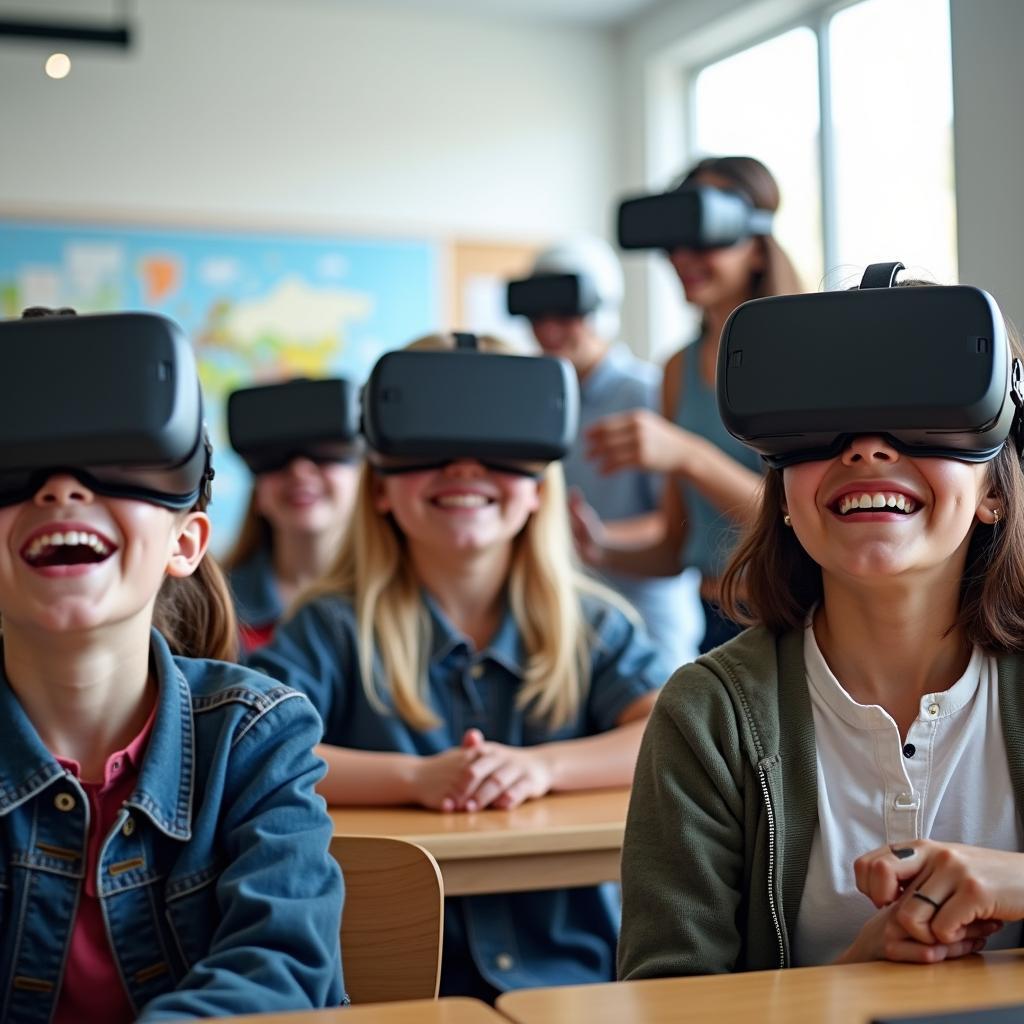 Học sinh đeo kính thực tế ảo VR đang trải nghiệm bài học công nghệ giáo dục hiện đại trong lớp học
Cost has been a significant barrier to widespread adoption of VR technology in schools. High-quality VR headsets can be expensive, with professional-grade devices costing several hundred dollars each. Additionally, schools need powerful computers to run VR programs and must train teachers to use the technology effectively. However, prices have been steadily declining, and several companies have developed more affordable educational VR systems. Some schools have addressed the cost issue by sharing VR equipment among multiple classrooms or purchasing a smaller number of devices for rotating use.
Technical challenges also present obstacles to VR implementation. Many older school buildings lack the infrastructure needed to support VR systems, including sufficient electrical outlets, high-speed internet connections, and adequate space for students to move safely while wearing headsets. Motion sickness is another concern, as some students experience discomfort or nausea when using VR for extended periods. Experts recommend limiting VR sessions to 15-20 minutes and ensuring proper ventilation in rooms where the technology is used.
Despite these challenges, the educational community remains optimistic about VR’s potential. Research conducted at Stanford University found that students using VR to learn about ocean acidification showed greater empathy and understanding of environmental issues than those who learned through traditional lectures or videos. The study suggested that the immersive nature of VR helps students form emotional connections to the material, which can lead to deeper learning and longer-lasting retention of information.
Looking ahead, many educators believe that VR will become as common in classrooms as computers and tablets are today. As the technology continues to improve and become more accessible, its applications in education are likely to expand dramatically. Schools are already experimenting with collaborative VR experiences where students in different locations can learn together in shared virtual spaces, breaking down geographical barriers and creating new opportunities for international cooperation in education.
Questions 1-6: Multiple Choice
Choose the correct letter, A, B, C, or D.
-
What is the main advantage of VR compared to traditional teaching tools?
- A) It is cheaper than textbooks
- B) It provides an immersive three-dimensional experience
- C) It requires less teacher training
- D) It works better for language learning
-
According to the passage, VR was first used extensively in schools around
- A) 2010
- B) 2012
- C) 2015
- D) 2018
-
Medical schools use VR simulators to
- A) reduce the cost of medical education
- B) replace all traditional teaching methods
- C) let students practice operations safely
- D) diagnose patient conditions
-
What is described as a “significant barrier” to using VR in schools?
- A) Student resistance to new technology
- B) The high cost of VR equipment
- C) Lack of educational software
- D) Teacher opposition
-
The passage suggests that motion sickness can be reduced by
- A) using cheaper VR headsets
- B) limiting VR sessions to 15-20 minutes
- C) only using VR with older students
- D) avoiding science subjects
-
The Stanford University research found that VR helped students develop
- A) better test scores in all subjects
- B) stronger computer programming skills
- C) greater empathy for environmental issues
- D) improved physical coordination
Questions 7-10: True/False/Not Given
-
VR technology was initially most popular in Asian and North American countries.
-
All students experience motion sickness when using VR headsets.
-
Schools have completely solved the cost problem of implementing VR.
-
Students in different countries can now learn together using collaborative VR.
Questions 11-13: Sentence Completion
Complete the sentences below. Choose NO MORE THAN TWO WORDS from the passage for each answer.
-
Architecture students can experience __ relationships by walking through their virtual building designs.
-
Many old school buildings do not have enough __ to support VR technology properly.
-
VR helps students form __ connections to educational material, leading to deeper learning.
PASSAGE 2 – Pedagogical Transformations Through Virtual Reality
Độ khó: Medium (Band 6.0-7.5)
Thời gian đề xuất: 18-20 phút
The pedagogical implications of virtual reality extend far beyond mere technological novelty. Educational theorists argue that VR represents a fundamental shift in how knowledge is constructed and transmitted, aligning closely with constructivist learning theories that emphasize experiential learning and active participation. This paradigm shift challenges the traditional didactic approach where teachers serve as primary knowledge transmitters and students as passive recipients.
Cognitive load theory provides a theoretical framework for understanding VR’s educational effectiveness. By presenting information through multiple sensory channels simultaneously, VR can reduce extraneous cognitive load while increasing germane cognitive load – the mental effort directed toward learning and understanding. When students explore a virtual Roman amphitheater, for instance, they simultaneously process visual, spatial, and contextual information, creating richer mental models than those formed through reading text or viewing images alone. This multisensory engagement facilitates the formation of stronger neural pathways, potentially leading to more durable memory traces.
Như cách mà công nghệ đang thay đổi cách học sinh tiếp cận nghệ thuật, VR cũng đang tạo ra những phương pháp học tập hoàn toàn mới trong nhiều lĩnh vực khác nhau. Research in embodied cognition suggests that physical interaction with learning materials enhances conceptual understanding. VR leverages this principle by allowing students to manipulate virtual objects and observe immediate consequences of their actions. In chemistry education, students can virtually combine elements and witness molecular bonding in real-time, receiving instant feedback that reinforces causal relationships between actions and outcomes. This immediacy and interactivity mirror the authentic discovery processes that scientists employ in actual laboratories.
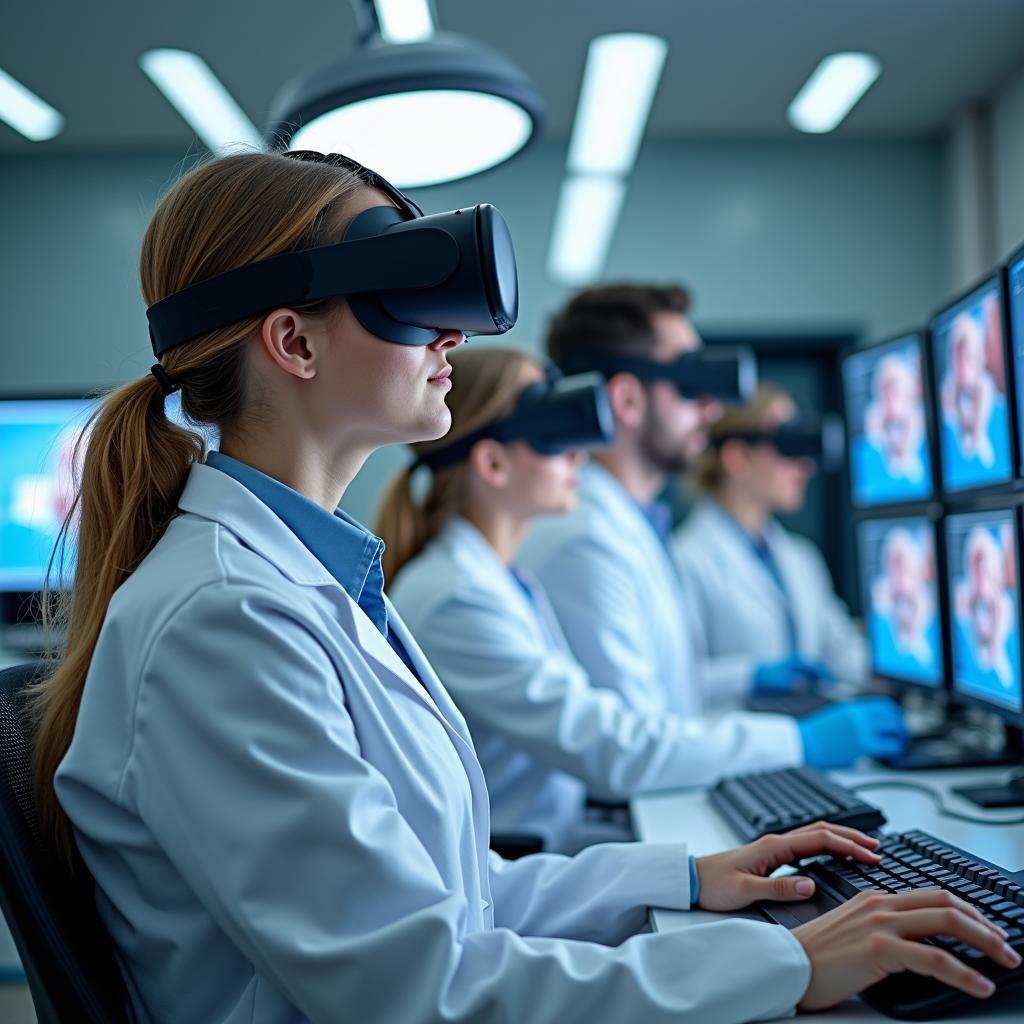 Sinh viên y khoa thực hành kỹ năng phẫu thuật bằng công nghệ thực tế ảo trong phòng đào tạo chuyên nghiệp
The concept of presence – the subjective experience of “being there” in a virtual environment – is crucial to VR’s educational impact. Studies measuring physiological responses such as heart rate and skin conductance confirm that users experience virtual events as psychologically real, even while cognitively aware of their artificial nature. This psychological realism has profound implications for empathy education and perspective-taking. Programs designed to combat prejudice place users in virtual bodies of different races, genders, or abilities, allowing them to experience discrimination firsthand. Research indicates that such experiences produce more substantial and lasting changes in attitudes than traditional diversity training methods.
Collaborative VR environments represent another frontier in educational innovation. Multi-user platforms enable students separated by vast distances to share virtual spaces, working together on projects that would be logistically impossible in physical classrooms. Engineering students in Germany, India, and Brazil might collectively design and test a virtual bridge, learning not only technical concepts but also cross-cultural communication and project management skills. These distributed learning communities prepare students for increasingly globalized workplaces where remote collaboration is becoming standard practice.
However, critical scholars caution against uncritical embrace of VR technology. They argue that immersive environments may inadvertently promote passive consumption rather than critical thinking if not carefully designed. When students explore a pre-constructed virtual world, they might absorb embedded assumptions and biases without questioning them. For example, a historical simulation might present a particular interpretation of events as objective reality, discouraging students from examining alternative perspectives or underlying power structures. Educators must therefore ensure that VR experiences include opportunities for reflection, analysis, and critical evaluation.
Assessment challenges also emerge with VR-based learning. Traditional testing methods may fail to capture the complex competencies developed through immersive experiences. Students might demonstrate sophisticated spatial reasoning or problem-solving abilities in virtual environments while performing poorly on conventional written examinations. This discrepancy suggests the need for new assessment frameworks that recognize diverse forms of knowledge and skill acquisition. Some educators propose using VR itself as an assessment tool, presenting students with novel virtual scenarios and evaluating their performance through automated analysis of their interactions and decisions.
The equity implications of VR in education warrant careful consideration. While technology advocates emphasize VR’s potential to democratize access to experiences previously available only to privileged individuals, skeptics note that unequal distribution of VR resources may exacerbate existing educational disparities. Schools in affluent areas might offer regular VR-enhanced lessons, while those in underfunded districts cannot afford basic equipment. This digital divide risks creating a two-tiered educational system where some students gain 21st-century skills through cutting-edge technology while others remain confined to outdated pedagogical approaches.
Questions 14-18: Yes/No/Not Given
-
Educational theorists believe VR supports constructivist learning principles.
-
Cognitive load theory explains why VR is less effective than traditional teaching.
-
Students using VR to learn chemistry receive immediate feedback on their actions.
-
All VR programs successfully eliminate prejudice and discrimination.
-
Traditional tests adequately measure skills learned through VR experiences.
Questions 19-23: Matching Headings
Choose the correct heading for each section from the list of headings below.
List of Headings:
- i. The role of physical interaction in learning
- ii. Cost concerns in VR implementation
- iii. Theoretical foundations for VR effectiveness
- iv. Dangers of uncritical VR adoption
- v. Global cooperation through virtual platforms
- vi. Psychological impact of virtual presence
- vii. New methods for evaluating student learning
- viii. The gap between rich and poor schools
Sections:
-
Paragraph 2 (starts with “Cognitive load theory…”)
-
Paragraph 4 (starts with “The concept of presence…”)
-
Paragraph 6 (starts with “However, critical scholars…”)
-
Paragraph 7 (starts with “Assessment challenges…”)
-
Paragraph 8 (starts with “The equity implications…”)
Questions 24-26: Summary Completion
Complete the summary below. Choose NO MORE THAN TWO WORDS from the passage for each answer.
Virtual reality enables students to form stronger (24) __ through multisensory engagement. Research in embodied cognition shows that physical interaction helps improve (25) __. VR creates a sense of (26) __, making users feel they are actually in the virtual environment.
PASSAGE 3 – Neuroscientific Perspectives on Virtual Reality Learning Environments
Độ khó: Hard (Band 7.0-9.0)
Thời gian đề xuất: 23-25 phút
The neurobiological mechanisms underlying virtual reality’s educational efficacy have become a focal point for contemporary cognitive neuroscience research. Advanced neuroimaging techniques, particularly functional magnetic resonance imaging (fMRI) and electroencephalography (EEG), have enabled researchers to observe cerebral activity patterns during VR-mediated learning, revealing intricate relationships between immersive experiences and neural plasticity. These investigations suggest that VR may activate distributed brain networks more comprehensively than traditional instructional modalities, potentially explaining the enhanced retention and transfer observed in empirical studies.
Spatial navigation in virtual environments engages the hippocampus – a brain structure critically implicated in memory formation and spatial cognition. Studies comparing hippocampal activation during VR exploration versus viewing equivalent content on two-dimensional screens consistently demonstrate significantly greater engagement of hippocampal circuits in immersive conditions. This finding coheres with the spatial memory hypothesis, which posits that information encoded within spatial contexts benefits from the brain’s evolutionarily ancient and remarkably robust systems for environmental navigation. By embedding educational content within navigable virtual spaces, VR may leverage these powerful neural mechanisms, creating what researchers term “memory palaces” where abstract concepts become spatially anchored.
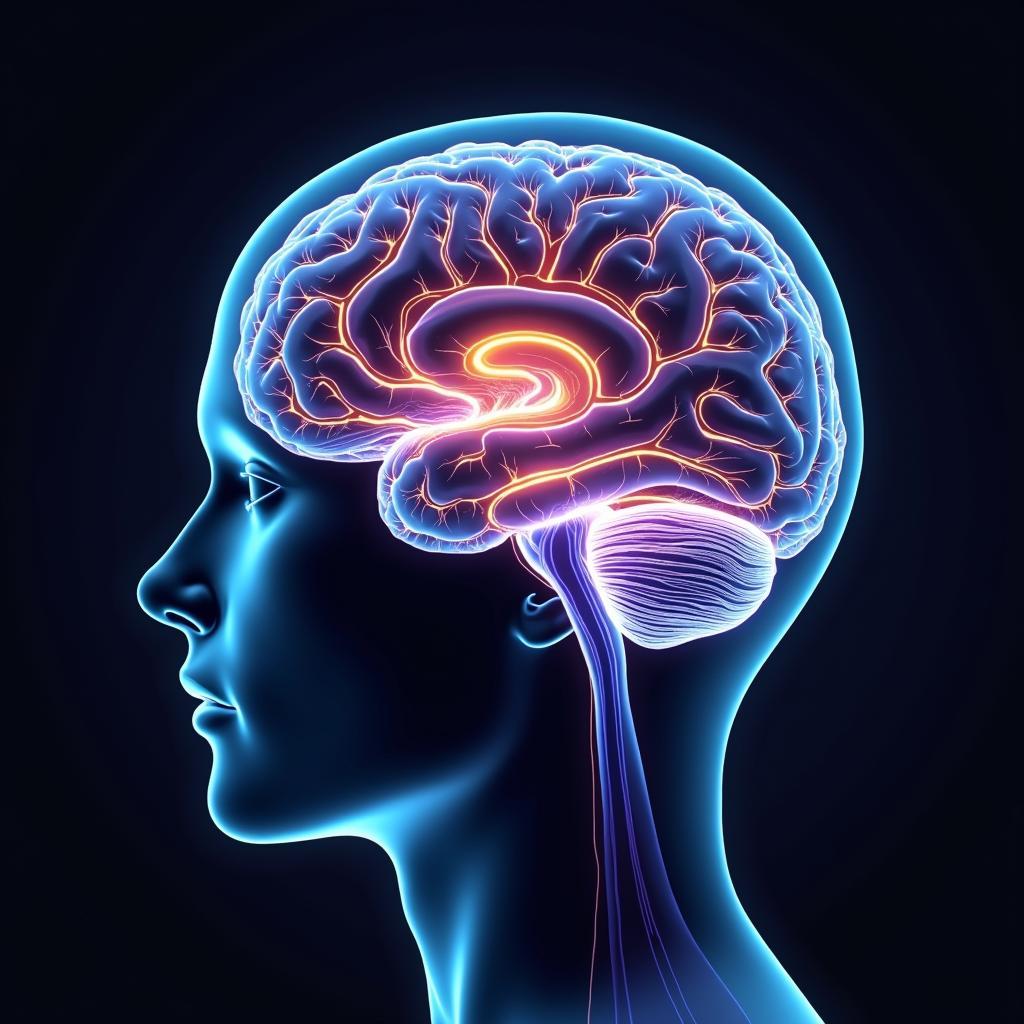 Mô phỏng hình ảnh hoạt động não bộ khi học sinh sử dụng công nghệ VR trong giáo dục
The default mode network (DMN) – a collection of brain regions active during internally-focused thought and mind-wandering – shows distinctive modulation during immersive learning experiences. Under conventional instructional conditions, students frequently exhibit elevated DMN activity, suggesting divided attention and cognitive disengagement. VR environments, however, tend to suppress DMN activity while enhancing activation in task-positive networks associated with external attention and goal-directed behavior. This neurological signature correlates with subjective reports of “flow states” – optimal experiences characterized by complete absorption in an activity. The capacity to induce flow may represent one of VR’s most pedagogically valuable attributes, as flow experiences are strongly associated with intrinsic motivation and deep learning.
Đối với những ai quan tâm đến vai trò của robot trong học tập thực hành, nghiên cứu thần kinh học về VR cung cấp những hiểu biết sâu sắc về cách công nghệ tương tác có thể kích hoạt các vùng não liên quan đến học tập. Mirror neuron systems – neural circuits that activate both when performing actions and when observing others perform similar actions – appear particularly responsive to VR interactions. When students manipulate virtual objects or observe virtual avatars demonstrating procedures, mirror neuron regions in the premotor cortex and inferior parietal lobule show activation patterns comparable to those observed during actual physical manipulation. This neural resonance may facilitate motor learning and procedural knowledge acquisition, explaining why VR training in surgical techniques, athletic skills, or musical performance produces measurable improvements in real-world proficiency.
Affective neuroscience perspectives illuminate VR’s capacity to generate emotionally resonant learning experiences. The amygdala and prefrontal cortex – structures integral to emotional processing and regulation – exhibit heightened connectivity during emotionally evocative VR scenarios. When students virtually experience historical events, environmental disasters, or social injustices, the emotional salience of these experiences appears to enhance encoding of associated information into long-term memory. This phenomenon aligns with the emotion-enhanced memory effect, whereby emotionally arousing events are remembered more vividly and accurately than neutral occurrences. However, educators must judiciously balance emotional engagement with cognitive processing capacity, as excessive arousal can paradoxically impair learning through interference with prefrontal executive functions.
Tương tự như cách các lễ hội góp phần vào giáo dục văn hóa, VR cũng có thể tạo ra những trải nghiệm cảm xúc mạnh mẽ giúp học sinh ghi nhớ thông tin tốt hơn thông qua sự kích hoạt các vùng não liên quan đến xử lý cảm xúc. Neuroplasticity – the brain’s ability to reorganize itself through the formation of new neural connections – represents the fundamental mechanism through which all learning occurs. Emerging evidence suggests VR may facilitate accelerated neuroplastic changes through its combination of multisensory stimulation, active engagement, and repeated practice opportunities. Longitudinal studies tracking structural brain changes following extended VR training have documented measurable increases in grey matter volume in regions corresponding to trained skills, comparable to changes observed after intensive real-world practice. These findings challenge traditional assumptions that virtual experiences constitute inferior substitutes for direct physical interaction, instead suggesting they may serve as legitimate and potent learning modalities in their own right.
Individual differences in VR learning effectiveness correlate with various neurobiological factors. Baseline levels of spatial abilities, working memory capacity, and attentional control predict both susceptibility to cybersickness and learning outcomes in virtual environments. Students with stronger visuospatial processing abilities tend to navigate virtual spaces more efficiently and experience less disorientation, while those with higher working memory capacity better manage the cognitive demands of complex VR scenarios. Understanding these individual differences has important implications for personalized learning, suggesting that VR interventions might be optimally effective when tailored to students’ cognitive profiles rather than implemented uniformly.
Critics of neuroscientific reductionism caution against oversimplified interpretations of brain imaging data. They argue that correlating neural activity with learning outcomes does not establish causation, nor does it address crucial pedagogical questions about curriculum design, social context, or educational equity. Furthermore, the artificial laboratory conditions under which most neuroscience research occurs may not generalize to authentic classroom environments with their inherent complexity and social dynamics. While neurobiological insights can inform educational technology development, comprehensive evaluation must incorporate multiple levels of analysis, from molecular mechanisms to sociocultural contexts, avoiding the reductionist trap of believing that understanding brain function alone can resolve educational challenges.
Questions 27-31: Multiple Choice
Choose the correct letter, A, B, C, or D.
-
According to the passage, the hippocampus is primarily involved in
- A) emotional regulation and stress response
- B) memory formation and spatial cognition
- C) language processing and comprehension
- D) motor control and physical coordination
-
The “default mode network” during VR learning typically shows
- A) increased activity compared to traditional learning
- B) no significant change in activation levels
- C) reduced activity while task-positive networks increase
- D) complete deactivation in all participants
-
Mirror neuron systems are activated when students
- A) only perform physical actions themselves
- B) only observe others performing actions
- C) both perform and observe actions
- D) neither perform nor observe any actions
-
The passage suggests that emotional arousal in VR learning
- A) always improves memory and retention
- B) has no effect on learning outcomes
- C) must be balanced to avoid impairing learning
- D) should be completely avoided in education
-
Individual differences in VR learning effectiveness are related to
- A) only age and gender factors
- B) spatial abilities and working memory
- C) socioeconomic background exclusively
- D) previous gaming experience alone
Questions 32-36: Matching Features
Match each research finding (32-36) with the correct brain structure or system (A-H).
Brain Structures/Systems:
- A) Hippocampus
- B) Default Mode Network
- C) Mirror Neuron System
- D) Amygdala
- E) Prefrontal Cortex
- F) Premotor Cortex
- G) Grey Matter
- H) Inferior Parietal Lobule
Research Findings:
-
Shows increased volume after extended VR training
-
Creates spatial anchors for abstract concepts
-
Activates during observation of virtual demonstrations
-
Exhibits heightened connectivity during emotionally powerful scenarios
-
Becomes suppressed during immersive learning
Questions 37-40: Short-answer Questions
Answer the questions below. Choose NO MORE THAN THREE WORDS from the passage for each answer.
-
What type of brain imaging technique has been used extensively to study VR learning?
-
What term do researchers use to describe virtual spaces where concepts are spatially organized?
-
What psychological state is characterized by complete absorption in an activity?
-
What does the passage say critics warn against regarding brain imaging research?
Answer Keys – Đáp Án
PASSAGE 1: Questions 1-13
- B
- C
- C
- B
- B
- C
- TRUE
- FALSE
- FALSE
- TRUE
- spatial
- infrastructure
- emotional
PASSAGE 2: Questions 14-26
- YES
- NO
- YES
- NOT GIVEN
- NO
- iii
- vi
- iv
- vii
- viii
- neural pathways
- conceptual understanding
- presence
PASSAGE 3: Questions 27-40
- B
- C
- C
- C
- B
- G
- A
- C
- D
- B
- functional magnetic resonance / fMRI
- memory palaces
- flow states
- oversimplified interpretations
Giải Thích Đáp Án Chi Tiết
Passage 1 – Giải Thích
Câu 1: B
- Dạng câu hỏi: Multiple Choice
- Từ khóa: main advantage, VR, traditional teaching tools
- Vị trí trong bài: Đoạn 1, dòng 2-4
- Giải thích: Câu “VR offers students an immersive experience that allows them to interact with three-dimensional environments” được paraphrase thành đáp án B “provides an immersive three-dimensional experience”. Đây là ưu điểm chính được nhấn mạnh ngay từ đầu bài.
Câu 2: C
- Dạng câu hỏi: Multiple Choice
- Từ khóa: first used extensively, schools, around
- Vị trí trong bài: Đoạn 2, dòng 1
- Giải thích: Câu đầu đoạn 2 nói rõ “Early adoption of VR in schools started around 2015“, đáp án là C.
Câu 3: C
- Dạng câu hỏi: Multiple Choice
- Từ khóa: Medical schools, VR simulators
- Vị trí trong bài: Đoạn 3, dòng 5-7
- Giải thích: Bài viết nói “medical schools have begun using VR simulators that allow students to perform surgical operations on virtual patients” được paraphrase thành “let students practice operations safely”.
Câu 7: TRUE
- Dạng câu hỏi: True/False/Not Given
- Từ khóa: initially, Asian and North American countries
- Vị trí trong bài: Đoạn 2, dòng 1-2
- Giải thích: Bài viết liệt kê “United States, Japan, and South Korea” – đại diện cho Bắc Mỹ và Châu Á, khẳng định câu này đúng.
Câu 8: FALSE
- Dạng câu hỏi: True/False/Not Given
- Từ khóa: All students, motion sickness
- Vị trí trong bài: Đoạn 5, dòng 3-4
- Giải thích: Bài viết nói “some students experience discomfort or nausea”, không phải tất cả học sinh, nên câu này sai.
Câu 11: spatial
- Dạng câu hỏi: Sentence Completion
- Từ khóa: Architecture students, relationships, virtual building designs
- Vị trí trong bài: Đoạn 3, dòng 8-9
- Giải thích: Câu gốc “architecture students can walk through buildings they have designed, experiencing spatial relationships” – đáp án là “spatial”.
Câu 13: emotional
- Dạng câu hỏi: Sentence Completion
- Từ khóa: form connections, educational material
- Vị trí trong bài: Đoạn 6, dòng 4-5
- Giải thích: “helps students form emotional connections to the material” – đáp án là “emotional”.
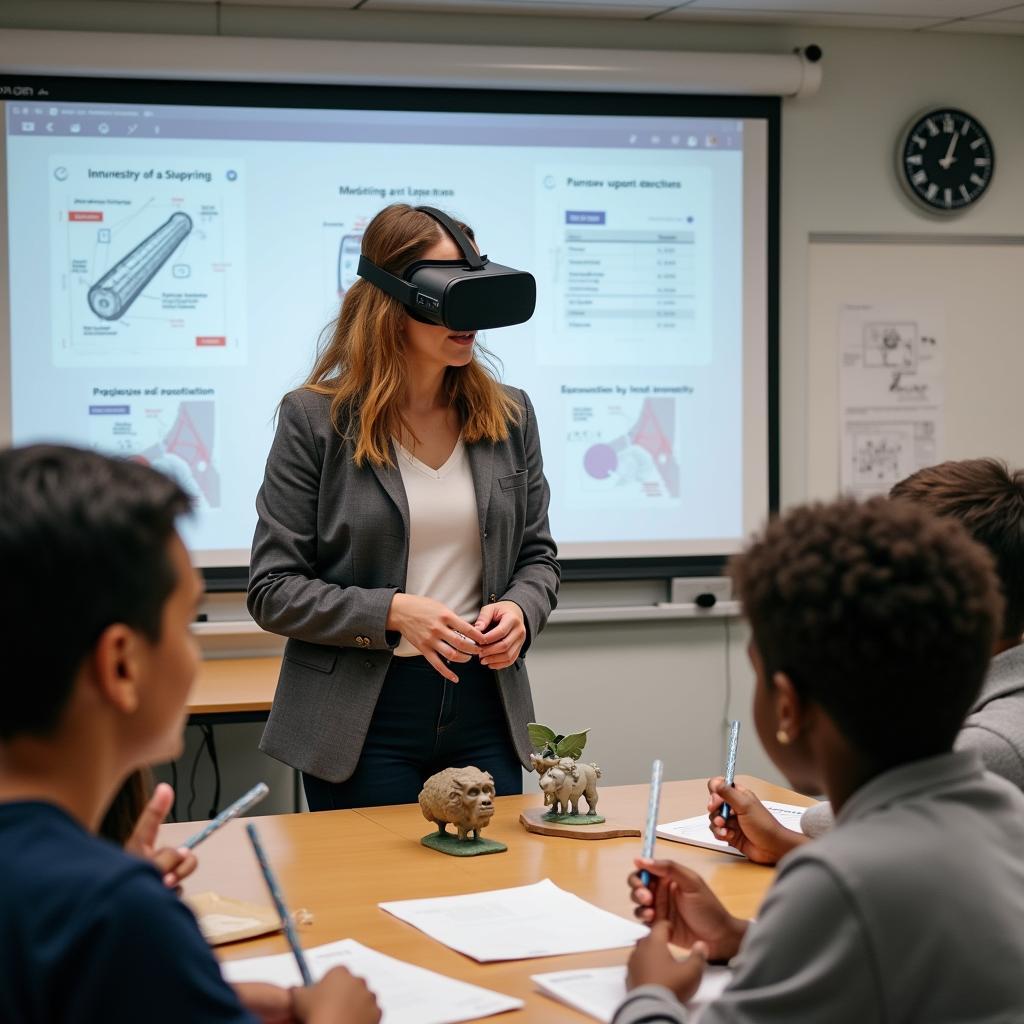 Giáo viên hướng dẫn học sinh cách sử dụng thiết bị VR để học các môn khoa học tự nhiên
Passage 2 – Giải Thích
Câu 14: YES
- Dạng câu hỏi: Yes/No/Not Given
- Từ khóa: Educational theorists, VR, constructivist learning principles
- Vị trí trong bài: Đoạn 1, dòng 2-4
- Giải thích: Đoạn văn nói “aligning closely with constructivist learning theories that emphasize experiential learning and active participation” – ý kiến tác giả đồng ý với quan điểm này.
Câu 15: NO
- Dạng câu hỏi: Yes/No/Not Given
- Từ khóa: Cognitive load theory, VR less effective
- Vị trí trong bài: Đoạn 2, dòng 1-4
- Giải thích: Ngược lại, lý thuyết này giải thích tại sao VR hiệu quả bằng cách giảm “extraneous cognitive load” và tăng “germane cognitive load”.
Câu 19: iii (Theoretical foundations for VR effectiveness)
- Dạng câu hỏi: Matching Headings
- Vị trí: Đoạn 2
- Giải thích: Đoạn văn thảo luận về “Cognitive load theory provides a theoretical framework” – tập trung vào nền tảng lý thuyết.
Câu 20: vi (Psychological impact of virtual presence)
- Dạng câu hỏi: Matching Headings
- Vị trí: Đoạn 4
- Giải thích: Đoạn văn bắt đầu với “The concept of presence” và thảo luận về “psychological realism” và tác động tâm lý.
Câu 24: neural pathways
- Dạng câu hỏi: Summary Completion
- Từ khóa: multisensory engagement, stronger
- Vị trí trong bài: Đoạn 2, dòng 6-7
- Giải thích: “This multisensory engagement facilitates the formation of stronger neural pathways“.
Câu 26: presence
- Dạng câu hỏi: Summary Completion
- Từ khóa: sense of, feel actually in virtual environment
- Vị trí trong bài: Đoạn 4, dòng 1
- Giải thích: “The concept of presence – the subjective experience of ‘being there’ in a virtual environment”.
Passage 3 – Giải Thích
Câu 27: B
- Dạng câu hỏi: Multiple Choice
- Từ khóa: hippocampus, primarily involved
- Vị trí trong bài: Đoạn 2, dòng 1-2
- Giải thích: “Spatial navigation in virtual environments engages the hippocampus – a brain structure critically implicated in memory formation and spatial cognition“.
Câu 28: C
- Dạng câu hỏi: Multiple Choice
- Từ khóa: default mode network, VR learning, shows
- Vị trí trong bài: Đoạn 3, dòng 3-5
- Giải thích: “VR environments, however, tend to suppress DMN activity while enhancing activation in task-positive networks“.
Câu 30: C
- Dạng câu hỏi: Multiple Choice
- Từ khóa: emotional arousal, VR learning
- Vị trí trong bài: Đoạn 5, dòng cuối
- Giải thích: “educators must judiciously balance emotional engagement with cognitive processing capacity, as excessive arousal can paradoxically impair learning”.
Câu 32: G (Grey Matter)
- Dạng câu hỏi: Matching Features
- Vị trí trong bài: Đoạn 6, dòng 6-8
- Giải thích: “documented measurable increases in grey matter volume in regions corresponding to trained skills”.
Câu 33: A (Hippocampus)
- Dạng câu hỏi: Matching Features
- Vị trí trong bài: Đoạn 2, dòng cuối
- Giải thích: “creating what researchers term ‘memory palaces‘ where abstract concepts become spatially anchored” – liên quan đến vai trò của hippocampus trong spatial memory.
Câu 37: functional magnetic resonance / fMRI
- Dạng câu hỏi: Short-answer
- Từ khóa: brain imaging technique
- Vị trí trong bài: Đoạn 1, dòng 2-3
- Giải thích: “functional magnetic resonance imaging (fMRI) and electroencephalography (EEG)” – chấp nhận cả hai dạng trả lời.
Câu 39: flow states
- Dạng câu hỏi: Short-answer
- Từ khóa: psychological state, complete absorption
- Vị trí trong bài: Đoạn 3, dòng 6-7
- Giải thích: “subjective reports of ‘flow states’ – optimal experiences characterized by complete absorption in an activity”.
Câu 40: oversimplified interpretations
- Dạng câu hỏi: Short-answer
- Từ khóa: critics warn against, brain imaging research
- Vị trí trong bài: Đoạn 8, dòng 1
- Giải thích: “Critics… caution against oversimplified interpretations of brain imaging data”.
Từ Vựng Quan Trọng Theo Passage
Passage 1 – Essential Vocabulary
| Từ vựng | Loại từ | Phiên âm | Nghĩa tiếng Việt | Ví dụ từ bài | Collocation |
|---|---|---|---|---|---|
| integration | n | /ˌɪntɪˈɡreɪʃn/ | sự hội nhập, tích hợp | The integration of VR technology into educational settings | technology integration, social integration |
| immersive | adj | /ɪˈmɜːsɪv/ | đắm chìm, mang tính chìm đắm | VR offers students an immersive experience | immersive experience, immersive environment |
| reshape | v | /riːˈʃeɪp/ | định hình lại, thay đổi | has begun to reshape traditional teaching methods | reshape thinking, reshape the future |
| engagement | n | /ɪnˈɡeɪdʒmənt/ | sự tham gia, gắn kết | showed significantly higher levels of engagement | student engagement, audience engagement |
| retention | n | /rɪˈtenʃn/ | sự ghi nhớ, giữ lại | engagement and retention compared to traditional methods | information retention, knowledge retention |
| compelling | adj | /kəmˈpelɪŋ/ | hấp dẫn, thuyết phục | one of the most compelling advantages | compelling evidence, compelling argument |
| simulator | n | /ˈsɪmjuleɪtə(r)/ | thiết bị mô phỏng | medical schools have begun using VR simulators | flight simulator, surgical simulator |
| barrier | n | /ˈbæriə(r)/ | rào cản, chướng ngại vật | Cost has been a significant barrier | language barrier, trade barrier |
| infrastructure | n | /ˈɪnfrəstrʌktʃə(r)/ | cơ sở hạ tầng | lack the infrastructure needed | digital infrastructure, basic infrastructure |
| empathy | n | /ˈempəθi/ | sự đồng cảm | showed greater empathy and understanding | develop empathy, show empathy for |
| accessible | adj | /əkˈsesəbl/ | dễ tiếp cận | become more accessible | easily accessible, accessible to everyone |
| collaborative | adj | /kəˈlæbərətɪv/ | cộng tác | experimenting with collaborative VR experiences | collaborative learning, collaborative approach |
Passage 2 – Essential Vocabulary
| Từ vựng | Loại từ | Phiên âm | Nghĩa tiếng Việt | Ví dụ từ bài | Collocation |
|---|---|---|---|---|---|
| pedagogical | adj | /ˌpedəˈɡɒdʒɪkl/ | thuộc về sư phạm | The pedagogical implications of virtual reality | pedagogical approach, pedagogical theory |
| constructivist | adj | /kənˈstrʌktɪvɪst/ | theo thuyết kiến tạo | aligning with constructivist learning theories | constructivist theory, constructivist approach |
| cognitive load | n | /ˈkɒɡnətɪv ləʊd/ | tải nhận thức | Cognitive load theory provides a framework | reduce cognitive load, manage cognitive load |
| multisensory | adj | /ˌmʌltiˈsensəri/ | đa gi각 | presenting information through multisensory channels | multisensory engagement, multisensory learning |
| embodied cognition | n | /ɪmˈbɒdid kɒɡˈnɪʃn/ | nhận thức hiện thân | Research in embodied cognition suggests | embodied cognition theory |
| presence | n | /ˈprezns/ | sự hiện diện | The concept of presence is crucial | sense of presence, virtual presence |
| perspective-taking | n | /pəˈspektɪv ˈteɪkɪŋ/ | nhìn nhận từ góc độ khác | educational impact for empathy and perspective-taking | improve perspective-taking |
| prejudice | n | /ˈpredʒudɪs/ | định kiến, thành kiến | Programs designed to combat prejudice | racial prejudice, overcome prejudice |
| distributed | adj | /dɪˈstrɪbjuːtɪd/ | phân tán | These distributed learning communities | distributed network, distributed system |
| uncritical embrace | n phrase | /ʌnˈkrɪtɪkl ɪmˈbreɪs/ | chấp nhận không phê phán | caution against uncritical embrace of VR | avoid uncritical embrace |
| inadvertently | adv | /ˌɪnədˈvɜːtntli/ | vô tình, không chủ ý | may inadvertently promote passive consumption | inadvertently cause, inadvertently create |
| discrepancy | n | /dɪsˈkrepənsi/ | sự khác biệt, mâu thuẫn | This discrepancy suggests the need | significant discrepancy, obvious discrepancy |
| exacerbate | v | /ɪɡˈzæsəbeɪt/ | làm trầm trọng thêm | may exacerbate existing educational disparities | exacerbate the problem, exacerbate tensions |
| affluent | adj | /ˈæfluənt/ | giàu có | Schools in affluent areas might offer | affluent society, affluent neighborhood |
| two-tiered | adj | /tuː tɪəd/ | hai tầng lớp | creating a two-tiered educational system | two-tiered system, two-tiered structure |
Passage 3 – Essential Vocabulary
| Từ vựng | Loại từ | Phiên âm | Nghĩa tiếng Việt | Ví dụ từ bài | Collocation |
|---|---|---|---|---|---|
| neurobiological | adj | /ˌnjʊərəʊbaɪəˈlɒdʒɪkl/ | thuộc thần kinh sinh học | The neurobiological mechanisms underlying VR | neurobiological research, neurobiological factors |
| fMRI | n | /ef em ɑːr aɪ/ | chụp cộng hưởng từ chức năng | functional magnetic resonance imaging (fMRI) | fMRI scan, fMRI data |
| neural plasticity | n | /ˈnjʊərəl plæˈstɪsəti/ | tính dẻo thần kinh | relationships between immersive experiences and neural plasticity | brain neural plasticity |
| hippocampus | n | /ˌhɪpəˈkæmpəs/ | hồi hải mã (vùng não) | engages the hippocampus critically implicated | hippocampus activation, hippocampal circuits |
| spatial cognition | n | /ˈspeɪʃl kɒɡˈnɪʃn/ | nhận thức không gian | memory formation and spatial cognition | spatial cognition abilities |
| evolutionarily | adv | /ˌiːvəˈluːʃənərəli/ | về mặt tiến hóa | evolutionarily ancient and remarkably robust systems | evolutionarily adapted |
| default mode network | n | /dɪˈfɔːlt məʊd ˈnetwɜːk/ | mạng chế độ mặc định (vùng não) | The default mode network shows distinctive modulation | default mode network activity |
| mind-wandering | n | /maɪnd ˈwɒndərɪŋ/ | tâm trí lang thang | brain regions active during mind-wandering | prevent mind-wandering |
| flow states | n | /fləʊ steɪts/ | trạng thái dòng chảy | subjective reports of flow states | achieve flow states, experience flow |
| mirror neuron | n | /ˈmɪrə(r) ˈnjʊərɒn/ | tế bào thần kinh gương | Mirror neuron systems appear particularly responsive | mirror neuron system, mirror neuron activation |
| premotor cortex | n | /priːˈməʊtə(r) ˈkɔːteks/ | vỏ não tiền vận động | mirror neuron regions in the premotor cortex | premotor cortex activity |
| affective neuroscience | n | /əˈfektɪv ˈnjʊərəʊsaɪəns/ | khoa học thần kinh cảm xúc | Affective neuroscience perspectives illuminate | affective neuroscience research |
| amygdala | n | /əˈmɪɡdələ/ | hạch hạnh nhân (vùng não) | The amygdala and prefrontal cortex exhibit | amygdala activation, amygdala response |
| emotionally salient | adj phrase | /ɪˈməʊʃənəli ˈseɪliənt/ | nổi bật về mặt cảm xúc | the emotional salience of these experiences | emotionally salient events |
| neuroplasticity | n | /ˌnjʊərəʊplæˈstɪsəti/ | tính dẻo thần kinh | Neuroplasticity represents the fundamental mechanism | brain neuroplasticity, enhance neuroplasticity |
| grey matter | n | /ɡreɪ ˈmætə(r)/ | chất xám (não) | measurable increases in grey matter volume | grey matter density, grey matter changes |
| cybersickness | n | /ˈsaɪbəsɪknəs/ | say công nghệ | susceptibility to cybersickness and learning outcomes | experience cybersickness, reduce cybersickness |
| visuospatial | adj | /ˌvɪzjuəʊˈspeɪʃl/ | thị giác không gian | stronger visuospatial processing abilities | visuospatial skills, visuospatial memory |
| reductionism | n | /rɪˈdʌkʃənɪzəm/ | chủ nghĩa giản đơn hóa | Critics of neuroscientific reductionism caution | biological reductionism, avoid reductionism |
Kết bài
Đề thi IELTS Reading mẫu về chủ đề “How is virtual reality transforming education?” đã cung cấp cho bạn một bài luyện tập hoàn chỉnh với ba passages có độ khó tăng dần, phản ánh chính xác cấu trúc đề thi thật. Thông qua 40 câu hỏi đa dạng, bạn đã được thực hành với 7 dạng câu hỏi phổ biến nhất trong IELTS Reading.
Chủ đề công nghệ VR trong giáo dục không chỉ thường xuyên xuất hiện trong các kỳ thi IELTS gần đây mà còn giúp bạn làm quen với từ vựng học thuật quan trọng về công nghệ, khoa học não bộ, và phương pháp giáo dục hiện đại. Những từ vựng và cụm từ bạn học được từ ba passages này có thể áp dụng trong cả phần Writing và Speaking.
Đáp án chi tiết kèm theo giải thích đã chỉ ra cách xác định thông tin trong bài, kỹ thuật paraphrase, và cách tránh những “bẫy” thường gặp. Hãy dành thời gian xem lại những câu bạn làm sai, phân tích lý do và rút ra bài học cho các lần làm bài tiếp theo. Để đạt band điểm cao, bạn cần luyện tập thường xuyên với các đề thi đa dạng chủ đề và độ khó.
Chúc bạn ôn tập hiệu quả và đạt được band điểm mục tiêu trong kỳ thi IELTS sắp tới!