Mở Bài
Biến đổi khí hậu đang là một trong những thách thức lớn nhất mà nhân loại phải đối mặt trong thế kỷ 21, và các giải pháp năng lượng tái tạo đang trở thành chủ đề nóng trong các kỳ thi IELTS Reading. Chủ đề “How Renewable Energy Innovations Are Combating Climate Change” xuất hiện ngày càng thường xuyên trong IELTS, đặc biệt ở các đề thi từ năm 2020 đến nay, phản ánh xu hướng toàn cầu về phát triển bền vững.
Bài viết này cung cấp cho bạn một đề thi IELTS Reading hoàn chỉnh với 3 passages (dễ đến khó), bao gồm 40 câu hỏi đa dạng theo đúng format thi thật. Bạn sẽ được luyện tập với nhiều dạng câu hỏi phổ biến như Multiple Choice, True/False/Not Given, Matching Headings, và Summary Completion. Đáp án chi tiết kèm giải thích sẽ giúp bạn hiểu rõ cách xác định thông tin, kỹ thuật paraphrase, và chiến lược làm bài hiệu quả.
Đề thi này phù hợp cho học viên từ band 5.0 trở lên, giúp bạn làm quen với nội dung khoa học-môi trường – một trong những chủ đề thường gặp nhất trong IELTS Academic Reading. Hãy dành đủ 60 phút để hoàn thành bài test này như trong điều kiện thi thật để đánh giá chính xác trình độ của mình.
Hướng Dẫn Làm Bài IELTS Reading
Tổng Quan Về IELTS Reading Test
IELTS Reading Test kéo dài 60 phút và bao gồm 3 passages với tổng cộng 40 câu hỏi. Mỗi câu trả lời đúng được tính 1 điểm, không trừ điểm cho câu sai.
Phân bổ thời gian khuyến nghị:
- Passage 1: 15-17 phút (câu hỏi 1-13)
- Passage 2: 18-20 phút (câu hỏi 14-26)
- Passage 3: 23-25 phút (câu hỏi 27-40)
Độ khó tăng dần từ Passage 1 đến Passage 3. Bạn nên hoàn thành các câu hỏi theo thứ tự và dành 2-3 phút cuối để chuyển đáp án vào Answer Sheet.
Các Dạng Câu Hỏi Trong Đề Này
Đề thi này bao gồm 7 dạng câu hỏi phổ biến nhất trong IELTS Reading:
- Multiple Choice – Chọn đáp án đúng từ A, B, C, D
- True/False/Not Given – Xác định thông tin đúng/sai/không được đề cập
- Sentence Completion – Hoàn thành câu với thông tin từ bài đọc
- Matching Headings – Ghép tiêu đề với đoạn văn
- Summary Completion – Điền từ vào đoạn tóm tắt
- Matching Features – Ghép thông tin với các đối tượng
- Short-answer Questions – Trả lời câu hỏi ngắn
IELTS Reading Practice Test
PASSAGE 1 – The Rise of Solar Energy Technology
Độ khó: Easy (Band 5.0-6.5)
Thời gian đề xuất: 15-17 phút
Solar energy has become one of the most promising renewable energy sources in the fight against climate change. Over the past two decades, the technology behind solar panels has improved dramatically, making solar power more accessible and affordable than ever before. Today, millions of homes and businesses around the world rely on solar energy to meet their electricity needs, reducing their carbon footprint and contributing to a cleaner environment.
The basic principle of solar energy is simple: photovoltaic (PV) cells convert sunlight directly into electricity. When sunlight hits the solar panel, it excites electrons in the silicon material, creating an electric current. This process, known as the photovoltaic effect, was first discovered in 1839 by French physicist Alexandre Edmond Becquerel, but it took more than a century for the technology to become commercially viable.
In the 1950s, scientists at Bell Laboratories in the United States developed the first practical silicon solar cell, which had an efficiency rate of about 6%. While this was a significant breakthrough, the high cost of production meant that solar panels were primarily used in specialized applications such as space satellites. The cost of solar panels in the 1970s was approximately $100 per watt, making them prohibitively expensive for most consumers.
However, the situation began to change in the 1990s and 2000s. Government incentives, increased research funding, and economies of scale in manufacturing led to a dramatic reduction in costs. By 2020, the price of solar panels had fallen to less than $0.50 per watt – a 200-fold decrease compared to the 1970s. This price reduction has made solar energy competitive with traditional fossil fuels in many parts of the world.
Modern solar panels have also become much more efficient. While early models converted only 6% of sunlight into electricity, today’s commercial solar panels typically achieve efficiency rates of 15-20%, with some advanced models reaching over 22%. Research laboratories have developed experimental cells with efficiencies exceeding 40%, although these are not yet cost-effective for widespread use.
The environmental benefits of solar energy are substantial. Unlike coal or natural gas power plants, solar panels produce electricity without releasing greenhouse gases or other pollutants. A typical residential solar panel system can offset approximately 3-4 tons of carbon dioxide emissions per year – equivalent to planting about 100 trees annually. Over a 25-year lifespan, a single solar installation can prevent the release of 100 tons of CO2 into the atmosphere.
Installation of solar panels has also become easier and faster. In the early days, mounting solar panels required specialized equipment and took several days. Today, professional installers can typically complete a residential installation in one or two days. Many countries have also simplified the permitting process and introduced net metering programs, which allow homeowners to sell excess electricity back to the grid, making solar investments more attractive.
Despite these advances, challenges remain. Solar energy is intermittent – panels only generate electricity when the sun is shining. This means that energy storage solutions, such as batteries, are needed to provide power at night or during cloudy weather. Battery technology has improved significantly, but storage costs still add to the overall expense of solar systems.
Another challenge is the geographical limitation. Solar panels work best in areas with abundant sunlight. Countries near the equator or in regions with long, sunny days can generate more solar electricity than those in northern latitudes with shorter days and more cloud cover. However, even countries with less ideal conditions, such as Germany and the United Kingdom, have successfully deployed large-scale solar energy systems.
Looking ahead, experts predict that solar energy will play an increasingly important role in global electricity production. The International Energy Agency estimates that solar power could become the world’s largest source of electricity by 2050, potentially providing up to 27% of global electricity needs. This transition will be crucial for meeting international climate goals and limiting global temperature rise to 1.5 degrees Celsius above pre-industrial levels.
Innovations continue to emerge in the solar industry. Bifacial solar panels, which capture sunlight from both sides, can increase energy generation by up to 30%. Building-integrated photovoltaics (BIPV) allow solar cells to be incorporated into windows, roofs, and walls, making buildings themselves into power generators. Floating solar farms on reservoirs and lakes are being developed to save land space and reduce water evaporation.
The success of solar energy demonstrates that technological innovation, combined with supportive policies and decreasing costs, can transform the energy sector. As solar technology continues to improve and costs continue to fall, more people and businesses will be able to participate in the clean energy revolution, helping to combat climate change while reducing their electricity bills.
Questions 1-13
Questions 1-5: Multiple Choice
Choose the correct letter, A, B, C or D.
-
According to the passage, when was the photovoltaic effect first discovered?
A. In the 1950s
B. In 1839
C. In the 1970s
D. In the 1990s -
What was the efficiency rate of the first practical silicon solar cell?
A. About 6%
B. About 15-20%
C. About 22%
D. Over 40% -
How much did solar panels cost per watt in the 1970s?
A. $0.50
B. $6
C. $100
D. The passage does not say -
How many tons of CO2 can a typical residential solar panel system offset per year?
A. 1-2 tons
B. 3-4 tons
C. 25 tons
D. 100 tons -
According to the International Energy Agency, what percentage of global electricity could solar power provide by 2050?
A. 15%
B. 22%
C. 27%
D. 40%
Questions 6-9: True/False/Not Given
Do the following statements agree with the information given in the passage?
Write:
- TRUE if the statement agrees with the information
- FALSE if the statement contradicts the information
- NOT GIVEN if there is no information on this
-
Solar panels were initially too expensive for most consumers in the 1970s.
-
All modern commercial solar panels achieve efficiency rates of over 22%.
-
Germany has not been successful in deploying solar energy systems due to limited sunlight.
-
Bifacial solar panels can increase energy generation by up to 30%.
Questions 10-13: Sentence Completion
Complete the sentences below.
Choose NO MORE THAN THREE WORDS from the passage for each answer.
-
When sunlight hits a solar panel, it excites electrons in the __ material.
-
Government incentives and __ in manufacturing helped reduce solar panel costs.
-
One challenge of solar energy is that it is __, only working when the sun shines.
-
__ allow solar cells to be incorporated into building materials like windows and walls.
PASSAGE 2 – Wind Power: Harnessing Nature’s Force
Độ khó: Medium (Band 6.0-7.5)
Thời gian đề xuất: 18-20 phút
Wind energy has undergone a remarkable transformation from an ancient technology used for grinding grain and pumping water into one of the fastest-growing sources of electricity worldwide. Modern wind turbines, towering structures that can reach heights of over 200 meters, are now a common sight across many landscapes, from remote rural areas to offshore installations far out at sea. These engineering marvels represent a critical component in the global effort to transition away from fossil fuel dependency and mitigate the impacts of climate change.
The fundamental physics behind wind power is relatively straightforward: moving air possesses kinetic energy, and wind turbines convert this energy into electricity through a series of mechanical and electrical processes. As wind flows past the turbine’s blades, it causes them to rotate. This rotational motion turns a shaft connected to a generator, which produces electricity. However, the apparent simplicity of this process belies the sophisticated engineering involved in maximizing energy capture while ensuring the turbine’s structural integrity in diverse and often harsh environmental conditions.
Modern wind turbines are categorized into two main types: horizontal-axis wind turbines (HAWTs) and vertical-axis wind turbines (VAWTs). HAWTs, which resemble giant propellers mounted on tall towers, account for the vast majority of installed capacity worldwide. Their design allows them to capture wind energy more efficiently than VAWTs, particularly at the high wind speeds found at greater heights. The largest HAWTs currently in operation have rotor diameters exceeding 220 meters and can generate up to 15 megawatts (MW) of electricity – enough to power approximately 15,000 homes simultaneously.
The role of space exploration in future energy sources đóng vai trò quan trọng trong việc mở rộng tầm nhìn về các nguồn năng lượng thay thế, tương tự như việc phát triển công nghệ năng lượng gió đã thay đổi cách chúng ta nghĩ về sản xuất điện.
The evolution of wind turbine technology has been characterized by a consistent trend toward larger machines. This scaling up is driven by basic physics: a turbine with twice the rotor diameter can capture four times as much energy from the wind. Furthermore, taller towers provide access to stronger and more consistent winds at higher altitudes, where wind speeds are less affected by surface friction and obstacles. This relationship between size and power output has led to what industry experts call the “wind turbine gigantism” phenomenon, with manufacturers continually developing larger models to improve economic viability.
The capacity factor of wind turbines – the ratio of actual energy produced to the maximum possible energy production – has improved significantly over the past two decades. Early wind farms typically achieved capacity factors of 20-25%, meaning they operated at full capacity only a quarter of the time. Today’s state-of-the-art onshore wind farms can achieve capacity factors of 35-40%, while offshore installations, benefiting from stronger and more consistent winds, often exceed 45%. Some cutting-edge offshore wind farms have reported capacity factors above 50%, approaching the performance levels of traditional power plants.
Offshore wind energy represents a particularly promising frontier for renewable energy development. The ocean environment offers several advantages over land-based installations. Wind speeds over water are typically 20-30% higher than over land, and the wind blows more consistently, resulting in higher energy production. Additionally, offshore locations allow for the installation of even larger turbines without the logistical constraints of transporting massive components along roads and through populated areas. However, offshore wind farms also face unique challenges, including higher construction costs, more difficult maintenance access, and the need to withstand harsh marine conditions including salt corrosion and extreme weather events.
The environmental impact of wind energy is generally positive compared to fossil fuel alternatives, but it is not without concerns. Wind turbines do not emit greenhouse gases during operation, and a typical 2-MW turbine can offset approximately 4,500 tons of CO2 annually – equivalent to the emissions from 800 cars. However, critics point to potential negative effects on wildlife, particularly bird and bat populations. Collision mortality with rotating blades has been documented at various wind farms, though studies suggest that the impact is relatively small compared to other human-caused wildlife deaths. Modern turbine designs incorporate features to reduce wildlife impacts, such as slower blade rotation speeds and radar systems that can detect approaching birds and temporarily shut down turbines.
The intermittent nature of wind, similar to solar energy, poses challenges for grid integration. Wind speeds fluctuate throughout the day and across seasons, making wind power generation variable and sometimes unpredictable. This variability requires grid operators to maintain backup generation capacity or develop energy storage solutions to ensure reliable electricity supply. Advanced weather forecasting models have improved the predictability of wind energy production, typically providing accurate forecasts 24-48 hours in advance. Additionally, geographic diversification of wind farms – spreading installations across different regions with varying wind patterns – can help smooth out overall production and reduce the impact of local weather fluctuations.
Economic factors have been crucial to wind energy’s rapid expansion. The levelized cost of energy (LCOE) from wind – a measure that accounts for all costs over a project’s lifetime – has declined by more than 70% over the past decade. In many regions, wind power is now the cheapest source of new electricity generation, even without subsidies. This cost competitiveness has attracted significant private investment, with global wind energy investment reaching over $140 billion in 2020. Governments have also played a vital role through policy mechanisms such as production tax credits, feed-in tariffs, and renewable energy mandates, which have helped create stable markets and encourage technological innovation.
Looking forward, the wind energy sector continues to innovate. Floating offshore wind turbines, mounted on floating platforms rather than fixed to the seabed, could unlock vast areas of deep water for wind energy development. Airborne wind energy systems, which use kites or drones to capture high-altitude winds, are in experimental stages. Hybrid systems that combine wind turbines with solar panels and battery storage are being developed to provide more consistent and dispatchable renewable energy. As these technologies mature and costs continue to decline, wind energy is positioned to play an increasingly central role in global efforts to combat climate change while meeting growing electricity demand.
Questions 14-26
Questions 14-17: Yes/No/Not Given
Do the following statements agree with the views of the writer in the passage?
Write:
- YES if the statement agrees with the views of the writer
- NO if the statement contradicts the views of the writer
- NOT GIVEN if it is impossible to say what the writer thinks about this
-
The engineering behind wind turbines is more complex than it appears.
-
Vertical-axis wind turbines are more efficient than horizontal-axis wind turbines.
-
The trend toward larger wind turbines is economically justified.
-
Offshore wind farms are always more cost-effective than onshore installations.
Questions 18-22: Matching Headings
The passage has nine paragraphs (1-9). Choose the correct heading for paragraphs 3, 5, 6, 7, and 8 from the list of headings below.
List of Headings:
i. The basic mechanics of wind energy conversion
ii. Types and sizes of modern wind turbines
iii. The historical development of wind technology
iv. Improvements in wind turbine performance metrics
v. The potential of ocean-based wind installations
vi. Environmental considerations and wildlife concerns
vii. Challenges of variable energy production
viii. Financial trends in wind energy development
ix. Future innovations in wind technology
- Paragraph 3 __
- Paragraph 5 __
- Paragraph 6 __
- Paragraph 7 __
- Paragraph 8 __
Questions 23-26: Summary Completion
Complete the summary below.
Choose NO MORE THAN TWO WORDS from the passage for each answer.
Wind energy has experienced rapid growth due to technological improvements and economic factors. Modern wind turbines convert the (23) __ of moving air into electricity. The largest turbines can have rotor diameters exceeding 220 meters and produce up to 15 MW of power. The (24) ____ of wind turbines has improved significantly, with some offshore installations exceeding 45%. However, wind energy faces challenges related to its (25) __, which requires grid operators to maintain backup systems or develop storage solutions. The (26) ____ from wind power has decreased by over 70% in the past decade, making it competitive with traditional energy sources.
PASSAGE 3 – Integrated Renewable Energy Systems and Climate Change Mitigation
Độ khó: Hard (Band 7.0-9.0)
Thời gian đề xuất: 23-25 phút
The anthropogenic climate crisis represents an existential threat to human civilization, demanding a comprehensive and multifaceted response that extends far beyond incremental improvements to existing energy systems. Contemporary climate science indicates that limiting global warming to 1.5°C above pre-industrial levels – the target established by the Paris Agreement – requires not merely a transition to renewable energy sources, but rather a fundamental reconceptualization of how societies produce, distribute, and consume energy. This paradigm shift necessitates the development and deployment of integrated renewable energy systems that combine multiple technologies, storage solutions, and intelligent grid management to create resilient, decarbonized energy networks capable of meeting the demands of modern economies while simultaneously ameliorating the climate emergency.
The concept of energy system integration represents a significant departure from the traditional model of centralized, baseload power generation that has dominated electricity systems since the early twentieth century. Conventional power grids were designed around large thermal power plants – primarily coal and natural gas facilities – that operate continuously to provide a stable supply of electricity. These systems are inherently inflexible, with limited capacity to accommodate the variability inherent in renewable energy sources. In contrast, integrated renewable energy systems embrace this variability, employing sophisticated forecasting algorithms, demand response mechanisms, and energy storage technologies to dynamically balance supply and demand in real-time.
How blockchain is enhancing sustainability in supply chains cũng thể hiện cách công nghệ hiện đại có thể cách mạng hóa các hệ thống phức tạp, tương tự như cách các hệ thống năng lượng tái tạo tích hợp đang biến đổi lưới điện toàn cầu.
The linchpin of successful renewable energy integration is advanced energy storage. Lithium-ion batteries, which have experienced remarkable cost reductions and performance improvements driven largely by electric vehicle development, have emerged as the dominant short-term storage solution for grid-scale applications. The cost of lithium-ion battery packs has plummeted from approximately $1,200 per kilowatt-hour (kWh) in 2010 to below $150/kWh in 2020, a trajectory that has rendered battery energy storage systems (BESS) economically viable for an expanding array of applications. Large-scale battery installations can provide multiple grid services simultaneously, including frequency regulation, voltage support, and peak shaving, while also storing excess renewable energy for use during periods of high demand or low renewable generation.
However, lithium-ion technology possesses inherent limitations that constrain its suitability for long-duration storage – the capacity to store energy for days, weeks, or even seasons. This capability is crucial for systems that rely heavily on solar and wind power, which exhibit not only diurnal variations but also significant seasonal fluctuations. Alternative storage technologies are therefore being developed to address this need. Flow batteries, which store energy in liquid electrolytes contained in external tanks, offer the potential for essentially unlimited scalability and longer discharge durations. Compressed air energy storage (CAES) systems store energy by compressing air in underground caverns and releasing it to drive turbines when needed. Pumped hydro storage, the oldest and most widely deployed grid-scale storage technology, uses excess electricity to pump water uphill to a reservoir, later releasing it through turbines to generate power.
Hydrogen has emerged as a particularly promising energy carrier for long-term storage and sector coupling – the integration of electricity, heating, transportation, and industrial energy systems. Green hydrogen, produced through the electrolysis of water using renewable electricity, can be stored indefinitely in large quantities and later converted back to electricity through fuel cells or combustion. More significantly, hydrogen can serve as a decarbonization pathway for hard-to-electrify sectors such as aviation, shipping, and heavy industry, which currently rely on fossil fuels and present some of the most intractable challenges for climate mitigation. Several countries, including Germany, Japan, and Australia, have developed comprehensive hydrogen strategies aiming to establish large-scale hydrogen production, distribution, and utilization infrastructure.
The spatial dimension of renewable energy integration warrants particular attention. Solar and wind resources exhibit substantial geographic variation, with some regions possessing far superior renewable energy potential than others. This uneven distribution necessitates the development of high-voltage transmission infrastructure capable of transporting electricity efficiently over long distances. Ultra-high voltage direct current (UHVDC) transmission lines can move gigawatts of power across thousands of kilometers with minimal losses, enabling regions with abundant renewable resources to supply electricity to distant population centers. China has invested heavily in UHVDC technology, constructing networks that transmit solar and wind power from remote western provinces to industrial centers on the coast. Similar interconnection projects are being developed in Europe, Africa, and other regions to facilitate renewable energy sharing across international borders.
Artificial intelligence and machine learning technologies are playing an increasingly pivotal role in managing the complexity of integrated renewable energy systems. These computational tools can process vast quantities of data from weather forecasts, grid sensors, electricity markets, and consumer behavior patterns to optimize system operations in ways that would be impossible for human operators. Predictive algorithms can forecast renewable energy production with increasing accuracy, allowing grid operators to schedule conventional generation and storage resources more efficiently. Automated control systems can instantaneously adjust power flows across transmission networks to maintain stability as renewable generation fluctuates. Some systems employ neural networks that continuously learn from operational data, progressively improving their performance over time.
The policy and regulatory frameworks governing electricity systems must evolve substantially to facilitate renewable energy integration. Traditional electricity markets were designed for a world of predictable, controllable generation, with pricing mechanisms that fail to adequately value the flexibility and reliability services that storage and demand response can provide. Regulatory reform is needed to create markets that appropriately compensate all forms of grid services, incentivize investment in infrastructure and storage, and remove barriers to new technologies and business models. Some jurisdictions have pioneered innovative approaches: California has implemented resource adequacy requirements that explicitly account for renewable variability; the United Kingdom has established separate markets for various ancillary services; and Germany has introduced feed-in premiums that encourage renewable generators to participate actively in electricity markets rather than receiving fixed payments.
The socioeconomic implications of the renewable energy transition extend well beyond climate benefits. The renewable energy sector has become a significant source of employment, with approximately 12 million people working in the industry globally as of 2020, compared to just 7 million in 2012. This growth is projected to accelerate, with estimates suggesting the sector could employ up to 42 million people by 2050. However, the transition also presents challenges for workers and communities dependent on fossil fuel industries, necessitating just transition policies that provide retraining, economic support, and new opportunities for affected populations. Moreover, the distributional effects of the energy transition – who benefits and who bears the costs – must be carefully managed to ensure equitable outcomes and maintain public support for climate action.
Despite remarkable progress, substantial obstacles remain. The intermittency of renewable energy continues to pose technical challenges, particularly as renewables comprise an increasing share of total generation. Current grid infrastructure in many regions is inadequate for high renewable penetration, requiring massive investment in upgrades and expansions. Energy storage technologies, while improving rapidly, remain too expensive for many applications, and lithium supply constraints could eventually bottleneck battery production. Political resistance from fossil fuel interests and communities reliant on conventional energy industries can impede policy reforms. International cooperation on technology transfer, financing mechanisms, and grid interconnections is often hampered by geopolitical tensions and competing national interests.
Nevertheless, the trajectory of renewable energy development suggests grounds for cautious optimism. The exponential growth in renewable capacity, coupled with continuing cost reductions and technological innovations, has repeatedly exceeded expert projections. The confluence of climate urgency, economic competitiveness, and technological maturity creates unprecedented momentum for the transition to integrated renewable energy systems. While the challenge of climate change remains formidable, the tools and knowledge necessary to achieve deep decarbonization of energy systems are increasingly within reach, provided that political will and sustained investment can be mobilized on the requisite scale.
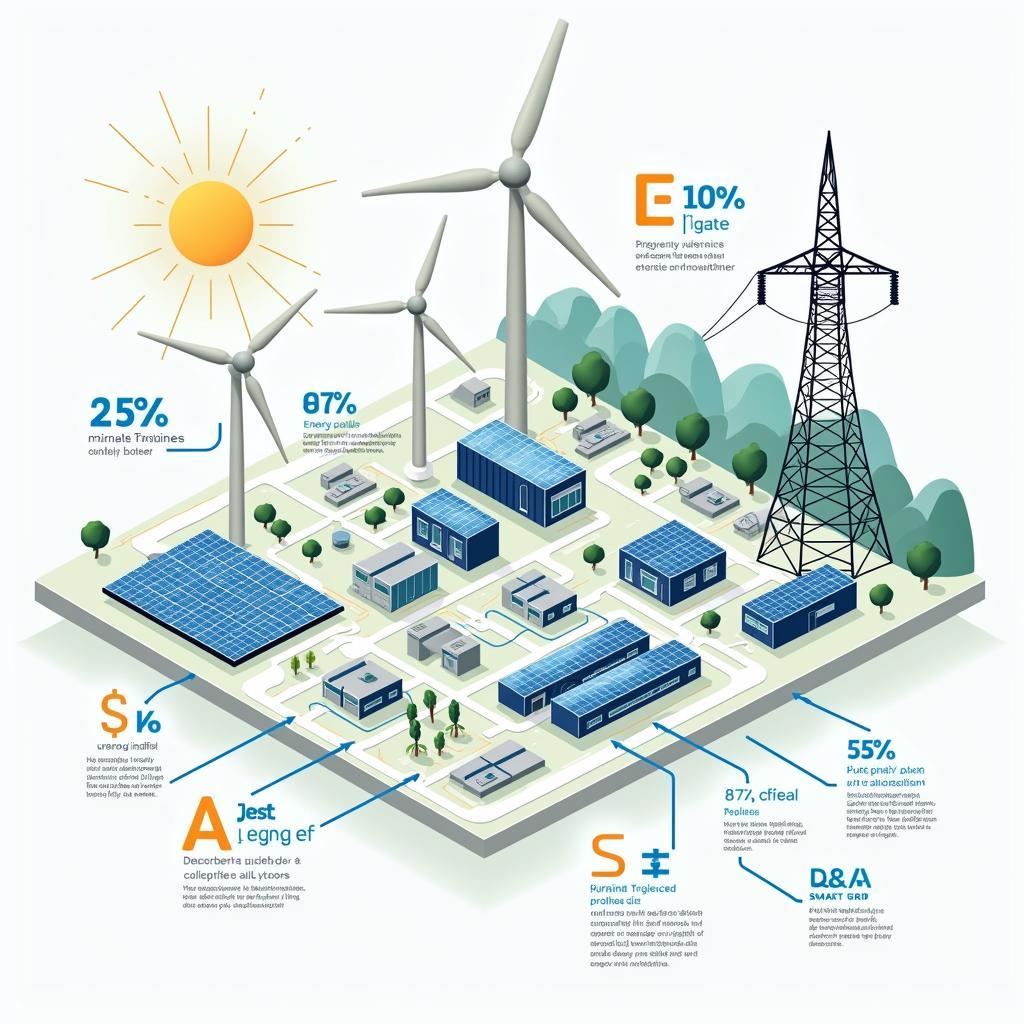 Sơ đồ hệ thống năng lượng tái tạo tích hợp với lưới thông minh và lưu trữ năng lượng
Questions 27-40
Questions 27-31: Multiple Choice
Choose the correct letter, A, B, C or D.
-
According to the passage, what is required to limit global warming to 1.5°C?
A. Incremental improvements to existing systems
B. A complete reconceptualization of energy systems
C. Increased use of thermal power plants
D. Reduced electricity consumption -
What is described as the “linchpin” of renewable energy integration?
A. Artificial intelligence
B. High-voltage transmission
C. Advanced energy storage
D. Policy reform -
What cost did lithium-ion battery packs have in 2010?
A. $150 per kWh
B. $1,200 per kWh
C. $12,000 per kWh
D. The passage does not specify -
According to the passage, how many people were employed in the renewable energy sector globally in 2020?
A. 7 million
B. 12 million
C. 42 million
D. 50 million -
What attitude does the author express toward the renewable energy transition in the final paragraph?
A. Complete pessimism
B. Unrealistic optimism
C. Cautious optimism
D. Neutral objectivity
Questions 32-36: Matching Features
Match each technology (A-H) with the correct description (32-36).
Write the correct letter, A-H.
Technologies:
A. Lithium-ion batteries
B. Flow batteries
C. Compressed air energy storage
D. Pumped hydro storage
E. Green hydrogen
F. UHVDC transmission
G. Neural networks
H. Feed-in premiums
- Stores energy in liquid electrolytes in external tanks __
- The oldest and most widely deployed grid-scale storage technology __
- Produced through water electrolysis using renewable electricity __
- Can transport gigawatts of power across thousands of kilometers __
- Continuously learns from operational data to improve performance __
Questions 37-40: Short-answer Questions
Answer the questions below.
Choose NO MORE THAN THREE WORDS from the passage for each answer.
-
What type of variations do solar and wind power exhibit beyond daily fluctuations?
-
What term describes the integration of electricity, heating, transportation, and industrial energy systems?
-
What constraints could eventually create a bottleneck in battery production?
-
What creates unprecedented momentum for the transition to renewable energy systems?
Answer Keys – Đáp Án
PASSAGE 1: Questions 1-13
- B
- A
- C
- B
- C
- TRUE
- FALSE
- FALSE
- TRUE
- silicon
- economies of scale
- intermittent
- Building-integrated photovoltaics / BIPV
PASSAGE 2: Questions 14-26
- YES
- NO
- YES
- NOT GIVEN
- ii
- iv
- v
- vi
- vii
- kinetic energy
- capacity factor
- intermittent nature / variability
- levelized cost (of energy) / LCOE
PASSAGE 3: Questions 27-40
- B
- C
- B
- B
- C
- B
- D
- E
- F
- G
- seasonal fluctuations
- sector coupling
- lithium supply constraints
- climate urgency / economic competitiveness / technological maturity (any one acceptable)
Giải Thích Đáp Án Chi Tiết
Passage 1 – Giải Thích
Câu 1: B
- Dạng câu hỏi: Multiple Choice
- Từ khóa: photovoltaic effect, first discovered
- Vị trí trong bài: Đoạn 2, dòng 3-4
- Giải thích: Bài đọc nói rõ “This process, known as the photovoltaic effect, was first discovered in 1839 by French physicist Alexandre Edmond Becquerel”. Đáp án B (In 1839) là chính xác.
Câu 2: A
- Dạng câu hỏi: Multiple Choice
- Từ khóa: efficiency rate, first practical silicon solar cell
- Vị trí trong bài: Đoạn 3, dòng 1-2
- Giải thích: Câu đầu tiên của đoạn 3 nói “scientists at Bell Laboratories…developed the first practical silicon solar cell, which had an efficiency rate of about 6%”.
Câu 6: TRUE
- Dạng câu hỏi: True/False/Not Given
- Từ khóa: solar panels, 1970s, expensive, consumers
- Vị trí trong bài: Đoạn 3, dòng cuối
- Giải thích: Bài viết nói “The cost of solar panels in the 1970s was approximately $100 per watt, making them prohibitively expensive for most consumers”. Từ “prohibitively expensive” (đắt đỏ đến mức không thể mua được) khẳng định câu này là TRUE.
Câu 7: FALSE
- Dạng câu hỏi: True/False/Not Given
- Từ khóa: modern commercial solar panels, efficiency rates, over 22%
- Vị trí trong bài: Đoạn 5, dòng 2-3
- Giải thích: Bài viết nói “today’s commercial solar panels typically achieve efficiency rates of 15-20%, with some advanced models reaching over 22%”. Chỉ một số mẫu tiên tiến đạt trên 22%, không phải tất cả, nên câu này là FALSE.
Câu 10: silicon
- Dạng câu hỏi: Sentence Completion
- Từ khóa: sunlight hits, excites electrons
- Vị trí trong bài: Đoạn 2, dòng 2
- Giải thích: Câu trong bài: “When sunlight hits the solar panel, it excites electrons in the silicon material”. Đáp án là “silicon”.
Câu 13: Building-integrated photovoltaics / BIPV
- Dạng câu hỏi: Sentence Completion
- Từ khóa: incorporated into building materials, windows, walls
- Vị trí trong bài: Đoạn 11, dòng 2-3
- Giải thích: Bài viết đề cập: “Building-integrated photovoltaics (BIPV) allow solar cells to be incorporated into windows, roofs, and walls”. Đáp án có thể là “Building-integrated photovoltaics” hoặc viết tắt “BIPV”.
Passage 2 – Giải Thích
Câu 14: YES
- Dạng câu hỏi: Yes/No/Not Given
- Từ khóa: engineering, wind turbines, complex
- Vị trí trong bài: Đoạn 2, dòng 5-6
- Giải thích: Tác giả viết “the apparent simplicity of this process belies the sophisticated engineering involved”, nghĩa là quy trình tưởng đơn giản nhưng thực tế kỹ thuật rất phức tạp. Đây là quan điểm của tác giả, đáp án là YES.
Câu 15: NO
- Dạng câu hỏi: Yes/No/Not Given
- Từ khóa: vertical-axis, more efficient, horizontal-axis
- Vị trí trong bài: Đoạn 3, dòng 3-4
- Giải thích: Bài viết nói về HAWTs: “Their design allows them to capture wind energy more efficiently than VAWTs”. Điều này mâu thuẫn với câu khẳng định, nên đáp án là NO.
Câu 18: ii (Types and sizes of modern wind turbines)
- Dạng câu hỏi: Matching Headings
- Vị trí: Đoạn 3
- Giải thích: Đoạn 3 bàn về hai loại tuabin gió (HAWTs và VAWTs) và kích thước của chúng, với thông tin về đường kính cánh quạt và công suất. Heading “ii” phù hợp nhất.
Câu 23: kinetic energy
- Dạng câu hỏi: Summary Completion
- Từ khóa: moving air, convert
- Vị trí trong bài: Đoạn 2, dòng 1
- Giải thích: Bài viết nói “moving air possesses kinetic energy, and wind turbines convert this energy into electricity”. Đáp án là “kinetic energy”.
Câu 24: capacity factor
- Dạng câu hỏi: Summary Completion
- Từ khóa: improved significantly, offshore installations, 45%
- Vị trí trong bài: Đoạn 5
- Giải thích: Đoạn 5 nói về “capacity factor” và đề cập “offshore installations…often exceed 45%”. Đáp án là “capacity factor”.
Passage 3 – Giải Thích
Câu 27: B
- Dạng câu hỏi: Multiple Choice
- Từ khóa: limit global warming, 1.5°C, requires
- Vị trí trong bài: Đoạn 1, dòng 3-5
- Giải thích: Bài viết nói “limiting global warming to 1.5°C…requires not merely a transition to renewable energy sources, but rather a fundamental reconceptualization of how societies produce, distribute, and consume energy”. Đáp án B đúng.
Câu 28: C
- Dạng câu hỏi: Multiple Choice
- Từ khóa: linchpin, renewable energy integration
- Vị trí trong bài: Đoạn 3, dòng 1
- Giải thích: Câu đầu tiên của đoạn 3: “The linchpin of successful renewable energy integration is advanced energy storage”. Đáp án C chính xác.
Câu 32: B (Flow batteries)
- Dạng câu hỏi: Matching Features
- Mô tả: liquid electrolytes, external tanks
- Vị trí trong bài: Đoạn 4, dòng 6-7
- Giải thích: “Flow batteries…store energy in liquid electrolytes contained in external tanks”. Đáp án là B.
Câu 37: seasonal fluctuations
- Dạng câu hỏi: Short-answer Questions
- Từ khóa: solar and wind power, variations, beyond daily
- Vị trí trong bài: Đoạn 4, dòng 4-5
- Giải thích: Bài viết đề cập “solar and wind power, which exhibit not only diurnal variations but also significant seasonal fluctuations”. Đáp án là “seasonal fluctuations”.
Câu 38: sector coupling
- Dạng câu hỏi: Short-answer Questions
- Từ khóa: integration, electricity, heating, transportation, industrial
- Vị trí trong bài: Đoạn 5, dòng 2
- Giải thích: Định nghĩa rõ ràng: “sector coupling – the integration of electricity, heating, transportation, and industrial energy systems”. Đáp án là “sector coupling”.
Từ Vựng Quan Trọng Theo Passage
Passage 1 – Essential Vocabulary
| Từ vựng | Loại từ | Phiên âm | Nghĩa tiếng Việt | Ví dụ từ bài | Collocation |
|---|---|---|---|---|---|
| promising | adj | /ˈprɒmɪsɪŋ/ | đầy hứa hẹn, triển vọng | Solar energy has become one of the most promising renewable energy sources | promising technology, promising future |
| photovoltaic | adj | /ˌfəʊtəʊvɒlˈteɪɪk/ | quang điện | Photovoltaic cells convert sunlight directly into electricity | photovoltaic effect, photovoltaic system |
| commercially viable | adj phrase | /kəˈmɜːʃəli ˈvaɪəbl/ | khả thi về mặt thương mại | It took more than a century for the technology to become commercially viable | commercially viable solution, viable alternative |
| breakthrough | n | /ˈbreɪkθruː/ | đột phá | This was a significant breakthrough | major breakthrough, scientific breakthrough |
| prohibitively expensive | adj phrase | /prəˈhɪbɪtɪvli ɪkˈspensɪv/ | đắt đỏ cấm, không thể mua được | Making them prohibitively expensive for most consumers | prohibitively high costs |
| economies of scale | n phrase | /ɪˈkɒnəmiz əv skeɪl/ | lợi thế kinh tế theo quy mô | Economies of scale in manufacturing led to cost reduction | achieve economies of scale |
| greenhouse gases | n | /ˈɡriːnhaʊs ɡæsɪz/ | khí nhà kính | Solar panels produce electricity without releasing greenhouse gases | reduce greenhouse gases, emit greenhouse gases |
| offset | v | /ˈɒfset/ | bù đắp, đền bù | A solar system can offset 3-4 tons of CO2 per year | offset emissions, offset carbon footprint |
| intermittent | adj | /ˌɪntəˈmɪtənt/ | gián đoạn, không liên tục | Solar energy is intermittent | intermittent supply, intermittent power |
| deploy | v | /dɪˈplɔɪ/ | triển khai, phát triển | Countries have successfully deployed large-scale solar systems | deploy technology, widely deployed |
| transform | v | /trænsˈfɔːm/ | biến đổi, chuyển hóa | Technological innovation can transform the energy sector | transform the industry, completely transform |
| revolution | n | /ˌrevəˈluːʃn/ | cuộc cách mạng | Participate in the clean energy revolution | energy revolution, technological revolution |
Passage 2 – Essential Vocabulary
| Từ vựng | Loại từ | Phiên âm | Nghĩa tiếng Việt | Ví dụ từ bài | Collocation |
|---|---|---|---|---|---|
| transformation | n | /ˌtrænsfəˈmeɪʃn/ | sự chuyển đổi, biến đổi | Wind energy has undergone a remarkable transformation | undergo transformation, complete transformation |
| mitigate | v | /ˈmɪtɪɡeɪt/ | giảm nhẹ, làm dịu bớt | Mitigate the impacts of climate change | mitigate risks, mitigate effects |
| kinetic energy | n | /kɪˌnetɪk ˈenədʒi/ | động năng | Moving air possesses kinetic energy | convert kinetic energy, harness kinetic energy |
| sophisticated | adj | /səˈfɪstɪkeɪtɪd/ | tinh vi, phức tạp | The sophisticated engineering involved | sophisticated technology, sophisticated system |
| capacity factor | n phrase | /kəˈpæsəti ˈfæktə/ | hệ số công suất | The capacity factor of wind turbines has improved | high capacity factor, improve capacity factor |
| logistical constraints | n phrase | /ləˈdʒɪstɪkl kənˈstreɪnts/ | hạn chế về mặt hậu cần | Without the logistical constraints of transport | overcome logistical constraints |
| collision mortality | n phrase | /kəˈlɪʒn mɔːˈtæləti/ | tỷ lệ chết do va chạm | Collision mortality with rotating blades | reduce collision mortality, bird collision mortality |
| intermittent nature | n phrase | /ˌɪntəˈmɪtənt ˈneɪtʃə/ | bản chất gián đoạn | The intermittent nature of wind | due to intermittent nature |
| variability | n | /ˌveəriəˈbɪləti/ | tính biến đổi, dao động | This variability requires backup capacity | high variability, reduce variability |
| levelized cost of energy | n phrase | /ˈlevəlaɪzd kɒst əv ˈenədʒi/ | chi phí năng lượng cân bằng | The levelized cost of energy from wind has declined | calculate levelized cost, compare levelized cost |
| competitiveness | n | /kəmˈpetɪtɪvnəs/ | tính cạnh tranh | This cost competitiveness has attracted investment | improve competitiveness, economic competitiveness |
| feed-in tariffs | n | /fiːd ɪn ˈtærɪfs/ | giá điện đầu vào ưu đãi | Policy mechanisms such as feed-in tariffs | introduce feed-in tariffs, feed-in tariff scheme |
| dispatchable | adj | /dɪˈspætʃəbl/ | có thể điều phối (điện) | Provide more consistent and dispatchable energy | dispatchable power, dispatchable generation |
Passage 3 – Essential Vocabulary
| Từ vựng | Loại từ | Phiên âm | Nghĩa tiếng Việt | Ví dụ từ bài | Collocation |
|---|---|---|---|---|---|
| anthropogenic | adj | /ˌænθrəpəˈdʒenɪk/ | do con người gây ra | The anthropogenic climate crisis | anthropogenic emissions, anthropogenic impact |
| existential threat | n phrase | /ˌeɡzɪˈstenʃl θret/ | mối đe dọa hiện sinh | Represents an existential threat to civilization | pose existential threat, face existential threat |
| reconceptualization | n | /ˌriːkənˌseptʃuəlaɪˈzeɪʃn/ | sự tái khái niệm hóa | Requires a fundamental reconceptualization | require reconceptualization |
| paradigm shift | n phrase | /ˈpærədaɪm ʃɪft/ | sự thay đổi mô hình | This paradigm shift necessitates new systems | represent paradigm shift, undergo paradigm shift |
| decarbonized | adj | /diːˈkɑːbənaɪzd/ | khử carbon | Create decarbonized energy networks | decarbonized economy, fully decarbonized |
| ameliorate | v | /əˈmiːliəreɪt/ | cải thiện, làm dịu bớt | Ameliorating the climate emergency | ameliorate conditions, ameliorate effects |
| baseload | n/adj | /ˈbeɪsləʊd/ | tải cơ sở | Baseload power generation | baseload capacity, baseload power plant |
| linchpin | n | /ˈlɪntʃpɪn/ | then chốt, yếu tố then chốt | The linchpin of successful integration | serve as linchpin, crucial linchpin |
| viable | adj | /ˈvaɪəbl/ | khả thi, có thể thực hiện | Economically viable for applications | economically viable, commercially viable |
| diurnal | adj | /daɪˈɜːnl/ | hàng ngày, theo chu kỳ ngày đêm | Not only diurnal variations | diurnal fluctuations, diurnal cycle |
| electrolysis | n | /ɪˌlekˈtrɒləsɪs/ | điện phân | Produced through electrolysis of water | water electrolysis, electrolysis process |
| intractable | adj | /ɪnˈtræktəbl/ | khó giải quyết, bất trị | Present the most intractable challenges | intractable problems, intractable issues |
| ancillary services | n phrase | /ænˈsɪləri ˈsɜːvɪsɪz/ | dịch vụ phụ trợ | Established markets for ancillary services | provide ancillary services |
| just transition | n phrase | /dʒʌst trænˈzɪʃn/ | chuyển đổi công bằng | Necessitating just transition policies | ensure just transition, just transition framework |
| geopolitical tensions | n phrase | /ˌdʒiːəʊpəˈlɪtɪkl ˈtenʃnz/ | căng thẳng địa chính trị | Hampered by geopolitical tensions | escalate geopolitical tensions |
| exponential | adj | /ˌekspəˈnenʃl/ | theo cấp số nhân | The exponential growth in capacity | exponential increase, exponential growth rate |
| confluence | n | /ˈkɒnfluəns/ | sự hợp lưu, kết hợp | The confluence of climate urgency | confluence of factors, confluence of events |
| formidable | adj | /ˈfɔːmɪdəbl/ | ghê gớm, đáng gờm | The challenge remains formidable | formidable obstacle, formidable task |
Kết Bài
Chủ đề “How renewable energy innovations are combating climate change” không chỉ phổ biến trong IELTS Reading mà còn phản ánh những xu hướng toàn cầu quan trọng nhất hiện nay. Ba passages trong đề thi này đã cung cấp cho bạn cái nhìn toàn diện từ cơ bản đến nâng cao về công nghệ năng lượng tái tạo, với độ khó tăng dần phù hợp cho mọi trình độ từ band 5.0 đến 9.0.
Passage 1 giới thiệu năng lượng mặt trời với ngôn ngữ dễ hiểu, Passage 2 đào sâu vào công nghệ năng lượng gió với từ vựng học thuật phong phú hơn, và Passage 3 phân tích các hệ thống năng lượng tích hợp ở mức độ chuyên sâu. Sự đa dạng về dạng câu hỏi – từ Multiple Choice, True/False/Not Given, Matching Headings đến Summary Completion – giúp bạn làm quen với mọi dạng bài có thể gặp trong kỳ thi thật.
Đáp án chi tiết đã chỉ ra cách xác định thông tin, paraphrase giữa câu hỏi và bài đọc, cũng như giải thích tại sao các đáp án đúng hoặc sai. Phần từ vựng quan trọng với hơn 40 từ chuyên ngành kèm phiên âm, nghĩa và cách sử dụng sẽ giúp bạn mở rộng vốn từ vựng học thuật – yếu tố then chốt để đạt band điểm cao.
Hãy sử dụng đề thi này như một công cụ luyện tập hiệu quả. Làm bài trong điều kiện thi thật 60 phút, sau đó tự chấm điểm và phân tích kỹ những câu sai để rút kinh nghiệm. Với sự luyện tập đều đặn và phương pháp đúng đắn, bạn hoàn toàn có thể chinh phục IELTS Reading và đạt được mục tiêu band điểm của mình.