Mở Bài
Năng lượng tái tạo đang thay đổi toàn bộ ngành năng lượng toàn cầu, tạo ra những đột phá công nghệ chưa từng có. Chủ đề “How Renewable Energy Is Driving Innovation In The Energy Sector” xuất hiện thường xuyên trong các đề thi IELTS Reading thực tế, đặc biệt trong phần thi Academic. Đây là một chủ đề mang tính thời sự cao, kết hợp giữa khoa học, công nghệ và môi trường.
Bài viết này cung cấp cho bạn một bộ đề thi IELTS Reading hoàn chỉnh với 3 passages được thiết kế theo đúng chuẩn thi thật. Bạn sẽ được luyện tập với độ khó tăng dần từ Easy (Band 5.0-6.5), Medium (Band 6.0-7.5) đến Hard (Band 7.0-9.0). Mỗi passage đi kèm với các dạng câu hỏi đa dạng như Multiple Choice, True/False/Not Given, Matching Headings, Summary Completion và nhiều dạng khác.
Ngoài 40 câu hỏi chuẩn IELTS, bạn còn nhận được đáp án chi tiết kèm giải thích cụ thể về vị trí thông tin, kỹ thuật paraphrase và chiến lược làm bài. Phần từ vựng quan trọng được tổng hợp theo từng passage sẽ giúp bạn nâng cao vốn từ học thuật một cách hiệu quả.
Đề thi này phù hợp cho học viên từ band 5.0 trở lên, đặc biệt là những ai đang nhắm đến band điểm 7.0-8.0.
1. Hướng Dẫn Làm Bài IELTS Reading
Tổng Quan Về IELTS Reading Test
IELTS Reading Test kéo dài 60 phút cho 3 passages với tổng cộng 40 câu hỏi. Mỗi câu trả lời đúng được tính là 1 điểm, không bị trừ điểm khi sai.
Phân bổ thời gian khuyến nghị:
- Passage 1: 15-17 phút (câu hỏi 1-13)
- Passage 2: 18-20 phút (câu hỏi 14-26)
- Passage 3: 23-25 phút (câu hỏi 27-40)
Lưu ý dành 2-3 phút cuối để chuyển đáp án vào answer sheet. Đây là thời gian quan trọng để kiểm tra chính tả và đảm bảo không bỏ sót câu nào.
Các Dạng Câu Hỏi Trong Đề Này
Đề thi mẫu này bao gồm 7 dạng câu hỏi phổ biến nhất trong IELTS Reading:
- Multiple Choice – Câu hỏi trắc nghiệm (Passage 1 & 3)
- True/False/Not Given – Xác định thông tin đúng/sai/không được đề cập (Passage 1)
- Matching Information – Nối thông tin với đoạn văn (Passage 1)
- Yes/No/Not Given – Xác định quan điểm tác giả (Passage 2)
- Matching Headings – Nối tiêu đề với đoạn văn (Passage 2)
- Summary Completion – Hoàn thành đoạn tóm tắt (Passage 2)
- Short-answer Questions – Câu hỏi trả lời ngắn (Passage 3)
Mỗi dạng câu hỏi đòi hỏi kỹ năng đọc hiểu khác nhau, từ scanning (tìm thông tin cụ thể) đến skimming (nắm ý chính) và critical reading (đọc phân tích).
2. IELTS Reading Practice Test
PASSAGE 1 – The Rise of Solar Innovation
Độ khó: Easy (Band 5.0-6.5)
Thời gian đề xuất: 15-17 phút
The transformation of the solar energy industry over the past two decades has been nothing short of remarkable. What was once considered an expensive alternative to traditional fossil fuels has now become one of the most cost-effective sources of electricity generation in many parts of the world. This dramatic shift has been driven primarily by continuous technological innovation and manufacturing improvements that have reduced costs while simultaneously increasing efficiency.
In the early 2000s, solar panels were prohibitively expensive for most households and businesses. The photovoltaic cells used to convert sunlight into electricity were difficult to manufacture and required significant amounts of rare materials. However, researchers and engineers began developing new techniques that would change this landscape entirely. One of the most significant breakthroughs came with the development of thin-film solar cells, which used far less material than traditional silicon-based panels. These cells could be manufactured more quickly and at a fraction of the cost, making solar energy accessible to a much broader market.
The innovation didn’t stop at the panels themselves. Solar tracking systems emerged as a game-changing technology that allowed panels to follow the sun’s movement throughout the day. By adjusting their angle and orientation, these systems could increase energy capture by up to 25-35% compared to fixed installations. This improvement meant that solar farms could generate significantly more electricity from the same amount of land, making projects more economically viable and attractive to investors.
Energy storage has been another critical area of innovation within the solar sector. One of the traditional limitations of solar power was its intermittent nature – the sun doesn’t shine at night, and cloud cover can reduce generation during the day. The development of advanced battery technology, particularly lithium-ion batteries, has helped address this challenge. Modern solar installations can now store excess energy generated during peak sunlight hours and release it when demand is high or when the sun isn’t shining. This capability has made solar energy a more reliable and flexible power source.
The manufacturing process itself has undergone revolutionary changes. Automation and artificial intelligence have been integrated into production lines, allowing for more precise quality control and faster output. Companies can now produce solar panels with defect rates of less than 0.1%, compared to 2-3% just a decade ago. This improvement in quality has extended the lifespan of solar panels from an average of 20 years to 30-35 years, making them an even more attractive long-term investment.
Innovation in solar panel design has also led to improved aesthetics and versatility. Building-integrated photovoltaics (BIPV) represent a new generation of solar technology where panels are incorporated directly into building materials such as roofs, windows, and facades. These systems serve the dual purpose of generating electricity while also functioning as part of the building’s structure. Solar roof tiles, for instance, look almost identical to traditional roofing materials but generate power, appealing to homeowners who previously rejected solar panels due to aesthetic concerns.
The economic impact of these innovations has been profound. The cost of solar electricity has fallen by more than 90% since 2010, making it cheaper than coal or natural gas in many regions. This dramatic price reduction has triggered a surge in installations worldwide. Countries that previously had minimal solar capacity are now developing large-scale solar farms capable of generating hundreds of megawatts of power. This expansion has created millions of jobs in manufacturing, installation, and maintenance sectors.
Furthermore, innovation in solar technology has enabled its application in previously unimaginable contexts. Floating solar farms on reservoirs and lakes maximize land use efficiency while reducing water evaporation. Solar-powered water purification systems are bringing clean drinking water to remote communities. Even transportation is being transformed, with solar panels integrated into electric vehicle designs to extend their range and reduce charging frequency.
Questions 1-13
Questions 1-5: Multiple Choice
Choose the correct letter, A, B, C or D.
1. What was the main obstacle to solar energy adoption in the early 2000s?
A. Lack of consumer interest
B. High manufacturing costs
C. Government regulations
D. Limited sunlight availability
2. Thin-film solar cells represented an improvement because they:
A. were more efficient than traditional cells
B. lasted longer than silicon-based panels
C. required less material to manufacture
D. could work in cloudy conditions
3. Solar tracking systems increase energy production by:
A. using more efficient photovoltaic cells
B. adjusting panel position throughout the day
C. storing energy more effectively
D. reducing the impact of cloud cover
4. The integration of AI in manufacturing has resulted in:
A. faster production speeds only
B. lower defect rates and better quality control
C. smaller panel sizes
D. reduced energy consumption
5. Building-integrated photovoltaics (BIPV) are significant because they:
A. generate more power than traditional panels
B. cost less than conventional solar panels
C. combine electricity generation with structural function
D. require no maintenance
Questions 6-9: True/False/Not Given
Do the following statements agree with the information given in the passage?
Write:
- TRUE if the statement agrees with the information
- FALSE if the statement contradicts the information
- NOT GIVEN if there is no information on this
6. Solar panels in the early 2000s used rare materials that were difficult to obtain.
7. Solar tracking systems can increase energy capture by more than 40%.
8. Lithium-ion batteries were specifically developed for the solar energy industry.
9. Modern solar panels can last up to 35 years.
Questions 10-13: Matching Information
Match the following innovations (A-F) with the problems they solved (Questions 10-13).
You may use any letter more than once.
List of Innovations:
A. Thin-film solar cells
B. Solar tracking systems
C. Advanced battery technology
D. Automated manufacturing
E. Building-integrated photovoltaics
F. Floating solar farms
10. Addressed concerns about the appearance of solar installations ___
11. Solved the problem of intermittent energy supply ___
12. Increased the amount of energy captured from the same land area ___
13. Made solar technology more affordable for average consumers ___
 Hệ thống pin mặt trời theo dõi ánh sáng tự động tăng hiệu suất thu năng lượng IELTS Reading
PASSAGE 2 – Wind Power: Engineering the Future
Độ khó: Medium (Band 6.0-7.5)
Thời gian đề xuất: 18-20 phút
A. The evolution of wind energy technology represents one of the most compelling narratives in the broader story of renewable energy innovation. Over the past fifteen years, the wind power sector has undergone a metamorphosis driven by advances in materials science, aerodynamics, and digital technology. What began as a niche industry with relatively modest turbines has transformed into a major pillar of global electricity generation, with massive offshore installations and cutting-edge turbine designs that would have seemed impossible just two decades ago.
B. The most visible manifestation of innovation in wind energy is the dramatic increase in turbine size. Early commercial wind turbines in the 1980s had rotor diameters of around 15-20 meters and generated less than 50 kilowatts of power. Today’s offshore wind turbines boast rotor diameters exceeding 220 meters – longer than two football fields placed end to end – and can generate up to 15 megawatts of electricity, enough to power approximately 13,000 homes. This exponential growth in scale has been made possible through innovations in composite materials, particularly carbon fiber and advanced fiberglass, which provide the necessary strength while keeping blades light enough to rotate efficiently.
C. The engineering challenges associated with these massive structures are considerable. Turbine blades must withstand enormous mechanical stresses from wind forces, temperature variations, humidity, and salt corrosion in offshore environments. Engineers have developed sophisticated coating technologies and anti-icing systems that protect blades in harsh conditions. Some modern blades incorporate heating elements and hydrophobic surfaces that prevent ice accumulation, a problem that can reduce efficiency by up to 50% in cold climates. Additionally, lightning protection systems embedded within the blade structure prevent catastrophic damage during storms.
D. Perhaps the most transformative innovation has been the deployment of offshore wind farms in deeper waters, farther from coastlines. Traditional offshore turbines were installed on the seabed using fixed foundations, limiting their placement to relatively shallow waters of less than 50 meters depth. The development of floating wind turbine platforms has revolutionized this constraint. These platforms, anchored to the seabed with mooring lines, can be deployed in waters exceeding 200 meters deep, opening up vast oceanic areas with consistently strong winds. Countries like Japan, Norway, and Scotland have pioneered floating wind technology, with some installations now operating successfully in extremely challenging marine environments.
E. Digital technology has become integral to maximizing wind energy efficiency. Modern turbines are equipped with hundreds of sensors that continuously monitor wind speed, direction, temperature, vibration, and mechanical stress. This data feeds into sophisticated algorithms that adjust blade pitch and yaw angle in real-time, optimizing energy capture while minimizing wear on components. Predictive maintenance systems, powered by machine learning, can identify potential failures before they occur by detecting subtle patterns in operational data. This capability has reduced downtime by up to 30% and extended turbine lifespan significantly.
F. The integration of wind power into electrical grids has required substantial innovation in grid management technology. Wind energy’s variable nature presents challenges for maintaining grid stability, as sudden changes in wind speed can cause rapid fluctuations in power output. Smart grid systems employ advanced forecasting models that predict wind patterns hours or even days in advance, allowing grid operators to balance supply and demand more effectively. Energy storage solutions, including large-scale battery systems and pumped hydro storage, work in conjunction with wind farms to smooth out fluctuations and ensure consistent power delivery.
G. Innovation has also addressed environmental concerns associated with wind energy. Early wind farms faced criticism for their impact on bird and bat populations. Researchers have developed radar and acoustic detection systems that can identify approaching birds and temporarily shut down or slow turbines to prevent collisions. Some installations use deterrent technologies, including ultrasonic signals and visual markers, to guide birds away from turbine blades. Studies indicate these measures have reduced avian mortality rates by up to 70% at equipped sites.
H. The manufacturing and installation processes for wind turbines have become increasingly sophisticated. The construction of massive offshore wind farms requires specialized vessels equipped with dynamic positioning systems and heavy-lift cranes capable of installing turbines in challenging sea conditions. Innovations in installation techniques have reduced the time required to install a single offshore turbine from several days to less than 24 hours, significantly reducing project costs. Furthermore, modular turbine designs allow for easier transportation and assembly, making wind energy viable in previously inaccessible locations.
I. Looking forward, the wind energy sector continues to push technological boundaries. Researchers are developing airborne wind energy systems that use tethered kites or drones to capture stronger, more consistent winds at altitudes of 500-1000 meters. Others are exploring vertical-axis turbines that can capture wind from any direction without needing to rotate, potentially making them more efficient in turbulent urban environments. Bladeless wind generators, which harness energy from wind-induced vibrations rather than rotation, represent another radical departure from conventional designs.
Questions 14-26
Questions 14-19: Yes/No/Not Given
Do the following statements agree with the views of the writer in the passage?
Write:
- YES if the statement agrees with the views of the writer
- NO if the statement contradicts the views of the writer
- NOT GIVEN if it is impossible to say what the writer thinks about this
14. The increase in wind turbine size over the past decades has been remarkable.
15. Carbon fiber is more expensive than traditional materials used in turbine construction.
16. Ice accumulation on turbine blades is a minor issue that rarely affects performance.
17. Floating wind turbine platforms represent a significant technological breakthrough.
18. Machine learning has improved turbine maintenance procedures.
19. Smart grid systems have completely eliminated the challenges of wind power variability.
Questions 20-24: Matching Headings
Match the headings below with paragraphs D-H in the passage.
Write the correct letter, A-H.
List of Headings:
i. Addressing wildlife conservation concerns
ii. The role of digital sensors in performance optimization
iii. Overcoming water depth limitations
iv. Reducing installation time through new methods
v. Managing power supply inconsistency
vi. Material innovations enabling larger designs
20. Paragraph D ___
21. Paragraph E ___
22. Paragraph F ___
23. Paragraph G ___
24. Paragraph H ___
Questions 25-26: Summary Completion
Complete the summary below using words from the box.
Write the correct letters, A-J.
Word Box:
A. rotation B. altitude C. direction D. efficiency
E. urban F. conventional G. offshore H. maintenance
I. installation J. coastal
Future innovations in wind energy include airborne wind energy systems that operate at high (25) ___ to capture stronger winds, and vertical-axis turbines that don’t require (26) ___ to face the wind, making them suitable for turbulent environments.
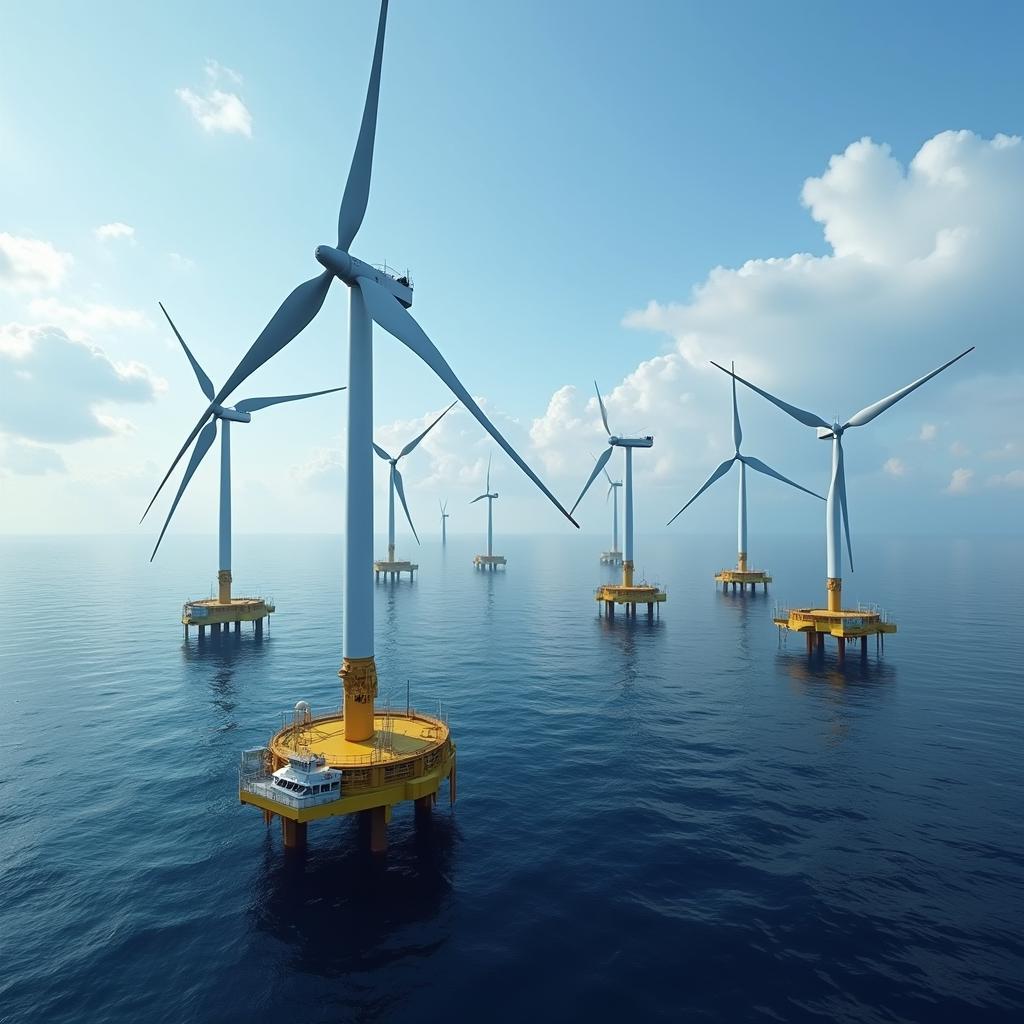 Tua bin gió ngoài khơi hiện đại với công nghệ nổi tiên tiến trong đề thi IELTS Reading
PASSAGE 3 – The Convergence of Renewable Technologies and Systemic Innovation
Độ khó: Hard (Band 7.0-9.0)
Thời gian đề xuất: 23-25 phút
The contemporary renewable energy landscape is characterized not merely by incremental improvements in individual technologies, but by a fundamental reconceptualization of energy systems themselves. This paradigm shift represents a move away from the traditional centralized, unidirectional model of electricity generation and distribution toward a more decentralized, bidirectional, and intelligent framework. The innovation driving this transformation extends far beyond the physical apparatus of solar panels and wind turbines; it encompasses sophisticated software systems, artificial intelligence algorithms, blockchain technology, and entirely new business models that are collectively reshaping the energy sector’s architecture.
At the heart of this systemic innovation lies the concept of grid flexibility and energy system integration. Traditional power grids were designed around large, centralized power plants – typically coal, natural gas, or nuclear facilities – that provided baseload power in a predictable, controllable manner. The integration of variable renewable energy sources fundamentally challenges this model, as solar and wind generation fluctuates based on weather conditions and time of day. Addressing this challenge has necessitated innovations that operate at multiple levels simultaneously: technological, regulatory, and organizational.
Virtual power plants (VPPs) exemplify this multi-dimensional innovation. A VPP aggregates thousands or even millions of distributed energy resources – including rooftop solar panels, battery storage systems, electric vehicles, and even controllable loads like water heaters and air conditioning units – and coordinates them using advanced software platforms. Through sophisticated optimization algorithms, VPPs can collectively function as a single, dispatchable power plant, providing grid services such as frequency regulation, voltage support, and peak demand reduction. This innovation required not only technical breakthroughs in communication protocols and control systems, but also regulatory reforms to allow distributed resources to participate in wholesale electricity markets previously accessible only to large generators.
The emergence of sector coupling represents another frontier of innovation that transcends traditional boundaries. This approach recognizes that optimal decarbonization requires integration not just within the electricity sector, but across energy-consuming sectors including transportation, heating, and industrial processes. Power-to-gas technologies, for instance, use surplus renewable electricity to produce hydrogen through electrolysis, which can then be used in fuel cells, industrial processes, or injected into natural gas networks. Similarly, vehicle-to-grid (V2G) technology transforms electric vehicles from mere consumers of electricity into mobile storage units that can discharge power back to the grid during peak demand periods, effectively creating a vast, distributed storage resource.
The innovation imperative has also driven remarkable advances in energy storage technologies beyond conventional lithium-ion batteries. Flow batteries, which store energy in liquid electrolytes held in external tanks, offer the potential for extremely long duration storage at large scales, with virtually unlimited cycle life. Compressed air energy storage (CAES) and liquid air energy storage (LAES) systems provide alternative approaches for storing vast quantities of energy in geological formations or cryogenic liquids. More exotic solutions under development include gravity-based storage systems that lift massive weights when electricity is abundant and lower them to generate power when needed, and thermal energy storage systems that heat or cool substances to store energy for later use.
The digitalization of energy systems has catalyzed innovations that would have been inconceivable in earlier eras. Smart meters equipped with bidirectional communication capabilities provide granular data on consumption patterns, enabling sophisticated demand response programs that incentivize consumers to shift their energy use to times when renewable generation is abundant. Blockchain technology is being deployed to enable peer-to-peer energy trading, where households with solar panels can directly sell excess electricity to neighbors without intermediaries, creating localized energy markets. Artificial intelligence and machine learning algorithms continuously analyze massive datasets from weather forecasts, historical consumption patterns, and real-time grid conditions to optimize everything from dispatch decisions to predictive maintenance schedules.
Material science innovations continue to push the boundaries of renewable energy performance. Perovskite solar cells, a relatively recent discovery, have achieved laboratory efficiencies exceeding 25% and can theoretically reach above 30%, approaching the theoretical limits of silicon-based cells while potentially costing a fraction of the price to manufacture. These cells can be printed using inkjet technology on flexible substrates, opening possibilities for solar applications on curved surfaces, clothing, and portable devices. Research into tandem solar cells that layer different materials to capture more of the solar spectrum promises efficiencies above 40%, though commercial viability remains elusive.
The innovation ecosystem supporting renewable energy transformation extends into financing mechanisms and business models. Power purchase agreements (PPAs) have evolved into sophisticated instruments that allow corporations to procure renewable energy without capital expenditure. Community solar projects enable renters and those with unsuitable roofs to benefit from solar energy by purchasing shares in larger installations. Energy-as-a-service models remove the ownership burden entirely, with companies installing, maintaining, and operating renewable energy systems while customers simply pay for the energy consumed. Green bonds and sustainability-linked financing have mobilized unprecedented capital toward renewable projects, with issuance exceeding hundreds of billions of dollars annually.
However, systemic innovation in the renewable energy sector faces formidable challenges. Path dependency in energy infrastructure means that existing systems, regulations, and stakeholder interests create institutional inertia resistant to rapid change. The intermittency of renewable sources, while addressed by various storage and grid management solutions, remains a fundamental physical constraint that limits the percentage of renewables a grid can accommodate without extensive supporting infrastructure. Critical mineral supply chains for batteries and electronics components raise concerns about geopolitical dependencies and environmental impacts of mining. The social dimensions of energy transitions – including employment disruptions in fossil fuel industries, energy justice considerations, and public acceptance of new infrastructure – require innovations in policy and governance that prove more difficult than technical solutions.
Nevertheless, the trajectory of innovation in renewable energy and associated systems suggests an accelerating transition. The feedback loops between technological improvements, cost reductions, policy support, and market adoption create a self-reinforcing dynamic that continually expands the realm of what is technically and economically feasible. What appeared as niche applications a decade ago – electric vehicles, residential solar-plus-storage systems, green hydrogen production – are rapidly moving toward mainstream adoption. The convergence of renewable energy technologies with digital systems, advanced materials, and novel organizational models indicates that the innovation driving energy sector transformation is not approaching exhaustion, but rather entering its most dynamic phase.
Questions 27-40
Questions 27-31: Multiple Choice
Choose the correct letter, A, B, C or D.
27. According to the passage, the main innovation in renewable energy sector is:
A. improvements in solar panel efficiency
B. a complete redesign of energy systems
C. better wind turbine technology
D. reduced manufacturing costs
28. Virtual power plants (VPPs) function by:
A. building large centralized renewable energy facilities
B. replacing traditional power plants entirely
C. coordinating distributed energy resources collectively
D. focusing exclusively on solar energy
29. Sector coupling refers to:
A. integrating renewable energy across different economic sectors
B. connecting multiple power plants together
C. coupling solar panels with wind turbines
D. partnerships between energy companies
30. The passage suggests that blockchain technology in energy systems enables:
A. more efficient power generation
B. direct energy trading between individuals
C. better weather forecasting
D. improved battery storage
31. Perovskite solar cells are significant because they:
A. are already widely used commercially
B. work better in cloudy conditions
C. potentially combine high efficiency with low cost
D. last longer than silicon cells
Questions 32-36: Matching Features
Match each innovation (Questions 32-36) with the correct characteristic (A-H).
Write the correct letter, A-H.
Characteristics:
A. Stores energy by lifting heavy objects
B. Uses liquid electrolytes in external containers
C. Transforms vehicles into mobile storage units
D. Prints solar cells using inkjet methods
E. Produces hydrogen from excess electricity
F. Removes ownership requirements from customers
G. Enables sharing of residential solar systems
H. Predicts equipment failures before they occur
32. Flow batteries ___
33. Power-to-gas technology ___
34. Vehicle-to-grid technology ___
35. Perovskite solar cells ___
36. Energy-as-a-service models ___
Questions 37-40: Short-answer Questions
Answer the questions below using NO MORE THAN THREE WORDS from the passage for each answer.
37. What type of power did traditional power plants provide in a controllable way?
38. What two words describe the data that smart meters provide about energy consumption?
39. What type of agreements allow corporations to obtain renewable energy without initial investment?
40. What creates resistance to rapid change in energy systems according to the passage?
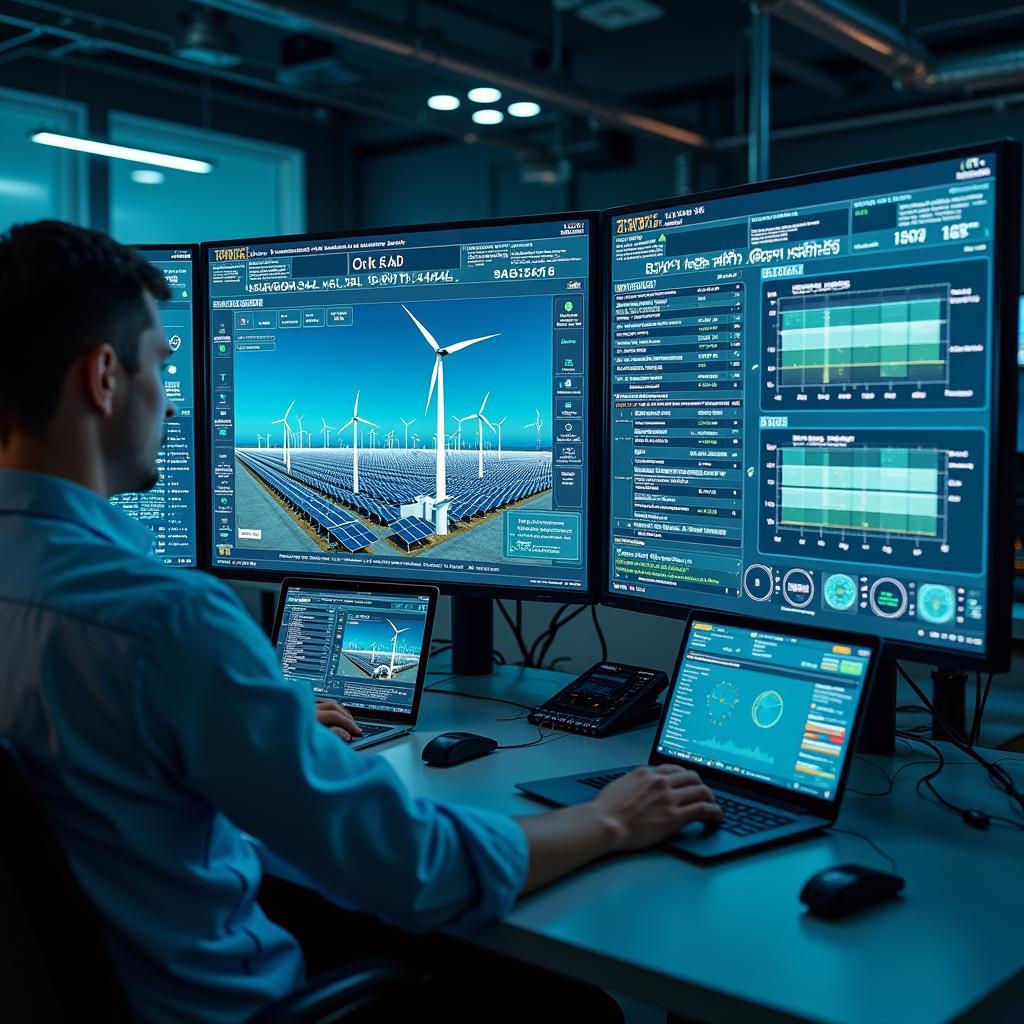 Hệ thống lưới điện thông minh tích hợp nhiều nguồn năng lượng tái tạo trong đề IELTS
3. Answer Keys – Đáp Án
PASSAGE 1: Questions 1-13
- B
- C
- B
- B
- C
- TRUE
- FALSE
- NOT GIVEN
- TRUE
- E
- C
- B
- A
PASSAGE 2: Questions 14-26
- YES
- NOT GIVEN
- NO
- YES
- YES
- NO
- iii
- ii
- v
- i
- iv
- B
- A
PASSAGE 3: Questions 27-40
- B
- C
- A
- B
- C
- B
- E
- C
- D
- F
- baseload power
- granular data
- Power purchase agreements / PPAs
- institutional inertia
4. Giải Thích Đáp Án Chi Tiết
Passage 1 – Giải Thích
Câu 1: B
- Dạng câu hỏi: Multiple Choice
- Từ khóa: main obstacle, solar energy adoption, early 2000s
- Vị trí trong bài: Đoạn 2, dòng 1-2
- Giải thích: Đoạn văn nói rõ “solar panels were prohibitively expensive” (pin mặt trời cực kỳ đắt đỏ). Từ “prohibitively expensive” được paraphrase thành “high manufacturing costs” trong đáp án B.
Câu 2: C
- Dạng câu hỏi: Multiple Choice
- Từ khóa: thin-film solar cells, improvement
- Vị trí trong bài: Đoạn 2, dòng 5-7
- Giải thích: Bài đọc chỉ rõ “used far less material than traditional silicon-based panels” và “manufactured more quickly and at a fraction of the cost”. Đáp án C nắm bắt đúng ý chính về việc sử dụng ít vật liệu hơn.
Câu 6: TRUE
- Dạng câu hỏi: True/False/Not Given
- Từ khóa: early 2000s, rare materials, difficult to obtain
- Vị trí trong bài: Đoạn 2, dòng 2-3
- Giải thích: Câu “required significant amounts of rare materials” khớp với thông tin trong câu hỏi. TRUE là đáp án đúng.
Câu 7: FALSE
- Dạng câu hỏi: True/False/Not Given
- Từ khóa: solar tracking systems, increase energy capture, more than 40%
- Vị trí trong bài: Đoạn 3, dòng 3-4
- Giải thích: Bài đọc nói rõ “increase energy capture by up to 25-35%” chứ không phải “more than 40%”. Do đó đáp án là FALSE.
Câu 10: E
- Dạng câu hỏi: Matching Information
- Từ khóa: appearance of solar installations, aesthetic concerns
- Vị trí trong bài: Đoạn 6, dòng 4-6
- Giải thích: Building-integrated photovoltaics (BIPV) được đề cập là giải pháp cho “homeowners who previously rejected solar panels due to aesthetic concerns” (chủ nhà từng từ chối pin mặt trời vì lo ngại thẩm mỹ).
Câu 11: C
- Dạng câu hỏi: Matching Information
- Từ khóa: intermittent energy supply
- Vị trí trong bài: Đoạn 4
- Giải thích: Advanced battery technology được mô tả là giải pháp cho “intermittent nature” của năng lượng mặt trời, cho phép lưu trữ và sử dụng năng lượng khi không có ánh sáng mặt trời.
Passage 2 – Giải Thích
Câu 14: YES
- Dạng câu hỏi: Yes/No/Not Given
- Từ khóa: increase in wind turbine size, remarkable
- Vị trí trong bài: Đoạn B, toàn bộ
- Giải thích: Tác giả sử dụng từ “dramatic increase” và “exponential growth” để mô tả sự gia tăng kích thước tua bin gió, thể hiện quan điểm đồng tình với từ “remarkable” trong câu hỏi.
Câu 16: NO
- Dạng câu hỏi: Yes/No/Not Given
- Từ khóa: ice accumulation, minor issue, rarely affects performance
- Vị trí trong bài: Đoạn C, dòng 4-5
- Giải thích: Bài đọc nói rõ ice accumulation “can reduce efficiency by up to 50%” – đây là vấn đề lớn chứ không phải minor issue. Đáp án là NO.
Câu 20: iii
- Dạng câu hỏi: Matching Headings
- Vị trí trong bài: Đoạn D
- Giải thích: Đoạn D tập trung vào “floating wind turbine platforms” giúp “deployed in waters exceeding 200 meters deep” – khắc phục hạn chế về độ sâu nước. Heading iii “Overcoming water depth limitations” phù hợp nhất.
Câu 22: v
- Dạng câu hỏi: Matching Headings
- Vị trí trong bài: Đoạn F
- Giải thích: Đoạn F nói về “grid management technology” và các giải pháp như “smart grid systems” và “energy storage solutions” để giải quyết “variable nature” của năng lượng gió. Heading v “Managing power supply inconsistency” là đáp án chính xác.
Câu 25: B (altitude)
- Dạng câu hỏi: Summary Completion
- Vị trí trong bài: Đoạn I, dòng 2-3
- Giải thích: Bài đọc đề cập “capture stronger, more consistent winds at altitudes of 500-1000 meters” – từ “altitude” (độ cao) là đáp án phù hợp.
Câu 26: A (rotation)
- Dạng câu hỏi: Summary Completion
- Vị trí trong bài: Đoạn I, dòng 4-5
- Giải thích: Vertical-axis turbines được mô tả là “can capture wind from any direction without needing to rotate” – không cần xoay (rotation).
Passage 3 – Giải Thích
Câu 27: B
- Dạng câu hỏi: Multiple Choice
- Từ khóa: main innovation, renewable energy sector
- Vị trí trong bài: Đoạn 1, câu đầu
- Giải thích: Câu mở đầu nhấn mạnh “fundamental reconceptualization of energy systems themselves” và “paradigm shift” – điều này được paraphrase thành “a complete redesign of energy systems” ở đáp án B.
Câu 28: C
- Dạng câu hỏi: Multiple Choice
- Từ khóa: Virtual power plants, function
- Vị trí trong bài: Đoạn 3, câu 2-4
- Giải thích: VPPs được mô tả là “aggregates thousands or even millions of distributed energy resources” và “coordinates them using advanced software platforms” – tương ứng với đáp án C.
Câu 30: B
- Dạng câu hỏi: Multiple Choice
- Từ khóa: blockchain technology, energy systems
- Vị trí trong bài: Đoạn 6, dòng 4-5
- Giải thích: Blockchain “enable peer-to-peer energy trading, where households with solar panels can directly sell excess electricity to neighbors” – giao dịch năng lượng trực tiếp giữa các cá nhân, khớp với đáp án B.
Câu 31: C
- Dạng câu hỏi: Multiple Choice
- Từ khóa: Perovskite solar cells, significant
- Vị trí trong bài: Đoạn 7, dòng 2-4
- Giải thích: Perovskite cells có “laboratory efficiencies exceeding 25%” và “potentially costing a fraction of the price to manufacture” – kết hợp hiệu suất cao với chi phí thấp, đúng với đáp án C.
Câu 37: baseload power
- Dạng câu hỏi: Short-answer Questions
- Từ khóa: traditional power plants, provided, controllable way
- Vị trí trong bài: Đoạn 2, dòng 2-3
- Giải thích: “provided baseload power in a predictable, controllable manner” – baseload power là cụm từ chính xác từ bài đọc.
Câu 38: granular data
- Dạng câu hỏi: Short-answer Questions
- Từ khóa: smart meters, provide, energy consumption
- Vị trí trong bài: Đoạn 6, dòng 2-3
- Giải thích: Smart meters “provide granular data on consumption patterns” – granular data là cụm từ mô tả dữ liệu chi tiết mà smart meters cung cấp.
Câu 40: institutional inertia
- Dạng câu hỏi: Short-answer Questions
- Từ khóa: creates resistance, rapid change, energy systems
- Vị trí trong bài: Đoạn 9, dòng 2-3
- Giải thích: “existing systems, regulations, and stakeholder interests create institutional inertia resistant to rapid change” – institutional inertia là thuật ngữ mô tả sức cản đối với thay đổi.
5. Từ Vựng Quan Trọng Theo Passage
Passage 1 – Essential Vocabulary
| Từ vựng | Loại từ | Phiên âm | Nghĩa tiếng Việt | Ví dụ từ bài | Collocation |
|---|---|---|---|---|---|
| cost-effective | adj | /kɒst ɪˈfektɪv/ | Hiệu quả về chi phí | “most cost-effective sources of electricity” | cost-effective solution/method |
| photovoltaic | adj | /ˌfəʊtəʊvɒlˈteɪɪk/ | Quang điện | “photovoltaic cells used to convert sunlight” | photovoltaic cell/panel/system |
| intermittent | adj | /ˌɪntəˈmɪtənt/ | Gián đoạn, không liên tục | “traditional limitations of solar power was its intermittent nature” | intermittent nature/supply |
| defect rate | noun | /ˈdiːfekt reɪt/ | Tỷ lệ lỗi | “defect rates of less than 0.1%” | reduce defect rate |
| versatility | noun | /ˌvɜːsəˈtɪləti/ | Tính linh hoạt, đa dụng | “improved aesthetics and versatility” | increase versatility |
| aesthetic | adj/noun | /iːsˈθetɪk/ | Thẩm mỹ | “rejected solar panels due to aesthetic concerns” | aesthetic appeal/concern |
| fossil fuel | noun | /ˈfɒsl fjuːəl/ | Nhiên liệu hóa thạch | “expensive alternative to traditional fossil fuels” | fossil fuel consumption/dependence |
| breakthrough | noun | /ˈbreɪkθruː/ | Đột phá | “most significant breakthroughs came with the development” | major breakthrough/scientific breakthrough |
| viable | adj | /ˈvaɪəbl/ | Khả thi, có thể thực hiện | “making projects more economically viable” | economically viable/commercially viable |
| incorporate | verb | /ɪnˈkɔːpəreɪt/ | Kết hợp, tích hợp | “incorporated directly into building materials” | incorporate into/incorporate features |
| surge | noun/verb | /sɜːdʒ/ | Sự tăng mạnh | “triggered a surge in installations worldwide” | surge in demand/surge of interest |
| purification | noun | /ˌpjʊərɪfɪˈkeɪʃn/ | Sự lọc sạch, thanh lọc | “solar-powered water purification systems” | water purification/air purification |
Passage 2 – Essential Vocabulary
| Từ vựng | Loại từ | Phiên âm | Nghĩa tiếng Việt | Ví dụ từ bài | Collocation |
|---|---|---|---|---|---|
| metamorphosis | noun | /ˌmetəˈmɔːfəsɪs/ | Sự biến đổi hoàn toàn | “wind power sector has undergone a metamorphosis” | undergo metamorphosis |
| exponential | adj | /ˌekspəˈnenʃl/ | Theo cấp số nhân | “This exponential growth in scale” | exponential growth/exponential increase |
| composite material | noun | /ˈkɒmpəzɪt məˈtɪəriəl/ | Vật liệu tổng hợp | “innovations in composite materials” | advanced composite material |
| corrosion | noun | /kəˈrəʊʒn/ | Sự ăn mòn | “salt corrosion in offshore environments” | corrosion resistance/prevent corrosion |
| hydrophobic | adj | /ˌhaɪdrəˈfəʊbɪk/ | Kỵ nước | “hydrophobic surfaces that prevent ice accumulation” | hydrophobic coating/surface |
| mooring | noun | /ˈmʊərɪŋ/ | Sự neo đậu | “anchored to the seabed with mooring lines” | mooring line/mooring system |
| algorithm | noun | /ˈælɡərɪðəm/ | Thuật toán | “sophisticated algorithms that adjust blade pitch” | optimization algorithm/machine learning algorithm |
| predictive maintenance | noun | /prɪˈdɪktɪv ˈmeɪntənəns/ | Bảo trì dự đoán | “Predictive maintenance systems powered by machine learning” | predictive maintenance system |
| downtime | noun | /ˈdaʊntaɪm/ | Thời gian ngừng hoạt động | “reduced downtime by up to 30%” | minimize downtime/reduce downtime |
| fluctuation | noun | /ˌflʌktʃuˈeɪʃn/ | Sự dao động | “rapid fluctuations in power output” | price fluctuation/temperature fluctuation |
| deterrent | noun | /dɪˈterənt/ | Biện pháp ngăn chặn | “use deterrent technologies” | deterrent effect/act as a deterrent |
| avian | adj | /ˈeɪviən/ | Thuộc về chim | “reduced avian mortality rates” | avian species/avian population |
| modular | adj | /ˈmɒdjʊlə(r)/ | Theo mô-đun | “modular turbine designs” | modular design/modular system |
| turbulent | adj | /ˈtɜːbjələnt/ | Hỗn loạn, nhiễu động | “turbulent urban environments” | turbulent flow/turbulent conditions |
Passage 3 – Essential Vocabulary
| Từ vựng | Loại từ | Phiên âm | Nghĩa tiếng Việt | Ví dụ từ bài | Collocation |
|---|---|---|---|---|---|
| reconceptualization | noun | /ˌriːkənˌseptʃuəlaɪˈzeɪʃn/ | Sự tái khái niệm hóa | “fundamental reconceptualization of energy systems” | fundamental reconceptualization |
| paradigm shift | noun | /ˈpærədaɪm ʃɪft/ | Sự thay đổi mô hình tư duy | “This paradigm shift represents a move” | undergo a paradigm shift |
| decentralized | adj | /diːˈsentrəlaɪzd/ | Phân tán, phi tập trung | “more decentralized, bidirectional framework” | decentralized system/decentralized network |
| baseload power | noun | /ˈbeɪsləʊd ˈpaʊə(r)/ | Điện nền, điện cơ bản | “provided baseload power in a predictable manner” | baseload power generation |
| aggregates | verb | /ˈæɡrɪɡeɪts/ | Tập hợp, gom lại | “VPP aggregates thousands of distributed energy resources” | aggregate data/aggregate resources |
| dispatchable | adj | /dɪˈspætʃəbl/ | Có thể điều phối | “function as a single, dispatchable power plant” | dispatchable power/dispatchable generation |
| sector coupling | noun | /ˈsektə(r) ˈkʌplɪŋ/ | Liên kết liên ngành | “emergence of sector coupling” | sector coupling strategy |
| decarbonization | noun | /diːˌkɑːbənaɪˈzeɪʃn/ | Giảm carbon | “optimal decarbonization requires integration” | deep decarbonization/energy decarbonization |
| electrolysis | noun | /ɪˌlekˈtrɒləsɪs/ | Điện phân | “produce hydrogen through electrolysis” | water electrolysis/electrolysis process |
| granular | adj | /ˈɡrænjələ(r)/ | Chi tiết, cụ thể | “provide granular data on consumption patterns” | granular data/granular level |
| peer-to-peer | adj | /pɪə(r) tə pɪə(r)/ | Ngang hàng, đồng đẳng | “enable peer-to-peer energy trading” | peer-to-peer trading/peer-to-peer network |
| perovskite | noun | /pəˈrɒvskaɪt/ | Perovskite (loại vật liệu) | “Perovskite solar cells” | perovskite material/perovskite structure |
| substrate | noun | /ˈsʌbstreɪt/ | Chất nền | “printed on flexible substrates” | flexible substrate/substrate material |
| path dependency | noun | /pɑːθ dɪˈpendənsi/ | Sự phụ thuộc vào quỹ đạo | “Path dependency in energy infrastructure” | path dependency effect |
| institutional inertia | noun | /ˌɪnstɪˈtjuːʃənl ɪˈnɜːʃə/ | Quán tính thể chế | “create institutional inertia resistant to change” | overcome institutional inertia |
| geopolitical | adj | /ˌdʒiːəʊpəˈlɪtɪkl/ | Địa chính trị | “raise concerns about geopolitical dependencies” | geopolitical risk/geopolitical tension |
| self-reinforcing | adj | /self ˌriːɪnˈfɔːsɪŋ/ | Tự củng cố, tự tăng cường | “create a self-reinforcing dynamic” | self-reinforcing cycle/self-reinforcing mechanism |
| mainstream adoption | noun | /ˈmeɪnstriːm əˈdɒpʃn/ | Sự chấp nhận rộng rãi | “rapidly moving toward mainstream adoption” | achieve mainstream adoption |
 Bảng từ vựng IELTS Reading chủ đề năng lượng tái tạo và đổi mới công nghệ
Kết Bài
Chủ đề “How renewable energy is driving innovation in the energy sector” không chỉ phổ biến trong IELTS Reading mà còn phản ánh những xu hướng công nghệ quan trọng nhất của thế kỷ 21. Qua bộ đề thi mẫu này, bạn đã được trải nghiệm đầy đủ 3 mức độ khó từ Easy đến Hard với tổng cộng 40 câu hỏi đa dạng dạng.
Passage 1 giới thiệu những đổi mới cơ bản trong công nghệ năng lượng mặt trời với từ vựng và cấu trúc câu dễ hiểu, phù hợp để xây dựng nền tảng. Passage 2 đi sâu vào kỹ thuật năng lượng gió với độ phức tạp trung bình, yêu cầu kỹ năng paraphrase và suy luận tốt hơn. Passage 3 thách thức bạn với nội dung học thuật cao về sự hội tụ công nghệ và đổi mới hệ thống, đòi hỏi khả năng phân tích và hiểu sâu.
Đáp án chi tiết kèm giải thích cụ thể về vị trí thông tin và kỹ thuật paraphrase sẽ giúp bạn tự đánh giá chính xác năng lực hiện tại. Hãy chú ý đến cách thông tin trong câu hỏi được diễn đạt lại trong passage – đây là kỹ năng then chốt để đạt band điểm cao.
Phần từ vựng được tổng hợp theo từng passage cung cấp hơn 45 từ và cụm từ quan trọng với phiên âm, nghĩa tiếng Việt, ví dụ thực tế và collocations thông dụng. Việc học từ vựng trong ngữ cảnh như vậy sẽ giúp bạn ghi nhớ lâu hơn và áp dụng hiệu quả hơn.
Hãy làm lại đề thi này ít nhất 2-3 lần để làm quen với các dạng câu hỏi và cải thiện tốc độ làm bài. Nhớ rằng, thành công trong IELTS Reading không chỉ đến từ vốn từ vựng mà còn từ chiến lược làm bài khoa học và sự luyện tập đều đặn. Chúc bạn đạt được band điểm mục tiêu!