
Mở Bài
Chủ đề giáo dục trải nghiệm, đặc biệt là các chuyến tham quan di tích văn hóa, ngày càng xuất hiện thường xuyên trong kỳ thi IELTS Reading. Những bài đọc về How School Trips To Cultural Sites Enhance Learning không chỉ đánh giá khả năng đọc hiểu mà còn kiểm tra sự nhạy bén của thí sinh với các vấn đề giáo dục đương đại. Trong những năm gần đây, Cambridge IELTS và IDP đã đưa chủ đề này vào nhiều đề thi thực chiến, từ band 5.0 đến 9.0.
Bài viết này cung cấp cho bạn một bộ đề thi IELTS Reading hoàn chỉnh với ba passages có độ khó tăng dần, bao gồm: 40 câu hỏi đa dạng giống thi thật 100%, đáp án chi tiết kèm giải thích cụ thể về vị trí và cách paraphrase, từ vựng quan trọng được phân tích kỹ lưỡng, và các kỹ thuật làm bài thực chiến được đúc kết từ hơn 20 năm kinh nghiệm giảng dạy. Đề thi này phù hợp cho học viên từ band 5.0 trở lên, giúp bạn làm quen với format chuẩn và rèn luyện kỹ năng quản lý thời gian hiệu quả.
Hướng Dẫn Làm Bài IELTS Reading
Tổng Quan Về IELTS Reading Test
IELTS Reading Test kéo dài 60 phút với 3 passages và tổng cộng 40 câu hỏi. Đây là phần thi không có thời gian chuyển đáp án riêng, do đó bạn cần quản lý thời gian chặt chẽ để hoàn thành cả bài thi và ghi đáp án vào phiếu trả lời.
Phân bổ thời gian khuyến nghị:
- Passage 1: 15-17 phút (độ khó thấp, câu hỏi tương đối dễ tìm thông tin)
- Passage 2: 18-20 phút (độ khó trung bình, yêu cầu hiểu sâu và paraphrase)
- Passage 3: 23-25 phút (độ khó cao, nội dung học thuật phức tạp)
Lưu ý quan trọng: Luôn đọc câu hỏi trước khi đọc passage để biết thông tin cần tìm. Gạch chân từ khóa trong câu hỏi và tìm các dạng paraphrase trong bài đọc.
Các Dạng Câu Hỏi Trong Đề Này
Đề thi mẫu này bao gồm 7 dạng câu hỏi phổ biến trong IELTS Reading:
- Multiple Choice: Chọn đáp án đúng từ các phương án cho sẵn
- True/False/Not Given: Xác định thông tin đúng, sai hoặc không được đề cập
- Matching Information: Ghép thông tin với đoạn văn tương ứng
- Sentence Completion: Hoàn thiện câu với từ trong bài đọc
- Matching Headings: Chọn tiêu đề phù hợp cho mỗi đoạn văn
- Summary Completion: Điền từ vào bài tóm tắt
- Short-answer Questions: Trả lời câu hỏi ngắn với số từ giới hạn
IELTS Reading Practice Test
PASSAGE 1 – The Educational Value of Museum Visits
Độ khó: Easy (Band 5.0-6.5)
Thời gian đề xuất: 15-17 phút
For decades, educators have recognised that learning extends far beyond the classroom walls. One of the most effective ways to enrich students’ educational experience is through organised visits to cultural sites, particularly museums and historical landmarks. These excursions offer students tangible connections to the subjects they study in textbooks, transforming abstract concepts into memorable real-world experiences.
Research conducted by the Museum Education Association in 2019 revealed that students who participated in structured museum visits demonstrated a 25% improvement in subject retention compared to those who learned exclusively through traditional classroom methods. The study followed 3,000 students across twelve countries over a two-year period, examining their academic performance in history, art, and social sciences. What made these visits particularly effective was the interactive nature of the learning experience. Rather than passively receiving information, students could observe authentic artefacts, touch replica objects, and engage in hands-on activities designed to bring history to life.
Museums today have evolved significantly from their traditional role as static repositories of historical objects. Modern museums employ innovative educational strategies to maximise learning outcomes. Many institutions now offer specialised school programmes that align with national curriculum standards. At the British Museum in London, for example, the education department designs age-appropriate workshops where students can handle genuine ancient coins, examine archaeological finds through magnifying glasses, and even participate in mock excavations. These experiential learning opportunities create lasting impressions that textbooks alone cannot achieve.
The benefits of cultural site visits extend beyond academic knowledge acquisition. According to Dr. Sarah Mitchell, an educational psychologist at Cambridge University, such excursions play a crucial role in developing students’ critical thinking skills and cultural awareness. “When students encounter historical artefacts in person, they begin asking questions about the people who created them, the societal contexts in which they existed, and the relevance of these objects to contemporary life,” Dr. Mitchell explains. This natural curiosity stimulates analytical thinking and encourages students to make connections between past and present.
Furthermore, museum visits provide valuable opportunities for social learning. Students collaborate in small groups during guided tours, discussing their observations and sharing interpretations. This peer-to-peer interaction reinforces learning and helps develop communication skills. Teachers often report that students who are typically disengaged in regular classroom settings become enthusiastically involved during museum visits, demonstrating that alternative learning environments can reach diverse learners more effectively.
The logistical organisation of these educational trips requires careful planning. Schools must coordinate with museum education departments to ensure visits are pedagogically sound and age-appropriate. Pre-visit preparation is essential; teachers typically introduce relevant topics in class beforehand, providing students with background knowledge that enhances their museum experience. Many educators also assign follow-up activities after the visit, such as creating project presentations or writing reflective essays, which help consolidate learning and assess understanding.
Cost considerations have historically been a barrier to frequent cultural site visits, particularly for schools in economically disadvantaged areas. However, many museums now offer subsidised admission rates or even free entry for school groups. Some institutions have established partnership programmes with local schools, providing transportation grants and educational resources to ensure all students have access to these valuable learning experiences regardless of their socioeconomic background.
Technology has also enhanced the educational impact of museum visits. Many institutions now provide students with digital guides, augmented reality applications, and interactive touchscreens that offer additional information about exhibits. These technological tools cater to digital-native students while making the learning experience more engaging and personalised. Some museums even offer virtual reality experiences that transport students to historical periods or allow them to explore archaeological sites that would otherwise be inaccessible.
The long-term impact of cultural site visits on students’ educational development continues to be a subject of academic research. Studies suggest that students who regularly participate in such excursions develop a deeper appreciation for cultural heritage and are more likely to become lifelong learners. They also demonstrate improved spatial reasoning skills, visual literacy, and an enhanced ability to interpret complex information from multiple sources. These competencies are increasingly valuable in our information-rich society and contribute to students’ overall academic success and personal development.
Questions 1-5
Do the following statements agree with the information given in Reading Passage 1?
Write:
- TRUE if the statement agrees with the information
- FALSE if the statement contradicts the information
- NOT GIVEN if there is no information on this
-
Museum visits have been proven to improve students’ ability to remember information by approximately one quarter.
-
The British Museum’s educational programmes allow students to handle original ancient artefacts.
-
Students who are uninterested in classroom learning often show more enthusiasm during museum visits.
-
All museums now offer free admission for school groups.
-
Research indicates that regular museum visits lead to better problem-solving abilities in mathematics.
Questions 6-9
Complete the sentences below.
Choose NO MORE THAN TWO WORDS from the passage for each answer.
-
Modern museums are no longer just __ of historical items but have adopted new teaching methods.
-
Dr. Sarah Mitchell believes museum visits help develop students’ __ as well as their knowledge of different cultures.
-
Schools need to work with museum education departments to make sure visits are suitable for different __.
-
Many museums provide __ that give students extra details about the items on display.
Questions 10-13
Choose the correct letter, A, B, C or D.
- According to the passage, what makes museum visits particularly effective for learning?
- A) The large number of objects on display
- B) The opportunity to interact with materials directly
- C) The quiet environment for concentration
- D) The availability of expert guides
- What does the passage say about pre-visit preparation?
- A) It is optional but recommended
- B) It should be done by museum staff
- C) It is necessary for effective learning
- D) It is only needed for younger students
- The main purpose of follow-up activities after museum visits is to:
- A) Test students’ memory of facts
- B) Give students homework assignments
- C) Strengthen understanding of what was learned
- D) Prepare for the next museum visit
- According to the passage, technological tools in museums are particularly suitable for:
- A) Students who prefer traditional learning
- B) Young people accustomed to digital devices
- C) Teachers conducting research
- D) Museum staff managing exhibits
PASSAGE 2 – Cultural Sites as Living Classrooms
Độ khó: Medium (Band 6.0-7.5)
Thời gian đề xuất: 18-20 phút
The pedagogical shift towards experiential education has fundamentally transformed how educators approach cultural heritage sites as learning resources. No longer viewed merely as supplementary activities, visits to archaeological sites, heritage buildings, and cultural institutions are now recognised as integral components of comprehensive educational programmes. This evolution reflects a broader understanding that meaningful learning occurs when students can contextualise abstract concepts within authentic historical and cultural frameworks.
The theoretical underpinning of this approach draws heavily from constructivist learning theory, which posits that individuals construct knowledge through direct experience rather than passive absorption of information. When students visit cultural sites, they engage in what educational theorists call “situated learning” – acquiring knowledge within the physical and social contexts where it is naturally embedded. Professor James Thornton, a leading authority on museum pedagogy at the University of Edinburgh, argues that this immersive approach activates multiple cognitive processes simultaneously. “Students are not simply memorising dates and facts,” Thornton explains. “They are synthesising visual information, spatial relationships, and narrative elements to construct coherent mental models of historical events and cultural practices.”
 Học sinh đang tham quan và tìm hiểu di tích văn hóa lịch sử với hướng dẫn viên
Empirical evidence supporting the efficacy of cultural site visits has accumulated substantially over the past two decades. A landmark study published in the Journal of Educational Psychology in 2018 employed neuroimaging techniques to examine brain activity in students during and after museum visits. The research revealed that exposure to authentic cultural artefacts stimulated regions of the brain associated with emotional processing and long-term memory formation significantly more than viewing photographs or digital reproductions. This neurological response explains why experiences at cultural sites create what researchers term “memory markers” – vivid recollections that remain accessible years after the initial encounter.
The architectural and spatial dimensions of cultural sites themselves contribute to their educational value. Unlike the constrained environment of a traditional classroom, heritage sites offer opportunities for kinesthetic learning – understanding through movement and physical exploration. Students navigating the corridors of a medieval castle, for instance, develop intuitive comprehension of concepts such as defensive architecture, social hierarchy, and daily life in historical periods. This embodied knowledge – understanding gained through physical experience – proves remarkably durable and serves as a foundation for more abstract analytical thinking.
However, maximising the educational potential of cultural site visits requires sophisticated pedagogical scaffolding. Research by the Cultural Learning Alliance has identified several critical factors that determine the effectiveness of such excursions. Pre-visit contextualisation emerged as particularly crucial; students need conceptual frameworks that enable them to interpret what they encounter. Without adequate preparation, visits risk becoming what educators call “educational tourism” – pleasant experiences that fail to produce substantive learning outcomes. Conversely, when teachers provide guiding questions, relevant background information, and clear learning objectives, students approach cultural sites with purposeful engagement rather than passive observation.
The role of expert interpretation during site visits represents another pivotal element. Tương tự như how interactive museums promote student learning, trained educators at cultural sites employ various interpretive strategies to make historical narratives accessible and engaging. Object-based learning – focusing discussion on specific artefacts – has proven particularly effective. When a museum educator discusses a single archaeological find in depth, exploring its material composition, manufacturing techniques, and cultural significance, students gain insights that extend far beyond that individual object, developing analytical frameworks applicable to historical inquiry more broadly.
Collaborative learning during cultural site visits enhances cognitive benefits. Research indicates that students working in small groups demonstrate superior comprehension and retention compared to individual learners. Peer discussion encourages students to articulate observations, challenge interpretations, and construct shared understanding. This social dimension of learning aligns with sociocultural theories of education, which emphasise that knowledge emerges through interpersonal interaction and cultural participation. Museum educators increasingly design activities that promote collaborative inquiry, such as scavenger hunts requiring teamwork or problem-solving challenges based on historical scenarios.
The assessment of learning from cultural site visits presents methodological challenges. Traditional testing methods may fail to capture the multifaceted nature of knowledge acquired through experiential learning. Progressive educators have developed alternative assessment strategies, including reflective journals, creative projects, and portfolio-based evaluations that allow students to demonstrate understanding in diverse ways. Some schools implement pre- and post-visit assessments that measure not just factual recall but changes in attitudes, analytical capabilities, and cultural awareness – outcomes considered equally valuable as content knowledge.
Despite compelling evidence of educational benefits, systemic barriers continue to limit access to cultural site visits. Budgetary constraints, curriculum pressures, and logistical complexities mean that many students, particularly those from marginalised communities, rarely experience this form of learning. Addressing these inequities requires policy interventions at multiple levels. Some governments have implemented national programmes guaranteeing all students regular access to cultural institutions. Điều này có điểm tương đồng với the role of festivals in promoting cultural education khi cả hai đều nhấn mạnh tầm quan trọng của educational equity and universal access to cultural learning experiences.
Digital technologies are also transforming the landscape of cultural education, though not without controversy. Virtual museum tours and augmented reality applications can extend access to students unable to visit sites physically. However, educators debate whether digital mediation can replicate the sensory richness and emotional impact of direct encounters with cultural heritage. Most scholars advocate for a blended approach, using digital tools to enhance rather than replace physical visits, recognising that each mode of engagement offers distinct pedagogical affordances.
Questions 14-18
Reading Passage 2 has ten paragraphs, A-J.
Which paragraph contains the following information?
Write the correct letter, A-J.
NB: You may use any letter more than once.
-
A description of how the physical layout of heritage sites aids learning
-
Evidence from brain scanning research about cultural site visits
-
Discussion of difficulties in measuring what students learn from museum trips
-
Mention of government initiatives to ensure fair access to cultural education
-
An explanation of why students should be prepared before visiting cultural sites
Questions 19-23
Complete the summary below.
Choose NO MORE THAN TWO WORDS from the passage for each answer.
Educational theory suggests that learning at cultural sites is more effective because it represents (19) __, where knowledge is gained in its natural setting. Professor Thornton believes this method engages several (20) __ at the same time. Research using brain imaging showed that real objects activate parts of the brain linked to (21) __ more than pictures do. The physical movement through heritage sites enables what is called (22) __, which creates understanding that lasts a long time. Experts at museums use techniques like (23) __, which involves detailed discussion of individual items.
Questions 24-26
Choose THREE letters, A-G.
Which THREE benefits of collaborative learning during cultural site visits are mentioned in the passage?
A) Students can complete assignments more quickly
B) Learners develop better understanding through discussion
C) Peer interaction helps students express what they observe
D) Group work reduces the cost of museum visits
E) Students memorise more historical dates
F) Working together helps build shared knowledge
G) Collaborative activities improve physical fitness
PASSAGE 3 – The Neurocognitive and Sociocultural Dimensions of Heritage-Based Learning
Độ khó: Hard (Band 7.0-9.0)
Thời gian đề xuất: 23-25 phút
The epistemological foundations of heritage-based education rest upon an increasingly sophisticated understanding of how cognition, emotion, and sociocultural context interact to facilitate deep learning. Contemporary research in educational neuroscience has begun to elucidate the neural mechanisms underlying the enhanced efficacy of learning in culturally rich environments, while sociocultural perspectives illuminate how such experiences shape students’ identity formation and civic consciousness. This convergence of neuroscientific and sociocultural inquiry offers unprecedented insights into why educational encounters with cultural heritage produce learning outcomes qualitatively distinct from those achieved through conventional pedagogical approaches.
Neuroplasticity research has revealed that multisensory experiences characteristic of cultural site visits trigger more extensive neural network activation than unimodal learning confined to visual or auditory channels. A seminal study conducted by neuroscientists at the Max Planck Institute examined cortical responses in adolescent subjects exposed to historical information through three modalities: textual descriptions, video presentations, and in-situ experiences at heritage sites. Functional magnetic resonance imaging (fMRI) data demonstrated that the in-situ condition produced significantly greater activation in the hippocampus – a brain region critical for memory consolidation – and the amygdala, which processes emotional salience. Moreover, longitudinal assessments revealed that information acquired during site visits exhibited markedly superior retention over six-month and twelve-month intervals compared to the other conditions. Để hiểu rõ hơn về the impact of mobile learning on cultural studies, các nhà nghiên cứu đang khảo sát how technological augmentation can enhance rather than diminish these neurological benefits.
The phenomenon of “place-based memory encoding” offers a neurological explanation for the persistence of learning from cultural site visits. The hippocampus not only consolidates memories but also maintains spatial representations of environments – what neuroscientists term cognitive maps. When students learn information within distinctive physical spaces, that knowledge becomes neurologically bound to the spatial context, creating retrieval cues that enhance subsequent recall. This spatial anchoring of memory explains why individuals often report that returning to a place where they learned something triggers spontaneous recollection of associated information, even decades later. The architectural distinctiveness and sensory richness of heritage sites thus function as powerful mnemonic devices, embedding knowledge within memorable spatial and sensory frameworks.
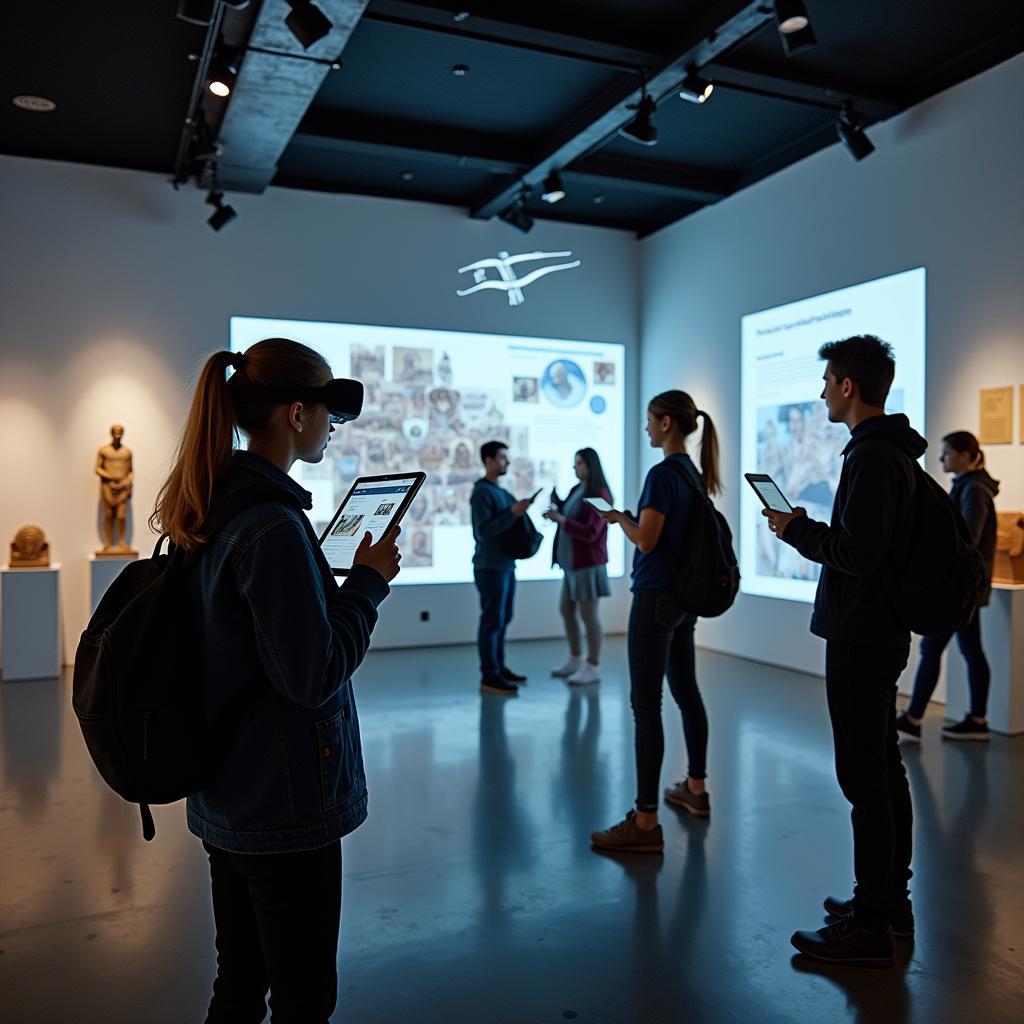 Công nghệ tăng cường thực tế giúp nâng cao trải nghiệm học tập tại bảo tàng văn hóa
Beyond neurocognitive mechanisms, the sociocultural significance of heritage-based learning warrants careful examination. Drawing upon Vygotskian sociocultural theory, educational scholars argue that cultural institutions serve as “mediating structures” through which societies transmit values, historical consciousness, and collective memory across generations. When students engage with cultural artefacts and heritage narratives, they participate in what anthropologist Clifford Geertz termed “webs of significance” – the symbolic systems through which cultures construct meaning. This participation facilitates not merely cognitive development but also identity formation and the cultivation of cultural citizenship.
The concept of “funds of knowledge” – the historically accumulated and culturally developed bodies of knowledge essential to household or individual functioning – provides a theoretical lens for understanding how heritage-based education can bridge formal and informal learning. When cultural site visits acknowledge and incorporate students’ diverse cultural backgrounds, they validate multiple knowledge systems and demonstrate that legitimate knowledge extends beyond Western academic traditions. This inclusive approach proves particularly consequential for students from minoritised communities, for whom mainstream education often marginalises or devalues their cultural heritage. Research by educational anthropologist Luis Moll has documented that heritage-based learning that honours diverse cultural funds of knowledge enhances academic engagement and school belonging, particularly among students historically alienated from educational institutions.
However, critical heritage studies scholars caution that cultural sites are not neutral repositories of objective historical truth but rather contested spaces where particular narratives are privileged while others are silenced or marginalised. The selection of artefacts for display, the framing of interpretive texts, and the architectural presentation of exhibitions reflect power relations and ideological assumptions that warrant critical interrogation. Progressive museum educators increasingly adopt dialogic pedagogies that encourage students to question authoritative narratives, recognise multiple perspectives, and understand heritage sites as dynamic interpretive spaces rather than static repositories of fixed meaning. This critical approach cultivates historical thinking skills – the ability to analyse sources, evaluate evidence, recognise bias, and construct evidence-based interpretations – competencies identified as essential learning outcomes in contemporary history education standards.
The assessment of learning from heritage-based education necessitates methodological innovation that transcends conventional psychometric approaches. Traditional standardised tests, with their emphasis on decontextualised knowledge and discrete factual recall, prove inadequate for capturing the multidimensional outcomes of experiential learning. Educational researchers have developed alternative assessment frameworks grounded in constructivist epistemology and authentic assessment principles. These include performance-based assessments where students demonstrate understanding through complex tasks, portfolio evaluations that document learning trajectories over time, and ethnographic methodologies that examine how cultural site experiences influence students’ interpretive practices and meaning-making processes in naturalistic settings.
Digital technologies introduce both affordances and constraints for heritage-based learning. Virtual reality (VR) environments can simulate visits to geographically distant or physically inaccessible sites, potentially democratising access. Research comparing VR experiences with physical visits reveals nuanced findings: while VR can effectively convey spatial relationships and visual information, it typically fails to replicate the embodied sensations and emotional resonance of authentic encounters. Neuroscientific studies indicate that virtual experiences produce attenuated hippocampal activation compared to physical presence, suggesting diminished memory consolidation. Một ví dụ chi tiết về the use of animation in teaching cultural diversity cho thấy how digital media can effectively complement but not entirely replace direct engagement with cultural materials.
The scalability and sustainability of heritage-based education programmes present pragmatic challenges requiring systemic solutions. Given fiscal constraints facing educational systems globally, ensuring equitable access to cultural institutions demands innovative funding models and institutional partnerships. Some jurisdictions have implemented cultural education entitlements, guaranteeing all students regular heritage site visits throughout their schooling. Others have developed hub-and-spoke models where central cultural institutions support satellite programmes in peripheral regions, combining physical visits with digital resources and professional development for teachers. These structural interventions recognise that heritage-based learning’s benefits can only be fully realised when access transcends socioeconomic stratification.
Contemporary globalisation and digital connectivity raise profound questions about the future of heritage-based education. As cultural flows become increasingly transnational and hybrid, how should cultural institutions navigate tensions between preserving distinct cultural identities and acknowledging cultural interconnectedness? Progressive museum practitioners advocate for what they term “cosmopolitan heritage education” – approaches that honour local particularity while fostering intercultural understanding and global citizenship. This orientation aligns with UNESCO’s emphasis on heritage as a bridge between cultures rather than a marker of cultural boundaries. Đối với những ai quan tâm đến how to promote sustainability in education, the integration of environmental sustainability themes into heritage education represents an emerging pedagogical frontier, as educators recognise that cultural heritage and environmental stewardship are inextricably linked.
Ultimately, the value of heritage-based education extends beyond measurable academic outcomes to encompass less tangible but equally significant dimensions: the cultivation of aesthetic sensibility, historical empathy, and critical consciousness. In an era characterised by historical amnesia and cultural fragmentation, educational encounters with heritage sites offer students opportunities to develop temporal depth – an understanding that the present emerges from complex historical processes – and cultural breadth – recognition of human diversity and shared humanity. These dispositions prove essential for informed citizenship in pluralistic democracies and for addressing contemporary challenges that require both historical perspective and intercultural cooperation.
Questions 27-31
Complete the sentences below.
Choose NO MORE THAN THREE WORDS from the passage for each answer.
-
Research at the Max Planck Institute used __ to examine how different ways of presenting historical information affect the brain.
-
The brain’s hippocampus creates __ that represent the physical environments we experience.
-
According to Vygotskian theory, cultural institutions act as __ that help pass on cultural values between generations.
-
Educational anthropologist Luis Moll researched how recognising students’ different __ can improve their connection to school.
-
Critical heritage studies experts say that cultural sites are not neutral but are __ where certain historical accounts are favoured over others.
Questions 32-36
Do the following statements agree with the claims of the writer in Reading Passage 3?
Write:
- YES if the statement agrees with the claims of the writer
- NO if the statement contradicts the claims of the writer
- NOT GIVEN if it is impossible to say what the writer thinks about this
-
Virtual reality technology can completely replace the learning benefits of physical visits to heritage sites.
-
Traditional standardised tests are not suitable for measuring all the outcomes of heritage-based learning.
-
All countries now guarantee that students will have regular access to cultural sites during their education.
-
Some museums are beginning to encourage students to question the official stories presented in exhibitions.
-
Environmental sustainability should be incorporated into heritage education programmes.
Questions 37-40
Choose the correct letter, A, B, C or D.
- According to the passage, multisensory experiences at cultural sites:
- A) Are less effective than video presentations
- B) Activate more areas of the brain than single-sense learning
- C) Only benefit students with learning disabilities
- D) Have no measurable impact on long-term memory
- The concept of “funds of knowledge” is important because it:
- A) Helps museums increase their funding
- B) Measures students’ financial literacy
- C) Recognises the value of diverse cultural backgrounds
- D) Focuses exclusively on Western academic knowledge
- What does the passage suggest about progressive museum educators?
- A) They present heritage sites as containing absolute historical truth
- B) They discourage students from asking questions
- C) They teach students to analyse and question narratives critically
- D) They focus only on traditional teaching methods
- The passage concludes that heritage-based education is valuable because it:
- A) Guarantees higher test scores in all subjects
- B) Helps develop historical understanding and cultural awareness
- C) Eliminates the need for classroom teaching
- D) Is the cheapest form of education available
Answer Keys – Đáp Án
PASSAGE 1: Questions 1-13
- TRUE
- FALSE
- TRUE
- FALSE
- NOT GIVEN
- static repositories
- critical thinking skills
- age groups
- digital guides
- B
- C
- C
- B
PASSAGE 2: Questions 14-26
- D
- C
- H
- I
- E
- situated learning
- cognitive processes
- emotional processing
- kinesthetic learning
- object-based learning
24-26. B, C, F (in any order)
PASSAGE 3: Questions 27-40
- functional magnetic resonance imaging / fMRI
- cognitive maps
- mediating structures
- cultural funds of knowledge / funds of knowledge
- contested spaces
- NO
- YES
- NOT GIVEN
- YES
- YES
- B
- C
- C
- B
Giải Thích Đáp Án Chi Tiết
Passage 1 – Giải Thích
Câu 1: TRUE
- Dạng câu hỏi: True/False/Not Given
- Từ khóa: proven, improve students’ ability, remember information, approximately one quarter
- Vị trí trong bài: Đoạn 2, dòng 1-4
- Giải thích: Bài đọc nêu rõ “students who participated in structured museum visits demonstrated a 25% improvement in subject retention” – tức là cải thiện khả năng ghi nhớ 25%, tương đương “approximately one quarter” (khoảng một phần tư). Từ “retention” trong bài được paraphrase thành “ability to remember” trong câu hỏi.
Câu 2: FALSE
- Dạng câu hỏi: True/False/Not Given
- Từ khóa: British Museum, handle original ancient artefacts
- Vị trí trong bài: Đoạn 3, dòng 5-7
- Giải thích: Bài đọc đề cập “students can handle genuine ancient coins” nhưng quan trọng hơn là “touch replica objects” (chạm vào các vật sao chép). Mặc dù có đề cập đồng tiền cổ thật, nhưng phần lớn các hoạt động dùng replica, không phải tất cả đều là “original artefacts” như câu hỏi nêu.
Câu 3: TRUE
- Dạng câu hỏi: True/False/Not Given
- Từ khóa: uninterested in classroom learning, show more enthusiasm, museum visits
- Vị trí trong bài: Đoạn 5, dòng 3-5
- Giải thích: Bài viết nói “students who are typically disengaged in regular classroom settings become enthusiastically involved during museum visits”. Từ “disengaged” được paraphrase thành “uninterested”, và “enthusiastically involved” tương ứng với “show more enthusiasm”.
Câu 4: FALSE
- Dạng câu hỏi: True/False/Not Given
- Từ khóa: all museums, free admission, school groups
- Vị trí trong bài: Đoạn 7, dòng 2-3
- Giải thích: Bài đọc nói “many museums now offer subsidised admission rates or even free entry” – chỉ là “many” (nhiều) chứ không phải “all” (tất cả) như câu hỏi đưa ra. Đây là sự khác biệt rõ ràng giữa một số và toàn bộ.
Câu 5: NOT GIVEN
- Dạng câu hỏi: True/False/Not Given
- Từ khóa: regular museum visits, better problem-solving abilities, mathematics
- Vị trí trong bài: Không có thông tin
- Giải thích: Đoạn cuối có đề cập “improved spatial reasoning skills” và các kỹ năng khác, nhưng không có thông tin cụ thể về “problem-solving abilities in mathematics”. Không thể suy luận từ “spatial reasoning” là có kỹ năng toán học tốt hơn.
Câu 6: static repositories
- Dạng câu hỏi: Sentence Completion
- Từ khóa: no longer just, historical items, adopted new teaching methods
- Vị trí trong bài: Đoạn 3, dòng 1-2
- Giải thích: “Museums today have evolved significantly from their traditional role as static repositories of historical objects” – câu này được paraphrase trong câu hỏi. Cụm “static repositories” là đáp án phù hợp với giới hạn “NO MORE THAN TWO WORDS”.
Câu 7: critical thinking skills
- Dạng câu hỏi: Sentence Completion
- Từ khóa: Dr. Sarah Mitchell, develop, knowledge of different cultures
- Vị trí trong bài: Đoạn 4, dòng 2-3
- Giải thích: Bài viết nêu “such excursions play a crucial role in developing students’ critical thinking skills and cultural awareness”. Từ “cultural awareness” được paraphrase thành “knowledge of different cultures” trong câu hỏi.
Câu 8: age groups
- Dạng câu hỏi: Sentence Completion
- Từ khóa: schools, museum education departments, visits suitable
- Vị trí trong bài: Đoạn 6, dòng 1-2
- Giải thích: “Schools must coordinate with museum education departments to ensure visits are pedagogically sound and age-appropriate”. Từ “age-appropriate” cho thấy cần phù hợp với các nhóm tuổi khác nhau, tương ứng với “age groups”.
Câu 9: digital guides
- Dạng câu hỏi: Sentence Completion
- Từ khóa: museums provide, extra details, items on display
- Vị trí trong bài: Đoạn 8, dòng 1-3
- Giải thích: “Many institutions now provide students with digital guides, augmented reality applications, and interactive touchscreens that offer additional information about exhibits”. Cụm “digital guides” là đáp án phù hợp nhất và xuất hiện đầu tiên trong danh sách.
Câu 10: B
- Dạng câu hỏi: Multiple Choice
- Từ khóa: what makes museum visits particularly effective
- Vị trí trong bài: Đoạn 2, dòng 5-7
- Giải thích: Bài viết giải thích “What made these visits particularly effective was the interactive nature of the learning experience” và “students could observe authentic artefacts, touch replica objects, and engage in hands-on activities”. Đây chính là “opportunity to interact with materials directly” (B). Các đáp án khác không được nhấn mạnh là yếu tố chính.
Câu 11: C
- Dạng câu hỏi: Multiple Choice
- Từ khóa: pre-visit preparation
- Vị trí trong bài: Đoạn 6, dòng 2-4
- Giải thích: “Pre-visit preparation is essential; teachers typically introduce relevant topics in class beforehand”. Từ “essential” (thiết yếu) cho thấy đây là “necessary for effective learning” (C – cần thiết cho việc học hiệu quả). Không phải optional (A), không do museum staff làm (B), và không chỉ dành cho học sinh nhỏ (D).
Câu 12: C
- Dạng câu hỏi: Multiple Choice
- Từ khóa: main purpose, follow-up activities
- Vị trí trong bài: Đoạn 6, dòng 4-6
- Giải thích: “Many educators also assign follow-up activities after the visit… which help consolidate learning and assess understanding”. Từ “consolidate learning” (củng cố việc học) được paraphrase thành “strengthen understanding of what was learned” (C). Không chỉ là test memory (A), không phải chỉ homework (B), và không chuẩn bị cho chuyến tiếp theo (D).
Câu 13: B
- Dạng câu hỏi: Multiple Choice
- Từ khóa: technological tools, particularly suitable
- Vị trí trong bài: Đoạn 8, dòng 2-3
- Giải thích: “These technological tools cater to digital-native students” – học sinh bản địa kỹ thuật số, tức là “young people accustomed to digital devices” (B). Không phải traditional learning (A), không phải teachers (C), và không phải museum staff (D).
Passage 2 – Giải Thích
Câu 14: D
- Dạng câu hỏi: Matching Information
- Từ khóa: physical layout, heritage sites, aids learning
- Vị trí trong bài: Đoạn D (đoạn 4)
- Giải thích: Đoạn D nói về “architectural and spatial dimensions of cultural sites” và giải thích “heritage sites offer opportunities for kinesthetic learning” với ví dụ về students navigating corridors of a medieval castle. Đây chính là mô tả về cách physical layout hỗ trợ học tập.
Câu 15: C
- Dạng câu hỏi: Matching Information
- Từ khóa: brain scanning research, evidence
- Vị trí trong bài: Đoạn C (đoạn 3)
- Giải thích: Đoạn C đề cập rõ ràng “A landmark study published in the Journal of Educational Psychology in 2018 employed neuroimaging techniques to examine brain activity”. Neuroimaging techniques chính là brain scanning.
Câu 16: H
- Dạng câu hỏi: Matching Information
- Từ khóa: difficulties in measuring, what students learn
- Vị trí trong bài: Đoạn H (đoạn 8)
- Giải thích: Đoạn H bắt đầu với “The assessment of learning from cultural site visits presents methodological challenges” và giải thích “Traditional testing methods may fail to capture the multifaceted nature of knowledge acquired”. Đây là discussion về difficulties in measuring learning outcomes.
Câu 17: I
- Dạng câu hỏi: Matching Information
- Từ khóa: government initiatives, fair access, cultural education
- Vị trí trong bài: Đoạn I (đoạn 9)
- Giải thích: Đoạn I đề cập “Some governments have implemented national programmes guaranteeing all students regular access to cultural institutions”. Đây chính là government initiatives để ensure equitable access.
Câu 18: E
- Dạng câu hỏi: Matching Information
- Từ khóa: why students should be prepared before visiting
- Vị trí trong bài: Đoạn E (đoạn 5)
- Giải thích: Đoạn E giải thích “Pre-visit contextualisation emerged as particularly crucial; students need conceptual frameworks that enable them to interpret what they encounter” và cảnh báo về “educational tourism” nếu không có adequate preparation.
Câu 19: situated learning
- Dạng câu hỏi: Summary Completion
- Từ khóa: knowledge gained in its natural setting
- Vị trí trong bài: Đoạn B, dòng 2-3
- Giải thích: “When students visit cultural sites, they engage in what educational theorists call ‘situated learning’ – acquiring knowledge within the physical and social contexts where it is naturally embedded”. Đây là định nghĩa chính xác của situated learning.
Câu 20: cognitive processes
- Dạng câu hỏi: Summary Completion
- Từ khóa: Professor Thornton, engages several, at the same time
- Vị trí trong bài: Đoạn B, dòng 4-5
- Giải thích: Professor Thornton “argues that this immersive approach activates multiple cognitive processes simultaneously”. Từ “multiple… simultaneously” được paraphrase thành “several… at the same time”.
Câu 21: emotional processing
- Dạng câu hỏi: Summary Completion
- Từ khóa: brain imaging, real objects activate, more than pictures
- Vị trí trong bài: Đoạn C, dòng 2-4
- Giải thích: “The research revealed that exposure to authentic cultural artefacts stimulated regions of the brain associated with emotional processing and long-term memory formation significantly more than viewing photographs”. Đáp án là “emotional processing”.
Câu 22: kinesthetic learning
- Dạng câu hỏi: Summary Completion
- Từ khóa: physical movement, heritage sites, understanding lasts
- Vị trí trong bài: Đoạn D, dòng 2-3
- Giải thích: “Heritage sites offer opportunities for kinesthetic learning – understanding through movement and physical exploration”. Đoạn tiếp theo nói về “embodied knowledge” này “proves remarkably durable” (lasts a long time).
Câu 23: object-based learning
- Dạng câu hỏi: Summary Completion
- Từ khóa: experts at museums, detailed discussion, individual items
- Vị trí trong bài: Đoạn F, dòng 2-3
- Giải thích: “Object-based learning – focusing discussion on specific artefacts – has proven particularly effective. When a museum educator discusses a single archaeological find in depth…”. Đây chính là object-based learning.
Câu 24-26: B, C, F
- Dạng câu hỏi: Multiple Choice (Choose THREE)
- Từ khóa: benefits of collaborative learning
- Vị trí trong bài: Đoạn G
- Giải thích:
- B (students develop better understanding through discussion): “students working in small groups demonstrate superior comprehension and retention”
- C (helps students express what they observe): “Peer discussion encourages students to articulate observations”
- F (helps build shared knowledge): “construct shared understanding” và “knowledge emerges through interpersonal interaction”
- Các đáp án khác không được đề cập: A (complete quickly), D (reduce cost), E (memorise dates), G (physical fitness) không xuất hiện trong đoạn về collaborative learning.
Passage 3 – Giải Thích
Câu 27: functional magnetic resonance imaging / fMRI
- Dạng câu hỏi: Sentence Completion (NO MORE THAN THREE WORDS)
- Từ khóa: Max Planck Institute, used, examine, different ways, presenting historical information
- Vị trí trong bài: Đoạn 2, dòng 2-4
- Giải thích: “A seminal study conducted by neuroscientists at the Max Planck Institute examined cortical responses in adolescent subjects… Functional magnetic resonance imaging (fMRI) data demonstrated…”. Đây là công nghệ được sử dụng trong nghiên cứu. Có thể viết đầy đủ hoặc viết tắt fMRI đều được chấp nhận.
Câu 28: cognitive maps
- Dạng câu hỏi: Sentence Completion (NO MORE THAN THREE WORDS)
- Từ khóa: brain’s hippocampus, creates, represent physical environments
- Vị trí trong bài: Đoạn 3, dòng 2-3
- Giải thích: “The hippocampus not only consolidates memories but also maintains spatial representations of environments – what neuroscientists term cognitive maps”. Đây là thuật ngữ chính xác mà các nhà thần kinh học sử dụng.
Câu 29: mediating structures
- Dạng câu hỏi: Sentence Completion (NO MORE THAN THREE WORDS)
- Từ khóa: Vygotskian theory, cultural institutions, pass on cultural values, between generations
- Vị trí trong bài: Đoạn 4, dòng 2-3
- Giải thích: “Drawing upon Vygotskian sociocultural theory, educational scholars argue that cultural institutions serve as ‘mediating structures’ through which societies transmit values, historical consciousness, and collective memory across generations”. Đây là thuật ngữ được trích dẫn trực tiếp.
Câu 30: cultural funds of knowledge / funds of knowledge
- Dạng câu hỏi: Sentence Completion (NO MORE THAN THREE WORDS)
- Từ khóa: Luis Moll, researched, recognising students’ different, improve connection to school
- Vị trí trong bài: Đoạn 5, dòng 5-7
- Giải thích: “Research by educational anthropologist Luis Moll has documented that heritage-based learning that honours diverse cultural funds of knowledge enhances academic engagement and school belonging”. Có thể viết đầy đủ “cultural funds of knowledge” hoặc ngắn gọn “funds of knowledge” đều được chấp nhận vì đây là concept được định nghĩa trước đó trong đoạn.
Câu 31: contested spaces
- Dạng câu hỏi: Sentence Completion (NO MORE THAN THREE WORDS)
- Từ khóa: not neutral, certain historical accounts favoured
- Vị trí trong bài: Đoạn 6, dòng 1-2
- Giải thích: “Critical heritage studies scholars caution that cultural sites are not neutral repositories of objective historical truth but rather contested spaces where particular narratives are privileged while others are silenced or marginalised”. Thuật ngữ “contested spaces” phản ánh ý nghĩa rằng những nơi này là không gian tranh cãi nơi một số câu chuyện được ưu ái.
Câu 32: NO
- Dạng câu hỏi: Yes/No/Not Given
- Từ khóa: virtual reality, completely replace, learning benefits, physical visits
- Vị trí trong bài: Đoạn 8, dòng 3-5
- Giải thích: Bài viết nói rõ “while VR can effectively convey spatial relationships and visual information, it typically fails to replicate the embodied sensations and emotional resonance of authentic encounters”. Từ “fails to replicate” cho thấy VR không thể thay thế hoàn toàn, mâu thuẫn với “completely replace” trong câu hỏi. Đây là quan điểm của tác giả.
Câu 33: YES
- Dạng câu hỏi: Yes/No/Not Given
- Từ khóa: traditional standardised tests, not suitable, measuring all outcomes
- Vị trí trong bài: Đoạn 7, dòng 1-3
- Giải thích: “Traditional standardised tests, with their emphasis on decontextualised knowledge and discrete factual recall, prove inadequate for capturing the multidimensional outcomes of experiential learning”. Từ “inadequate” (không đầy đủ) đồng nghĩa với “not suitable”, khẳng định quan điểm của tác giả.
Câu 34: NOT GIVEN
- Dạng câu hỏi: Yes/No/Not Given
- Từ khóa: all countries, guarantee, regular access, during education
- Vị trí trong bài: Đoạn 9
- Giải thích: Bài viết chỉ đề cập “Some jurisdictions have implemented cultural education entitlements” (một số khu vực pháp lý) chứ không nói “all countries”. Không có thông tin về việc tất cả các quốc gia đều đảm bảo điều này, nên không thể xác định quan điểm của tác giả.
Câu 35: YES
- Dạng câu hỏi: Yes/No/Not Given
- Từ khóa: some museums, encourage students, question official stories, exhibitions
- Vị trí trong bài: Đoạn 6, dòng 4-6
- Giải thích: “Progressive museum educators increasingly adopt dialogic pedagogies that encourage students to question authoritative narratives, recognise multiple perspectives…”. Từ “increasingly” cho thấy xu hướng đang tăng, “encourage students to question authoritative narratives” chính là khuyến khích đặt câu hỏi về những câu chuyện chính thống. Đây là quan điểm tác giả ủng hộ.
Câu 36: YES
- Dạng câu hỏi: Yes/No/Not Given
- Từ khóa: environmental sustainability, incorporated, heritage education
- Vị trí trong bài: Đoạn 10, dòng 5-7
- Giải thích: “The integration of environmental sustainability themes into heritage education represents an emerging pedagogical frontier, as educators recognise that cultural heritage and environmental stewardship are inextricably linked”. Tác giả mô tả đây là một “emerging pedagogical frontier” (lĩnh vực sư phạm mới nổi) với tone tích cực, cho thấy tác giả ủng hộ việc tích hợp này.
Câu 37: B
- Dạng câu hỏi: Multiple Choice
- Từ khóa: multisensory experiences
- Vị trí trong bài: Đoạn 2, dòng 1-2
- Giải thích: “Neuroplasticity research has revealed that multisensory experiences characteristic of cultural site visits trigger more extensive neural network activation than unimodal learning confined to visual or auditory channels”. Đáp án B “Activate more areas of the brain than single-sense learning” paraphrase chính xác ý này. A sai vì video không hiệu quả hơn, C không được đề cập, D mâu thuẫn với evidence về long-term memory.
Câu 38: C
- Dạng câu hỏi: Multiple Choice
- Từ khóa: funds of knowledge, important
- Vị trí trong bài: Đoạn 5
- Giải thích: Đoạn 5 giải thích funds of knowledge “provides a theoretical lens for understanding how heritage-based education can bridge formal and informal learning” và “acknowledge and incorporate students’ diverse cultural backgrounds” và “validate multiple knowledge systems”. Đáp án C “Recognises the value of diverse cultural backgrounds” chính xác nhất. A về funding là sai lầm về từ vựng, B về financial literacy không liên quan, D mâu thuẫn vì nó nói về “extends beyond Western academic traditions”.
Câu 39: C
- Dạng câu hỏi: Multiple Choice
- Từ khóa: progressive museum educators
- Vị trí trong bài: Đoạn 6, dòng 4-6
- Giải thích: “Progressive museum educators increasingly adopt dialogic pedagogies that encourage students to question authoritative narratives, recognise multiple perspectives, and understand heritage sites as dynamic interpretive spaces”. Đáp án C “They teach students to analyse and question narratives critically” paraphrase chính xác điều này. A sai vì họ không present as absolute truth, B sai vì họ encourage questions, D sai vì họ không dùng traditional methods.
Câu 40: B
- Dạng câu hỏi: Multiple Choice
- Từ khóa: passage concludes, heritage-based education valuable
- Vị trí trong bài: Đoạn 11 (đoạn cuối)
- Giải thích: Đoạn kết luận nói “the value of heritage-based education extends beyond measurable academic outcomes to encompass… the cultivation of aesthetic sensibility, historical empathy, and critical consciousness” và “educational encounters with heritage sites offer students opportunities to develop temporal depth… and cultural breadth”. Đáp án B “Helps develop historical understanding and cultural awareness” tóm tắt chính xác kết luận này. A sai vì không đảm bảo higher test scores, C sai vì không eliminate classroom teaching, D không được đề cập về cost.
Từ Vựng Quan Trọng Theo Passage
Passage 1 – Essential Vocabulary
| Từ vựng | Loại từ | Phiên âm | Nghĩa tiếng Việt | Ví dụ từ bài | Collocation |
|---|---|---|---|---|---|
| tangible | adj | /ˈtændʒəbl/ | hữu hình, có thể sờ thấy | offer students tangible connections to the subjects | tangible benefits, tangible results |
| retention | n | /rɪˈtenʃn/ | sự giữ lại, khả năng ghi nhớ | 25% improvement in subject retention | information retention, knowledge retention |
| authentic | adj | /ɔːˈθentɪk/ | chính hãng, thật | observe authentic artefacts | authentic experience, authentic materials |
| replica | n | /ˈreplɪkə/ | bản sao, vật nhái | touch replica objects | replica artefact, replica model |
| hands-on | adj | /ˌhændz ˈɒn/ | thực hành, trực tiếp | engage in hands-on activities | hands-on experience, hands-on learning |
| repository | n | /rɪˈpɒzətri/ | kho lưu trữ | static repositories of historical objects | repository of knowledge, data repository |
| archaeological | adj | /ˌɑːkiəˈlɒdʒɪkl/ | thuộc khảo cổ học | examine archaeological finds | archaeological site, archaeological evidence |
| disengaged | adj | /ˌdɪsɪnˈɡeɪdʒd/ | thờ ơ, không quan tâm | students who are typically disengaged | disengaged learner, disengaged student |
| subsidised | adj | /ˈsʌbsɪdaɪzd/ | được trợ cấp | subsidised admission rates | subsidised housing, subsidised education |
| socioeconomic | adj | /ˌsəʊsiəʊˌiːkəˈnɒmɪk/ | thuộc kinh tế xã hội | regardless of their socioeconomic background | socioeconomic status, socioeconomic factors |
| augmented reality | n | /ɔːɡˌmentɪd riˈæləti/ | thực tế tăng cường | augmented reality applications | augmented reality technology, augmented reality app |
| spatial reasoning | n | /ˈspeɪʃl ˈriːznɪŋ/ | suy luận không gian | improved spatial reasoning skills | spatial reasoning ability, spatial reasoning test |
Passage 2 – Essential Vocabulary
| Từ vựng | Loại từ | Phiên âm | Nghĩa tiếng Việt | Ví dụ từ bài | Collocation |
|---|---|---|---|---|---|
| pedagogical | adj | /ˌpedəˈɡɒdʒɪkl/ | thuộc sư phạm | pedagogical shift towards experiential education | pedagogical approach, pedagogical methods |
| constructivist | adj | /kənˈstrʌktɪvɪst/ | theo thuyết kiến tạo | constructivist learning theory | constructivist approach, constructivist pedagogy |
| situated learning | n | /ˈsɪtʃueɪtɪd ˈlɜːnɪŋ/ | học tập trong ngữ cảnh | engage in situated learning | situated learning theory, situated learning environment |
| cognitive | adj | /ˈkɒɡnətɪv/ | thuộc nhận thức | activates multiple cognitive processes | cognitive development, cognitive skills |
| synthesising | v | /ˈsɪnθəsaɪzɪŋ/ | tổng hợp | synthesising visual information | synthesising data, synthesising information |
| neuroimaging | n | /ˌnjʊərəʊˈɪmɪdʒɪŋ/ | chụp ảnh thần kinh | neuroimaging techniques | neuroimaging study, neuroimaging research |
| long-term memory | n | /ˌlɒŋ tɜːm ˈmeməri/ | trí nhớ dài hạn | long-term memory formation | long-term memory storage, long-term memory retention |
| kinesthetic | adj | /ˌkɪnɪsˈθetɪk/ | thuộc vận động học | kinesthetic learning | kinesthetic intelligence, kinesthetic activity |
| embodied | adj | /ɪmˈbɒdid/ | được thể hiện qua cơ thể | embodied knowledge | embodied cognition, embodied experience |
| scaffolding | n | /ˈskæfəldɪŋ/ | sự hỗ trợ học tập | pedagogical scaffolding | instructional scaffolding, scaffolding techniques |
| interpretive | adj | /ɪnˈtɜːprətɪv/ | thuộc diễn giải | interpretive strategies | interpretive approach, interpretive framework |
| collaborative | adj | /kəˈlæbərətɪv/ | hợp tác | collaborative learning | collaborative work, collaborative inquiry |
| sociocultural | adj | /ˌsəʊsiəʊˈkʌltʃərəl/ | thuộc văn hóa xã hội | sociocultural theories | sociocultural context, sociocultural factors |
| marginalised | adj | /ˈmɑːdʒɪnəlaɪzd/ | bị thiệt thòi | students from marginalised communities | marginalised groups, marginalised population |
| blended approach | n | /ˈblendɪd əˈprəʊtʃ/ | phương pháp kết hợp | blended approach using digital tools | blended learning, blended method |
Passage 3 – Essential Vocabulary
| Từ vựng | Loại từ | Phiên âm | Nghĩa tiếng Việt | Ví dụ từ bài | Collocation |
|---|---|---|---|---|---|
| epistemological | adj | /ɪˌpɪstɪməˈlɒdʒɪkl/ | thuộc nhận thức luận | epistemological foundations | epistemological approach, epistemological framework |
| neurocognitive | adj | /ˌnjʊərəʊˈkɒɡnətɪv/ | thuộc thần kinh nhận thức | neurocognitive mechanisms | neurocognitive development, neurocognitive processes |
| neuroplasticity | n | /ˌnjʊərəʊplæˈstɪsəti/ | tính dẻo của thần kinh | neuroplasticity research | neuroplasticity studies, brain neuroplasticity |
| multisensory | adj | /ˌmʌltiˈsensəri/ | đa giác quan | multisensory experiences | multisensory learning, multisensory approach |
| cortical | adj | /ˈkɔːtɪkl/ | thuộc vỏ não | cortical responses | cortical activity, cortical areas |
| hippocampus | n | /ˌhɪpəˈkæmpəs/ | hồi hải mã (vùng não) | activation in the hippocampus | hippocampus function, hippocampus region |
| memory consolidation | n | /ˈmeməri kənˌsɒlɪˈdeɪʃn/ | củng cố trí nhớ | critical for memory consolidation | memory consolidation process, memory consolidation phase |
| cognitive maps | n | /ˈkɒɡnətɪv mæps/ | bản đồ nhận thức | maintains cognitive maps | cognitive maps formation, mental cognitive maps |
| mnemonic | adj | /nɪˈmɒnɪk/ | thuộc ghi nhớ | powerful mnemonic devices | mnemonic technique, mnemonic strategy |
| Vygotskian | adj | /vɪˈɡɒtskiən/ | theo Vygotsky | Vygotskian sociocultural theory | Vygotskian approach, Vygotskian perspective |
| mediating structures | n | /ˈmiːdieɪtɪŋ ˈstrʌktʃəz/ | cấu trúc trung gian | serve as mediating structures | mediating structures role, cultural mediating structures |
| collective memory | n | /kəˈlektɪv ˈmeməri/ | ký ức tập thể | transmit collective memory | collective memory formation, cultural collective memory |
| funds of knowledge | n | /fʌndz əv ˈnɒlɪdʒ/ | nguồn kiến thức | diverse cultural funds of knowledge | funds of knowledge approach, community funds of knowledge |
| contested spaces | n | /kənˈtestɪd ˈspeɪsɪz/ | không gian tranh cãi | contested spaces where narratives are privileged | contested spaces concept, cultural contested spaces |
| dialogic | adj | /ˌdaɪəˈlɒdʒɪk/ | thuộc đối thoại | dialogic pedagogies | dialogic teaching, dialogic approach |
| authoritative | adj | /ɔːˈθɒrətətɪv/ | có tính uy quyền | question authoritative narratives | authoritative sources, authoritative interpretation |
| psychometric | adj | /ˌsaɪkəˈmetrɪk/ | thuộc đo lường tâm lý | psychometric approaches | psychometric testing, psychometric assessment |
| portfolio evaluations | n | /pɔːtˈfəʊliəʊ ɪˌvæljuˈeɪʃnz/ | đánh giá hồ sơ | portfolio evaluations that document learning | portfolio evaluation method, student portfolio evaluations |
| affordances | n | /əˈfɔːdənsɪz/ | khả năng cung cấp | pedagogical affordances | technological affordances, digital affordances |
| attenuated | adj | /əˈtenjueɪtɪd/ | suy yếu | attenuated hippocampal activation | attenuated response, attenuated effect |
| scalability | n | /ˌskeɪləˈbɪləti/ | khả năng mở rộng | scalability and sustainability | scalability issues, programme scalability |
| cosmopolitan | adj | /ˌkɒzməˈpɒlɪtən/ | thuộc thế giới, toàn cầu | cosmopolitan heritage education | cosmopolitan approach, cosmopolitan perspective |
| temporal depth | n | /ˈtempərəl depθ/ | chiều sâu thời gian | develop temporal depth | temporal depth understanding, historical temporal depth |
| intercultural | adj | /ˌɪntəˈkʌltʃərəl/ | giao văn hóa | intercultural understanding | intercultural communication, intercultural competence |
Kết Bài
Chủ đề về cách các chuyến tham quan di tích văn hóa nâng cao chất lượng học tập không chỉ phổ biến trong kỳ thi IELTS Reading mà còn phản ánh xu hướng giáo dục toàn cầu đang chuyển dịch từ lý thuyết sang thực hành trải nghiệm. Ba passages trong đề thi mẫu này đã cung cấp cho bạn một bức tranh toàn diện với các góc nhìn từ cơ bản đến chuyên sâu, từ lợi ích thực tế của các chuyến tham quan đến nền tảng thần kinh học và lý thuyết giáo dục phức tạp.
Với 40 câu hỏi đa dạng bao gồm 7 dạng khác nhau, bạn đã được làm quen với gần như tất cả các dạng câu hỏi có thể xuất hiện trong IELTS Reading thực chiến. Đáp án chi tiết kèm giải thích về vị trí, cách paraphrase và lý do tại sao các đáp án khác không đúng sẽ giúp bạn hiểu sâu hơn về cách tìm thông tin và tránh những cạm bẫy phổ biến. Hệ thống từ vựng được phân loại theo từng passage với phonetic, nghĩa và collocations sẽ là nguồn tài liệu quý giá cho việc mở rộng vốn từ học thuật của bạn.
Hãy sử dụng đề thi này như một công cụ đánh giá năng lực hiện tại và xác định những điểm cần cải thiện. Thực hành đúng cách với mindset tích cực và chiến lược làm bài bài bản sẽ giúp bạn tự tin hơn khi bước vào phòng thi IELTS thực sự. Chúc bạn đạt được band điểm mong muốn!


