
Trong bối cảnh truyền thông xã hội đang định hình lại cách thức chúng ta trao đổi thông tin chính trị, chủ đề về ảnh hưởng của mạng xã hội đến diễn ngôn chính trị (How Social Media Shapes Political Discourse) đã và đang trở thành một đề tài nóng trong các kỳ thi IELTS Writing Task 2. Theo thống kê từ IELTS-Blog và IDP, các đề thi liên quan đến media, technology và politics xuất hiện trung bình 2-3 lần mỗi năm, đặc biệt tập trung vào việc phân tích tác động tích cực và tiêu cực của công nghệ đối với xã hội.
Bài viết này sẽ cung cấp cho bạn một bộ công cụ toàn diện để chinh phục dạng đề này, bao gồm: 3 bài mẫu chi tiết từ Band 5-6 đến Band 8-9, phân tích chấm điểm theo 4 tiêu chí chính thức của IELTS, kho từ vựng học thuật thiết yếu, và các cấu trúc câu “ăn điểm” cao mà giám khảo đánh giá cao.
Một số đề thi thực tế đã xuất hiện gần đây:
- “Some people believe that social media has had a positive impact on society. Others think it has had a negative impact. Discuss both views and give your opinion.” (British Council, Q2/2023)
- “Social media is becoming increasingly important in political campaigns. Do the advantages outweigh the disadvantages?” (IDP, Q4/2023)
- “Social media platforms have changed the way people engage with politics and current affairs. Is this a positive or negative development?” (IELTS-Blog, Q1/2024)
Đề Writing Task 2 Thực Hành
Social media platforms have fundamentally changed the way people discuss and engage with political issues. While some argue this has democratized political discourse, others believe it has led to increased polarization and the spread of misinformation. Discuss both views and give your own opinion.
Dịch đề: Các nền tảng truyền thông xã hội đã thay đổi căn bản cách mọi người thảo luận và tham gia vào các vấn đề chính trị. Trong khi một số người cho rằng điều này đã dân chủ hóa diễn ngôn chính trị, những người khác tin rằng nó đã dẫn đến sự phân cực gia tăng và lan truyền thông tin sai lệch. Thảo luận cả hai quan điểm và đưa ra ý kiến của bạn.
Phân tích đề bài:
Dạng câu hỏi: Discuss both views and give your opinion (Thảo luận cả hai quan điểm và đưa ra ý kiến) – đây là một trong những dạng đề phổ biến nhất của IELTS Writing Task 2.
Yêu cầu cụ thể:
- Trình bày quan điểm thứ nhất: Social media has democratized political discourse (dân chủ hóa diễn ngôn chính trị)
- Trình bày quan điểm thứ hai: It has led to polarization and misinformation (gây phân cực và thông tin sai lệch)
- Đưa ra ý kiến cá nhân rõ ràng về vấn đề này
Các thuật ngữ quan trọng:
- “fundamentally changed” – thay đổi căn bản, không phải thay đổi nhỏ
- “democratized” – làm cho dân chủ hơn, mở rộng quyền tiếp cận
- “political discourse” – diễn ngôn/cuộc đối thoại chính trị
- “polarization” – sự phân cực, chia rẽ ý kiến
- “misinformation” – thông tin sai lệch
Những lỗi thường gặp của học viên Việt Nam:
- Chỉ tập trung vào một quan điểm và bỏ qua quan điểm còn lại
- Không đưa ra ý kiến cá nhân rõ ràng hoặc đưa ra quá muộn (ở kết bài)
- Sử dụng ví dụ chung chung, không cụ thể (ví dụ: “many people”, “these days”)
- Lạm dụng từ “I think”, “In my opinion” mà không có lập luận chặt chẽ
Cách tiếp cận chiến lược:
- Introduction: Paraphrase đề bài + thesis statement (nêu rõ bạn nghiêng về quan điểm nào)
- Body 1: Phân tích quan điểm thứ nhất với 2-3 lý do/ví dụ cụ thể
- Body 2: Phân tích quan điểm thứ hai với 2-3 lý do/ví dụ cụ thể
- Body 3 (hoặc trong Body 2): Nêu rõ quan điểm cá nhân với lập luận thuyết phục
- Conclusion: Tóm tắt cả hai quan điểm và khẳng định lại ý kiến của bạn
 Bài mẫu IELTS Writing Task 2 về truyền thông xã hội và chính trị với phân tích chi tiết từng band điểm
Bài Mẫu Band 8-9
Bài viết Band 8-9 được đặc trưng bởi sự triển khai ý tưởng tinh tế, từ vựng học thuật phong phú nhưng tự nhiên, cấu trúc câu đa dạng với ngữ pháp chính xác, và khả năng phân tích sâu sắc vấn đề từ nhiều góc độ. Người viết thể hiện quan điểm rõ ràng ngay từ đầu và duy trì tính nhất quán xuyên suốt bài viết.
The advent of social media has fundamentally transformed the landscape of political communication, sparking considerable debate about its overall impact. While proponents celebrate its role in empowering citizens and facilitating democratic participation, critics point to its contribution to societal division and the proliferation of false information. Although both perspectives hold merit, I believe the negative consequences currently outweigh the benefits, particularly in societies with weak regulatory frameworks.
Those who advocate for social media’s democratizing influence present compelling arguments. Foremost among these is the unprecedented access it provides to political information and discourse, effectively dismantling traditional gatekeeping mechanisms that once limited public participation. Citizens can now directly engage with politicians, share their viewpoints, and organize grassroots movements without requiring institutional support or substantial financial resources. The Arab Spring serves as a particularly salient example, where platforms like Twitter and Facebook enabled activists to coordinate protests and disseminate information despite government censorship. Furthermore, social media has amplified marginalized voices that mainstream media historically overlooked, creating space for diverse perspectives in political conversations.
However, the darker implications of social media’s role in political discourse cannot be dismissed. The most troubling aspect is the creation of echo chambers, where algorithmic content curation reinforces existing beliefs and shields users from opposing viewpoints. This phenomenon has contributed to unprecedented political polarization, particularly evident in recent elections across Western democracies, where communities have become increasingly fragmented along ideological lines. Compounding this problem is the rapid dissemination of misinformation, which spreads exponentially faster than factual content. Research by the Massachusetts Institute of Technology revealed that false news stories are 70% more likely to be shared than accurate ones, fundamentally undermining informed democratic decision-making. The COVID-19 pandemic starkly illustrated this danger, as health misinformation proliferated across platforms, directly impacting public health outcomes.
In my considered view, while social media’s potential for democratic empowerment is undeniable, its current manifestation poses significant threats to constructive political discourse. The speed at which misinformation spreads, combined with the psychological impact of echo chambers, creates an environment where emotional manipulation supersedes rational debate. Until platforms implement more robust content moderation systems and users develop stronger digital literacy skills, the negative effects will likely persist.
In conclusion, although social media has democratized access to political participation in meaningful ways, it has simultaneously fostered polarization and enabled the weaponization of misinformation. Moving forward, society must address these challenges through improved regulation, platform accountability, and public education to realize social media’s democratic potential while mitigating its harmful effects.
(448 words)
Phân Tích Band Điểm
| Tiêu chí | Band | Nhận xét |
|---|---|---|
| Task Response (Hoàn thành yêu cầu) | 9.0 | Bài viết trả lời đầy đủ tất cả các phần của đề bài với sự phát triển ý sâu sắc. Quan điểm cá nhân được nêu rõ ngay từ mở bài (“I believe the negative consequences currently outweigh the benefits”) và được duy trì nhất quán xuyên suốt. Cả hai quan điểm đều được phân tích chi tiết với ví dụ cụ thể (Arab Spring, MIT research, COVID-19). |
| Coherence & Cohesion (Mạch lạc & Liên kết) | 9.0 | Cấu trúc bài viết logic và dễ theo dõi với sự chuyển tiếp mượt mà giữa các đoạn. Sử dụng linking devices tinh tế (“Foremost among these”, “Furthermore”, “However”, “Compounding this problem”). Mỗi đoạn có một ý chính rõ ràng và được phát triển có hệ thống. Cohesion tự nhiên không bị cứng nhắc. |
| Lexical Resource (Từ vựng) | 9.0 | Phạm vi từ vựng rộng và chính xác với nhiều collocations học thuật (“dismantling traditional gatekeeping mechanisms”, “amplified marginalized voices”, “echo chambers”, “algorithmic content curation”). Sử dụng từ vựng tinh tế và phù hợp ngữ cảnh (“salient example”, “unprecedented”, “proliferation”). Không có lỗi đáng chú ý. |
| Grammatical Range & Accuracy (Ngữ pháp) | 9.0 | Đa dạng cấu trúc câu với sự pha trộn tự nhiên giữa câu đơn, câu phức và câu ghép. Sử dụng thành thạo các cấu trúc nâng cao (mệnh đề quan hệ, phân từ, đảo ngữ, câu chẻ). Ngữ pháp chính xác hoàn toàn với khả năng kiểm soát thì và thể động từ xuất sắc. |
Các Yếu Tố Giúp Bài Này Được Chấm Điểm Cao
-
Thesis statement mạnh mẽ và rõ ràng: Ngay từ câu cuối của đoạn mở bài, người viết đã nêu rõ quan điểm “the negative consequences currently outweigh the benefits”, giúp giám khảo hiểu ngay lập trường của thí sinh.
-
Sử dụng ví dụ cụ thể và có độ tin cậy cao: Thay vì nói chung chung, bài viết trích dẫn Arab Spring, nghiên cứu của MIT (với số liệu 70%), và đại dịch COVID-19 – tất cả đều là ví dụ thực tế và dễ kiểm chứng.
-
Vocabulary range ấn tượng với collocations tự nhiên: Các cụm từ như “dismantling traditional gatekeeping mechanisms”, “amplified marginalized voices”, “echo chambers” thể hiện vốn từ vựng học thuật phong phú và sử dụng chính xác trong ngữ cảnh.
-
Cấu trúc câu đa dạng và tinh tế: Bài viết kết hợp nhiều dạng câu khác nhau từ câu đơn ngắn gọn (“This phenomenon has contributed to unprecedented political polarization”) đến câu phức với nhiều mệnh đề (“Until platforms implement more robust content moderation systems and users develop stronger digital literacy skills, the negative effects will likely persist”).
-
Coherence tự nhiên với linking devices không sáo rỗng: Thay vì lạm dụng “Firstly, Secondly”, bài viết sử dụng các cụm liên kết tinh tế như “Foremost among these is”, “Compounding this problem is”, “In my considered view” – tạo luồng đọc mượt mà và học thuật.
-
Phân tích balanced và nuanced: Bài viết không đơn giản ủng hộ một bên mà thừa nhận giá trị của cả hai quan điểm (“Although both perspectives hold merit”) trước khi đưa ra lập luận thuyết phục về vị trí của mình.
-
Kết bài comprehensive và forward-looking: Đoạn kết không chỉ tóm tắt mà còn đề xuất hướng giải quyết (“improved regulation, platform accountability, and public education”), thể hiện tư duy phản biện cao.
Bài Mẫu Band 6.5-7
Bài viết Band 6.5-7 thể hiện sự hiểu rõ đề bài và có cấu trúc logic, nhưng phát triển ý chưa sâu sắc như Band 8-9. Từ vựng và ngữ pháp tốt nhưng ít đa dạng hơn, với một vài lỗi nhỏ không ảnh hưởng nghiêm trọng đến khả năng hiểu.
Social media has changed the way people talk about politics in recent years. Some people think this change is good because it gives everyone a voice, while others believe it causes problems like fake news and arguments between people. This essay will discuss both sides and give my opinion.
On the one hand, social media has made political discussions more accessible to ordinary citizens. In the past, only journalists and politicians could share their views widely, but now anyone with a smartphone can express their opinions and reach thousands of people. This has helped create a more democratic society where different voices can be heard. For example, during important events like elections, people can share information quickly and organize groups to support causes they care about. Additionally, social media allows young people to get involved in politics more easily than before, which is important for the future of democracy.
On the other hand, there are serious problems with how social media affects political conversations. One major issue is that false information spreads very quickly on these platforms. Many people share news stories without checking if they are true, which can influence elections and public opinion in negative ways. Another problem is that social media often creates “echo chambers” where people only see opinions similar to their own. This means that instead of learning about different viewpoints, people become more extreme in their beliefs and cannot understand others who think differently. As a result, society becomes more divided and it is harder to find solutions that everyone can agree on.
In my opinion, although social media has some benefits for political participation, the negative effects are more significant. The spread of misinformation is particularly dangerous because it makes it difficult for people to make informed decisions about important issues. Furthermore, the polarization caused by social media is damaging relationships between people and making political debates less productive.
In conclusion, while social media has democratized political discourse by giving more people a voice, it has also created serious challenges through the spread of fake news and increased polarization. Governments and social media companies need to work together to address these problems while protecting freedom of speech.
(373 words)
Phân Tích Band Điểm
| Tiêu chí | Band | Nhận xét |
|---|---|---|
| Task Response (Hoàn thành yêu cầu) | 6.5 | Bài viết trả lời đầy đủ các phần của đề bài và có quan điểm rõ ràng. Tuy nhiên, việc phát triển ý chưa đủ chi tiết và thiếu ví dụ cụ thể (chỉ đề cập “elections” một cách chung chung). Quan điểm được nêu nhưng lập luận chưa đủ sâu sắc để thuyết phục hoàn toàn. |
| Coherence & Cohesion (Mạch lạc & Liên kết) | 7.0 | Cấu trúc bài viết rõ ràng với sự phân đoạn logic. Sử dụng linking devices phù hợp nhưng đơn giản (“On the one hand”, “On the other hand”, “Additionally”, “Furthermore”). Mỗi đoạn có topic sentence rõ ràng nhưng cohesion trong đoạn chưa thực sự mượt mà. |
| Lexical Resource (Từ vựng) | 6.5 | Từ vựng đủ để diễn đạt ý tưởng nhưng thiếu precision và sophistication. Có một số collocations tốt (“echo chambers”, “false information”) nhưng cũng lặp lại từ (“people” xuất hiện quá nhiều). Không có lỗi từ vựng nghiêm trọng nhưng thiếu variety. |
| Grammatical Range & Accuracy (Ngữ pháp) | 7.0 | Sử dụng mix của câu đơn và câu phức một cách chính xác. Có thể hiện một số cấu trúc phức tạp (mệnh đề quan hệ, câu điều kiện) nhưng không đa dạng như Band 8-9. Ngữ pháp chính xác với rất ít lỗi nhỏ không ảnh hưởng đến communication. |
So Sánh Với Bài Band 8-9
1. Độ chi tiết của ví dụ:
- Band 8-9: “Research by the Massachusetts Institute of Technology revealed that false news stories are 70% more likely to be shared than accurate ones”
- Band 6.5-7: “Many people share news stories without checking if they are true”
- Phân tích: Bài Band 8-9 sử dụng nguồn cụ thể (MIT) và số liệu chính xác (70%), trong khi bài Band 6.5-7 chỉ nói chung chung về vấn đề.
2. Vocabulary sophistication:
- Band 8-9: “dismantling traditional gatekeeping mechanisms”, “algorithmic content curation”, “weaponization of misinformation”
- Band 6.5-7: “more accessible”, “serious problems”, “negative effects”
- Phân tích: Bài Band 8-9 sử dụng từ vựng học thuật chính xác và collocations ấn tượng, trong khi bài Band 6.5-7 dùng từ ngữ đơn giản hơn, dễ hiểu nhưng kém sophisticated.
3. Cấu trúc câu:
- Band 8-9: “Until platforms implement more robust content moderation systems and users develop stronger digital literacy skills, the negative effects will likely persist.” (câu điều kiện phức tạp với hai mệnh đề chủ ngữ song song)
- Band 6.5-7: “This means that instead of learning about different viewpoints, people become more extreme in their beliefs.” (câu phức đơn giản hơn)
- Phân tích: Bài Band 8-9 thể hiện range ngữ pháp rộng hơn với cấu trúc phức tạp nhưng vẫn tự nhiên.
4. Thesis statement:
- Band 8-9: “Although both perspectives hold merit, I believe the negative consequences currently outweigh the benefits, particularly in societies with weak regulatory frameworks.”
- Band 6.5-7: “This essay will discuss both sides and give my opinion.”
- Phân tích: Bài Band 8-9 có thesis statement mạnh với qualification cụ thể (“particularly in societies…”), trong khi bài Band 6.5-7 chỉ thông báo cấu trúc bài viết.
5. Depth of analysis:
- Band 8-9: Phân tích cơ chế (“algorithmic content curation reinforces existing beliefs”) và hậu quả sâu xa (“fundamentally undermining informed democratic decision-making”)
- Band 6.5-7: Mô tả hiện tượng đơn giản (“people only see opinions similar to their own”)
- Phân tích: Bài Band 8-9 giải thích “why” và “how”, trong khi bài Band 6.5-7 chủ yếu mô tả “what”.
Tương tự như vai trò của nghệ thuật trong định hình diễn ngôn xã hội và chính trị, truyền thông xã hội cũng đóng vai trò quan trọng trong việc hình thành và truyền tải các quan điểm chính trị trong xã hội hiện đại, mặc dù cơ chế hoạt động có những điểm khác biệt cơ bản.
Bài Mẫu Band 5-6
Bài viết Band 5-6 thể hiện khả năng hiểu đề bài cơ bản và có cố gắng tổ chức ý tưởng, nhưng còn nhiều hạn chế về độ chính xác ngữ pháp, từ vựng và sự phát triển ý tưởng. Các lỗi ngữ pháp và từ vựng xuất hiện thường xuyên hơn, đôi khi ảnh hưởng đến sự rõ ràng của bài viết.
Nowadays, social media is very popular and many people using it to discuss about politics. Some people think it is good thing but other people think it have problems. I will discuss both view in this essay.
First, social media help people to talk about politics easier. Before social media, only famous people can share their idea on TV or newspaper. But now, everyone can write their thinking on Facebook or Twitter and many people will see it. This is good because normal people can tell their opinion. For example, in my country, young people use social media for sharing idea about government and make group to support thing they like. So social media make democracy better because more people can join.
However, social media also have many bad things. The biggest problem is fake news. On social media, many people share wrong information and other people believe it. This is dangerous because people will think wrong thing and maybe vote wrong person in election. Also, social media make people only see same opinion. If you like one thing, social media will show you more same thing, so you never see different opinion. This make people very strong in their idea and don’t want to listen other people. So society have more problem and people fighting each other.
I think social media is more bad than good for political discuss. Because fake news is very serious problem and can make big trouble in country. When people don’t know what is true and what is false, they cannot make good decision. Also, when people only see same opinion, they become very extreme and this is not good for society.
In conclusion, social media has good point because it let everyone join political discussion, but it also have bad point like fake news and people only see same opinion. I believe the bad things is more serious, so we need to be careful when use social media for politics.
(329 words)
Phân Tích Band Điểm
| Tiêu chí | Band | Nhận xét |
|---|---|---|
| Task Response (Hoàn thành yêu cầu) | 5.5 | Bài viết cố gắng trả lời tất cả các phần của đề bài nhưng phát triển ý còn hời hợt và thiếu chi tiết. Quan điểm cá nhân có xuất hiện nhưng không được argue một cách thuyết phục. Ví dụ quá chung chung (“in my country”, “young people”) không cung cấp thông tin cụ thể. |
| Coherence & Cohesion (Mạch lạc & Liên kết) | 5.5 | Có cấu trúc cơ bản với phân đoạn rõ ràng, nhưng linking devices đơn giản và lặp lại (“First”, “However”, “Also”, “So”). Một số câu không liên kết tốt với nhau, gây khó hiểu. Thiếu cohesion trong các đoạn văn, các ý nhảy từ chủ đề này sang chủ đề khác. |
| Lexical Resource (Từ vựng) | 5.5 | Từ vựng hạn chế với nhiều lỗi word choice và collocation (“discuss about”, “good thing”, “vote wrong person”). Lặp lại từ quá nhiều (“people”, “thing”, “opinion”). Một số từ không phù hợp với academic writing style (“very strong in their idea”, “fighting each other”). |
| Grammatical Range & Accuracy (Ngữ pháp) | 5.5 | Nhiều lỗi ngữ pháp cơ bản: subject-verb agreement (“media have” thay vì “media has”), article errors (“it is good thing”), tense errors (“many people using”), preposition errors (“discuss about”). Chủ yếu sử dụng câu đơn giản, ít có câu phức. Các lỗi này đôi khi gây khó hiểu. |
Những Lỗi Sai Của Bài – Phân Tích & Giải Thích
| Lỗi sai | Loại lỗi | Sửa lại | Giải thích |
|---|---|---|---|
| “many people using it” | Tense error | “many people use it” hoặc “many people are using it” | Trong câu này cần present simple (chỉ sự thật hiện tại) hoặc present continuous. “Using” đứng một mình không thể làm động từ chính trong câu. |
| “discuss about politics” | Verb pattern error | “discuss politics” | Động từ “discuss” là transitive verb, không cần giới từ “about” đi theo. Học viên Việt Nam thường mắc lỗi này vì trong tiếng Việt ta nói “thảo luận về”. |
| “it is good thing” | Article error | “it is a good thing” | Danh từ đếm được số ít cần có mạo từ đi kèm. Đây là lỗi điển hình của người Việt vì tiếng Việt không có mạo từ. |
| “other people think it have problems” | Subject-verb agreement | “other people think it has problems” | Chủ ngữ “it” (social media) là số ít nên động từ phải thêm “s/es”. Lỗi này xảy ra vì học viên tập trung vào “people” phía trước thay vì chủ ngữ thực sự của mệnh đề. |
| “both view” | Number agreement | “both views” | Sau “both” danh từ phải ở dạng số nhiều. |
| “only famous people can share” | Word choice | “only prominent figures” hoặc “only influential people” | “Famous people” nghe không academic, nên dùng “prominent figures”, “influential people”, hoặc “public figures”. |
| “write their thinking” | Collocation error | “express their thoughts/ideas” | “Write thinking” không phải là collocation tự nhiên trong tiếng Anh. Nên dùng “express thoughts/ideas/opinions”. |
| “make group” | Article error | “form groups” hoặc “create groups” | Cần mạo từ hoặc số nhiều, và “make” không phải collocation tốt nhất với “group” trong ngữ cảnh này. |
| “thing they like” | Vague vocabulary | “causes they support” | “Thing” quá chung chung và không academic. Trong ngữ cảnh chính trị nên dùng “causes”, “issues”, hoặc “policies”. |
| “vote wrong person” | Article + word order | “vote for the wrong person” | Thiếu giới từ “for” và mạo từ “the”. |
| “society have more problem” | Subject-verb + number | “society has more problems” | “Society” là danh từ không đếm được nên dùng “has”, và “problem” cần ở số nhiều hoặc có mạo từ. |
| “people fighting each other” | Verb form | “people fight with each other” | Cần động từ nguyên mẫu có “s” (vì present simple) hoặc “are fighting” (present continuous). |
| “more bad than good” | Comparative form | “worse than good” hoặc “more harmful than beneficial” | “Bad” có dạng so sánh bất quy tắc là “worse”, không dùng “more bad”. Hoặc dùng tính từ academic hơn. |
| “political discuss” | Word form | “political discussion” | “Discuss” là động từ, cần dùng danh từ “discussion” sau tính từ “political”. |
| “make big trouble in country” | Article + collocation | “cause serious problems in the country” | Thiếu mạo từ “the” trước “country”, và “make trouble” không formal bằng “cause problems”. |
| “the bad things is” | Subject-verb agreement | “the bad things are” | “Things” là số nhiều nên động từ phải là “are” không phải “is”. |
Cách Cải Thiện Từ Band 6 Lên Band 7
1. Nâng cao độ chính xác ngữ pháp cơ bản:
- Tập trung vào: Subject-verb agreement, article usage (a/an/the), prepositions
- Cách luyện: Viết 5 câu mỗi ngày và tự check bằng Grammarly, sau đó phân tích tại sao sai
- Ví dụ cải thiện:
- Band 6: “Social media have many problems”
- Band 7: “Social media platforms present numerous challenges”
2. Mở rộng và chính xác hóa từ vựng:
- Thay thế từ chung chung:
- “good/bad” → “beneficial/detrimental”, “advantageous/problematic”
- “people” → “citizens”, “individuals”, “the public”, “internet users”
- “thing” → “aspect”, “factor”, “element”, “phenomenon”
- Học collocations theo chủ đề:
- Chính trị: “political engagement”, “civic participation”, “electoral process”
- Truyền thông: “disseminate information”, “content moderation”, “media literacy”
3. Phát triển ý tưởng với ví dụ cụ thể:
- Band 6: “In my country, young people use social media”
- Band 7: “During the 2020 Vietnamese climate protests, young activists utilized Instagram and Zalo to mobilize thousands of participants within 48 hours”
- Nguyên tắc: WHO did WHAT, WHEN, WHERE, and with WHAT RESULT
4. Tăng cường complexity của câu (nhưng vẫn đúng ngữ pháp):
- Band 6: “Fake news is a problem. People believe it. This is dangerous.”
- Band 7: “The proliferation of misinformation poses significant risks, as many users lack the critical thinking skills necessary to verify sources before sharing content.”
- Kỹ thuật: Dùng relative clauses, participle phrases, subordinate clauses để nối ý
5. Cải thiện coherence và cohesion:
- Thay thế linking devices đơn giản:
- “First, Second” → “Firstly/To begin with”, “Moreover/Furthermore”
- “But” → “However”, “Nevertheless”, “Conversely”
- “So” → “Consequently”, “As a result”, “Therefore”
- Sử dụng referencing: “This phenomenon”, “Such developments”, “These concerns” để tránh lặp từ
6. Practice routine hiệu quả:
- Tuần 1-2: Viết 1 bài/tuần, focus 100% vào grammar accuracy
- Tuần 3-4: Viết 2 bài/tuần, thêm yêu cầu về varied vocabulary
- Tuần 5-6: Viết 2 bài/tuần, practice complex sentences
- Tuần 7-8: Viết 3 bài/tuần với time limit (40 phút), tích hợp tất cả skills
- Quan trọng: Sau mỗi bài, phải tự sửa hoặc nhờ thầy cô chấm và phân tích lỗi cụ thể
 Phân tích chi tiết 4 tiêu chí chấm điểm IELTS Writing Task 2 qua bảng so sánh
Từ Vựng Quan Trọng Cần Nhớ
| Từ/Cụm từ | Loại từ | Phiên âm | Nghĩa tiếng Việt | Ví dụ | Collocations |
|---|---|---|---|---|---|
| democratize | verb | /dɪˈmɒkrətaɪz/ | Dân chủ hóa, làm cho dân chủ hơn | Social media has democratized access to political information. | democratize access, democratize discourse, democratize participation |
| political discourse | noun phrase | /pəˈlɪtɪkəl ˈdɪskɔːs/ | Diễn ngôn chính trị, cuộc đối thoại về chính trị | The quality of political discourse has declined in recent years. | shape discourse, engage in discourse, public discourse, constructive discourse |
| polarization | noun | /ˌpəʊləraɪˈzeɪʃən/ | Sự phân cực, chia rẽ | Social media algorithms contribute to political polarization. | political polarization, increased polarization, societal polarization, extreme polarization |
| misinformation | noun | /ˌmɪsɪnfəˈmeɪʃən/ | Thông tin sai lệch (không cố ý) | The spread of misinformation undermines democratic processes. | spread misinformation, combat misinformation, rapid dissemination of misinformation |
| disinformation | noun | /ˌdɪsɪnfəˈmeɪʃən/ | Thông tin giả mạo (cố ý để đánh lừa) | State actors often deploy disinformation campaigns during elections. | deliberate disinformation, disinformation campaign, political disinformation |
| echo chamber | noun phrase | /ˈekəʊ ˈtʃeɪmbə/ | Buồng vang (môi trường chỉ tiếp xúc với ý kiến tương tự) | Social media creates echo chambers that reinforce existing beliefs. | create echo chambers, trapped in echo chambers, filter bubbles and echo chambers |
| gatekeeping | noun | /ˈɡeɪtkiːpɪŋ/ | Kiểm soát thông tin, vai trò trung gian kiểm duyệt | Traditional media performed a gatekeeping function. | gatekeeping mechanisms, dismantle gatekeeping, traditional gatekeeping |
| amplify | verb | /ˈæmplɪfaɪ/ | Khuếch đại, làm to lên, tăng cường | Social platforms amplify marginalized voices. | amplify voices, amplify concerns, amplify messages, significantly amplified |
| proliferation | noun | /prəˌlɪfəˈreɪʃən/ | Sự lan tràn, gia tăng nhanh chóng | The proliferation of fake news poses serious risks. | rapid proliferation, proliferation of content, unchecked proliferation |
| civic engagement | noun phrase | /ˈsɪvɪk ɪnˈɡeɪdʒmənt/ | Sự tham gia công dân, hoạt động xã hội | Online platforms facilitate civic engagement among youth. | promote civic engagement, levels of civic engagement, digital civic engagement |
| disseminate | verb | /dɪˈsemɪneɪt/ | Phổ biến, truyền bá (thông tin) | Activists used Twitter to disseminate information quickly. | disseminate information, widely disseminated, disseminate content, rapidly disseminate |
| algorithmic curation | noun phrase | /ˌælɡəˈrɪðmɪk kjʊəˈreɪʃən/ | Quản lý nội dung bằng thuật toán | Algorithmic curation shapes what users see online. | personalized algorithmic curation, content curation, algorithmic filtering |
| grassroots movement | noun phrase | /ˈɡrɑːsruːts ˈmuːvmənt/ | Phong trào quần chúng, phong trào cơ sở | Social media enables grassroots movements to organize effectively. | organize grassroots movements, support grassroots movements, spontaneous grassroots movements |
| informed decision-making | noun phrase | /ɪnˈfɔːmd dɪˈsɪʒən meɪkɪŋ/ | Ra quyết định dựa trên thông tin đầy đủ | Misinformation undermines informed decision-making. | facilitate informed decision-making, basis for informed decision-making, democratic decision-making |
| content moderation | noun phrase | /ˈkɒntent ˌmɒdəˈreɪʃən/ | Kiểm duyệt nội dung | Platforms struggle with effective content moderation. | robust content moderation, automated content moderation, content moderation policies |
Cấu Trúc Câu Dễ “Ăn Điểm” Cao
1. Câu chẻ (Cleft Sentences) – Nhấn mạnh thông tin
Công thức: It is/was + [thành phần nhấn mạnh] + that/who + [phần còn lại]
Ví dụ từ bài Band 8-9:
“Foremost among these is the unprecedented access it provides to political information”
Tại sao ghi điểm cao:
Cấu trúc này cho phép người viết nhấn mạnh thông tin quan trọng nhất một cách tinh tế và academic. Thay vì viết đơn giản “The most important thing is…”, câu chẻ tạo sự đa dạng về cấu trúc và thể hiện khả năng manipulate language để tạo emphasis.
Ví dụ bổ sung:
- It is the rapid spread of misinformation that poses the greatest threat to democratic processes.
- What concerns experts most is the lack of digital literacy among social media users.
- It was during the Arab Spring that social media’s political power became undeniable.
Lỗi thường gặp:
Học viên Việt Nam thường quên dùng “is/are” đúng số với chủ ngữ thực, hoặc dùng sai “that/who” (that cho vật, who cho người).
2. Mệnh đề phân từ (Participle Clauses) – Nén thông tin
Công thức: [Present/Past participle], + [main clause] hoặc [Main clause], + [participle phrase]
Ví dụ từ bài Band 8-9:
“The COVID-19 pandemic starkly illustrated this danger, as health misinformation proliferated across platforms, directly impacting public health outcomes.”
Tại sao ghi điểm cao:
Participle clauses giúp nén nhiều ý vào một câu mà vẫn rõ ràng, tránh viết nhiều câu ngắn rời rạc. Điều này thể hiện grammatical range và tạo cohesion tốt hơn.
Ví dụ bổ sung:
- Recognizing these challenges, policymakers have begun introducing stricter regulations for social media platforms.
- Social media algorithms, designed to maximize engagement, inadvertently create filter bubbles.
- Having analyzed user behavior patterns, researchers confirmed the existence of echo chambers.
Lỗi thường gặp:
Dangling participle – khi chủ ngữ của participle clause không trùng với chủ ngữ của main clause. Ví dụ sai: “Walking down the street, the accident happened” (ai đi bộ?).
3. Mệnh đề quan hệ không xác định (Non-defining Relative Clauses) – Bổ sung thông tin
Công thức: [Noun], + which/who + [extra information], + [continues main clause]
Ví dụ từ bài Band 8-9:
“Research by the Massachusetts Institute of Technology revealed that false news stories are 70% more likely to be shared than accurate ones, fundamentally undermining informed democratic decision-making.”
Tại sao ghi điểm cao:
Non-defining relative clauses cho phép thêm thông tin chi tiết mà không làm gián đoạn luồng câu chính. Dấu phẩy trước và sau mệnh đề này thể hiện sự hiểu biết về punctuation – yếu tố quan trọng trong academic writing.
Ví dụ bổ sung:
- Twitter, which has over 300 million active users, played a crucial role in recent political movements.
- The algorithm, which prioritizes controversial content, amplifies divisive political messages.
- Echo chambers, which trap users in ideological bubbles, prevent exposure to diverse viewpoints.
Lỗi thường gặp:
Học viên Việt Nam thường quên dấu phẩy hoặc nhầm lẫn giữa defining (không có dấu phẩy) và non-defining clauses (có dấu phẩy).
4. Câu phức với mệnh đề điều kiện (Complex Conditionals) – Thể hiện logic
Công thức: If/Unless/Until + [condition], + [result] hoặc [Result] + if/unless/provided that + [condition]
Ví dụ từ bài Band 8-9:
“Until platforms implement more robust content moderation systems and users develop stronger digital literacy skills, the negative effects will likely persist.”
Tại sao ghi điểm cao:
Câu điều kiện phức tạp thể hiện khả năng tư duy logic và diễn đạt mối quan hệ nhân quả một cách tinh vi. “Until” trong ví dụ này sophisticated hơn “if”, thể hiện continuous nature của điều kiện.
Ví dụ bổ sung:
- Unless governments introduce stricter regulations, the spread of misinformation will continue unabated.
- Should social media companies prioritize accuracy over engagement, political discourse might become more constructive.
- Provided that users verify sources before sharing content, the impact of fake news could be significantly reduced.
Lỗi thường gặp:
Sử dụng sai thì trong mệnh đề điều kiện (ví dụ: “If social media will change…” thay vì “If social media changes…”).
5. Đảo ngữ (Inversion) – Tạo emphasis formal
Công thức: [Negative adverbial] + [auxiliary verb] + [subject] + [main verb]
Ví dụ từ bài Band 8-9:
“Not only has social media democratized political discourse, but it has also introduced unprecedented challenges.” (câu này không có trong bài mẫu nhưng là ví dụ điển hình)
Tại sao ghi điểm cao:
Inversion là dấu hiệu của advanced grammar, thường xuất hiện trong formal academic writing. Nó tạo emphasis mạnh mẽ và thể hiện sophistication về ngôn ngữ.
Ví dụ bổ sung:
- Rarely has a technology transformed political communication so rapidly as social media.
- Not until the 2016 election did the full impact of social media manipulation become apparent.
- Under no circumstances should platforms allow the unchecked spread of disinformation.
- Seldom do users verify the accuracy of information before sharing it.
Lỗi thường gặp:
Quên đảo vị trí auxiliary verb và subject, hoặc dùng inversion trong ngữ cảnh không phù hợp (quá formal).
6. Nominal clauses với “What” – Nhấn mạnh object/subject
Công thức: What + [clause] + is/are + [complement]
Ví dụ academic:
“What distinguishes social media from traditional media is its interactive nature and algorithmic personalization.”
Tại sao ghi điểm cao:
Cấu trúc “What…” cho phép làm nổi bật một khía cạnh cụ thể và tạo variety trong cách bắt đầu câu, tránh lặp lại “The most important thing is…”.
Ví dụ bổ sung:
- What concerns researchers most is the long-term impact of echo chambers on democratic values.
- What makes social media particularly problematic is its ability to spread misinformation at unprecedented speed.
- What we need to recognize is that technology alone cannot solve these challenges.
Lỗi thường gặp:
Dùng sai “is/are” (phải đồng nhất với complement phía sau chứ không phải với clause phía trước).
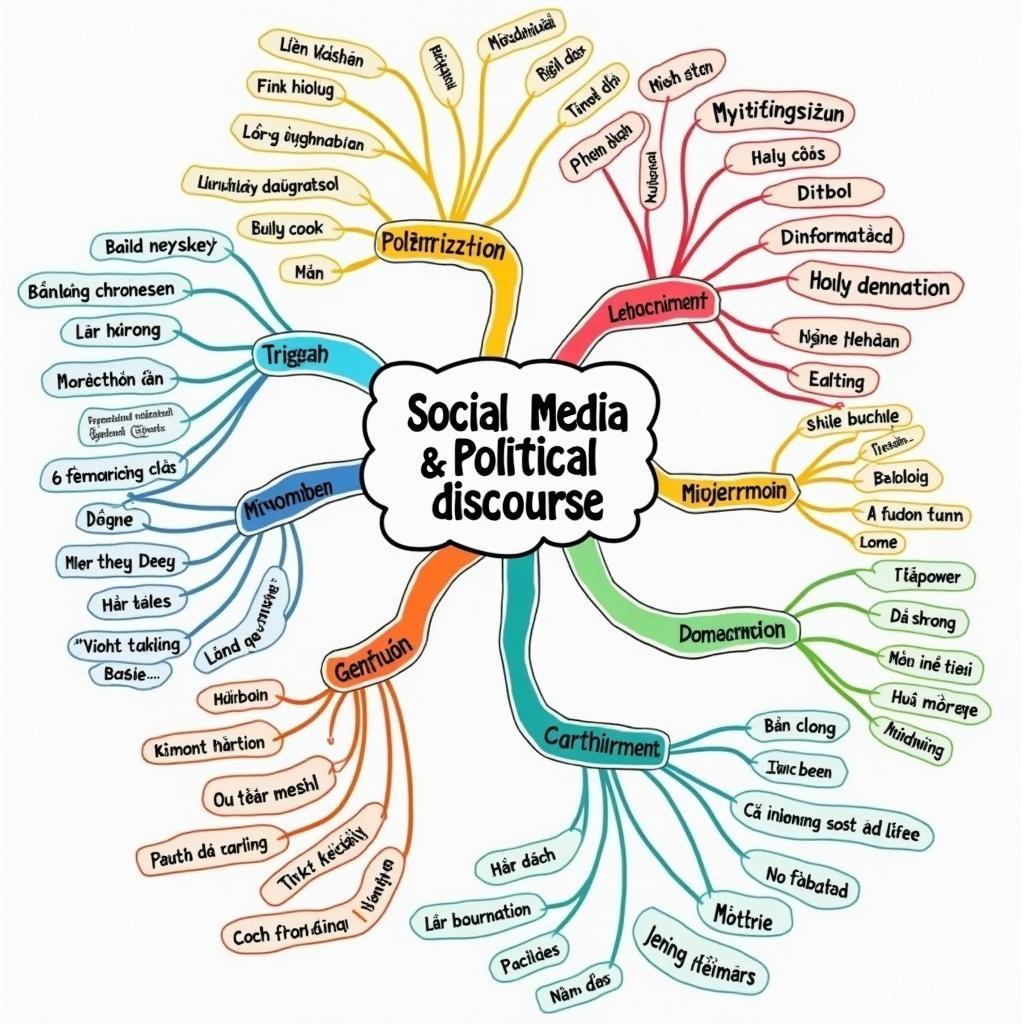 Từ vựng quan trọng IELTS Writing Task 2 chủ đề truyền thông xã hội và chính trị với ví dụ và collocations
Kết Bài
Chủ đề về cách truyền thông xã hội định hình diễn ngôn chính trị là một đề tài phức tạp và đương đại, đòi hỏi thí sinh không chỉ có kiến thức về technology và politics mà còn phải thể hiện được khả năng phân tích balanced và nuanced. Qua ba bài mẫu từ Band 5-6 đến Band 8-9, bạn có thể thấy rõ sự khác biệt về:
Độ chi tiết và cụ thể của ví dụ: Bài Band 8-9 sử dụng các trường hợp cụ thể (Arab Spring, MIT research với số liệu 70%, COVID-19 pandemic) thay vì nói chung chung như bài Band 5-6 (“in my country”, “young people”).
Sophistication của vocabulary: Từ các cụm từ đơn giản như “good thing”, “bad thing” ở Band 5-6 đến những collocations học thuật như “dismantling traditional gatekeeping mechanisms”, “algorithmic content curation” ở Band 8-9.
Complexity và accuracy của ngữ pháp: Sự chuyển đổi từ câu đơn giản với nhiều lỗi cơ bản sang các cấu trúc phức tạp như participle clauses, inversion, và conditional sentences được sử dụng chính xác và tự nhiên.
Depth của phân tích: Khả năng giải thích “why” và “how” thay vì chỉ mô tả “what”, thể hiện critical thinking mà giám khảo IELTS đánh giá cao.
Để cải thiện từ Band 6 lên Band 7+, hãy tập trung vào việc master các yếu tố cơ bản trước (grammar accuracy, article usage, subject-verb agreement), sau đó dần mở rộng vocabulary range với academic collocations, và cuối cùng practice complex sentence structures trong context phù hợp. Đừng cố viết quá phức tạp nếu chưa chắc chắn về grammar – một câu đơn giản nhưng chính xác vẫn tốt hơn một câu phức tạp đầy lỗi.
Cuối cùng, hãy nhớ rằng IELTS Writing không chỉ test English proficiency mà còn test khả năng tư duy logic và diễn đạt ý tưởng rõ ràng. Practice thường xuyên, nhận feedback từ giáo viên hoặc bạn học, và phân tích kỹ các bài mẫu để hiểu tại sao chúng đạt điểm cao. Chúc bạn thành công trong kỳ thi IELTS!


