Kỹ năng thuyết trình (presentation skills) là một trong những chủ đề phổ biến nhất trong kỳ thi IELTS Reading, đặc biệt xuất hiện với tần suất cao trong các đề thi gần đây. Chủ đề này không chỉ liên quan đến giáo dục và phát triển nghề nghiệp mà còn gắn liền với tâm lý học, công nghệ và giao tiếp. Theo thống kê từ Cambridge và IDP, các bài đọc về kỹ năng mềm và phát triển cá nhân chiếm khoảng 15-20% tổng số đề thi IELTS Reading.
Trong bài viết này, bạn sẽ được cung cấp một bộ đề thi IELTS Reading hoàn chỉnh với 3 passages được thiết kế theo đúng cấu trúc và độ khó của kỳ thi thật. Passage 1 dành cho học viên band 5.0-6.5 với nội dung dễ tiếp cận về các kỹ thuật thuyết trình cơ bản. Passage 2 nâng cao độ khó đến band 6.0-7.5, khám phá vai trò của công nghệ trong việc cải thiện kỹ năng thuyết trình. Passage 3 thách thức học viên band 7.0-9.0 với nội dung học thuật về tâm lý học giao tiếp và khoa học thần kinh đằng sau các bài thuyết trình thành công.
Mỗi passage đi kèm với 13-14 câu hỏi đa dạng, bao gồm các dạng phổ biến như Multiple Choice, True/False/Not Given, Matching Headings, và Summary Completion. Bạn cũng sẽ nhận được đáp án chi tiết với giải thích từng câu, giúp hiểu rõ cách paraphrase và xác định thông tin. Cuối cùng, bảng từ vựng quan trọng theo từng passage sẽ giúp bạn mở rộng vốn từ học thuật một cách hiệu quả. Bộ đề này phù hợp cho học viên từ band 5.0 trở lên đang chuẩn bị cho kỳ thi IELTS Academic hoặc General Training.
Hướng Dẫn Làm Bài IELTS Reading
Tổng Quan Về IELTS Reading Test
IELTS Reading test kéo dài 60 phút với 3 passages và tổng cộng 40 câu hỏi. Đây là bài thi không có thời gian chuyển đáp án riêng, do đó bạn cần quản lý thời gian một cách chặt chẽ. Mỗi câu trả lời đúng được tính 1 điểm, và tổng điểm sẽ được quy đổi thành band score từ 0 đến 9.
Phân bổ thời gian khuyến nghị:
- Passage 1 (Easy): 15-17 phút – Đây là bài đọc dễ nhất, giúp bạn khởi động và ghi điểm nhanh
- Passage 2 (Medium): 18-20 phút – Độ khó trung bình, yêu cầu kỹ năng paraphrase tốt
- Passage 3 (Hard): 23-25 phút – Bài khó nhất với từ vựng học thuật và cấu trúc phức tạp
Nên dành 2-3 phút cuối để kiểm tra và chuyển đáp án lên answer sheet. Tuyệt đối không để trống câu nào vì không bị trừ điểm với câu sai.
Các Dạng Câu Hỏi Trong Đề Này
Bộ đề thi này bao gồm 7 dạng câu hỏi phổ biến nhất trong IELTS Reading:
- Multiple Choice (Trắc nghiệm): Chọn đáp án đúng từ 3-4 lựa chọn
- True/False/Not Given: Xác định thông tin đúng, sai hoặc không được đề cập
- Matching Information: Nối thông tin với đoạn văn tương ứng
- Matching Headings: Chọn tiêu đề phù hợp cho từng đoạn
- Summary Completion: Điền từ vào chỗ trống trong đoạn tóm tắt
- Matching Features: Nối đặc điểm với người/địa điểm/sự vật
- Short-answer Questions: Trả lời câu hỏi ngắn bằng từ trong bài
Mỗi dạng câu hỏi yêu cầu chiến lược làm bài khác nhau, được giải thích chi tiết trong phần đáp án.
IELTS Reading Practice Test
PASSAGE 1 – The Fundamentals of Effective Presentations
Độ khó: Easy (Band 5.0-6.5)
Thời gian đề xuất: 15-17 phút
Public speaking and presentation skills are among the most valuable competencies in today’s professional world. Whether you are a student presenting a project, a business executive pitching an idea, or a teacher delivering a lecture, the ability to communicate effectively in front of an audience can significantly impact your success. Research shows that effective presenters share common characteristics that can be learned and developed through practice and dedication.
The foundation of any successful presentation lies in thorough preparation. This involves not only understanding your content but also knowing your audience. Audience analysis is crucial because it helps you tailor your message to match the listeners’ knowledge level, interests, and expectations. For instance, a technical presentation to engineers would differ greatly from one delivered to general management. Preparation also includes organizing your material in a logical structure, typically consisting of an introduction, body, and conclusion. The introduction should capture attention and state your purpose clearly, while the body develops your main points with supporting evidence. The conclusion reinforces your key messages and often includes a call to action.
Body language plays an equally important role as verbal content. Studies indicate that up to 55% of communication effectiveness comes from non-verbal cues. Maintaining appropriate eye contact establishes connection and credibility with your audience. It shows confidence and helps you gauge audience reactions in real-time. Your posture should be upright but relaxed, avoiding both slouching and excessive rigidity. Hand gestures can emphasize points and add energy to your delivery, but they must appear natural rather than rehearsed or distracting. Moving purposefully around the presentation space, rather than standing rigidly in one spot, helps maintain audience engagement and demonstrates confidence.
Voice control is another critical element that many presenters overlook. The way you use your voice can make the difference between an engaging presentation and one that puts people to sleep. Vocal variety involves changing your pitch, pace, and volume to emphasize important points and maintain interest. Speaking too quickly can make you difficult to understand, while speaking too slowly may bore your audience. Strategic pauses are powerful tools that give listeners time to absorb information and create dramatic effect. A well-placed pause before or after an important point draws attention to it. Additionally, eliminating filler words such as “um,” “uh,” and “like” makes your speech sound more professional and confident.
Visual aids, when used correctly, can enhance understanding and retention of information. The most common visual aid today is the PowerPoint presentation, but effectiveness depends entirely on design and usage. Slides should support your message, not replace it. A common mistake is creating slides with too much text, which causes audience members to read rather than listen. The 6×6 rule suggests using no more than six lines of text with six words per line. High-quality images, graphs, and charts often communicate complex information more effectively than words alone. However, every visual element should serve a clear purpose; decorative graphics that don’t add meaning only distract from your message.
Dealing with nervousness is perhaps the biggest challenge for many presenters, especially those who are less experienced. Some level of anxiety is normal and can even improve performance by increasing alertness. The key is managing it so it doesn’t become debilitating. Preparation is the best anxiety reducer; knowing your material thoroughly gives you confidence. Breathing exercises before and during your presentation help calm your nervous system. Taking slow, deep breaths activates your body’s relaxation response. Visualization techniques, where you imagine yourself giving a successful presentation, can also reduce anxiety and improve actual performance. Many successful presenters report that nervousness decreases significantly after the first minute or two of speaking, so having a strong, well-rehearsed opening is particularly important.
Practice is the final and perhaps most important component of developing presentation skills. There is no substitute for rehearsal. Practicing out loud, ideally in front of a mirror or test audience, helps you identify problems with pacing, clarity, and body language. Recording yourself allows you to see and hear what the audience experiences. Many people are surprised by their own habits and mannerisms when they watch themselves present. Timing your practice sessions ensures your presentation fits within allotted time limits. Professional speakers often practice a single presentation dozens of times, refining it with each rehearsal. This level of preparation might seem excessive, but it allows the delivery to appear natural and confident rather than scripted or nervous.
Questions 1-13
Questions 1-5
Do the following statements agree with the information given in the reading passage?
Write:
- TRUE if the statement agrees with the information
- FALSE if the statement contradicts the information
- NOT GIVEN if there is no information on this
- Presentation skills are only important for business executives and teachers.
- Understanding your audience is an essential part of preparing a presentation.
- Non-verbal communication accounts for more than half of communication effectiveness.
- Speaking at a consistent pace throughout your presentation is recommended.
- Most presenters feel nervous only during the first few minutes of their presentation.
Questions 6-9
Complete the sentences below.
Choose NO MORE THAN TWO WORDS from the passage for each answer.
- A presentation should typically be organized with an introduction, body, and ____.
- Hand gestures should appear ____ rather than rehearsed when presenting.
- The ____ suggests limiting text to six lines with six words each on slides.
- ____ can help calm your nervous system before giving a presentation.
Questions 10-13
Choose the correct letter, A, B, C or D.
-
According to the passage, audience analysis is important because it helps presenters:
A. understand their own content better
B. adjust their message to suit the listeners
C. reduce their presentation time
D. create more visual aids -
The passage suggests that eye contact with the audience:
A. should be avoided if you feel nervous
B. is less important than hand gestures
C. helps establish credibility and connection
D. requires extensive training to master -
When using PowerPoint slides, the most common mistake is:
A. using too many images
B. including too much text
C. not using any visual aids
D. making slides too colorful -
According to the passage, the best way to reduce presentation anxiety is:
A. avoiding eye contact with the audience
B. taking medication before presenting
C. thorough preparation and knowing your material
D. speaking as quickly as possible
PASSAGE 2 – Technology’s Role in Enhancing Presentation Skills
Độ khó: Medium (Band 6.0-7.5)
Thời gian đề xuất: 18-20 phút
The digital revolution has fundamentally transformed how presentations are created, delivered, and received. While traditional presentation principles remain relevant, technology has introduced new dimensions that significantly expand what is possible in terms of audience engagement, information delivery, and skill development. Understanding and leveraging these technological advances has become essential for anyone seeking to master the art of presenting in the 21st century.
A. Evolution of Presentation Software
The journey from overhead projectors and physical slides to sophisticated digital platforms represents one of the most significant shifts in presentation methodology. Modern presentation software has evolved far beyond simple slide creation tools. Applications like Microsoft PowerPoint, Apple Keynote, and Google Slides now offer advanced animation capabilities, seamless multimedia integration, and cloud-based collaboration features that were unimaginable a generation ago. These platforms enable presenters to incorporate high-definition videos, interactive elements, and real-time data feeds directly into their presentations. Moreover, the emergence of more innovative platforms such as Prezi has challenged the traditional linear slide format, introducing spatial presentation concepts where content can be zoomed in and out, creating more dynamic and memorable visual experiences. The democratization of design tools, with templates and intelligent design assistants, has also lowered the barrier to creating professional-looking presentations, although this accessibility has paradoxically led to concerns about over-reliance on visual effects at the expense of substantive content.
B. Virtual and Hybrid Presentation Environments
The global shift toward remote work and virtual meetings has accelerated the adoption of video conferencing technologies for presentations. Platforms such as Zoom, Microsoft Teams, and Webex have become primary venues for professional presentations, fundamentally altering the dynamics of presenter-audience interaction. In virtual environments, presenters must adapt their techniques to account for the absence of physical presence and the mediated nature of communication. Eye contact, for instance, requires looking directly at the camera rather than the screen, a counterintuitive behavior that requires conscious effort and practice. The challenge of maintaining audience engagement is amplified in virtual settings, where participants can easily become distracted by other applications, emails, or their physical surroundings. However, these platforms also offer unique advantages. Features like breakout rooms allow for small group discussions, polling functions enable real-time audience feedback, and screen sharing facilitates seamless demonstration of software or documents. Hybrid presentations, where some audience members are physically present while others participate remotely, represent perhaps the most challenging format, requiring presenters to simultaneously manage two distinct audience experiences and ensure neither group feels disadvantaged.
C. Artificial Intelligence and Presentation Analytics
Artificial intelligence is increasingly being integrated into presentation tools, offering capabilities that seemed like science fiction only a few years ago. AI-powered features can now analyze a presenter’s delivery in real-time, providing feedback on speaking pace, use of filler words, and even emotional tone. Applications like Presentation Translator can provide live subtitles and translations, making presentations accessible to multilingual audiences without the need for human interpreters. Sentiment analysis algorithms can assess audience reactions through facial expressions captured by webcams, giving presenters insights into which content resonates and which falls flat. Some advanced systems can even suggest improvements to slide design based on cognitive load theory, ensuring information is presented in ways that optimize human information processing. Predictive analytics drawn from thousands of presentations can identify patterns associated with successful presentations, offering data-driven recommendations for structure, timing, and content emphasis. While these technologies offer tremendous potential, they also raise important questions about authenticity and the risk of creating presentations optimized for algorithms rather than human connection.
D. Mobile and Interactive Technologies
The proliferation of smartphones and tablets has introduced new opportunities for audience participation and interactive presentations. Applications like Mentimeter, Slido, and Poll Everywhere enable presenters to incorporate live polls, quizzes, and Q&A sessions that audience members participate in using their personal devices. This interactivity transforms passive listeners into active participants, significantly increasing engagement and information retention. The immediate visual display of poll results or audience questions creates a sense of collective experience and validates audience input. Augmented reality (AR) and virtual reality (VR) technologies, while still emerging in mainstream presentation contexts, offer revolutionary possibilities. AR can overlay digital information onto physical objects, allowing for demonstrations impossible with traditional methods. Architecture firms, for example, can present building designs that clients can virtually “walk through” using VR headsets. These immersive technologies create memorable experiences that static slides cannot match. However, the effectiveness of these tools depends heavily on appropriate application; technology should enhance rather than overwhelm the core message.
E. Digital Training and Skill Development
Technology has also revolutionized how presentation skills are taught and developed. E-learning platforms offer comprehensive courses on public speaking and presentation techniques, often featuring video lessons from expert instructors and successful speakers. Platforms like Coursera, LinkedIn Learning, and Udemy provide access to presentation skills training that was previously available only through expensive in-person workshops. Virtual reality training systems create simulated presentation environments where individuals can practice delivering talks to virtual audiences, with AI providing feedback on performance. These risk-free practice environments are particularly valuable for reducing anxiety, as they allow unlimited rehearsal without the social pressure of real audiences. Video recording and playback features, now standard in most devices, enable self-review and analysis that was once available only to those with access to specialized recording equipment. Online communities and forums dedicated to presentation skills create spaces for sharing experiences, seeking advice, and learning from others’ successes and failures. This collective knowledge base, combined with video examples of excellent presentations on platforms like TED, provides aspiring presenters with unprecedented learning resources.
 Công nghệ hiện đại hỗ trợ phát triển kỹ năng thuyết trình hiệu quả trong môi trường số
Questions 14-26
Questions 14-19
The reading passage has five sections, A-E.
Which section contains the following information?
Write the correct letter, A-E.
NB: You may use any letter more than once.
- Information about tools that allow audiences to participate using their own devices
- A description of how intelligence software can evaluate a presenter’s performance
- Discussion of the challenges presenters face when some audience members are remote
- Mention of how presentation software has become easier for non-professionals to use
- Examples of how people can practice presentations without a real audience
- Reference to technology that can make presentations accessible to speakers of different languages
Questions 20-23
Complete the summary below.
Choose NO MORE THAN TWO WORDS from the passage for each answer.
Modern presentation platforms have introduced features like advanced animation and (20) ____ integration that were not possible previously. One innovative platform called Prezi has introduced (21) ____ concepts that differ from traditional linear slides. In virtual presentation settings, maintaining (22) ____ requires looking at the camera instead of the screen. Meanwhile, AI-powered sentiment analysis can assess audience reactions by analyzing (23) ____ captured through webcams.
Questions 24-26
Choose THREE letters, A-G.
Which THREE advantages of technology for presentations are mentioned in the passage?
A. Reduced costs of presentation equipment
B. Ability to incorporate live data into presentations
C. Real-time language translation capabilities
D. Guaranteed improvement in presentation quality
E. Opportunities for risk-free practice environments
F. Elimination of the need for human presenters
G. Access to affordable online training courses
PASSAGE 3 – The Neuroscience and Psychology Behind Persuasive Communication
Độ khó: Hard (Band 7.0-9.0)
Thời gian đề xuất: 23-25 phút
Understanding the neurological and psychological mechanisms underlying effective communication represents a frontier in presentation science that bridges cognitive neuroscience, behavioral psychology, and rhetorical theory. Recent advances in brain imaging technology and psychological research have unveiled the complex processes that occur in both speaker and audience during presentations, providing empirical foundations for techniques that were previously based primarily on anecdotal evidence and intuition. These insights are revolutionizing how we conceptualize and train presentation skills, moving from prescriptive rules to evidence-based practices grounded in how human brains actually process and retain information.
The concept of cognitive load is central to understanding effective information presentation. Cognitive load theory, developed by educational psychologist John Sweller, posits that human working memory has limited capacity, typically able to process only 3-5 discrete pieces of novel information simultaneously. When a presentation exceeds this capacity, cognitive overload occurs, resulting in diminished comprehension and retention. This explains why presentations saturated with dense information, multiple simultaneous visual elements, and complex verbal explanations tend to be ineffective despite—or rather because of—their comprehensiveness. Effective presenters instinctively manage cognitive load through several mechanisms. Chunking, the process of grouping related information into meaningful units, reduces the number of items working memory must process. Signaling, which involves explicitly highlighting key information through verbal cues or visual emphasis, directs limited attentional resources to critical content. The modality principle suggests that information presented through multiple sensory channels (visual and auditory simultaneously) can increase total processing capacity, provided the channels present complementary rather than redundant information. However, this principle has important caveats; simply reading text that appears on slides violates the modality principle and actually decreases effectiveness compared to either speaking or displaying text alone.
Narrative structure and storytelling engage neural networks in ways that propositional information does not. Neuroscientific research using functional magnetic resonance imaging (fMRI) has demonstrated that stories activate not only language processing regions in the brain but also areas associated with the actual experiences being described. When hearing about physical action, the motor cortex activates; descriptions of sensory experiences activate corresponding sensory processing regions. This phenomenon, termed neural coupling, creates a form of vicarious experience in listeners, making narratives significantly more engaging and memorable than abstract facts. Moreover, stories facilitate what psychologists call transportation, a mental state where individuals become absorbed in a narrative and temporarily suspend critical evaluation. This receptive state increases persuasive impact, though ethical presenters must balance this power with responsibility. The structure of effective narratives typically follows archetypal patterns deeply embedded in human culture: establishment of status quo, introduction of conflict or challenge, journey or struggle, and resolution or transformation. Presentations that frame information within this narrative architecture—positioning the audience’s problem as conflict and the presenter’s solution as resolution—prove more compelling than logical arguments alone, regardless of the actual evidential strength.
The role of emotion in persuasive communication has been extensively documented, yet is frequently underestimated or misunderstood. The somatic marker hypothesis, proposed by neuroscientist Antonio Damasio, suggests that emotional responses, manifested as bodily sensations, guide decision-making and judgment even when we believe we are reasoning purely logically. Presentations that evoke appropriate emotional responses—inspiration, concern, curiosity—create these somatic markers that later influence how audience members evaluate and act upon the information. This is not manipulation but rather recognition that human cognition is fundamentally embodied rather than purely abstract. Emotional contagion, the phenomenon where emotions spread through groups, means that a presenter’s genuine passion and enthusiasm can literally transfer to the audience through mirror neuron systems that unconsciously mimic observed emotional states. This neurological mechanism explains why authentic conviction is so compelling, and why attempted emotional displays that are inauthentic often fail; audience members’ mirror neurons detect subtle incongruencies between verbal content and non-verbal emotional signals.
The primacy and recency effects, well-established phenomena in memory research, have profound implications for presentation structure. Information presented at the beginning and end of a communication sequence is disproportionately remembered compared to middle content. This occurs partly because initial information receives more elaborate processing as working memory is not yet taxed, while final information remains in working memory when the presentation ends and thus transfers more efficiently to long-term memory. Effective presenters exploit these effects by placing their most important messages in opening and closing positions, using the middle sections for supporting details and development. The power of primacy extends beyond mere positioning; first impressions formed in the initial seconds of a presentation disproportionately influence overall evaluation through confirmation bias, where subsequent information is interpreted in ways that confirm initial judgments. This makes strong, confident openings not merely stylistically preferable but psychologically essential.
Credibility, or ethos in classical rhetorical terminology, operates through distinct psychological pathways that modern research has begun to elucidate. Perceived credibility comprises two primary dimensions: competence (expertise and knowledge) and trustworthiness (honesty and lack of ulterior motive). These dimensions are assessed rapidly and often unconsciously through multiple cues. Nonverbal confidence signals—steady gaze, upright posture, controlled gestures—trigger heuristic processing that categorizes the speaker as competent. Transparent acknowledgment of limitations or uncertainties, rather than undermining credibility, actually enhances trustworthiness by signaling intellectual honesty. The sleeper effect, a counterintuitive finding in persuasion research, demonstrates that messages from low-credibility sources can become more persuasive over time as audiences forget the source but remember the content. However, high-credibility sources produce immediate persuasion that persists, making credibility establishment valuable despite the sleeper effect. Modern presenters must also contend with credibility spillover from their digital presence; audiences increasingly research speakers beforehand, and online reputation significantly influences pre-presentation credibility assessments.
The emerging field of neurorhetoric attempts to synthesize these various findings into comprehensive frameworks for understanding persuasive communication at the neural level. While this integration remains incomplete, certain principles are crystallizing. Effective presentations operate at multiple levels simultaneously: propositional content engages analytical thinking; narrative structure creates engagement and memorability; emotional resonance influences judgment and motivation; credibility signals determine receptivity; and cognitive load management ensures processing capacity is not exceeded. The most sophisticated presenters orchestrate these elements not through conscious manipulation of each component but through deep understanding that allows intuitive integration. This suggests that the ultimate goal of presentation training should be not the memorization of techniques but the internalization of principles that enable adaptive, authentic communication.
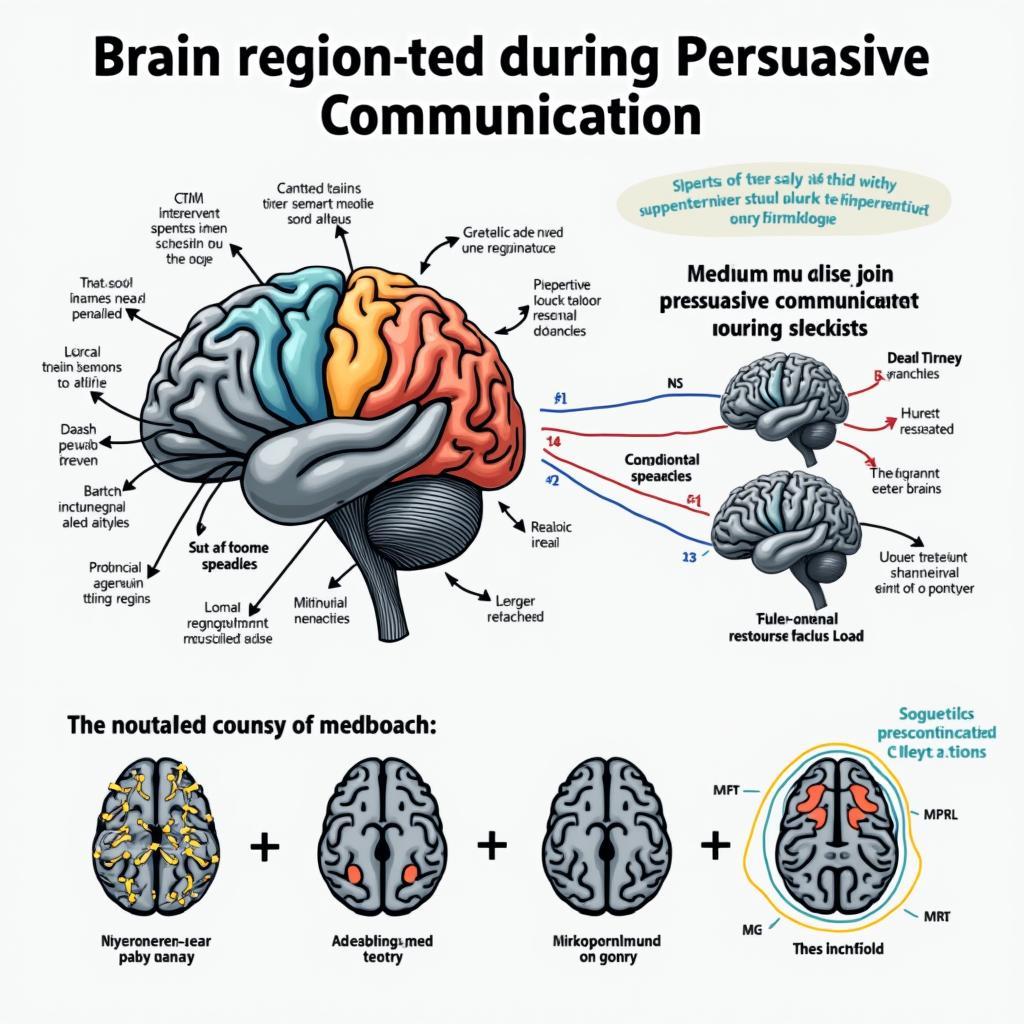 Khoa học thần kinh và tâm lý học trong giao tiếp thuyết phục hiệu quả
Questions 27-40
Questions 27-31
Choose the correct letter, A, B, C or D.
-
According to cognitive load theory, working memory can typically process:
A. unlimited pieces of information
B. 3-5 new pieces of information at once
C. 10-15 pieces of information simultaneously
D. information only through a single sensory channel -
The modality principle suggests that presentations are more effective when:
A. all information is presented visually
B. speakers read exactly what appears on slides
C. visual and auditory channels present complementary information
D. only one sensory channel is used at a time -
Neural coupling occurs when:
A. listeners’ brains activate regions associated with experiences being described
B. speakers and audiences use the same language
C. presentations include technical terminology
D. cognitive load is minimized through chunking -
According to the somatic marker hypothesis:
A. emotional responses have no role in decision-making
B. bodily sensations associated with emotions influence judgment
C. logical reasoning is completely separate from emotion
D. presentations should avoid evoking any emotional responses -
The primacy effect explains why:
A. middle sections of presentations are most memorable
B. longer presentations are more effective
C. information presented at the beginning is remembered better
D. audiences prefer formal presentation styles
Questions 32-36
Complete the summary using the list of words/phrases, A-L, below.
Research using (32) ____ has shown that stories activate not only language areas but also regions related to actual experiences. This creates (33) ____ where listeners form mental simulations of described events. Effective narratives typically follow patterns including establishment of status quo, introduction of (34) ____, and eventual resolution. Meanwhile, (35) ____ explains how emotions spread through groups via mirror neuron systems. A presenter’s genuine (36) ____ can transfer to audience members through this neurological mechanism.
A. conflict or challenge
B. cognitive overload
C. emotional contagion
D. functional magnetic resonance imaging
E. passion and enthusiasm
F. propositional information
G. confirmation bias
H. vicarious experience
I. working memory
J. sleeper effect
K. elaborate processing
L. credibility spillover
Questions 37-40
Do the following statements agree with the claims of the writer in the passage?
Write:
- YES if the statement agrees with the claims of the writer
- NO if the statement contradicts the claims of the writer
- NOT GIVEN if it is impossible to say what the writer thinks about this
- Reading text that appears on slides violates the modality principle and reduces effectiveness.
- Inauthentic emotional displays are often unsuccessful because mirror neurons detect inconsistencies.
- Acknowledging limitations during a presentation always damages the speaker’s credibility.
- The field of neurorhetoric has completely solved all questions about persuasive communication.
Answer Keys – Đáp Án
PASSAGE 1: Questions 1-13
- FALSE
- TRUE
- TRUE
- FALSE
- NOT GIVEN
- conclusion
- natural
- 6×6 rule
- Breathing exercises
- B
- C
- B
- C
PASSAGE 2: Questions 14-26
- D
- C
- B
- A
- E
- C
- multimedia
- spatial presentation
- eye contact
- facial expressions
24-26. B, C, E (in any order)
PASSAGE 3: Questions 27-40
- B
- C
- A
- B
- C
- D
- H
- A
- C
- E
- YES
- YES
- NO
- NO
Giải Thích Đáp Án Chi Tiết
Passage 1 – Giải Thích
Câu 1: FALSE
- Dạng câu hỏi: True/False/Not Given
- Từ khóa: presentation skills, only important, business executives, teachers
- Vị trí trong bài: Đoạn 1, câu đầu tiên
- Giải thích: Câu hỏi nói rằng kỹ năng thuyết trình chỉ quan trọng cho giám đốc điều hành và giáo viên. Tuy nhiên, bài đọc nói “whether you are a student presenting a project, a business executive pitching an idea, or a teacher delivering a lecture” – liệt kê ba nhóm người khác nhau, không chỉ hai nhóm. Từ “only” trong câu hỏi mâu thuẫn với thông tin này, do đó đáp án là FALSE.
Câu 2: TRUE
- Dạng câu hỏi: True/False/Not Given
- Từ khóa: understanding audience, essential, preparing presentation
- Vị trí trong bài: Đoạn 2, câu thứ 2-3
- Giải thích: Bài đọc nói “This involves not only understanding your content but also knowing your audience. Audience analysis is crucial…” – từ “crucial” được paraphrase thành “essential” trong câu hỏi. Câu hỏi khớp hoàn toàn với thông tin trong bài.
Câu 3: TRUE
- Dạng câu hỏi: True/False/Not Given
- Từ khóa: non-verbal communication, more than half, communication effectiveness
- Vị trí trong bài: Đoạn 3, câu thứ 2
- Giải thích: Bài đọc nói “Studies indicate that up to 55% of communication effectiveness comes from non-verbal cues” – 55% nghĩa là hơn một nửa (more than half). Đây là paraphrase trực tiếp.
Câu 4: FALSE
- Dạng câu hỏi: True/False/Not Given
- Từ khóa: speaking, consistent pace, recommended
- Vị trí trong bài: Đoạn 4, câu thứ 3-4
- Giải thích: Câu hỏi nói nên nói với tốc độ nhất quán, nhưng bài đọc nói “Vocal variety involves changing your pitch, pace, and volume” – khuyến khích thay đổi tốc độ, không phải giữ nhất quán. Do đó đáp án là FALSE.
Câu 5: NOT GIVEN
- Dạng câu hỏi: True/False/Not Given
- Từ khóa: most presenters, nervous, first few minutes
- Vị trí trong bài: Đoạn 6, câu cuối
- Giải thích: Bài đọc nói “Many successful presenters report that nervousness decreases significantly after the first minute or two” nhưng không nói “most presenters”. Đây là sự khác biệt quan trọng – “many” không bằng “most”, và bài không cung cấp thông tin về phần lớn người thuyết trình.
Câu 6: conclusion
- Dạng câu hỏi: Sentence Completion
- Từ khóa: organized, introduction, body
- Vị trí trong bài: Đoạn 2, câu thứ 5
- Giải thích: Bài đọc nói “organizing your material in a logical structure, typically consisting of an introduction, body, and conclusion” – từ cần điền là “conclusion”, phải viết đúng chính tả.
Câu 7: natural
- Dạng câu hỏi: Sentence Completion
- Từ khóa: hand gestures, appear, rather than rehearsed
- Vị trí trong bài: Đoạn 3, câu thứ 5
- Giải thích: Bài đọc nói “Hand gestures can emphasize points… but they must appear natural rather than rehearsed or distracting” – từ “natural” chính xác là từ cần điền.
Câu 8: 6×6 rule
- Dạng câu hỏi: Sentence Completion
- Từ khóa: suggests, six lines, six words
- Vị trí trong bài: Đoạn 5, câu thứ 4-5
- Giải thích: Bài đọc nói “The 6×6 rule suggests using no more than six lines of text with six words per line” – đây là tên riêng của quy tắc, phải viết đúng định dạng.
Câu 9: Breathing exercises
- Dạng câu hỏi: Sentence Completion
- Từ khóa: calm nervous system, before presentation
- Vị trí trong bài: Đoạn 6, câu thứ 4-5
- Giải thích: Bài đọc nói “Breathing exercises before and during your presentation help calm your nervous system” – cần điền “Breathing exercises” (viết hoa chữ B vì đứng đầu câu trong đáp án).
Câu 10: B
- Dạng câu hỏi: Multiple Choice
- Từ khóa: audience analysis, important
- Vị trí trong bài: Đoạn 2, câu thứ 3
- Giải thích: Bài đọc nói “Audience analysis is crucial because it helps you tailor your message to match the listeners’ knowledge level, interests, and expectations” – “tailor your message” được paraphrase thành “adjust their message to suit the listeners” trong đáp án B.
Câu 11: C
- Dạng câu hỏi: Multiple Choice
- Từ khóa: eye contact, audience
- Vị trí trong bài: Đoạn 3, câu thứ 3-4
- Giải thích: Bài đọc nói “Maintaining appropriate eye contact establishes connection and credibility with your audience” – đáp án C “helps establish credibility and connection” là paraphrase chính xác.
Câu 12: B
- Dạng câu hỏi: Multiple Choice
- Từ khóa: PowerPoint slides, most common mistake
- Vị trí trong bài: Đoạn 5, câu thứ 3-4
- Giải thích: Bài đọc nói “A common mistake is creating slides with too much text” – đáp án B “including too much text” là paraphrase trực tiếp của thông tin này.
Câu 13: C
- Dạng câu hỏi: Multiple Choice
- Từ khóa: reduce presentation anxiety, best way
- Vị trí trong bài: Đoạn 6, câu thứ 3
- Giải thích: Bài đọc nói “Preparation is the best anxiety reducer; knowing your material thoroughly gives you confidence” – đáp án C “thorough preparation and knowing your material” là paraphrase chính xác nhất.
Passage 2 – Giải Thích
Câu 14: D
- Dạng câu hỏi: Matching Information
- Từ khóa: tools, audiences participate, own devices
- Vị trí trong bài: Section D, câu thứ 2
- Giải thích: Section D nói về “Applications like Mentimeter, Slido, and Poll Everywhere enable presenters to incorporate live polls, quizzes, and Q&A sessions that audience members participate in using their personal devices” – khớp chính xác với câu hỏi về công cụ cho phép khán giả tham gia bằng thiết bị của họ.
Câu 15: C
- Dạng câu hỏi: Matching Information
- Từ khóa: intelligence software, evaluate presenter’s performance
- Vị trí trong bài: Section C, câu thứ 2
- Giải thích: Section C đề cập “AI-powered features can now analyze a presenter’s delivery in real-time, providing feedback on speaking pace, use of filler words, and even emotional tone” – đây là mô tả về phần mềm thông minh đánh giá hiệu suất người thuyết trình.
Câu 16: B
- Dạng câu hỏi: Matching Information
- Từ khóa: challenges, some audience members remote
- Vị trí trong bài: Section B, câu cuối
- Giải thích: Section B thảo luận về “Hybrid presentations, where some audience members are physically present while others participate remotely, represent perhaps the most challenging format” – khớp với câu hỏi về thách thức khi một số khán giả tham gia từ xa.
Câu 17: A
- Dạng câu hỏi: Matching Information
- Từ khóa: software, easier, non-professionals
- Vị trí trong bài: Section A, câu cuối đoạn
- Giải thích: Section A đề cập “The democratization of design tools, with templates and intelligent design assistants, has also lowered the barrier to creating professional-looking presentations” – “lowered the barrier” nghĩa là làm cho dễ dàng hơn cho những người không chuyên.
Câu 18: E
- Dạng câu hỏi: Matching Information
- Từ khóa: practice presentations, without real audience
- Vị trí trong bài: Section E, câu thứ 3-4
- Giải thích: Section E nói về “Virtual reality training systems create simulated presentation environments where individuals can practice delivering talks to virtual audiences” – đây là ví dụ về luyện tập không cần khán giả thật.
Câu 19: C
- Dạng câu hỏi: Matching Information
- Từ khóa: technology, presentations accessible, different languages
- Vị trí trong bài: Section C, câu thứ 3
- Giải thích: Section C đề cập “Applications like Presentation Translator can provide live subtitles and translations, making presentations accessible to multilingual audiences” – công nghệ làm cho bài thuyết trình tiếp cận được với những người nói ngôn ngữ khác nhau.
Câu 20: multimedia
- Dạng câu hỏi: Summary Completion
- Từ khóa: advanced animation
- Vị trí trong bài: Section A, câu thứ 3
- Giải thích: Bài đọc nói “advanced animation capabilities, seamless multimedia integration” – từ cần điền là “multimedia”.
Câu 21: spatial presentation
- Dạng câu hỏi: Summary Completion
- Từ khóa: Prezi, concepts, differ from traditional
- Vị trí trong bài: Section A, câu thứ 4
- Giải thích: Bài đọc nói “Prezi has challenged the traditional linear slide format, introducing spatial presentation concepts” – cụm từ “spatial presentation” là đáp án chính xác.
Câu 22: eye contact
- Dạng câu hỏi: Summary Completion
- Từ khóa: virtual settings, maintaining, camera instead of screen
- Vị trí trong bài: Section B, câu thứ 3
- Giải thích: Bài đọc nói “eye contact, for instance, requires looking directly at the camera rather than the screen” – từ cần điền là “eye contact”.
Câu 23: facial expressions
- Dạng câu hỏi: Summary Completion
- Từ khóa: sentiment analysis, assess audience reactions, webcams
- Vị trí trong bài: Section C, câu thứ 4
- Giải thích: Bài đọc nói “Sentiment analysis algorithms can assess audience reactions through facial expressions captured by webcams” – từ cần điền là “facial expressions”.
Câu 24-26: B, C, E
- Dạng câu hỏi: Multiple Choice (chọn 3 đáp án)
- Giải thích từng đáp án:
- B (Đúng): Section A đề cập “incorporate high-definition videos, interactive elements, and real-time data feeds directly into their presentations”
- C (Đúng): Section C nói “Applications like Presentation Translator can provide live subtitles and translations”
- E (Đúng): Section E đề cập “Virtual reality training systems create simulated presentation environments… These risk-free practice environments”
- A (Sai): Không đề cập đến giảm chi phí thiết bị
- D (Sai): Không hề đảm bảo cải thiện chất lượng tuyệt đối
- F (Sai): Công nghệ hỗ trợ chứ không thay thế hoàn toàn người thuyết trình
- G (Sai): Mặc dù có đề cập e-learning platforms, nhưng không nhấn mạnh về chi phí phải chăng
Passage 3 – Giải Thích
Câu 27: B
- Dạng câu hỏi: Multiple Choice
- Từ khóa: cognitive load theory, working memory, process
- Vị trí trong bài: Đoạn 2, câu thứ 2
- Giải thích: Bài đọc nói rõ “human working memory has limited capacity, typically able to process only 3-5 discrete pieces of novel information simultaneously” – đáp án B chính xác.
Câu 28: C
- Dạng câu hỏi: Multiple Choice
- Từ khóa: modality principle, presentations effective
- Vị trí trong bài: Đoạn 2, câu thứ 8
- Giải thích: Bài đọc nói “The modality principle suggests that information presented through multiple sensory channels (visual and auditory simultaneously) can increase total processing capacity, provided the channels present complementary rather than redundant information” – đáp án C paraphrase chính xác thông tin này.
Câu 29: A
- Dạng câu hỏi: Multiple Choice
- Từ khóa: neural coupling, occurs when
- Vị trí trong bài: Đoạn 3, câu thứ 3-4
- Giải thích: Bài đọc giải thích “When hearing about physical action, the motor cortex activates; descriptions of sensory experiences activate corresponding sensory processing regions. This phenomenon, termed neural coupling” – đáp án A mô tả chính xác hiện tượng này.
Câu 30: B
- Dạng câu hỏi: Multiple Choice
- Từ khóa: somatic marker hypothesis
- Vị trí trong bài: Đoạn 4, câu thứ 2
- Giải thích: Bài đọc nói “The somatic marker hypothesis… suggests that emotional responses, manifested as bodily sensations, guide decision-making and judgment” – đáp án B paraphrase chính xác ý này.
Câu 31: C
- Dạng câu hỏi: Multiple Choice
- Từ khóa: primacy effect, explains why
- Vị trí trong bài: Đoạn 5, câu đầu
- Giải thích: Bài đọc nói “The primacy and recency effects… Information presented at the beginning and end of a communication sequence is disproportionately remembered” – primacy effect liên quan đến thông tin ở đầu được nhớ tốt hơn, đáp án C đúng.
Câu 32: D (functional magnetic resonance imaging)
- Dạng câu hỏi: Summary Completion
- Vị trí trong bài: Đoạn 3, câu thứ 2
- Giải thích: Bài đọc nói “Neuroscientific research using functional magnetic resonance imaging (fMRI)” – đây là công nghệ được sử dụng để nghiên cứu não bộ.
Câu 33: H (vicarious experience)
- Dạng câu hỏi: Summary Completion
- Vị trí trong bài: Đoạn 3, câu thứ 4
- Giải thích: Bài đọc nói “This phenomenon, termed neural coupling, creates a form of vicarious experience in listeners” – vicarious experience là trải nghiệm gián tiếp được tạo ra.
Câu 34: A (conflict or challenge)
- Dạng câu hỏi: Summary Completion
- Vị trí trong bài: Đoạn 3, câu thứ 7
- Giải thích: Bài đọc liệt kê cấu trúc câu chuyện: “establishment of status quo, introduction of conflict or challenge, journey or struggle, and resolution or transformation”.
Câu 35: C (emotional contagion)
- Dạng câu hỏi: Summary Completion
- Vị trí trong bài: Đoạn 4, câu thứ 5
- Giải thích: Bài đọc nói “Emotional contagion, the phenomenon where emotions spread through groups” – đây là khái niệm giải thích cách cảm xúc lan truyền.
Câu 36: E (passion and enthusiasm)
- Dạng câu hỏi: Summary Completion
- Vị trí trong bài: Đoạn 4, câu thứ 5
- Giải thích: Bài đọc nói “a presenter’s genuine passion and enthusiasm can literally transfer to the audience” – đây là những gì có thể truyền tải qua emotional contagion.
Câu 37: YES
- Dạng câu hỏi: Yes/No/Not Given
- Vị trí trong bài: Đoạn 2, câu cuối
- Giải thích: Bài đọc nói rõ “simply reading text that appears on slides violates the modality principle and actually decreases effectiveness” – tác giả khẳng định điều này là đúng.
Câu 38: YES
- Dạng câu hỏi: Yes/No/Not Given
- Vị trí trong bài: Đoạn 4, câu cuối
- Giải thích: Bài đọc nói “attempted emotional displays that are inauthentic often fail; audience members’ mirror neurons detect subtle incongruencies” – tác giả đồng ý với tuyên bố này.
Câu 39: NO
- Dạng câu hỏi: Yes/No/Not Given
- Vị trí trong bài: Đoạn 6, câu thứ 4
- Giải thích: Bài đọc nói “Transparent acknowledgment of limitations or uncertainties, rather than undermining credibility, actually enhances trustworthiness” – điều này mâu thuẫn với câu hỏi nói rằng thừa nhận hạn chế “always damages” (luôn làm hại) uy tín. Đáp án là NO.
Câu 40: NO
- Dạng câu hỏi: Yes/No/Not Given
- Vị trí trong bài: Đoạn 7, câu đầu
- Giải thích: Bài đọc nói “The emerging field of neurorhetoric attempts to synthesize these various findings… While this integration remains incomplete” – tác giả nói rõ lĩnh vực này vẫn chưa hoàn thiện, mâu thuẫn với câu hỏi nói “completely solved all questions”. Đáp án là NO.
Từ Vựng Quan Trọng Theo Passage
Passage 1 – Essential Vocabulary
| Từ vựng | Loại từ | Phiên âm | Nghĩa tiếng Việt | Ví dụ từ bài | Collocation |
|---|---|---|---|---|---|
| competencies | n | /ˈkɒmpɪtənsiz/ | các năng lực, khả năng | presentation skills are among the most valuable competencies | core competencies, professional competencies |
| communicate effectively | v phrase | /kəˈmjuːnɪkeɪt ɪˈfektɪvli/ | giao tiếp hiệu quả | the ability to communicate effectively in front of an audience | communicate clearly, communicate confidently |
| audience analysis | n phrase | /ˈɔːdiəns əˈnæləsɪs/ | phân tích khán giả | Audience analysis is crucial | conduct audience analysis, thorough audience analysis |
| logical structure | n phrase | /ˈlɒdʒɪkəl ˈstrʌktʃə/ | cấu trúc logic | organizing your material in a logical structure | clear logical structure, follow a logical structure |
| reinforces | v | /ˌriːɪnˈfɔːsɪz/ | củng cố, tăng cường | The conclusion reinforces your key messages | reinforce ideas, reinforce arguments |
| body language | n phrase | /ˈbɒdi ˈlæŋɡwɪdʒ/ | ngôn ngữ cơ thể | Body language plays an equally important role | positive body language, effective body language |
| non-verbal cues | n phrase | /nɒn-ˈvɜːbəl kjuːz/ | tín hiệu phi ngôn ngữ | 55% of communication effectiveness comes from non-verbal cues | read non-verbal cues, interpret non-verbal cues |
| eye contact | n phrase | /aɪ ˈkɒntækt/ | giao tiếp bằng mắt | Maintaining appropriate eye contact | make eye contact, maintain eye contact |
| vocal variety | n phrase | /ˈvəʊkəl vəˈraɪəti/ | sự đa dạng giọng nói | Vocal variety involves changing your pitch, pace, and volume | use vocal variety, lack vocal variety |
| filler words | n phrase | /ˈfɪlə wɜːdz/ | từ lấp đầy (um, uh) | eliminating filler words such as “um,” “uh” | avoid filler words, reduce filler words |
| debilitating | adj | /dɪˈbɪlɪteɪtɪŋ/ | làm suy yếu, làm mất khả năng | so it doesn’t become debilitating | debilitating anxiety, debilitating fear |
| rehearsal | n | /rɪˈhɜːsəl/ | sự diễn tập, luyện tập | This level of preparation might seem excessive, but it allows… | dress rehearsal, final rehearsal |
Passage 2 – Essential Vocabulary
| Từ vựng | Loại từ | Phiên âm | Nghĩa tiếng Việt | Ví dụ từ bài | Collocation |
|---|---|---|---|---|---|
| digital revolution | n phrase | /ˈdɪdʒɪtəl ˌrevəˈluːʃən/ | cuộc cách mạng số | The digital revolution has fundamentally transformed | lead the digital revolution, embrace digital revolution |
| audience engagement | n phrase | /ˈɔːdiəns ɪnˈɡeɪdʒmənt/ | sự tham gia của khán giả | expand what is possible in terms of audience engagement | improve audience engagement, increase audience engagement |
| advanced animation | n phrase | /ədˈvɑːnst ˌænɪˈmeɪʃən/ | hoạt hình nâng cao | offer advanced animation capabilities | use advanced animation, create advanced animation |
| multimedia integration | n phrase | /ˌmʌltiˈmiːdiə ˌɪntɪˈɡreɪʃən/ | tích hợp đa phương tiện | seamless multimedia integration | effective multimedia integration, full multimedia integration |
| cloud-based collaboration | n phrase | /klaʊd-beɪst kəˌlæbəˈreɪʃən/ | cộng tác dựa trên đám mây | cloud-based collaboration features | enable cloud-based collaboration, support cloud-based collaboration |
| spatial presentation | n phrase | /ˈspeɪʃəl ˌprezənˈteɪʃən/ | thuyết trình không gian | introducing spatial presentation concepts | innovative spatial presentation, use spatial presentation |
| democratization | n | /dɪˌmɒkrətaɪˈzeɪʃən/ | sự dân chủ hóa | The democratization of design tools | democratization of technology, democratization of knowledge |
| video conferencing | n phrase | /ˈvɪdiəʊ ˈkɒnfərənsɪŋ/ | hội nghị truyền hình | The global shift toward remote work and virtual meetings has accelerated the adoption of video conferencing technologies | video conferencing platforms, video conferencing tools |
| mediated nature | n phrase | /ˈmiːdieɪtɪd ˈneɪtʃə/ | bản chất trung gian | account for the mediated nature of communication | understand the mediated nature, acknowledge the mediated nature |
| counterintuitive behavior | n phrase | /ˌkaʊntərɪnˈtjuːɪtɪv bɪˈheɪvjə/ | hành vi trái với trực giác | a counterintuitive behavior that requires conscious effort | demonstrate counterintuitive behavior, recognize counterintuitive behavior |
| breakout rooms | n phrase | /ˈbreɪkaʊt ruːmz/ | phòng nhỏ (trong họp online) | Features like breakout rooms allow for small group discussions | use breakout rooms, create breakout rooms |
| polling functions | n phrase | /ˈpəʊlɪŋ ˈfʌŋkʃənz/ | chức năng thăm dò ý kiến | polling functions enable real-time audience feedback | utilize polling functions, integrate polling functions |
| artificial intelligence | n phrase | /ˌɑːtɪfɪʃəl ɪnˈtelɪdʒəns/ | trí tuệ nhân tạo | Artificial intelligence is increasingly being integrated | apply artificial intelligence, leverage artificial intelligence |
| sentiment analysis | n phrase | /ˈsentɪmənt əˈnæləsɪs/ | phân tích cảm xúc | Sentiment analysis algorithms can assess audience reactions | perform sentiment analysis, use sentiment analysis |
| cognitive load theory | n phrase | /ˈkɒɡnətɪv ləʊd ˈθɪəri/ | lý thuyết tải nhận thức | suggest improvements to slide design based on cognitive load theory | apply cognitive load theory, understand cognitive load theory |
Passage 3 – Essential Vocabulary
| Từ vựng | Loại từ | Phiên âm | Nghĩa tiếng Việt | Ví dụ từ bài | Collocation |
|---|---|---|---|---|---|
| neurological | adj | /ˌnjʊərəˈlɒdʒɪkəl/ | thuộc thần kinh học | Understanding the neurological and psychological mechanisms | neurological processes, neurological research |
| psychological mechanisms | n phrase | /ˌsaɪkəˈlɒdʒɪkəl ˈmekənɪzəmz/ | cơ chế tâm lý | the neurological and psychological mechanisms underlying effective communication | understand psychological mechanisms, explore psychological mechanisms |
| cognitive neuroscience | n phrase | /ˈkɒɡnətɪv ˈnjʊərəʊsaɪəns/ | khoa học thần kinh nhận thức | bridges cognitive neuroscience, behavioral psychology | study cognitive neuroscience, apply cognitive neuroscience |
| empirical foundations | n phrase | /ɪmˈpɪrɪkəl faʊnˈdeɪʃənz/ | nền tảng thực nghiệm | providing empirical foundations for techniques | establish empirical foundations, build empirical foundations |
| cognitive load | n phrase | /ˈkɒɡnətɪv ləʊd/ | tải nhận thức | The concept of cognitive load is central | manage cognitive load, reduce cognitive load |
| working memory | n phrase | /ˈwɜːkɪŋ ˈmeməri/ | bộ nhớ làm việc | human working memory has limited capacity | working memory capacity, working memory limitations |
| cognitive overload | n phrase | /ˈkɒɡnətɪv ˈəʊvələʊd/ | quá tải nhận thức | cognitive overload occurs | prevent cognitive overload, avoid cognitive overload |
| saturated with | v phrase | /ˈsætʃəreɪtɪd wɪð/ | bão hòa với | presentations saturated with dense information | saturated with information, saturated with details |
| chunking | n | /ˈtʃʌŋkɪŋ/ | phân đoạn thông tin | Chunking, the process of grouping related information | use chunking, apply chunking techniques |
| modality principle | n phrase | /məʊˈdæləti ˈprɪnsɪpəl/ | nguyên tắc đa phương thức | The modality principle suggests | follow the modality principle, violate the modality principle |
| caveats | n | /ˈkæviæts/ | điều cảnh báo, lưu ý | this principle has important caveats | important caveats, with certain caveats |
| narrative structure | n phrase | /ˈnærətɪv ˈstrʌktʃə/ | cấu trúc tường thuật | Narrative structure and storytelling engage neural networks | effective narrative structure, clear narrative structure |
| propositional information | n phrase | /ˌprɒpəˈzɪʃənəl ˌɪnfəˈmeɪʃən/ | thông tin mệnh đề | engage neural networks in ways that propositional information does not | present propositional information, process propositional information |
| functional magnetic resonance imaging | n phrase | /ˈfʌŋkʃənəl mæɡˈnetɪk ˈrezənəns ˈɪmɪdʒɪŋ/ | chụp cộng hưởng từ chức năng | research using functional magnetic resonance imaging (fMRI) | fMRI scans, fMRI studies |
| neural coupling | n phrase | /ˈnjʊərəl ˈkʌplɪŋ/ | liên kết thần kinh | This phenomenon, termed neural coupling | demonstrate neural coupling, achieve neural coupling |
| vicarious experience | n phrase | /vɪˈkeəriəs ɪkˈspɪəriəns/ | trải nghiệm gián tiếp | creates a form of vicarious experience in listeners | provide vicarious experience, create vicarious experience |
| somatic marker hypothesis | n phrase | /səʊˈmætɪk ˈmɑːkə haɪˈpɒθəsɪs/ | giả thuyết dấu hiệu cơ thể | The somatic marker hypothesis, proposed by neuroscientist Antonio Damasio | support somatic marker hypothesis, test somatic marker hypothesis |
| embodied | adj | /ɪmˈbɒdid/ | được hiện thân, thể hiện | human cognition is fundamentally embodied | embodied cognition, embodied knowledge |
| emotional contagion | n phrase | /ɪˈməʊʃənəl kənˈteɪdʒən/ | sự lây lan cảm xúc | Emotional contagion, the phenomenon where emotions spread | emotional contagion effect, demonstrate emotional contagion |
Kết Luận
Chủ đề “How To Improve Your Presentation Skills” là một trong những chủ đề phổ biến và thực tiễn nhất trong IELTS Reading, phản ánh tầm quan trọng của kỹ năng giao tiếp trong thế giới hiện đại. Bộ đề thi này đã cung cấp cho bạn trải nghiệm hoàn chỉnh với ba passages có độ khó tăng dần, từ những kỹ thuật thuyết trình cơ bản đến vai trò của công nghệ, và cuối cùng là nền tảng khoa học thần kinh đằng sau giao tiếp thuyết phục.
Ba passages đã giới thiệu tổng cộng 40 câu hỏi với đầy đủ các dạng bài phổ biến trong IELTS Reading, bao gồm True/False/Not Given, Multiple Choice, Matching Information, Matching Headings, Summary Completion và Short-answer Questions. Mỗi dạng câu hỏi yêu cầu kỹ năng đọc và chiến lược khác nhau, giúp bạn rèn luyện toàn diện năng lực làm bài. Phần đáp án chi tiết không chỉ cung cấp đáp án đúng mà còn giải thích rõ ràng cách xác định thông tin, paraphrase và tránh những sai lầm thường gặp.
Bảng từ vựng theo từng passage với hơn 45 từ và cụm từ quan trọng sẽ giúp bạn mở rộng vốn từ học thuật một cách có hệ thống. Những từ vựng này không chỉ hữu ích cho IELTS Reading mà còn có thể được áp dụng trong Writing Task 2 và Speaking Part 3 khi thảo luận về các chủ đề liên quan đến giáo dục, công nghệ và phát triển kỹ năng. Hãy học những từ này kèm với collocations để sử dụng chính xác và tự nhiên hơn.
Để đạt kết quả tốt nhất, bạn nên làm bài này trong điều kiện thi thật (60 phút liên tục không xao lãng), sau đó xem đáp án và phân tích kỹ những câu sai. Đối với học viên muốn học từ những người có kinh nghiệm thực chiến như chủ đề này, How to improve your public speaking skills cung cấp những chiến lược và kỹ thuật bổ ích. Tương tự, nếu bạn đang tìm kiếm công cụ hỗ trợ để nâng cao kỹ năng thuyết trình của mình, đặc biệt trong môi trường học đường, Public speaking apps for student presentations là một nguồn tài liệu hữu ích để khám phá các ứng dụng và nền tảng số.
Chúc bạn luyện tập hiệu quả và đạt band điểm mong muốn trong kỳ thi IELTS sắp tới!