Mở Bài
Chủ đề chuyển đổi nghề nghiệp (career change) là một trong những chủ đề phổ biến và thường xuyên xuất hiện trong kỳ thi IELTS Reading, đặc biệt ở phần Passage 2 và Passage 3. Với xu hướng thay đổi nghề nghiệp ngày càng phổ biến trong thế giới hiện đại, việc hiểu rõ cách chuẩn bị cho một bước ngoặt sự nghiệp không chỉ hữu ích trong thực tế mà còn là kiến thức cần thiết cho kỳ thi IELTS.
Bài viết này cung cấp cho bạn một bộ đề thi IELTS Reading hoàn chỉnh với 3 passages từ dễ đến khó, bao gồm tổng cộng 40 câu hỏi đa dạng dạng như trong kỳ thi thực tế. Bạn sẽ được luyện tập với các dạng câu hỏi phổ biến như Multiple Choice, True/False/Not Given, Matching Headings, Summary Completion và nhiều dạng khác. Mỗi passage đi kèm với đáp án chi tiết, giải thích cụ thể vị trí thông tin trong bài và cách paraphrase, cùng với bảng từ vựng quan trọng kèm phiên âm và ví dụ sử dụng.
Đề thi này phù hợp cho học viên có trình độ từ band 5.0 trở lên, đặc biệt hữu ích cho những ai đang nhắm đến band điểm 6.5-7.5. Thời gian làm bài khuyến nghị là 60 phút theo đúng format thi thật. Hãy chuẩn bị sẵn giấy nháp và đồng hồ để tối ưu hóa quá trình luyện tập của bạn.
Hướng Dẫn Làm Bài IELTS Reading
Tổng Quan Về IELTS Reading Test
IELTS Reading Test kéo dài trong 60 phút với 3 passages và tổng cộng 40 câu hỏi. Mỗi câu trả lời đúng được tính 1 điểm, không có điểm âm cho câu trả lời sai. Độ khó của các passages tăng dần từ Passage 1 đến Passage 3, với độ dài mỗi passage từ 650-1000 từ.
Phân bổ thời gian khuyến nghị:
- Passage 1 (Easy): 15-17 phút cho 13 câu hỏi
- Passage 2 (Medium): 18-20 phút cho 13 câu hỏi
- Passage 3 (Hard): 23-25 phút cho 14 câu hỏi
Lưu ý: Bạn cần chuyển đáp án vào Answer Sheet trong thời gian làm bài, không có thêm thời gian riêng cho việc này. Do đó, hãy quản lý thời gian cẩn thận và tránh dành quá nhiều thời gian cho một câu hỏi.
Các Dạng Câu Hỏi Trong Đề Này
Đề thi mẫu này bao gồm 7 dạng câu hỏi phổ biến nhất trong IELTS Reading:
- Multiple Choice – Câu hỏi trắc nghiệm nhiều lựa chọn
- True/False/Not Given – Xác định thông tin đúng/sai/không được nhắc đến
- Matching Sentence Endings – Nối câu cho phù hợp
- Yes/No/Not Given – Xác định quan điểm tác giả
- Matching Headings – Chọn tiêu đề phù hợp cho đoạn văn
- Summary Completion – Hoàn thành đoạn tóm tắt
- Matching Features – Nối đặc điểm với thông tin
IELTS Reading Practice Test
PASSAGE 1 – Making the Leap: Early Steps in Career Transition
Độ khó: Easy (Band 5.0-6.5)
Thời gian đề xuất: 15-17 phút
Changing careers can be one of the most daunting decisions a person makes in their professional life. Whether driven by a desire for better work-life balance, higher income, or simply pursuing a long-held passion, the process requires careful planning and systematic preparation. Understanding the fundamental steps involved in making a successful career transition can significantly increase your chances of success and reduce the stress associated with such a major life change.
The first and perhaps most crucial step in preparing for a career change is conducting a thorough self-assessment. This involves taking an honest look at your current skills, interests, values, and goals. Many career counsellors recommend creating a comprehensive list of your transferable skills – abilities that can be applied across different industries and roles. For instance, if you have strong communication skills, project management experience, or analytical abilities, these competencies are valuable in virtually any field. It’s also important to identify your passions and what truly motivates you in a work environment. Some people thrive in collaborative settings, while others prefer independent work. Understanding these preferences will help you target careers that align with your natural inclinations.
Once you have a clear understanding of your strengths and preferences, the next step is researching potential career paths. This involves more than simply browsing job advertisements online. Informational interviews with professionals already working in your target field can provide invaluable insights into the day-to-day realities of a job that may not be apparent from job descriptions. These conversations can reveal the challenges, rewards, and unexpected aspects of a career. Additionally, attending industry events, joining relevant professional associations, and participating in online forums dedicated to your target field can help you build knowledge and make important connections.
Financial preparation is another critical component that many career changers overlook. A career transition often involves a period of reduced income, whether due to taking a lower-level position to gain experience in a new field, investing time in additional education or training, or experiencing a gap between jobs. Financial experts typically recommend having three to six months of living expenses saved before making a significant career change. This financial cushion provides the security needed to make thoughtful decisions rather than accepting the first opportunity out of desperation. It also reduces the stress and anxiety that can accompany such a major life transition.
Developing new skills or enhancing existing ones is often necessary when changing careers. Depending on your target field, this might involve pursuing formal education, such as a degree or professional certification, or it could mean taking shorter courses, attending workshops, or engaging in self-directed learning through online platforms. Many successful career changers start building expertise in their target field while still employed in their current role. This approach, sometimes called “side hustling,” allows you to test your interest in the new field, develop relevant skills, and even build a portfolio or client base before making the full transition.
Creating a strategic action plan with clear milestones and deadlines helps maintain momentum throughout the career change process. This plan should include specific, measurable goals such as “complete online certification by March,” “attend two industry networking events per month,” or “conduct five informational interviews by quarter-end.” Breaking down the larger goal of changing careers into smaller, achievable tasks makes the process less overwhelming and provides regular opportunities to celebrate progress. It’s also important to remain flexible and adjust your plan as you learn more about your target field and your own preferences.
Finally, building a strong support network cannot be overstated. Career transitions are challenging, and having people who believe in you and can offer encouragement, advice, and connections is invaluable. This network might include family and friends, former colleagues, mentors, career coaches, or members of professional groups related to your target field. Some career changers find it helpful to join or create accountability groups with others who are also in transition, providing mutual support and motivation. Remember that asking for help is not a sign of weakness but rather a strategic approach to achieving your goals more efficiently.
Questions 1-6
Do the following statements agree with the information given in Reading Passage 1?
Write:
- TRUE if the statement agrees with the information
- FALSE if the statement contradicts the information
- NOT GIVEN if there is no information on this
- Career changes are primarily motivated by financial considerations.
- Transferable skills are useful in multiple industries.
- Informational interviews can reveal aspects of a job not found in job descriptions.
- Most people save between three to six months of expenses before changing careers.
- Side hustling involves working two full-time jobs simultaneously.
- Accountability groups provide support for people making career transitions.
Questions 7-10
Complete the sentences below.
Choose NO MORE THAN TWO WORDS from the passage for each answer.
- The first important step in career transition is conducting a thorough __.
- Understanding your __ and __ helps you identify suitable careers. (TWO WORDS)
- A __ provides security during a career change period.
- Creating a __ with specific goals helps maintain progress during career transition.
Questions 11-13
Choose the correct letter, A, B, C or D.
-
According to the passage, which of the following is NOT mentioned as a way to research potential careers?
- A. Conducting informational interviews
- B. Attending industry events
- C. Taking online personality tests
- D. Joining professional associations
-
The passage suggests that developing new skills while employed is beneficial because:
- A. It impresses your current employer
- B. It allows you to test your interest before fully committing
- C. It guarantees success in the new field
- D. It is required by law
-
What does the author suggest about asking for help during a career transition?
- A. It should be avoided
- B. It is a sign of weakness
- C. It is a strategic approach
- D. It is unnecessary if you have a plan
PASSAGE 2 – The Psychology of Career Change: Overcoming Mental Barriers
Độ khó: Medium (Band 6.0-7.5)
Thời gian đề xuất: 18-20 phút
The decision to change careers represents far more than a simple occupational shift; it embodies a profound psychological transformation that challenges our sense of identity, security, and self-worth. Research in occupational psychology reveals that the mental and emotional aspects of career transition are often more significant obstacles than the practical considerations of acquiring new skills or finding opportunities. Understanding these psychological barriers and developing strategies to overcome them is essential for anyone contemplating a significant career change.
One of the most pervasive psychological challenges facing career changers is what psychologists term the “sunk cost fallacy.” This cognitive bias causes individuals to continue investing time and energy into a career path simply because they have already invested years in education, training, or climbing the corporate ladder. The reasoning follows that abandoning a career after substantial investment would mean those years were wasted. However, behavioral economists argue that past investments should not dictate future decisions; rather, choices should be based on potential future benefits and alignment with current values and goals. Tương tự như Top tips for networking, việc vượt qua sunk cost fallacy requires recognizing that time spent in an unfulfilling career has still provided valuable experience, skills, and self-knowledge that will benefit future endeavors.
Identity reformation presents another significant psychological hurdle. Many people internalize their professional roles to such an extent that their career becomes inseparable from their sense of self. A doctor, lawyer, or engineer may struggle with the question “Who am I if I’m not doing this work?” This identity crisis can be particularly acute for individuals who have achieved success and recognition in their current field. Research conducted by psychologist Herminia Ibarra at INSEAD Business School demonstrates that successful career changers typically don’t resolve their identity crisis before making a move; instead, they experiment with new professional identities through what she calls “working identity” – trying out new roles and activities while still maintaining their current position, then gradually shifting their self-concept as they gain confidence and competence in the new area.
The fear of regression or “starting over” also looms large in the minds of potential career changers. After years of building expertise and achieving seniority in one field, the prospect of being a novice again can be deeply unsettling. This fear is compounded by age-related concerns, particularly for mid-career professionals who may worry that younger colleagues in their new field will have advantages in terms of energy, recent education, and technological fluency. However, research published in the Journal of Vocational Behavior suggests that career changers who frame their transition as an opportunity for continuous learning rather than a regression experience higher levels of satisfaction and success. Moreover, the maturity, emotional intelligence, and professional networks that older career changers bring often compensate for any lack of technical knowledge, which can be acquired relatively quickly.
Social pressure and the opinions of others constitute another powerful psychological barrier. Family members, friends, and colleagues may express skepticism or outright opposition to a career change, particularly if it involves financial risk or a departure from a prestigious profession. These external voices can create significant internal doubt, especially when they echo our own fears and insecurities. Career development specialists emphasize the importance of distinguishing between constructive concern from those who genuinely want what’s best for you and projection from those who are imposing their own fears, values, or regrets onto your situation. Building a support network that includes people who have successfully navigated career transitions can provide a counterbalance to negative voices and offer realistic encouragement based on experience.
The phenomenon of “analysis paralysis” represents a subtler but equally problematic psychological trap. Some individuals become so consumed with researching, planning, and preparing for a career change that they never actually make the leap. This perpetual preparation serves as a form of procrastination, providing the illusion of progress while avoiding the vulnerability and uncertainty inherent in actually making a change. Psychologists note that this tendency often stems from perfectionism and an inflated fear of failure. The antidote involves embracing what entrepreneurship literature calls “imperfect action” – taking steps forward even when you don’t have complete information or absolute certainty about the outcome. This might mean applying for positions before you feel fully qualified or starting a side business before you’ve perfected your offering.
Recent neuroscience research offers fascinating insights into why career change feels so difficult at a biological level. Our brains are designed to minimize cognitive load by creating neural pathways that automate repeated behaviors and thoughts. Long-established careers create strong neural patterns that become our default way of thinking about work, success, and identity. Changing careers requires forming new neural pathways while weakening old ones, which demands significant mental energy and causes psychological discomfort. Understanding this neurological reality can help career changers be more compassionate with themselves during the transition and recognize that the difficulty they’re experiencing is a natural part of the rewiring process.
Additionally, the concept of “possible selves” from psychology provides a useful framework for navigating career transition. Developed by psychologists Hazel Markus and Paula Nurius, this theory suggests that people hold cognitive representations of what they might become, would like to become, and fear becoming. Career change involves moving from one possible self to another, which can generate both excitement and anxiety. Successful career changers actively cultivate their desired possible selves through visualization, strategic experimentation, and surrounding themselves with people who embody characteristics they aspire to develop. Gradually, this possible self becomes more vivid and achievable, reducing the psychological distance between current and desired professional identity.
 Hình ảnh minh họa về tâm lý học trong việc chuyển đổi nghề nghiệp và vượt qua các rào cản tinh thần
Questions 14-18
Reading Passage 2 has eight paragraphs, A-H.
Which paragraph contains the following information?
Write the correct letter, A-H.
- An explanation of why the brain finds career change physically demanding
- A description of how experimenting with new roles helps develop a new professional identity
- A discussion of the challenge of being inexperienced in a new field
- Information about making progress despite incomplete knowledge
- A reference to cognitive representations of future professional selves
Questions 19-22
Choose the correct letter, A, B, C or D.
-
According to the passage, the sunk cost fallacy involves:
- A. Calculating the financial costs of career change
- B. Continuing in a career because of past investment
- C. Investing money in career development
- D. Changing careers too frequently
-
Research by Herminia Ibarra suggests that successful career changers:
- A. Resolve their identity crisis before making any changes
- B. Completely abandon their old professional identity immediately
- C. Experiment with new roles while still in their current position
- D. Avoid thinking about their professional identity
-
The author suggests that age-related concerns about career change are:
- A. Always valid and should prevent career change
- B. Offset by advantages like maturity and emotional intelligence
- C. Only relevant for people over 50
- D. The main reason career changes fail
-
What does the passage say about “analysis paralysis”?
- A. It is essential for successful career change
- B. It serves as a form of procrastination
- C. It guarantees better career decisions
- D. It is recommended by career counselors
Questions 23-26
Complete the summary below.
Choose NO MORE THAN TWO WORDS from the passage for each answer.
Career change involves significant psychological challenges. One major obstacle is the 23. __, which makes people continue in careers due to previous time and effort invested. Another challenge is 24. __, where people’s professional roles become part of their core sense of self. 25. __ from family and friends can also create doubt and hesitation. To overcome these barriers, career changers should embrace 26. __, which means taking steps forward despite incomplete information.
PASSAGE 3 – The Socioeconomic Dynamics of Career Mobility in the 21st Century
Độ khó: Hard (Band 7.0-9.0)
Thời gian đề xuất: 23-25 phút
The contemporary labor market has undergone a seismic transformation over the past two decades, fundamentally altering the trajectory, feasibility, and implications of career transitions. This evolution is characterized by a confluence of technological disruption, shifting organizational structures, demographic changes, and evolving cultural attitudes toward work. Understanding these macroeconomic forces and their interplay with individual career decisions provides essential context for anyone contemplating a significant professional reorientation in the current socioeconomic landscape.
Technological advancement, particularly the acceleration of automation and artificial intelligence, has created an unprecedented environment of occupational volatility. Research from the McKinsey Global Institute estimates that between 400 and 800 million individuals worldwide could be displaced by automation by 2030, necessitating career transitions on a scale never before witnessed in human history. However, this technological disruption presents a paradoxical situation: while eliminating certain roles, it simultaneously generates new occupational categories that didn’t exist a decade ago. Positions such as cloud architects, user experience designers, data scientists, and sustainability consultants have emerged as growth areas, creating pathways for career changers willing to acquire relevant competencies. This phenomenon of creative destruction, first articulated by economist Joseph Schumpeter, suggests that the optimal strategy for contemporary workers involves developing what experts term “learning agility” – the capacity to rapidly acquire and apply new skills in response to evolving market demands.
The restructuring of organizational paradigms has equally profound implications for career mobility. The traditional model of hierarchical, bureaucratic organizations offering linear career progression and long-term employment security has largely been supplanted by flatter structures, project-based work, and the proliferation of the “gig economy.” Điều này có điểm tương đồng với The integration of storytelling in leadership education về việc phát triển kỹ năng thích ứng trong môi trường biến động. This shift represents what sociologist Zygmunt Bauman characterized as the transition from “solid” to “liquid modernity,” where professional identities and career paths become increasingly fluid and subject to continuous reconfiguration. While this environment may appear precarious, particularly for workers accustomed to traditional employment models, it also reduces certain barriers to career change. Organizations increasingly prioritize demonstrable competencies and portfolio evidence over formal credentials and linear career histories, potentially facilitating entry into new fields for individuals who can showcase relevant capabilities through unconventional pathways such as freelance projects, open-source contributions, or entrepreneurial ventures.
The demographic composition of the workforce constitutes another critical variable in understanding contemporary career change dynamics. The convergence of several trends – increasing longevity, delayed retirement, the presence of multigenerational workplaces, and the postponement of traditional life milestones – has extended the typical career span and created multiple inflection points where career reassessment becomes not only possible but necessary. Gerontological research indicates that individuals can expect to maintain cognitive flexibility and learning capacity well into their sixties and beyond, challenging outdated assumptions about age-related limitations on career reinvention. Furthermore, the obsolescence of the traditional “three-stage life” model (education, career, retirement) in favor of what Stanford sociologist Laura Carstensen terms “multi-stage lives” normalizes the concept of iterative career changes throughout one’s professional lifespan.
Economic considerations present perhaps the most tangible constraints and opportunities in career transition decisions. The relationship between wage trajectories, skill obsolescence, and career change timing represents a complex optimization problem. Economic research demonstrates that the financial impact of career change varies significantly based on numerous factors, including the transferability of existing skills, the supply-demand dynamics of the target occupation, the individual’s professional network in the new field, and geographic location. Paradoxically, periods of economic downturn, while appearing inopportune for career change, have historically catalyzed successful transitions for individuals who strategically repositioned themselves in countercyclical or recession-resistant industries. The COVID-19 pandemic, for instance, accelerated career shifts toward technology, healthcare, and remote-service industries, demonstrating how exogenous shocks can create windows of opportunity alongside their more apparent challenges.
The role of social capital in facilitating or impeding career transitions merits particular attention. Sociologist Mark Granovetter’s seminal research on “the strength of weak ties” revealed that career opportunities often emerge not from close personal relationships but from peripheral connections who provide access to new networks and information. This finding has profound implications for career changers, suggesting that successful transition requires not merely developing new skills but cultivating new professional ecosystems. The digital transformation of professional networking – through platforms such as LinkedIn, industry-specific online communities, and virtual conferences – has democratized access to these networks to some degree, though research indicates that offline relationship building remains disproportionately valuable, particularly for positions requiring high levels of trust or cultural fit.
Educational institutions and policy frameworks have struggled to adapt to this new reality of continuous career transitions. The traditional model of front-loaded education – wherein individuals acquire credentials early in life that sustain them through decades of employment – increasingly appears anachronistic. Progressive educational institutions have begun implementing modular, stackable credential programs and micro-certifications designed to facilitate mid-career upskilling and reskilling. Countries such as Singapore have pioneered national lifelong learning initiatives, including their SkillsFuture program, which provides citizens with credits for continuous education throughout their careers. Đối với những ai quan tâm đến Cultural differences in approaches to science education, việc hiểu rõ các khác biệt văn hóa trong giáo dục cũng ảnh hưởng đến cách tiếp cận đào tạo nghề nghiệp. These policy innovations reflect growing recognition that facilitating career mobility is not merely an individual challenge but a systemic imperative for economic resilience and social stability.
The psychological and cultural dimensions of career change have evolved considerably, with significant generational divergence in attitudes toward occupational loyalty and professional identity. Research by the Pew Research Center indicates that Millennials and Generation Z workers anticipate multiple career changes as normative rather than exceptional, in stark contrast to Baby Boomer cohorts who more frequently maintained long-term tenure with single employers or industries. This generational shift reflects changing values around work, with younger cohorts prioritizing alignment between work and personal values, opportunities for continuous learning, and autonomy over traditional markers of success such as prestige and security. However, this cultural evolution remains unevenly distributed across socioeconomic strata, with career mobility remaining more accessible to individuals possessing higher education, financial resources, and professional networks – raising important questions about equity and structural barriers to career reinvention.
The intersection of these technological, organizational, demographic, economic, educational, and cultural factors creates a complex landscape wherein career change is simultaneously more necessary, more feasible, and more challenging than in previous eras. For individuals, navigating this terrain successfully requires not only traditional career management competencies but also what might be termed “meta-skills” – the capacity to continuously assess market trends, cultivate diverse networks, embrace calculated risks, maintain psychological resilience, and view one’s career as a portfolio of capabilities rather than a linear progression through defined roles. For organizations and policymakers, facilitating positive career transitions represents both an ethical imperative and a practical necessity for maintaining competitive, innovative, and adaptive workforces in an era of accelerating change.
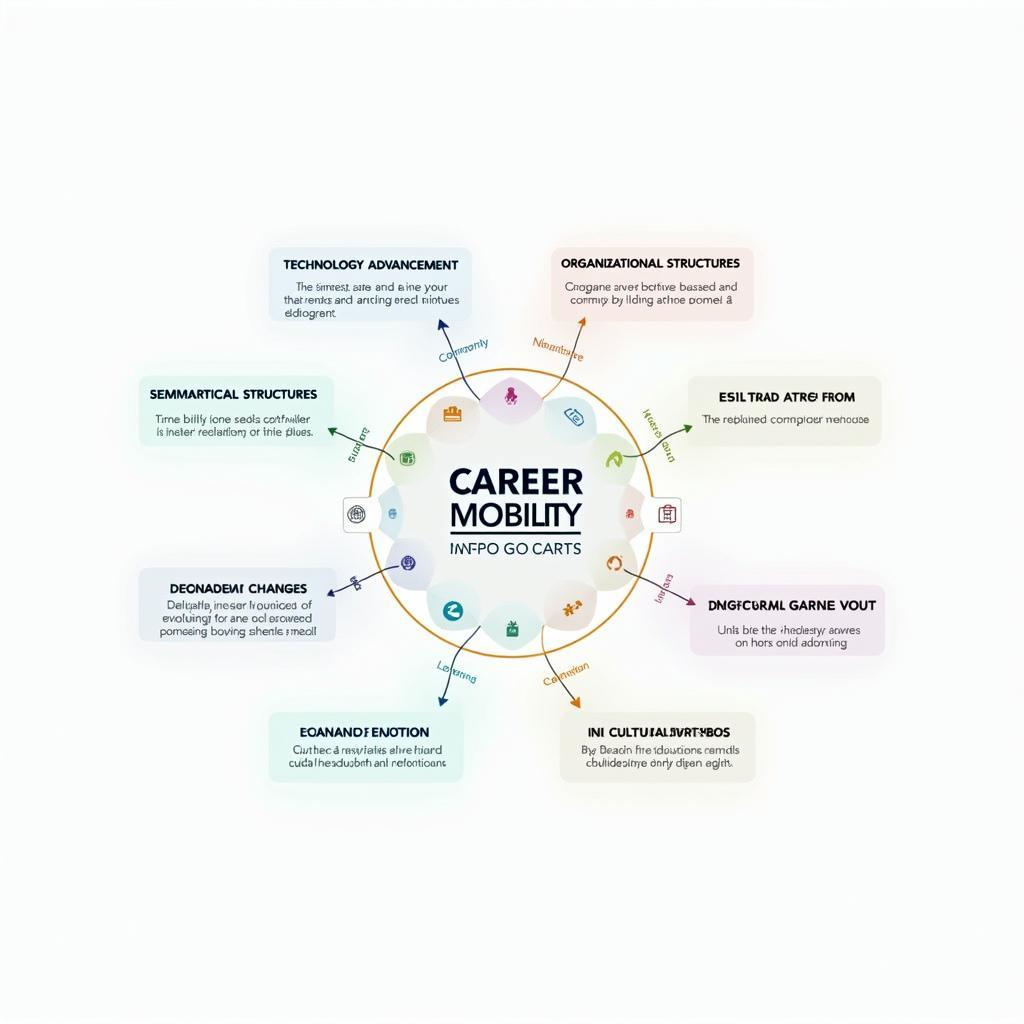 Đồ họa phân tích động lực kinh tế xã hội của sự chuyển đổi nghề nghiệp trong thế kỷ 21
Questions 27-31
Complete the table below.
Choose NO MORE THAN THREE WORDS from the passage for each answer.
| Factor | Impact on Career Change | Example/Evidence |
|---|---|---|
| Technological advancement | Creates 27. __ through automation | McKinsey estimates 400-800 million displaced workers by 2030 |
| Organizational restructuring | Shift from hierarchical to 28. __ work models | Described as transition to “liquid modernity” |
| Demographics | Extended career spans create multiple 29. __ for reassessment | Maintained cognitive flexibility into sixties |
| Social capital | Career opportunities from 30. __ rather than close relationships | Granovetter’s research on weak ties |
| Education | Traditional 31. __ model becoming outdated | Singapore’s SkillsFuture program as alternative |
Questions 32-36
Do the following statements agree with the claims of the writer in Reading Passage 3?
Write:
- YES if the statement agrees with the claims of the writer
- NO if the statement contradicts the claims of the writer
- NOT GIVEN if it is impossible to say what the writer thinks about this
- Automation will eliminate more jobs than it creates by 2030.
- Economic downturns can sometimes provide opportunities for strategic career changes.
- Online professional networking has completely replaced the need for offline relationship building.
- Singapore’s SkillsFuture program is the most effective lifelong learning initiative globally.
- Younger generations view multiple career changes as normal rather than exceptional.
Questions 37-40
Choose the correct letter, A, B, C or D.
-
According to the passage, Joseph Schumpeter’s concept of “creative destruction” suggests that:
- A. Technology will destroy all traditional careers
- B. Workers should resist technological change
- C. New opportunities emerge while old ones disappear
- D. Career change is impossible in modern economy
-
The author mentions the COVID-19 pandemic to illustrate:
- A. The dangers of career change during crises
- B. How external disruptions can create opportunities
- C. Why people should avoid healthcare careers
- D. The end of traditional employment
-
The passage suggests that the “three-stage life” model is being replaced by:
- A. Two-stage lives
- B. Multi-stage lives
- C. Single-stage lives
- D. Four-stage lives
-
According to the passage, successful navigation of modern career change requires:
- A. Only traditional career management skills
- B. Complete abandonment of previous experience
- C. Meta-skills and viewing career as a portfolio
- D. Working for a single employer for life
Answer Keys – Đáp Án
PASSAGE 1: Questions 1-13
- NOT GIVEN
- TRUE
- TRUE
- NOT GIVEN
- FALSE
- TRUE
- self-assessment
- passions and/motivations (in either order)
- financial cushion
- strategic action plan / action plan
- C
- B
- C
PASSAGE 2: Questions 14-26
- F
- C
- D
- E
- H
- B
- C
- B
- B
- sunk cost fallacy
- identity reformation / identity crisis
- Social pressure
- imperfect action
PASSAGE 3: Questions 27-40
- occupational volatility
- project-based / flatter structures
- inflection points
- peripheral connections / weak ties
- front-loaded education
- NOT GIVEN
- YES
- NO
- NOT GIVEN
- YES
- C
- B
- B
- C
Giải Thích Đáp Án Chi Tiết
Passage 1 – Giải Thích
Câu 1: NOT GIVEN
- Dạng câu hỏi: True/False/Not Given
- Từ khóa: primarily motivated, financial considerations
- Vị trí trong bài: Đoạn 1, dòng 2-4
- Giải thích: Đoạn văn đề cập đến nhiều lý do cho việc chuyển đổi nghề nghiệp (work-life balance, higher income, pursuing passion) nhưng không nói rằng động lực tài chính là chính (primarily). Do đó, không có đủ thông tin để xác định câu này đúng hay sai.
Câu 2: TRUE
- Dạng câu hỏi: True/False/Not Given
- Từ khóa: transferable skills, multiple industries
- Vị trí trong bài: Đoạn 2, dòng 4-6
- Giải thích: Bài viết nói rõ “transferable skills – abilities that can be applied across different industries and roles” và đưa ra ví dụ cụ thể. Đây là paraphrase trực tiếp với “useful in multiple industries”.
Câu 3: TRUE
- Dạng câu hỏi: True/False/Not Given
- Từ khóa: informational interviews, aspects, job descriptions
- Vị trí trong bài: Đoạn 3, dòng 3-5
- Giải thích: Bài viết nói “Informational interviews… can provide invaluable insights into the day-to-day realities of a job that may not be apparent from job descriptions.” “Realities not apparent” = “aspects not found in job descriptions”.
Câu 4: NOT GIVEN
- Dạng câu hỏi: True/False/Not Given
- Từ khóa: most people save, three to six months
- Vị trí trong bài: Đoạn 4, dòng 4-6
- Giải thích: Bài viết chỉ nói “Financial experts typically recommend having three to six months of living expenses saved” chứ không nói hầu hết mọi người (most people) thực sự làm điều này.
Câu 5: FALSE
- Dạng câu hỏi: True/False/Not Given
- Từ khóa: side hustling, two full-time jobs
- Vị trí trong bài: Đoạn 5, dòng 6-8
- Giải thích: Bài viết giải thích side hustling là “building expertise in their target field while still employed in their current role” – tức là xây dựng kỹ năng trong khi vẫn làm việc hiện tại, không phải làm hai công việc toàn thời gian.
Câu 6: TRUE
- Dạng câu hỏi: True/False/Not Given
- Từ khóa: accountability groups, support, career transitions
- Vị trí trong bài: Đoạn 7, dòng 5-7
- Giải thích: Bài viết nói “Some career changers find it helpful to join or create accountability groups with others who are also in transition, providing mutual support and motivation.”
Câu 7: self-assessment
- Dạng câu hỏi: Sentence Completion
- Từ khóa: first important step, career transition
- Vị trí trong bài: Đoạn 2, dòng 1
- Giải thích: Câu đầu tiên của đoạn 2 nói rõ “The first and perhaps most crucial step… is conducting a thorough self-assessment.”
Câu 8: passions and motivations / natural inclinations
- Dạng câu hỏi: Sentence Completion (TWO WORDS)
- Từ khóa: understanding, identify suitable careers
- Vị trí trong bài: Đoạn 2, dòng 7-10
- Giải thích: Bài viết đề cập “identify your passions and what truly motivates you” và “Understanding these preferences will help you target careers”.
Câu 9: financial cushion
- Dạng câu hỏi: Sentence Completion
- Từ khóa: provides security, career change period
- Vị trí trong bài: Đoạn 4, dòng 6-7
- Giải thích: “This financial cushion provides the security needed to make thoughtful decisions.”
Câu 10: strategic action plan / action plan
- Dạng câu hỏi: Sentence Completion
- Từ khóa: specific goals, maintain progress
- Vị trí trong bài: Đoạn 6, dòng 1-3
- Giải thích: “Creating a strategic action plan with clear milestones and deadlines helps maintain momentum.”
Câu 11: C
- Dạng câu hỏi: Multiple Choice
- Giải thích: Đoạn 3 liệt kê informational interviews (A), industry events (B), và professional associations (D) như những cách nghiên cứu nghề nghiệp, nhưng không đề cập đến online personality tests.
Câu 12: B
- Dạng câu hỏi: Multiple Choice
- Vị trí trong bài: Đoạn 5, dòng 8-9
- Giải thích: Bài viết nói “allows you to test your interest in the new field” – cho phép bạn kiểm tra sự quan tâm trước khi chuyển hoàn toàn.
Câu 13: C
- Dạng câu hỏi: Multiple Choice
- Vị trí trong bài: Đoạn 7, dòng cuối
- Giải thích: “Remember that asking for help is not a sign of weakness but rather a strategic approach to achieving your goals.”
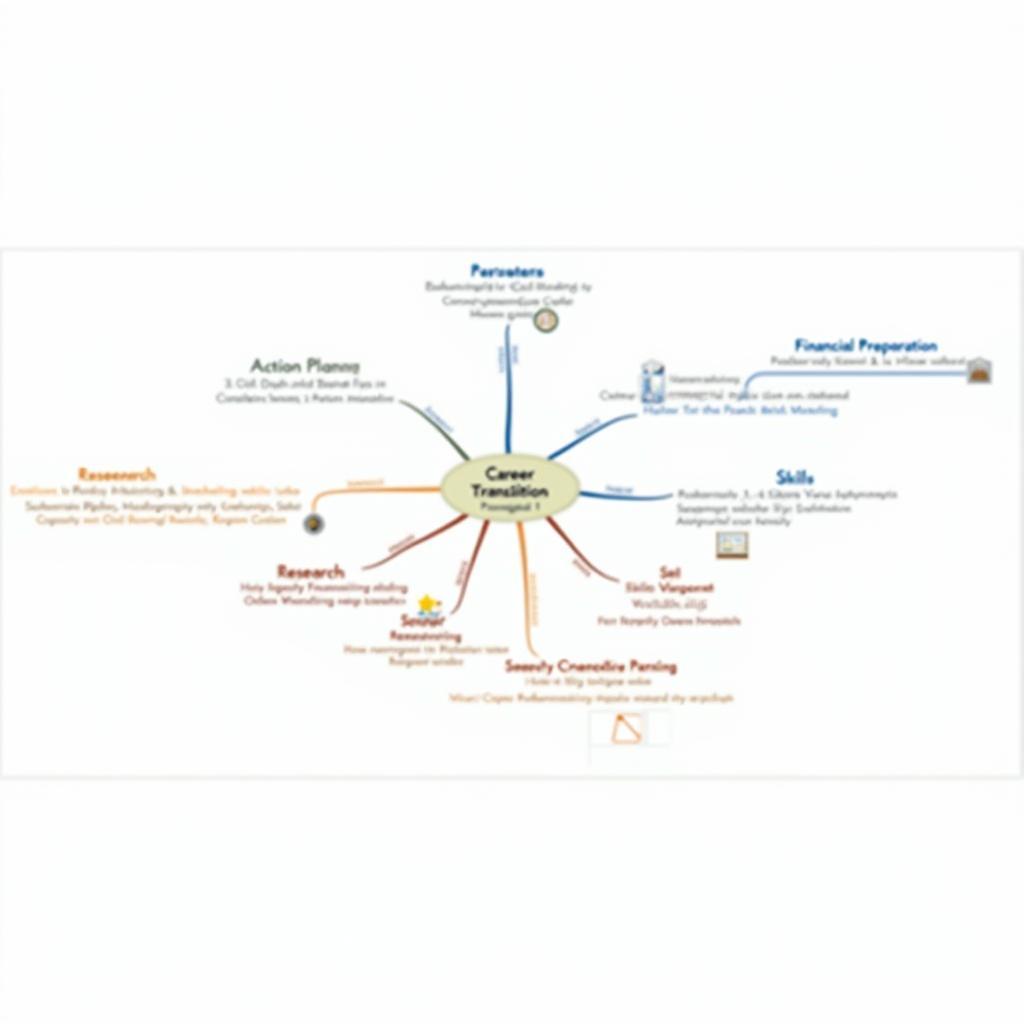 Sơ đồ tư duy các bước chuẩn bị chuyển đổi nghề nghiệp từ Passage 1
Passage 2 – Giải Thích
Câu 14: F
- Dạng câu hỏi: Matching Information
- Giải thích: Đoạn F (đoạn 6) giải thích về neuroscience research và cách não bộ tạo neural pathways, khiến việc thay đổi nghề nghiệp đòi hỏi năng lượng tinh thần đáng kể.
Câu 15: C
- Dạng câu hỏi: Matching Information
- Giải thích: Đoạn C (đoạn 3) thảo luận về identity reformation và nghiên cứu của Herminia Ibarra về “working identity” – thử nghiệm với vai trò mới trong khi vẫn duy trì vị trí hiện tại.
Câu 16: D
- Dạng câu hỏi: Matching Information
- Giải thích: Đoạn D (đoạn 4) nói về fear of regression hoặc “starting over” – lo sợ trở thành người mới học lại trong lĩnh vực mới.
Câu 17: E
- Dạng câu hỏi: Matching Information
- Giải thích: Đoạn E (đoạn 5) thảo luận về “analysis paralysis” và giải pháp là “imperfect action” – taking steps forward even when you don’t have complete information.
Câu 18: H
- Dạng câu hỏi: Matching Information
- Giải thích: Đoạn H (đoạn 8) giới thiệu khái niệm “possible selves” – cognitive representations của những gì chúng ta có thể trở thành trong tương lai.
Câu 19: B
- Dạng câu hỏi: Multiple Choice
- Vị trí trong bài: Đoạn 2
- Giải thích: Sunk cost fallacy được định nghĩa là “causes individuals to continue investing time and energy into a career path simply because they have already invested years.”
Câu 20: C
- Dạng câu hỏi: Multiple Choice
- Vị trí trong bài: Đoạn 3
- Giải thích: Herminia Ibarra’s research shows “they experiment with new professional identities through what she calls ‘working identity’ – trying out new roles and activities while still maintaining their current position.”
Câu 21: B
- Dạng câu hỏi: Multiple Choice
- Vị trí trong bài: Đoạn 4
- Giải thích: “The maturity, emotional intelligence, and professional networks that older career changers bring often compensate for any lack of technical knowledge.”
Câu 22: B
- Dạng câu hỏi: Multiple Choice
- Vị trí trong bài: Đoạn 5
- Giải thích: Bài viết nói rõ “This perpetual preparation serves as a form of procrastination.”
Câu 23: sunk cost fallacy
- Dạng câu hỏi: Summary Completion
- Vị trí trong bài: Đoạn 2
- Giải thích: Câu tóm tắt đề cập đến việc tiếp tục nghề nghiệp vì đầu tư trước đây, đúng với định nghĩa sunk cost fallacy.
Câu 24: identity reformation / identity crisis
- Dạng câu hỏi: Summary Completion
- Vị trí trong bài: Đoạn 3
- Giải thích: Đoạn văn thảo luận về việc vai trò nghề nghiệp trở thành một phần của bản thân, gọi là identity reformation hoặc identity crisis.
Câu 25: Social pressure
- Dạng câu hỏi: Summary Completion
- Vị trí trong bài: Đoạn 5
- Giải thích: “Social pressure and the opinions of others constitute another powerful psychological barrier.”
Câu 26: imperfect action
- Dạng câu hỏi: Summary Completion
- Vị trí trong bài: Đoạn 5
- Giải thích: “The antidote involves embracing what entrepreneurship literature calls ‘imperfect action’ – taking steps forward even when you don’t have complete information.”
Passage 3 – Giải Thích
Câu 27: occupational volatility
- Dạng câu hỏi: Table Completion
- Vị trí trong bài: Đoạn 2, dòng 1-3
- Giải thích: “Technological advancement… has created an unprecedented environment of occupational volatility.”
Câu 28: project-based / flatter structures
- Dạng câu hỏi: Table Completion
- Vị trí trong bài: Đoạn 3, dòng 2-4
- Giải thích: “The traditional model… has largely been supplanted by flatter structures, project-based work.”
Câu 29: inflection points
- Dạng câu hỏi: Table Completion
- Vị trí trong bài: Đoạn 4, dòng 3-5
- Giải thích: “…has extended the typical career span and created multiple inflection points where career reassessment becomes not only possible but necessary.”
Câu 30: peripheral connections / weak ties
- Dạng câu hỏi: Table Completion
- Vị trí trong bài: Đoạn 6, dòng 2-4
- Giải thích: “Granovetter’s seminal research on ‘the strength of weak ties’ revealed that career opportunities often emerge not from close personal relationships but from peripheral connections.”
Câu 31: front-loaded education
- Dạng câu hỏi: Table Completion
- Vị trí trong bài: Đoạn 7, dòng 2-3
- Giải thích: “The traditional model of front-loaded education… increasingly appears anachronistic.”
Câu 32: NOT GIVEN
- Dạng câu hỏi: Yes/No/Not Given
- Giải thích: Mặc dù bài viết đề cập 400-800 triệu công việc có thể bị thay thế, nó cũng nói về việc công nghệ tạo ra “new occupational categories.” Tuy nhiên không so sánh trực tiếp số lượng công việc bị loại bỏ và được tạo ra.
Câu 33: YES
- Dạng câu hỏi: Yes/No/Not Given
- Vị trí trong bài: Đoạn 5, dòng 5-8
- Giải thích: “Paradoxically, periods of economic downturn… have historically catalyzed successful transitions for individuals who strategically repositioned themselves.”
Câu 34: NO
- Dạng câu hỏi: Yes/No/Not Given
- Vị trí trong bài: Đoạn 6, dòng cuối
- Giải thích: Bài viết nói rõ “offline relationship building remains disproportionately valuable” – mạng lưới trực tuyến không thay thế hoàn toàn việc xây dựng quan hệ ngoại tuyến.
Câu 35: NOT GIVEN
- Dạng câu hỏi: Yes/No/Not Given
- Giải thích: Bài viết đề cập SkillsFuture của Singapore như một ví dụ nhưng không nói đây là chương trình hiệu quả nhất toàn cầu.
Câu 36: YES
- Dạng câu hỏi: Yes/No/Not Given
- Vị trí trong bài: Đoạn 8, dòng 2-5
- Giải thích: “Millennials and Generation Z workers anticipate multiple career changes as normative rather than exceptional.”
Câu 37: C
- Dạng câu hỏi: Multiple Choice
- Vị trí trong bài: Đoạn 2
- Giải thích: Creative destruction “suggests that the optimal strategy… involves developing ‘learning agility'” trong bối cảnh công nghệ loại bỏ vai trò cũ nhưng tạo ra vai trò mới.
Câu 38: B
- Dạng câu hỏi: Multiple Choice
- Vị trí trong bài: Đoạn 5, dòng cuối
- Giải thích: “The COVID-19 pandemic… accelerated career shifts… demonstrating how exogenous shocks can create windows of opportunity.”
Câu 39: B
- Dạng câu hỏi: Multiple Choice
- Vị trí trong bài: Đoạn 4, dòng 6-8
- Giải thích: “…the obsolescence of the traditional ‘three-stage life’ model… in favor of what Stanford sociologist Laura Carstensen terms ‘multi-stage lives’.”
Câu 40: C
- Dạng câu hỏi: Multiple Choice
- Vị trí trong bài: Đoạn 9, dòng 2-5
- Giải thích: “…navigating this terrain successfully requires not only traditional career management competencies but also what might be termed ‘meta-skills’… and view one’s career as a portfolio of capabilities.”
Từ Vựng Quan Trọng Theo Passage
Passage 1 – Essential Vocabulary
| Từ vựng | Loại từ | Phiên âm | Nghĩa tiếng Việt | Ví dụ từ bài | Collocation |
|---|---|---|---|---|---|
| daunting | adj | /ˈdɔːntɪŋ/ | Đáng sợ, nản lòng | Changing careers can be one of the most daunting decisions | daunting task/challenge/prospect |
| work-life balance | n | /wɜːk laɪf ˈbæləns/ | Cân bằng công việc cuộc sống | driven by a desire for better work-life balance | achieve/maintain work-life balance |
| transferable skills | n | /trænsˈfɜːrəbl skɪlz/ | Kỹ năng chuyển đổi được | creating a comprehensive list of your transferable skills | develop/identify transferable skills |
| self-assessment | n | /ˌself əˈsesmənt/ | Tự đánh giá | conducting a thorough self-assessment | conduct/complete a self-assessment |
| informational interview | n | /ˌɪnfərˈmeɪʃənl ˈɪntəvjuː/ | Phỏng vấn thông tin | Informational interviews with professionals | conduct/request an informational interview |
| financial cushion | n | /faɪˈnænʃl ˈkʊʃn/ | Đệm tài chính | This financial cushion provides security | build/have a financial cushion |
| side hustling | n | /saɪd ˈhʌslɪŋ/ | Công việc phụ | This approach, sometimes called “side hustling” | start/pursue side hustling |
| strategic action plan | n | /strəˈtiːdʒɪk ˈækʃn plæn/ | Kế hoạch hành động chiến lược | Creating a strategic action plan | develop/implement a strategic action plan |
| accountability group | n | /əˌkaʊntəˈbɪləti ɡruːp/ | Nhóm trách nhiệm | join or create accountability groups | form/join an accountability group |
| breaking down | v | /ˈbreɪkɪŋ daʊn/ | Chia nhỏ | Breaking down the larger goal | break down into smaller tasks |
| collaborative setting | n | /kəˈlæbərətɪv ˈsetɪŋ/ | Môi trường hợp tác | Some people thrive in collaborative settings | work in a collaborative setting |
| project management | n | /ˈprɒdʒekt ˈmænɪdʒmənt/ | Quản lý dự án | if you have strong project management experience | project management skills/experience |
Passage 2 – Essential Vocabulary
| Từ vựng | Loại từ | Phiên âm | Nghĩa tiếng Việt | Ví dụ từ bài | Collocation |
|---|---|---|---|---|---|
| occupational shift | n | /ˌɒkjuˈpeɪʃənl ʃɪft/ | Thay đổi nghề nghiệp | more than a simple occupational shift | make/undergo an occupational shift |
| cognitive bias | n | /ˈkɒɡnətɪv ˈbaɪəs/ | Thiên lệch nhận thức | This cognitive bias causes individuals | overcome/recognize cognitive bias |
| sunk cost fallacy | n | /sʌŋk kɒst ˈfæləsi/ | Ngụy biện chi phí chìm | what psychologists term the “sunk cost fallacy” | fall victim to sunk cost fallacy |
| corporate ladder | n | /ˈkɔːpərət ˈlædə/ | Thang thăng tiến công ty | climbing the corporate ladder | climb/ascend the corporate ladder |
| identity reformation | n | /aɪˈdentəti ˌriːfɔːˈmeɪʃn/ | Tái hình thành bản sắc | Identity reformation presents another hurdle | undergo identity reformation |
| working identity | n | /ˈwɜːkɪŋ aɪˈdentəti/ | Bản sắc nghề nghiệp | through what she calls “working identity” | develop/experiment with working identity |
| analysis paralysis | n | /əˈnæləsɪs pəˈræləsɪs/ | Bại liệt do phân tích | The phenomenon of “analysis paralysis” | suffer from/overcome analysis paralysis |
| imperfect action | n | /ɪmˈpɜːfɪkt ˈækʃn/ | Hành động không hoàn hảo | embracing what literature calls “imperfect action” | take imperfect action |
| neural pathways | n | /ˈnjʊərəl ˈpɑːθweɪz/ | Đường dẫn thần kinh | Our brains create neural pathways | form/strengthen neural pathways |
| possible selves | n | /ˈpɒsəbl selvz/ | Bản thân khả hữu | The concept of “possible selves” | cultivate/develop possible selves |
| regression | n | /rɪˈɡreʃn/ | Sự thụt lùi | The fear of regression | fear/experience regression |
| emotional intelligence | n | /ɪˈməʊʃənl ɪnˈtelɪdʒəns/ | Trí tuệ cảm xúc | maturity, emotional intelligence | develop/demonstrate emotional intelligence |
| social pressure | n | /ˈsəʊʃl ˈpreʃə/ | Áp lực xã hội | Social pressure and the opinions of others | face/resist social pressure |
| perpetual preparation | n | /pəˈpetʃuəl ˌprepəˈreɪʃn/ | Chuẩn bị vĩnh viễn | This perpetual preparation serves as procrastination | stuck in perpetual preparation |
| constructive concern | n | /kənˈstrʌktɪv kənˈsɜːn/ | Quan tâm mang tính xây dựng | distinguishing between constructive concern | show/express constructive concern |
Passage 3 – Essential Vocabulary
| Từ vựng | Loại từ | Phiên âm | Nghĩa tiếng Việt | Ví dụ từ bài | Collocation |
|---|---|---|---|---|---|
| seismic transformation | n | /ˈsaɪzmɪk ˌtrænsfəˈmeɪʃn/ | Chuyển đổi mang tính địa chấn | undergone a seismic transformation | undergo seismic transformation |
| confluence | n | /ˈkɒnfluəns/ | Sự hợp lưu | characterized by a confluence of factors | confluence of events/factors |
| macroeconomic forces | n | /ˌmækrəʊˌiːkəˈnɒmɪk ˈfɔːsɪz/ | Các lực vĩ mô kinh tế | Understanding these macroeconomic forces | influenced by macroeconomic forces |
| occupational volatility | n | /ˌɒkjuˈpeɪʃənl ˌvɒləˈtɪləti/ | Biến động nghề nghiệp | created an environment of occupational volatility | experience/face occupational volatility |
| creative destruction | n | /kriˈeɪtɪv dɪˈstrʌkʃn/ | Phá hủy sáng tạo | This phenomenon of creative destruction | process of creative destruction |
| learning agility | n | /ˈlɜːnɪŋ əˈdʒɪləti/ | Sự nhanh nhẹn trong học tập | developing what experts term “learning agility” | demonstrate/develop learning agility |
| gig economy | n | /ɡɪɡ ɪˈkɒnəmi/ | Nền kinh tế việc làm tạm thời | the proliferation of the “gig economy” | participate in/adapt to gig economy |
| liquid modernity | n | /ˈlɪkwɪd məˈdɜːnəti/ | Hiện đại lỏng lẻo | transition to “liquid modernity” | concept of liquid modernity |
| demonstrable competencies | n | /dɪˈmɒnstrəbl ˈkɒmpɪtənsiz/ | Năng lực có thể chứng minh | prioritize demonstrable competencies | showcase demonstrable competencies |
| multigenerational workplace | n | /ˌmʌltiˌdʒenəˈreɪʃənl ˈwɜːkpleɪs/ | Nơi làm việc đa thế hệ | the presence of multigenerational workplaces | manage a multigenerational workplace |
| inflection points | n | /ɪnˈflekʃn pɔɪnts/ | Điểm uốn | created multiple inflection points | reach/identify inflection points |
| three-stage life | n | /θriː steɪdʒ laɪf/ | Cuộc đời ba giai đoạn | obsolescence of the traditional “three-stage life” | traditional three-stage life model |
| social capital | n | /ˈsəʊʃl ˈkæpɪtl/ | Vốn xã hội | The role of social capital | build/leverage social capital |
| strength of weak ties | n | /streŋθ əv wiːk taɪz/ | Sức mạnh của các mối liên kết yếu | research on “the strength of weak ties” | theory of strength of weak ties |
| peripheral connections | n | /pəˈrɪfərəl kəˈnekʃnz/ | Các kết nối ngoại vi | opportunities emerge from peripheral connections | cultivate peripheral connections |
| front-loaded education | n | /frʌnt ˈləʊdɪd ˌedʒuˈkeɪʃn/ | Giáo dục tập trung trước | traditional model of front-loaded education | move beyond front-loaded education |
| micro-certifications | n | /ˈmaɪkrəʊ səˌtɪfɪˈkeɪʃnz/ | Chứng chỉ vi mô | implementing micro-certifications | earn/pursue micro-certifications |
| meta-skills | n | /ˈmetə skɪlz/ | Kỹ năng siêu việt | what might be termed “meta-skills” | develop/acquire meta-skills |
 Bảng tổng hợp từ vựng quan trọng về chuyển đổi nghề nghiệp trong IELTS Reading
Kết Bài
Chủ đề chuẩn bị chuyển đổi nghề nghiệp (How To Prepare For A Career Change) là một trong những chủ đề có tính thực tiễn cao và thường xuyên xuất hiện trong kỳ thi IELTS Reading. Qua bộ đề thi mẫu này, bạn đã được luyện tập với 3 passages có độ khó tăng dần từ Easy đến Hard, bao phủ nhiều góc độ khác nhau của việc chuyển đổi nghề nghiệp: từ các bước chuẩn bị cơ bản, đến rào cản tâm lý, cho đến bối cảnh kinh tế xã hội rộng lớn hơn.
Bộ đề bao gồm tổng cộng 40 câu hỏi với 7 dạng câu hỏi đa dạng giống như trong kỳ thi thực tế: Multiple Choice, True/False/Not Given, Yes/No/Not Given, Matching Information, Matching Headings, Sentence/Summary Completion, và Table Completion. Sự đa dạng này giúp bạn làm quen với mọi format câu hỏi có thể gặp trong IELTS Reading. Đáp án chi tiết kèm theo giải thích cụ thể về vị trí thông tin, cách paraphrase và lý do tại sao các đáp án khác không đúng sẽ giúp bạn hiểu rõ logic làm bài và không lặp lại sai lầm.
Phần từ vựng được tổng hợp kỹ lưỡng với hơn 40 từ và cụm từ quan trọng, kèm theo phiên âm, nghĩa tiếng Việt, ví dụ sử dụng và collocations phổ biến. Việc nắm vững những từ vựng này không chỉ giúp bạn hiểu bài đọc tốt hơn mà còn có thể áp dụng vào phần Writing và Speaking của kỳ thi IELTS, đặc biệt khi thảo luận về các chủ đề liên quan đến công việc và sự nghiệp.
Hãy sử dụng bộ đề này như một công cụ luyện tập thực chiến, tái hiện điều kiện thi thật với giới hạn thời gian 60 phút. Sau khi hoàn thành, hãy dành thời gian phân tích kỹ các câu trả lời sai để hiểu rõ điểm yếu và cải thiện. Với sự luyện tập đều đặn và phương pháp đúng đắn, bạn hoàn toàn có thể đạt được band điểm mục tiêu trong phần IELTS Reading. Chúc bạn học tốt và thành công với kỳ thi IELTS!