Mở bài
Chủ đề về độc tố môi trường và sức khỏe con người là một trong những đề tài xuất hiện ngày càng thường xuyên trong kỳ thi IELTS Reading. Với sự gia tăng các vấn đề ô nhiễm toàn cầu, việc hiểu rõ cách giảm thiểu tiếp xúc với các chất độc hại không chỉ là kiến thức quan trọng trong cuộc sống mà còn là nội dung được nhiều đề thi IELTS khai thác. Chủ đề “How To Reduce Exposure To Environmental Toxins” thường xuất hiện dưới dạng các bài đọc về sức khỏe cộng đồng, môi trường sống, hoặc khoa học y tế trong các đề thi Cambridge IELTS gần đây.
Bài viết này cung cấp cho bạn một bộ đề thi IELTS Reading hoàn chỉnh với 3 passages từ dễ đến khó, bao gồm 40 câu hỏi đa dạng giống như trong kỳ thi thật. Bạn sẽ được luyện tập với các dạng câu hỏi phổ biến như Multiple Choice, True/False/Not Given, Matching Headings, và nhiều dạng khác. Mỗi câu hỏi đều có đáp án chi tiết kèm giải thích cụ thể về vị trí thông tin và cách paraphrase, giúp bạn nắm vững kỹ thuật làm bài. Đặc biệt, bài viết còn cung cấp bảng từ vựng quan trọng theo từng passage để bạn tích lũy vốn từ học thuật hiệu quả.
Đề thi này phù hợp với học viên từ band 5.0 trở lên, giúp bạn làm quen với độ khó tăng dần và rèn luyện khả năng quản lý thời gian – yếu tố then chốt để đạt điểm cao trong IELTS Reading.
Hướng Dẫn Làm Bài IELTS Reading
Tổng Quan Về IELTS Reading Test
IELTS Reading Test là một phần quan trọng trong kỳ thi IELTS Academic, yêu cầu thí sinh hoàn thành 40 câu hỏi trong vòng 60 phút. Bài thi bao gồm 3 passages với độ dài tổng cộng khoảng 2,000-2,750 từ, độ khó tăng dần từ Passage 1 đến Passage 3.
Phân bổ thời gian khuyến nghị:
- Passage 1: 15-17 phút – Đây là passage dễ nhất, bạn cần tận dụng để ghi điểm tối đa
- Passage 2: 18-20 phút – Độ khó trung bình, cần đọc kỹ và chú ý paraphrase
- Passage 3: 23-25 phút – Passage khó nhất, yêu cầu kỹ năng phân tích cao
Lưu ý quan trọng: Không có thời gian thêm để chép đáp án, vì vậy bạn cần ghi đáp án trực tiếp vào answer sheet trong 60 phút.
Các Dạng Câu Hỏi Trong Đề Này
Đề thi mẫu này bao gồm 7 dạng câu hỏi phổ biến nhất trong IELTS Reading:
- Multiple Choice – Câu hỏi trắc nghiệm với 3-4 lựa chọn
- True/False/Not Given – Xác định thông tin đúng, sai hoặc không được đề cập
- Yes/No/Not Given – Xác định quan điểm của tác giả
- Matching Headings – Nối tiêu đề với đoạn văn phù hợp
- Summary Completion – Hoàn thành đoạn tóm tắt
- Matching Features – Nối thông tin với đặc điểm tương ứng
- Short-answer Questions – Trả lời câu hỏi ngắn
Đối với những ai đang tìm kiếm cách cải thiện sức khỏe tổng thể, bạn có thể tham khảo thêm về cách thực hành lối sống lành mạnh để có cái nhìn toàn diện hơn về chủ đề này.
IELTS Reading Practice Test
PASSAGE 1 – Everyday Toxins in Your Home
Độ khó: Easy (Band 5.0-6.5)
Thời gian đề xuất: 15-17 phút
Most people believe that their homes are safe havens from environmental pollutants, but research suggests otherwise. In fact, the air inside our homes can be two to five times more contaminated than outdoor air. This surprising finding has prompted health experts to investigate the sources of indoor pollution and develop strategies to help families reduce their exposure to harmful substances.
One of the most common sources of household toxins is cleaning products. Many conventional cleaners contain chemicals such as ammonia, chlorine bleach, and volatile organic compounds (VOCs) that can irritate the respiratory system and trigger allergic reactions. When we spray these products, tiny particles become airborne and can remain suspended in the air for hours. Children and pets are particularly vulnerable because they spend more time close to floors and surfaces where these chemicals accumulate.
Another significant source of indoor toxins is synthetic materials used in furniture and home décor. Formaldehyde, a known carcinogen, is commonly found in pressed wood products, including furniture, cabinets, and flooring. This chemical is released slowly into the air through a process called off-gassing, which can continue for months or even years after installation. Similarly, many carpets and rugs are treated with stain-resistant chemicals that contain perfluorinated compounds (PFCs), which have been linked to various health problems including hormone disruption and immune system damage.
Personal care products represent yet another category of concern. Cosmetics, shampoos, and lotions often contain parabens, phthalates, and synthetic fragrances that can be absorbed through the skin and enter the bloodstream. These chemicals are known as endocrine disruptors because they can interfere with the body’s hormonal balance. Women are typically exposed to higher levels of these substances because they use more personal care products on average than men.
 Nguồn độc tố môi trường phổ biến trong không gian sống gia đình hiện đại
Food containers and cookware also deserve attention. Plastic containers, especially when heated in microwaves, can leach chemicals like bisphenol A (BPA) into food. Non-stick cookware coated with polytetrafluoroethylene (PTFE) can release toxic fumes when overheated. These chemicals have been associated with reproductive problems, developmental delays in children, and increased risk of certain cancers.
Fortunately, there are practical steps everyone can take to reduce exposure to these household toxins. The first and most important strategy is to improve ventilation. Opening windows regularly, even for just a few minutes each day, allows fresh air to circulate and helps dilute indoor pollutants. Using exhaust fans in bathrooms and kitchens can also help remove moisture and chemicals from the air.
Switching to natural cleaning alternatives is another effective approach. Simple ingredients like vinegar, baking soda, and lemon juice can clean most surfaces effectively without introducing harmful chemicals into your home. For those who prefer commercial products, choosing cleaners labeled as “green” or “eco-friendly” can significantly reduce chemical exposure, though it’s important to read labels carefully as these terms are not strictly regulated.
When purchasing new furniture or home improvement materials, look for products certified as low-VOC or formaldehyde-free. Solid wood furniture is generally preferable to particle board or medium-density fiberboard (MDF). If buying new carpet, consider natural fiber options like wool or cotton, and ask installers to air out the carpet before installation. Better yet, consider hard flooring options like hardwood, tile, or linoleum.
For personal care products, choose items with fewer ingredients and avoid those listing “fragrance” or “parfum” on the label, as these terms can hide numerous undisclosed chemicals. Many health-conscious consumers are turning to products made with natural ingredients, though even natural substances can cause sensitivities in some individuals.
Replacing plastic food storage containers with glass or stainless steel alternatives eliminates the risk of chemical leaching. Never microwave food in plastic containers, and avoid plastic containers marked with recycling codes 3, 6, or 7, as these are more likely to contain harmful chemicals. When choosing cookware, opt for cast iron, stainless steel, or ceramic options rather than non-stick varieties.
Finally, incorporating houseplants into your living space can provide natural air filtration. Studies conducted by NASA have identified several plant species that are particularly effective at removing toxins from indoor air, including spider plants, peace lilies, and snake plants. While plants alone cannot eliminate all pollutants, they contribute to a healthier indoor environment.
Taking these steps may seem overwhelming at first, but small changes can make a significant difference over time. You don’t need to replace everything in your home at once. Instead, adopt a gradual approach, making changes as items need replacement. This strategy is not only more economical but also more sustainable in the long run. By becoming more aware of the products we bring into our homes and making informed choices, we can create healthier living environments for ourselves and our families.
Questions 1-5
Multiple Choice
Choose the correct letter, A, B, C or D.
-
According to the passage, indoor air quality is:
A. always better than outdoor air
B. slightly worse than outdoor air
C. significantly more contaminated than outdoor air
D. the same as outdoor air -
Children and pets are more vulnerable to household toxins because:
A. they have weaker immune systems
B. they spend more time near surfaces where chemicals collect
C. they consume more household products
D. they breathe faster than adults -
The process of formaldehyde release from furniture is called:
A. evaporation
B. condensation
C. off-gassing
D. chemical bonding -
Endocrine disruptors are chemicals that:
A. damage the respiratory system
B. cause skin irritation
C. interfere with hormonal balance
D. weaken the immune system -
When heating food, plastic containers can:
A. melt completely
B. release chemicals into food
C. improve food preservation
D. sterilize the food
Questions 6-10
True/False/Not Given
Do the following statements agree with the information given in the passage?
Write:
- TRUE if the statement agrees with the information
- FALSE if the statement contradicts the information
- NOT GIVEN if there is no information on this
-
Cleaning products containing ammonia are completely safe for household use.
-
Formaldehyde can continue to be released from furniture for several years.
-
Men typically use fewer personal care products than women.
-
All products labeled as “eco-friendly” are strictly regulated by government agencies.
-
NASA research has identified houseplants that can remove toxins from air.
Questions 11-13
Sentence Completion
Complete the sentences below.
Choose NO MORE THAN TWO WORDS from the passage for each answer.
-
Opening windows regularly helps to __ indoor pollutants.
-
Simple ingredients like vinegar and __ can effectively clean most surfaces.
-
When purchasing food storage containers, consumers should choose __ or stainless steel instead of plastic.
PASSAGE 2 – The Hidden Chemical Burden: Understanding Long-term Exposure
Độ khó: Medium (Band 6.0-7.5)
Thời gian đề xuất: 18-20 phút
The concept of bioaccumulation has emerged as a critical concern in environmental health science. This phenomenon occurs when the human body absorbs toxic substances faster than it can eliminate them, leading to a gradual increase in chemical concentration over time. Unlike acute poisoning, which produces immediate and obvious symptoms, bioaccumulation represents a more insidious threat that may take years or even decades to manifest as health problems. Understanding this process is essential for developing effective strategies to minimize our chemical burden.
Research into bioaccumulation has revealed disturbing trends. Studies analyzing blood, urine, and tissue samples from diverse populations have detected hundreds of synthetic chemicals that did not exist a century ago. The Centers for Disease Control and Prevention’s biomonitoring program routinely finds measurable levels of pesticides, flame retardants, plasticizers, and other industrial chemicals in virtually all Americans tested. More concerning is that these chemicals are being detected in umbilical cord blood, indicating that prenatal exposure begins before birth, during the most vulnerable period of human development.
The ubiquity of these chemicals stems from their widespread use in modern manufacturing and agriculture. Persistent organic pollutants (POPs) are particularly problematic because they resist environmental degradation and can travel vast distances through air and water currents. Famous examples include DDT, polychlorinated biphenyls (PCBs), and dioxins. Although many POPs have been banned in developed nations for decades, they continue to circulate in the global environment and food chain. These substances are lipophilic, meaning they accumulate in fatty tissues of animals, including humans, and become more concentrated as they move up the food chain through a process called biomagnification.
The health implications of chronic low-level exposure to multiple chemicals simultaneously remain a subject of intense scientific investigation. Traditional toxicology studies typically examine the effects of single substances at relatively high doses. However, real-world exposure involves countless chemicals at low concentrations, creating a complex mixture whose effects are difficult to predict. Some chemicals may have synergistic effects, where the combined impact exceeds the sum of individual effects. For instance, certain pesticides that appear relatively harmless alone have been shown to cause significant neurological damage when combined with other common environmental contaminants.
Emerging research has linked bioaccumulated chemicals to a range of health conditions. Epidemiological studies have found associations between chemical exposure and increased rates of certain cancers, neurodevelopmental disorders such as autism and ADHD, metabolic syndrome, diabetes, and reproductive problems. While establishing definitive causation is challenging due to the complexity of human health and the difficulty of isolating individual risk factors, the weight of evidence continues to grow. Particularly concerning are findings regarding transgenerational effects, where exposure in one generation may affect health outcomes in subsequent generations through epigenetic mechanisms that alter gene expression without changing DNA sequences.
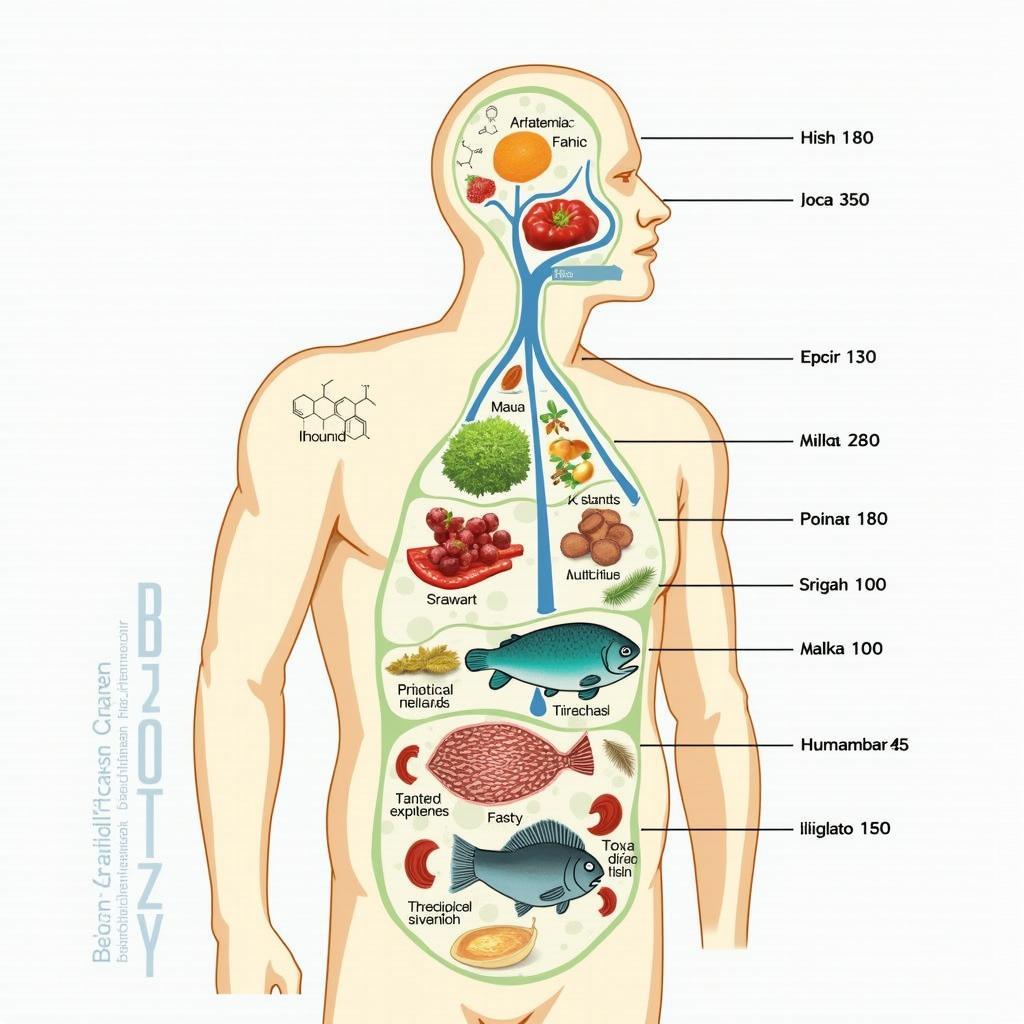 Quá trình tích lũy hóa chất độc hại trong cơ thể qua thời gian và chuỗi thức ăn
Given these concerns, experts recommend several strategies to reduce chemical body burden. Dietary choices play a crucial role, as food represents the primary exposure pathway for many environmental contaminants. Choosing organic produce can significantly reduce pesticide exposure, with studies showing that organic diets decrease urinary metabolites of pesticides by up to 90% within days. For animal products, selecting smaller fish species from cleaner waters helps minimize mercury and PCB exposure, as these pollutants concentrate in larger predatory fish. Grass-fed and pasture-raised meat and dairy products typically contain lower levels of pesticides and antibiotics compared to conventional alternatives.
Water quality deserves careful attention. While municipal water treatment systems remove many contaminants, they don’t eliminate all chemicals of concern. Pharmaceutical residues, PFAS (per- and polyfluoroalkyl substances), and other emerging contaminants can persist through conventional treatment. Installing appropriate water filtration systems at home, such as activated carbon filters or reverse osmosis systems, can substantially reduce exposure to many waterborne contaminants. However, it’s important to match the filtration system to specific local water quality issues, as no single system removes all possible pollutants.
Indoor air quality management extends beyond basic ventilation. During activities that release high levels of pollutants, such as painting or using chemical-intensive cleaning products, increasing ventilation is essential. Some experts recommend using air purifiers equipped with HEPA filters and activated carbon to remove both particulate matter and gaseous pollutants. Regular maintenance of heating and cooling systems, including filter replacement and duct cleaning, prevents the circulation of accumulated contaminants. Additionally, controlling humidity levels between 30-50% inhibits mold growth, which can release mycotoxins and allergens.
Consumer product choices significantly impact overall chemical exposure. Reading ingredient labels on personal care products, household cleaners, and other consumer goods allows for more informed decisions. Various smartphone applications now help consumers identify products containing chemicals of concern. When possible, choosing products certified by reputable third-party organizations provides additional assurance. However, consumers should be aware that “natural” or “green” labels aren’t always meaningful without specific third-party certification, as these terms lack standardized legal definitions in many jurisdictions.
Advocates for reducing environmental toxin exposure emphasize that while individual actions are important, systemic changes are necessary for meaningful progress. Stronger regulatory frameworks, improved chemical safety testing requirements, and greater corporate transparency about product ingredients would provide broader protection. Public health experts note that placing the entire burden on individual consumers to navigate complex chemical risks is neither fair nor fully effective. Nevertheless, until more comprehensive policies are implemented, personal risk reduction strategies remain valuable tools for protecting health.
Recent developments in biomonitoring technology and exposure science offer hope for better understanding and managing chemical risks. Advances in analytical chemistry now allow detection of chemicals at increasingly minute concentrations, while sophisticated biomarkers can reveal early subclinical effects of exposure. This growing knowledge base empowers both researchers and public health officials to make more informed recommendations. For individuals concerned about their chemical burden, some specialized laboratories now offer biomonitoring tests that measure levels of specific chemicals in blood or urine, though interpretation of results requires expert guidance.
The challenge of reducing exposure to environmental toxins is multifaceted and ongoing. As scientific understanding evolves and new chemicals enter commerce, strategies must continually adapt. What remains constant is the importance of staying informed, making conscious choices about products and practices, and supporting policies that prioritize public health over short-term economic interests. By combining individual action with collective advocacy for stronger protections, it is possible to create a healthier environment for current and future generations.
Questions 14-18
Yes/No/Not Given
Do the following statements agree with the views of the writer in the passage?
Write:
- YES if the statement agrees with the views of the writer
- NO if the statement contradicts the views of the writer
- NOT GIVEN if it is impossible to say what the writer thinks about this
-
Bioaccumulation poses a more serious threat than acute poisoning because its effects develop slowly.
-
All synthetic chemicals detected in human bodies are definitely harmful to health.
-
Traditional toxicology studies accurately predict the effects of real-world chemical exposure.
-
Organic diets can reduce pesticide-related chemicals in urine within a short period.
-
Individual consumer choices alone are sufficient to solve the problem of environmental toxin exposure.
Questions 19-24
Matching Headings
The passage has nine paragraphs, A-I. Choose the correct heading for paragraphs B-G from the list of headings below.
List of Headings
i. The role of dietary modifications in reducing toxin exposure
ii. The global distribution of banned chemicals
iii. Advances in detecting and measuring chemical exposure
iv. The complexity of studying multiple chemical interactions
v. Evidence of widespread chemical presence in human populations
vi. Strategies for improving household water and air quality
vii. The importance of reading product labels
viii. Chemical accumulation across food chains
ix. Health problems associated with long-term chemical exposure
- Paragraph B
- Paragraph C
- Paragraph D
- Paragraph E
- Paragraph F
- Paragraph G
Questions 25-26
Summary Completion
Complete the summary below.
Choose NO MORE THAN TWO WORDS from the passage for each answer.
Persistent organic pollutants are particularly concerning because they resist breaking down in the environment and are 25 __, meaning they accumulate in fatty tissues. These chemicals become more concentrated through a process called 26 __ as they move up the food chain, ultimately reaching higher levels in human tissues.
PASSAGE 3 – The Neurotoxicological Impact of Environmental Contaminants: Mechanisms and Mitigation
Độ khó: Hard (Band 7.0-9.0)
Thời gian đề xuất: 23-25 phút
The neurotoxicological implications of chronic environmental contaminant exposure have become increasingly prominent in scientific discourse, particularly as mounting evidence suggests that subtle cognitive deficits and behavioral alterations may result from exposures at levels previously considered benign. The developing nervous system exhibits exquisite sensitivity to chemical insults, with critical windows of vulnerability during fetal development and early childhood when neurogenesis, synaptogenesis, and myelination are most active. Understanding the mechanistic pathways through which environmental toxins disrupt neurodevelopment is crucial for establishing appropriate exposure limits and developing targeted intervention strategies.
Heavy metals constitute a well-characterized class of neurotoxicants, with lead serving as the paradigmatic example. Despite significant reductions in environmental lead levels following the phase-out of leaded gasoline and lead-based paints, exposure remains problematic, particularly in aging urban infrastructure where lead pipes and deteriorating paint continue to contaminate water and dust. Lead’s neurotoxicity operates through multiple mechanisms: it interferes with calcium-dependent processes essential for neurotransmitter release, disrupts oligodendrocyte function thereby impairing myelin formation, and generates oxidative stress that damages cellular components. Critically, no threshold has been identified below which lead exposure is without effect on cognitive function, prompting health agencies to adopt the position that no level of lead exposure is safe for children.
Mercury, particularly in its methylmercury form, represents another significant neurotoxic threat, primarily through dietary exposure to contaminated fish. Methylmercury readily crosses both the blood-brain barrier and the placental barrier, accumulating in the developing central nervous system. Its neurotoxicity stems from its high affinity for sulfhydryl groups in proteins, leading to disruption of cytoskeletal architecture, impairment of microtubule function, and interference with cellular migration during brain development. Prenatal exposure has been associated with deficits in attention, memory, language, and fine motor skills that persist into adolescence and beyond, even at exposure levels that do not produce overt clinical symptoms in adults.
Organophosphate pesticides, widely used in agriculture despite known neurotoxicity, exert their primary effect through irreversible inhibition of acetylcholinesterase, the enzyme responsible for degrading the neurotransmitter acetylcholine in synaptic clefts. This mechanism leads to cholinergic overstimulation, which in acute high-dose exposures causes recognizable toxidromes including excessive salivation, miosis, fasciculations, and potentially fatal respiratory depression. However, contemporary concerns center on chronic low-level exposure, particularly during development. Epidemiological studies have demonstrated associations between prenatal and early childhood organophosphate exposure and decrements in IQ, working memory deficits, and increased prevalence of attention-deficit/hyperactivity disorder. Animal models have elucidated additional mechanisms beyond cholinesterase inhibition, including direct effects on neuronal differentiation, axonal outgrowth, and synaptic patterning.
The relationship between environmental challenges and neurological health has parallels with other health concerns, as explored in research on ảnh hưởng của biến đổi khí hậu đối với quản lý nguồn nước, where environmental factors significantly impact human wellbeing through multiple pathways.
Polybrominated diphenyl ethers (PBDEs), used as flame retardants in furniture, electronics, and textiles, have emerged as neurotoxicants of particular concern due to their structural similarity to thyroid hormones. These compounds can disrupt thyroid homeostasis, which is critical for normal brain development, and may also exert direct neurotoxic effects independent of thyroid disruption. Studies in rodents have demonstrated that developmental PBDE exposure produces lasting alterations in locomotor activity, habituation, cognitive flexibility, and other behavioral domains. Human biomonitoring reveals ubiquitous exposure, with PBDEs detected in breast milk, cord blood, and adipose tissue across populations, raising concerns about cumulative developmental neurotoxicity.
Air pollution, particularly fine particulate matter (PM2.5) and ultrafine particles, has recently been recognized as a significant neurotoxicological threat. These particles can access the brain through multiple routes: translocation across the respiratory epithelium into systemic circulation, transfer across the olfactory epithelium directly to the olfactory bulb, and potentially via vagal afferents. Once in the central nervous system, particles may trigger neuroinflammatory cascades characterized by microglial activation, cytokine release, and blood-brain barrier disruption. Epidemiological evidence links air pollution exposure to cognitive decline in aging populations, increased risk of neurodegenerative diseases including Alzheimer’s and Parkinson’s, and neurodevelopmental impacts in children, including reduced cognitive performance and structural brain changes detectable through neuroimaging.
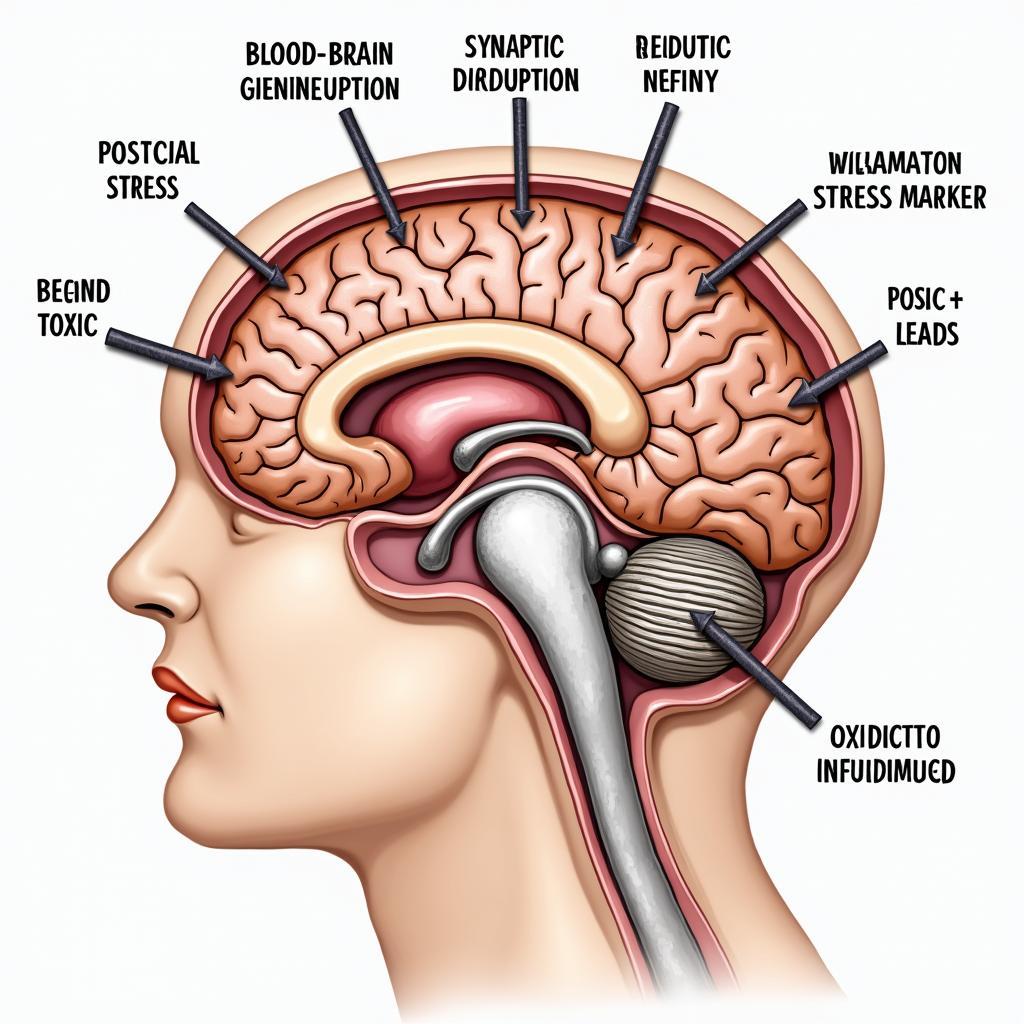 Cơ chế tác động của các chất độc tố môi trường lên hệ thần kinh và não bộ
Mitigating neurotoxic exposure requires multi-level interventions spanning individual, community, and policy domains. At the individual level, dietary modifications can substantially reduce exposure to several neurotoxicants. For mercury, following guidelines to limit consumption of high-mercury fish species, particularly during pregnancy and childhood, while maintaining intake of omega-3 fatty acids from lower-mercury sources such as salmon and sardines, balances nutritional needs with contamination concerns. Regarding pesticides, consumption of organic produce, particularly for items on the “Dirty Dozen” list of heavily contaminated conventional produce, significantly reduces organophosphate metabolite levels. Washing produce thoroughly, though less effective than organic selection, provides some reduction in surface residues.
Water contamination with lead and other neurotoxicants necessitates testing, particularly in older housing, and remediation when indicated. First-draw water, which has been sitting in pipes overnight, should be flushed before consumption. For homes with lead plumbing or fixtures, certified lead-removal filters provide important protection, especially for preparing infant formula and children’s food. Communities struggling with widespread lead contamination in water infrastructure require systemic solutions, including pipe replacement programs and optimized water treatment to minimize lead leaching from pipes.
Reducing exposure to air pollution poses greater challenges for individuals, as air quality is largely determined by regional emission sources and meteorological conditions. However, strategies including monitoring local air quality forecasts and limiting outdoor activities during high-pollution episodes, using HEPA filtration in homes and vehicles, and avoiding areas with heavy traffic when possible can reduce exposure. At the community level, traffic patterns, industrial emissions, and building ventilation standards significantly impact population exposure, highlighting the importance of urban planning and environmental regulations.
The most effective approach to reducing neurotoxic exposure requires regulatory frameworks that prevent widespread environmental contamination in the first place. The precautionary principle, which suggests that substances should be proven safe before widespread use rather than proven harmful after widespread exposure, offers a philosophical foundation for more protective policies. Biomonitoring programs that track population-level exposure to neurotoxicants provide essential data for identifying emerging threats and evaluating the effectiveness of interventions. Particularly important is protection of vulnerable populations, including pregnant women and young children, who experience both greater exposure for their body size and greater vulnerability to neurotoxic effects.
Translational research bridging mechanistic toxicology, epidemiology, and intervention science continues to refine our understanding of environmental neurotoxicity. Advances in exposure assessment, including personal monitoring devices and biomarker development, enable more precise characterization of individual exposure patterns. Neuroimaging techniques and sensitive cognitive assessments allow detection of subtle effects that might have been missed by earlier methodologies. Animal models employing contemporary exposure scenarios, including chemical mixtures at environmentally relevant concentrations, provide insights into mechanisms and potential interventions.
For individuals seeking comprehensive lifestyle approaches to minimize environmental health risks, combining toxin reduction with other protective measures offers synergistic benefits. Adopting strategies similar to those discussed in mẹo giữ gìn sức khỏe trong mùa cúm creates multiple layers of defense for overall wellbeing.
The societal imperative to address environmental neurotoxicity extends beyond immediate health impacts to economic considerations. Cognitive impairment resulting from developmental neurotoxic exposure reduces lifetime earning potential, increases special education needs, and may contribute to social dysfunction. Economic analyses estimating costs attributable to environmental neurotoxicant exposure reach hundreds of billions of dollars annually in the United States alone, far exceeding the costs of preventive interventions. This cost-benefit calculus provides compelling justification for strengthening protective regulations and investing in remediation of contaminated environments.
Looking forward, emerging contaminants including nanoparticles, microplastics, and novel flame retardants introduced to replace banned compounds require ongoing vigilance and research. The complex mixture of chemicals to which modern populations are exposed presents analytical challenges but also opportunities for developing comprehensive approaches to chemical risk assessment and management. By integrating knowledge across disciplines, from molecular toxicology to public policy, the scientific community continues working toward the goal of protecting neurological health across the lifespan from environmental chemical threats.
Questions 27-31
Multiple Choice
Choose the correct letter, A, B, C or D.
-
According to the passage, the developing nervous system is particularly vulnerable to chemicals because:
A. it cannot repair damage
B. critical developmental processes are occurring
C. it has no protective barriers
D. children breathe more air than adults -
What does the passage say about safe levels of lead exposure in children?
A. Levels below 5 micrograms per deciliter are safe
B. Safe levels have been established by health agencies
C. No safe level has been identified
D. Safe levels depend on the child’s age -
The primary mechanism by which organophosphate pesticides cause neurotoxicity is:
A. generating oxidative stress
B. disrupting thyroid hormones
C. inhibiting an enzyme that breaks down neurotransmitters
D. damaging the blood-brain barrier -
PBDEs are concerning because they:
A. are highly toxic in acute exposures
B. structurally resemble thyroid hormones
C. accumulate only in children
D. cause immediate neurological symptoms -
Fine particulate matter can enter the brain through:
A. the respiratory system only
B. the digestive system only
C. multiple pathways including olfactory nerves
D. skin absorption only
Questions 32-36
Matching Features
Match each neurotoxicant (A-E) with its characteristic or effect (32-36).
Choose the correct letter, A-E.
Neurotoxicants:
A. Lead
B. Methylmercury
C. Organophosphate pesticides
D. PBDEs
E. Air pollution particles
-
Crosses the placental barrier and affects developing brain cell movement
-
No safe exposure threshold has been established for children
-
Causes overstimulation of the cholinergic system
-
May trigger inflammatory responses involving microglial cells
-
Found in flame retardants and structurally similar to thyroid hormones
Questions 37-40
Short-answer Questions
Answer the questions below.
Choose NO MORE THAN THREE WORDS from the passage for each answer.
-
What philosophical principle suggests substances should be proven safe before widespread use?
-
What type of filters should be used in homes to reduce lead from water?
-
What type of fish consumption provides omega-3 fatty acids with lower mercury contamination?
-
What annual economic cost in the US is attributed to environmental neurotoxicant exposure?
Answer Keys – Đáp Án
PASSAGE 1: Questions 1-13
- C
- B
- C
- C
- B
- FALSE
- TRUE
- TRUE
- FALSE
- TRUE
- dilute
- baking soda
- glass
PASSAGE 2: Questions 14-26
- YES
- NOT GIVEN
- NO
- YES
- NO
- v
- ii
- iv
- ix
- i
- vi
- lipophilic
- biomagnification
PASSAGE 3: Questions 27-40
- B
- C
- C
- B
- C
- B
- A
- C
- E
- D
- precautionary principle
- lead-removal filters / certified filters
- salmon and sardines / lower-mercury sources
- hundreds of billions / billions of dollars
Giải Thích Đáp Án Chi Tiết
Passage 1 – Giải Thích
Câu 1: C
- Dạng câu hỏi: Multiple Choice
- Từ khóa: indoor air quality, outdoor air
- Vị trí trong bài: Đoạn 1, dòng 2-3
- Giải thích: Bài đọc nói rõ “the air inside our homes can be two to five times more contaminated than outdoor air” – không khí trong nhà có thể bị ô nhiễm gấp 2-5 lần so với bên ngoài. Từ “contaminated” được paraphrase thành “significantly more contaminated” trong đáp án C.
Câu 2: B
- Dạng câu hỏi: Multiple Choice
- Từ khóa: Children and pets, vulnerable
- Vị trí trong bài: Đoạn 2, dòng cuối
- Giải thích: Bài viết giải thích “Children and pets are particularly vulnerable because they spend more time close to floors and surfaces where these chemicals accumulate” – trẻ em và thú cưng dễ bị tổn thương vì chúng dành nhiều thời gian gần sàn và bề mặt nơi hóa chất tích tụ.
Câu 3: C
- Dạng câu hỏi: Multiple Choice
- Từ khóa: formaldehyde release, furniture
- Vị trí trong bài: Đoạn 3, dòng 3-4
- Giải thích: Câu trong bài: “This chemical is released slowly into the air through a process called off-gassing” – hóa chất này được giải phóng chậm vào không khí thông qua một quá trình gọi là off-gassing.
Câu 4: C
- Dạng câu hỏi: Multiple Choice
- Từ khóa: Endocrine disruptors
- Vị trí trong bài: Đoạn 4, dòng cuối
- Giải thích: Bài viết nêu rõ “These chemicals are known as endocrine disruptors because they can interfere with the body’s hormonal balance” – những hóa chất này được gọi là chất gây rối loạn nội tiết vì chúng can thiệp vào sự cân bằng hormone của cơ thể.
Câu 5: B
- Dạng câu hỏi: Multiple Choice
- Từ khóa: plastic containers, heated, microwaves
- Vị trí trong bài: Đoạn 5, dòng 1-2
- Giải thích: “Plastic containers, especially when heated in microwaves, can leach chemicals like bisphenol A (BPA) into food” – các hộp nhựa, đặc biệt khi được làm nóng trong lò vi sóng, có thể giải phóng hóa chất như BPA vào thức ăn. “Leach” được paraphrase thành “release” trong đáp án.
Câu 6: FALSE
- Dạng câu hỏi: True/False/Not Given
- Từ khóa: ammonia, completely safe
- Vị trí trong bài: Đoạn 2, dòng 2-4
- Giải thích: Bài viết nói các sản phẩm tẩy rửa chứa ammonia “can irritate the respiratory system and trigger allergic reactions” – có thể gây kích ứng hệ hô hấp và gây phản ứng dị ứng, do đó chúng KHÔNG hoàn toàn an toàn.
Câu 7: TRUE
- Dạng câu hỏi: True/False/Not Given
- Từ khóa: Formaldehyde, released, years
- Vị trí trong bài: Đoạn 3, dòng 3-4
- Giải thích: “This chemical is released slowly into the air through a process called off-gassing, which can continue for months or even years after installation” – quá trình giải phóng formaldehyde có thể tiếp tục trong nhiều tháng hoặc thậm chí nhiều năm sau khi lắp đặt.
Câu 8: TRUE
- Dạng câu hỏi: True/False/Not Given
- Từ khóa: Men, fewer personal care products
- Vị trí trong bài: Đoạn 4, dòng cuối
- Giải thích: “Women are typically exposed to higher levels of these substances because they use more personal care products on average than men” – phụ nữ thường tiếp xúc với mức độ cao hơn của các chất này vì họ sử dụng nhiều sản phẩm chăm sóc cá nhân hơn trung bình so với nam giới, ngụ ý nam giới sử dụng ít hơn.
Câu 9: FALSE
- Dạng câu hỏi: True/False/Not Given
- Từ khóa: eco-friendly, strictly regulated
- Vị trí trong bài: Đoạn 7, dòng cuối
- Giải thích: “Though it’s important to read labels carefully as these terms are not strictly regulated” – các thuật ngữ này KHÔNG được quản lý nghiêm ngặt.
Câu 10: TRUE
- Dạng câu hỏi: True/False/Not Given
- Từ khóa: NASA, houseplants, remove toxins
- Vị trí trong bài: Đoạn 11, dòng 2-3
- Giải thích: “Studies conducted by NASA have identified several plant species that are particularly effective at removing toxins from indoor air” – các nghiên cứu của NASA đã xác định một số loài cây đặc biệt hiệu quả trong việc loại bỏ độc tố khỏi không khí trong nhà.
Câu 11: dilute
- Dạng câu hỏi: Sentence Completion
- Từ khóa: Opening windows, indoor pollutants
- Vị trí trong bài: Đoạn 6, dòng 2-3
- Giải thích: “Opening windows regularly, even for just a few minutes each day, allows fresh air to circulate and helps dilute indoor pollutants” – mở cửa sổ giúp pha loãng (dilute) các chất ô nhiễm trong nhà.
Câu 12: baking soda
- Dạng câu hỏi: Sentence Completion
- Từ khóa: vinegar, clean surfaces
- Vị trí trong bài: Đoạn 7, dòng 2
- Giải thích: “Simple ingredients like vinegar, baking soda, and lemon juice can clean most surfaces effectively” – các thành phần đơn giản như giấm, baking soda và nước chanh có thể làm sạch hầu hết các bề mặt một cách hiệu quả.
Câu 13: glass
- Dạng câu hỏi: Sentence Completion
- Từ khóa: food storage containers, stainless steel, plastic
- Vị trí trong bài: Đoạn 10, dòng 1
- Giải thích: “Replacing plastic food storage containers with glass or stainless steel alternatives” – thay thế hộp đựng thực phẩm bằng nhựa bằng các thay thế bằng glass (thủy tinh) hoặc thép không gỉ.
Passage 2 – Giải Thích
Câu 14: YES
- Dạng câu hỏi: Yes/No/Not Given
- Từ khóa: Bioaccumulation, more serious threat, acute poisoning
- Vị trí trong bài: Đoạn A, dòng 3-4
- Giải thích: Tác giả viết “Unlike acute poisoning, which produces immediate and obvious symptoms, bioaccumulation represents a more insidious threat that may take years or even decades to manifest” – khác với ngộ độc cấp tính tạo ra các triệu chứng ngay lập tức, tích lũy sinh học đại diện cho một mối đe dọa ngấm ngầm hơn. Từ “insidious” (ngấm ngầm, âm hiểm) cho thấy tác giả xem đây là mối đe dọa nghiêm trọng hơn.
Câu 15: NOT GIVEN
- Dạng câu hỏi: Yes/No/Not Given
- Từ khóa: synthetic chemicals, definitely harmful
- Vị trí trong bài: Đoạn B
- Giải thích: Bài viết chỉ đề cập rằng hàng trăm hóa chất tổng hợp được phát hiện trong cơ thể con người, nhưng không khẳng định rõ ràng rằng TẤT CẢ chúng đều có hại. Tác giả không đưa ra quan điểm về điều này.
Câu 16: NO
- Dạng câu hỏi: Yes/No/Not Given
- Từ khóa: Traditional toxicology studies, accurately predict, real-world exposure
- Vị trí trong bài: Đoạn D, dòng 1-3
- Giải thích: Tác giả viết “Traditional toxicology studies typically examine the effects of single substances at relatively high doses. However, real-world exposure involves countless chemicals at low concentrations, creating a complex mixture whose effects are difficult to predict” – các nghiên cứu độc chất học truyền thống chỉ xem xét từng chất đơn lẻ, trong khi tiếp xúc thực tế phức tạp hơn nhiều và khó dự đoán. Điều này mâu thuẫn với ý kiến rằng chúng dự đoán chính xác.
Câu 17: YES
- Dạng câu hỏi: Yes/No/Not Given
- Từ khóa: Organic diets, reduce pesticide, urine, short period
- Vị trí trong bài: Đoạn F, dòng 3-4
- Giải thích: “Studies showing that organic diets decrease urinary metabolites of pesticides by up to 90% within days” – các nghiên cứu cho thấy chế độ ăn hữu cơ giảm chất chuyển hóa thuốc trừ sâu trong nước tiểu lên đến 90% trong vòng vài ngày. Tác giả đồng ý với quan điểm này.
Câu 18: NO
- Dạng câu hỏi: Yes/No/Not Given
- Từ khóa: Individual consumer choices, sufficient, solve problem
- Vị trí trong bài: Đoạn J, dòng 1-3
- Giải thích: Tác giả rõ ràng viết “While individual actions are important, systemic changes are necessary for meaningful progress” và “placing the entire burden on individual consumers… is neither fair nor fully effective” – hành động cá nhân quan trọng nhưng KHÔNG ĐỦ, cần có những thay đổi hệ thống. Điều này mâu thuẫn với quan điểm trong câu hỏi.
Câu 19: v (Paragraph B)
- Dạng câu hỏi: Matching Headings
- Giải thích: Đoạn B thảo luận về “Evidence of widespread chemical presence in human populations” – bằng chứng về sự hiện diện rộng rãi của hóa chất trong dân số con người, đề cập đến các nghiên cứu phát hiện hàng trăm hóa chất tổng hợp trong máu, nước tiểu và mô của con người.
Câu 20: ii (Paragraph C)
- Dạng câu hỏi: Matching Headings
- Giải thích: Đoạn C nói về “The global distribution of banned chemicals” – sự phân bố toàn cầu của các hóa chất bị cấm, giải thích cách các chất ô nhiễm hữu cơ bền vững (POPs) như DDT, PCBs tiếp tục lưu hành trong môi trường toàn cầu mặc dù đã bị cấm.
Câu 21: iv (Paragraph D)
- Dạng câu hỏi: Matching Headings
- Giải thích: Đoạn D thảo luận về “The complexity of studying multiple chemical interactions” – sự phức tạp của việc nghiên cứu tương tác đa hóa chất, đề cập đến các hiệu ứng hiệp đồng và khó khăn trong việc dự đoán tác động của hỗn hợp hóa chất.
Câu 22: ix (Paragraph E)
- Dạng câu hỏi: Matching Headings
- Giải thích: Đoạn E liên quan đến “Health problems associated with long-term chemical exposure” – các vấn đề sức khỏe liên quan đến tiếp xúc hóa chất lâu dài, liệt kê các bệnh như ung thư, rối loạn phát triển thần kinh, hội chứng chuyển hóa.
Câu 23: i (Paragraph F)
- Dạng câu hỏi: Matching Headings
- Giải thích: Đoạn F nói về “The role of dietary modifications in reducing toxin exposure” – vai trò của việc thay đổi chế độ ăn uống trong việc giảm tiếp xúc với độc tố, thảo luận về thực phẩm hữu cơ, lựa chọn cá, và sản phẩm từ động vật.
Câu 24: vi (Paragraph G)
- Dạng câu hỏi: Matching Headings
- Giải thích: Đoạn G liên quan đến “Strategies for improving household water and air quality” – các chiến lược cải thiện chất lượng nước và không khí trong gia đình, thảo luận về hệ thống lọc nước và quản lý chất lượng không khí trong nhà.
Câu 25: lipophilic
- Dạng câu hỏi: Summary Completion
- Từ khóa: accumulate in fatty tissues
- Vị trí trong bài: Đoạn C, dòng 5-6
- Giải thích: “These substances are lipophilic, meaning they accumulate in fatty tissues of animals” – các chất này là lipophilic, có nghĩa là chúng tích tụ trong mô mỡ của động vật.
Câu 26: biomagnification
- Dạng câu hỏi: Summary Completion
- Từ khóa: become more concentrated, food chain
- Vị trí trong bài: Đoạn C, dòng cuối
- Giải thích: Chemicals “become more concentrated as they move up the food chain through a process called biomagnification” – trở nên đậm đặc hơn khi chúng di chuyển lên chuỗi thức ăn thông qua một quá trình gọi là biomagnification (khuếch đại sinh học).
Passage 3 – Giải Thích
Câu 27: B
- Dạng câu hỏi: Multiple Choice
- Từ khóa: developing nervous system, vulnerable
- Vị trí trong bài: Đoạn A, dòng 2-4
- Giải thích: “The developing nervous system exhibits exquisite sensitivity to chemical insults, with critical windows of vulnerability during fetal development and early childhood when neurogenesis, synaptogenesis, and myelination are most active” – hệ thần kinh đang phát triển rất nhạy cảm với hóa chất trong các giai đoạn phát triển quan trọng khi các quá trình sinh học đang diễn ra tích cực nhất.
Câu 28: C
- Dạng câu hỏi: Multiple Choice
- Từ khóa: safe levels, lead exposure, children
- Vị trí trong bài: Đoạn B, dòng cuối
- Giải thích: “Critically, no threshold has been identified below which lead exposure is without effect on cognitive function, prompting health agencies to adopt the position that no level of lead exposure is safe for children” – không có ngưỡng nào được xác định là an toàn, các cơ quan y tế cho rằng không có mức độ tiếp xúc chì nào là an toàn cho trẻ em.
Câu 29: C
- Dạng câu hỏi: Multiple Choice
- Từ khóa: organophosphate pesticides, primary mechanism
- Vị trí trong bài: Đoạn D, dòng 1-2
- Giải thích: “Organophosphate pesticides… exert their primary effect through irreversible inhibition of acetylcholinesterase, the enzyme responsible for degrading the neurotransmitter acetylcholine” – thuốc trừ sâu organophosphate có tác dụng chính thông qua ức chế enzyme phân hủy chất dẫn truyền thần kinh.
Câu 30: B
- Dạng câu hỏi: Multiple Choice
- Từ khóa: PBDEs, concerning
- Vị trí trong bài: Đoạn E, dòng 1
- Giải thích: “Polybrominated diphenyl ethers (PBDEs)… have emerged as neurotoxicants of particular concern due to their structural similarity to thyroid hormones” – PBDEs đáng quan tâm do cấu trúc tương tự với hormone tuyến giáp.
Câu 31: C
- Dạng câu hỏi: Multiple Choice
- Từ khóa: fine particulate matter, enter brain
- Vị trí trong bài: Đoạn F, dòng 2-4
- Giải thích: “These particles can access the brain through multiple routes: translocation across the respiratory epithelium… transfer across the olfactory epithelium directly to the olfactory bulb, and potentially via vagal afferents” – các hạt có thể tiếp cận não qua nhiều con đường bao gồm thông qua dây thần kinh khứu giác.
Câu 32: B (Methylmercury)
- Dạng câu hỏi: Matching Features
- Vị trí trong bài: Đoạn C, dòng 2-4
- Giải thích: “Methylmercury readily crosses both the blood-brain barrier and the placental barrier… interference with cellular migration during brain development” – methylmercury dễ dàng vượt qua rào nhau thai và can thiệp vào di chuyển tế bào trong quá trình phát triển não.
Câu 33: A (Lead)
- Dạng câu hỏi: Matching Features
- Vị trí trong bài: Đoạn B, dòng cuối
- Giải thích: “No threshold has been identified below which lead exposure is without effect on cognitive function” – không có ngưỡng an toàn nào được xác định cho chì.
Câu 34: C (Organophosphate pesticides)
- Dạng câu hỏi: Matching Features
- Vị trí trong bài: Đoạn D, dòng 2-3
- Giải thích: “This mechanism leads to cholinergic overstimulation” – cơ chế này dẫn đến kích thích quá mức hệ thống cholinergic.
Câu 35: E (Air pollution particles)
- Dạng câu hỏi: Matching Features
- Vị trí trong bài: Đoạn F, dòng 4-5
- Giải thích: “Once in the central nervous system, particles may trigger neuroinflammatory cascades characterized by microglial activation” – các hạt có thể kích hoạt các phản ứng viêm thần kinh đặc trưng bởi kích hoạt tế bào microglial.
Câu 36: D (PBDEs)
- Dạng câu hỏi: Matching Features
- Vị trí trong bài: Đoạn E, dòng 1
- Giải thích: “Polybrominated diphenyl ethers (PBDEs), used as flame retardants… due to their structural similarity to thyroid hormones” – PBDEs được sử dụng làm chất chống cháy và có cấu trúc tương tự hormone tuyến giáp.
Câu 37: precautionary principle
- Dạng câu hỏi: Short-answer Questions
- Từ khóa: philosophical principle, proven safe before use
- Vị trí trong bài: Đoạn I, dòng 2-3
- Giải thích: “The precautionary principle, which suggests that substances should be proven safe before widespread use” – nguyên tắc phòng ngừa gợi ý rằng các chất nên được chứng minh an toàn trước khi sử dụng rộng rãi.
Câu 38: lead-removal filters / certified filters
- Dạng câu hỏi: Short-answer Questions
- Từ khóa: filters, homes, reduce lead, water
- Vị trí trong bài: Đoạn H, dòng 3
- Giải thích: “For homes with lead plumbing or fixtures, certified lead-removal filters provide important protection” – các bộ lọc loại bỏ chì được chứng nhận cung cấp sự bảo vệ quan trọng.
Câu 39: salmon and sardines / lower-mercury sources
- Dạng câu hỏi: Short-answer Questions
- Từ khóa: fish, omega-3 fatty acids, lower mercury
- Vị trí trong bài: Đoạn G, dòng 2-3
- Giải thích: “Maintaining intake of omega-3 fatty acids from lower-mercury sources such as salmon and sardines” – duy trì lượng omega-3 từ các nguồn có hàm lượng thủy ngân thấp hơn như cá hồi và cá mòi.
Câu 40: hundreds of billions / billions of dollars
- Dạng câu hỏi: Short-answer Questions
- Từ khóa: annual economic cost, US, neurotoxicant exposure
- Vị trí trong bài: Đoạn L, dòng 3
- Giải thích: “Economic analyses estimating costs attributable to environmental neurotoxicant exposure reach hundreds of billions of dollars annually in the United States alone” – các phân tích kinh tế ước tính chi phí do tiếp xúc với chất độc thần kinh môi trường lên tới hàng trăm tỷ đô la hàng năm chỉ riêng ở Hoa Kỳ.
Từ Vựng Quan Trọng Theo Passage
Passage 1 – Essential Vocabulary
| Từ vựng | Loại từ | Phiên âm | Nghĩa tiếng Việt | Ví dụ từ bài | Collocation |
|---|---|---|---|---|---|
| haven | n | /ˈheɪvən/ | nơi trú ẩn an toàn | homes are safe havens | safe haven, peaceful haven |
| contaminated | adj | /kənˈtæmɪneɪtɪd/ | bị nhiễm độc, ô nhiễm | air inside can be contaminated | highly contaminated, heavily contaminated |
| volatile organic compounds | n | /ˈvɒlətaɪl ɔːˈɡænɪk ˈkɒmpaʊndz/ | hợp chất hữu cơ dễ bay hơi | contain volatile organic compounds | VOCs emission, VOCs level |
| respiratory system | n | /ˈrespərətəri ˈsɪstəm/ | hệ hô hấp | irritate the respiratory system | damage respiratory system |
| off-gassing | n | /ɒf ˈɡæsɪŋ/ | quá trình thoát khí độc | released through off-gassing | off-gassing process, chemical off-gassing |
| carcinogen | n | /kɑːˈsɪnədʒən/ | chất gây ung thư | formaldehyde is a known carcinogen | known carcinogen, potential carcinogen |
| endocrine disruptors | n | /ˈendəkrɪn dɪsˈrʌptəz/ | chất gây rối loạn nội tiết | chemicals are endocrine disruptors | harmful endocrine disruptors |
| leach | v | /liːtʃ/ | thẩm thấu, rỉ ra | plastic containers can leach chemicals | leach into, leach out |
| ventilation | n | /ˌventɪˈleɪʃən/ | sự thông gió | improve ventilation | proper ventilation, adequate ventilation |
| dilute | v | /daɪˈluːt/ | pha loãng | helps dilute indoor pollutants | dilute chemicals, dilute concentration |
| stainless steel | n | /ˈsteɪnləs stiːl/ | thép không gỉ | glass or stainless steel alternatives | stainless steel container |
| overwhelming | adj | /ˌəʊvəˈwelmɪŋ/ | quá sức, áp đảo | may seem overwhelming | overwhelming task, overwhelming evidence |
Passage 2 – Essential Vocabulary
| Từ vựng | Loại từ | Phiên âm | Nghĩa tiếng Việt | Ví dụ từ bài | Collocation |
|---|---|---|---|---|---|
| bioaccumulation | n | /ˌbaɪəʊəˌkjuːmjəˈleɪʃən/ | sự tích tụ sinh học | concept of bioaccumulation | bioaccumulation process, toxic bioaccumulation |
| insidious | adj | /ɪnˈsɪdiəs/ | ngấm ngầm, âm hiểm | more insidious threat | insidious disease, insidious effects |
| biomonitoring | n | /ˌbaɪəʊˈmɒnɪtərɪŋ/ | giám sát sinh học | CDC’s biomonitoring program | biomonitoring data, biomonitoring study |
| prenatal exposure | n | /priːˈneɪtl ɪkˈspəʊʒə/ | tiếp xúc trước khi sinh | prenatal exposure begins before birth | prenatal exposure risk |
| ubiquity | n | /juːˈbɪkwəti/ | sự có mặt khắp nơi | ubiquity of these chemicals | ubiquity of pollution |
| persistent organic pollutants | n | /pəˈsɪstənt ɔːˈɡænɪk pəˈluːtənts/ | chất ô nhiễm hữu cơ bền vững | POPs are particularly problematic | POPs concentration, POPs contamination |
| lipophilic | adj | /ˌlɪpəʊˈfɪlɪk/ | ưa mỡ | substances are lipophilic | lipophilic compounds, lipophilic chemicals |
| biomagnification | n | /ˌbaɪəʊˌmæɡnɪfɪˈkeɪʃən/ | khuếch đại sinh học | process called biomagnification | biomagnification effect |
| synergistic effects | n | /ˌsɪnəˈdʒɪstɪk ɪˈfekts/ | hiệu ứng hiệp đồng | may have synergistic effects | synergistic interaction |
| epidemiological studies | n | /ˌepɪˌdiːmiəˈlɒdʒɪkəl ˈstʌdiz/ | nghiên cứu dịch tễ học | epidemiological studies have found | epidemiological evidence |
| metabolites | n | /məˈtæbəlaɪts/ | chất chuyển hóa | urinary metabolites of pesticides | chemical metabolites, toxic metabolites |
| activated carbon | n | /ˈæktɪveɪtɪd ˈkɑːbən/ | than hoạt tính | activated carbon filters | activated carbon filtration |
| reverse osmosis | n | /rɪˈvɜːs ɒzˈməʊsɪs/ | thẩm thấu ngược | reverse osmosis systems | reverse osmosis filter |
| contaminants | n | /kənˈtæmɪnənts/ | chất gây ô nhiễm | waterborne contaminants | environmental contaminants, chemical contaminants |
| risk reduction | n | /rɪsk rɪˈdʌkʃən/ | giảm thiểu rủi ro | personal risk reduction strategies | risk reduction measures |
Passage 3 – Essential Vocabulary
| Từ vựng | Loại từ | Phiên âm | Nghĩa tiếng Việt | Ví dụ từ bài | Collocation |
|---|---|---|---|---|---|
| neurotoxicological | adj | /ˌnjʊərəʊˌtɒksɪkəˈlɒdʒɪkəl/ | thuộc về độc tố thần kinh | neurotoxicological implications | neurotoxicological effects, neurotoxicological research |
| cognitive deficits | n | /ˈkɒɡnətɪv ˈdefɪsɪts/ | suy giảm nhận thức | subtle cognitive deficits | cognitive deficits assessment |
| exquisite sensitivity | n | /ɪkˈskwɪzɪt ˌsensəˈtɪvəti/ | độ nhạy cảm cao | exhibits exquisite sensitivity | exquisite sensitivity to chemicals |
| neurogenesis | n | /ˌnjʊərəʊˈdʒenəsɪs/ | sự sinh neuron | when neurogenesis is active | neurogenesis process, impaired neurogenesis |
| synaptogenesis | n | /sɪˌnæptəʊˈdʒenəsɪs/ | sự hình thành synapse | synaptogenesis during development | synaptogenesis period |
| myelination | n | /ˌmaɪəlɪˈneɪʃən/ | quá trình myelin hóa | myelination are most active | myelination process, brain myelination |
| paradigmatic | adj | /ˌpærədɪɡˈmætɪk/ | mang tính điển hình | lead as paradigmatic example | paradigmatic case |
| neurotransmitter | n | /ˌnjʊərəʊtrænzˈmɪtə/ | chất dẫn truyền thần kinh | interferes with neurotransmitter release | neurotransmitter function, neurotransmitter system |
| oligodendrocyte | n | /ˌɒlɪɡəʊˈdendrəsaɪt/ | tế bào thần kinh đệm | disrupts oligodendrocyte function | oligodendrocyte damage |
| oxidative stress | n | /ˈɒksɪdətɪv stres/ | stress oxy hóa | generates oxidative stress | oxidative stress damage, oxidative stress markers |
| methylmercury | n | /ˌmeθəlˈmɜːkjəri/ | metyl thủy ngân | methylmercury form of mercury | methylmercury exposure, methylmercury contamination |
| blood-brain barrier | n | /blʌd breɪn ˈbæriə/ | hàng rào máu não | crosses blood-brain barrier | blood-brain barrier disruption |
| placental barrier | n | /pləˈsentl ˈbæriə/ | hàng rào nhau thai | crosses placental barrier | placental barrier penetration |
| acetylcholinesterase | n | /əˌsiːtaɪlˌkəʊlɪnˈesterəz/ | enzyme acetylcholinesterase | inhibition of acetylcholinesterase | acetylcholinesterase activity |
| fine particulate matter | n | /faɪn pɑːˈtɪkjələt ˈmætə/ | bụi mịn | fine particulate matter PM2.5 | fine particulate matter exposure |
| neuroinflammatory | adj | /ˌnjʊərəʊɪnˈflæmətəri/ | viêm thần kinh | neuroinflammatory cascades | neuroinflammatory response |
| microglial activation | n | /maɪˈkrəʊɡliəl ˌæktɪˈveɪʃən/ | kích hoạt tế bào microglia | characterized by microglial activation | microglial activation process |
| precautionary principle | n | /prɪˈkɔːʃənəri ˈprɪnsəpəl/ | nguyên tắc phòng ngừa | precautionary principle offers foundation | apply precautionary principle |
Kết bài
Qua bộ đề thi IELTS Reading mẫu về chủ đề “How to reduce exposure to environmental toxins”, bạn đã được trải nghiệm một bài thi hoàn chỉnh với đầy đủ 3 passages từ mức độ cơ bản đến nâng cao. Chủ đề về độc tố môi trường không chỉ xuất hiện thường xuyên trong IELTS Reading mà còn là kiến thức thực tiễn giúp bạn bảo vệ sức khỏe trong cuộc sống hàng ngày.
Ba passages trong đề thi này đã cung cấp góc nhìn đa chiều về vấn đề: từ những độc tố thường gặp trong gia đình (Passage 1), đến quá trình tích lũy hóa chất trong cơ thể và cách giảm thiểu (Passage 2), cho đến những tác động sâu xa lên hệ thần kinh và các giải pháp toàn diện (Passage 3). Việc luyện tập với độ khó tăng dần giúp bạn làm quen với áp lực thời gian và phát triển kỹ năng đọc hiểu ở nhiều mức độ khác nhau.
Đáp án chi tiết kèm giải thích cụ thể về vị trí thông tin và cách paraphrase sẽ giúp bạn hiểu rõ tại sao một đáp án đúng và cách tìm kiếm thông tin hiệu quả. Hãy dành thời gian xem lại từng câu trả lời, đặc biệt là những câu bạn làm sai, để rút ra bài học và cải thiện phương pháp làm bài.
Bảng từ vựng theo từng passage là tài liệu quý giá để bạn mở rộng vốn từ học thuật. Hãy học không chỉ nghĩa của từ mà còn cách sử dụng chúng trong ngữ cảnh, các collocation phổ biến, và cách phát âm chuẩn xác. Những từ vựng này không chỉ hữu ích cho IELTS Reading mà còn có thể xuất hiện trong Writing và Speaking.
Hãy nhớ rằng, việc đạt điểm cao trong IELTS Reading đòi hỏi sự kiên trì luyện tập đều đặn. Đừng nản lòng nếu lần đầu bạn chưa làm được nhiều câu đúng. Hãy phân tích lỗi sai, học từ vựng mới, và thực hành thường xuyên với các đề thi mẫu chất lượng như thế này. Chúc bạn ôn tập hiệu quả và đạt được band điểm mong muốn trong kỳ thi IELTS sắp tới!