
Mở bài
Chủ đề công nghệ đeo (wearable technology) và ảnh hưởng của nó đến giáo dục thể chất đang trở thành một trong những xu hướng nóng trong các đề thi IELTS Reading gần đây. Với sự phát triển mạnh mẽ của smartwatch, fitness trackers và các thiết bị theo dõi sức khỏe, chủ đề này không chỉ phản ánh xu hướng công nghệ hiện đại mà còn liên quan trực tiếp đến lĩnh vực giáo dục và sức khỏe – hai chủ đề thường xuyên xuất hiện trong kỳ thi IELTS.
Bài viết này cung cấp cho bạn một bộ đề thi IELTS Reading hoàn chỉnh với ba passages được thiết kế theo đúng chuẩn thi thật, từ mức độ dễ đến khó. Bạn sẽ được luyện tập với đầy đủ các dạng câu hỏi phổ biến trong IELTS Reading như Multiple Choice, True/False/Not Given, Matching Headings, Summary Completion và nhiều dạng khác. Mỗi passage đều có độ dài chuẩn, từ vựng được làm nổi bật và đi kèm đáp án chi tiết với giải thích cụ thể giúp bạn hiểu rõ phương pháp làm bài.
Đề thi này phù hợp cho học viên từ band 5.0 trở lên, giúp bạn làm quen với format thi thật, rèn luyện kỹ năng quản lý thời gian và nâng cao khả năng đọc hiểu học thuật. Hãy chuẩn bị sẵn 60 phút để hoàn thành bài thi như trong điều kiện thực tế nhé!
1. Hướng Dẫn Làm Bài IELTS Reading
Tổng Quan Về IELTS Reading Test
IELTS Reading Test là phần thi đánh giá khả năng đọc hiểu tiếng Anh học thuật của bạn trong thời gian 60 phút. Bạn sẽ phải đọc 3 passages với độ dài tăng dần và trả lời tổng cộng 40 câu hỏi.
Phân bổ thời gian khuyến nghị:
- Passage 1: 15-17 phút (dễ nhất, nên làm nhanh để dành thời gian cho phần sau)
- Passage 2: 18-20 phút (trung bình, cần đọc kỹ hơn)
- Passage 3: 23-25 phút (khó nhất, yêu cầu phân tích sâu)
Lưu ý quan trọng: Không có thời gian thêm để chép đáp án sang phiếu trả lời, vì vậy bạn cần ghi đáp án trực tiếp trong lúc làm bài.
Các Dạng Câu Hỏi Trong Đề Này
Đề thi mẫu này bao gồm 7 dạng câu hỏi phổ biến nhất trong IELTS Reading:
- Multiple Choice – Câu hỏi trắc nghiệm nhiều lựa chọn
- True/False/Not Given – Xác định thông tin đúng, sai hay không được nhắc đến
- Matching Information – Nối thông tin với đoạn văn tương ứng
- Yes/No/Not Given – Xác định quan điểm tác giả
- Matching Headings – Nối tiêu đề với đoạn văn
- Summary Completion – Hoàn thành đoạn tóm tắt
- Short-answer Questions – Trả lời ngắn các câu hỏi
Mỗi dạng câu hỏi yêu cầu kỹ năng đọc khác nhau, vì vậy hãy chú ý đến instructions (hướng dẫn) của từng phần để đạt điểm cao nhất.
2. IELTS Reading Practice Test
PASSAGE 1 – The Introduction of Wearable Technology in Schools
Độ khó: Easy (Band 5.0-6.5)
Thời gian đề xuất: 15-17 phút
Over the past decade, wearable technology has gradually made its way into educational settings, particularly in the field of physical education (PE). These devices, which include fitness trackers, smartwatches, and heart rate monitors, are becoming increasingly common in school gymnasiums and sports fields around the world. The integration of such technology represents a significant shift in how teachers approach PE lessons and how students engage with physical activities.
The primary advantage of wearable technology in PE classes is its ability to provide real-time feedback to both students and teachers. Unlike traditional PE lessons where performance assessment was largely subjective and based on teacher observation, these devices offer objective data about student activity levels. For instance, a fitness tracker can accurately record the number of steps a student takes during a lesson, their heart rate zones, and the intensity of their physical activity. This information helps teachers to ensure that all students are working at an appropriate level for their fitness abilities.
Many schools have reported positive outcomes since introducing wearable devices into their PE programs. Students appear more motivated to participate in physical activities when they can see their own progress tracked digitally. The gamification aspect of these devices, where students can earn virtual badges or compete with classmates in step challenges, has proven particularly effective in engaging students who previously showed little interest in traditional sports and exercises. Teachers have also noted that students are more likely to continue physical activity outside of school hours when they can track their progress using these devices.
However, the implementation of wearable technology in schools is not without its challenges. The most significant barrier is the cost involved in purchasing these devices for entire classes or schools. A single fitness tracker can cost anywhere from thirty to three hundred dollars, making it a substantial investment for educational institutions with limited budgets. Some schools have addressed this issue by applying for grants or partnering with technology companies that offer educational discounts, but financial constraints remain a major concern for many institutions.
Privacy concerns also arise when schools collect data about students’ physical activities and health metrics. Parents and advocacy groups have raised questions about how this information is stored, who has access to it, and whether it could be misused. Schools must ensure they have robust data protection policies in place and obtain parental consent before implementing wearable technology programs. Additionally, there is a risk that excessive focus on data and numbers might diminish the enjoyment of physical activity, turning exercise into a purely quantitative rather than qualitative experience.
Despite these challenges, the trend toward incorporating wearable technology in PE classes appears to be growing. As devices become more affordable and their capabilities expand, more schools are exploring ways to integrate them into their curricula. Some pioneering schools have even begun using the data collected from wearable devices to customize individual fitness programs for students, ensuring that each child receives appropriate physical challenges suited to their unique needs and abilities. This personalized approach represents a significant departure from the traditional “one-size-fits-all” model of PE instruction.
Looking ahead, experts predict that wearable technology will become an integral part of PE education within the next five to ten years. As artificial intelligence develops, these devices may be able to provide even more sophisticated feedback, suggesting specific exercises or activities based on individual student data. The key to successful implementation, however, will be finding the right balance between leveraging technology and maintaining the fundamental goal of PE: fostering a lifelong love of physical activity and healthy living.
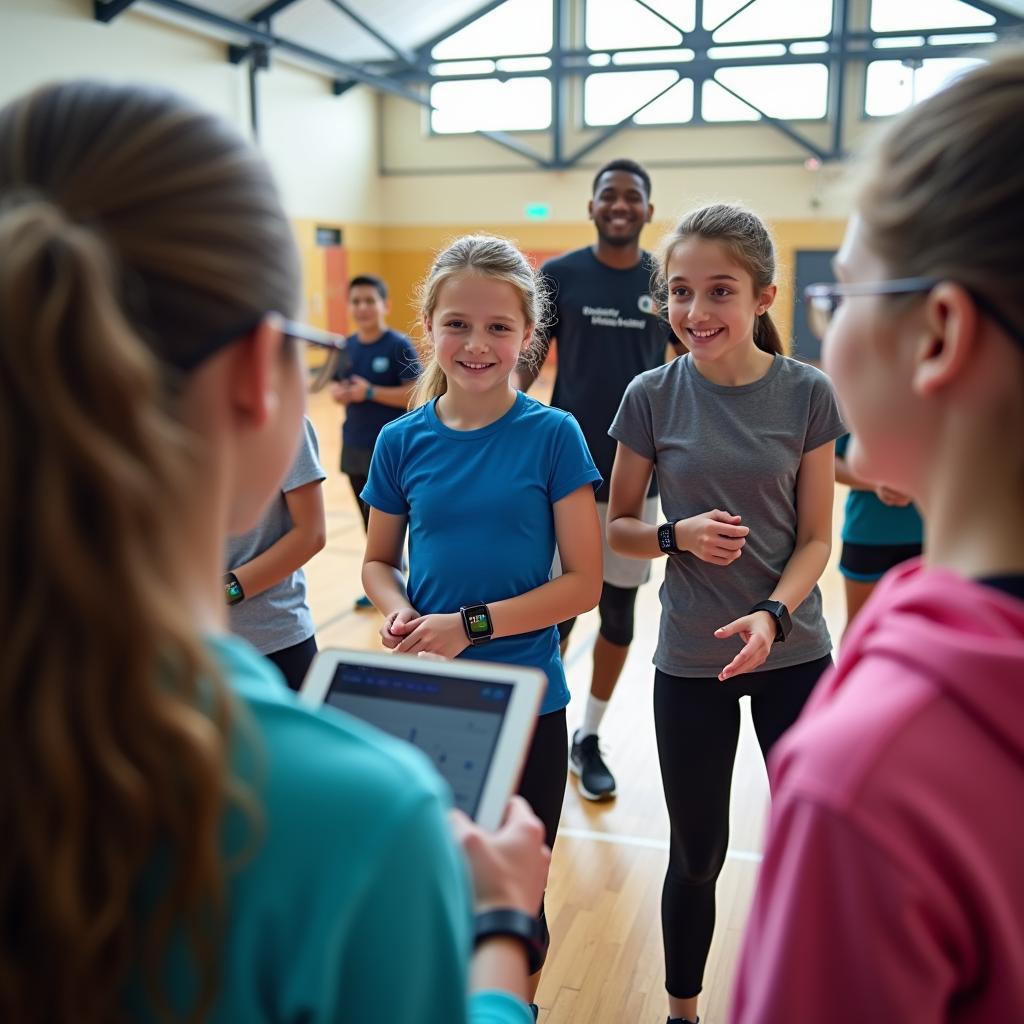 Học sinh đang sử dụng đồng hồ thông minh và thiết bị theo dõi sức khỏe trong giờ học thể dục tại trường học
Questions 1-13
Questions 1-5: Multiple Choice
Choose the correct letter, A, B, C or D.
-
According to the passage, wearable technology in PE classes primarily provides:
A. Entertainment for students
B. Real-time feedback on physical activity
C. Competition among schools
D. Replacement for traditional sports -
What is mentioned as a motivating factor for students using wearable devices?
A. Teacher supervision
B. Parental involvement
C. Gamification features like virtual badges
D. Reduced homework -
The main financial challenge for schools implementing wearable technology is:
A. Training teachers
B. Internet connectivity
C. The cost of purchasing devices
D. Maintenance expenses -
Privacy concerns regarding wearable technology relate to:
A. Device malfunctions
B. How student health data is stored and accessed
C. Communication between students
D. Equipment sharing -
The future of wearable technology in PE education is expected to involve:
A. Replacing teachers entirely
B. More sophisticated AI-powered feedback
C. Reducing PE class time
D. Eliminating traditional sports
Questions 6-9: True/False/Not Given
Do the following statements agree with the information given in the passage?
Write:
- TRUE if the statement agrees with the information
- FALSE if the statement contradicts the information
- NOT GIVEN if there is no information on this
- Fitness trackers can measure students’ heart rates during PE lessons.
- All schools have successfully purchased wearable devices through grants.
- Some schools partner with technology companies to obtain educational discounts.
- Wearable technology has been proven to improve students’ academic performance in other subjects.
Questions 10-13: Sentence Completion
Complete the sentences below.
Choose NO MORE THAN THREE WORDS from the passage for each answer.
- Unlike traditional assessment methods, wearable devices provide __ about student activity.
- Schools must obtain __ before implementing wearable technology programs.
- Some advanced schools use collected data to create __ fitness programs for individual students.
- Experts believe that maintaining a balance between technology and fostering __ is crucial for successful implementation.
PASSAGE 2 – The Pedagogical Impact of Wearable Devices on Physical Education
Độ khó: Medium (Band 6.0-7.5)
Thời gian đề xuất: 18-20 phút
The incorporation of wearable technology into physical education has prompted a fundamental reassessment of teaching methodologies and learning outcomes in this discipline. While the initial focus of wearable devices in PE centered on simple activity tracking, contemporary applications have evolved to encompass far more sophisticated pedagogical functions. This transformation has implications not only for how physical education is delivered but also for how students understand and engage with the concept of personal wellness.
Research conducted by educational institutions across multiple countries indicates that wearable technology facilitates a shift from extrinsic to intrinsic motivation in physical education. Traditional PE classes often relied on external rewards such as grades or teacher praise to encourage participation. However, the immediate feedback provided by wearable devices creates what researchers term a “biofeedback loop,” where students can observe the direct physiological consequences of their physical efforts. This self-monitoring capacity appears to foster greater autonomy in students’ approach to physical activity, as they become less dependent on teacher direction and more capable of self-regulating their exercise intensity and duration.
Furthermore, wearable technology has enabled PE teachers to implement more differentiated instruction strategies. In conventional PE settings, teachers typically designed activities for the class as a whole, making it challenging to accommodate the diverse fitness levels present in any student group. Contemporary wearable devices, however, provide teachers with granular data about each student’s cardiovascular response, activity intensity, and energy expenditure. Armed with this information, educators can create individualized activity plans that ensure all students work within their optimal heart rate zones, thereby maximizing the physiological benefits of PE classes while minimizing the risk of overexertion or underutilization.
The data analytics capabilities of modern wearable technology have also opened new avenues for student assessment. Rather than relying solely on skill-based evaluations or participation metrics, teachers can now assess students based on effort, improvement over time, and adherence to personalized fitness goals. This shift has proven particularly beneficial for students who may lack natural athletic ability but demonstrate consistent effort and commitment to their physical development. The longitudinal data collected by these devices provides evidence of progress that might not be immediately visible through traditional assessment methods, thus offering a more comprehensive picture of student achievement in physical education.
However, the integration of technology into PE has not been universally lauded by educators and researchers. Critics argue that the emphasis on quantifiable metrics may inadvertently promote a reductionist view of physical education that prioritizes numbers over the holistic benefits of movement and play. There are concerns that students may become overly fixated on achieving specific step counts or calorie targets, potentially developing an unhealthy relationship with exercise that views it primarily as a means to manipulate biometric data rather than as an inherently enjoyable and socially enriching activity.
Additionally, the socioeconomic implications of wearable technology in education warrant careful consideration. While some affluent schools can provide high-quality devices to all students, others must rely on cheaper alternatives or cannot afford to implement such programs at all. This digital divide risks exacerbating existing inequalities in educational access and outcomes. Students from privileged backgrounds who own personal wearable devices may arrive at PE classes with pre-existing digital literacy and comfort with technology, potentially giving them an advantage over peers who lack such resources. This disparity raises important questions about educational equity and the responsibility of institutions to ensure that technological innovations benefit all students equally.
The professional development needs of PE teachers represent another significant consideration in the successful implementation of wearable technology. Many physical education instructors received their training before such devices became prevalent and may lack the technical expertise required to effectively integrate them into their teaching. Schools must therefore invest in comprehensive training programs that not only teach teachers how to operate the devices but also how to interpret the data they generate and translate it into meaningful pedagogical interventions. Without adequate support, there is a risk that wearable technology will be underutilized or misapplied, failing to deliver on its pedagogical potential.
Looking forward, the evolution of wearable technology suggests that future devices will offer even more sophisticated biometric monitoring capabilities. Emerging technologies such as continuous glucose monitors and advanced sleep trackers could provide PE teachers with unprecedented insights into students’ overall health and wellness. However, as these capabilities expand, so too do the ethical considerations surrounding their use in educational settings. Schools will need to navigate complex questions about the appropriate boundaries of health monitoring in children and adolescents, ensuring that the pursuit of enhanced physical education does not come at the cost of student privacy or autonomy.
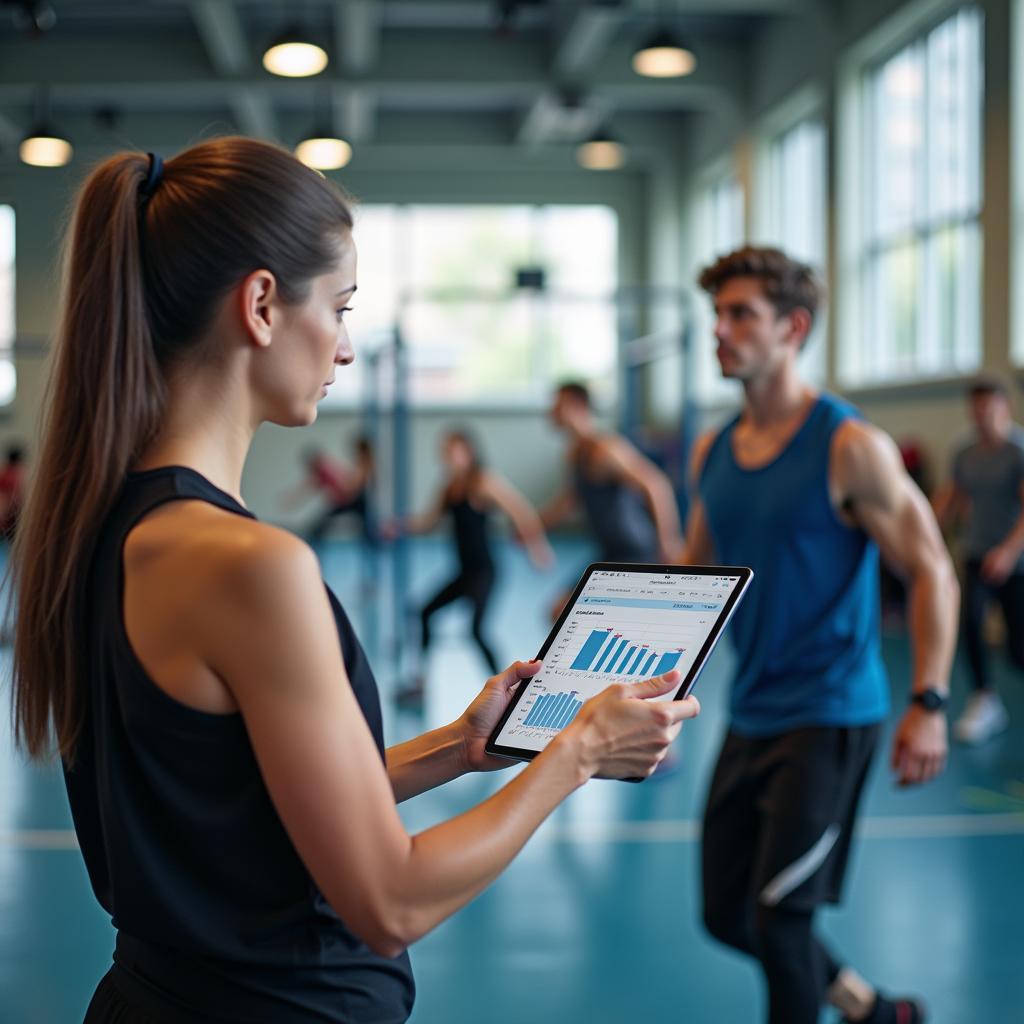 Giáo viên thể dục đang phân tích dữ liệu từ thiết bị đeo của học sinh trên máy tính bảng để cá nhân hóa chương trình giảng dạy
Questions 14-26
Questions 14-18: Yes/No/Not Given
Do the following statements agree with the views of the writer in the passage?
Write:
- YES if the statement agrees with the views of the writer
- NO if the statement contradicts the views of the writer
- NOT GIVEN if it is impossible to say what the writer thinks about this
- Wearable technology helps students develop more independence in regulating their physical activity.
- All PE teachers are enthusiastic about using wearable technology in their classes.
- Traditional assessment methods in PE were completely ineffective.
- The cost differences in wearable devices may worsen educational inequality.
- Future wearable technology will definitely be used in all schools worldwide.
Questions 19-23: Matching Information
Which paragraph contains the following information?
Write the correct letter, A-H.
Note: Paragraphs are labeled A-H in order of appearance
- A discussion of how wearable devices enable teachers to create personalized fitness plans
- Concerns about students developing an unhealthy focus on numerical data
- The need for teacher training programs to use wearable technology effectively
- Information about how wearable devices create a “biofeedback loop”
- The potential ethical issues arising from future monitoring capabilities
Questions 24-26: Summary Completion
Complete the summary below.
Choose NO MORE THAN TWO WORDS from the passage for each answer.
Wearable technology in PE classes has changed how teachers assess students. Instead of evaluating only skills and participation, teachers can now measure student 24. __ and track improvement over time. This is especially helpful for students who may not have 25. __ but show consistent commitment. The 26. __ collected by devices provides evidence of progress that traditional methods might miss.
PASSAGE 3 – Biometric Surveillance and the Future of Physical Education: Ethical and Theoretical Considerations
Độ khó: Hard (Band 7.0-9.0)
Thời gian đề xuất: 23-25 phút
The proliferation of wearable technology within educational contexts, particularly in the domain of physical education, represents more than a mere technological innovation; it constitutes a paradigmatic shift in the surveillance, assessment, and conceptualization of student bodies and physical competence. Drawing upon Foucauldian theories of biopower and disciplinary mechanisms, critical scholars have begun to interrogate the ways in which these devices function as instruments of bodily governance, transforming students into self-monitoring subjects whose physical activities are rendered visible, quantifiable, and subject to institutional scrutiny. This theoretical lens illuminates the complex power dynamics at play when educational institutions deploy wearable technologies to track, analyze, and intervene in students’ physical behaviors.
From a sociological perspective, the implementation of wearable devices in PE classes can be understood as part of a broader cultural phenomenon wherein the body is increasingly treated as a project requiring optimization through technological mediation. The neoliberal imperative toward self-improvement and personal responsibility for health aligns seamlessly with the quantified self-movement, which advocates for comprehensive data collection about bodily functions as a pathway to enhanced wellbeing. Within this ideological framework, wearable technology in schools serves to inculcate particular dispositions toward the body—ones that emphasize measurability, efficiency, and continuous enhancement. Students are thus socialized into a worldview that privileges objective metrics over subjective experiences of embodiment, potentially marginalizing alternative ways of understanding physical activity that emphasize pleasure, creativity, or social connection.
The epistemological assumptions underlying the use of wearable technology in physical education also warrant critical examination. These devices operate on the premise that physical competence and wellness can be adequately captured through biometric data—heart rates, step counts, caloric expenditure, and so forth. However, this reductionist approach necessarily elides numerous dimensions of physical education that resist quantification: the aesthetic pleasure of movement, the emotional regulation provided by physical activity, the development of kinesthetic awareness, and the social bonds formed through collaborative play and sport. By privileging that which can be measured, wearable technology may inadvertently devalue these ineffable yet crucial aspects of physical education, leading to a narrowed conception of what it means to be physically educated.
Moreover, the algorithmic processing of data generated by wearable devices introduces new forms of epistemic authority into the pedagogical relationship. When a device indicates that a student has failed to reach their target heart rate zone or has not accumulated sufficient moderate-to-vigorous physical activity, this technological verdict carries a weight of objectivity and scientific legitimacy that may supersede the student’s own phenomenological understanding of their physical exertion and embodied experience. This creates what some theorists term an “algorithmic pedagogy,” wherein human judgment—both that of the teacher and the student—becomes subordinated to machine-generated assessments. The ramifications of this shift extend beyond individual PE classes, potentially shaping students’ lifelong relationships with their bodies and with institutional authority more broadly.
The implications of continuous biometric monitoring for student autonomy and subjectivity represent perhaps the most philosophically vexing aspect of wearable technology in education. While proponents argue that these devices empower students by providing them with information about their bodies, critical theorists contend that such empowerment is illusory, representing instead a more insidious form of control whereby individuals are compelled to internalize regulatory norms and self-police their behaviors. This Foucauldian reading suggests that wearable technology functions as a contemporary manifestation of the panopticon—a mechanism through which individuals, aware that their activities are being monitored and recorded, modify their behaviors to conform to prescribed standards even in the absence of direct supervision. The internalization of this surveillant gaze may have profound effects on students’ sense of bodily autonomy and their capacity to develop authentic self-directed relationships with physical activity.
From a socio-technical systems perspective, the integration of wearable technology into PE education cannot be understood as a neutral insertion of tools into existing practices. Rather, it represents a reconfiguration of the entire pedagogical assemblage, involving changes to curriculum design, teacher-student interactions, assessment protocols, and the spatial organization of PE classes. The technology brings with it embedded values and assumptions about what constitutes appropriate physical education, often reflecting the commercial interests of device manufacturers and the ideological commitments of policymakers rather than the pedagogical wisdom of experienced PE teachers or the developmental needs of students. This colonization of educational practice by corporate actors raises important questions about who ultimately determines the purposes and methods of physical education in an increasingly technologically mediated landscape.
The question of data ownership and algorithmic transparency presents additional layers of complexity in the deployment of wearable technology in schools. When students’ biometric information is collected, stored, and analyzed, who retains proprietary rights over this data? Most commercial wearable devices operate through cloud-based platforms controlled by private corporations, raising concerns about data security, unauthorized access, and potential monetization of student health information. Furthermore, the algorithmic processes through which raw biometric data is transformed into actionable insights often function as “black boxes,” with their computational logic hidden from both students and teachers. This opacity prevents meaningful engagement with the epistemological frameworks shaping how physical activity is measured and evaluated, undermining the possibility of critical literacy regarding these technologies.
Looking to the future, the trajectory of wearable technology in physical education appears inextricably linked to broader debates about the role of artificial intelligence, predictive analytics, and personalized medicine in education. As devices become capable of not merely recording but predicting physical health outcomes and prescribing individualized interventions, the ethical stakes increase exponentially. The specter of deterministic thinking—wherein students are categorized and their futures circumscribed based on algorithmic predictions derived from their biometric data—poses serious challenges to egalitarian educational principles. Schools must therefore approach the implementation of such technologies with considerable caution, ensuring that they enhance rather than constrain the holistic development and flourishing of all students.
 Minh họa khái niệm về quyền riêng tư dữ liệu và đạo đức trong việc sử dụng công nghệ đeo tại trường học với hình ảnh biểu đồ dữ liệu và biểu tượng bảo mật
Questions 27-40
Questions 27-31: Multiple Choice
Choose the correct letter, A, B, C or D.
-
According to the passage, Foucauldian theory views wearable devices as:
A. Simple tools for measuring fitness
B. Instruments of bodily governance and surveillance
C. Entertainment devices for students
D. Replacements for traditional PE equipment -
The “quantified self-movement” mentioned in the passage emphasizes:
A. Social connections through sports
B. Traditional teaching methods
C. Comprehensive data collection about bodily functions
D. Reducing technology use in schools -
The term “algorithmic pedagogy” refers to:
A. Teaching students about algorithms
B. Machine-generated assessments superseding human judgment
C. Traditional teaching with computers
D. Programming classes in schools -
The passage suggests that wearable technology in PE may devalue:
A. All forms of physical activity
B. Teacher expertise completely
C. Aspects of PE that cannot be quantified like pleasure and social bonds
D. Student participation entirely -
According to the Foucauldian reading in the passage, wearable technology functions as:
A. A liberating force for students
B. A contemporary manifestation of the panopticon
C. A purely neutral educational tool
D. A replacement for teachers
Questions 32-36: Matching Features
Match each concern (32-36) with the correct theoretical perspective (A-G) mentioned in the passage.
Write the correct letter, A-G.
Theoretical Perspectives:
A. Sociological perspective
B. Epistemological assumptions
C. Algorithmic processing
D. Foucauldian theories
E. Socio-technical systems perspective
F. Data ownership concerns
G. Neoliberal imperative
- The body is treated as a project requiring optimization through technology
- Physical competence cannot be fully captured through biometric data alone
- Technology brings embedded commercial values into educational practice
- Students become self-monitoring subjects under institutional scrutiny
- Who retains proprietary rights over students’ biometric information
Questions 37-40: Short-answer Questions
Answer the questions below.
Choose NO MORE THAN THREE WORDS from the passage for each answer.
- What type of pleasure does the passage mention as being difficult to quantify in PE education?
- What term describes the awareness that some aspects of PE education cannot be easily measured?
- According to the passage, what do most commercial wearable devices use for data storage?
- What principles does the passage suggest could be challenged by deterministic algorithmic predictions?
3. Answer Keys – Đáp Án
PASSAGE 1: Questions 1-13
- B
- C
- C
- B
- B
- TRUE
- NOT GIVEN
- TRUE
- NOT GIVEN
- objective data
- parental consent
- individual/personalized
- lifelong love
PASSAGE 2: Questions 14-26
- YES
- NO
- NOT GIVEN
- YES
- NOT GIVEN
- C (Paragraph 3)
- E (Paragraph 5)
- G (Paragraph 7)
- B (Paragraph 2)
- H (Paragraph 8)
- effort
- natural athletic ability
- longitudinal data
PASSAGE 3: Questions 27-40
- B
- C
- B
- C
- B
- A
- B
- E
- D
- F
- aesthetic pleasure
- ineffable aspects
- cloud-based platforms
- egalitarian educational principles
4. Giải Thích Đáp Án Chi Tiết
Passage 1 – Giải Thích
Câu 1: B
- Dạng câu hỏi: Multiple Choice
- Từ khóa: wearable technology, PE classes, primarily provides
- Vị trí trong bài: Đoạn 2, dòng 1-2
- Giải thích: Câu văn trong bài viết rõ ràng: “The primary advantage of wearable technology in PE classes is its ability to provide real-time feedback”. Đây là paraphrase trực tiếp của đáp án B. Các đáp án khác không phải là lợi ích chính được nhấn mạnh.
Câu 2: C
- Dạng câu hỏi: Multiple Choice
- Từ khóa: motivating factor, students, wearable devices
- Vị trí trong bài: Đoạn 3, dòng 2-4
- Giải thích: Bài viết nói: “The gamification aspect of these devices, where students can earn virtual badges or compete with classmates in step challenges, has proven particularly effective in engaging students”. Đây chính xác là đáp án C.
Câu 3: C
- Dạng câu hỏi: Multiple Choice
- Từ khóa: financial challenge, schools, implementing
- Vị trí trong bài: Đoạn 4, dòng 1-3
- Giải thích: Đoạn văn nói rõ: “The most significant barrier is the cost involved in purchasing these devices”. Đây là paraphrase của đáp án C về chi phí mua thiết bị.
Câu 4: B
- Dạng câu hỏi: Multiple Choice
- Từ khóa: privacy concerns, wearable technology
- Vị trí trong bài: Đoạn 5, dòng 1-3
- Giải thích: Đoạn văn giải thích: “Privacy concerns also arise when schools collect data about students’ physical activities and health metrics. Parents and advocacy groups have raised questions about how this information is stored, who has access to it”. Điều này khớp với đáp án B.
Câu 5: B
- Dạng câu hỏi: Multiple Choice
- Từ khóa: future, wearable technology, PE education
- Vị trí trong bài: Đoạn 7, dòng 1-3
- Giải thích: Câu cuối đoạn 7 nói: “As artificial intelligence develops, these devices may be able to provide even more sophisticated feedback”. Đây là paraphrase của đáp án B về phản hồi dựa trên AI tinh vi hơn.
Câu 6: TRUE
- Dạng câu hỏi: True/False/Not Given
- Từ khóa: fitness trackers, measure, heart rates
- Vị trí trong bài: Đoạn 2, dòng 4-6
- Giải thích: Bài viết nói rõ: “a fitness tracker can accurately record the number of steps a student takes during a lesson, their heart rate zones”. Điều này xác nhận rằng câu phát biểu là đúng.
Câu 7: NOT GIVEN
- Dạng câu hỏi: True/False/Not Given
- Từ khóa: all schools, successfully purchased, grants
- Giải thích: Bài viết chỉ nói “Some schools have addressed this issue by applying for grants” nhưng không xác nhận rằng TẤT CẢ các trường đã thành công. Thông tin này không được đưa ra.
Câu 8: TRUE
- Dạng câu hỏi: True/False/Not Given
- Từ khóa: schools, partner, technology companies, educational discounts
- Vị trí trong bài: Đoạn 4, dòng 5-6
- Giải thích: Câu văn nói: “partnering with technology companies that offer educational discounts”. Điều này chính xác là thông tin trong câu phát biểu.
Câu 10: objective data
- Dạng câu hỏi: Sentence Completion
- Từ khóa: unlike traditional assessment, wearable devices provide
- Vị trí trong bài: Đoạn 2, dòng 2-3
- Giải thích: Bài viết nói: “Unlike traditional PE lessons where performance assessment was largely subjective and based on teacher observation, these devices offer objective data”. Cụm “objective data” là đáp án chính xác.
Câu 11: parental consent
- Dạng câu hỏi: Sentence Completion
- Từ khóa: schools must obtain, before implementing
- Vị trí trong bài: Đoạn 5, dòng 5-6
- Giải thích: Câu văn nói rõ: “Schools must ensure they have robust data protection policies in place and obtain parental consent before implementing wearable technology programs”.
Câu 12: individual/personalized
- Dạng câu hỏi: Sentence Completion
- Từ khóa: collected data, customize, fitness programs
- Vị trí trong bài: Đoạn 6, dòng 3-5
- Giải thích: Bài viết nói: “Some pioneering schools have even begun using the data collected from wearable devices to customize individual fitness programs”. Cả “individual” và “personalized” đều chấp nhận được vì ngay sau đó có “personalized approach”.
Câu 13: lifelong love
- Dạng câu hỏi: Sentence Completion
- Từ khóa: balance, technology, fostering
- Vị trí trong bài: Đoạn 7, dòng cuối
- Giải thích: Câu cuối cùng nói: “finding the right balance between leveraging technology and maintaining the fundamental goal of PE: fostering a lifelong love of physical activity”.
Passage 2 – Giải Thích
Câu 14: YES
- Dạng câu hỏi: Yes/No/Not Given
- Từ khóa: wearable technology, students develop independence, regulating physical activity
- Vị trí trong bài: Đoạn 2 (B), dòng 6-8
- Giải thích: Bài viết nói: “This self-monitoring capacity appears to foster greater autonomy in students’ approach to physical activity, as they become less dependent on teacher direction and more capable of self-regulating”. Đây chính xác là quan điểm của tác giả về việc học sinh phát triển tính độc lập.
Câu 15: NO
- Dạng câu hỏi: Yes/No/Not Given
- Từ khóa: all PE teachers, enthusiastic, wearable technology
- Vị trí trong bài: Đoạn 5 (E), dòng 1-2
- Giải thích: Bài viết nói: “However, the integration of technology into PE has not been universally lauded by educators and researchers. Critics argue…” Điều này cho thấy KHÔNG PHẢI tất cả giáo viên đều nhiệt tình, mâu thuẫn với câu phát biểu.
Câu 17: YES
- Dạng câu hỏi: Yes/No/Not Given
- Từ khóa: cost differences, wearable devices, worsen educational inequality
- Vị trí trong bài: Đoạn 6 (F), dòng 3-5
- Giải thích: Tác giả nói rõ: “This digital divide risks exacerbating existing inequalities in educational access and outcomes”. Từ “exacerbating” có nghĩa là làm tồi tệ hơn, tương đương với “worsen” trong câu hỏi.
Câu 19: C (Paragraph 3)
- Dạng câu hỏi: Matching Information
- Từ khóa: personalized fitness plans, teachers create
- Giải thích: Đoạn 3 (C) nói về “individualized activity plans” và “granular data” cho phép giáo viên tạo các kế hoạch cá nhân hóa cho từng học sinh.
Câu 20: E (Paragraph 5)
- Dạng câu hỏi: Matching Information
- Từ khóa: concerns, unhealthy focus, numerical data
- Giải thích: Đoạn 5 (E) thảo luận về “concerns that students may become overly fixated on achieving specific step counts or calorie targets, potentially developing an unhealthy relationship with exercise”.
Câu 21: G (Paragraph 7)
- Dạng câu hỏi: Matching Information
- Từ khóa: teacher training programs, use wearable technology effectively
- Giải thích: Đoạn 7 (G) nói về “professional development needs” và “comprehensive training programs” cho giáo viên thể dục.
Câu 22: B (Paragraph 2)
- Dạng câu hỏi: Matching Information
- Từ khóa: biofeedback loop, wearable devices create
- Giải thích: Đoạn 2 (B) giải thích khái niệm “biofeedback loop” được tạo ra bởi immediate feedback từ thiết bị.
Câu 23: H (Paragraph 8)
- Dạng câu hỏi: Matching Information
- Từ khóa: ethical issues, future monitoring capabilities
- Giải thích: Đoạn 8 (H) thảo luận về “ethical considerations” và “appropriate boundaries of health monitoring” với các công nghệ trong tương lai.
Câu 24: effort
- Dạng câu hỏi: Summary Completion
- Từ khóa: assess students, measure
- Vị trí trong bài: Đoạn 4, dòng 2-3
- Giải thích: Bài viết nói: “teachers can now assess students based on effort, improvement over time, and adherence to personalized fitness goals”.
Câu 25: natural athletic ability
- Dạng câu hỏi: Summary Completion
- Từ khóa: students who may not have, but show consistent commitment
- Vị trí trong bài: Đoạn 4, dòng 4-5
- Giải thích: Câu văn nói: “particularly beneficial for students who may lack natural athletic ability but demonstrate consistent effort and commitment”.
Câu 26: longitudinal data
- Dạng câu hỏi: Summary Completion
- Từ khóa: collected by devices, provides evidence of progress
- Vị trí trong bài: Đoạn 4, dòng 5-7
- Giải thích: Bài viết nói: “The longitudinal data collected by these devices provides evidence of progress that might not be immediately visible”.
Passage 3 – Giải Thích
Câu 27: B
- Dạng câu hỏi: Multiple Choice
- Từ khóa: Foucauldian theory, views wearable devices
- Vị trí trong bài: Đoạn 1, dòng 3-6
- Giải thích: Bài viết nói rõ: “critical scholars have begun to interrogate the ways in which these devices function as instruments of bodily governance, transforming students into self-monitoring subjects”. Đây chính xác là đáp án B về công cụ quản lý và giám sát cơ thể.
Câu 28: C
- Dạng câu hỏi: Multiple Choice
- Từ khóa: quantified self-movement, emphasizes
- Vị trí trong bài: Đoạn 2, dòng 4-6
- Giải thích: Đoạn văn giải thích: “the quantified self-movement, which advocates for comprehensive data collection about bodily functions as a pathway to enhanced wellbeing”. Đây là đáp án C.
Câu 29: B
- Dạng câu hỏi: Multiple Choice
- Từ khóa: algorithmic pedagogy, refers to
- Vị trí trong bài: Đoạn 4, dòng 5-8
- Giải thích: Bài viết định nghĩa: “This creates what some theorists term an ‘algorithmic pedagogy,’ wherein human judgment—both that of the teacher and the student—becomes subordinated to machine-generated assessments”. Đây chính xác là đáp án B.
Câu 30: C
- Dạng câu hỏi: Multiple Choice
- Từ khóa: wearable technology, may devalue
- Vị trí trong bài: Đoạn 3, dòng 5-9
- Giải thích: Đoạn văn nói: “By privileging that which can be measured, wearable technology may inadvertently devalue these ineffable yet crucial aspects of physical education” – đề cập đến pleasure, emotional regulation, và social bonds. Đây là đáp án C.
Câu 31: B
- Dạng câu hỏi: Multiple Choice
- Từ khóa: Foucauldian reading, wearable technology functions as
- Vị trí trong bài: Đoạn 5, dòng 4-7
- Giải thích: Bài viết nói rõ: “This Foucauldian reading suggests that wearable technology functions as a contemporary manifestation of the panopticon”. Đây chính xác là đáp án B.
Câu 32: A
- Dạng câu hỏi: Matching Features
- Từ khóa: body treated as project, optimization, technology
- Vị trí trong bài: Đoạn 2, dòng 1-3
- Giải thích: Đoạn này bắt đầu bằng “From a sociological perspective” và nói về việc cơ thể được coi là “a project requiring optimization through technological mediation”.
Câu 33: B
- Dạng câu hỏi: Matching Features
- Từ khóa: physical competence, cannot be fully captured, biometric data
- Vị trí trong bài: Đoạn 3, dòng 1-4
- Giải thích: Đoạn này bắt đầu bằng “The epistemological assumptions” và thảo luận về việc “this reductionist approach necessarily elides numerous dimensions of physical education that resist quantification”.
Câu 34: E
- Dạng câu hỏi: Matching Features
- Từ khóa: technology brings embedded commercial values, educational practice
- Vị trí trong bài: Đoạn 6, dòng 4-7
- Giải thích: Đoạn này nói về “socio-technical systems perspective” và đề cập: “The technology brings with it embedded values and assumptions… often reflecting the commercial interests of device manufacturers”.
Câu 35: D
- Dạng câu hỏi: Matching Features
- Từ khóa: students become self-monitoring subjects, institutional scrutiny
- Vị trí trong bài: Đoạn 1, dòng 5-6
- Giải thích: Đoạn đầu tiên sử dụng “Foucauldian theories” và nói về “transforming students into self-monitoring subjects whose physical activities are rendered visible, quantifiable, and subject to institutional scrutiny”.
Câu 36: F
- Dạng câu hỏi: Matching Features
- Từ khóa: who retains proprietary rights, biometric information
- Vị trí trong bài: Đoạn 7, dòng 1-3
- Giải thích: Đoạn này bắt đầu với “The question of data ownership” và hỏi: “When students’ biometric information is collected, stored, and analyzed, who retains proprietary rights over this data?”
Câu 37: aesthetic pleasure
- Dạng câu hỏi: Short-answer Questions
- Từ khóa: type of pleasure, difficult to quantify, PE education
- Vị trí trong bài: Đoạn 3, dòng 5-6
- Giải thích: Bài viết liệt kê “the aesthetic pleasure of movement” như một trong những khía cạnh khó đo lường.
Câu 38: ineffable aspects
- Dạng câu hỏi: Short-answer Questions
- Từ khóa: term describes, aspects cannot be easily measured
- Vị trí trong bài: Đoạn 3, dòng 7-8
- Giải thích: Bài viết sử dụng cụm “these ineffable yet crucial aspects of physical education” để mô tả những điều không thể đo lường.
Câu 39: cloud-based platforms
- Dạng câu hỏi: Short-answer Questions
- Từ khóa: commercial wearable devices, data storage
- Vị trí trong bài: Đoạn 7, dòng 3-4
- Giải thích: Câu văn nói: “Most commercial wearable devices operate through cloud-based platforms controlled by private corporations”.
Câu 40: egalitarian educational principles
- Dạng câu hỏi: Short-answer Questions
- Từ khóa: principles, challenged, deterministic algorithmic predictions
- Vị trí trong bài: Đoạn 8, dòng cuối
- Giải thích: Câu cuối cùng nói về “The specter of deterministic thinking… poses serious challenges to egalitarian educational principles”.
5. Từ Vựng Quan Trọng Theo Passage
Passage 1 – Essential Vocabulary
| Từ vựng | Loại từ | Phiên âm | Nghĩa tiếng Việt | Ví dụ từ bài | Collocation |
|---|---|---|---|---|---|
| wearable technology | noun phrase | /ˈweərəbl tekˈnɒlədʒi/ | công nghệ đeo được | wearable technology has gradually made its way into educational settings | wearable devices, wearable sensors |
| integration | noun | /ˌɪntɪˈɡreɪʃn/ | sự tích hợp, hội nhập | The integration of such technology represents a significant shift | full integration, seamless integration |
| real-time feedback | noun phrase | /ˈrɪəl taɪm ˈfiːdbæk/ | phản hồi thời gian thực | provide real-time feedback to both students and teachers | instant feedback, immediate feedback |
| subjective | adjective | /səbˈdʒektɪv/ | chủ quan | performance assessment was largely subjective | subjective opinion, subjective judgment |
| objective data | noun phrase | /əbˈdʒektɪv ˈdeɪtə/ | dữ liệu khách quan | these devices offer objective data about student activity | objective evidence, objective measurement |
| intensity | noun | /ɪnˈtensəti/ | cường độ, mức độ mạnh | the intensity of their physical activity | high intensity, low intensity |
| gamification | noun | /ˌɡeɪmɪfɪˈkeɪʃn/ | trò chơi hóa | The gamification aspect of these devices | gamification strategy, gamification element |
| implementation | noun | /ˌɪmplɪmenˈteɪʃn/ | sự thực hiện, triển khai | the implementation of wearable technology | successful implementation, effective implementation |
| financial constraints | noun phrase | /faɪˈnænʃl kənˈstreɪnts/ | hạn chế tài chính | financial constraints remain a major concern | budget constraints, economic constraints |
| privacy concerns | noun phrase | /ˈprɪvəsi kənˈsɜːnz/ | quan ngại về quyền riêng tư | Privacy concerns also arise when schools collect data | privacy issues, privacy protection |
| parental consent | noun phrase | /pəˈrentl kənˈsent/ | sự đồng ý của phụ huynh | obtain parental consent before implementing | written consent, informed consent |
| personalized approach | noun phrase | /ˈpɜːsənəlaɪzd əˈprəʊtʃ/ | phương pháp cá nhân hóa | This personalized approach represents a significant departure | individualized approach, tailored approach |
Passage 2 – Essential Vocabulary
| Từ vựng | Loại từ | Phiên âm | Nghĩa tiếng Việt | Ví dụ từ bài | Collocation |
|---|---|---|---|---|---|
| incorporation | noun | /ɪnˌkɔːpəˈreɪʃn/ | sự kết hợp, hợp nhất | The incorporation of wearable technology | incorporation into, incorporation of |
| pedagogical | adjective | /ˌpedəˈɡɒdʒɪkl/ | thuộc về sư phạm | sophisticated pedagogical functions | pedagogical approach, pedagogical method |
| intrinsic motivation | noun phrase | /ɪnˈtrɪnsɪk ˌməʊtɪˈveɪʃn/ | động lực nội tại | shift from extrinsic to intrinsic motivation | intrinsic value, intrinsic interest |
| biofeedback loop | noun phrase | /ˌbaɪəʊˈfiːdbæk luːp/ | vòng phản hồi sinh học | creates what researchers term a “biofeedback loop” | feedback mechanism, feedback system |
| physiological consequences | noun phrase | /ˌfɪziəˈlɒdʒɪkl ˈkɒnsɪkwənsɪz/ | hậu quả sinh lý | observe the direct physiological consequences | physiological effects, physiological response |
| self-regulating | adjective | /self ˈreɡjuleɪtɪŋ/ | tự điều chỉnh | more capable of self-regulating their exercise | self-monitoring, self-controlling |
| differentiated instruction | noun phrase | /ˌdɪfəˈrenʃieɪtɪd ɪnˈstrʌkʃn/ | giảng dạy phân hóa | implement more differentiated instruction strategies | differentiated learning, personalized instruction |
| granular data | noun phrase | /ˈɡrænjʊlə ˈdeɪtə/ | dữ liệu chi tiết | provide teachers with granular data | detailed data, fine-grained data |
| cardiovascular response | noun phrase | /ˌkɑːdiəʊˈvæskjʊlə rɪˈspɒns/ | phản ứng tim mạch | each student’s cardiovascular response | cardiovascular health, cardiovascular system |
| energy expenditure | noun phrase | /ˈenədʒi ɪkˈspendɪtʃə/ | tiêu hao năng lượng | activity intensity, and energy expenditure | calorie expenditure, physical expenditure |
| longitudinal data | noun phrase | /ˌlɒndʒɪˈtjuːdɪnl ˈdeɪtə/ | dữ liệu dài hạn | The longitudinal data collected by these devices | longitudinal study, longitudinal research |
| socioeconomic implications | noun phrase | /ˌsəʊsiəʊˌiːkəˈnɒmɪk ˌɪmplɪˈkeɪʃnz/ | hàm ý kinh tế xã hội | the socioeconomic implications of wearable technology | socioeconomic factors, socioeconomic status |
| digital divide | noun phrase | /ˈdɪdʒɪtl dɪˈvaɪd/ | khoảng cách số | This digital divide risks exacerbating | bridge the digital divide, digital inequality |
| educational equity | noun phrase | /ˌedjʊˈkeɪʃənl ˈekwəti/ | công bằng giáo dục | questions about educational equity | educational equality, equal access |
| professional development | noun phrase | /prəˈfeʃənl dɪˈveləpmənt/ | phát triển chuyên môn | The professional development needs of PE teachers | professional training, staff development |
Passage 3 – Essential Vocabulary
| Từ vựng | Loại từ | Phiên âm | Nghĩa tiếng Việt | Ví dụ từ bài | Collocation |
|---|---|---|---|---|---|
| proliferation | noun | /prəˌlɪfəˈreɪʃn/ | sự gia tăng nhanh | The proliferation of wearable technology | rapid proliferation, nuclear proliferation |
| paradigmatic shift | noun phrase | /ˌpærədɪɡˈmætɪk ʃɪft/ | sự chuyển dịch mô hình | constitutes a paradigmatic shift | paradigm shift, fundamental shift |
| biopower | noun | /ˈbaɪəʊpaʊə/ | quyền lực sinh học | Foucauldian theories of biopower | exercise biopower, biopower mechanisms |
| disciplinary mechanisms | noun phrase | /ˈdɪsəplɪnəri ˈmekənɪzmz/ | cơ chế kỷ luật | biopower and disciplinary mechanisms | disciplinary measures, control mechanisms |
| institutional scrutiny | noun phrase | /ˌɪnstɪˈtjuːʃənl ˈskruːtɪni/ | sự giám sát của tổ chức | subject to institutional scrutiny | public scrutiny, close scrutiny |
| neoliberal imperative | noun phrase | /ˌniːəʊˈlɪbərəl ɪmˈperətɪv/ | mệnh lệnh tân tự do | The neoliberal imperative toward self-improvement | neoliberal policies, neoliberal ideology |
| quantified self-movement | noun phrase | /ˈkwɒntɪfaɪd self ˈmuːvmənt/ | phong trào lượng hóa bản thân | aligns with the quantified self-movement | self-tracking, self-measurement |
| inculcate | verb | /ɪnˈkʌlkeɪt/ | thấm nhuần, giáo dục | serves to inculcate particular dispositions | inculcate values, inculcate beliefs |
| epistemological assumptions | noun phrase | /ɪˌpɪstɪməˈlɒdʒɪkl əˈsʌmpʃnz/ | các giả định nhận thức luận | The epistemological assumptions underlying | epistemological framework, epistemological basis |
| reductionist approach | noun phrase | /rɪˈdʌkʃənɪst əˈprəʊtʃ/ | cách tiếp cận giản lược | this reductionist approach necessarily elides | reductionist view, reductionist thinking |
| kinesthetic awareness | noun phrase | /ˌkɪnɪsˈθetɪk əˈweənəs/ | nhận thức vận động | the development of kinesthetic awareness | kinesthetic sense, bodily awareness |
| algorithmic processing | noun phrase | /ˌælɡəˈrɪðmɪk ˈprəʊsesɪŋ/ | xử lý thuật toán | the algorithmic processing of data | algorithmic decision-making, algorithmic analysis |
| epistemic authority | noun phrase | /ˌepɪˈstemɪk ɔːˈθɒrəti/ | thẩm quyền tri thức | introduces new forms of epistemic authority | epistemic power, knowledge authority |
| phenomenological understanding | noun phrase | /fɪˌnɒmɪnəˈlɒdʒɪkl ˌʌndəˈstændɪŋ/ | hiểu biết hiện tượng học | supersede the student’s phenomenological understanding | phenomenological experience, lived experience |
| algorithmic pedagogy | noun phrase | /ˌælɡəˈrɪðmɪk ˈpedəɡɒdʒi/ | sư phạm thuật toán | creates what theorists term “algorithmic pedagogy” | algorithmic teaching, automated instruction |
| panopticon | noun | /pæˈnɒptɪkɒn/ | nhà tù toàn cảnh (Panopticon) | contemporary manifestation of the panopticon | Foucault’s panopticon, surveillance mechanism |
| surveillant gaze | noun phrase | /sɜːˈveɪlənt ɡeɪz/ | cái nhìn giám sát | internalization of this surveillant gaze | surveillance society, watching eye |
| socio-technical systems | noun phrase | /ˌsəʊsiəʊ ˈteknɪkl ˈsɪstəmz/ | hệ thống kỹ thuật xã hội | From a socio-technical systems perspective | socio-technical approach, integrated systems |
| pedagogical assemblage | noun phrase | /ˌpedəˈɡɒdʒɪkl əˈsemblɪdʒ/ | tổ hợp sư phạm | reconfiguration of the entire pedagogical assemblage | educational assemblage, teaching arrangement |
| algorithmic transparency | noun phrase | /ˌælɡəˈrɪðmɪk trænsˈpærənsi/ | tính minh bạch thuật toán | data ownership and algorithmic transparency | algorithmic accountability, algorithm explainability |
| proprietary rights | noun phrase | /prəˈpraɪətəri raɪts/ | quyền sở hữu | who retains proprietary rights over this data | intellectual property, ownership rights |
| deterministic thinking | noun phrase | /dɪˌtɜːmɪˈnɪstɪk ˈθɪŋkɪŋ/ | tư duy định mệnh | The specter of deterministic thinking | deterministic view, fatalistic thinking |
| egalitarian principles | noun phrase | /ɪˌɡælɪˈteəriən ˈprɪnsəplz/ | nguyên tắc bình đẳng | challenges to egalitarian educational principles | egalitarian values, equality principles |
Kết bài
Chủ đề “How Wearable Technology Is Influencing Physical Education” không chỉ phản ánh xu hướng công nghệ hiện đại mà còn cho thấy sự giao thoa giữa giáo dục, sức khỏe và đổi mới công nghệ – một chủ đề đa chiều thường xuất hiện trong kỳ thi IELTS Reading. Ba passages trong bộ đề thi này đã cung cấp cho bạn góc nhìn toàn diện từ mức độ giới thiệu cơ bản đến phân tích học thuật sâu sắc về tác động của công nghệ đeo trong giáo dục thể chất.
Passage 1 giúp bạn làm quen với chủ đề thông qua các thông tin rõ ràng, dễ hiểu về cách thức hoạt động và lợi ích của công nghệ đeo trong lớp học. Passage 2 nâng cao độ phức tạp với việc phân tích tác động sư phạm, những thách thức về công bằng giáo dục và nhu cầu phát triển chuyên môn cho giáo viên. Passage 3 đưa bạn đến mức độ học thuật cao nhất với các lý thuyết xã hội học và triết học, yêu cầu khả năng phân tích và tư duy phản biện.
Đáp án chi tiết kèm theo giải thích đã chỉ ra cách xác định thông tin trong bài đọc, phương pháp paraphrase và các kỹ thuật làm bài cho từng dạng câu hỏi. Phần từ vựng được tổ chức theo từng passage không chỉ giúp bạn hiểu nghĩa từ mà còn cung cấp collocation và cách sử dụng trong ngữ cảnh học thuật.
Hãy luyện tập đề thi này nhiều lần để cải thiện kỹ năng quản lý thời gian, tăng tốc độ đọc hiểu và làm quen với các dạng câu hỏi IELTS Reading. Đừng quên rằng, thành công trong IELTS Reading không chỉ đến từ vốn từ vựng mà còn từ khả năng skimming, scanning và xác định paraphrase hiệu quả. Chúc bạn đạt được band điểm mục tiêu trong kỳ thi IELTS sắp tới!


