
Mở Bài
Chủ đề biến đổi khí hậu và ảnh hưởng của nó đến sản xuất lương thực là một trong những topic xuất hiện thường xuyên nhất trong IELTS Reading, đặc biệt từ Cambridge IELTS 12 trở đi. Theo thống kê của British Council, khoảng 15-20% đề thi IELTS Academic Reading có liên quan đến môi trường, khí hậu và nông nghiệp bền vững.
Bài viết này cung cấp cho bạn một bộ đề thi IELTS Reading hoàn chỉnh với 3 passages được thiết kế công phu, từ mức độ dễ đến khó, bám sát format thi thật 100%. Bạn sẽ được luyện tập với đầy đủ các dạng câu hỏi phổ biến như True/False/Not Given, Matching Headings, Summary Completion, Multiple Choice và nhiều dạng khác.
Đặc biệt, mỗi câu hỏi đều có đáp án chi tiết kèm giải thích cụ thể về vị trí thông tin trong bài, cách paraphrase và kỹ thuật làm bài hiệu quả. Bạn cũng sẽ được trang bị một kho từ vựng học thuật phong phú với hơn 40 từ vựng quan trọng, hoàn toàn có thể áp dụng không chỉ cho Reading mà còn cho Writing Task 2 về chủ đề môi trường.
Bộ đề này phù hợp cho học viên có trình độ từ band 5.0 trở lên, giúp bạn làm quen với văn phong học thuật và rèn luyện khả năng đọc hiểu nhanh trong điều kiện áp lực thời gian như thi thật.
1. Hướng Dẫn Làm Bài IELTS Reading
Tổng Quan Về IELTS Reading Test
IELTS Reading Test kéo dài 60 phút với 40 câu hỏi được chia đều cho 3 passages. Độ khó tăng dần từ Passage 1 (dễ nhất) đến Passage 3 (khó nhất). Điều quan trọng là bạn phải tự quản lý thời gian vì giám thị không nhắc nhở khi chuyển phần.
Phân bổ thời gian khuyến nghị:
- Passage 1: 15-17 phút (câu 1-13)
- Passage 2: 18-20 phút (câu 14-26)
- Passage 3: 23-25 phút (câu 27-40)
Lưu ý dành 2-3 phút cuối để chuyển đáp án vào Answer Sheet. Viết sai chính tả sẽ bị trừ điểm ngay cả khi ý đúng.
Các Dạng Câu Hỏi Trong Đề Này
Đề thi mẫu này bao gồm 7 dạng câu hỏi phổ biến nhất:
- True/False/Not Given – Xác định thông tin đúng/sai/không có trong bài
- Multiple Choice – Chọn đáp án đúng từ các phương án cho sẵn
- Matching Headings – Nối tiêu đề với đoạn văn phù hợp
- Summary Completion – Điền từ vào chỗ trống trong đoạn tóm tắt
- Matching Features – Nối thông tin với người/tổ chức được đề cập
- Sentence Completion – Hoàn thành câu với thông tin từ bài đọc
- Short-answer Questions – Trả lời câu hỏi ngắn với số từ giới hạn
Mỗi dạng đều yêu cầu kỹ năng đọc hiểu và chiến lược làm bài khác nhau, giúp bạn rèn luyện toàn diện.
2. IELTS Reading Practice Test
PASSAGE 1 – The Changing Face of Global Agriculture
Độ khó: Easy (Band 5.0-6.5)
Thời gian đề xuất: 15-17 phút
Agriculture has been the backbone of human civilization for thousands of years, but today it faces unprecedented challenges. Climate change is fundamentally altering the way we grow food, affecting crop yields, water availability, and farming practices worldwide. Understanding these changes is crucial for ensuring food security for the growing global population.
The most immediate impact of climate change on agriculture is the shift in temperature patterns. Over the past century, global average temperatures have risen by approximately 1.2 degrees Celsius, and this warming trend continues to accelerate. For many crops, even small temperature increases can have significant consequences. Wheat, one of the world’s most important staple crops, is particularly sensitive to heat during its flowering stage. Research conducted by agricultural scientists in Australia has shown that for every degree Celsius increase in temperature during this critical period, wheat yields can decline by up to 6%.
Rainfall patterns are also changing dramatically. Some regions are experiencing more frequent and severe droughts, while others face increased flooding. The Sahel region of Africa, which stretches across the continent just south of the Sahara Desert, has seen particularly erratic rainfall in recent decades. Farmers in this area traditionally relied on predictable rainy seasons to plant their crops, but these patterns have become increasingly unreliable. In contrast, parts of South Asia have experienced more intense monsoon rains, leading to waterlogging and soil erosion that damage crops and reduce agricultural productivity.
Water scarcity is becoming an increasingly critical issue for farmers worldwide. Agriculture currently accounts for approximately 70% of global freshwater withdrawals, and this demand is rising as populations grow. Irrigation systems that have sustained farming for generations are now under strain. The Colorado River in the United States, which provides water for millions of acres of farmland, has seen its flow decrease by nearly 20% over the past two decades due to reduced snowpack in the Rocky Mountains and increased evaporation rates caused by higher temperatures.
The impact of climate change extends beyond just temperature and water. Pest populations are also affected by changing climatic conditions. Warmer winters in many regions mean that insect pests that once died off during cold months now survive year-round. The fall armyworm, a destructive pest that damages maize crops, has expanded its range significantly in recent years. First identified in the Americas, it has now spread to Africa and Asia, threatening food production in dozens of countries. Farmers must now use more pesticides to protect their crops, increasing production costs and environmental concerns.
Soil quality, the foundation of productive agriculture, is deteriorating in many parts of the world. Higher temperatures accelerate the decomposition of organic matter in soil, reducing its fertility. Additionally, more intense rainfall events cause topsoil to wash away, taking with it essential nutrients. In the American Midwest, some estimates suggest that soil erosion rates have doubled in the past 50 years. This loss of fertile topsoil represents not just a current problem but a threat to long-term agricultural sustainability.
Despite these challenges, farmers and agricultural researchers are developing innovative solutions. Some farmers are adopting conservation agriculture practices, which include minimal soil disturbance, maintaining soil cover with crop residues, and rotating different crops. These methods help retain soil moisture, reduce erosion, and improve soil health. In Kenya, farmers using these techniques have reported yield increases of 20-30% even during drought years.
Crop diversification is another strategy gaining popularity. Rather than planting only one or two crops, farmers are growing a wider variety of plants that have different water and temperature requirements. This approach reduces risk because if one crop fails due to adverse weather, others may still succeed. Traditional indigenous crops that were abandoned during the Green Revolution are being rediscovered for their resilience to harsh conditions. Crops like millet, sorghum, and various types of pulses require less water than rice or wheat and can tolerate higher temperatures.
Technology is also playing an increasingly important role in helping agriculture adapt to climate change. Precision agriculture uses GPS, sensors, and data analysis to optimize the use of water, fertilizers, and pesticides. Farmers can now monitor soil moisture levels in real-time and apply water only where and when it is needed, significantly improving irrigation efficiency. In Israel, where water scarcity has always been a challenge, drip irrigation technology has enabled farmers to achieve high productivity with minimal water use. Similar systems are now being adopted in water-stressed regions around the world, particularly in India and parts of Africa.
Looking ahead, the relationship between climate change and food production will only become more critical. The United Nations projects that global food production will need to increase by 70% by 2050 to feed a population expected to reach nearly 10 billion. Achieving this goal while dealing with the impacts of climate change will require continued innovation, investment in agricultural research, and international cooperation. The choices we make today about how we grow our food will determine whether future generations have enough to eat.
Questions 1-13
Questions 1-5: True/False/Not Given
Do the following statements agree with the information given in the passage?
Write:
- TRUE if the statement agrees with the information
- FALSE if the statement contradicts the information
- NOT GIVEN if there is no information on this
- Global average temperatures have increased by more than one degree in the last hundred years.
- Wheat production decreases by exactly 6% for each degree of temperature increase at any growth stage.
- The Sahel region has experienced more predictable rainfall patterns in recent decades.
- Agriculture uses the majority of the world’s freshwater resources.
- The fall armyworm originated in Africa before spreading to other continents.
Questions 6-9: Multiple Choice
Choose the correct letter, A, B, C, or D.
-
According to the passage, what percentage has the Colorado River’s flow decreased by?
- A) 10%
- B) 15%
- C) 20%
- D) 25%
-
What has happened to insect pests due to warmer winters?
- A) They have become less destructive
- B) They now survive throughout the year
- C) They have moved to colder regions
- D) They have decreased in number
-
In the American Midwest, soil erosion rates have:
- A) remained stable
- B) decreased slightly
- C) increased by 50%
- D) doubled
-
Kenyan farmers using conservation agriculture have reported yield increases of:
- A) 10-15%
- B) 20-30%
- C) 40-50%
- D) more than 50%
Questions 10-13: Sentence Completion
Complete the sentences below.
Choose NO MORE THAN TWO WORDS from the passage for each answer.
- Conservation agriculture practices help improve __ and reduce soil erosion.
- Growing a variety of crops with different needs is called __.
- Crops such as millet and sorghum were rediscovered for their ability to survive __.
- In Israel, __ technology has allowed farmers to achieve high yields despite limited water.
PASSAGE 2 – Adaptation Strategies in Modern Agriculture
Độ khó: Medium (Band 6.0-7.5)
Thời gian đề xuất: 18-20 phút
The global agricultural sector stands at a critical juncture. As anthropogenic climate change intensifies, the resilience and adaptability of food production systems are being tested in ways never before experienced. The Intergovernmental Panel on Climate Change (IPCC) has unequivocally stated that agricultural productivity in many regions will decline substantially if current warming trends continue unabated. However, this grim prognosis has catalyzed a remarkable wave of innovation and strategic adaptation across the farming community worldwide.
A. The Role of Genetic Innovation
One of the most promising avenues for climate adaptation lies in genetic modification and advanced plant breeding techniques. Scientists are developing crop varieties with enhanced tolerance to environmental stresses such as drought, heat, salinity, and flooding. The International Rice Research Institute (IRRI) in the Philippines has successfully developed submergence-tolerant rice varieties that can survive underwater for up to two weeks—a crucial adaptation for regions prone to flooding. These varieties, collectively known as Swarna-Sub1, have been adopted by millions of farmers across South and Southeast Asia, preventing crop losses that previously devastated farming communities during monsoon floods.
Similarly, researchers have made significant strides in developing drought-resistant maize. The Water Efficient Maize for Africa (WEMA) project has produced varieties that maintain yields even when rainfall is 20-30% below normal levels. Field trials across Kenya, Uganda, and Mozambique have demonstrated yield advantages of 20-35% compared to conventional varieties under drought conditions. These genetically improved crops represent a biotechnological intervention that directly addresses the climatic variability increasingly characteristic of agricultural regions.
B. Precision Agriculture and Data-Driven Farming
The integration of digital technologies into farming practices has revolutionized how farmers respond to environmental challenges. Remote sensing via satellites and drones enables real-time monitoring of crop health, soil moisture, and nutrient deficiencies across vast areas. This information, when combined with predictive analytics and machine learning algorithms, allows farmers to make informed decisions about irrigation scheduling, fertilizer application, and pest management.
Variable rate technology (VRT) represents a particularly significant advancement. Rather than applying water, fertilizers, or pesticides uniformly across entire fields, VRT systems adjust inputs based on the specific needs of different areas within a field. This site-specific management approach not only improves resource efficiency but also reduces environmental pollution. Studies from the American Midwest have shown that precision agriculture techniques can reduce water usage by 20-40% while maintaining or even increasing yields.
The proliferation of Internet of Things (IoT) devices in agriculture has further enhanced farmers’ ability to monitor and respond to changing conditions. Soil sensors continuously measure moisture, temperature, and nutrient levels, transmitting data to farmers’ smartphones in real-time. Automated irrigation systems can then adjust water delivery based on actual plant needs rather than fixed schedules, dramatically improving water use efficiency. In California’s Central Valley, where groundwater depletion has become a critical issue, such technologies are being rapidly adopted as both an economic and environmental necessity.
C. Agroecological Approaches and Ecosystem Services
Beyond technological solutions, there is growing recognition of the value of agroecological practices that work with natural ecosystems rather than against them. Agroforestry—the integration of trees with crops or livestock—provides multiple benefits for climate adaptation. Trees offer shade that reduces heat stress on crops and animals, their roots prevent soil erosion, and they increase carbon sequestration, helping to mitigate climate change itself. In the Sahel region, where desertification has long threatened livelihoods, farmer-managed natural regeneration of trees has transformed degraded landscapes into productive agroforestry systems, increasing food production and resilience.
Integrated pest management (IPM) strategies that rely on natural predators and biological controls rather than synthetic pesticides are proving more resilient to climate variability. As pest populations shift in response to changing temperatures, IPM’s flexible, ecosystem-based approach adapts more readily than rigid chemical-dependent systems. Research from rice-growing regions of Asia has demonstrated that farms using IPM maintain more stable yields across varying climatic conditions compared to conventional farms.
Soil health has emerged as perhaps the most critical factor in agricultural resilience. Practices that build soil organic matter—such as cover cropping, composting, and reduced tillage—improve soil’s capacity to retain water and nutrients. Healthy soils with high organic content can hold up to 20 times their weight in water, providing a crucial buffer during droughts. Furthermore, such soils support diverse microbial communities that enhance nutrient cycling and disease suppression, reducing dependence on external inputs.
D. Policy Frameworks and Financial Mechanisms
Effective adaptation requires supportive policy environments and adequate financing. Many governments have established climate-smart agriculture programs that provide technical assistance and financial incentives for farmers to adopt adaptive practices. The Green Climate Fund, established under the United Nations Framework Convention on Climate Change, channels international climate finance to developing countries, supporting projects that help smallholder farmers build resilience.
Agricultural insurance schemes are being redesigned to address climate risks. Index-based insurance, which pays out based on objective weather data rather than individual farm assessments, offers a more efficient way to protect farmers from climate-related losses. In Ethiopia, a program providing insurance against drought has enabled farmers to invest in improved seeds and fertilizers without fear of losing everything in a bad year, demonstrating how risk mitigation mechanisms can facilitate adaptation.
E. Knowledge Systems and Farmer Networks
The dissemination of climate adaptation knowledge through farmer-to-farmer networks and participatory research has proven highly effective. Farmers themselves are often the best innovators, developing locally appropriate solutions through experimentation and traditional knowledge. Farmer field schools, pioneered in Asia and now spreading globally, provide venues where farmers collectively learn about new techniques, share experiences, and adapt practices to local conditions.
Indigenous and traditional knowledge systems offer valuable insights for climate adaptation. Many traditional farming practices—such as intercropping, maintaining crop genetic diversity, and using local seed varieties—inherently provide resilience to environmental variability. The challenge lies in integrating this traditional wisdom with modern scientific knowledge to create hybrid approaches that combine the best of both worlds.
The path forward requires a multifaceted strategy that combines technological innovation, ecological wisdom, supportive policies, and farmer empowerment. No single solution will suffice; rather, successful adaptation will emerge from context-specific combinations of approaches tailored to local conditions, resources, and cultures. As climate change continues to reshape agricultural landscapes, the sector’s capacity to adapt will largely determine humanity’s ability to feed itself in the decades ahead.
Questions 14-26
Questions 14-19: Matching Headings
The passage has five paragraphs, A-E.
Choose the correct heading for each paragraph from the list of headings below.
List of Headings:
- i. Financial support systems for climate adaptation
- ii. Traditional farming wisdom meets modern science
- iii. Breeding plants for a changing climate
- iv. The economics of agricultural transformation
- v. Working with nature to build resilience
- vi. Digital revolution in farm management
- vii. Government regulations and farmer rights
- viii. International trade and food security
- Paragraph A
- Paragraph B
- Paragraph C
- Paragraph D
- Paragraph E
Question 19: Which heading best describes the main topic of the entire passage?
- A) The failure of modern agriculture
- B) Multiple approaches to agricultural adaptation
- C) Technology versus traditional farming
- D) Climate change predictions
Questions 20-23: Summary Completion
Complete the summary below.
Choose NO MORE THAN TWO WORDS from the passage for each answer.
The Swarna-Sub1 rice varieties developed by IRRI can survive being covered by water for as long as 20) __. In Africa, the WEMA project has created maize that can tolerate significantly reduced rainfall, showing yield improvements of up to 21) __ in drought conditions. Precision agriculture uses 22) __ to monitor crops from above, while soil sensors measure various conditions and send information to farmers via their phones. In terms of ecological approaches, 23) __ combines trees with agricultural production, providing shade and preventing soil degradation.
Questions 24-26: Matching Features
Match the following benefits with the correct practice or technology.
Practices/Technologies:
- A) Variable rate technology
- B) Agroforestry
- C) Index-based insurance
Benefits:
24. Applies agricultural inputs differently across various parts of a field
25. Protects farmers financially using weather measurements rather than farm inspections
26. Increases carbon storage while providing protection for crops
PASSAGE 3 – The Systemic Transformation of Global Food Systems
Độ khó: Hard (Band 7.0-9.0)
Thời gian đề xuất: 23-25 phút
The nexus between climate change and food production represents one of the most complex and consequential challenges confronting contemporary civilization. While much attention has been devoted to direct biophysical impacts—altered precipitation regimes, temperature extremes, and shifting agro-ecological zones—a more nuanced understanding requires examining the systemic and cascading effects that permeate entire food systems. These encompass not merely primary production but the intricate web of processing, distribution, consumption, and waste that collectively determine food security outcomes.
The concept of food systems has gained analytical traction precisely because it captures the multi-dimensional and interconnected nature of how societies feed themselves. Climate change impacts reverberate throughout these systems in ways that are often non-linear and characterized by feedback loops and threshold effects. For instance, heat stress does not simply reduce crop yields in isolation; it also diminishes the nutritional quality of harvested grains, particularly their protein content and micronutrient density. Research published in Nature Climate Change demonstrated that elevated atmospheric CO₂ concentrations—a primary driver of global warming—reduce the zinc, iron, and protein content of staple cereals by 3-17%. This phenomenon, termed hidden hunger, poses profound implications for populations already experiencing micronutrient deficiencies, particularly in South Asia and Sub-Saharan Africa where cereal-based diets predominate.
The spatiotemporal heterogeneity of climate impacts introduces profound inequalities both within and between nations. Tropical and subtropical regions, where agricultural productivity is already constrained by heat and water stress, face the most severe projected declines—precisely the regions where population growth and food demand are rising most rapidly. Conversely, some temperate zones may experience temporary productivity gains from longer growing seasons and CO₂ fertilization effects, though these benefits are likely to be transient and ultimately outweighed by negative impacts as warming intensifies. This geographical asymmetry exacerbates existing patterns of inequality and may precipitate increased rural-urban migration and cross-border displacement, phenomena already observable in regions like Central America’s Dry Corridor where recurrent droughts have contributed to livelihood insecurity and outmigration.
The adaptive capacity of different farming systems varies dramatically, influenced by factors including economic resources, technological access, institutional support, and social capital. Industrial agricultural systems in developed nations possess greater financial and technological resources to invest in adaptation—sophisticated irrigation infrastructure, climate-controlled storage facilities, crop insurance schemes, and access to improved germplasm. However, their reliance on high external inputs and relative monoculture may render them vulnerable to supply chain disruptions and limit their agrobiodiversity—a critical resource for adaptation.
Conversely, the world’s estimated 500 million smallholder farms, which produce approximately 80% of food consumed in Asia and Sub-Saharan Africa, face severe adaptation constraints. Limited access to credit, extension services, improved seeds, and climate information systems hampers their capacity to implement adaptive strategies. Yet paradoxically, many smallholder systems maintain higher levels of functional diversity and traditional ecological knowledge that may prove invaluable for adaptation. The challenge lies in creating enabling conditions—through tenure security, market access, participatory research, and climate services—that allow smallholders to leverage these assets while accessing beneficial innovations.
The livestock sector merits particular attention given its dual role as both contributor to and victim of climate change. Livestock production generates approximately 14.5% of anthropogenic greenhouse gas emissions, primarily through enteric fermentation in ruminants and manure management. Simultaneously, livestock are highly vulnerable to heat stress, which reduces feed conversion efficiency, reproductive performance, and increases disease susceptibility. The sector’s transformation toward sustainability requires multifaceted interventions including breed selection for heat tolerance, improved feeding strategies to reduce methane emissions, rotational grazing systems that sequester carbon in grasslands, and potentially reduced consumption of ruminant products in favor of less emission-intensive protein sources.
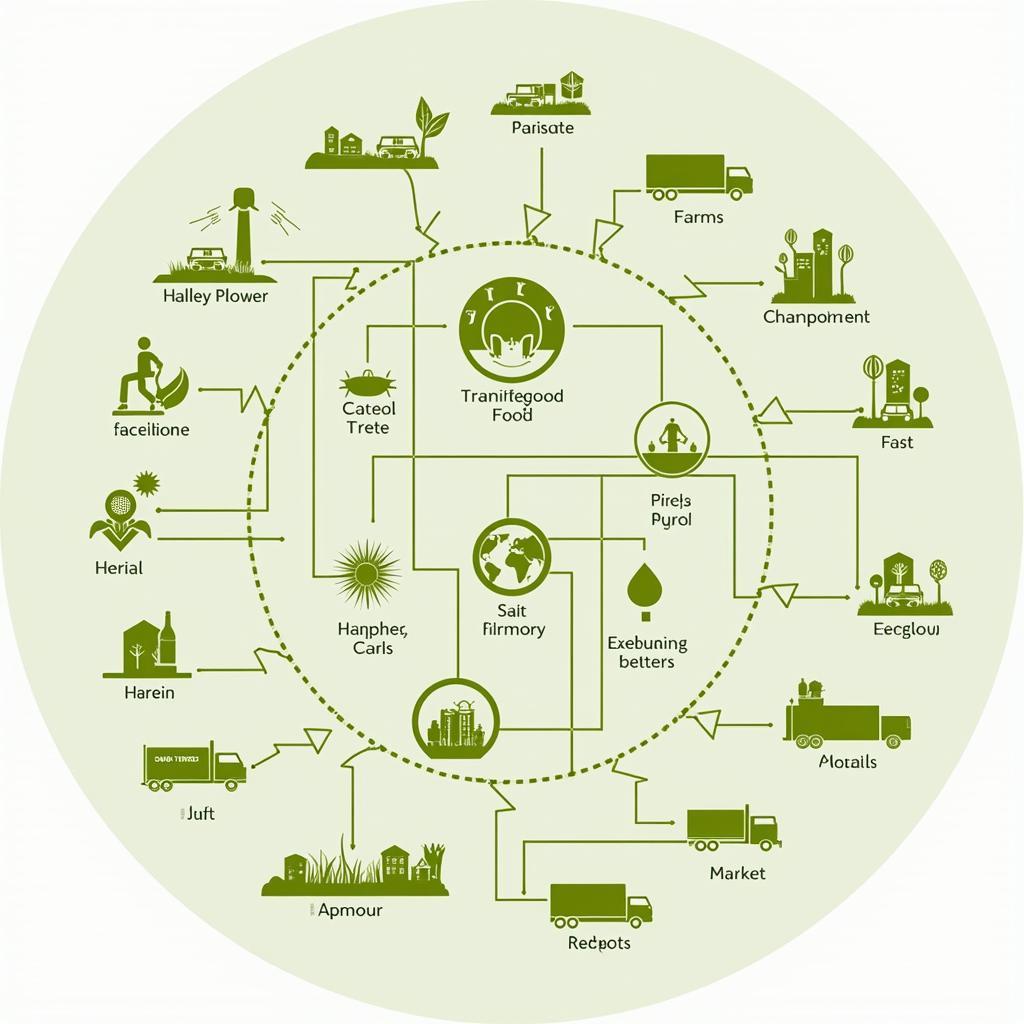 Sơ đồ hệ thống lương thực toàn cầu chịu tác động biến đổi khí hậu trong IELTS Reading
Marine and freshwater ecosystems, which provide crucial protein sources for billions, face concurrent stresses from climate change and overexploitation. Ocean warming and acidification are altering fish species distribution and abundance, with populations shifting poleward and to deeper waters. Coral reef ecosystems, which support fisheries providing livelihoods for over 500 million people, face existential threats from bleaching events triggered by marine heatwaves. The cryosphere’s decline—shrinking glaciers and altered snowpack—threatens freshwater availability for irrigation in regions dependent on glacial meltwater, including the Indo-Gangetic Plain, home to over one billion people. These interconnections between terrestrial and aquatic systems underscore the necessity of integrated water resource management that balances agricultural, domestic, and ecological water needs.
The political economy of food systems transformation poses perhaps the most formidable obstacles to effective adaptation and mitigation. Powerful vested interests—including agrochemical corporations, large-scale agribusiness, and fossil fuel industries—benefit from the status quo and possess substantial capacity to influence policy through lobbying and regulatory capture. Agricultural subsidies in many countries continue to incentivize practices that exacerbate climate change, such as monocropping, excessive agrochemical use, and conversion of carbon-rich ecosystems for agricultural expansion. Redirecting these perverse incentives toward agroecological transitions requires political will that is often lacking, particularly when short-term economic considerations outweigh long-term sustainability imperatives.
Trade liberalization and global value chains have created efficiencies but also vulnerabilities. The COVID-19 pandemic starkly illustrated how disruptions can cascade through interconnected food systems, causing simultaneous supply shocks and demand contractions. Climate change introduces additional systemic risks: extreme weather events can disable critical infrastructure like ports and transportation networks, while synchronous production failures across major producing regions—increasingly likely as climate extremes become more frequent—could trigger price spikes and food price volatility with severe consequences for food-importing nations and vulnerable populations.
Transformative adaptation of food systems necessitates paradigmatic shifts in how societies conceptualize and govern food production, distribution, and consumption. This extends beyond technical and managerial solutions to embrace fundamental questions about dietary patterns, food waste, land tenure, and the rights-based dimensions of food security. The agroecology movement, for instance, advocates for farming systems that are simultaneously productive, ecologically sound, economically viable, and socially just—a holistic vision that challenges the productivist paradigm that has dominated agricultural development since the Green Revolution.
Scenario analyses conducted by organizations such as the Food and Agriculture Organization and the International Food Policy Research Institute suggest that meeting food security goals under climate change will require mitigation and adaptation in tandem. Agricultural systems must simultaneously increase productivity on existing farmland, reduce their environmental footprint, and build resilience to climate variability. Achieving this triple objective demands unprecedented levels of investment in agricultural research, institutional innovation, and international cooperation. Moreover, it requires recognizing food security not merely as a technical challenge but as a moral imperative that implicates equity, justice, and the intergenerational responsibilities inherent in sustainable development.
The trajectory of food systems over the coming decades will profoundly shape human welfare and planetary health. Whether societies navigate this transition successfully or succumb to Malthusian crises depends on choices made today regarding resource allocation, governance structures, and societal values. The scientific evidence is unambiguous: business-as-usual pathways are untenable. What remains uncertain is whether humanity possesses the collective wisdom and political capacity to implement the systemic transformations that evidence and ethics demand.
Questions 27-40
Questions 27-31: Yes/No/Not Given
Do the following statements agree with the claims of the writer in the passage?
Write:
- YES if the statement agrees with the claims of the writer
- NO if the statement contradicts the claims of the writer
- NOT GIVEN if it is impossible to say what the writer thinks about this
- The reduction in nutritional quality of crops due to climate change affects all types of food equally.
- Tropical regions will experience more severe negative impacts on agriculture than temperate zones.
- Industrial agricultural systems are more vulnerable than smallholder systems because of their lack of diversity.
- The livestock sector contributes significantly to greenhouse gas emissions while being affected by climate change.
- All governments have successfully redirected agricultural subsidies toward sustainable practices.
Questions 32-36: Multiple Choice
Choose the correct letter, A, B, C, or D.
-
According to the passage, elevated CO₂ levels affect staple cereals by:
- A) increasing their size but not nutritional value
- B) reducing their protein and micronutrient content
- C) making them more resistant to pests
- D) improving their taste and texture
-
Smallholder farmers face adaptation challenges primarily due to:
- A) their lack of traditional knowledge
- B) excessive access to technology
- C) limited access to resources and support services
- D) their preference for industrial methods
-
The passage suggests that coral reef ecosystems are important because they:
- A) control ocean temperatures
- B) support fisheries for millions of people
- C) produce most of the world’s oxygen
- D) prevent coastal erosion only
-
The author’s view on trade liberalization and global value chains is that they have:
- A) only created problems
- B) solved all food distribution issues
- C) created both efficiencies and vulnerabilities
- D) had no significant impact
-
The agroecology movement advocates for systems that are:
- A) focused solely on maximizing production
- B) productive, ecological, economical, and socially just
- C) based entirely on traditional methods
- D) independent of environmental considerations
Questions 37-40: Short-answer Questions
Answer the questions below.
Choose NO MORE THAN THREE WORDS from the passage for each answer.
- What term describes the phenomenon where crops have reduced nutritional content despite adequate calories?
- Which geographical area is mentioned as experiencing drought-driven migration?
- What percentage of food consumed in Asia and Sub-Saharan Africa is produced by smallholder farms?
- According to scenario analyses, what two approaches must be implemented together to meet food security goals?
3. Answer Keys – Đáp Án
PASSAGE 1: Questions 1-13
- TRUE
- FALSE
- FALSE
- TRUE
- FALSE
- C
- B
- D
- B
- soil health
- crop diversification
- harsh conditions
- drip irrigation
PASSAGE 2: Questions 14-26
- iii
- vi
- v
- i
- ii
- B
- two weeks
- 35% / thirty-five percent
- remote sensing
- agroforestry
- A
- C
- B
PASSAGE 3: Questions 27-40
- NO
- YES
- NOT GIVEN
- YES
- NO
- B
- C
- B
- C
- B
- hidden hunger
- (Central America’s) Dry Corridor
- 80% / eighty percent
- mitigation and adaptation
4. Giải Thích Đáp Án Chi Tiết
Passage 1 – Giải Thích
Câu 1: TRUE
- Dạng câu hỏi: True/False/Not Given
- Từ khóa: global average temperatures, increased, more than one degree, last hundred years
- Vị trí trong bài: Đoạn 2, dòng 1-3
- Giải thích: Bài đọc nói rõ “global average temperatures have risen by approximately 1.2 degrees Celsius” trong thế kỷ qua. 1.2 độ C lớn hơn một độ, do đó câu này đúng. Paraphrase: “increased by more than one degree” = “risen by approximately 1.2 degrees”.
Câu 2: FALSE
- Dạng câu hỏi: True/False/Not Given
- Từ khóa: wheat production, exactly 6%, each degree, any growth stage
- Vị trí trong bài: Đoạn 2, dòng 6-8
- Giải thích: Bài viết nói “for every degree Celsius increase in temperature during this critical period (flowering stage), wheat yields can decline by up to 6%”. Từ khóa quan trọng là “during this critical period” (chỉ giai đoạn ra hoa) và “up to” (tối đa), không phải “exactly” và “at any growth stage”. Câu này sai vì thông tin không chính xác.
Câu 3: FALSE
- Dạng câu hỏi: True/False/Not Given
- Từ khóa: Sahel region, more predictable rainfall patterns, recent decades
- Vị trí trong bài: Đoạn 3, dòng 3-6
- Giải thích: Bài đọc nói rõ “these patterns have become increasingly unreliable“, nghĩa là mưa ngày càng không dự đoán được, trái ngược với “more predictable” trong câu hỏi.
Câu 4: TRUE
- Dạng câu hỏi: True/False/Not Given
- Từ khóa: agriculture, majority, world’s freshwater resources
- Vị trí trong bài: Đoạn 4, dòng 1-2
- Giải thích: Bài viết nói “Agriculture currently accounts for approximately 70% of global freshwater withdrawals”. 70% chính là “majority” (đa số). Paraphrase: “accounts for 70%” = “uses the majority”.
Câu 5: FALSE
- Dạng câu hỏi: True/False/Not Given
- Từ khóa: fall armyworm, originated in Africa
- Vị trí trong bài: Đoạn 5, dòng 5-7
- Giải thích: Bài đọc nói rõ “First identified in the Americas, it has now spread to Africa and Asia”. Fall armyworm xuất phát từ châu Mỹ, không phải châu Phi.
Câu 6: C (20%)
- Dạng câu hỏi: Multiple Choice
- Từ khóa: Colorado River, flow decreased
- Vị trí trong bài: Đoạn 4, dòng 5-7
- Giải thích: Câu trong bài: “has seen its flow decrease by nearly 20% over the past two decades”. Đáp án chính xác là C.
Câu 7: B (They now survive throughout the year)
- Dạng câu hỏi: Multiple Choice
- Từ khóa: insect pests, warmer winters
- Vị trí trong bài: Đoạn 5, dòng 2-4
- Giải thích: “Warmer winters in many regions mean that insect pests that once died off during cold months now survive year-round“. Paraphrase: “survive year-round” = “survive throughout the year”.
Câu 8: D (doubled)
- Dạng câu hỏi: Multiple Choice
- Từ khóa: American Midwest, soil erosion rates
- Vị trí trong bài: Đoạn 6, dòng 5-6
- Giải thích: “In the American Midwest, some estimates suggest that soil erosion rates have doubled in the past 50 years.”
Câu 9: B (20-30%)
- Dạng câu hỏi: Multiple Choice
- Từ khóa: Kenyan farmers, conservation agriculture, yield increases
- Vị trí trong bài: Đoạn 7, dòng 5-6
- Giải thích: “In Kenya, farmers using these techniques have reported yield increases of 20-30% even during drought years.”
Câu 10: soil health
- Dạng câu hỏi: Sentence Completion
- Từ khóa: conservation agriculture, improve, reduce erosion
- Vị trí trong bài: Đoạn 7, dòng 3-4
- Giải thích: “These methods help retain soil moisture, reduce erosion, and improve soil health.”
Câu 11: crop diversification
- Dạng câu hỏi: Sentence Completion
- Từ khóa: variety of crops, different needs
- Vị trí trong bài: Đoạn 8, dòng 1
- Giải thích: Đoạn bắt đầu với “Crop diversification is another strategy” và giải thích đó là việc trồng nhiều loại cây có nhu cầu khác nhau.
Câu 12: harsh conditions
- Dạng câu hỏi: Sentence Completion
- Từ khóa: millet, sorghum, rediscovered, resilience
- Vị trí trong bài: Đoạn 8, dòng 5-7
- Giải thích: “Traditional indigenous crops… are being rediscovered for their resilience to harsh conditions.”
Câu 13: drip irrigation
- Dạng câu hỏi: Sentence Completion
- Từ khóa: Israel, technology, high yields, limited water
- Vị trí trong bài: Đoạn 9, dòng 5-6
- Giải thích: “In Israel… drip irrigation technology has enabled farmers to achieve high productivity with minimal water use.”
Passage 2 – Giải Thích
Câu 14: iii (Breeding plants for a changing climate)
- Dạng câu hỏi: Matching Headings
- Giải thích: Paragraph A tập trung vào genetic modification và plant breeding techniques để tạo ra giống cây chịu được stress môi trường. Các ví dụ chính là submergence-tolerant rice và drought-resistant maize.
Câu 15: vi (Digital revolution in farm management)
- Dạng câu hỏi: Matching Headings
- Giải thích: Paragraph B nói về digital technologies, remote sensing, machine learning, IoT devices, và automated irrigation systems—tất cả đều là công nghệ số trong quản lý trang trại.
Câu 16: v (Working with nature to build resilience)
- Dạng câu hỏi: Matching Headings
- Giải thích: Paragraph C tập trung vào agroecological practices như agroforestry, integrated pest management, và soil health—các phương pháp làm việc với hệ sinh thái tự nhiên.
Câu 17: i (Financial support systems for climate adaptation)
- Dạng câu hỏi: Matching Headings
- Giải thích: Paragraph D nói về policy frameworks, Green Climate Fund, và agricultural insurance schemes—các cơ chế tài chính hỗ trợ thích ứng khí hậu.
Câu 18: ii (Traditional farming wisdom meets modern science)
- Dạng câu hỏi: Matching Headings
- Giải thích: Paragraph E tập trung vào farmer-to-farmer networks, indigenous knowledge, và hybrid approaches kết hợp traditional wisdom với modern science.
Câu 19: B (Multiple approaches to agricultural adaptation)
- Dạng câu hỏi: Multiple Choice
- Giải thích: Câu cuối của passage nói rõ “successful adaptation will emerge from context-specific combinations of approaches” và “No single solution will suffice”, cho thấy chủ đề chính là về nhiều phương pháp thích ứng khác nhau.
Câu 20: two weeks
- Dạng câu hỏi: Summary Completion
- Vị trí trong bài: Paragraph A, dòng 4-5
- Giải thích: “submergence-tolerant rice varieties that can survive underwater for up to two weeks“.
Câu 21: 35% / thirty-five percent
- Dạng câu hỏi: Summary Completion
- Vị trí trong bài: Paragraph A, dòng 10-11
- Giải thích: “Field trials… have demonstrated yield advantages of 20-35% compared to conventional varieties under drought conditions.”
Câu 22: remote sensing
- Dạng câu hỏi: Summary Completion
- Vị trí trong bài: Paragraph B, dòng 2-3
- Giải thích: “Remote sensing via satellites and drones enables real-time monitoring of crop health”.
Câu 23: agroforestry
- Dạng câu hỏi: Summary Completion
- Vị trí trong bài: Paragraph C, dòng 2-3
- Giải thích: “Agroforestry—the integration of trees with crops or livestock—provides multiple benefits”.
Câu 24: A (Variable rate technology)
- Dạng câu hỏi: Matching Features
- Vị trí trong bài: Paragraph B, dòng 9-11
- Giải thích: “Rather than applying water, fertilizers, or pesticides uniformly across entire fields, VRT systems adjust inputs based on the specific needs of different areas within a field.”
Câu 25: C (Index-based insurance)
- Dạng câu hỏi: Matching Features
- Vị trí trong bài: Paragraph D, dòng 6-8
- Giải thích: “Index-based insurance, which pays out based on objective weather data rather than individual farm assessments“.
Câu 26: B (Agroforestry)
- Dạng câu hỏi: Matching Features
- Vị trí trong bài: Paragraph C, dòng 4-5
- Giải thích: “Trees… increase carbon sequestration, helping to mitigate climate change itself” và “their roots prevent soil erosion”.
Passage 3 – Giải Thích
Câu 27: NO
- Dạng câu hỏi: Yes/No/Not Given
- Từ khóa: nutritional quality, affects all types of food equally
- Vị trí trong bài: Đoạn 2, dòng 5-8
- Giải thích: Bài viết chỉ đề cập đến “staple cereals” bị giảm zinc, iron, và protein, không nói là tất cả các loại thực phẩm đều bị ảnh hưởng như nhau. Tác giả tập trung vào ngũ cốc, không phải tất cả.
Câu 28: YES
- Dạng câu hỏi: Yes/No/Not Given
- Từ khóa: tropical regions, more severe negative impacts, temperate zones
- Vị trí trong bài: Đoạn 3, dòng 2-6
- Giải thích: “Tropical and subtropical regions… face the most severe projected declines” trong khi “some temperate zones may experience temporary productivity gains”. Tác giả rõ ràng khẳng định vùng nhiệt đới chịu ảnh hưởng nặng nề hơn.
Câu 29: NOT GIVEN
- Dạng câu hỏi: Yes/No/Not Given
- Từ khóa: industrial agricultural systems, more vulnerable, smallholder systems, lack of diversity
- Vị trí trong bài: Đoạn 4-5
- Giải thích: Bài viết nói industrial systems “may render them vulnerable” do “limit their agrobiodiversity” và smallholder systems “maintain higher levels of functional diversity”, nhưng không so sánh trực tiếp để kết luận cái nào more vulnerable hơn. Tác giả chỉ nêu ưu nhược điểm của từng hệ thống mà không đưa ra nhận định nào “hơn” cái kia.
Câu 30: YES
- Dạng câu hỏi: Yes/No/Not Given
- Từ khóa: livestock sector, contributes significantly, greenhouse gas emissions, affected by climate change
- Vị trí trong bài: Đoạn 6, dòng 2-5
- Giải thích: “Livestock production generates approximately 14.5% of anthropogenic greenhouse gas emissions” và “Simultaneously, livestock are highly vulnerable to heat stress”. Tác giả rõ ràng khẳng định livestock vừa gây ra vừa bị ảnh hưởng bởi biến đổi khí hậu.
Câu 31: NO
- Dạng câu hỏi: Yes/No/Not Given
- Từ khóa: all governments, successfully redirected, agricultural subsidies, sustainable practices
- Vị trí trong bài: Đoạn 8, dòng 3-6
- Giải thích: “Agricultural subsidies in many countries continue to incentivize practices that exacerbate climate change” và “Redirecting these… requires political will that is often lacking“. Tác giả nói rõ nhiều nước vẫn chưa chuyển đổi thành công, trái ngược với “all governments have successfully”.
Câu 32: B (reducing their protein and micronutrient content)
- Dạng câu hỏi: Multiple Choice
- Vị trí trong bài: Đoạn 2, dòng 6-8
- Giải thích: “elevated atmospheric CO₂ concentrations… reduce the zinc, iron, and protein content of staple cereals by 3-17%.”
Câu 33: C (limited access to resources and support services)
- Dạng câu hỏi: Multiple Choice
- Vị trí trong bài: Đoạn 5, dòng 3-5
- Giải thích: “Limited access to credit, extension services, improved seeds, and climate information systems hampers their capacity to implement adaptive strategies.”
Câu 34: B (support fisheries for millions of people)
- Dạng câu hỏi: Multiple Choice
- Vị trí trong bài: Đoạn 7, dòng 4-5
- Giải thích: “Coral reef ecosystems, which support fisheries providing livelihoods for over 500 million people“.
Câu 35: C (created both efficiencies and vulnerabilities)
- Dạng câu hỏi: Multiple Choice
- Vị trí trong bài: Đoạn 9, dòng 1-2
- Giải thích: “Trade liberalization and global value chains have created efficiencies but also vulnerabilities.”
Câu 36: B (productive, ecological, economical, and socially just)
- Dạng câu hỏi: Multiple Choice
- Vị trí trong bài: Đoạn 10, dòng 4-6
- Giải thích: “The agroecology movement… advocates for farming systems that are simultaneously productive, ecologically sound, economically viable, and socially just.”
Câu 37: hidden hunger
- Dạng câu hỏi: Short-answer Questions
- Vị trí trong bài: Đoạn 2, dòng 9
- Giải thích: “This phenomenon, termed hidden hunger, poses profound implications…”
Câu 38: (Central America’s) Dry Corridor
- Dạng câu hỏi: Short-answer Questions
- Vị trí trong bài: Đoạn 3, dòng 9-11
- Giải thích: “phenomena already observable in regions like Central America’s Dry Corridor where recurrent droughts have contributed to livelihood insecurity and outmigration.”
Câu 39: 80% / eighty percent
- Dạng câu hỏi: Short-answer Questions
- Vị trí trong bài: Đoạn 5, dòng 1-2
- Giải thích: “the world’s estimated 500 million smallholder farms, which produce approximately 80% of food consumed in Asia and Sub-Saharan Africa”.
Câu 40: mitigation and adaptation
- Dạng câu hỏi: Short-answer Questions
- Vị trí trong bài: Đoạn 11, dòng 2-3
- Giải thích: “meeting food security goals under climate change will require mitigation and adaptation in tandem.”
5. Từ Vựng Quan Trọng Theo Passage
Passage 1 – Essential Vocabulary
| Từ vựng | Loại từ | Phiên âm | Nghĩa tiếng Việt | Ví dụ từ bài | Collocation |
|---|---|---|---|---|---|
| climate change | noun phrase | /ˈklaɪmət tʃeɪndʒ/ | biến đổi khí hậu | Climate change is fundamentally altering the way we grow food | address/combat/tackle climate change |
| crop yield | noun phrase | /krɒp jiːld/ | năng suất cây trồng | affecting crop yields, water availability, and farming practices | increase/improve/boost crop yields |
| food security | noun phrase | /fuːd sɪˈkjʊərəti/ | an ninh lương thực | ensuring food security for the growing global population | threaten/enhance/guarantee food security |
| staple crop | noun phrase | /ˈsteɪpl krɒp/ | cây lương thực chính | Wheat, one of the world’s most important staple crops | major/important/essential staple crop |
| drought | noun | /draʊt/ | hạn hán | Some regions are experiencing more frequent and severe droughts | prolonged/severe/devastating drought |
| waterlogging | noun | /ˈwɔːtəlɒɡɪŋ/ | úng ngập | leading to waterlogging and soil erosion | cause/prevent/avoid waterlogging |
| irrigation system | noun phrase | /ˌɪrɪˈɡeɪʃn ˈsɪstəm/ | hệ thống tưới tiêu | Irrigation systems that have sustained farming for generations | efficient/modern/traditional irrigation system |
| pest population | noun phrase | /pest ˌpɒpjuˈleɪʃn/ | quần thể sâu bệnh | Pest populations are also affected by changing climatic conditions | control/reduce/monitor pest population |
| soil quality | noun phrase | /sɔɪl ˈkwɒləti/ | chất lượng đất | Soil quality, the foundation of productive agriculture, is deteriorating | improve/maintain/restore soil quality |
| conservation agriculture | noun phrase | /ˌkɒnsəˈveɪʃn ˈæɡrɪkʌltʃə/ | nông nghiệp bảo tồn | Some farmers are adopting conservation agriculture practices | practice/implement/promote conservation agriculture |
| crop diversification | noun phrase | /krɒp daɪˌvɜːsɪfɪˈkeɪʃn/ | đa dạng hóa cây trồng | Crop diversification is another strategy gaining popularity | encourage/promote/adopt crop diversification |
| precision agriculture | noun phrase | /prɪˈsɪʒn ˈæɡrɪkʌltʃə/ | nông nghiệp chính xác | Precision agriculture uses GPS, sensors, and data analysis | implement/develop/utilize precision agriculture |
Passage 2 – Essential Vocabulary
| Từ vựng | Loại từ | Phiên âm | Nghĩa tiếng Việt | Ví dụ từ bài | Collocation |
|---|---|---|---|---|---|
| anthropogenic | adjective | /ˌænθrəpəˈdʒenɪk/ | do con người gây ra | anthropogenic climate change intensifies | anthropogenic emissions/impact/activities |
| resilience | noun | /rɪˈzɪliəns/ | khả năng phục hồi | the resilience and adaptability of food production systems | build/enhance/demonstrate resilience |
| genetic modification | noun phrase | /dʒəˌnetɪk ˌmɒdɪfɪˈkeɪʃn/ | biến đổi gen | lies in genetic modification and advanced plant breeding | involve/use/employ genetic modification |
| submergence-tolerant | adjective | /səbˈmɜːdʒəns ˈtɒlərənt/ | chịu được ngập úng | submergence-tolerant rice varieties | develop/create/breed submergence-tolerant varieties |
| biotechnological intervention | noun phrase | /ˌbaɪəʊteknəˈlɒdʒɪkl ˌɪntəˈvenʃn/ | can thiệp công nghệ sinh học | represent a biotechnological intervention | require/implement/utilize biotechnological intervention |
| remote sensing | noun phrase | /rɪˈməʊt ˈsensɪŋ/ | viễn thám | Remote sensing via satellites and drones | use/employ/utilize remote sensing |
| predictive analytics | noun phrase | /prɪˈdɪktɪv ænəˈlɪtɪks/ | phân tích dự đoán | combined with predictive analytics and machine learning | apply/use/leverage predictive analytics |
| variable rate technology | noun phrase | /ˈveəriəbl reɪt tekˈnɒlədʒi/ | công nghệ tỷ lệ biến đổi | Variable rate technology represents a significant advancement | adopt/implement/utilize variable rate technology |
| agroforestry | noun | /ˌæɡrəʊˈfɒrɪstri/ | nông lâm kết hợp | Agroforestry—the integration of trees with crops | practice/promote/implement agroforestry |
| carbon sequestration | noun phrase | /ˈkɑːbən ˌsiːkwəˈstreɪʃn/ | hấp thụ carbon | they increase carbon sequestration | enhance/promote/maximize carbon sequestration |
| integrated pest management | noun phrase | /ˈɪntɪɡreɪtɪd pest ˈmænɪdʒmənt/ | quản lý dịch hại tổng hợp | Integrated pest management strategies | implement/adopt/practice integrated pest management |
| soil organic matter | noun phrase | /sɔɪl ɔːˈɡænɪk ˈmætə/ | chất hữu cơ trong đất | Practices that build soil organic matter | increase/maintain/enhance soil organic matter |
| climate-smart agriculture | noun phrase | /ˈklaɪmət smɑːt ˈæɡrɪkʌltʃə/ | nông nghiệp thông minh khí hậu | established climate-smart agriculture programs | promote/develop/implement climate-smart agriculture |
| index-based insurance | noun phrase | /ˈɪndeks beɪst ɪnˈʃʊərəns/ | bảo hiểm theo chỉ số | Index-based insurance, which pays out based on objective weather data | provide/offer/utilize index-based insurance |
| participatory research | noun phrase | /pɑːˌtɪsɪpətəri rɪˈsɜːtʃ/ | nghiên cứu có sự tham gia | dissemination of knowledge through participatory research | conduct/promote/engage in participatory research |
Passage 3 – Essential Vocabulary
| Từ vựng | Loại từ | Phiên âm | Nghĩa tiếng Việt | Ví dụ từ bài | Collocation |
|---|---|---|---|---|---|
| nexus | noun | /ˈneksəs/ | mối liên hệ chặt chẽ | The nexus between climate change and food production | explore/examine/understand the nexus |
| cascading effects | noun phrase | /kæˈskeɪdɪŋ ɪˈfekts/ | hiệu ứng dây chuyền | systemic and cascading effects that permeate entire food systems | trigger/cause/generate cascading effects |
| agro-ecological zones | noun phrase | /ˈæɡrəʊ ˌiːkəˈlɒdʒɪkl zəʊnz/ | vùng sinh thái nông nghiệp | shifting agro-ecological zones | identify/map/delineate agro-ecological zones |
| non-linear | adjective | /nɒn ˈlɪniə/ | phi tuyến tính | impacts reverberate in ways that are often non-linear | exhibit/display/show non-linear patterns |
| feedback loops | noun phrase | /ˈfiːdbæk luːps/ | vòng phản hồi | characterized by feedback loops and threshold effects | create/establish/reinforce feedback loops |
| micronutrient deficiencies | noun phrase | /ˌmaɪkrəʊˈnjuːtriənt dɪˈfɪʃnsiz/ | thiếu hụt vi chất dinh dưỡng | populations already experiencing micronutrient deficiencies | address/prevent/tackle micronutrient deficiencies |
| spatiotemporal heterogeneity | noun phrase | /ˌspeɪʃiəʊˈtempərəl ˌhetərədʒəˈniːəti/ | tính không đồng nhất không gian-thời gian | The spatiotemporal heterogeneity of climate impacts | examine/analyze/understand spatiotemporal heterogeneity |
| adaptive capacity | noun phrase | /əˈdæptɪv kəˈpæsəti/ | năng lực thích ứng | The adaptive capacity of different farming systems varies | build/enhance/strengthen adaptive capacity |
| monoculture | noun | /ˈmɒnəkʌltʃə/ | trồng độc canh | their reliance on high external inputs and relative monoculture | practice/promote/avoid monoculture |
| agrobiodiversity | noun | /ˌæɡrəʊˌbaɪəʊdaɪˈvɜːsəti/ | đa dạng sinh học nông nghiệp | limit their agrobiodiversity | maintain/preserve/enhance agrobiodiversity |
| enteric fermentation | noun phrase | /enˈterɪk ˌfɜːmenˈteɪʃn/ | lên men trong ruột | primarily through enteric fermentation in ruminants | reduce/minimize/control enteric fermentation |
| ocean acidification | noun phrase | /ˈəʊʃn əˌsɪdɪfɪˈkeɪʃn/ | axit hóa đại dương | Ocean warming and acidification are altering fish species | monitor/study/address ocean acidification |
| political economy | noun phrase | /pəˌlɪtɪkl iˈkɒnəmi/ | kinh tế chính trị | The political economy of food systems transformation | analyze/examine/understand political economy |
| vested interests | noun phrase | /ˈvestɪd ˈɪntrəsts/ | quyền lợi đã có | Powerful vested interests benefit from the status quo | protect/challenge/overcome vested interests |
| agroecological transitions | noun phrase | /ˌæɡrəʊˌiːkəˈlɒdʒɪkl trænˈzɪʃnz/ | chuyển đổi nông sinh thái | Redirecting these perverse incentives toward agroecological transitions | promote/facilitate/support agroecological transitions |
| systemic risks | noun phrase | /sɪˈstemɪk rɪsks/ | rủi ro hệ thống | Climate change introduces additional systemic risks | manage/mitigate/assess systemic risks |
| paradigmatic shifts | noun phrase | /ˌpærədɪɡˈmætɪk ʃɪfts/ | thay đổi mô thức | necessitates paradigmatic shifts in how societies conceptualize food | require/demand/necessitate paradigmatic shifts |
| intergenerational responsibilities | noun phrase | /ˌɪntədʒenəˈreɪʃnəl rɪˌspɒnsəˈbɪlətiz/ | trách nhiệm liên thế hệ | implicates equity, justice, and intergenerational responsibilities | recognize/acknowledge/fulfill intergenerational responsibilities |
Kết Bài
Chủ đề tác động của biến đổi khí hậu đến sản xuất lương thực không chỉ là một trong những topic phổ biến nhất trong IELTS Reading mà còn phản ánh một thách thức thực tế mà nhân loại đang đối mặt. Qua bộ đề thi mẫu này, bạn đã được luyện tập với ba passages có độ khó tăng dần, từ văn phong dễ hiểu về tác động trực tiếp của khí hậu, đến các chiến lược thích ứng công nghệ cao, và cuối cùng là phân tích sâu về chuyển đổi hệ thống lương thực toàn cầu.
Đối với những ai quan tâm đến what are the effects of climate change on food security, bộ đề này cung cấp góc nhìn toàn diện về mối liên hệ phức tạp giữa các yếu tố môi trường và an ninh lương thực. Tương tự như impact of renewable energy on reducing economic inequality, các giải pháp thích ứng biến đổi khí hậu trong nông nghiệp cũng mang tính hệ thống và đòi hỏi sự kết hợp nhiều yếu tố.
Bộ 40 câu hỏi đa dạng với 7 dạng khác nhau đã giúp bạn rèn luyện toàn diện các kỹ năng cần thiết cho IELTS Reading. Đáp án chi tiết kèm giải thích cụ thể về vị trí thông tin, cách paraphrase và kỹ thuật làm bài sẽ giúp bạn tự đánh giá chính xác năng lực hiện tại và xác định những điểm cần cải thiện.
Đặc biệt, bộ từ vựng hơn 40 từ học thuật được tổng hợp theo từng passage không chỉ hữu ích cho Reading mà còn có thể áp dụng trực tiếp vào Writing Task 2 khi viết về các chủ đề môi trường, nông nghiệp và phát triển bền vững. Hiểu rõ về effects of climate change on urban areas và how does climate change impact global agriculture sẽ giúp bạn có nền tảng kiến thức vững chắc cho cả bốn kỹ năng trong IELTS.
Hãy nhớ rằng việc làm một bộ đề mẫu chỉ là bước đầu. Để đạt band điểm mong muốn, bạn cần luyện tập đều đặn, phân tích kỹ những câu sai để hiểu rõ nguyên nhân, và không ngừng mở rộng vốn từ vựng học thuật. Kiến thức về how climate change is impacting marine ecosystems và các chủ đề liên quan khác sẽ giúp bạn tự tin hơn khi đối mặt với bất kỳ passage nào trong phòng thi thật.
Chúc bạn học tập hiệu quả và đạt được mục tiêu IELTS của mình!


