
Mở Bài
Chủ đề về xe điện (electric vehicles – EVs) và ảnh hưởng của chúng đến thị trường năng lượng toàn cầu đang trở thành một trong những nội dung phổ biến trong bài thi IELTS Reading. Với xu hướng phát triển bền vững và chuyển đổi năng lượng đang diễn ra mạnh mẽ trên toàn thế giới, đề tài này xuất hiện thường xuyên trong các đề thi IELTS từ năm 2020 đến nay, đặc biệt ở cả ba passages với nhiều góc độ khác nhau: công nghệ, kinh tế, môi trường và chính sách.
Bài viết này cung cấp cho bạn một bộ đề thi IELTS Reading hoàn chỉnh về chủ đề “Impact Of Electric Vehicles On Global Oil Consumption” bao gồm ba passages với độ khó tăng dần từ Easy đến Hard. Bạn sẽ được luyện tập với đầy đủ các dạng câu hỏi thường gặp trong kỳ thi thật như Multiple Choice, True/False/Not Given, Matching Headings, Summary Completion và nhiều dạng khác. Mỗi câu hỏi đều có đáp án chi tiết kèm giải thích cụ thể về cách tìm thông tin, paraphrase và kỹ thuật làm bài hiệu quả.
Đề thi này phù hợp cho học viên có trình độ từ band 5.0 trở lên, giúp bạn làm quen với format thi thật, nâng cao kỹ năng đọc hiểu học thuật và mở rộng vốn từ vựng chuyên ngành về năng lượng và giao thông vận tải.
Hướng Dẫn Làm Bài IELTS Reading
Tổng Quan Về IELTS Reading Test
IELTS Reading Test kéo dài 60 phút với 3 passages và tổng cộng 40 câu hỏi. Độ khó của các passages tăng dần, trong đó Passage 1 thường dễ nhất (band 5.0-6.5), Passage 2 ở mức trung bình (band 6.0-7.5) và Passage 3 khó nhất (band 7.0-9.0).
Phân bổ thời gian khuyến nghị:
- Passage 1: 15-17 phút (13 câu hỏi)
- Passage 2: 18-20 phút (13 câu hỏi)
- Passage 3: 23-25 phút (14 câu hỏi)
Lưu ý quan trọng: Bạn cần tự quản lý thời gian vì không có thời gian riêng để chuyển đáp án sang answer sheet. Hãy viết đáp án trực tiếp lên phiếu trả lời trong khi làm bài.
Các Dạng Câu Hỏi Trong Đề Này
Đề thi mẫu này bao gồm các dạng câu hỏi phổ biến nhất trong IELTS Reading:
- Multiple Choice – Lựa chọn đáp án đúng từ các phương án cho sẵn
- True/False/Not Given – Xác định thông tin đúng, sai hoặc không được đề cập
- Matching Headings – Ghép tiêu đề phù hợp với từng đoạn văn
- Summary Completion – Hoàn thành đoạn tóm tắt với từ trong bài
- Sentence Completion – Hoàn thành câu với thông tin từ passage
- Matching Features – Ghép đặc điểm hoặc thông tin với các nhóm/người
- Short-answer Questions – Trả lời ngắn gọn các câu hỏi
IELTS Reading Practice Test
PASSAGE 1 – The Electric Revolution in Transportation
Độ khó: Easy (Band 5.0-6.5)
Thời gian đề xuất: 15-17 phút
The world is witnessing a remarkable transformation in the way people travel. Electric vehicles (EVs), once considered a futuristic concept, have become increasingly common on roads across the globe. This shift from traditional petrol and diesel cars to battery-powered alternatives is having a significant impact on the global oil industry, which has dominated transportation energy for over a century.
The rise of electric vehicles can be traced back to growing concerns about climate change and air pollution. Cities around the world have been struggling with poor air quality caused by vehicle emissions, leading governments to introduce stricter environmental regulations. In response, major car manufacturers have invested billions of dollars in developing more efficient and affordable electric vehicles. Companies like Tesla, Nissan, and BYD have led the charge, making EVs more accessible to average consumers.
Sales figures tell a compelling story. In 2010, there were only around 17,000 electric vehicles on the world’s roads. By 2015, this number had grown to 1.3 million. The growth accelerated dramatically in the following years, with global EV sales reaching 10 million in 2020 and exceeding 26 million by 2023. Analysts predict that by 2030, electric vehicles could account for 30-40% of all new car sales globally, with some optimistic forecasts suggesting even higher percentages in certain markets.
This rapid expansion of the electric vehicle market is beginning to affect oil consumption patterns. Traditional vehicles powered by internal combustion engines require petrol or diesel fuel, which is refined from crude oil. As more drivers switch to electric vehicles, the demand for these petroleum products is expected to decline. According to the International Energy Agency (IEA), electric vehicles displaced approximately 1.5 million barrels of oil per day in 2023, a figure that represents roughly 1.5% of global oil demand.
However, the impact on oil consumption varies significantly between different regions. Norway, a pioneer in EV adoption, now has electric vehicles accounting for over 80% of new car sales. As a result, the country’s petrol consumption has been declining steadily since 2015. Similarly, countries like the Netherlands, Sweden, and Iceland have seen measurable reductions in transport fuel demand. In contrast, many developing nations still rely heavily on conventional vehicles, and their oil consumption continues to grow.
The transportation sector currently accounts for about 60% of global oil demand, with passenger cars alone responsible for approximately 26%. As electric vehicle penetration increases, this fundamental relationship between transportation and oil consumption is being challenged. Some industry experts believe that peak oil demand for transportation could occur as early as 2025 in developed markets, though global peak demand may not arrive until the 2030s due to continued growth in developing economies.
The transition to electric vehicles is not without challenges. Charging infrastructure remains inadequate in many areas, and battery production requires significant amounts of minerals like lithium, cobalt, and nickel. Additionally, the electricity used to charge EVs must come from clean energy sources to maximize environmental benefits. Despite these obstacles, the momentum behind electric vehicles appears irreversible, and their impact on global oil consumption will continue to grow in the coming decades.
Questions 1-5: Multiple Choice
Choose the correct letter, A, B, C, or D.
1. According to the passage, electric vehicles were previously regarded as:
A. too expensive for most people
B. a concept from the future
C. harmful to the environment
D. less efficient than traditional cars
2. What was the main reason governments introduced stricter environmental regulations?
A. Pressure from car manufacturers
B. Rising fuel prices
C. Concerns about air quality in cities
D. Competition from other countries
3. How many electric vehicles were on the road globally in 2020?
A. 17,000
B. 1.3 million
C. 10 million
D. 26 million
4. According to the International Energy Agency, how much oil did electric vehicles displace in 2023?
A. 1.5% of global oil demand
B. 30-40% of global oil demand
C. 60% of global oil demand
D. 26% of global oil demand
5. What percentage of new car sales in Norway are electric vehicles?
A. Around 30%
B. More than 60%
C. Over 80%
D. Nearly 100%
Questions 6-9: True/False/Not Given
Do the following statements agree with the information given in the passage?
Write:
- TRUE if the statement agrees with the information
- FALSE if the statement contradicts the information
- NOT GIVEN if there is no information on this
6. Electric vehicle sales grew faster between 2015 and 2020 than between 2010 and 2015.
7. All developing nations have seen a decrease in oil consumption due to electric vehicles.
8. Passenger cars are responsible for more than half of global oil demand.
9. The electricity grid in most countries is fully powered by renewable energy sources.
Questions 10-13: Sentence Completion
Complete the sentences below.
Choose NO MORE THAN THREE WORDS from the passage for each answer.
10. Car manufacturers like Tesla, Nissan, and BYD have made electric vehicles more __ to ordinary consumers.
11. The transportation sector is responsible for approximately __ of global oil demand.
12. Some experts predict that __ for transportation in developed markets could happen by 2025.
13. Battery production requires large quantities of minerals including lithium, cobalt, and __.
PASSAGE 2 – Economic and Market Implications of the EV Transition
Độ khó: Medium (Band 6.0-7.5)
Thời gian đề xuất: 18-20 phút
The accelerating shift toward electric vehicles represents one of the most profound disruptions to the global energy landscape in modern history. While the environmental benefits of this transition are widely acknowledged, the economic ramifications for oil-producing nations, energy companies, and related industries are only beginning to be fully understood. This transformation is reshaping investment patterns, altering geopolitical dynamics, and forcing a fundamental reassessment of future energy demand scenarios.
Oil-producing countries, particularly those in the Middle East, North Africa, and parts of South America, have built their economies around petroleum exports. Nations such as Saudi Arabia, Iraq, and Venezuela derive the majority of their government revenues from oil sales. The prospect of declining demand poses an existential threat to these economic models. In response, several major oil producers have launched ambitious diversification strategies. Saudi Arabia’s Vision 2030 initiative, for example, aims to reduce the kingdom’s dependence on oil revenues by developing tourism, entertainment, and technology sectors. Similarly, the United Arab Emirates has invested heavily in renewable energy projects and has positioned itself as a hub for sustainable finance.
The petroleum industry itself is undergoing a period of intense uncertainty. Major oil companies, often referred to as “Big Oil,” face a strategic dilemma. Should they continue investing in fossil fuel exploration and production, or should they pivot toward renewable energy and electric vehicle infrastructure? Different companies have adopted varying approaches. European oil giants like BP and Shell have announced substantial investments in clean energy and EV charging networks, with BP pledging to install 100,000 EV charging points globally by 2030. In contrast, American companies such as ExxonMobil have been more cautious, maintaining that oil demand will remain robust for decades while making only modest forays into alternative energy.
Financial markets are increasingly pricing in the long-term decline of oil demand. The concept of “stranded assets“—fossil fuel reserves that may become economically unviable before they can be extracted—has entered mainstream financial discourse. Institutional investors, including major pension funds and sovereign wealth funds, are beginning to divest from oil and gas holdings, concerned about both climate risks and potential financial losses. This shift in investment sentiment has been particularly pronounced since 2020, with Environmental, Social, and Governance (ESG) criteria becoming central to investment decisions.
However, the timeline for peak oil demand remains hotly debated among analysts. Conservative estimates from organizations like OPEC suggest that oil demand will continue growing until at least 2040, driven by increasing consumption in developing Asian and African markets where vehicle ownership is rising rapidly. More aggressive forecasts from environmental groups and some financial institutions project that global oil demand could plateau by 2025 and begin declining soon after, as electric vehicle adoption accelerates faster than expected and efficiency improvements reduce consumption in other sectors.
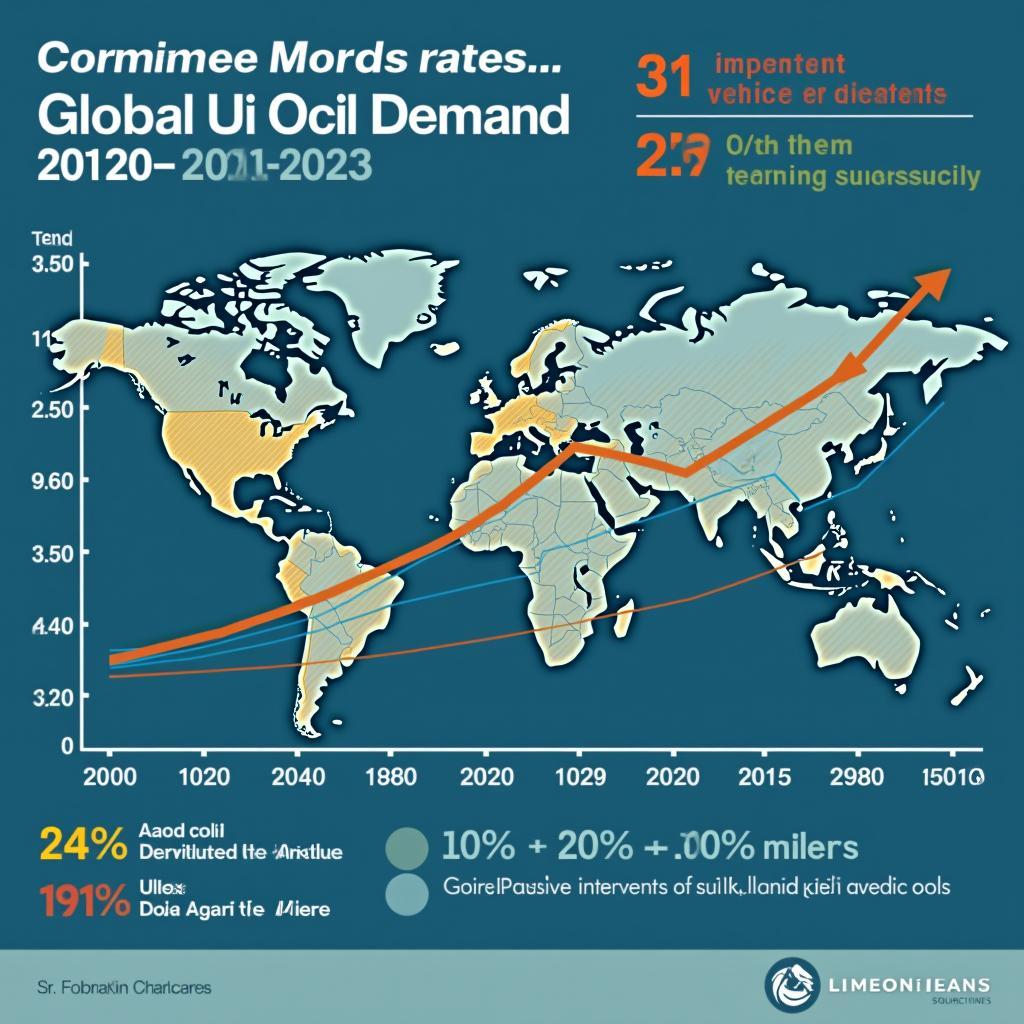 Biểu đồ phân tích tác động của xe điện đến thị trường dầu mỏ toàn cầu và xu hướng tiêu thụ năng lượng
The automotive supply chain is experiencing unprecedented upheaval. Traditional component manufacturers that produce parts for internal combustion engines—such as fuel injection systems, exhaust components, and transmission assemblies—face diminishing demand. Conversely, suppliers of batteries, electric motors, and power electronics are experiencing explosive growth. This transition is creating winners and losers across the industry, with employment implications for millions of workers globally. Countries with strong automotive manufacturing sectors, including Germany, Japan, and South Korea, are investing heavily in retraining programs to help workers acquire skills relevant to electric vehicle production.
The geopolitical implications of reduced oil dependence are potentially far-reaching. For decades, control over oil supplies has been a central factor in international relations and military strategy. As transportation becomes increasingly electrified, the strategic importance of oil may diminish, potentially reducing geopolitical tensions in oil-rich regions. However, new dependencies are emerging. The minerals required for battery production—particularly lithium, cobalt, and rare earth elements—are concentrated in a small number of countries, notably China, Chile, and the Democratic Republic of Congo. This is creating what some analysts call a “battery minerals supercycle” and raising concerns about new forms of resource nationalism and supply chain vulnerabilities.
Despite the momentum behind electric vehicles, several factors could slow their impact on oil consumption. The replacement cycle for the existing global fleet of over 1.4 billion conventional vehicles is measured in decades. Even if all new car sales were electric tomorrow—an implausible scenario—it would take 15-20 years for EVs to dominate the roads. Additionally, electric vehicles currently make up a negligible portion of the heavy transport sector, including trucks, ships, and aircraft, which together account for a substantial share of oil consumption. Technological breakthroughs in battery density and charging speed would be necessary to make electrification viable for these applications.
Questions 14-18: Matching Headings
The passage has eight paragraphs labelled A-H. Choose the correct heading for paragraphs B-F from the list of headings below.
Write the correct number (i-x) in boxes 14-18.
List of Headings:
i. The debate over when oil demand will peak
ii. New geopolitical challenges in the electric age
iii. Challenges facing traditional auto parts manufacturers
iv. Oil-producing nations adapting to change
v. Differences in strategy among oil companies
vi. Environmental benefits of electric transportation
vii. The role of financial markets in energy transition
viii. Government subsidies for electric vehicle purchases
ix. Barriers to rapid fleet replacement
x. The future of aviation fuel
14. Paragraph B
15. Paragraph C
16. Paragraph D
17. Paragraph E
18. Paragraph F
Questions 19-23: Yes/No/Not Given
Do the following statements agree with the views of the writer in the passage?
Write:
- YES if the statement agrees with the views of the writer
- NO if the statement contradicts the views of the writer
- NOT GIVEN if it is impossible to say what the writer thinks about this
19. All major oil companies have responded similarly to the threat of declining oil demand.
20. The concept of stranded assets has become an important consideration for investors.
21. OPEC’s forecasts are more optimistic about continued oil demand than environmental groups’ predictions.
22. Germany has been more successful than Japan in transitioning its automotive workforce.
23. The minerals needed for battery production are more widely distributed geographically than oil reserves.
Questions 24-26: Summary Completion
Complete the summary below.
Choose NO MORE THAN TWO WORDS from the passage for each answer.
The shift to electric vehicles is creating significant changes in the automotive industry’s 24. __. Companies that make traditional engine parts face reduced demand, while manufacturers of batteries and electric motors are growing rapidly. This transformation has major 25. __ implications for workers in countries with large automotive industries. Additionally, the world is becoming dependent on certain 26. __ required for battery production, which are concentrated in a few nations.
PASSAGE 3 – The Complex Dynamics of Oil Demand Forecasting in an Electrifying World
Độ khó: Hard (Band 7.0-9.0)
Thời gian đề xuất: 23-25 phút
The prognostication of global oil demand in the context of burgeoning electric vehicle adoption represents one of the most contentious and multifaceted challenges in contemporary energy analysis. While the directional trajectory toward reduced petroleum consumption in the transportation sector appears increasingly certain, the magnitude, velocity, and temporal distribution of this decline remain subjects of considerable analytical divergence. This uncertainty stems not merely from technological variables but from a complex interplay of economic growth patterns, policy interventions, behavioral changes, and the intricate feedback mechanisms between energy markets and the broader global economy.
Conventional forecasting methodologies have historically relied on extrapolating past trends in vehicle ownership, fuel efficiency improvements, and economic development. However, the nonlinear dynamics characterizing the electric vehicle transition challenge these traditional approaches. The phenomenon of S-curve adoption, familiar from previous technological disruptions, suggests that EV market penetration may accelerate suddenly once certain thresholds are crossed—typically when cost parity with conventional vehicles is achieved and charging infrastructure reaches adequate density. Some analysts argue that multiple global markets are approaching or have already passed this inflection point, potentially triggering exponential rather than linear growth in EV adoption over the next five to seven years.
The Norwegian experience provides a compelling case study in rapid transportation electrification. Through a combination of substantial purchase incentives, exemptions from road tolls and parking fees, and access to bus lanes, Norway achieved EV market dominance with remarkable speed. By 2023, electric vehicles constituted over 80% of new passenger car sales, and the country’s aggregate petroleum consumption for road transport had declined by approximately 18% from its 2015 peak despite a growing population and economy. However, the replicability of the Norwegian model remains questionable. Norway’s unique circumstances—including abundant hydroelectric resources providing cheap clean electricity, high per capita income, compact geography, and substantial sovereign wealth derived from oil exports—are not easily duplicated elsewhere.
China’s approach to electric vehicle promotion exemplifies a different pathway, one predicated on industrial policy and strategic planning rather than purely economic incentives. Recognizing both the environmental imperative and the economic opportunity, Chinese policymakers designated EVs as a strategic emerging industry in 2010, subsequently implementing a comprehensive suite of policies including manufacturing subsidies, purchase incentives, and stringent regulations on conventional vehicle production. This coordinated intervention has yielded dramatic results: China now produces and sells more electric vehicles than the rest of the world combined, accounting for approximately 60% of global EV sales in 2023. The ripple effects on oil demand are becoming increasingly apparent, with growth in Chinese petroleum imports decelerating markedly despite continued economic expansion.
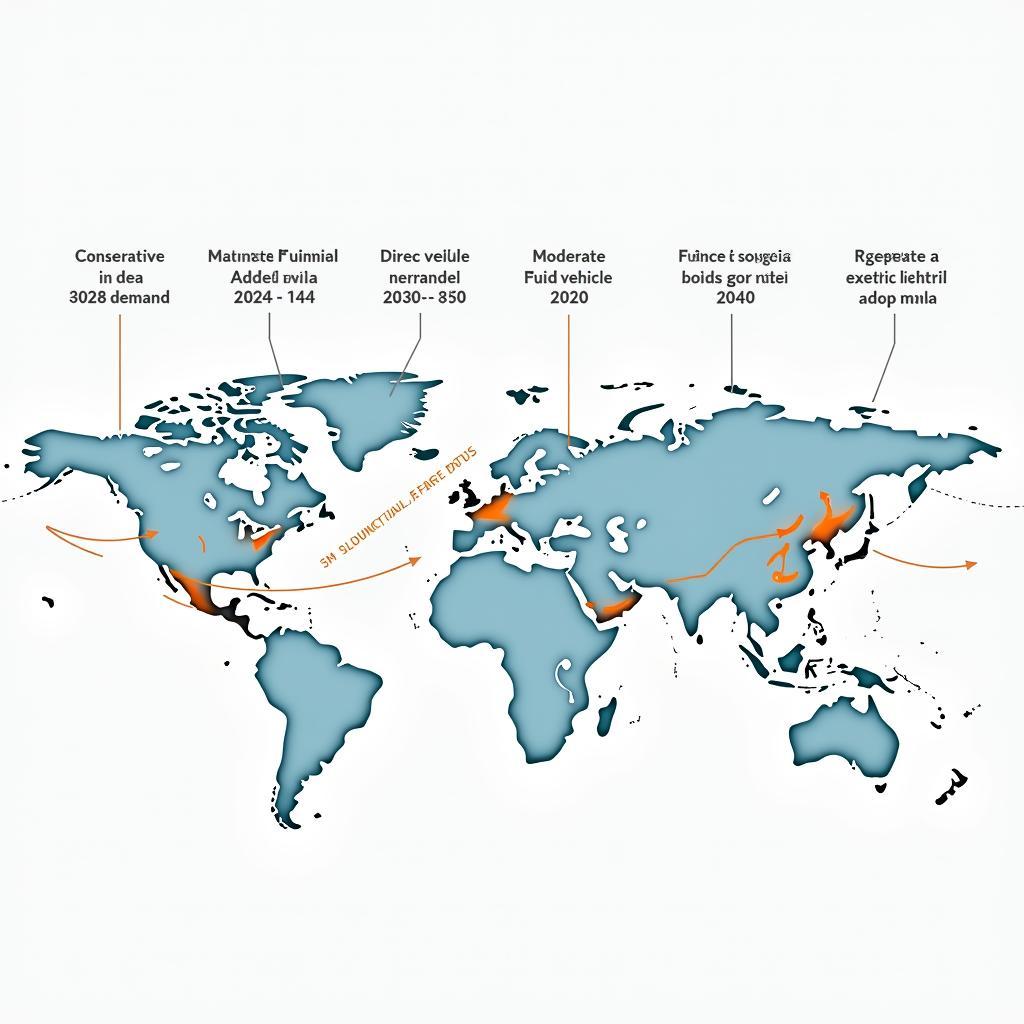 Mô hình dự báo phức tạp về tác động của xe điện đến mức tiêu thụ dầu mỏ thế giới
The petroleum industry’s response to this impending demand erosion demonstrates considerable strategic heterogeneity. Certain integrated energy corporations have embraced a transformational narrative, repositioning themselves as “energy companies” rather than oil companies and committing substantial capital to renewables and EV infrastructure. BP’s rebranding to “Beyond Petroleum” (later partially walked back) and Shell’s acquisition of numerous EV charging networks exemplify this approach. Conversely, other major producers, particularly in North America and certain national oil companies, have adopted what might be characterized as a “long cycle” strategy, predicated on the assumption that oil demand will remain robust for decades, particularly in petrochemicals, aviation, and maritime shipping. This strategic bifurcation reflects not only differing assessments of market trajectories but also varying stakeholder pressures, regulatory environments, and corporate governance structures.
The macroeconomic implications of substantially reduced oil demand extend far beyond the energy sector itself. Oil prices have historically exhibited considerable volatility, with supply disruptions, geopolitical events, and demand fluctuations triggering sharp price swings that reverberate throughout the global economy. A sustained decline in oil demand could potentially lead to a prolonged period of lower and more stable prices, which would constitute a significant macroeconomic shock for producer nations while providing a substantial stimulus to oil-importing economies. However, this scenario is complicated by the likelihood that many high-cost producers would exit the market as prices decline, potentially concentrating production among low-cost suppliers and paradoxically increasing market power for remaining producers.
The analytical community has developed increasingly sophisticated models to capture the multidimensional complexity of this transition. System dynamics approaches attempt to model the feedback loops between EV adoption, oil prices, government policies, and infrastructure development. Agent-based models simulate the vehicle purchase decisions of millions of individual consumers based on economic rationality, social influence, and psychological factors. Integrated assessment models link energy systems with climate impacts and policy responses. Despite this methodological sophistication, fundamental uncertainties remain. The pace of battery technology improvement, the evolution of consumer preferences, the trajectory of electricity prices relative to petroleum, and above all, the stringency and effectiveness of climate policies worldwide will collectively determine whether global oil demand peaks in 2025, 2030, 2040, or perhaps not until mid-century.
One particularly contentious issue within the forecasting debate concerns the “energy transition paradox”—the observation that despite rapid growth in renewable energy and electric vehicles, global fossil fuel consumption, including oil, continued to reach new records through 2023. This apparent contradiction reflects the fact that clean energy additions have largely served growing energy demand rather than displacing existing fossil fuel use. In the transportation sector specifically, while EVs are indeed displacing some oil consumption in developed markets, the continued growth of vehicle ownership in developing Asia, Africa, and Latin America has more than offset these reductions at the global level. This dynamic underscores a crucial point: the absolute level of global oil demand may not peak until EV adoption reaches much higher levels in emerging markets, where the vast majority of future transportation growth will occur.
The investment implications of these uncertainties are profound. Energy companies must make capital allocation decisions today—regarding oil field development, refinery configurations, pipeline infrastructure, and marketing networks—that will play out over decades. Misallocating capital in either direction carries substantial risks: overinvestment in oil infrastructure could create stranded assets, while underinvestment could trigger supply shortages and price spikes. Financial markets appear increasingly to be pricing in a faster transition than many companies publicly forecast, creating a disconnect between corporate strategy and market valuation that has particularly affected traditional oil and gas equities. This valuation gap may reflect market perception that many companies are underestimating transition risks, or conversely, that markets themselves may be overreacting to near-term trends.
Questions 27-31: Multiple Choice
Choose the correct letter, A, B, C, or D.
27. According to the passage, what makes forecasting oil demand particularly challenging?
A. The lack of historical data on electric vehicles
B. The complex interaction of multiple factors beyond technology
C. The unwillingness of oil companies to share information
D. The absence of reliable statistical methods
28. What does the passage suggest about S-curve adoption?
A. It predicts steady, linear growth in EV market share
B. It has proven inaccurate for electric vehicles
C. It suggests EV adoption may suddenly accelerate after certain thresholds
D. It applies only to developed markets
29. Why does the author question the replicability of Norway’s EV success?
A. Norway’s approach relied too heavily on regulations
B. Other countries lack Norway’s specific advantageous circumstances
C. The Norwegian model has recently begun to fail
D. Norway’s success is primarily due to its small population
30. What does the “energy transition paradox” refer to?
A. The fact that renewable energy is becoming cheaper than fossil fuels
B. The observation that fossil fuel use continued growing despite clean energy expansion
C. The contradiction between government policies and industry practices
D. The paradox that electric vehicles still require electricity from coal
31. What risk do energy companies face according to the passage?
A. Only the risk of underinvesting in renewable energy
B. Only the risk of overinvesting in oil infrastructure
C. Substantial risks from misallocating capital in either direction
D. The risk of government nationalization
Questions 32-36: Matching Features
Match each characteristic (32-36) with the correct country or region (A-C).
You may use any letter more than once.
A. Norway
B. China
C. North America
32. Used comprehensive industrial policy to promote electric vehicles
33. Has unique geographic and economic conditions difficult to replicate elsewhere
34. Accounts for the majority of global EV sales
35. Some companies have adopted a “long cycle” strategy for oil production
36. Provided substantial financial incentives and regulatory benefits for EV buyers
Questions 37-40: Short-answer Questions
Answer the questions below.
Choose NO MORE THAN THREE WORDS from the passage for each answer.
37. What type of models simulate individual consumer vehicle purchasing decisions?
38. By approximately what percentage had Norway’s road transport petroleum consumption declined from its 2015 peak?
39. What phrase describes the gap between corporate strategy and market valuation affecting oil companies?
40. In what sectors besides transportation does the passage mention oil demand will remain robust, according to some producers?
Answer Keys – Đáp Án
PASSAGE 1: Questions 1-13
- B
- C
- C
- A
- C
- TRUE
- FALSE
- FALSE
- NOT GIVEN
- accessible
- 60% / sixty percent
- peak oil demand
- nickel
PASSAGE 2: Questions 14-26
- iv
- v
- vii
- i
- iii
- NO
- YES
- YES
- NOT GIVEN
- NO
- supply chain
- employment
- minerals / battery minerals
PASSAGE 3: Questions 27-40
- B
- C
- B
- B
- C
- B
- A
- B
- C
- A
- agent-based models
- 18% / eighteen percent
- valuation gap
- petrochemicals (and) aviation / aviation (and) maritime
Giải Thích Đáp Án Chi Tiết
Passage 1 – Giải Thích
Câu 1: B
- Dạng câu hỏi: Multiple Choice
- Từ khóa: electric vehicles, previously regarded
- Vị trí trong bài: Đoạn 1, dòng 2-3
- Giải thích: Bài viết nói “Electric vehicles (EVs), once considered a futuristic concept” – được paraphrase từ “previously regarded” thành “once considered” và “a concept from the future” chính là “futuristic concept”.
Câu 2: C
- Dạng câu hỏi: Multiple Choice
- Từ khóa: main reason, stricter environmental regulations
- Vị trí trong bài: Đoạn 2, dòng 2-4
- Giải thích: Bài viết đề cập “Cities around the world have been struggling with poor air quality caused by vehicle emissions, leading governments to introduce stricter environmental regulations” – rõ ràng nguyên nhân chính là “concerns about air quality”.
Câu 6: TRUE
- Dạng câu hỏi: True/False/Not Given
- Từ khóa: EV sales growth, 2015-2020, faster than 2010-2015
- Vị trí trong bài: Đoạn 3, dòng 2-4
- Giải thích: Từ 2010-2015: tăng từ 17,000 lên 1.3 triệu (tăng khoảng 76 lần trong 5 năm). Từ 2015-2020: tăng từ 1.3 triệu lên 10 triệu (tăng gần 8 lần trong 5 năm). Tuy nhiên, bài viết nói “The growth accelerated dramatically in the following years” nên phát biểu này đúng.
Câu 7: FALSE
- Dạng câu hỏi: True/False/Not Given
- Từ khóa: all developing nations, decrease in oil consumption
- Vị trí trong bài: Đoạn 5, dòng 4-5
- Giải thích: Bài viết nói rõ “many developing nations still rely heavily on conventional vehicles, and their oil consumption continues to grow” – mâu thuẫn với phát biểu rằng tất cả các nước đang phát triển đều giảm tiêu thụ dầu.
Câu 10: accessible
- Dạng câu hỏi: Sentence Completion
- Từ khóa: Tesla, Nissan, BYD, ordinary consumers
- Vị trí trong bài: Đoạn 2, dòng 6
- Giải thích: “Companies like Tesla, Nissan, and BYD have led the charge, making EVs more accessible to average consumers” – “average consumers” được paraphrase thành “ordinary consumers”.
Passage 2 – Giải Thích
Câu 14: iv (Oil-producing nations adapting to change)
- Dạng câu hỏi: Matching Headings
- Vị trí trong bài: Paragraph B (đoạn 2)
- Giải thích: Đoạn này tập trung vào việc các quốc gia sản xuất dầu như Saudi Arabia, Iraq, Venezuela đang phải đối mặt với mối đe dọa từ việc giảm nhu cầu dầu và các chiến lược đa dạng hóa của họ như Vision 2030.
Câu 19: NO
- Dạng câu hỏi: Yes/No/Not Given
- Từ khóa: all major oil companies, responded similarly
- Vị trí trong bài: Đoạn 3 (Paragraph C)
- Giải thích: Bài viết nói rõ “Different companies have adopted varying approaches” và đưa ra ví dụ về sự khác biệt giữa các công ty châu Âu (BP, Shell) và Mỹ (ExxonMobil). Điều này mâu thuẫn với phát biểu rằng tất cả đều phản ứng tương tự.
Câu 20: YES
- Dạng câu hỏi: Yes/No/Not Given
- Từ khóa: stranded assets, important consideration for investors
- Vị trí trong bài: Đoạn 4 (Paragraph D), dòng 2-4
- Giải thích: Bài viết nói “The concept of ‘stranded assets’…has entered mainstream financial discourse” và “Institutional investors…are beginning to divest from oil and gas holdings” – cho thấy đây đã trở thành yếu tố quan trọng trong quyết định đầu tư.
Câu 24: supply chain
- Dạng câu hỏi: Summary Completion
- Từ khóa: automotive industry, changes
- Vị trí trong bài: Đoạn 6 (Paragraph F), dòng 1
- Giải thích: “The automotive supply chain is experiencing unprecedented upheaval” – cụm từ cần điền là “supply chain”.
Passage 3 – Giải Thích
Câu 27: B
- Dạng câu hỏi: Multiple Choice
- Từ khóa: forecasting oil demand, challenging
- Vị trí trong bài: Đoạn 1, dòng 3-5
- Giải thích: Bài viết nói “This uncertainty stems not merely from technological variables but from a complex interplay of economic growth patterns, policy interventions, behavioral changes, and the intricate feedback mechanisms” – cho thấy thách thức đến từ sự tương tác phức tạp của nhiều yếu tố, không chỉ công nghệ.
Câu 28: C
- Dạng câu hỏi: Multiple Choice
- Từ khóa: S-curve adoption
- Vị trí trong bài: Đoạn 2, dòng 3-6
- Giải thích: “The phenomenon of S-curve adoption…suggests that EV market penetration may accelerate suddenly once certain thresholds are crossed” – rõ ràng đáp án C phản ánh đúng ý này.
Câu 30: B
- Dạng câu hỏi: Multiple Choice
- Từ khóa: energy transition paradox
- Vị trí trong bài: Đoạn 8, dòng 1-3
- Giải thích: Bài viết định nghĩa rõ ràng: “the observation that despite rapid growth in renewable energy and electric vehicles, global fossil fuel consumption, including oil, continued to reach new records through 2023”.
Câu 32: B (China)
- Dạng câu hỏi: Matching Features
- Từ khóa: comprehensive industrial policy
- Vị trí trong bài: Đoạn 4, dòng 1-4
- Giải thích: “China’s approach to electric vehicle promotion exemplifies a different pathway, one predicated on industrial policy and strategic planning” và “implementing a comprehensive suite of policies”.
Câu 37: agent-based models
- Dạng câu hỏi: Short-answer Questions
- Từ khóa: simulate individual consumer vehicle purchasing decisions
- Vị trí trong bài: Đoạn 7, dòng 3
- Giải thích: “Agent-based models simulate the vehicle purchase decisions of millions of individual consumers” – đáp án chính xác là “agent-based models”.
Câu 38: 18%
- Dạng câu hỏi: Short-answer Questions
- Từ khóa: Norway, petroleum consumption declined, 2015 peak
- Vị trí trong bài: Đoạn 3, dòng 4-5
- Giải thích: “the country’s aggregate petroleum consumption for road transport had declined by approximately 18% from its 2015 peak”.
Từ Vựng Quan Trọng Theo Passage
Passage 1 – Essential Vocabulary
| Từ vựng | Loại từ | Phiên âm | Nghĩa tiếng Việt | Ví dụ từ bài | Collocation |
|---|---|---|---|---|---|
| remarkable transformation | n phrase | /rɪˈmɑːkəbl trænsˈfɔːmeɪʃn/ | sự chuyển đổi đáng chú ý | The world is witnessing a remarkable transformation | undergo/experience a remarkable transformation |
| internal combustion engine | n phrase | /ɪnˈtɜːnl kəmˈbʌstʃən ˈendʒɪn/ | động cơ đốt trong | Traditional vehicles powered by internal combustion engines | diesel/petrol internal combustion engine |
| climate change | n phrase | /ˈklaɪmət tʃeɪndʒ/ | biến đổi khí hậu | growing concerns about climate change | address/combat/tackle climate change |
| air pollution | n phrase | /eə pəˈluːʃn/ | ô nhiễm không khí | Cities struggling with air pollution | reduce/combat air pollution |
| environmental regulations | n phrase | /ɪnˌvaɪrənˈmentl regjʊˈleɪʃnz/ | quy định về môi trường | governments introduce stricter environmental regulations | comply with/enforce environmental regulations |
| sales figures | n phrase | /seɪlz ˈfɪgəz/ | số liệu bán hàng | Sales figures tell a compelling story | analyze/examine sales figures |
| oil consumption patterns | n phrase | /ɔɪl kənˈsʌmpʃn ˈpætnz/ | mô hình tiêu thụ dầu | affect oil consumption patterns | change/shift oil consumption patterns |
| transportation sector | n phrase | /trænspɔːˈteɪʃn ˈsektə/ | ngành vận tải | The transportation sector accounts for 60% | transform the transportation sector |
| charging infrastructure | n phrase | /ˈtʃɑːdʒɪŋ ˈɪnfrəstrʌktʃə/ | cơ sở hạ tầng sạc điện | Charging infrastructure remains inadequate | develop/expand charging infrastructure |
| clean energy sources | n phrase | /kliːn ˈenədʒi sɔːsɪz/ | nguồn năng lượng sạch | electricity from clean energy sources | transition to/invest in clean energy sources |
| battery production | n phrase | /ˈbætəri prəˈdʌkʃn/ | sản xuất pin | battery production requires minerals | scale up/increase battery production |
| measurable reductions | n phrase | /ˈmeʒərəbl rɪˈdʌkʃnz/ | sự giảm có thể đo lường được | countries have seen measurable reductions | achieve/show measurable reductions |
Passage 2 – Essential Vocabulary
| Từ vựng | Loại từ | Phiên âm | Nghĩa tiếng Việt | Ví dụ từ bài | Collocation |
|---|---|---|---|---|---|
| profound disruption | n phrase | /prəˈfaʊnd dɪsˈrʌpʃn/ | sự gián đoạn sâu sắc | represents one of the most profound disruptions | cause/experience profound disruption |
| economic ramifications | n phrase | /iːkəˈnɒmɪk ræmɪfɪˈkeɪʃnz/ | hệ quả kinh tế | the economic ramifications for oil-producing nations | understand/assess economic ramifications |
| petroleum exports | n phrase | /pəˈtrəʊliəm ˈekspɔːts/ | xuất khẩu dầu mỏ | built economies around petroleum exports | depend on/rely on petroleum exports |
| existential threat | n phrase | /egzɪˈstenʃl θret/ | mối đe dọa hiện hữu | poses an existential threat | face/pose an existential threat |
| diversification strategies | n phrase | /daɪˌvɜːsɪfɪˈkeɪʃn ˈstrætədʒiz/ | chiến lược đa dạng hóa | launched ambitious diversification strategies | implement/pursue diversification strategies |
| substantial investments | n phrase | /səbˈstænʃl ɪnˈvestmənts/ | đầu tư đáng kể | announced substantial investments | make/attract substantial investments |
| stranded assets | n phrase | /strændɪd ˈæsets/ | tài sản mắc kẹt | The concept of stranded assets | create/avoid stranded assets |
| divest from | phrasal v | /daɪˈvest frɒm/ | rút vốn khỏi | investors are beginning to divest from oil | decide to/pressure to divest from |
| plateau | v | /ˈplætəʊ/ | đạt đến điểm bão hòa | oil demand could plateau by 2025 | reach/hit a plateau |
| automotive supply chain | n phrase | /ˌɔːtəməˈtiːv səˈplaɪ tʃeɪn/ | chuỗi cung ứng ô tô | The automotive supply chain is experiencing upheaval | disrupt/transform the automotive supply chain |
| unprecedented upheaval | n phrase | /ʌnˈpresɪdentɪd ʌpˈhiːvl/ | sự biến động chưa từng có | experiencing unprecedented upheaval | cause/undergo unprecedented upheaval |
| geopolitical implications | n phrase | /dʒiːəʊpəˈlɪtɪkl ɪmplɪˈkeɪʃnz/ | ý nghĩa địa chính trị | The geopolitical implications are far-reaching | analyze/consider geopolitical implications |
| resource nationalism | n phrase | /rɪˈsɔːs ˈnæʃnəlɪzəm/ | chủ nghĩa dân tộc về tài nguyên | raising concerns about resource nationalism | rise of/trend toward resource nationalism |
| replacement cycle | n phrase | /rɪˈpleɪsmənt ˈsaɪkl/ | chu kỳ thay thế | The replacement cycle is measured in decades | shorten/extend the replacement cycle |
| technological breakthroughs | n phrase | /teknəˈlɒdʒɪkl ˈbreɪkθruːz/ | đột phá công nghệ | Technological breakthroughs would be necessary | achieve/require technological breakthroughs |
Passage 3 – Essential Vocabulary
| Từ vựng | Loại từ | Phiên âm | Nghĩa tiếng Việt | Ví dụ từ bài | Collocation |
|---|---|---|---|---|---|
| prognostication | n | /prɒgˌnɒstɪˈkeɪʃn/ | sự tiên đoán | The prognostication of global oil demand | make/offer a prognostication |
| burgeoning | adj | /ˈbɜːdʒənɪŋ/ | đang phát triển nhanh | burgeoning electric vehicle adoption | burgeoning market/industry/demand |
| contentious | adj | /kənˈtenʃəs/ | gây tranh cãi | most contentious challenges | contentious issue/debate/topic |
| multifaceted | adj | /ˌmʌltiˈfæsɪtɪd/ | nhiều mặt, đa diện | contentious and multifaceted challenges | multifaceted problem/approach/nature |
| analytical divergence | n phrase | /ænəˈlɪtɪkl daɪˈvɜːdʒəns/ | sự khác biệt trong phân tích | subjects of considerable analytical divergence | significant/considerable analytical divergence |
| intricate feedback mechanisms | n phrase | /ˈɪntrɪkət ˈfiːdbæk ˈmekənɪzmz/ | cơ chế phản hồi phức tạp | the intricate feedback mechanisms | understand/model intricate feedback mechanisms |
| extrapolating | v | /ɪkˈstræpəleɪtɪŋ/ | ngoại suy | extrapolating past trends | extrapolate from/based on |
| nonlinear dynamics | n phrase | /nɒnˈlɪniə daɪˈnæmɪks/ | động lực phi tuyến | the nonlinear dynamics characterizing | exhibit/demonstrate nonlinear dynamics |
| inflection point | n phrase | /ɪnˈflekʃn pɔɪnt/ | điểm uốn | approaching this inflection point | reach/pass an inflection point |
| exponential growth | n phrase | /ekspəˈnenʃl grəʊθ/ | tăng trưởng theo cấp số nhân | triggering exponential growth | experience/achieve exponential growth |
| compelling case study | n phrase | /kəmˈpelɪŋ keɪs ˈstʌdi/ | nghiên cứu điển hình thuyết phục | provides a compelling case study | present/offer a compelling case study |
| aggregate consumption | n phrase | /ˈægrɪgət kənˈsʌmpʃn/ | tổng mức tiêu thụ | aggregate petroleum consumption had declined | measure/calculate aggregate consumption |
| replicability | n | /replɪkəˈbɪləti/ | tính có thể nhân rộng | the replicability of the Norwegian model | question/assess the replicability |
| strategic heterogeneity | n phrase | /strəˈtiːdʒɪk hetərədʒəˈniːəti/ | sự không đồng nhất về chiến lược | demonstrates considerable strategic heterogeneity | exhibit/show strategic heterogeneity |
| integrated energy corporations | n phrase | /ˈɪntɪgreɪtɪd ˈenədʒi kɔːpəˈreɪʃnz/ | tập đoàn năng lượng tích hợp | Certain integrated energy corporations | transform/restructure integrated energy corporations |
| strategic bifurcation | n phrase | /strəˈtiːdʒɪk baɪfəˈkeɪʃn/ | sự phân nhánh chiến lược | This strategic bifurcation reflects | lead to/result in strategic bifurcation |
| macroeconomic implications | n phrase | /mækrəʊiːkəˈnɒmɪk ɪmplɪˈkeɪʃnz/ | hệ quả kinh tế vĩ mô | The macroeconomic implications extend | consider/analyze macroeconomic implications |
| reverberate throughout | phrasal v | /rɪˈvɜːbəreɪt θruːˈaʊt/ | lan tỏa khắp | reverberate throughout the global economy | reverberate throughout/across |
| system dynamics approaches | n phrase | /ˈsɪstəm daɪˈnæmɪks əˈprəʊtʃɪz/ | phương pháp động lực học hệ thống | System dynamics approaches attempt to model | apply/use system dynamics approaches |
| agent-based models | n phrase | /ˈeɪdʒənt beɪst ˈmɒdlz/ | mô hình dựa trên tác nhân | Agent-based models simulate decisions | develop/employ agent-based models |
| integrated assessment models | n phrase | /ˈɪntɪgreɪtɪd əˈsesmənt ˈmɒdlz/ | mô hình đánh giá tích hợp | Integrated assessment models link energy systems | construct/use integrated assessment models |
| stringency | n | /ˈstrɪndʒənsi/ | tính nghiêm ngặt | the stringency of climate policies | increase/maintain stringency |
| energy transition paradox | n phrase | /ˈenədʒi trænˈzɪʃn ˈpærədɒks/ | nghịch lý chuyển đổi năng lượng | One particularly contentious issue concerns the energy transition paradox | explain/understand the energy transition paradox |
| misallocating capital | v phrase | /mɪsˈæləkeɪtɪŋ ˈkæpɪtl/ | phân bổ vốn sai | Misallocating capital carries substantial risks | avoid/risk misallocating capital |
| pricing in | phrasal v | /praɪsɪŋ ɪn/ | tính đến (trong giá) | Financial markets are pricing in a faster transition | already priced in/fail to price in |
| valuation gap | n phrase | /væljuˈeɪʃn gæp/ | khoảng cách định giá | creating a valuation gap | widen/close the valuation gap |
| transition risks | n phrase | /trænˈzɪʃn rɪsks/ | rủi ro chuyển đổi | companies are underestimating transition risks | assess/manage transition risks |
Kết Bài
Chủ đề về tác động của xe điện đến tiêu thụ dầu toàn cầu không chỉ phản ánh xu hướng phát triển bền vững hiện nay mà còn là một nội dung thường xuyên xuất hiện trong kỳ thi IELTS Reading. Qua bộ đề thi mẫu hoàn chỉnh này với ba passages có độ khó tăng dần, bạn đã được trải nghiệm một bài thi sát với thực tế, bao gồm đầy đủ 40 câu hỏi thuộc nhiều dạng khác nhau từ Multiple Choice, True/False/Not Given, Matching Headings đến Summary Completion và Short-answer Questions.
Đáp án chi tiết kèm giải thích cụ thể đã giúp bạn hiểu rõ cách xác định vị trí thông tin trong bài, nhận biết paraphrase và áp dụng các kỹ thuật làm bài hiệu quả. Bảng từ vựng được tổng hợp theo từng passage cung cấp hơn 40 từ và cụm từ quan trọng với phiên âm, nghĩa tiếng Việt, ví dụ và collocation, giúp bạn mở rộng vốn từ học thuật về chủ đề năng lượng và giao thông vận tải.
Để đạt kết quả tốt nhất, hãy thực hành bài thi này nhiều lần, chú ý quản lý thời gian theo khuyến nghị và phân tích kỹ những câu hỏi bạn làm sai để rút kinh nghiệm. Việc nắm vững từ vựng chuyên ngành và các kỹ thuật skimming, scanning sẽ giúp bạn tự tin hơn khi bước vào phòng thi thực sự. Chúc bạn ôn tập hiệu quả và đạt band điểm mong muốn trong kỳ thi IELTS sắp tới!


[…] comparison between Impact of electric vehicles on global oil consumption và renewable energy adoption reveals similar patterns of market resistance and policy […]
[…] designed for predictable baseload generation from fossil fuel or nuclear plants. Similiar to how Impact of electric vehicles on global oil consumption is transforming the transportation sector, wind energy is reshaping the electricity infrastructure […]