Mở Bài
Chủ đề năng lượng xanh và tác động của nó lên nền kinh tế toàn cầu đang trở thành một trong những đề tài “hot” nhất trong kỳ thi IELTS Reading hiện nay. Với xu hướng chuyển đổi năng lượng bền vững đang diễn ra mạnh mẽ trên toàn thế giới, các nhà ra đề IELTS thường xuyên lồng ghép chủ đề này vào các bài thi, đặc biệt trong các đề thi từ năm 2020 trở lại đây.
Bài viết này cung cấp cho bạn một bộ đề thi IELTS Reading hoàn chỉnh với 3 passages được thiết kế theo đúng chuẩn Cambridge IELTS, bao gồm đầy đủ 40 câu hỏi với độ khó tăng dần từ Easy đến Hard. Bạn sẽ được luyện tập với các dạng câu hỏi đa dạng như True/False/Not Given, Matching Headings, Summary Completion, và nhiều dạng khác – tất cả đều xuất hiện thường xuyên trong kỳ thi thật.
Đặc biệt, đề thi này được thiết kế phù hợp cho học viên Việt Nam từ band 5.0 trở lên, với đáp án chi tiết kèm giải thích cụ thể về cách xác định thông tin trong bài, kỹ thuật paraphrase, và chiến lược làm bài hiệu quả. Bạn cũng sẽ học được hơn 40 từ vựng quan trọng liên quan đến năng lượng và kinh tế – những từ vựng “vàng” thường xuất hiện trong IELTS.
Hướng Dẫn Làm Bài IELTS Reading
Tổng Quan Về IELTS Reading Test
IELTS Reading Test kéo dài 60 phút với 3 passages và tổng cộng 40 câu hỏi. Mỗi câu trả lời đúng được tính 1 điểm, và band score của bạn sẽ được quy đổi dựa trên tổng số câu đúng. Để đạt band 6.5 – mức điểm mà nhiều trường đại học quốc tế yêu cầu – bạn cần trả lời đúng khoảng 27-29 câu.
Phân bổ thời gian khuyến nghị:
- Passage 1 (Easy): 15-17 phút
- Passage 2 (Medium): 18-20 phút
- Passage 3 (Hard): 23-25 phút
- Dành 2-3 phút để chuyển đáp án sang answer sheet
Lưu ý quan trọng: Bạn không được thời gian thêm để chuyển đáp án, vì vậy hãy quản lý thời gian thật tốt!
Các Dạng Câu Hỏi Trong Đề Này
Đề thi mẫu này bao gồm 7 dạng câu hỏi phổ biến nhất:
- Multiple Choice – Câu hỏi trắc nghiệm nhiều lựa chọn
- True/False/Not Given – Xác định thông tin đúng/sai/không được nhắc đến
- Matching Headings – Nối tiêu đề với đoạn văn
- Summary Completion – Hoàn thành đoạn tóm tắt
- Sentence Completion – Hoàn thành câu
- Matching Features – Nối thông tin với đặc điểm
- Short-answer Questions – Trả lời câu hỏi ngắn
IELTS Reading Practice Test
PASSAGE 1 – The Rise of Renewable Energy in Modern Economies
Độ khó: Easy (Band 5.0-6.5)
Thời gian đề xuất: 15-17 phút
The transition from fossil fuels to renewable energy sources has become one of the most significant economic shifts of the 21st century. Countries around the world are increasingly investing in solar panels, wind turbines, and other forms of clean energy, not only to address climate change but also to create new economic opportunities. This transformation is reshaping global markets, creating millions of jobs, and fundamentally changing how nations produce and consume energy.
Solar energy has experienced the most dramatic cost reduction of any renewable technology. In 2010, the cost of solar electricity was approximately $0.40 per kilowatt-hour (kWh), making it expensive compared to traditional energy sources. However, by 2020, this cost had plummeted to just $0.05 per kWh in many regions, making solar power competitive with or even cheaper than coal and natural gas. This price decline has been driven by improvements in photovoltaic technology, increased manufacturing scale, and more efficient installation methods. Countries like China, the United States, and Germany have led the way in solar deployment, with China alone accounting for more than 30% of global solar capacity.
Wind energy has followed a similar trajectory. Offshore wind farms, which harness the stronger and more consistent winds found at sea, have become particularly attractive to coastal nations. The United Kingdom has become a world leader in this sector, with offshore wind providing approximately 10% of the country’s electricity by 2021. The cost of offshore wind has decreased by nearly 50% over the past decade, making it one of the most cost-effective forms of new electricity generation. Denmark, another pioneer in wind technology, generates more than 40% of its electricity from wind power, demonstrating that high renewable penetration is not only possible but economically viable.
The economic benefits of renewable energy extend far beyond lower electricity costs. The renewable energy sector employed approximately 12 million people globally in 2020, according to the International Renewable Energy Agency (IRENA). This figure represents a significant increase from just 7.3 million jobs in 2012. Solar energy accounts for the largest share of these jobs, employing about 4 million workers worldwide. How clean energy is driving job creation remains a critical topic as countries seek to transition their workforces from traditional industries. Wind energy provides another 1.25 million jobs, while hydropower and bioenergy contribute additional employment opportunities. These jobs range from manufacturing and installation to maintenance and project development, offering employment at various skill levels.
Furthermore, renewable energy investments are stimulating economic growth in both developed and developing nations. In 2020, global investment in renewable energy capacity reached $303.5 billion, demonstrating strong confidence in the sector’s future. Developing countries in Africa, Asia, and Latin America are using renewable energy to leapfrog traditional energy infrastructure, bringing electricity to remote communities without the need for expensive power grids. This decentralized energy model is particularly beneficial for rural areas, where extending the traditional grid would be prohibitively expensive.
The energy transition is also creating new export opportunities. Countries with abundant renewable resources are positioning themselves as future energy exporters. For example, Australia is developing plans to export solar-generated hydrogen to Asian markets, potentially creating a multi-billion dollar industry. Similarly, North African countries with excellent solar resources are exploring opportunities to supply Europe with clean electricity through undersea cables. These developments could reshape global energy trade, reducing dependence on fossil fuel exports and creating new geopolitical dynamics.
However, the transition to renewable energy is not without challenges. The intermittent nature of solar and wind power – they only generate electricity when the sun shines or the wind blows – requires significant investment in energy storage technologies and grid modernization. Battery storage systems, particularly lithium-ion batteries, have improved dramatically in recent years, but further innovation is needed to store energy at the scale required for fully renewable electricity systems. Additionally, some industries, such as steel and cement production, remain difficult to decarbonize with current technology, requiring continued research and development.
Despite these challenges, the economic case for renewable energy continues to strengthen. As technology improves and costs continue to fall, renewable energy is becoming the rational economic choice for new power generation in most parts of the world. This transformation represents not just an environmental imperative but a fundamental economic opportunity that is reshaping the global economy.
 Tấm pin năng lượng mặt trời và tua-bin gió hiện đại trên đồng cỏ xanh minh họa tác động năng lượng xanh kinh tế toàn cầu
Questions 1-5
Do the following statements agree with the information given in Passage 1?
Write:
- TRUE if the statement agrees with the information
- FALSE if the statement contradicts the information
- NOT GIVEN if there is no information on this
- The cost of solar electricity decreased by more than 85% between 2010 and 2020.
- China produces more solar energy than any other country in the world.
- Offshore wind farms are less efficient than onshore wind farms.
- Denmark generates most of its electricity from renewable energy sources.
- The renewable energy sector created more jobs in 2020 than the fossil fuel industry.
Questions 6-9
Complete the sentences below.
Choose NO MORE THAN TWO WORDS from the passage for each answer.
- The United Kingdom generates approximately 10% of its electricity from __ by 2021.
- Renewable energy allows developing countries to __ traditional energy infrastructure.
- Australia plans to export solar-generated __ to Asian markets.
- The irregular production pattern of renewable energy is described as its __.
Questions 10-13
Choose the correct letter, A, B, C, or D.
- According to the passage, what was the main driver of solar cost reduction?
- A. Government subsidies
- B. Improved technology and increased scale
- C. Competition from wind energy
- D. Reduced demand for fossil fuels
- How many people were employed in the renewable energy sector globally in 2012?
- A. 4 million
- B. 7.3 million
- C. 12 million
- D. 1.25 million
- What challenge does the passage mention regarding renewable energy?
- A. High installation costs
- B. Limited availability of solar panels
- C. Difficulty in decarbonizing certain industries
- D. Resistance from fossil fuel companies
- The passage suggests that renewable energy is becoming:
- A. More expensive than fossil fuels
- B. Only suitable for wealthy countries
- C. The economically logical choice for new power generation
- D. Too complex for developing nations
PASSAGE 2 – Economic Transformation Through Green Energy Investment
Độ khó: Medium (Band 6.0-7.5)
Thời gian đề xuất: 18-20 phút
The global energy landscape is undergoing a profound transformation as nations worldwide pivot toward renewable energy sources, catalyzing significant economic restructuring that extends far beyond the power sector. This transition represents not merely a shift in how societies generate electricity but a fundamental reconfiguration of economic priorities, industrial strategies, and international trade relationships. The ramifications of this green energy revolution are reshaping labor markets, influencing monetary policy, and creating new paradigms for economic development that challenge traditional growth models.
A. The financial sector’s embrace of renewable energy has been particularly transformative. In 2020, for the first time in history, global investment in renewable energy capacity exceeded investment in fossil fuel capacity, marking a watershed moment in the energy transition. This shift reflects not only environmental concerns but also hard-headed economic calculation. Institutional investors, including pension funds and insurance companies, are increasingly viewing renewable energy projects as offering superior risk-adjusted returns compared to fossil fuel investments. The concept of “stranded assets” – fossil fuel reserves that may become economically unviable before they can be extracted – has emerged as a major concern for investors, with some estimates suggesting that up to $1 trillion in fossil fuel assets could be stranded as the world moves toward carbon neutrality. Understanding The impact of climate change on the global economy provides crucial context for these investment decisions.
B. The macroeconomic implications of the renewable energy transition are equally significant. Countries heavily dependent on fossil fuel exports face substantial challenges as global demand for these resources begins its long-term decline. Middle Eastern oil exporters, for instance, are developing ambitious economic diversification strategies to reduce their dependence on petroleum revenues. Saudi Arabia’s Vision 2030 plan explicitly acknowledges this challenge, seeking to develop new industries and reduce the kingdom’s reliance on oil income from approximately 70% of government revenue to below 50%. Similarly, Russia has begun grappling with the long-term implications of reduced European demand for natural gas as the continent accelerates its renewable energy deployment.
C. Conversely, nations with abundant renewable resources but limited fossil fuel reserves are discovering new comparative advantages. Iceland, which generates virtually all its electricity from geothermal and hydroelectric sources, has leveraged its cheap, clean energy to attract energy-intensive industries such as aluminum smelting and data centers. The country’s abundant renewable electricity, combined with a cool climate that reduces cooling costs, has made it an attractive location for cryptocurrency mining operations and cloud computing facilities. This demonstrates how renewable energy abundance can become a new form of natural resource wealth, analogous to oil reserves in the 20th century but with more sustainable long-term prospects.
D. The renewable energy transition is also driving innovation in financial instruments and business models. Green bonds, which raise capital specifically for environmental projects, have grown from a niche market to a major asset class, with issuance exceeding $500 billion in 2021. These financial instruments allow corporations and governments to access capital markets specifically for renewable energy and other environmental projects, often at favorable interest rates due to strong investor demand. Power Purchase Agreements (PPAs), which allow businesses to contract directly with renewable energy generators for electricity supply, have become increasingly popular, providing both price certainty for consumers and revenue stability for producers. Major corporations including Google, Amazon, and Microsoft have signed PPAs for gigawatts of renewable capacity, effectively becoming major players in energy markets.
E. The transition’s impact on employment patterns presents both opportunities and challenges that require careful policy interventions. While the renewable energy sector is creating substantial new employment, the geographical distribution of these jobs often differs from traditional energy sector employment. Coal mining communities in regions such as Appalachia in the United States, the Ruhr Valley in Germany, and South Wales in the United Kingdom face significant economic disruption as mines close. Forward-thinking governments are implementing “just transition” policies designed to support affected workers and communities, including retraining programs, economic development initiatives, and social safety nets. Germany’s comprehensive approach to this challenge includes substantial financial support for coal-mining regions, totaling approximately €40 billion over twenty years, to facilitate economic transformation and support displaced workers.
F. The supply chain dynamics of renewable energy technologies are creating new patterns of international trade and economic interdependence. China has emerged as the dominant manufacturer of solar panels, producing approximately 70% of global supply, which has raised concerns about supply chain security in other nations. Similarly, the batteries essential for electric vehicles and energy storage require materials such as lithium, cobalt, and rare earth elements, concentrating economic power in countries that possess these resources or control their processing. This has prompted efforts to develop more diversified supply chains and reduce dependence on single suppliers, with initiatives including the European Battery Alliance and American investments in domestic battery manufacturing capacity.
G. The renewable energy transition is also influencing monetary policy and inflation dynamics in subtle but important ways. Fossil fuel price volatility has historically been a significant driver of inflation, with oil price spikes contributing to economic instability. As renewable energy with zero fuel costs comprises a larger share of electricity generation, this source of price volatility diminishes, potentially contributing to more stable price levels. However, the substantial upfront capital investment required for renewable energy infrastructure can create near-term inflationary pressures, particularly in rapidly transitioning economies where demand for construction materials, skilled labor, and equipment surges. Central banks are beginning to incorporate climate-related factors into their economic modeling, recognizing that the energy transition will have significant implications for price stability and economic growth.
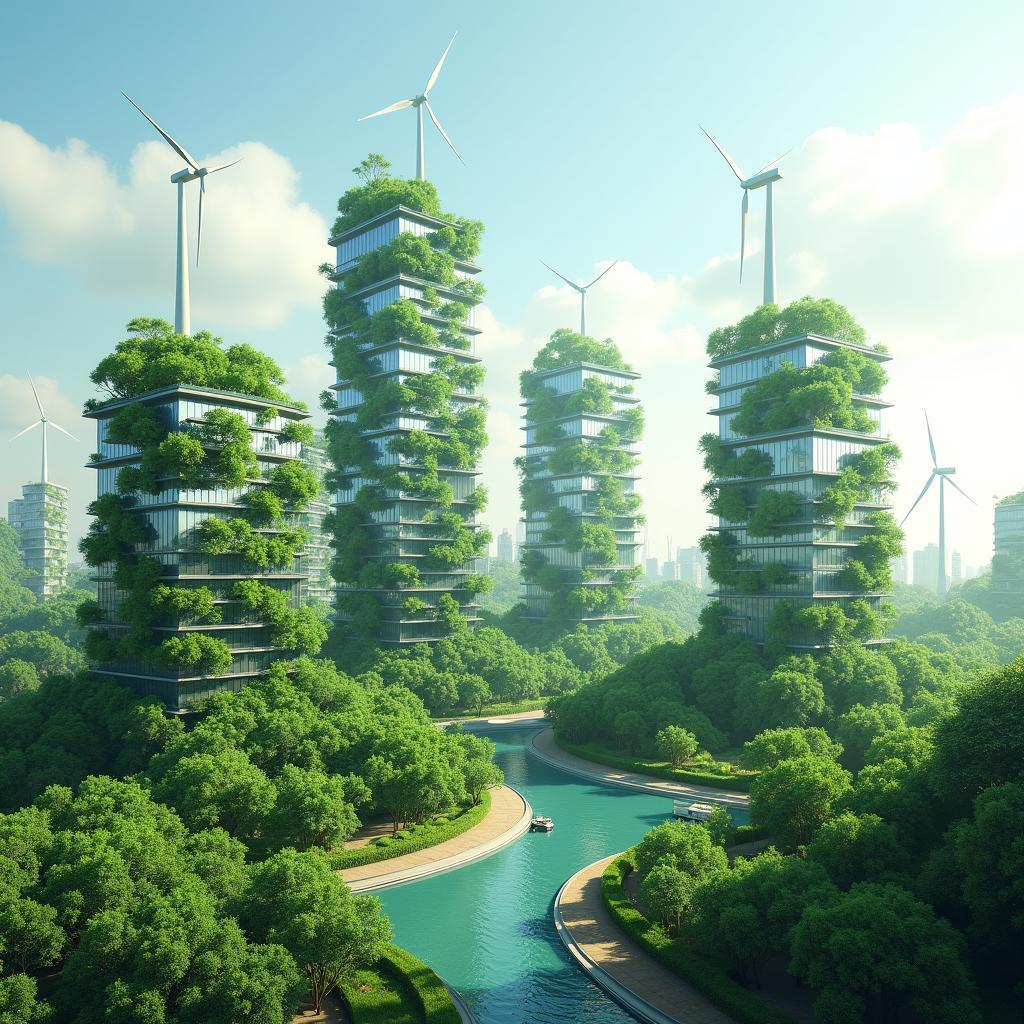 Tòa nhà xanh bền vững với năng lượng mặt trời tích hợp kiến trúc thành phố hiện đại IELTS Reading
Questions 14-20
The passage has seven sections, A-G.
Which section contains the following information?
Write the correct letter, A-G.
- Examples of companies that have contracted directly for renewable energy supply
- A description of how renewable energy can reduce a traditional source of economic instability
- Information about a country using its renewable resources to attract specific industries
- The concept of fossil fuel investments becoming economically worthless
- Details about financial support for workers in declining industries
- Concerns about dependence on a single country for solar panel production
- Examples of oil-exporting nations preparing for reduced petroleum demand
Questions 21-24
Complete the summary below.
Choose NO MORE THAN TWO WORDS from the passage for each answer.
The renewable energy transition is having profound effects on global economics. For the first time in 2020, global investment in renewable energy exceeded investment in fossil fuels, representing a (21) __ in energy finance. Investors are increasingly concerned about (22) __, which are fossil fuel reserves that may never be economically extracted. Meanwhile, countries like Iceland are using their abundant renewable electricity to attract (23) __ such as aluminum production and data centers. The growth of (24) __, a new type of financial instrument, has exceeded $500 billion in 2021, demonstrating strong market support for environmental projects.
Questions 25-26
Choose TWO letters, A-E.
Which TWO challenges related to renewable energy transition are mentioned in the passage?
A. The high cost of renewable energy compared to fossil fuels
B. Geographic mismatch between traditional energy jobs and new renewable energy employment
C. Lack of investor interest in renewable energy projects
D. Concentration of supply chains in particular countries
E. Reduced efficiency of renewable energy technologies
PASSAGE 3 – The Macroeconomic Architecture of a Renewable Energy Future
Độ khó: Hard (Band 7.0-9.0)
Thời gian đề xuất: 23-25 phút
The transition toward renewable energy systems represents far more than a technological substitution of one energy source for another; it constitutes a fundamental restructuring of the economic infrastructure that underpins modern civilization. This transformation engenders profound implications for capital allocation, productivity growth, international economic relations, and the very nature of economic development itself. Understanding these systemic changes requires moving beyond narrow sectoral analyses to examine how the distinctive characteristics of renewable energy—its decentralized nature, zero marginal cost of fuel, and capital-intensive production structure—fundamentally alter economic dynamics at both national and global scales.
The economic architecture of fossil fuel-based energy systems has shaped modern economies in ways that are often underappreciated. Fossil fuels possess high energy density, facilitating centralized extraction, processing, and distribution through extensive infrastructure networks. This centralization has created powerful economic actors—national oil companies and multinational energy corporations—that wield considerable influence over both markets and political systems. The rent-seeking behavior associated with fossil fuel extraction has, in some cases, contributed to the “resource curse,” whereby nations abundant in natural resources paradoxically experience slower economic development than resource-poor countries. The concentrated ownership of fossil fuel resources has also generated significant geopolitical tensions, as energy security concerns drive international relations and, in some cases, military interventions. Examining What are the challenges of sustainable agriculture in the 21st century? reveals parallel transformation challenges in other sectors.
Renewable energy systems, by contrast, exhibit fundamentally different economic characteristics that portend a reorganization of energy-related economic activity. Solar and wind resources, unlike fossil fuels, are geographically diffuse and cannot be easily concentrated or controlled by narrow interests. This decentralization has profound implications for market structure and power dynamics. Once renewable energy infrastructure is installed, the marginal cost of electricity production approaches zero—a stark contrast to fossil fuel systems where fuel costs constitute a significant operational expense. This zero-marginal-cost phenomenon challenges traditional utility business models predicated on selling kilowatt-hours as a commodity and necessitates new regulatory frameworks and revenue mechanisms to ensure adequate investment in generation capacity and grid infrastructure.
The capital structure of renewable energy investments differs markedly from fossil fuel projects, with implications for economic analysis and financial risk assessment. Renewable energy projects are characterized by high upfront capital expenditure and minimal ongoing operational costs, whereas fossil fuel projects typically involve lower initial costs but substantial continuing fuel expenses. This temporal redistribution of costs from operational to capital phases affects discount rate sensitivity and project valuation, generally favoring renewable investments in low-interest-rate environments. The economic lifetime of renewable assets, particularly for hydroelectric and onshore wind facilities, often exceeds thirty years, providing long-term cash flow visibility attractive to institutional investors with long-term liabilities, such as pension funds and insurance companies.
Furthermore, the learning curves associated with renewable technologies—the rate at which costs decline with cumulative production—have proven steeper than historical precedents for fossil fuel technologies. Solar photovoltaic costs have declined by approximately 90% since 2010, following a trajectory consistent with a learning rate of about 20-25% (cost reduction for each doubling of cumulative capacity). This predictable cost trajectory enables more confident long-term planning and investment, contrasting sharply with the volatile pricing characteristic of fossil fuels, which respond to geopolitical events, cartel behavior (as evidenced by OPEC’s influence), and unpredictable geological factors. The implications for macroeconomic stability are substantial: economies heavily reliant on renewable energy may experience reduced GDP volatility as energy price fluctuations diminish as a source of economic uncertainty.
The transition’s impact on balance of payments and international economic relations deserves particular attention. Countries currently importing fossil fuels often experience significant current account deficits attributable to energy purchases, with corresponding negative effects on exchange rates and monetary policy flexibility. Transitioning to domestically-produced renewable energy effectively converts ongoing imports into domestic capital investment, improving long-term balance of payments positions and enhancing energy sovereignty. This import substitution effect can be particularly transformative for developing nations, where energy imports often constitute a major drain on foreign exchange reserves. India, for instance, spends approximately $100 billion annually on fossil fuel imports; replacing this with domestic renewable energy could significantly improve its external economic position while simultaneously addressing energy access challenges.
However, the transition also creates new forms of economic dependence centered on renewable energy technology supply chains and critical materials. The concentration of solar panel manufacturing in China, battery production in East Asia, and critical mineral extraction in specific regions creates potential vulnerabilities that could be exploited for strategic advantage. Rare earth elements, essential for wind turbine generators and electric motors, are particularly concentrated, with China controlling approximately 70% of global mining and 90% of processing capacity. This has prompted concerns about supply chain resilience and efforts to develop alternative suppliers and recycling capabilities, representing a new dimension of economic security in the renewable energy era.
The distributional consequences of the energy transition present both opportunities and challenges for economic equity within and between nations. Within developed economies, the transition creates winners and losers among different regions, industries, and demographic groups. Workers in fossil fuel industries face displacement, while new opportunities emerge in renewable energy sectors, though often requiring different skills and located in different geographies. The spatial mismatch between declining and emerging industries necessitates labor market interventions, including retraining programs, relocation assistance, and regional economic development initiatives. Examining How to build a sustainable community provides practical frameworks for managing these transitions at local levels.
At the international level, the transition alters long-standing patterns of economic power and development pathways. Historically, economic development has been tightly correlated with fossil fuel consumption, a relationship that renewable energy potentially decouples. This offers developing nations the prospect of pursuing economic growth without proportionally increasing carbon emissions—a development pathway unavailable to currently wealthy nations during their industrialization. However, realizing this potential requires substantial capital investment and technology transfer, raising questions about climate finance mechanisms and the responsibilities of developed nations that benefited from unrestricted fossil fuel use during their own development. The Green Climate Fund and similar initiatives represent attempts to address these equity concerns, though debates persist regarding the adequacy of financial commitments and the terms under which support is provided.
The renewable energy transition also intersects with broader economic trends, including digitalization, automation, and the emergence of new business models enabled by information technology. Smart grids, which use digital communication to optimize electricity distribution, enable more sophisticated integration of variable renewable energy sources while creating opportunities for demand response programs that enhance system flexibility. Artificial intelligence and machine learning algorithms increasingly optimize renewable energy system operations, improving efficiency and reliability. The convergence of renewable energy with digital technologies creates synergies that accelerate the transition while generating new economic opportunities in energy management services, predictive maintenance, and grid optimization solutions.
Ultimately, the macroeconomic implications of the renewable energy transition extend beyond energy itself to encompass fundamental questions about economic organization, the nature of growth, and the relationship between economic activity and environmental sustainability. The transition challenges economists to develop new frameworks for understanding energy’s role in economic production, moving beyond treating energy as simply another factor of production to recognizing its distinctive characteristics and systemic importance. Similarly, policymakers must grapple with the coordination challenges inherent in managing a transition affecting virtually every sector of the economy, requiring unprecedented levels of public-private collaboration and international cooperation. The success of this transition will profoundly shape economic prospects for billions of people throughout the 21st century, making it among the most consequential economic transformations in human history.
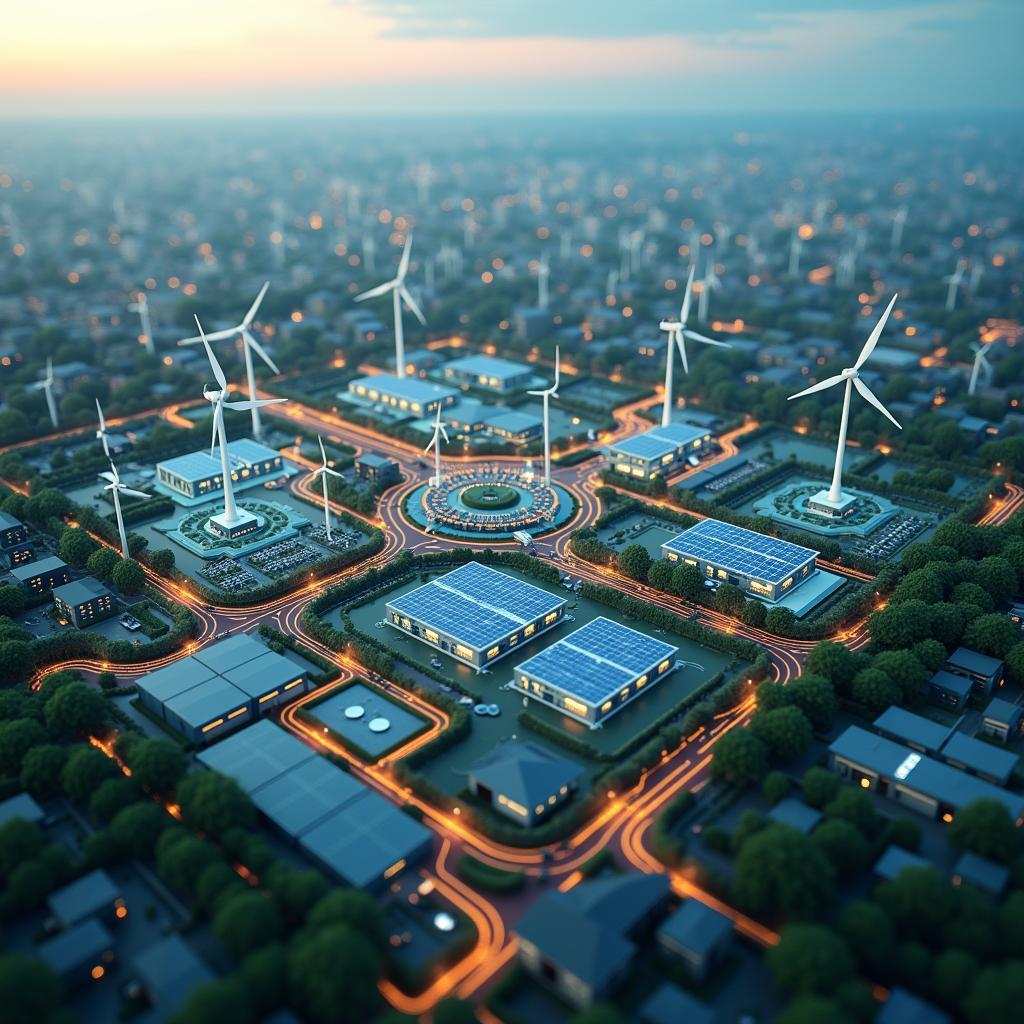 Mạng lưới điện thông minh phân phối năng lượng tái tạo hiệu quả cho kinh tế toàn cầu IELTS
Questions 27-31
Choose the correct letter, A, B, C, or D.
- According to the passage, the “resource curse” refers to:
- A. The environmental damage caused by fossil fuel extraction
- B. The phenomenon where resource-rich nations develop more slowly than expected
- C. The declining value of fossil fuel reserves
- D. The geopolitical conflicts arising from energy competition
- What does the passage say about the marginal cost of renewable energy production?
- A. It is higher than fossil fuel production
- B. It varies significantly depending on weather conditions
- C. It approaches zero after infrastructure installation
- D. It is the main challenge for renewable energy adoption
- The passage suggests that renewable energy investments are particularly attractive when:
- A. Oil prices are high
- B. Interest rates are low
- C. Government subsidies are available
- D. Technology is fully mature
- According to the passage, solar photovoltaic costs have declined by approximately:
- A. 20-25% since 2010
- B. 50% since 2010
- C. 70% since 2010
- D. 90% since 2010
- The passage indicates that India’s annual expenditure on fossil fuel imports is approximately:
- A. $50 billion
- B. $70 billion
- C. $100 billion
- D. $150 billion
Questions 32-36
Complete the summary using the list of words, A-L, below.
The economic structure of renewable energy differs fundamentally from fossil fuels. While fossil fuels are characterized by (32) __ extraction and processing, renewable energy is (33) __ in nature. Renewable energy projects require high (34) __ but have minimal ongoing costs. The (35) __ associated with renewable technologies have been steeper than those of fossil fuels, leading to rapid cost reductions. However, new dependencies emerge around (36) __ and critical materials needed for renewable technology production.
A. centralized
B. decentralized
C. operational expenses
D. upfront investment
E. learning curves
F. profit margins
G. supply chains
H. labor costs
I. government regulations
J. consumer demand
K. distributed
L. environmental impacts
Questions 37-40
Do the following statements agree with the claims of the writer in Passage 3?
Write:
- YES if the statement agrees with the claims of the writer
- NO if the statement contradicts the claims of the writer
- NOT GIVEN if it is impossible to say what the writer thinks about this
- The concentration of rare earth element processing in China creates potential economic vulnerabilities for other nations.
- Workers transitioning from fossil fuel to renewable energy industries can easily apply their existing skills without retraining.
- The renewable energy transition offers developing nations a pathway to economic growth with lower carbon emissions.
- Smart grids and artificial intelligence are essential for renewable energy systems to function effectively.
Answer Keys – Đáp Án
PASSAGE 1: Questions 1-13
- TRUE
- NOT GIVEN
- FALSE
- FALSE
- NOT GIVEN
- offshore wind
- leapfrog
- hydrogen
- intermittent nature
- B
- B
- C
- C
PASSAGE 2: Questions 14-26
- D
- G
- C
- A
- E
- F
- B
- watershed moment
- stranded assets
- energy-intensive industries
- Green bonds
25-26. B, D (in any order)
PASSAGE 3: Questions 27-40
- B
- C
- B
- D
- C
- A
- B
- D
- E
- G
- YES
- NO
- YES
- NOT GIVEN
Giải Thích Đáp Án Chi Tiết
Passage 1 – Giải Thích
Câu 1: TRUE
- Dạng câu hỏi: True/False/Not Given
- Từ khóa: cost of solar electricity, decreased, 85%, 2010-2020
- Vị trí trong bài: Đoạn 2, dòng 2-4
- Giải thích: Bài đọc nêu rõ: “In 2010, the cost of solar electricity was approximately $0.40 per kilowatt-hour (kWh)… by 2020, this cost had plummeted to just $0.05 per kWh”. Tính toán: (0.40-0.05)/0.40 = 0.875 = 87.5%, nhiều hơn 85%. Câu trả lời là TRUE.
Câu 2: NOT GIVEN
- Dạng câu hỏi: True/False/Not Given
- Từ khóa: China, produces more solar energy, any other country
- Vị trí trong bài: Đoạn 2, dòng cuối
- Giải thích: Bài chỉ nói “China alone accounting for more than 30% of global solar capacity” (30% công suất), không nói về việc China sản xuất (produces) nhiều năng lượng mặt trời nhất. Capacity và production là hai khái niệm khác nhau. Đáp án: NOT GIVEN.
Câu 3: FALSE
- Dạng câu hỏi: True/False/Not Given
- Từ khóa: Offshore wind farms, less efficient, onshore
- Vị trí trong bài: Đoạn 3, dòng 2-3
- Giải thích: Bài đọc nêu “Offshore wind farms… harness the stronger and more consistent winds found at sea”, ngụ ý offshore wind hiệu quả hơn (stronger winds), không phải kém hiệu quả hơn. Đáp án: FALSE.
Câu 4: FALSE
- Dạng câu hỏi: True/False/Not Given
- Từ khóa: Denmark, most electricity, renewable energy
- Vị trí trong bài: Đoạn 3, dòng cuối
- Giải thích: “Denmark… generates more than 40% of its electricity from wind power”. 40% không phải là “most” (hầu hết – thường là >50%). Đáp án: FALSE.
Câu 5: NOT GIVEN
- Dạng câu hỏi: True/False/Not Given
- Từ khóa: renewable energy sector, more jobs, 2020, fossil fuel industry
- Vị trí trong bài: Đoạn 4
- Giải thích: Bài chỉ nói renewable energy sector có 12 triệu việc làm năm 2020, không so sánh với ngành fossil fuel. Không có thông tin để kết luận. Đáp án: NOT GIVEN.
Câu 6: offshore wind
- Dạng câu hỏi: Sentence Completion
- Từ khóa: United Kingdom, 10% electricity, 2021
- Vị trí trong bài: Đoạn 3, dòng 4-5
- Giải thích: “The United Kingdom… with offshore wind providing approximately 10% of the country’s electricity by 2021.”
Câu 7: leapfrog
- Dạng câu hỏi: Sentence Completion
- Từ khóa: developing countries, traditional energy infrastructure
- Vị trí trong bài: Đoạn 5, dòng 3-4
- Giải thích: “Developing countries… are using renewable energy to leapfrog traditional energy infrastructure.”
Câu 8: hydrogen
- Dạng câu hỏi: Sentence Completion
- Từ khóa: Australia, export, solar-generated, Asian markets
- Vị trí trong bài: Đoạn 6, dòng 3-4
- Giải thích: “Australia is developing plans to export solar-generated hydrogen to Asian markets.”
Câu 9: intermittent nature
- Dạng câu hỏi: Sentence Completion
- Từ khóa: irregular production pattern, renewable energy
- Vị trí trong bài: Đoạn 7, dòng 2
- Giải thích: “The intermittent nature of solar and wind power” – intermittent được paraphrase thành irregular trong câu hỏi.
Câu 10: B
- Dạng câu hỏi: Multiple Choice
- Từ khóa: main driver, solar cost reduction
- Vị trí trong bài: Đoạn 2, dòng 5-7
- Giải thích: “This price decline has been driven by improvements in photovoltaic technology, increased manufacturing scale, and more efficient installation methods” – tương ứng với đáp án B (Improved technology and increased scale).
Câu 11: B
- Dạng câu hỏi: Multiple Choice
- Từ khóa: employed, renewable energy sector, 2012
- Vị trí trong bài: Đoạn 4, dòng 3-5
- Giải thích: “This figure [12 million in 2020] represents a significant increase from just 7.3 million jobs in 2012.”
Câu 12: C
- Dạng câu hỏi: Multiple Choice
- Từ khóa: challenge, renewable energy
- Vị trí trong bài: Đoạn 7, dòng cuối
- Giải thích: “Some industries, such as steel and cement production, remain difficult to decarbonize with current technology” – tương ứng với đáp án C (Difficulty in decarbonizing certain industries).
Câu 13: C
- Dạng câu hỏi: Multiple Choice
- Từ khóa: passage suggests, renewable energy
- Vị trí trong bài: Đoạn 8, dòng 2-3
- Giải thích: “Renewable energy is becoming the rational economic choice for new power generation in most parts of the world” – tương ứng với đáp án C (The economically logical choice).
Passage 2 – Giải Thích
Câu 14: D
- Dạng câu hỏi: Matching Information
- Từ khóa: companies, contracted directly, renewable energy supply
- Vị trí trong bài: Section D, đoạn cuối
- Giải thích: “Major corporations including Google, Amazon, and Microsoft have signed PPAs for gigawatts of renewable capacity” – các công ty ký hợp đồng mua điện trực tiếp.
Câu 15: G
- Dạng câu hỏi: Matching Information
- Từ khóa: reduce, traditional source, economic instability
- Vị trí trong bài: Section G, đoạn đầu
- Giải thích: “Fossil fuel price volatility has historically been a significant driver of inflation… As renewable energy… comprises a larger share…, this source of price volatility diminishes” – giảm nguồn gây bất ổn kinh tế.
Câu 16: C
- Dạng câu hỏi: Matching Information
- Từ khóa: country, renewable resources, attract specific industries
- Vị trí trong bài: Section C
- Giải thích: “Iceland… has leveraged its cheap, clean energy to attract energy-intensive industries such as aluminum smelting and data centers.”
Câu 17: A
- Dạng câu hỏi: Matching Information
- Từ khóa: fossil fuel investments, economically worthless
- Vị trí trong bài: Section A, giữa đoạn
- Giải thích: “The concept of ‘stranded assets’ – fossil fuel reserves that may become economically unviable” – paraphrase của becoming worthless.
Câu 18: E
- Dạng câu hỏi: Matching Information
- Từ khóa: financial support, workers, declining industries
- Vị trí trong bài: Section E, cuối đoạn
- Giải thích: “Germany’s comprehensive approach… includes substantial financial support for coal-mining regions, totaling approximately €40 billion over twenty years.”
Câu 19: F
- Dạng câu hỏi: Matching Information
- Từ khóa: dependence, single country, solar panel production
- Vị trí trong bài: Section F, đoạn đầu
- Giải thích: “China has emerged as the dominant manufacturer of solar panels, producing approximately 70% of global supply, which has raised concerns about supply chain security.”
Câu 20: B
- Dạng câu hỏi: Matching Information
- Từ khóa: oil-exporting nations, reduced petroleum demand
- Vị trí trong bài: Section B
- Giải thích: “Middle Eastern oil exporters… are developing ambitious economic diversification strategies to reduce their dependence on petroleum revenues. Saudi Arabia’s Vision 2030 plan…”
Câu 21: watershed moment
- Dạng câu hỏi: Summary Completion
- Từ khóa: 2020, investment exceeded, representing a
- Vị trí trong bài: Section A, dòng 2-3
- Giải thích: “…marking a watershed moment in the energy transition.”
Câu 22: stranded assets
- Dạng câu hỏi: Summary Completion
- Từ khóa: concerned about, fossil fuel reserves, never extracted
- Vị trí trong bài: Section A, giữa đoạn
- Giải thích: “The concept of ‘stranded assets’ – fossil fuel reserves that may become economically unviable before they can be extracted.”
Câu 23: energy-intensive industries
- Dạng câu hỏi: Summary Completion
- Từ khóa: Iceland, attract, aluminum production, data centers
- Vị trí trong bài: Section C
- Giải thích: “Iceland… has leveraged its cheap, clean energy to attract energy-intensive industries such as aluminum smelting and data centers.”
Câu 24: Green bonds
- Dạng câu hỏi: Summary Completion
- Từ khóa: financial instrument, exceeded $500 billion, 2021
- Vị trí trong bài: Section D, đoạn đầu
- Giải thích: “Green bonds… have grown… with issuance exceeding $500 billion in 2021.”
Câu 25-26: B, D
- Dạng câu hỏi: Multiple Choice (choose TWO)
- Giải thích:
- B (Geographic mismatch): Section E nói về “the geographical distribution of these jobs often differs from traditional energy sector employment” và “Coal mining communities… face significant economic disruption.”
- D (Concentration of supply chains): Section F nêu rõ “China has emerged as the dominant manufacturer of solar panels, producing approximately 70% of global supply, which has raised concerns about supply chain security.”
- Các đáp án khác không được đề cập hoặc mâu thuẫn với bài đọc.
Passage 3 – Giải Thích
Câu 27: B
- Dạng câu hỏi: Multiple Choice
- Từ khóa: resource curse
- Vị trí trong bài: Đoạn 2, giữa
- Giải thích: “The rent-seeking behavior associated with fossil fuel extraction has… contributed to the ‘resource curse,’ whereby nations abundant in natural resources paradoxically experience slower economic development than resource-poor countries.” – nghịch lý các nước giàu tài nguyên phát triển chậm hơn.
Câu 28: C
- Dạng câu hỏi: Multiple Choice
- Từ khóa: marginal cost, renewable energy production
- Vị trí trong bài: Đoạn 3, giữa
- Giải thích: “Once renewable energy infrastructure is installed, the marginal cost of electricity production approaches zero” – chi phí biên gần bằng 0 sau khi lắp đặt xong.
Câu 29: B
- Dạng câu hỏi: Multiple Choice
- Từ khóa: renewable energy investments, particularly attractive
- Vị trí trong bài: Đoạn 4, giữa
- Giải thích: “This temporal redistribution of costs… generally favoring renewable investments in low-interest-rate environments” – hấp dẫn khi lãi suất thấp.
Câu 30: D
- Dạng câu hỏi: Multiple Choice
- Từ khóa: solar photovoltaic costs, declined
- Vị trí trong bài: Đoạn 5, dòng 3-4
- Giải thích: “Solar photovoltaic costs have declined by approximately 90% since 2010.”
Câu 31: C
- Dạng câu hỏi: Multiple Choice
- Từ khóa: India, annual expenditure, fossil fuel imports
- Vị trí trong bài: Đoạn 6, cuối
- Giải thích: “India, for instance, spends approximately $100 billion annually on fossil fuel imports.”
Câu 32: A (centralized)
- Dạng câu hỏi: Summary Completion
- Vị trí trong bài: Đoạn 2, dòng 2-3
- Giải thích: “Fossil fuels… facilitating centralized extraction, processing, and distribution.”
Câu 33: B (decentralized)
- Dạng câu hỏi: Summary Completion
- Vị trí trong bài: Đoạn 3, đoạn đầu
- Giải thích: “Renewable energy systems… Solar and wind resources… are geographically diffuse… This decentralization…”
Câu 34: D (upfront investment)
- Dạng câu hỏi: Summary Completion
- Vị trí trong bài: Đoạn 4, dòng 2-3
- Giải thích: “Renewable energy projects are characterized by high upfront capital expenditure.”
Câu 35: E (learning curves)
- Dạng câu hỏi: Summary Completion
- Vị trí trong bài: Đoạn 5, dòng 1-2
- Giải thích: “Furthermore, the learning curves associated with renewable technologies… have proven steeper than historical precedents.”
Câu 36: G (supply chains)
- Dạng câu hỏi: Summary Completion
- Vị trí trong bài: Đoạn 7, dòng 1
- Giải thích: “However, the transition also creates new forms of economic dependence centered on renewable energy technology supply chains.”
Câu 37: YES
- Dạng câu hỏi: Yes/No/Not Given
- Từ khóa: rare earth element, China, economic vulnerabilities
- Vị trí trong bài: Đoạn 7, giữa
- Giải thích: “Rare earth elements… are particularly concentrated, with China controlling approximately 70%… This has prompted concerns about supply chain resilience” – tác giả đồng ý với việc tạo ra điểm yếu.
Câu 38: NO
- Dạng câu hỏi: Yes/No/Not Given
- Từ khóa: workers, fossil fuel to renewable, easily apply skills
- Vị trí trong bài: Đoạn 8, giữa
- Giải thích: “Workers in fossil fuel industries face displacement, while new opportunities emerge in renewable energy sectors, though often requiring different skills” và “necessitates labor market interventions, including retraining programs” – ngụ ý không thể dễ dàng áp dụng kỹ năng hiện có.
Câu 39: YES
- Dạng câu hỏi: Yes/No/Not Given
- Từ khóa: developing nations, economic growth, lower carbon emissions
- Vị trí trong bài: Đoạn 9, đầu
- Giải thích: “This offers developing nations the prospect of pursuing economic growth without proportionally increasing carbon emissions” – tác giả khẳng định điều này.
Câu 40: NOT GIVEN
- Dạng câu hỏi: Yes/No/Not Given
- Từ khóa: smart grids, AI, essential
- Vị trí trong bài: Đoạn 10
- Giải thích: Bài đọc chỉ nói smart grids và AI “enable more sophisticated integration” và “optimize renewable energy system operations,” không nói chúng là “essential” (thiết yếu/không thể thiếu). Đáp án: NOT GIVEN.
Từ Vựng Quan Trọng Theo Passage
Passage 1 – Essential Vocabulary
| Từ vựng | Loại từ | Phiên âm | Nghĩa tiếng Việt | Ví dụ từ bài | Collocation |
|---|---|---|---|---|---|
| fossil fuels | n | /ˈfɒsl fjuːəlz/ | nhiên liệu hóa thạch | The transition from fossil fuels to renewable energy sources | fossil fuel consumption, fossil fuel reserves |
| renewable energy | n | /rɪˈnjuːəbl ˈenədʒi/ | năng lượng tái tạo | Countries are investing in renewable energy | renewable energy sources, renewable energy sector |
| solar panel | n | /ˈsəʊlə ˈpænl/ | tấm pin mặt trời | Countries are investing in solar panels | install solar panels, solar panel installation |
| wind turbine | n | /wɪnd ˈtɜːbaɪn/ | tua-bin gió | Wind turbines harness wind energy | offshore wind turbines, wind turbine generator |
| competitive with | adj phrase | /kəmˈpetətɪv wɪð/ | cạnh tranh được với | Solar power is competitive with coal | be competitive with, remain competitive with |
| price decline | n | /praɪs dɪˈklaɪn/ | sự giảm giá | The price decline has been dramatic | sharp price decline, gradual price decline |
| cost-effective | adj | /kɒst ɪˈfektɪv/ | hiệu quả về chi phí | Offshore wind is cost-effective | cost-effective solution, highly cost-effective |
| penetration | n | /ˌpenɪˈtreɪʃn/ | sự thâm nhập | High renewable penetration is possible | market penetration, penetration rate |
| leapfrog | v | /ˈliːpfrɒɡ/ | vượt qua (bỏ qua giai đoạn) | Developing countries can leapfrog infrastructure | leapfrog technology, leapfrog development |
| power grid | n | /ˈpaʊə ɡrɪd/ | lưới điện | Extending the power grid is expensive | national power grid, power grid infrastructure |
| intermittent | adj | /ˌɪntəˈmɪtənt/ | không liên tục, gián đoạn | The intermittent nature of solar power | intermittent supply, intermittent production |
| energy storage | n | /ˈenədʒi ˈstɔːrɪdʒ/ | lưu trữ năng lượng | Investment in energy storage is needed | energy storage system, energy storage technology |
Passage 2 – Essential Vocabulary
| Từ vựng | Loại từ | Phiên âm | Nghĩa tiếng Việt | Ví dụ từ bài | Collocation |
|---|---|---|---|---|---|
| pivot toward | v phrase | /ˈpɪvət təˈwɔːd/ | chuyển hướng sang | Nations pivot toward renewable sources | pivot toward sustainability, pivot toward change |
| reconfiguration | n | /riːkənˌfɪɡjəˈreɪʃn/ | sự tái cấu hình | Economic reconfiguration is occurring | structural reconfiguration, system reconfiguration |
| ramifications | n | /ˌræmɪfɪˈkeɪʃnz/ | hệ quả, tác động | The ramifications are reshaping markets | economic ramifications, political ramifications |
| watershed moment | n phrase | /ˈwɔːtəʃed ˈməʊmənt/ | bước ngoặt quan trọng | This marks a watershed moment | historic watershed moment, represent a watershed moment |
| institutional investors | n phrase | /ˌɪnstɪˈtjuːʃənl ɪnˈvestəz/ | nhà đầu tư tổ chức | Institutional investors view renewables favorably | attract institutional investors, institutional investor interest |
| stranded assets | n phrase | /ˈstrændɪd ˈæsets/ | tài sản mắc cạn | Fossil fuels may become stranded assets | risk of stranded assets, stranded asset exposure |
| carbon neutrality | n | /ˈkɑːbən njuːˈtræləti/ | trung hòa carbon | The world moves toward carbon neutrality | achieve carbon neutrality, carbon neutrality target |
| macroeconomic | adj | /ˌmækrəʊˌiːkəˈnɒmɪk/ | thuộc kinh tế vĩ mô | Macroeconomic implications are significant | macroeconomic policy, macroeconomic stability |
| diversification | n | /daɪˌvɜːsɪfɪˈkeɪʃn/ | sự đa dạng hóa | Economic diversification strategies are needed | economic diversification, portfolio diversification |
| comparative advantage | n phrase | /kəmˈpærətɪv ədˈvɑːntɪdʒ/ | lợi thế so sánh | Nations discover new comparative advantages | exploit comparative advantage, comparative advantage theory |
| geothermal | adj | /ˌdʒiːəʊˈθɜːml/ | thuộc địa nhiệt | Iceland uses geothermal energy | geothermal power, geothermal resources |
| just transition | n phrase | /dʒʌst trænˈzɪʃn/ | chuyển đổi công bằng | Just transition policies support workers | just transition framework, ensure just transition |
| supply chain | n | /səˈplaɪ tʃeɪn/ | chuỗi cung ứng | Supply chain security is a concern | global supply chain, supply chain disruption |
| monetary policy | n phrase | /ˈmʌnɪtri ˈpɒləsi/ | chính sách tiền tệ | Monetary policy is influenced by energy | monetary policy framework, monetary policy decision |
| inflationary pressure | n phrase | /ɪnˈfleɪʃənri ˈpreʃə/ | áp lực lạm phát | Capital investment creates inflationary pressure | ease inflationary pressure, inflationary pressure builds |
Passage 3 – Essential Vocabulary
| Từ vựng | Loại từ | Phiên âm | Nghĩa tiếng Việt | Ví dụ từ bài | Collocation |
|---|---|---|---|---|---|
| systemic | adj | /sɪˈstemɪk/ | có tính hệ thống | Understanding systemic changes is essential | systemic risk, systemic change |
| capital allocation | n phrase | /ˈkæpɪtl ˌæləˈkeɪʃn/ | phân bổ vốn | The transition affects capital allocation | efficient capital allocation, capital allocation decision |
| energy density | n phrase | /ˈenədʒi ˈdensəti/ | mật độ năng lượng | Fossil fuels have high energy density | high energy density, energy density advantage |
| rent-seeking | adj | /rent ˈsiːkɪŋ/ | tìm kiếm lợi nhuận phi sản xuất | Rent-seeking behavior is problematic | rent-seeking activity, rent-seeking behavior |
| resource curse | n phrase | /rɪˈsɔːs kɜːs/ | lời nguyền tài nguyên | Some nations experience the resource curse | avoid resource curse, resource curse phenomenon |
| geographically diffuse | adj phrase | /ˌdʒiːəˈɡræfɪkli dɪˈfjuːs/ | phân tán về địa lý | Solar resources are geographically diffuse | geographically diffuse pattern, geographically diffuse distribution |
| zero-marginal-cost | adj phrase | /ˈzɪərəʊ ˈmɑːdʒɪnl kɒst/ | chi phí biên bằng không | This creates a zero-marginal-cost phenomenon | zero-marginal-cost production, zero-marginal-cost society |
| utility business model | n phrase | /juːˈtɪləti ˈbɪznəs ˈmɒdl/ | mô hình kinh doanh điện nước | Traditional utility business models are challenged | disrupt utility business model, utility business model transformation |
| upfront capital expenditure | n phrase | /ˌʌpˈfrʌnt ˈkæpɪtl ɪkˈspendɪtʃə/ | chi phí vốn ban đầu | Projects require high upfront capital expenditure | reduce upfront capital expenditure, upfront capital expenditure requirement |
| discount rate | n phrase | /ˈdɪskaʊnt reɪt/ | tỷ lệ chiết khấu | Discount rate affects project valuation | apply discount rate, discount rate sensitivity |
| learning curve | n phrase | /ˈlɜːnɪŋ kɜːv/ | đường cong học tập | Learning curves have been steep | steep learning curve, learning curve effect |
| volatile pricing | n phrase | /ˈvɒlətaɪl ˈpraɪsɪŋ/ | giá cả biến động | Fossil fuels have volatile pricing | avoid volatile pricing, volatile pricing environment |
| balance of payments | n phrase | /ˈbæləns əv ˈpeɪmənts/ | cán cân thanh toán | The transition improves balance of payments | balance of payments deficit, balance of payments position |
| current account deficit | n phrase | /ˈkʌrənt əˈkaʊnt ˈdefɪsɪt/ | thâm hụt tài khoản vừng | Energy imports cause current account deficits | reduce current account deficit, current account deficit widens |
| import substitution | n phrase | /ˈɪmpɔːt ˌsʌbstɪˈtjuːʃn/ | thay thế nhập khẩu | Renewable energy enables import substitution | import substitution strategy, import substitution effect |
| energy sovereignty | n phrase | /ˈenədʒi ˈsɒvrənti/ | chủ quyền năng lượng | Countries seek energy sovereignty | enhance energy sovereignty, energy sovereignty goal |
| supply chain resilience | n phrase | /səˈplaɪ tʃeɪn rɪˈzɪliəns/ | khả năng phục hồi chuỗi cung ứng | Concerns exist about supply chain resilience | build supply chain resilience, supply chain resilience strategy |
| distributional consequences | n phrase | /ˌdɪstrɪˈbjuːʃənl ˈkɒnsɪkwənsɪz/ | hệ quả phân phối | The transition has distributional consequences | address distributional consequences, distributional consequences of policy |
Kết Bài
Chủ đề “Impact Of Green Energy On Global Economies” không chỉ là một trong những đề tài nóng nhất trong IELTS Reading hiện nay mà còn phản ánh xu hướng toàn cầu đang diễn ra mạnh mẽ. Qua bộ đề thi mẫu này, bạn đã được trải nghiệm đầy đủ ba mức độ khó từ Easy đến Hard, với tổng cộng 40 câu hỏi được thiết kế theo đúng chuẩn Cambridge IELTS.
Ba passages đã cung cấp góc nhìn toàn diện về tác động kinh tế của năng lượng xanh: từ những thay đổi cơ bản trong chi phí và việc làm (Passage 1), đến sự chuyển đổi của thị trường tài chính và thương mại quốc tế (Passage 2), cho đến những tác động vĩ mô sâu sắc lên cấu trúc kinh tế toàn cầu (Passage 3). Mỗi passage không chỉ kiểm tra kỹ năng đọc hiểu của bạn mà còn mở rộng kiến thức về một chủ đề quan trọng của thế kỷ 21.
Đáp án chi tiết kèm giải thích đã chỉ cho bạn cách xác định thông tin trong bài, nhận diện paraphrase, và áp dụng các kỹ thuật làm bài hiệu quả cho từng dạng câu hỏi. Hơn 40 từ vựng được tổng hợp trong các bảng từ vựng sẽ giúp bạn không chỉ trong phần Reading mà còn trong Writing và Speaking khi gặp các chủ đề liên quan đến năng lượng, môi trường và kinh tế.
Để đạt kết quả tốt nhất, hãy làm bài test này trong điều kiện thi thật (60 phút, không tra từ điển), sau đó đối chiếu đáp án, phân tích các câu sai, và học thuộc từ vựng. Nếu bạn quan tâm đến How green buildings are promoting sustainable urban living, đây cũng là một chủ đề liên quan mà bạn nên tìm hiểu thêm để mở rộng vốn từ và kiến thức. Hãy nhớ rằng việc luyện tập thường xuyên với các đề thi chất lượng cao như thế này chính là chìa khóa để đạt band điểm mơ ước trong kỳ thi IELTS!