
Mở bài
Trong IELTS Writing Task 2, những chủ đề liên quan đến thể thao và bản sắc quốc gia xuất hiện khá đều, thường được gắn với các sự kiện quốc tế (World Cup, Olympics) và tác động xã hội. Chủ đề Role Of Sports In National Identity không chỉ giúp bạn thể hiện khả năng lập luận mà còn cho phép sử dụng từ vựng học thuật về văn hóa, xã hội, chính sách công và truyền thông. Trong bài viết này, bạn sẽ nhận được: 3 bài mẫu hoàn chỉnh (Band 5-6, 6.5-7, 8-9), phân tích chấm điểm chi tiết theo 4 tiêu chí, chiến lược triển khai luận điểm, bộ từ vựng trọng tâm kèm IPA, và 6 cấu trúc câu dễ ăn điểm.
Một số câu hỏi thực tế/biến thể thường gặp (được tổng hợp trên các nguồn luyện thi uy tín như IELTS Liz, IELTS-Blog, British Council và IDP):
- Some people believe that hosting international sporting events strengthens national unity and identity, while others think it causes division. Discuss both views and give your opinion.
- International sporting events are often used to promote national pride. Do the advantages outweigh the disadvantages?
- In many countries, sports stars are regarded as national symbols. Is this a positive or negative development?
Trong phần dưới, tôi chọn một đề phổ biến, gần gũi với từ khóa role of sports in national identity để phân tích sâu, sau đó cung cấp ba bài mẫu theo ba mức band khác nhau, kèm bảng chấm điểm, lỗi thường gặp của học viên Việt Nam và cách khắc phục.
1. Đề Writing Part 2 về role of sports in national identity
Some people believe that hosting international sporting events strengthens national unity and identity, while others think it causes division. Discuss both views and give your opinion.
Dịch đề: Một số người tin rằng việc đăng cai các sự kiện thể thao quốc tế củng cố sự đoàn kết và bản sắc quốc gia, trong khi những người khác cho rằng điều này gây chia rẽ. Hãy thảo luận cả hai quan điểm và đưa ra ý kiến của bạn.
Phân tích đề bài:
- Dạng câu hỏi: Discuss both views and give your opinion. Bạn phải trình bày hai quan điểm đối lập và nêu rõ lập trường.
- Thuật ngữ quan trọng:
- national unity and identity: sự đoàn kết và bản sắc dân tộc.
- causes division: gây chia rẽ, có thể do chủ nghĩa cực đoan, thiên vị vùng miền, chi phí công gây tranh cãi.
- hosting international sporting events: đăng cai sự kiện như Olympics, World Cup, SEA Games.
- Lỗi thường gặp:
- Lệch trọng tâm: sa đà vào lợi ích kinh tế du lịch mà bỏ quên khía cạnh “bản sắc quốc gia”.
- Thiếu ví dụ cụ thể, chỉ nói chung chung: “sports make people happy”.
- Ngôn ngữ cảm tính, thiếu tính học thuật; dùng từ “very”, “so” quá nhiều.
- Sai mạo từ (a/an/the) và thì động từ khi nêu sự thật tổng quát.
- Cách tiếp cận chiến lược:
- Mở bài định nghĩa ngắn gọn “bản sắc quốc gia” trong bối cảnh thể thao.
- Thân bài 1: Lập luận vì sao thể thao củng cố bản sắc (biểu tượng chung, ký ức tập thể, ngoại giao mềm).
- Thân bài 2: Mặt trái (chủ nghĩa dân tộc cực đoan, chia rẽ ngân sách, kỳ thị).
- Kết luận: Nêu điều kiện để tối đa hóa lợi ích (quản trị minh bạch, thông điệp bao trùm, giáo dục cổ vũ văn minh).
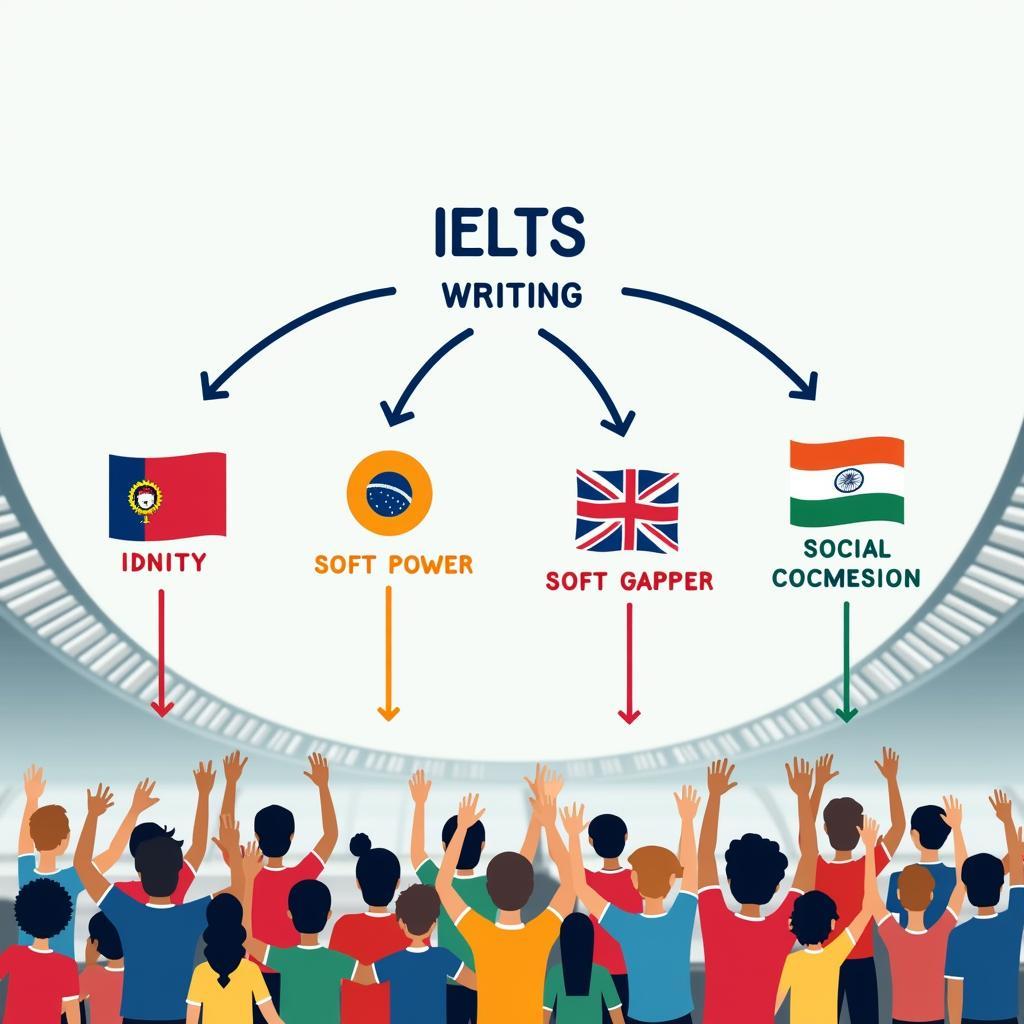 Hình minh họa vai trò thể thao trong bản sắc quốc gia và IELTS Writing Task 2
2. Bài mẫu Band 8-9 về role of sports in national identity
Bài viết Band 8-9 cần: lập luận cân bằng, ví dụ thuyết phục, từ vựng học thuật tự nhiên, câu phức chính xác, liên kết ý mạch lạc.
Bài luận (299 từ):
While sport has long been a cultural mirror, international tournaments can either deepen or distort the image a nation sees of itself. Proponents claim that mega-events forge unity by creating shared rituals and stories. When a host nation stages an inclusive opening ceremony, invests in public viewing areas, and celebrates underdog athletes, it can weave disparate communities into a single narrative of belonging. Moreover, such events function as soft power, projecting an inclusive national brand that resonates at home and abroad. The collective memory of a breakthrough match often becomes a civic reference point that transcends class and region.
However, critics warn that the same dynamics can turn toxic. When medal counts are framed as national supremacy, pride can harden into chauvinism. Public spending on stadiums may crowd out social services, fuelling resentment among taxpayers who see little long-term benefit. In some contexts, hyper-partisan media stokes “us versus them” narratives, and a minority of fans resort to tribalism, undermining the very cohesion sport is supposed to promote. In short, identity can unite, but it can also exclude.
In my view, whether hosting strengthens national identity depends less on the event than on governance and messaging. If governments prioritise transparent budgeting, invest in community sport facilities, and coordinate anti-discrimination campaigns with schools and broadcasters, then the tournament becomes a platform for civic inclusion. Conversely, if decision-making is opaque and discourse glorifies victory at all costs, division is foreseeable. Therefore, hosting can be a powerful integrative tool, but only when channelled through inclusive policy, ethical fandom, and responsible media. Identity forged in this way is not a zero-sum badge of superiority; it is a shared story to which more citizens can write a chapter.
Phân tích Band điểm
| Tiêu chí | Band | Nhận xét |
|---|---|---|
| Task Response (Hoàn thành yêu cầu) | 8.5 | Trả lời đủ hai phía, có quan điểm rõ ràng ở đoạn 3; phát triển ý bằng cơ chế (governance, messaging) và điều kiện cụ thể. Ví dụ minh họa mang tính khái quát hợp lý cho IELTS. |
| Coherence & Cohesion (Mạch lạc & Liên kết) | 8.0 | Bố cục 4 đoạn rõ ràng; câu chủ đề mạnh; liên kết logic với however, in my view, therefore; tham chiếu nhất quán. Có sự tiến triển ý tự nhiên từ lợi ích đến rủi ro và điều kiện. |
| Lexical Resource (Từ vựng) | 8.5 | Từ vựng học thuật rộng và chính xác: soft power, chauvinism, tribalism, inclusive policy, civic inclusion. Collocations tự nhiên; ít lặp; sử dụng ẩn dụ “shared story” hợp lý. |
| Grammatical Range & Accuracy (Ngữ pháp) | 8.0 | Câu phức đa dạng (mệnh đề quan hệ, điều kiện, phân từ); dấu phẩy dùng chuẩn; không có lỗi đáng kể. Một vài cấu trúc nâng cao được dùng nhưng không phô trương. |
Các yếu tố giúp bài này được chấm điểm cao
- Xác định biến số điều kiện “governance and messaging” giúp lập luận sâu hơn so với chỉ nêu tốt/xấu.
- Dùng thuật ngữ học thuật chuẩn xác: soft power, civic inclusion, transparent budgeting.
- Câu chủ đề rõ ràng ở mỗi đoạn, tránh lạc đề kinh tế thuần túy.
- Cân bằng lập luận: thừa nhận rủi ro (chauvinism, tribalism) và đề xuất giải pháp cụ thể.
- Liên kết ý mượt với trái nghĩa so sánh “identity can unite, but it can also exclude”.
- Dẫn chứng mang tính khái niệm dễ áp dụng cho nhiều quốc gia, không rơi vào ví dụ nhạy cảm.
- Kết luận đưa ra tiêu chí đánh giá (policy, fandom, media) giúp bài kết có chiều sâu.
3. Bài mẫu Band 6.5-7 về role of sports in national identity
Đặc điểm: ý tưởng rõ ràng, ví dụ hợp lý, từ vựng đủ dùng nhưng ít tinh tế; vẫn có lặp từ hoặc collocation chưa tự nhiên.
Bài luận (265 từ):
People often say that sport can bring a country together, especially when it hosts a major tournament. On the one hand, such events create a common experience: millions watch the same match, share the same songs, and feel the same emotions. When this energy is guided well, it can make citizens feel proud and connected. For example, building fan zones and supporting community teams before and after the event can turn short-term excitement into long-term participation.
On the other hand, there are clear risks. If the government spends too much money on stadiums while hospitals or schools need funding, people may feel angry instead of united. In addition, media sometimes pushes a very aggressive style of cheering, which can lead to insults against other nations or minority groups. This behaviour damages the image of the country and makes national identity look narrow and unfriendly.
In my opinion, hosting can strengthen identity if leaders communicate clearly, keep budgets transparent, and promote respectful cheering. Schools and TV channels should teach fans how to support their teams without attacking others. When citizens see that the benefits are shared, like new public sports facilities and safer transport, they are more likely to support the event and feel part of something bigger. In short, sport does have the power to unite, but only if we manage it with care and responsibility.
Key focus: keep spending fair, encourage inclusive celebrations, and make the legacy visible to ordinary people.
Phân tích Band điểm
| Tiêu chí | Band | Nhận xét |
|---|---|---|
| Task Response (Hoàn thành yêu cầu) | 7.0 | Trả lời đủ hai phía và có ý kiến rõ; nêu ví dụ thực thi (fan zones, schools/TV). Chưa có chiều sâu khái niệm như “soft power”, nhưng đầy đủ yêu cầu đề. |
| Coherence & Cohesion (Mạch lạc & Liên kết) | 7.0 | Bố cục chuẩn từng đoạn; liên kết cơ bản rõ (on the one hand/on the other hand/in my opinion). Có chút lặp “event”, “identity”. |
| Lexical Resource (Từ vựng) | 6.5 | Từ vựng đa dạng vừa đủ: transparent budget, aggressive cheering; còn đơn giản ở một số chỗ; collocation chưa thật giàu. |
| Grammatical Range & Accuracy (Ngữ pháp) | 7.0 | Câu ghép, câu phức sử dụng chính xác; ít lỗi nhỏ; cấu trúc vẫn an toàn, chưa có đảo ngữ hay mệnh đề quan hệ không xác định. |
So sánh với bài Band 8-9
- Chiều sâu khái niệm: Bài 8-9 dùng khung “soft power, civic inclusion”, bài 7 dùng mô tả trực tiếp, ít thuật ngữ học thuật.
- Ngôn ngữ: Bài 8-9 có collocations mạnh (transparent budgeting, inclusive national brand); bài 7 dùng từ “aggressive style of cheering” khá thường.
- Cấu trúc câu: Bài 8-9 đa dạng hơn (câu điều kiện nâng cao, phân từ); bài 7 chủ yếu câu phức cơ bản.
- Kết luận: Bài 8-9 nêu bộ tiêu chí đánh giá bền vững hơn; bài 7 nêu khuyến nghị thực tế nhưng khái quát.
4. Bài mẫu Band 5-6 về role of sports in national identity
Đặc điểm: ý còn chung chung, lập luận chưa cân bằng, lỗi mạo từ, chia thì, giới từ; liên kết ý yếu.
Bài luận (258 từ):
Many people think sports always unite the country, but this is not always true. Hosting big events is a good for the national identity because people watch together and feel happy. They wear flags and sing songs, so it make them proud. Also, more tourists come and they know about the country more, which is very good for economy and show the power of nation.
However, sometimes problems happen. Government spend too many money for stadiums and forget about people who need hospital or school. Then people argue and identity become weak. Some fans are very nationalism and they say bad words to other countries, which make division. Media also talk in extreme way, making the situation worst.
In my opinion, sports should be used carefully. If we make good plan and good budget, and teach people to cheer in the polite way, then it will be fine. But if everything is only about winning and show off, people will fight and it is not good for a country identity. So, sports can help, but it can also harm, depend on how we use it.
Overall, I believe that hosting is good when there is a transparency and when citizen are included to join. If not, it may cause many divisions and make people not unite.
Phân tích Band điểm
| Tiêu chí | Band | Nhận xét |
|---|---|---|
| Task Response (Hoàn thành yêu cầu) | 5.5 | Có bàn về hai phía và ý kiến, nhưng lập luận nông, ví dụ mơ hồ, sa đà kinh tế. Một số luận điểm lặp và chưa phát triển. |
| Coherence & Cohesion (Mạch lạc & Liên kết) | 5.5 | Liên kết cơ bản; thiếu từ nối đa dạng; lặp từ “good”, “people”; câu chuyển ý chưa mượt. |
| Lexical Resource (Từ vựng) | 5.5 | Từ vựng hạn chế, sai collocation: “very nationalism”, “a transparency”. Lạm dụng “good/bad”. |
| Grammatical Range & Accuracy (Ngữ pháp) | 5.0 | Lỗi mạo từ, số nhiều, chia động từ, giới từ; cấu trúc câu đơn giản, có lỗi hòa hợp chủ-vị. |
Những lỗi sai của bài – phân tích & giải thích
| Lỗi sai | Loại lỗi | Sửa lại | Giải thích |
|---|---|---|---|
| a good for | Mạo từ/cấu trúc | good for | “Good for” là cụm cố định, không dùng “a”. |
| make them proud | Hòa hợp chủ-vị | makes them proud | Chủ ngữ “it” số ít → động từ thêm “s”. |
| very good for economy | Mạo từ | very good for the economy | “Economy” khái niệm chung cần “the” khi nói về nền kinh tế của một quốc gia. |
| power of nation | Mạo từ/sở hữu | power of the nation | Thiếu “the”. |
| too many money | Danh từ không đếm được | too much money | Money là không đếm được. |
| very nationalism | Từ loại | very nationalistic / very nationalist | Dùng tính từ, không dùng danh từ “nationalism”. |
| in extreme way | Mạo từ/collocation | in an extreme way / extremely | Cần “an”; hoặc dùng trạng từ “extremely”. |
| a transparency | Danh từ không đếm được | transparency | Transparency thường không đếm được trong ngữ cảnh này. |
| citizen are included | Số ít/số nhiều | citizens are included | Thiếu “s” số nhiều. |
| cause many divisions | Collocation | cause division | Dạng không đếm được tự nhiên hơn. |
| not unite | Từ loại | not united | Cần tính từ “united” để miêu tả trạng thái. |
Cách Cải Thiện Từ Band 6 Lên Band 7
- Tập trung trọng tâm đề: phát triển luận điểm về bản sắc (identity) trước khi bàn lợi ích kinh tế.
- Nâng cấp collocations: replace “good/bad” bằng “beneficial/detrimental”, “foster cohesion”, “fuel resentment”.
- Đa dạng từ nối: besides, conversely, provided that, in practice.
- Kiểm soát ngữ pháp cốt lõi: mạo từ (the economy), danh từ không đếm được (money, information), hòa hợp chủ-vị.
- Thêm ví dụ chính sách cụ thể: fan education programs, legacy facilities, transparent budgeting portals.
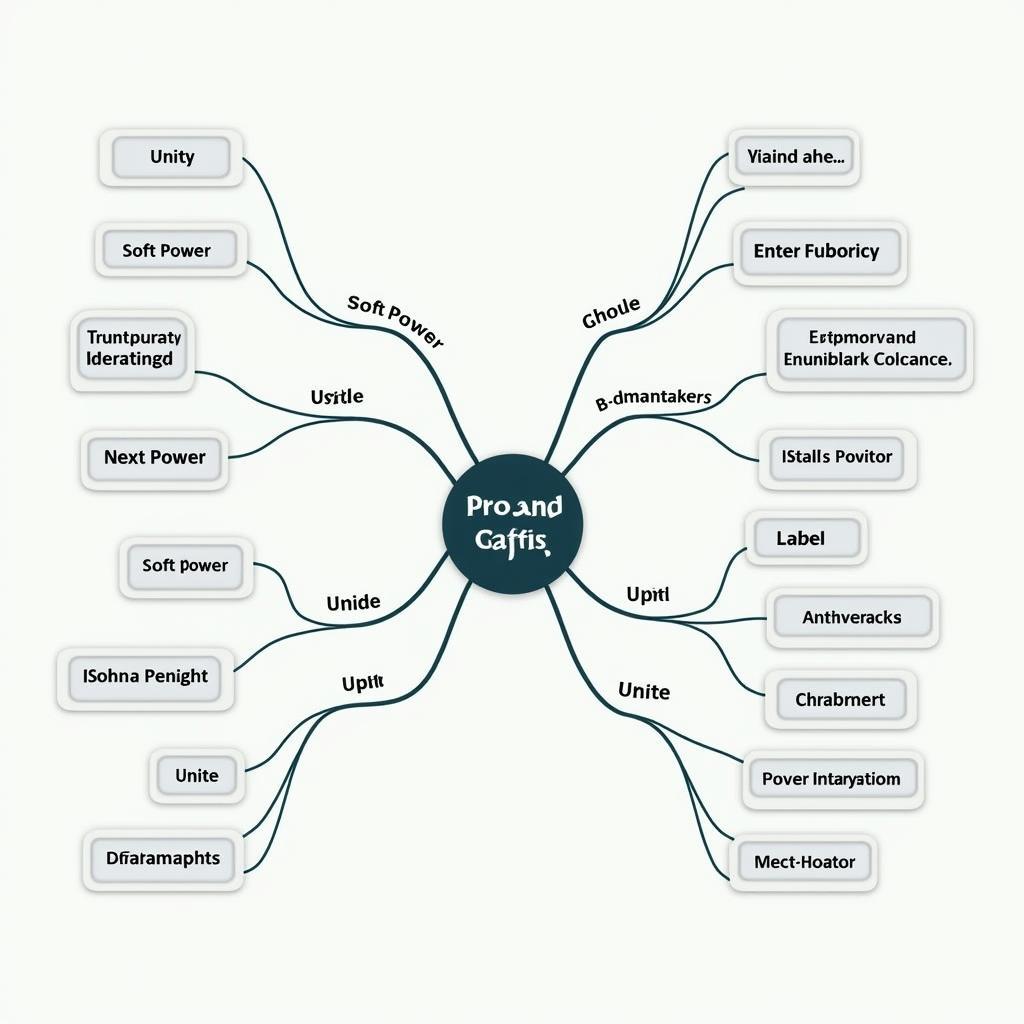 Sơ đồ lập luận cho bài viết role of sports in national identity với ví dụ và bằng chứng
5. Từ vựng quan trọng cần nhớ
| Từ/Cụm từ | Loại từ | Phiên âm | Nghĩa tiếng Việt | Ví dụ (tiếng Anh) và Collocations |
|---|---|---|---|---|
| national identity | n. | /ˈnæʃnəl aɪˈdentəti/ | bản sắc quốc gia | Sport can reinforce national identity. Collocations: forge/shape/reflect national identity |
| social cohesion | n. | /ˈsəʊʃl kəʊˈhiːʒn/ | gắn kết xã hội | Mega-events may foster social cohesion. |
| soft power | n. | /ˌsɒft ˈpaʊər/ | quyền lực mềm | Hosting the Olympics is a form of soft power. |
| chauvinism | n. | /ˈʃəʊvɪnɪzəm/ | chủ nghĩa sô-vanh | Excessive chauvinism can alienate minorities. |
| tribalism | n. | /ˈtraɪbəlɪzəm/ | chủ nghĩa bộ lạc | Sports tribalism sometimes leads to violence. |
| inclusive | adj. | /ɪnˈkluːsɪv/ | bao trùm | An inclusive national brand attracts global goodwill. |
| transparent budgeting | n. | /trænˈspærənt ˈbʌdʒɪtɪŋ/ | lập ngân sách minh bạch | Transparent budgeting reduces public resentment. |
| civic inclusion | n. | /ˈsɪvɪk ɪnˈkluːʒn/ | hòa nhập công dân | Policies should prioritise civic inclusion. |
| public scrutiny | n. | /ˈpʌblɪk ˈskruːtɪni/ | giám sát công chúng | Projects must withstand public scrutiny. |
| zero-sum | adj. | /ˌzɪərəʊ ˈsʌm/ | tổng bằng không (được – mất) | Identity should not be a zero-sum contest. |
| to galvanise support | v. phr. | /ˈɡælvənaɪz səˈpɔːt/ | kích hoạt/khơi dậy ủng hộ | The campaign galvanised support across regions. |
| to fuel resentment | v. phr. | /fjuːəl rɪˈzentmənt/ | làm gia tăng bất bình | Cost overruns fuel public resentment. |
| provided that | linker | /prəˈvaɪdɪd ðæt/ | miễn là | Hosting helps, provided that funds are transparent. |
| conversely | linker | /kənˈvɜːsli/ | ngược lại | Conversely, poor planning undermines unity. |
| symbol/emblem | n. | /ˈsɪmbəl/ /ˈembləm/ | biểu tượng | The team became a national symbol. Emblem of unity |
Lưu ý phát âm: practice câu chứa âm /ʃ/ và /ʒ/ (cohesion), trọng âm đúng ở -sion/-tion.
6. Cấu trúc câu dễ ăn điểm cao
- Câu phức với mệnh đề phụ thuộc
- Công thức: Mệnh đề chính + when/if/although/because + mệnh đề phụ.
- Ví dụ (từ bài Band 8-9): When a host nation stages an inclusive opening ceremony, it can weave disparate communities into a single narrative.
- Vì sao ghi điểm: Nêu rõ điều kiện-nguyên nhân-kết quả; mạch lạc lập luận.
- Ví dụ bổ sung: Although costs are high, citizens may accept them if benefits are shared. Because media shapes narratives, messaging matters.
- Lỗi thường gặp: Thiếu dấu phẩy sau mệnh đề phụ đặt đầu câu; dùng thì không nhất quán.
- Mệnh đề quan hệ không xác định (non-defining relative clause)
- Công thức: Danh từ, which/who + mệnh đề bổ sung, …
- Ví dụ: Public spending on stadiums may crowd out social services, which fuels resentment.
- Điểm cộng: Bổ sung thông tin mượt, tăng độ tinh tế.
- Ví dụ bổ sung: The opening ceremony, which showcased diversity, resonated with viewers. The policy, which lacked transparency, backfired.
- Lỗi thường gặp: Quên dấu phẩy hai bên; nhầm which/that.
- Cụm phân từ (participle phrase)
- Công thức: V-ing/V-ed + cụm, mô tả trạng thái/nguyên nhân.
- Ví dụ: Projecting an inclusive national brand, the event fosters cohesion.
- Điểm cộng: Nén thông tin, tăng nhịp điệu học thuật.
- Ví dụ: Framed as a civic festival, the tournament united cities. Ignored by planners, local needs were sidelined.
- Lỗi thường gặp: Lủng cụm, chủ ngữ mơ hồ (dangling participle).
- Câu chẻ (Cleft sentences)
- Công thức: It is/was + thành phần nhấn mạnh + that + mệnh đề.
- Ví dụ: It is governance and messaging that determine whether identity is strengthened.
- Điểm cộng: Nhấn mạnh trọng tâm lập luận.
- Ví dụ: It is transparent budgeting that builds trust. It was inclusive coverage that changed public attitudes.
- Lỗi thường gặp: Nhấn sai thành phần; dùng quá nhiều gây gượng.
- Câu điều kiện nâng cao (mixed/third conditional)
- Công thức: If + past perfect, S + would/could + V (hiện tại/giả định).
- Ví dụ: If decision-making is opaque, division is foreseeable. (Type 1 nâng cao)
- Ví dụ bổ sung: If spending had been audited, fewer people would oppose the event. If fans were educated, incidents would likely decline.
- Lỗi thường gặp: Sai thì; nhầm would trong mệnh đề if.
- Đảo ngữ (Inversion)
- Công thức: Only if/Only when/Not until + trợ động từ + S + V.
- Ví dụ: Only when discourse rejects zero-sum pride can identity become inclusive.
- Điểm cộng: Tạo nhấn mạnh, điểm ngữ pháp nâng cao.
- Ví dụ: Not until budgets were published did trust improve. Never has media been so influential in shaping identity.
- Lỗi thường gặp: Quên đảo trợ động; dùng đảo ngữ liên tục gây nặng nề.
7. Checklist Tự Đánh Giá
- Trước khi viết:
- Xác định rõ yêu cầu: discuss both + opinion hay agree/disagree?
- Gạch 3-4 ý chính về identity (cohesion, soft power) và rủi ro (chauvinism, budget).
- Chọn ví dụ an toàn, không nhạy cảm chính trị.
- Trong khi viết:
- Câu chủ đề rõ ràng mỗi đoạn.
- Dùng 2-3 collocations chủ đề/đoạn.
- Kiểm tra mạo từ và hòa hợp chủ-vị ngay sau khi viết xong mỗi đoạn.
- Sau khi viết:
- Soát lỗi mạo từ (the economy), danh từ không đếm được (money), giới từ.
- Tìm và thay thế “very good/bad” bằng từ học thuật.
- Đảm bảo có kết luận nhấn mạnh điều kiện/giải pháp.
- Mẹo quản lý thời gian:
- 3-4 phút brainstorm, 2 phút dàn ý, 25-27 phút viết, 4-5 phút soát lỗi.
- Viết 270-310 từ để đủ phát triển mà vẫn kịp soát.
Kết bài
Chủ đề role of sports in national identity là mảnh đất tốt để thể hiện tư duy phản biện và vốn từ học thuật về xã hội. Hãy ghi nhớ: tập trung bản sắc và gắn kết xã hội trước, kinh tế sau; phát triển lập luận bằng cơ chế (governance, messaging, legacy); và sử dụng collocations chuẩn xác. Con đường cải thiện thực tế: luyện dàn ý 10 phút mỗi ngày, viết 2 bài/tuần, nhận phản hồi có mục tiêu theo 4 tiêu chí band. Sau 4-6 tuần, bạn có thể nâng điểm rõ rệt nếu duy trì kỷ luật và phản hồi chất lượng.
Hãy thử viết một phiên bản riêng theo đề bài hôm nay, đăng cùng dàn ý và câu chủ đề ở phần bình luận để được góp ý. Tham khảo thêm các chủ đề tương tự tại [internal_link: education-policy-task2] và [internal_link: culture-globalisation-task2]. Chúc bạn luyện viết hiệu quả, chắc kỹ năng để sẵn sàng đạt band mục tiêu trong IELTS Writing Task 2.


[…] tự như vai trò của thể thao trong bản sắc quốc gia, nghệ thuật và văn hóa cũng đóng góp quan trọng vào việc xây dựng niềm tự […]