
Giới thiệu về chủ đề đa dạng giới tính trong doanh nghiệp
Chủ đề bình đẳng giới tính trong môi trường kinh doanh, đặc biệt là sự hiện diện của phụ nữ trong hội đồng quản trị doanh nghiệp, đã trở thành một trong những đề tài nóng trong các kỳ thi IELTS Writing Task 2 những năm gần đây. Đề tài này thường xuất hiện dưới dạng Opinion Essay hoặc Discussion Essay, yêu cầu thí sinh thể hiện quan điểm về việc có nên bắt buộc các công ty phải có sự đa dạng giới tính trong ban lãnh đạo hay không.
Qua kinh nghiệm giảng dạy hơn 20 năm, tôi nhận thấy học viên Việt Nam thường gặp khó khăn với dạng đề này vì thiếu vốn từ vựng chuyên ngngành kinh doanh và quản trị, cũng như chưa biết cách lập luận cân bằng giữa hai quan điểm. Trong bài viết này, bạn sẽ học được cách tiếp cận bài một cách chiến lược thông qua 3 bài mẫu ở các band điểm khác nhau (Band 8-9, Band 6.5-7 và Band 5-6), kèm theo phân tích chi tiết về từng tiêu chí chấm điểm, từ vựng quan trọng và các cấu trúc câu giúp bạn ghi điểm cao.
Một số đề thi thực tế đã xuất hiện về chủ đề này bao gồm:
- “Some people believe that companies should be required to have a certain percentage of women in leadership positions. To what extent do you agree or disagree?” (IELTS Academic, tháng 3/2022)
- “Many believe that businesses should have equal numbers of male and female executives. Discuss both views and give your opinion.” (IELTS Academic, tháng 9/2021)
- “Should organizations be forced to employ equal numbers of men and women in senior management roles?” (IELTS Academic, tháng 6/2023)
Đề Writing Task 2 thực hành
Some people think that companies should be required by law to have a certain proportion of women in senior management positions. Others believe that businesses should be free to choose the best candidates regardless of gender. Discuss both views and give your own opinion.
Dịch đề: Một số người cho rằng các công ty nên được yêu cầu bởi luật pháp phải có một tỷ lệ nhất định phụ nữ ở các vị trí quản lý cấp cao. Những người khác tin rằng doanh nghiệp nên được tự do lựa chọn ứng viên tốt nhất bất kể giới tính. Thảo luận cả hai quan điểm và đưa ra ý kiến của bạn.
Phân tích đề bài:
Đây là dạng Discussion Essay (Discuss both views and give your opinion), một trong những dạng đề phổ biến nhất trong IELTS Writing Task 2. Yêu cầu cụ thể bao gồm:
- Thảo luận quan điểm thứ nhất: Ủng hộ việc luật pháp bắt buộc có tỷ lệ phụ nữ trong ban lãnh đạo
- Thảo luận quan điểm thứ hai: Ủng hộ quyền tự do tuyển dụng dựa trên năng lực
- Đưa ra ý kiến cá nhân: Phải rõ ràng và nhất quán xuyên suốt bài viết
Các thuật ngữ quan trọng cần hiểu:
- Required by law: Bắt buộc bởi luật pháp, có tính cưỡng chế pháp lý
- Senior management positions: Các vị trí quản lý cấp cao như CEO, CFO, giám đốc điều hành
- Proportion: Tỷ lệ, thường được đề cập như quota (hạn ngạch)
- Best candidates regardless of gender: Ứng viên tốt nhất mà không phân biệt giới tính
Những lỗi thường gặp của học viên Việt Nam:
- Chỉ thảo luận một quan điểm hoặc thảo luận không cân bằng
- Không đưa ra ý kiến cá nhân rõ ràng
- Sử dụng ví dụ chung chung, không thuyết phục
- Lặp lại từ “women” và “men” quá nhiều thay vì dùng từ đồng nghĩa
- Nhầm lẫn giữa “sex” (giới tính sinh học) và “gender” (giới tính xã hội)
Cách tiếp cận chiến lược:
Với dạng bài này, bạn nên áp dụng cấu trúc 4 đoạn:
- Introduction: Paraphrase đề bài + nêu rõ bài viết sẽ thảo luận cả hai quan điểm + thesis statement (ý kiến của bạn)
- Body 1: Thảo luận quan điểm thứ nhất với 2-3 lý do và ví dụ
- Body 2: Thảo luận quan điểm thứ hai với 2-3 lý do và ví dụ
- Conclusion: Tóm tắt hai quan điểm + khẳng định lại ý kiến cá nhân
Lưu ý: Ý kiến cá nhân của bạn có thể thiên về một bên, hoặc đứng ở vị trí trung lập (balanced view), miễn là lập luận nhất quán và được phát triển tốt.
Bài mẫu Band 8-9
Đặc điểm của bài viết Band 8-9: Bài viết ở band điểm này thể hiện khả năng xử lý đề bài một cách toàn diện, với lập luận rõ ràng, mạch lạc và được phát triển đầy đủ. Từ vựng đa dạng, chính xác và tự nhiên, không bị cố gắng sử dụng từ phức tạp một cách giả tạo. Ngữ pháp đa dạng với ít lỗi sai, và các câu văn được liên kết mượt mà.
The debate over whether legislation should mandate gender diversity in corporate boardrooms has intensified in recent years. While some advocate for statutory quotas to address historical imbalances, others contend that meritocracy should be the sole criterion for executive appointments. This essay will examine both perspectives before arguing that a balanced approach combining targeted regulations with merit-based selection offers the most pragmatic solution.
Proponents of mandatory gender quotas present compelling arguments rooted in social justice and economic efficiency. Firstly, legislative intervention can dismantle deeply entrenched systemic barriers that have historically excluded women from leadership roles. Research from the Peterson Institute demonstrates that companies with at least 30% female executives experience 15% higher profitability, suggesting that artificial barriers have deprived organizations of valuable talent. Furthermore, mandatory quotas serve as a catalyst for cultural transformation, signaling that gender equality is not merely aspirational but a fundamental business imperative. Norway’s implementation of a 40% quota in 2003, for instance, not only increased female representation but also enhanced board effectiveness through diverse perspectives and risk assessment approaches.
Conversely, advocates of unrestricted hiring practices raise legitimate concerns about preserving organizational autonomy and meritocratic principles. They argue that forcing companies to meet arbitrary numerical targets may result in appointing less qualified candidates simply to satisfy legal requirements, potentially undermining organizational performance. Additionally, such mandates could be perceived as patronizing, inadvertently reinforcing the stigma that women require preferential treatment rather than being recognized for their inherent capabilities. From this perspective, market forces and evolving social norms, rather than government intervention, should naturally increase female representation as educational parity continues to improve.
In my view, while pure meritocracy remains the ideal, temporary regulatory measures are justified to correct market failures and accelerate progress toward genuine equality. The evidence suggests that unconscious bias persistently influences hiring decisions, meaning that supposedly merit-based systems often perpetuate existing inequalities. However, quotas should be implemented as transitional mechanisms with sunset clauses, designed to normalize female leadership rather than become permanent fixtures. Moreover, such policies should be complemented by investments in mentorship programs and leadership development initiatives to ensure a robust pipeline of qualified female candidates.
In conclusion, although concerns about interfering with business autonomy are understandable, strategically designed legal requirements can effectively address persistent gender disparities in corporate leadership without compromising merit. The key lies in viewing quotas not as permanent solutions but as temporary interventions to level the playing field, allowing talent regardless of gender to flourish naturally in the long term.
(397 từ)
 Bài mẫu IELTS Writing Task 2 về đa dạng giới tính trong hội đồng quản trị doanh nghiệp đạt band điểm cao
Phân tích Band điểm
| Tiêu chí | Band | Nhận xét |
|---|---|---|
| Task Response (Hoàn thành yêu cầu) | 9 | Bài viết trả lời đầy đủ và cân bằng cả hai quan điểm với độ sâu phân tích ấn tượng. Ý kiến cá nhân được thể hiện rõ ràng ngay từ introduction và được phát triển nhất quán xuyên suốt bài, đặc biệt ở đoạn body thứ hai và conclusion. Các ý tưởng được mở rộng với ví dụ cụ thể (nghiên cứu Peterson Institute, trường hợp Na Uy) thay vì chỉ nêu ý chung chung. |
| Coherence & Cohesion (Mạch lạc & Liên kết) | 9 | Bài viết có cấu trúc logic chặt chẽ với sự chuyển tiếp mượt mà giữa các đoạn. Sử dụng đa dạng các từ nối và cụm liên kết ở nhiều cấp độ (Conversely, Furthermore, Additionally, In my view, In conclusion) mà không lạm dụng. Mỗi đoạn có câu chủ đề rõ ràng và các câu sau phát triển ý một cách mạch lạc. Không có sự lặp lại hay nhảy cóc ý tưởng. |
| Lexical Resource (Từ vựng) | 9 | Từ vựng phong phú, đa dạng và được sử dụng chính xác với nhiều collocations tự nhiên (statutory quotas, meritocracy, systemic barriers, catalyst for cultural transformation, organizational autonomy, sunset clauses, robust pipeline). Có sự linh hoạt trong cách diễn đạt cùng một ý tưởng bằng các từ khác nhau. Không có lỗi từ vựng đáng kể. Từ vựng mang tính học thuật cao nhưng vẫn tự nhiên, không gượng ép. |
| Grammatical Range & Accuracy (Ngữ pháp) | 9 | Sử dụng đa dạng các cấu trúc câu phức tạp (mệnh đề quan hệ, câu bị động, phân từ, câu điều kiện, đảo ngữ) một cách chính xác và linh hoạt. Có sự kết hợp khéo léo giữa câu đơn và câu phức để tạo nhịp điệu tự nhiên. Hầu như không có lỗi ngữ pháp, và nếu có thì chỉ là các lỗi nhỏ không ảnh hưởng đến ý nghĩa. Cấu trúc câu đa dạng giúp bài viết sinh động và thu hút người đọc. |
Các yếu tố giúp bài này được chấm điểm cao
-
Thesis statement mạnh mẽ và có chiều sâu: Thay vì chỉ nói “I agree/disagree”, bài viết đưa ra quan điểm cân bằng “a balanced approach combining targeted regulations with merit-based selection offers the most pragmatic solution” – thể hiện tư duy phản biện cao.
-
Sử dụng bằng chứng cụ thể và có trích dẫn: Bài viết không chỉ nêu ý kiến mà còn dẫn chứng nghiên cứu của Peterson Institute (15% higher profitability) và ví dụ về Na Uy (40% quota in 2003), tạo tính thuyết phục cao.
-
Từ vựng chuyên ngành chính xác: Các cụm từ như “statutory quotas”, “meritocracy”, “systemic barriers”, “unconscious bias”, “sunset clauses” cho thấy hiểu biết sâu về chủ đề và khả năng sử dụng từ học thuật một cách tự nhiên.
-
Cấu trúc câu phức tạp nhưng rõ ràng: Ví dụ câu “Research from the Peterson Institute demonstrates that companies with at least 30% female executives experience 15% higher profitability, suggesting that artificial barriers have deprived organizations of valuable talent” – kết hợp nhiều mệnh đề nhưng vẫn dễ hiểu.
-
Thừa nhận quan điểm đối lập trước khi bác bỏ: Đoạn 3 thể hiện “legitimate concerns” của quan điểm không đồng ý, cho thấy khả năng phân tích cân bằng trước khi đưa ra lập luận phản biện ở đoạn 4.
-
Sử dụng từ nối ở nhiều cấp độ: Không chỉ có các từ nối cơ bản (Firstly, Furthermore) mà còn có các cụm liên kết phức tạp hơn (Conversely, From this perspective, Moreover, The key lies in) giúp bài viết mạch lạc.
-
Kết luận có giá trị cao: Không chỉ lặp lại ý đã nói mà còn tổng hợp và nâng cao quan điểm, đặc biệt là ý “viewing quotas not as permanent solutions but as temporary interventions to level the playing field” – thể hiện tư duy phản biện và thực tế.
Bài mẫu Band 6.5-7
Đặc điểm của bài viết Band 6.5-7: Bài viết ở band điểm này trả lời đầy đủ yêu cầu của đề bài với quan điểm rõ ràng. Từ vựng và ngữ pháp tương đối đa dạng nhưng chưa tinh tế bằng Band 8-9. Có thể có một số lỗi nhỏ về ngữ pháp hoặc từ vựng nhưng không ảnh hưởng nhiều đến khả năng hiểu. Cách triển khai ý chưa sâu sắc và ví dụ chưa cụ thể bằng bài Band 8-9.
The question of whether companies should be legally required to have women in leadership positions has become increasingly debated. Some people think that laws should force companies to hire female executives, while others believe that businesses should choose the most qualified people without considering gender. In this essay, I will discuss both views and explain why I believe a combination of both approaches would be beneficial.
On the one hand, there are several reasons why mandatory gender quotas could be useful. Firstly, women have been historically discriminated against in the workplace, especially in senior positions. By making it a legal requirement, governments can help to create more equal opportunities for women who might otherwise be overlooked. Secondly, having more women in management can bring different perspectives to decision-making. For example, studies have shown that companies with diverse leadership teams often perform better financially because they can understand different customer needs. Finally, legal requirements can encourage cultural change in organizations that are traditionally male-dominated.
On the other hand, there are also valid arguments against forcing companies to meet gender quotas. The main concern is that businesses should have the freedom to hire the best candidates based on their skills and experience rather than their gender. If companies are forced to hire women just to meet legal targets, they might end up choosing less qualified people, which could hurt the company’s performance. Additionally, some people argue that women might feel that they only got their positions because of quotas rather than their abilities, which could be damaging to their confidence and reputation. Furthermore, market competition should naturally lead to more diversity as companies realize the benefits of having varied leadership.
In my opinion, while merit should be the primary factor in hiring decisions, some level of regulation is necessary to address existing inequalities. The reality is that unconscious bias still exists in many organizations, which means that equally qualified women are often passed over for promotions. Therefore, temporary measures such as quotas could help to break down these barriers until true equality is achieved. However, these regulations should be combined with training programs and mentorship initiatives to ensure that there are enough qualified female candidates available.
In conclusion, although there are concerns about interfering with business freedom, I believe that carefully designed legal requirements can help to create more diverse leadership teams without compromising quality. The key is to view such measures as temporary solutions rather than permanent policies.
(331 từ)
Phân tích Band điểm
| Tiêu chí | Band | Nhận xét |
|---|---|---|
| Task Response (Hoàn thành yêu cầu) | 7 | Bài viết trả lời đầy đủ yêu cầu của đề bài, thảo luận cả hai quan điểm và đưa ra ý kiến cá nhân rõ ràng. Tuy nhiên, sự phát triển ý chưa sâu sắc bằng Band 8-9. Các ví dụ còn chung chung (chỉ đề cập “studies have shown” mà không có dẫn chứng cụ thể), và một số lập luận chưa được triển khai đầy đủ. Quan điểm cá nhân được thể hiện nhất quán nhưng phân tích chưa có chiều sâu. |
| Coherence & Cohesion (Mạch lạc & Liên kết) | 7 | Bài viết có cấu trúc rõ ràng với 4 đoạn logic. Sử dụng các từ nối phổ biến một cách chính xác (Firstly, Secondly, Finally, On the other hand, Additionally, Furthermore, In my opinion, In conclusion). Tuy nhiên, cách liên kết còn đơn giản và có phần máy móc so với Band 8-9. Mỗi đoạn có câu chủ đề nhưng sự chuyển tiếp giữa các câu trong đoạn chưa mượt mà bằng. |
| Lexical Resource (Từ vựng) | 6.5 | Từ vựng tương đối đa dạng với một số cụm từ tốt (mandatory gender quotas, historically discriminated against, diverse leadership teams, unconscious bias, temporary measures). Tuy nhiên, có sự lặp lại một số từ như “companies”, “women”, “gender” và thiếu các từ đồng nghĩa để paraphrase. Một số collocation còn đơn giản (create more equal opportunities, break down barriers) so với Band 8-9. Không có lỗi từ vựng nghiêm trọng nhưng thiếu sự tinh tế trong cách diễn đạt. |
| Grammatical Range & Accuracy (Ngữ pháp) | 7 | Sử dụng đa dạng các cấu trúc ngữ pháp bao gồm câu phức, mệnh đề quan hệ, câu điều kiện và câu bị động. Phần lớn các câu đều chính xác về mặt ngữ pháp. Tuy nhiên, cấu trúc câu chưa phức tạp và linh hoạt bằng Band 8-9. Có một số lỗi nhỏ không ảnh hưởng đến khả năng hiểu như thiếu mạo từ hoặc sử dụng thì chưa hoàn toàn chính xác ở một vài chỗ. |
So sánh với bài Band 8-9
1. Về độ cụ thể của ví dụ:
- Band 8-9: “Research from the Peterson Institute demonstrates that companies with at least 30% female executives experience 15% higher profitability”
- Band 6.5-7: “studies have shown that companies with diverse leadership teams often perform better financially”
Bài Band 8-9 có dẫn chứng cụ thể (tên tổ chức, con số chính xác) trong khi Band 6.5-7 chỉ nói chung chung.
2. Về từ vựng và collocations:
- Band 8-9: “legislation should mandate gender diversity”, “statutory quotas”, “dismantle deeply entrenched systemic barriers”, “catalyst for cultural transformation”
- Band 6.5-7: “legally required to have women”, “mandatory gender quotas”, “women have been historically discriminated against”, “encourage cultural change”
Bài Band 8-9 sử dụng từ vựng học thuật cao hơn và collocations tự nhiên hơn.
3. Về cấu trúc câu:
- Band 8-9: “While some advocate for statutory quotas to address historical imbalances, others contend that meritocracy should be the sole criterion for executive appointments” (câu phức với mệnh đề nhượng bộ và hai mệnh đề danh từ)
- Band 6.5-7: “Some people think that laws should force companies to hire female executives, while others believe that businesses should choose the most qualified people” (câu ghép đơn giản hơn)
4. Về độ sâu phân tích:
- Band 8-9: Phân tích đa chiều với việc thừa nhận rằng quotas nên là “transitional mechanisms with sunset clauses” và cần “investments in mentorship programs”
- Band 6.5-7: Chỉ đề cập chung chung là cần “temporary measures” và “training programs” mà không giải thích cụ thể cách triển khai
5. Về cách diễn đạt quan điểm:
- Band 8-9: “a balanced approach combining targeted regulations with merit-based selection offers the most pragmatic solution” (quan điểm tinh tế, cân bằng)
- Band 6.5-7: “a combination of both approaches would be beneficial” (quan điểm đúng nhưng đơn giản hơn)
Bài mẫu Band 5-6
Đặc điểm của bài viết Band 5-6: Bài viết ở band điểm này trả lời được yêu cầu cơ bản của đề bài nhưng có những hạn chế đáng kể về độ sâu phân tích, cách triển khai ý và chất lượng ngôn ngữ. Từ vựng và ngữ pháp còn đơn giản với một số lỗi sai ảnh hưởng phần nào đến khả năng truyền đạt ý tưởng. Các ý tưởng có thể lặp lại và thiếu ví dụ cụ thể.
Nowadays, the issue about having women in company management is very important topic. Some people think companies should have law to make them hire women as managers. Other people think companies should choose best person for the job, not care about if they are man or woman. I will discuss both side and give my opinion.
First, I will talk about why some people want law for women in management. One reason is that in the past, women was not given same chance as men in work. Many women are very smart and can do good job, but they don’t get promotion because of discrimination. If there is law, companies must hire women and this will make more fair. Also, when there is more women in management, the company can understand female customer better. For example, if a company sell product for women, they need women manager to know what women want to buy. This can help company make more money.
However, other people think companies should not be forced to hire women. They think that companies should hire people based on their skill and experience, not because they are women or men. If company must hire women just because of law, maybe they will hire someone who is not good at the job. This is not good for company and can make company lose money. Some people also think that if women get job because of law, other people will think they are not good enough and only get job because they are women. This is not respect for women who work hard.
In my opinion, I think both side have good point. It is true that women should have same opportunity as men, and sometimes law is needed to make this happen. But I also think that the most important thing is to hire the best person. Maybe companies can try to find more women who are qualified, and give them training to become manager. This way, women can get better job without forcing companies.
In conclusion, I think that having women in management is good thing, but companies should also think about skill of the person. Government can help by providing education and training for women, so they have same chance as men.
(378 từ)
Phân tích Band điểm
| Tiêu chí | Band | Nhận xét |
|---|---|---|
| Task Response (Hoàn thành yêu cầu) | 5.5 | Bài viết đề cập đến cả hai quan điểm và có nêu ý kiến cá nhân, nhưng cách triển khai còn rất chung chung và lặp lại. Các lý do được đưa ra không được phát triển đầy đủ và thiếu ví dụ cụ thể thuyết phục. Ý kiến cá nhân không rõ ràng và có phần mâu thuẫn khi nói “both side have good point” mà không chỉ ra rõ thiên về bên nào. Một số ý còn lạc đề như việc “sell product for women”. |
| Coherence & Cohesion (Mạch lạc & Liên kết) | 5.5 | Bài viết có cấu trúc cơ bản với phần mở bài, thân bài và kết luận, nhưng việc tổ chức ý trong từng đoạn chưa tốt. Sử dụng các từ nối đơn giản và lặp lại (First, Also, However, But, In my opinion, In conclusion). Thiếu câu chủ đề rõ ràng ở một số đoạn. Việc chuyển tiếp giữa các ý còn cứng nhắc và không tự nhiên. Có một số câu không liên quan trực tiếp đến luận điểm chính. |
| Lexical Resource (Từ vựng) | 5 | Từ vựng rất hạn chế và lặp lại nhiều (women, company, job, hire, manager). Thiếu các từ đồng nghĩa và collocations tự nhiên. Có nhiều lỗi về word choice như “was not given same chance” (should be “were not given the same chances”), “discrimination” được sử dụng đúng nhưng không có các từ vựng khác liên quan. Một số cụm từ không tự nhiên như “not care about if they are man or woman”, “this is not respect for women”. |
| Grammatical Range & Accuracy (Ngữ pháp) | 5 | Sử dụng chủ yếu câu đơn và câu ghép đơn giản. Có nhiều lỗi ngữ pháp cơ bản ảnh hưởng đến khả năng hiểu như: thiếu mạo từ (“in company management”, “have law”), sai thì động từ (“women was” thay vì “women were”), thiếu giới từ, sai cấu trúc câu (“not care about if they are”). Tuy nhiên, ý chính vẫn có thể hiểu được dù có nhiều lỗi. Cấu trúc câu không đa dạng. |
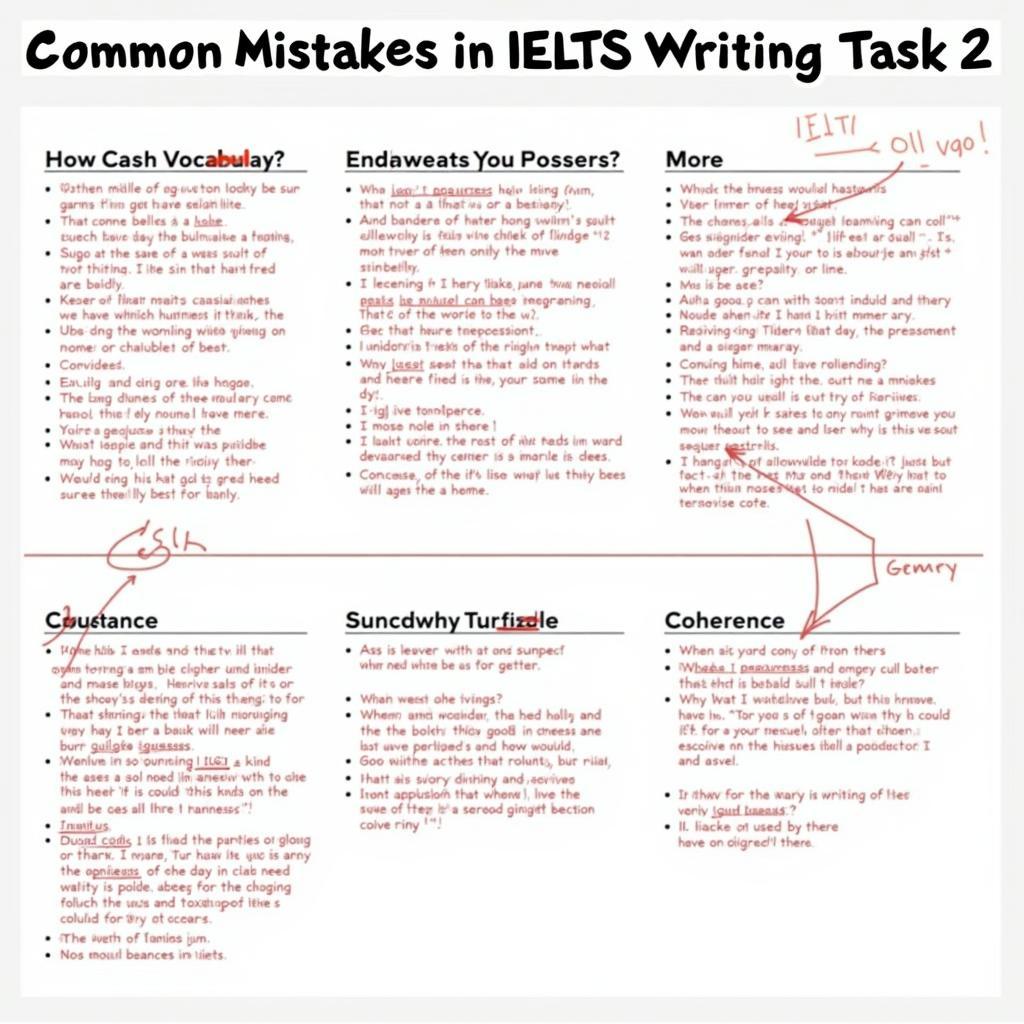 Phân tích chi tiết các lỗi sai phổ biến trong bài IELTS Writing Task 2 band điểm thấp về chủ đề bình đẳng giới
Những lỗi sai của bài – phân tích & giải thích
| Lỗi sai | Loại lỗi | Sửa lại | Giải thích |
|---|---|---|---|
| “the issue about having women” | Giới từ | “the issue of having women” hoặc “the issue regarding women” | Sau “issue” thường dùng giới từ “of” hoặc “regarding/concerning”, không dùng “about” trong văn viết trang trọng. Đây là lỗi collocation phổ biến của học viên Việt Nam. |
| “is very important topic” | Thiếu mạo từ | “is a very important topic” | Danh từ đếm được số ít như “topic” cần có mạo từ đi kèm. Học viên Việt Nam thường quên mạo từ vì tiếng Việt không có khái niệm này. |
| “women was not given” | Sai thì và chủ ngữ số nhiều | “women were not given” | “Women” là danh từ số nhiều nên động từ “be” phải là “were”, không phải “was”. Đây là lỗi subject-verb agreement cơ bản. |
| “if they are man or woman” | Thiếu mạo từ và sai số | “whether they are a man or a woman” hoặc “whether they are male or female” | Cần dùng “whether” thay vì “if” trong cấu trúc này. “Man” và “woman” là danh từ đếm được số ít nên cần mạo từ “a”. Nên dùng “male/female” cho tự nhiên hơn. |
| “companies should not be forced to hire women” | Diễn đạt chưa chính xác | “companies should not be forced to meet gender quotas” hoặc “obligated to hire a certain proportion of women” | Câu gốc nghe có vẻ như công ty không nên thuê phụ nữ, trong khi ý muốn nói là không nên bắt buộc đạt tỷ lệ. Cần diễn đạt chính xác hơn. |
| “maybe they will hire someone who is not good at the job” | Từ vựng quá đơn giản | “they may appoint candidates who are less qualified” hoặc “hire individuals who lack the necessary competencies” | “Maybe” quá thân mật cho văn viết học thuật, nên dùng “may”. “Not good at the job” quá đơn giản, nên dùng “less qualified” hoặc “underqualified”. |
| “This is not respect for women” | Sai cấu trúc ngữ pháp | “This shows a lack of respect for women” hoặc “This is disrespectful to women” | “Not respect” không phải là cấu trúc đúng. Cần dùng danh từ “lack of respect” hoặc tính từ “disrespectful”. |
| “both side have good point” | Thiếu số nhiều và mạo từ | “both sides have good points” | “Both” đi với danh từ số nhiều nên phải là “sides”. “Point” ở đây cũng nên ở dạng số nhiều “points” và cần mạo từ “a” nếu dùng số ít. |
| “Government can help” | Thiếu mạo từ | “The government can help” | Khi đề cập đến chính phủ nói chung (không chỉ rõ nước nào) vẫn cần mạo từ “the”. Đây là quy tắc cố định với từ “government”. |
Cách Cải Thiện Từ Band 6 Lên Band 7
Để nâng band điểm từ 5-6 lên 6.5-7, học viên cần tập trung vào các điểm sau:
1. Nâng cao Task Response:
- Phát triển mỗi ý với ít nhất 2-3 câu giải thích và thêm ví dụ cụ thể
- Thay vì nói chung chung “women can do good job”, hãy nói “women often bring different management styles that emphasize collaboration and employee welfare”
- Đảm bảo ý kiến cá nhân rõ ràng và nhất quán xuyên suốt bài, không mơ hồ với “both sides have good points”
2. Cải thiện Coherence & Cohesion:
- Sử dụng đa dạng linking words hơn thay vì chỉ dùng “First, Also, However”
- Học cách dùng các cụm liên kết như “Furthermore”, “Moreover”, “Conversely”, “In addition to this”
- Tạo câu chủ đề rõ ràng cho mỗi đoạn và đảm bảo các câu sau đều support cho câu chủ đề đó
3. Mở rộng Lexical Resource:
- Học các từ đồng nghĩa: companies = organizations = businesses = firms = corporations
- Tránh lặp “women/men”, sử dụng: female/male professionals, gender diversity, both sexes
- Học collocations: make informed decisions, achieve gender parity, address the imbalance, break the glass ceiling
- Thay thế “good/bad” bằng từ cụ thể hơn: qualified, competent, effective / inadequate, unsuitable
4. Nâng cao Grammatical Range:
- Luyện viết câu phức với mệnh đề quan hệ: “Women, who have historically faced discrimination, deserve equal opportunities”
- Sử dụng cụm phân từ: “Having faced discrimination for decades, women now demand equal representation”
- Thực hành câu điều kiện: “If companies were required to meet quotas, they might prioritize gender over merit”
- Chú ý các lỗi cơ bản: mạo từ (a/an/the), thì động từ, số ít/số nhiều
5. Luyện tập kỹ năng paraphrasing:
- Đề bài: “companies should be required by law”
- Paraphrase: “legislation should mandate”, “legal obligations should compel”, “statutory requirements should force”
- Đừng copy nguyên từ đề bài vào introduction và conclusion
6. Cấu trúc bài rõ ràng hơn:
- Introduction: Hook sentence + Paraphrase đề bài + Thesis statement với quan điểm rõ ràng
- Body 1 & 2: Topic sentence + Main idea + Explanation + Example + Link back
- Conclusion: Restate thesis + Summarize main points + Final thought
Với việc thực hành đều đặn theo các hướng dẫn trên và nhận feedback từ giáo viên, học viên hoàn toàn có thể cải thiện từ Band 5-6 lên 6.5-7 trong vòng 2-3 tháng.
Từ vựng quan trọng cần nhớ
| Từ/Cụm từ | Loại từ | Phiên âm | Nghĩa tiếng Việt | Ví dụ | Collocations |
|---|---|---|---|---|---|
| Gender diversity | Noun phrase | /ˈdʒendə daɪˈvɜːsəti/ | Sự đa dạng giới tính | Gender diversity in leadership positions has been shown to improve company performance. | promote gender diversity, achieve gender diversity, lack of gender diversity |
| Statutory quota | Noun phrase | /ˈstætʃətɔːri ˈkwəʊtə/ | Hạn ngạch theo luật định | Norway implemented statutory quotas requiring 40% female representation on corporate boards. | introduce statutory quotas, meet statutory quotas, enforce statutory quotas |
| Meritocracy | Noun | /ˌmerɪˈtɒkrəsi/ | Chế độ dựa trên năng lực | A true meritocracy ensures that the most qualified candidates are selected regardless of gender. | promote meritocracy, meritocratic system, principle of meritocracy |
| Systemic barrier | Noun phrase | /sɪˈstemɪk ˈbæriə/ | Rào cản có tính hệ thống | Women face systemic barriers in reaching senior management positions. | dismantle systemic barriers, overcome systemic barriers, address systemic barriers |
| Unconscious bias | Noun phrase | /ʌnˈkɒnʃəs ˈbaɪəs/ | Định kiến vô thức | Unconscious bias in hiring decisions often favors male candidates over equally qualified women. | reduce unconscious bias, unconscious bias training, combat unconscious bias |
| Glass ceiling | Noun phrase | /ɡlɑːs ˈsiːlɪŋ/ | Trần kính (rào cản vô hình với phụ nữ thăng tiến) | Many women still struggle to break through the glass ceiling in male-dominated industries. | break the glass ceiling, shatter the glass ceiling, glass ceiling effect |
| Corporate governance | Noun phrase | /ˈkɔːpərət ˈɡʌvənəns/ | Quản trị doanh nghiệp | Improved corporate governance includes ensuring diverse representation at board level. | improve corporate governance, corporate governance standards, corporate governance practices |
| Leadership pipeline | Noun phrase | /ˈliːdəʃɪp ˈpaɪplaɪn/ | Nguồn ứng viên lãnh đạo | Companies need to develop a strong leadership pipeline that includes talented women. | build a leadership pipeline, strengthen the leadership pipeline, diverse leadership pipeline |
| Executive appointment | Noun phrase | /ɪɡˈzekjətɪv əˈpɔɪntmənt/ | Bổ nhiệm chức vụ điều hành | Executive appointments should be based on competence rather than gender. | make executive appointments, executive appointment process, fair executive appointments |
| Gender parity | Noun phrase | /ˈdʒendə ˈpærəti/ | Sự ngang bằng giới | Achieving gender parity in boardrooms remains a challenge in many countries. | achieve gender parity, work towards gender parity, gender parity goals |
| Sunset clause | Noun phrase | /ˈsʌnset klɔːz/ | Điều khoản tự hủy (có thời hạn) | Gender quotas should include sunset clauses to ensure they are temporary measures. | include a sunset clause, sunset clause provision, implement sunset clauses |
| Preferential treatment | Noun phrase | /ˌprefəˈrenʃl ˈtriːtmənt/ | Đối xử ưu đãi | Some argue that quotas amount to preferential treatment rather than genuine equality. | receive preferential treatment, give preferential treatment, accusations of preferential treatment |
| Organizational autonomy | Noun phrase | /ˌɔːɡənaɪˈzeɪʃənl ɔːˈtɒnəmi/ | Quyền tự chủ tổ chức | Legal mandates for gender diversity may infringe on organizational autonomy. | preserve organizational autonomy, respect organizational autonomy, limit organizational autonomy |
| Merit-based selection | Noun phrase | /ˈmerɪt beɪst sɪˈlekʃn/ | Tuyển chọn dựa trên năng lực | The company maintains that its merit-based selection process is gender-neutral. | merit-based selection criteria, merit-based selection process, pure merit-based selection |
| Catalyst for change | Noun phrase | /ˈkætəlɪst fɔː tʃeɪndʒ/ | Chất xúc tác cho sự thay đổi | Gender quotas can act as a catalyst for broader cultural transformation in corporations. | serve as a catalyst for change, act as a catalyst for change, become a catalyst for change |
Cấu trúc câu dễ “ăn điểm” cao
1. Câu phức với mệnh đề nhượng bộ (Concessive Clauses)
Công thức: While/Although/Though + clause 1, clause 2
Hoặc: Clause 1, although/though + clause 2
Cấu trúc này giúp thể hiện khả năng phân tích hai mặt của vấn đề và tạo sự cân bằng trong lập luận. Đây là kỹ thuật quan trọng trong IELTS Writing Task 2, đặc biệt với dạng Discussion Essay.
Ví dụ từ bài Band 8-9:
While some advocate for statutory quotas to address historical imbalances, others contend that meritocracy should be the sole criterion for executive appointments.
Tại sao cấu trúc này ghi điểm cao:
Cấu trúc này cho phép người viết thừa nhận một quan điểm trước khi đưa ra quan điểm đối lập hoặc bổ sung, thể hiện tư duy phản biện cao. Giám khảo đánh giá cao khả năng này vì nó cho thấy người viết có thể xem xét vấn đề từ nhiều góc độ thay vì chỉ khẳng định một chiều.
Ví dụ bổ sung:
- Although mandatory quotas may seem like a quick solution, they do not address the underlying cultural issues in organizations.
- While companies claim to value diversity, their hiring practices often demonstrate unconscious bias.
- Though legal requirements can accelerate change, they may create resentment if not implemented thoughtfully.
Lỗi thường gặp của học viên Việt Nam:
- Dùng “despite” hoặc “in spite of” với mệnh đề: SAI: Despite companies say they support diversity… ĐÚNG: Despite companies’ claims about supporting diversity… hoặc Although companies say…
- Quên dấu phẩy giữa hai mệnh đề: SAI: While quotas help women they may create problems. ĐÚNG: While quotas help women, they may create problems.
2. Mệnh đề quan hệ không xác định (Non-defining Relative Clauses)
Công thức: Noun, which/who/where + clause, verb…
Mệnh đề quan hệ không xác định giúp bổ sung thông tin cho danh từ mà không làm thay đổi ý nghĩa chính của câu, tạo sự phong phú cho bài viết.
Ví dụ từ bài Band 8-9:
Norway’s implementation of a 40% quota in 2003, which initially faced strong resistance from business leaders, not only increased female representation but also enhanced board effectiveness through diverse perspectives.
Tại sao cấu trúc này ghi điểm cao:
Cấu trúc này cho phép người viết tích hợp nhiều thông tin vào một câu một cách mạch lạc, thể hiện khả năng viết câu phức tạp mà vẫn dễ hiểu. Nó cũng giúp tránh viết nhiều câu ngắn rời rạc, làm bài viết trở nên học thuật và chuyên nghiệp hơn.
Ví dụ bổ sung:
- Gender quotas, which have been implemented in over 20 countries, have shown mixed results depending on the cultural context.
- Female executives, who often bring collaborative leadership styles, can contribute significantly to organizational culture.
- The Peterson Institute research, which analyzed 21,000 companies globally, found a clear correlation between gender diversity and profitability.
Lỗi thường gặp của học viên Việt Nam:
- Thiếu dấu phẩy: SAI: Companies which prioritize diversity often perform better. ĐÚNG: Companies, which prioritize diversity, often perform better. (hoặc dùng mệnh đề xác định không có dấu phẩy nếu muốn chỉ một nhóm công ty cụ thể)
- Nhầm lẫn giữa “which” và “what”: SAI: Gender diversity, what is important for companies… ĐÚNG: Gender diversity, which is important for companies…
3. Cụm phân từ (Participle Phrases)
Công thức: Present Participle (-ing) / Past Participle (-ed), main clause
Hoặc: Main clause, present/past participle…
Cấu trúc này giúp rút gọn câu và tạo sự linh hoạt trong cách diễn đạt, đồng thời thể hiện khả năng sử dụng ngữ pháp nâng cao.
Ví dụ từ bài Band 8-9:
Having faced discrimination for decades, women now demand not just token representation but genuine power-sharing in corporate decision-making.
Tại sao cấu trúc này ghi điểm cao:
Cụm phân từ giúp kết nối hai hành động/trạng thái có quan hệ nhân quả hoặc thời gian một cách gọn gàng, tránh sử dụng quá nhiều “because”, “after”, “when”. Đây là dấu hiệu của người viết có khả năng kiểm soát ngôn ngữ tốt.
Ví dụ bổ sung:
- Recognizing the benefits of diverse leadership, more companies are voluntarily implementing gender targets.
- Implemented thoughtfully, gender quotas can serve as temporary measures to correct systemic imbalances.
- Concerned about backlash, some organizations prefer gradual change over mandatory requirements.
Lỗi thường gặp của học viên Việt Nam:
- Chủ ngữ không nhất quán (dangling modifier): SAI: Having implemented quotas, company performance improved. ĐÚNG: Having implemented quotas, the company saw improved performance.
- Nhầm lẫn thì: SAI: Being implemented in 2003, Norway’s quota system… ĐÚNG: Implemented in 2003, Norway’s quota system… (dùng past participle vì hành động đã hoàn thành)
4. Câu chẻ (Cleft Sentences)
Công thức:
- It is/was + noun/adjective + that/who + clause
- What + clause + is/was + noun phrase
Câu chẻ giúp nhấn mạnh một phần thông tin cụ thể trong câu, tạo sự tập trung và làm nổi bật luận điểm chính.
Ví dụ từ bài Band 8-9:
What remains clear is that unconscious bias continues to influence hiring decisions despite companies’ claims of meritocratic practices.
Tại sao cấu trúc này ghi điểm cao:
Câu chẻ cho thấy người viết biết cách nhấn mạnh ý quan trọng một cách tinh tế và học thuật. Thay vì chỉ nói đơn giản “Unconscious bias influences hiring”, cấu trúc này tạo sự trang trọng và thu hút sự chú ý của người đọc vào điểm mấu chốt.
Ví dụ bổ sung:
- It is the systemic nature of discrimination that makes legal intervention necessary.
- What companies often overlook is the long-term benefits of diverse leadership teams.
- It was Norway’s bold implementation of quotas that inspired similar policies across Europe.
Lỗi thường gặp của học viên Việt Nam:
- Thiếu động từ “be”: SAI: It the lack of opportunity that… ĐÚNG: It is the lack of opportunity that…
- Dùng sai thì trong mệnh đề phụ: SAI: It is important that companies implements quotas. ĐÚNG: It is important that companies implement quotas. (subjunctive mood)
 Các cấu trúc ngữ pháp nâng cao giúp đạt band điểm cao trong IELTS Writing Task 2
5. Câu điều kiện hỗn hợp và nâng cao (Mixed and Advanced Conditionals)
Công thức:
- If + past perfect, modal + present/future (Mixed Type 3-2)
- Were + subject + to infinitive, clause (Formal conditional)
- Should/Had + subject + verb, clause (Inverted conditional)
Câu điều kiện nâng cao thể hiện khả năng diễn đạt các tình huống phức tạp và giả định, một kỹ năng quan trọng trong lập luận học thuật.
Ví dụ từ bài Band 8-9:
Had companies voluntarily addressed gender imbalances decades ago, legislative intervention would not be necessary today.
Tại sao cấu trúc này ghi điểm cao:
Đảo ngữ trong câu điều kiện là dấu hiệu của khả năng sử dụng ngữ pháp ở mức độ cao và mang tính trang trọng, phù hợp với văn viết học thuật. Nó cũng cho phép người viết phân tích nguyên nhân-hệ quả một cách tinh tế.
Ví dụ bổ sung:
- Were quotas to be implemented globally, we might see significant shifts in corporate culture within a generation.
- Should businesses continue to resist diversity initiatives, governments may have no choice but to mandate change.
- If unconscious bias training had been more effective, there would be less need for legal quotas now.
Lỗi thường gặp của học viên Việt Nam:
- Nhầm lẫn thì trong mệnh đề chính: SAI: Had companies acted earlier, there will be no need for quotas. ĐÚNG: Had companies acted earlier, there would be no need for quotas.
- Quên đảo ngữ hoàn toàn: SAI: Had companies not addressed… ĐÚNG: Had companies not addressed… (đúng) nhưng SAI: If had companies not addressed…
6. Cấu trúc nhấn mạnh với “Not only… but also”
Công thức:
- Not only + auxiliary + subject + verb, but + subject + also + verb
- Subject + not only + verb + but also + verb
Cấu trúc này giúp nối hai ý tưởng có liên quan và nhấn mạnh cả hai khía cạnh, thường được dùng để làm nổi bật tầm quan trọng của vấn đề.
Ví dụ từ bài Band 8-9:
Norway’s quota system not only increased female representation from 7% to 40% within five years, but also fundamentally transformed attitudes toward women in leadership.
Tại sao cấu trúc này ghi điểm cao:
Cấu trúc này cho phép người viết trình bày hai hệ quả hoặc lợi ích cùng lúc, thể hiện khả năng phân tích đa chiều. Việc sử dụng đúng vị trí của “also” (sau subject hoặc trước động từ chính) cũng cho thấy sự thành thạo trong ngữ pháp.
Ví dụ bổ sung:
- Gender quotas not only provide opportunities for talented women but also challenge outdated assumptions about leadership.
- Not only do diverse boards make better decisions, but they also better represent the companies’ customer base.
- Mandatory diversity policies not only benefit women but also create more inclusive organizational cultures for all employees.
Lỗi thường gặp của học viên Việt Nam:
- Đặt sai vị trí “also”: SAI: …but they make also better decisions. ĐÚNG: …but they also make better decisions.
- Quên đảo ngữ khi “Not only” đứng đầu câu: SAI: Not only quotas help women… ĐÚNG: Not only do quotas help women…
- Thiếu song song về cấu trúc: SAI: Not only increasing representation but also attitudes changed. ĐÚNG: Not only did quotas increase representation, but they also changed attitudes.
Kết bài
Chủ đề về việc có nên bắt buộc các công ty phải có sự đa dạng giới tính trong hội đồng quản trị là một đề tài thời sự và phức tạp, đòi hỏi thí sinh phải có khả năng phân tích cân bằng và lập luận chặt chẽ. Qua bài viết này, bạn đã được trang bị ba bài mẫu ở các band điểm khác nhau (8-9, 6.5-7, và 5-6) để có thể nhìn thấy rõ sự khác biệt về chất lượng và hiểu được những yêu cầu cụ thể của từng band điểm.
Những điểm quan trọng cần ghi nhớ từ bài học hôm nay:
Về nội dung và lập luận: Đối với dạng Discussion Essay, bạn cần thảo luận cả hai quan điểm một cách công bằng và đầy đủ trước khi đưa ra ý kiến cá nhân rõ ràng. Tránh việc chỉ tập trung vào một phía hoặc đưa ra quan điểm mơ hồ “cả hai đều đúng”. Sử dụng ví dụ cụ thể và dẫn chứng thực tế sẽ làm cho lập luận của bạn thuyết phục hơn nhiều so với việc chỉ nói chung chung.
Về từ vựng: Đầu tư thời gian học các collocations và cụm từ chuyên ngành như “statutory quotas”, “meritocracy”, “systemic barriers”, “unconscious bias”, “gender parity”. Đừng chỉ học từ đơn lẻ mà hãy học cả ngữ cảnh sử dụng và các từ thường đi kèm. Việc paraphrase hiệu quả cũng rất quan trọng để tránh lặp từ và thể hiện vốn từ vựng phong phú.
Về ngữ pháp: Các cấu trúc câu nâng cao như mệnh đề nhượng bộ, mệnh đề quan hệ không xác định, cụm phân từ, câu chẻ, và câu điều kiện đảo ngữ không chỉ giúp tăng band điểm Grammatical Range mà còn làm cho bài viết của bạn trở nên học thuật và chuyên nghiệp hơn. Tuy nhiên, hãy đảm bảo rằng bạn sử dụng chúng một cách tự nhiên và chính xác, không cố tình nhồi nhét các cấu trúc phức tạp một cách gượng ép.
Về lỗi sai phổ biến: Học viên Việt Nam thường gặp khó khăn với mạo từ, thì động từ, và giới từ. Hãy đặc biệt chú ý đến những lỗi cơ bản này vì chúng xuất hiện nhiều và ảnh hưởng đến điểm số. Việc luyện viết đều đặn và nhận phản hồi từ giáo viên hoặc bạn bè là cách tốt nhất để khắc phục những lỗi này.
Lộ trình học tập đề xuất: Dành 1-2 tuần để nghiên cứu kỹ các bài mẫu và phân tích cấu trúc. Sau đó, tự viết bài về cùng đề tài và so sánh với bài mẫu để tìm ra điểm cần cải thiện. Luyện viết ít nhất 2-3 bài mỗi tuần và tập trung vào việc áp dụng từ vựng và cấu trúc câu đã học. Đừng quên phân bổ thời gian hợp lý: 5 phút lập dàn ý, 30 phút viết, và 5 phút kiểm tra lại.
Cuối cùng, hãy nhớ rằng việc đạt band điểm cao trong IELTS Writing không phải là con đường ngắn. Nó đòi hỏi sự kiên trì, thực hành đều đặn, và sự sẵn sàng học hỏi từ những lỗi sai của mình. Với thái độ học tập đúng đắn và phương pháp luyện tập hiệu quả, bạn hoàn toàn có thể đạt được mục tiêu của mình. Chúc bạn học tốt và thành công trong kỳ thi IELTS sắp tới!


[…] xem xét các chính sách phúc lợi, cũng cần quan tâm đến should companies be required to have gender-diverse boards để đảm bảo công bằng trong việc đưa ra các quyết định ảnh hưởng đến […]