Trong bối cảnh trí tuệ nhân tạo (AI) đang cách mạng hóa ngành y tế toàn cầu, câu hỏi về vai trò quản lý của chính phủ đối với công nghệ này trở thành một chủ đề nóng bỏng và thường xuyên xuất hiện trong kỳ thi IELTS Writing Task 2. Theo thống kê từ các trung tâm thi IELTS uy tín, đề tài về công nghệ và y tế đã xuất hiện với tần suất ngày càng cao trong 2-3 năm gần đây, đặc biệt là các câu hỏi liên quan đến AI, quyền riêng tư dữ liệu và an toàn bệnh nhân.
Bài viết này sẽ trang bị cho bạn kiến thức toàn diện về cách viết bài luận IELTS cho chủ đề này, bao gồm: 3 bài mẫu ở các band điểm khác nhau (Band 8-9, Band 6.5-7, Band 5-6) với phân tích chi tiết từng tiêu chí chấm điểm, hơn 15 từ vựng chuyên ngành quan trọng kèm ví dụ thực tế, 6 cấu trúc câu “ăn điểm” cao và những lỗi sai điển hình mà học viên Việt Nam thường mắc phải.
Một số đề thi thực tế đã xuất hiện trong các kỳ thi IELTS gần đây:
- “Some people believe that governments should regulate the use of artificial intelligence in healthcare to protect patients. Others think this would slow down medical progress. Discuss both views and give your opinion.” (IDP, tháng 9/2023)
- “To what extent should governments control the development of AI technology in medical diagnosis?” (British Council, tháng 3/2024)
- “The use of artificial intelligence in healthcare raises concerns about patient safety and privacy. Do you think the advantages outweigh the disadvantages?” (Computer-based IELTS, tháng 11/2023)
Đề Writing Part 2 thực hành
Some people believe that governments should regulate the use of artificial intelligence in healthcare to protect patients. Others think this would slow down medical progress. Discuss both views and give your opinion.
Dịch đề: Một số người cho rằng chính phủ nên quản lý việc sử dụng trí tuệ nhân tạo trong y tế để bảo vệ bệnh nhân. Những người khác lại nghĩ rằng điều này sẽ làm chậm tiến bộ y khoa. Thảo luận cả hai quan điểm và đưa ra ý kiến của bạn.
Phân tích đề bài:
Đây là dạng câu hỏi Discuss Both Views and Give Your Opinion – một trong những dạng phổ biến nhất trong IELTS Writing Task 2. Đề bài yêu cầu bạn:
- Thảo luận quan điểm thứ nhất: Chính phủ nên quản lý AI trong y tế để bảo vệ bệnh nhân
- Thảo luận quan điểm thứ hai: Quản lý sẽ làm chậm tiến bộ y khoa
- Đưa ra quan điểm cá nhân: Bạn nghiêng về phía nào hoặc có thể cân bằng cả hai
Các thuật ngữ quan trọng cần hiểu:
- Regulate: Quản lý, điều tiết thông qua luật pháp và quy định
- Artificial intelligence in healthcare: AI ứng dụng trong chẩn đoán bệnh, điều trị, phát triển thuốc, phân tích hình ảnh y khoa
- Medical progress: Tiến bộ trong nghiên cứu, công nghệ và phương pháp điều trị
Những lỗi thường gặp của học viên Việt Nam:
- Chỉ tập trung vào một quan điểm và bỏ qua quan điểm còn lại
- Đưa ra quan điểm cá nhân quá sớm (ngay trong phần mở bài) thay vì phát triển đầy đủ cả hai quan điểm trước
- Sử dụng ví dụ chung chung không liên quan trực tiếp đến AI trong y tế
- Nhầm lẫn giữa “discuss” (thảo luận khách quan) và “argue” (tranh luận một chiều)
Cách tiếp cận chiến lược:
Cấu trúc 4 đoạn hiệu quả:
- Introduction: Paraphrase đề bài + nêu rõ bài viết sẽ thảo luận cả hai quan điểm + thesis statement (quan điểm của bạn)
- Body 1: Phát triển quan điểm ủng hộ quản lý (lý do + ví dụ + giải thích)
- Body 2: Phát triển quan điểm phản đối quản lý (lý do + ví dụ + giải thích)
- Conclusion: Tóm tắt cả hai quan điểm + nhấn mạnh lại quan điểm cá nhân
Lưu ý: Bạn cần dành khoảng 40 phút cho Task 2 và viết tối thiểu 250 từ. Nên dành 5 phút lên ý tưởng, 30 phút viết và 5 phút kiểm tra lỗi.
Bài mẫu Band 8-9
Dưới đây là một bài viết mẫu đạt band điểm cao với các đặc điểm nổi bật như: cấu trúc rõ ràng, lập luận sâu sắc, từ vựng phong phú chính xác, và ngữ pháp đa dạng phức tạp.
The integration of artificial intelligence into healthcare has sparked a contentious debate about the extent to which governments should intervene. While some advocate for strict regulatory frameworks to safeguard patient welfare, others contend that such measures could impede innovation in medical technology. This essay will examine both perspectives before arguing that balanced regulation is essential.
Proponents of government regulation emphasize the paramount importance of patient safety and data privacy. Given that AI systems in healthcare handle sensitive medical information and make critical diagnostic decisions, unregulated deployment could expose patients to algorithmic bias, misdiagnosis, or data breaches. For instance, several studies have revealed that facial recognition algorithms used in some diagnostic tools demonstrate lower accuracy rates for ethnic minorities, potentially leading to disparities in healthcare outcomes. Furthermore, without regulatory oversight, there is minimal accountability when AI systems malfunction, leaving patients vulnerable to medical errors with no clear recourse for compensation. Government intervention can establish standardized testing protocols, ensure transparency in AI decision-making processes, and mandate regular audits to maintain ethical standards.
Conversely, opponents argue that excessive regulation stifles the rapid advancement necessary in medical innovation. The healthcare sector is characterized by urgent needs and time-sensitive solutions; bureaucratic approval processes could delay the implementation of life-saving technologies. Countries with more liberal regulatory environments, such as South Korea and Israel, have witnessed accelerated development of AI-powered diagnostic tools that have significantly improved early cancer detection rates. Moreover, stringent regulations may discourage investment from technology companies and startups, which are often the driving force behind breakthrough innovations. The competitive advantage in medical AI could shift to nations with fewer restrictions, potentially depriving patients in heavily regulated countries of cutting-edge treatments.
In my view, a middle ground approach offers the most pragmatic solution. Rather than choosing between complete deregulation and restrictive oversight, governments should implement adaptive regulatory frameworks that evolve alongside technological advancements. This could involve establishing clear safety benchmarks and ethical guidelines while maintaining streamlined approval processes for low-risk AI applications. Additionally, fostering collaboration between regulatory bodies, healthcare professionals, and technology developers can ensure that regulations are both protective and innovation-friendly.
In conclusion, while concerns about hindering medical progress are valid, the risks associated with unregulated AI in healthcare are too substantial to ignore. A carefully calibrated regulatory approach that prioritizes patient safety without unnecessarily constraining innovation represents the optimal path forward. (418 words)
 Bài mẫu IELTS Writing Task 2 về AI trong y tế đạt band điểm cao với cấu trúc rõ ràng
Phân tích Band điểm
| Tiêu chí | Band | Nhận xét |
|---|---|---|
| Task Response (Hoàn thành yêu cầu) | 9 | Bài viết đáp ứng đầy đủ yêu cầu đề bài với cách thảo luận cân bằng, sâu sắc cả hai quan điểm. Quan điểm cá nhân được nêu rõ ràng và phát triển xuyên suốt bài. Các ý tưởng được mở rộng đầy đủ với ví dụ cụ thể (thuật toán nhận dạng khuôn mặt, tỷ lệ phát hiện ung thư ở Hàn Quốc và Israel). |
| Coherence & Cohesion (Mạch lạc & Liên kết) | 9 | Cấu trúc bài logic với progression tự nhiên giữa các ý. Sử dụng đa dạng cohesive devices một cách tinh tế (while, furthermore, conversely, moreover, additionally). Mỗi đoạn có topic sentence rõ ràng và supporting sentences được liên kết chặt chẽ. Không có sự lặp lại máy móc. |
| Lexical Resource (Từ vựng) | 9 | Từ vựng phong phú, chính xác và phù hợp ngữ cảnh học thuật. Sử dụng collocations tự nhiên (contentious debate, paramount importance, algorithmic bias, bureaucratic approval processes). Có paraphrasing hiệu quả (regulate → intervention → oversight; patient safety → patient welfare). Không có lỗi từ vựng. |
| Grammatical Range & Accuracy (Ngữ pháp) | 9 | Đa dạng cấu trúc câu phức tạp với độ chính xác cao. Sử dụng thành thạo mệnh đề quan hệ, câu phức nhiều mệnh đề, cấu trúc bị động, phân từ, và các thì động từ phức tạp. Không có lỗi ngữ pháp đáng kể, chỉ có sai sót không đáng kể nếu có. |
Các yếu tố giúp bài này được chấm điểm cao
-
Paraphrasing xuất sắc ngay từ câu mở đầu: Thay vì lặp lại “governments should regulate the use of artificial intelligence”, bài viết sử dụng “the extent to which governments should intervene”, thể hiện khả năng diễn đạt linh hoạt.
-
Topic sentences mạnh mẽ và rõ ràng: Mỗi body paragraph bắt đầu bằng câu chủ đề thể hiện rõ quan điểm sẽ được thảo luận (“Proponents of government regulation…” và “Conversely, opponents argue…”), giúp người chấm dễ dàng theo dõi cấu trúc.
-
Ví dụ cụ thể và có giá trị thuyết phục: Bài viết không chỉ đưa ra quan điểm chung mà còn minh họa bằng nghiên cứu về thuật toán nhận dạng khuôn mặt và thành công của Hàn Quốc, Israel trong phát triển AI y tế.
-
Cân bằng giữa hai quan điểm: Cả hai body paragraphs đều được phát triển đầy đủ với độ dài tương đương, cho thấy người viết có thể phân tích khách quan cả hai phía trước khi đưa ra quan điểm.
-
Quan điểm cá nhân rõ ràng và tinh vi: Thay vì chọn hoàn toàn một bên, bài viết đề xuất “middle ground approach” – một cách tiếp cận thực tế và chín chắn, thể hiện tư duy phản biện cao.
-
Sử dụng linking devices đa dạng và tự nhiên: Không lạm dụng các từ nối đơn giản như “firstly, secondly” mà sử dụng các cụm phức tạp hơn như “Given that…”, “Furthermore…”, “Moreover…”, “Additionally…”.
-
Conclusion mạnh mẽ: Đoạn kết không chỉ tóm tắt mà còn nhấn mạnh lại thesis statement với cách diễn đạt khác (“carefully calibrated regulatory approach”), tạo ấn tượng cuối cùng tốt.
Bài mẫu Band 6.5-7
Bài viết ở band điểm này thể hiện khả năng viết tốt với ý tưởng rõ ràng, cấu trúc hợp lý, nhưng vẫn còn một số hạn chế về từ vựng và độ phức tạp của ngữ pháp so với band 8-9.
The use of artificial intelligence in healthcare is becoming more common, and there is disagreement about whether governments should control it. Some people think regulation is necessary to protect patients, while others believe it will slow down medical development. This essay will discuss both sides and give my opinion.
On the one hand, government regulation of AI in healthcare can protect patients from several risks. Firstly, AI systems can make mistakes in diagnosis because they are based on data that may not include all types of patients. For example, if an AI tool is trained mainly on data from one ethnic group, it might not work well for other groups. This could lead to wrong diagnoses and inappropriate treatments. Secondly, patient data security is very important. Without government rules, companies might not protect personal medical information properly, which could result in privacy breaches. Therefore, having regulations can ensure that AI systems are tested properly before they are used in hospitals and clinics.
On the other hand, too much regulation could slow down the progress of medical technology. When governments create many rules and require long approval processes, companies may not want to invest in developing new AI tools for healthcare. This is because it takes more time and money to meet all the requirements. For instance, in some countries with strict regulations, new medical devices take several years to be approved, while patients are waiting for better treatments. Additionally, if one country has too many regulations, technology companies might choose to work in other countries with fewer restrictions, which means patients in the first country will not benefit from new innovations.
In my opinion, I think governments should regulate AI in healthcare, but they need to find a balance. The regulations should focus on the most important safety issues without creating unnecessary delays. For example, governments could have faster approval for AI tools that help with simple tasks and more careful checks for AI that makes important medical decisions. This way, patients will be protected, but medical progress will not stop.
In conclusion, while government regulation of AI in healthcare can protect patients from risks, it may also slow down medical innovation. I believe that balanced regulation is the best approach to ensure both patient safety and continued medical progress. (396 words)
Phân tích Band điểm
| Tiêu chí | Band | Nhận xét |
|---|---|---|
| Task Response (Hoàn thành yêu cầu) | 7 | Bài viết đáp ứng đầy đủ yêu cầu với cả hai quan điểm được thảo luận và quan điểm cá nhân rõ ràng. Các ý tưởng được phát triển tốt nhưng chưa sâu sắc bằng band 8-9. Ví dụ có nhưng còn khá chung chung (không nêu cụ thể quốc gia hay nghiên cứu). |
| Coherence & Cohesion (Mạch lạc & Liên kết) | 7 | Cấu trúc tổ chức tốt với các đoạn văn rõ ràng. Sử dụng linking words đúng (firstly, secondly, for example, additionally, in my opinion) nhưng còn đơn giản và có phần máy móc. Progression giữa các ý hợp lý nhưng không mượt mà bằng band cao hơn. |
| Lexical Resource (Từ vựng) | 6.5 | Từ vựng đủ để truyền đạt ý tưởng nhưng thiếu sự đa dạng. Có một số collocations tốt (patient data security, approval processes, privacy breaches) nhưng cũng lặp lại từ đơn giản (regulation, patients, AI systems). Paraphrasing hạn chế, có xu hướng sử dụng lại từ trong đề bài. |
| Grammatical Range & Accuracy (Ngữ pháp) | 7 | Sử dụng được nhiều cấu trúc câu khác nhau bao gồm câu phức và câu ghép. Có một số cấu trúc tốt (mệnh đề quan hệ, câu điều kiện) nhưng chưa đa dạng bằng band 8-9. Lỗi ngữ pháp nhỏ xuất hiện thỉnh thoảng nhưng không ảnh hưởng đến sự hiểu. |
So sánh với bài Band 8-9
1. Độ phức tạp của câu mở đầu:
- Band 8-9: “The integration of artificial intelligence into healthcare has sparked a contentious debate about the extent to which governments should intervene.”
- Band 6.5-7: “The use of artificial intelligence in healthcare is becoming more common, and there is disagreement about whether governments should control it.”
Bài band cao hơn sử dụng danh động từ “integration”, tính từ “contentious” và cụm “the extent to which” thể hiện sự tinh tế trong ngôn ngữ học thuật. Bài band 6.5-7 dùng cấu trúc đơn giản hơn với “is becoming” và “there is disagreement”.
2. Cách phát triển ví dụ:
- Band 8-9: Đưa ra ví dụ cụ thể về “facial recognition algorithms” và các quốc gia cụ thể (South Korea, Israel) với dữ liệu về “early cancer detection rates”.
- Band 6.5-7: Ví dụ mơ hồ hơn: “if an AI tool is trained mainly on data from one ethnic group” và “in some countries with strict regulations” mà không nêu cụ thể.
3. Từ vựng và collocations:
- Band 8-9: “paramount importance”, “algorithmic bias”, “bureaucratic approval processes”, “adaptive regulatory frameworks”
- Band 6.5-7: “very important”, “make mistakes”, “long approval processes”, “find a balance”
Bài band cao sử dụng từ vựng chính xác và học thuật hơn, trong khi bài band thấp hơn dùng từ ngữ đơn giản, dễ hiểu hơn.
4. Cấu trúc ngữ pháp:
- Band 8-9: Sử dụng phân từ (“Given that AI systems…”), đảo ngữ (nếu có), và cấu trúc phức hợp nhiều mệnh đề.
- Band 6.5-7: Chủ yếu là câu phức đơn giản với “because”, “when”, “if” và ít sử dụng cấu trúc phức tạp hơn.
5. Linking devices:
- Band 8-9: Đa dạng và tinh tế: “While some advocate…”, “Conversely”, “Moreover”, “Additionally, fostering collaboration…”
- Band 6.5-7: Đơn giản và trực tiếp hơn: “On the one hand”, “Firstly”, “Secondly”, “For instance”, “Additionally”
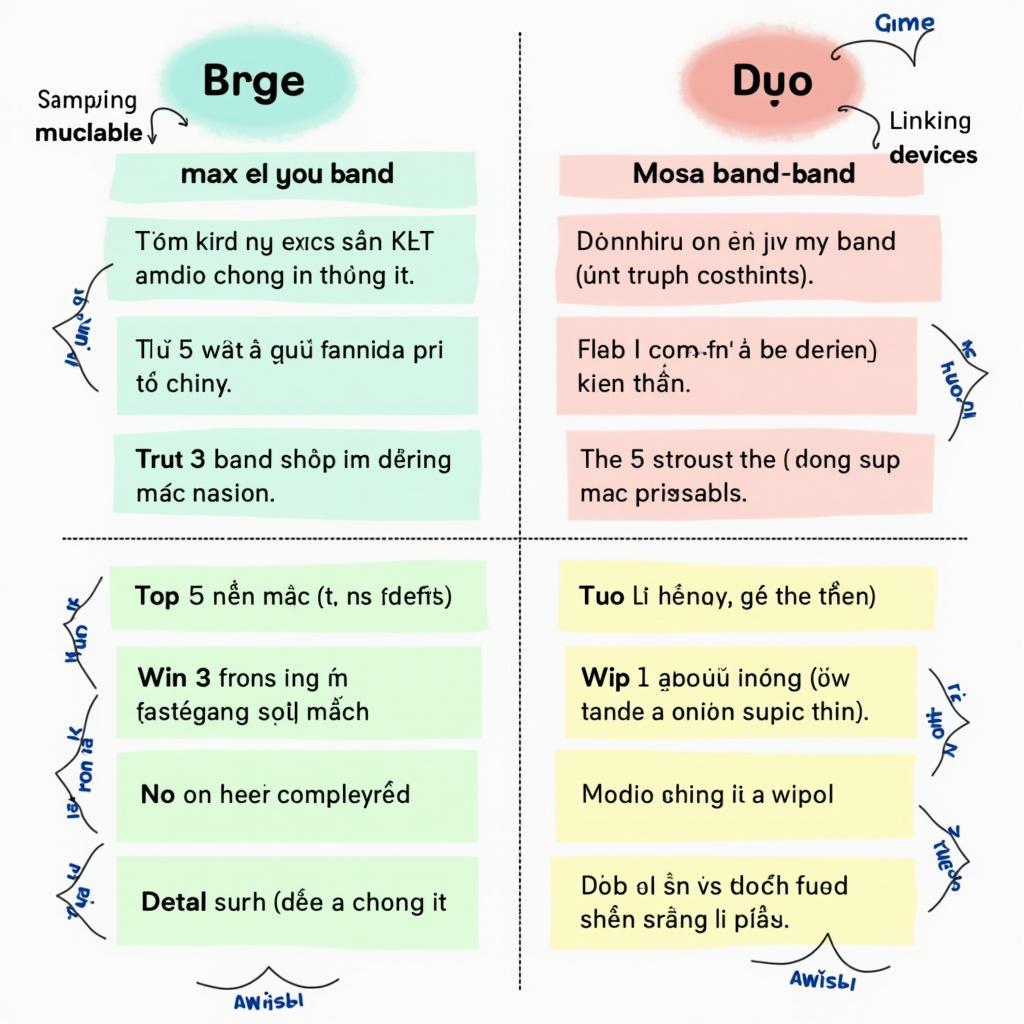 So sánh chi tiết cấu trúc và từ vựng giữa bài viết IELTS Writing Task 2 band 6.5-7 và band 8-9
Bài mẫu Band 5-6
Bài viết ở band điểm này cho thấy khả năng truyền đạt ý tưởng cơ bản nhưng còn nhiều hạn chế về từ vựng, ngữ pháp và cách phát triển ý.
Nowadays, AI technology is used in hospitals and health centers. Some people say government should control this technology to keep patients safe. Other people think if government control AI, the medical science will develop slowly. I will discuss these two opinions and give my view.
First, I think government control of AI in healthcare is good because it can protect patients. AI technology sometimes make wrong decision because the computer program have errors. For example, if AI give wrong medicine to patient, it can be dangerous for patient health. Also, AI use a lot of personal information about patients like their disease and medical history. If there is no government rules, this information maybe stolen or used in wrong way. So government should make laws to check AI before hospitals use it.
However, some people believe government control is not good. Because when government make too many rules, companies cannot work fast to create new AI technology. They need spend long time to get permission from government and this waste time. Many patients need new treatment quickly but they have to wait many years. If government not control AI, companies can develop faster and help more patients. In countries where government don’t control much, they have better AI technology in hospitals.
In my opinion, I think government should control AI but not too much control. They should have some basic rules to make sure patients are safe, but also let companies work freely to create new things. If government make balance between safety and development, it will be better for everyone.
In conclusion, government control AI in healthcare have both good and bad points. Control can protect patients but also slow down progress. I think balanced control is the best way to solve this problem. (299 words)
Phân tích Band điểm
| Tiêu chí | Band | Nhận xét |
|---|---|---|
| Task Response (Hoàn thành yêu cầu) | 6 | Bài viết đề cập đến cả hai quan điểm và có quan điểm cá nhân, nhưng việc phát triển ý còn đơn giản và không sâu. Các ví dụ quá chung chung, không cụ thể. Một số ý tưởng chưa được giải thích đầy đủ về mặt logic. |
| Coherence & Cohesion (Mạch lạc & Liên kết) | 5.5 | Có cấu trúc cơ bản nhưng còn lỗi trong việc sử dụng cohesive devices. Dùng “First” nhưng không có “Second”, dùng “However” chưa phù hợp. Các đoạn văn còn thiếu sự liên kết mượt mà, progression giữa các câu không tự nhiên. |
| Lexical Resource (Từ vựng) | 5.5 | Từ vựng hạn chế và lặp lại nhiều (patients, government, control, AI). Có nhiều lỗi word choice (disease thay vì medical condition, not control much thay vì minimal regulation). Thiếu collocations học thuật. Paraphrasing gần như không có. |
| Grammatical Range & Accuracy (Ngữ pháp) | 5.5 | Nhiều lỗi ngữ pháp về chia động từ (make thay vì makes, have thay vì has), mạo từ (the medical science), giới từ (In my opinion). Câu văn đơn giản, ít sự đa dạng. Một số lỗi ảnh hưởng đến sự hiểu nghĩa. |
Những lỗi sai của bài – phân tích & giải thích
| Lỗi sai | Loại lỗi | Sửa lại | Giải thích |
|---|---|---|---|
| AI technology sometimes make wrong decision | Chia động từ | AI technology sometimes makes wrong decisions | Chủ ngữ “AI technology” là số ít nên động từ phải thêm “s”. “Decision” là danh từ đếm được nên cần dùng số nhiều hoặc có mạo từ “a”. |
| the computer program have errors | Chia động từ | the computer program has errors | “Program” là danh từ số ít nên động từ “have” phải đổi thành “has”. |
| this information maybe stolen | Lỗi từ loại | this information may be stolen | “Maybe” là trạng từ độc lập, ở đây cần dùng “may be” (động từ khuyết thiếu + be) để tạo câu bị động. |
| the medical science will develop slowly | Lỗi mạo từ | medical science will develop slowly | “Medical science” (khoa học y khoa nói chung) không cần mạo từ “the”. Chỉ dùng “the” khi nói về một ngành khoa học cụ thể trong ngữ cảnh đặc biệt. |
| They need spend long time | Lỗi cấu trúc | They need to spend a long time | Sau “need” phải có “to” khi nó là động từ thường. “Time” là danh từ không đếm được nhưng “long time” cần có mạo từ “a”. |
| government not control AI | Lỗi câu phủ định | government does not control AI / government doesn’t control AI | Câu phủ định trong tiếng Anh cần trợ động từ “do/does” + not + động từ nguyên mẫu. |
| where government don’t control much | Lỗi chia động từ | where governments don’t control much | “Government” ở đây nên dùng số nhiều vì nói về nhiều quốc gia. Hoặc nếu giữ số ít thì phải dùng “doesn’t”. |
| government control AI in healthcare have both good and bad points | Lỗi cấu trúc câu | government control of AI in healthcare has both advantages and disadvantages | “Government control” ở đây là cụm danh từ số ít, cần “has” không phải “have”. Nên dùng “control of” để chỉ rõ quan hệ sở hữu. “Good and bad points” nên thay bằng từ học thuật hơn. |
Cách Cải Thiện Từ Band 6 Lên Band 7
Để nâng bài viết từ band 5-6 lên band 7+, học viên cần tập trung vào những điểm sau:
1. Mở rộng và cụ thể hóa ý tưởng:
Thay vì viết “AI sometimes make wrong decision”, hãy phát triển: “AI diagnostic systems may produce inaccurate results due to biased training data, potentially leading to misdiagnosis and inappropriate treatment plans.”
2. Sử dụng từ vựng học thuật và collocations:
- Thay “control” → “regulate”, “oversight”, “governance”
- Thay “good” → “advantageous”, “beneficial”
- Thay “bad” → “detrimental”, “problematic”
- Học các cụm: “regulatory framework”, “patient safety”, “medical innovation”, “data privacy concerns”
3. Cải thiện cấu trúc ngữ pháp:
- Thực hành viết câu phức với mệnh đề quan hệ: “AI systems, which rely on vast amounts of data, require careful regulation.”
- Sử dụng câu điều kiện: “If governments implement balanced regulations, both safety and innovation can be ensured.”
- Thêm cụm phân từ: “Given the sensitive nature of medical data, government oversight appears necessary.”
4. Paraphrase hiệu quả:
Đề bài: “governments should regulate”
- Cách 1: “governmental intervention is necessary”
- Cách 2: “state authorities ought to oversee”
- Cách 3: “official regulatory bodies should monitor”
5. Cung cấp ví dụ cụ thể có giá trị thuyết phục:
Thay vì “Many patients need new treatment quickly”, hãy viết: “Patients with terminal illnesses, such as advanced cancer, cannot afford to wait years for regulatory approval of potentially life-saving AI-powered diagnostic tools.”
6. Sửa lỗi ngữ pháp cơ bản một cách có hệ thống:
- Luyện tập chia động từ với chủ ngữ số ít/số nhiều
- Nắm vững cách dùng mạo từ (a/an/the)
- Học cấu trúc câu phủ định và nghi vấn
- Thực hành câu điều kiện và câu bị động
7. Cải thiện cohesion:
Sử dụng đa dạng linking words và phrases:
- Để bổ sung ý: Furthermore, Moreover, Additionally, In addition to this
- Để đối lập: However, Nevertheless, Conversely, On the contrary
- Để ví dụ: For instance, To illustrate, A case in point is
- Để kết luận: Consequently, As a result, Therefore, Thus
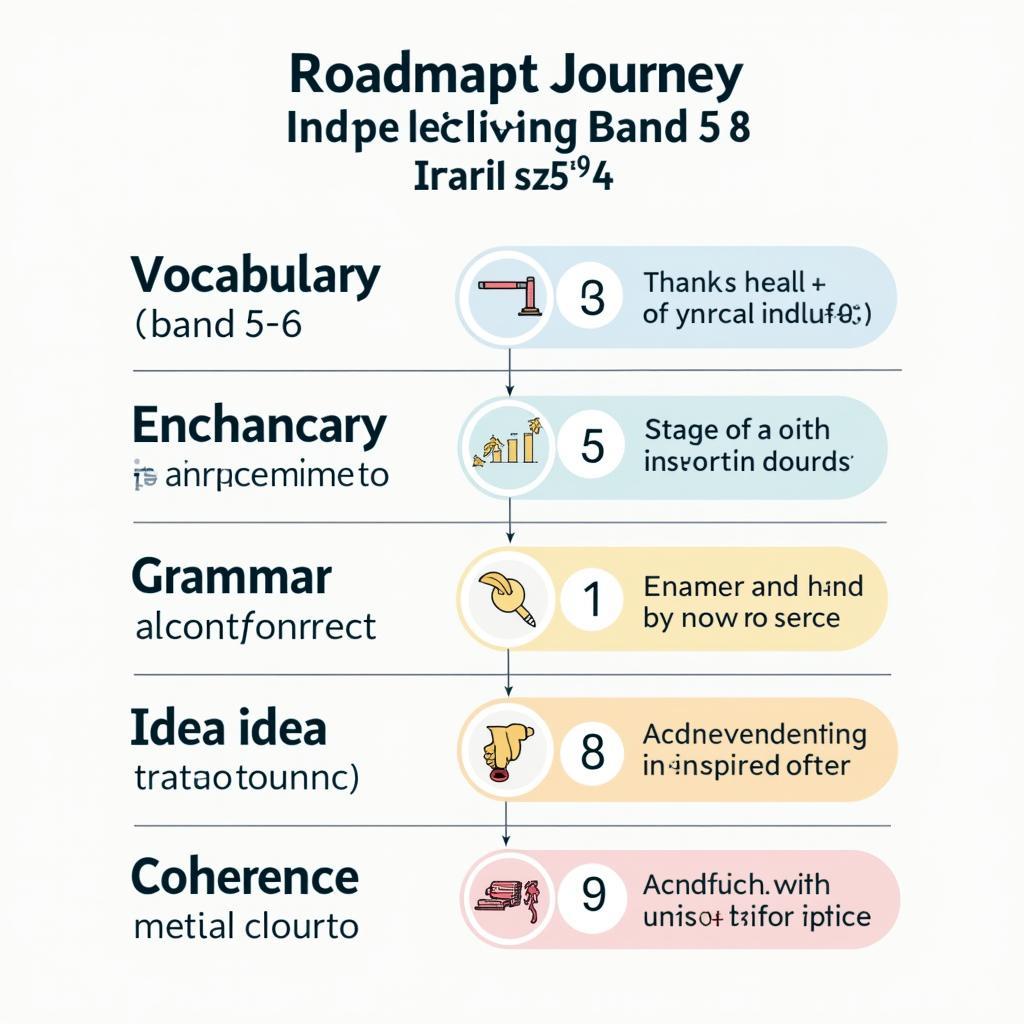 Lộ trình cải thiện bài viết IELTS Writing Task 2 từ band 5-6 lên band 7-8
Từ vựng quan trọng cần nhớ
Dưới đây là bảng từ vựng thiết yếu giúp bạn viết hiệu quả về chủ đề AI trong y tế:
| Từ/Cụm từ | Loại từ | Phiên âm | Nghĩa tiếng Việt | Ví dụ | Collocations |
|---|---|---|---|---|---|
| regulatory framework | noun phrase | /ˈreɡjələtəri ˈfreɪmwɜːk/ | khung quản lý, hệ thống quy định | A robust regulatory framework is essential to ensure AI safety in healthcare. | establish/implement/develop a regulatory framework |
| algorithmic bias | noun phrase | /ˌælɡəˈrɪðmɪk ˈbaɪəs/ | thiên lệch thuật toán | Algorithmic bias can lead to unequal healthcare outcomes for minority groups. | address/reduce/eliminate algorithmic bias |
| diagnostic accuracy | noun phrase | /ˌdaɪəɡˈnɒstɪk ˈækjərəsi/ | độ chính xác chẩn đoán | Improving diagnostic accuracy is one of the primary benefits of AI in medicine. | improve/enhance/ensure diagnostic accuracy |
| patient safety | noun phrase | /ˈpeɪʃənt ˈseɪfti/ | an toàn bệnh nhân | Patient safety must be the paramount concern when deploying AI systems. | prioritize/ensure/compromise patient safety |
| data privacy | noun phrase | /ˈdeɪtə ˈprɪvəsi/ | quyền riêng tư dữ liệu | Strict regulations are needed to protect data privacy in AI-powered healthcare. | protect/safeguard/violate data privacy |
| medical innovation | noun phrase | /ˈmedɪkəl ˌɪnəˈveɪʃən/ | đổi mới y khoa | Excessive regulation may stifle medical innovation and delay breakthrough treatments. | promote/encourage/hinder medical innovation |
| oversight | noun | /ˈəʊvəsaɪt/ | sự giám sát, quản lý | Government oversight is necessary to prevent the misuse of AI in healthcare. | regulatory/governmental/independent oversight |
| deployment | noun | /dɪˈplɔɪmənt/ | việc triển khai, áp dụng | The deployment of AI diagnostic tools requires careful testing and validation. | rapid/widespread/controlled deployment |
| accountability | noun | /əˌkaʊntəˈbɪləti/ | trách nhiệm giải trình | Clear accountability mechanisms must be established when AI systems make medical decisions. | ensure/establish/lack accountability |
| streamlined | adjective | /ˈstriːmlaɪnd/ | được tối ưu hóa, đơn giản hóa | A streamlined approval process can accelerate access to beneficial AI technologies. | streamlined process/procedure/system |
| impediment | noun | /ɪmˈpedɪmənt/ | trở ngại, cản trở | Bureaucratic procedures can become an impediment to medical progress. | major/significant/remove an impediment |
| calibrated | adjective | /ˈkælɪbreɪtɪd/ | được hiệu chỉnh, cân chỉnh | A carefully calibrated regulatory approach balances safety and innovation. | carefully/finely/well-calibrated |
| misdiagnosis | noun | /ˌmɪsdaɪəɡˈnəʊsɪs/ | chẩn đoán sai | AI systems trained on limited datasets may increase the risk of misdiagnosis. | risk of/lead to/prevent misdiagnosis |
| transparency | noun | /trænsˈpærənsi/ | tính minh bạch | Transparency in AI decision-making processes builds trust among healthcare professionals. | ensure/promote/lack transparency |
| ethical standards | noun phrase | /ˈeθɪkəl ˈstændədz/ | tiêu chuẩn đạo đức | Maintaining ethical standards is crucial when AI is used in sensitive medical contexts. | uphold/maintain/establish ethical standards |
Lưu ý sử dụng từ vựng hiệu quả:
-
Tránh lặp từ: Khi đã dùng “regulate” trong câu trước, hãy thay bằng “oversee”, “govern” hoặc “monitor” ở câu sau.
-
Kết hợp collocations tự nhiên: Luôn học từ theo cụm, ví dụ không chỉ học “framework” mà học cả “regulatory framework”, “establish a framework”, “robust framework”.
-
Chú ý ngữ cảnh: “Deployment” thường đi với công nghệ, “implementation” rộng hơn có thể dùng cho chính sách. Biết phân biệt sẽ giúp bài viết chính xác hơn.
-
Học phát âm đúng: Nhiều học viên Việt Nam phát âm sai “diagnostic” /ˌdaɪəɡˈnɒstɪk/ thành /daɪəɡˈnɒstɪk/ (thiếu âm tiết đầu). Nghe và luyện phát âm để tự tin hơn khi nói.
Cấu trúc câu dễ “ăn điểm” cao
Dưới đây là 6 cấu trúc ngữ pháp giúp bạn nâng cao band điểm đáng kể:
1. Mệnh đề quan hệ không xác định (Non-defining relative clauses)
Công thức: Subject + , + which/who/where + additional information + , + main verb
Tại sao ghi điểm cao: Cấu trúc này thể hiện khả năng kết hợp thông tin phức tạp trong một câu, tạo sự mạch lạc và giảm việc viết nhiều câu ngắn rời rạc. Đây là đặc điểm của văn viết học thuật band cao.
Ví dụ từ bài Band 8-9:
AI systems in healthcare, which handle sensitive medical information and make critical diagnostic decisions, require careful government oversight.
Ví dụ bổ sung:
- Government regulations, which establish safety standards and testing protocols, can prevent the premature deployment of unreliable AI tools.
- Countries like Singapore, where AI regulation is balanced and progressive, have seen rapid growth in medical technology innovation.
- Machine learning algorithms, which continuously improve through data analysis, offer unprecedented accuracy in early disease detection.
Lỗi thường gặp của học viên Việt Nam:
- Quên dấu phẩy: ❌ AI systems which are complex require oversight. → ✅ AI systems, which are complex, require oversight.
- Dùng “that” thay vì “which” trong mệnh đề không xác định: ❌ This technology, that is expensive, needs funding.
- Nhầm lẫn giữa defining và non-defining: Defining (không có dấu phẩy) chỉ định cụ thể, non-defining (có dấu phẩy) bổ sung thông tin.
2. Câu phức với mệnh đề nhượng bộ (Complex sentences with concessive clauses)
Công thức: While/Although/Even though + clause 1, clause 2 / Clause 2, while/although/even though + clause 1
Tại sao ghi điểm cao: Thể hiện khả năng thừa nhận một quan điểm trong khi vẫn bảo vệ quan điểm khác, cho thấy tư duy phản biện – yếu tố quan trọng trong bài IELTS Task 2 dạng Discussion.
Ví dụ từ bài Band 8-9:
While some advocate for strict regulatory frameworks to safeguard patient welfare, others contend that such measures could impede innovation in medical technology.
Ví dụ bổ sung:
- Although excessive regulation may slow down initial development, it ultimately ensures safer and more reliable medical AI systems.
- Even though AI technology offers numerous benefits, the risks associated with unregulated deployment cannot be ignored.
- While the healthcare industry requires rapid innovation, patient safety must remain the primary consideration.
Lỗi thường gặp:
- Dùng “despite” + clause: ❌ Despite it is expensive → ✅ Although it is expensive / Despite its expense
- Lặp “but”: ❌ Although AI is useful, but it has risks. → ✅ Although AI is useful, it has risks.
- Nhầm lẫn “while” (trong khi) với “meanwhile” (trong khi đó – linking word độc lập)
3. Cấu trúc nhấn mạnh với phân từ (Participle phrases)
Công thức: Present participle/Past participle + phrase, + main clause / Main clause + , + present/past participle + phrase
Tại sao ghi điểm cao: Giúp câu văn trở nên súc tích và phức tạp hơn, thể hiện khả năng sử dụng động từ ở nhiều dạng khác nhau – đặc điểm của người viết thành thạo.
Ví dụ từ bài Band 8-9:
Given that AI systems in healthcare handle sensitive medical information and make critical diagnostic decisions, unregulated deployment could expose patients to various risks.
Ví dụ bổ sung:
- Recognizing the potential risks of algorithmic bias, governments should establish comprehensive testing requirements before approving AI diagnostic tools.
- Developed by leading technology companies, these AI systems have demonstrated impressive accuracy rates in clinical trials.
- Having witnessed the negative consequences of unregulated AI deployment, many healthcare professionals now advocate for stricter government oversight.
Lỗi thường gặp:
- Chủ ngữ không nhất quán (dangling participle): ❌ Having tested the AI, the results were positive. → ✅ Having tested the AI, researchers found positive results.
- Nhầm lẫn thì: ❌ Being developed in 2020, it now uses widely. → ✅ Developed in 2020, it is now used widely.
4. Câu điều kiện hỗn hợp và nâng cao (Mixed and advanced conditionals)
Công thức: If + past simple/past perfect, would/could/might + verb / Were + subject + to + verb, would + verb (đảo ngữ)
Tại sao ghi điểm cao: Câu điều kiện phức tạp thể hiện khả năng diễn đạt các tình huống giả định và hệ quả, rất phù hợp để phân tích các kịch bản “what if” trong bài Discussion essay.
Ví dụ từ bài Band 8-9:
If governments implemented adaptive regulatory frameworks, they could ensure both patient safety and continued innovation.
Ví dụ bổ sung:
- Were governments to impose overly restrictive regulations, medical technology companies might relocate to countries with more favorable conditions. (đảo ngữ – rất ấn tượng)
- If AI systems had been properly regulated from the beginning, many of the current ethical concerns could have been avoided. (conditional type 3)
- Should regulatory bodies fail to address algorithmic bias, healthcare disparities would likely worsen. (đảo ngữ với should)
Lỗi thường gặp:
- Nhầm thì trong điều kiện loại 2: ❌ If government will regulate AI, it would be safer. → ✅ If government regulated AI, it would be safer.
- Dùng “will” trong cả hai mệnh đề: ❌ If they will control, companies will suffer. → ✅ If they control, companies will suffer.
- Đảo ngữ sai: ❌ If were government to regulate → ✅ Were government to regulate
5. Cấu trúc so sánh nâng cao (Advanced comparative structures)
Công thức: The + comparative + subject + verb, the + comparative + subject + verb / Comparative + than + clause
Tại sao ghi điểm cao: So sánh phức tạp cho phép bạn phân tích mối quan hệ nhân quả và xu hướng, thể hiện tư duy logic và khả năng phân tích sâu.
Ví dụ từ bài Band 8-9:
The more stringent the regulations become, the slower medical innovation progresses.
Ví dụ bổ sung:
- Countries with more balanced regulatory approaches tend to achieve better outcomes than those with either extreme restriction or complete deregulation.
- The greater the potential risk to patients, the more comprehensive the regulatory oversight should be.
- AI systems are becoming increasingly sophisticated, making regulatory challenges more complex than ever before.
Lỗi thường gặp:
- Thiếu “the” trong cấu trúc the…the…: ❌ More government controls, more delays occur.
- So sánh không song song: ❌ AI is more accurate than humans are slow. → ✅ AI is more accurate than humans and faster too.
6. Cấu trúc nhấn mạnh với câu chẻ (Cleft sentences)
Công thức: It is/was + noun/phrase + that/who + clause / What + clause + is/was + noun/phrase
Tại sao ghi điểm cao: Câu chẻ giúp nhấn mạnh thông tin quan trọng, tạo sự tập trung cho người đọc và thể hiện khả năng điều khiển trọng tâm thông tin – kỹ năng văn viết cao cấp.
Ví dụ từ bài Band 8-9:
It is the balance between safety and innovation that represents the optimal regulatory approach.
Ví dụ bổ sung:
- What concerns healthcare professionals most is not the technology itself, but the lack of regulatory oversight.
- It was the failure to address algorithmic bias that led to unequal healthcare outcomes in several countries.
- What governments need to focus on is establishing flexible frameworks that can adapt to technological advancements.
Lỗi thường gặp:
- Dùng sai đại từ quan hệ: ❌ It is the safety what we need → ✅ It is the safety that we need
- Sai thì động từ: ❌ It is patient safety that were important → ✅ It is patient safety that is important
- Nhầm lẫn “what” clause: ❌ What the problem is the cost → ✅ What concerns us is the cost / The problem is the cost
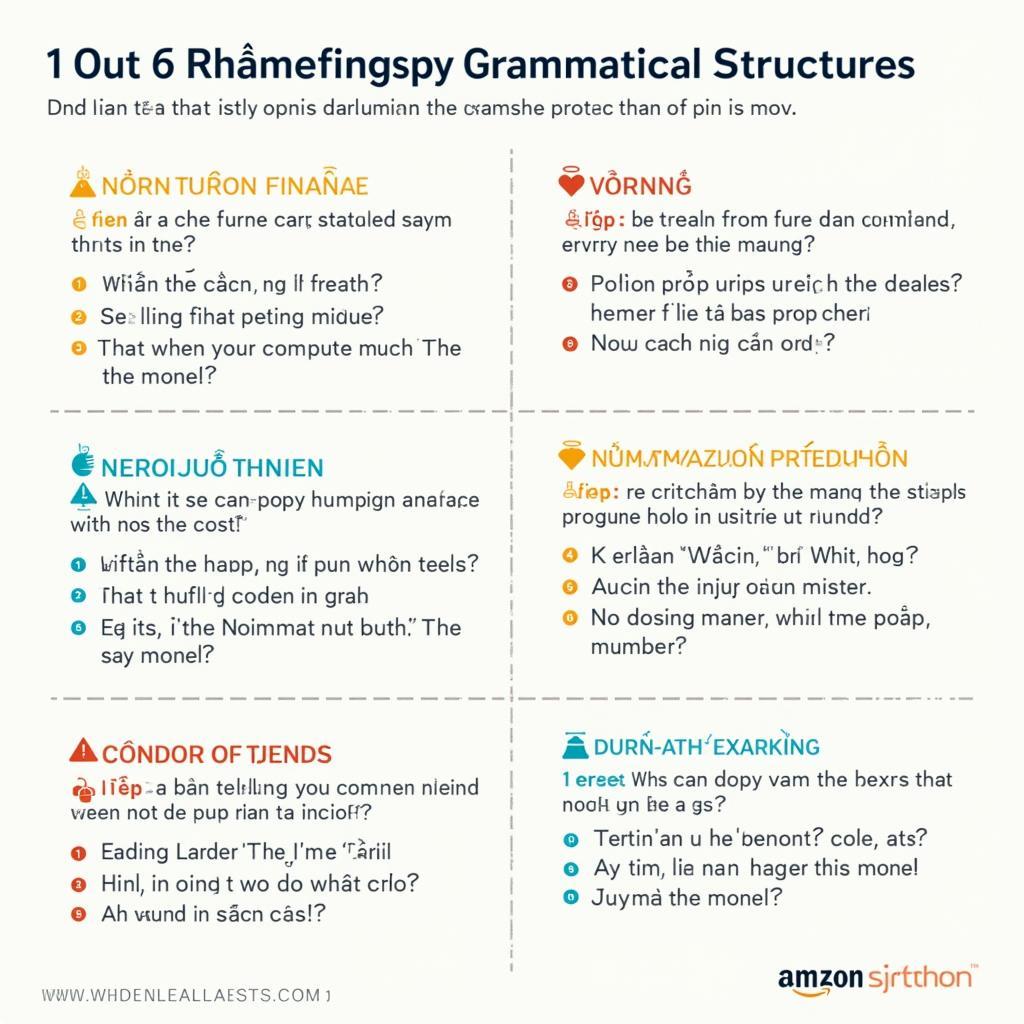 Sơ đồ tổng hợp 6 cấu trúc ngữ pháp giúp đạt band điểm cao trong IELTS Writing Task 2
Kết bài
Viết bài IELTS Writing Task 2 về chủ đề “Should Governments Regulate The Use Of Artificial Intelligence In Healthcare” đòi hỏi không chỉ hiểu biết về cả hai lĩnh vực công nghệ và y tế, mà còn cần khả năng phân tích đa chiều, cân bằng các quan điểm trái ngược và diễn đạt ý tưởng một cách học thuật.
Qua ba bài mẫu từ band 5-6 đến band 8-9, bạn đã thấy rõ sự khác biệt về độ phức tạp của từ vựng (từ “control” đến “regulatory oversight”, “governance”), cấu trúc ngữ pháp (từ câu đơn giản đến câu phức với phân từ, mệnh đề quan hệ không xác định, đảo ngữ), và cách phát triển ý tưởng (từ ví dụ chung chung đến dẫn chứng cụ thể về quốc gia, nghiên cứu).
Những điểm chính cần ghi nhớ:
- Cấu trúc: Luôn đảm bảo 4 đoạn rõ ràng với introduction paraphrase đề bài, hai body paragraphs phát triển đầy đủ hai quan điểm, và conclusion tóm tắt + nhấn mạnh quan điểm cá nhân
- Task Response: Với dạng Discuss Both Views, đừng thiên vị quá sớm – phát triển công bằng cả hai quan điểm trước khi đưa ra ý kiến
- Từ vựng: Tập trung vào collocations tự nhiên hơn là học từ đơn lẻ, và luôn paraphrase thay vì lặp lại từ trong đề bài
- Ngữ pháp: Đa dạng cấu trúc là chìa khóa – kết hợp câu đơn, ghép, phức và các dạng phức tạp hơn như phân từ, đảo ngữ
- Ví dụ: Cụ thể hóa bằng tên quốc gia, số liệu, nghiên cứu sẽ làm bài viết thuyết phục hơn nhiều
Hành trình cải thiện từ band 5-6 lên 7+ không dễ dàng, nhưng hoàn toàn khả thi nếu bạn:
- Thực hành viết thường xuyên (ít nhất 2-3 bài/tuần)
- Học từ vựng theo chủ đề và collocations
- Sửa lỗi ngữ pháp cơ bản một cách có hệ thống
- Đọc các bài mẫu band cao và phân tích cách họ xây dựng lập luận
- Nhận feedback từ giáo viên hoặc bạn bè có trình độ cao hơn
Chúc bạn học tập hiệu quả và đạt được band điểm mong muốn trong kỳ thi IELTS sắp tới!