Trong những năm gần đây, câu hỏi về việc liệu các trường học có nên thay thế kỳ thi truyền thống bằng các dự án thực tế hay không đã trở thành một chủ đề nóng trong các kỳ thi IELTS Writing Task 2. Đây là một trong những dạng đề Opinion/Discussion xuất hiện thường xuyên, đặc biệt trong bối cảnh giáo dục toàn cầu đang chuyển đổi mạnh mẽ. Với xu hướng học tập hướng đến kỹ năng thực hành và giáo dục dựa trên dự án ngày càng phổ biến, chủ đề này không chỉ phản ánh thực tế giáo dục hiện đại mà còn đòi hỏi thí sinh phải có tư duy phê phán sâu sắc.
Bài viết này sẽ cung cấp cho bạn ba bài mẫu hoàn chỉnh tương ứng với ba mức điểm khác nhau (Band 8-9, Band 6.5-7, và Band 5-6), kèm theo phân tích chi tiết về cách chấm điểm theo bốn tiêu chí của IELTS. Bạn sẽ học được cách xây dựng lập luận mạch lạc, sử dụng từ vựng học thuật phong phú và áp dụng các cấu trúc ngữ pháp phức tạp một cách tự nhiên. Đặc biệt, bài viết sẽ chỉ ra những lỗi sai thường gặp của học viên Việt Nam và cách khắc phục chúng để đạt điểm cao hơn.
Các đề thi thực tế đã được xác minh xuất hiện trong kỳ thi IELTS:
- “Some people think schools should replace traditional exams with project-based assessments. To what extent do you agree or disagree?” (British Council, 2023)
- “Many believe that continuous assessment through projects is more effective than exams. Discuss both views and give your opinion.” (IDP, 2022)
- “Should schools use coursework and projects instead of exams to evaluate students?” (IELTS Academic, 2024)
Đề Writing Part 2 thực hành
Some people believe that schools should stop using traditional examinations and replace them entirely with project-based assessments to evaluate students’ academic progress. To what extent do you agree or disagree with this statement?
Dịch đề: Một số người tin rằng các trường học nên ngừng sử dụng các kỳ thi truyền thống và thay thế hoàn toàn bằng đánh giá dựa trên dự án để đánh giá sự tiến bộ học tập của học sinh. Bạn đồng ý hay không đồng ý với quan điểm này ở mức độ nào?
Phân tích đề bài:
Đây là dạng câu hỏi Opinion Essay với cấu trúc “To what extent do you agree or disagree?” – một trong những dạng phổ biến nhất trong IELTS Writing Task 2. Đề bài yêu cầu bạn đưa ra quan điểm cá nhân về việc thay thế hoàn toàn kỳ thi truyền thống bằng đánh giá dựa trên dự án.
Các thuật ngữ quan trọng cần hiểu:
- Traditional examinations: Các kỳ thi kiểm tra kiến thức theo phương pháp truyền thống (viết bài thi, trắc nghiệm trong thời gian giới hạn)
- Project-based assessments: Đánh giá dựa trên dự án, trong đó học sinh thực hiện các nhiệm vụ dài hạn, ứng dụng kiến thức vào thực tế
- Replace entirely: Thay thế hoàn toàn – từ khóa quan trọng cho thấy đề bài đang nói về việc loại bỏ hẳn kỳ thi, không phải kết hợp cả hai
Những lỗi thường gặp của học viên Việt Nam với dạng đề này:
- Không nêu rõ quan điểm cá nhân ngay từ phần mở bài, khiến bài viết thiếu hướng đi rõ ràng
- Thảo luận cả hai mặt một cách cân bằng như dạng Discussion essay, trong khi đề yêu cầu Opinion
- Không giải thích từ khóa “entirely” – bỏ qua ý nghĩa quan trọng về việc thay thế hoàn toàn
- Đưa ra ví dụ chung chung, không cụ thể về các loại dự án hay kỳ thi
- Lập luận thiếu chiều sâu, chỉ liệt kê ý tưởng mà không phân tích tác động
Cách tiếp cận chiến lược:
- Lập trường rõ ràng: Chọn một trong ba hướng: đồng ý hoàn toàn, không đồng ý hoàn toàn, hoặc đồng ý một phần (balanced view)
- Cấu trúc 4 đoạn: Introduction (nêu quan điểm) → Body 1 (lập luận chính) → Body 2 (lập luận phụ hoặc phản biện) → Conclusion (khẳng định lại quan điểm)
- Phát triển ý sâu: Mỗi ý chính cần có giải thích (explanation), ví dụ cụ thể (example) và hệ quả/ý nghĩa (consequence)
- Sử dụng từ vựng chủ đề: Assessment methods, evaluation criteria, academic performance, practical skills, standardized testing
 Phân tích đề thi IELTS Writing Task 2 về phương pháp đánh giá học sinh bằng dự án và kỳ thi
Bài mẫu Band 8-9
Giới thiệu về bài viết Band 8-9:
Bài viết đạt điểm Band 8-9 thể hiện khả năng sử dụng ngôn ngữ học thuật tinh tế, lập luận chặt chẽ với sự phân tích đa chiều, và cấu trúc mạch lạc. Người viết không chỉ đưa ra quan điểm rõ ràng mà còn thể hiện sự hiểu biết sâu sắc về vấn đề, với các ví dụ cụ thể và lập luận thuyết phục.
Bài luận:
The educational landscape has witnessed considerable debate regarding whether project-based assessments should entirely supplant traditional examinations as the primary means of evaluating students’ academic achievement. While I acknowledge the merits of practical, hands-on evaluation methods, I believe that completely eliminating conventional exams would be counterproductive, as both assessment formats serve distinct and complementary purposes in comprehensive education.
Admittedly, project-based assessments offer several compelling advantages that address the limitations of traditional testing. Unlike time-constrained examinations that primarily measure memorization and recall abilities, projects enable students to demonstrate higher-order thinking skills such as analysis, synthesis, and creativity. For instance, a science student conducting a month-long research project on renewable energy not only applies theoretical knowledge but also develops critical competencies including research methodology, time management, and presentation skills. Furthermore, this assessment approach better reflects real-world scenarios where professionals are evaluated based on completed work rather than their performance in artificial testing conditions. Such authentic assessment can consequently enhance students’ intrinsic motivation and engagement with learning material.
However, the complete replacement of examinations with projects would present significant practical and pedagogical challenges. Firstly, standardized examinations provide an objective and efficient means of assessing large numbers of students, ensuring fairness and comparability across diverse educational contexts. Project-based assessments, conversely, are inherently subjective and resource-intensive, requiring substantial teacher time for evaluation and creating opportunities for inconsistent grading. Moreover, certain academic disciplines, particularly those requiring foundational knowledge mastery such as mathematics or foreign languages, necessitate periodic testing to verify comprehension and identify learning gaps. For example, a mathematics student must demonstrate proficiency in calculus fundamentals through timed assessments before progressing to advanced applications, something that project work alone cannot adequately measure. The pressure and time constraints inherent in examinations also develop valuable skills including working under pressure and rapid problem-solving, abilities essential for many career paths.
In conclusion, while project-based assessments undoubtedly enhance students’ practical skills and deeper learning, they should complement rather than completely replace traditional examinations. An optimal educational assessment system would judiciously combine both approaches, leveraging the strengths of each method to provide a more holistic and accurate evaluation of student capabilities. This balanced framework would better prepare students for the diverse challenges they will encounter in higher education and professional life.
(Word count: 389)
Phân tích Band điểm
| Tiêu chí | Band | Nhận xét |
|---|---|---|
| Task Response (Hoàn thành yêu cầu) | 9.0 | Bài viết trả lời đầy đủ và trực tiếp câu hỏi đề bài với quan điểm rõ ràng ngay từ mở bài (“completely eliminating… would be counterproductive”). Các ý tưởng được phát triển sâu rộng với lập luận chặt chẽ, thừa nhận ưu điểm của project-based assessment nhưng chỉ ra những hạn chế cụ thể khi thay thế hoàn toàn. Kết luận khẳng định lại quan điểm và đưa ra giải pháp cân bằng. |
| Coherence & Cohesion (Mạch lạc & Liên kết) | 9.0 | Bài viết có cấu trúc logic xuất sắc với sự chuyển tiếp mượt mà giữa các đoạn. Sử dụng đa dạng các cohesive devices (Admittedly, However, Furthermore, Conversely, Moreover) một cách tự nhiên không rập khuôn. Mỗi đoạn có topic sentence rõ ràng và các câu hỗ trợ liên kết chặt chẽ. Tham chiếu (such authentic assessment, this assessment approach) được dùng hiệu quả. |
| Lexical Resource (Từ vựng) | 9.0 | Từ vựng học thuật phong phú, chính xác và tinh tế (supplant, counterproductive, pedagogical challenges, inherently subjective, foundational knowledge mastery). Collocations tự nhiên (compelling advantages, time-constrained examinations, intrinsic motivation, judiciously combine). Paraphrasing hiệu quả của từ khóa đề bài (replace/supplant, traditional exams/conventional exams, project-based assessments/hands-on evaluation methods). Không có lỗi từ vựng. |
| Grammatical Range & Accuracy (Ngữ pháp) | 9.0 | Sử dụng đa dạng cấu trúc câu phức tạp một cách chính xác: mệnh đề quan hệ không xác định (Unlike time-constrained examinations that primarily measure…), câu điều kiện (would present), cấu trúc đảo ngữ tinh tế, phân từ (ensuring fairness, requiring substantial time). Động từ khiếm khuyết (should complement, would better prepare) được dùng chính xác. Không có lỗi ngữ pháp đáng kể. |
Các yếu tố giúp bài này được chấm điểm cao
-
Quan điểm nuanced và mature: Thay vì đồng ý hay phản đối tuyệt đối, người viết thể hiện tư duy phê phán bằng cách thừa nhận ưu điểm của project-based assessment nhưng lập luận rằng thay thế hoàn toàn là không khôn ngoan, đề xuất giải pháp cân bằng.
-
Cụm từ học thuật tinh vi: Sử dụng các cụm từ nâng cao như “supplant” thay vì “replace”, “counterproductive” thay vì “not good”, “pedagogical challenges” thay vì “teaching problems” – thể hiện vốn từ vựng phong phú ở mức C2.
-
Ví dụ cụ thể và relevant: Đưa ra ví dụ chi tiết về dự án năng lượng tái tạo và việc kiểm tra kiến thức nền tảng toán học, giúp lập luận trở nên thuyết phục và dễ hình dung.
-
Cấu trúc đoạn văn chặt chẽ: Mỗi đoạn body bắt đầu bằng topic sentence rõ ràng, tiếp theo là giải thích chi tiết, ví dụ minh họa và kết luận nhỏ – tuân thủ nguyên tắc PEEL (Point-Explain-Example-Link).
-
Cohesion devices đa dạng: Không lặp lại các từ nối cơ bản như “Firstly, Secondly”, mà sử dụng các từ nối tinh tế hơn như “Admittedly”, “Conversely”, “Moreover” để tạo sự chuyển tiếp mượt mà.
-
Paraphrasing hiệu quả: Từ khóa “traditional examinations” được diễn đạt lại thành “conventional exams”, “time-constrained examinations”, “standardized examinations” – thể hiện khả năng sử dụng từ đồng nghĩa linh hoạt.
-
Kết luận mạnh mẽ và forward-thinking: Không chỉ tóm tắt lại quan điểm mà còn đưa ra giải pháp thực tế (“judiciously combine both approaches”) và nhấn mạnh lợi ích dài hạn cho học sinh.
Bài mẫu Band 6.5-7
Giới thiệu về bài viết Band 6.5-7:
Bài viết Band 6.5-7 thể hiện khả năng trình bày ý tưởng rõ ràng với cấu trúc hợp lý. Từ vựng và ngữ pháp đạt mức tốt nhưng chưa tinh tế và đa dạng như Band 8-9. Lập luận ít chiều sâu hơn và ví dụ chưa được phát triển đầy đủ.
Bài luận:
These days, many people argue that schools should stop using traditional exams and use projects instead to assess students. While I understand the benefits of project-based learning, I partially agree with this view because both methods have their own advantages for different learning purposes.
On the one hand, project-based assessments have several important benefits compared to traditional tests. First, projects allow students to apply their knowledge in practical situations, which helps them understand the subject better. For example, when students do a group project about environmental problems, they need to do research, work together, and present their findings, which develops many useful skills. Additionally, projects reduce the stress and pressure that students often feel during exams because they have more time to complete their work. This means students can focus on learning rather than just memorizing information for tests.
On the other hand, I believe that completely removing traditional exams would create some problems. Firstly, exams are an effective way to test students’ understanding of basic knowledge quickly and fairly. In subjects like mathematics or languages, students need to remember important formulas and grammar rules, which exams can test efficiently. Secondly, exams prepare students for important situations in the future, such as university entrance tests or job interviews, where they need to perform well under time pressure. Furthermore, project assessments can be difficult for teachers to grade objectively, and some students might not contribute equally in group projects, making it hard to evaluate individual performance accurately.
In conclusion, while project-based assessments offer valuable learning experiences, I believe that schools should use both projects and exams together instead of completely replacing one with the other. This combination would provide a more balanced way to evaluate students’ abilities and prepare them better for their future education and careers.
(Word count: 347)
Phân tích Band điểm
| Tiêu chí | Band | Nhận xét |
|---|---|---|
| Task Response (Hoàn thành yêu cầu) | 6.5 | Bài viết trả lời câu hỏi với quan điểm được nêu rõ (“partially agree”). Tuy nhiên, việc phát triển ý chưa đủ sâu – các lập luận còn khá chung chung và thiếu phân tích chi tiết. Ví dụ về dự án môi trường chưa cụ thể về cách nó phát triển kỹ năng. Kết luận phù hợp với nội dung bài. |
| Coherence & Cohesion (Mạch lạc & Liên kết) | 7.0 | Cấu trúc bài rõ ràng với sự phân chia đoạn logic. Sử dụng linking words chuẩn (On the one hand, On the other hand, Firstly, Secondly, Furthermore) nhưng hơi cứng nhắc và dự đoán được. Mỗi đoạn có topic sentence, nhưng sự chuyển tiếp giữa các câu trong đoạn chưa hoàn toàn mượt mà. |
| Lexical Resource (Từ vựng) | 6.5 | Từ vựng đủ để truyền đạt ý tưởng rõ ràng với một số collocations tốt (project-based assessments, practical situations, individual performance). Tuy nhiên, thiếu sự đa dạng và tinh tế – lặp lại “students” nhiều lần, sử dụng từ đơn giản (benefits, problems, good) thay vì từ học thuật nâng cao. Paraphrasing hạn chế. |
| Grammatical Range & Accuracy (Ngữ pháp) | 7.0 | Sử dụng mix các cấu trúc câu đơn và phức. Có một số cấu trúc phức tạp như mệnh đề quan hệ (which helps them, which exams can test) và cấu trúc so sánh. Ngữ pháp chính xác với ít lỗi nhỏ. Tuy nhiên, phạm vi cấu trúc chưa đa dạng bằng Band 8-9, thiếu các cấu trúc nâng cao như đảo ngữ hay câu điều kiện phức. |
So sánh với bài Band 8-9
1. Độ phức tạp của lập luận:
- Band 8-9: “Unlike time-constrained examinations that primarily measure memorization and recall abilities, projects enable students to demonstrate higher-order thinking skills such as analysis, synthesis, and creativity.”
- Band 6.5-7: “projects allow students to apply their knowledge in practical situations, which helps them understand the subject better.”
- Phân tích: Bài Band 8-9 phân tích sâu về sự khác biệt giữa hai phương pháp với thuật ngữ học thuật cụ thể (higher-order thinking skills, analysis, synthesis), trong khi bài Band 6.5-7 chỉ nói chung chung về “practical situations” và “understand better”.
2. Sử dụng từ vựng:
- Band 8-9: “supplant” (thay thế), “counterproductive” (phản tác dụng), “pedagogical challenges” (thách thức sư phạm)
- Band 6.5-7: “stop using”, “create problems”, “difficult for teachers”
- Phân tích: Bài Band 8-9 sử dụng từ vựng học thuật C2 level tinh tế, trong khi Band 6.5-7 dùng từ B2 level đơn giản hơn.
3. Ví dụ minh họa:
- Band 8-9: “a science student conducting a month-long research project on renewable energy not only applies theoretical knowledge but also develops critical competencies including research methodology, time management, and presentation skills”
- Band 6.5-7: “when students do a group project about environmental problems, they need to do research, work together, and present their findings”
- Phân tích: Ví dụ Band 8-9 cụ thể hơn với các chi tiết rõ ràng (month-long, renewable energy, specific skills), trong khi Band 6.5-7 còn mơ hồ (environmental problems – vấn đề gì? research như thế nào?).
4. Cohesive devices:
- Band 8-9: “Admittedly…”, “Conversely…”, “Furthermore, this assessment approach…”
- Band 6.5-7: “On the one hand…”, “On the other hand…”, “Firstly… Secondly…”
- Phân tích: Band 8-9 sử dụng linking words đa dạng và tinh tế hơn, tránh các cụm quá phổ biến và có thể dự đoán.
5. Cấu trúc câu:
- Band 8-9: “An optimal educational assessment system would judiciously combine both approaches, leveraging the strengths of each method to provide a more holistic and accurate evaluation of student capabilities.”
- Band 6.5-7: “schools should use both projects and exams together instead of completely replacing one with the other.”
- Phân tích: Band 8-9 dùng cấu trúc phức tạp với phân từ (leveraging), từ vựng học thuật (optimal, judiciously, holistic), trong khi Band 6.5-7 dùng cấu trúc đơn giản hơn.
Tương tự như should online education replace classrooms, chủ đề về phương pháp đánh giá học sinh cũng đòi hỏi người viết phải cân nhắc nhiều khía cạnh khác nhau của hệ thống giáo dục hiện đại.
Bài mẫu Band 5-6
Giới thiệu về bài viết Band 5-6:
Bài viết Band 5-6 truyền đạt ý tưởng cơ bản nhưng với nhiều hạn chế về từ vựng, ngữ pháp và cách phát triển ý. Cấu trúc câu đơn giản, lập luận chưa thuyết phục và có một số lỗi ảnh hưởng đến sự rõ ràng của bài viết.
Bài luận:
Nowadays, some people think that school should stop exam and use project for checking student. I think this idea have both good and bad points, so I agree with it in some way.
First, using project is better than exam because it is more interesting for students. When students do projects, they can learn more things and they don’t have stress like when they take exams. For example, if students make a project about history, they can learn many informations and they will remember it longer than just study for exam. Also, project can help student to work in group, which is important skill for their future job.
However, I think exam is still important and we should not stop it completely. Because exam can check if student really understand the lesson or not. Some students maybe don’t work hard in project and just copy from internet or let other students do the work. But in exam, they have to answer by themselves so teacher can know their real knowledge. Moreover, in many country, students need to take exam to go to university, so if they don’t practice exam in school, they will have difficult when they take important test later.
Another problem is that project takes more time than exam. Students might have many projects from different subject and they will be very busy. This can make them tired and they don’t have time for other activities. Teachers also need more time to check project than check exam papers.
In conclusion, I think both project and exam are useful for education. Schools should use both methods together, not just use project only. This way can help students learn better and prepare them for future.
(Word count: 316)
Phân tích Band điểm
| Tiêu chí | Band | Nhận xét |
|---|---|---|
| Task Response (Hoàn thành yêu cầu) | 5.5 | Bài viết trả lời câu hỏi với quan điểm cơ bản (“agree in some way”) nhưng chưa phát triển đầy đủ. Các ý tưởng còn sơ sài và thiếu chiều sâu. Ví dụ về dự án lịch sử quá chung chung, không cụ thể. Một số phần lệch khỏi trọng tâm (nói về học sinh sao chép từ internet nhưng không phân tích kỹ). |
| Coherence & Cohesion (Mạch lạc & Liên kết) | 5.5 | Có cấu trúc cơ bản nhưng cách tổ chức chưa logic hoàn toàn. Đoạn 3 nên được gộp với đoạn 4 vì cùng nói về hạn chế của project. Linking words đơn giản và lặp lại (First, However, Also, Moreover). Thiếu cohesion trong đoạn – các câu đứng riêng lẻ chưa liên kết chặt chẽ với nhau. |
| Lexical Resource (Từ vựng) | 5.5 | Từ vựng hạn chế với nhiều lặp từ (students xuất hiện 11 lần, exam/project lặp nhiều). Dùng từ sai (informations – không đếm được). Collocations chưa tự nhiên (check student, take exam – nên là sit/take an exam). Thiếu từ vựng học thuật, chủ yếu dùng từ cơ bản (good, bad, important, difficult). |
| Grammatical Range & Accuracy (Ngữ pháp) | 5.5 | Nhiều lỗi ngữ pháp ảnh hưởng đến sự rõ ràng: “school should stop exam” (thiếu mạo từ và động từ), “this idea have” (lỗi chia động từ – should be “has”), “student” (thiếu số nhiều), “in many country” (thiếu số nhiều), “have difficult” (nên là “have difficulty”). Sử dụng chủ yếu câu đơn giản, ít cấu trúc phức. |
Những lỗi sai của bài – phân tích & giải thích
| Lỗi sai | Loại lỗi | Sửa lại | Giải thích |
|---|---|---|---|
| school should stop exam and use project for checking student | Lỗi mạo từ, danh từ số nhiều | schools should stop using exams and use projects for assessing students | “School” là danh từ đếm được nên cần số nhiều hoặc mạo từ. “Stop” + V-ing. “Exam/project” cần số nhiều vì đang nói chung. “Checking student” không tự nhiên, nên dùng “assessing students”. |
| this idea have both good and bad points | Lỗi chia động từ | this idea has both advantages and disadvantages | Chủ ngữ “idea” là số ít nên dùng “has”. “Good and bad points” quá đơn giản, nên dùng “advantages and disadvantages” để học thuật hơn. |
| they can learn many informations | Lỗi danh từ không đếm được | they can learn a lot of information / gain more knowledge | “Information” là danh từ không đếm được, không có dạng số nhiều “informations”. Có thể dùng “a lot of information” hoặc “gain more knowledge” để tự nhiên hơn. |
| project can help student to work in group | Lỗi mạo từ, giới từ | projects can help students work in groups | “Project” cần số nhiều. “Student” cần số nhiều. “Help + O + V” (không cần “to”). “In groups” (số nhiều) tự nhiên hơn “in group”. |
| exam can check if student really understand | Lỗi mạo từ, chia động từ | exams can assess whether students truly understand | “Exam” cần số nhiều. “Student” cần số nhiều. “Understand” với students phải là “understand” (không thêm s). “Check if” không học thuật, nên dùng “assess whether”. |
| in many country | Lỗi danh từ số nhiều | in many countries | “Many” đi với danh từ số nhiều nên phải là “countries”. |
| they will have difficult | Lỗi dùng từ loại | they will have difficulty / face difficulties | “Difficult” là tính từ, không thể làm tân ngữ. Phải dùng danh từ “difficulty” (số ít – không đếm được) hoặc “difficulties” (số nhiều – đếm được). |
| answer by themselves so teacher can know | Lỗi mạo từ | answer by themselves so teachers can assess | “Teacher” cần số nhiều hoặc mạo từ “the teacher”. Nên dùng “assess” thay vì “know” để học thuật hơn. |
| project takes more time | Lỗi sự hòa hợp chủ vị | projects take more time | Khi nói chung về projects (không phải một dự án cụ thể), cần dùng số nhiều “projects” với động từ “take” (không có s). |
| Teachers also need more time to check project | Lỗi mạo từ, từ vựng | Teachers also require more time to assess projects | “Project” cần số nhiều. “Check” quá đơn giản, dùng “assess/evaluate” học thuật hơn. “Need” có thể thay bằng “require” để formal hơn. |
Cách Cải Thiện Từ Band 6 Lên Band 7
Để nâng điểm từ Band 5-6 lên Band 6.5-7, học viên cần tập trung vào các điểm sau:
1. Cải thiện Task Response – Phát triển ý sâu hơn:
- Thay vì chỉ nêu ý tưởng chung chung, hãy giải thích tại sao và như thế nào
- Ví dụ cải thiện: Thay vì viết “projects are interesting”, hãy viết “project-based assessments engage students more effectively because they allow learners to explore topics that genuinely interest them, leading to deeper understanding and longer knowledge retention”
- Thêm ví dụ cụ thể: thay vì “history project”, hãy viết “a project investigating the causes of World War II through analyzing primary sources and creating a multimedia presentation”
2. Nâng cao Lexical Resource – Mở rộng vốn từ:
- Học các cụm từ đồng nghĩa: “check” → “assess/evaluate/measure”, “stop” → “eliminate/discontinue”, “good points” → “advantages/benefits/merits”
- Sử dụng collocations tự nhiên: “take an exam” (không phải “do exam”), “conduct research” (không phải “make research”), “acquire knowledge” (không phải “get knowledge”)
- Tránh lặp từ bằng cách dùng từ đồng nghĩa hoặc đại từ: thay vì lặp “students” 10 lần, dùng “learners”, “pupils”, “they”, “these individuals”
3. Cải thiện Coherence & Cohesion:
- Sử dụng linking words đa dạng hơn: thay vì “First… Second…”, dùng “To begin with…”, “Additionally…”, “Furthermore…”
- Thêm cohesive devices trong câu: “This approach…”, “Such methods…”, “These skills…” để tham chiếu lại ý trước
- Bảo đảm mỗi đoạn có một ý chính rõ ràng và các câu hỗ trợ liên kết logic với nhau
4. Nâng cấp Grammatical Range:
- Thực hành viết câu phức với mệnh đề quan hệ: “Projects, which require extended periods of work, develop time management skills”
- Sử dụng câu điều kiện: “If schools relied solely on projects, they would struggle to evaluate large numbers of students objectively”
- Thêm cấu trúc phân từ: “Having completed a research project, students gain confidence in independent learning”
- Dùng passive voice khi phù hợp: “Students are assessed through various methods” thay vì luôn dùng active voice
5. Giảm lỗi ngữ pháp cơ bản:
- Kiểm tra kỹ: mạo từ (a/an/the), số ít/số nhiều của danh từ, chia động từ đúng với chủ ngữ
- Đặc biệt chú ý các lỗi phổ biến của người Việt: dùng “informations”, quên mạo từ, không chia động từ số ít/nhiều
- Đọc lại bài viết ít nhất 2 lần để phát hiện lỗi trước khi nộp
6. Cách luyện tập hiệu quả:
- Viết lại bài Band 5-6 thành bài Band 7 bằng cách áp dụng các cải thiện trên
- So sánh bài viết của mình với bài mẫu Band 7-8 để học cách diễn đạt
- Thực hành viết 3-4 bài mỗi tuần với các chủ đề khác nhau
- Nhờ giáo viên hoặc bạn bè chấm và góp ý
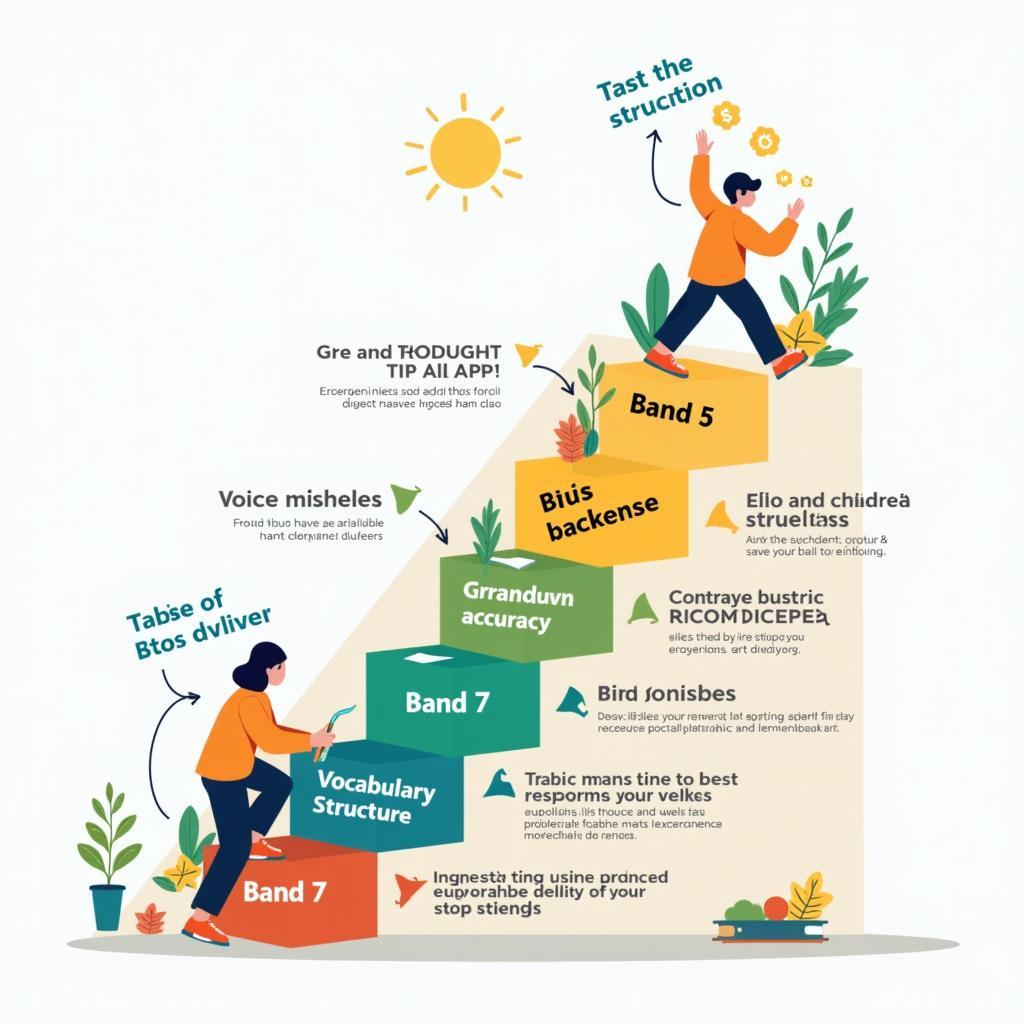 Cách cải thiện điểm IELTS Writing Task 2 từ Band 6 lên Band 7 với phương pháp học tập hiệu quả
Từ vựng quan trọng cần nhớ
| Từ/Cụm từ | Loại từ | Phiên âm | Nghĩa tiếng Việt | Ví dụ | Collocations |
|---|---|---|---|---|---|
| supplant | verb | /səˈplɑːnt/ | thay thế hoàn toàn, truất ngôi | Project-based assessments should supplant traditional examinations in modern education. | supplant traditional methods, completely supplant |
| counterproductive | adjective | /ˌkaʊntəprəˈdʌktɪv/ | phản tác dụng, phản hiệu quả | Eliminating all exams would be counterproductive to student learning. | prove counterproductive, highly counterproductive |
| pedagogical | adjective | /ˌpedəˈɡɒdʒɪkl/ | thuộc về sư phạm, giáo học | The reform faces several pedagogical challenges. | pedagogical approaches, pedagogical methods, pedagogical challenges |
| time-constrained | adjective | /taɪm kənˈstreɪnd/ | bị giới hạn về thời gian | Time-constrained examinations test recall rather than deep understanding. | time-constrained environment, time-constrained assessment |
| higher-order thinking skills | noun phrase | /ˈhaɪər ˈɔːdə ˈθɪŋkɪŋ skɪlz/ | kỹ năng tư duy bậc cao | Projects develop higher-order thinking skills such as analysis and synthesis. | develop higher-order thinking skills, demonstrate higher-order thinking |
| intrinsic motivation | noun phrase | /ɪnˈtrɪnsɪk ˌməʊtɪˈveɪʃn/ | động lực nội tại | Authentic assessments enhance students’ intrinsic motivation. | foster intrinsic motivation, increase intrinsic motivation |
| inherently subjective | adjective phrase | /ɪnˈherəntli səbˈdʒektɪv/ | mang tính chủ quan vốn có | Project grading is inherently subjective compared to standardized tests. | inherently subjective nature, remain inherently subjective |
| foundational knowledge | noun phrase | /faʊnˈdeɪʃənl ˈnɒlɪdʒ/ | kiến thức nền tảng | Mathematics requires mastery of foundational knowledge. | acquire foundational knowledge, test foundational knowledge |
| authentic assessment | noun phrase | /ɔːˈθentɪk əˈsesmənt/ | đánh giá chân thực | Authentic assessment better reflects real-world applications. | provide authentic assessment, use authentic assessment |
| holistic evaluation | noun phrase | /həʊˈlɪstɪk ɪˌvæljuˈeɪʃn/ | đánh giá toàn diện | A balanced system provides holistic evaluation of student capabilities. | conduct holistic evaluation, enable holistic evaluation |
| judiciously combine | verb phrase | /dʒuːˈdɪʃəsli kəmˈbaɪn/ | kết hợp một cách khôn ngoan | Schools should judiciously combine both assessment methods. | judiciously combine approaches, judiciously combine resources |
| memorization and recall | noun phrase | /ˌmeməraɪˈzeɪʃn ənd rɪˈkɔːl/ | ghi nhớ và nhớ lại | Traditional exams primarily test memorization and recall abilities. | rely on memorization and recall, beyond memorization and recall |
| resource-intensive | adjective | /rɪˈsɔːs ɪnˈtensɪv/ | tốn nhiều nguồn lực | Project assessment is more resource-intensive than standardized testing. | highly resource-intensive, prove resource-intensive |
| comparability | noun | /ˌkɒmpərəˈbɪləti/ | tính có thể so sánh | Standardized exams ensure comparability across different schools. | ensure comparability, maintain comparability |
Việc prioritizing life skills over academic subjects in schools cũng có mối liên hệ chặt chẽ với tranh luận về phương pháp đánh giá, vì dự án thường phát triển kỹ năng sống tốt hơn các kỳ thi truyền thống.
Cấu trúc câu dễ “ăn điểm” cao
1. Cấu trúc Concessive (Thừa nhận – Phản biện)
Công thức: While/Although/Admittedly + [điểm người ta cho là đúng], [quan điểm chính của bạn]
Ví dụ từ bài Band 8-9:
While I acknowledge the merits of practical, hands-on evaluation methods, I believe that completely eliminating conventional exams would be counterproductive
Tại sao cấu trúc này ghi điểm cao:
Cấu trúc này thể hiện tư duy phê phán mature (trưởng thành), cho thấy người viết không nhìn vấn đề một chiều mà có thể cân nhắc nhiều góc độ. Điều này rất quan trọng trong IELTS vì examiner tìm kiếm khả năng phân tích balanced (cân bằng), không cực đoan.
Ví dụ bổ sung:
- Admittedly, project-based learning offers numerous advantages, yet it cannot entirely replace the objectivity that standardized testing provides.
- Although projects encourage creativity and critical thinking, traditional exams remain essential for measuring foundational knowledge systematically.
- While hands-on assessments engage students more effectively, examination skills are still crucial for academic progression.
Lỗi thường gặp của học viên Việt Nam:
Nhiều học viên chỉ viết “I agree” hoặc “I disagree” trực tiếp mà không thừa nhận quan điểm đối lập, khiến bài viết thiếu nuance (sắc thái) và bị đánh giá là one-sided (thiên lệch một chiều).
2. Câu phức với Relative Clause không xác định
Công thức: Noun, which/who + [thông tin bổ sung], verb…
Ví dụ từ bài Band 8-9:
Unlike time-constrained examinations that primarily measure memorization and recall abilities, projects enable students to demonstrate higher-order thinking skills such as analysis, synthesis, and creativity
Tại sao cấu trúc này ghi điểm cao:
Relative clauses (mệnh đề quan hệ) giúp bạn thêm thông tin chi tiết mà không cần viết thành câu riêng, tạo sự liên kết chặt chẽ giữa các ý tưởng. Non-defining relative clauses (có dấu phẩy) đặc biệt được đánh giá cao vì thể hiện khả năng sử dụng ngữ pháp phức tạp một cách tự nhiên.
Ví dụ bổ sung:
- Project-based assessments, which require extended periods of collaborative work, develop essential twenty-first century skills.
- Traditional examinations, which have dominated education for centuries, may not adequately prepare students for modern workplace demands.
- Teachers, who already face heavy workloads, would struggle to evaluate numerous detailed projects objectively.
Lỗi thường gặp của học viên Việt Nam:
Học viên thường quên dấu phẩy trong non-defining relative clauses hoặc nhầm lẫn giữa “which” (dùng cho vật) và “who” (dùng cho người). Một lỗi phổ biến khác là dùng “that” thay vì “which” trong non-defining clauses (đây là sai ngữ pháp).
3. Cấu trúc Inversion (Đảo ngữ) để nhấn mạnh
Công thức: Not only + auxiliary verb + S + V, but also + S + V / Rarely/Seldom + auxiliary verb + S + V
Ví dụ từ bài Band 8-9:
For instance, a science student conducting a month-long research project on renewable energy not only applies theoretical knowledge but also develops critical competencies including research methodology, time management, and presentation skills
Tại sao cấu trúc này ghi điểm cao:
Cấu trúc đảo ngữ là dấu hiệu của trình độ ngữ pháp cao (C1-C2 level) và được sử dụng để tạo nhấn mạnh trong văn học thuật. Nó giúp bài viết trở nên sophisticated (tinh tế) và formal hơn, đồng thời thể hiện khả năng sử dụng đa dạng cấu trúc câu.
Ví dụ bổ sung:
- Not only do projects enhance practical skills, but they also foster creativity and independent learning.
- Rarely do traditional examinations provide opportunities for students to demonstrate real-world problem-solving abilities.
- Seldom can standardized tests measure the full range of students’ capabilities and potential.
Lỗi thường gặp của học viên Việt Nam:
Học viên thường quên đảo trợ động từ lên trước chủ ngữ sau “not only”, “rarely”, “seldom”. Ví dụ sai: “Not only projects enhance skills…” (đúng phải là “Not only do projects enhance skills…”). Một lỗi khác là dùng đảo ngữ quá nhiều, khiến bài viết nghe giả tạo.
4. Cấu trúc Conditional Type 2 và Mixed Conditional
Công thức: If + S + past simple, S + would/could + V-infinitive
Ví dụ từ bài Band 8-9:
However, the complete replacement of examinations with projects would present significant practical and pedagogical challenges
Tại sao cấu trúc này ghi điểm cao:
Câu điều kiện giúp bạn thảo luận về các tình huống giả định và hệ quả của chúng, rất phù hợp với dạng đề Opinion hoặc Problem-Solution. Việc sử dụng chính xác các loại câu điều kiện khác nhau (đặc biệt là mixed conditional) thể hiện khả năng ngữ pháp vững vàng.
Ví dụ bổ sung:
- If schools eliminated all examinations, they would struggle to maintain academic standards across diverse student populations.
- Were project-based assessment the only evaluation method, teachers would face insurmountable challenges in grading consistency.
- Should traditional testing be completely replaced, students might lack essential skills needed for university entrance examinations.
Lỗi thường gặp của học viên Việt Nam:
Học viên thường nhầm lẫn giữa các loại câu điều kiện, đặc biệt là dùng “will” thay vì “would” trong Type 2. Ví dụ sai: “If schools stopped exams, students will not be prepared…” (đúng phải là “would not be prepared”). Một lỗi khác là không nhất quán về thì trong hai mệnh đề.
5. Cấu trúc Participle Phrases (Cụm phân từ)
Công thức: V-ing/V-ed + [object/complement], main clause
Ví dụ từ bài Band 8-9:
An optimal educational assessment system would judiciously combine both approaches, leveraging the strengths of each method to provide a more holistic and accurate evaluation of student capabilities
Tại sao cấu trúc này ghi điểm cao:
Cụm phân từ giúp bạn diễn đạt hai hành động liên quan đến nhau trong một câu mà không cần dùng conjunction, tạo sự súc tích và formal cho bài viết. Đây là cấu trúc phổ biến trong văn học thuật và được đánh giá cao trong IELTS.
Ví dụ bổ sung:
- Having completed extensive research, students develop deeper understanding of complex topics through project work.
- Recognizing the limitations of single assessment methods, educators increasingly advocate for balanced evaluation systems.
- Faced with time constraints, many teachers find it challenging to grade numerous projects fairly and consistently.
Lỗi thường gặp của học viên Việt Nam:
Học viên thường dùng sai chủ ngữ cho cụm phân từ, tạo ra “dangling participle”. Ví dụ sai: “Having completed the project, the teacher gave high marks” (nghe như giáo viên hoàn thành dự án). Đúng phải là “Having completed the project, the student received high marks.” Một lỗi khác là lạm dụng cấu trúc này khiến bài viết khó hiểu.
6. Cấu trúc Comparison với Contrast
Công thức: Unlike/In contrast to + Noun, S + V / While + S + V, S + V (đối lập)
Ví dụ từ bài Band 8-9:
Unlike time-constrained examinations that primarily measure memorization and recall abilities, projects enable students to demonstrate higher-order thinking skills
Tại sao cấu trúc này ghi điểm cao:
Cấu trúc so sánh và tương phản giúp bạn phân tích sự khác biệt giữa hai phương pháp, ý tưởng hay quan điểm một cách rõ ràng và logic. Đây là kỹ năng phân tích quan trọng mà examiner tìm kiếm trong bài viết Band 7+.
Ví dụ bổ sung:
- In contrast to standardized tests, which provide quantitative scores, projects offer qualitative insights into students’ creative and analytical abilities.
- Whereas traditional examinations focus on individual performance, collaborative projects develop teamwork and communication skills.
- Unlike project assessments that span weeks, conventional tests efficiently evaluate large groups of students within hours.
Lỗi thường gặp của học viên Việt Nam:
Học viên thường nhầm lẫn giữa “unlike” (giới từ, theo sau là danh từ/cụm danh từ) và “while” (liên từ, theo sau là mệnh đề có chủ vị). Ví dụ sai: “Unlike exams focus on recall…” (đúng phải là “Unlike exams, which focus on recall…” hoặc “While exams focus on recall…”). Một lỗi khác là so sánh hai yếu tố không tương đương về logic.
Câu hỏi về is education system ready for future jobs cũng liên quan mật thiết đến chủ đề này, vì phương pháp đánh giá ảnh hưởng trực tiếp đến việc chuẩn bị học sinh cho tương lai.
 Cấu trúc ngữ pháp nâng cao giúp đạt Band 7-8-9 trong IELTS Writing Task 2 về đánh giá giáo dục
Kết bài
Chủ đề về việc thay thế kỳ thi truyền thống bằng đánh giá dựa trên dự án là một trong những đề tài phổ biến và thực tế trong IELTS Writing Task 2. Qua ba bài mẫu với các mức điểm khác nhau, bạn đã thấy rõ sự khác biệt về cách triển khai ý tưởng, sử dụng từ vựng và cấu trúc ngữ pháp giữa các band điểm.
Để đạt điểm cao, điều quan trọng nhất không phải là viết những câu phức tạp một cách giả tạo hay nhồi nhét từ vựng khó, mà là thể hiện tư duy phê phán mature thông qua việc phân tích đa chiều vấn đề. Hãy luôn nhớ rằng bài viết Band 8-9 không nhất thiết phải dài hoặc sử dụng toàn từ vựng C2, mà quan trọng là sự rõ ràng, logic và tự nhiên trong cách diễn đạt.
Các điểm then chốt cần ghi nhớ:
- Task Response: Trả lời trực tiếp câu hỏi, nêu quan điểm rõ ràng và phát triển ý sâu với ví dụ cụ thể
- Coherence & Cohesion: Sử dụng đa dạng linking devices một cách tự nhiên, tránh các cụm quá cứng nhắc như “Firstly, Secondly”
- Lexical Resource: Paraphrase hiệu quả, sử dụng collocations tự nhiên và tránh lặp từ
- Grammar: Kết hợp câu đơn và câu phức một cách cân bằng, tập trung vào độ chính xác trước khi tăng độ phức tạp
Hãy thực hành thường xuyên với các chủ đề tương tự như how does e-learning affect the quality of education hoặc how to develop problem-solving skills in children để mở rộng vốn ý tưởng và từ vựng về lĩnh vực giáo dục. Đặc biệt chú ý đến những lỗi sai phổ biến của người Việt Nam như mạo từ, số ít/số nhiều và thì động từ – những lỗi tuy nhỏ nhưng ảnh hưởng lớn đến band điểm Grammar.
Cuối cùng, hãy nhớ rằng việc cải thiện kỹ năng Writing là một quá trình dài hạn đòi hỏi sự kiên trì. Đừng nản lòng nếu bài viết đầu tiên của bạn chỉ đạt Band 5-6. Hãy phân tích kỹ các bài mẫu Band cao, học cách họ xây dựng lập luận và diễn đạt ý tưởng, sau đó áp dụng dần vào bài viết của mình. Với nỗ lực đúng hướng và phương pháp luyện tập khoa học, bạn hoàn toàn có thể đạt được mục tiêu Band điểm mong muốn. Chúc bạn thành công trên hành trình chinh phục IELTS Writing!