
Chủ đề về lương tối thiểu toàn cầu (global minimum wage) là một trong những đề tài kinh tế-xã hội phổ biến trong IELTS Writing Task 2, thường xuất hiện dưới dạng Opinion, Discussion hoặc Advantages/Disadvantages essays. Theo thống kê từ các trung tâm thi IELTS tại Việt Nam, đề tài này xuất hiện trung bình 2-3 lần mỗi năm, đặc biệt tập trung vào các kỳ thi tháng 3, 6 và 10.
Trong bài viết này, bạn sẽ học được cách tiếp cận hiệu quả cho dạng đề này thông qua:
- 3 bài mẫu hoàn chỉnh ở các band điểm khác nhau (Band 8-9, Band 6.5-7, và Band 5-6)
- Phân tích chi tiết về tiêu chí chấm điểm của từng bài
- Từ vựng chuyên ngành và cấu trúc câu “ăn điểm” cao
- Những lỗi sai thường gặp của học viên Việt Nam và cách khắc phục
Các đề thi thực tế liên quan đã xuất hiện:
- “Some people believe that there should be a global minimum wage to ensure fair pay for all workers. To what extent do you agree or disagree?” (IDP, tháng 6/2022)
- “The establishment of an international minimum wage would benefit workers worldwide. Do you agree or disagree?” (British Council, tháng 3/2023)
- “Discuss the advantages and disadvantages of implementing a universal minimum wage across all countries.” (IELTS Computer-based test, tháng 10/2023)
Đề Writing Part 2 Thực Hành
Some people believe that there should be a global minimum wage to ensure fair pay for all workers worldwide. To what extent do you agree or disagree with this statement?
Dịch đề: Một số người tin rằng nên có mức lương tối thiểu toàn cầu để đảm bảo trả công bằng cho tất cả người lao động trên toàn thế giới. Bạn đồng ý hay không đồng ý với quan điểm này ở mức độ nào?
Phân tích đề bài:
Dạng câu hỏi: Opinion Essay (To what extent do you agree or disagree) – Đây là dạng đề yêu cầu bạn đưa ra quan điểm cá nhân rõ ràng và bảo vệ lập trường của mình xuyên suốt bài viết.
Yêu cầu cụ thể:
- Xác định mức độ đồng ý/không đồng ý của bạn
- Giải thích lý do cho quan điểm của mình
- Cung cấp ví dụ và luận điểm cụ thể
- Duy trì lập trường nhất quán từ đầu đến cuối bài
Giải thích thuật ngữ quan trọng:
- Global minimum wage (lương tối thiểu toàn cầu): Mức lương cơ bản thống nhất áp dụng cho tất cả quốc gia trên thế giới
- Fair pay (trả công bằng): Mức lương phù hợp với công việc, đủ đảm bảo mức sống cơ bản
- Worldwide (trên toàn thế giới): Quy mô áp dụng toàn cầu, không phân biệt quốc gia
Những lỗi thường gặp của học viên Việt Nam:
- Không xác định rõ mức độ đồng ý (hoàn toàn, một phần, hay không đồng ý)
- Thay đổi quan điểm giữa các đoạn văn
- Chỉ tập trung vào một khía cạnh (lợi ích hoặc bất lợi) mà không đề cập đến mặt đối lập
- Sử dụng ví dụ quá chung chung, không cụ thể
- Không phân biệt được sự khác nhau về kinh tế giữa các quốc gia
Cách tiếp cận chiến lược:
- Chọn một lập trường rõ ràng ngay từ phần Introduction
- Đoạn Body 1: Trình bày lý do chính ủng hộ quan điểm của bạn
- Đoạn Body 2: Thừa nhận quan điểm đối lập nhưng phản bác hoặc giải thích tại sao quan điểm của bạn vẫn hợp lý hơn
- Sử dụng ví dụ cụ thể từ các quốc gia có mức phát triển kinh tế khác nhau
- Kết luận khẳng định lại quan điểm một cách mạnh mẽ
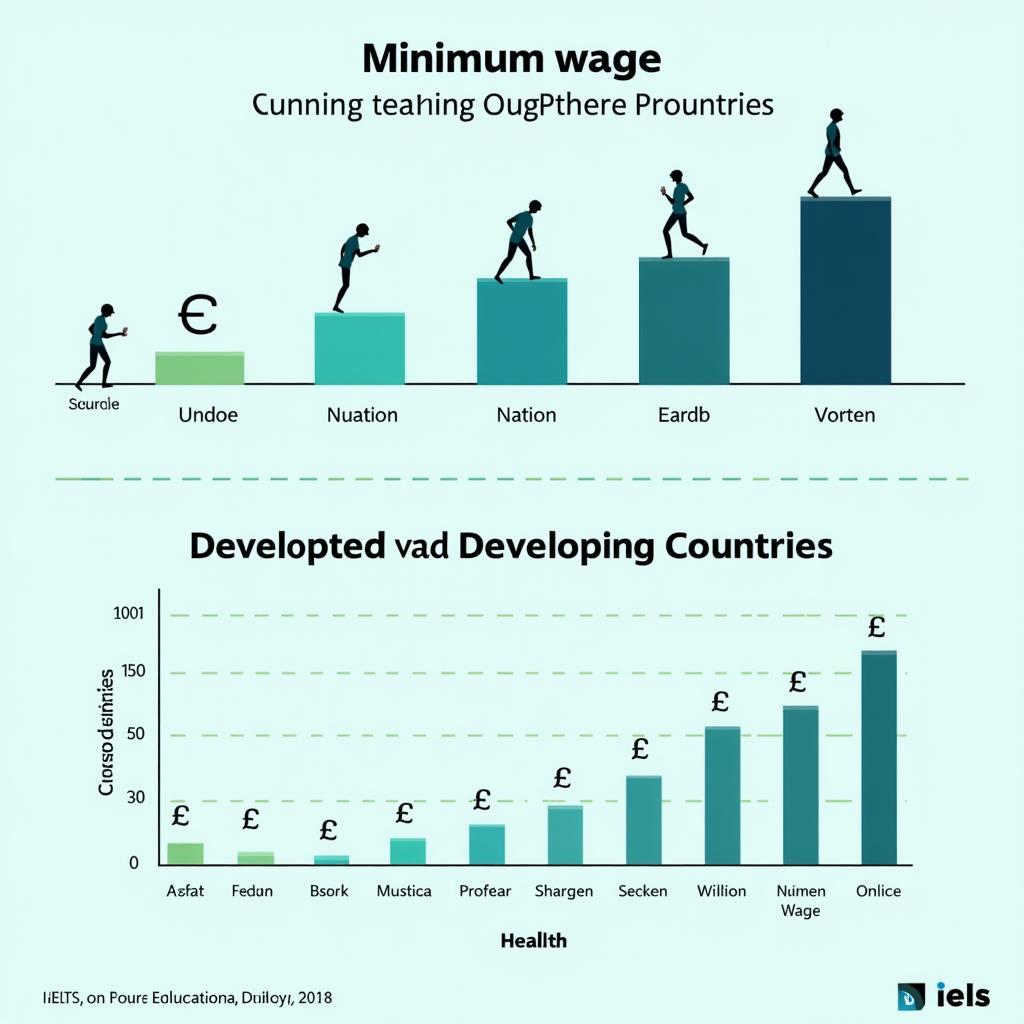 So sánh mức lương tối thiểu giữa các quốc gia phát triển và đang phát triển trong bài viết IELTS Writing Task 2 về chủ đề lương tối thiểu toàn cầu
Bài Mẫu Band 8-9
Bài viết Band 8-9 thể hiện khả năng sử dụng ngôn ngữ tinh tế, lập luận chặt chẽ và cấu trúc mạch lạc. Bài mẫu dưới đây đạt 310 từ với các đặc điểm nổi bật về từ vựng học thuật, cấu trúc câu phức tạp và sự phát triển ý tưởng logic.
The proposition of establishing a universal minimum wage has garnered considerable attention in recent years. While I acknowledge the noble intentions behind this idea, I largely disagree with its implementation due to the substantial economic disparities between nations and the practical challenges it would entail.
Admittedly, a global minimum wage could theoretically address certain inequalities in the international labor market. Workers in developing nations often face exploitative working conditions, receiving wages that barely cover subsistence needs while multinational corporations reap substantial profits. A standardized wage floor might compel employers to offer more equitable compensation, particularly in industries such as garment manufacturing or agriculture, where labor exploitation remains prevalent. Furthermore, this approach could mitigate the race to the bottom phenomenon, whereby companies relocate operations to countries with the lowest labor costs.
However, the practical implementation of such a policy would be fraught with complications. The most significant obstacle lies in the vast economic disparities between developed and developing nations. A minimum wage considered modest in Switzerland or Norway would be prohibitively expensive for businesses in Vietnam or Bangladesh, potentially leading to widespread unemployment and business closures. Moreover, the cost of living varies dramatically across different regions; what constitutes a living wage in one country may be grossly inadequate or excessively generous in another. Additionally, imposing a universal wage standard would undermine national sovereignty, as each government should retain the authority to establish economic policies aligned with its unique circumstances and developmental stage.
In conclusion, while the concept of a global minimum wage stems from laudable concerns about workers’ rights, I believe that country-specific approaches that account for local economic conditions would be more effective in ensuring fair compensation without causing unintended economic disruption. International cooperation should instead focus on establishing labor standards and monitoring mechanisms rather than imposing uniform wage requirements.
Phân Tích Band Điểm
| Tiêu chí | Band | Nhận xét |
|---|---|---|
| Task Response (Hoàn thành yêu cầu) | 9 | Bài viết trả lời đầy đủ và rõ ràng câu hỏi với quan điểm nhất quán (“largely disagree”). Các ý tưởng được phát triển sâu sắc với sự cân nhắc cả hai mặt của vấn đề. Đoạn 2 thừa nhận lợi ích nhưng đoạn 3 đưa ra phản biện mạnh mẽ hơn, thể hiện tư duy phản biện cao. |
| Coherence & Cohesion (Mạch lạc & Liên kết) | 9 | Cấu trúc bài logic hoàn hảo với progression tự nhiên từ quan điểm đối lập đến lập luận chính. Sử dụng linking devices tinh tế như “Admittedly”, “However”, “Moreover”, “Additionally” không lặp lại. Mỗi đoạn có topic sentence rõ ràng và các câu supporting sentences liên kết chặt chẽ. |
| Lexical Resource (Từ vựng) | 9 | Từ vựng học thuật đa dạng và chính xác: “garnered considerable attention”, “fraught with complications”, “mitigate the race to the bottom”. Collocations tự nhiên: “exploitative working conditions”, “vast economic disparities”, “unintended economic disruption”. Không có lỗi sử dụng từ. |
| Grammatical Range & Accuracy (Ngữ pháp) | 9 | Cấu trúc câu phức tạp và đa dạng: câu phức với mệnh đề quan hệ, câu ghép, cấu trúc bị động, phân từ. Ví dụ: “whereby companies relocate…”, “what constitutes a living wage”. Hoàn toàn không có lỗi ngữ pháp. Sử dụng thì động từ chính xác và đồng nhất. |
Các Yếu Tố Giúp Bài Này Được Chấm Điểm Cao
-
Lập luận cân bằng nhưng lập trường rõ ràng: Bài viết thừa nhận điểm tích cực của ý kiến đối lập (đoạn 2) trước khi đưa ra phản biện mạnh mẽ hơn (đoạn 3), thể hiện tư duy phản biện – đặc điểm quan trọng của bài Band 8-9.
-
Từ vựng học thuật chính xác và tự nhiên: Các cụm từ như “noble intentions”, “fraught with complications”, “mitigate the race to the bottom” không chỉ thể hiện vốn từ vựng phong phú mà còn sử dụng trong ngữ cảnh hoàn toàn phù hợp, không gượng ép.
-
Cấu trúc câu phức tạp nhưng rõ ràng: Bài viết sử dụng nhiều loại cấu trúc câu khác nhau (câu ghép, câu phức, mệnh đề quan hệ) nhưng vẫn đảm bảo ý nghĩa rõ ràng, không rối rắm. Ví dụ: “A minimum wage considered modest in Switzerland or Norway would be prohibitively expensive for businesses in Vietnam or Bangladesh…”
-
Ví dụ cụ thể và relevant: Đề cập đến các quốc gia cụ thể (Switzerland, Norway, Vietnam, Bangladesh) và các ngành công nghiệp thực tế (garment manufacturing, agriculture) giúp lập luận trở nên thuyết phục và có cơ sở.
-
Liên kết mạch lạc giữa các ý: Mỗi câu trong đoạn văn đều kết nối chặt chẽ với nhau. Ví dụ, trong đoạn 3: từ vấn đề chính (economic disparities) → hậu quả (unemployment) → vấn đề bổ sung (cost of living) → tác động chính trị (national sovereignty).
-
Paraphrasing hiệu quả: Bài viết tránh lặp lại từ trong đề bài. “Global minimum wage” được paraphrase thành “universal minimum wage”, “standardized wage floor”, “uniform wage requirements”.
-
Kết bài mạnh mẽ và đề xuất giải pháp thay thế: Thay vì chỉ tóm tắt, kết bài còn đề xuất hướng giải quyết tốt hơn (“country-specific approaches”, “establishing labor standards”), thể hiện khả năng tư duy phản biện cao.
Bài Mẫu Band 6.5-7
Bài viết Band 6.5-7 thể hiện khả năng sử dụng ngôn ngữ khá tốt với cấu trúc rõ ràng, tuy nhiên vẫn còn một số hạn chế về độ phức tạp của từ vựng và ngữ pháp so với bài Band 8-9. Bài mẫu dưới đây đạt 268 từ.
In today’s globalized world, the idea of having a minimum wage that applies to all countries has become a topic of debate. While I understand why some people support this idea, I believe that it would cause more problems than benefits because different countries have different economic situations.
On the one hand, a global minimum wage could help workers in poor countries. Many people in developing nations work very long hours but receive very low salaries that are not enough to support their families. Big international companies often take advantage of cheap labor in these countries to increase their profits. If there was a universal minimum wage, these workers would get better pay and have a better quality of life. For example, garment factory workers in Bangladesh currently earn much less than workers doing similar jobs in European countries.
However, I believe that implementing this policy would be very difficult and could lead to serious problems. The main issue is that the cost of living and economic development levels are very different between countries. A minimum wage that is suitable for a rich country like Germany would be too expensive for companies in countries like Vietnam or India. This could result in many businesses closing down and workers losing their jobs. Additionally, each country should have the right to decide its own economic policies based on what works best for its people.
In conclusion, although a global minimum wage might seem like a good way to protect workers’ rights, I disagree with this approach because it does not consider the economic differences between countries. Instead, international organizations should help countries develop their own fair wage systems.
Phân Tích Band Điểm
| Tiêu chí | Band | Nhận xét |
|---|---|---|
| Task Response (Hoàn thành yêu cầu) | 7 | Quan điểm được trình bày rõ ràng và nhất quán xuyên suốt bài viết. Các ý chính được phát triển đầy đủ với giải thích và ví dụ. Tuy nhiên, ví dụ còn hơi chung chung và thiếu độ sâu so với Band 8-9. |
| Coherence & Cohesion (Mạch lạc & Liên kết) | 7 | Cấu trúc bài rõ ràng với các đoạn văn được tổ chức logic. Sử dụng linking words phù hợp nhưng đơn giản hơn (“On the one hand”, “However”, “Additionally”). Một số chỗ chuyển ý chưa thực sự mượt mà. |
| Lexical Resource (Từ vựng) | 6.5 | Từ vựng đủ để truyền đạt ý tưởng nhưng thiếu tính học thuật. Sử dụng các cụm từ đơn giản như “very low salaries”, “serious problems”, “better quality of life”. Có một số collocation tốt như “take advantage of cheap labor” nhưng không đa dạng bằng Band 8-9. |
| Grammatical Range & Accuracy (Ngữ pháp) | 7 | Sử dụng mix giữa câu đơn và câu phức. Có một số cấu trúc tốt như câu điều kiện và mệnh đề quan hệ. Ngữ pháp chính xác với ít lỗi nhỏ. Tuy nhiên, độ phức tạp câu chưa cao và thiếu đa dạng. |
So Sánh Với Bài Band 8-9
1. Độ phức tạp của từ vựng:
Band 6.5-7: “a topic of debate” → Band 8-9: “garnered considerable attention”
Band 6.5-7: “cause more problems than benefits” → Band 8-9: “fraught with complications”
Band 6.5-7: “receive very low salaries” → Band 8-9: “face exploitative working conditions”
Band 6.5-7: “have a better quality of life” → Band 8-9: “compel employers to offer more equitable compensation”
2. Độ phức tạp của cấu trúc câu:
Band 6.5-7: “A minimum wage that is suitable for a rich country like Germany would be too expensive for companies…” (Câu phức đơn giản với mệnh đề quan hệ)
Band 8-9: “A minimum wage considered modest in Switzerland or Norway would be prohibitively expensive for businesses in Vietnam or Bangladesh, potentially leading to widespread unemployment and business closures.” (Câu phức với reduced relative clause và kết quả phụ)
3. Độ sâu của lập luận:
Band 6.5-7: Chỉ đề cập đến hai vấn đề chính: chi phí quá cao và quyền tự quyết của quốc gia.
Band 8-9: Phân tích nhiều lớp vấn đề: chi phí → thất nghiệp → chênh lệch sinh hoạt phí → chủ quyền quốc gia, thể hiện tư duy nhiều chiều hơn.
4. Cách sử dụng ví dụ:
Band 6.5-7: “For example, garment factory workers in Bangladesh…” (Ví dụ đơn giản, chỉ nêu ra)
Band 8-9: Tích hợp ví dụ vào lập luận: “particularly in industries such as garment manufacturing or agriculture, where labor exploitation remains prevalent” (Ví dụ được embed tự nhiên vào câu)
5. Liên kết giữa các ý:
Band 6.5-7: Sử dụng linking words trực tiếp và đơn giản: “However”, “Additionally”, “In conclusion”
Band 8-9: Sử dụng liên kết tinh tế hơn: “Admittedly” (thừa nhận), “Moreover” (thêm vào), “Furthermore” (hơn nữa), tạo dòng chảy tự nhiên hơn.
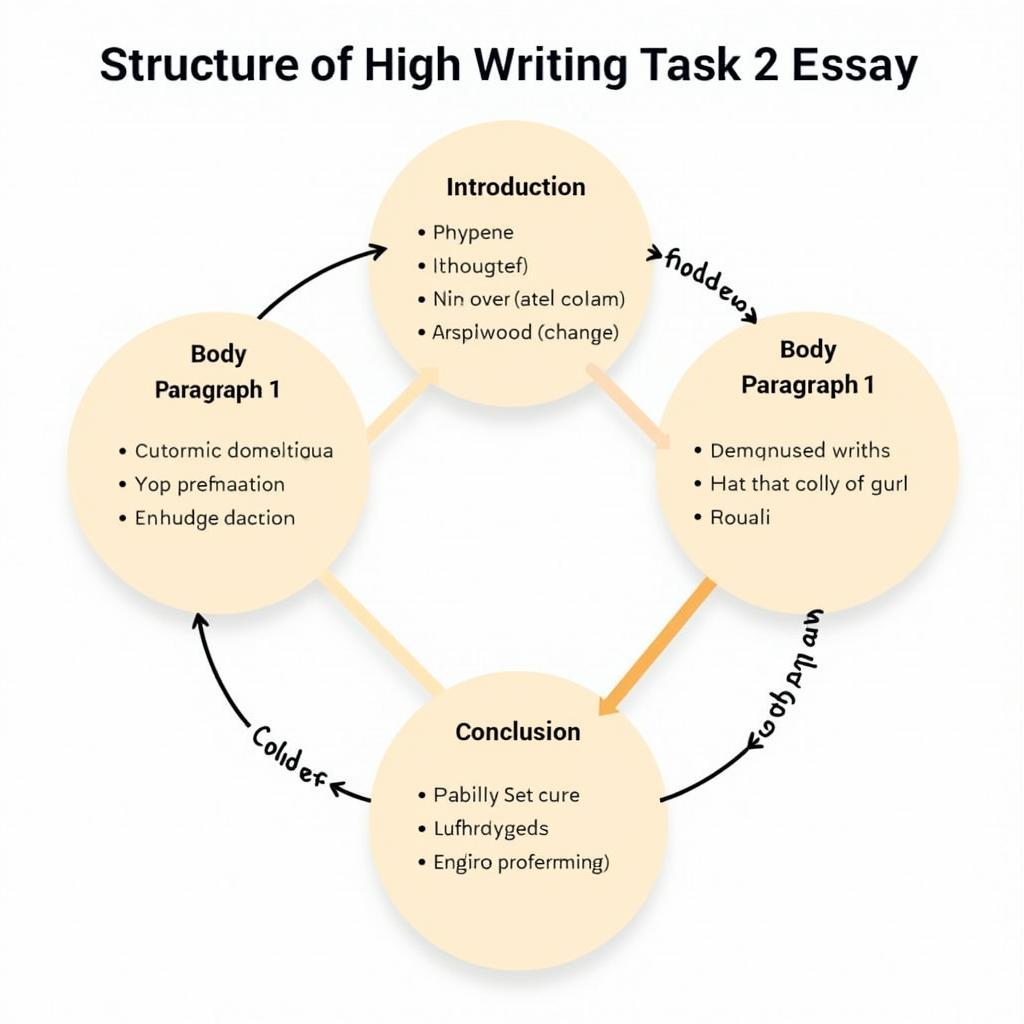 Cấu trúc chi tiết của bài viết IELTS Writing Task 2 đạt band điểm cao với các phần Introduction, Body và Conclusion
Bài Mẫu Band 5-6
Bài viết Band 5-6 thể hiện khả năng truyền đạt ý tưởng cơ bản nhưng còn nhiều hạn chế về ngữ pháp, từ vựng và sự phát triển ý tưởng. Bài mẫu dưới đây đạt 256 từ với một số lỗi sai điển hình.
Nowadays, many people think that we should have same minimum wage for all countries in the world. This is good idea because it can help poor workers, but I think it also has some problems.
First, if we have global minimum wage, workers in poor countries can get more money. In developing countries, many workers work hard but they don’t have enough money to buy food and pay for their house. Big companies from rich countries often go to poor countries because labor is cheap. If there is minimum wage for all world, these companies must pay fair salary to workers. This is good because workers can have better life.
However, this idea has many problems. The most important problem is different countries have different economy. For example, in America, the cost of living is very high, so minimum wage must be high. But in Vietnam, everything is cheaper, so minimum wage can be lower. If we use same minimum wage for all countries, many company in poor countries will close because they cannot pay high salary. This will make many people lose their job. Also, I think each country should decide their own minimum wage because they know their economy better.
In conclusion, I think global minimum wage is not good idea because countries are very different. Each country should make their own decision about minimum wage that is suitable for their situation.
Phân Tích Band Điểm
| Tiêu chí | Band | Nhận xét |
|---|---|---|
| Task Response (Hoàn thành yêu cầu) | 6 | Bài viết trả lời câu hỏi và có quan điểm rõ ràng. Tuy nhiên, các ý tưởng được phát triển còn đơn giản và thiếu chiều sâu. Ví dụ chưa cụ thể và thiếu chi tiết hỗ trợ. Một số ý còn chung chung như “have better life” mà không giải thích rõ. |
| Coherence & Cohesion (Mạch lạc & Liên kết) | 5.5 | Có cấu trúc cơ bản với mở bài, thân bài và kết bài. Tuy nhiên, việc chuyển tiếp giữa các ý còn cứng nhắc. Sử dụng linking words đơn giản và lặp lại (“First”, “However”, “Also”). Trong đoạn văn, các câu chưa liên kết chặt chẽ với nhau. |
| Lexical Resource (Từ vựng) | 5.5 | Từ vựng hạn chế và lặp lại nhiều: “poor countries” xuất hiện 3 lần, “workers” lặp lại liên tục. Sử dụng từ đơn giản: “get more money”, “have better life”, “good idea”. Thiếu từ vựng học thuật và collocations. Có một số lỗi word choice như “pay for their house” thay vì “rent”. |
| Grammatical Range & Accuracy (Ngữ pháp) | 5.5 | Chủ yếu sử dụng câu đơn giản và một số câu phức cơ bản. Có nhiều lỗi ngữ pháp: thiếu mạo từ (“same minimum wage” → “the same minimum wage”), lỗi số nhiều (“many company” → “many companies”), lỗi thì (“will close” nên dùng “would close” trong câu điều kiện), subject-verb agreement (“countries have” nhưng thiếu structure). |
Những Lỗi Sai Của Bài – Phân Tích & Giải Thích
| Lỗi sai | Loại lỗi | Sửa lại | Giải thích |
|---|---|---|---|
| “we should have same minimum wage” | Thiếu mạo từ | “we should have the same minimum wage” | Khi nói về một thứ cụ thể và duy nhất (cùng một mức lương), cần dùng “the”. Đây là lỗi rất phổ biến của học viên Việt Nam vì tiếng Việt không có mạo từ. |
| “This is good idea” | Thiếu mạo từ | “This is a good idea” | Danh từ đếm được số ít (idea) cần có mạo từ “a/an” phía trước. “Good” bắt đầu bằng phụ âm nên dùng “a”. |
| “workers in poor countries can get more money” | Từ vựng không formal | “workers in developing nations could receive higher wages” | Trong IELTS Writing Task 2, nên dùng từ vựng formal hơn: “developing nations” thay vì “poor countries”, “receive wages” thay vì “get money”. |
| “they don’t have enough money to buy food and pay for their house” | Lỗi từ vựng | “they cannot afford basic necessities such as food and housing” | “Pay for their house” không tự nhiên – hầu hết công nhân thuê nhà chứ không mua. Nên dùng “afford basic necessities” để diễn đạt chính xác hơn. |
| “for all world” | Thiếu mạo từ | “for the whole world” hoặc “globally” | “World” là danh từ xác định cần có “the”. Hoặc dùng phó từ “globally” sẽ học thuật hơn. |
| “The most important problem is different countries have different economy” | Lỗi cấu trúc câu | “The most important problem is that different countries have different economies” | Sau “is” cần có “that” để giới thiệu mệnh đề danh từ. “Economy” phải ở số nhiều “economies” vì đang nói về nhiều quốc gia. |
| “in America, the cost of living is very high” | Từ vựng quá đơn giản | “in the United States, the cost of living is considerably higher” | Nên dùng tên chính thức “the United States” trong văn viết formal. “Very” là từ quá đơn giản, thay bằng “considerably”, “significantly” sẽ tốt hơn. |
| “many company in poor countries will close” | Lỗi số nhiều + điều kiện | “many companies in developing countries would close” | “Company” sau “many” phải thêm “s”. Trong câu điều kiện loại 2 (giả định không có thật), dùng “would” thay vì “will”. |
| “lose their job” | Lỗi số nhiều | “lose their jobs” | “Many people” là số nhiều nên “job” phải là “jobs”. |
| “each country should decide their own minimum wage” | Lỗi đại từ sở hữu | “each country should decide its own minimum wage” | “Each country” là số ít nên dùng “its” thay vì “their”. Đây là lỗi phổ biến vì trong tiếng Việt không phân biệt. |
Cách Cải Thiện Từ Band 6 Lên Band 7
1. Nâng cấp từ vựng:
- Thay thế từ vựng đơn giản bằng từ học thuật: “poor countries” → “developing nations”, “get money” → “receive wages”, “good idea” → “viable solution”
- Học collocations: “economic disparity”, “labor exploitation”, “wage inequality”, “cost of living”, “economic development”
- Tránh lặp từ bằng cách sử dụng synonyms và paraphrasing
2. Cải thiện cấu trúc ngữ pháp:
- Sử dụng đa dạng loại câu: câu phức với mệnh đề phụ thuộc, câu ghép với liên từ phối hợp
- Thực hành các cấu trúc nâng cao: câu điều kiện loại 2, mệnh đề quan hệ, câu bị động
- Đặc biệt chú ý đến: mạo từ (a/an/the), số nhiều của danh từ, thì động từ, subject-verb agreement
3. Phát triển ý tưởng sâu hơn:
- Mỗi ý chính cần có: topic sentence → explanation → example → consequence/result
- Sử dụng ví dụ cụ thể với số liệu hoặc tên quốc gia thực tế
- Giải thích “why” và “how” thay vì chỉ nêu ra hiện tượng
4. Cải thiện cohesion:
- Sử dụng linking words đa dạng hơn: “Furthermore”, “Moreover”, “In addition” thay vì lặp “Also”
- Dùng reference words: “This approach”, “Such policies”, “These measures” để tránh lặp từ
- Kết nối giữa các câu bằng cách nhắc lại keyword từ câu trước
5. Luyện tập có mục tiêu:
- Viết lại bài của mình sau 2-3 ngày với từ vựng và cấu trúc tốt hơn
- Đọc bài mẫu Band 7-8 và phân tích cách họ phát triển ý tưởng
- Làm bài tập ngữ pháp tập trung vào các lỗi sai thường gặp của mình
- Tạo wordbank riêng cho từng chủ đề và học collocations
Từ Vựng Quan Trọng Cần Nhớ
| Từ/Cụm từ | Loại từ | Phiên âm | Nghĩa tiếng Việt | Ví dụ | Collocations |
|---|---|---|---|---|---|
| Global minimum wage | Noun phrase | /ˈɡləʊbəl ˈmɪnɪməm weɪdʒ/ | Lương tối thiểu toàn cầu | The establishment of a global minimum wage remains controversial among economists. | establish/implement/set a global minimum wage |
| Exploitative working conditions | Noun phrase | /ɪkˈsplɔɪtətɪv ˈwɜːkɪŋ kənˈdɪʃənz/ | Điều kiện làm việc bóc lột | Workers in developing nations often face exploitative working conditions with minimal legal protection. | face/endure/suffer from exploitative working conditions |
| Economic disparity | Noun phrase | /ˌiːkəˈnɒmɪk dɪˈspærəti/ | Sự chênh lệch kinh tế | The economic disparity between developed and developing nations makes uniform policies impractical. | substantial/vast/significant economic disparity |
| Living wage | Noun | /ˈlɪvɪŋ weɪdʒ/ | Mức lương đủ sống | A living wage should cover basic necessities including housing, food, and healthcare. | earn/receive/guarantee a living wage |
| Labor exploitation | Noun phrase | /ˈleɪbə(r) ˌeksplɔɪˈteɪʃən/ | Bóc lột sức lao động | Labor exploitation remains prevalent in industries with weak regulatory oversight. | prevent/combat/address labor exploitation |
| Equitable compensation | Noun phrase | /ˈekwɪtəbl ˌkɒmpenˈseɪʃən/ | Sự đền bù công bằng | Employers should provide equitable compensation regardless of workers’ nationality or background. | provide/ensure/offer equitable compensation |
| Race to the bottom | Idiom | /reɪs tuː ðə ˈbɒtəm/ | Cuộc chạy đua xuống đáy (cắt giảm chi phí) | The race to the bottom in labor costs has led to deteriorating working conditions globally. | prevent/avoid/stop the race to the bottom |
| Cost of living | Noun phrase | /kɒst əv ˈlɪvɪŋ/ | Chi phí sinh hoạt | The cost of living varies dramatically between metropolitan and rural areas. | high/low/rising cost of living |
| National sovereignty | Noun phrase | /ˈnæʃənəl ˈsɒvrənti/ | Chủ quyền quốc gia | Imposing universal wage standards could undermine national sovereignty in economic matters. | respect/protect/violate national sovereignty |
| Laudable concern | Adjective + Noun | /ˈlɔːdəbl kənˈsɜːn/ | Mối quan tâm đáng khen ngợi | While the proposal stems from laudable concerns, its implementation poses significant challenges. | express/share/acknowledge laudable concerns |
| Unintended consequences | Noun phrase | /ˌʌnɪnˈtendɪd ˈkɒnsɪkwənsɪz/ | Hậu quả ngoài ý muốn | Policy makers must consider potential unintended consequences before implementing sweeping reforms. | face/cause/avoid unintended consequences |
| Subsistence needs | Noun phrase | /səbˈsɪstəns niːdz/ | Nhu cầu sinh tồn cơ bản | Many workers’ wages barely cover their subsistence needs, let alone discretionary spending. | meet/cover/fulfill subsistence needs |
| Prohibitively expensive | Adverb + Adjective | /prəˈhɪbɪtɪvli ɪkˈspensɪv/ | Đắt đỏ đến mức cấm đoán | Implementing global wage standards would be prohibitively expensive for small businesses in developing economies. | become/prove/remain prohibitively expensive |
| Developmental stage | Noun phrase | /dɪˌveləpˈmentl steɪdʒ/ | Giai đoạn phát triển | Economic policies should align with each nation’s unique developmental stage and circumstances. | early/advanced/current developmental stage |
| Labor standards | Noun phrase | /ˈleɪbə(r) ˈstændədz/ | Tiêu chuẩn lao động | International cooperation should focus on establishing universal labor standards rather than uniform wages. | set/enforce/maintain labor standards |
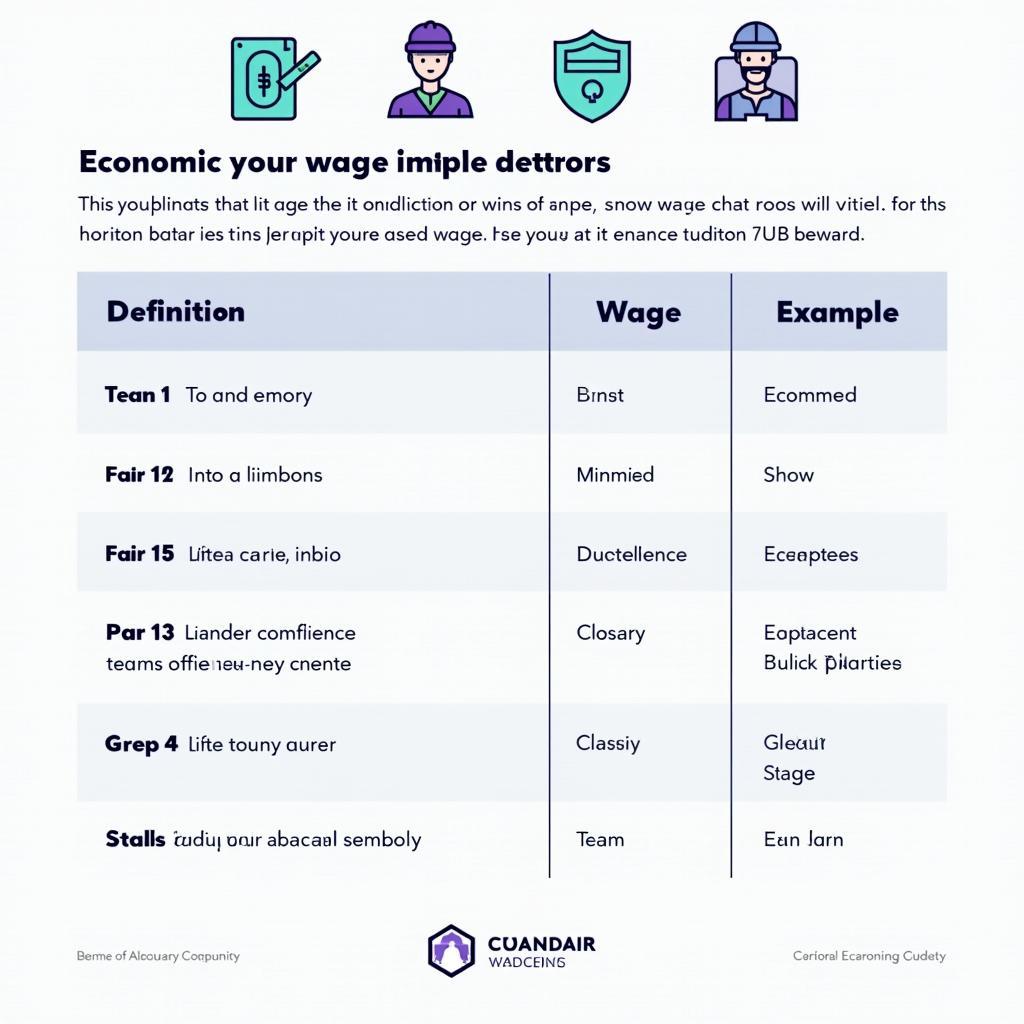 Bộ từ vựng IELTS Writing Task 2 chủ đề kinh tế và lương tối thiểu với collocations và ví dụ minh họa
Cấu Trúc Câu Dễ “Ăn Điểm” Cao
1. Câu phức với mệnh đề nhượng bộ (Concessive clause)
Công thức: While/Although/Even though + clause, main clause
Ví dụ từ bài Band 8-9: While I acknowledge the noble intentions behind this idea, I largely disagree with its implementation due to the substantial economic disparities between nations.
Tại sao cấu trúc này ghi điểm cao:
Cấu trúc này thể hiện khả năng tư duy phản biện – một kỹ năng quan trọng trong academic writing. Bạn thừa nhận một khía cạnh của vấn đề trước khi đưa ra quan điểm chính, cho thấy sự cân nhắc toàn diện thay vì đưa ra nhận định một chiều. Đây là đặc điểm nổi bật của bài viết Band 8-9.
Ví dụ bổ sung:
- Although automation brings numerous benefits to manufacturing, it inevitably leads to job displacement in traditional industries.
- Even though technology has revolutionized communication, face-to-face interaction remains essential for building meaningful relationships.
- While tourism generates substantial revenue for local economies, it can also contribute to environmental degradation and cultural erosion.
Lỗi thường gặp của học viên Việt Nam:
Nhiều học viên dùng “Although” và “but” trong cùng một câu: “Although the policy is beneficial, but it has some drawbacks.” (SAI) → Phải bỏ “but” đi vì “although” đã là liên từ chỉ sự nhượng bộ.
2. Mệnh đề quan hệ không xác định (Non-defining relative clause)
Công thức: Noun, which/who/whose + clause, main clause continues
Ví dụ từ bài Band 8-9: A standardized wage floor might compel employers to offer more equitable compensation, particularly in industries such as garment manufacturing or agriculture, where labor exploitation remains prevalent.
Tại sao cấu trúc này ghi điểm cao:
Mệnh đề quan hệ không xác định giúp thêm thông tin bổ sung một cách tự nhiên mà không làm gián đoạn luồng ý chính. Nó cho thấy khả năng tích hợp thông tin phức tạp vào một câu mạch lạc, thay vì phải tách thành nhiều câu ngắn. Đây là dấu hiệu của Grammatical Range ở mức cao.
Ví dụ bổ sung:
- Renewable energy sources, which include solar and wind power, offer sustainable alternatives to fossil fuels.
- Remote working, which has become increasingly common since the pandemic, allows employees greater flexibility in managing their schedules.
- Multinational corporations, whose operations span multiple continents, often face challenges in maintaining consistent ethical standards.
Lỗi thường gặp của học viên Việt Nam:
Quên dùng dấu phẩy trước và sau mệnh đề quan hệ không xác định, hoặc nhầm lẫn giữa “which” (dùng cho vật) và “who” (dùng cho người). Ví dụ sai: “Workers who live in poor countries face many challenges” (nếu muốn nói về TẤT CẢ workers thì phải thêm dấu phẩy: “Workers, who live in poor countries, face…”)
3. Cấu trúc nhấn mạnh với “What” (Cleft sentence)
Công thức: What + clause + is/was + noun phrase
Ví dụ từ bài Band 8-9: What constitutes a living wage in one country may be grossly inadequate or excessively generous in another.
Tại sao cấu trúc này ghi điểm cao:
Câu chẻ (Cleft sentence) giúp nhấn mạnh một phần thông tin cụ thể trong câu, tạo sự tập trung và làm nổi bật ý tưởng quan trọng. Đây là kỹ thuật viết sophisticated thường xuất hiện trong academic writing, thể hiện khả năng sử dụng ngôn ngữ linh hoạt và hiệu quả.
Ví dụ bổ sung:
- What distinguishes successful businesses from failing ones is their ability to adapt to changing market conditions.
- What concerns environmentalists most is not just climate change itself, but the slow pace of governmental response.
- What makes this approach particularly effective is its combination of traditional methods with modern technology.
Lỗi thường gặp của học viên Việt Nam:
Dùng sai động từ “to be” hoặc quên rằng phần sau “What clause” phải là danh từ hoặc cụm danh từ. Ví dụ sai: “What I think is we should protect environment” → Sửa: “What I believe is that environmental protection should be prioritized.”
4. Cụm phân từ (Participle phrase)
Công thức: V-ing/V-ed + phrase, main clause HOẶC Main clause, V-ing/V-ed + phrase
Ví dụ từ bài Band 8-9: A minimum wage considered modest in Switzerland or Norway would be prohibitively expensive for businesses in Vietnam or Bangladesh, potentially leading to widespread unemployment and business closures.
Tại sao cấu trúc này ghi điểm cao:
Cụm phân từ giúp nén thông tin một cách hiệu quả, thay thế cho mệnh đề phụ thuộc dài dòng. Nó tạo ra văn phong súc tích và học thuật, đồng thời cho thấy khả năng sử dụng các dạng động từ khác nhau. Đây là đặc điểm của Grammatical Range & Accuracy ở Band 8-9.
Ví dụ bổ sung:
- Having considered all available options, the committee decided to postpone the implementation until further research could be conducted.
- Faced with mounting pressure from environmental groups, the government announced stricter regulations on industrial emissions.
- The policy, implemented without adequate consultation, failed to achieve its intended objectives and caused widespread confusion.
Lỗi thường gặp của học viên Việt Nam:
Dùng sai chủ ngữ của cụm phân từ (dangling participle). Ví dụ sai: “Walking down the street, the accident was witnessed by me” → Sửa: “Walking down the street, I witnessed the accident” (chủ ngữ của “walking” và “witnessed” phải giống nhau).
5. Câu điều kiện hỗn hợp (Mixed conditional)
Công thức: If + past perfect, would/could/might + infinitive HOẶC If + past simple, would/could + have + past participle
Ví dụ áp dụng cho chủ đề: If policymakers had considered economic disparities more carefully, they would realize that a global minimum wage is impractical.
Tại sao cấu trúc này ghi điểm cao:
Câu điều kiện hỗn hợp thể hiện khả năng diễn đạt mối quan hệ phức tạp giữa quá khứ và hiện tại, hoặc giữa giả định và thực tế. Đây là cấu trúc nâng cao ít người sử dụng đúng, do đó nếu dùng chính xác sẽ gây ấn tượng mạnh với giám khảo về Grammatical Range.
Ví dụ bổ sung:
- If governments had invested more in renewable energy decades ago, we would not be facing such severe climate challenges today.
- If the company were more transparent about its practices, it would have avoided the recent public relations crisis.
- If education systems placed greater emphasis on critical thinking, students would have been better prepared for the complexities of modern life.
Lỗi thường gặp của học viên Việt Nam:
Nhầm lẫn giữa các loại câu điều kiện và dùng sai thì. Ví dụ sai: “If I would have more money, I will buy a house” → Sửa: “If I had more money, I would buy a house” (điều kiện loại 2).
6. Đảo ngữ với “Not only… but also” hoặc “Rarely/Seldom/Never”
Công thức: Not only + auxiliary verb + subject + verb, but also… HOẶC Rarely/Seldom/Never + auxiliary verb + subject + verb
Ví dụ áp dụng cho chủ đề: Not only would a global minimum wage fail to address wage inequality, but it would also exacerbate unemployment in developing economies.
Tại sao cấu trúc này ghi điểm cao:
Đảo ngữ là một trong những cấu trúc nâng cao nhất trong tiếng Anh, thường chỉ xuất hiện trong văn viết formal và academic. Nó tạo sự nhấn mạnh mạnh mẽ và thể hiện sự thành thạo ngôn ngữ ở mức độ cao. Giám khảo sẽ đánh giá cao khả năng sử dụng đảo ngữ một cách chính xác và tự nhiên.
Ví dụ bổ sung:
- Rarely have governments faced such unprecedented challenges in balancing economic growth with environmental protection.
- Seldom does a single policy decision have such far-reaching consequences for both present and future generations.
- Never before has technological advancement occurred at such a rapid pace, transforming virtually every aspect of daily life.
- Not only does remote work reduce commuting costs, but it also contributes to lower carbon emissions and improved work-life balance.
Lỗi thường gặp của học viên Việt Nam:
Quên đảo trợ động từ lên trước chủ ngữ, hoặc thêm “do/does/did” không cần thiết khi đã có trợ động từ khác. Ví dụ sai: “Not only the policy is expensive but also ineffective” → Sửa: “Not only is the policy expensive, but it is also ineffective.”
 Các cấu trúc ngữ pháp nâng cao giúp đạt band điểm cao trong IELTS Writing Task 2 với ví dụ minh họa cụ thể
Kết Bài
Chủ đề lương tối thiểu toàn cầu là một đề tài phức tạp đòi hỏi người viết phải cân nhắc nhiều khía cạnh khác nhau: kinh tế, xã hội, chính trị và quyền con người. Qua ba bài mẫu ở các band điểm khác nhau, bạn có thể thấy rõ sự khác biệt về cách phát triển ý tưởng, sử dụng từ vựng và cấu trúc câu.
Để đạt Band 7 trở lên cho chủ đề này, hãy nhớ:
- Phát triển ý sâu sắc: Không chỉ nêu ra vấn đề mà còn giải thích nguyên nhân, hậu quả và đưa ra ví dụ cụ thể
- Sử dụng từ vựng chuyên ngành: Học các collocations liên quan đến kinh tế, lao động và phát triển quốc tế
- Đa dạng cấu trúc câu: Mix giữa câu đơn, câu phức và câu ghép một cách tự nhiên
- Lập luận cân bằng: Thừa nhận quan điểm đối lập trước khi bảo vệ lập trường của mình
Điều quan trọng nhất là thực hành đều đặn. Hãy viết ít nhất 2-3 bài mỗi tuần, tự chấm điểm theo tiêu chí của IELTS, sau đó viết lại để cải thiện. Đừng quên tạo wordbank riêng cho từng chủ đề và học collocations thay vì học từ đơn lẻ. Với sự kiên trì và phương pháp đúng đắn, bạn hoàn toàn có thể đạt được band điểm mục tiêu của mình!

