
Mở đầu
Chủ đề về kiểm soát súng đạn (gun control) là một trong những đề tài xã hội nóng hổi và thường xuyên xuất hiện trong kỳ thi IELTS Writing Task 2, đặc biệt trong các năm gần đây khi vấn đề bạo lực súng đạn ngày càng được quan tâm trên toàn cầu. Đây là dạng đề thuộc nhóm “agree/disagree” hoặc “discuss both views” – hai dạng bài phổ biến nhất trong IELTS Writing.
Trong bài viết này, bạn sẽ học được:
- Cách phân tích đề bài về gun control một cách toàn diện
- 3 bài mẫu hoàn chỉnh từ Band 5-6, Band 6.5-7 đến Band 8-9 với phân tích chi tiết
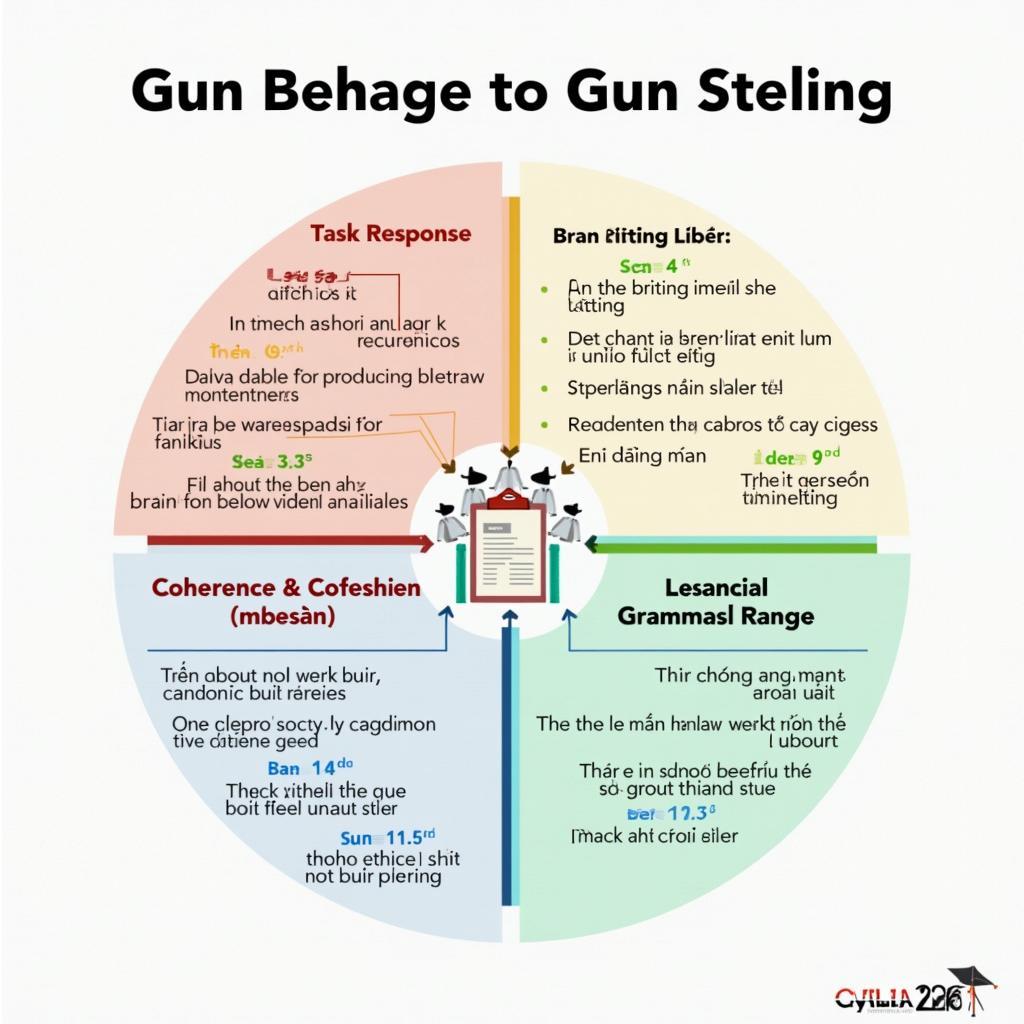
- Bảng chấm điểm cụ thể theo 4 tiêu chí chính của IELTS
- Từ vựng học thuật và collocations quan trọng
- Cấu trúc câu giúp nâng band điểm hiệu quả
Một số đề thi thực tế đã xuất hiện:
- “Some people think stricter gun control laws are necessary to reduce gun violence. Others believe these laws infringe on personal freedoms. Discuss both views and give your opinion.” (British Council, 2023)
- “Gun ownership should be strictly controlled. To what extent do you agree or disagree?” (IDP, 2022)
- “The increase in gun violence can only be reduced through stricter gun control laws. Do you agree or disagree?” (IELTS Academic, 2021)
Đề Writing Part 2 Thực Hành
Some people believe that stricter gun control laws are necessary to reduce crime and protect public safety. Others argue that such laws infringe on individual rights and freedoms. Discuss both views and give your own opinion.
Dịch đề: Một số người tin rằng các luật kiểm soát súng chặt chẽ hơn là cần thiết để giảm tội phạm và bảo vệ an toàn công cộng. Những người khác lại cho rằng các luật như vậy xâm phạm quyền tự do cá nhân. Thảo luận cả hai quan điểm và đưa ra ý kiến của bạn.
Phân tích đề bài:
Dạng câu hỏi: Đây là dạng “Discuss both views and give your opinion” – một trong những dạng phổ biến nhất trong IELTS Writing Task 2. Bạn cần:
- Thảo luận quan điểm ủng hộ luật kiểm soát súng chặt chẽ hơn
- Thảo luận quan điểm phản đối (bảo vệ quyền tự do cá nhân)
- Đưa ra ý kiến cá nhân rõ ràng
Các thuật ngữ quan trọng:
- “Stricter gun control laws”: Các quy định nghiêm ngặt hơn về sở hữu, mua bán và sử dụng súng
- “Public safety”: An toàn của cộng đồng, xã hội
- “Infringe on individual rights”: Xâm phạm, vi phạm quyền cá nhân
- “Freedoms”: Quyền tự do được pháp luật bảo vệ
Những lỗi thường gặp của học viên Việt Nam:
- Chỉ tập trung vào một quan điểm mà bỏ qua quan điểm còn lại
- Không đưa ra ý kiến cá nhân rõ ràng
- Sử dụng ví dụ chung chung, không cụ thể
- Thiếu liên kết logic giữa các đoạn văn
- Lạm dụng từ “I think”, “In my opinion” không cần thiết
Cách tiếp cận chiến lược:
- Introduction: Paraphrase đề bài + nêu rõ bài viết sẽ thảo luận cả hai quan điểm
- Body 1: Lý do cần kiểm soát súng chặt chẽ (giảm tội phạm, bảo vệ công chúng)
- Body 2: Lý do phản đối (quyền tự vệ, quyền tự do cá nhân)
- Body 3 (hoặc kết hợp vào Conclusion): Ý kiến cá nhân với lập luận vững chắc
- Conclusion: Tóm tắt và nhấn mạnh quan điểm
Bài Mẫu Band 8-9
Bài viết Band 8-9 cần thể hiện khả năng sử dụng ngôn ngữ tinh tế, lập luận logic chặt chẽ, từ vựng phong phú và cấu trúc câu đa dạng. Dưới đây là một bài mẫu xuất sắc:
The debate surrounding gun legislation has become increasingly contentious in many nations, with advocates on both sides presenting compelling arguments. While some contend that more restrictive firearms regulations are essential for societal wellbeing, others maintain that such measures constitute an unacceptable encroachment upon civil liberties. This essay will examine both perspectives before arguing that a balanced approach incorporating stricter controls with reasonable exemptions represents the most viable solution.
Proponents of stringent gun control legislation argue that such measures are paramount to reducing violent crime and protecting vulnerable populations. Countries with comprehensive firearm restrictions, such as Japan and Australia, have consistently demonstrated significantly lower rates of gun-related homicides and mass shootings compared to nations with more permissive policies. Furthermore, rigorous background checks, mandatory waiting periods, and licensing requirements can prevent weapons from falling into the hands of individuals with criminal records or mental health issues who pose a demonstrable risk to public safety. The implementation of Australia’s National Firearms Agreement following the 1996 Port Arthur massacre, which resulted in a dramatic decline in firearm deaths, serves as a compelling case study supporting this position.
Conversely, opponents argue that stringent regulations represent an infringement upon fundamental rights, particularly the right to self-defense. In regions with limited law enforcement presence or high crime rates, citizens may legitimately require firearms to protect themselves and their families from immediate threats. Moreover, critics contend that criminals, by definition, do not comply with legislation, meaning that restrictive laws primarily disarm law-abiding citizens while leaving malefactors unaffected. This perspective also emphasizes that responsible gun ownership, when accompanied by proper training and safety protocols, poses minimal risk to society and should not be penalized due to the actions of a minority.
In my view, while the right to self-protection merits consideration, the overwhelming evidence suggests that carefully crafted gun control measures substantially enhance public safety without unreasonably limiting legitimate uses. The key lies in implementing regulations that are both comprehensive and nuanced—incorporating thorough background screening, mandatory safety training, and secure storage requirements while still permitting ownership for those who demonstrate responsible capability. Such an approach strikes a balance between protecting individual freedoms and safeguarding the broader community.
In conclusion, although concerns about personal liberty are valid, the preponderance of evidence indicates that stricter gun control legislation, when thoughtfully designed, significantly reduces violence while respecting legitimate ownership needs. Societies must prioritize collective safety while ensuring that regulations remain proportionate and do not unduly burden responsible citizens.
Phân tích Band Điểm
| Tiêu chí | Band | Nhận xét |
|---|---|---|
| Task Response (Hoàn thành yêu cầu) | 9 | Bài viết trả lời đầy đủ tất cả các phần của đề bài với sự phát triển ý tưởng sâu sắc. Cả hai quan điểm được thảo luận cân bằng với ví dụ cụ thể (Nhật Bản, Úc, vụ Port Arthur). Quan điểm cá nhân rõ ràng, nhất quán và được lập luận thuyết phục trong đoạn thân bài thứ ba. |
| Coherence & Cohesion (Mạch lạc & Liên kết) | 9 | Bài viết có cấu trúc logic hoàn hảo với sự chuyển tiếp mượt mà giữa các đoạn. Các từ nối được sử dụng tinh tế (Furthermore, Conversely, Moreover) không gượng ép. Mỗi đoạn có một ý chính rõ ràng và được phát triển có hệ thống. Câu chủ đề mạnh mẽ và câu kết thúc liên kết tốt. |
| Lexical Resource (Từ vựng) | 9 | Từ vựng phong phú, chính xác và phù hợp với văn phong học thuật: “increasingly contentious”, “unacceptable encroachment”, “paramount to”, “compelling case study”. Collocations tự nhiên: “vulnerable populations”, “demonstrable risk”, “preponderance of evidence”. Không có lỗi từ vựng. Sử dụng paraphrase hiệu quả. |
| Grammatical Range & Accuracy (Ngữ pháp) | 9 | Đa dạng cấu trúc câu phức tạp: mệnh đề quan hệ không xác định, câu chẻ, cấu trúc bị động, phân từ. Không có lỗi ngữ pháp đáng kể. Kiểm soát tốt thì động từ và sự hòa hợp chủ-vị. Câu văn dài nhưng rõ ràng, không rối rắm. |
Các Yếu Tố Giúp Bài Này Được Chấm Điểm Cao
-
Cấu trúc câu mở đầu tinh tế: “The debate surrounding gun legislation has become increasingly contentious” – Sử dụng present perfect để thể hiện xu hướng liên tục, từ “contentious” thay vì “controversial” thông thường cho thấy vốn từ vựng phong phú.
-
Sử dụng ví dụ cụ thể và có căn cứ: Đề cập đến vụ Port Arthur massacre năm 1996 ở Úc và National Firearms Agreement cho thấy kiến thức thực tế, không chỉ lý thuyết suông. Điều này làm tăng tính thuyết phục của lập luận.
-
Từ nối mang tính học thuật cao: “Conversely”, “Moreover”, “Furthermore” được sử dụng chính xác để tạo sự chuyển tiếp mượt mà giữa các ý tưởng, thay vì các từ đơn giản như “However”, “Also”.
-
Cụm từ học thuật nâng cao: “paramount to”, “unacceptable encroachment upon”, “preponderance of evidence”, “unduly burden” – Những cụm này thể hiện khả năng sử dụng ngôn ngữ formal ở mức độ cao.
-
Quan điểm cá nhân được lập luận chặt chẽ: Đoạn thân bài thứ ba không chỉ nêu quan điểm mà còn đưa ra giải pháp cân bằng “comprehensive and nuanced regulations”, cho thấy tư duy phản biện và khả năng tổng hợp.
-
Paraphrase hiệu quả: Đề bài sử dụng “stricter gun control laws” nhưng bài viết paraphrase thành “more restrictive firearms regulations”, “stringent gun control legislation”, “comprehensive firearm restrictions” – tránh lặp từ một cách khéo léo.
-
Kết bài tổng kết và khẳng định lại quan điểm: Conclusion không chỉ lặp lại ý mà còn nhấn mạnh sự cân bằng “collective safety” và “legitimate ownership needs”, cho thấy sự sâu sắc trong suy nghĩ.
 Bài mẫu IELTS Writing Task 2 về kiểm soát súng đạt band điểm cao 8-9
Bài Mẫu Band 6.5-7
Bài viết Band 6.5-7 thể hiện khả năng giao tiếp tốt với một số điểm mạnh về từ vựng và ngữ pháp, nhưng vẫn còn hạn chế về sự tinh tế và độ phức tạp so với Band 8-9.
Gun control is a controversial topic in many countries today. Some people think that governments should make stricter laws about guns to reduce crime and keep people safe. However, others believe that these laws take away people’s rights and freedoms. This essay will discuss both sides of this argument and give my opinion.
On the one hand, there are several reasons why stricter gun control laws are necessary. First of all, countries with strict gun laws tend to have lower crime rates. For example, in Japan, where it is very difficult to own a gun, there are very few shooting deaths each year. Secondly, if there are more controls on guns, it will be harder for dangerous people like criminals and people with mental problems to get weapons. This means that mass shootings and gun violence could be reduced significantly. Finally, many innocent people, including children, are killed by guns accidentally every year, so stricter laws could prevent these tragic deaths.
On the other hand, some people argue that gun ownership is a basic right that should not be taken away. They believe that people should have the right to protect themselves and their families, especially in areas where the police cannot respond quickly to emergencies. Moreover, they point out that criminals do not follow laws anyway, so gun control laws only affect law-abiding citizens who want to own guns for legitimate purposes like hunting or sport shooting. From this perspective, stricter laws do not solve the real problem of crime but instead punish responsible gun owners.
In my opinion, I believe that stricter gun control laws are necessary to protect society, but they should be reasonable and not too extreme. Governments should require background checks, safety training, and licenses for gun owners. However, people who pass these requirements and have legitimate reasons should still be allowed to own guns. This balanced approach can reduce gun violence while respecting individual rights.
In conclusion, while both sides of the debate have valid points, I think that carefully designed gun control laws can improve public safety without completely removing people’s freedoms. The key is to find the right balance between safety and liberty.
Phân tích Band Điểm
| Tiêu chí | Band | Nhận xét |
|---|---|---|
| Task Response (Hoàn thành yêu cầu) | 7 | Bài viết trả lời đầy đủ các phần của đề bài, thảo luận cả hai quan điểm và đưa ra ý kiến cá nhân rõ ràng. Tuy nhiên, ví dụ còn đơn giản (chỉ có Nhật Bản) và sự phát triển ý tưởng chưa sâu sắc bằng bài Band 8-9. Quan điểm được trình bày nhưng chưa được lập luận mạnh mẽ. |
| Coherence & Cohesion (Mạch lạc & Liên kết) | 6.5 | Cấu trúc bài rõ ràng với các đoạn văn được tổ chức hợp lý. Sử dụng từ nối cơ bản như “First of all”, “Secondly”, “However”, “Moreover” đúng cách nhưng còn đơn điệu. Sự chuyển tiếp giữa các ý tưởng còn hơi cứng nhắc, thiếu sự mượt mà. |
| Lexical Resource (Từ vựng) | 6.5 | Từ vựng đủ để truyền đạt ý tưởng với một số collocations tốt: “controversial topic”, “law-abiding citizens”, “legitimate purposes”. Tuy nhiên, vẫn sử dụng nhiều từ vựng thông thường và lặp lại một số từ như “people”, “laws”. Thiếu từ vựng học thuật nâng cao so với Band 8-9. |
| Grammatical Range & Accuracy (Ngữ pháp) | 7 | Sử dụng đa dạng cấu trúc câu bao gồm câu phức, câu ghép. Kiểm soát tốt các thì động từ cơ bản. Có một số cấu trúc phức tạp như mệnh đề quan hệ “where it is very difficult to own a gun”. Không có lỗi ngữ pháp nghiêm trọng, nhưng thiếu sự đa dạng và tinh tế so với Band 9. |
So Sánh Với Bài Band 8-9
1. Câu mở đầu:
- Band 8-9: “The debate surrounding gun legislation has become increasingly contentious in many nations” – Sử dụng present perfect, từ vựng sophisticated “contentious”
- Band 6.5-7: “Gun control is a controversial topic in many countries today” – Đơn giản hơn, dùng present simple, từ “controversial” phổ biến hơn
2. Ví dụ cụ thể:
- Band 8-9: Đưa ra ví dụ cụ thể về vụ Port Arthur massacre 1996 và National Firearms Agreement của Úc, cho thấy nghiên cứu kỹ lưỡng
- Band 6.5-7: Chỉ đề cập chung chung đến Nhật Bản mà không có chi tiết cụ thể về chính sách hay số liệu
3. Từ nối và liên kết:
- Band 8-9: “Furthermore”, “Conversely”, “Moreover” – các từ nối học thuật cao
- Band 6.5-7: “First of all”, “Secondly”, “On the other hand” – các từ nối cơ bản, thông dụng
4. Cụm từ học thuật:
- Band 8-9: “paramount to”, “unacceptable encroachment upon”, “preponderance of evidence”
- Band 6.5-7: “basic right”, “law-abiding citizens”, “balanced approach” – đơn giản hơn
5. Độ phức tạp của câu:
- Band 8-9: “Countries with comprehensive firearm restrictions, such as Japan and Australia, have consistently demonstrated significantly lower rates of gun-related homicides” – Câu dài, nhiều mệnh đề nhưng vẫn rõ ràng
- Band 6.5-7: “In Japan, where it is very difficult to own a gun, there are very few shooting deaths each year” – Câu ngắn hơn, cấu trúc đơn giản hơn
6. Phát triển ý tưởng:
- Band 8-9: Mỗi luận điểm được phát triển với explanation + example + consequence
- Band 6.5-7: Luận điểm được nêu và giải thích nhưng chưa đi sâu, thiếu sự phân tích đa chiều
Bài Mẫu Band 5-6
Bài viết Band 5-6 thể hiện khả năng giao tiếp cơ bản nhưng còn nhiều hạn chế về ngữ pháp, từ vựng và sự phát triển ý tưởng.
Nowadays, gun control is a big problem in many countries. Some people think government should make more strict laws for guns because it can reduce crimes and make people more safe. But other people think this is not good because it take away the freedom of people. In this essay, I will discuss both view and give my opinion.
First, strict gun control is important because it can help to reduce gun violence. If the law is strict, bad people cannot easy to buy guns. For example, in some countries like Japan, the gun law is very strict and they have less gun crimes. Also, if there are less guns in society, there will be less accidents. Many children die because of gun accidents every year. So I think strict law can save many lives.
Second, some people believe that owning gun is their right and government should not control it. They think people need guns to protect themselves and their family. In some places, police cannot come quickly when there is danger, so people need to protect themselves. Also, criminals will still have guns even if there is strict law because they don’t follow law. So only good people will affected by the strict law, but bad people will not.
In my opinion, I think government should make strict gun control laws. This is because public safety is more important than individual freedom. If many people die because of guns, this is a big problem for society. The government should check people carefully before they can buy guns. People who have criminal records or mental problem should not allow to have guns.
In conclusion, I believe that strict gun control laws are necessary to protect people’s lives. Although some people think it take away their freedom, but I think safety is the most important thing. Government should find the balance between safety and freedom.
Phân tích Band Điểm
| Tiêu chí | Band | Nhận xét |
|---|---|---|
| Task Response (Hoàn thành yêu cầu) | 5.5 | Bài viết cố gắng trả lời tất cả các phần của đề bài nhưng sự phát triển ý tưởng còn hạn chế và thiếu chiều sâu. Ví dụ chung chung, không cụ thể. Quan điểm cá nhân được nêu nhưng lập luận yếu và lặp lại. Position không hoàn toàn nhất quán khi nói “find the balance” ở conclusion trong khi body chủ yếu nghiêng về một phía. |
| Coherence & Cohesion (Mạch lạc & Liên kết) | 5.5 | Cấu trúc cơ bản được tuân thủ nhưng sự liên kết giữa các ý tưởng còn yếu. Sử dụng từ nối đơn giản và lặp lại “Also”, “So”. Mỗi đoạn có ý chính nhưng cách triển khai không logic lắm. Thiếu cohesive devices phức tạp hơn. |
| Lexical Resource (Từ vựng) | 5 | Từ vựng hạn chế và lặp lại nhiều: “strict”, “people”, “guns”, “law”. Một số lỗi từ vựng: “big problem” (informal), “more strict” (sai ngữ pháp), “less guns/accidents” (nên dùng fewer). Collocation không tự nhiên: “gun crimes” thay vì “gun-related crimes”. Thiếu từ vựng học thuật. |
| Grammatical Range & Accuracy (Ngữ pháp) | 5 | Nhiều lỗi ngữ pháp ảnh hưởng đến ý nghĩa: “it take away” (thiếu s), “cannot easy to buy” (sai cấu trúc), “less guns” (sai từ), “only good people will affected” (thiếu be), “should not allow” (sai dạng động từ). Sử dụng chủ yếu câu đơn và câu ghép đơn giản. Hạn chế câu phức. |
Những Lỗi Sai Của Bài – Phân Tích & Giải Thích
| Lỗi sai | Loại lỗi | Sửa lại | Giải thích |
|---|---|---|---|
| “big problem” | Từ vựng informal | “significant issue” hoặc “serious concern” | “Big” là từ thông dụng, không phù hợp với văn phong học thuật của IELTS. Nên dùng từ formal hơn như “significant”, “serious”, “major”. |
| “more strict laws” | Ngữ pháp (so sánh hơn) | “stricter laws” | Tính từ một âm tiết như “strict” tạo so sánh hơn bằng cách thêm “-er”, không dùng “more”. Đây là lỗi cơ bản về cấu trúc so sánh. |
| “it take away the freedom” | Chia động từ | “it takes away freedom” hoặc “they take away freedoms” | Chủ ngữ số ít “it” cần động từ thêm “s/es”. Ngoài ra, “freedom” ở đây nên dùng số nhiều “freedoms” hoặc bỏ “the” để nói chung chung hơn. |
| “both view” | Danh từ số nhiều | “both views” | Sau “both” luôn dùng danh từ số nhiều. “View” cần thêm “s” thành “views”. |
| “bad people cannot easy to buy guns” | Cấu trúc câu | “bad people cannot easily buy guns” | “Easy” là tính từ, cần dùng trạng từ “easily” để bổ nghĩa cho động từ “buy”. Cấu trúc: cannot + adverb + verb. |
| “they have less gun crimes” | Từ định lượng | “they have fewer gun-related crimes” | “Less” dùng với danh từ không đếm được, “fewer” dùng với danh từ đếm được như “crimes”. Ngoài ra “gun crimes” nên là “gun-related crimes” cho tự nhiên hơn. |
| “less guns” và “less accidents” | Từ định lượng | “fewer guns” và “fewer accidents” | Tương tự lỗi trên, “guns” và “accidents” là danh từ đếm được nên phải dùng “fewer”, không dùng “less”. |
| “owning gun” | Mạo từ | “owning a gun” hoặc “gun ownership” | Danh từ đếm được số ít cần mạo từ. Nên dùng “owning a gun” hoặc cụm danh từ “gun ownership” sẽ academic hơn. |
| “only good people will affected” | Thì và dạng động từ | “only good people will be affected” | Câu bị động cần “be + past participle”. Thiếu “be” giữa “will” và “affected”. Đây là lỗi về passive voice rất phổ biến. |
| “criminal records or mental problem” | Danh từ số nhiều | “criminal records or mental problems” | Để tương xứng với “records” (số nhiều), “problem” cũng nên ở dạng số nhiều “problems”. |
| “should not allow to have guns” | Dạng động từ | “should not be allowed to have guns” | Đây là câu bị động nên cần “be allowed”, không phải “allow”. Cấu trúc: should (not) be + past participle + to-infinitive. |
Cách Cải Thiện Từ Band 6 Lên Band 7
1. Nâng cao từ vựng:
- Thay thế từ đơn giản bằng từ học thuật: “big problem” → “significant issue”, “bad people” → “criminals/malicious individuals”
- Học collocations: “reduce crime” → “combat crime”, “gun violence” → “firearm-related violence”
- Sử dụng synonyms để tránh lặp: “strict” → “stringent/rigorous”, “people” → “individuals/citizens”
2. Cải thiện ngữ pháp:
- Thành thạo các thì động từ, đặc biệt present perfect để nói về xu hướng: “Gun violence has increased” thay vì “Gun violence increases”
- Sử dụng đúng câu bị động: “People are affected” không phải “People affected”
- Chia động từ chính xác với chủ ngữ số ít/nhiều
3. Phát triển ý tưởng sâu hơn:
- Thêm ví dụ cụ thể với số liệu hoặc tên sự kiện thực tế
- Giải thích why và how, không chỉ nêu ý: “Strict laws reduce crime BECAUSE criminals find it harder to obtain weapons, WHICH MEANS fewer impulsive violent acts”
- Phân tích hậu quả của mỗi luận điểm
4. Cải thiện cấu trúc câu:
- Kết hợp câu đơn thành câu phức: “The law is strict. Bad people cannot buy guns” → “When laws are strict, criminals find it difficult to purchase firearms”
- Sử dụng mệnh đề quan hệ: “Japan has strict gun laws. Japan has low crime rates” → “Japan, which has strict gun laws, has remarkably low crime rates”
- Thêm các cụm phân từ: “Considering public safety, governments should…”
5. Tăng cường cohesion:
- Dùng từ nối đa dạng hơn: “Furthermore”, “Nevertheless”, “Consequently” thay vì chỉ “Also”, “But”
- Sử dụng reference words: “This approach”, “Such measures”, “These concerns”
- Tạo topic sentences mạnh mẽ hơn cho mỗi đoạn
 Phân tích lỗi sai phổ biến trong bài IELTS Writing Task 2 band 5-6 về kiểm soát súng
Từ Vựng Quan Trọng Cần Nhớ
| Từ/Cụm từ | Loại từ | Phiên âm | Nghĩa tiếng Việt | Ví dụ | Collocations |
|---|---|---|---|---|---|
| gun control | noun phrase | /ɡʌn kənˈtrəʊl/ | Kiểm soát súng đạn | “Stricter gun control measures have been proposed” | strict/tight gun control, gun control laws/legislation/measures |
| firearms regulations | noun phrase | /ˈfaɪərɑːmz ˌreɡjʊˈleɪʃənz/ | Các quy định về súng | “Comprehensive firearms regulations are essential” | enforce/implement firearms regulations, stringent/lax regulations |
| contentious | adjective | /kənˈtenʃəs/ | Gây tranh cãi, gay gắt | “This remains a contentious issue in politics” | contentious issue/debate/topic, highly contentious |
| infringe (on/upon) | verb | /ɪnˈfrɪndʒ/ | Xâm phạm, vi phạm | “Such laws may infringe on personal freedoms” | infringe on rights/freedoms/liberty, infringe upon privacy |
| public safety | noun phrase | /ˈpʌblɪk ˈseɪfti/ | An toàn công cộng | “The government prioritizes public safety” | ensure/protect/safeguard public safety, threat to public safety |
| law-abiding citizens | noun phrase | /lɔː əˈbaɪdɪŋ ˈsɪtɪzənz/ | Công dân tuân thủ pháp luật | “The law primarily affects law-abiding citizens” | law-abiding citizen/individual, law-abiding behavior |
| mass shooting | noun phrase | /mæs ˈʃuːtɪŋ/ | Vụ xả súng hàng loạt | “Mass shootings have increased dramatically” | prevent mass shootings, mass shooting incident/tragedy |
| paramount (to) | adjective | /ˈpærəmaʊnt/ | Quan trọng nhất, tối thượng | “Safety is paramount to all other considerations” | of paramount importance/concern/significance |
| vulnerable populations | noun phrase | /ˈvʌlnərəbəl ˌpɒpjʊˈleɪʃənz/ | Nhóm dân cư dễ bị tổn thương | “Children are among the most vulnerable populations” | protect vulnerable populations, vulnerable groups/communities |
| background check | noun phrase | /ˈbækɡraʊnd tʃek/ | Kiểm tra lý lịch | “Mandatory background checks should be required” | conduct/perform background checks, comprehensive/thorough background check |
| deterrent | noun | /dɪˈterənt/ | Sự răn đe, yếu tố ngăn chặn | “Strict laws serve as a deterrent to criminals” | act as a deterrent, effective/powerful deterrent, crime deterrent |
| encroachment | noun | /ɪnˈkrəʊtʃmənt/ | Sự xâm phạm, lấn chiếm | “This represents an encroachment on civil liberties” | encroachment on/upon rights, gradual encroachment |
| malefactor | noun | /ˈmælɪfæktər/ | Kẻ phạm tội (formal) | “Laws should target malefactors, not responsible owners” | punish/prosecute malefactors (từ formal, dùng trong văn viết học thuật) |
| preponderance | noun | /prɪˈpɒndərəns/ | Sự áp đảo, chiếm ưu thế | “The preponderance of evidence supports this view” | preponderance of evidence/opinion, by preponderance |
| legitimate | adjective | /lɪˈdʒɪtɪmət/ | Hợp pháp, chính đáng | “Gun ownership for legitimate purposes” | legitimate reason/purpose/use, legitimate concern/interest |
Cấu Trúc Câu Dễ “Ăn Điểm” Cao
1. Mệnh đề quan hệ không xác định (Non-defining relative clauses)
Công thức: Chủ ngữ, which/who + mệnh đề bổ nghĩa, động từ chính…
Ví dụ từ bài Band 8-9:
“The implementation of Australia’s National Firearms Agreement following the 1996 Port Arthur massacre, which resulted in a dramatic decline in firearm deaths, serves as a compelling case study“
Tại sao cấu trúc này ghi điểm cao:
Mệnh đề quan hệ không xác định (có dấu phẩy) cho phép bạn thêm thông tin bổ sung vào câu một cách tự nhiên mà không làm gián đoạn luồng ý chính. Điều này thể hiện khả năng viết câu phức tạp nhưng vẫn rõ ràng – một đặc điểm quan trọng của Band 8-9. Cấu trúc này giúp bài viết trở nên học thuật và sophisticated hơn.
Ví dụ bổ sung:
- “Japan, which maintains some of the strictest firearm regulations globally, has consistently reported minimal gun-related deaths.”
- “Background checks, which verify an individual’s criminal history and mental health status, are essential safeguards.”
- “The Second Amendment, which was ratified in 1791, continues to influence modern gun policy debates.”
Lỗi thường gặp của học viên Việt Nam:
Quên dấu phẩy hoặc dùng “that” thay vì “which” trong mệnh đề không xác định. Nhớ rằng “that” không được dùng trong non-defining relative clauses.
2. Cấu trúc nhấn mạnh với What-cleft sentence
Công thức: What + S + V + is/are + N/clause (Điều mà… là…)
Ví dụ từ bài Band 8-9:
Mặc dù không xuất hiện trực tiếp trong bài mẫu, cấu trúc tương tự: “What remains crucial is implementing regulations that balance safety with individual freedoms“
Tại sao cấu trúc này ghi điểm cao:
What-cleft sentences giúp nhấn mạnh thông tin quan trọng bạn muốn người đọc chú ý. Đây là cách viết tinh tế, thường thấy trong văn viết học thuật và báo chí chất lượng cao. Nó cho thấy bạn có khả năng điều khiển cấu trúc câu để tạo hiệu quả tu từ.
Ví dụ bổ sung:
- “What concerns many citizens is not gun ownership itself, but rather inadequate screening processes.”
- “What the statistics reveal is a clear correlation between strict regulations and reduced violence.”
- “What opponents fail to recognize is that reasonable restrictions need not eliminate all gun ownership.”
Lỗi thường gặp của học viên Việt Nam:
Nhầm lẫn giữa “What” (không có danh từ theo sau) và “What + noun”. “What is important…” đúng, nhưng “What thing is important…” sai.
3. Cấu trúc phân từ đầu câu (Participle phrases)
Công thức: Present participle (V-ing)/Past participle (V3/ed) + …, S + V
Ví dụ từ bài Band 8-9:
Có thể tạo: “Considering the overwhelming evidence, governments should prioritize public safety over unrestricted gun access“
Tại sao cấu trúc này ghi điểm cao:
Cụm phân từ giúp câu văn gọn gàng hơn bằng cách gộp hai ý thành một, thể hiện sự thành thạo trong việc sử dụng ngữ pháp nâng cao. Đây là đặc điểm của văn viết mature và academic.
Ví dụ bổ sung:
- “Having examined multiple case studies, researchers concluded that comprehensive regulations significantly reduce gun violence.”
- “Faced with increasing public pressure, legislators proposed stricter background check requirements.”
- “Recognizing the cultural importance of hunting, policymakers designed exemptions for licensed sportsmen.”
Lỗi thường gặp của học viên Việt Nam:
Dangling modifier – chủ ngữ của cụm phân từ và chủ ngữ câu chính không khớp. Ví dụ sai: “Walking down the street, the gun shop was closed” (ai đang đi? súng đạng không thể đi được).
4. Đảo ngữ với Only/Not only
Công thức: Only/Not only + trợ động từ + S + V… (chỉ khi… mới…)
Ví dụ minh họa:
“Not only do strict regulations reduce gun violence, but they also provide peace of mind to communities“
Tại sao cấu trúc này ghi điểm cao:
Đảo ngữ là một trong những cấu trúc ngữ pháp phức tạp nhất trong tiếng Anh, sử dụng đúng sẽ thể hiện trình độ cao. Nó tạo sự nhấn mạnh mạnh mẽ và làm cho câu văn trở nên ấn tượng, formal hơn.
Ví dụ bổ sung:
- “Only when comprehensive background checks are mandatory can we effectively prevent firearms from reaching dangerous individuals.”
- “Rarely do opponents acknowledge the correlation between lax gun laws and increased violence.”
- “Not only should licenses be required, but regular safety training must also be completed.”
Lỗi thường gặp của học viên Việt Nam:
Quên đảo trợ động từ lên trước chủ ngữ sau “only/not only”. Sai: “Only when laws are strict criminals cannot…” – Đúng: “Only when laws are strict can criminals not…”
5. Cấu trúc nhượng bộ phức tạp (Concessive clauses)
Công thức: While/Although/Even though + S + V, S + V (mặc dù… nhưng…)
Hoặc: Adj/Adv + as/though + S + V, S + V (dù… đến đâu)
Ví dụ từ bài Band 8-9:
“While the right to self-protection merits consideration, the overwhelming evidence suggests that carefully crafted gun control measures substantially enhance public safety“
Tại sao cấu trúc này ghi điểm cao:
Cấu trúc nhượng bộ cho thấy khả năng thừa nhận quan điểm đối lập trước khi bác bỏ – một kỹ năng lập luận quan trọng. Điều này thể hiện critical thinking và khả năng phân tích đa chiều, được đánh giá cao trong Task Response.
Ví dụ bổ sung:
- “Although concerns about personal liberty are valid, public safety must take precedence when lives are at stake.”
- “Despite opponents’ arguments, empirical data consistently demonstrates the effectiveness of firearm restrictions.”
- “Compelling as the self-defense argument may be, statistics reveal that gun ownership increases household danger rather than security.”
Lỗi thường gặp của học viên Việt Nam:
Sử dụng cả “although” và “but” trong cùng một câu. Sai: “Although laws are strict, but criminals…” – Đúng: “Although laws are strict, criminals…” hoặc “Laws are strict, but criminals…”
6. Câu điều kiện hỗn hợp (Mixed conditionals)
Công thức: If + Past Perfect, S + would/could + V (hiện tại) – Diễn tả điều kiện trong quá khứ ảnh hưởng đến hiện tại
Ví dụ minh họa:
“If stricter gun control measures had been implemented earlier, many tragic mass shootings could potentially be prevented today“
Tại sao cấu trúc này ghi điểm cao:
Câu điều kiện hỗn hợp thể hiện sự hiểu biết sâu sắc về mối quan hệ giữa thời gian và hậu quả, cho thấy khả năng suy luận phức tạp. Đây là một trong những cấu trúc khó nhất trong tiếng Anh và rất ít thí sinh Band 6-7 sử dụng được chính xác.
Ví dụ bổ sung:
- “If authorities had enforced comprehensive background checks decades ago, the current situation would be significantly different.”
- “Had governments taken decisive action earlier, we would now enjoy considerably lower rates of firearm-related deaths.”
- “If society had prioritized public safety over individual gun rights historically, fewer families would be mourning loved ones today.”
Lỗi thường gặp của học viên Việt Nam:
Nhầm lẫn giữa các loại câu điều kiện và dùng sai thì. Nhớ rằng mixed conditional type 3-2 dùng để nói về điều kiện quá khứ ảnh hưởng hiện tại.
 Cấu trúc câu ngữ pháp nâng cao giúp đạt band điểm cao IELTS Writing Task 2
Kết Bài
Chủ đề kiểm soát súng đạn là một trong những đề tài xã hội quan trọng và thường xuyên xuất hiện trong IELTS Writing Task 2. Qua bài viết này, bạn đã được trang bị đầy đủ kiến thức từ cách phân tích đề bài, chiến lược tiếp cận cho đến các bài mẫu cụ thể từ Band 5-6 đến Band 8-9.
Những điểm chính cần ghi nhớ:
Về Task Response: Luôn thảo luận cân bằng cả hai quan điểm trước khi đưa ra ý kiến cá nhân rõ ràng. Sử dụng ví dụ cụ thể như các quốc gia (Úc, Nhật Bản) hay sự kiện thực tế (Port Arthur massacre) để làm tăng tính thuyết phục.
Về Coherence & Cohesion: Cấu trúc bài theo trình tự logic: Introduction → Body 1 (quan điểm ủng hộ) → Body 2 (quan điểm phản đối) → Body 3/Conclusion (ý kiến cá nhân). Sử dụng đa dạng các từ nối từ cơ bản (However, Moreover) đến nâng cao (Conversely, Furthermore, Nevertheless).
Về Lexical Resource: Tránh lặp từ bằng cách sử dụng synonyms và paraphrase: “gun control” → “firearm regulations” → “weapons restrictions”. Học collocations tự nhiên: “law-abiding citizens”, “public safety”, “vulnerable populations”. Thay thế từ đơn giản bằng từ học thuật: “big problem” → “significant issue”, “bad people” → “malicious individuals/criminals”.
Về Grammatical Range: Đa dạng hóa cấu trúc câu với mệnh đề quan hệ, cụm phân từ, câu điều kiện hỗn hợp và đảo ngữ. Tuy nhiên, đừng cố tình làm phức tạp câu văn một cách giả tạo – sự tự nhiên và rõ ràng vẫn là yếu tố quan trọng nhất.
Những lỗi cần tránh đặc biệt với học viên Việt Nam:
- Lỗi về mạo từ (a/an/the)
- Chia động từ sai với chủ ngữ số ít/nhiều
- Nhầm lẫn “less” và “fewer”
- Quên “be” trong câu bị động
- Dùng từ informal trong văn học thuật
Để cải thiện từ Band 6 lên Band 7+, hãy tập trung vào việc sử dụng từ vựng học thuật, phát triển ý tưởng sâu hơn với explanation và example cụ thể, và thực hành các cấu trúc ngữ pháp phức tạp đã được phân tích trong bài.
Cuối cùng, điều quan trọng nhất là thực hành viết thường xuyên. Hãy áp dụng những gì đã học vào bài viết của bạn, nhờ giáo viên hoặc bạn bè có trình độ cao góp ý, và không ngừng cải thiện. Chúc bạn đạt được band điểm mong muốn trong kỳ thi IELTS!


