
Mở đầu
Hệ thống chăm sóc sức khỏe cộng đồng (community-based healthcare systems) là một chủ đề ngày càng phổ biến trong các kỳ thi IELTS Writing Task 2, đặc biệt khi các quốc gia trên thế giới đang tìm kiếm các giải pháp y tế hiệu quả và bền vững. Chủ đề này thường xuất hiện dưới dạng Opinion, Advantages/Disadvantages hoặc Discussion essays, yêu cầu thí sinh phân tích vai trò, lợi ích và thách thức của các mô hình chăm sóc sức khỏe tại cộng đồng.
Trong bài viết này, bạn sẽ được học:
- 3 bài mẫu hoàn chỉnh với band điểm 8-9, 6.5-7 và 5-6
- Phân tích chi tiết về điểm mạnh và điểm yếu của từng bài
- Từ vựng chuyên ngành về y tế cộng đồng và cách sử dụng hiệu quả
- Cấu trúc câu nâng cao giúp bạn ghi điểm cao
Một số đề thi thực tế đã xuất hiện:
- “Some people think that community-based healthcare is more effective than hospital-based systems. To what extent do you agree or disagree?” (tháng 3/2023)
- “Discuss the advantages and disadvantages of community healthcare programs” (tháng 9/2022)
- “In many countries, governments are investing more in community health services. Is this a positive or negative development?” (tháng 6/2023)
Hãy cùng phân tích kỹ lưỡng một đề bài điển hình và khám phá cách viết bài đạt band điểm cao nhất!
Đề Writing Part 2 Thực Hành
Some people believe that community-based healthcare systems are more beneficial than traditional hospital-centered approaches. To what extent do you agree or disagree with this statement?
Give reasons for your answer and include any relevant examples from your own knowledge or experience.
Write at least 250 words.
Dịch đề: Một số người tin rằng hệ thống chăm sóc sức khỏe dựa vào cộng đồng có lợi hơn so với các phương pháp tiếp cận tập trung vào bệnh viện truyền thống. Bạn đồng ý hay không đồng ý với quan điểm này ở mức độ nào?
Phân tích đề bài:
Dạng câu hỏi: Opinion essay (To what extent do you agree or disagree) – đây là dạng đề yêu cầu bạn đưa ra quan điểm cá nhân rõ ràng và nhất quán xuyên suốt bài viết.
Các thuật ngữ quan trọng:
- Community-based healthcare systems: Hệ thống y tế hoạt động tại cộng đồng, gần dân cư, tập trung vào phòng bệnh và chăm sóc ban đầu
- Traditional hospital-centered approaches: Mô hình y tế truyền thống tập trung vào bệnh viện lớn, chuyên về điều trị bệnh
- More beneficial: Có nhiều lợi ích hơn (cần xác định lợi ích cho ai – bệnh nhân, cộng đồng, hệ thống y tế)
Những lỗi thường gặp của học viên Việt Nam:
- Chỉ tập trung vào một khía cạnh (ví dụ: chi phí) mà bỏ qua các yếu tố khác như chất lượng chăm sóc, khả năng tiếp cận
- Không phân tích rõ “to what extent” – viết theo kiểu agree/disagree tuyệt đối
- Thiếu ví dụ cụ thể hoặc đưa ví dụ không liên quan
- Không so sánh trực tiếp giữa hai hệ thống
Cách tiếp cận chiến lược:
-
Xác định lập trường: Bạn nên chọn một trong các lập trường:
- Hoàn toàn đồng ý (community-based luôn tốt hơn)
- Đồng ý một phần (có lợi trong một số trường hợp cụ thể)
- Không đồng ý (hospital-centered vẫn cần thiết/tốt hơn)
-
Lên ý tưởng theo tiêu chí:
- Chi phí và khả năng tiếp cận
- Hiệu quả phòng ngừa vs điều trị
- Chất lượng chăm sóc chuyên sâu
- Phù hợp với từng bối cảnh (nông thôn/thành thị, bệnh mãn tính/cấp tính)
-
Cấu trúc bài viết:
- Introduction: Paraphrase đề + Thesis statement (quan điểm của bạn)
- Body 1: Lợi ích của community-based healthcare
- Body 2: Hạn chế hoặc tình huống cần hospital-centered approach
- Conclusion: Tóm tắt + Khẳng định lại quan điểm với mức độ cụ thể
Bài Mẫu Band 8-9
Giới thiệu: Bài viết dưới đây đạt band 8-9 nhờ vào sự phát triển ý tưởng sâu sắc, từ vựng phong phú chính xác, cấu trúc câu đa dạng và khả năng phân tích vấn đề một cách tinh tế, không thiên vị. Bài viết thể hiện quan điểm cân bằng với lập luận logic chặt chẽ.
The debate surrounding the optimal structure for healthcare delivery has intensified in recent years, with proponents arguing that community-based systems offer superior benefits compared to traditional hospital-centric models. While I acknowledge the considerable merits of community healthcare approaches, I believe their effectiveness depends significantly on the specific health needs and socioeconomic context, making a blanket assertion of superiority somewhat problematic.
Undeniably, community-based healthcare systems possess several compelling advantages that address fundamental gaps in traditional models. Firstly, such systems dramatically improve accessibility, particularly for vulnerable populations in rural or underserved urban areas where hospitals may be geographically or financially inaccessible. For instance, Vietnam’s grassroots health stations have successfully reduced maternal mortality rates by providing prenatal care within walking distance of villages. Secondly, community healthcare excels at preventive medicine and early intervention, which are considerably more cost-effective than treating advanced diseases. Regular health screenings, vaccination programs, and lifestyle counseling delivered at the community level can intercept health problems before they necessitate expensive hospital admissions. Furthermore, these localized systems foster stronger patient-provider relationships, enhancing treatment adherence and health literacy among populations that might otherwise distrust formal medical institutions.
However, the limitations of community-based approaches become apparent when addressing complex medical conditions. Hospitals remain indispensable for specialized diagnostics, surgical interventions, and management of acute emergencies that demand sophisticated equipment and highly trained specialists. A community health worker, regardless of dedication, cannot replicate the capabilities of an oncology department or trauma center. The COVID-19 pandemic starkly illustrated this reality, as community facilities proved inadequate for managing severe cases requiring ventilators and intensive monitoring. Moreover, in contexts where rapid urbanization concentrates populations, centralized hospitals may actually provide more efficient care delivery than dispersed community services.
In conclusion, rather than viewing these models as mutually exclusive alternatives, I believe the most beneficial approach integrates both systems strategically. Community-based healthcare should form the foundation for preventive care and routine treatments, while hospital-centered facilities provide the specialized, technology-intensive services that community settings cannot deliver. This complementary framework maximizes the strengths of each approach while mitigating their respective weaknesses, ultimately creating a more resilient and equitable healthcare system.
(Word count: 398)
Phân Tích Band Điểm
| Tiêu chí | Band | Nhận xét |
|---|---|---|
| Task Response (Hoàn thành yêu cầu) | 9.0 | Bài viết trả lời đầy đủ câu hỏi “to what extent” với quan điểm tinh tế và cân bằng. Thí sinh không đưa ra câu trả lời đơn giản mà phân tích sâu rằng hiệu quả phụ thuộc vào bối cảnh. Ý tưởng được phát triển đầy đủ với ví dụ cụ thể (Vietnam, COVID-19) và lập luận logic chặt chẽ. |
| Coherence & Cohesion (Mạch lạc & Liên kết) | 9.0 | Cấu trúc bài rõ ràng với sự chuyển tiếp mượt mà giữa các đoạn. Sử dụng linh hoạt các từ nối (Undeniably, However, Furthermore) và cụm từ tham chiếu (such systems, these localized systems). Mỗi đoạn có một ý chính rõ ràng và phát triển logic. |
| Lexical Resource (Từ vựng) | 8.5 | Từ vựng phong phú, chuyên ngành và chính xác (healthcare delivery, hospital-centric models, grassroots health stations, preventive medicine). Sử dụng collocations tự nhiên (vulnerable populations, treatment adherence, acute emergencies). Có một vài cụm từ đặc biệt tinh tế như “blanket assertion” và “intercept health problems”. |
| Grammatical Range & Accuracy (Ngữ pháp) | 8.5 | Sử dụng đa dạng cấu trúc câu phức (mệnh đề quan hệ, phân từ, đảo ngữ). Các câu dài được kiểm soát tốt mà không mất tính rõ ràng. Có sự kết hợp linh hoạt giữa câu đơn ngắn và câu phức dài. Không có lỗi ngữ pháp đáng kể. |
Các Yếu Tố Giúp Bài Này Được Chấm Điểm Cao
-
Thesis statement tinh tế và cân bằng: Thay vì đồng ý hoàn toàn hay phản đối, thí sinh đưa ra quan điểm rằng hiệu quả phụ thuộc vào bối cảnh – đây là cách tiếp cận trưởng thành và phản ánh tư duy phản biện cao.
-
Sử dụng ví dụ cụ thể và có căn cứ: Bài viết đề cập đến trạm y tế cơ sở Việt Nam và đại dịch COVID-19 – những ví dụ thực tế giúp lập luận thêm phần thuyết phục.
-
Phân tích sâu sắc cả hai khía cạnh: Đoạn thân bài thứ nhất trình bày 3 lợi ích rõ ràng của community healthcare với giải thích chi tiết. Đoạn thứ hai chỉ ra hạn chế một cách khách quan, không phủ nhận giá trị của bệnh viện.
-
Từ vựng chuyên ngành chính xác: Các cụm từ như “preventive medicine”, “treatment adherence”, “acute emergencies”, “trauma center” thể hiện hiểu biết sâu về chủ đề y tế.
-
Cấu trúc câu đa dạng và phức tạp: Bài viết sử dụng nhiều dạng câu khác nhau như câu ghép, câu phức với mệnh đề quan hệ, cụm phân từ (e.g., “regardless of dedication”), và câu chẻ hiệu quả.
-
Kết luận đề xuất giải pháp tổng hợp: Thay vì chỉ tóm tắt, phần kết luận đưa ra đề xuất về mô hình kết hợp (complementary framework) – thể hiện khả năng tư duy tổng hợp và giải quyết vấn đề.
-
Sự liên kết mạch lạc giữa các câu và đoạn: Các từ nối được sử dụng tự nhiên (Undeniably, Firstly, Secondly, However, Moreover) giúp người đọc dễ dàng theo dõi luồng lập luận.
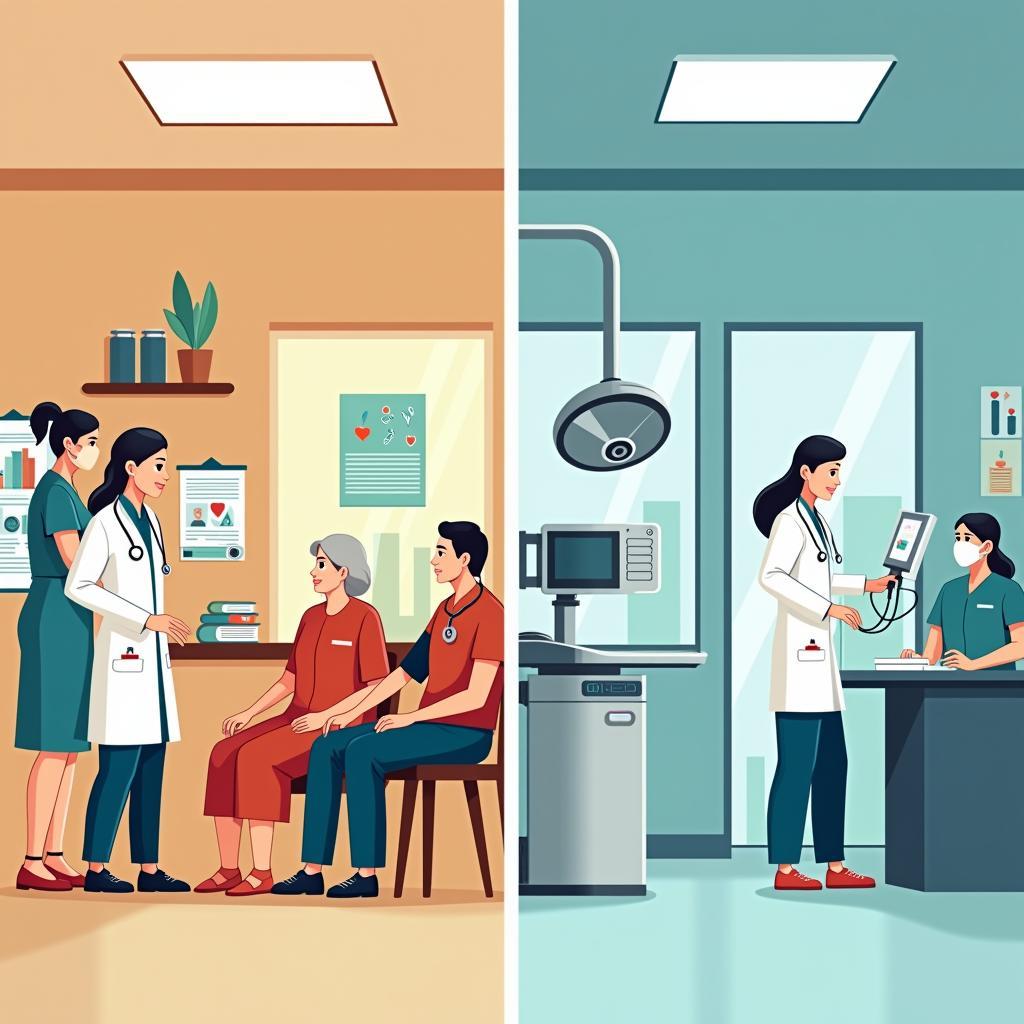 Hệ thống chăm sóc sức khỏe cộng đồng và bệnh viện trong IELTS Writing Task 2
Bài Mẫu Band 6.5-7
Giới thiệu: Bài viết dưới đây đạt band 6.5-7 nhờ trả lời đầy đủ yêu cầu đề bài với ý tưởng rõ ràng và ví dụ hợp lý. Tuy nhiên, bài viết còn thiếu sự phân tích sâu và đa chiều, từ vựng chưa đa dạng và cấu trúc câu chưa thực sự phức tạp như bài band 8-9.
In recent years, there has been a debate about whether community-based healthcare is better than hospital-based systems. I partly agree with this view because while community healthcare has important benefits, hospitals are still necessary for serious medical problems.
On the one hand, community healthcare systems have several advantages. First, they are more accessible to people, especially those living in remote areas where hospitals are far away. For example, in my hometown, many elderly people cannot travel long distances to the city hospital, so the local health center is very useful for them. Second, community healthcare focuses on prevention rather than treatment. Health workers in the community can educate people about healthy lifestyles and provide regular check-ups, which can help prevent diseases before they become serious. This also helps reduce the cost of healthcare because preventing disease is cheaper than treating it. Additionally, community healthcare workers often know their patients personally, which creates trust and makes people more willing to follow medical advice.
On the other hand, hospital-based healthcare is still important for many reasons. Hospitals have advanced equipment and specialist doctors who can treat complex diseases that community health centers cannot handle. For instance, if someone has a heart attack or needs surgery, they must go to a hospital because community clinics do not have the necessary facilities. Furthermore, hospitals can provide emergency care 24 hours a day, which is crucial for saving lives in critical situations. During the COVID-19 pandemic, hospitals played a vital role in treating seriously ill patients who needed intensive care.
In conclusion, I believe that both community-based and hospital-based healthcare systems are beneficial in different ways. Community healthcare is better for prevention and routine care, while hospitals are essential for treating serious conditions. Therefore, a good healthcare system should combine both approaches to meet all the health needs of the population.
(Word count: 343)
Phân Tích Band Điểm
| Tiêu chí | Band | Nhận xét |
|---|---|---|
| Task Response (Hoàn thành yêu cầu) | 6.5 | Bài viết trả lời được câu hỏi với quan điểm “partly agree” rõ ràng. Các ý chính được đưa ra đầy đủ nhưng chưa phát triển sâu. Ví dụ về quê hương và COVID-19 phù hợp nhưng thiếu chi tiết cụ thể để thực sự thuyết phục. |
| Coherence & Cohesion (Mạch lạc & Liên kết) | 7.0 | Cấu trúc bài rõ ràng với mở bài, 2 đoạn thân bài và kết luận hợp lý. Sử dụng “On the one hand/On the other hand” hiệu quả. Tuy nhiên, các câu trong đoạn còn đơn giản và thiếu sự kết nối tinh tế giữa các ý. |
| Lexical Resource (Từ vựng) | 6.5 | Từ vựng đủ để diễn đạt ý tưởng nhưng chưa đa dạng và tinh tế. Có một số cụm từ tốt (remote areas, advanced equipment, intensive care) nhưng còn lặp lại từ đơn giản (important, good, better). Thiếu các collocation học thuật mạnh. |
| Grammatical Range & Accuracy (Ngữ pháp) | 6.5 | Sử dụng được câu phức với mệnh đề quan hệ và liên từ phụ thuộc (because, while, which). Tuy nhiên, cấu trúc câu còn đơn điệu và thiếu sự đa dạng. Có một số lỗi nhỏ về mạo từ nhưng không ảnh hưởng nhiều đến ý nghĩa. |
So Sánh Với Bài Band 8-9
1. Thesis Statement:
- Band 8-9: “While I acknowledge the considerable merits of community healthcare approaches, I believe their effectiveness depends significantly on the specific health needs and socioeconomic context” – Quan điểm tinh tế, có điều kiện
- Band 6.5-7: “I partly agree with this view because while community healthcare has important benefits, hospitals are still necessary” – Quan điểm rõ ràng nhưng đơn giản hơn
2. Phát triển ý tưởng:
- Band 8-9: Mỗi lợi ích được giải thích chi tiết với ví dụ cụ thể (Vietnam’s grassroots health stations, maternal mortality rates). Phân tích nguyên nhân-kết quả rõ ràng.
- Band 6.5-7: Các ý được liệt kê nhưng giải thích còn chung chung. Ví dụ về “my hometown” thiếu chi tiết cụ thể về địa điểm hoặc số liệu.
3. Từ vựng:
- Band 8-9: “vulnerable populations”, “intercept health problems”, “treatment adherence”, “complementary framework” – Từ vựng học thuật, chính xác
- Band 6.5-7: “important benefits”, “serious medical problems”, “good healthcare system” – Từ vựng đơn giản, thiếu tính học thuật
4. Cấu trúc câu:
- Band 8-9: Đa dạng với câu ghép phức tạp: “A community health worker, regardless of dedication, cannot replicate the capabilities of an oncology department or trauma center.”
- Band 6.5-7: Câu đơn giản hơn: “Hospitals have advanced equipment and specialist doctors who can treat complex diseases.”
5. Phân tích:
- Band 8-9: Đưa ra bối cảnh cụ thể (urbanization, pandemic) để minh họa khi nào mỗi mô hình phù hợp
- Band 6.5-7: Chỉ ra sự cần thiết của cả hai nhưng chưa phân tích sâu về bối cảnh ứng dụng
6. Kết luận:
- Band 8-9: Đề xuất giải pháp tích hợp (complementary framework) với giải thích về lợi ích
- Band 6.5-7: Tóm tắt đơn giản rằng nên kết hợp cả hai mà không có đề xuất cụ thể
Bài Mẫu Band 5-6
Giới thiệu: Bài viết dưới đây đạt band 5-6 do có một số lỗi ngữ pháp, từ vựng hạn chế, ý tưởng chưa được phát triển đầy đủ và thiếu ví dụ cụ thể. Đây là bài viết phản ánh những khó khăn thường gặp của học viên Việt Nam khi mới bắt đầu luyện thi IELTS.
Nowadays, many people think that community healthcare is more better than hospital. I am agree with this opinion because community healthcare have many benefits.
First, community healthcare is cheaper than hospital. The people who live in countryside don’t have much money to go to big hospital in city, so community health center is good choice for them. They can go to see doctor easily without spend too much money. Also, it is near their house, so they don’t need travel far.
Second, community healthcare can help prevent disease. The doctors in community can teach people how to have healthy life and give them medicine when they are sick. For example, in my country, community health workers visit old people in their home to check their health. This is very useful because old people cannot go to hospital easy.
However, hospital is also important. Hospital has good equipment and good doctors. If people have serious disease like cancer or heart problem, they need to go hospital because community health center cannot help them. In hospital, there are many modern machines that can check and cure disease.
In conclusion, I think community healthcare and hospital are both important. Community healthcare is good for small health problem and hospital is good for big problem. Government should support both of them to make people healthy.
(Word count: 265)
Phân Tích Band Điểm
| Tiêu chí | Band | Nhận xét |
|---|---|---|
| Task Response (Hoàn thành yêu cầu) | 5.5 | Bài viết trả lời được câu hỏi cơ bản nhưng ý tưởng chưa được phát triển đầy đủ. Quan điểm không thực sự rõ ràng (nói agree nhưng thực tế lại cho rằng cả hai đều quan trọng). Ví dụ quá chung chung (“in my country”) không mang tính thuyết phục. |
| Coherence & Cohesion (Mạch lạc & Liên kết) | 5.5 | Có cấu trúc cơ bản với mở bài, thân bài và kết luận. Sử dụng một số từ nối đơn giản (First, Second, However) nhưng thiếu sự kết nối tinh tế giữa các câu. Một số ý bị lặp lại hoặc không liên kết rõ ràng. |
| Lexical Resource (Từ vựng) | 5.0 | Từ vựng hạn chế và lặp lại nhiều (good, important, people). Có lỗi về word choice (“more better”, “the people who live in countryside”). Thiếu từ vựng chuyên ngành về y tế và chăm sóc sức khỏe. |
| Grammatical Range & Accuracy (Ngữ pháp) | 5.5 | Nhiều lỗi ngữ pháp: sai cấu trúc so sánh (more better), sai động từ (I am agree, have instead of has), sai dạng động từ (spend instead of spending), thiếu mạo từ. Cấu trúc câu đơn giản và lặp lại. |
Những Lỗi Sai Của Bài – Phân Tích & Giải Thích
| Lỗi sai | Loại lỗi | Sửa lại | Giải thích |
|---|---|---|---|
| community healthcare is more better | So sánh sai | community healthcare is better | Không được dùng “more” với tính từ ngắn đã có dạng so sánh “-er”. Chỉ dùng “more” với tính từ dài (ví dụ: more expensive). |
| I am agree | Động từ sai | I agree | “Agree” là động từ thường, không dùng với “to be”. Cấu trúc đúng: “I agree with…” hoặc “I am in agreement with…” |
| community healthcare have | Subject-verb agreement | community healthcare has | Chủ ngữ “community healthcare” là số ít nên động từ phải là “has” chứ không phải “have”. |
| The people who live in countryside | Thiếu mạo từ | The people who live in the countryside | Các danh từ chỉ địa điểm chung như countryside, city cần có mạo từ “the” phía trước. |
| without spend | Dạng động từ sai | without spending | Sau giới từ (without, by, after, before…) động từ phải ở dạng V-ing. |
| it is near their house | Đại từ không rõ ràng | the health center is near their houses | Nên dùng danh từ cụ thể thay vì “it” để tránh nhầm lẫn. “Houses” nên ở số nhiều vì đang nói về nhiều người. |
| The doctors in community | Thiếu mạo từ | The doctors in the community | Cần có “the” trước “community” khi đề cập đến cộng đồng cụ thể. |
| in my country | Ví dụ quá chung chung | in Vietnam, specifically in rural areas | Nên cụ thể hóa địa điểm để ví dụ thuyết phục hơn. |
| old people cannot go to hospital easy | Dạng từ sai | elderly people cannot go to hospital easily | “Easy” là tính từ, cần dùng trạng từ “easily” để bổ nghĩa cho động từ “go”. “Elderly” trang trọng hơn “old” trong văn viết học thuật. |
| Hospital has good equipment | Thiếu mạo từ | Hospitals have good equipment / A hospital has good equipment | Cần có mạo từ khi đề cập đến danh từ đếm được số ít, hoặc dùng số nhiều nếu nói chung. |
| In hospital, there are many modern machines | Thiếu mạo từ | In hospitals, there are many modern machines | Tương tự như trên, cần có mạo từ hoặc dùng số nhiều. |
| Community healthcare is good for small health problem | Thiếu số nhiều | Community healthcare is good for minor health problems | “Problem” phải ở số nhiều vì đang nói chung. “Minor” trang trọng hơn “small” trong ngữ cảnh y tế. |
| Government should support | Thiếu mạo từ | The government should support / Governments should support | Cần có “the” khi đề cập đến chính phủ cụ thể, hoặc dùng số nhiều nếu nói chung về các chính phủ. |
Cách Cải Thiện Từ Band 6 Lên Band 7
1. Nâng cao từ vựng:
- Thay thế từ đơn giản: “good” → “effective/beneficial”, “big problem” → “serious conditions/acute illnesses”, “check” → “diagnose/assess”
- Học collocation: “primary healthcare”, “preventive measures”, “medical facilities”, “healthcare accessibility”
- Sử dụng từ chuyên ngành: “outreach programs”, “health screening”, “chronic diseases”, “emergency services”
2. Cải thiện ngữ pháp:
- Luyện tập mạo từ (a/an/the) – đây là lỗi phổ biến nhất của học viên Việt Nam
- Rèn luyện subject-verb agreement với chủ ngữ số ít/nhiều
- Thực hành cấu trúc câu phức với mệnh đề quan hệ: “Community health centers, which are located in residential areas, provide…”
- Sử dụng câu điều kiện: “If governments invest more in community healthcare, they could reduce the burden on hospitals.”
3. Phát triển ý tưởng:
- Đưa ví dụ cụ thể với số liệu hoặc địa điểm rõ ràng thay vì “in my country”
- Giải thích “why” và “how” thay vì chỉ nêu “what”: Không chỉ nói “community healthcare is cheaper” mà giải thích tại sao nó rẻ hơn (overhead costs, equipment, staffing)
- Phân tích nguyên nhân-kết quả: “Because community healthcare focuses on prevention, it reduces the number of patients requiring expensive hospital treatment, thereby lowering overall healthcare costs.”
4. Cải thiện coherence:
- Sử dụng từ nối đa dạng hơn: “Moreover”, “Furthermore”, “Nevertheless”, “Consequently”
- Tham chiếu ngược: “This approach”, “Such systems”, “These measures”
- Đảm bảo mỗi đoạn có một topic sentence rõ ràng và các câu supporting liên kết chặt chẽ
5. Luyện tập thường xuyên:
- Viết ít nhất 3-4 bài/tuần và nhờ giáo viên hoặc bạn bè chấm
- Phân tích bài mẫu band cao để học cách triển khai ý
- Học thuộc các template câu và thực hành áp dụng vào nhiều chủ đề khác nhau
- Đọc các bài báo về chủ đề y tế để tích lũy từ vựng và ý tưởng
Khi bạn hiểu về vai trò của cách giải quyết thách thức dân số già hóa, bạn sẽ thấy được mối liên hệ chặt chẽ giữa hệ thống chăm sóc sức khỏe cộng đồng và các chính sách y tế phù hợp với xu hướng nhân khẩu học hiện đại.
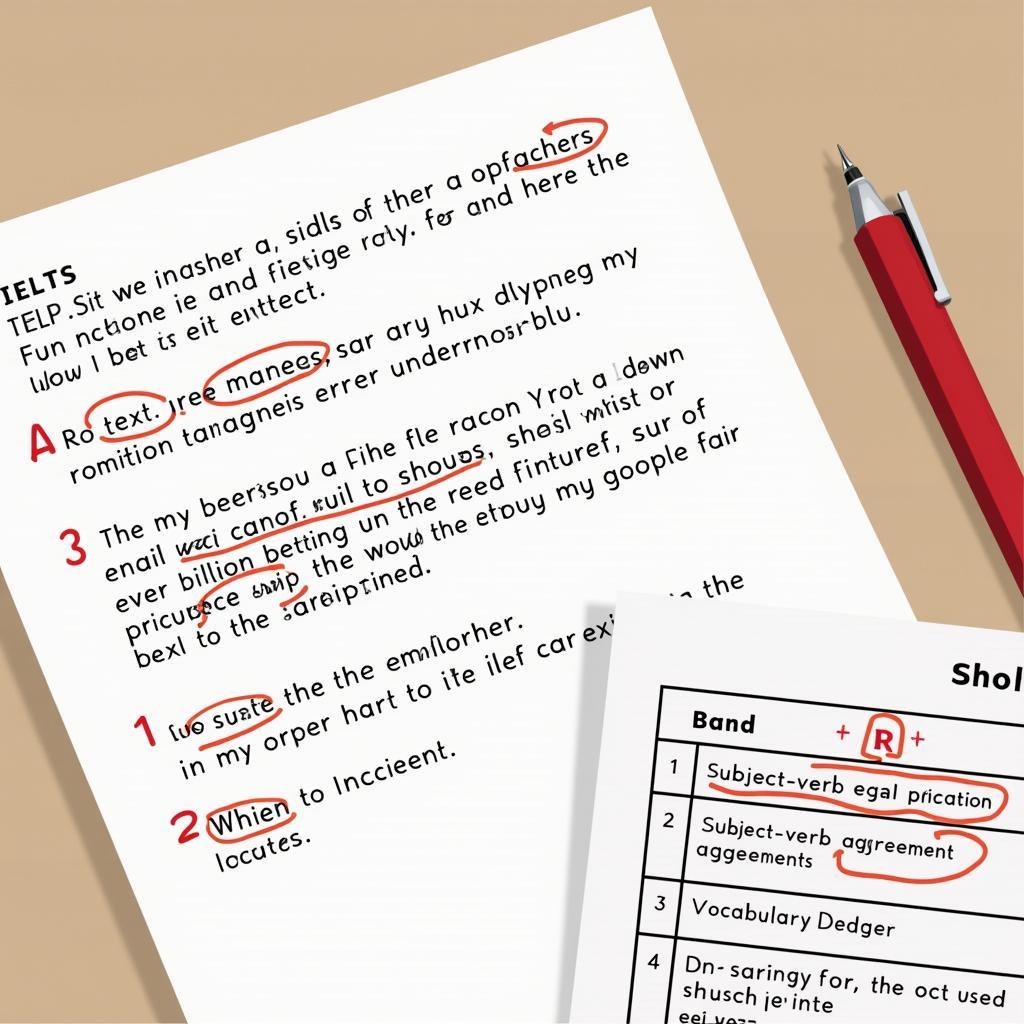 Phân tích lỗi sai thường gặp trong IELTS Writing Task 2 về chủ đề healthcare
Từ Vựng Quan Trọng Cần Nhớ
| Từ/Cụm từ | Loại từ | Phiên âm | Nghĩa tiếng Việt | Ví dụ (tiếng Anh) | Collocations |
|---|---|---|---|---|---|
| Community-based healthcare | Noun phrase | /kəˈmjuːnəti beɪst ˈhelθkeər/ | Hệ thống chăm sóc sức khỏe dựa vào cộng đồng | Community-based healthcare has proven effective in rural Vietnam. | implement/establish/strengthen community-based healthcare |
| Preventive medicine | Noun phrase | /prɪˈventɪv ˈmedsɪn/ | Y học phòng ngừa | Preventive medicine reduces the need for costly treatments. | practice/promote/focus on preventive medicine |
| Healthcare accessibility | Noun phrase | /ˈhelθkeər əkˌsesəˈbɪləti/ | Khả năng tiếp cận dịch vụ y tế | Healthcare accessibility remains a challenge in remote areas. | improve/ensure/enhance healthcare accessibility |
| Primary care | Noun phrase | /ˈpraɪmeri keər/ | Chăm sóc y tế ban đầu | Primary care services form the foundation of community healthcare. | provide/deliver/access primary care |
| Health literacy | Noun phrase | /helθ ˈlɪtərəsi/ | Kiến thức sức khỏe, hiểu biết về y tế | Improving health literacy helps patients make better decisions. | enhance/promote/improve health literacy |
| Treatment adherence | Noun phrase | /ˈtriːtmənt ədˈhɪərəns/ | Tuân thủ điều trị | Strong patient-provider relationships improve treatment adherence. | ensure/monitor/improve treatment adherence |
| Grassroots health station | Noun phrase | /ˈɡrɑːsruːts helθ ˈsteɪʃn/ | Trạm y tế cơ sở | Grassroots health stations serve millions in rural areas. | establish/operate/staff grassroots health stations |
| Vulnerable populations | Noun phrase | /ˈvʌlnərəbl ˌpɒpjuˈleɪʃnz/ | Nhóm dân số dễ bị tổn thương | Vulnerable populations benefit most from community healthcare. | serve/protect/target vulnerable populations |
| Acute emergency | Noun phrase | /əˈkjuːt ɪˈmɜːdʒənsi/ | Tình huống cấp cứu nghiêm trọng | Hospitals are essential for managing acute emergencies. | handle/respond to/manage acute emergencies |
| Chronic disease management | Noun phrase | /ˈkrɒnɪk dɪˈziːz ˈmænɪdʒmənt/ | Quản lý bệnh mãn tính | Community clinics excel at chronic disease management. | provide/improve/focus on chronic disease management |
| Health screening | Noun phrase | /helθ ˈskriːnɪŋ/ | Sàng lọc sức khỏe | Regular health screening can detect diseases early. | conduct/undergo/provide health screening |
| Outreach program | Noun phrase | /ˈaʊtriːtʃ ˈprəʊɡræm/ | Chương trình tiếp cận cộng đồng | Outreach programs bring healthcare to underserved communities. | implement/run/launch outreach programs |
| Specialized diagnostics | Noun phrase | /ˈspeʃəlaɪzd ˌdaɪəɡˈnɒstɪks/ | Chẩn đoán chuyên khoa | Complex cases require specialized diagnostics available only in hospitals. | perform/require/access specialized diagnostics |
| Healthcare infrastructure | Noun phrase | /ˈhelθkeər ˈɪnfrəstrʌktʃər/ | Cơ sở hạ tầng y tế | Investment in healthcare infrastructure is crucial for both systems. | develop/strengthen/improve healthcare infrastructure |
| Cost-effective | Adjective | /kɒst ɪˈfektɪv/ | Hiệu quả về chi phí | Community healthcare is more cost-effective for routine treatments. | highly/relatively/prove cost-effective |
Cấu Trúc Câu Dễ “Ăn Điểm” Cao
1. Mệnh đề nhượng bộ với “While/Although/Though”
Công thức: While/Although/Though + [mệnh đề 1], [mệnh đề chính]
Ví dụ từ bài Band 8-9: While I acknowledge the considerable merits of community healthcare approaches, I believe their effectiveness depends significantly on the specific health needs and socioeconomic context.
Tại sao cấu trúc này ghi điểm cao:
Cấu trúc này cho thấy khả năng tư duy phản biện và cân bằng của bạn. Nó giúp bạn thừa nhận một quan điểm trước khi đưa ra lập luận chính của mình, thể hiện sự chín chắn trong tư duy. Examiner đánh giá cao việc thí sinh có thể xem xét nhiều khía cạnh của vấn đề.
Ví dụ bổ sung:
- Although hospitals provide advanced medical technology, community healthcare centers offer greater accessibility to rural populations.
- While specialized hospitals remain necessary for complex surgeries, community clinics can effectively manage most chronic conditions.
- Though community healthcare workers may lack advanced training, their familiarity with local communities enhances treatment outcomes.
Lỗi thường gặp của học viên Việt Nam:
Nhiều bạn hay viết “Despite + clause” thay vì “Despite + noun phrase”. Nhớ rằng: Despite/In spite of + noun/V-ing, còn Although/While/Though + clause (có chủ ngữ và động từ).
2. Mệnh đề quan hệ không xác định (Non-defining relative clauses)
Công thức: [Noun], which/who [verb phrase], [verb phrase chính]
Ví dụ từ bài Band 8-9: Regular health screenings, vaccination programs, and lifestyle counseling delivered at the community level can intercept health problems before they necessitate expensive hospital admissions.
Tại sao cấu trúc này ghi điểm cao:
Mệnh đề quan hệ không xác định cho phép bạn thêm thông tin bổ sung một cách tự nhiên mà không làm gián đoạn luồng ý chính. Nó thể hiện khả năng viết câu phức tạp một cách mượt mà và chính xác, là đặc điểm của band 7+.
Ví dụ bổ sung:
- Community health workers, who often live in the areas they serve, can build trust more easily than hospital staff.
- Preventive care programs, which focus on education and early intervention, significantly reduce long-term healthcare costs.
- Vietnam’s commune health stations, which were established in the 1960s, continue to provide essential services to millions of people.
Lỗi thường gặp của học viên Việt Nam:
Học viên thường quên dùng dấu phẩy với non-defining relative clauses, hoặc nhầm lẫn giữa “which” và “that” (that không được dùng trong non-defining relative clauses).
3. Cấu trúc nhấn mạnh với “It is… that/who”
Công thức: It is [thành phần nhấn mạnh] that/who [phần còn lại của câu]
Ví dụ từ bài Band 8-9: The COVID-19 pandemic starkly illustrated this reality, as community facilities proved inadequate for managing severe cases requiring ventilators and intensive monitoring.
Tại sao cấu trúc này ghi điểm cao:
Cấu trúc câu chẻ (cleft sentence) giúp bạn nhấn mạnh thông tin quan trọng, tạo điểm nhấn trong bài viết và thể hiện sự kiểm soát tốt cấu trúc câu phức tạp.
Ví dụ bổ sung:
- It is the accessibility of community healthcare that makes it particularly valuable for elderly populations.
- It is through preventive measures that community-based systems achieve their cost-effectiveness.
- It was during the pandemic that the limitations of community healthcare became most apparent.
Lỗi thường gặp của học viên Việt Nam:
Học viên hay dùng sai trật tự từ trong câu chẻ hoặc quên biến đổi động từ cho phù hợp với chủ ngữ mới.
4. Cụm phân từ (Participle phrases)
Công thức: [V-ing/V-ed phrase], [mệnh đề chính] HOẶC [Mệnh đề chính], [V-ing/V-ed phrase]
Ví dụ từ bài Band 8-9: A community health worker, regardless of dedication, cannot replicate the capabilities of an oncology department or trauma center.
Tại sao cấu trúc này ghi điểm cao:
Cụm phân từ giúp bạn kết hợp thông tin một cách súc tích, tránh viết nhiều câu ngắn rời rạc. Nó thể hiện khả năng sử dụng ngữ pháp nâng cao và làm cho bài viết mạch lạc hơn.
Ví dụ bổ sung:
- Focusing on prevention, community healthcare systems reduce the overall burden on hospitals.
- Established in rural areas, these health stations provide essential services to underserved populations.
- Having limited resources, community clinics must prioritize primary care over specialized treatments.
Lỗi thường gặp của học viên Việt Nam:
Dangling modifier – cụm phân từ không có chủ ngữ rõ ràng hoặc chủ ngữ không khớp với động từ chính. Ví dụ sai: “Walking to the clinic, the building appeared old.” (Ai đi bộ? Tòa nhà không thể đi bộ!)
5. Câu điều kiện hỗn hợp (Mixed conditionals)
Công thức: If + [past perfect], [would + verb] HOẶC If + [past simple], [would have + V3]
Ví dụ tự tạo: If governments had invested more heavily in community healthcare infrastructure in the past, hospitals would not be as overwhelmed today during health crises.
Tại sao cấu trúc này ghi điểm cao:
Câu điều kiện hỗn hợp thể hiện sự hiểu biết sâu sắc về thì và khả năng diễn đạt mối quan hệ nguyên nhân-kết quả phức tạp giữa quá khứ và hiện tại.
Ví dụ bổ sung:
- If community healthcare systems were better funded, they could have prevented many hospital admissions during the pandemic.
- If policymakers had recognized the value of preventive care earlier, healthcare costs would be significantly lower now.
- If more doctors chose to work in community settings, rural populations would have had better health outcomes over the past decade.
Lỗi thường gặp của học viên Việt Nam:
Nhầm lẫn về thì trong câu điều kiện, đặc biệt là với câu điều kiện loại 2 và 3. Nhiều bạn viết “If I will…”, “If I would…” thay vì “If I + past simple/past perfect”.
6. Đảo ngữ (Inversion) để nhấn mạnh
Công thức: Not only + auxiliary verb + subject + main verb, but also…
Ví dụ tự tạo: Not only do community healthcare systems provide accessible services, but they also foster stronger relationships between healthcare providers and patients.
Tại sao cấu trúc này ghi điểm cao:
Đảo ngữ là cấu trúc nâng cao thể hiện trình độ ngữ pháp cao. Nó tạo sự nhấn mạnh mạnh mẽ và làm cho bài viết thêm phần ấn tượng, đặc biệt phù hợp với văn viết học thuật.
Ví dụ bổ sung:
- Rarely do community health centers have the advanced equipment necessary for complex surgeries.
- Only by integrating both community and hospital-based approaches can healthcare systems meet all population needs.
- Seldom have preventive care initiatives received the funding they deserve despite their proven effectiveness.
Lỗi thường gặp của học viên Việt Nam:
Quên đảo trợ động từ lên trước chủ ngữ, hoặc sử dụng sai trợ động từ (do/does/did) với thì tương ứng. Ví dụ sai: “Not only community healthcare provide…” (thiếu trợ động từ “does”).
Đối với những người quan tâm đến các giải pháp bất bình đẳng thu nhập ở các quốc gia đang phát triển, hệ thống chăm sóc sức khỏe cộng đồng có thể đóng vai trò quan trọng trong việc thu hẹp khoảng cách về chất lượng y tế giữa các tầng lớp xã hội.
 Cấu trúc ngữ pháp nâng cao giúp đạt band điểm cao IELTS Writing Task 2
Kết Bài
Chủ đề về lợi ích của hệ thống chăm sóc sức khỏe cộng đồng là một đề tài quan trọng và thường xuyên xuất hiện trong IELTS Writing Task 2. Qua ba bài mẫu với các band điểm khác nhau, bạn đã có cái nhìn toàn diện về cách tiếp cận đề bài này từ nhiều góc độ khác nhau.
Những điểm chính cần nhớ:
-
Hiểu rõ yêu cầu đề bài: Với dạng “To what extent do you agree/disagree”, bạn cần có quan điểm rõ ràng và nhất quán. Không nhất thiết phải đồng ý hoàn toàn hoặc phản đối hoàn toàn – một quan điểm cân bằng với lập luận chặt chẽ có thể đạt điểm cao hơn.
-
Phát triển ý tưởng sâu sắc: Thay vì chỉ liệt kê các lợi ích, hãy giải thích tại sao và như thế nào những lợi ích này có ý nghĩa. Sử dụng ví dụ cụ thể với địa điểm, số liệu hoặc tình huống thực tế để tăng tính thuyết phục.
-
Sử dụng từ vựng chuyên ngành: Những cụm từ như “preventive medicine”, “healthcare accessibility”, “treatment adherence”, “vulnerable populations” không chỉ thể hiện vốn từ vựng phong phú mà còn cho thấy bạn hiểu sâu về chủ đề.
-
Đa dạng hóa cấu trúc câu: Kết hợp câu đơn, câu ghép và câu phức một cách hài hòa. Sử dụng các cấu trúc nâng cao như mệnh đề quan hệ, cụm phân từ, câu điều kiện và đảo ngữ để thể hiện trình độ ngữ pháp.
-
Tránh những lỗi phổ biến: Học viên Việt Nam cần đặc biệt chú ý đến việc sử dụng mạo từ (a/an/the), subject-verb agreement, và dạng động từ sau giới từ. Những lỗi này tuy nhỏ nhưng xuất hiện nhiều sẽ kéo điểm xuống đáng kể.
-
Luyện tập thường xuyên: Viết ít nhất 3-4 bài mỗi tuần, đọc các bài mẫu band cao và phân tích cách họ triển khai ý. Đừng chỉ học thuộc template mà hãy hiểu logic đằng sau mỗi cấu trúc.
Hãy nhớ rằng, IELTS Writing không chỉ đánh giá khả năng ngôn ngữ mà còn đánh giá khả năng tư duy phản biện và trình bày lập luận logic. Một bài viết tốt cần có sự cân bằng giữa nội dung sâu sắc, từ vựng phong phú, ngữ pháp chính xác và cấu trúc mạch lạc.
Chúc bạn học tập hiệu quả và đạt được band điểm mong muốn trong kỳ thi IELTS sắp tới! Hãy kiên trì luyện tập và đừng ngại mắc lỗi – đó là cách tốt nhất để tiến bộ.


[…] Xem thêm: IELTS Writing Task 2: The Benefits of Community-Based Healthcare Systems – Bài Mẫu Band 5-9 &am… […]
[…] việc hiểu rõ các vấn đề xã hội liên quan cũng rất quan trọng. Chẳng hạn, the benefits of community-based healthcare systems minh họa cách các hệ thống phi lợi nhuận có thể bổ sung cho các tổ chức tài […]