Trong những năm gần đây, chủ đề về nền kinh tế không tiền mặt (cashless economy) và tác động của nó đến quyền riêng tư cá nhân đã trở thành một đề tài nóng trong các kỳ thi IELTS Writing Task 2. Đây là một chủ đề thời sự, phản ánh xu hướng toàn cầu khi ngày càng nhiều quốc gia chuyển đổi sang các phương thức thanh toán điện tử. Theo thống kê từ IDP và British Council, các đề bài liên quan đến công nghệ tài chính và quyền riêng tư xuất hiện với tần suất cao trong các kỳ thi từ năm 2022 đến nay.
Trong bài viết này, bạn sẽ học được cách tiếp cận hiệu quả cho dạng đề này thông qua ba bài mẫu với các band điểm khác nhau (Band 8-9, Band 6.5-7 và Band 5-6), kèm theo phân tích chi tiết về điểm mạnh và điểm yếu của từng bài. Bên cạnh đó, bài viết còn cung cấp kho từ vựng quan trọng, các cấu trúc câu “ăn điểm” cao và những lưu ý đặc biệt dành cho học viên Việt Nam.
Một số đề thi thực tế đã xuất hiện:
- “Some people believe that cashless payments improve convenience, while others argue they threaten personal privacy. Discuss both views and give your opinion.” (British Council, tháng 6/2023)
- “The rise of digital payments has reduced the use of cash. Do the advantages of this development outweigh the disadvantages?” (IDP, tháng 9/2023)
- “To what extent do you agree that governments should regulate how companies collect financial data in a cashless society?” (IELTS Academic, tháng 3/2024)
Đề Writing Task 2 Thực Hành
In many countries, the use of cash is declining as digital payment methods become more popular. While this trend offers convenience, some people worry about The Effects Of A Cashless Economy On Privacy.
To what extent do you agree or disagree with the view that the move towards cashless transactions poses a significant threat to personal privacy?
Give reasons for your answer and include any relevant examples from your own knowledge or experience.
Write at least 250 words.
Dịch đề: Ở nhiều quốc gia, việc sử dụng tiền mặt đang giảm dần khi các phương thức thanh toán kỹ thuật số trở nên phổ biến hơn. Trong khi xu hướng này mang lại sự tiện lợi, một số người lo ngại về tác động của nền kinh tế không tiền mặt đến quyền riêng tư. Bạn đồng ý hay không đồng ý ở mức độ nào với quan điểm rằng sự chuyển đổi sang giao dịch không tiền mặt đặt ra một mối đe dọa đáng kể đến quyền riêng tư cá nhân?
Phân tích đề bài:
Đây là dạng câu hỏi Opinion Essay (Agree/Disagree) với cấu trúc “To what extent…”. Đề bài yêu cầu bạn:
-
Đưa ra quan điểm rõ ràng: Bạn đồng ý hoàn toàn, đồng ý một phần, hay không đồng ý với ý kiến rằng thanh toán không tiền mặt là mối đe dọa lớn đến quyền riêng tư.
-
Phân tích hai mặt: Mặc dù đề hỏi về mức độ đồng ý, bạn nên thảo luận cả hai khía cạnh (tác động tiêu cực và tích cực đến quyền riêng tư) trước khi đưa ra kết luận.
-
Cung cấp lý do và ví dụ cụ thể: Đề bài yêu cầu “give reasons” và “include relevant examples”, do đó bài viết cần có luận điểm được phát triển đầy đủ với ví dụ thực tế.
Các thuật ngữ quan trọng cần hiểu:
- Cashless economy/transactions: Nền kinh tế/giao dịch không dùng tiền mặt
- Personal privacy: Quyền riêng tư cá nhân
- Significant threat: Mối đe dọa đáng kể (từ “significant” cho thấy mức độ nghiêm trọng)
Những lỗi thường gặp của học viên Việt Nam:
- Chỉ tập trung vào lợi ích của thanh toán điện tử mà không đề cập đến quyền riêng tư
- Không làm rõ “mức độ” đồng ý (to what extent)
- Thiếu ví dụ cụ thể về các rủi ro riêng tư
- Lạm dụng quan điểm cá nhân mà không có lập luận logic
Cách tiếp cận chiến lược:
Với dạng đề này, bạn nên chọn một trong ba cách tiếp cận:
- Đồng ý hoàn toàn: Tập trung vào các mối đe dọa riêng tư (data breach, surveillance, profiling)
- Đồng ý một phần: Công nhận rủi ro nhưng cho rằng có thể kiểm soát được thông qua quy định
- Không đồng ý: Lập luận rằng lợi ích vượt trội và công nghệ bảo mật đang cải thiện
Cấu trúc bài gợi ý:
- Introduction: Paraphrase đề bài + Thesis statement (quan điểm của bạn)
- Body 1: Thừa nhận mối lo ngại về riêng tư (data collection, tracking, hacking risks)
- Body 2: Đưa ra quan điểm phản biện hoặc giải pháp (tùy vào lập trường bạn chọn)
- Conclusion: Nhắc lại quan điểm + Tóm tắt luận điểm chính
Bài Mẫu Band 8-9
Giới thiệu: Bài viết dưới đây đạt Band 8-9 nhờ vào sự phát triển ý tưởng sâu sắc, từ vựng đa dạng và chính xác, cấu trúc câu phức tạp nhưng tự nhiên, và khả năng phân tích vấn đề từ nhiều góc độ. Bài viết thể hiện quan điểm “đồng ý một phần” – thừa nhận rủi ro nhưng không coi đó là mối đe dọa tuyệt đối.
The transition towards a cashless society has sparked considerable debate about its implications for personal privacy. While I acknowledge that digital payment systems do create certain vulnerabilities, I would argue that this threat is not as significant as some critics suggest, provided that appropriate regulatory frameworks and security measures are implemented.
Admittedly, the digitalization of financial transactions does raise legitimate privacy concerns. Every card swipe, mobile payment, or online purchase generates a detailed digital footprint that reveals our spending habits, locations, and lifestyle preferences. Financial institutions and technology companies accumulate vast repositories of this data, which, if inadequately protected, could be exploited by malicious actors or intrusive advertisers. The 2019 Capital One data breach, which exposed the personal information of over 100 million customers, exemplifies how vulnerable such systems can be. Furthermore, the aggregation of payment data enables unprecedented levels of consumer profiling, potentially allowing corporations to manipulate purchasing decisions or discriminate based on spending patterns.
However, these risks should be contextualized rather than exaggerated. Firstly, cash transactions are not inherently more private; they simply shift the privacy concern from digital surveillance to physical monitoring through CCTV cameras and serial number tracking. Secondly, robust data protection legislation, such as Europe’s GDPR, has established stringent requirements for how companies collect, store, and utilize consumer data. When properly enforced, these regulations provide substantial safeguards against privacy infringement. Additionally, technological innovations like blockchain and end-to-end encryption are continuously enhancing the security of digital payment systems, making unauthorized access increasingly difficult. Countries like Sweden, which is approaching near-complete cashlessness, have not experienced the catastrophic privacy violations that skeptics predicted.
In conclusion, while the shift to digital payments undoubtedly introduces new privacy challenges, I maintain that these can be effectively managed through comprehensive regulation and technological advancement. The key lies not in resisting this inevitable transformation but in ensuring that it unfolds within a framework that prioritizes consumer protection and data sovereignty.
(350 words)
Phân Tích Band Điểm
| Tiêu chí | Band | Nhận xét |
|---|---|---|
| Task Response (Hoàn thành yêu cầu) | 9.0 | Quan điểm được trình bày rõ ràng ngay từ đầu (“not as significant as some critics suggest”) và được duy trì xuyên suốt bài. Bài viết phân tích đa chiều vấn đề, thừa nhận rủi ro nhưng đưa ra lập luận phản biện có cơ sở. Các ví dụ cụ thể (Capital One breach, GDPR, Sweden) được sử dụng hiệu quả để minh họa luận điểm. |
| Coherence & Cohesion (Mạch lạc & Liên kết) | 9.0 | Cấu trúc logic hoàn hảo với progression tự nhiên: mở bài → thừa nhận mối lo ngại → phản biện → kết luận cân bằng. Sử dụng đa dạng cohesive devices (Admittedly, However, Firstly, Secondly, Additionally) mà không lạm dụng. Mỗi đoạn có topic sentence rõ ràng và các câu sau phát triển ý một cách mạch lạc. |
| Lexical Resource (Từ vựng) | 9.0 | Từ vựng phong phú và chính xác với nhiều collocations tự nhiên: “spark debate”, “legitimate concerns”, “digital footprint”, “vast repositories”, “unprecedented levels”, “robust legislation”. Sử dụng linh hoạt paraphrase (“cashless society” → “digitalization of financial transactions” → “digital payment systems”). Không có lỗi từ vựng. |
| Grammatical Range & Accuracy (Ngữ pháp) | 9.0 | Đa dạng cấu trúc: câu phức với mệnh đề quan hệ, câu điều kiện (provided that), mệnh đề phân từ (When properly enforced), cấu trúc bị động phức tạp. Sử dụng thành thạo các thì và không có lỗi ngữ pháp đáng kể. Câu văn phức tạp nhưng dễ hiểu. |
Các Yếu Tố Giúp Bài Này Được Chấm Điểm Cao
-
Thesis statement mạnh mẽ và tinh tế: Câu “I would argue that this threat is not as significant as some critics suggest, provided that…” thể hiện quan điểm có điều kiện, không tuyệt đối, cho thấy tư duy phản biện cao.
-
Concession technique (kỹ thuật nhượng bộ): Đoạn Body 1 bắt đầu bằng “Admittedly” để thừa nhận quan điểm đối lập trước khi phản bác, thể hiện khả năng nhìn nhận vấn đề từ nhiều góc độ.
-
Ví dụ cụ thể và relevant: Capital One data breach (2019) là ví dụ thực tế, có năm cụ thể, tăng tính thuyết phục. Sweden được đề cập như một case study thành công.
-
Contextualisation (đặt vấn đề trong bối cảnh): Câu “cash transactions are not inherently more private” so sánh với tiền mặt, cho thấy hiểu biết sâu sắc về vấn đề.
-
Academic tone nhất quán: Sử dụng hedging language (could be, potentially, undoubtedly) và tránh cực đoan, thể hiện phong cách viết học thuật chuyên nghiệp.
-
Complex noun phrases: “The aggregation of payment data”, “unprecedented levels of consumer profiling”, “catastrophic privacy violations” – các cụm danh từ phức tạp thể hiện trình độ ngôn ngữ cao.
-
Kết luận không lặp lại máy móc: Conclusion không chỉ tóm tắt mà còn đưa ra forward-looking statement (“ensuring that it unfolds within a framework”), thể hiện tầm nhìn về vấn đề.
 Bản đồ thể hiện sự chuyển đổi thanh toán không tiền mặt toàn cầu và tác động đến quyền riêng tư
Bài Mẫu Band 6.5-7
Giới thiệu: Bài viết Band 6.5-7 thể hiện khả năng hoàn thành tốt yêu cầu đề bài với các ý tưởng rõ ràng, tuy nhiên từ vựng và cấu trúc câu ít đa dạng hơn so với Band 8-9. Bài viết vẫn có cấu trúc logic nhưng cách phát triển ý đơn giản hơn và thiếu chiều sâu phân tích.
The increasing popularity of digital payments has led to concerns about privacy. In my opinion, I partially agree that cashless transactions can threaten personal privacy, although there are ways to manage these risks.
On the one hand, moving to a cashless economy can create serious privacy problems. When people use credit cards or mobile payment apps, companies can collect a lot of information about their shopping habits and daily activities. This data shows where they go, what they buy, and how much they spend. If this information is not protected properly, hackers might steal it and use it for illegal purposes. For example, in recent years, many banks have experienced data breaches where customers’ personal details were exposed. Moreover, some companies might sell this data to advertisers without people’s permission, which is an invasion of privacy.
On the other hand, I believe that these privacy issues can be controlled. Governments can create strict laws to protect consumers’ financial data and punish companies that misuse it. Many countries have already introduced regulations like GDPR in Europe that require businesses to handle customer data carefully. Additionally, technology is improving all the time, and new security methods such as encryption and biometric authentication make digital payments safer. When these protective measures are in place, the risk to privacy becomes much smaller. In countries like Singapore, where cashless payments are very common, people generally trust the system because of strong security standards.
In conclusion, while digital payment methods do pose some risks to personal privacy, I think these threats can be reduced through proper regulation and better technology. Therefore, I only partially agree that cashless transactions are a major privacy concern.
(310 words)
Phân Tích Band Điểm
| Tiêu chí | Band | Nhận xét |
|---|---|---|
| Task Response (Hoàn thành yêu cầu) | 7.0 | Quan điểm được nêu rõ (“partially agree”) và bài viết thảo luận cả hai mặt của vấn đề. Tuy nhiên, các ý tưởng được phát triển ở mức độ cơ bản, thiếu chiều sâu phân tích so với Band 8-9. Ví dụ còn khá chung chung (“many banks”, “recent years”) chứ không cụ thể như Band cao hơn. |
| Coherence & Cohesion (Mạch lạc & Liên kết) | 7.0 | Cấu trúc rõ ràng với “On the one hand… On the other hand”. Tuy nhiên, sử dụng linking words còn đơn điệu và ít đa dạng. Các câu trong đoạn văn liên kết khá tốt nhưng chưa mượt mà như Band 8-9. Topic sentences có nhưng chưa thực sự compelling. |
| Lexical Resource (Từ vựng) | 6.5 | Từ vựng đủ để truyền đạt ý tưởng nhưng còn đơn giản và lặp lại. Một số collocations tốt (“serious privacy problems”, “invasion of privacy”, “strong security standards”) nhưng còn nhiều cụm cơ bản (“a lot of information”, “all the time”). Không có lỗi từ vựng nghiêm trọng nhưng thiếu sự tinh tế. |
| Grammatical Range & Accuracy (Ngữ pháp) | 7.0 | Sử dụng mix của câu đơn và câu phức, có một số cấu trúc tốt (câu điều kiện, mệnh đề quan hệ). Tuy nhiên, độ phức tạp không bằng Band 8-9. Có một số lỗi nhỏ về cách diễn đạt (“I think” hơi informal cho academic writing) nhưng không ảnh hưởng đến communication. |
So Sánh Với Bài Band 8-9
1. Introduction:
- Band 8-9: “has sparked considerable debate” (vocabulary tinh tế), “I would argue that” (academic tone)
- Band 6.5-7: “has led to concerns” (đơn giản hơn), “In my opinion, I partially agree” (informal, redundant “I”)
2. Phát triển ý:
- Band 8-9: Có câu chủ đề mạnh mẽ, sau đó explain → elaborate → example cụ thể (Capital One 2019)
- Band 6.5-7: Ý tưởng đúng nhưng giải thích đơn giản hơn, example chung chung (“many banks”, “recent years”)
3. Từ vựng:
- Band 8-9: “accumulate vast repositories”, “unprecedented levels of consumer profiling”, “catastrophic privacy violations”
- Band 6.5-7: “collect a lot of information”, “serious privacy problems”, “major privacy concern”
4. Cấu trúc câu:
- Band 8-9: Sử dụng inversion, participle phrases, complex conditionals
- Band 6.5-7: Chủ yếu là câu phức đơn giản với “when”, “if”, “that”
5. Tone và register:
- Band 8-9: Academic và objective, sử dụng hedging language một cách tinh tế
- Band 6.5-7: Hơi informal với “I think”, “I believe” xuất hiện nhiều lần
6. Kết luận:
- Band 8-9: Forward-looking, đưa ra implication rộng hơn
- Band 6.5-7: Tóm tắt lại quan điểm một cách đơn giản
Nếu bạn đang ở band 6.5-7 và muốn lên 8-9, hãy tập trung vào việc phát triển ý sâu hơn với ví dụ cụ thể, nâng cao từ vựng bằng các collocations tự nhiên hơn, và đa dạng hóa cấu trúc câu với các forms phức tạp hơn.
Bài Mẫu Band 5-6
Giới thiệu: Bài viết Band 5-6 thể hiện khả năng trình bày ý tưởng cơ bản nhưng còn nhiều hạn chế về ngôn ngữ, cấu trúc và độ phát triển của luận điểm. Bài viết có những lỗi ngữ pháp và từ vựng ảnh hưởng đến sự rõ ràng, mặc dù vẫn có thể hiểu được ý chính.
Nowadays, many people use digital payment instead of cash. Some people think this is dangerous for privacy. I agree with this idea because it have many problems.
First, when we use digital payment, companies can know all things about us. They can see what we buy, where we go and how much money we spend. This information is very personal. If someone steal this information, they can use it in bad ways. For example, my friend’s credit card was hacked last year and the hacker bought many expensive things. This show that digital payment is not safe for our privacy.
Second, companies can sell our data to other company for making money. We don’t know who have our information. They can use it for advertisement or another purpose. This is not good because we didn’t give permission to them. In cash payment, nobody know what we buy, so it is more private.
However, some people say that government can make law to protect people’s data. But I think this is not enough because hackers are very clever and they can break the system easy. Also, not all countries has strong law about data protection.
In conclusion, I think cashless payment is big threat to privacy because companies collect too much information and there is many risk of hacking. People should be careful when using digital payment.
(260 words)
Phân Tích Band Điểm
| Tiêu chí | Band | Nhận xét |
|---|---|---|
| Task Response (Hoàn thành yêu cầu) | 5.5 | Quan điểm được nêu (“I agree”) nhưng thiếu nuance, không thảo luận mức độ đồng ý (to what extent). Các ý tưởng còn đơn giản và không được phát triển đầy đủ. Ví dụ về bạn bè thiếu tính thuyết phục vì quá cá nhân và không có chi tiết cụ thể. Body paragraph 3 (phản biện) quá ngắn và yếu. |
| Coherence & Cohesion (Mạch lạc & Liên kết) | 6.0 | Có cấu trúc cơ bản (First, Second, However, In conclusion) nhưng cách liên kết còn máy móc. Các câu trong đoạn văn đôi khi thiếu kết nối logic. Không có topic sentence rõ ràng cho từng đoạn. Progression của ý tưởng còn abrupt. |
| Lexical Resource (Từ vựng) | 5.5 | Từ vựng hạn chế và lặp lại nhiều (“information”, “company”, “data”). Nhiều lỗi word choice (“all things”, “another purpose”) và collocation không tự nhiên. Sử dụng từ quá đơn giản (“very clever”, “bad ways”, “not good”). Có một số từ vựng liên quan đến chủ đề nhưng không được sử dụng chính xác hoàn toàn. |
| Grammatical Range & Accuracy (Ngữ pháp) | 5.5 | Nhiều lỗi ngữ pháp ảnh hưởng đến độ rõ ràng: subject-verb agreement (“it have”, “not all countries has”), article errors (“other company”, “big threat”), word form (“steal” thay vì “steals”, “break…easy” thay vì “easily”). Cấu trúc câu đơn điệu, chủ yếu là câu đơn hoặc câu ghép đơn giản với “because”, “so”, “and”. |
Những Lỗi Sai Của Bài – Phân Tích & Giải Thích
| Lỗi sai | Loại lỗi | Sửa lại | Giải thích |
|---|---|---|---|
| “it have many problems” | Subject-verb agreement | “it has many problems” | Chủ ngữ “it” là số ít nên động từ phải là “has” chứ không phải “have”. Đây là lỗi cơ bản mà học viên Việt Nam thường mắc phải vì tiếng Việt không chia động từ theo ngôi. |
| “companies can know all things about us” | Word choice/Collocation | “companies can know everything about us” hoặc “learn all details about us” | “All things” không tự nhiên trong ngữ cảnh này. “Everything” là từ phù hợp hơn khi nói về thông tin tổng thể. “Learn details” hoặc “gather information” là các collocation học thuật hơn. |
| “If someone steal this information” | Subject-verb agreement | “If someone steals this information” | Trong câu điều kiện loại 1, động từ sau chủ ngữ số ít “someone” phải thêm “s/es”. Đây là lỗi căn bản về chia động từ trong present simple. |
| “This show that…” | Subject-verb agreement | “This shows that…” | “This” là chủ ngữ số ít nên động từ phải là “shows”. Lỗi tương tự như trên, phản ánh sự thiếu chú ý đến agreement. |
| “other company” | Singular/Plural | “other companies” | “Other” đi với danh từ số nhiều (“other companies”) hoặc “another” đi với danh từ số ít (“another company”). Không thể dùng “other” với danh từ số ít. |
| “for making money” | Word form/Style | “to make money” hoặc “for profit” | Sau “for” trong ngữ cảnh này nên dùng danh từ (“profit”) hoặc dùng “to + infinitive” để chỉ mục đích. “For making” không sai hoàn toàn nhưng kém academic hơn. |
| “who have our information” | Subject-verb agreement | “who has our information” | “Who” thay thế cho “other company” (số ít ở trước đó) nên động từ phải là “has”. Nếu muốn dùng “have”, cần sửa thành “which companies have our information”. |
| “another purpose” | Singular/Plural logic | “other purposes” | Khi nói chung chung về nhiều mục đích khác nhau, nên dùng số nhiều “other purposes”. “Another purpose” chỉ có nghĩa là “một mục đích khác” (duy nhất một). |
| “we didn’t give permission to them” | Tense consistency | “we don’t give permission to them” hoặc “we haven’t given permission” | Bài viết dùng present tense để nói về tình huống chung, không nên đột ngột chuyển sang past simple. Present perfect hoặc present simple phù hợp hơn với ngữ cảnh này. |
| “government can make law” | Article | “governments can make laws” hoặc “the government can make laws” | Danh từ “government” và “law” cần mạo từ hoặc dùng số nhiều. Trong ngữ cảnh chung, “governments” (nhiều quốc gia) và “laws” (nhiều luật) phù hợp hơn. |
| “this is not enough” | Vague reference | “these laws are not enough” hoặc “this approach is insufficient” | “This” quá mơ hồ, không rõ đang nói về “law” hay “government action”. Cần thay bằng cụm từ cụ thể hơn. “Insufficient” là từ academic hơn “not enough”. |
| “very clever” | Informal vocabulary | “sophisticated” hoặc “highly skilled” | “Very clever” quá informal và đơn giản cho academic writing. “Sophisticated” (tinh vi) hoặc “highly skilled” (có kỹ năng cao) phù hợp với register học thuật hơn. |
| “break the system easy” | Word form | “break the system easily” hoặc “breach the system effortlessly” | “Easy” là tính từ, cần trạng từ “easily” để bổ nghĩa cho động từ “break”. “Breach” và “effortlessly” là các từ academic hơn cho bài IELTS band cao. |
| “not all countries has” | Subject-verb agreement | “not all countries have” | “Countries” là số nhiều nên động từ phải là “have”. Đây lại là lỗi agreement cơ bản xuất hiện nhiều lần trong bài. |
| “big threat” | Article | “a big threat” hoặc “a significant threat” | Danh từ đếm được số ít “threat” cần mạo từ “a”. “Significant” là từ formal hơn “big” trong academic context. |
| “there is many risk” | Subject-verb agreement + Singular/Plural | “there are many risks” | “Many” đi với danh từ số nhiều “risks” và động từ “are”. “There is” chỉ dùng với danh từ số ít hoặc uncountable. Đây là cấu trúc “there + be” rất cơ bản nhưng bị sai. |
Cách Cải Thiện Từ Band 6 Lên Band 7
1. Nâng cao Task Response:
- Thay vì đồng ý hoàn toàn, hãy thể hiện quan điểm có nuance: “I largely agree, although…” hoặc “While I acknowledge X, I believe Y”
- Phát triển mỗi ý tưởng với explain-elaborate-example pattern
- Sử dụng ví dụ cụ thể có tên, số liệu, năm thay vì “my friend” hay “many people”
2. Cải thiện Coherence & Cohesion:
- Học viên cần nắm vững các linking words nhóm theo chức năng như impact of financial technology on consumer behavior đã trình bày chi tiết
- Thay linking words đơn giản: “First” → “Primarily”, “Second” → “Furthermore”, “However” → “Nevertheless”
- Thêm topic sentences rõ ràng cho mỗi đoạn: “The most significant privacy concern relates to…”
- Sử dụng reference words: “This phenomenon”, “Such practices”, “These measures”
3. Mở rộng Lexical Resource:
- Học collocations theo chủ đề: “privacy concerns”, “data breaches”, “financial transactions”, “unauthorized access”
- Thay thế từ đơn giản: “know” → “monitor/track”, “bad” → “malicious/illicit”, “use” → “exploit/leverage”
- Học synonyms để paraphrase: “digital payment” → “electronic transactions” → “cashless methods”
- Tránh lặp từ bằng cách dùng pronouns và paraphrasing
4. Nâng cao Grammatical Range:
- Luyện tập các cấu trúc phức tạp:
- Câu điều kiện loại 2/3: “If proper safeguards were implemented, these risks could be mitigated”
- Mệnh đề quan hệ rút gọn: “Data collected through digital transactions can reveal…”
- Cấu trúc bị động: “Personal information may be compromised if…”
- Inversion: “Not only does this threaten privacy, but it also…”
- Kiểm tra kỹ subject-verb agreement và article usage (hai lỗi phổ biến nhất của học viên Việt Nam)
5. Luyện tập cụ thể:
- Viết lại bài Band 5-6 này, sửa tất cả các lỗi đã được chỉ ra
- So sánh từng câu với bài Band 8-9 tương ứng
- Ghi chép và học thuộc ít nhất 10 collocations mới mỗi tuần
- Luyện viết 1 bài/tuần và tự chấm theo 4 tiêu chí
6. Mindset và chiến lược:
- Dành 5 phút để plan bài trước khi viết (brainstorm ý tưởng, chọn examples)
- Dành 3-5 phút cuối để proofreading, đặc biệt chú ý đến subject-verb agreement và articles
- Đọc nhiều bài mẫu band cao để “ngấm” cách diễn đạt tự nhiên
- Không cố viết câu quá phức tạp nếu chưa tự tin – câu đơn giản nhưng đúng vẫn tốt hơn câu phức tạp sai
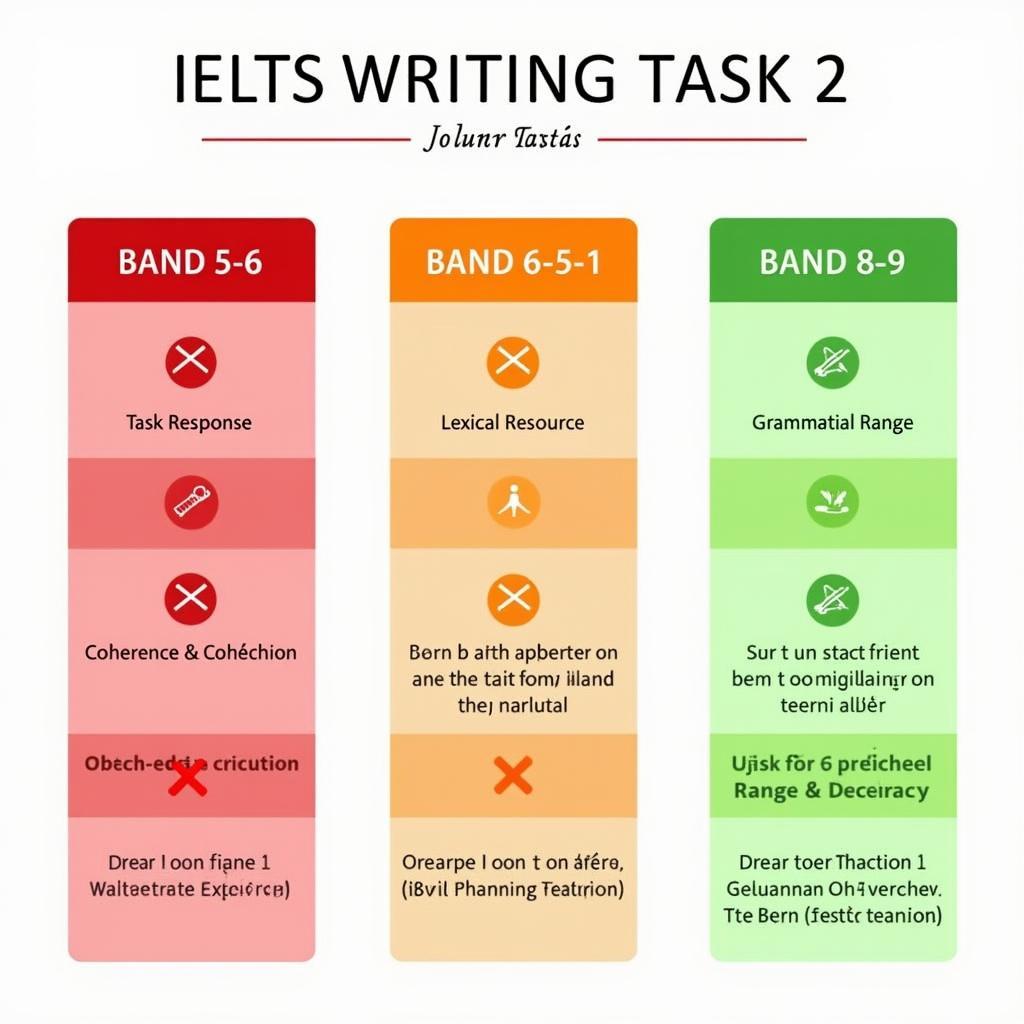 So sánh chi tiết các tiêu chí chấm điểm giữa các band IELTS Writing Task 2
Từ Vựng Quan Trọng Cần Nhớ
| Từ/Cụm từ | Loại từ | Phiên âm | Nghĩa tiếng Việt | Ví dụ | Collocations |
|---|---|---|---|---|---|
| cashless economy | noun phrase | /ˈkæʃləs ɪˈkɒnəmi/ | Nền kinh tế không tiền mặt | The transition to a cashless economy has accelerated during the pandemic. | move towards a cashless economy, embrace a cashless society |
| digital footprint | noun phrase | /ˈdɪdʒɪtl ˈfʊtprɪnt/ | Dấu vết kỹ thuật số (thông tin để lại khi sử dụng internet) | Every online purchase adds to your digital footprint. | leave a digital footprint, minimize digital footprint, track digital footprints |
| data breach | noun phrase | /ˈdeɪtə briːtʃ/ | Sự rò rỉ/vi phạm dữ liệu | The company suffered a massive data breach affecting millions of users. | suffer a data breach, prevent data breaches, report a data breach |
| legitimate concerns | noun phrase | /lɪˈdʒɪtɪmət kənˈsɜːnz/ | Những lo ngại chính đáng | Consumers have legitimate concerns about how their data is used. | raise legitimate concerns, address legitimate concerns |
| consumer profiling | noun phrase | /kənˈsjuːmə ˈprəʊfaɪlɪŋ/ | Phân tích hồ sơ người tiêu dùng | Consumer profiling allows companies to target advertisements more effectively. | enable consumer profiling, engage in consumer profiling |
| intrusive advertising | noun phrase | /ɪnˈtruːsɪv ˈædvətaɪzɪŋ/ | Quảng cáo xâm phạm (riêng tư) | Many users find intrusive advertising annoying and invasive. | combat intrusive advertising, subject to intrusive advertising |
| robust legislation | noun phrase | /rəʊˈbʌst ˌledʒɪsˈleɪʃn/ | Luật pháp mạnh mẽ/chặt chẽ | Robust legislation is needed to protect consumer privacy. | implement robust legislation, call for robust legislation |
| data sovereignty | noun phrase | /ˈdeɪtə ˈsɒvrɪnti/ | Quyền tự chủ dữ liệu | Data sovereignty ensures individuals control their personal information. | protect data sovereignty, ensure data sovereignty |
| unauthorized access | noun phrase | /ʌnˈɔːθəraɪzd ˈækses/ | Truy cập trái phép | Encryption helps prevent unauthorized access to sensitive data. | prevent unauthorized access, gain unauthorized access |
| malicious actors | noun phrase | /məˈlɪʃəs ˈæktəz/ | Các chủ thể độc hại (hacker, kẻ xấu) | Malicious actors constantly seek vulnerabilities in payment systems. | protect against malicious actors, targeted by malicious actors |
| mitigate risks | verb phrase | /ˈmɪtɪgeɪt rɪsks/ | Giảm thiểu rủi ro | Strong encryption can help mitigate risks of data theft. | mitigate risks effectively, strategies to mitigate risks |
| accumulate data | verb phrase | /əˈkjuːmjəleɪt ˈdeɪtə/ | Tích lũy dữ liệu | Tech companies accumulate vast amounts of data on user behavior. | accumulate data continuously, accumulate personal data |
| spark debate | verb phrase | /spɑːk dɪˈbeɪt/ | Khơi mào cuộc tranh luận | The new privacy policy sparked considerable debate online. | spark heated debate, spark public debate |
| safeguard privacy | verb phrase | /ˈseɪfɡɑːd ˈprɪvəsi/ | Bảo vệ quyền riêng tư | Regulations aim to safeguard privacy in the digital age. | safeguard personal privacy, measures to safeguard privacy |
| unprecedented levels | noun phrase | /ʌnˈpresɪdentɪd ˈlevlz/ | Mức độ chưa từng có | Digital tracking enables unprecedented levels of surveillance. | reach unprecedented levels, operate at unprecedented levels |
Lưu ý cho học viên: Các từ vựng trên không chỉ hữu ích cho chủ đề “cashless economy” mà còn có thể áp dụng cho nhiều đề bài IELTS khác liên quan đến technology, privacy, và data protection. Hãy học các collocations đi kèm vì chúng giúp bài viết của bạn tự nhiên và academic hơn.
Cấu Trúc Câu Dễ “Ăn Điểm” Cao
1. Cấu trúc câu phức với mệnh đề nhượng bộ (Concessive Clause)
Công thức: While/Although/Though + clause, main clause
Ví dụ từ bài Band 8-9: While I acknowledge that digital payment systems do create certain vulnerabilities, I would argue that this threat is not as significant as some critics suggest.
Tại sao cấu trúc này ghi điểm cao: Câu concession thể hiện tư duy phản biện – bạn thừa nhận điểm yếu của lập luận mình trước khi bảo vệ quan điểm. Điều này cho thấy bạn có khả năng nhìn nhận vấn đề từ nhiều góc độ, một kỹ năng quan trọng trong academic writing. Giám khảo đánh giá cao cách tiếp cận balanced này.
Ví dụ bổ sung:
- Although cashless transactions offer convenience, they simultaneously expose users to new forms of surveillance.
- While technological advancements have improved security, they cannot eliminate all privacy risks.
- Though many people embrace digital payments, concerns about data misuse remain prevalent.
Lỗi thường gặp của học viên Việt Nam: Nhiều bạn viết “Although…but…” – đây là lỗi nghiêm trọng vì tiếng Anh không dùng cả hai từ này cùng lúc. Chỉ chọn một: “Although…,” HOẶC “…, but…”.
2. Mệnh đề quan hệ không xác định (Non-defining Relative Clause)
Công thức: Noun + , which/who/where + clause + , main clause continues
Ví dụ từ bài Band 8-9: The 2019 Capital One data breach, which exposed the personal information of over 100 million customers, exemplifies how vulnerable such systems can be.
Tại sao cấu trúc này ghi điểm cao: Mệnh đề quan hệ không xác định (có dấu phзапятой) cho phép bạn thêm thông tin chi tiết vào câu một cách tự nhiên mà không cần viết thêm câu riêng. Điều này làm bài viết compact hơn, học thuật hơn, và thể hiện khả năng kết nối thông tin một cách sophisticated. Đặc biệt hữu ích khi đưa ra ví dụ hoặc giải thích thêm.
Ví dụ bổ sung:
- GDPR, which came into effect in 2018, has set a global standard for data protection.
- Sweden, where cash usage has dropped below 10%, demonstrates that a cashless society is achievable.
- Biometric authentication, which uses fingerprints or facial recognition, provides an additional security layer.
Lỗi thường gặp của học viên Việt Nam: Quên dấu phẩy trước và sau mệnh đề quan hệ không xác định, hoặc nhầm lẫn giữa “which” (không xác định) và “that” (xác định). Nhớ: “that” KHÔNG bao giờ dùng trong non-defining relative clause.
3. Cụm phân từ (Participle Phrases)
Công thức: Verb-ing/Verb-ed (at the beginning or end of sentence) + , + main clause
Ví dụ từ bài Band 8-9: When properly enforced, these regulations provide substantial safeguards against privacy infringement.
Tại sao cấu trúc này ghi điểm cao: Participle phrases giúp câu văn ngắn gọn hơn mà vẫn giữ được ý nghĩa đầy đủ. Thay vì viết hai mệnh đề dài, bạn rút gọn một mệnh đề thành cụm phân từ. Điều này thể hiện mastery của ngữ pháp nâng cao và làm bài viết professional hơn. Cấu trúc này rất phổ biến trong academic texts.
Ví dụ bổ sung:
- Having experienced multiple data breaches, consumers have become more cautious about digital payments.
- Equipped with advanced encryption technology, modern payment systems offer greater security than ever before.
- Concerned about privacy violations, many users are demanding stricter regulations.
Lỗi thường gặp của học viên Việt Nam: Sử dụng sai chủ ngữ logic (dangling participle). Ví dụ sai: “Having encrypted the data, the system was more secure” (Chủ ngữ của câu chính là “the system” nhưng “having encrypted” không thể do system thực hiện). Đúng phải là: “Having encrypted the data, developers made the system more secure.”
4. Câu chẻ (Cleft Sentences) – It is…that/What…is
Công thức: It is + noun/adjective + that + clause HOẶC What + clause + is + noun phrase
Ví dụ từ bài Band 8-9: The key lies not in resisting this inevitable transformation but in ensuring that it unfolds within a framework that prioritizes consumer protection.
Tại sao cấu trúc này ghi điểm cao: Câu chẻ giúp nhấn mạnh một phần cụ thể của câu, tạo focus và drama cho luận điểm. Đây là cách làm nổi bật thông tin quan trọng một cách tự nhiên và elegant, thường xuất hiện trong conclusion hoặc khi bạn muốn nhấn mạnh điểm chính. Giám khảo đánh giá cao khả năng manipulate câu để tạo emphasis.
Ví dụ bổ sung:
- It is the lack of transparency, not the technology itself, that threatens privacy.
- What concerns privacy advocates most is the aggregation of data across multiple platforms.
- It is through comprehensive regulation that we can balance innovation with privacy protection.
Lỗi thường gặp của học viên Việt Nam: Dùng sai cấu trúc “It is…who/that”. Nhớ: dùng “who” cho người, “that” cho vật/sự việc. Ngoài ra, nhiều bạn quên “is” trong cấu trúc “What…is”, viết thành “What concerns people the lack of…”
5. Câu điều kiện nâng cao (Mixed Conditionals & Inversion)
Công thức: If + past perfect, would/could + present OR Had + subject + past participle, would/could + base verb
Ví dụ từ bài Band 8-9: If inadequately protected, [data] could be exploited by malicious actors.
Tại sao cấu trúc này ghi điểm cao: Câu điều kiện thể hiện khả năng suy luận logic về cause-effect relationships. Mixed conditionals đặc biệt impressive vì chúng kết nối quá khứ với hiện tại hoặc hiện tại với giả định. Inversion (đảo ngữ) trong câu điều kiện làm tăng formality và sophistication, rất phù hợp với academic writing.
Ví dụ bổ sung:
- If companies had implemented stricter security measures, many data breaches could have been prevented.
- Had governments regulated digital payments earlier, current privacy concerns might be less severe.
- Should technological safeguards fail, consumers would be left vulnerable to exploitation.
Lỗi thường gặp của học viên Việt Nam: Nhầm lẫn giữa các loại câu điều kiện, đặc biệt là dùng sai thì động từ. Ví dụ sai: “If companies will protect data better, there would be fewer breaches” (đúng phải là “protected” chứ không phải “will protect”).
6. Cấu trúc nhấn mạnh với đảo ngữ (Inversion for Emphasis)
Công thức: Not only + auxiliary + subject + verb, but also… / Never/Rarely/Seldom + auxiliary + subject + verb
Ví dụ từ bài Band 8-9: Countries like Sweden, which is approaching near-complete cashlessness, have not experienced the catastrophic privacy violations that skeptics predicted.
Tại sao cấu trúc này ghi điểm cao: Inversion là dấu hiệu của advanced grammar mastery. Nó tạo dramatic effect và làm nổi bật ý kiến của bạn. Đây là cấu trúc formal, rất academic, và ít người học có thể sử dụng chính xác. Khi dùng đúng, nó immediately signals đến giám khảo rằng bạn có high-level language skills.
Ví dụ bổ sung:
- Not only does digital payment increase efficiency, but it also reduces the costs associated with cash handling.
- Rarely do consumers fully understand how their financial data is being utilized.
- Under no circumstances should companies share personal data without explicit consent.
Lỗi thường gặp của học viên Việt Nam: Quên đảo auxiliary verb lên trước subject sau “Not only”, “Never”, “Rarely”. Ví dụ sai: “Not only digital payment increases efficiency…” (đúng phải là “does digital payment increase”). Ngoài ra, nhiều bạn không nhớ dùng auxiliary verb phù hợp với thì (do/does/did cho simple tenses).
 Minh họa các cấu trúc ngữ pháp quan trọng cho IELTS Writing Task 2 band cao
Kết Bài
Chủ đề về tác động của nền kinh tế không tiền mặt đến quyền riêng tư là một đề tài phức tạp và thời sự, đòi hỏi bạn phải có khả năng phân tích đa chiều và trình bày quan điểm một cách cân bằng. Qua ba bài mẫu ở các band điểm khác nhau, bạn có thể thấy rõ sự khác biệt giữa một bài viết xuất sắc và một bài viết trung bình không chỉ nằm ở từ vựng hay ngữ pháp, mà còn ở cách phát triển ý tưởng, sử dụng ví dụ cụ thể, và khả năng duy trì academic tone xuyên suốt.
Những điểm chính cần ghi nhớ:
Về Task Response: Luôn trả lời đúng câu hỏi (to what extent), đưa ra quan điểm rõ ràng ngay từ introduction, và maintain consistency xuyên suốt bài. Phát triển mỗi luận điểm với explain-elaborate-example pattern để đạt band cao.
Về Coherence & Cohesion: Sử dụng đa dạng linking devices nhưng một cách tự nhiên, không máy móc. Topic sentences rõ ràng cho mỗi đoạn và ensure logical flow giữa các ý tưởng là chìa khóa để đạt band 8+.
Về Lexical Resource: Thay vì học từ vựng đơn lẻ, hãy focus vào collocations và topic-specific phrases. Paraphrasing là essential skill – đừng lặp lại từ trong đề bài. Các bạn có thể tham khảo thêm về cách sử dụng từ vựng trong bối cảnh tài chính hiện đại để mở rộng vốn từ.
Về Grammatical Range & Accuracy: Đa dạng cấu trúc câu là must, nhưng accuracy quan trọng hơn complexity. Học viên Việt Nam cần chú ý đặc biệt đến subject-verb agreement và article usage – hai lỗi phổ biến nhất ảnh hưởng đến điểm số.
Lời khuyên cuối cùng: Practice makes perfect. Hãy viết thường xuyên (ít nhất 2-3 bài/tuần), tự chấm bài theo rubric chính thức của IELTS, và học từ các bài mẫu band cao. Đừng chỉ đọc passive mà hãy analyze tại sao một câu được viết theo cách đó, tại sao tác giả chọn từ này thay vì từ kia. Active learning như vậy sẽ giúp bạn cải thiện nhanh hơn nhiều.
Chúc các bạn ôn thi hiệu quả và đạt được band điểm mong muốn trong kỳ thi IELTS sắp tới!