
Trong bối cảnh biến đổi khí hậu ngày càng nghiêm trọng, chủ đề “The Future Of Clean Energy Technologies” đã trở thành một trong những chủ đề xuất hiện thường xuyên nhất trong kỳ thi IELTS Reading. Chủ đề này không chỉ phản ánh xu hướng phát triển toàn cầu mà còn đánh giá khả năng đọc hiểu các bài viết khoa học-kỹ thuật của thí sinh.
Qua kinh nghiệm giảng dạy hơn 20 năm, tôi nhận thấy các bài đọc về năng lượng sạch thường xuất hiện trong Cambridge IELTS từ quyển 10 trở đi, với tần suất khoảng 15-20% trong tổng số đề thi. Đây là chủ đề yêu cầu học viên nắm vững từ vựng chuyên ngành, hiểu các quy trình công nghệ và phân tích xu hướng phát triển.
Bài viết này cung cấp một đề thi IELTS Reading hoàn chỉnh với 3 passages từ dễ đến khó, tổng cộng 40 câu hỏi đa dạng theo đúng format thi thật. Bạn sẽ nhận được đáp án chi tiết kèm giải thích, phương pháp paraphrase, và từ vựng quan trọng được phân loại theo từng passage. Đề thi này phù hợp với học viên từ band 5.0 trở lên, giúp bạn làm quen với độ khó tăng dần và rèn luyện kỹ năng quản lý thời gian hiệu quả.
Hướng Dẫn Làm Bài IELTS Reading
Tổng Quan Về IELTS Reading Test
IELTS Reading Test kéo dài 60 phút với 3 passages và tổng cộng 40 câu hỏi. Mỗi câu trả lời đúng được tính 1 điểm, và điểm thô sẽ được chuyển đổi thành band điểm từ 1-9.
Phân bổ thời gian khuyến nghị:
- Passage 1: 15-17 phút (độ khó dễ, band 5.0-6.5)
- Passage 2: 18-20 phút (độ khó trung bình, band 6.0-7.5)
- Passage 3: 23-25 phút (độ khó cao, band 7.0-9.0)
Lưu ý quan trọng: Không có thời gian riêng để chép đáp án vào answer sheet, vì vậy bạn cần viết trực tiếp trong khi làm bài.
Các Dạng Câu Hỏi Trong Đề Này
Đề thi mẫu này bao gồm 7 dạng câu hỏi phổ biến nhất:
- Multiple Choice – Câu hỏi trắc nghiệm nhiều lựa chọn
- True/False/Not Given – Xác định thông tin đúng/sai/không có trong bài
- Yes/No/Not Given – Xác định ý kiến tác giả
- Matching Headings – Nối tiêu đề với đoạn văn
- Sentence Completion – Hoàn thành câu
- Summary Completion – Hoàn thành đoạn tóm tắt
- Short-answer Questions – Câu hỏi trả lời ngắn
IELTS Reading Practice Test
PASSAGE 1 – Solar Power Revolution: Bringing Light to Remote Communities
Độ khó: Easy (Band 5.0-6.5)
Thời gian đề xuất: 15-17 phút
Solar energy has become one of the most promising clean energy sources in the twenty-first century. While large-scale solar farms attract significant media attention, small-scale solar installations are quietly transforming lives in remote communities around the world. These off-grid solar systems provide electricity to areas where traditional power infrastructure is either too expensive or practically impossible to build.
In rural Kenya, a country where approximately 70% of the population lives in areas without access to the national electricity grid, portable solar panels have become a lifeline. Families who once relied on expensive kerosene lamps for lighting can now afford small solar kits costing between $50 and $200. These systems typically include a solar panel, a rechargeable battery, LED lights, and USB charging ports for mobile phones. The impact on daily life has been profound and immediate. Children can study after sunset, small businesses can operate longer hours, and families save money previously spent on fuel.
The success of solar technology in developing nations is largely due to innovative payment models. Companies like M-KOPA and d.light have introduced pay-as-you-go systems that allow customers to purchase solar kits through small daily payments made via mobile phones. This approach removes the upfront cost barrier that prevented many families from accessing clean energy. A typical customer might pay just $0.50 per day over one year, after which they own the system outright. This micro-payment structure has proven so successful that it is now being replicated in countries across Africa, Asia, and Latin America.
Beyond individual households, community solar projects are bringing electricity to schools, health clinics, and water pumping stations. In Bangladesh, the Infrastructure Development Company Limited (IDCOL) has facilitated the installation of over 6 million solar home systems, making it the world’s largest off-grid renewable energy program. These installations have created thousands of jobs in sales, installation, and maintenance, demonstrating that clean energy transitions can also drive economic development.
The technology itself continues to improve at a remarkable pace. Modern solar panels are more efficient, more durable, and significantly cheaper than those available just a decade ago. The cost of solar photovoltaic (PV) panels has fallen by approximately 90% since 2010, making solar power increasingly competitive with fossil fuels even in grid-connected areas. Researchers are now developing flexible solar panels that can be integrated into building materials, clothing, and even backpacks, opening up entirely new applications for this versatile technology.
However, challenges remain. The quality of solar products varies widely, and some low-cost systems fail prematurely, damaging consumer confidence. Electronic waste from discarded solar equipment is becoming a concern in some regions, as recycling infrastructure often does not exist. Additionally, while solar panels generate electricity during the day, energy storage solutions remain expensive, limiting the usefulness of solar power during nighttime hours or cloudy periods.
Despite these obstacles, the future of small-scale solar energy looks exceptionally bright. International development organizations, governments, and private companies are all investing heavily in expanding access to solar electricity. The United Nations has identified universal energy access as a key Sustainable Development Goal, and solar technology is viewed as the most practical path to achieving this target in many regions. As technology improves and costs continue to fall, solar power is expected to reach hundreds of millions more people who currently live without electricity, fundamentally changing their quality of life and economic opportunities.
Questions 1-6
Do the following statements agree with the information given in Passage 1?
Write:
- TRUE if the statement agrees with the information
- FALSE if the statement contradicts the information
- NOT GIVEN if there is no information on this
- The majority of Kenya’s population has no connection to the national electricity grid.
- Solar kits for households typically cost more than $500 in rural areas.
- M-KOPA was the first company to introduce pay-as-you-go solar systems worldwide.
- Bangladesh has the world’s largest off-grid renewable energy program.
- Solar panel costs have decreased by nearly 90% since 2010.
- All countries with solar programs have established recycling systems for solar equipment.
Questions 7-10
Complete the sentences below.
Choose NO MORE THAN TWO WORDS from the passage for each answer.
- Before solar panels became available, rural families used _____ for lighting at night.
- Solar kits usually include LED lights, a battery, and _____ for charging mobile devices.
- The pay-as-you-go model eliminates the _____ that previously prevented families from buying solar systems.
- Researchers are developing _____ that can be incorporated into various materials like clothing and building supplies.
Questions 11-13
Choose the correct letter, A, B, C or D.
-
According to the passage, what is the main benefit of solar technology in developing nations?
- A) It creates jobs in manufacturing
- B) It reduces dependence on foreign imports
- C) It provides electricity to areas without grid access
- D) It improves air quality in cities
-
The pay-as-you-go payment model typically requires customers to:
- A) Pay the full amount within six months
- B) Make small daily payments over a period of time
- C) Rent the equipment permanently
- D) Share costs with neighboring families
-
What challenge does the passage mention regarding solar energy storage?
- A) Batteries are too heavy for household use
- B) Storage solutions remain expensive
- C) Storage technology has not been invented yet
- D) Stored energy degrades too quickly
PASSAGE 2 – Hydrogen: The Fuel of Tomorrow?
Độ khó: Medium (Band 6.0-7.5)
Thời gian đề xuất: 18-20 phút
As the world grapples with the urgent need to decarbonize its energy systems, hydrogen has emerged as a potentially transformative solution for sectors where electrification remains challenging. Unlike battery-electric vehicles that are rapidly gaining market share in passenger transportation, heavy industries such as steel manufacturing, shipping, and aviation face significant technical hurdles in eliminating their carbon footprints. Hydrogen offers a versatile energy carrier that can be produced from various sources, stored for long periods, and utilized without producing greenhouse gas emissions at the point of use.
The promise of hydrogen lies in its fundamental chemistry. When hydrogen combines with oxygen in a fuel cell, it produces only electricity, heat, and water vapor—no carbon dioxide or other pollutants. This makes it an attractive alternative to fossil fuels in applications requiring high energy density or high-temperature heat. However, the environmental credentials of hydrogen depend entirely on how it is produced. Currently, approximately 95% of global hydrogen production comes from fossil fuel sources, primarily through a process called steam methane reforming, which releases substantial amounts of CO₂. This carbon-intensive hydrogen is referred to as “gray hydrogen” in industry terminology.
The clean energy transition requires a shift toward “green hydrogen”—produced by using renewable electricity to split water molecules through electrolysis. This process is technologically mature but currently economically uncompetitive due to high electricity costs and the capital expenses associated with electrolyzer equipment. Green hydrogen typically costs two to three times more than gray hydrogen, creating a significant price gap that must be bridged through technological improvements, economies of scale, and supportive policies. Several countries, including Germany, Japan, South Korea, and Australia, have launched ambitious national hydrogen strategies with billions of dollars in planned investments to drive down costs and build the necessary infrastructure.
Industrial applications represent the most immediate opportunity for hydrogen deployment. Steel production, which accounts for approximately 7% of global CO₂ emissions, traditionally requires coking coal to chemically reduce iron ore. Several companies are now developing processes that use hydrogen instead, producing “green steel” with a dramatically reduced carbon footprint. Swedish company SSAB aims to bring the world’s first fossil-free steel to market by 2026, while other manufacturers are conducting pilot projects at various scales. Similarly, cement production, chemical manufacturing, and oil refining could all potentially replace fossil fuel inputs with hydrogen, though each application presents unique technical challenges.
Transportation represents another promising sector, though the outlook varies significantly by vehicle type. Hydrogen fuel cell vehicles have struggled to compete with battery-electric cars in the passenger vehicle market due to limited refueling infrastructure, higher vehicle costs, and lower overall energy efficiency. However, for long-haul trucking, shipping, and aviation—where weight, range, and refueling time are critical factors—hydrogen may offer distinct advantages. Several major shipping companies are investing in hydrogen-powered vessels, while aerospace manufacturers are exploring hydrogen as an alternative to kerosene-based jet fuel. Airbus has announced plans to develop the world’s first zero-emission commercial aircraft by 2035, with hydrogen propulsion as a key enabling technology.
The development of hydrogen infrastructure presents both opportunities and challenges. Unlike electricity, which benefits from extensive existing grids, hydrogen requires entirely new distribution networks. Some regions are exploring the possibility of repurposing existing natural gas pipelines to carry hydrogen, though this requires addressing issues of material compatibility and leakage prevention. Others are investing in dedicated hydrogen pipelines, shipping terminals for liquefied hydrogen, or localized production facilities near points of consumption. The optimal infrastructure configuration remains uncertain and will likely vary by region based on resource availability, industrial needs, and policy frameworks.
Critics of hydrogen strategies argue that the focus on this technology may distract from more immediate and cost-effective decarbonization measures. They point out that producing green hydrogen requires large quantities of renewable electricity—electricity that could alternatively be used directly to displace fossil fuels with greater overall efficiency. This opportunity cost is particularly relevant in regions where renewable energy capacity remains limited. Additionally, some analysts question whether the necessary scale-up of electrolyzer manufacturing and renewable energy deployment can occur rapidly enough to meet climate targets, suggesting that hydrogen should be reserved for hard-to-abate sectors where few alternatives exist.
Tương tự như Global energy transitions and the shift towards sustainability, sự chuyển đổi sang hydro xanh đòi hỏi sự phối hợp chặt chẽ giữa chính sách, công nghệ và đầu tư tài chính để đạt được mục tiêu khí hậu toàn cầu.
Despite these debates, momentum behind hydrogen continues to build. The International Energy Agency projects that hydrogen demand could increase sixfold by 2050 in climate-ambitious scenarios, reaching 530 million tonnes annually. Achieving this vision will require sustained policy support, continued cost reductions, and strategic deployment focused on applications where hydrogen offers the greatest advantages. As technology advances and production costs fall, hydrogen may indeed fulfill its promise as a clean energy carrier for the post-carbon economy—though its ultimate role will be determined by economic competitiveness and practical implementation challenges that are still unfolding.
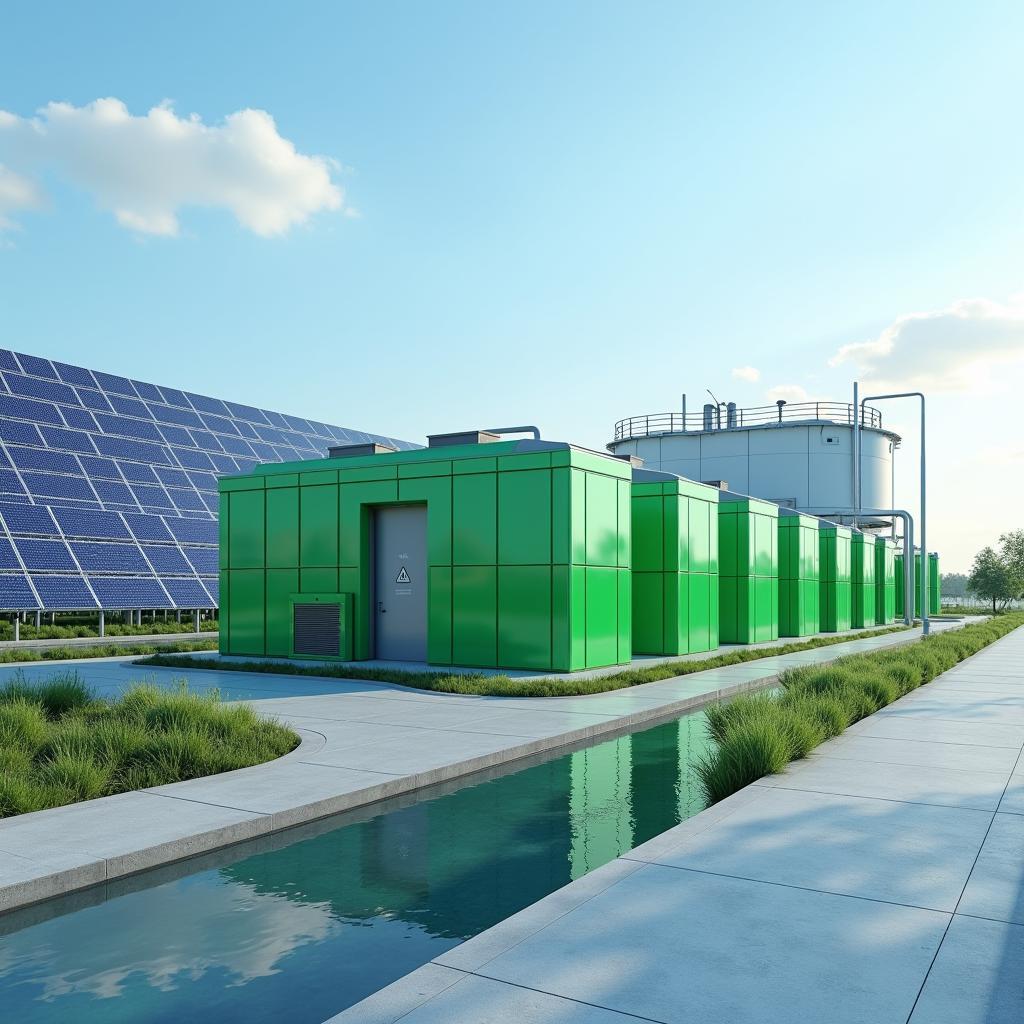 Nhà máy sản xuất hydro xanh hiện đại sử dụng công nghệ điện phân nước từ năng lượng tái tạo
Questions 14-18
Choose the correct letter, A, B, C or D.
-
What is the main advantage of hydrogen fuel cells mentioned in the passage?
- A) They are cheaper than all other energy sources
- B) They produce only water vapor as a byproduct
- C) They can be manufactured from any material
- D) They require no maintenance
-
According to the passage, “gray hydrogen” is:
- A) Produced using renewable electricity
- B) Extracted from underground deposits
- C) Made from fossil fuels through steam methane reforming
- D) A mixture of hydrogen and natural gas
-
The main obstacle to green hydrogen production is:
- A) Technical immaturity of the electrolysis process
- B) Lack of water resources
- C) High costs compared to gray hydrogen
- D) Government regulations
-
Why might hydrogen be more suitable for aviation than battery-electric power?
- A) It is safer for passengers
- B) Weight and range considerations are important
- C) Airports already have hydrogen infrastructure
- D) Pilots prefer hydrogen technology
-
Critics of hydrogen strategies argue that:
- A) Hydrogen is too dangerous for widespread use
- B) Renewable electricity might be used more efficiently in other ways
- C) Hydrogen infrastructure is impossible to build
- D) The technology will never be cost-competitive
Questions 19-23
Complete the summary below.
Choose NO MORE THAN TWO WORDS from the passage for each answer.
Hydrogen has emerged as a potential solution for industries where (19) is difficult. The environmental benefits of hydrogen depend on its production method. Most current hydrogen comes from (20) , but the clean energy transition requires “green hydrogen” produced through (21) using renewable electricity. Industrial sectors like (22) and cement production could significantly reduce emissions by adopting hydrogen. However, building the necessary (23) _____ presents major challenges since hydrogen cannot use existing electricity grids.
Questions 24-26
Do the following statements agree with the claims of the writer in Passage 2?
Write:
- YES if the statement agrees with the claims of the writer
- NO if the statement contradicts the claims of the writer
- NOT GIVEN if it is impossible to say what the writer thinks about this
- Hydrogen fuel cell vehicles have successfully competed with battery-electric cars in the passenger vehicle market.
- Some existing natural gas pipelines could potentially be adapted to transport hydrogen.
- Green hydrogen will definitely become cheaper than fossil fuels within five years.
PASSAGE 3 – The Energy Storage Conundrum: Batteries, Grids, and the Future of Renewable Power
Độ khó: Hard (Band 7.0-9.0)
Thời gian đề xuất: 23-25 phút
The transition to renewable energy sources presents a fundamental paradox: while solar and wind power have become the cheapest forms of electricity generation in most markets, their inherent intermittency creates profound challenges for grid stability and energy security. Unlike dispatchable fossil fuel plants that can increase or decrease output on demand, renewable generation fluctuates according to meteorological conditions beyond human control. This temporal mismatch between electricity supply and demand has elevated energy storage from a peripheral concern to a central prerequisite for achieving deep decarbonization of electricity systems. The scale of the challenge is staggering: integrating renewables to meet net-zero emissions targets will require not just incremental improvements to existing storage technologies, but potentially transformative breakthroughs across multiple technological paradigms and deployment timescales.
Lithium-ion batteries, which have dominated the portable electronics and electric vehicle markets through decades of incremental optimization, are now being deployed at grid scale to provide short-duration energy storage. The cost of lithium-ion battery packs has fallen by approximately 97% since 1991, from over $7,500 per kilowatt-hour to around $140 per kWh in 2023—a decline that has made utility-scale battery installations economically viable for applications such as frequency regulation, peak shaving, and renewable energy integration. These systems typically store energy for periods ranging from minutes to several hours, helping to smooth out fluctuations in renewable generation and providing ancillary services that maintain grid reliability.
For those interested in understanding similar technological advances, Advances in renewable energy storage provides detailed insights into various storage technologies and their development trajectories.
California, which faces the notorious “duck curve“—a phenomenon where midday solar generation creates excess supply followed by steep ramping requirements at sunset—has installed thousands of megawatts of battery storage to manage this daily cycle. However, the current generation of lithium-ion technology faces significant limitations when addressing longer-duration storage needs.
The concept of “multi-day storage” or “seasonal storage“—the ability to bank energy from periods of abundant renewable generation for use days, weeks, or even months later—remains largely unrealized in practical terms. This capability would be essential for electricity systems heavily dependent on variable renewables, allowing summer solar abundance to offset winter demand or enabling wind-rich periods to cover extended lulls. Yet lithium-ion batteries are thermodynamically and economically unsuitable for such applications due to self-discharge rates, calendar degradation, and prohibitive capital costs at the required scale. A grid-scale battery system capable of storing several days’ worth of electricity for a major city would cost tens of billions of dollars with current technology, making it economically nonviable compared to maintaining backup natural gas generation—an outcome that undermines decarbonization objectives.
This technical impasse has catalyzed intensive research into alternative storage modalities. Pumped hydroelectric storage, which accounts for over 90% of global utility-scale energy storage capacity, uses excess electricity to pump water uphill into reservoirs, later releasing it through turbines to generate power. While highly effective and proven across decades of operation, suitable topography is geographically limited, and new projects face substantial environmental concerns and regulatory hurdles. Compressed air energy storage (CAES) operates on similar principles, using electricity to compress air into underground caverns and subsequently releasing it to drive turbines. Only two large-scale CAES facilities currently operate globally, though their low environmental impact and potential for long-duration storage make them attractive for future deployment where suitable geology exists.
More speculative technologies are attracting significant venture capital and government research funding. Gravity-based storage systems propose to lift massive weights using excess electricity, later lowering them to generate power—essentially replicating pumped hydro without requiring water or hills. Liquid air energy storage (LAES) would use surplus electricity to liquefy air at cryogenic temperatures, storing the liquid and later re-gasifying it to drive turbines. Iron-air batteries promise exceptionally low costs and very high energy density by exploiting the reversible rusting of iron, though current prototypes suffer from limited cycle life and poor round-trip efficiency. Each technology faces distinct technical hurdles, scalability questions, and uncertain commercialization timelines, making it unclear which, if any, will achieve widespread deployment.
The most economically competitive long-duration storage solution currently being deployed at scale may not be a battery at all, but rather green hydrogen production. As discussed in Passage 2, electrolyzers can convert surplus renewable electricity into hydrogen, which can be stored indefinitely and later used to generate electricity via fuel cells or combustion turbines, used as industrial feedstock, or distributed as transportation fuel. This power-to-gas pathway offers the advantage of leveraging existing storage infrastructure (hydrogen can be stored in underground caverns similar to natural gas) and multiple revenue streams beyond electricity provision. However, the round-trip efficiency of converting electricity to hydrogen and back is only 30-40%, compared to 85-90% for lithium-ion batteries, raising questions about resource allocation in energy-constrained scenarios.
The deployment of The rise of green energy technologies has created unprecedented demand for diverse storage solutions, each suited to specific applications and timescales. Similarly, The rise of energy-efficient data centers demonstrates how different sectors are adapting to renewable energy integration challenges through technological innovation and strategic infrastructure planning.
Policy frameworks and market designs will ultimately prove as important as technological innovation in determining which storage solutions prevail. Many electricity markets were designed for centralized, dispatchable generation and lack pricing mechanisms that adequately value storage’s multiple services—energy arbitrage, capacity provision, frequency regulation, and transmission deferral. Regulatory reforms that enable storage to stack revenue streams and fairly compete with conventional generation are essential for attracting the investment capital required for mass deployment. Some jurisdictions are experimenting with long-duration storage procurement targets and carbon pricing mechanisms that improve the economic case for clean alternatives to fossil fuel backup generation.
The ultimate configuration of future energy storage systems will likely be highly heterogeneous, with different technologies optimized for different temporal scales and applications. Lithium-ion batteries may continue to dominate short-duration applications, while pumped hydro serves medium-duration needs where geography permits, and emerging technologies like hydrogen storage or iron-air batteries address seasonal balancing. Geographic interconnection—building high-voltage transmission lines to move electricity across regions with different weather patterns and demand profiles—can reduce total storage requirements by enabling spatial complementarity of renewable resources. Demand-side flexibility, achieved through smart charging of electric vehicles, dynamic pricing for industrial loads, and thermal storage in buildings, effectively creates “virtual storage” without requiring battery construction.
What remains clear is that the scale of required investment is enormous. The International Energy Agency estimates that achieving net-zero emissions by 2050 will require global energy storage capacity to increase from approximately 200 gigawatts today to over 3,000 gigawatts by 2050—a fifteenfold expansion. Meeting this target will require not only technological maturation but also supply chain development, skilled workforce training, standardization of components and systems, and international coordination on technology standards and trade policies. Understanding How clean energy is driving job creation reveals the employment opportunities arising from this massive infrastructure transformation. The energy storage revolution, while less visible than solar panels or wind turbines, may ultimately prove the decisive factor in determining the pace and success of the global clean energy transition.
 Hệ thống lưu trữ năng lượng pin lithium-ion quy mô lưới điện kết hợp với trang trại điện gió và mặt trời
Questions 27-31
Complete the summary below.
Choose NO MORE THAN THREE WORDS from the passage for each answer.
The main challenge with renewable energy is its (27) , which creates difficulties for maintaining stable electricity grids. While lithium-ion batteries work well for (28) , they are unsuitable for storing energy over longer periods due to high costs and technical limitations. (29) currently provides most of the world’s utility-scale storage capacity, but requires specific geographical conditions. Several new technologies are being researched, including systems based on gravity and (30) . The most economically viable option for long-term storage may be (31) _____, despite its relatively poor round-trip efficiency.
Questions 32-36
Do the following statements agree with the information given in Passage 3?
Write:
- TRUE if the statement agrees with the information
- FALSE if the statement contradicts the information
- NOT GIVEN if there is no information on this
- Lithium-ion battery costs have decreased by approximately 97% since 1991.
- California’s “duck curve” occurs because of excessive wind power generation at night.
- Only two large-scale compressed air energy storage facilities are currently operational worldwide.
- Iron-air batteries currently have longer cycle life than lithium-ion batteries.
- The International Energy Agency predicts global storage capacity must increase fifteenfold by 2050.
Questions 37-40
Choose the correct letter, A, B, C or D.
-
According to the passage, what is the main limitation of current lithium-ion batteries for grid storage?
- A) They are too heavy to transport
- B) They cannot store energy for multiple days economically
- C) They cause too much pollution when manufactured
- D) They require rare materials that are running out
-
The “power-to-gas pathway” refers to:
- A) Converting natural gas into electricity
- B) Using excess electricity to produce hydrogen for storage
- C) Transporting gas through underground pipelines
- D) Compressing air into storage caverns
-
What role do policy frameworks play in energy storage development?
- A) They determine which technologies scientists should research
- B) They are less important than technological innovation
- C) They create market conditions that make storage economically viable
- D) They prevent foreign companies from entering the market
-
The passage suggests that future energy storage systems will most likely be:
- A) Completely dominated by a single technology
- B) Diverse, with different technologies for different purposes
- C) Based entirely on hydrogen storage
- D) Unnecessary due to improvements in transmission lines
Answer Keys – Đáp Án
PASSAGE 1: Questions 1-13
- TRUE
- FALSE
- NOT GIVEN
- TRUE
- TRUE
- FALSE
- kerosene lamps
- USB charging ports / charging ports
- upfront cost barrier / cost barrier
- flexible solar panels / flexible panels
- C
- B
- B
PASSAGE 2: Questions 14-26
- B
- C
- C
- B
- B
- electrification
- fossil fuel sources / fossil fuels
- electrolysis
- steel production / steel manufacturing
- distribution networks / infrastructure
- NO
- YES
- NOT GIVEN
PASSAGE 3: Questions 27-40
- inherent intermittency / intermittency
- short-duration energy storage / short-duration storage
- Pumped hydroelectric storage / Pumped hydro
- liquid air
- green hydrogen production / hydrogen production
- TRUE
- FALSE
- TRUE
- FALSE
- TRUE
- B
- B
- C
- B
Giải Thích Đáp Án Chi Tiết
Passage 1 – Giải Thích
Câu 1: TRUE
- Dạng câu hỏi: True/False/Not Given
- Từ khóa: majority, Kenya’s population, no connection, national electricity grid
- Vị trí trong bài: Đoạn 2, dòng 1-2
- Giải thích: Bài văn nói “approximately 70% of the population lives in areas without access to the national electricity grid” – 70% chính là đa số (majority), và “without access” được paraphrase thành “no connection”.
Câu 2: FALSE
- Dạng câu hỏi: True/False/Not Given
- Từ khóa: Solar kits, cost, more than $500
- Vị trí trong bài: Đoạn 2, dòng 3-4
- Giải thích: Passage nói “small solar kits costing between $50 and $200” – rõ ràng mức giá này thấp hơn nhiều so với $500, do đó câu phát biểu mâu thuẫn với thông tin.
Câu 4: TRUE
- Dạng câu hỏi: True/False/Not Given
- Từ khóa: Bangladesh, world’s largest, off-grid renewable energy program
- Vị trí trong bài: Đoạn 4, dòng 2-3
- Giải thích: Bài viết nói “making it the world’s largest off-grid renewable energy program” – trùng khớp hoàn toàn với phát biểu.
Câu 7: kerosene lamps
- Dạng câu hỏi: Sentence Completion
- Từ khóa: before solar panels, lighting at night
- Vị trí trong bài: Đoạn 2, dòng 3
- Giải thích: “Families who once relied on expensive kerosene lamps for lighting” – “once relied on” = “before solar panels became available”.
Câu 9: upfront cost barrier / cost barrier
- Dạng câu hỏi: Sentence Completion
- Từ khóa: pay-as-you-go model, eliminates
- Vị trí trong bài: Đoạn 3, dòng 3-4
- Giải thích: “This approach removes the upfront cost barrier” – “removes” được paraphrase thành “eliminates”.
Câu 11: C
- Dạng câu hỏi: Multiple Choice
- Từ khóa: main benefit, solar technology, developing nations
- Vị trí trong bài: Đoạn 1-2
- Giải thích: Ý chính xuyên suốt đoạn 1 và 2 là solar technology mang điện đến những vùng không có lưới điện (“provide electricity to areas where traditional power infrastructure is either too expensive or practically impossible to build”). Các đáp án khác không phải là lợi ích chính được nhấn mạnh.
Passage 2 – Giải Thích
Câu 14: B
- Dạng câu hỏi: Multiple Choice
- Từ khóa: advantage, hydrogen fuel cells
- Vị trí trong bài: Đoạn 2, dòng 1-2
- Giải thích: “When hydrogen combines with oxygen in a fuel cell, it produces only electricity, heat, and water vapor—no carbon dioxide or other pollutants” – lợi thế chính là chỉ tạo ra hơi nước, không có khí thải.
Câu 16: C
- Dạng câu hỏi: Multiple Choice
- Từ khóa: obstacle, green hydrogen production
- Vị trí trong bài: Đoạn 3, dòng 3-5
- Giải thích: “This process is technologically mature but currently economically uncompetitive due to high electricity costs” và “Green hydrogen typically costs two to three times more than gray hydrogen” – rào cản chính là chi phí cao.
Câu 19: electrification
- Dạng câu hỏi: Summary Completion
- Từ khóa: industries where… is difficult
- Vị trí trong bài: Đoạn 1, dòng 1
- Giải thích: “sectors where electrification remains challenging” – hydrogen là giải pháp cho các ngành khó điện khí hóa.
Câu 24: NO
- Dạng câu hỏi: Yes/No/Not Given
- Từ khóa: Hydrogen fuel cell vehicles, successfully competed, battery-electric cars
- Vị trí trong bài: Đoạn 5, dòng 2-3
- Giải thích: “Hydrogen fuel cell vehicles have struggled to compete with battery-electric cars” – “struggled to compete” (gặp khó khăn cạnh tranh) ngược lại với “successfully competed” (cạnh tranh thành công).
Câu 25: YES
- Dạng câu hỏi: Yes/No/Not Given
- Từ khóa: existing natural gas pipelines, adapted, transport hydrogen
- Vị trí trong bài: Đoạn 6, dòng 3-4
- Giải thích: “Some regions are exploring the possibility of repurposing existing natural gas pipelines to carry hydrogen” – “repurposing” = “adapted”, “exploring the possibility” cho thấy tác giả đồng ý đây là khả năng có thể xảy ra.
Passage 3 – Giải Thích
Câu 27: inherent intermittency / intermittency
- Dạng câu hỏi: Summary Completion
- Từ khóa: main challenge, renewable energy
- Vị trí trong bài: Đoạn 1, dòng 1-2
- Giải thích: “their inherent intermittency creates profound challenges” – tính gián đoạn vốn có là thách thức chính.
Câu 32: TRUE
- Dạng câu hỏi: True/False/Not Given
- Từ khóa: Lithium-ion battery costs, decreased, 97%, since 1991
- Vị trí trong bài: Đoạn 2, dòng 2-3
- Giải thích: “The cost of lithium-ion battery packs has fallen by approximately 97% since 1991” – khớp chính xác với câu phát biểu.
Câu 33: FALSE
- Dạng câu hỏi: True/False/Not Given
- Từ khóa: California’s duck curve, excessive wind power, at night
- Vị trí trong bài: Đoạn 2, dòng cuối
- Giải thích: Passage nói “midday solar generation creates excess supply” – duck curve xảy ra do điện mặt trời giữa trưa (solar), không phải do điện gió ban đêm (wind at night).
Câu 37: B
- Dạng câu hỏi: Multiple Choice
- Từ khóa: main limitation, lithium-ion batteries, grid storage
- Vị trí trong bài: Đoạn 3
- Giải thích: Đoạn 3 giải thích chi tiết rằng pin lithium-ion “thermodynamically and economically unsuitable” cho multi-day storage vì “prohibitive capital costs” – không thể lưu trữ nhiều ngày một cách kinh tế.
Câu 39: C
- Dạng câu hỏi: Multiple Choice
- Từ khóa: policy frameworks, role, energy storage development
- Vị trí trong bài: Đoạn 8, dòng 1-3
- Giải thích: “Policy frameworks and market designs will ultimately prove as important as technological innovation” và “Regulatory reforms…are essential for attracting the investment capital” – chính sách tạo điều kiện thị trường giúp storage trở nên khả thi về kinh tế.
Câu 40: B
- Dạng câu hỏi: Multiple Choice
- Từ khóa: future energy storage systems, most likely be
- Vị trí trong bài: Đoạn 9, dòng 1
- Giải thích: “The ultimate configuration of future energy storage systems will likely be highly heterogeneous, with different technologies optimized for different temporal scales and applications” – hệ thống trong tương lai sẽ đa dạng (heterogeneous/diverse).
Từ Vựng Quan Trọng Theo Passage
Passage 1 – Essential Vocabulary
| Từ vựng | Loại từ | Phiên âm | Nghĩa tiếng Việt | Ví dụ từ bài | Collocation |
|---|---|---|---|---|---|
| promising | adj | /ˈprɒmɪsɪŋ/ | đầy hứa hẹn, triển vọng | promising clean energy sources | promising technology, promising future |
| off-grid | adj | /ɒf ɡrɪd/ | không kết nối lưới điện | off-grid solar systems | off-grid communities, off-grid solutions |
| infrastructure | n | /ˈɪnfrəstrʌktʃə(r)/ | cơ sở hạ tầng | traditional power infrastructure | energy infrastructure, transport infrastructure |
| portable | adj | /ˈpɔːtəbl/ | di động, xách tay | portable solar panels | portable device, portable equipment |
| profound | adj | /prəˈfaʊnd/ | sâu sắc, to lớn | profound and immediate impact | profound effect, profound change |
| innovative | adj | /ˈɪnəveɪtɪv/ | đổi mới, sáng tạo | innovative payment models | innovative approach, innovative solution |
| barrier | n | /ˈbæriə(r)/ | rào cản, trở ngại | upfront cost barrier | trade barrier, language barrier |
| facilitate | v | /fəˈsɪlɪteɪt/ | tạo điều kiện, hỗ trợ | facilitated the installation | facilitate access, facilitate growth |
| remarkable | adj | /rɪˈmɑːkəbl/ | đáng chú ý, nổi bật | remarkable pace | remarkable achievement, remarkable progress |
| competitive | adj | /kəmˈpetətɪv/ | cạnh tranh, có sức cạnh tranh | competitive with fossil fuels | competitive price, competitive advantage |
| versatile | adj | /ˈvɜːsətaɪl/ | đa năng, linh hoạt | versatile technology | versatile material, versatile performer |
| premature | adj | /ˈpremətʃə(r)/ | sớm, chưa đúng lúc | fail prematurely | premature death, premature decision |
Passage 2 – Essential Vocabulary
| Từ vựng | Loại từ | Phiên âm | Nghĩa tiếng Việt | Ví dụ từ bài | Collocation |
|---|---|---|---|---|---|
| decarbonize | v | /diːˈkɑːbənaɪz/ | giảm carbon, khử carbon | decarbonize energy systems | decarbonize economy, decarbonize transport |
| transformative | adj | /trænsˈfɔːmətɪv/ | có tính chuyển đổi, cách mạng | transformative solution | transformative change, transformative technology |
| electrification | n | /ɪˌlektrɪfɪˈkeɪʃn/ | điện khí hóa | where electrification remains challenging | rural electrification, vehicle electrification |
| versatile | adj | /ˈvɜːsətaɪl/ | linh hoạt, đa năng | versatile energy carrier | versatile approach, versatile tool |
| greenhouse gas | n | /ˈɡriːnhaʊs ɡæs/ | khí nhà kính | greenhouse gas emissions | reduce greenhouse gas, greenhouse gas effect |
| credentials | n | /krɪˈdenʃlz/ | uy tín, thành tích | environmental credentials | green credentials, sustainability credentials |
| mature | adj | /məˈtʃʊə(r)/ | trưởng thành, hoàn thiện | technologically mature | mature technology, mature market |
| uncompetitive | adj | /ˌʌnkəmˈpetətɪv/ | không cạnh tranh được | economically uncompetitive | uncompetitive prices, uncompetitive industry |
| carbon footprint | n | /ˈkɑːbən ˈfʊtprɪnt/ | dấu chân carbon, lượng phát thải | reduced carbon footprint | reduce carbon footprint, measure carbon footprint |
| pilot project | n | /ˈpaɪlət ˈprɒdʒekt/ | dự án thí điểm | conducting pilot projects | pilot project phase, launch pilot project |
| refueling | n | /ˌriːˈfjuːəlɪŋ/ | nạp nhiên liệu | refueling infrastructure | refueling station, refueling time |
| propulsion | n | /prəˈpʌlʃn/ | sự đẩy, hệ thống động lực | hydrogen propulsion | jet propulsion, electric propulsion |
| repurpose | v | /ˌriːˈpɜːpəs/ | tái sử dụng, chuyển đổi mục đích | repurposing existing pipelines | repurpose building, repurpose materials |
| compatibility | n | /kəmˌpætəˈbɪləti/ | tính tương thích | material compatibility | software compatibility, system compatibility |
| opportunity cost | n | /ˌɒpəˈtjuːnəti kɒst/ | chi phí cơ hội | opportunity cost is relevant | calculate opportunity cost, consider opportunity cost |
Passage 3 – Essential Vocabulary
| Từ vựng | Loại từ | Phiên âm | Nghĩa tiếng Việt | Ví dụ từ bài | Collocation |
|---|---|---|---|---|---|
| paradox | n | /ˈpærədɒks/ | nghịch lý | fundamental paradox | central paradox, apparent paradox |
| intermittency | n | /ˌɪntəˈmɪtənsi/ | tính gián đoạn | inherent intermittency | address intermittency, manage intermittency |
| dispatchable | adj | /dɪˈspætʃəbl/ | có thể điều phối | dispatchable fossil fuel plants | dispatchable generation, dispatchable power |
| meteorological | adj | /ˌmiːtiərəˈlɒdʒɪkl/ | thuộc khí tượng | meteorological conditions | meteorological data, meteorological station |
| temporal | adj | /ˈtempərəl/ | thuộc thời gian | temporal mismatch | temporal variation, temporal scale |
| prerequisite | n | /ˌpriːˈrekwəzɪt/ | điều kiện tiên quyết | central prerequisite | essential prerequisite, necessary prerequisite |
| staggering | adj | /ˈstæɡərɪŋ/ | đáng kinh ngạc, khổng lồ | staggering scale | staggering amount, staggering cost |
| incremental | adj | /ˌɪŋkrəˈmentl/ | từng bước, tăng dần | incremental optimization | incremental change, incremental improvement |
| ancillary | adj | /ænˈsɪləri/ | phụ trợ, bổ sung | ancillary services | ancillary equipment, anciary benefit |
| ramping | n | /ˈræmpɪŋ/ | tăng mạnh, leo dốc | steep ramping requirements | ramping rate, ramping capability |
| thermodynamically | adv | /ˌθɜːməʊdaɪˈnæmɪkli/ | về mặt nhiệt động lực học | thermodynamically unsuitable | thermodynamically efficient, thermodynamically stable |
| impasse | n | /ˈæmpɑːs/ | bế tắc, ngõ cụt | technical impasse | reach impasse, break impasse |
| modality | n | /məʊˈdæləti/ | phương thức, hình thức | alternative storage modalities | treatment modality, transport modality |
| topography | n | /təˈpɒɡrəfi/ | địa hình | suitable topography | complex topography, mountainous topography |
| cryogenic | adj | /ˌkraɪəˈdʒenɪk/ | thuộc nhiệt độ cực thấp | cryogenic temperatures | cryogenic storage, cryogenic process |
| round-trip efficiency | n | /raʊnd trɪp ɪˈfɪʃnsi/ | hiệu suất khứ hồi | poor round-trip efficiency | improve round-trip efficiency, measure round-trip efficiency |
| heterogeneous | adj | /ˌhetərəˈdʒiːniəs/ | không đồng nhất, đa dạng | highly heterogeneous | heterogeneous mixture, heterogeneous group |
| complementarity | n | /ˌkɒmplɪmenˈtærəti/ | tính bổ sung | spatial complementarity | resource complementarity, strategic complementarity |
Kết Bài
Chủ đề “The future of clean energy technologies” không chỉ là một trong những chủ đề hot nhất trong IELTS Reading mà còn phản ánh xu hướng toàn cầu hướng tới phát triển bền vững. Qua bộ đề thi mẫu này, bạn đã được trải nghiệm đầy đủ cả ba mức độ khó từ dễ đến nâng cao, giúp xây dựng sự tự tin và kỹ năng làm bài vững chắc.
Passage 1 về năng lượng mặt trời ở các vùng nông thôn đã giới thiệu từ vựng cơ bản và cấu trúc câu dễ hiểu, phù hợp với band 5.0-6.5. Passage 2 về hydro xanh nâng cao độ phức tạp với các thuật ngữ chuyên ngành và yêu cầu hiểu sâu hơn về công nghệ, phù hợp với band 6.0-7.5. Passage 3 về lưu trữ năng lượng thử thách khả năng phân tích và suy luận của bạn với nội dung học thuật cao cấp, hướng tới band 7.0-9.0.
Đáp án chi tiết kèm giải thích đã chỉ ra cách xác định thông tin trong bài, kỹ thuật paraphrase hiệu quả, và phương pháp loại trừ đáp án sai. Phần từ vựng được tổ chức theo passage giúp bạn học từ có ngữ cảnh, kèm theo phiên âm chuẩn và các collocation thực tế.
Để đạt kết quả tốt trong IELTS Reading, hãy thực hành thường xuyên với các đề thi đa dạng chủ đề, rèn luyện kỹ năng quản lý thời gian, và xây dựng vốn từ vựng học thuật vững chắc. Hãy nhớ rằng mỗi lần làm bài là một cơ hội để cải thiện, và sự kiên trì sẽ mang lại kết quả xứng đáng với nỗ lực của bạn.
Chúc bạn ôn tập hiệu quả và đạt band điểm mục tiêu trong kỳ thi IELTS sắp tới!


