Mở Bài
Chủ đề về giáo dục đa văn hóa và sự phát triển kỹ năng cảm thông trong học sinh đang trở thành một trong những xu hướng nổi bật trong các đề thi IELTS Reading những năm gần đây. “The Impact Of Cultural Workshops On Student Empathy” là một chủ đề điển hình kết hợp giữa giáo dục, tâm lý học và nghiên cứu xã hội – những lĩnh vực thường xuyên xuất hiện trong bài thi IELTS Academic Reading.
Qua hơn 20 năm giảng dạy IELTS, tôi nhận thấy các đề thi về giáo dục và phát triển kỹ năng mềm xuất hiện với tần suất cao, đặc biệt trong Passage 2 và Passage 3. Hiểu rõ chủ đề này không chỉ giúp bạn tự tin hơn khi gặp các bài đọc tương tự mà còn mở rộng vốn từ vựng học thuật quan trọng.
Trong bài viết này, bạn sẽ nhận được một bộ đề thi IELTS Reading hoàn chỉnh gồm 3 passages với độ khó tăng dần từ Easy đến Hard, 40 câu hỏi đa dạng giống thi thật 100%, đáp án chi tiết kèm giải thích cụ thể, và hệ thống từ vựng quan trọng được phân loại theo từng passage. Đây là tài liệu lý tưởng cho học viên từ band 5.0 trở lên muốn rèn luyện kỹ năng đọc hiểu một cách bài bản và hiệu quả.
1. Hướng Dẫn Làm Bài IELTS Reading
Tổng Quan Về IELTS Reading Test
IELTS Reading Test kéo dài 60 phút với 3 passages và tổng cộng 40 câu hỏi. Mỗi câu trả lời đúng được tính 1 điểm, không có điểm âm cho câu trả lời sai. Đây là bài thi kiểm tra khả năng đọc hiểu, phân tích thông tin và quản lý thời gian của bạn.
Phân bổ thời gian khuyến nghị:
- Passage 1 (Easy): 15-17 phút – Nội dung đơn giản, câu hỏi trực tiếp
- Passage 2 (Medium): 18-20 phút – Nội dung phức tạp hơn, yêu cầu suy luận
- Passage 3 (Hard): 23-25 phút – Nội dung học thuật, câu hỏi đòi hỏi phân tích sâu
Lưu ý dành 2-3 phút cuối để chuyển đáp án vào phiếu trả lời, đảm bảo không mắc lỗi chính tả hay thiếu sót.
Các Dạng Câu Hỏi Trong Đề Này
Đề thi mẫu này bao gồm 7 dạng câu hỏi phổ biến nhất trong IELTS Reading:
- Multiple Choice – Chọn đáp án đúng từ các lựa chọn cho sẵn
- True/False/Not Given – Xác định thông tin đúng, sai hoặc không được đề cập
- Matching Headings – Ghép tiêu đề phù hợp với các đoạn văn
- Sentence Completion – Hoàn thành câu với thông tin từ bài đọc
- Summary Completion – Điền từ vào đoạn tóm tắt
- Matching Features – Ghép thông tin với các đối tượng/người được nhắc đến
- Short-answer Questions – Trả lời ngắn gọn các câu hỏi (không quá 3 từ)
Mỗi dạng câu hỏi yêu cầu kỹ năng và chiến lược riêng, do đó việc luyện tập đa dạng là chìa khóa để đạt band điểm cao.
2. IELTS Reading Practice Test
PASSAGE 1 – Building Bridges Through Culture
Độ khó: Easy (Band 5.0-6.5)
Thời gian đề xuất: 15-17 phút
In recent years, educational institutions around the world have increasingly recognized the importance of cultural competence in preparing students for a globalized society. Cultural workshops, designed to expose students to diverse traditions, beliefs, and perspectives, have emerged as a popular tool for fostering empathy and understanding among young learners. These programs typically involve interactive activities, storytelling sessions, traditional music and dance performances, and opportunities for students to engage directly with cultural ambassadors from various backgrounds.
Research conducted by the International Education Association in 2019 revealed that schools implementing regular cultural workshops reported a significant increase in students’ ability to understand and appreciate different viewpoints. The study followed 2,500 students across 15 countries over a two-year period and found that those who participated in at least one cultural workshop per semester demonstrated measurably higher levels of empathy compared to their peers who did not have such exposure.
Dr. Maria Santos, an educational psychologist at Melbourne University, explains that cultural workshops work by creating “safe spaces for cultural exploration.” She notes that when students are introduced to unfamiliar customs and traditions in a structured educational environment, they are more likely to develop positive associations with cultural diversity. “The key is making these experiences engaging and personal,” Dr. Santos emphasizes. “When students can connect emotionally with stories from different cultures, they begin to see common humanity rather than just differences.”
One particularly successful model is the “Cultural Exchange Program” implemented in Singapore’s secondary schools. This initiative brings together students from different ethnic backgrounds to share their family traditions, prepare traditional foods together, and participate in collaborative art projects. Teachers report that students who were initially hesitant or prejudiced often become the most enthusiastic advocates for cultural understanding after participating in these workshops. The program has been so effective that it has been adopted by schools in Malaysia, Thailand, and Indonesia.
However, the success of cultural workshops depends heavily on thoughtful implementation. Professor James Wilson, who specializes in multicultural education at the University of Toronto, warns that poorly designed programs can actually reinforce stereotypes rather than break them down. “Cultural workshops must go beyond superficial celebrations of food and festivals,” he argues. “They need to address complex issues such as historical context, power dynamics, and the lived experiences of people from different backgrounds. Without this depth, these programs risk reducing rich cultures to simplistic caricatures.”
The long-term benefits of effective cultural workshops extend far beyond the classroom. A longitudinal study published in the Journal of Youth Development tracked participants of cultural education programs into their adult lives and found that they were more likely to pursue diverse friendships, support inclusive policies, and demonstrate higher emotional intelligence in professional settings. These individuals also reported feeling more comfortable in multicultural environments and showed greater adaptability when working with international colleagues.
Schools in the United States have begun incorporating technology into their cultural workshops to enhance the experience. Virtual reality programs allow students to “visit” communities around the world, while video conferencing enables real-time conversations with peers from different countries. These technological innovations have made cultural education more accessible, particularly for schools in rural or isolated areas that may not have access to diverse populations locally.
Despite the clear benefits, some educators face challenges in implementing cultural workshops. Budget constraints, lack of trained facilitators, and resistance from parents who may not understand the value of such programs are common obstacles. Additionally, in regions experiencing political tensions or recent immigration influxes, discussions about culture can become contentious. Educational leaders must navigate these challenges carefully, ensuring that cultural workshops remain inclusive and non-political while still addressing important social issues.
The evidence suggests that when properly designed and implemented, cultural workshops serve as powerful catalysts for developing empathy in students. By providing opportunities for meaningful cross-cultural interaction, these programs help young people develop the social and emotional skills necessary for success in an increasingly interconnected world. As one participating student from Toronto eloquently stated, “Before these workshops, I only saw the differences between us. Now I see all the ways we’re the same, and I appreciate the differences too.”
Questions 1-6
Do the following statements agree with the information given in Passage 1?
Write:
- TRUE if the statement agrees with the information
- FALSE if the statement contradicts the information
- NOT GIVEN if there is no information on this
- Cultural workshops have become more popular in educational institutions in recent years.
- The International Education Association study included students from more than 20 countries.
- Dr. Maria Santos believes emotional connections are important for cultural learning.
- Singapore’s Cultural Exchange Program has been criticized for being too expensive.
- Professor James Wilson thinks all cultural workshops reinforce stereotypes.
- Adults who participated in cultural programs during school tend to have more diverse friendships.
Questions 7-10
Complete the sentences below.
Choose NO MORE THAN THREE WORDS from the passage for each answer.
- Cultural workshops typically include interactive activities, storytelling, performances, and meetings with __.
- Dr. Santos describes cultural workshops as creating __ for students to explore different cultures.
- Some American schools now use __ to help students virtually experience other communities.
- Schools in rural areas may lack access to __ in their local communities.
Questions 11-13
Choose the correct letter, A, B, C or D.
- According to the passage, the 2019 research study found that students who attended cultural workshops:
- A) performed better academically
- B) showed more empathy than other students
- C) preferred foreign languages
- D) wanted to travel more
- What does Professor Wilson say about poorly designed cultural programs?
- A) They are too expensive to run
- B) They may actually strengthen stereotypes
- C) They are disliked by students
- D) They should focus only on food
- The main challenge facing educators implementing cultural workshops is:
- A) student disinterest
- B) lack of suitable venues
- C) various practical and social obstacles
- D) excessive government regulation
PASSAGE 2 – The Psychology of Empathy Development
Độ khó: Medium (Band 6.0-7.5)
Thời gian đề xuất: 18-20 phút
Understanding the psychological mechanisms underlying empathy development is crucial for educators seeking to maximize the impact of cultural workshops on student learning. Empathy, defined as the ability to understand and share the feelings of another person, is not a single, monolithic trait but rather a complex constellation of cognitive and affective processes. Recent advances in neuroscience and developmental psychology have shed considerable light on how targeted educational interventions can enhance these processes, particularly during the critical developmental window of adolescence.
Dr. Rebecca Hartmann, a leading researcher in social-emotional learning at Stanford University, distinguishes between two primary components of empathy: cognitive empathy and affective empathy. Cognitive empathy refers to the intellectual ability to understand another person’s perspective – often described as “perspective-taking” – while affective empathy involves the capacity to emotionally resonate with another’s feelings. “Cultural workshops that merely present information about different cultures primarily engage cognitive empathy,” Dr. Hartmann explains. “However, the most transformative programs are those that activate both dimensions simultaneously, creating experiences that are both intellectually enlightening and emotionally resonant.”
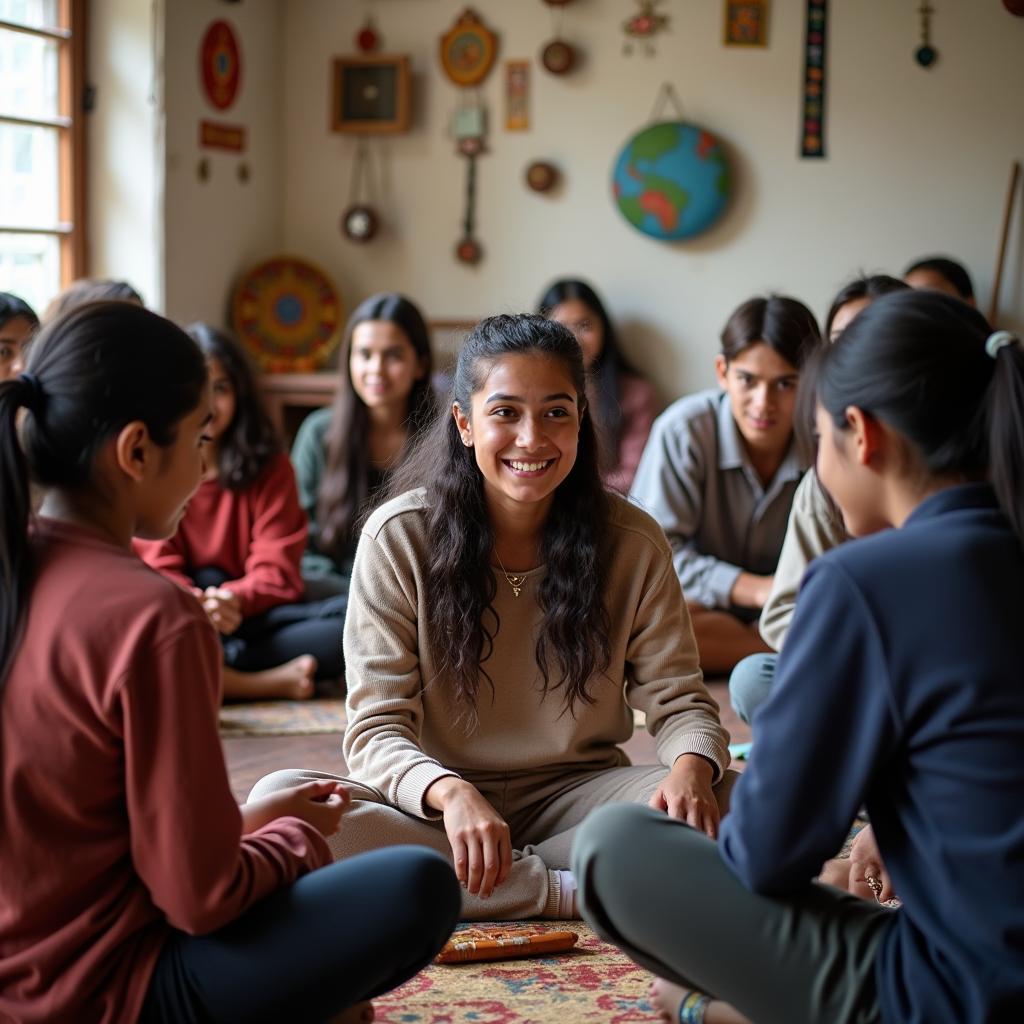 Triển khai workshop văn hóa để phát triển cảm thông và kỹ năng xã hội cho học sinh trung học
The neurological basis of empathy has been extensively studied through functional magnetic resonance imaging (fMRI) technology. These studies have identified several brain regions that become activated when individuals engage in empathetic processing, including the anterior cingulate cortex, the insula, and the mirror neuron system. Fascinatingly, research by Professor Michael Chen at the Tokyo Institute of Technology demonstrated that repeated exposure to cross-cultural narratives – such as those presented in well-designed cultural workshops – can actually strengthen neural pathways associated with empathetic response. This phenomenon, known as experience-dependent neuroplasticity, suggests that empathy is not a fixed trait but can be cultivated through deliberate practice and exposure.
However, the relationship between cultural exposure and empathy development is not always straightforward. A comprehensive meta-analysis published in Psychological Bulletin examined 127 studies on intercultural contact and prejudice reduction. While the overall findings supported the “contact hypothesis” – the theory that interaction between different groups reduces prejudice – the researchers identified several important moderating factors. Superficial contact or interactions characterized by unequal power dynamics could actually exacerbate stereotypes rather than diminish them. The most successful interventions shared common features: they were sustained over time, involved meaningful collaboration toward shared goals, occurred in contexts that emphasized equal status among participants, and were supported by institutional authorities.
This nuanced understanding has significant implications for the design of cultural workshops in educational settings. Dr. Yuki Tanaka, director of the Cross-Cultural Education Initiative at the University of British Columbia, has developed a framework for what she calls “deep cultural engagement.” This approach moves beyond tokenistic representations of culture – such as trying ethnic foods or wearing traditional costumes – to explore the underlying values, historical contexts, and contemporary challenges faced by different cultural groups. “Students need to understand that cultures are not static museums but living, evolving systems,” Dr. Tanaka asserts. “They also need to recognize their own cultural positionality and how it shapes their perceptions and judgments.”
One particularly innovative aspect of Dr. Tanaka’s framework is the incorporation of what she terms “productive discomfort.” Rather than avoiding potentially controversial topics, her programs deliberately introduce complex scenarios that challenge students’ preconceptions and require them to grapple with ambiguity. For instance, students might explore questions about cultural practices that conflict with personal values, immigration policy debates, or historical injustices. Research indicates that when students work through these challenging discussions in a well-facilitated environment, they develop not only greater empathy but also more sophisticated moral reasoning and critical thinking skills. This aligns with findings from how to foster inclusivity in schools that emphasize the importance of creating environments where difficult conversations can occur safely and productively.
The temporal dimension of empathy development also deserves attention. While short-term cultural workshops can generate initial enthusiasm and awareness, research suggests that sustained engagement is necessary for lasting attitude change. A longitudinal study conducted by the European Educational Research Association tracked students who participated in a year-long intercultural exchange program versus those who attended a single intensive cultural workshop. While both groups showed immediate increases in empathy measures, only the extended program participants maintained these gains six months later. This finding underscores the importance of embedding cultural education as an ongoing component of the curriculum rather than treating it as an isolated event.
Critics of cultural workshop programs raise important questions about measurement and accountability. How can educators be certain that these interventions are producing genuine empathy rather than merely teaching students to performatively demonstrate socially acceptable attitudes? Professor David Martinez at Oxford University argues that true empathy must be assessed through behavioral measures rather than self-reported surveys alone. His research team has developed observation protocols that examine how students interact in unstructured multicultural settings, make decisions in simulated scenarios involving cultural conflicts, and demonstrate helping behaviors toward individuals from different backgrounds. These more rigorous assessment methods provide a clearer picture of whether cultural workshops are achieving their intended outcomes.
Despite ongoing debates about methodology and effectiveness, there is broad consensus among researchers that cultural education represents a valuable tool for empathy cultivation when implemented thoughtfully. As societies become increasingly diverse and interconnected, the ability to understand and empathize with people from different backgrounds is not merely a desirable social skill but an essential competence for civic participation, professional success, and personal fulfillment. Educational institutions that prioritize this dimension of student development are not only enhancing individual wellbeing but also contributing to more cohesive, equitable, and resilient communities.
Questions 14-18
Choose the correct heading for each section from the list of headings below.
List of Headings:
- i. The distinction between two types of empathy
- ii. Financial barriers to implementing cultural programs
- iii. Brain imaging reveals empathy’s physical basis
- iv. Moving beyond superficial cultural representations
- v. Criticisms of standardized testing in schools
- vi. The importance of program duration for lasting change
- vii. International differences in educational policy
- viii. Assessment challenges in measuring genuine empathy
- Paragraph 2 (beginning “Dr. Rebecca Hartmann…”)
- Paragraph 3 (beginning “The neurological basis…”)
- Paragraph 5 (beginning “This nuanced understanding…”)
- Paragraph 7 (beginning “The temporal dimension…”)
- Paragraph 8 (beginning “Critics of cultural workshop…”)
Questions 19-23
Complete the summary below.
Choose NO MORE THAN TWO WORDS from the passage for each answer.
Research shows that empathy involves both cognitive and affective components. Brain imaging studies have revealed that exposure to cross-cultural stories can strengthen 19) __ connected to empathy through a process called experience-dependent neuroplasticity. However, the relationship between cultural contact and empathy is complex. A large-scale review of studies found that 20) __ contact or interactions with unequal power relationships might actually make stereotypes worse. The most effective programs featured 21) __ toward common objectives and were sustained over time. Dr. Tanaka’s approach includes creating 22) __ by introducing challenging scenarios that make students question their assumptions. Research also shows that 23) __ is necessary for attitude changes to persist beyond the initial program.
Questions 24-26
Do the following statements agree with the information given in Passage 2?
Write:
- YES if the statement agrees with the claims of the writer
- NO if the statement contradicts the claims of the writer
- NOT GIVEN if it is impossible to say what the writer thinks about this
- Cultural workshops that only provide information about different cultures engage both cognitive and affective empathy equally.
- Dr. Tanaka believes cultures should be understood as dynamic rather than unchanging.
- The European Educational Research Association study found that intensive short-term workshops were more effective than year-long programs.
PASSAGE 3 – Critiques, Complexities, and Future Directions
Độ khó: Hard (Band 7.0-9.0)
Thời gian đề xuất: 23-25 phút
The proliferation of cultural workshops in educational settings over the past two decades has sparked considerable scholarly debate regarding their efficacy, underlying assumptions, and potential unintended consequences. While proponents celebrate these programs as essential instruments for fostering intercultural competence and social cohesion, a growing body of critical scholarship interrogates the epistemological foundations and practical implementation of such initiatives, raising questions about whether they truly advance substantive understanding or merely reproduce superficial multiculturalism that ultimately serves to reify rather than dismantle cultural boundaries.
Dr. Amina Okonkwo, a postcolonial education theorist at the London School of Economics, articulates a fundamental critique of conventional cultural workshop pedagogy. She argues that many such programs inadvertently perpetuate what she terms “cultural essentialism” – the notion that cultures are discrete, internally homogeneous entities with fixed characteristics that can be straightforwardly conveyed through educational interventions. This reductionist approach, Okonkwo contends, fails to account for the fluidity, hybridity, and internal contestation that characterize actual cultural formations. “When we present ‘Japanese culture’ or ‘Mexican culture’ as coherent packages of traits, traditions, and values,” she explains, “we obscure the enormous diversity within these populations, the ways cultures constantly evolve through transnational flows, and how individuals strategically navigate multiple cultural affiliations rather than simply embodying a single cultural identity.”
This essentialist tendency is compounded by what critical theorists identify as the “pedagogy of the exotic,” wherein cultural workshops disproportionately emphasize the most ostensibly distinctive or unfamiliar aspects of particular cultures. Professor Raj Patel at the University of California, Berkeley, notes that such programs often foreground elements like traditional dress, festivals, and cuisine while marginalizing discussion of contemporary social issues, political contexts, or the structural inequalities that shape different groups’ experiences. This selective representation can produce what Patel calls “comfortable diversity” – a celebration of cultural difference that remains unthreatening to dominant power structures precisely because it divorces culture from questions of justice, power, and material conditions. The approach bears similarity to concerns raised in cultural diversity in the teaching of history and geography, where superficial treatment of cultural content can undermine genuine understanding.
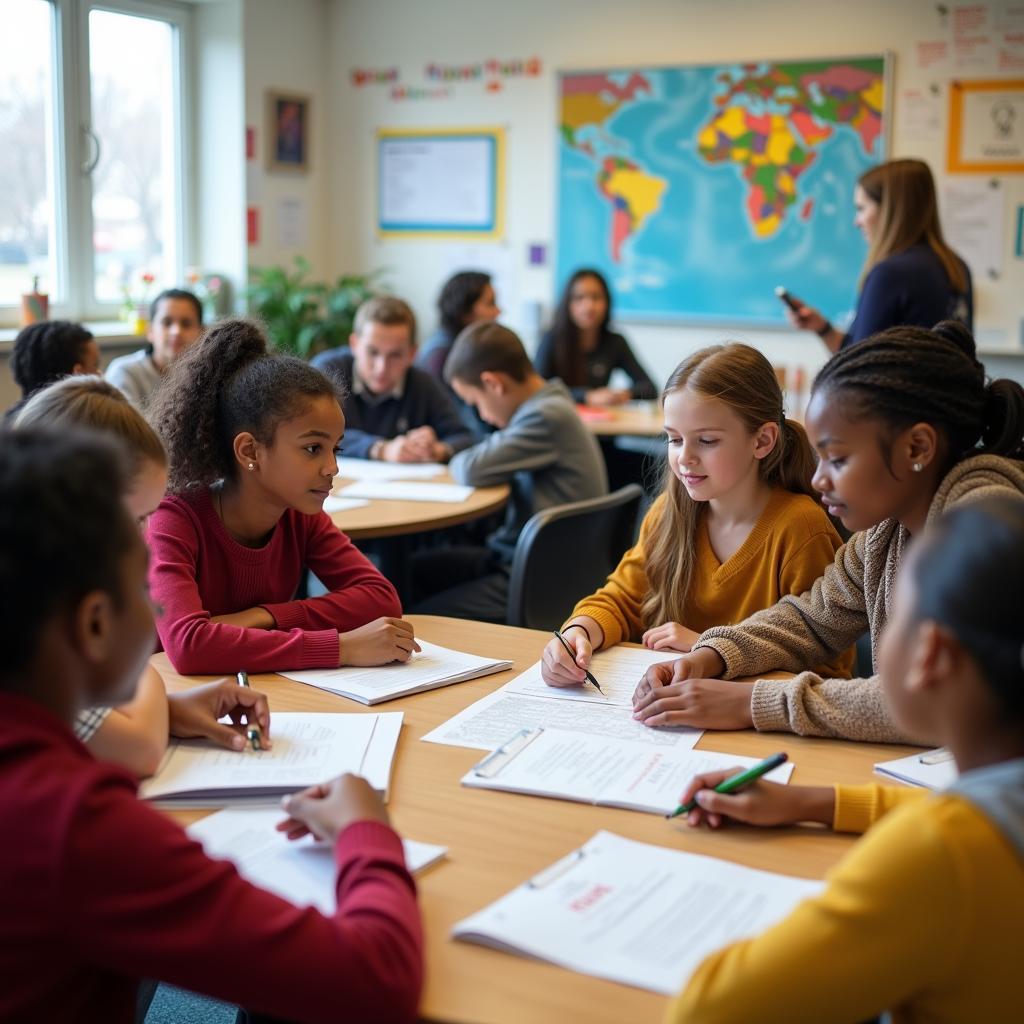 Học sinh tham gia chương trình giáo dục đa văn hóa với hoạt động thảo luận nhóm và trao đổi kinh nghiệm
Moreover, several empirical studies have revealed concerning patterns in how cultural workshops are differentially experienced by students depending on their own social positioning. Research by Dr. Sarah Kim and colleagues at Yale University found that students from minority or marginalized backgrounds often reported feeling tokenized or burdened with the responsibility of “representing” their entire cultural group during these programs. Conversely, students from majority backgrounds could participate as neutral learners without being asked to publicly perform their cultural identity. This asymmetry not only creates unequal emotional labor but also reinforces the unmarked normativity of dominant cultures, which remain implicit reference points against which “other” cultures are compared and evaluated.
The question of assessment presents another significant challenge in evaluating cultural workshop effectiveness. While many studies report increased empathy following such interventions, Professor Elena Vasquez at Cornell University questions whether these self-reported gains reflect genuine transformation or merely demonstrate students’ acquisition of socially desirable responses. Her experimental research employed both explicit measures (direct survey questions about attitudes) and implicit measures (reaction-time tests that assess unconscious associations) to gauge prejudice reduction. The findings revealed a troubling discrepancy: while students showed improved attitudes on explicit measures after cultural workshop participation, their implicit biases remained largely unchanged. This suggests that such programs may teach students “what to say” about diversity without fundamentally altering their automatic reactions or underlying cognitive schemas.
These critiques have prompted some educators and researchers to develop more theoretically sophisticated and pedagogically nuanced approaches to intercultural education. Dr. Jennifer Wong’s “Critical Cultural Pedagogy” framework, for instance, explicitly integrates analysis of power dynamics, historical context, and structural inequality into cultural learning experiences. Rather than presenting cultures as neutral objects of study, her approach encourages students to examine how cultural representations are constructed, whose interests they serve, and how they relate to broader systems of privilege and marginalization. Students engage with primary sources from diverse perspectives, analyze media representations critically, and participate in community-based projects that address concrete intercultural challenges rather than simply learning “about” different cultures in the abstract. This methodology aligns with principles discussed in collaborative reading programs across cultures, emphasizing active engagement over passive consumption of cultural information.
The scalability and sustainability of intensive, well-designed cultural programs remain pragmatic concerns. Professor Michael Tanaka’s cost-benefit analysis of various intercultural education models revealed that programs demonstrating the strongest empirical outcomes – those involving sustained engagement, trained facilitators, and comprehensive curricula – also required substantially greater institutional investment than schools typically allocate to this domain. This creates a troubling paradox: the most effective interventions are often financially prohibitive for the under-resourced schools serving precisely those student populations who would benefit most from enhanced intercultural education. Some scholars argue this reflects broader societal ambivalence about genuinely prioritizing equity and inclusion, suggesting that cultural workshops function partly as “symbolic commitments” that allow institutions to demonstrate concern for diversity without fundamentally altering resource allocation or structural arrangements.
Looking toward future developments, emerging technologies present both opportunities and risks for intercultural education. Virtual reality applications can provide immersive experiences of different cultural contexts, while artificial intelligence might enable personalized learning pathways adapted to individual students’ backgrounds and development. However, Professor David Chen warns against technological solutionism – the assumption that digital tools automatically improve educational outcomes. His research on VR-based cultural education found that without careful pedagogical framing and guided reflection, such experiences could actually reinforce voyeuristic or touristic orientations toward other cultures rather than fostering genuine empathetic engagement. The mediating role of skilled educators remains irreplaceable, he argues, even as technology expands the toolkit available for intercultural learning.
 Giáo viên hướng dẫn sinh viên thảo luận về sự đa dạng văn hóa trong lớp học IELTS Reading
The research literature increasingly emphasizes the importance of longitudinal assessment and contextualized evaluation. Rather than expecting universal effects from standardized interventions, scholars advocate for situated approaches that account for local contexts, specific populations, and varying implementation conditions. Dr. Lisa Rodríguez’s recent meta-synthesis of qualitative studies on cultural education revealed that program success depends heavily on institutional climate, community support, teacher preparation, and alignment with broader curricular goals. “Cultural workshops cannot be isolated interventions dropped into otherwise unchanged educational environments,” Rodríguez concludes. “They must be embedded within a comprehensive commitment to equity, inclusion, and social justice that permeates all aspects of schooling and is reflected in hiring practices, curriculum content, disciplinary policies, and community partnerships.” This holistic perspective echoes themes explored in digital leadership programs for young learners, where integrated approaches prove more effective than standalone initiatives.
Ultimately, the question is not whether cultural workshops can contribute to empathy development – evidence suggests they can, under certain conditions – but rather how these programs can be designed, implemented, and evaluated in ways that genuinely advance intercultural understanding while avoiding the pitfalls of essentialism, tokenism, and superficiality. This requires ongoing critical reflection, rigorous research, meaningful community engagement, and willingness to continually refine approaches based on emerging evidence and evolving understanding of culture, identity, and empathy in increasingly complex global contexts. The stakes of this endeavor extend well beyond educational outcomes to encompass fundamental questions about the kinds of societies we aspire to create and the civic capacities necessary to realize those aspirations.
Questions 27-31
Choose the correct letter, A, B, C or D.
- According to Dr. Amina Okonkwo, cultural essentialism in workshops:
- A) accurately represents how most people experience culture
- B) helps students understand cultural traditions more clearly
- C) fails to recognize cultural diversity and change
- D) is the most effective teaching method
- Professor Raj Patel’s concept of “comfortable diversity” refers to:
- A) programs that make students feel relaxed and happy
- B) celebrating cultural differences while avoiding issues of power and injustice
- C) teaching only about cultures students already know
- D) focusing on similarities rather than differences
- Dr. Sarah Kim’s research revealed that minority students in cultural workshops:
- A) learned more than majority students
- B) preferred not to participate in activities
- C) often felt pressured to represent their entire cultural group
- D) showed less improvement in empathy
- Professor Elena Vasquez’s study using implicit measures found that:
- A) cultural workshops eliminated all student biases
- B) students’ unconscious prejudices remained mostly unchanged
- C) explicit measures were more accurate than implicit ones
- D) students became more biased after workshops
- According to Professor Michael Tanaka, the most effective cultural programs:
- A) are affordable for all schools
- B) require significant financial investment
- C) use mainly online resources
- D) work best in wealthy communities
Questions 32-36
Complete each sentence with the correct ending, A-H, below.
- Dr. Amina Okonkwo argues that traditional cultural workshops
- The “pedagogy of the exotic” approach
- Dr. Jennifer Wong’s Critical Cultural Pedagogy framework
- Professor David Chen’s research on virtual reality education
- Dr. Lisa Rodríguez’s research concludes that cultural programs
Endings:
- A) emphasizes dramatic cultural features while ignoring contemporary social issues.
- B) can be successfully implemented without institutional support.
- C) showed that technology alone does not guarantee educational success.
- D) proved virtual reality is always superior to traditional teaching.
- E) oversimplify cultures by treating them as uniform and unchanging.
- F) requires students to examine power structures and historical contexts.
- G) demonstrated that all students react identically to cultural education.
- H) must be integrated into a broader institutional commitment to equity.
Questions 37-40
Answer the questions below.
Choose NO MORE THAN THREE WORDS from the passage for each answer.
- What term does Dr. Okonkwo use to describe cultures that are constantly changing through international connections?
- According to Professor Patel, what type of conditions does “comfortable diversity” avoid discussing?
- What did Professor Vasquez’s research reveal remained unchanged despite improved explicit attitudes?
- What does Dr. Rodríguez say cultural workshops must be embedded within to be successful?
3. Answer Keys – Đáp Án
PASSAGE 1: Questions 1-13
- TRUE
- FALSE
- TRUE
- NOT GIVEN
- FALSE
- TRUE
- cultural ambassadors
- safe spaces
- virtual reality programs / virtual reality
- diverse populations
- B
- B
- C
PASSAGE 2: Questions 14-26
- i
- iii
- iv
- vi
- viii
- neural pathways
- superficial
- meaningful collaboration
- productive discomfort
- sustained engagement
- NO
- YES
- NO
PASSAGE 3: Questions 27-40
- C
- B
- C
- B
- B
- E
- A
- F
- C
- H
- transnational flows
- structural inequalities / material conditions
- implicit biases
- comprehensive commitment
4. Giải Thích Đáp Án Chi Tiết
Passage 1 – Giải Thích
Câu 1: TRUE
- Dạng câu hỏi: True/False/Not Given
- Từ khóa: cultural workshops, more popular, recent years, educational institutions
- Vị trí trong bài: Đoạn 1, câu đầu tiên
- Giải thích: Câu mở đầu của passage nói rõ “In recent years, educational institutions around the world have increasingly recognized the importance…” – từ “increasingly” đồng nghĩa với “become more popular”. Đây là paraphrase trực tiếp.
Câu 2: FALSE
- Dạng câu hỏi: True/False/Not Given
- Từ khóa: International Education Association study, more than 20 countries
- Vị trí trong bài: Đoạn 2, câu thứ hai
- Giải thích: Bài đọc nói “students across 15 countries” không phải “more than 20 countries”. Đây là thông tin trái ngược trực tiếp.
Câu 6: TRUE
- Dạng câu hỏi: True/False/Not Given
- Từ khóa: adults, participated in cultural programs, diverse friendships
- Vị trí trong bài: Đoạn 6, câu thứ hai
- Giải thích: “A longitudinal study…found that they were more likely to pursue diverse friendships” khẳng định chính xác thông tin trong câu hỏi.
Câu 11: B
- Dạng câu hỏi: Multiple Choice
- Từ khóa: 2019 research study, students who attended cultural workshops
- Vị trí trong bài: Đoạn 2
- Giải thích: Nghiên cứu “found that those who participated…demonstrated measurably higher levels of empathy” – đáp án B “showed more empathy than other students” là paraphrase chính xác. Các đáp án khác không được đề cập trong nghiên cứu này.
Câu 12: B
- Dạng câu hỏi: Multiple Choice
- Từ khóa: Professor Wilson, poorly designed cultural programs
- Vị trí trong bài: Đoạn 5, câu đầu
- Giải thích: Professor Wilson nói “poorly designed programs can actually reinforce stereotypes” – từ “reinforce” được paraphrase thành “strengthen” trong đáp án B. Đây là thông tin trực tiếp từ lời của ông.
Passage 2 – Giải Thích
Câu 14: i
- Dạng câu hỏi: Matching Headings
- Từ khóa: two types of empathy, cognitive empathy, affective empathy
- Vị trí trong bài: Đoạn 2
- Giải thích: Đoạn này tập trung vào việc Dr. Hartmann phân biệt hai loại cảm thông: “cognitive empathy” và “affective empathy”, khớp hoàn toàn với heading “The distinction between two types of empathy”.
Câu 19: neural pathways
- Dạng câu hỏi: Summary Completion
- Từ khóa: strengthen, connected to empathy
- Vị trí trong bài: Đoạn 3, câu cuối
- Giải thích: “strengthen neural pathways associated with empathetic response” – cần điền “neural pathways” để hoàn thành câu summary.
Câu 24: NO
- Dạng câu hỏi: Yes/No/Not Given
- Vị trí trong bài: Đoạn 2, câu cuối
- Giải thích: Dr. Hartmann nói rõ “Cultural workshops that merely present information…primarily engage cognitive empathy” – nghĩa là chỉ kích hoạt cognitive empathy, không phải cả hai như câu hỏi nêu. Do đó đáp án là NO.
Câu 25: YES
- Dạng câu hỏi: Yes/No/Not Given
- Vị trí trong bài: Đoạn 5, trong lời của Dr. Tanaka
- Giải thích: Dr. Tanaka nói “cultures are not static museums but living, evolving systems” – “living, evolving” đồng nghĩa với “dynamic” và “not static” đồng nghĩa với “not unchanging”. Câu hỏi phản ánh chính xác quan điểm này.
Passage 3 – Giải Thích
Câu 27: C
- Dạng câu hỏi: Multiple Choice
- Từ khóa: Dr. Amina Okonkwo, cultural essentialism
- Vị trí trong bài: Đoạn 2
- Giải thích: Dr. Okonkwo chỉ trích “cultural essentialism” vì nó “fails to account for the fluidity, hybridity, and internal contestation” và “obscure the enormous diversity within these populations”. Đáp án C “fails to recognize cultural diversity and change” là tóm tắt chính xác của quan điểm này.
Câu 30: B
- Dạng câu hỏi: Multiple Choice
- Từ khóa: Professor Elena Vasquez, implicit measures
- Vị trí trong bài: Đoạn 5
- Giải thích: Nghiên cứu của Vasquez “revealed a troubling discrepancy…their implicit biases remained largely unchanged” – đáp án B phản ánh chính xác phát hiện này. Các đáp án khác không được hỗ trợ bởi bằng chứng trong bài.
Câu 32: E
- Dạng câu hỏi: Matching Sentence Endings
- Từ khóa: Dr. Amina Okonkwo, traditional cultural workshops
- Vị trí trong bài: Đoạn 2
- Giải thích: Okonkwo nói workshops “perpetuate cultural essentialism” với việc coi văn hóa là “discrete, internally homogeneous entities” – ending E “oversimplify cultures by treating them as uniform and unchanging” khớp với ý này.
Câu 37: transnational flows
- Dạng câu hỏi: Short-answer Questions
- Từ khóa: cultures constantly changing, international connections
- Vị trí trong bài: Đoạn 2
- Giải thích: Dr. Okonkwo đề cập “cultures constantly evolve through transnational flows” – “transnational flows” là cụm từ chính xác để mô tả sự kết nối quốc tế làm thay đổi văn hóa.
Câu 40: comprehensive commitment
- Dạng câu hỏi: Short-answer Questions
- Từ khóa: Dr. Rodríguez, embedded within, successful
- Vị trí trong bài: Đoạn 9, câu cuối
- Giải thích: Dr. Rodríguez kết luận “They must be embedded within a comprehensive commitment to equity, inclusion, and social justice” – “comprehensive commitment” là cụm từ cần điền.
5. Từ Vựng Quan Trọng Theo Passage
Passage 1 – Essential Vocabulary
| Từ vựng | Loại từ | Phiên âm | Nghĩa tiếng Việt | Ví dụ từ bài | Collocation |
|---|---|---|---|---|---|
| educational institutions | n | /ˌedjʊˈkeɪʃənl ˌɪnstɪˈtjuːʃnz/ | các cơ sở giáo dục | Educational institutions around the world have increasingly recognized… | higher educational institutions |
| cultural competence | n | /ˈkʌltʃərəl ˈkɒmpɪtəns/ | năng lực văn hóa | the importance of cultural competence in preparing students | develop cultural competence |
| fostering empathy | v phrase | /ˈfɒstərɪŋ ˈempəθi/ | nuôi dưỡng sự cảm thông | a popular tool for fostering empathy and understanding | foster empathy and compassion |
| cultural ambassadors | n | /ˈkʌltʃərəl æmˈbæsədəz/ | đại sứ văn hóa | engage directly with cultural ambassadors from various backgrounds | serve as cultural ambassadors |
| significant increase | n | /sɪgˈnɪfɪkənt ˈɪnkriːs/ | sự gia tăng đáng kể | reported a significant increase in students’ ability | show a significant increase |
| structured environment | n | /ˈstrʌktʃəd ɪnˈvaɪrənmənt/ | môi trường có cấu trúc | introduced in a structured educational environment | provide a structured environment |
| common humanity | n | /ˈkɒmən hjuːˈmænəti/ | tính nhân văn chung | they begin to see common humanity rather than differences | recognize our common humanity |
| reinforce stereotypes | v phrase | /ˌriːɪnˈfɔːs ˈsteriətaɪps/ | củng cố định kiến | can actually reinforce stereotypes rather than break them down | avoid reinforcing stereotypes |
| power dynamics | n | /ˈpaʊə daɪˈnæmɪks/ | động lực quyền lực | complex issues such as power dynamics | understand power dynamics |
| emotional intelligence | n | /ɪˈməʊʃənl ɪnˈtelɪdʒəns/ | trí tuệ cảm xúc | demonstrate higher emotional intelligence in professional settings | develop emotional intelligence |
| multicultural environments | n | /ˌmʌltiˈkʌltʃərəl ɪnˈvaɪrənmənts/ | môi trường đa văn hóa | feeling more comfortable in multicultural environments | thrive in multicultural environments |
| interconnected world | n | /ˌɪntəkəˈnektɪd wɜːld/ | thế giới kết nối lẫn nhau | necessary for success in an increasingly interconnected world | navigate an interconnected world |
Passage 2 – Essential Vocabulary
| Từ vựng | Loại từ | Phiên âm | Nghĩa tiếng Việt | Ví dụ từ bài | Collocation |
|---|---|---|---|---|---|
| psychological mechanisms | n | /ˌsaɪkəˈlɒdʒɪkl ˈmekənɪzəmz/ | cơ chế tâm lý | Understanding the psychological mechanisms underlying empathy | explore psychological mechanisms |
| cognitive empathy | n | /ˈkɒgnətɪv ˈempəθi/ | cảm thông nhận thức | Cognitive empathy refers to the intellectual ability | develop cognitive empathy |
| affective empathy | n | /əˈfektɪv ˈempəθi/ | cảm thông tình cảm | affective empathy involves the capacity to emotionally resonate | demonstrate affective empathy |
| perspective-taking | n | /pəˈspektɪv ˈteɪkɪŋ/ | việc nhìn nhận từ góc độ khác | often described as “perspective-taking” | engage in perspective-taking |
| transformative programs | n | /trænsˈfɔːmətɪv ˈprəʊgræmz/ | các chương trình chuyển đổi | the most transformative programs are those that activate both | design transformative programs |
| neurological basis | n | /ˌnjʊərəˈlɒdʒɪkl ˈbeɪsɪs/ | cơ sở thần kinh học | The neurological basis of empathy has been extensively studied | understand the neurological basis |
| neural pathways | n | /ˈnjʊərəl ˈpɑːθweɪz/ | đường dẫn truyền thần kinh | strengthen neural pathways associated with empathetic response | create new neural pathways |
| experience-dependent neuroplasticity | n | /ɪkˈspɪəriəns dɪˈpendənt ˌnjʊərəʊplæˈstɪsəti/ | tính dẻo thần kinh phụ thuộc kinh nghiệm | This phenomenon, known as experience-dependent neuroplasticity | demonstrate neuroplasticity |
| contact hypothesis | n | /ˈkɒntækt haɪˈpɒθəsɪs/ | giả thuyết tiếp xúc | the overall findings supported the “contact hypothesis” | test the contact hypothesis |
| moderating factors | n | /ˈmɒdəreɪtɪŋ ˈfæktəz/ | các yếu tố điều tiết | identified several important moderating factors | consider moderating factors |
| equal status | n | /ˈiːkwəl ˈsteɪtəs/ | địa vị bình đẳng | contexts that emphasized equal status among participants | ensure equal status |
| deep cultural engagement | n | /diːp ˈkʌltʃərəl ɪnˈgeɪdʒmənt/ | sự gắn kết văn hóa sâu sắc | framework for what she calls “deep cultural engagement” | promote deep cultural engagement |
| productive discomfort | n | /prəˈdʌktɪv dɪsˈkʌmfət/ | sự khó chịu mang tính xây dựng | incorporation of what she terms “productive discomfort” | embrace productive discomfort |
| moral reasoning | n | /ˈmɒrəl ˈriːzənɪŋ/ | lý luận đạo đức | develop more sophisticated moral reasoning | enhance moral reasoning |
| sustained engagement | n | /səˈsteɪnd ɪnˈgeɪdʒmənt/ | sự tham gia bền vững | research suggests that sustained engagement is necessary | require sustained engagement |
Passage 3 – Essential Vocabulary
| Từ vựng | Loại từ | Phiên âm | Nghĩa tiếng Việt | Ví dụ từ bài | Collocation |
|---|---|---|---|---|---|
| scholarly debate | n | /ˈskɒləli dɪˈbeɪt/ | cuộc tranh luận học thuật | sparked considerable scholarly debate regarding their efficacy | engage in scholarly debate |
| efficacy | n | /ˈefɪkəsi/ | hiệu lực, hiệu quả | regarding their efficacy, underlying assumptions | demonstrate efficacy |
| unintended consequences | n | /ˌʌnɪnˈtendɪd ˈkɒnsɪkwənsɪz/ | hậu quả ngoài ý muốn | potential unintended consequences | avoid unintended consequences |
| epistemological foundations | n | /ɪˌpɪstəməˈlɒdʒɪkl faʊnˈdeɪʃnz/ | các nền tảng nhận thức luận | interrogates the epistemological foundations | examine epistemological foundations |
| cultural essentialism | n | /ˈkʌltʃərəl ɪˌsenʃəˈlɪzəm/ | chủ nghĩa bản chất văn hóa | inadvertently perpetuate what she terms “cultural essentialism” | challenge cultural essentialism |
| discrete | adj | /dɪˈskriːt/ | riêng biệt, tách biệt | cultures are discrete, internally homogeneous entities | exist as discrete units |
| hybridity | n | /haɪˈbrɪdəti/ | tính lai tạp, lai ghép | fails to account for fluidity, hybridity | embrace cultural hybridity |
| transnational flows | n | /trænzˈnæʃənl fləʊz/ | dòng chảy xuyên quốc gia | cultures constantly evolve through transnational flows | facilitate transnational flows |
| pedagogy of the exotic | n | /ˈpedəgɒdʒi əv ði ɪgˈzɒtɪk/ | phương pháp sư phạm về điều kỳ lạ | what critical theorists identify as the “pedagogy of the exotic” | critique the pedagogy of the exotic |
| structural inequalities | n | /ˈstrʌktʃərəl ˌɪnɪˈkwɒlətiz/ | bất bình đẳng cấu trúc | marginalizing discussion of structural inequalities | address structural inequalities |
| tokenized | v | /ˈtəʊkənaɪzd/ | bị đối xử giống như biểu tượng | minority students often reported feeling tokenized | avoid tokenizing students |
| unmarked normativity | n | /ʌnˈmɑːkt ˌnɔːməˈtɪvəti/ | tính chuẩn mực không được đánh dấu | reinforces the unmarked normativity of dominant cultures | challenge unmarked normativity |
| implicit biases | n | /ɪmˈplɪsɪt ˈbaɪəsɪz/ | định kiến ngầm | their implicit biases remained largely unchanged | recognize implicit biases |
| cognitive schemas | n | /ˈkɒgnətɪv ˈskiːməz/ | lược đồ nhận thức | without fundamentally altering their cognitive schemas | modify cognitive schemas |
| scalability | n | /ˌskeɪləˈbɪləti/ | khả năng mở rộng quy mô | The scalability and sustainability of intensive programs | assess scalability |
| pedagogical framing | n | /ˌpedəˈgɒdʒɪkl ˈfreɪmɪŋ/ | khung sư phạm | without careful pedagogical framing and guided reflection | provide pedagogical framing |
| longitudinal assessment | n | /ˌlɒŋgɪˈtjuːdɪnl əˈsesmənt/ | đánh giá theo thời gian | emphasizes the importance of longitudinal assessment | conduct longitudinal assessment |
| situated approaches | n | /ˈsɪtʃueɪtɪd əˈprəʊtʃɪz/ | các tiếp cận theo tình huống | scholars advocate for situated approaches | adopt situated approaches |
Kết Bài
Chủ đề “The impact of cultural workshops on student empathy” không chỉ là một nội dung học thuật hấp dẫn mà còn phản ánh những vấn đề quan trọng của giáo dục đương đại. Qua bộ đề thi mẫu này, bạn đã được trải nghiệm một bài thi IELTS Reading hoàn chỉnh với ba passages tăng dần độ khó, từ mức Easy phù hợp cho band 5.0-6.5, qua Medium cho band 6.0-7.5, đến Hard dành cho band 7.0-9.0.
Bộ đề này cung cấp đầy đủ 40 câu hỏi với 7 dạng bài khác nhau, giúp bạn làm quen với mọi format câu hỏi có thể xuất hiện trong kỳ thi thật. Đáp án chi tiết kèm giải thích cụ thể không chỉ cho bạn biết câu trả lời đúng mà còn hướng dẫn cách xác định thông tin, nhận biết paraphrase và áp dụng chiến lược làm bài hiệu quả.
Hệ thống từ vựng được tổng hợp theo từng passage với phiên âm, nghĩa tiếng Việt, ví dụ và collocation sẽ là tài liệu quý giá giúp bạn mở rộng vốn từ học thuật. Hãy dành thời gian ôn tập kỹ những từ này vì chúng thường xuyên xuất hiện trong các đề thi IELTS Reading về chủ đề giáo dục và xã hội. Để có cái nhìn toàn diện hơn về các phương pháp giáo dục hiện đại, bạn có thể tham khảo thêm về the integration of storytelling in leadership education, một cách tiếp cận sáng tạo khác trong phát triển kỹ năng học sinh.
Hãy nhớ rằng, để đạt band điểm cao trong IELTS Reading, bạn cần luyện tập thường xuyên với các bài đọc đa dạng về chủ đề và độ khó. Đề thi mẫu này là một bước khởi đầu tốt, nhưng sự kiên trì và phương pháp học đúng đắn mới là yếu tố quyết định thành công của bạn. Chúc bạn ôn tập hiệu quả và đạt kết quả như mong muốn trong kỳ thi IELTS sắp tới!