Ngành công nghiệp thời trang nhanh (fast fashion) đã thay đổi hoàn toàn cách chúng ta tiêu dùng quần áo trong hai thập kỷ qua. Tuy nhiên, đằng sau những mẫu thiết kế hấp dẫn và giá cả phải chăng là một thực tế đáng lo ngại về quyền lợi người lao động. Chủ đề “The Impact Of Fast Fashion On Labor Rights” xuất hiện thường xuyên trong IELTS Reading, đặc biệt ở các đề thi gần đây, bởi tính thời sự và tầm quan trọng toàn cầu của nó.
Bài viết này cung cấp một bộ đề thi IELTS Reading hoàn chỉnh với 3 passages có độ khó tăng dần từ Easy đến Hard, bao gồm 40 câu hỏi đa dạng giống thi thật. Bạn sẽ được luyện tập với các dạng câu hỏi phổ biến như Multiple Choice, True/False/Not Given, Matching Headings, và nhiều dạng khác. Mỗi câu hỏi đều có đáp án chi tiết kèm giải thích cụ thể về vị trí thông tin và cách paraphrase. Ngoài ra, bạn sẽ học được từ vựng quan trọng liên quan đến lao động, công nghiệp may mặc và trách nhiệm xã hội doanh nghiệp.
Đề thi này phù hợp cho học viên từ band 5.0 trở lên muốn cải thiện kỹ năng đọc hiểu và làm quen với chủ đề xã hội thường gặp trong IELTS.
Hướng Dẫn Làm Bài IELTS Reading
Tổng Quan Về IELTS Reading Test
IELTS Reading Test kéo dài 60 phút với 3 passages và tổng cộng 40 câu hỏi. Mỗi passage có độ dài khoảng 700-900 từ và độ khó tăng dần. Điểm số được tính dựa trên số câu trả lời đúng, không bị trừ điểm khi sai.
Phân bổ thời gian khuyến nghị:
- Passage 1: 15-17 phút (13 câu hỏi)
- Passage 2: 18-20 phút (13 câu hỏi)
- Passage 3: 23-25 phút (14 câu hỏi)
Lưu ý dành 2-3 phút cuối để chuyển đáp án lên answer sheet và kiểm tra lại.
Các Dạng Câu Hỏi Trong Đề Này
Đề thi mẫu này bao gồm 7 dạng câu hỏi phổ biến nhất:
- Multiple Choice – Chọn đáp án đúng nhất từ A, B, C, D
- True/False/Not Given – Xác định thông tin đúng, sai hay không được nhắc đến
- Matching Information – Ghép thông tin với đoạn văn tương ứng
- Yes/No/Not Given – Xác định ý kiến của tác giả
- Matching Headings – Chọn tiêu đề phù hợp cho mỗi đoạn
- Summary Completion – Điền từ vào chỗ trống trong đoạn tóm tắt
- Short-answer Questions – Trả lời câu hỏi bằng từ ngắn gọn
IELTS Reading Practice Test
PASSAGE 1 – The Rise of Fast Fashion and Its Global Reach
Độ khó: Easy (Band 5.0-6.5)
Thời gian đề xuất: 15-17 phút
The fashion industry has undergone a dramatic transformation over the past three decades, with the emergence of what is now commonly known as fast fashion. This business model revolutionized how clothing is designed, manufactured, and sold to consumers worldwide. Fast fashion refers to the practice of quickly producing affordable garments that replicate current luxury fashion trends and delivering them to stores at a remarkably rapid pace. Companies such as Zara, H&M, and Forever 21 have become household names by perfecting this model, offering consumers the latest styles at fraction of the cost of designer brands.
The origins of fast fashion can be traced back to the 1990s when retailers began to recognize the potential of shortening the production cycle. Traditional fashion houses typically released two main collections per year – spring/summer and autumn/winter. In contrast, fast fashion brands introduced new designs every few weeks, sometimes even weekly. This accelerated turnover created a sense of urgency among consumers, encouraging them to purchase items immediately before they disappeared from shelves. The concept of “newness” became a powerful marketing tool, making customers feel they needed to constantly update their wardrobes to stay on-trend.
Technology played a crucial role in enabling the fast fashion phenomenon. Advanced supply chain management systems allowed companies to respond quickly to emerging trends spotted on fashion runways or social media platforms. Computer-aided design (CAD) software reduced the time needed to create patterns, while improvements in textile production and logistics meant that a dress designed in Europe could be manufactured in Asia and appear in stores worldwide within weeks. This global production network relied heavily on outsourcing manufacturing to countries where labor costs were significantly lower, particularly in Bangladesh, Vietnam, China, and Cambodia.
The economic appeal of fast fashion proved irresistible to consumers across all income levels. A shirt that might cost £100 from a traditional retailer could be purchased for £10 at a fast fashion store. This democratization of fashion meant that style was no longer the exclusive privilege of the wealthy. Middle and working-class consumers could now afford to buy multiple items regularly, leading to a significant increase in clothing consumption. Statistics show that the average person today buys 60% more clothing items than they did 15 years ago, yet keeps each garment for half as long. This shift in consumer behavior has had profound implications for both the environment and the workforce producing these clothes.
Fast fashion’s business model depends on maintaining extremely low production costs to achieve profitable margins despite low retail prices. This economic pressure is transmitted down the supply chain to factories and workers in developing nations. Manufacturers compete intensely for contracts from major brands, often by offering the lowest possible prices. To meet these price points while still making a profit, factory owners must minimize all expenses, and labor costs typically represent the most significant variable cost in garment production. This economic reality has created conditions where worker exploitation can occur.
The geographical distribution of garment manufacturing reflects global economic inequalities. Countries with weak labor regulations, low minimum wages, and large populations of unskilled workers became attractive destinations for fashion brands seeking to reduce costs. Bangladesh, for instance, has become the world’s second-largest garment exporter after China, with the industry employing approximately four million workers, about 85% of whom are women. Similarly, Vietnam has experienced rapid growth in its garment sector, which now accounts for 16% of the country’s GDP. These nations have built their economic development strategies partly around attracting foreign investment in textile and apparel manufacturing.
However, this concentration of production in low-wage countries has raised serious questions about working conditions and labor rights. Investigative reports have repeatedly revealed issues including excessive working hours, inadequate safety measures, suppression of union activities, and wages insufficient to meet basic living needs. The 2013 Rana Plaza disaster in Bangladesh, where a factory building collapsed killing over 1,100 garment workers, brought global attention to these concerns. The tragedy highlighted how the relentless pressure for low costs and fast production can lead to catastrophic consequences for workers. Following this disaster, there was increased public awareness and some reforms, but critics argue that fundamental problems in the fast fashion industry persist.
Questions 1-13
Questions 1-5: Multiple Choice
Choose the correct letter, A, B, C, or D.
-
What is the main characteristic that distinguishes fast fashion from traditional fashion?
- A) Higher quality materials
- B) Slower production processes
- C) Rapid design-to-store timeline
- D) Focus on luxury markets
-
According to the passage, how often do traditional fashion houses typically release new collections?
- A) Weekly
- B) Monthly
- C) Twice a year
- D) Four times a year
-
Which technology is NOT mentioned as contributing to fast fashion?
- A) Supply chain management systems
- B) Computer-aided design software
- C) Artificial intelligence
- D) Improved logistics
-
What percentage more clothing do people buy today compared to 15 years ago?
- A) 15%
- B) 50%
- C) 60%
- D) 85%
-
What was the significance of the Rana Plaza disaster?
- A) It ended the fast fashion industry
- B) It increased global awareness of worker conditions
- C) It caused fashion brands to leave Bangladesh
- D) It led to higher clothing prices
Questions 6-9: True/False/Not Given
Do the following statements agree with the information given in the passage?
Write:
- TRUE if the statement agrees with the information
- FALSE if the statement contradicts the information
- NOT GIVEN if there is no information on this
-
Fast fashion companies release new designs more frequently than traditional fashion houses.
-
The majority of garment workers in Bangladesh are male.
-
Vietnam’s garment sector contributes more to its GDP than any other industry.
-
All fast fashion brands have improved working conditions after the Rana Plaza disaster.
Questions 10-13: Sentence Completion
Complete the sentences below. Choose NO MORE THAN TWO WORDS from the passage for each answer.
-
Fast fashion made style accessible to people beyond the wealthy, a process called the __ of fashion.
-
To win contracts from major brands, manufacturers often compete by offering the __ prices.
-
The garment industry in Bangladesh employs approximately __ workers.
-
Critics claim that despite some reforms, __ in the fast fashion industry continue to exist.
PASSAGE 2 – Labor Rights Violations in the Fast Fashion Supply Chain
Độ khó: Medium (Band 6.0-7.5)
Thời gian đề xuất: 18-20 phút
The globalized supply chains that underpin fast fashion have created a complex web of relationships between brands, manufacturers, and workers that often obscures accountability and enables labor rights violations. Unlike traditional vertically integrated companies that own their factories, most fast fashion brands operate through extensive networks of subcontractors and third-party manufacturers spread across multiple countries. This organizational structure creates what researchers call a “governance gap” – a situation where workers producing goods for multinational corporations fall outside the effective protection of both their home country’s labor laws and the brand’s corporate responsibility frameworks.
The typical fast fashion supply chain involves multiple layers. At the top are the brand headquarters in developed countries, where designs are created and marketing strategies developed. These companies then place orders with first-tier suppliers – large manufacturing facilities that have direct contracts with the brands. However, these first-tier suppliers frequently subcontract portions of the work to smaller, second-tier or even third-tier factories, especially when facing tight deadlines or capacity constraints. This subcontracting cascade often occurs without the knowledge or approval of the original brand, creating a chain of deniability when labor abuses come to light. The brands claim ignorance of conditions in unauthorized facilities, while factory owners point to the commercial pressures imposed by unrealistic delivery schedules and price constraints.
Wage exploitation represents one of the most pervasive issues facing garment workers in fast fashion supply chains. While many countries have established minimum wage laws, these rates are often set well below what is considered a “living wage” – the income necessary to afford adequate shelter, food, education, and healthcare for a family. In Bangladesh, for example, the minimum wage for garment workers was raised to 8,000 taka (approximately $95) per month in 2019, yet labor rights organizations calculate that a living wage would need to be at least 16,000 taka. Workers frequently report that their actual take-home pay is further reduced by illegal deductions, mandatory overtime that is unpaid or underpaid, and piece-rate systems that penalize any slowdown in production speed.
The situation is compounded by what economists term “monopsony power” – when a few large buyers dominate a market and can essentially dictate terms to suppliers. In the garment industry, major fast fashion brands wield enormous purchasing power, which they use to negotiate prices that leave manufacturers with razor-thin profit margins. A study by the International Labour Organization found that labor costs typically represent only 1-3% of the final retail price of a garment in fast fashion stores. When brands demand price reductions, manufacturers have limited options to maintain profitability other than squeezing labor costs. This economic dynamic creates a structural incentive for wage suppression and cost-cutting measures that compromise worker welfare.
Working conditions in many garment factories present serious health and safety risks. Excessive working hours are endemic to the industry, with workers regularly reporting 12-16 hour shifts, six or seven days per week, particularly during peak production periods. Such schedules violate both international labor standards and most national laws, which typically limit working hours to 48 per week plus overtime. The physical toll of these hours is exacerbated by ergonomic hazards – workers sit at sewing machines in poorly designed workstations for extended periods, leading to musculoskeletal disorders, repetitive strain injuries, and vision problems. Inadequate ventilation, exposure to textile dust and chemical fumes, and excessive noise levels create additional occupational health hazards.
The issue of workplace safety gained tragic prominence with several high-profile disasters. Beyond the Rana Plaza collapse, other incidents include the 2012 Tazreen Fashion factory fire in Bangladesh that killed 112 workers, and the 2013 Ali Enterprises factory fire in Pakistan that claimed 259 lives. Investigations into these tragedies revealed common patterns: locked or blocked emergency exits, inadequate fire suppression systems, structural deficiencies in buildings, and absence of proper safety training. Survivors reported that safety concerns raised by workers were routinely dismissed by management, and that fire drills were rare or nonexistent. The economic pressure to maximize production space and minimize downtime led factory operators to neglect basic safety protocols.
Tương tự như The impact of social media on consumer behavior, sự giám sát công khai và chiến dịch trên mạng xã hội đã tạo áp lực buộc các thương hiệu phải cải thiện điều kiện lao động.
Perhaps most concerning is the systematic suppression of workers’ rights to organize and engage in collective bargaining. Freedom of association and the right to form trade unions are fundamental labor rights recognized in international law, yet garment workers attempting to exercise these rights often face intimidation, harassment, and termination. Factory managers, under pressure to maintain production schedules and avoid any disruptions that might jeopardize contracts with brands, view union activity as a threat. Workers who try to organize may be placed on “blacklists” shared among factories, effectively ending their employment prospects in the industry. In some countries, government authorities actively discourage union formation, viewing labor activism as potentially detrimental to attracting foreign investment in the garment sector.
Gender dimensions of labor rights violations add another layer of complexity to the issue. Women comprise approximately 75-80% of garment workers globally, and face gender-specific forms of exploitation and abuse. Reports from multiple countries document sexual harassment by supervisors, pregnancy discrimination (including forced pregnancy tests as conditions of employment and dismissals of pregnant workers), lack of maternity leave, and inadequate facilities such as insufficient toilets or absence of breastfeeding rooms. The feminization of the workforce in garment manufacturing reflects broader patterns of gender inequality, where women’s labor is systematically undervalued and women workers are perceived as more compliant and less likely to organize collectively.
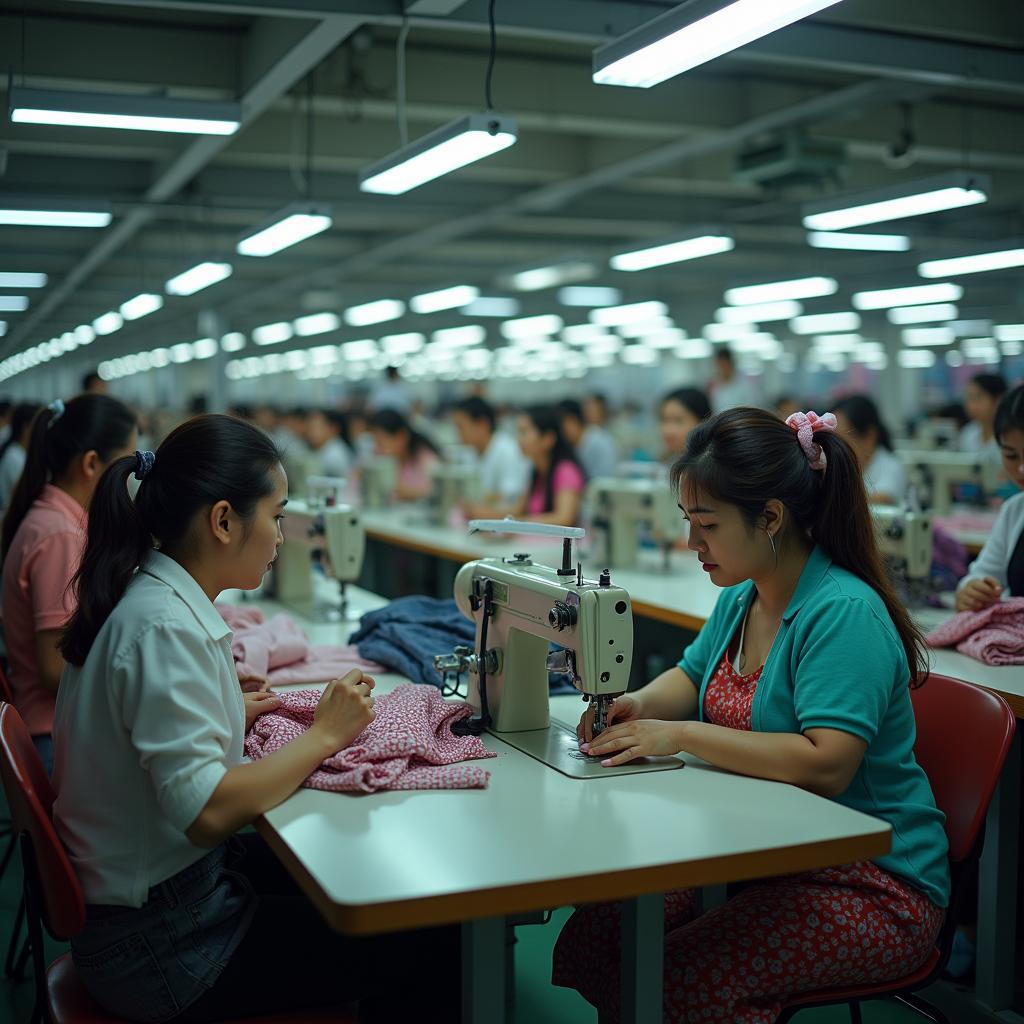 Công nhân may mặc trong nhà máy thời trang nhanh làm việc trong điều kiện khó khăn với quyền lợi lao động hạn chế
Questions 14-26
Questions 14-18: Yes/No/Not Given
Do the following statements agree with the views of the writer in the passage?
Write:
- YES if the statement agrees with the views of the writer
- NO if the statement contradicts the views of the writer
- NOT GIVEN if it is impossible to say what the writer thinks about this
-
The complex structure of fast fashion supply chains makes it difficult to assign responsibility for labor violations.
-
All fast fashion brands directly own the factories that produce their clothing.
-
The minimum wage in Bangladesh is sufficient for garment workers to live comfortably.
-
Large fashion brands have too much power over suppliers in the garment industry.
-
Gender discrimination in garment factories is limited to a few specific countries.
Questions 19-23: Matching Information
Match each statement with the correct issue (A-F) from the passage.
A) Wage exploitation
B) Excessive working hours
C) Safety violations
D) Union suppression
E) Gender discrimination
F) Subcontracting practices
-
Workers are prevented from forming organizations to protect their interests.
-
Employees work shifts lasting up to 16 hours regularly.
-
Emergency exits are blocked or locked in factories.
-
Women workers face pregnancy tests as employment conditions.
-
The actual payment received by workers is reduced through illegal means.
Questions 24-26: Summary Completion
Complete the summary below. Choose NO MORE THAN TWO WORDS from the passage for each answer.
Fast fashion brands typically don’t own their factories but work through networks of subcontractors. This creates a (24)__ gap where workers aren’t properly protected. Labor costs represent only (25)__ of the final retail price, giving brands enormous power over suppliers. This purchasing power allows them to demand such low prices that manufacturers must reduce **(26)__ to remain profitable.
PASSAGE 3 – Corporate Accountability and the Future of Ethical Fashion
Độ khó: Hard (Band 7.0-9.0)
Thời gian đề xuất: 23-25 phút
The ethical implications of fast fashion’s impact on labor rights have prompted a multifaceted response from various stakeholders, including non-governmental organizations (NGOs), consumers, governments, and the fashion brands themselves. This response has manifested in initiatives ranging from voluntary corporate codes of conduct to legally binding regulations, from grassroots activism to industry-wide collaborations. However, the effectiveness of these interventions remains contentious, with ongoing debates about whether incremental reforms within the existing fast fashion model can adequately address systemic labor rights violations, or whether more fundamental restructuring of the industry is necessary.
Corporate Social Responsibility (CSR) programs have become ubiquitous among major fashion brands over the past two decades. Following reputational crises triggered by exposés of poor working conditions in their supply chains, companies such as Nike, Gap, and H&M established comprehensive supplier codes of conduct outlining minimum standards for wages, working hours, health and safety, and freedom of association. These brands invested in social auditing programs, hiring both internal teams and third-party auditing firms to inspect factories and verify compliance with stated standards. On the surface, this self-regulatory approach appeared to offer a solution that balanced commercial interests with ethical obligations, allowing brands to demonstrate commitment to workers’ rights without compromising their business model’s economic fundamentals.
Yet critical analysis of CSR initiatives in the fast fashion sector reveals significant limitations and contradictions. Research by labor rights scholars has documented numerous instances where factories successfully pass audits while egregious violations continue unabated. This audit failure stems from multiple factors: advance notice of inspections allows factories to temporarily improve conditions and coach workers on responses; audits typically occur during normal working hours, missing evening and weekend overtime violations; language barriers and power dynamics discourage workers from speaking honestly to auditors; and the checklist approach of many audits fails to capture nuanced realities of workplace conditions. Moreover, the fundamental paradox of CSR in fast fashion lies in the contradiction between brands’ purchasing practices and their stated values. While codes of conduct demand reasonable working hours and fair wages, brands simultaneously impose price pressures and lead time constraints that make compliance economically unfeasible for suppliers.
The concept of “ethical fashion” has gained traction as an alternative paradigm, emphasizing transparency, fair wages, sustainable production, and respect for workers’ rights throughout the supply chain. Pioneering brands such as Patagonia, Everlane, and People Tree have built business models predicated on these principles, demonstrating that fashion can be produced without exploitation. These companies typically maintain closer relationships with fewer suppliers, pay premium prices that allow for living wages, use organic or recycled materials, and provide detailed information about their supply chains to consumers. The slow fashion movement, which advocates for buying fewer, higher-quality garments designed for longevity, represents the antithesis of fast fashion’s disposable culture. Proponents argue that changing consumer mindsets from quantity to quality, and from novelty to durability, is essential for creating demand conditions that support ethical production.
However, the ethical fashion sector faces its own challenges in scaling impact. Premium-priced sustainable brands remain inaccessible to many consumers, potentially making ethical consumption a class privilege. The sector represents only a small fraction of the global fashion market, and some critics question whether ethical fashion’s niche positioning allows mainstream fast fashion to continue problematic practices by siphoning off conscientious consumers who might otherwise push for industry-wide change. There are also concerns about “greenwashing” and “ethics-washing,” where brands make misleading claims about sustainability or fair labor practices to appeal to ethically-minded consumers without making substantive changes to their operations. The lack of standardized definitions and verification mechanisms for terms like “ethical,” “sustainable,” or “fair trade” in fashion creates opportunities for such deceptive marketing.
Regulatory approaches have emerged as governments recognize that voluntary measures may be insufficient to protect workers’ rights. The European Union has been particularly active in this domain, with several member states enacting due diligence legislation that holds companies legally accountable for labor rights violations in their supply chains. France’s Duty of Vigilance Law (2017) requires large companies to develop and implement vigilance plans to identify and prevent human rights abuses throughout their operations and supply chains, with potential civil liability for failures. The Netherlands’ Child Labour Due Diligence Law (2019) mandates that companies assess and address child labor risks in their supply chains or face criminal penalties. Germany’s Supply Chain Due Diligence Act (2023) extends similar requirements across human rights and environmental standards. These legislative initiatives represent a shift from voluntary to mandatory approaches, establishing that corporations have legal obligations, not merely ethical aspirations, regarding supply chain conditions.
Để hiểu rõ hơn về Challenges of protecting intellectual property in the digital age, cũng như vấn đề bảo vệ quyền lợi người lao động, việc xây dựng khung pháp lý quốc tế là cần thiết.
At the international level, initiatives such as the Bangladesh Accord on Fire and Building Safety (2013-2021) demonstrated how legally binding agreements between brands, unions, and NGOs can achieve measurable improvements in working conditions. The Accord, established following the Rana Plaza disaster, required signatory brands to fund comprehensive safety inspections, remediation programs, and worker empowerment mechanisms. Unlike voluntary CSR programs, the Accord was legally enforceable through arbitration, and its transparency mechanisms made inspection reports and remediation progress publicly available. Evaluations found significant improvements in structural safety, fire protection, and electrical systems in covered factories. However, the Accord covered only factories producing for participating brands (initially around 200 brands), leaving much of Bangladesh’s garment sector outside its scope, and faced resistance from factory owners and the Bangladeshi government who viewed it as infringing on national sovereignty.
Consumer activism and brand campaigns have played crucial roles in pressuring companies to improve labor practices. The #WhoMadeMyClothes campaign, initiated by Fashion Revolution following the Rana Plaza disaster, encourages consumers to demand supply chain transparency from brands. Social media has amplified consumer power, enabling rapid dissemination of information about labor violations and coordination of boycotts or pressure campaigns. Brands are increasingly cognizant that their reputation constitutes valuable intangible capital vulnerable to erosion through labor rights controversies. However, the relationship between consumer awareness and actual purchasing behavior remains complex. Studies indicate that while many consumers express concern about ethical issues, price and style remain dominant factors in actual purchase decisions, a phenomenon termed the “attitude-behavior gap.” This disconnect suggests that consumer consciousness alone may be insufficient to drive comprehensive industry transformation without complementary regulatory and structural changes.
Looking forward, technology presents both opportunities and risks for labor rights in fashion. Blockchain technology could potentially enhance supply chain transparency by creating immutable records of a garment’s journey from raw materials through production stages, making it harder for brands to claim ignorance of supplier conditions. Artificial intelligence and data analytics might improve monitoring by detecting patterns indicative of violations, such as suspicious overtime records or wage anomalies. However, technology also enables new forms of worker surveillance and control that could exacerbate power imbalances, and automation threatens to eliminate jobs that, despite poor conditions, provide crucial livelihoods for millions of workers. Một vấn đề liên quan đến công nghệ trong chuỗi cung ứng là How blockchain is enhancing sustainability in supply chains đang mang lại cả cơ hội và thách thức cho quyền lợi người lao động.
The fundamental question remains whether the fast fashion business model itself – predicated on rapid turnover, low prices, and outsourced production in low-wage countries – can ever be rendered compatible with robust protection of workers’ rights, or whether genuine improvement requires dismantling or fundamentally transforming this model. Some scholars argue that the structural imperatives of fast fashion create inexorable pressures that will always manifest in labor exploitation, regardless of superficial reforms. Others maintain that with sufficient regulatory oversight, stakeholder coordination, and cultural shifts in consumption, it is possible to retain affordable, accessible fashion while ensuring decent work conditions. This debate extends beyond fashion to broader questions about global capitalism, development pathways, and the distribution of costs and benefits in international trade. Giống như Cultural impacts of global trade, ngành thời trang nhanh phản ánh sự mất cân đối trong hệ thống thương mại toàn cầu hiện nay.
 Phong trào thời trang bền vững và các sáng kiến bảo vệ quyền lợi công nhân may mặc toàn cầu
Questions 27-40
Questions 27-31: Multiple Choice
Choose the correct letter, A, B, C, or D.
-
According to the passage, what is the main limitation of Corporate Social Responsibility programs in fast fashion?
- A) They are too expensive to implement
- B) Factory audits often fail to detect real violations
- C) Workers refuse to cooperate with auditors
- D) Brands don’t invest enough money in them
-
What does the term “ethical fashion” emphasize?
- A) Lower prices and faster production
- B) Transparency and fair treatment of workers
- C) Using only natural materials
- D) Manufacturing everything in developed countries
-
What is a key difference between the Bangladesh Accord and typical CSR programs?
- A) It was legally enforceable
- B) It covered all factories in Bangladesh
- C) It was created by the government
- D) It focused only on wages
-
What does “attitude-behavior gap” refer to in the context of consumer activism?
- A) The difference between what consumers say and what they actually do
- B) The gap between wealthy and poor consumers
- C) Disagreements between consumers and brands
- D) Different attitudes across generations
-
According to the passage, how might technology impact labor rights in fashion?
- A) It will definitely improve all working conditions
- B) It offers both potential benefits and new risks
- C) It will eliminate the need for human workers
- D) It is irrelevant to labor rights issues
Questions 32-36: Matching Sentence Endings
Complete each sentence with the correct ending, A-H, below.
- CSR audits often fail to identify violations because
- Ethical fashion brands typically maintain
- Due diligence legislation in Europe requires companies to
- The Bangladesh Accord was notable for being
- Consumer concern about ethical issues doesn’t always translate into
A) closer relationships with fewer suppliers.
B) purchasing decisions based on ethics.
C) legally binding rather than voluntary.
D) factories receive advance warning of inspections.
E) higher prices for all clothing items.
F) develop plans to prevent human rights abuses.
G) complete transparency in all operations.
H) government control of the fashion industry.
Questions 37-40: Short-answer Questions
Answer the questions below. Choose NO MORE THAN THREE WORDS from the passage for each answer.
-
What percentage of garment workers globally are women?
-
Which French law enacted in 2017 holds companies liable for supply chain violations?
-
What technology could create unchangeable records of a garment’s production journey?
-
What fundamental question is raised about whether fast fashion can ever truly protect workers’ rights?
Answer Keys – Đáp Án
PASSAGE 1: Questions 1-13
- C
- C
- C
- C
- B
- TRUE
- FALSE
- NOT GIVEN
- NOT GIVEN
- democratization
- lowest (possible)
- four million
- fundamental problems
PASSAGE 2: Questions 14-26
- YES
- NO
- NO
- YES
- NOT GIVEN
- D
- B
- C
- E
- A
- governance
- 1-3%
- labor costs
PASSAGE 3: Questions 27-40
- B
- B
- A
- A
- B
- D
- A
- F
- C
- B
- 75-80% / approximately 75-80%
- Duty of Vigilance (Law)
- Blockchain technology
- business model / fast fashion model
Giải Thích Đáp Án Chi Tiết
Passage 1 – Giải Thích
Câu 1: C
- Dạng câu hỏi: Multiple Choice
- Từ khóa: main characteristic, distinguishes, fast fashion, traditional fashion
- Vị trí trong bài: Đoạn 1, dòng 2-4
- Giải thích: Passage nói rõ “quickly producing affordable garments… and delivering them to stores at a remarkably rapid pace” – điểm khác biệt chính là tốc độ từ thiết kế đến cửa hàng. Đoạn 2 cũng nhấn mạnh “shortening the production cycle” và “accelerated turnover”.
Câu 2: C
- Dạng câu hỏi: Multiple Choice
- Từ khóa: traditional fashion houses, release new collections
- Vị trí trong bài: Đoạn 2, dòng 2-3
- Giải thích: Đoạn văn nói rõ “Traditional fashion houses typically released two main collections per year – spring/summer and autumn/winter.” Đây là thông tin trực tiếp.
Câu 3: C
- Dạng câu hỏi: Multiple Choice (NOT mentioned)
- Từ khóa: technology, NOT mentioned
- Vị trí trong bài: Đoạn 3
- Giải thích: Đoạn 3 đề cập supply chain management systems (A), CAD software (B), và improvements in logistics (D). Artificial intelligence không được nhắc đến.
Câu 4: C
- Dạng câu hỏi: Multiple Choice
- Từ khóa: percentage, clothing, buy today, 15 years ago
- Vị trí trong bài: Đoạn 4, dòng 6-7
- Giải thích: “The average person today buys 60% more clothing items than they did 15 years ago” – con số cụ thể là 60%.
Câu 5: B
- Dạng câu hỏi: Multiple Choice
- Từ khóa: significance, Rana Plaza disaster
- Vị trí trong bài: Đoạn 7, dòng 5-7
- Giải thích: Passage nói “The tragedy highlighted… brought global attention to these concerns. Following this disaster, there was increased public awareness” – tầm quan trọng là làm tăng nhận thức toàn cầu về điều kiện làm việc.
Câu 6: TRUE
- Dạng câu hỏi: True/False/Not Given
- Từ khóa: Fast fashion companies, release new designs, more frequently, traditional fashion houses
- Vị trí trong bài: Đoạn 2, dòng 3-4
- Giải thích: “In contrast, fast fashion brands introduced new designs every few weeks, sometimes even weekly” so với “two main collections per year” của traditional fashion houses.
Câu 7: FALSE
- Dạng câu hỏi: True/False/Not Given
- Từ khóa: garment workers, Bangladesh, male
- Vị trí trong bài: Đoạn 6, dòng 4-5
- Giải thích: Passage nói “approximately four million workers, about 85% of whom are women” – phần lớn là phụ nữ, không phải nam.
Câu 8: NOT GIVEN
- Dạng câu hỏi: True/False/Not Given
- Từ khóa: Vietnam’s garment sector, contributes more, any other industry
- Vị trí trong bài: Đoạn 6, dòng 6-7
- Giải thích: Passage chỉ nói “accounts for 16% of the country’s GDP” nhưng không so sánh với các ngành khác, không có thông tin để xác định đây có phải ngành đóng góp nhiều nhất hay không.
Câu 9: NOT GIVEN
- Dạng câu hỏi: True/False/Not Given
- Từ khóa: All fast fashion brands, improved working conditions, Rana Plaza
- Vị trí trong bài: Đoạn 7, dòng cuối
- Giải thích: Passage nói “there was increased public awareness and some reforms, but critics argue that fundamental problems… persist” – không có thông tin về tất cả các thương hiệu đều cải thiện.
Câu 10: democratization
- Dạng câu hỏi: Sentence Completion
- Từ khóa: made style accessible, beyond the wealthy
- Vị trí trong bài: Đoạn 4, dòng 3-4
- Giải thích: “This democratization of fashion meant that style was no longer the exclusive privilege of the wealthy.”
Câu 11: lowest (possible)
- Dạng câu hỏi: Sentence Completion
- Từ khóa: manufacturers, compete, contracts
- Vị trí trong bài: Đoạn 5, dòng 3-4
- Giải thích: “Manufacturers compete intensely for contracts from major brands, often by offering the lowest possible prices.”
Câu 12: four million
- Dạng câu hỏi: Sentence Completion
- Từ khóa: garment industry, Bangladesh, employs
- Vị trí trong bài: Đoạn 6, dòng 4-5
- Giải thích: “the industry employing approximately four million workers”
Câu 13: fundamental problems
- Dạng câu hỏi: Sentence Completion
- Từ khóa: critics, reforms, industry
- Vị trí trong bài: Đoạn 7, dòng cuối
- Giải thích: “critics argue that fundamental problems in the fast fashion industry persist.”
Passage 2 – Giải Thích
Câu 14: YES
- Dạng câu hỏi: Yes/No/Not Given
- Từ khóa: complex structure, difficult, assign responsibility
- Vị trí trong bài: Đoạn 1, dòng 1-3
- Giải thích: Passage nói “complex web of relationships… often obscures accountability” và “creates what researchers call a governance gap” – tác giả đồng ý rằng cấu trúc phức tạp làm khó xác định trách nhiệm.
Câu 15: NO
- Dạng câu hỏi: Yes/No/Not Given
- Từ khóa: all fast fashion brands, directly own, factories
- Vị trí trong bài: Đoạn 1, dòng 2-4
- Giải thích: “Unlike traditional vertically integrated companies that own their factories, most fast fashion brands operate through extensive networks of subcontractors” – trái ngược với câu khẳng định.
Câu 16: NO
- Dạng câu hỏi: Yes/No/Not Given
- Từ khóa: minimum wage, Bangladesh, sufficient, live comfortably
- Vị trí trong bài: Đoạn 3, dòng 3-6
- Giải thích: Passage cho biết minimum wage là 8,000 taka nhưng living wage cần 16,000 taka – tác giả ngụ ý không đủ.
Câu 17: YES
- Dạng câu hỏi: Yes/No/Not Given
- Từ khóa: large fashion brands, too much power, suppliers
- Vị trí trong bài: Đoạn 4, dòng 1-4
- Giải thích: Tác giả mô tả “monopsony power” và “enormous purchasing power” cho phép brands “dictate terms to suppliers” với hàm ý tiêu cực về sự mất cân bằng quyền lực này.
Câu 18: NOT GIVEN
- Dạng câu hỏi: Yes/No/Not Given
- Từ khóa: gender discrimination, limited to, specific countries
- Vị trí trong bài: Đoạn 9
- Giải thích: Passage nói “Reports from multiple countries document…” nhưng không nói rõ vấn đề này có bị giới hạn ở một số nước hay không.
Câu 19: D (Union suppression)
- Dạng câu hỏi: Matching Information
- Từ khóa: prevented, forming organizations, protect interests
- Vị trí trong bài: Đoạn 8, dòng 1-2
- Giải thích: Đoạn về union suppression nói về việc “systematic suppression of workers’ rights to organize.”
Câu 20: B (Excessive working hours)
- Dạng câu hỏi: Matching Information
- Từ khóa: shifts, 16 hours, regularly
- Vị trí trong bài: Đoạn 5, dòng 2-3
- Giải thích: “workers regularly reporting 12-16 hour shifts”
Câu 21: C (Safety violations)
- Dạng câu hỏi: Matching Information
- Từ khóa: emergency exits, blocked, locked
- Vị trí trong bài: Đoạn 6, dòng 4-5
- Giải thích: “locked or blocked emergency exits” được liệt kê trong phần về workplace safety disasters.
Câu 22: E (Gender discrimination)
- Dạng câu hỏi: Matching Information
- Từ khóa: women, pregnancy tests, employment conditions
- Vị trí trong bài: Đoạn 9, dòng 3-4
- Giải thích: “forced pregnancy tests as conditions of employment” trong phần gender dimensions.
Câu 23: A (Wage exploitation)
- Dạng câu hỏi: Matching Information
- Từ khóa: payment, reduced, illegal means
- Vị trí trong bài: Đoạn 3, dòng 7-8
- Giải thích: “actual take-home pay is further reduced by illegal deductions”
Câu 24: governance
- Dạng câu hỏi: Summary Completion
- Từ khóa: gap, workers, not protected
- Vị trí trong bài: Đoạn 1, dòng 3-4
- Giải thích: “creates what researchers call a ‘governance gap'”
Câu 25: 1-3%
- Dạng câu hỏi: Summary Completion
- Từ khóa: labor costs, final retail price
- Vị trí trong bài: Đoạn 4, dòng 5-6
- Giải thích: “labor costs typically represent only 1-3% of the final retail price”
Câu 26: labor costs
- Dạng câu hỏi: Summary Completion
- Từ khóa: manufacturers, reduce, remain profitable
- Vị trí trong bài: Đoạn 4, dòng 6-8
- Giải thích: “manufacturers have limited options to maintain profitability other than squeezing labor costs”
Passage 3 – Giải Thích
Câu 27: B
- Dạng câu hỏi: Multiple Choice
- Từ khóa: main limitation, CSR programs
- Vị trí trong bài: Đoạn 3, dòng 1-4
- Giải thích: “Research by labor rights scholars has documented numerous instances where factories successfully pass audits while egregious violations continue unabated. This audit failure stems from multiple factors…”
Câu 28: B
- Dạng câu hỏi: Multiple Choice
- Từ khóa: ethical fashion, emphasize
- Vị trí trong bài: Đoạn 4, dòng 1-2
- Giải thích: “ethical fashion… emphasizing transparency, fair wages, sustainable production, and respect for workers’ rights”
Câu 29: A
- Dạng câu hỏi: Multiple Choice
- Từ khóa: Bangladesh Accord, difference, CSR programs
- Vị trí trong bài: Đoạn 7, dòng 3-4
- Giải thích: “Unlike voluntary CSR programs, the Accord was legally enforceable through arbitration”
Câu 30: A
- Dạng câu hỏi: Multiple Choice
- Từ khóa: attitude-behavior gap, refers to
- Vị trí trong bài: Đoạn 8, dòng 6-8
- Giải thích: “while many consumers express concern about ethical issues, price and style remain dominant factors in actual purchase decisions, a phenomenon termed the ‘attitude-behavior gap'”
Câu 31: B
- Dạng câu hỏi: Multiple Choice
- Từ khóa: technology, impact, labor rights
- Vị trí trong bài: Đoạn 9, dòng 1
- Giải thích: “technology presents both opportunities and risks for labor rights in fashion”
Câu 32: D
- Dạng câu hỏi: Matching Sentence Endings
- Từ khóa: CSR audits, fail, violations
- Vị trí trong bài: Đoạn 3, dòng 4-5
- Giải thích: “advance notice of inspections allows factories to temporarily improve conditions”
Câu 33: A
- Dạng câu hỏi: Matching Sentence Endings
- Từ khóa: Ethical fashion brands, maintain
- Vị trí trong bài: Đoạn 4, dòng 4-5
- Giải thích: “These companies typically maintain closer relationships with fewer suppliers”
Câu 34: F
- Dạng câu hỏi: Matching Sentence Endings
- Từ khóa: due diligence legislation, Europe, requires
- Vị trí trong bài: Đoạn 6, dòng 3-4
- Giải thích: France’s law “requires large companies to develop and implement vigilance plans to identify and prevent human rights abuses”
Câu 35: C
- Dạng câu hỏi: Matching Sentence Endings
- Từ khóa: Bangladesh Accord, notable
- Vị trí trong bài: Đoạn 7, dòng 3-4
- Giải thích: “the Accord was legally enforceable through arbitration” – khác với các chương trình tự nguyện.
Câu 36: B
- Dạng câu hỏi: Matching Sentence Endings
- Từ khóa: consumer concern, ethical issues, doesn’t translate
- Vị trí trong bài: Đoạn 8, dòng 6-7
- Giải thích: “price and style remain dominant factors in actual purchase decisions”
Câu 37: 75-80% / approximately 75-80%
- Dạng câu hỏi: Short-answer Question
- Từ khóa: percentage, garment workers, women
- Vị trí trong bài: Đoạn 9 (Passage 2), dòng 1
- Giải thích: “Women comprise approximately 75-80% of garment workers globally”
Câu 38: Duty of Vigilance (Law)
- Dạng câu hỏi: Short-answer Question
- Từ khóa: French law, 2017, companies liable
- Vị trí trong bài: Đoạn 6, dòng 3
- Giải thích: “France’s Duty of Vigilance Law (2017)”
Câu 39: Blockchain technology
- Dạng câu hỏi: Short-answer Question
- Từ khóa: technology, unchangeable records, production journey
- Vị trí trong bài: Đoạn 9, dòng 2-3
- Giải thích: “Blockchain technology could potentially enhance supply chain transparency by creating immutable records”
Câu 40: business model / fast fashion model
- Dạng câu hỏi: Short-answer Question
- Từ khóa: fundamental question, whether, protect workers’ rights
- Vị trí trong bài: Đoạn 10, dòng 1
- Giải thích: “The fundamental question remains whether the fast fashion business model itself… can ever be rendered compatible with robust protection of workers’ rights”
Từ Vựng Quan Trọng Theo Passage
Passage 1 – Essential Vocabulary
| Từ vựng | Loại từ | Phiên âm | Nghĩa tiếng Việt | Ví dụ từ bài | Collocation |
|---|---|---|---|---|---|
| dramatic transformation | noun phrase | /drəˈmætɪk ˌtrænsfəˈmeɪʃən/ | sự chuyển đổi mạnh mẽ | The fashion industry has undergone a dramatic transformation | undergo a dramatic transformation |
| affordable garments | noun phrase | /əˈfɔːdəbl ˈɡɑːmənts/ | quần áo giá phải chăng | quickly producing affordable garments | produce affordable garments |
| remarkably rapid pace | noun phrase | /rɪˈmɑːkəbli ˈræpɪd peɪs/ | tốc độ nhanh đáng kể | delivering them at a remarkably rapid pace | at a rapid pace |
| household names | noun phrase | /ˈhaʊshəʊld neɪmz/ | những cái tên quen thuộc | have become household names | become household names |
| shortening the production cycle | verb phrase | /ˈʃɔːtənɪŋ ðə prəˈdʌkʃən ˈsaɪkl/ | rút ngắn chu kỳ sản xuất | began to recognize the potential of shortening the production cycle | shorten the cycle |
| accelerated turnover | noun phrase | /əkˈseləreɪtɪd ˈtɜːnəʊvə/ | tốc độ luân chuyển tăng nhanh | This accelerated turnover created urgency | accelerated/rapid turnover |
| supply chain management | noun phrase | /səˈplaɪ tʃeɪn ˈmænɪdʒmənt/ | quản lý chuỗi cung ứng | Advanced supply chain management systems | manage supply chain |
| outsourcing | noun | /ˈaʊtsɔːsɪŋ/ | thuê gia công ngoài | This global production network relied heavily on outsourcing | rely on outsourcing |
| economic appeal | noun phrase | /ˌiːkəˈnɒmɪk əˈpiːl/ | sức hấp dẫn về kinh tế | The economic appeal proved irresistible | have economic appeal |
| democratization | noun | /dɪˌmɒkrətaɪˈzeɪʃən/ | dân chủ hóa, phổ cập | This democratization of fashion | democratization of access |
| profitable margins | noun phrase | /ˈprɒfɪtəbl ˈmɑːdʒɪnz/ | tỷ suất lợi nhuận | achieve profitable margins | maintain profitable margins |
| worker exploitation | noun phrase | /ˈwɜːkə ˌeksplɔɪˈteɪʃən/ | bóc lột người lao động | conditions where worker exploitation can occur | prevent worker exploitation |
Passage 2 – Essential Vocabulary
| Từ vựng | Loại từ | Phiên âm | Nghĩa tiếng Việt | Ví dụ từ bài | Collocation |
|---|---|---|---|---|---|
| globalized supply chains | noun phrase | /ˈɡləʊbəlaɪzd səˈplaɪ tʃeɪnz/ | chuỗi cung ứng toàn cầu hóa | The globalized supply chains that underpin fast fashion | globalized/complex supply chains |
| accountability | noun | /əˌkaʊntəˈbɪləti/ | trách nhiệm giải trình | often obscures accountability | corporate accountability |
| vertically integrated | adjective | /ˈvɜːtɪkəli ˈɪntɪɡreɪtɪd/ | hợp nhất theo chiều dọc | Unlike traditional vertically integrated companies | vertically integrated structure |
| subcontractors | noun | /ˈsʌbkənˌtræktəz/ | nhà thầu phụ | extensive networks of subcontractors | hire subcontractors |
| governance gap | noun phrase | /ˈɡʌvənəns ɡæp/ | khoảng trống quản trị | creates what researchers call a governance gap | governance gap/deficit |
| wage exploitation | noun phrase | /weɪdʒ ˌeksplɔɪˈteɪʃən/ | bóc lột về tiền lương | Wage exploitation represents one of the most pervasive issues | wage exploitation/suppression |
| living wage | noun phrase | /ˈlɪvɪŋ weɪdʒ/ | mức lương đủ sống | well below what is considered a living wage | earn a living wage |
| take-home pay | noun phrase | /ˈteɪk həʊm peɪ/ | lương thực nhận | their actual take-home pay is further reduced | reduce take-home pay |
| monopsony power | noun phrase | /məˈnɒpsəni ˈpaʊə/ | quyền lực độc quyền mua | what economists term monopsony power | exercise monopsony power |
| razor-thin profit margins | noun phrase | /ˈreɪzə θɪn ˈprɒfɪt ˈmɑːdʒɪnz/ | biên lợi nhuận rất mỏng | leave manufacturers with razor-thin profit margins | razor-thin margins |
| endemic | adjective | /enˈdemɪk/ | lan tràn, phổ biến | Excessive working hours are endemic to the industry | endemic problem |
| ergonomic hazards | noun phrase | /ˌɜːɡəˈnɒmɪk ˈhæzədz/ | nguy cơ về công thái học | exacerbated by ergonomic hazards | ergonomic hazards/risks |
| musculoskeletal disorders | noun phrase | /ˌmʌskjʊləʊˈskelɪtl dɪsˈɔːdəz/ | rối loạn cơ xương khớp | leading to musculoskeletal disorders | suffer musculoskeletal disorders |
| high-profile disasters | noun phrase | /haɪ ˈprəʊfaɪl dɪˈzɑːstəz/ | thảm họa được chú ý nhiều | gained tragic prominence with high-profile disasters | high-profile incident/disaster |
| systematic suppression | noun phrase | /ˌsɪstəˈmætɪk səˈpreʃən/ | đàn áp có hệ thống | the systematic suppression of workers’ rights | systematic suppression/violation |
Passage 3 – Essential Vocabulary
| Từ vựng | Loại từ | Phiên âm | Nghĩa tiếng Việt | Ví dụ từ bài | Collocation |
|---|---|---|---|---|---|
| ethical implications | noun phrase | /ˈeθɪkl ˌɪmplɪˈkeɪʃənz/ | hàm ý đạo đức | The ethical implications of fast fashion’s impact | ethical implications/considerations |
| multifaceted response | noun phrase | /ˌmʌltiˈfæsɪtɪd rɪˈspɒns/ | phản ứng đa chiều | prompted a multifaceted response | multifaceted approach/response |
| grassroots activism | noun phrase | /ˈɡrɑːsruːts ˈæktɪvɪzəm/ | hoạt động từ cơ sở | from grassroots activism to industry-wide collaborations | grassroots activism/movement |
| incremental reforms | noun phrase | /ˌɪŋkrəˈmentl rɪˈfɔːmz/ | cải cách từng bước | whether incremental reforms can adequately address | incremental/gradual reforms |
| systemic violations | noun phrase | /sɪˈstemɪk ˌvaɪəˈleɪʃənz/ | vi phạm có tính hệ thống | systemic labor rights violations | systemic violations/problems |
| ubiquitous | adjective | /juːˈbɪkwɪtəs/ | có mặt khắp nơi | CSR programs have become ubiquitous | ubiquitous presence |
| reputational crises | noun phrase | /ˌrepjuˈteɪʃənl ˈkraɪsiːz/ | khủng hoảng danh tiếng | Following reputational crises | reputational crisis/damage |
| self-regulatory approach | noun phrase | /self ˈreɡjələtəri əˈprəʊtʃ/ | cách tiếp cận tự điều chỉnh | this self-regulatory approach appeared to offer a solution | self-regulatory mechanism/approach |
| egregious violations | noun phrase | /ɪˈɡriːdʒəs ˌvaɪəˈleɪʃənz/ | vi phạm nghiêm trọng | while egregious violations continue unabated | egregious violation/abuse |
| fundamental paradox | noun phrase | /ˌfʌndəˈmentl ˈpærədɒks/ | nghịch lý cơ bản | the fundamental paradox of CSR in fast fashion | fundamental paradox/contradiction |
| gained traction | verb phrase | /ɡeɪnd ˈtrækʃən/ | được quan tâm, phổ biến | ethical fashion has gained traction | gain traction/momentum |
| antithesis | noun | /ænˈtɪθəsɪs/ | điều trái ngược hoàn toàn | represents the antithesis of fast fashion’s disposable culture | antithesis of something |
| greenwashing | noun | /ˈɡriːnwɒʃɪŋ/ | tẩy xanh (quảng cáo gian dối về môi trường) | concerns about greenwashing and ethics-washing | engage in greenwashing |
| due diligence legislation | noun phrase | /djuː ˈdɪlɪdʒəns ˌledʒɪsˈleɪʃən/ | luật về thẩm tra chuyên trách | enacting due diligence legislation | due diligence requirements |
| civil liability | noun phrase | /ˈsɪvl ˌlaɪəˈbɪləti/ | trách nhiệm dân sự | with potential civil liability for failures | civil/criminal liability |
| legally binding agreements | noun phrase | /ˈliːɡəli ˈbaɪndɪŋ əˈɡriːmənts/ | thỏa thuận có tính ràng buộc pháp lý | how legally binding agreements can achieve improvements | legally binding contract/agreement |
| intangible capital | noun phrase | /ɪnˈtændʒəbl ˈkæpɪtl/ | vốn vô hình | their reputation constitutes valuable intangible capital | intangible assets/capital |
| attitude-behavior gap | noun phrase | /ˈætɪtjuːd bɪˈheɪvjə ɡæp/ | khoảng cách giữa thái độ và hành vi | a phenomenon termed the attitude-behavior gap | attitude-behavior gap/disconnect |
| immutable records | noun phrase | /ɪˈmjuːtəbl ˈrekɔːdz/ | hồ sơ không thể thay đổi | creating immutable records of a garment’s journey | immutable record/data |
| structural imperatives | noun phrase | /ˈstrʌktʃərəl ɪmˈperətɪvz/ | mệnh lệnh cơ cấu | the structural imperatives of fast fashion | structural imperatives/constraints |
| inexorable pressures | noun phrase | /ɪnˈeksərəbl ˈpreʃəz/ | áp lực không thể tránh khỏi | create inexorable pressures | inexorable pressure/force |
Kết Luận
Đề thi IELTS Reading mẫu về chủ đề “The impact of fast fashion on labor rights” đã cung cấp cho bạn một bộ câu hỏi hoàn chỉnh với 40 câu hỏi đa dạng, bao gồm đầy đủ các dạng bài phổ biến trong IELTS. Ba passages với độ khó tăng dần từ Easy đến Hard giúp bạn làm quen với cấu trúc đề thi thực tế và phát triển kỹ năng đọc hiểu từ cơ bản đến nâng cao.
Chủ đề thời trang nhanh và quyền lợi người lao động không chỉ xuất hiện thường xuyên trong IELTS Reading mà còn là vấn đề xã hội quan trọng trong thời đại toàn cầu hóa. Qua bài thi này, bạn đã học được nhiều từ vựng chuyên ngành liên quan đến lao động, sản xuất, chuỗi cung ứng và trách nhiệm xã hội doanh nghiệp. Những từ vựng này không chỉ hữu ích cho phần Reading mà còn có thể áp dụng trong Writing Task 2 khi gặp đề bài liên quan.
Hãy nhớ rằng để đạt điểm cao trong IELTS Reading, bạn cần luyện tập thường xuyên với các đề thi đa dạng chủ đề, nắm vững các kỹ thuật skimming và scanning, và xây dựng vốn từ vựng học thuật phong phú. Đáp án chi tiết với giải thích cụ thể trong bài viết này sẽ giúp bạn hiểu rõ cách tìm thông tin và paraphrase trong passage, từ đó áp dụng vào các đề thi khác.
Chúc bạn ôn tập hiệu quả và đạt band điểm như mong muốn trong kỳ thi IELTS sắp tới!