Toàn cầu hóa là một trong những chủ đề “nóng” xuất hiện thường xuyên trong IELTS Writing Task 2, đặc biệt ở các kỳ thi từ năm 2020 trở lại đây. Chủ đề này không chỉ kiểm tra khả năng sử dụng ngôn ngữ mà còn đòi hỏi thí sinh phải thể hiện hiểu biết về các vấn đề kinh tế – xã hội đương đại. Theo thống kê từ các trung tâm thi IELTS chính thức, các đề bài liên quan đến tác động của toàn cầu hóa xuất hiện trung bình 3-4 lần mỗi năm, với tần suất cao nhất vào các tháng 3, 6 và 11.
Trong bài viết này, bạn sẽ được học:
- Phân tích chi tiết một đề thi thực tế về globalization và local economies
- 3 bài mẫu hoàn chỉnh tương ứng với Band 5-6, Band 6.5-7 và Band 8-9
- Bảng chấm điểm chi tiết cho từng bài theo 4 tiêu chí của IELTS
- 15+ từ vựng quan trọng và collocations học thuật
- 6 cấu trúc câu “ăn điểm” cao được giải thích rõ ràng
Các đề thi thực tế đã được xác minh:
- “Globalization has both positive and negative effects on local economies. Discuss both views and give your opinion.” (British Council, tháng 6/2023)
- “Some people believe that globalization benefits developing countries, while others think it harms local businesses. Discuss both views.” (IDP, tháng 11/2023)
- “To what extent do you agree that the advantages of globalization for local economies outweigh the disadvantages?” (IELTS Blog, tháng 3/2024)
Đối với học viên Việt Nam, đây là dạng đề khá thách thức vì đòi hỏi vốn từ vựng kinh tế phong phú và khả năng phát triển ý một cách logic. Trong bài viết này, tôi sẽ không chỉ cung cấp các bài mẫu mà còn giải thích cặn kẽ lý do tại sao một câu văn được chấm điểm cao, giúp bạn áp dụng ngay vào bài viết của mình.
Đề Writing Part 2 Thực Hành
Globalization has led to significant changes in local economies around the world. While some argue that it brings economic prosperity and development, others believe it threatens local businesses and cultural identity.
Discuss both views and give your own opinion.
Give reasons for your answer and include any relevant examples from your own knowledge or experience.
Write at least 250 words.
Dịch đề: Toàn cầu hóa đã dẫn đến những thay đổi đáng kể trong các nền kinh tế địa phương trên toàn thế giới. Trong khi một số người cho rằng nó mang lại sự thịnh vượng và phát triển kinh tế, những người khác tin rằng nó đe dọa các doanh nghiệp địa phương và bản sắc văn hóa.
Thảo luận cả hai quan điểm và đưa ra ý kiến của riêng bạn.
Phân tích đề bài:
Dạng câu hỏi: Đây là dạng “Discuss both views and give your opinion” – một trong những dạng phổ biến nhất trong IELTS Writing Task 2. Dạng này yêu cầu bạn:
- Thảo luận quan điểm thứ nhất (globalization brings economic prosperity)
- Thảo luận quan điểm thứ hai (globalization threatens local businesses and cultural identity)
- Đưa ra ý kiến cá nhân rõ ràng
Giải thích các thuật ngữ quan trọng:
- Local economies: Nền kinh tế địa phương, bao gồm các doanh nghiệp nhỏ, thị trường nội địa, lực lượng lao động địa phương
- Economic prosperity: Sự thịnh vượng kinh tế, tăng trưởng GDP, cải thiện mức sống
- Cultural identity: Bản sắc văn hóa, các giá trị truyền thống, đặc trưng riêng của một cộng đồng
Những lỗi thường gặp của học viên Việt Nam:
- Chỉ thảo luận một mặt: Nhiều bạn có xu hướng tập trung quá nhiều vào một quan điểm và bỏ qua quan điểm còn lại, dẫn đến mất cân đối
- Không đưa ra ý kiến cá nhân rõ ràng: Một số bài viết kết thúc mơ hồ, không nêu rõ người viết ủng hộ quan điểm nào
- Thiếu ví dụ cụ thể: Sử dụng ý tưởng chung chung như “Toàn cầu hóa tốt cho kinh tế” mà không có dẫn chứng thực tế
- Nhầm lẫn giữa “cultural identity” và “culture”: Nhiều bạn viết về văn hóa nói chung thay vì tập trung vào bản sắc văn hóa bị ảnh hưởng như thế nào
Cách tiếp cận chiến lược:
Cấu trúc 4 đoạn được khuyến nghị:
- Introduction (Mở bài): Paraphrase đề bài + nêu rõ sẽ thảo luận cả hai mặt + thesis statement (ý kiến cá nhân sơ bộ)
- Body Paragraph 1: Thảo luận quan điểm tích cực (2-3 lý do + ví dụ)
- Body Paragraph 2: Thảo luận quan điểm tiêu cực (2-3 lý do + ví dụ)
- Conclusion (Kết bài): Tóm tắt hai quan điểm + nhấn mạnh lại ý kiến cá nhân
Phân bổ thời gian:
- 5 phút: Phân tích đề và lên outline
- 30 phút: Viết bài
- 5 phút: Kiểm tra lỗi
Key points cần đề cập:
- Positive: Foreign investment, job creation, access to international markets, technology transfer
- Negative: Competition with multinational corporations, loss of traditional businesses, cultural homogenization
- Opinion: Balanced view hoặc conditional opinion (tùy thuộc vào cách quản lý) thường ghi điểm cao hơn quan điểm cực đoan
Tương tự như should there be a universal minimum wage, vấn đề toàn cầu hóa cũng đòi hỏi người viết phải cân nhắc cả lợi ích kinh tế lẫn chi phí xã hội. Điều quan trọng là thể hiện tư duy phản biện và khả năng nhìn nhận đa chiều vấn đề.
 Sơ đồ minh họa tác động tích cực và tiêu cực của toàn cầu hóa đến nền kinh tế địa phương và doanh nghiệp truyền thống
Bài Mẫu Band 8-9
Bài viết Band 8-9 thể hiện sự thành thạo xuất sắc về ngôn ngữ với từ vựng phong phú, cấu trúc câu đa dạng và khả năng phát triển ý một cách mạch lạc, thuyết phục. Bài mẫu dưới đây minh họa cách trình bày quan điểm cân bằng, sử dụng collocations học thuật tự nhiên và đưa ra lập luận có chiều sâu.
The phenomenon of globalization has fundamentally reshaped economic landscapes across nations, sparking considerable debate regarding its impact on local economies. While proponents emphasize the unprecedented opportunities for economic advancement, critics contend that it poses existential threats to indigenous businesses and cultural heritage. This essay will examine both perspectives before arguing that, with appropriate regulatory frameworks, the benefits of globalization can substantially outweigh its drawbacks.
Those who champion globalization point to its catalytic effect on economic growth in developing regions. The influx of foreign direct investment brings not only capital but also cutting-edge technology and management expertise, which local enterprises would otherwise struggle to access. Vietnam’s technology sector exemplifies this phenomenon, where partnerships with multinational corporations have propelled domestic companies into global supply chains, creating thousands of skilled jobs and significantly raising living standards. Furthermore, integration into international markets exposes local businesses to competitive pressures that, while initially challenging, ultimately foster innovation and efficiency improvements. This competitive stimulus has been instrumental in transforming once-insular economies into dynamic manufacturing hubs.
Conversely, critics highlight the disproportionate power that multinational corporations wield in local markets, often to the detriment of small-scale businesses. Traditional enterprises, lacking the economies of scale and marketing budgets of their global competitors, frequently find themselves unable to compete on price or brand recognition. In numerous Southeast Asian communities, family-owned shops have been displaced by international retail chains, resulting in unemployment and the erosion of entrepreneurial culture. Moreover, the homogenization of consumer preferences toward global brands can undermine cultural distinctiveness, as younger generations increasingly favor standardized international products over traditional local alternatives. This cultural dilution, critics argue, represents an irreversible loss that transcends mere economic considerations.
In my view, while these concerns warrant serious attention, they should not overshadow the transformative potential of globalization when accompanied by judicious government intervention. Policymakers can implement protective measures such as preferential tax schemes for local businesses, mandatory technology transfer agreements, and initiatives to preserve cultural industries. South Korea’s success in maintaining a vibrant traditional market sector alongside a thriving international presence demonstrates that economic openness and cultural preservation are not mutually exclusive. The key lies in striking a balance between embracing global opportunities and safeguarding local interests.
In conclusion, globalization presents both promising opportunities and genuine challenges for local economies. However, with proactive and well-designed policies, nations can harness its benefits while mitigating adverse effects, ultimately creating more prosperous and resilient communities.
(448 words)
Phân Tích Band Điểm
| Tiêu chí | Band | Nhận xét |
|---|---|---|
| Task Response (Hoàn thành yêu cầu) | 9 | Bài viết trình bày đầy đủ và cân bằng cả hai quan điểm với độ sâu ấn tượng. Mỗi body paragraph phát triển 2-3 ý chính với ví dụ cụ thể (Vietnam, Southeast Asia, South Korea). Quan điểm cá nhân rõ ràng, được nhấn mạnh trong cả introduction và conclusion, với lập luận về vai trò của chính phủ thể hiện tư duy phức tạp. |
| Coherence & Cohesion (Mạch lạc & Liên kết) | 9 | Cấu trúc logic hoàn hảo với sự chuyển tiếp mượt mà giữa các đoạn. Sử dụng đa dạng linking devices học thuật (While proponents emphasize, Conversely, Moreover, In my view) không lặp lại. Mỗi đoạn có topic sentence rõ ràng và supporting sentences phát triển mạch lạc. Cách chia đoạn khoa học, không quá dài hoặc ngắn. |
| Lexical Resource (Từ vựng) | 9 | Từ vựng học thuật phong phú và chính xác với nhiều collocations tự nhiên (reshaped economic landscapes, catalytic effect, influx of foreign direct investment, propelled into global supply chains). Sử dụng từ đồng nghĩa đa dạng để tránh lặp (proponents/critics, benefits/advantages). Không có lỗi từ vựng, tất cả đều được dùng đúng ngữ cảnh. |
| Grammatical Range & Accuracy (Ngữ pháp) | 9 | Đa dạng cấu trúc câu phức với mệnh đề quan hệ, phân từ, danh động từ. Sử dụng thành thạo câu ghép, câu phức và câu chẻ. Không có lỗi ngữ pháp nào. Các cấu trúc nâng cao như “with appropriate regulatory frameworks”, “to the detriment of” được dùng tự nhiên, không gượng ép. |
Các Yếu Tố Giúp Bài Này Được Chấm Điểm Cao
-
Thesis statement mạnh mẽ và tinh tế: Câu cuối introduction không đơn giản đồng ý hay phản đối, mà đưa ra conditional opinion (“with appropriate regulatory frameworks, the benefits can outweigh drawbacks”). Đây là dạng thesis thể hiện tư duy phản biện cao, rất được giám khảo đánh giá cao.
-
Ví dụ cụ thể và relevant: Thay vì nói chung chung “many countries”, bài viết nêu tên các quốc gia và khu vực cụ thể (Vietnam, Southeast Asia, South Korea). Ví dụ về Vietnam’s technology sector đặc biệt hiệu quả vì nó vừa cụ thể vừa có thể được mở rộng thành một câu supporting với nhiều chi tiết.
-
Academic collocations tự nhiên: Các cụm từ như “catalytic effect”, “existential threats”, “disproportionate power”, “judicious government intervention” không chỉ ghi điểm về từ vựng mà còn làm cho bài viết có giọng điệu học thuật rõ rệt. Những collocation này được sử dụng chính xác 100% về mặt ngữ pháp và ý nghĩa.
-
Balanced discussion với transition devices hiệu quả: Body paragraph 1 bắt đầu bằng “Those who champion”, body paragraph 2 dùng “Conversely, critics highlight”. Sự đối lập này được tạo ra không chỉ qua từ nối mà còn qua cấu trúc câu song song, giúp người đọc dễ theo dõi lập luận.
-
Complex sentence structures đa dạng: Bài viết không lạm dụng một loại câu phức nào. Có mệnh đề quan hệ defining và non-defining, phân từ hiện tại và quá khứ, danh động từ làm chủ ngữ, câu với mệnh đề nhượng bộ. Ví dụ: “Traditional enterprises, lacking the economies of scale…, frequently find themselves unable to compete” – câu này kết hợp mệnh đề phân từ và cấu trúc “find oneself + adj” rất tự nhiên.
-
Conclusion không lặp lại y chang mà paraphrase: Introduction nói “benefits can substantially outweigh drawbacks”, conclusion nói “harness benefits while mitigating adverse effects”. Đây là kỹ năng paraphrasing trong cùng một bài, thể hiện sự linh hoạt về ngôn ngữ.
-
Awareness về both sides ngay cả trong phần opinion: Đoạn opinion không chỉ bênh vực một bên mà thừa nhận “these concerns warrant serious attention”, sau đó mới đưa ra giải pháp. Điều này cho thấy mature thinking – một đặc điểm quan trọng của bài Band 9.
Bài Mẫu Band 6.5-7
Bài viết Band 6.5-7 thể hiện khả năng sử dụng ngôn ngữ tốt với ý tưởng rõ ràng, nhưng chưa đạt độ tinh tế và phức tạp của Band 8-9. Vẫn có một số lỗi nhỏ về từ vựng hoặc ngữ pháp, cũng như cách phát triển ý còn đơn giản hơn.
Globalization has brought many changes to local economies around the world. Some people think it creates economic benefits, while others believe it harms local businesses and culture. This essay will discuss both opinions and give my view.
On the one hand, globalization can bring positive effects to local economies. First, foreign companies invest money in developing countries, which creates more jobs for local people. For example, many international factories have been built in Vietnam, and this has helped reduce unemployment. Second, local businesses can learn new technology and management skills from foreign partners. This knowledge transfer helps them become more competitive in the global market. Additionally, globalization opens up new markets for local products, allowing small companies to export their goods to other countries and increase their profits.
On the other hand, there are some negative impacts that cannot be ignored. Large multinational corporations often have more resources and better brand recognition than local businesses, making it difficult for small shops to compete. In many cities, traditional markets have been replaced by international supermarkets, causing local traders to lose their income. Another problem is that globalization can threaten cultural identity. When people prefer foreign products over traditional ones, local culture and traditions may gradually disappear. For instance, younger generations in some Asian countries now prefer Western fast food to traditional cuisine, which shows how globalization affects eating habits and cultural values.
In my opinion, although globalization has some disadvantages, the advantages are greater if governments take proper actions. Governments should create policies to protect local businesses, such as providing tax benefits or training programs. They should also promote cultural preservation through education and media. If these measures are implemented, countries can enjoy the benefits of globalization while keeping their unique cultural characteristics.
In conclusion, globalization brings both opportunities and challenges to local economies. While it can improve economic development, it may also harm traditional businesses and culture. However, with appropriate government support, the positive effects can outweigh the negative ones.
(376 words)
Phân Tích Band Điểm
| Tiêu chí | Band | Nhận xét |
|---|---|---|
| Task Response (Hoàn thành yêu cầu) | 7 | Bài viết đề cập đầy đủ cả hai quan điểm và đưa ra opinion rõ ràng. Tuy nhiên, các ý tưởng được phát triển ở mức độ khá cơ bản, thiếu độ sâu so với bài Band 8-9. Ví dụ có nhưng chưa specific lắm (chỉ nói “many international factories” mà không nêu rõ ngành nào, vùng nào). |
| Coherence & Cohesion (Mạch lạc & Liên kết) | 7 | Cấu trúc rõ ràng với các đoạn văn được tổ chức logic. Sử dụng linking words đúng (On the one hand, On the other hand, Additionally, For instance) nhưng còn đơn giản và dự đoán được. Một số chỗ chuyển ý hơi đột ngột, chưa mượt mà như bài Band 9. |
| Lexical Resource (Từ vựng) | 6.5 | Từ vựng đủ dùng và phù hợp với chủ đề nhưng thiếu sự đa dạng và tinh tế. Có một số collocations tốt như “knowledge transfer”, “brand recognition” nhưng cũng lặp lại từ đơn giản như “local businesses” nhiều lần. Thiếu các từ đồng nghĩa và cụm từ học thuật cao cấp. |
| Grammatical Range & Accuracy (Ngữ pháp) | 7 | Sử dụng được nhiều cấu trúc câu khác nhau (câu ghép, câu phức với mệnh đề quan hệ). Đa số câu đúng ngữ pháp. Tuy nhiên, độ phức tạp của câu chưa cao, chủ yếu là các cấu trúc phổ biến. Có một vài chỗ dùng từ chưa tự nhiên hoàn toàn (ví dụ: “the advantages are greater” hơi đơn giản so với “benefits substantially outweigh”). |
So Sánh Với Bài Band 8-9
1. Introduction:
Band 6.5-7: “Globalization has brought many changes to local economies around the world.”
Band 8-9: “The phenomenon of globalization has fundamentally reshaped economic landscapes across nations.”
→ Phân tích: Bài Band 8-9 sử dụng từ vựng academic hơn (“phenomenon”, “fundamentally reshaped”, “economic landscapes”) thay vì từ đơn giản (“brought many changes”). Động từ “reshaped” mạnh mẽ và hình ảnh hơn “brought changes”.
2. Supporting ideas:
Band 6.5-7: “For example, many international factories have been built in Vietnam, and this has helped reduce unemployment.”
Band 8-9: “Vietnam’s technology sector exemplifies this phenomenon, where partnerships with multinational corporations have propelled domestic companies into global supply chains, creating thousands of skilled jobs.”
→ Phân tích: Bài Band 8-9 cụ thể hơn (technology sector, không chỉ nói chung “factories”), sử dụng từ vựng mạnh hơn (“propelled into global supply chains” thay vì “helped reduce unemployment”), và cấu trúc câu phức tạp hơn với mệnh đề quan hệ non-defining.
3. Transition và linking:
Band 6.5-7: “On the other hand, there are some negative impacts that cannot be ignored.”
Band 8-9: “Conversely, critics highlight the disproportionate power that multinational corporations wield in local markets.”
→ Phân tích: Band 8-9 dùng “Conversely” thay vì “On the other hand” (ít lặp lại hơn), và thay vì nói chung “negative impacts”, nó specific ngay là “disproportionate power”. Cách viết này vừa là transition vừa là topic sentence, hiệu quả hơn.
4. Opinion expression:
Band 6.5-7: “In my opinion, although globalization has some disadvantages, the advantages are greater if governments take proper actions.”
Band 8-9: “In my view, while these concerns warrant serious attention, they should not overshadow the transformative potential of globalization when accompanied by judicious government intervention.”
→ Phân tích: Band 8-9 thừa nhận validity của các concerns (“warrant serious attention”) trước khi đưa ra opinion, thể hiện balanced thinking. Từ vựng cũng sophisticated hơn (“judicious government intervention” vs “proper actions”, “transformative potential” vs “advantages”).
5. Conclusion:
Band 6.5-7: “However, with appropriate government support, the positive effects can outweigh the negative ones.”
Band 8-9: “However, with proactive and well-designed policies, nations can harness its benefits while mitigating adverse effects, ultimately creating more prosperous and resilient communities.”
→ Phân tích: Band 8-9 cụ thể hơn (“proactive and well-designed policies” vs “appropriate support”), dùng động từ mạnh hơn (“harness”, “mitigating” vs “outweigh”), và có outcome statement ở cuối (“creating more prosperous and resilient communities”) làm cho kết luận có tính vision hơn.
Điểm khác biệt chính:
- Band 8-9 sử dụng vocabulary range rộng hơn và precise hơn
- Sentence structures phức tạp và đa dạng hơn
- Ideas được develop with more depth và specificity
- Tone học thuật hơn, ít conversational hơn
Nếu bạn quan tâm đến cách các chính sách kinh tế toàn cầu ảnh hưởng đến thị trường cụ thể, bài viết về impact of global economic policies on stock exchanges sẽ cung cấp thêm góc nhìn bổ ích về mối liên hệ giữa chính sách vĩ mô và biến động thị trường.
Bài Mẫu Band 5-6
Bài viết Band 5-6 thể hiện khả năng giao tiếp cơ bản với các ý tưởng đơn giản, nhưng còn nhiều lỗi về ngữ pháp, từ vựng và cách tổ chức bài. Đây là level mà nhiều học viên Việt Nam đang ở khi bắt đầu ôn luyện IELTS.
Nowadays, globalization effect many local economies in the world. Some people think it is good for economy, but other people think it is bad for local business and culture. I will discuss both side in this essay.
First, globalization have many advantage for local economies. When foreign company come to country, they bring money and create job for people. Many people can have work and earn money for their family. Also, local company can learn from foreign company about technology and how to manage business better. This help local business grow bigger and sell product to other country. For example, in my country Vietnam, many foreign factory come and give job to many worker. This is good because people have money to spend.
However, globalization also have disadvantage. Big foreign company have lot of money and famous brand, so local small business cannot compete with them. Many small shop close because customer prefer to buy from big international shop. This make local people lose their job and income. Another problem is culture. When people buy foreign product all the time, they forget about traditional product and culture. Young people now like to eat foreign food like McDonald instead of traditional food. This is bad because our culture will disappear.
I think globalization have both good and bad point. The good thing is it bring money and job, but bad thing is it hurt small business and culture. Government need to help local business and protect culture. If government do this, globalization can be good for country.
In conclusion, globalization can help economy grow but also can damage local business and culture. We need to careful about how we accept globalization and government should make rule to protect local economy and culture.
(297 words)
Phân Tích Band Điểm
| Tiêu chí | Band | Nhận xét |
|---|---|---|
| Task Response (Hoàn thành yêu cầu) | 5.5 | Bài viết có đề cập cả hai quan điểm và đưa ra opinion nhưng rất sơ sài. Các ý tưởng được present ở dạng general statements, thiếu development chi tiết. Ví dụ có nhưng không được elaborate (chỉ nói “many foreign factory come” mà không nêu rõ impact như thế nào). Opinion cũng còn mơ hồ và repetitive. |
| Coherence & Cohesion (Mạch lạc & Liên kết) | 5.5 | Có cấu trúc cơ bản với introduction, body và conclusion nhưng progression không rõ ràng. Sử dụng linking words đơn giản và lặp lại (First, Also, However, Another). Một số đoạn văn không có topic sentence rõ ràng. Các câu trong đoạn đôi khi không liên kết chặt chẽ với nhau. |
| Lexical Resource (Từ vựng) | 5 | Từ vựng hạn chế và lặp lại nhiều (“good”, “bad”, “many”, “big”). Có nhiều lỗi word choice (“globalization effect” thay vì “affects”, “advantage” thiếu s). Thiếu collocations và cụm từ học thuật. Sử dụng từ không precise (“come to country”, “grow bigger”). Một số lỗi spelling nhỏ. |
| Grammatical Range & Accuracy (Ngữ pháp) | 5.5 | Sử dụng chủ yếu simple sentences và một số complex sentences cơ bản. Có nhiều lỗi ngữ pháp: subject-verb agreement (“globalization effect” → affects, “globalization have” → has), article errors (thiếu “the”, “a”), tense errors. Tuy nhiên vẫn có thể hiểu được ý nghĩa. |
Những Lỗi Sai Của Bài – Phân Tích & Giải Thích
| Lỗi sai | Loại lỗi | Sửa lại | Giải thích |
|---|---|---|---|
| “globalization effect many local economies” | Subject-verb agreement & Word form | “globalization affects many local economies” | “Effect” là danh từ, cần dùng động từ “affects”. Chủ ngữ “globalization” là danh từ số ít nên động từ phải thêm “s”. |
| “other people think” | Article error | “other people think” HOẶC “others think” | Nếu dùng “other” trước danh từ thì OK, nhưng tốt hơn là dùng “others” (đại từ) cho ngắn gọn hơn. |
| “both side” | Singular/Plural error | “both sides” | “Both” luôn đi với danh từ số nhiều. |
| “globalization have many advantage” | Subject-verb agreement & Plural noun | “globalization has many advantages” | “Globalization” là số ít nên dùng “has”. “Many” đi với danh từ số nhiều nên phải là “advantages”. |
| “foreign company come to country” | Article errors & Plural | “foreign companies come to a/the country” | Thiếu article trước “country”. Nếu nói nhiều công ty thì phải là “companies” (số nhiều) thì mới dùng “come” được. |
| “learn from foreign company about technology” | Article error | “learn from foreign companies about technology” | Cần dùng số nhiều “companies” hoặc thêm article “a foreign company”. |
| “This help local business” | Subject-verb agreement | “This helps local businesses” | “This” là chủ ngữ số ít nên động từ phải thêm “s”. “Business” nên dùng số nhiều vì đang nói chung. |
| “sell product to other country” | Article & Plural errors | “sell products to other countries” | Thiếu article hoặc dùng số nhiều. “Products” và “countries” nên ở dạng số nhiều. |
| “many foreign factory come” | Singular/Plural error | “many foreign factories come” | “Many” đi với danh từ số nhiều nên phải là “factories”. |
| “give job to many worker” | Article & Plural error | “give jobs to many workers” | Cả “jobs” và “workers” đều phải ở dạng số nhiều vì có “many”. |
| “Big foreign company have lot of money” | Multiple errors | “Big foreign companies have a lot of money” | Thiếu article “a” trước “lot”. “Company” nên số nhiều để match với “have”. |
| “small shop close” | Plural & Tense | “small shops close” | Nên dùng số nhiều “shops” khi nói general statement. |
| “customer prefer” | Plural | “customers prefer” | Cần số nhiều vì đang nói về nhóm khách hàng nói chung. |
| “McDonald” | Proper noun | “McDonald’s” | Tên thương hiệu phải viết đúng với dấu sở hữu cách ‘s. |
| “our culture will disappear” | Tense choice | “our culture may/might disappear” | Nên dùng modal verb “may/might” thay vì “will” để thể hiện possibility chứ không phải certainty. |
| “globalization have both good and bad point” | Multiple errors | “globalization has both good and bad points” | Lỗi subject-verb agreement và “points” phải số nhiều vì có “both”. |
| “Government need to help” | Article & verb | “The government needs to help” HOẶC “Governments need to help” | Thiếu article “the” nếu nói về chính phủ nói chung, hoặc dùng số nhiều “governments”. Verb phải match với subject. |
| “If government do this” | Article & verb | “If the government does this” | Thiếu article và sai thì (do → does vì “government” là số ít). |
| “We need to careful” | Verb form | “We need to be careful” | Sau “need to” phải là động từ, không thể là tính từ trực tiếp. Cần thêm “be”. |
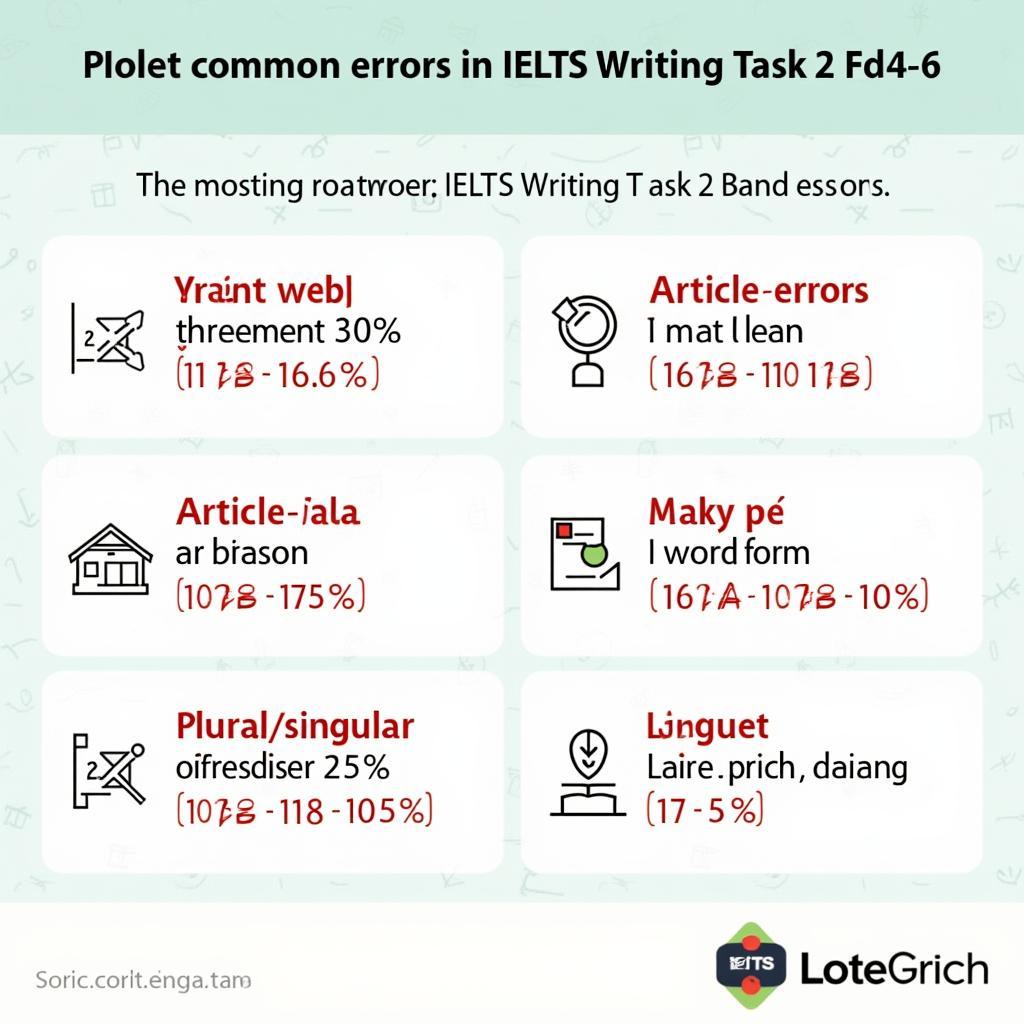 Biểu đồ minh họa các loại lỗi ngữ pháp và từ vựng thường gặp ở bài viết IELTS Writing Task 2 Band 5-6
Cách Cải Thiện Từ Band 6 Lên Band 7
1. Nâng cao Task Response:
- Vấn đề hiện tại: Ý tưởng quá general, thiếu chi tiết cụ thể
- Giải pháp:
- Với mỗi main idea, hãy tự hỏi “How exactly?” hoặc “In what way?”
- Thay vì: “Foreign companies bring money” → “Foreign direct investment in manufacturing sectors can contribute up to 20% of GDP in developing nations”
- Practice: Mỗi ngày viết 1 paragraph với 1 main idea + 2 supporting details + 1 specific example
2. Cải thiện Coherence & Cohesion:
- Vấn đề hiện tại: Lặp lại linking words đơn giản (First, Also, However)
- Giải pháp:
- Học các synonyms cho linking words: However → Nevertheless, Conversely / Also → Moreover, Furthermore / First → Primarily, Initially
- Sử dụng referencing: “This phenomenon”, “Such developments”, “These concerns” thay vì lặp lại subject
- Practice: Viết lại bài cũ bằng cách thay thế tất cả linking words bằng alternatives
3. Mở rộng Lexical Resource:
- Vấn đề hiện tại: Từ vựng nghèo nàn, lặp lại “good”, “bad”, “many”
- Giải pháp:
- Học collocations theo topic: “economic prosperity”, “fierce competition”, “cultural erosion”
- Tạo synonym list cho các từ thường dùng:
- Good → beneficial, advantageous, favorable
- Bad → detrimental, adverse, harmful
- Many → numerous, a multitude of, substantial numbers of
- Practice: Mỗi tuần học 20 academic collocations và dùng chúng viết 5 câu
4. Nâng cao Grammatical Range:
- Vấn đề hiện tại: Chủ yếu simple sentences, nhiều lỗi cơ bản
- Giải pháp:
- Ôn lại ngữ pháp cơ bản: Subject-verb agreement, articles (a/an/the), singular/plural
- Học 1 complex structure mỗi tuần và practice viết 10 câu:
- Week 1: Relative clauses (which, who, where)
- Week 2: Participle clauses (Having done…, Being affected…)
- Week 3: Conditional sentences (If…had done, …would have done)
- Practice: Rewrite simple sentences thành complex ones mỗi ngày
5. Luyện tập có mục tiêu:
- Week 1-2: Tập trung sửa lỗi ngữ pháp cơ bản. Viết 1 bài, sau đó tự check grammar bằng checklist
- Week 3-4: Học 50 academic words/collocations và integrate vào bài viết
- Week 5-6: Practice phát triển ý chi tiết hơn với specific examples
- Week 7-8: Tổng hợp tất cả, viết full essays và nhờ người khác feedback
6. Tips cụ thể cho học viên Việt Nam:
- Article errors: Đây là lỗi phổ biến nhất vì tiếng Việt không có mạo từ. Rule đơn giản:
- Dùng “the” khi đã mention lần đầu hoặc khi cả người nói và người nghe đều biết đối tượng nào
- Dùng “a/an” cho singular countable noun lần đầu nhắc đến
- Không dùng article cho plural/uncountable nouns khi nói chung
- Subject-verb agreement: Luôn identify subject trước khi conjugate verb. Practice bằng cách underline subject và circle verb mỗi khi viết.
- Word order: Trong tiếng Anh, adjective luôn đứng trước noun (traditional food ✓, food traditional ✗)
Những ai đang tìm hiểu về How to promote entrepreneurship in developing countries sẽ thấy có nhiều điểm tương đồng với chủ đề toàn cầu hóa, đặc biệt trong việc cân bằng giữa phát triển kinh tế và bảo vệ lợi ích doanh nghiệp địa phương.
Từ Vựng Quan Trọng Cần Nhớ
| Từ/Cụm từ | Loại từ | Phiên âm | Nghĩa tiếng Việt | Ví dụ | Collocations |
|---|---|---|---|---|---|
| globalization | (n) | /ˌɡləʊbəlaɪˈzeɪʃn/ | toàn cầu hóa | Globalization has transformed international trade. | economic globalization, cultural globalization, impact of globalization |
| local economy | (n) | /ˈləʊkl ɪˈkɒnəmi/ | nền kinh tế địa phương | The local economy depends heavily on tourism. | boost the local economy, support local economies, strengthen local economy |
| foreign direct investment (FDI) | (n) | /ˈfɒrɪn dəˈrekt ɪnˈvestmənt/ | đầu tư trực tiếp nước ngoài | FDI has increased significantly in recent years. | attract FDI, influx of FDI, FDI inflows |
| multinational corporation | (n) | /ˌmʌltiˈnæʃnəl ˌkɔːpəˈreɪʃn/ | tập đoàn đa quốc gia | Multinational corporations dominate many industries. | large multinational corporations, operations of multinational corporations |
| cultural identity | (n) | /ˈkʌltʃərəl aɪˈdentəti/ | bản sắc văn hóa | Globalization may threaten cultural identity. | preserve cultural identity, erosion of cultural identity, maintain cultural identity |
| economic prosperity | (n) | /ˌiːkəˈnɒmɪk prɒˈsperəti/ | sự thịnh vượng kinh tế | Economic prosperity depends on sustainable policies. | achieve economic prosperity, bring economic prosperity, period of economic prosperity |
| indigenous business | (n) | /ɪnˈdɪdʒənəs ˈbɪznəs/ | doanh nghiệp bản địa | Indigenous businesses struggle to compete globally. | support indigenous businesses, protect indigenous businesses |
| competitive pressure | (n) | /kəmˈpetɪtɪv ˈpreʃə/ | áp lực cạnh tranh | Competitive pressures force companies to innovate. | face competitive pressure, intense competitive pressure, under competitive pressure |
| technology transfer | (n) | /tekˈnɒlədʒi trænsˈfɜː/ | chuyển giao công nghệ | Technology transfer benefits developing nations. | facilitate technology transfer, mandatory technology transfer, knowledge and technology transfer |
| market integration | (n) | /ˈmɑːkɪt ˌɪntɪˈɡreɪʃn/ | hội nhập thị trường | Market integration creates new opportunities. | regional market integration, global market integration, process of market integration |
| homogenization | (n) | /həˌmɒdʒənaɪˈzeɪʃn/ | sự đồng nhất hóa | Cultural homogenization is a concern. | cultural homogenization, risk of homogenization, lead to homogenization |
| economies of scale | (n) | /ɪˈkɒnəmiz əv skeɪl/ | hiệu quả kinh tế theo quy mô | Large firms benefit from economies of scale. | achieve economies of scale, lack economies of scale, benefit from economies of scale |
| to reshape | (v) | /riːˈʃeɪp/ | định hình lại, thay đổi cơ bản | Technology has reshaped modern commerce. | fundamentally reshape, reshape the landscape, reshape economic structures |
| to foster | (v) | /ˈfɒstə/ | thúc đẩy, nuôi dưỡng | Competition fosters innovation. | foster innovation, foster economic growth, foster development |
| to erode | (v) | /ɪˈrəʊd/ | xói mòn, làm suy giảm | Price competition erodes profit margins. | erode cultural values, gradually erode, erode competitive advantage |
Lưu ý về cách sử dụng:
-
Globalization vs Globalisation: Cả hai cách viết đều đúng (American vs British English). Trong IELTS, bạn có thể dùng bất kỳ spelling nào nhưng phải consistent trong toàn bài.
-
FDI nên được viết đầy đủ ở lần đầu tiên: “foreign direct investment (FDI)”, sau đó có thể dùng viết tắt.
-
Indigenous vs Local: “Indigenous” mang tính academic hơn và nhấn mạnh tính “bản địa, gốc”, trong khi “local” đơn giản là “địa phương”. Dùng “indigenous” sẽ ghi điểm Lexical Resource cao hơn.
-
Technology transfer thường đi với các động từ: facilitate, promote, mandatory (bắt buộc), negotiate (đàm phán).
-
Economies of scale: Là danh từ số nhiều nhưng không thêm “s” ở cuối “economy” → luôn là “economies” (với “ies”). Đây là một fixed phrase.
Để mở rộng hiểu biết về các yếu tố thúc đẩy tăng trưởng trong bối cảnh kinh tế mới, bạn có thể tham khảo bài viết về how to support job growth in the digital economy, nơi phân tích chi tiết các chính sách hỗ trợ việc làm trong thời đại số.
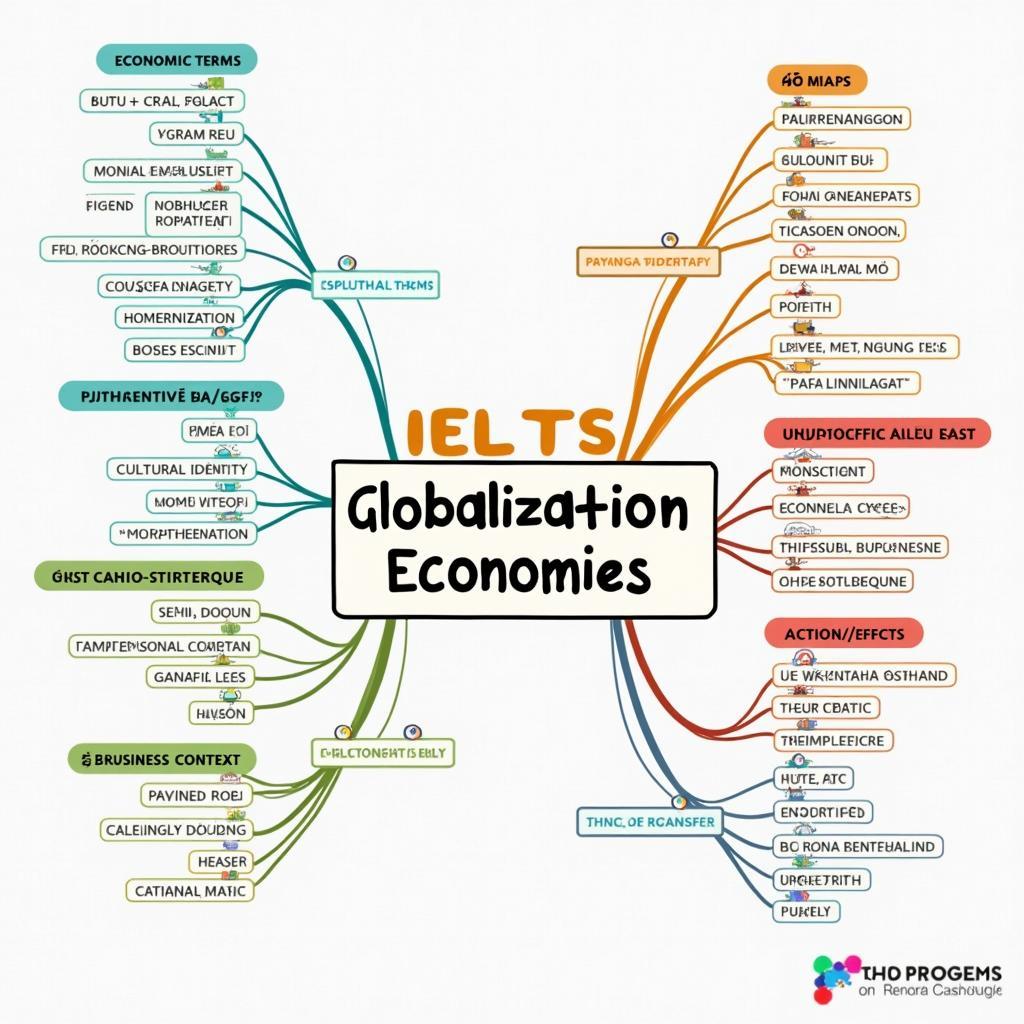 Mindmap từ vựng IELTS Writing Task 2 về chủ đề toàn cầu hóa và kinh tế địa phương với các nhánh chính
Cấu Trúc Câu Dễ “Ăn Điểm” Cao
1. Câu phức với mệnh đề phụ thuộc (Subordinate Clauses)
Công thức: Main clause + subordinating conjunction (while, although, because, since) + dependent clause
Ví dụ từ bài Band 8-9:
While proponents emphasize the unprecedented opportunities for economic advancement, critics contend that it poses existential threats to indigenous businesses and cultural heritage.
Tại sao cấu trúc này ghi điểm cao:
Cấu trúc này thể hiện khả năng present hai ý tưởng đối lập trong cùng một câu, cho thấy tư duy phức tạp và khả năng liên kết ý. “While” ở đầu câu (không phải ở giữa) tạo ra sự chuyển đổi mượt mà và ngữ điệu academic. Việc sử dụng động từ mạnh (emphasize, contend, poses) cũng nâng cao chất lượng câu.
Ví dụ bổ sung:
- Although foreign investment brings capital to developing regions, it can also create dependency on external markets.
- Since local businesses lack the resources to compete with multinational giants, government support becomes essential.
- Because globalization facilitates technology transfer, domestic industries can modernize their production methods.
Lỗi thường gặp của học viên Việt Nam:
- Dùng “although” và “but” trong cùng một câu:
“Although it has benefits, but it also has drawbacks.”→ Chỉ dùng một trong hai. - Quên dấu phзапятая khi subordinate clause đứng đầu:
“While it is beneficial it can be harmful”→ “While it is beneficial, it can be harmful.”
2. Mệnh đề quan hệ không xác định (Non-defining Relative Clauses)
Công thức: Noun + , + which/who/where + additional information + , + main clause continues
Ví dụ từ bài Band 8-9:
Vietnam’s technology sector exemplifies this phenomenon, where partnerships with multinational corporations have propelled domestic companies into global supply chains, creating thousands of skilled jobs.
Tại sao cấu trúc này ghi điểm cao:
Non-defining relative clause cho phép bạn thêm thông tin bổ sung mà không làm gián đoạn luồng ý chính. Dấu phẩy trước “where” cho thấy bạn hiểu sự khác biệt giữa defining và non-defining clauses, một điểm quan trọng về grammatical range. Cấu trúc này cũng giúp câu văn dài hơn một cách tự nhiên, thay vì viết nhiều câu ngắn rời rạc.
Ví dụ bổ sung:
- South Korea’s traditional markets, which have coexisted with modern retail chains for decades, demonstrate that cultural preservation is achievable.
- Foreign direct investment, which accounts for approximately 15% of GDP in many developing nations, has become a cornerstone of economic strategy.
- Small enterprises, which typically lack marketing budgets and brand recognition, find themselves at a significant disadvantage.
Lỗi thường gặp của học viên Việt Nam:
- Quên dấu phẩy:
“The policy which was implemented last year has shown positive results”→ Nếu là non-defining thì phải có dấu phẩy cả hai bên. - Dùng “that” thay vì “which” trong non-defining clause:
“The economy, that depends on tourism, suffered”→ Phải dùng “which” trong non-defining clauses.
3. Cụm phân từ (Participle Phrases)
Công thức: Present/Past participle phrase + , + main clause HOẶC Noun + , + participle phrase + , + verb
Ví dụ từ bài Band 8-9:
Traditional enterprises, lacking the economies of scale and marketing budgets of their global competitors, frequently find themselves unable to compete on price or brand recognition.
Tại sao cấu trúc này ghi điểm cao:
Participle phrases là dấu hiệu của advanced grammar. Cấu trúc này giúp bạn combine hai câu thành một một cách concise và sophisticated. Thay vì viết “Traditional enterprises lack the economies of scale. They find themselves unable to compete”, bạn nén gọn thành một câu phức tạp. Điều này không chỉ tiết kiệm từ mà còn thể hiện khả năng manipulate sentence structure.
Ví dụ bổ sung:
- Facing intense competition from international brands, local retailers have been forced to innovate or close down.
- Having witnessed the decline of traditional industries, policymakers are now prioritizing cultural preservation initiatives.
- Multinational corporations, dominating market share across multiple sectors, exert considerable influence on local economic policies.
Lỗi thường gặp của học viên Việt Nam:
- Dangling participle (Phân từ treo):
“Lacking resources, the competition was difficult”→ Chủ ngữ của main clause phải là người/vật “lacking resources”: “Lacking resources, local businesses found the competition difficult.” - Dùng sai thì của participle:
“Having compete for years, they closed”→ “Having competed for years”
4. Câu chẻ (Cleft Sentences)
Công thức: It is/was + noun/clause + that/who + remaining information HOẶC What + clause + is/was + noun phrase
Ví dụ từ bài Band 8-9:
The key lies in striking a balance between embracing global opportunities and safeguarding local interests. (Đây là dạng wh-cleft với “The key”)
Phiên bản cleft sentence rõ ràng hơn:
It is the balance between global opportunities and local interests that determines the success of globalization.
Tại sao cấu trúc này ghi điểm cao:
Cleft sentences giúp nhấn mạnh (emphasize) một phần thông tin cụ thể trong câu. Cấu trúc “It is… that…” hoặc “What… is…” tạo ra focus point, làm cho argument của bạn mạnh mẽ và rõ ràng hơn. Đây là đặc trưng của academic writing, cho thấy bạn không chỉ present information mà còn biết cách highlight điểm quan trọng.
Ví dụ bổ sung:
- It is through judicious government intervention that countries can maximize the benefits of globalization.
- What concerns critics most is the erosion of cultural identity rather than economic impacts.
- It was the lack of regulatory frameworks that allowed multinational corporations to dominate local markets.
- What distinguishes successful economies is their ability to adapt while preserving cultural heritage.
Lỗi thường gặp của học viên Việt Nam:
- Dùng sai “that”:
“It is technology who transforms society”→ Dùng “that” cho vật/sự việc, chỉ dùng “who” cho người. - Overuse: Không nên dùng quá nhiều cleft sentences trong một bài (1-2 câu là đủ), vì có thể làm bài văn trở nên unnatural.
5. Câu điều kiện nâng cao (Advanced Conditionals)
Công thức: If + past perfect/present tense, + modal verb + base verb (Mixed conditionals, inverted conditionals)
Ví dụ từ bài Band 8-9 (dạng implicit conditional):
With appropriate regulatory frameworks, the benefits of globalization can substantially outweigh its drawbacks.
Phiên bản conditional rõ ràng:
If appropriate regulatory frameworks are implemented, the benefits of globalization can substantially outweigh its drawbacks.
Tại sao cấu trúc này ghi điểm cao:
Conditional sentences thể hiện khả năng tư duy logic và analytical thinking – điều quan trọng trong Task Response. Việc sử dụng các dạng conditionals nâng cao (mixed, inverted) cho thấy grammatical range vượt trội. Câu điều kiện cũng thường được dùng để express opinion một cách sophisticated hơn “I think”.
Ví dụ bổ sung:
- Had governments implemented protective measures earlier, many traditional businesses would have survived.
- Should multinational corporations continue to expand unchecked, local economies will face severe challenges.
- Were policymakers to prioritize cultural preservation, the negative impacts of globalization could be mitigated.
- If developing nations had not embraced foreign investment, their current economic growth would be significantly lower.
Lỗi thường gặp của học viên Việt Nam:
- Nhầm lẫn giữa các loại conditional:
“If they would have helped, businesses will survive”→ “If they had helped, businesses would have survived” (Type 3). - Quên đảo ngữ trong inverted conditional:
“If should they invest”→ “Should they invest” (bỏ “if” khi đảo ngữ).
6. Cấu trúc song hành và đối chiếu (Parallel Structure & Contrast)
Công thức: Not only… but also… / Both… and… / While… (main clause), … (contrast clause)
Ví dụ từ bài Band 8-9:
The influx of foreign direct investment brings not only capital but also cutting-edge technology and management expertise.
Tại sao cấu trúc này ghi điểm cao:
Parallel structure tạo ra rhythm và cohesion trong câu văn, làm cho writing trở nên professional và polished. Cấu trúc “not only… but also…” đặc biệt hiệu quả vì nó vừa list items vừa emphasize rằng còn có thêm benefits ngoài cái đầu tiên. Đây là cách viết persuasive, giúp argument của bạn convincing hơn.
Ví dụ bổ sung:
- Globalization facilitates not only economic integration but also cultural exchange and technological collaboration.
- Local businesses must both innovate their products and enhance their marketing strategies to remain competitive.
- While foreign investment creates employment opportunities, it simultaneously increases dependence on external capital.
- Multinational corporations offer neither support for local suppliers nor investment in community development.
Lỗi thường gặp của học viên Việt Nam:
- Thiếu parallel structure:
“It brings capital but also bringing technology”→ “It brings capital but also brings technology” (hoặc “brings… and provides…”). - Dùng “not only” mà quên “but also”:
“It offers not only jobs but higher wages”→ “not only jobs but also higher wages”.
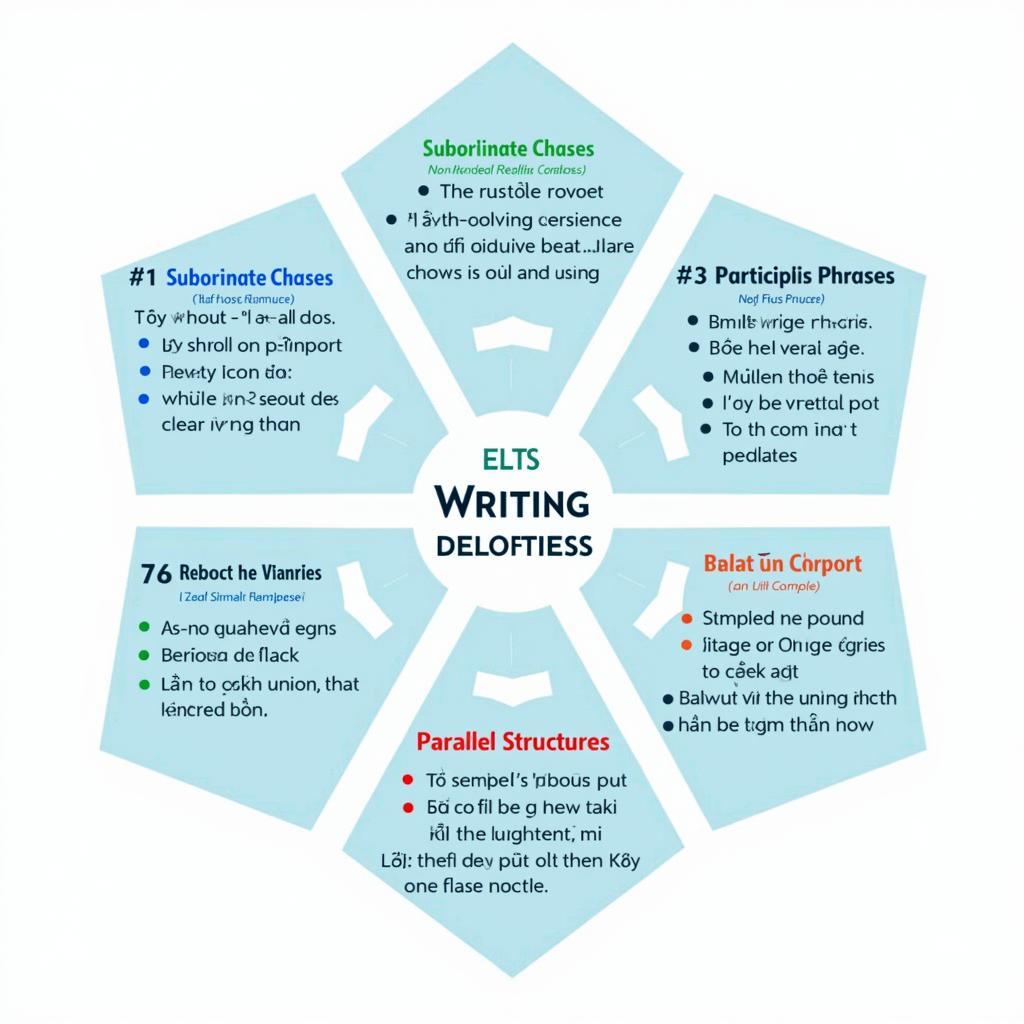 Infographic các cấu trúc câu nâng cao trong IELTS Writing Task 2 giúp đạt Band 8-9
Tips tổng hợp khi sử dụng các cấu trúc này:
-
Đừng cố nhồi nhét tất cả vào một bài: Mỗi bài viết nên có 3-4 loại cấu trúc nâng cao khác nhau, không nên force tất cả 6 loại vào vì sẽ trở nên unnatural.
-
Practice makes perfect: Với mỗi cấu trúc, hãy viết ít nhất 10 câu liên quan đến các chủ đề IELTS khác nhau để thuần thục.
-
Vary sentence length: Kết hợp câu dài (với các cấu trúc complex này) và câu ngắn để tạo rhythm, tránh monotonous.
-
Check for errors: Các cấu trúc phức tạp dễ dẫn đến lỗi. Luôn dành 3-5 phút cuối để kiểm tra grammar, đặc biệt là subject-verb agreement và punctuation.
-
Context is key: Đừng dùng cấu trúc phức tạp một cách vô lý. Chỉ dùng khi nó thực sự enhance meaning và clarity của câu.
Nếu bạn muốn tìm hiểu thêm về các xu hướng kinh tế đương đại ảnh hưởng đến thị trường lao động, bài viết về impact of AI on job markets sẽ cung cấp góc nhìn bổ sung về những thách thức và cơ hội trong kỷ nguyên công nghệ mới.
Kết Bài
Chủ đề “The Impact Of Globalization On Local Economies” là một trong những đề tài quan trọng và thường xuyên xuất hiện trong IELTS Writing Task 2. Qua bài viết này, bạn đã được trang bị kiến thức toàn diện từ cách phân tích đề bài, ba bài mẫu với các band điểm khác nhau (5-6, 6.5-7, 8-9), đến kho từ vựng học thuật và các cấu trúc câu nâng cao.
Những điểm chính cần ghi nhớ:
Về Task Response: Luôn đảm bảo bạn address đầy đủ cả hai mặt của vấn đề khi đề bài yêu cầu “Discuss both views”. Đừng chỉ liệt kê ý tưởng mà hãy develop chúng với examples cụ thể và explanations chi tiết. Opinion của bạn cần rõ ràng và consistent từ introduction đến conclusion.
Về từ vựng: Thay vì học từ riêng lẻ, hãy tập trung vào collocations và academic phrases. Các cụm như “foreign direct investment”, “economies of scale”, “cultural homogenization” không chỉ ghi điểm Lexical Resource mà còn cho thấy bạn hiểu rõ chủ đề. Tránh lặp từ bằng cách sử dụng synonyms và referencing.
Về ngữ pháp: Band 7+ đòi hỏi variety trong sentence structures. Đừng chỉ dựa vào simple và compound sentences. Hãy incorporate relative clauses, participle phrases, conditionals và cleft sentences một cách tự nhiên. Nhưng quan trọng hơn, đảm bảo accuracy – một câu đơn giản đúng tốt hơn một câu phức tạp sai.
Về lỗi thường gặp của học viên Việt Nam: Ba lỗi lớn nhất là article errors (a/an/the), subject-verb agreement, và word form. Hãy dành thời gian practice targeted vào những lỗi này. Mỗi lần viết xong bài, check lại toàn bộ các động từ xem có match với subject không, và review các noun xem có cần article hay không.
Lộ trình cải thiện thực tế:
- Tuần 1-2: Fix các lỗi ngữ pháp cơ bản. Làm grammar exercises và viết lại các câu sai từ bài mẫu Band 5-6.
- Tuần 3-4: Build vocabulary bank với ít nhất 50 academic words/phrases liên quan đến economics, business, culture. Practice dùng chúng trong câu.
- Tuần 5-6: Master 3-4 advanced structures. Mỗi ngày viết 5 câu với mỗi structure cho đến khi thuộc tự nhiên.
- Tuần 7-8: Write full essays under timed conditions (40 phút). Tự chấm hoặc nhờ teacher/study partner feedback theo 4 tiêu chí.
Mindset quan trọng: IELTS Writing không phải là test về kiến thức chuyên ngành economics hay globalization. Nó là test về khả năng express ideas clearly và coherently bằng tiếng Anh academic. Bạn không cần phải là expert về toàn cầu hóa; bạn chỉ cần demonstrate được language skills. Vì vậy, đừng quá lo lắng về việc ý tưởng có “đúng” hay “sâu sắc” không, mà hãy focus vào việc present chúng một cách clear, organized và grammatically correct.
Tài nguyên để practice thêm: Ngoài các bài mẫu trong bài viết này, hãy tìm đọc thêm các model essays từ Cambridge IELTS books, IELTS-blog.com, và ieltsliz.com. Phân tích cách các tác giả structure bài, develop ideas và use vocabulary. Sau đó, practice viết về cùng đề tài nhưng với góc nhìn của riêng bạn.
Cuối cùng, hãy nhớ rằng improvement cần thời gian và practice thường xuyên. Đừng expect sẽ nhảy từ Band 5 lên Band 7 chỉ sau vài ngày. Set realistic goals (cải thiện 0.5 band mỗi tháng) và celebrate small wins. Mỗi bài viết tốt hơn bài trước là một progress. Good luck với IELTS preparation của bạn!