
Mở Bài
Chủ đề về ảnh hưởng của mạng xã hội đến hành vi người tiêu dùng là một trong những chủ đề phổ biến và đương đại nhất trong IELTS Reading. Với sự phát triển mạnh mẽ của các nền tảng truyền thông xã hội như Facebook, Instagram, TikTok và Twitter, cách thức mà người tiêu dùng tìm kiếm thông tin, đưa ra quyết định mua hàng và tương tác với thương hiệu đã thay đổi hoàn toàn. Chủ đề này xuất hiện thường xuyên trong các kỳ thi IELTS gần đây, đặc biệt từ năm 2020 trở lại đây, khi các hiện tượng như influencer marketing, social commerce và viral marketing trở nên phổ biến.
Bài viết này cung cấp một bộ đề thi IELTS Reading hoàn chỉnh với 3 passages theo đúng format thi thật, từ mức độ dễ đến khó. Bạn sẽ được luyện tập với đầy đủ các dạng câu hỏi phổ biến trong IELTS Reading như Multiple Choice, True/False/Not Given, Matching Headings, Summary Completion và nhiều dạng khác. Mỗi passage đều đi kèm với đáp án chi tiết, giải thích cụ thể về vị trí thông tin trong bài, cách paraphrase và chiến lược làm bài hiệu quả. Bạn cũng sẽ học được hơn 40 từ vựng quan trọng liên quan đến chủ đề marketing, technology và consumer behavior – những từ vựng cực kỳ hữu ích không chỉ cho bài thi Reading mà còn cho cả Writing và Speaking.
Bộ đề này phù hợp cho học viên có trình độ từ band 5.0 trở lên, giúp bạn làm quen với độ khó thực tế của đề thi và nâng cao kỹ năng quản lý thời gian, kỹ thuật skimming, scanning cũng như khả năng suy luận logic.
Hướng Dẫn Làm Bài IELTS Reading
Tổng Quan Về IELTS Reading Test
IELTS Reading Test kéo dài 60 phút và bao gồm 3 passages với tổng cộng 40 câu hỏi. Không có thời gian extra để transfer answers nên bạn cần viết đáp án trực tiếp vào answer sheet ngay trong 60 phút.
Phân bổ thời gian khuyến nghị:
- Passage 1: 15-17 phút (đoạn văn ngắn nhất, dễ nhất)
- Passage 2: 18-20 phút (độ khó trung bình)
- Passage 3: 23-25 phút (đoạn văn dài nhất, khó nhất)
Lưu ý rằng độ khó tăng dần từ Passage 1 đến Passage 3, vì vậy đừng dành quá nhiều thời gian cho các câu đầu và để bị thiếu thời gian ở cuối bài thi.
Các Dạng Câu Hỏi Trong Đề Này
Đề thi mẫu này bao gồm đầy đủ các dạng câu hỏi phổ biến nhất trong IELTS Reading:
- Multiple Choice Questions – Câu hỏi trắc nghiệm
- True/False/Not Given – Xác định thông tin đúng/sai/không được đề cập
- Matching Information – Nối thông tin với đoạn văn
- Sentence Completion – Hoàn thành câu
- Yes/No/Not Given – Xác định ý kiến của tác giả
- Matching Headings – Nối tiêu đề với đoạn văn
- Summary Completion – Hoàn thành đoạn tóm tắt
- Matching Features – Nối đặc điểm
- Short-answer Questions – Câu hỏi trả lời ngắn
Mỗi dạng câu hỏi yêu cầu kỹ năng đọc hiểu khác nhau, từ tìm thông tin cụ thể (scanning) đến hiểu ý chính (skimming) và suy luận (inference).
IELTS Reading Practice Test
PASSAGE 1 – The Rise of Social Media Marketing
Độ khó: Easy (Band 5.0-6.5)
Thời gian đề xuất: 15-17 phút
Over the past two decades, social media platforms have fundamentally transformed the way businesses communicate with their customers. What began as simple networking sites for friends and family has evolved into powerful marketing channels that influence billions of purchasing decisions every day. Companies of all sizes, from small local businesses to multinational corporations, now recognize that a strong social media presence is no longer optional but essential for survival in the modern marketplace.
The shift in consumer behavior began around 2005 when platforms like Facebook and YouTube started gaining mainstream popularity. Initially, businesses were hesitant to invest in these new channels, viewing them as temporary trends rather than legitimate marketing tools. However, as user numbers grew exponentially, reaching over 4.5 billion global users by 2023, companies quickly realized they needed to meet their customers where they already spent significant time – on social media.
One of the most significant advantages of social media marketing is its ability to facilitate direct communication between brands and consumers. Unlike traditional advertising methods such as television commercials or print advertisements, social media allows for two-way conversations. Customers can ask questions, share feedback, and even complain publicly, forcing companies to become more transparent and responsive. This interactive nature has created a new level of accountability in business-customer relationships.
Consumer trust has also been reshaped by social media. Traditional advertising relies heavily on the credibility of the brand itself, but social media introduces a new element: peer recommendations. Studies show that consumers are significantly more likely to trust recommendations from other users, even strangers, than they are to trust direct advertising from companies. This phenomenon has given rise to user-generated content, where customers voluntarily share their experiences with products or services, creating authentic testimonials that carry more weight than polished marketing campaigns.
The democratization of influence represents another major change in consumer behavior. Previously, only celebrities and established media personalities could significantly impact purchasing decisions on a large scale. Social media has created a new category of influencers – ordinary individuals who have built substantial followings by sharing content in specific niches. These micro-influencers often have highly engaged audiences who trust their opinions and recommendations. A fashion blogger with 50,000 followers may have more influence over their audience’s clothing purchases than a television advertisement reaching millions of viewers.
Algorithm-driven content plays a crucial role in shaping what consumers see and, consequently, what they buy. Social media platforms use sophisticated algorithms to analyze user behavior and preferences, then customize the content that appears in each person’s feed. This personalization means that two users of the same platform may have completely different experiences. For businesses, understanding these algorithms has become essential for ensuring their content reaches the right audience at the right time.
The speed of information dissemination on social media has also changed consumer behavior dramatically. News about products, whether positive or negative, can spread virally within hours, reaching millions of people without any action from the company itself. This phenomenon has made brand reputation management more challenging but also more critical. A single negative customer experience shared on social media can quickly escalate into a public relations crisis, while positive experiences can generate valuable organic publicity.
Shopping behaviors have been particularly impacted by social media integration with e-commerce. Many platforms now offer in-app purchasing features, allowing users to buy products without leaving the social media environment. This seamless integration reduces the steps between product discovery and purchase, making impulse buying more prevalent. Features like Instagram’s shopping tags and Facebook Marketplace have transformed social media platforms into virtual shopping malls where browsing and buying happen simultaneously.
However, this transformation has not been without concerns. Privacy issues have become increasingly prominent as consumers become more aware of how their data is collected and used for targeted advertising. Many users express discomfort with the level of personalization in advertisements, feeling that companies know too much about their personal lives and preferences. This has led to regulatory interventions in many countries, with laws designed to protect consumer data and require greater transparency from both social media platforms and advertisers.
Despite these challenges, the influence of social media on consumer behavior continues to grow. As artificial intelligence and augmented reality technologies become more integrated into social media platforms, the ways in which consumers discover, evaluate, and purchase products will likely continue to evolve. The businesses that succeed will be those that can adapt to these changes while maintaining authentic connections with their customers in an increasingly digital world.
Questions 1-13
Questions 1-5: Multiple Choice
Choose the correct letter, A, B, C, or D.
-
According to the passage, when did businesses start to seriously consider social media as a marketing tool?
A. In the early 1990s
B. Around 2005
C. In 2023
D. After reaching 4.5 billion users -
What is the main advantage of social media marketing over traditional advertising?
A. It is less expensive
B. It allows two-way communication
C. It reaches more people
D. It requires less planning -
According to the text, consumers are more likely to trust:
A. Celebrity endorsements
B. Television advertisements
C. Recommendations from other users
D. Company marketing campaigns -
What do algorithms on social media platforms do?
A. Remove negative content
B. Increase the number of followers
C. Customize content for each user
D. Prevent viral spreading -
The passage suggests that negative customer experiences on social media can:
A. Be easily ignored
B. Quickly become a public relations crisis
C. Only affect small businesses
D. Be removed by the company
Questions 6-9: True/False/Not Given
Do the following statements agree with the information given in the passage? Write:
- TRUE if the statement agrees with the information
- FALSE if the statement contradicts the information
- NOT GIVEN if there is no information on this
- Social media platforms had more than 4.5 billion users globally by 2023.
- Micro-influencers typically have larger followings than traditional celebrities.
- All consumers are comfortable with personalized advertising on social media.
- Augmented reality is already fully integrated into all social media platforms.
Questions 10-13: Sentence Completion
Complete the sentences below. Choose NO MORE THAN TWO WORDS from the passage for each answer.
- Many social media platforms now have __ that allow users to make purchases without leaving the app.
- The ability of customers to share experiences creates __ that are more believable than professional marketing.
- Platforms use advanced __ to determine what content appears in each user’s feed.
- New laws require companies to be more __ about how they collect and use consumer data.
PASSAGE 2 – The Psychology Behind Social Media Influence
Độ khó: Medium (Band 6.0-7.5)
Thời gian đề xuất: 18-20 phút
Understanding why social media exerts such a profound influence on consumer behavior requires an examination of the psychological mechanisms at play. The effectiveness of social media marketing is not merely a function of technological convenience or widespread adoption; rather, it taps into fundamental aspects of human psychology that have evolved over millennia. These platforms have essentially weaponized our innate social instincts, transforming them into powerful tools for shaping purchasing decisions.
At the core of social media’s influence lies the principle of social proof, a psychological phenomenon first identified by psychologist Robert Cialdini in his seminal work on persuasion. Humans are inherently social creatures who look to others when making decisions, particularly in situations of uncertainty. When we observe others engaging with a product or service positively, our brains interpret this as evidence of its value. Social media amplifies this effect exponentially. A product with thousands of likes, shares, and positive comments creates an overwhelming impression of popularity and quality, even if the individual consumer has no personal experience with it. This herd mentality is particularly powerful in online environments where quantifiable metrics of approval are constantly visible.
The concept of FOMO (Fear of Missing Out) represents another crucial psychological driver of social media’s impact on consumer behavior. Social media platforms are designed to showcase the highlight reels of people’s lives – their purchases, experiences, and achievements. This curated reality creates a sense of inadequacy and urgency among viewers, who fear being left behind or excluded from desirable experiences. Marketers have become adept at exploiting this anxiety through limited-time offers, exclusive releases, and scarcity messaging. When consumers see others enjoying a product or service, particularly within their peer group, the psychological pressure to participate becomes intense. This phenomenon has been particularly evident in the success of flash sales and product drops heavily promoted through social media channels.
Parasocial relationships – one-sided relationships where individuals feel connected to media personalities who are unaware of their existence – have taken on new dimensions in the social media age. Unlike traditional celebrities who maintained significant distance from their audiences, social media influencers create an illusion of intimacy through frequent, seemingly personal communication. They share details of their daily lives, respond to comments, and craft personas that feel accessible and relatable. When these influencers recommend products, their followers often perceive these endorsements not as advertisements but as genuine advice from a trusted friend. This perceived authenticity makes influencer marketing extraordinarily effective, even when the commercial nature of the relationship is disclosed.
The dopamine-driven feedback loops inherent in social media design further reinforce consumer behaviors shaped by these platforms. Every like, comment, and share triggers a release of dopamine in the brain, creating a pleasurable sensation that encourages repeated engagement. This neurochemical reward system keeps users returning to platforms multiple times per day, increasing their exposure to marketing messages. Moreover, the unpredictable nature of social media rewards – never knowing when a post will receive significant engagement – creates a variable reinforcement schedule similar to those used in gambling, which research shows is the most effective type of behavioral conditioning.
Social media has also transformed the nature of consumer identity formation. Historically, people expressed their identities through their purchases, but these expressions were largely limited to face-to-face interactions. Social media has made consumption a form of public performance. Users carefully curate their online presence, and the products they choose to share become identity markers that broadcast their values, aspirations, and social affiliations to a broad audience. This has elevated the symbolic value of purchases beyond their functional utility. Consumers now consider how a purchase will appear in their social media feeds, whether it aligns with their personal brand, and how it will be perceived by their online community.
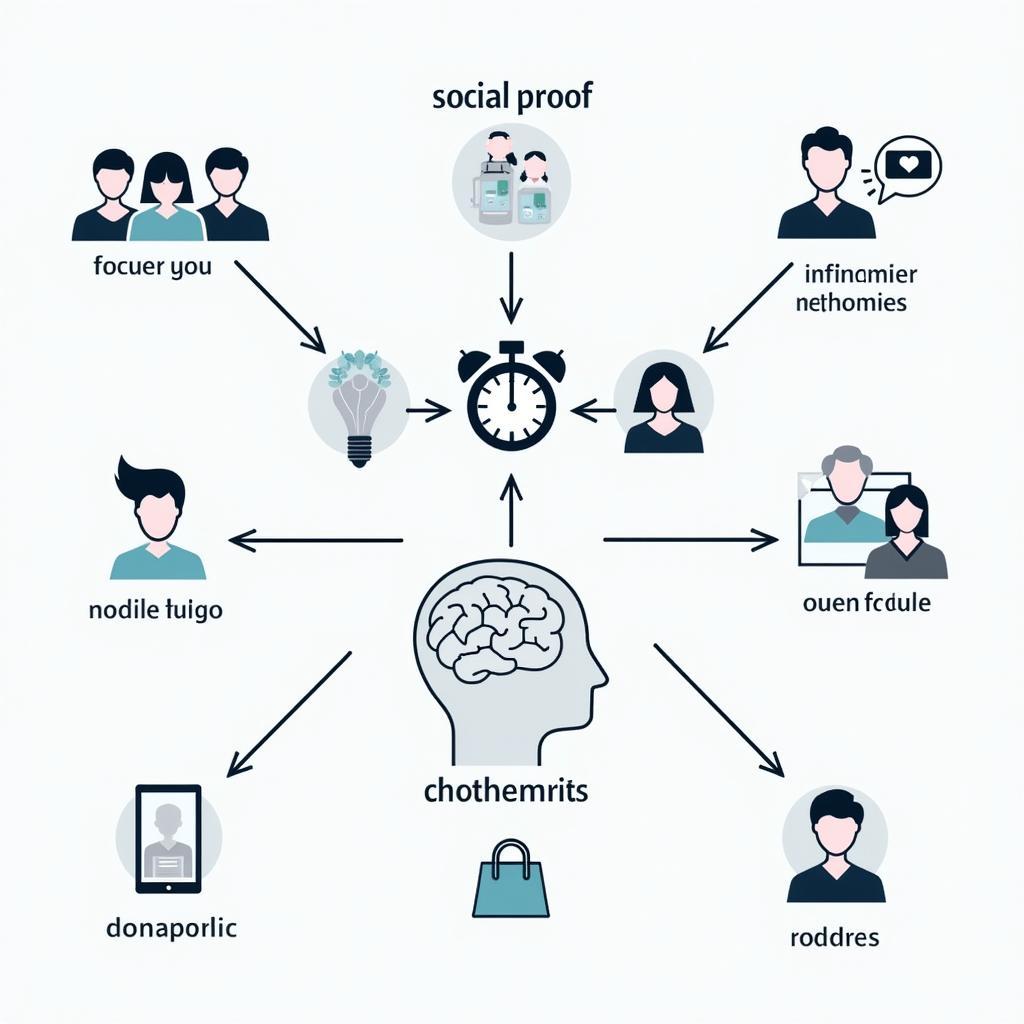 Tâm lý học đằng sau ảnh hưởng của mạng xã hội đến hành vi tiêu dùng và các yếu tố tác động
The algorithmic curation of content creates what researchers call filter bubbles or echo chambers, where users are primarily exposed to information and opinions that align with their existing beliefs and preferences. From a consumer behavior perspective, this means that once an individual shows interest in a particular type of product or brand, the algorithm will prioritize similar content, creating a self-reinforcing cycle of exposure and interest. This can lead to normalized consumption patterns where certain purchases seem not just desirable but inevitable or necessary because they are constantly present in one’s digital environment.
Social comparison theory, developed by psychologist Leon Festinger in 1954, has found new relevance in the social media age. The theory posits that individuals determine their own social and personal worth based on how they stack up against others. Social media provides endless opportunities for such comparisons, and these comparisons significantly influence consumer behavior. When users observe their peers or aspirational figures possessing certain products or enjoying particular experiences, they often feel compelled to make similar purchases to maintain their relative social standing. This effect is amplified by the selective nature of social media sharing, where people predominantly post positive experiences and acquisitions, creating distorted perceptions of what constitutes normal or desirable consumption.
The reciprocity principle also plays a significant role in social media’s influence. When influencers or brands provide valuable content, entertainment, or engagement without immediate cost, users often feel a subtle obligation to reciprocate. This might manifest as following the account, engaging with content, or ultimately making a purchase. Many successful social media marketing strategies are built on this foundation, offering free value – whether through entertainment, information, or community – before ever requesting a transaction.
However, growing awareness of these psychological mechanisms has led to a backlash among some consumer segments. Digital literacy initiatives aim to educate users about persuasive techniques and data exploitation practices employed by platforms and marketers. Some consumers are deliberately cultivating critical consumption habits, questioning their impulses, and seeking to make more intentional purchasing decisions rather than responding reflexively to social media stimuli. This emerging conscious consumerism movement represents a potential challenge to the continued effectiveness of social media marketing, though its impact remains limited compared to the broader population’s continued susceptibility to these psychological influences.
Questions 14-26
Questions 14-18: Yes/No/Not Given
Do the following statements agree with the views of the writer in the passage? Write:
- YES if the statement agrees with the views of the writer
- NO if the statement contradicts the views of the writer
- NOT GIVEN if it is impossible to say what the writer thinks about this
- Social media platforms deliberately use human psychological tendencies to influence consumer behavior.
- Social proof is more effective online than in face-to-face interactions.
- All influencers disclose the commercial nature of their product endorsements.
- The dopamine reward system makes social media as addictive as gambling.
- Most consumers have successfully resisted psychological manipulation on social media.
Questions 19-22: Matching Headings
Choose the correct heading for paragraphs B-E from the list of headings below.
List of Headings:
i. The role of scarcity in driving purchases
ii. How social media creates artificial friendships
iii. The influence of observing others’ behavior
iv. Why people share their purchases online
v. The neurological basis of social media addiction
vi. How algorithms control what we see
vii. The anxiety of being excluded
Paragraph B (Second paragraph)
Paragraph C (Third paragraph)
Paragraph D (Fourth paragraph)
Paragraph E (Fifth paragraph)
- Paragraph B: __
- Paragraph C: __
- Paragraph D: __
- Paragraph E: __
Questions 23-26: Summary Completion
Complete the summary below. Choose NO MORE THAN TWO WORDS from the passage for each answer.
Social media has changed how people form their identities as consumers. In the past, purchases were mainly for 23 __, but now they also serve as 24 __ that communicate a person’s values to others online. Users think about how purchases will look in their 25 __ and whether they match their **26) __ before buying. This has made the symbolic meaning of products more important than their practical use.
PASSAGE 3 – The Economic and Societal Implications of Social Media-Driven Consumerism
Độ khó: Hard (Band 7.0-9.0)
Thời gian đề xuất: 23-25 phút
The ascendancy of social media as a dominant force in shaping consumer behavior has precipitated far-reaching economic and societal transformations that extend well beyond the immediate transactional relationships between businesses and customers. These platforms have fundamentally reconfigured the architecture of modern capitalism, creating new economic paradigms while simultaneously generating profound social consequences that policymakers, academics, and civil society organizations are only beginning to fully comprehend and address.
From an economic perspective, social media has dramatically reduced barriers to entry for businesses seeking to reach consumers, particularly benefiting small and medium-sized enterprises (SMEs) that previously lacked access to expensive traditional advertising channels. A sole proprietor operating from a home office can now potentially reach millions of prospective customers with minimal financial investment, competing directly with established corporations for consumer attention. This democratization of market access has stimulated entrepreneurial activity across diverse sectors and geographies, with social media platforms serving as incubators for innovation in product development, service delivery, and business model experimentation. The phenomenon of direct-to-consumer (D2C) brands, which bypass traditional retail intermediaries to sell products directly through social media channels, exemplifies this transformation. Companies like Glossier in cosmetics and Casper in mattresses have built billion-dollar valuations primarily through social media marketing, demonstrating that traditional distribution infrastructure is no longer a prerequisite for commercial success.
However, this apparent democratization conceals significant structural inequalities in who benefits from social media-driven commerce. While the platforms theoretically provide equal access to all users, algorithmic visibility is increasingly contingent on financial resources. The shift from organic reach to pay-to-play models, where businesses must purchase advertising to ensure their content reaches even their existing followers, has created a new form of digital advertising oligopoly. Facebook’s parent company Meta, alongside Google and Amazon, now captures approximately 64% of all digital advertising expenditure globally, according to recent industry analyses. This concentration of market power raises concerns about anti-competitive practices and the sustainability of the purported democratization effect. Small businesses that initially thrived through organic social media engagement now find themselves increasingly dependent on paid advertising, with costs rising as competition intensifies – essentially recreating the barriers to entry that social media ostensibly eliminated.
The labor implications of social media-driven consumerism present another dimension of economic transformation. The influencer economy has created a new category of precarious digital labor, where individuals attempt to monetize their online presence through brand partnerships, sponsored content, and affiliate marketing arrangements. While a small minority achieve substantial earnings, the vast majority of aspiring influencers engage in unpaid or underpaid labor, creating content that ultimately benefits platform companies through increased user engagement while receiving minimal compensation themselves. This asymmetric value extraction raises questions about exploitation and fair compensation in the digital economy. Furthermore, the gig economy that flourishes on social media platforms – from content creators to community managers to social media strategists – typically lacks the employment protections, benefits, and job security associated with traditional employment relationships.
The environmental consequences of social media-amplified consumerism have garnered increasing attention from sustainability advocates and researchers. Social media’s capacity to rapidly disseminate information about new products and trends has accelerated the velocity of consumption cycles, with items moving from desirable to obsolete at unprecedented speeds. This phenomenon, sometimes termed “ultra-fast fashion”, extends beyond clothing to encompass technology, home décor, beauty products, and virtually every category of consumer goods. The constant exposure to new products and the psychological pressures previously discussed create a perpetual cycle of acquisition and disposal that generates substantial environmental harm through resource extraction, manufacturing emissions, and waste accumulation. A recent study published in the Journal of Consumer Research found that social media users report significantly higher rates of impulsive purchasing and product disposal compared to non-users, suggesting a direct link between platform engagement and environmentally detrimental consumption patterns.
Algorithmic amplification of luxury goods and aspirational lifestyles has contributed to growing wealth inequality and financial distress among vulnerable populations. Research indicates that exposure to luxury content on social media correlates with increased materialistic values and financial risk-taking, including excessive debt accumulation to finance consumption beyond one’s means. Young adults, who constitute the most active social media demographic, appear particularly susceptible to these influences. Financial literacy organizations have documented rising rates of credit card debt and personal insolvency among younger consumers, with social media-influenced purchases frequently cited as contributing factors. The normalization of luxury consumption through constant exposure, combined with the psychological mechanisms that make social media persuasive, creates what economists term “aspirational traps” – situations where individuals pursue consumption patterns that undermine their long-term financial security in pursuit of short-term social validation.
The erosion of consumer sovereignty represents a fundamental challenge to traditional economic assumptions that underpin free-market theory. Classical economic models presume that consumers make rational decisions based on their authentic preferences and needs. However, the sophisticated behavioral manipulation enabled by social media platforms – through algorithmic curation, personalized targeting, and exploitation of psychological vulnerabilities – calls into question whether observed consumer choices reflect genuine preferences or manufactured desires. This philosophical dilemma has practical implications for how we evaluate market efficiency and consumer welfare. If purchasing decisions are substantially influenced by deliberately engineered psychological interventions, can the resulting economic outcomes be considered optimal or even legitimate?
 Tác động kinh tế và xã hội của chủ nghĩa tiêu dùng qua mạng xã hội
Regulatory responses to social media-driven consumerism have been fragmented and generally inadequate to address the scale of the challenges. The European Union’s General Data Protection Regulation (GDPR) and California Consumer Privacy Act (CCPA) represent attempts to afford consumers greater control over their personal data and transparency regarding its use in targeted advertising. However, these frameworks primarily address data privacy rather than the broader question of whether the psychological manipulation inherent in sophisticated social media marketing should face restrictions. Some jurisdictions have implemented specific regulations, such as requirements for clear disclosure of sponsored content and restrictions on advertising to children, but comprehensive frameworks addressing the full spectrum of concerns remain elusive. The regulatory challenge is compounded by the transnational nature of social media platforms, which can relocate operations to jurisdictions with more favorable regulatory environments, and by the lobbying power these companies wield to shape policy outcomes in their favor.
Academic discourse has increasingly focused on the need for a new conceptual framework that recognizes consumer behavior in the social media age as fundamentally distinct from traditional models. Scholars in behavioral economics, consumer psychology, and digital sociology are developing theories that account for the mediated, manipulated, and performative nature of contemporary consumption. Some researchers advocate for what they term “digital consumer rights” – a set of protections that would include the right to algorithmic transparency, protection from psychological exploitation, and meaningful consent regarding data use that goes beyond the largely ineffective current models of lengthy terms-of-service agreements. These intellectual developments may eventually inform more effective regulatory approaches, though translating academic insights into practical policy interventions remains a significant challenge.
The long-term trajectory of social media’s influence on consumer behavior will likely depend on several contested variables: the effectiveness of regulatory interventions, the evolution of platform business models, technological developments such as artificial intelligence and virtual reality that may further intensify psychological impacts, and the potential emergence of countervailing social movements promoting more conscious consumption practices. What remains clear is that the current model – in which a small number of companies wield unprecedented power to shape the desires, behaviors, and economic decisions of billions of people globally – raises fundamental questions about individual autonomy, market fairness, and social wellbeing that society has yet to adequately answer. The challenge for policymakers, businesses, and individuals is to harness the genuine benefits of social media connectivity while mitigating its capacity to manipulate consumer behavior in ways that undermine personal and collective welfare.
Questions 27-40
Questions 27-31: Multiple Choice
Choose the correct letter, A, B, C, or D.
-
According to the passage, the democratization of market access through social media:
A. Has benefited all businesses equally
B. Has eliminated barriers to entry permanently
C. Conceals underlying structural inequalities
D. Has failed to help small businesses -
What does the passage say about the influencer economy?
A. Most influencers earn substantial incomes
B. Platform companies benefit more than most content creators
C. It provides better job security than traditional employment
D. It is fully regulated by employment laws -
The term “ultra-fast fashion” refers to:
A. Clothing that is manufactured quickly
B. The rapid pace of changing consumption trends
C. A new type of fashion marketing
D. Environmental sustainability in fashion -
According to the passage, social media exposure to luxury content:
A. Helps young people make better financial decisions
B. Has no impact on consumer debt levels
C. Correlates with increased materialistic values
D. Reduces financial risk-taking behavior -
Current regulatory frameworks addressing social media marketing are described as:
A. Comprehensive and effective
B. Primarily focused on data privacy
C. Successfully limiting psychological manipulation
D. Universally adopted worldwide
Questions 32-36: Matching Features
Match each characteristic (32-36) with the correct concept (A-G).
Concepts:
A. Direct-to-consumer brands
B. Organic reach
C. Aspirational traps
D. GDPR
E. Algorithmic amplification
F. Digital advertising oligopoly
G. Precarious digital labor
- Situations where people pursue consumption patterns that harm their financial security __
- A small number of companies controlling most digital advertising spending __
- Work that lacks traditional employment protections and stable income __
- Companies that sell products directly through social media without retail intermediaries __
- European regulation focused on data protection and privacy __
Questions 37-40: Short-answer Questions
Answer the questions below. Choose NO MORE THAN THREE WORDS from the passage for each answer.
- What type of economic theory assumes consumers make rational decisions based on authentic preferences?
- What do some researchers advocate for as a new set of protections for online consumers?
- What percentage of global digital advertising expenditure is captured by Meta, Google, and Amazon?
- What term describes the ability of social media to quickly spread information about new products?
Answer Keys – Đáp Án
PASSAGE 1: Questions 1-13
- B
- B
- C
- C
- B
- TRUE
- FALSE
- FALSE
- NOT GIVEN
- in-app purchasing features (hoặc purchasing features)
- authentic testimonials
- algorithms
- transparent
PASSAGE 2: Questions 14-26
- YES
- NOT GIVEN
- NOT GIVEN
- NOT GIVEN
- NO
- iii
- vii
- ii
- v
- functional utility
- identity markers
- social media feeds
- personal brand
PASSAGE 3: Questions 27-40
- C
- B
- B
- C
- B
- C
- F
- G
- A
- D
- free-market theory
- digital consumer rights
- 64% (hoặc approximately 64%)
- rapidly disseminate information (hoặc capacity to rapidly disseminate)
Giải Thích Đáp Án Chi Tiết
Passage 1 – Giải Thích
Câu 1: B
- Dạng câu hỏi: Multiple Choice
- Từ khóa: businesses, seriously consider, social media, marketing tool
- Vị trí trong bài: Đoạn 2, dòng 1-4
- Giải thích: Câu “The shift in consumer behavior began around 2005 when platforms like Facebook and YouTube started gaining mainstream popularity” cho thấy doanh nghiệp bắt đầu chú ý nghiêm túc đến mạng xã hội vào khoảng năm 2005. Các đáp án khác không được đề cập hoặc không chính xác về thời điểm.
Câu 2: B
- Dạng câu hỏi: Multiple Choice
- Từ khóa: main advantage, social media marketing, traditional advertising
- Vị trí trong bài: Đoạn 3, dòng 1-4
- Giải thích: Bài văn nói rõ “One of the most significant advantages of social media marketing is its ability to facilitate direct communication between brands and consumers… social media allows for two-way conversations.” Đây là paraphrase của đáp án B.
Câu 3: C
- Dạng câu hỏi: Multiple Choice
- Từ khóa: consumers, more likely to trust
- Vị trí trong bài: Đoạn 4, dòng 3-5
- Giải thích: “Studies show that consumers are significantly more likely to trust recommendations from other users, even strangers, than they are to trust direct advertising from companies” trực tiếp hỗ trợ đáp án C.
Câu 4: C
- Dạng câu hỏi: Multiple Choice
- Từ khóa: algorithms, social media platforms
- Vị trí trong bài: Đoạn 6, dòng 2-4
- Giải thích: “Social media platforms use sophisticated algorithms to analyze user behavior and preferences, then customize the content that appears in each person’s feed” giải thích rõ chức năng của thuật toán là tùy chỉnh nội dung cho từng người dùng.
Câu 5: B
- Dạng câu hỏi: Multiple Choice
- Từ khóa: negative customer experiences, social media
- Vị trí trong bài: Đoạn 7, dòng 4-6
- Giải thích: “A single negative customer experience shared on social media can quickly escalate into a public relations crisis” khớp chính xác với đáp án B.
Câu 6: TRUE
- Dạng câu hỏi: True/False/Not Given
- Từ khóa: 4.5 billion users, globally, 2023
- Vị trí trong bài: Đoạn 2, dòng 3-4
- Giải thích: “reaching over 4.5 billion global users by 2023” xác nhận thông tin này là đúng.
Câu 7: FALSE
- Dạng câu hỏi: True/False/Not Given
- Từ khóa: micro-influencers, larger followings, celebrities
- Vị trí trong bài: Đoạn 5, dòng 5-7
- Giải thích: Bài văn nói micro-influencers có khoảng 50,000 followers, nhỏ hơn đáng kể so với celebrities truyền thống, nên câu này sai.
Câu 8: FALSE
- Dạng câu hỏi: True/False/Not Given
- Từ khóa: all consumers, comfortable, personalized advertising
- Vị trí trong bài: Đoạn 9, dòng 2-4
- Giải thích: “Many users express discomfort with the level of personalization in advertisements” cho thấy không phải tất cả người dùng đều thoải mái, vì vậy câu này sai.
Câu 9: NOT GIVEN
- Dạng câu hỏi: True/False/Not Given
- Từ khóa: augmented reality, fully integrated, all social media platforms
- Vị trí trong bài: Đoạn 10
- Giải thích: Bài chỉ đề cập augmented reality “become more integrated” trong tương lai, không nói về việc đã được tích hợp hoàn toàn, nên không có thông tin.
Câu 10: in-app purchasing features
- Dạng câu hỏi: Sentence Completion
- Từ khóa: platforms, purchases, without leaving
- Vị trí trong bài: Đoạn 8, dòng 2-3
- Giải thích: “Many platforms now offer in-app purchasing features, allowing users to buy products without leaving the social media environment.”
Câu 11: authentic testimonials
- Dạng câu hỏi: Sentence Completion
- Từ khóa: customers share experiences, more believable
- Vị trí trong bài: Đoạn 4, dòng 6-8
- Giải thích: “creating authentic testimonials that carry more weight than polished marketing campaigns.”
Câu 12: algorithms
- Dạng câu hỏi: Sentence Completion
- Từ khóa: determine content, user’s feed
- Vị trí trong bài: Đoạn 6, dòng 2
- Giải thích: “Social media platforms use sophisticated algorithms to analyze user behavior.”
Câu 13: transparent
- Dạng câu hỏi: Sentence Completion
- Từ khóa: laws, companies, collect and use consumer data
- Vị trí trong bài: Đoạn 9, dòng 5-6
- Giải thích: “require greater transparency from both social media platforms and advertisers.”
Passage 2 – Giải Thích
Câu 14: YES
- Dạng câu hỏi: Yes/No/Not Given
- Từ khóa: deliberately use, psychological tendencies, influence
- Vị trí trong bài: Đoạn 1, dòng 4-6
- Giải thích: “These platforms have essentially weaponized our innate social instincts, transforming them into powerful tools for shaping purchasing decisions” cho thấy tác giả đồng ý rằng các nền tảng cố tình sử dụng các xu hướng tâm lý.
Câu 15: NOT GIVEN
- Dạng câu hỏi: Yes/No/Not Given
- Từ khóa: social proof, more effective online, face-to-face
- Vị trí trong bài: Đoạn 2
- Giải thích: Bài văn nói social proof được “amplified” trên mạng xã hội nhưng không so sánh trực tiếp hiệu quả với tương tác trực tiếp.
Câu 16: NOT GIVEN
- Dạng câu hỏi: Yes/No/Not Given
- Từ khóa: all influencers, disclose, commercial nature
- Vị trí trong bài: Đoạn 4, dòng cuối
- Giải thích: Bài chỉ đề cập “even when the commercial nature of the relationship is disclosed” nhưng không nói tất cả influencers đều công khai.
Câu 17: NOT GIVEN
- Dạng câu hỏi: Yes/No/Not Given
- Từ khóa: dopamine reward system, as addictive as gambling
- Vị trí trong bài: Đoạn 5
- Giải thích: Bài so sánh với gambling về mặt cơ chế tâm lý (“similar to those used in gambling”) nhưng không khẳng định mức độ gây nghiện bằng nhau.
Câu 18: NO
- Dạng câu hỏi: Yes/No/Not Given
- Từ khóa: most consumers, successfully resisted, psychological manipulation
- Vị trí trong bài: Đoạn 10, dòng cuối
- Giải thích: “this emerging conscious consumerism movement represents a potential challenge… though its impact remains limited compared to the broader population’s continued susceptibility” cho thấy tác giả không đồng ý rằng hầu hết người tiêu dùng đã chống lại thành công.
Câu 19: iii (The influence of observing others’ behavior)
- Dạng câu hỏi: Matching Headings
- Vị trí trong bài: Đoạn B (Paragraph 2)
- Giải thích: Đoạn này tập trung vào “social proof” – hiện tượng tâm lý khi con người nhìn vào hành vi của người khác để đưa ra quyết định.
Câu 20: vii (The anxiety of being excluded)
- Dạng câu hỏi: Matching Headings
- Vị trí trong bài: Đoạn C (Paragraph 3)
- Giải thích: Đoạn này nói về FOMO (Fear of Missing Out) – nỗi lo lắng về việc bị bỏ lỡ hoặc loại trừ.
Câu 21: ii (How social media creates artificial friendships)
- Dạng câu hỏi: Matching Headings
- Vị trí trong bài: Đoạn D (Paragraph 4)
- Giải thích: Đoạn này thảo luận về “parasocial relationships” – mối quan hệ một chiều giữa influencers và followers tạo ra “illusion of intimacy.”
Câu 22: v (The neurological basis of social media addiction)
- Dạng câu hỏi: Matching Headings
- Vị trí trong bài: Đoạn E (Paragraph 5)
- Giải thích: Đoạn này giải thích về “dopamine-driven feedback loops” và “neurochemical reward system” – cơ sở thần kinh học của sự nghiện mạng xã hội.
Câu 23: functional utility
- Dạng câu hỏi: Summary Completion
- Từ khóa: past, purchases
- Vị trí trong bài: Đoạn 6, dòng 4-6
- Giải thích: “This has elevated the symbolic value of purchases beyond their functional utility.”
Câu 24: identity markers
- Dạng câu hỏi: Summary Completion
- Từ khóa: communicate values
- Vị trí trong bài: Đoạn 6, dòng 3-5
- Giải thích: “the products they choose to share become identity markers that broadcast their values.”
Câu 25: social media feeds
- Dạng câu hỏi: Summary Completion
- Từ khóa: how purchases will look
- Vị trí trong bài: Đoạn 6, dòng 6-7
- Giải thích: “Consumers now consider how a purchase will appear in their social media feeds.”
Câu 26: personal brand
- Dạng câu hỏi: Summary Completion
- Từ khóa: whether they match
- Vị trí trong bài: Đoạn 6, dòng 7-8
- Giải thích: “whether it aligns with their personal brand.”
Passage 3 – Giải Thích
Câu 27: C
- Dạng câu hỏi: Multiple Choice
- Từ khóa: democratization of market access
- Vị trí trong bài: Đoạn 3, dòng 1-2
- Giải thích: “However, this apparent democratization conceals significant structural inequalities” trực tiếp hỗ trợ đáp án C.
Câu 28: B
- Dạng câu hỏi: Multiple Choice
- Từ khóa: influencer economy
- Vị trí trong bài: Đoạn 4, dòng 4-7
- Giải thích: “the vast majority of aspiring influencers engage in unpaid or underpaid labor, creating content that ultimately benefits platform companies… while receiving minimal compensation themselves” cho thấy các công ty nền tảng hưởng lợi nhiều hơn.
Câu 29: B
- Dạng câu hỏi: Multiple Choice
- Từ khóa: ultra-fast fashion
- Vị trí trong bài: Đoạn 5, dòng 2-4
- Giải thích: “Social media’s capacity to rapidly disseminate information about new products and trends has accelerated the velocity of consumption cycles, with items moving from desirable to obsolete at unprecedented speeds. This phenomenon, sometimes termed ‘ultra-fast fashion’…”
Câu 30: C
- Dạng câu hỏi: Multiple Choice
- Từ khóa: exposure to luxury content
- Vị trí trong bài: Đoạn 6, dòng 2-4
- Giải thích: “Research indicates that exposure to luxury content on social media correlates with increased materialistic values and financial risk-taking.”
Câu 31: B
- Dạng câu hỏi: Multiple Choice
- Từ khóa: regulatory frameworks
- Vị trí trong bài: Đoạn 8, dòng 3-5
- Giải thích: “However, these frameworks primarily address data privacy rather than the broader question…” cho thấy các khung pháp lý chủ yếu tập trung vào quyền riêng tư dữ liệu.
Câu 32: C (Aspirational traps)
- Dạng câu hỏi: Matching Features
- Vị trí trong bài: Đoạn 6, dòng cuối
- Giải thích: “aspirational traps – situations where individuals pursue consumption patterns that undermine their long-term financial security.”
Câu 33: F (Digital advertising oligopoly)
- Dạng câu hỏi: Matching Features
- Vị trí trong bài: Đoạn 3, dòng 5-7
- Giải thích: “Facebook’s parent company Meta, alongside Google and Amazon, now captures approximately 64% of all digital advertising expenditure globally” mô tả oligopoly.
Câu 34: G (Precarious digital labor)
- Dạng câu hỏi: Matching Features
- Vị trí trong bài: Đoạn 4, dòng 2-3
- Giải thích: “The influencer economy has created a new category of precarious digital labor” và “typically lacks the employment protections, benefits, and job security.”
Câu 35: A (Direct-to-consumer brands)
- Dạng câu hỏi: Matching Features
- Vị trí trong bài: Đoạn 2, dòng 6-8
- Giải thích: “The phenomenon of direct-to-consumer (D2C) brands, which bypass traditional retail intermediaries to sell products directly through social media channels.”
Câu 36: D (GDPR)
- Dạng câu hỏi: Matching Features
- Vị trí trong bài: Đoạn 8, dòng 2-3
- Giải thích: “The European Union’s General Data Protection Regulation (GDPR)… represent attempts to afford consumers greater control over their personal data.”
Câu 37: free-market theory
- Dạng câu hỏi: Short-answer Questions
- Từ khóa: economic theory, rational decisions, authentic preferences
- Vị trí trong bài: Đoạn 7, dòng 2-3
- Giải thích: “Classical economic models presume that consumers make rational decisions based on their authentic preferences” liên quan đến free-market theory được đề cập trong đoạn.
Câu 38: digital consumer rights
- Dạng câu hỏi: Short-answer Questions
- Từ khóa: researchers advocate, new protections, online consumers
- Vị trí trong bài: Đoạn 9, dòng 4-5
- Giải thích: “Some researchers advocate for what they term ‘digital consumer rights’.”
Câu 39: 64% (approximately 64%)
- Dạng câu hỏi: Short-answer Questions
- Từ khóa: percentage, digital advertising, Meta, Google, Amazon
- Vị trí trong bài: Đoạn 3, dòng 6-7
- Giải thích: “now captures approximately 64% of all digital advertising expenditure globally.”
Câu 40: rapidly disseminate information
- Dạng câu hỏi: Short-answer Questions
- Từ khóa: quickly spread information, new products
- Vị trí trong bài: Đoạn 5, dòng 2
- Giải thích: “Social media’s capacity to rapidly disseminate information about new products and trends.”
Từ Vựng Quan Trọng Theo Passage
Passage 1 – Essential Vocabulary
| Từ vựng | Loại từ | Phiên âm | Nghĩa tiếng Việt | Ví dụ từ bài | Collocation |
|---|---|---|---|---|---|
| mainstream | adj | /ˈmeɪnstriːm/ | chủ đạo, phổ biến | platforms started gaining mainstream popularity | mainstream media, become mainstream |
| legitimate | adj | /lɪˈdʒɪtɪmət/ | hợp pháp, chính đáng | viewing them as legitimate marketing tools | legitimate business, legitimate concern |
| facilitate | v | /fəˈsɪlɪteɪt/ | tạo điều kiện, hỗ trợ | facilitate direct communication | facilitate learning, facilitate discussion |
| transparent | adj | /trænsˈpærənt/ | minh bạch, rõ ràng | become more transparent and responsive | transparent process, transparent pricing |
| accountability | n | /əˌkaʊntəˈbɪləti/ | trách nhiệm giải trình | created a new level of accountability | corporate accountability, ensure accountability |
| testimonial | n | /ˌtestɪˈməʊniəl/ | lời chứng thực, đánh giá | creating authentic testimonials | customer testimonials, video testimonial |
| democratization | n | /dɪˌmɒkrətaɪˈzeɪʃn/ | dân chủ hóa | democratization of influence | democratization of information |
| algorithm | n | /ˈælɡərɪðəm/ | thuật toán | algorithm-driven content | search algorithm, recommendation algorithm |
| dissemination | n | /dɪˌsemɪˈneɪʃn/ | phổ biến, lan truyền | speed of information dissemination | information dissemination, knowledge dissemination |
| escalate | v | /ˈeskəleɪt/ | leo thang, tăng cường | quickly escalate into a crisis | escalate tensions, escalate quickly |
| seamless | adj | /ˈsiːmləs/ | liền mạch, trơn tru | seamless integration | seamless experience, seamless transition |
| intervention | n | /ˌɪntəˈvenʃn/ | sự can thiệp | regulatory interventions | government intervention, medical intervention |
Passage 2 – Essential Vocabulary
| Từ vựng | Loại từ | Phiên âm | Nghĩa tiếng Việt | Ví dụ từ bài | Collocation |
|---|---|---|---|---|---|
| profound | adj | /prəˈfaʊnd/ | sâu sắc, to lớn | exerts such a profound influence | profound impact, profound effect |
| weaponize | v | /ˈwepənaɪz/ | vũ khí hóa | platforms have weaponized our instincts | weaponize information |
| innate | adj | /ɪˈneɪt/ | bẩm sinh,타고난 | our innate social instincts | innate ability, innate characteristics |
| exponentially | adv | /ˌekspəˈnenʃəli/ | theo cấp số nhân | amplifies this effect exponentially | grow exponentially, increase exponentially |
| herd mentality | n | /hɜːd menˈtæləti/ | tâm lý đám đông | this herd mentality is powerful | display herd mentality |
| curated | adj | /kjʊəˈreɪtɪd/ | được tuyển chọn | this curated reality | curated content, carefully curated |
| scarcity | n | /ˈskeəsəti/ | sự khan hiếm | scarcity messaging | scarcity of resources, create scarcity |
| parasocial | adj | /ˌpærəˈsəʊʃl/ | giả xã hội (quan hệ một chiều) | parasocial relationships | parasocial interactions |
| illusion | n | /ɪˈluːʒn/ | ảo tưởng, ảo giác | illusion of intimacy | create an illusion, optical illusion |
| dopamine | n | /ˈdəʊpəmiːn/ | dopamine (chất dẫn truyền thần kinh) | dopamine-driven feedback loops | dopamine release, dopamine levels |
| reinforcement | n | /ˌriːɪnˈfɔːsmənt/ | sự củng cố, tăng cường | variable reinforcement schedule | positive reinforcement, behavioral reinforcement |
| symbolic | adj | /sɪmˈbɒlɪk/ | mang tính biểu tượng | elevated the symbolic value | symbolic meaning, symbolic gesture |
| curation | n | /kjʊəˈreɪʃn/ | việc quản lý, tuyển chọn | algorithmic curation of content | content curation |
| reciprocity | n | /ˌresɪˈprɒsəti/ | sự có đi có lại | reciprocity principle | social reciprocity, norm of reciprocity |
| backlash | n | /ˈbæklæʃ/ | phản ứng dữ dội | led to a backlash | public backlash, face backlash |
Passage 3 – Essential Vocabulary
| Từ vựng | Loại từ | Phiên âm | Nghĩa tiếng Việt | Ví dụ từ bài | Collocation |
|---|---|---|---|---|---|
| ascendancy | n | /əˈsendənsi/ | sự thống trị, vượt trội | ascendancy of social media | rise to ascendancy, gain ascendancy |
| precipitate | v | /prɪˈsɪpɪteɪt/ | gây ra, thúc đẩy | has precipitated transformations | precipitate a crisis, precipitate change |
| paradigm | n | /ˈpærədaɪm/ | mô hình, khuôn mẫu | creating new economic paradigms | paradigm shift, new paradigm |
| incubator | n | /ˈɪŋkjubeɪtə(r)/ | vườn ươm, nơi ấp trứng | serving as incubators for innovation | business incubator, startup incubator |
| prerequisite | n | /ˌpriːˈrekwəzɪt/ | điều kiện tiên quyết | no longer a prerequisite | essential prerequisite, basic prerequisite |
| oligopoly | n | /ˌɒlɪˈɡɒpəli/ | độc quyền nhóm | digital advertising oligopoly | market oligopoly |
| precarious | adj | /prɪˈkeəriəs/ | bấp bênh, không ổn định | precarious digital labor | precarious situation, precarious position |
| asymmetric | adj | /ˌeɪsɪˈmetrɪk/ | bất đối xứng | asymmetric value extraction | asymmetric information, asymmetric warfare |
| velocity | n | /vəˈlɒsəti/ | tốc độ, vận tốc | velocity of consumption cycles | high velocity, increase velocity |
| impulsive | adj | /ɪmˈpʌlsɪv/ | bốc đồng, theo cảm xúc | impulsive purchasing | impulsive behavior, impulsive decision |
| amplification | n | /ˌæmplɪfɪˈkeɪʃn/ | sự khuếch đại | algorithmic amplification | signal amplification |
| materialistic | adj | /məˌtɪəriəˈlɪstɪk/ | vật chất chủ nghĩa | increased materialistic values | materialistic attitude, materialistic society |
| insolvency | n | /ɪnˈsɒlvənsi/ | phá sản, mất khả năng thanh toán | personal insolvency | corporate insolvency, face insolvency |
| sovereignty | n | /ˈsɒvrənti/ | quyền tự chủ | erosion of consumer sovereignty | national sovereignty, consumer sovereignty |
| manipulation | n | /məˌnɪpjuˈleɪʃn/ | thao túng | behavioral manipulation | data manipulation, market manipulation |
| fragmented | adj | /ˈfræɡmentɪd/ | bị phân mảnh | regulatory responses have been fragmented | fragmented market, fragmented approach |
| transnational | adj | /trænzˈnæʃnəl/ | xuyên quốc gia | transnational nature of platforms | transnational corporation |
| contested | adj | /kənˈtestɪd/ | còn tranh cãi | several contested variables | hotly contested, contested issue |
Kết Bài
Chủ đề về ảnh hưởng của mạng xã hội đến hành vi người tiêu dùng không chỉ phổ biến trong IELTS Reading mà còn vô cùng thiết thực và gần gũi với cuộc sống hiện đại. Thông qua bộ đề thi mẫu này, bạn đã được trải nghiệm đầy đủ ba cấp độ khó của IELTS Reading – từ Passage 1 giới thiệu những khái niệm cơ bản về social media marketing, đến Passage 2 phân tích sâu các cơ chế tâm lý phức tạp, và cuối cùng là Passage 3 thảo luận về những tác động kinh tế và xã hội ở tầm vĩ mô. Sự tăng dần về độ phức tạp này phản ánh chính xác cấu trúc của bài thi thật.
Việc làm quen với đa dạng các dạng câu hỏi – từ Multiple Choice, True/False/Not Given, Matching Headings đến Summary Completion và Short-answer Questions – sẽ giúp bạn tự tin hơn khi bước vào phòng thi. Đáp án chi tiết kèm theo giải thích cụ thể về vị trí thông tin, cách paraphrase và chiến lược làm bài sẽ giúp bạn không chỉ biết đáp án đúng là gì mà còn hiểu tại sao đó là đáp án đúng – đây chính là chìa khóa để nâng cao band điểm Reading của bạn.
Hơn 40 từ vựng quan trọng được trình bày trong bảng từ vựng không chỉ hữu ích cho Reading mà còn có thể áp dụng vào Writing Task 2 khi viết về các chủ đề liên quan đến technology, advertising, consumer behavior hay media. Hãy dành thời gian học thuộc những từ này cùng với collocations và ví dụ cụ thể để vốn từ vựng của bạn thêm phong phú và học thuật.
Tương tự như Impact of social media on the beauty and cosmetics industry, chủ đề về ảnh hưởng của mạng xã hội xuất hiện ngày càng nhiều trong các bài thi IELTS gần đây. Việc luyện tập với những bài đọc đương đại như thế này sẽ giúp bạn không chỉ chuẩn bị tốt cho kỳ thi mà còn phát triển kỹ năng đọc hiểu tiếng Anh học thuật – một kỹ năng quan trọng nếu bạn dự định du học hoặc làm việc trong môi trường quốc tế.
Hãy nhớ rằng, để đạt band điểm cao trong IELTS Reading, bạn cần kết hợp nhiều yếu tố: quản lý thời gian hiệu quả, kỹ thuật đọc lướt và đọc tìm kiếm thông tin, vốn từ vựng phong phú, và đặc biệt là khả năng nhận biết paraphrase. Đừng nản lòng nếu lần đầu tiên làm bài bạn không đạt kết quả như mong đợi. Hãy phân tích kỹ những câu sai, hiểu lý do tại sao bạn chọn nhầm, và rút kinh nghiệm cho những lần sau. Việc luyện tập đều đặn với các bài thi mẫu chất lượng cao như thế này chắc chắn sẽ giúp bạn cải thiện đáng kể kỹ năng Reading và tự tin hơn trong kỳ thi IELTS sắp tới. Chúc bạn học tốt và đạt được band điểm như mong muốn!


