
Trong bối cảnh toàn cầu hóa ngày càng sâu rộng, vai trò của bối cảnh văn hóa trong giáo dục ngôn ngữ đã trở thành một chủ đề nóng được quan tâm đặc biệt trong các kỳ thi IELTS gần đây. Chủ đề này thường xuất hiện ở dạng academic passages, yêu cầu thí sinh có khả năng phân tích và hiểu sâu về mối quan hệ giữa ngôn ngữ và văn hóa. Bài viết này cung cấp cho bạn một bộ đề thi IELTS Reading hoàn chỉnh với 3 passages từ dễ đến khó, bao gồm 40 câu hỏi đa dạng các dạng bài thường gặp như Multiple Choice, True/False/Not Given, Matching Headings, và Summary Completion. Mỗi passage được thiết kế theo đúng chuẩn Cambridge IELTS, kèm theo đáp án chi tiết và giải thích rõ ràng về kỹ thuật làm bài. Bạn cũng sẽ được học từ vựng quan trọng, collocations hữu ích và các chiến lược làm bài hiệu quả. Bộ đề này phù hợp cho học viên từ band 5.0 trở lên, giúp bạn làm quen với format thi thật và nâng cao kỹ năng đọc hiểu học thuật.
Hướng dẫn làm bài IELTS Reading
Tổng Quan Về IELTS Reading Test
IELTS Reading Test là phần thi kéo dài 60 phút với 3 passages và tổng cộng 40 câu hỏi. Mỗi passage có độ khó tăng dần, từ dễ đến khó, và bạn cần phân bổ thời gian hợp lý để hoàn thành toàn bộ bài thi. Dưới đây là khuyến nghị về phân bổ thời gian:
- Passage 1 (Easy): 15-17 phút – Bài đọc ngắn với thông tin rõ ràng, từ vựng đơn giản
- Passage 2 (Medium): 18-20 phút – Bài đọc có độ phức tạp trung bình, yêu cầu kỹ năng paraphrase
- Passage 3 (Hard): 23-25 phút – Bài đọc dài, học thuật với từ vựng nâng cao và cấu trúc phức tạp
Lưu ý quan trọng: Bạn cần chuyển đáp án sang Answer Sheet trong thời gian 60 phút này, không có thêm thời gian phụ.
Các Dạng Câu Hỏi Trong Đề Này
Đề thi mẫu này bao gồm các dạng câu hỏi phổ biến nhất trong IELTS Reading:
- Multiple Choice – Câu hỏi trắc nghiệm nhiều lựa chọn
- True/False/Not Given – Xác định thông tin đúng/sai/không được đề cập
- Yes/No/Not Given – Xác định quan điểm của tác giả
- Matching Headings – Nối tiêu đề với đoạn văn
- Summary Completion – Điền từ vào đoạn tóm tắt
- Sentence Completion – Hoàn thành câu
- Matching Features – Nối thông tin với đặc điểm
IELTS Reading Practice Test
PASSAGE 1 – Language Learning Through Cultural Immersion
Độ khó: Easy (Band 5.0-6.5)
Thời gian đề xuất: 15-17 phút
The relationship between language and culture has long been recognized by educators and linguists as a fundamental aspect of effective language teaching. When students learn a new language, they are not simply memorizing vocabulary and grammar rules; they are also gaining access to a completely different way of thinking and perceiving the world. This cultural dimension of language learning has become increasingly important in our globalized society, where cross-cultural communication is essential for both personal and professional success.
Traditional language teaching methods often focused primarily on grammatical structures and vocabulary lists, with little attention paid to the cultural context in which the language is used. However, modern pedagogical approaches recognize that language cannot be separated from the culture that produces it. Every language carries within it the values, beliefs, and worldview of its speakers. For example, the Japanese language has multiple levels of politeness and formality that reflect the hierarchical nature of Japanese society. Similarly, many Indigenous languages contain words and concepts that have no direct translation in English, reflecting unique cultural perspectives on nature, time, and community.
Cultural context provides learners with the framework they need to understand not just what words mean, but how and when to use them appropriately. This is particularly important for understanding idiomatic expressions, proverbs, and figurative language, which are deeply rooted in cultural experiences and historical events. A student who learns English without understanding Western cultural references might struggle to comprehend metaphors related to sports, politics, or popular culture that native speakers use naturally in everyday conversation.
Research has shown that students who are exposed to authentic cultural materials and experiences while learning a language develop stronger communication skills and greater cultural sensitivity. This can include watching films, reading literature, listening to music, or participating in cultural exchange programs. When students engage with these materials, they begin to understand the subtle nuances of language use that cannot be taught through textbooks alone. They learn, for instance, that the literal meaning of words may differ significantly from their contextual usage in real-life situations.
Moreover, understanding cultural context helps students avoid miscommunication and cultural misunderstandings that can occur when language is used inappropriately. What might be considered polite in one culture could be seen as rude or offensive in another. For example, direct communication is valued in many Western cultures, while indirect communication and subtle hints are preferred in many Asian cultures. Without this cultural knowledge, language learners may unintentionally cause offense or confusion, even when their grammar and vocabulary are technically correct.
Teachers play a crucial role in integrating cultural content into language instruction. They must go beyond simply teaching linguistic forms to help students understand the social conventions, customs, and values that shape language use. This might involve discussing cultural taboos, explaining social etiquette, or exploring how historical events have influenced language development. Effective language teachers also encourage students to reflect on their own cultural assumptions and biases, promoting intercultural awareness and empathy.
The integration of technology has made it easier than ever for language learners to access authentic cultural content from around the world. Online platforms, social media, and video streaming services provide immediate access to native speakers and cultural materials that were once difficult to obtain. Students can now participate in virtual exchanges with peers from other countries, watch news broadcasts from target language countries, or explore cultural websites and online museums. This digital access to culture has revolutionized language learning, making it more engaging and relevant to students’ lives.
However, challenges remain in effectively incorporating cultural context into language education. One significant challenge is avoiding stereotypes and oversimplification of cultures. Cultures are complex, diverse, and constantly evolving, and teachers must be careful not to present them as monolithic or static. Another challenge is balancing the need to teach cultural content with the practical demands of language instruction, particularly in exam-focused educational systems where cultural knowledge may not be directly assessed.
 Học sinh tương tác và giao tiếp đa văn hóa trong lớp học ngoại ngữ hiện đại với công nghệ
Despite these challenges, the consensus among language education experts is clear: cultural context is not an optional supplement to language teaching but an integral component that must be woven throughout the learning process. As our world becomes increasingly interconnected, the ability to communicate across cultural boundaries will only grow in importance, making culturally informed language education more essential than ever before.
Questions 1-6
Do the following statements agree with the information given in the passage?
Write:
- TRUE if the statement agrees with the information
- FALSE if the statement contradicts the information
- NOT GIVEN if there is no information on this
- Traditional language teaching methods gave significant attention to cultural context.
- The Japanese language reflects the hierarchical structure of Japanese society through its levels of politeness.
- Students who study with authentic cultural materials develop better communication abilities.
- Direct communication is preferred in all Western cultures.
- Online platforms have made cultural content more accessible to language learners.
- Cultural knowledge is directly tested in most language examinations.
Questions 7-10
Complete the sentences below.
Choose NO MORE THAN TWO WORDS from the passage for each answer.
- Language carries the values, beliefs, and __ of the people who speak it.
- Understanding cultural context helps students avoid __ when using language inappropriately.
- Teachers should help students understand the social conventions, customs, and __ that influence how language is used.
- One challenge in teaching cultural context is avoiding __ and oversimplification.
Questions 11-13
Choose the correct letter, A, B, C, or D.
-
According to the passage, why is cultural context important for understanding idiomatic expressions?
- A) They are based on grammatical rules
- B) They are rooted in cultural experiences and historical events
- C) They are easy to translate literally
- D) They are used only in formal situations
-
What role do teachers play in cultural language education?
- A) They only teach grammar and vocabulary
- B) They focus exclusively on exam preparation
- C) They help students understand social conventions and values
- D) They discourage students from reflecting on their own culture
-
The passage suggests that cultures should be presented as:
- A) Simple and unchanging
- B) Complex and evolving
- C) Monolithic entities
- D) Less important than grammar
PASSAGE 2 – The Cognitive Benefits of Culturally Contextualized Language Learning
Độ khó: Medium (Band 6.0-7.5)
Thời gian đề xuất: 18-20 phút
The neurological underpinnings of language acquisition have been extensively studied over the past few decades, revealing that the brain processes language and culture in interconnected ways that have profound implications for pedagogical practice. Recent advances in neuroimaging technology have allowed researchers to observe how the brain responds differently when processing language within its appropriate cultural framework compared to language learned in isolation from cultural context. These findings have challenged conventional wisdom about language education and opened new avenues for understanding how cultural immersion enhances cognitive development.
Neuroscientific research has demonstrated that when learners encounter language embedded in meaningful cultural contexts, multiple regions of the brain are activated simultaneously. The left hemisphere, traditionally associated with linguistic processing, works in concert with the right hemisphere, which handles social cognition and contextual interpretation. This bilateral activation creates stronger neural pathways and more robust memory consolidation than rote memorization of decontextualized vocabulary and grammar. Functional MRI studies have shown that students who learn language through culturally rich materials exhibit greater activation in the hippocampus, the brain region crucial for long-term memory formation, suggesting that cultural context serves as a powerful mnemonic device.
Furthermore, cross-cultural language learning promotes cognitive flexibility and executive function. When students navigate between different linguistic systems and cultural frameworks, they develop enhanced metacognitive awareness – the ability to think about their own thinking processes. This metacognitive skill is particularly valuable in our increasingly multicultural world, where individuals must constantly adapt their communication strategies to suit different cultural contexts. Research by cognitive psychologists has found that bilingual individuals who possess deep cultural knowledge of both their languages demonstrate superior performance on tasks requiring mental flexibility, problem-solving, and creative thinking compared to those who have learned languages without cultural grounding.
The concept of “languaculture,” coined by anthropological linguist Michael Agar, encapsulates the inseparable nature of language and culture. Agar argues that language is not merely a tool for communication but a repository of cultural knowledge, historical memory, and collective identity. When learners engage with language in this holistic manner, they develop what researchers call “intercultural communicative competence” – not just the ability to speak grammatically correct sentences, but the capacity to understand and navigate the complex social dynamics that underlie all human communication. This competence includes understanding pragmatic conventions, recognizing discourse patterns, and appreciating the subtle ways in which culture shapes linguistic choices.
Empirical studies in applied linguistics have consistently shown that culturally integrated pedagogy leads to better retention rates and higher levels of proficiency. One longitudinal study conducted across five European countries followed language learners over three years, comparing those who received traditional instruction with those who participated in culture-focused programs. The results were striking: students in culture-focused programs not only achieved higher scores on standardized language tests but also demonstrated greater confidence in using the language in authentic situations and showed more sustained motivation to continue learning. The researchers attributed this success to the fact that cultural content made language learning more personally relevant and emotionally engaging, activating the limbic system – the brain’s emotional center – which plays a critical role in memory formation.
The affective dimension of learning is another area where cultural context proves invaluable. When students connect with the culture behind a language, they develop emotional attachments that transform language from an academic subject into a living entity with personal significance. This emotional investment creates what psychologists call “integrative motivation” – the desire to learn a language because of genuine interest in the culture and its people, rather than purely instrumental reasons such as career advancement or exam requirements. Integrative motivation has been shown to predict long-term success in language learning far more reliably than extrinsic motivators.
Sociocultural theory, developed by psychologist Lev Vygotsky, provides a theoretical framework for understanding how cultural context facilitates language learning. Vygotsky argued that cognitive development occurs through social interaction and that learning is fundamentally a cultural process. His concept of the “zone of proximal development” suggests that learners advance most effectively when working within a culturally meaningful context with appropriate support from more knowledgeable others. This theory has been particularly influential in shaping communicative language teaching approaches that emphasize authentic interaction within culturally appropriate scenarios.
However, implementing culturally contextualized language education presents several methodological challenges. Teachers must possess not only linguistic expertise but also deep cultural knowledge and intercultural sensitivity. They need access to high-quality authentic materials that represent the diversity within any given culture while avoiding reductive stereotypes. Additionally, assessment methods must evolve to evaluate not just linguistic accuracy but also cultural appropriateness and pragmatic competence. Traditional standardized tests often fail to capture these nuanced aspects of language ability, leading some educators to advocate for more holistic assessment approaches that include portfolio evaluation, performance-based tasks, and self-reflection.
The digital revolution has created unprecedented opportunities for culturally rich language learning experiences. Virtual reality applications can now immerse students in simulated cultural environments, allowing them to practice language in context-appropriate scenarios without leaving the classroom. Artificial intelligence powered chatbots can engage learners in culturally nuanced conversations, providing immediate feedback on both linguistic and cultural appropriateness. Massive open online courses (MOOCs) connect learners with native speakers and authentic cultural content from around the globe, democratizing access to high-quality cultural resources that were previously available only to those who could afford to travel or attend elite institutions.
Despite these technological advances, human interaction remains irreplaceable in culturally contextualized language learning. The spontaneity, emotional depth, and unpredictability of authentic human communication cannot be fully replicated by even the most sophisticated technology. Study abroad programs, cultural exchanges, and community-based learning experiences continue to offer the most intensive and transformative opportunities for developing true intercultural communicative competence.
Questions 14-18
Choose the correct letter, A, B, C, or D.
-
According to the passage, neuroimaging technology has shown that:
- A) Only the left hemisphere processes language
- B) Cultural context activates multiple brain regions simultaneously
- C) The right hemisphere is not involved in language learning
- D) Rote memorization is the most effective learning method
-
The term “languaculture” was introduced by:
- A) Lev Vygotsky
- B) A cognitive psychologist
- C) Michael Agar
- D) A neurologist
-
Students in culture-focused programs demonstrated:
- A) Lower test scores than traditional students
- B) Less confidence in using the language
- C) Higher proficiency and greater confidence
- D) No difference from traditional instruction
-
Integrative motivation refers to:
- A) Learning a language for career purposes
- B) Learning driven by genuine interest in the culture
- C) Memorizing grammar rules
- D) Passing standardized tests
-
According to Vygotsky’s sociocultural theory:
- A) Learning should occur in isolation
- B) Cultural context is unnecessary for cognitive development
- C) Cognitive development happens through social interaction
- D) Teachers should avoid providing support
Questions 19-23
Complete the summary below.
Choose NO MORE THAN TWO WORDS from the passage for each answer.
Research using 19) __ has revealed that when language is learned with cultural context, both brain hemispheres are activated. This creates stronger 20) __ and better memory consolidation. Studies show that bilingual individuals with deep cultural knowledge perform better on tasks requiring 21) __ and creative thinking. The emotional connection to culture creates 22) __, which predicts long-term success better than external motivators. However, implementing this approach requires teachers to have 23) __ as well as linguistic expertise.
Questions 24-26
Do the following statements agree with the views of the writer in the passage?
Write:
- YES if the statement agrees with the views of the writer
- NO if the statement contradicts the views of the writer
- NOT GIVEN if it is impossible to say what the writer thinks about this
- Traditional standardized tests effectively measure cultural competence in language learning.
- Virtual reality can provide valuable cultural learning experiences.
- Technology will eventually replace human interaction in language education completely.
PASSAGE 3 – Theoretical Frameworks and Pedagogical Implications of Cultural Contextualization in Contemporary Language Education
Độ khó: Hard (Band 7.0-9.0)
Thời gian đề xuất: 23-25 phút
The epistemological foundations of culturally contextualized language pedagogy represent a paradigmatic shift from structuralist and behaviorist approaches that dominated twentieth-century language education toward more holistic, constructivist methodologies that recognize the inherently situated nature of linguistic competence. This theoretical reorientation has been influenced by diverse intellectual traditions, including anthropological linguistics, sociocultural theory, critical pedagogy, and postcolonial studies, each contributing unique perspectives on the complex interplay between language, culture, power, and identity. Contemporary scholars argue that any pedagogical framework that treats language as a decontextualized system of formal rules fundamentally misrepresents the nature of human communication and perpetuates a reductionist understanding of linguistic proficiency.
Anthropological linguistics, particularly the work of Edward Sapir and Benjamin Lee Whorf, introduced the radical proposition that language shapes thought and perception, a concept known as linguistic relativity or the Sapir-Whorf hypothesis. While the strong version of this hypothesis – that language deterministically constrains thought – has been largely discredited, the weaker version – that language influences cognitive patterns and worldviews – has gained empirical support from cross-cultural research. This principle has profound implications for language education: if different languages encode different conceptual categories and semantic distinctions, learners must acquire not merely lexical equivalents but entirely new ways of conceptualizing reality. For instance, languages vary dramatically in how they encode temporal relations, spatial orientation, kinship systems, and emotional states, reflecting underlying cultural models that shape speakers’ perceptual habits and cognitive schemas.
The sociocultural theory articulated by Vygotsky and elaborated by contemporary scholars such as James Lantolf positions language learning as a form of culturally mediated cognitive development rather than mechanical skill acquisition. From this perspective, language is a “psychological tool” that mediates higher-order thinking processes, and mastery of a language involves internalization of the cultural practices and conceptual frameworks embedded within it. The concept of “mediation” is central to this approach: learners appropriate language not through passive reception but through active engagement with culturally meaningful activities in collaborative contexts. This framework challenges the input-output model that characterizes much traditional pedagogy, suggesting instead that learning emerges from participation in “communities of practice” where language serves as both medium and object of social activity.
Critical pedagogy, influenced by the work of Paulo Freire and extended by applied linguists such as Alastair Pennycook, introduces an explicitly political dimension to discussions of cultural context in language education. These scholars argue that language teaching is never ideologically neutral but always involves transmission of cultural values, social norms, and power relations. The hegemony of English as a global lingua franca, for example, cannot be understood purely as a pragmatic phenomenon but must be analyzed in terms of historical colonialism, economic globalization, and cultural imperialism. Critical approaches advocate for pedagogies that develop students’ critical language awareness – the ability to recognize how language constructs and maintains social inequalities – and that validate students’ linguistic and cultural identities rather than positioning them as deficient in relation to idealized native-speaker norms.
Postcolonial perspectives on language education, articulated by scholars such as Suresh Canagarajah and Braj Kachru, challenge the privileging of “inner circle” varieties of English (British, American, Australian) and advocate recognition of “World Englishes” – the diverse indigenized varieties that have emerged in postcolonial contexts. This pluralistic approach rejects linguistic purism and acknowledges that languages evolve through contact and hybridization, creating new forms that serve local communicative needs while expressing distinctive cultural identities. For language educators, this means moving beyond monolithic cultural models associated with “native speaker” cultures to embrace the cultural heterogeneity and multilingual realities that characterize contemporary global society.
Recent scholarship has also examined how digital technologies and social media are transforming cultural transmission and creating new contexts for language use. The concept of “translanguaging” – the fluid movement between languages and cultural frames in multilingual communication – has emerged as particularly relevant in digitally mediated contexts where users routinely draw on multiple linguistic repertoires to achieve their communicative purposes. This phenomenon challenges traditional pedagogical assumptions about language separation and cultural boundaries, suggesting that effective twenty-first-century communication requires flexible, context-sensitive deployment of diverse linguistic and cultural resources.
Empirical research employing both quantitative and qualitative methodologies has investigated the efficacy of various approaches to integrating cultural context into language instruction. Quasi-experimental studies comparing culture-integrated and traditional pedagogies have generally found statistically significant advantages for cultural integration on measures of communicative competence, pragmatic awareness, and intercultural sensitivity. However, effect sizes vary considerably depending on factors such as instructional intensity, cultural relevance of materials, teacher expertise, and learner characteristics. Qualitative research employing ethnographic methods, discourse analysis, and narrative inquiry has provided rich insights into how learners negotiate cultural identity through language learning and how classroom interactions either facilitate or constrain development of intercultural competence.
The implementation of culturally contextualized pedagogy faces significant institutional and structural barriers. In many educational contexts, curriculum mandates, standardized assessments, and time constraints privilege measurable linguistic outcomes over less tangible cultural competencies. Teacher education programs often provide insufficient preparation in intercultural pedagogy, and many instructors lack personal experience with the cultures of the languages they teach. Resource limitations can make it difficult to access authentic cultural materials, particularly for less commonly taught languages. Moreover, the increasing commodification of language education, where languages are marketed as instrumental skills for economic advancement, can undermine efforts to present them as vehicles for cultural understanding and intercultural dialogue.
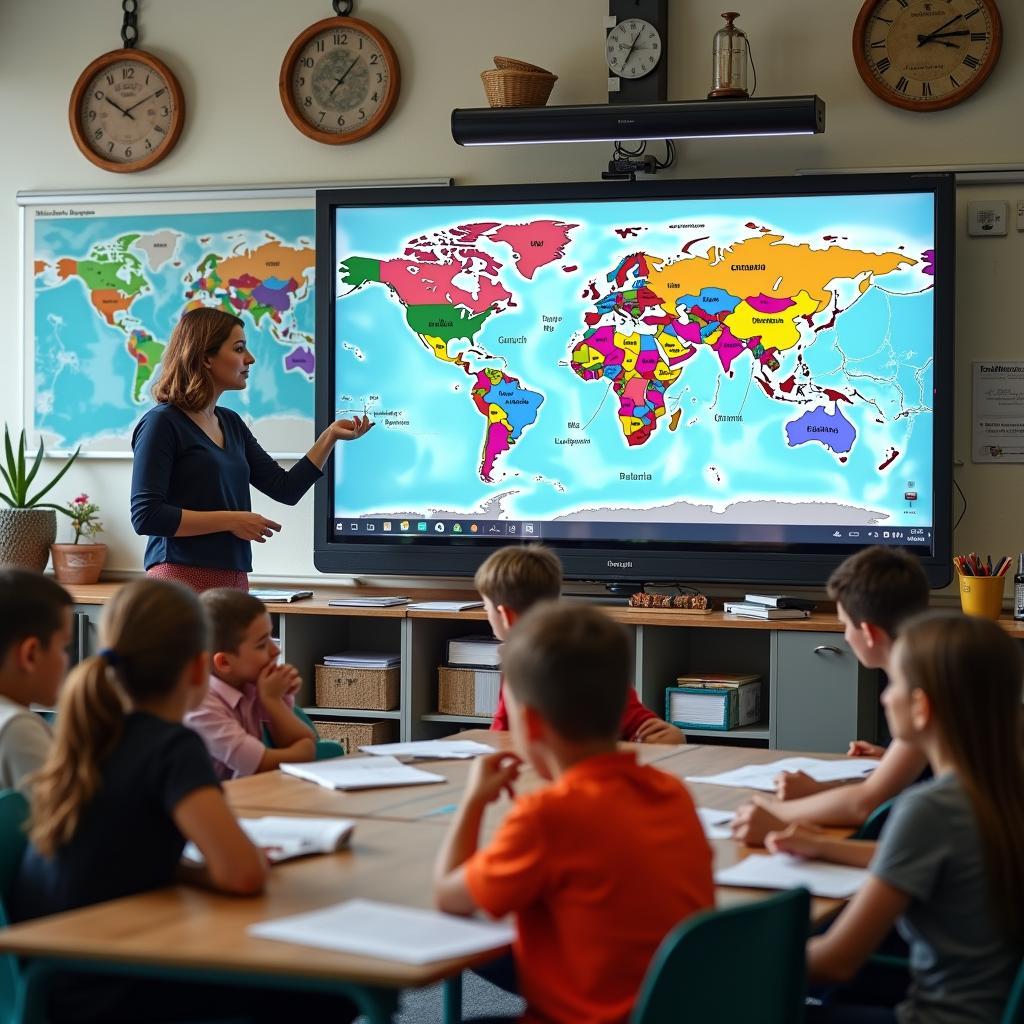 Giáo viên tích hợp văn hóa vào giảng dạy ngoại ngữ với phương pháp hiện đại và công nghệ đa phương tiện
Assessment methodologies also require reconceptualization to adequately evaluate culturally situated language proficiency. Traditional discrete-point tests that assess decontextualized grammatical knowledge or vocabulary recognition fail to capture the integrative nature of cultural-linguistic competence. More authentic assessment approaches might include task-based performance assessments where learners demonstrate ability to navigate culturally complex situations, portfolio assessments that document developmental trajectories in intercultural competence, or dynamic assessment that evaluates learning potential through guided interaction rather than merely measuring current knowledge.
Looking forward, the field of culturally contextualized language education must address several pressing questions. How can pedagogy balance respect for cultural particularity with recognition of intracultural diversity and individual variation? How should educators respond to learners who resist cultural content they find challenging or contradictory to their own values? What ethical responsibilities do language teachers have in representing cultures, particularly when they are cultural outsiders? How can assessment practices evolve to fairly evaluate intercultural competence across diverse learner populations? And how can the field develop more nuanced frameworks for understanding the relationship between linguistic proficiency, cultural knowledge, and intercultural capability that avoid essentializing cultures while still acknowledging their profound influence on communicative practice?
The trajectory of research and practice in this domain suggests growing consensus that effective language education must be fundamentally intercultural in nature, preparing learners not merely to encode and decode messages but to participate meaningfully in culturally diverse communities and to navigate the complex semiotic landscapes of our interconnected world. This requires pedagogical approaches that are theoretically informed, culturally responsive, and adaptable to the unique needs and aspirations of diverse learner populations, while remaining critically reflexive about the power dynamics and ideological assumptions inherent in all educational practices.
Questions 27-31
Choose the correct letter, A, B, C, or D.
-
The weak version of the Sapir-Whorf hypothesis suggests that:
- A) Language completely determines thought
- B) Language has no effect on cognition
- C) Language influences cognitive patterns
- D) All languages are identical in structure
-
According to Vygotsky’s sociocultural theory, language is:
- A) A mechanical skill
- B) A psychological tool that mediates thinking
- C) Unrelated to cognitive development
- D) Best learned through passive reception
-
Critical pedagogy perspectives argue that language teaching:
- A) Is ideologically neutral
- B) Should ignore power relations
- C) Always involves transmission of cultural values
- D) Has no political dimension
-
The concept of “translanguaging” refers to:
- A) Direct translation between languages
- B) Strict separation of languages
- C) Fluid movement between languages and cultural frames
- D) Using only one language at a time
-
Traditional discrete-point tests are criticized because they:
- A) Effectively measure cultural competence
- B) Fail to capture integrative cultural-linguistic competence
- C) Are too difficult for students
- D) Assess authentic language use
Questions 32-36
Complete the sentences below.
Choose NO MORE THAN THREE WORDS from the passage for each answer.
- The Sapir-Whorf hypothesis is also known as __.
- James Lantolf is associated with the contemporary development of __.
- Postcolonial perspectives advocate recognition of __ rather than privileging inner circle varieties.
- Qualitative research has used methods including ethnography, discourse analysis, and __ to study cultural learning.
- The increasing __ of language education can undermine efforts to present languages as vehicles for cultural understanding.
Questions 37-40
Do the following statements agree with the claims of the writer in the passage?
Write:
- YES if the statement agrees with the claims of the writer
- NO if the statement contradicts the claims of the writer
- NOT GIVEN if it is impossible to say what the writer thinks about this
- Quasi-experimental studies have consistently shown small effect sizes for culture-integrated pedagogy.
- Most teacher education programs provide excellent preparation in intercultural pedagogy.
- Portfolio assessment can effectively document developmental trajectories in intercultural competence.
- There is complete consensus on how to balance cultural particularity with intracultural diversity in language education.
Answer Keys – Đáp Án
PASSAGE 1: Questions 1-13
- FALSE
- TRUE
- TRUE
- NOT GIVEN
- TRUE
- NOT GIVEN
- worldview
- miscommunication
- values
- stereotypes
- B
- C
- B
PASSAGE 2: Questions 14-26
- B
- C
- C
- B
- C
- neuroimaging technology / functional MRI
- neural pathways
- mental flexibility
- integrative motivation
- cultural knowledge / intercultural sensitivity
- NO
- YES
- NO
PASSAGE 3: Questions 27-40
- C
- B
- C
- C
- B
- linguistic relativity
- sociocultural theory
- World Englishes
- narrative inquiry
- commodification
- NO
- NO
- YES
- NO
Giải Thích Đáp Án Chi Tiết
Passage 1 – Giải Thích
Câu 1: FALSE
- Dạng câu hỏi: True/False/Not Given
- Từ khóa: Traditional language teaching methods, attention, cultural context
- Vị trí trong bài: Đoạn 2, dòng 1-3
- Giải thích: Passage nói rõ “Traditional language teaching methods often focused primarily on grammatical structures and vocabulary lists, with little attention paid to the cultural context”. Câu này mâu thuẫn trực tiếp với statement, nên đáp án là FALSE.
Câu 2: TRUE
- Dạng câu hỏi: True/False/Not Given
- Từ khóa: Japanese language, hierarchical, politeness
- Vị trí trong bài: Đoạn 2, dòng 6-8
- Giải thích: Passage đề cập “the Japanese language has multiple levels of politeness and formality that reflect the hierarchical nature of Japanese society”, khớp hoàn toàn với statement.
Câu 3: TRUE
- Dạng câu hỏi: True/False/Not Given
- Từ khóa: authentic cultural materials, stronger communication skills
- Vị trí trong bài: Đoạn 4, dòng 1-2
- Giải thích: Passage nói “students who are exposed to authentic cultural materials and experiences while learning a language develop stronger communication skills”, paraphrase của “better communication abilities”.
Câu 5: TRUE
- Dạng câu hỏi: True/False/Not Given
- Từ khóa: online platforms, cultural content, accessible
- Vị trí trong bài: Đoạn 7, dòng 1-3
- Giải thích: Passage nói “Online platforms, social media, and video streaming services provide immediate access to native speakers and cultural materials”, nghĩa là đã làm cho cultural content dễ tiếp cận hơn.
Câu 7: worldview
- Dạng câu hỏi: Sentence Completion
- Từ khóa: values, beliefs, speakers
- Vị trí trong bài: Đoạn 2, dòng 5-6
- Giải thích: “Every language carries within it the values, beliefs, and worldview of its speakers.”
Câu 8: miscommunication
- Dạng câu hỏi: Sentence Completion
- Từ khóa: avoid, inappropriately
- Vị trí trong bài: Đoạn 5, dòng 1-2
- Giải thích: “understanding cultural context helps students avoid miscommunication and cultural misunderstandings that can occur when language is used inappropriately.”
Câu 11: B
- Dạng câu hỏi: Multiple Choice
- Từ khóa: cultural context, idiomatic expressions
- Vị trí trong bài: Đoạn 3, dòng 2-4
- Giải thích: Passage nói “This is particularly important for understanding idiomatic expressions, proverbs, and figurative language, which are deeply rooted in cultural experiences and historical events.”
Câu 12: C
- Dạng câu hỏi: Multiple Choice
- Từ khóa: teachers’ role
- Vị trí trong bài: Đoạn 6, dòng 2-4
- Giải thích: “They must go beyond simply teaching linguistic forms to help students understand the social conventions, customs, and values that shape language use.”
Câu 13: B
- Dạng câu hỏi: Multiple Choice
- Từ khóa: how cultures should be presented
- Vị trí trong bài: Đoạn 8, dòng 3-4
- Giải thích: Passage nói “Cultures are complex, diverse, and constantly evolving”, ngụ ý là complex and evolving.
Passage 2 – Giải Thích
Câu 14: B
- Dạng câu hỏi: Multiple Choice
- Từ khóa: neuroimaging technology
- Vị trí trong bài: Đoạn 2, dòng 1-4
- Giải thích: “when learners encounter language embedded in meaningful cultural contexts, multiple regions of the brain are activated simultaneously” – khớp với option B.
Câu 15: C
- Dạng câu hỏi: Multiple Choice
- Từ khóa: languaculture, introduced by
- Vị trí trong bài: Đoạn 4, dòng 1
- Giải thích: “The concept of ‘languaculture,’ coined by anthropological linguist Michael Agar…”
Câu 16: C
- Dạng câu hỏi: Multiple Choice
- Từ khóa: culture-focused programs, demonstrated
- Vị trí trong bài: Đoạn 5, dòng 4-7
- Giải thích: “students in culture-focused programs not only achieved higher scores on standardized language tests but also demonstrated greater confidence” – đúng với option C.
Câu 19: neuroimaging technology / functional MRI
- Dạng câu hỏi: Summary Completion
- Vị trí trong bài: Đoạn 1 và 2
- Giải thích: Passage đề cập “advances in neuroimaging technology” và “Functional MRI studies” ở đầu bài.
Câu 22: integrative motivation
- Dạng câu hỏi: Summary Completion
- Vị trí trong bài: Đoạn 6
- Giải thích: “This emotional investment creates what psychologists call ‘integrative motivation’… Integrative motivation has been shown to predict long-term success in language learning.”
Câu 24: NO
- Dạng câu hỏi: Yes/No/Not Given
- Vị trí trong bài: Đoạn 8, dòng 4-6
- Giải thích: Writer nói “Traditional standardized tests often fail to capture these nuanced aspects of language ability”, rõ ràng là không đồng ý với statement.
Câu 25: YES
- Dạng câu hỏi: Yes/No/Not Given
- Vị trí trong bài: Đoạn 9, dòng 2-3
- Giải thích: “Virtual reality applications can now immerse students in simulated cultural environments” – writer nhận định công nghệ VR có giá trị.
Passage 3 – Giải Thích
Câu 27: C
- Dạng câu hỏi: Multiple Choice
- Từ khóa: weak version, Sapir-Whorf hypothesis
- Vị trí trong bài: Đoạn 2, dòng 2-4
- Giải thích: “the weaker version – that language influences cognitive patterns and worldviews – has gained empirical support”
Câu 28: B
- Dạng câu hỏi: Multiple Choice
- Từ khóa: Vygotsky’s sociocultural theory, language
- Vị trí trong bài: Đoạn 3, dòng 3-4
- Giải thích: “language is a ‘psychological tool’ that mediates higher-order thinking processes”
Câu 30: C
- Dạng câu hỏi: Multiple Choice
- Từ khóa: translanguaging
- Vị trí trong bài: Đoạn 6, dòng 2-3
- Giải thích: “The concept of ‘translanguaging’ – the fluid movement between languages and cultural frames in multilingual communication”
Câu 32: linguistic relativity
- Dạng câu hỏi: Sentence Completion
- Vị trí trong bài: Đoạn 2, dòng 2
- Giải thích: “a concept known as linguistic relativity or the Sapir-Whorf hypothesis”
Câu 35: narrative inquiry
- Dạng câu hỏi: Sentence Completion
- Vị trí trong bài: Đoạn 7, dòng 5-6
- Giải thích: “Qualitative research employing ethnographic methods, discourse analysis, and narrative inquiry”
Câu 37: NO
- Dạng câu hỏi: Yes/No/Not Given
- Vị trí trong bài: Đoạn 7, dòng 3-4
- Giải thích: Passage nói “generally found statistically significant advantages” nhưng “effect sizes vary considerably” – không phải là “consistently shown small effect sizes”.
Câu 38: NO
- Dạng câu hỏi: Yes/No/Not Given
- Vị trí trong bài: Đoạn 8, dòng 4-5
- Giải thích: “Teacher education programs often provide insufficient preparation in intercultural pedagogy” – mâu thuẫn trực tiếp với statement.
Câu 39: YES
- Dạng câu hỏi: Yes/No/Not Given
- Vị trí trong bài: Đoạn 9, dòng 4-5
- Giải thích: Writer đề xuất “portfolio assessments that document developmental trajectories in intercultural competence” như một phương pháp hiệu quả.
Từ Vựng Quan Trọng Theo Passage
Passage 1 – Essential Vocabulary
| Từ vựng | Loại từ | Phiên âm | Nghĩa tiếng Việt | Ví dụ từ bài | Collocation |
|---|---|---|---|---|---|
| fundamental aspect | n phrase | /ˌfʌndəˈmentl ˈæspekt/ | khía cạnh cơ bản | a fundamental aspect of effective language teaching | fundamental principle, fundamental concept |
| pedagogical approaches | n phrase | /ˌpedəˈɡɒdʒɪkl əˈprəʊtʃɪz/ | phương pháp sư phạm | modern pedagogical approaches recognize | pedagogical methods, pedagogical strategies |
| cross-cultural communication | n phrase | /krɒs-ˈkʌltʃərəl kəˌmjuːnɪˈkeɪʃn/ | giao tiếp đa văn hóa | cross-cultural communication is essential | cross-cultural understanding, cross-cultural awareness |
| idiomatic expressions | n phrase | /ˌɪdiəˈmætɪk ɪkˈspreʃnz/ | thành ngữ, cách diễn đạt thành ngữ | understanding idiomatic expressions | idiomatic phrases, idiomatic language |
| authentic materials | n phrase | /ɔːˈθentɪk məˈtɪəriəlz/ | tài liệu chân thực | exposed to authentic cultural materials | authentic resources, authentic content |
| subtle nuances | n phrase | /ˈsʌtl ˈnjuːɑːnsɪz/ | sắc thái tinh tế | understand the subtle nuances of language use | subtle differences, subtle distinctions |
| miscommunication | n | /ˌmɪskəˌmjuːnɪˈkeɪʃn/ | sự hiểu lầm trong giao tiếp | avoid miscommunication and cultural misunderstandings | prevent miscommunication, cause miscommunication |
| intercultural awareness | n phrase | /ˌɪntəˈkʌltʃərəl əˈweənəs/ | nhận thức liên văn hóa | promoting intercultural awareness and empathy | intercultural competence, intercultural sensitivity |
| social conventions | n phrase | /ˈsəʊʃl kənˈvenʃnz/ | quy ước xã hội | understand the social conventions and customs | social norms, social expectations |
| oversimplification | n | /ˌəʊvəsɪmplɪfɪˈkeɪʃn/ | sự đơn giản hóa quá mức | avoiding stereotypes and oversimplification | avoid oversimplification, lead to oversimplification |
| integral component | n phrase | /ˈɪntɪɡrəl kəmˈpəʊnənt/ | thành phần không thể thiếu | an integral component of language teaching | integral part, integral element |
| revolutionized | v | /ˌrevəˈluːʃənaɪzd/ | cách mạng hóa | has revolutionized language learning | revolutionize education, revolutionize practice |
Passage 2 – Essential Vocabulary
| Từ vựng | Loại từ | Phiên âm | Nghĩa tiếng Việt | Ví dụ từ bài | Collocation |
|---|---|---|---|---|---|
| neurological underpinnings | n phrase | /ˌnjʊərəˈlɒdʒɪkl ˌʌndəˈpɪnɪŋz/ | nền tảng thần kinh học | the neurological underpinnings of language acquisition | neurological basis, neurological foundations |
| cognitive development | n phrase | /ˈkɒɡnətɪv dɪˈveləpmənt/ | phát triển nhận thức | enhances cognitive development | cognitive growth, cognitive skills |
| bilateral activation | n phrase | /baɪˈlætərəl ˌæktɪˈveɪʃn/ | kích hoạt hai bên (não) | bilateral activation creates stronger neural pathways | bilateral processing, bilateral coordination |
| neural pathways | n phrase | /ˈnjʊərəl ˈpɑːθweɪz/ | đường dẫn truyền thần kinh | creates stronger neural pathways | neural connections, neural networks |
| metacognitive awareness | n phrase | /ˌmetəˈkɒɡnətɪv əˈweənəs/ | nhận thức siêu nhận thức | develop enhanced metacognitive awareness | metacognitive skills, metacognitive strategies |
| cognitive flexibility | n phrase | /ˈkɒɡnətɪv ˌfleksəˈbɪləti/ | sự linh hoạt nhận thức | promotes cognitive flexibility and executive function | cognitive adaptability, mental flexibility |
| intercultural communicative competence | n phrase | /ˌɪntəˈkʌltʃərəl kəˌmjuːnɪkətɪv ˈkɒmpɪtəns/ | năng lực giao tiếp liên văn hóa | develop intercultural communicative competence | communicative competence, intercultural skills |
| empirical studies | n phrase | /ɪmˈpɪrɪkl ˈstʌdiz/ | nghiên cứu thực nghiệm | Empirical studies in applied linguistics | empirical research, empirical evidence |
| longitudinal study | n phrase | /ˌlɒndʒɪˈtjuːdɪnl ˈstʌdi/ | nghiên cứu dọc | One longitudinal study conducted across five European countries | longitudinal research, longitudinal data |
| integrative motivation | n phrase | /ˈɪntɪɡrətɪv ˌməʊtɪˈveɪʃn/ | động lực tích hợp | creates integrative motivation | intrinsic motivation, sustained motivation |
| affective dimension | n phrase | /əˈfektɪv dɪˈmenʃn/ | khía cạnh tình cảm | the affective dimension of learning | affective factors, affective aspects |
| zone of proximal development | n phrase | /zəʊn əv ˈprɒksɪml dɪˈveləpmənt/ | vùng phát triển gần nhất | Vygotsky’s zone of proximal development | developmental zone, learning zone |
| holistic assessment | n phrase | /həʊˈlɪstɪk əˈsesmənt/ | đánh giá toàn diện | advocate for holistic assessment approaches | holistic evaluation, comprehensive assessment |
| pragmatic competence | n phrase | /præɡˈmætɪk ˈkɒmpɪtəns/ | năng lực ngữ dụng | evaluate pragmatic competence | pragmatic skills, pragmatic knowledge |
| democratizing access | v phrase | /dɪˈmɒkrətaɪzɪŋ ˈækses/ | dân chủ hóa quyền truy cập | democratizing access to high-quality cultural resources | democratize education, increase access |
Passage 3 – Essential Vocabulary
| Từ vựng | Loại từ | Phiên âm | Nghĩa tiếng Việt | Ví dụ từ bài | Collocation |
|---|---|---|---|---|---|
| epistemological foundations | n phrase | /ɪˌpɪstɪməˈlɒdʒɪkl faʊnˈdeɪʃnz/ | nền tảng nhận thức luận | epistemological foundations of culturally contextualized pedagogy | epistemological basis, epistemological framework |
| paradigmatic shift | n phrase | /ˌpærədɪɡˈmætɪk ʃɪft/ | sự thay đổi mô hình | represents a paradigmatic shift | paradigm shift, fundamental shift |
| linguistic relativity | n phrase | /lɪŋˈɡwɪstɪk ˌreləˈtɪvəti/ | tính tương đối ngôn ngữ | concept known as linguistic relativity | linguistic determinism, Sapir-Whorf hypothesis |
| conceptual categories | n phrase | /kənˈseptʃuəl ˈkætəɡəriz/ | phạm trù khái niệm | encode different conceptual categories | conceptual frameworks, conceptual systems |
| culturally mediated | adj phrase | /ˈkʌltʃərəli ˈmiːdieɪtɪd/ | được trung gian hóa bởi văn hóa | culturally mediated cognitive development | mediated learning, socially mediated |
| hegemony | n | /hɪˈɡeməni/ | quyền bá chủ, uy quyền | The hegemony of English as a global lingua franca | cultural hegemony, linguistic hegemony |
| critical language awareness | n phrase | /ˈkrɪtɪkl ˈlæŋɡwɪdʒ əˈweənəs/ | nhận thức ngôn ngữ phê phán | develop students’ critical language awareness | critical awareness, language consciousness |
| translanguaging | n | /trænsˈlæŋɡwɪdʒɪŋ/ | đa ngôn ngữ hóa | The concept of translanguaging | multilingual practice, code-switching |
| quasi-experimental studies | n phrase | /ˈkweɪzaɪ ɪkˌsperɪˈmentl ˈstʌdiz/ | nghiên cứu bán thực nghiệm | Quasi-experimental studies comparing pedagogies | experimental research, controlled studies |
| discourse analysis | n phrase | /ˈdɪskɔːs əˈnæləsɪs/ | phân tích diễn ngôn | employing discourse analysis and narrative inquiry | discourse studies, textual analysis |
| commodification | n | /kəˌmɒdɪfɪˈkeɪʃn/ | sự hàng hóa hóa | the increasing commodification of language education | commodify education, commercialization |
| discrete-point tests | n phrase | /dɪˈskriːt pɔɪnt tests/ | bài kiểm tra điểm rời rạc | Traditional discrete-point tests | standardized tests, multiple-choice tests |
| task-based performance assessments | n phrase | /tɑːsk beɪst pəˈfɔːməns əˈsesmənts/ | đánh giá thực hành dựa trên nhiệm vụ | task-based performance assessments | performance-based evaluation, authentic assessment |
| dynamic assessment | n phrase | /daɪˈnæmɪk əˈsesmənt/ | đánh giá động | dynamic assessment that evaluates learning potential | formative assessment, ongoing assessment |
| intracultural diversity | n phrase | /ˌɪntrəˈkʌltʃərəl daɪˈvɜːsəti/ | sự đa dạng nội văn hóa | recognition of intracultural diversity | cultural variation, internal diversity |
| semiotic landscapes | n phrase | /ˌsemiˈɒtɪk ˈlændskeɪps/ | cảnh quan ký hiệu học | navigate the complex semiotic landscapes | linguistic landscapes, symbolic environments |
| critically reflexive | adj phrase | /ˈkrɪtɪkli rɪˈfleksɪv/ | phản tư phê phán | remaining critically reflexive about power dynamics | reflexive practice, critical reflection |
| ideological assumptions | n phrase | /ˌaɪdiəˈlɒdʒɪkl əˈsʌmpʃnz/ | các giả định ý thức hệ | ideological assumptions inherent in educational practices | ideological positions, underlying assumptions |
Kết luận
Bài viết này đã cung cấp một bộ đề thi IELTS Reading hoàn chỉnh về chủ đề “The Importance Of Cultural Context In Language Education” – một chủ đề có tầm quan trọng ngày càng tăng trong bối cảnh giáo dục ngôn ngữ hiện đại. Ba passages được thiết kế với độ khó tăng dần từ Easy đến Hard giúp bạn làm quen với cấu trúc đề thi thực tế và rèn luyện kỹ năng đọc hiểu ở nhiều mức độ khác nhau. Passage 1 giới thiệu những khái niệm cơ bản về vai trò của văn hóa trong học ngôn ngữ, Passage 2 đi sâu vào các lợi ích nhận thức được chứng minh qua nghiên cứu khoa học, và Passage 3 khám phá các lý thuyết phức tạp và hàm ý sư phạm sâu sắc hơn. Như đã thấy trong Cultural influences on the design of learning environments, việc hiểu rõ bối cảnh văn hóa không chỉ giúp bạn đạt điểm cao trong kỳ thi IELTS mà còn phát triển năng lực giao tiếp liên văn hóa quan trọng cho tương lai.
Với 40 câu hỏi đa dạng các dạng bài từ Multiple Choice, True/False/Not Given đến Matching Headings và Summary Completion, bạn đã có cơ hội thực hành toàn diện các kỹ năng cần thiết. Đáp án chi tiết kèm giải thích cụ thể về vị trí thông tin và kỹ thuật paraphrase giúp bạn tự đánh giá và học hỏi từ những sai lầm. Hơn nữa, The impact of cultural workshops on student empathy đã chứng minh rằng việc tiếp xúc với nội dung văn hóa đa dạng không chỉ nâng cao kỹ năng ngôn ngữ mà còn phát triển sự đồng cảm và hiểu biết về các nền văn hóa khác.
Bảng từ vựng chi tiết với phiên âm, nghĩa tiếng Việt và collocations sẽ giúp bạn mở rộng vốn từ học thuật, đặc biệt hữu ích cho cả phần Writing và Speaking. Những từ như “pedagogical approaches”, “intercultural communicative competence”, hay “cognitive flexibility” không chỉ xuất hiện trong IELTS Reading mà còn là những khái niệm quan trọng trong học thuật và nghề nghiệp. Tương tự như How visual storytelling supports language acquisition, việc học từ vựng trong ngữ cảnh cụ thể giúp bạn ghi nhớ lâu dài và sử dụng chính xác hơn.
Hãy sử dụng bộ đề này như một công cụ luyện tập thực chiến, phân tích kỹ từng câu hỏi và đối chiếu với giải thích để hiểu rõ logic của đề thi. Thực hành đều đặn với các đề thi mẫu chất lượng cao như thế này sẽ giúp bạn tự tin hơn khi bước vào phòng thi thực sự. Đừng quên rằng The rise of AI-powered educational tools đang tạo ra nhiều cơ hội mới để học tập hiệu quả, nhưng nền tảng vững chắc về kỹ năng đọc hiểu vẫn là yếu tố quan trọng nhất. Chúc bạn thành công trong kỳ thi IELTS sắp tới!


