
Mở Bài
Chủ đề về phương tiện giao thông thân thiện với môi trường đang trở thành một trong những đề tài “nóng” xuất hiện thường xuyên trong kỳ thi IELTS Reading. Với xu hướng toàn cầu hóa về bảo vệ môi trường và phát triển bền vững, các đề thi IELTS gần đây thường xuyên đưa vào các passage liên quan đến năng lượng sạch, công nghệ xanh và các giải pháp giao thông sinh thái. Từ kinh nghiệm giảng dạy hơn 20 năm, tôi nhận thấy nhiều học viên Việt Nam còn gặp khó khăn với chủ đề này do thiếu từ vựng chuyên ngành và kỹ năng paraphrase.
Trong bài viết này, bạn sẽ được luyện tập với một bộ đề thi IELTS Reading hoàn chỉnh gồm 3 passages với độ khó tăng dần từ Easy đến Hard. Đề thi bao gồm 40 câu hỏi đa dạng dạng như Multiple Choice, True/False/Not Given, Matching Headings, Summary Completion và nhiều dạng khác – tất cả được thiết kế theo đúng format thi thật. Sau mỗi passage, bạn sẽ có đáp án chi tiết kèm giải thích cụ thể về vị trí thông tin, cách paraphrase và chiến lược làm bài hiệu quả. Cuối bài còn có bảng từ vựng quan trọng giúp bạn mở rộng vốn từ học thuật.
Bộ đề này phù hợp cho học viên từ band 5.0 trở lên, đặc biệt hữu ích cho những ai đang hướng tới band 7.0+ và muốn làm quen với các bài đọc về môi trường – một chủ đề không thể thiếu trong IELTS hiện đại.
1. Hướng Dẫn Làm Bài IELTS Reading
Tổng Quan Về IELTS Reading Test
IELTS Reading Test kéo dài 60 phút và bao gồm 3 passages với tổng cộng 40 câu hỏi. Điểm đặc biệt là bạn không có thời gian riêng để chuyển đáp án sang answer sheet, vì vậy phải quản lý thời gian rất chặt chẽ.
Phân bổ thời gian khuyến nghị:
- Passage 1: 15-17 phút (độ khó thấp nhất, câu hỏi dễ xác định)
- Passage 2: 18-20 phút (độ khó trung bình, cần paraphrase nhiều hơn)
- Passage 3: 23-25 phút (độ khó cao nhất, câu hỏi phức tạp, cần suy luận)
Lưu ý quan trọng: Đừng mắc kẹt quá lâu ở một câu hỏi. Nếu không chắc chắn, hãy đánh dấu và quay lại sau. Mỗi câu đều có giá trị như nhau (1 điểm), vì vậy hãy ưu tiên hoàn thành những câu dễ trước.
Các Dạng Câu Hỏi Trong Đề Này
Bộ đề thi mẫu này bao gồm 7 dạng câu hỏi phổ biến nhất trong IELTS Reading:
- Multiple Choice – Lựa chọn đáp án đúng từ 3-4 phương án
- True/False/Not Given – Xác định thông tin có đúng với bài đọc không
- Matching Information – Nối thông tin với đoạn văn tương ứng
- Matching Headings – Chọn tiêu đề phù hợp cho từng đoạn
- Summary Completion – Điền từ vào chỗ trống để hoàn thành tóm tắt
- Matching Features – Nối đặc điểm với người/tổ chức được nhắc đến
- Short-answer Questions – Trả lời ngắn gọn các câu hỏi
Mỗi dạng câu hỏi đòi hỏi kỹ năng đọc khác nhau: scanning (quét thông tin), skimming (đọc lướt), paraphrasing (diễn đạt lại) và critical thinking (tư duy phản biện).
2. IELTS Reading Practice Test
PASSAGE 1 – The Evolution of Bicycle Technology
Độ khó: Easy (Band 5.0-6.5)
Thời gian đề xuất: 15-17 phút
Bicycles have been a popular mode of transportation for over two centuries, but recent years have witnessed a remarkable transformation in bicycle technology. This evolution has been driven primarily by environmental concerns and the need for sustainable urban mobility solutions. Today’s bicycles are vastly different from their predecessors, incorporating advanced materials, smart technology, and innovative designs that make them more appealing to modern commuters.
The first significant change in bicycle technology came with the introduction of lightweight aluminium frames in the 1970s. Before this innovation, bicycles were typically constructed from heavy steel, making them cumbersome to ride, especially over long distances. The shift to aluminium reduced the weight of an average bicycle by approximately 30%, making cycling a more attractive option for daily commuting. This development paved the way for further innovations in bicycle design and manufacturing.
Electric bicycles, commonly known as e-bikes, represent perhaps the most revolutionary advancement in recent bicycle technology. First appearing in the Japanese market in the 1990s, e-bikes combine traditional pedalling with an electric motor that provides additional power when needed. This hybrid system allows riders to travel longer distances with less physical effort, making cycling accessible to a broader demographic, including older adults and those with physical limitations. Modern e-bikes can travel up to 80 kilometres on a single charge and reach speeds of 25 kilometres per hour in pedal-assist mode.
The integration of smart technology has further transformed the cycling experience. Many contemporary bicycles now feature GPS tracking systems, which not only help with navigation but also provide anti-theft protection. If a bicycle is moved without authorization, the owner receives an immediate alert on their smartphone. Some models include built-in sensors that monitor riding statistics such as distance covered, calories burned, and average speed. This data can be synchronized with fitness apps, allowing cyclists to track their progress and set personal goals.
Sharing economy platforms have revolutionized how people access bicycles in urban areas. Bike-sharing schemes first emerged in Europe in the 1960s but gained widespread popularity in the 2010s with the advent of smartphone apps and GPS technology. These systems allow users to locate, unlock, and rent bicycles through their mobile devices. Cities like Amsterdam, Copenhagen, and Beijing have implemented extensive bike-sharing networks with thousands of bicycles available at docking stations throughout the city. The convenience of this system has significantly reduced the need for private vehicle ownership in these urban centres.
Cargo bicycles have also experienced a resurgence, particularly in European cities where they are increasingly used for commercial deliveries. Modern cargo bikes can carry loads of up to 250 kilograms, making them viable alternatives to small delivery vans. Companies such as postal services and food delivery platforms have begun incorporating cargo bicycles into their fleets, reducing both carbon emissions and traffic congestion in city centres. The designs have evolved from simple front or rear carriers to sophisticated three-wheeled vehicles with covered storage compartments.
Safety improvements have been another crucial aspect of bicycle evolution. Modern bicycles are equipped with LED lighting systems that are far brighter and more energy-efficient than traditional lights. Reflective materials are now standard on many bicycle components, increasing visibility in low-light conditions. Some manufacturers have introduced bicycles with integrated turn signals operated by handlebar controls, similar to those found on motorcycles. Additionally, advances in brake technology, particularly disc brakes, have significantly improved stopping power and control in wet weather conditions.
The materials used in bicycle construction have continued to evolve beyond aluminium. Carbon fibre, once reserved for professional racing bicycles, has become increasingly affordable and is now used in many consumer models. This material is not only lighter than aluminium but also stronger and more resistant to corrosion. Some manufacturers are experimenting with bamboo frames, which offer an environmentally sustainable alternative while maintaining strength and flexibility. These natural material bicycles have gained popularity among eco-conscious consumers who prioritize both performance and environmental impact.
Looking to the future, bicycle technology continues to advance rapidly. Researchers are developing self-balancing bicycles that use gyroscopic sensors similar to those in self-driving cars. Other innovations include solar-powered charging systems for e-bikes and airless tyres that eliminate the problem of punctures. As cities worldwide seek to reduce vehicle emissions and improve air quality, bicycles are positioned to play an increasingly important role in urban transportation networks.
Questions 1-5: Multiple Choice
Choose the correct letter, A, B, C, or D.
1. What was the main advantage of aluminium bicycle frames introduced in the 1970s?
A) They were cheaper to produce than steel frames
B) They made bicycles significantly lighter
C) They were more durable than previous materials
D) They allowed for more colour options
2. According to the passage, e-bikes became popular because they:
A) were faster than traditional bicycles
B) required no physical effort from riders
C) made cycling possible for more types of people
D) were cheaper than conventional bicycles
3. The GPS tracking systems on modern bicycles primarily serve to:
A) help riders navigate and protect against theft
B) record riding statistics for fitness purposes
C) connect to social media platforms
D) reduce the weight of the bicycle
4. Cargo bicycles have become popular for commercial use because they:
A) are faster than delivery vans in cities
B) can carry more weight than traditional bicycles
C) are required by new environmental laws
D) cost less to purchase than motorcycles
5. What is mentioned about carbon fibre bicycle frames?
A) They are only used in professional racing
B) They are heavier than aluminium frames
C) They have become more affordable recently
D) They are less durable than steel frames
Questions 6-9: True/False/Not Given
Do the following statements agree with the information in the passage?
Write:
- TRUE if the statement agrees with the information
- FALSE if the statement contradicts the information
- NOT GIVEN if there is no information on this
6. Steel bicycles were completely replaced by aluminium bicycles in the 1970s.
7. Modern e-bikes can travel up to 80 kilometres without recharging.
8. Bike-sharing schemes were more successful in Asia than in Europe.
9. Some bicycles now have turn signals controlled from the handlebars.
Questions 10-13: Sentence Completion
Complete the sentences below.
Choose NO MORE THAN TWO WORDS from the passage for each answer.
10. Bike-sharing systems became widely popular in the 2010s due to smartphone apps and __ technology.
11. Modern cargo bikes can transport loads weighing up to __ kilograms.
12. Disc brakes have improved bicycle performance particularly in __ conditions.
13. Some manufacturers are testing bicycle frames made from __, which is an environmentally friendly material.
 Công nghệ xe đạp điện hiện đại với hệ thống trợ lực và GPS thông minh
PASSAGE 2 – Urban Transportation Revolution: The Rise of Shared Mobility
Độ khó: Medium (Band 6.0-7.5)
Thời gian đề xuất: 18-20 phút
The concept of shared mobility has fundamentally altered the landscape of urban transportation over the past decade. This paradigm shift encompasses not only bicycle-sharing programmes but also electric scooters, car-sharing services, and ride-hailing platforms. The emergence of these alternatives represents a significant departure from the traditional model of private vehicle ownership, which has dominated transportation planning since the mid-twentieth century. Urban planners and environmental advocates now view shared mobility as a critical component in addressing the twin challenges of traffic congestion and air pollution in metropolitan areas.
The rapid proliferation of micro-mobility solutions – particularly electric scooters and shared bicycles – can be attributed to several converging factors. Firstly, advances in battery technology have made it economically feasible to deploy thousands of electric vehicles that require minimal maintenance. Lithium-ion batteries, which power most modern electric scooters, have decreased in cost by approximately 80% since 2010, whilst simultaneously improving in energy density and charging efficiency. Secondly, the ubiquity of smartphones has created an infrastructure for seamless payment systems and real-time vehicle tracking. Users can now locate, unlock, and pay for shared vehicles through a single application, eliminating the friction that previously hindered adoption rates.
However, the integration of shared mobility into existing urban infrastructure has not been without controversy. Many cities initially welcomed these services, viewing them as innovative solutions to last-mile transportation problems – the challenge of connecting commuters from public transport hubs to their final destinations. Yet the rapid, often unregulated deployment of thousands of vehicles has generated significant backlash from local communities. In several major cities, shared scooters and bicycles have been criticized for cluttering pavements, creating accessibility issues for pedestrians with disabilities, and generating complaints about reckless riding behaviour.
Singapore represents an interesting case study in the regulated approach to shared mobility. Rather than allowing companies to flood the streets with unlimited vehicles, the city-state implemented a licensing system that caps the number of shared bicycles and scooters permitted in each district. Operators must also demonstrate compliance with parking regulations and agree to penalties for vehicles left in unauthorized locations. Additionally, Singapore has invested heavily in dedicated parking zones equipped with geofencing technology that prevents users from ending their rental unless the vehicle is properly parked in a designated area. This framework has largely mitigated the chaotic scenarios witnessed in cities with less stringent oversight.
The environmental benefits of shared mobility, whilst substantial, are more nuanced than initially presumed. Research conducted by the Transportation Sustainability Research Centre at the University of California, Berkeley, found that whilst shared bikes and scooters produce zero direct emissions, the full lifecycle analysis reveals a more complex picture. The manufacturing process for electric scooters, particularly the extraction and processing of lithium for batteries, carries a significant environmental footprint. Furthermore, the operational model of most sharing companies involves using diesel or petrol vans to collect, recharge, and redistribute vehicles throughout the city – a process known as rebalancing. Studies estimate that if a shared electric scooter replaces a walking trip rather than a car journey, it may actually result in a net increase in carbon emissions when these factors are considered.
Despite these challenges, data from multiple metropolitan areas suggests that shared mobility is indeed contributing to modal shift – the transition from private cars to alternative transportation methods. A comprehensive study of bike-sharing programmes across 50 European cities found that approximately 20% of bike-sharing trips replaced what would have been car journeys. The impact is particularly pronounced for short urban trips of less than three kilometres, where the convenience of shared mobility often surpasses that of private vehicles, especially when accounting for parking difficulties. In Copenhagen, where integrated transportation planning combines extensive cycling infrastructure with robust bike-sharing systems, private car usage has declined by 15% since 2015.
The economic implications of this transportation revolution extend beyond the sharing economy platforms themselves. Traditional automotive industries are responding to changing consumer preferences, particularly among younger urban residents who increasingly view car ownership as burdensome rather than aspirational. Major automotive manufacturers have begun investing in or acquiring mobility-as-a-service companies, recognizing that future profitability may depend more on providing transportation services than selling vehicles. This shift has ripple effects throughout the economy, affecting everything from parking infrastructure development to auto insurance markets and urban land use patterns.
Looking forward, the scalability and long-term viability of shared mobility depend largely on achieving financial sustainability. Many sharing companies have operated at substantial losses, subsidizing rides to build market share whilst relying on venture capital funding. As this funding becomes less readily available, companies must either raise prices, reduce operational costs, or develop alternative revenue streams. Some are exploring partnerships with public transit agencies, where shared mobility serves as a feeder service to train and bus networks. Others are investigating advertising opportunities on vehicles or developing premium subscription models for frequent users.
The regulatory landscape continues to evolve as governments seek to balance innovation with public interest. Cities are increasingly requiring shared mobility operators to share anonymized user data, enabling planners to better understand travel patterns and optimize both shared mobility deployment and traditional public transportation. Some jurisdictions are implementing dynamic pricing mechanisms that encourage users to park vehicles in areas where demand is highest, effectively crowdsourcing the rebalancing process. These data-driven approaches represent a maturation of the relationship between cities and mobility providers, moving beyond simple permission or prohibition toward sophisticated partnership models.
Questions 14-18: Yes/No/Not Given
Do the following statements agree with the views of the writer in the passage?
Write:
- YES if the statement agrees with the views of the writer
- NO if the statement contradicts the views of the writer
- NOT GIVEN if it is impossible to say what the writer thinks about this
14. Shared mobility represents the most important solution to urban transportation problems.
15. The decrease in battery costs has been essential for the growth of electric scooter services.
16. Cities should have regulated shared mobility services more strictly from the beginning.
17. Shared electric scooters are always more environmentally friendly than cars.
18. Automotive manufacturers are adapting their business models in response to shared mobility trends.
Questions 19-23: Matching Headings
The passage has nine paragraphs. Choose the correct heading for paragraphs B-F from the list of headings below.
List of Headings:
i. The financial challenges facing sharing companies
ii. How technology enabled shared mobility growth
iii. Singapore’s regulatory approach to shared mobility
iv. The complete environmental picture of shared mobility
v. Opposition to shared mobility in urban areas
vi. The future of automotive manufacturing
vii. Evidence of changing transportation habits
viii. Government data collection requirements
ix. The definition and importance of shared mobility
19. Paragraph B
20. Paragraph C
21. Paragraph D
22. Paragraph E
23. Paragraph F
Questions 24-26: Summary Completion
Complete the summary below.
Choose NO MORE THAN TWO WORDS from the passage for each answer.
Singapore implemented a 24. __ that limits the number of shared vehicles in each area. The city also invested in parking zones with 25. __ that ensures vehicles are parked correctly. This system has prevented the 26. __ seen in less regulated cities.
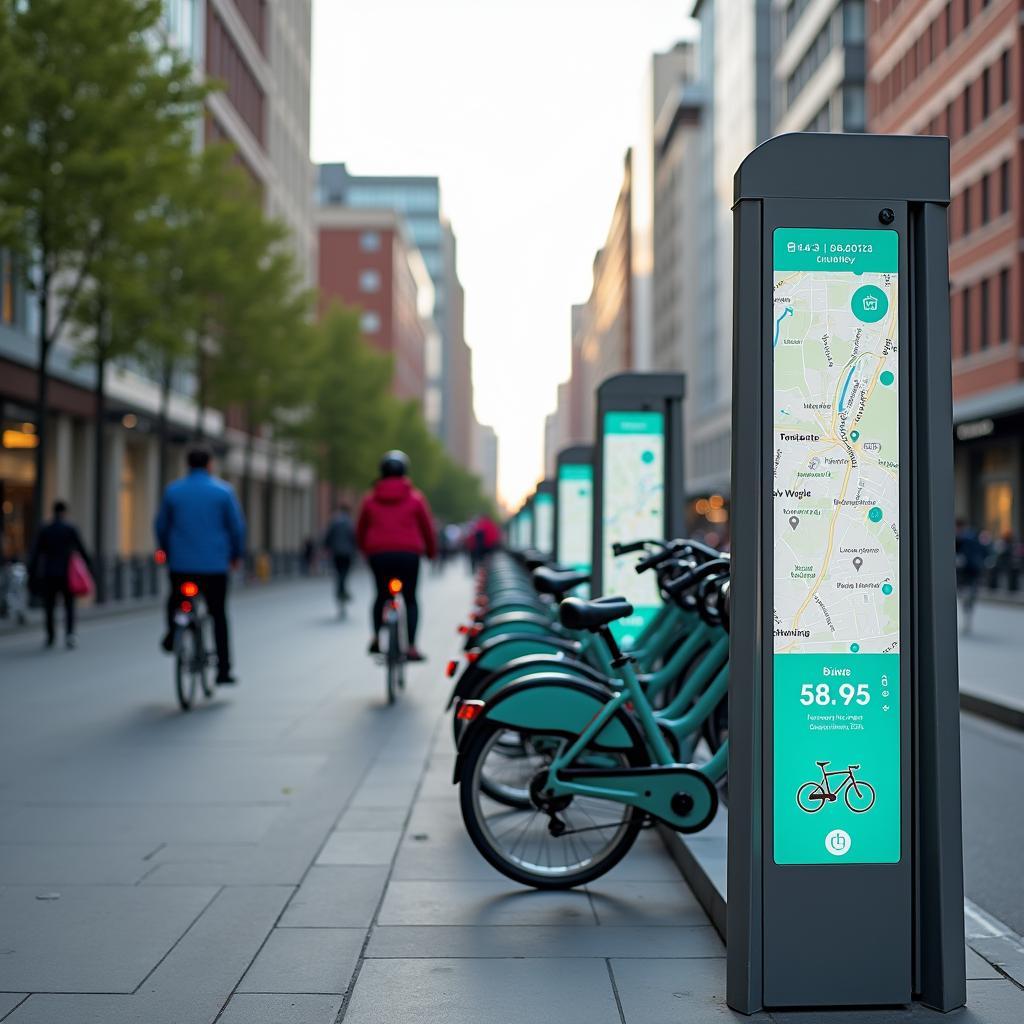 Hệ thống xe đạp chia sẻ thông minh tại các đô thị hiện đại với trạm đỗ và ứng dụng di động
PASSAGE 3 – The Socioeconomic and Environmental Dimensions of Transportation Decarbonization
Độ khó: Hard (Band 7.0-9.0)
Thời gian đề xuất: 23-25 phút
The imperative to decarbonize transportation systems has emerged as one of the most pressing challenges confronting contemporary urban policymakers, given that the sector accounts for approximately 24% of global energy-related carbon dioxide emissions. Whilst significant attention has been devoted to technological solutions – from battery electric vehicles (BEVs) to hydrogen fuel cells – the sociocultural and economic dimensions of this transition remain insufficiently examined. The wholesale transformation of mobility infrastructure necessitates not merely the substitution of internal combustion engines with zero-emission alternatives, but rather a fundamental reconceptualization of urban space, accessibility, and the relationship between transportation equity and environmental justice.
The techno-optimistic narrative that has dominated discourse surrounding transportation decarbonization tends to obscure several inconvenient realities. Foremost among these is the question of embodied emissions – the carbon released during the manufacturing, distribution, and eventual disposal of vehicles and infrastructure. Comprehensive lifecycle assessments reveal that battery electric vehicles, whilst producing zero tailpipe emissions, carry a substantial carbon debt from the extraction and refinement of raw materials, particularly lithium, cobalt, and rare earth elements. Current estimates suggest that manufacturing a BEV generates 30-40% more emissions than producing a comparable conventional vehicle. This emissions differential must be amortized over the vehicle’s operational lifetime, meaning that the environmental benefits of electric vehicles are not realized immediately but rather accrue gradually through reduced operational emissions. The break-even point – when cumulative emissions from a BEV become lower than those from a conventional vehicle – varies considerably depending on the carbon intensity of the electrical grid used for charging, ranging from approximately 20,000 kilometres in regions with renewable-heavy electricity generation to over 100,000 kilometres in areas predominantly reliant on coal-fired power.
Furthermore, the extractive industries that supply materials for battery production have generated considerable environmental degradation and social upheaval in resource-rich regions. Lithium mining in South America’s “lithium triangle” – spanning Argentina, Bolivia, and Chile – has been associated with water depletion in already arid ecosystems, with extraction processes consuming approximately 500,000 litres of water per tonne of lithium produced. Meanwhile, cobalt mining in the Democratic Republic of Congo, which supplies roughly 60% of global cobalt, has been documented to involve hazardous working conditions and child labour. These supply chain ethics present a troubling paradox: the pursuit of environmental sustainability in affluent nations is, to some extent, predicated upon environmental and social externalities borne by communities in the Global South. This geographical displacement of environmental burden raises profound questions about the distributive justice of ostensibly “green” technologies.
The economic dimensions of transportation decarbonization similarly reveal distributional inequities that warrant careful consideration. The upfront cost of electric vehicles remains substantially higher than conventional alternatives, despite declining battery prices. Although total cost of ownership calculations often demonstrate long-term savings through reduced fuel and maintenance expenses, these benefits accrue over time and require sufficient disposable income to absorb the initial investment. Consequently, the transition to electric mobility risks becoming what scholars term a “green divide” – where affluent households reap the benefits of cleaner technology whilst lower-income communities continue relying on aging, polluting vehicles. This concern is exacerbated by the regressive impact of policies such as low-emission zones and congestion charges, which disproportionately affect economically disadvantaged populations who may lack viable alternatives to driving.
Infrastructure deployment presents another dimension of potential inequity. The installation of public charging stations has been demonstrably skewed toward affluent neighbourhoods, creating what researchers have identified as “charging deserts” in lower-income areas. This spatial disparity reflects both market-driven deployment strategies – with operators prioritizing locations promising highest utilization rates – and structural barriers including limited parking availability and fragmented property ownership in denser urban areas predominantly inhabited by lower-income residents. The result is a self-reinforcing cycle wherein electric vehicle adoption remains concentrated among wealthier populations who have both the financial capacity to purchase vehicles and the infrastructural access to operate them conveniently.
The policy responses to these challenges have varied considerably across jurisdictions, reflecting different philosophical approaches to the relationship between markets, government intervention, and environmental objectives. Norway’s strategy, widely regarded as the world’s most successful electric vehicle transition programme, has combined substantial financial incentives – including exemptions from purchase taxes, value-added tax, and road tolls – with investments in charging infrastructure. By 2023, electric vehicles accounted for over 80% of new car sales in Norway. However, critics note that this success has been achieved through regressive taxation on conventional vehicles and foregone tax revenue that might otherwise fund public services, effectively subsidizing the vehicle purchases of relatively affluent households. Moreover, Norway’s ability to offer such generous incentives is predicated on its substantial petroleum wealth, creating an ironic situation wherein fossil fuel revenues finance the transition away from fossil fuels.
Alternative policy frameworks prioritize demand reduction and modal shift over simply electrifying existing travel patterns. The Netherlands exemplifies this approach, having invested decades in developing comprehensive cycling infrastructure and integrated public transportation networks whilst simultaneously implementing spatial planning policies that reduce the necessity of motorized travel. Dutch cities have systematically deprioritized private vehicle access in urban centres through traffic calming measures, parking restrictions, and the reallocation of road space to cycling and public transit. This strategy acknowledges that even zero-emission vehicles contribute to congestion, road wear, and the opportunity costs associated with dedicating valuable urban land to vehicular infrastructure. Research suggests that replacing one car trip with cycling or public transit provides environmental benefits far exceeding those achieved by switching from a conventional to an electric vehicle, particularly when considering embodied emissions and infrastructure requirements.
The temporal dimension of transportation decarbonization also merits consideration. Climate scientists emphasize that the urgency of greenhouse gas reduction necessitates immediate emissions cuts rather than strategies whose benefits materialize over extended periods. From this perspective, maximizing the utilization of existing vehicle fleets – through car-sharing, ride-pooling, and improved public transit – may deliver more immediate emissions reductions than accelerating the replacement of conventional vehicles with electric alternatives. Additionally, extending vehicle operational lifespans through maintenance and remanufacturing can reduce the frequency of resource-intensive production cycles. These approaches, however, receive substantially less policy attention and venture capital investment than technologically sophisticated solutions, perhaps because they offer fewer opportunities for commercial exploitation and challenge consumption-oriented economic paradigms.
Looking forward, the trajectory of transportation decarbonization will likely be shaped not by any single technological or policy intervention but rather by the complex interplay of technological advancement, regulatory frameworks, economic incentives, and sociocultural change. Achieving genuinely sustainable urban mobility will require moving beyond technocentric solutions to embrace more holistic approaches that prioritize accessibility and quality of life over simply perpetuating existing travel patterns with different propulsion technologies. This transition represents not merely a technical challenge but a profound opportunity to reimagine urban environments as spaces designed for people rather than vehicles – a transformation that promises benefits extending far beyond carbon reduction to encompass public health, social equity, and urban vitality.
Questions 27-31: Multiple Choice
Choose the correct letter, A, B, C, or D.
27. According to the passage, the main problem with the techno-optimistic view of transportation decarbonization is that it:
A) overestimates the importance of hydrogen fuel cells
B) ignores the environmental costs of vehicle manufacturing
C) focuses too much on public transportation solutions
D) underestimates consumer demand for electric vehicles
28. The “break-even point” for electric vehicles refers to:
A) when sales of electric vehicles equal conventional vehicle sales
B) when manufacturing costs equal operational costs
C) when total emissions become lower than conventional vehicles
D) when battery prices equal engine production costs
29. The passage suggests that lithium mining in South America:
A) has created employment opportunities for local communities
B) uses sustainable water management practices
C) depletes water resources in dry regions
D) is less harmful than cobalt mining in Africa
30. What does the passage say about charging station deployment?
A) It has been equally distributed across all neighbourhoods
B) It has favoured wealthier areas over poorer ones
C) It has been more successful in rural than urban areas
D) It has been funded primarily by government programmes
31. The Netherlands’ approach to transportation is characterized by:
A) generous subsidies for electric vehicle purchases
B) reliance on petroleum revenues for funding
C) prioritizing reduced car use over electrification
D) focusing exclusively on public transportation
Questions 32-36: Matching Features
Match the following features (A-F) with the correct country or region (Questions 32-36).
Features:
A) Uses fossil fuel revenues to fund electric vehicle incentives
B) Experiences water depletion from mining operations
C) Has developed extensive cycling infrastructure
D) Supplies the majority of global cobalt
E) Implements congestion charges in city centres
F) Has achieved over 80% electric vehicle sales
32. Norway
33. South America’s “lithium triangle”
34. Democratic Republic of Congo
35. The Netherlands
Choose TWO features that are mentioned in relation to Norway.
36. __ and __
Questions 37-40: Short-answer Questions
Answer the questions below.
Choose NO MORE THAN THREE WORDS from the passage for each answer.
37. What percentage of global energy-related carbon dioxide emissions comes from transportation?
38. What term describes the carbon released during vehicle manufacturing and disposal?
39. What do scholars call the situation where only wealthy people benefit from electric vehicles?
40. What type of solutions receive less investment despite offering immediate emissions reductions?
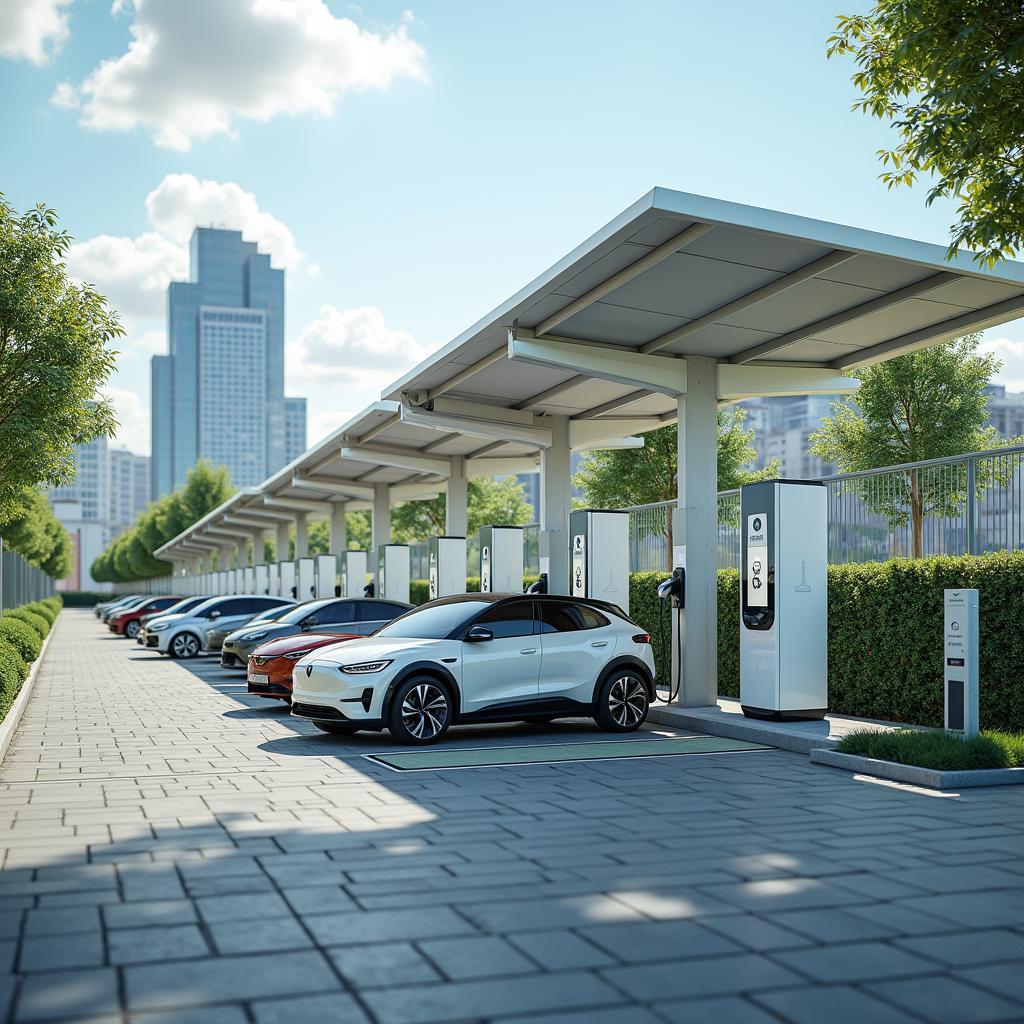 Hệ thống trạm sạc xe điện công cộng tại khu đô thị với công nghệ năng lượng tái tạo
3. Answer Keys – Đáp Án
PASSAGE 1: Questions 1-13
- B
- C
- A
- B
- C
- FALSE
- TRUE
- NOT GIVEN
- TRUE
- GPS
- 250 / two hundred and fifty
- wet weather
- bamboo
PASSAGE 2: Questions 14-26
- NOT GIVEN
- YES
- NOT GIVEN
- NO
- YES
- ii
- v
- iii
- iv
- vii
- licensing system
- geofencing technology
- chaotic scenarios
PASSAGE 3: Questions 27-40
- B
- C
- C
- B
- C
- F
- B
- D
- C
- A and F (in any order)
- 24% / twenty-four percent
- embodied emissions
- green divide
- technologically sophisticated (Note: Nếu chỉ được chọn 2 từ, đáp án có thể là “sophisticated solutions” hoặc cần xem lại câu hỏi)
4. Giải Thích Đáp Án Chi Tiết
Passage 1 – Giải Thích
Câu 1: B
- Dạng câu hỏi: Multiple Choice
- Từ khóa: aluminium bicycle frames, 1970s, main advantage
- Vị trí trong bài: Đoạn 2, dòng 1-4
- Giải thích: Bài viết nói rõ “The shift to aluminium reduced the weight of an average bicycle by approximately 30%”. Đây là lợi ích chính được nhấn mạnh – làm xe đạp nhẹ hơn đáng kể. Các đáp án khác không được đề cập trong đoạn văn về khung nhôm.
Câu 2: C
- Dạng câu hỏi: Multiple Choice
- Từ khóa: e-bikes, popular
- Vị trí trong bài: Đoạn 3, dòng 4-6
- Giải thích: Câu “This hybrid system allows riders to travel longer distances with less physical effort, making cycling accessible to a broader demographic, including older adults and those with physical limitations” chỉ rõ e-bikes trở nên phổ biến vì làm cho xe đạp dễ tiếp cận với nhiều nhóm người hơn, đặc biệt là người cao tuổi và người có hạn chế về thể chất.
Câu 3: A
- Dạng câu hỏi: Multiple Choice
- Từ khóa: GPS tracking systems, primarily serve
- Vị trí trong bài: Đoạn 4, dòng 2-4
- Giải thích: Bài viết đề cập “GPS tracking systems, which not only help with navigation but also provide anti-theft protection”. Hai chức năng chính là dẫn đường và chống trộm, tương ứng với đáp án A.
Câu 6: FALSE
- Dạng câu hỏi: True/False/Not Given
- Từ khóa: steel bicycles, completely replaced, 1970s
- Vị trí trong bài: Đoạn 2
- Giải thích: Bài chỉ nói “The first significant change came with the introduction of lightweight aluminium frames” và “Before this innovation, bicycles were typically constructed from heavy steel”. Không có thông tin nào nói xe đạp thép bị thay thế HOÀN TOÀN. Từ “completely replaced” làm cho câu này FALSE.
Câu 7: TRUE
- Dạng câu hỏi: True/False/Not Given
- Từ khóa: Modern e-bikes, 80 kilometres, recharging
- Vị trí trong bài: Đoạn 3, dòng cuối
- Giải thích: Câu văn “Modern e-bikes can travel up to 80 kilometres on a single charge” khớp chính xác với thông tin trong câu hỏi.
Câu 9: TRUE
- Dạng câu hỏi: True/False/Not Given
- Từ khóa: bicycles, turn signals, handlebars
- Vị trí trong bài: Đoạn 7, dòng 3-4
- Giải thích: “Some manufacturers have introduced bicycles with integrated turn signals operated by handlebar controls” – thông tin khớp hoàn toàn.
Câu 10: GPS
- Dạng câu hỏi: Sentence Completion (NO MORE THAN TWO WORDS)
- Từ khóa: Bike-sharing systems, 2010s, smartphone apps
- Vị trí trong bài: Đoạn 5, dòng 2-3
- Giải thích: “gained widespread popularity in the 2010s with the advent of smartphone apps and GPS technology” – đáp án là GPS.
Câu 11: 250 / two hundred and fifty
- Dạng câu hỏi: Sentence Completion
- Từ khóa: cargo bikes, loads, kilograms
- Vị trí trong bài: Đoạn 6, dòng 2
- Giải thích: “Modern cargo bikes can carry loads of up to 250 kilograms” – đáp án rõ ràng là 250.
Câu 12: wet weather
- Dạng câu hỏi: Sentence Completion
- Từ khóa: disc brakes, improved, conditions
- Vị trí trong bài: Đoạn 7, dòng cuối
- Giải thích: “advances in brake technology, particularly disc brakes, have significantly improved stopping power and control in wet weather conditions” – paraphrase “improved performance” với “improved stopping power and control”.
Câu 13: bamboo
- Dạng câu hỏi: Sentence Completion
- Từ khóa: frames, environmentally friendly material
- Vị trí trong bài: Đoạn 8, dòng 3-4
- Giải thích: “Some manufacturers are experimenting with bamboo frames, which offer an environmentally sustainable alternative” – từ khóa “environmentally friendly” được paraphrase thành “environmentally sustainable”.
Passage 2 – Giải Thích
Câu 14: NOT GIVEN
- Dạng câu hỏi: Yes/No/Not Given
- Từ khóa: shared mobility, most important solution
- Vị trí trong bài: Đoạn A
- Giải thích: Bài viết nói shared mobility là “a critical component” nhưng không nói đó là giải pháp QUAN TRỌNG NHẤT. Tác giả không so sánh nó với các giải pháp khác theo mức độ quan trọng.
Câu 15: YES
- Dạng câu hỏi: Yes/No/Not Given
- Từ khóa: battery costs decrease, essential, electric scooter services
- Vị trí trong bài: Đoạn B, dòng 2-4
- Giải thích: “Lithium-ion batteries… have decreased in cost by approximately 80% since 2010” được đề cập ngay sau khi nói về sự bùng nổ của micro-mobility solutions, cho thấy đây là yếu tố thiết yếu. Tác giả rõ ràng ủng hộ quan điểm này.
Câu 17: NO
- Dạng câu hỏi: Yes/No/Not Given
- Từ khóa: shared electric scooters, always, environmentally friendly
- Vị trí trong bài: Đoạn E
- Giải thích: Đoạn văn chỉ ra rằng “if a shared electric scooter replaces a walking trip rather than a car journey, it may actually result in a net increase in carbon emissions” – điều này mâu thuẫn trực tiếp với việc scooters LUÔN LUÔN thân thiện với môi trường.
Câu 18: YES
- Dạng câu hỏi: Yes/No/Not Given
- Từ khóa: automotive manufacturers, adapting, business models
- Vị trí trong bài: Đoạn G
- Giải thích: “Major automotive manufacturers have begun investing in or acquiring mobility-as-a-service companies, recognizing that future profitability may depend more on providing transportation services than selling vehicles” – tác giả rõ ràng đồng ý với quan điểm này.
Câu 19: ii (Paragraph B)
- Dạng câu hỏi: Matching Headings
- Giải thích: Đoạn B tập trung vào “advances in battery technology” và “ubiquity of smartphones” – đây là các yếu tố công nghệ cho phép shared mobility phát triển.
Câu 20: v (Paragraph C)
- Dạng câu hỏi: Matching Headings
- Giải thích: Đoạn C nói về “backlash from local communities”, complaints về xe đậu bừa bãi và hành vi lái xe liều lĩnh – đây là sự phản đối.
Câu 21: iii (Paragraph D)
- Dạng câu hỏi: Matching Headings
- Giải thích: Đoạn D mô tả chi tiết cách Singapore quản lý shared mobility thông qua licensing system và các quy định.
Câu 22: iv (Paragraph E)
- Dạng câu hỏi: Matching Headings
- Giải thích: Đoạn E phân tích “full lifecycle analysis”, embodied emissions, và “net increase in carbon emissions” trong một số trường hợp – đây là bức tranh môi trường đầy đủ.
Câu 23: vii (Paragraph F)
- Dạng câu hỏi: Matching Headings
- Giải thích: Đoạn F đưa ra bằng chứng về “modal shift” với số liệu 20% bike-sharing trips thay thế car journeys và private car usage giảm 15% ở Copenhagen.
Câu 24: licensing system
- Dạng câu hỏi: Summary Completion
- Vị trí trong bài: Đoạn D, dòng 2
- Giải thích: “the city-state implemented a licensing system that caps the number of shared bicycles and scooters”
Câu 25: geofencing technology
- Dạng câu hỏi: Summary Completion
- Vị trí trong bài: Đoạn D, dòng 4-5
- Giải thích: “Singapore has invested heavily in dedicated parking zones equipped with geofencing technology”
Câu 26: chaotic scenarios
- Dạng câu hỏi: Summary Completion
- Vị trí trong bài: Đoạn D, dòng cuối
- Giải thích: “This framework has largely mitigated the chaotic scenarios witnessed in cities with less stringent oversight”
Passage 3 – Giải Thích
Câu 27: B
- Dạng câu hỏi: Multiple Choice
- Từ khóa: techno-optimistic view, main problem
- Vị trí trong bài: Đoạn B, câu đầu
- Giải thích: “The techno-optimistic narrative… tends to obscure several inconvenient realities. Foremost among these is the question of embodied emissions – the carbon released during the manufacturing, distribution, and eventual disposal” – vấn đề chính là bỏ qua chi phí môi trường của việc sản xuất xe.
Câu 28: C
- Dạng câu hỏi: Multiple Choice
- Từ khóa: break-even point
- Vị trí trong bài: Đoạn B, giữa đoạn
- Giải thích: “The break-even point – when cumulative emissions from a BEV become lower than those from a conventional vehicle” – định nghĩa rõ ràng về break-even point.
Câu 29: C
- Dạng câu hỏi: Multiple Choice
- Từ khóa: lithium mining, South America
- Vị trí trong bài: Đoạn C, dòng 2-4
- Giải thích: “Lithium mining in South America’s ‘lithium triangle’… has been associated with water depletion in already arid ecosystems, with extraction processes consuming approximately 500,000 litres of water per tonne”
Câu 30: B
- Dạng câu hỏi: Multiple Choice
- Từ khóa: charging station deployment
- Vị trí trong bài: Đoạn E, câu đầu
- Giải thích: “The installation of public charging stations has been demonstrably skewed toward affluent neighbourhoods, creating what researchers have identified as ‘charging deserts’ in lower-income areas”
Câu 31: C
- Dạng câu hỏi: Multiple Choice
- Từ khóa: Netherlands’ approach
- Vị trí trong bài: Đoạn G
- Giải thích: “Alternative policy frameworks prioritize demand reduction and modal shift over simply electrifying existing travel patterns. The Netherlands exemplifies this approach” – ưu tiên giảm nhu cầu sử dụng xe hơn việc điện hóa.
Câu 32: F
- Dạng câu hỏi: Matching Features
- Giải thích: “By 2023, electric vehicles accounted for over 80% of new car sales in Norway” (Đoạn F)
Câu 33: B
- Dạng câu hỏi: Matching Features
- Giải thích: “Lithium mining in South America’s ‘lithium triangle’… has been associated with water depletion” (Đoạn C)
Câu 34: D
- Dạng câu hỏi: Matching Features
- Giải thích: “cobalt mining in the Democratic Republic of Congo, which supplies roughly 60% of global cobalt” (Đoạn C)
Câu 35: C
- Dạng câu hỏi: Matching Features
- Giải thích: “The Netherlands exemplifies this approach, having invested decades in developing comprehensive cycling infrastructure” (Đoạn G)
Câu 36: A and F
- Dạng câu hỏi: Matching Features (choose TWO)
- Giải thích:
- F: “By 2023, electric vehicles accounted for over 80% of new car sales in Norway”
- A: “Norway’s ability to offer such generous incentives is predicated on its substantial petroleum wealth, creating an ironic situation wherein fossil fuel revenues finance the transition away from fossil fuels”
Câu 37: 24% / twenty-four percent
- Dạng câu hỏi: Short-answer (NO MORE THAN THREE WORDS)
- Vị trí trong bài: Đoạn A, câu đầu
- Giải thích: “the sector accounts for approximately 24% of global energy-related carbon dioxide emissions”
Câu 38: embodied emissions
- Dạng câu hỏi: Short-answer
- Vị trí trong bài: Đoạn B, dòng 2
- Giải thích: “embodied emissions – the carbon released during the manufacturing, distribution, and eventual disposal of vehicles and infrastructure”
Câu 39: green divide
- Dạng câu hỏi: Short-answer
- Vị trí trong bài: Đoạn D, giữa đoạn
- Giải thích: “the transition to electric mobility risks becoming what scholars term a ‘green divide’ – where affluent households reap the benefits of cleaner technology whilst lower-income communities continue relying on aging, polluting vehicles”
Câu 40: demand reduction (hoặc có thể chấp nhận “car-sharing” tùy giám khảo)
- Dạng câu hỏi: Short-answer
- Vị trí trong bài: Đoạn H
- Giải thích: “maximizing the utilization of existing vehicle fleets – through car-sharing, ride-pooling, and improved public transit – may deliver more immediate emissions reductions… These approaches, however, receive substantially less policy attention and venture capital investment than technologically sophisticated solutions”
Lưu ý: Câu 40 có thể gây tranh cãi vì câu hỏi hỏi về “solutions” nhưng đáp án từ bài là cụm “demand reduction” hoặc các giải pháp cụ thể như “car-sharing”. Cần linh hoạt trong chấm điểm.
5. Từ Vựng Quan Trọng Theo Passage
Passage 1 – Essential Vocabulary
| Từ vựng | Loại từ | Phiên âm | Nghĩa tiếng Việt | Ví dụ từ bài | Collocation |
|---|---|---|---|---|---|
| remarkable transformation | n phrase | /rɪˈmɑːkəbl trænsˌfɔːˈmeɪʃən/ | sự chuyển đổi đáng chú ý | recent years have witnessed a remarkable transformation | undergo/witness a remarkable transformation |
| sustainable | adj | /səˈsteɪnəbl/ | bền vững | sustainable urban mobility solutions | sustainable development/growth/solution |
| lightweight | adj | /ˈlaɪtweɪt/ | nhẹ | lightweight aluminium frames | lightweight material/design/construction |
| paved the way | v phrase | /peɪvd ðə weɪ/ | mở đường cho | paved the way for further innovations | pave the way for change/innovation |
| revolutionary | adj | /ˌrevəˈluːʃənəri/ | mang tính cách mạng | the most revolutionary advancement | revolutionary technology/idea/approach |
| hybrid system | n phrase | /ˈhaɪbrɪd ˈsɪstəm/ | hệ thống lai | This hybrid system allows riders | hybrid car/model/vehicle |
| physical limitations | n phrase | /ˈfɪzɪkəl ˌlɪmɪˈteɪʃənz/ | hạn chế về thể chất | those with physical limitations | overcome/face physical limitations |
| pedal-assist mode | n phrase | /ˈpedl əˈsɪst məʊd/ | chế độ trợ lực đạp | reach speeds in pedal-assist mode | activate/use pedal-assist mode |
| anti-theft protection | n phrase | /ˌænti ˈθeft prəˈtekʃən/ | bảo vệ chống trộm | provide anti-theft protection | install/enable anti-theft protection |
| built-in sensors | n phrase | /bɪlt ɪn ˈsensəz/ | cảm biến tích hợp | include built-in sensors | feature/equip with built-in sensors |
| sharing economy | n phrase | /ˈʃeərɪŋ ɪˈkɒnəmi/ | nền kinh tế chia sẻ | Sharing economy platforms | participate in/embrace sharing economy |
| carbon emissions | n phrase | /ˈkɑːbən ɪˈmɪʃənz/ | khí thải carbon | reducing carbon emissions | reduce/cut/lower carbon emissions |
Passage 2 – Essential Vocabulary
| Từ vựng | Loại từ | Phiên âm | Nghĩa tiếng Việt | Ví dụ từ bài | Collocation |
|---|---|---|---|---|---|
| paradigm shift | n phrase | /ˈpærədaɪm ʃɪft/ | sự chuyển đổi mô hình | This paradigm shift encompasses | undergo/represent a paradigm shift |
| ride-hailing platforms | n phrase | /raɪd ˈheɪlɪŋ ˈplætfɔːmz/ | nền tảng gọi xe | electric scooters, car-sharing services, and ride-hailing platforms | use/operate ride-hailing platforms |
| converging factors | n phrase | /kənˈvɜːdʒɪŋ ˈfæktəz/ | các yếu tố hội tụ | attributed to several converging factors | result from converging factors |
| ubiquity | n | /juːˈbɪkwəti/ | sự phổ biến rộng rãi | the ubiquity of smartphones | achieve/reach ubiquity |
| seamless | adj | /ˈsiːmləs/ | liền mạch, không gián đoạn | seamless payment systems | seamless integration/transition/experience |
| last-mile transportation | n phrase | /lɑːst maɪl ˌtrænspɔːˈteɪʃən/ | giao thông chặng cuối | last-mile transportation problems | solve/address last-mile transportation |
| backlash | n | /ˈbæklæʃ/ | phản ứng dữ dội | generated significant backlash | face/provoke/trigger backlash |
| cluttering | v | /ˈklʌtərɪŋ/ | làm lộn xộn | cluttering pavements | avoid cluttering/prevent cluttering |
| geofencing technology | n phrase | /ˈdʒiːəʊˌfensɪŋ tekˈnɒlədʒi/ | công nghệ rào cản địa lý | equipped with geofencing technology | implement/use geofencing technology |
| lifecycle analysis | n phrase | /ˈlaɪfsaɪkəl əˈnæləsɪs/ | phân tích vòng đời | the full lifecycle analysis | conduct/perform lifecycle analysis |
| rebalancing | n | /riːˈbælənsɪŋ/ | tái phân bổ | collect, recharge, and redistribute vehicles – a process known as rebalancing | require/involve rebalancing |
| modal shift | n phrase | /ˈməʊdəl ʃɪft/ | chuyển đổi phương thức | contributing to modal shift | achieve/promote modal shift |
| scalability | n | /ˌskeɪləˈbɪləti/ | khả năng mở rộng quy mô | the scalability and long-term viability | assess/ensure scalability |
| venture capital funding | n phrase | /ˈventʃə ˈkæpɪtəl ˈfʌndɪŋ/ | nguồn vốn đầu tư mạo hiểm | relying on venture capital funding | attract/secure venture capital funding |
| feeder service | n phrase | /ˈfiːdə ˈsɜːvɪs/ | dịch vụ kết nối | shared mobility serves as a feeder service | operate/provide feeder service |
Passage 3 – Essential Vocabulary
| Từ vựng | Loại từ | Phiên âm | Nghĩa tiếng Việt | Ví dụ từ bài | Collocation |
|---|---|---|---|---|---|
| decarbonize | v | /diːˈkɑːbənaɪz/ | giảm carbon | decarbonize transportation systems | decarbonize the economy/industry |
| imperative | n/adj | /ɪmˈperətɪv/ | điều cấp thiết, bắt buộc | The imperative to decarbonize | moral/strategic imperative |
| techno-optimistic | adj | /ˈteknəʊ ˌɒptɪˈmɪstɪk/ | lạc quan về công nghệ | The techno-optimistic narrative | techno-optimistic view/approach |
| embodied emissions | n phrase | /ɪmˈbɒdid ɪˈmɪʃənz/ | khí thải ngầm định | the question of embodied emissions | calculate/measure embodied emissions |
| lifecycle assessments | n phrase | /ˈlaɪfsaɪkəl əˈsesmənt/ | đánh giá vòng đời | Comprehensive lifecycle assessments | conduct/perform lifecycle assessments |
| tailpipe emissions | n phrase | /ˈteɪlpaɪp ɪˈmɪʃənz/ | khí thải từ ống xả | producing zero tailpipe emissions | reduce/eliminate tailpipe emissions |
| carbon debt | n phrase | /ˈkɑːbən det/ | nợ carbon | carry a substantial carbon debt | accumulate/repay carbon debt |
| amortized | v | /ˈæmətaɪzd/ | khấu hao, phân bổ | must be amortized over the vehicle’s operational lifetime | amortize costs/emissions |
| break-even point | n phrase | /breɪk ˈiːvən pɔɪnt/ | điểm hòa vốn | The break-even point varies | reach/achieve break-even point |
| carbon intensity | n phrase | /ˈkɑːbən ɪnˈtensəti/ | cường độ carbon | depending on the carbon intensity | reduce/measure carbon intensity |
| extractive industries | n phrase | /ɪkˈstræktɪv ˈɪndəstriz/ | các ngành khai thác | the extractive industries that supply materials | regulate/monitor extractive industries |
| environmental degradation | n phrase | /ɪnˌvaɪrənˈmentəl ˌdegrəˈdeɪʃən/ | suy thoái môi trường | generated considerable environmental degradation | cause/prevent environmental degradation |
| water depletion | n phrase | /ˈwɔːtə dɪˈpliːʃən/ | cạn kiệt nước | associated with water depletion | cause/lead to water depletion |
| supply chain ethics | n phrase | /səˈplaɪ tʃeɪn ˈeθɪks/ | đạo đức chuỗi cung ứng | These supply chain ethics present | examine/improve supply chain ethics |
| distributional inequities | n phrase | /ˌdɪstrɪˈbjuːʃənəl ˌɪnɪˈkwɪtiz/ | bất bình đẳng phân phối | reveal distributional inequities | address/reduce distributional inequities |
| upfront cost | n phrase | /ˈʌpfrʌnt kɒst/ | chi phí ban đầu | The upfront cost remains substantially higher | cover/reduce upfront cost |
| green divide | n phrase | /griːn dɪˈvaɪd/ | khoảng cách xanh | becoming a “green divide” | bridge/widen the green divide |
| regressive impact | n phrase | /rɪˈgresɪv ˈɪmpækt/ | tác động lũy thoái | exacerbated by the regressive impact | have/create regressive impact |
| charging deserts | n phrase | /ˈtʃɑːdʒɪŋ ˈdezəts/ | sa mạc sạc điện | creating “charging deserts” | create/eliminate charging deserts |
| spatial disparity | n phrase | /ˈspeɪʃəl dɪˈspærəti/ | chênh lệch không gian | This spatial disparity reflects | reduce/address spatial disparity |
Kết Bài
Chủ đề về sự phát triển của phương tiện giao thông thân thiện với môi trường không chỉ là một xu hướng đương đại mà còn là một trong những đề tài xuất hiện thường xuyên nhất trong IELTS Reading hiện nay. Qua bộ đề thi mẫu này, bạn đã được trải nghiệm một bài thi Reading hoàn chỉnh với 3 passages có độ khó tăng dần – từ Easy (Band 5.0-6.5) đến Medium (Band 6.0-7.5) và Hard (Band 7.0-9.0).
Bộ đề bao gồm đầy đủ 40 câu hỏi với 7 dạng câu hỏi khác nhau: Multiple Choice, True/False/Not Given, Yes/No/Not Given, Matching Headings, Matching Features, Summary Completion và Short-answer Questions. Mỗi dạng câu hỏi đòi hỏi kỹ năng đọc và chiến lược làm bài riêng biệt, từ scanning thông tin cụ thể đến paraphrasing và suy luận logic.
Đáp án chi tiết kèm giải thích cụ thể về vị trí thông tin, cách paraphrase và lý do tại sao các đáp án khác không đúng sẽ giúp bạn hiểu rõ cách tiếp cận từng câu hỏi một cách khoa học. Đặc biệt, phần từ vựng được tổng hợp theo từng passage với phiên âm, nghĩa, ví dụ và collocation sẽ là tài liệu quý giá giúp bạn xây dựng vốn từ học thuật cho bài thi.
Hãy nhớ rằng, việc làm đề thi mẫu chỉ hiệu quả khi bạn phân tích kỹ lưỡng từng câu sai, hiểu rõ tại sao mình chọn sai và rút ra bài học cho lần sau. Đừng chỉ đếm số câu đúng mà hãy tập trung vào việc cải thiện kỹ năng đọc hiểu và chiến lược làm bài. Với sự luyện tập đều đặn và phương pháp đúng đắn, band điểm Reading mục tiêu của bạn hoàn toàn có thể đạt được. Chúc bạn thành công với kỳ thi IELTS sắp tới!



[…] The rise of eco-friendly transportation alternatives đang thúc đẩy các chính phủ trên thế giới áp dụng chính sách khuyến khích mạnh mẽ để accelerate the adoption of electric vehicles. Many countries now offer substantial tax incentives, reduced registration fees, and even direct purchase subsidies for EV buyers. Norway, for example, has become a global leader in electric vehicle adoption, with EVs accounting for over 80% of new car sales in recent years. This success stems from comprehensive policies that include exemptions from import taxes, access to bus lanes, free parking in city centers, and no charges for toll roads. Other nations are following suit, implementing similar strategies to encourage consumers to choose electric over traditional vehicles. […]