
Mở Bài
Chủ nghĩa tiêu dùng có đạo đức (ethical consumerism) đang trở thành một xu hướng toàn cầu mạnh mẽ, thay đổi cách thức các doanh nghiệp hoạt động và người tiêu dùng đưa ra quyết định mua sắm. Chủ đề này xuất hiện ngày càng thường xuyên trong IELTS Reading, đặc biệt ở các đề thi gần đây từ Cambridge IELTS 14 trở đi, phản ánh tầm quan trọng của nó trong xã hội đương đại.
Bài viết này cung cấp một đề thi IELTS Reading hoàn chỉnh với 3 passages từ dễ đến khó, được thiết kế dựa trên format thi thật. Bạn sẽ được luyện tập với 40 câu hỏi đa dạng, bao gồm Multiple Choice, True/False/Not Given, Matching, Summary Completion và nhiều dạng câu hỏi khác thường gặp trong kỳ thi.
Mỗi passage đi kèm với đáp án chi tiết, giải thích rõ ràng về cách tìm thông tin, kỹ thuật paraphrase và chiến lược làm bài hiệu quả. Phần từ vựng được tổng hợp giúp bạn nâng cao vốn từ học thuật cần thiết cho band điểm cao.
Đề thi này phù hợp cho học viên từ band 5.0 trở lên, muốn làm quen với chủ đề kinh tế – xã hội và rèn luyện kỹ năng đọc hiểu học thuật một cách bài bản.
Hướng Dẫn Làm Bài IELTS Reading
Tổng Quan Về IELTS Reading Test
IELTS Reading test kéo dài 60 phút với 3 passages và tổng cộng 40 câu hỏi. Mỗi câu trả lời đúng tương ứng với 1 điểm, không có điểm âm khi sai.
Phân bổ thời gian khuyến nghị:
- Passage 1: 15-17 phút (độ khó thấp nhất)
- Passage 2: 18-20 phút (độ khó trung bình)
- Passage 3: 23-25 phút (độ khó cao nhất)
Luôn dành 2-3 phút cuối để kiểm tra và chuyển đáp án vào Answer Sheet.
Các Dạng Câu Hỏi Trong Đề Này
Đề thi mẫu này bao gồm 7 dạng câu hỏi phổ biến nhất:
- Multiple Choice – Chọn đáp án đúng từ A/B/C/D
- True/False/Not Given – Xác định thông tin đúng/sai/không có
- Matching Headings – Ghép tiêu đề với đoạn văn
- Sentence Completion – Hoàn thành câu với số từ giới hạn
- Summary Completion – Điền từ vào đoạn tóm tắt
- Matching Features – Ghép thông tin với đặc điểm
- Short-answer Questions – Trả lời câu hỏi ngắn
IELTS Reading Practice Test
PASSAGE 1 – The Conscious Consumer Revolution
Độ khó: Easy (Band 5.0-6.5)
Thời gian đề xuất: 15-17 phút
In recent years, a profound shift has occurred in the way people around the world approach their purchasing decisions. No longer content with simply buying the cheapest or most convenient products, an increasing number of consumers are now considering the ethical implications of their choices. This phenomenon, known as ethical consumerism, represents a fundamental change in the relationship between buyers, sellers, and the broader society.
Ethical consumerism can be defined as the practice of purchasing products and services that are produced in a way that minimizes social and environmental harm. This might involve buying fair-trade coffee, choosing products made from sustainable materials, avoiding companies with poor labor practices, or supporting businesses that donate to charitable causes. The movement has gained significant momentum over the past two decades, transforming from a niche concern of environmentalists into a mainstream consumer trend.
The rise of this movement can be attributed to several key factors. First, increased access to information through the internet and social media has made it easier than ever for consumers to research companies and their practices. Transparency has become a valuable commodity, with shoppers actively seeking details about supply chains, manufacturing processes, and corporate values. Second, growing awareness of global issues such as climate change, worker exploitation, and environmental degradation has made consumers more conscious of how their purchasing power can make a difference. Young people, particularly millennials and Generation Z, have been at the forefront of this shift, often willing to pay premium prices for products that align with their values.
The impact of ethical consumerism on businesses has been substantial. Companies that once could operate with minimal regard for social responsibility now find themselves under intense scrutiny. Many organizations have responded by implementing more sustainable practices, improving working conditions in their factories, and being more transparent about their operations. Some have gone further, making ethical practices central to their brand identity. For instance, outdoor clothing company Patagonia has built a loyal following by championing environmental causes and using recycled materials, while cosmetics brand Lush has attracted customers through its stance against animal testing and use of natural ingredients.
The food industry has perhaps seen the most visible transformation. Organic produce, once confined to specialty health food stores, is now available in virtually every supermarket. Fair-trade certification has become a familiar logo on coffee, chocolate, and tea products, assuring consumers that farmers received fair compensation for their work. The market for plant-based alternatives to meat and dairy has exploded, driven partly by concerns about animal welfare and the environmental impact of livestock farming. Major fast-food chains have introduced vegan options, and traditional meat producers have launched their own plant-based product lines.
However, ethical consumerism is not without its challenges and critics. One significant concern is “greenwashing” – the practice of companies making misleading claims about the environmental benefits of their products or practices. Some businesses use vague terms like “natural” or “eco-friendly” without substantive evidence to back up these assertions. This has led to calls for stricter regulation and clearer standards for ethical claims. Another challenge is accessibility. Ethically produced goods often carry higher price tags, making them less affordable for lower-income consumers. This raises questions about whether ethical consumerism risks becoming a privilege of the wealthy rather than a universal practice.
Despite these challenges, the trend shows no signs of slowing. Market research indicates that ethical products are among the fastest-growing segments in retail, with sales increasing even during economic downturns when consumers typically become more price-conscious. Investment firms are also taking note, with Environmental, Social, and Governance (ESG) criteria becoming increasingly important factors in investment decisions. This suggests that ethical considerations are becoming embedded not just in consumer behavior but in the broader economic system.
The future of ethical consumerism likely involves both opportunities and obstacles. Technology may play a crucial role, with blockchain and other innovations potentially offering more reliable ways to verify ethical claims and track products through supply chains. Younger generations entering their peak earning years are expected to further drive demand for ethical products. At the same time, addressing issues of affordability and preventing greenwashing will be essential for the movement to achieve its full potential and create genuinely positive change.
Questions 1-5: Multiple Choice
Choose the correct letter, A, B, C, or D.
1. According to the passage, ethical consumerism is primarily concerned with:
A) Finding the cheapest products available
B) Minimizing harm in production processes
C) Supporting only local businesses
D) Buying the most convenient items
2. The passage suggests that millennials and Generation Z are:
A) Less interested in ethical products than older generations
B) Leading the ethical consumerism movement
C) Only buying ethical products when they are cheaper
D) Unaware of environmental issues
3. What has made transparency more important to consumers?
A) Government regulations
B) Traditional advertising
C) Internet and social media access
D) Higher product prices
4. The term “greenwashing” refers to:
A) Cleaning products that are environmentally friendly
B) Companies making false or exaggerated environmental claims
C) A new method of textile production
D) Government certification programs
5. According to the passage, ethically produced goods are:
A) Always cheaper than conventional products
B) Declining in popularity
C) Often more expensive than alternatives
D) Only available in specialty stores
Questions 6-9: True/False/Not Given
Do the following statements agree with the information given in the passage?
Write:
- TRUE if the statement agrees with the information
- FALSE if the statement contradicts the information
- NOT GIVEN if there is no information on this
6. Patagonia uses recycled materials in its products.
7. All major supermarkets now stock organic produce.
8. Fair-trade certification guarantees farmers receive fair payment.
9. Blockchain technology is currently widely used to verify ethical claims.
Questions 10-13: Sentence Completion
Complete the sentences below.
Choose NO MORE THAN TWO WORDS from the passage for each answer.
10. The practice of ethical consumerism has transformed from a niche interest into a __ __.
11. Investment firms now consider __ criteria when making investment decisions.
12. The market for __ __ to meat has grown significantly due to ethical concerns.
13. Some businesses make their ethical practices central to their __ __.
PASSAGE 2 – Economic and Cultural Drivers of Ethical Markets
Độ khó: Medium (Band 6.0-7.5)
Thời gian đề xuất: 18-20 phút
The emergence of ethical consumerism as a dominant force in global markets represents far more than a simple preference shift among shoppers. It reflects profound transformations in economic structures, cultural values, and the relationship between commerce and society. Understanding these underlying drivers is essential for comprehending how ethical markets have evolved from marginal phenomena to mainstream economic forces that compel even the most traditional corporations to reconsider their practices.
From an economic perspective, the rise of ethical consumerism can be partially explained through the lens of affluence and post-materialist values. As societies become wealthier and basic material needs are satisfied, consumers increasingly seek self-expression and meaning through their purchases. This aligns with Maslow’s hierarchy of needs, where individuals move from satisfying physiological and safety requirements toward fulfilling higher-level needs related to esteem and self-actualization. Purchasing decisions thus become vehicles for identity construction and moral expression, transforming shopping from a purely economic transaction into a statement of personal values and social consciousness.
The information revolution has fundamentally altered the dynamics between corporations and consumers. Whereas companies once controlled the narrative about their products through advertising and public relations, the digital age has enabled unprecedented transparency. Non-governmental organizations (NGOs), investigative journalists, and even individual consumers can now expose corporate malpractice and disseminate information globally within hours. The 2013 Rana Plaza collapse in Bangladesh, which killed over 1,100 garment workers, exemplifies this phenomenon. Images and reports spread rapidly across social media, generating international outrage and forcing major fashion brands to publicly commit to improving factory safety standards. This incident catalyzed the Fashion Revolution movement, which continues to pressure the apparel industry toward greater accountability.
Cultural factors also play a crucial role in shaping ethical consumption patterns, though these manifest differently across regions. In Northern European countries, particularly Scandinavia, ethical consumerism has deep roots in social democratic traditions that emphasize collective responsibility and social welfare. Surveys consistently show that Scandinavian consumers are among the world’s most willing to pay premiums for ethical products, reflecting cultural norms that prioritize egalitarianism and environmental stewardship. By contrast, in the United States, ethical consumerism often intertwines with individualistic values, framing ethical purchases as expressions of personal freedom and choice rather than collective obligation.
The generational dimension of ethical consumerism deserves particular attention. Research conducted by Nielsen and other market research firms reveals striking differences in attitudes across age cohorts. A 2019 study found that 73% of millennials were willing to pay more for sustainable products, compared to 51% of baby boomers. This generational gap reflects not only different formative experiences but also varying economic circumstances. Younger consumers came of age during periods of heightened awareness about climate change and witnessed firsthand the consequences of unchecked corporate power during the 2008 financial crisis. However, they also face precarious employment and higher costs of living, creating tension between ethical aspirations and economic constraints.
The role of certification schemes and labeling programs has been instrumental in facilitating ethical consumerism. Standards such as Fair Trade, Rainforest Alliance, B Corporation certification, and Leaping Bunny (cruelty-free) provide consumers with shortcuts to evaluate ethical claims without conducting extensive research. These schemes have proliferated across industries, from food and beverages to textiles and cosmetics. However, the multiplication of labels has also generated confusion and skepticism. Critics argue that the lack of standardization and varying rigor in certification processes can undermine consumer confidence. Some certifications require comprehensive auditing and continuous monitoring, while others involve minimal verification, creating opportunities for less scrupulous companies to exploit well-intentioned consumers.
The business response to ethical consumerism has evolved through several phases. Initially, many companies adopted a defensive posture, implementing minimal changes to deflect criticism while maintaining existing practices. This superficial compliance often manifested as corporate social responsibility (CSR) programs that operated separately from core business strategies. However, as ethical consumerism gained traction and demonstrated market viability, more companies began integrating ethical considerations into their fundamental business models. The concept of “shared value”, popularized by Harvard Business School professor Michael Porter, argues that businesses can create economic value by addressing social needs and challenges. Companies like Unilever have embraced this approach, with CEO Paul Polman famously declaring that the company’s Sustainable Living Plan was not about philanthropy but about better business.
The financial sector has also undergone significant transformation in response to ethical considerations. Socially responsible investing (SRI) and its more recent incarnation, ESG investing, have moved from niche strategies to mainstream investment approaches. By 2020, global sustainable investment assets exceeded $35 trillion, representing more than one-third of all professionally managed assets. This shift reflects growing recognition that environmental, social, and governance factors can materially affect financial performance and risk profiles. Climate change, for instance, poses significant risks to assets and supply chains, making environmental considerations relevant even for investors focused purely on financial returns.
Nevertheless, systemic challenges persist. The structure of global supply chains, which often involve multiple intermediaries across different countries with varying regulatory standards, makes traceability and accountability difficult. Additionally, the externalization of costs – where environmental and social harms are not reflected in prices – means that ethical products compete at a disadvantage against conventional alternatives. Addressing these structural inequities requires not only consumer action but also regulatory reforms, international cooperation, and fundamental rethinking of economic indicators beyond gross domestic product (GDP).
Questions 14-18: Yes/No/Not Given
Do the following statements agree with the views of the writer in the passage?
Write:
- YES if the statement agrees with the views of the writer
- NO if the statement contradicts the views of the writer
- NOT GIVEN if it is impossible to say what the writer thinks about this
14. Ethical consumerism is primarily driven by consumers seeking cheaper products.
15. The information revolution has reduced corporations’ ability to control their public image.
16. Scandinavian consumers are more willing to pay premium prices for ethical products than American consumers.
17. All certification schemes maintain equally rigorous standards.
18. Ethical considerations can impact the financial performance of investments.
Questions 19-23: Matching Headings
The passage has nine paragraphs. Choose the correct heading for paragraphs B-F from the list of headings below.
List of Headings:
i. The proliferation and problems of certification systems
ii. Financial sector adaptation to ethical trends
iii. Geographic variations in ethical consumption patterns
iv. The connection between wealth and ethical values
v. Corporate evolution from resistance to integration
vi. How information accessibility changed corporate accountability
vii. The impact of generational attitudes on market trends
viii. Fundamental obstacles in global supply chains
ix. The role of government in promoting ethical consumption
19. Paragraph B
20. Paragraph C
21. Paragraph D
22. Paragraph E
23. Paragraph F
Questions 24-26: Summary Completion
Complete the summary below.
Choose NO MORE THAN TWO WORDS from the passage for each answer.
The business response to ethical consumerism initially involved (24) __ __, where companies made minimal changes. Many implemented (25) __ __ programs that were separate from their main operations. However, as ethical products proved commercially successful, businesses began incorporating ethical principles into their (26) __ __.
PASSAGE 3 – The Paradoxes and Future Trajectories of Ethical Consumerism
Độ khó: Hard (Band 7.0-9.0)
Thời gian đề xuất: 23-25 phút
While ethical consumerism has undeniably achieved remarkable penetration into mainstream markets and consciousness, critical examination reveals a constellation of paradoxes, contradictions, and unintended consequences that complicate simplistic narratives of moral progress through marketplace mechanisms. The phenomenon exists at the nexus of neoliberal capitalism, moral philosophy, and environmentalism, creating tensions that raise fundamental questions about whether consumer choice can truly address systemic inequalities and ecological crises, or whether it merely provides a palliative that obscures the need for more radical structural transformation.
One of the most salient paradoxes concerns the commodification of ethics itself. Ethical consumerism operates through market mechanisms, transforming moral and environmental concerns into product attributes that command price premiums. This marketization of morality creates a system wherein ethical behavior becomes contingent upon purchasing power, effectively stratifying moral agency along socioeconomic lines. Critics from political economy perspectives argue that this framework is fundamentally regressive, as it positions those with greater disposable income as capable of ethical action, while those facing economic precarity are implicitly cast as complicit in harmful practices through their “unethical” consumption. This dynamic risks creating what sociologist Josée Johnston terms “citizen-consumers” who believe their primary political agency manifests through purchases rather than through collective action, labor organizing, or democratic participation.
The efficacy of ethical consumerism in producing meaningful change is also subject to considerable debate within academic discourse. Optimists point to tangible outcomes: fair trade certification has increased incomes for millions of farmers in developing countries; pressure from conscious consumers has eliminated some of the most egregious forms of child labor from supply chains; and consumer boycotts have occasionally forced corporate recalcitrance to yield to demands for reform. However, skeptics highlight the limited scope of these achievements relative to the magnitude of global challenges. Research by Oxfam and other development organizations suggests that while fair trade provides benefits to participating producers, it reaches only a small fraction of vulnerable workers and does little to challenge the asymmetric power relations inherent in global trade structures. The premium prices consumers pay for ethical products often do not translate proportionally into benefits for workers, with intermediaries and certification bodies capturing significant portions of the additional revenue.
Moreover, the focus on ethical consumption may inadvertently enable what political theorists call the “privatization of responsibility.” When environmental degradation and social injustice are framed primarily as problems solvable through individual consumer choices, this can deflect attention from the regulatory failures, corporate power concentration, and political decisions that enable harmful practices on systemic scales. The carbon footprint concept itself, popularized by a marketing campaign funded by oil company BP, exemplifies this strategic shifting of responsibility from corporate producers to individual consumers. Climate scientists emphasize that while individual actions matter, addressing climate change fundamentally requires policy interventions, infrastructure changes, and industrial transformation that cannot be achieved through shopping alone.
The psychological dimension of ethical consumerism reveals additional complexities. Behavioral research indicates that ethical purchasing can produce what is termed “moral licensing” or the “licensing effect” – a phenomenon wherein individuals who perform one good deed feel psychologically licensed to subsequently act less ethically. Studies have found that consumers who purchase environmentally friendly products sometimes increase their overall consumption or engage in other environmentally harmful behaviors, negating the positive impact of their ethical purchases. This suggests that ethical consumerism may provide psychological satisfaction and moral absolution without necessarily reducing aggregate environmental or social harm. Furthermore, the cognitive burden of evaluating the ethical dimensions of every purchase can lead to decision fatigue, anxiety, and ultimately disengagement when consumers feel overwhelmed by the complexity of global supply chains and conflicting information.
The structural constraints imposed by contemporary capitalism also limit the transformative potential of ethical consumerism. The imperative for continuous growth and profit maximization that characterizes capitalist economies creates inherent tensions with sustainability and ethical labor practices. Even companies genuinely committed to ethical practices face competitive pressures that can incentivize cost-cutting and externalization of social and environmental costs. The concept of “green growth” – the notion that economic expansion can be decoupled from environmental degradation through efficiency and technology – is increasingly challenged by ecological economists who argue that absolute decoupling at the scale required to address climate change has not been demonstrated and may not be feasible within current economic structures.
Looking toward future trajectories, several developments may reshape the landscape of ethical consumerism. Technological innovations offer both opportunities and risks. Artificial intelligence and blockchain could enhance supply chain transparency and verification, making it easier for consumers to access accurate information about product origins and production conditions. However, these same technologies could facilitate more sophisticated forms of greenwashing, using data and algorithms to craft compelling narratives that obscure underlying realities. The rise of synthetic biology and cellular agriculture – producing meat, leather, and other animal products without animals – could address animal welfare concerns while introducing new ethical questions about genetic modification and corporate control over food systems.
Regulatory developments will likely play increasingly important roles. The European Union has introduced measures requiring greater corporate disclosure of environmental impacts and supply chain due diligence, while proposals for carbon border adjustments could create incentives for ethical production practices. However, international coordination remains challenging, particularly as ethical standards and priorities vary across cultures and development contexts. What Northern consumers perceive as ethical imperatives may conflict with economic development priorities in the Global South, where restrictions on certain practices could limit livelihood opportunities for vulnerable populations.
Ultimately, the trajectory of ethical consumerism may depend less on consumer behavior itself than on broader political, economic, and cultural transformations. The COVID-19 pandemic has demonstrated both the fragility of global supply chains and the possibility of rapid, large-scale behavioral change when circumstances demand it. Whether ethical consumerism evolves into a genuinely transformative force or remains a market niche that provides symbolic satisfaction without substantive change will depend on whether it catalyzes broader questioning of economic structures and consumer culture itself. The most radical versions of ethical consumerism point toward degrowth, circular economies, and reduction of material consumption – approaches that fundamentally challenge the growth-dependent logic of contemporary capitalism. Whether mainstream ethical consumerism can embrace such transformative visions, or whether it will continue to operate primarily as a mechanism for differential consumption within existing structures, remains an open and consequential question.
Questions 27-31: Multiple Choice
Choose the correct letter, A, B, C, or D.
27. According to the passage, the commodification of ethics creates a problem because:
A) Ethical products are too expensive for most people
B) Moral agency becomes dependent on economic resources
C) Companies charge excessive premiums for ethical goods
D) Consumers prefer cheaper unethical products
28. The concept of “citizen-consumers” refers to people who:
A) Participate actively in democratic processes
B) Organize labor unions to demand better conditions
C) View purchasing as their main form of political action
D) Boycott all products from unethical companies
29. Research on fair trade suggests that:
A) It has eliminated poverty among all participating farmers
B) It challenges fundamental power imbalances in global trade
C) Benefits reach only a small proportion of vulnerable workers
D) Consumers pay prices that directly benefit producers equally
30. The “licensing effect” describes a situation where:
A) Certification schemes verify ethical claims
B) People act less ethically after performing a good deed
C) Companies obtain permission for harmful practices
D) Consumers research products before purchasing
31. According to ecological economists, “green growth”:
A) Has successfully decoupled economic expansion from environmental harm
B) Is the best solution to climate change
C) May not be achievable at the required scale
D) Has been proven impossible through research
Questions 32-36: Matching Features
Match each issue (32-36) with the correct perspective (A-G).
Issues:
32. Carbon footprint concept
33. Blockchain technology
34. European Union regulations
35. Synthetic biology
36. Degrowth approaches
Perspectives:
A) Introduces new ethical questions about genetic modification
B) Could enhance supply chain transparency
C) Shifts responsibility from corporations to individuals
D) Requires greater corporate disclosure of environmental impacts
E) Challenges the growth-dependent logic of capitalism
F) Provides universal income for farmers
G) Eliminates all forms of unethical consumption
Questions 37-40: Short-answer Questions
Answer the questions below.
Choose NO MORE THAN THREE WORDS from the passage for each answer.
37. What did the BP marketing campaign help popularize?
38. What can result from the cognitive burden of evaluating ethical dimensions of purchases?
39. What type of economics produces meat without using animals?
40. What event demonstrated the fragility of global supply chains according to the passage?
Answer Keys – Đáp Án
PASSAGE 1: Questions 1-13
- B
- B
- C
- B
- C
- TRUE
- NOT GIVEN
- TRUE
- NOT GIVEN
- mainstream trend
- ESG
- plant-based alternatives
- brand identity
PASSAGE 2: Questions 14-26
- NO
- YES
- NOT GIVEN
- NO
- YES
- iv
- vi
- iii
- vii
- i
- superficial compliance
- corporate social responsibility / CSR
- fundamental business models / business models
PASSAGE 3: Questions 27-40
- B
- C
- C
- B
- C
- C
- B
- D
- A
- E
- carbon footprint concept / carbon footprint
- decision fatigue
- cellular agriculture
- COVID-19 pandemic / pandemic
Giải Thích Đáp Án Chi Tiết
Passage 1 – Giải Thích
Câu 1: B
- Dạng câu hỏi: Multiple Choice
- Từ khóa: ethical consumerism, primarily concerned with
- Vị trí trong bài: Đoạn 2, dòng 1-3
- Giải thích: Bài văn định nghĩa rõ ràng “Ethical consumerism can be defined as the practice of purchasing products and services that are produced in a way that minimizes social and environmental harm.” Đáp án B “Minimizing harm in production processes” là paraphrase chính xác của định nghĩa này.
Câu 2: B
- Dạng câu hỏi: Multiple Choice
- Từ khóa: millennials, Generation Z
- Vị trí trong bài: Đoạn 3, dòng 7-9
- Giải thích: Bài viết nói “Young people, particularly millennials and Generation Z, have been at the forefront of this shift”. Cụm “at the forefront” có nghĩa là dẫn đầu, tương đương với “leading” trong đáp án B.
Câu 6: TRUE
- Dạng câu hỏi: True/False/Not Given
- Từ khóa: Patagonia, recycled materials
- Vị trí trong bài: Đoạn 4, dòng 5-7
- Giải thích: Bài văn nói rõ “outdoor clothing company Patagonia has built a loyal following by championing environmental causes and using recycled materials”. Câu phát biểu hoàn toàn khớp với thông tin này.
Câu 10: mainstream trend
- Dạng câu hỏi: Sentence Completion
- Từ khóa: transformed from niche interest
- Vị trí trong bài: Đoạn 2, dòng 6-7
- Giải thích: “transforming from a niche concern of environmentalists into a mainstream consumer trend” – cần lấy 2 từ cuối cùng “mainstream trend” với “consumer” bị bỏ vì chỉ được phép 2 từ.
 Người tiêu dùng đang lựa chọn sản phẩm hữu cơ có chứng nhận tại siêu thị hiện đại thể hiện xu hướng tiêu dùng có đạo đức
Passage 2 – Giải Thích
Câu 14: NO
- Dạng câu hỏi: Yes/No/Not Given
- Từ khóa: primarily driven, cheaper products
- Vị trí trong bài: Đoạn 2, toàn đoạn
- Giải thích: Đoạn văn giải thích ethical consumerism được thúc đẩy bởi affluence và post-materialist values, người tiêu dùng tìm kiếm self-expression và meaning qua mua sắm, không phải tìm sản phẩm rẻ hơn. Điều này mâu thuẫn trực tiếp với phát biểu.
Câu 15: YES
- Dạng câu hỏi: Yes/No/Not Given
- Từ khóa: information revolution, reduced corporations’ ability, control public image
- Vị trí trong bài: Đoạn 3, dòng 1-4
- Giải thích: “Whereas companies once controlled the narrative about their products through advertising and public relations, the digital age has enabled unprecedented transparency”. Câu này thể hiện rõ khả năng kiểm soát hình ảnh của doanh nghiệp đã giảm.
Câu 19: iv
- Dạng câu hỏi: Matching Headings
- Đoạn B: Đoạn thứ 2
- Giải thích: Đoạn này thảo luận về mối liên hệ giữa sự giàu có (affluence), post-materialist values và ethical consumerism, tương ứng với heading “The connection between wealth and ethical values”.
Câu 24: superficial compliance
- Dạng câu hỏi: Summary Completion
- Từ khóa: initially involved, minimal changes
- Vị trí trong bài: Đoạn 7, dòng 2-3
- Giải thích: “Initially, many companies adopted a defensive posture, implementing minimal changes to deflect criticism while maintaining existing practices. This superficial compliance…” – từ cần điền xuất hiện ngay sau mô tả về minimal changes.
Passage 3 – Giải Thích
Câu 27: B
- Dạng câu hỏi: Multiple Choice
- Từ khóa: commodification of ethics, creates a problem
- Vị trí trong bài: Đoạn 2, dòng 3-7
- Giải thích: “This marketization of morality creates a system wherein ethical behavior becomes contingent upon purchasing power, effectively stratifying moral agency along socioeconomic lines.” Điều này có nghĩa moral agency (khả năng hành động đạo đức) phụ thuộc vào nguồn lực kinh tế, chính xác là đáp án B.
Câu 29: C
- Dạng câu hỏi: Multiple Choice
- Từ khóa: Research on fair trade suggests
- Vị trí trong bài: Đoạn 3, dòng 6-9
- Giải thích: “Research by Oxfam and other development organizations suggests that while fair trade provides benefits to participating producers, it reaches only a small fraction of vulnerable workers” – “small fraction” = “small proportion” trong đáp án C.
Câu 32: C
- Dạng câu hỏi: Matching Features
- Từ khóa: Carbon footprint concept
- Vị trí trong bài: Đoạn 4, dòng 4-6
- Giải thích: “The carbon footprint concept itself, popularized by a marketing campaign funded by oil company BP, exemplifies this strategic shifting of responsibility from corporate producers to individual consumers.” Đáp án C nói về việc chuyển trách nhiệm từ doanh nghiệp sang cá nhân.
Câu 37: carbon footprint concept / carbon footprint
- Dạng câu hỏi: Short-answer Questions
- Từ khóa: BP marketing campaign, popularize
- Vị trí trong bài: Đoạn 4, dòng 4-5
- Giải thích: “The carbon footprint concept itself, popularized by a marketing campaign funded by oil company BP” – câu trả lời trực tiếp từ bài.
Câu 40: COVID-19 pandemic / pandemic
- Dạng câu hỏi: Short-answer Questions
- Từ khóa: demonstrated, fragility, global supply chains
- Vị trí trong bài: Đoạn cuối, dòng 3-4
- Giải thích: “The COVID-19 pandemic has demonstrated both the fragility of global supply chains and the possibility of rapid, large-scale behavioral change” – đáp án rõ ràng.
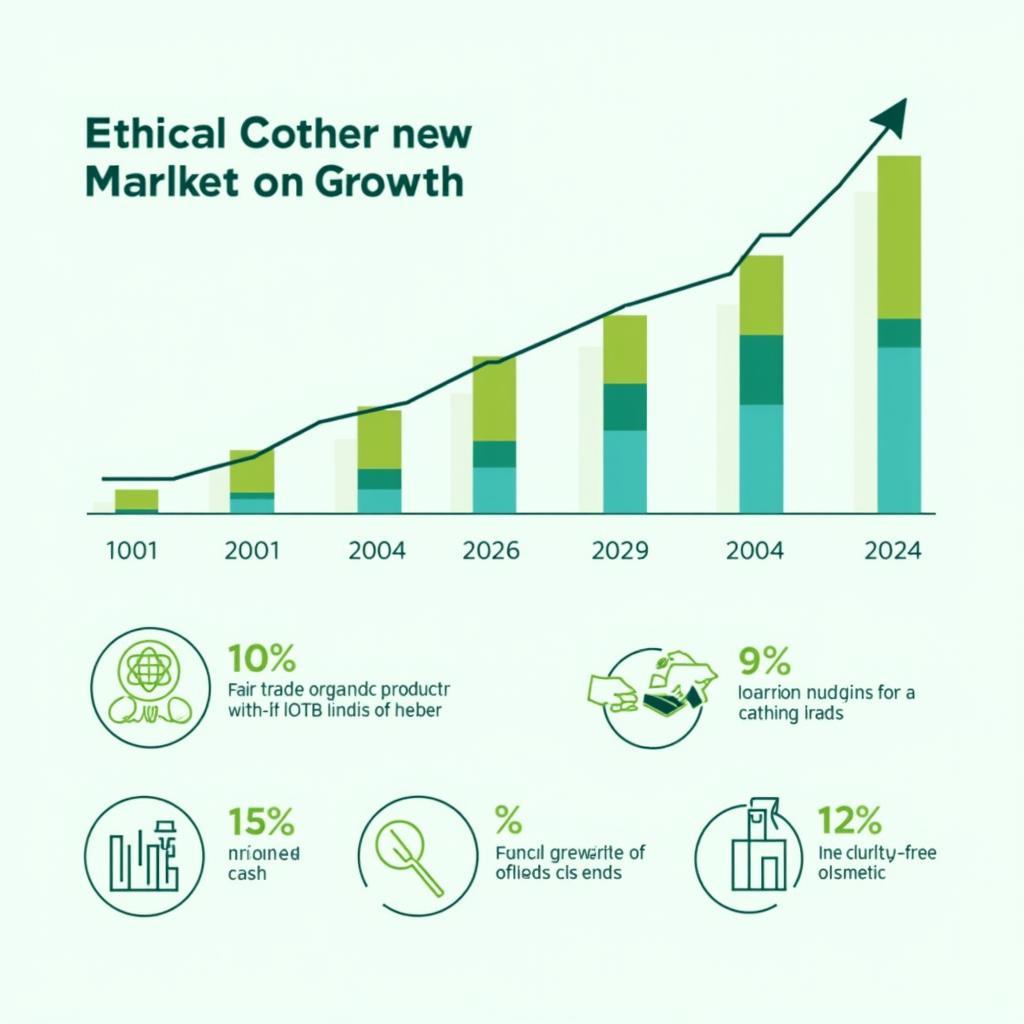 Biểu đồ thể hiện sự tăng trưởng mạnh mẽ của thị trường sản phẩm tiêu dùng có đạo đức toàn cầu qua các năm
Từ Vựng Quan Trọng Theo Passage
Passage 1 – Essential Vocabulary
| Từ vựng | Loại từ | Phiên âm | Nghĩa tiếng Việt | Ví dụ từ bài | Collocation |
|---|---|---|---|---|---|
| profound shift | noun phrase | /prəˈfaʊnd ʃɪft/ | sự thay đổi sâu sắc | A profound shift has occurred in purchasing decisions | undergo a profound shift |
| ethical implications | noun phrase | /ˈeθɪkəl ˌɪmplɪˈkeɪʃənz/ | hàm ý/tác động đạo đức | considering the ethical implications of their choices | examine ethical implications |
| momentum | noun | /məʊˈmentəm/ | đà, động lực | The movement has gained significant momentum | gain/gather momentum |
| transparency | noun | /trænsˈpærənsi/ | tính minh bạch | Transparency has become a valuable commodity | ensure transparency |
| supply chains | noun phrase | /səˈplaɪ tʃeɪnz/ | chuỗi cung ứng | seeking details about supply chains | global supply chains |
| sustainable practices | noun phrase | /səˈsteɪnəbl ˈpræktɪsɪz/ | các hoạt động bền vững | implementing more sustainable practices | adopt sustainable practices |
| brand identity | noun phrase | /brænd aɪˈdentəti/ | bản sắc thương hiệu | making ethical practices central to their brand identity | establish brand identity |
| fair-trade certification | noun phrase | /feə treɪd səˌtɪfɪˈkeɪʃən/ | chứng nhận thương mại công bằng | Fair-trade certification has become a familiar logo | obtain fair-trade certification |
| greenwashing | noun | /ˈɡriːnwɒʃɪŋ/ | tẩy xanh (quảng cáo sai về môi trường) | One significant concern is greenwashing | engage in greenwashing |
| plant-based alternatives | noun phrase | /plɑːnt beɪst ɔːlˈtɜːnətɪvz/ | các sản phẩm thay thế từ thực vật | The market for plant-based alternatives has exploded | develop plant-based alternatives |
| ESG criteria | noun phrase | /iː es dʒiː kraɪˈtɪəriə/ | tiêu chí môi trường-xã hội-quản trị | Environmental, Social, and Governance criteria | meet ESG criteria |
| mainstream trend | noun phrase | /ˈmeɪnstriːm trend/ | xu hướng chủ đạo | transforming into a mainstream consumer trend | become a mainstream trend |
Passage 2 – Essential Vocabulary
| Từ vựng | Loại từ | Phiên âm | Nghĩa tiếng Việt | Ví dụ từ bài | Collocation |
|---|---|---|---|---|---|
| comprehending | verb | /ˌkɒmprɪˈhendɪŋ/ | hiểu rõ, thấu hiểu | essential for comprehending how ethical markets evolved | comprehending complex issues |
| affluence | noun | /ˈæfluəns/ | sự giàu có, thịnh vượng | explained through the lens of affluence | material affluence |
| post-materialist values | noun phrase | /pəʊst məˈtɪəriəlɪst ˈvæljuːz/ | các giá trị phi vật chất | affluence and post-materialist values | embrace post-materialist values |
| self-actualization | noun | /self ˌæktʃuəlaɪˈzeɪʃən/ | sự tự hiện thực hóa | needs related to esteem and self-actualization | achieve self-actualization |
| consciousness | noun | /ˈkɒnʃəsnəs/ | ý thức | statement of personal values and social consciousness | raise consciousness |
| corporate malpractice | noun phrase | /ˈkɔːpərət mælˈpræktɪs/ | hành vi sai trái của doanh nghiệp | can now expose corporate malpractice | uncover corporate malpractice |
| accountability | noun | /əˌkaʊntəˈbɪləti/ | trách nhiệm giải trình | pressure the apparel industry toward greater accountability | demand accountability |
| egalitarianism | noun | /ɪˌɡælɪˈteəriənɪzəm/ | chủ nghĩa bình đẳng | cultural norms that prioritize egalitarianism | promote egalitarianism |
| environmental stewardship | noun phrase | /ɪnˌvaɪrənˈmentl ˈstjuːədʃɪp/ | quản lý môi trường có trách nhiệm | prioritize egalitarianism and environmental stewardship | demonstrate environmental stewardship |
| precarious employment | noun phrase | /prɪˈkeəriəs ɪmˈplɔɪmənt/ | việc làm bấp bênh | they also face precarious employment | trapped in precarious employment |
| certification schemes | noun phrase | /səˌtɪfɪˈkeɪʃən skiːmz/ | các hệ thống chứng nhận | The role of certification schemes has been instrumental | establish certification schemes |
| comprehensive auditing | noun phrase | /ˌkɒmprɪˈhensɪv ˈɔːdɪtɪŋ/ | kiểm toán toàn diện | Some certifications require comprehensive auditing | conduct comprehensive auditing |
| fundamental business models | noun phrase | /ˌfʌndəˈmentl ˈbɪznəs ˈmɒdlz/ | các mô hình kinh doanh cơ bản | integrating ethical considerations into fundamental business models | transform fundamental business models |
| socially responsible investing | noun phrase | /ˈsəʊʃəli rɪˈspɒnsəbl ɪnˈvestɪŋ/ | đầu tư có trách nhiệm xã hội | Socially responsible investing has moved to mainstream | engage in socially responsible investing |
| traceability | noun | /ˌtreɪsəˈbɪləti/ | khả năng truy xuất nguồn gốc | makes traceability and accountability difficult | ensure traceability |
 Chuỗi cung ứng minh bạch sử dụng công nghệ blockchain để truy xuất nguồn gốc sản phẩm đạo đức
Passage 3 – Essential Vocabulary
| Từ vựng | Loại từ | Phiên âm | Nghĩa tiếng Việt | Ví dụ từ bài | Collocation |
|---|---|---|---|---|---|
| penetration | noun | /ˌpenɪˈtreɪʃən/ | sự thâm nhập | achieved remarkable penetration into mainstream markets | market penetration |
| paradoxes | noun | /ˈpærədɒksɪz/ | nghịch lý | reveals a constellation of paradoxes | inherent paradoxes |
| nexus | noun | /ˈneksəs/ | mối liên hệ, điểm giao thoa | exists at the nexus of neoliberal capitalism | nexus between theory and practice |
| systemic inequalities | noun phrase | /sɪˈstemɪk ˌɪnɪˈkwɒlətiz/ | bất bình đẳng có tính hệ thống | whether consumer choice can truly address systemic inequalities | perpetuate systemic inequalities |
| palliative | noun | /ˈpæliətɪv/ | biện pháp tình thế, giải pháp chữa tạm | merely provides a palliative that obscures | serve as a palliative |
| commodification | noun | /kəˌmɒdɪfɪˈkeɪʃən/ | sự biến thành hàng hóa | concerns the commodification of ethics itself | commodification of values |
| stratifying | verb | /ˈstrætɪfaɪɪŋ/ | phân tầng | effectively stratifying moral agency | stratifying society |
| efficacy | noun | /ˈefɪkəsi/ | hiệu quả | The efficacy of ethical consumerism in producing change | question the efficacy |
| asymmetric power relations | noun phrase | /ˌeɪsɪˈmetrɪk ˈpaʊə rɪˈleɪʃənz/ | quan hệ quyền lực bất đối xứng | does little to challenge asymmetric power relations | address asymmetric power relations |
| privatization of responsibility | noun phrase | /ˌpraɪvətaɪˈzeɪʃən əv rɪˌspɒnsəˈbɪləti/ | tư nhân hóa trách nhiệm | enable the privatization of responsibility | result in privatization of responsibility |
| moral licensing | noun phrase | /ˈmɒrəl ˈlaɪsənsɪŋ/ | hiệu ứng giấy phép đạo đức | can produce what is termed moral licensing | demonstrate moral licensing |
| negating | verb | /nɪˈɡeɪtɪŋ/ | phủ nhận, triệt tiêu | negating the positive impact of their ethical purchases | risk negating progress |
| decision fatigue | noun phrase | /dɪˈsɪʒən fəˈtiːɡ/ | mệt mỏi quyết định | can lead to decision fatigue | suffer from decision fatigue |
| decoupling | noun | /diːˈkʌplɪŋ/ | sự tách rời | economic expansion can be decoupled from environmental degradation | achieve decoupling |
| cellular agriculture | noun phrase | /ˈseljələ ˈæɡrɪkʌltʃə/ | nông nghiệp tế bào | cellular agriculture – producing meat without animals | develop cellular agriculture |
| supply chain due diligence | noun phrase | /səˈplaɪ tʃeɪn djuː ˈdɪlɪdʒəns/ | thẩm định chuỗi cung ứng | requiring supply chain due diligence | conduct supply chain due diligence |
| degrowth | noun | /diːˈɡrəʊθ/ | phi tăng trưởng | radical versions point toward degrowth | advocate for degrowth |
| circular economies | noun phrase | /ˈsɜːkjələ ɪˈkɒnəmiz/ | nền kinh tế tuần hoàn | degrowth, circular economies, and reduction | transition to circular economies |
Kết Bài
Chủ đề “The Rise Of Ethical Consumerism In Global Markets” không chỉ là một xu hướng kinh tế đáng chú ý mà còn phản ánh những thay đổi sâu sắc trong ý thức xã hội toàn cầu. Đề thi IELTS Reading mẫu này đã đưa bạn qua hành trình từ những khái niệm cơ bản về tiêu dùng có đạo đức (Passage 1), đến những động lực kinh tế và văn hóa thúc đẩy xu hướng này (Passage 2), và cuối cùng là những nghịch lý phức tạp cùng viễn cảnh tương lai của phong trào (Passage 3).
Ba passages với độ khó tăng dần đã cung cấp cho bạn trải nghiệm làm bài hoàn chỉnh, tương tự như kỳ thi IELTS thật. Qua 40 câu hỏi đa dạng từ Multiple Choice, True/False/Not Given, Matching Headings đến Summary Completion, bạn đã rèn luyện được các kỹ năng quan trọng như skimming, scanning, paraphrasing và suy luận logic.
Phần đáp án chi tiết không chỉ cho bạn biết câu trả lời đúng mà còn giải thích rõ ràng cách định vị thông tin, nhận diện từ khóa và hiểu paraphrase – những kỹ thuật then chốt để đạt band điểm cao. Hơn 40 từ vựng quan trọng được tổng hợp theo từng passage sẽ giúp bạn xây dựng vốn từ học thuật vững chắc cho không chỉ phần Reading mà cả Writing và Speaking.
Hãy luyện tập đề thi này nhiều lần, phân tích kỹ các câu trả lời sai để hiểu rõ điểm yếu của mình. Đừng quên áp dụng chiến lược quản lý thời gian: 15-17 phút cho Passage 1, 18-20 phút cho Passage 2, và 23-25 phút cho Passage 3. Với sự luyện tập bài bản và kiên trì, bạn hoàn toàn có thể chinh phục IELTS Reading với band điểm mục tiêu của mình!


