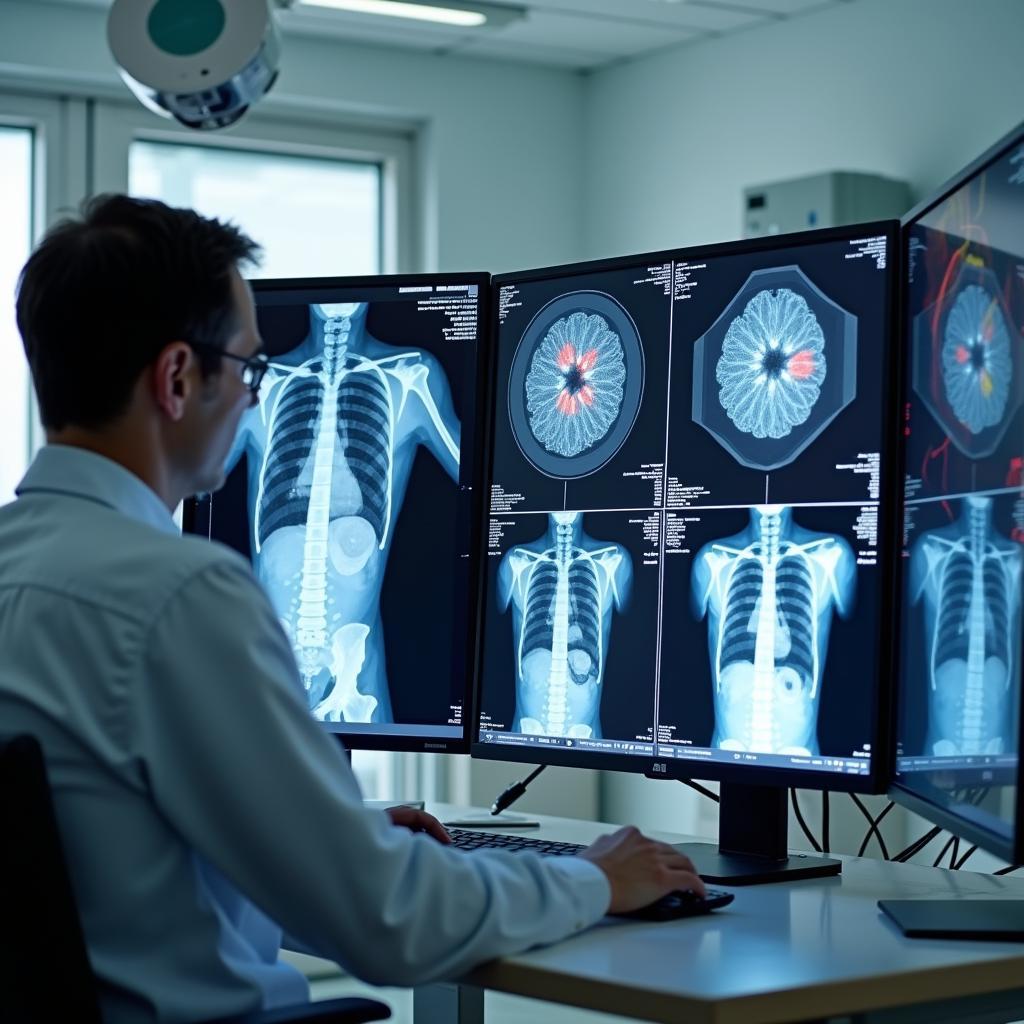
Mở Bài
Chủ đề công nghệ và trí tuệ nhân tạo, đặc biệt là sự phát triển của trợ lý ảo trong cuộc sống hàng ngày, đang ngày càng trở nên phổ biến trong các đề thi IELTS Reading. Với sự bùng nổ của các nền tảng như Siri, Alexa, Google Assistant, chủ đề này không chỉ liên quan đến công nghệ mà còn chạm đến nhiều khía cạnh của đời sống xã hội, kinh tế và văn hóa hiện đại.
Trong bài viết này, bạn sẽ được trải nghiệm một bộ đề thi IELTS Reading hoàn chỉnh với 3 passages (dễ đến khó) về sự trỗi dậy của trợ lý ảo. Đề thi bao gồm 40 câu hỏi đa dạng với nhiều dạng bài khác nhau như Multiple Choice, True/False/Not Given, Matching Headings, và Summary Completion – hoàn toàn giống với bài thi IELTS thực tế.
Bạn cũng sẽ nhận được đáp án chi tiết kèm giải thích từng câu, hướng dẫn cách xác định thông tin trong bài đọc, và danh sách từ vựng quan trọng theo từng passage. Đề thi này phù hợp cho học viên từ band 5.0 trở lên, giúp bạn làm quen với format bài thi, rèn luyện kỹ năng đọc hiểu và quản lý thời gian hiệu quả.
1. Hướng Dẫn Làm Bài IELTS Reading
Tổng Quan Về IELTS Reading Test
IELTS Reading Test kéo dài 60 phút với 3 passages và tổng cộng 40 câu hỏi. Mỗi passage có độ dài khoảng 700-900 từ và độ khó tăng dần từ Passage 1 đến Passage 3.
Phân bổ thời gian khuyến nghị:
- Passage 1: 15-17 phút (độ khó Easy – Band 5.0-6.5)
- Passage 2: 18-20 phút (độ khó Medium – Band 6.0-7.5)
- Passage 3: 23-25 phút (độ khó Hard – Band 7.0-9.0)
Lưu ý rằng không có thời gian bổ sung để chuyển đáp án sang answer sheet, vì vậy bạn cần quản lý thời gian thật tốt trong suốt 60 phút làm bài.
Các Dạng Câu Hỏi Trong Đề Này
Đề thi mẫu này bao gồm 7 dạng câu hỏi phổ biến nhất trong IELTS Reading:
- Multiple Choice – Trắc nghiệm chọn đáp án đúng
- True/False/Not Given – Xác định thông tin đúng, sai hoặc không được đề cập
- Matching Information – Nối thông tin với đoạn văn tương ứng
- Matching Headings – Chọn tiêu đề phù hợp cho các đoạn văn
- Summary Completion – Hoàn thành đoạn tóm tắt
- Matching Features – Nối đặc điểm với danh mục
- Short-answer Questions – Trả lời câu hỏi ngắn
2. IELTS Reading Practice Test
PASSAGE 1 – The Evolution of Virtual Assistants
Độ khó: Easy (Band 5.0-6.5)
Thời gian đề xuất: 15-17 phút
The concept of virtual assistants has transformed dramatically over the past two decades, evolving from simple automated systems to sophisticated artificial intelligence companions that can understand and respond to complex human requests. Today, millions of people around the world interact with virtual assistants such as Apple’s Siri, Amazon’s Alexa, Google Assistant, and Microsoft’s Cortana on a daily basis, often without giving it a second thought.
The journey began in the early 2000s when basic voice recognition technology started appearing in mobile phones and computers. These early systems could only understand a limited set of predetermined commands and often struggled with different accents or background noise. Users had to speak slowly and clearly, and even then, the accuracy rate was disappointingly low. However, these rudimentary systems laid the groundwork for the sophisticated assistants we use today.
A major breakthrough came in 2011 when Apple introduced Siri with the iPhone 4S. For the first time, a virtual assistant could engage in what felt like a natural conversation, answering questions, setting reminders, and even displaying a sense of humour through pre-programmed witty responses. Siri’s launch marked a turning point in consumer technology, demonstrating that virtual assistants could be both useful and entertaining. The success of Siri prompted other major technology companies to invest heavily in developing their own virtual assistant platforms.
Amazon took a different approach when it launched Alexa in 2014, embedding the assistant in a standalone smart speaker called the Echo. Rather than being confined to a smartphone, Alexa was designed to be a central hub for the smart home, capable of controlling lights, thermostats, and other connected devices through simple voice commands. This innovative strategy proved highly successful, with millions of Echo devices sold worldwide and Alexa becoming synonymous with smart home technology.
The technology behind modern virtual assistants relies on several key components. First, there is speech recognition, which converts spoken words into text that computers can process. This involves complex algorithms that can distinguish between similar-sounding words and filter out background noise. Second, there is natural language processing (NLP), which allows the system to understand the meaning and intent behind the words. NLP has advanced significantly in recent years, thanks to machine learning techniques that enable systems to learn from millions of previous interactions.
Third, virtual assistants need access to vast amounts of information to answer questions and complete tasks. They connect to cloud-based databases and search engines, pulling relevant information in milliseconds. Finally, there is speech synthesis, which converts the assistant’s text responses back into natural-sounding speech. Modern systems use neural networks to generate speech that sounds increasingly human-like, with appropriate intonation and emotional tone.
The adoption of virtual assistants has been particularly rapid among younger demographics. According to a 2022 survey, over 65% of smartphone users aged 18-35 interact with a virtual assistant at least once per week, compared to just 28% of users over 55. The most common uses include setting alarms and reminders, checking the weather, playing music, and asking general knowledge questions. However, as the technology improves, people are finding increasingly creative applications, from ordering groceries to booking medical appointments.
Despite their growing popularity, virtual assistants face several challenges. Privacy concerns remain a significant issue, as these systems must continuously listen for their wake word (such as “Hey Siri” or “OK Google”), raising questions about what data is being collected and how it is used. There have been several high-profile incidents where virtual assistants have recorded private conversations and sent them to unintended recipients, causing public outcry and regulatory scrutiny.
Another challenge is linguistic diversity. While virtual assistants work relatively well in English and a few other major languages, they struggle with many of the world’s 7,000+ languages, regional dialects, and code-switching (when speakers alternate between languages in a single conversation). Technology companies are working to improve multilingual support, but progress has been slow, potentially excluding billions of users from accessing these technologies.
Looking ahead, experts predict that virtual assistants will become even more integrated into our daily routines. Future developments may include proactive assistance, where the system anticipates your needs before you ask, emotional intelligence that can detect and respond to your mood, and seamless integration across all your devices, creating a consistent experience whether you’re at home, in your car, or on the go. As these systems continue to evolve, the line between human and artificial intelligence interaction will become increasingly blurred, raising important questions about our relationship with technology and the future of human communication.
Questions 1-6
Do the following statements agree with the information given in the passage?
Write:
- TRUE if the statement agrees with the information
- FALSE if the statement contradicts the information
- NOT GIVEN if there is no information on this
- Early voice recognition systems in the 2000s could understand any accent without difficulty.
- Siri was the first virtual assistant that could have natural-sounding conversations with users.
- Amazon designed Alexa primarily to control smart home devices.
- Natural language processing has improved due to machine learning technologies.
- Virtual assistants can only access information stored locally on the device.
- More young people use virtual assistants regularly compared to older users.
Questions 7-10
Complete the sentences below.
Choose NO MORE THAN TWO WORDS from the passage for each answer.
- Siri demonstrated that virtual assistants could be practical as well as __.
- Modern speech synthesis uses __ to create more human-like voices.
- One major concern about virtual assistants is the issue of __.
- Virtual assistants have difficulty with __ when people mix languages in conversation.
Questions 11-13
Choose the correct letter, A, B, C or D.
- What was the main limitation of early voice recognition systems?
- A. They were too expensive for most consumers
- B. They could only understand a small number of commands
- C. They required internet connection to function
- D. They were only available on computers
- According to the passage, what percentage of smartphone users over 55 use virtual assistants weekly?
- A. 18%
- B. 28%
- C. 35%
- D. 65%
- What do experts predict about future virtual assistants?
- A. They will replace human communication entirely
- B. They will work only on smartphones
- C. They will anticipate users’ needs before being asked
- D. They will become cheaper and more accessible
PASSAGE 2 – The Impact of Virtual Assistants on Modern Society
Độ khó: Medium (Band 6.0-7.5)
Thời gian đề xuất: 18-20 phút
The proliferation of virtual assistants represents more than just a technological advancement; it signifies a fundamental shift in how humans interact with information, conduct daily tasks, and conceptualize the role of technology in their lives. This transformation has far-reaching implications across multiple sectors of society, from healthcare and education to commerce and entertainment, while simultaneously raising complex questions about digital dependency, algorithmic bias, and the future of work.
In the healthcare sector, virtual assistants are revolutionizing patient care and medical administration. Hospitals and clinics are deploying these systems to handle appointment scheduling, prescription refills, and basic triage services, significantly reducing the administrative burden on healthcare professionals. Patients with chronic conditions can use virtual assistants to track symptoms, receive medication reminders, and even detect early warning signs of health deterioration. A study conducted by the Journal of Medical Internet Research found that patients using voice-activated health monitoring reported a 23% improvement in medication adherence compared to those using traditional reminder methods.
However, the integration of virtual assistants into healthcare raises ethical considerations. Medical information is highly sensitive, and the storage and processing of health data by third-party technology companies creates potential vulnerabilities. The question of data ownership becomes particularly contentious when considering that the insights derived from aggregated patient data could be valuable for medical research, pharmaceutical development, or even insurance risk assessment. Regulatory frameworks such as HIPAA in the United States and GDPR in Europe attempt to address these concerns, but the rapid pace of technological change often outstrips the ability of legislation to keep pace.
The educational landscape has also been transformed by virtual assistant technology. Students now use these tools for research, language learning, and homework assistance, though this has sparked debate about academic integrity and the development of critical thinking skills. Proponents argue that virtual assistants democratize access to information and can provide personalized learning experiences tailored to individual student needs. A virtual assistant can adapt its explanations based on a student’s comprehension level, provide immediate feedback, and offer unlimited patience – qualities that may be difficult for human teachers to consistently provide in overcrowded classrooms.
Critics, however, caution that over-reliance on virtual assistants may atrophy students’ ability to conduct independent research, evaluate source credibility, and develop problem-solving skills. When answers are instantly available through voice commands, students may lack the motivation to engage in the cognitively demanding process of working through problems themselves. Some educators have observed a decline in students’ tolerance for intellectual struggle, which is paradoxically essential for deep learning and knowledge retention. The challenge for educational institutions is to integrate these technologies in ways that enhance rather than replace fundamental learning processes.
In the commercial sphere, virtual assistants have become powerful tools for consumer engagement and sales conversion. Companies are implementing these systems to provide 24/7 customer service, guide purchasing decisions, and create personalized shopping experiences. The global market for virtual assistant applications in retail is projected to reach $15 billion by 2025, reflecting the significant return on investment that businesses are experiencing. Virtual assistants can analyze purchasing patterns, predict consumer preferences, and make targeted recommendations with a level of precision that human sales associates would find challenging to match.
This commercial application, however, introduces concerns about manipulative marketing practices and the erosion of consumer autonomy. Virtual assistants designed to maximize sales may exploit psychological vulnerabilities or employ persuasive techniques that consumers are unaware of. The anthropomorphization of these systems – giving them human names, personalities, and conversational styles – may create a false sense of trust and relationship that serves commercial rather than consumer interests. Consumer protection agencies are beginning to grapple with questions about disclosure requirements and the extent to which companies must be transparent about the commercial motivations underlying virtual assistant recommendations.
The workplace impact of virtual assistants represents another significant dimension of their societal influence. These systems are augmenting human capabilities in numerous professions, from legal research and financial analysis to journalism and creative writing. Virtual assistants can process vast quantities of information, identify patterns, and generate preliminary reports, allowing professionals to focus on higher-level analysis and decision-making. This human-AI collaboration model has the potential to increase productivity and job satisfaction by eliminating tedious tasks.
Nevertheless, there are legitimate concerns about job displacement and the devaluation of certain skills. Administrative assistants, customer service representatives, and data entry specialists face an uncertain future as virtual assistants become capable of performing many of their traditional functions. The socioeconomic implications of this transition are substantial, potentially exacerbating income inequality if displaced workers lack opportunities for retraining and upward mobility. Forward-thinking organizations and policymakers are exploring solutions such as universal basic income, lifelong learning initiatives, and the creation of new job categories that leverage uniquely human capabilities such as emotional intelligence, creative problem-solving, and ethical judgment.
The psychological and social effects of widespread virtual assistant adoption constitute an emerging area of research. Some psychologists express concern about the impact on human communication skills, particularly among younger generations who may develop conversational patterns optimized for AI interaction rather than human connection. The directness and efficiency required when speaking to virtual assistants – avoiding ambiguity, speaking clearly, using specific commands – differs markedly from the nuanced, context-dependent nature of human conversation. There is ongoing debate about whether this represents a concerning degradation of social skills or simply an adaptation to a new technological reality.
Conversely, virtual assistants may provide valuable social surrogates for individuals experiencing loneliness or social isolation. Elderly individuals living alone, people with social anxiety, or those in remote locations may find companionship and mental stimulation through regular interaction with virtual assistants. While these artificial relationships cannot fully replace human connection, they may serve as supplementary sources of engagement and cognitive stimulation. Research into the therapeutic potential of virtual assistants for mental health support is still in its early stages but shows promising preliminary results.
As virtual assistants become increasingly sophisticated and ubiquitous, society faces the challenge of maximizing their benefits while mitigating their risks. This requires ongoing dialogue among technologists, ethicists, policymakers, and the public to establish appropriate governance frameworks, ensure equitable access, and preserve fundamental human values in an increasingly AI-mediated world. The trajectory of virtual assistant development will ultimately reflect the priorities and choices we make collectively about the type of future we wish to create.
Questions 14-19
Choose the correct letter, A, B, C or D.
- According to the passage, what percentage improvement in medication adherence was found in patients using voice-activated monitoring?
- A. 15%
- B. 23%
- C. 32%
- D. 65%
- What is described as a major concern regarding virtual assistants in healthcare?
- A. They are too expensive for most hospitals
- B. Patients don’t trust them with health information
- C. Third-party companies storing sensitive medical data
- D. They make too many diagnostic errors
- Critics of virtual assistants in education worry that students may lose their ability to:
- A. Use technology effectively
- B. Conduct independent research
- C. Work in groups
- D. Follow teacher instructions
- What is the projected market value for virtual assistant applications in retail by 2025?
- A. $5 billion
- B. $10 billion
- C. $15 billion
- D. $20 billion
- Which professions are mentioned as being augmented by virtual assistants?
- A. Medical doctors and nurses
- B. Construction workers and engineers
- C. Legal researchers and financial analysts
- D. Teachers and school administrators
- According to the passage, virtual assistants may be particularly beneficial for:
- A. Children learning to read
- B. Athletes training for competitions
- C. People experiencing social isolation
- D. Business executives making decisions
Questions 20-23
Complete the summary below.
Choose NO MORE THAN TWO WORDS from the passage for each answer.
Virtual assistants are transforming multiple aspects of society, though their integration raises important concerns. In healthcare, while they improve patient care, questions about (20) __ become problematic when technology companies handle sensitive information. In education, there are worries that students may lose their (21) __ if they rely too heavily on instant answers. In the business world, the (22) __ of virtual assistants – giving them human characteristics – may create false trust. Meanwhile, the workplace is seeing (23) __ between humans and AI, though this raises concerns about job displacement.
Questions 24-26
Do the following statements agree with the views of the writer in the passage?
Write:
- YES if the statement agrees with the views of the writer
- NO if the statement contradicts the views of the writer
- NOT GIVEN if it is impossible to say what the writer thinks about this
- Virtual assistants will completely replace the need for human teachers in the future.
- The development of virtual assistants requires collaboration between different groups in society.
- Artificial relationships with virtual assistants are equally valuable as human connections.
PASSAGE 3 – The Technological Architecture and Future Trajectory of Virtual Assistant Systems
Độ khó: Hard (Band 7.0-9.0)
Thời gian đề xuất: 23-25 phút
The technical underpinnings of contemporary virtual assistant systems represent a convergence of multiple cutting-edge artificial intelligence technologies, each contributing distinct capabilities that collectively enable the remarkably sophisticated interactions users have come to expect. Understanding the intricate architecture of these systems reveals not only the current state of AI development but also illuminates the formidable challenges that must be overcome to realize the full potential of human-computer symbiosis envisioned by pioneers in the field.
At the foundational level, modern virtual assistants employ deep neural networks – computational models inspired by the structure of the human brain – to process and interpret human speech. These networks consist of multiple layers of interconnected nodes that can learn hierarchical representations of data through exposure to vast training datasets. The acoustic modeling component analyzes the audio signal to identify phonemes (the smallest units of sound in language), while the language model uses probabilistic algorithms to predict the most likely sequence of words given the identified phonemes. This two-stage process must occur with minimal latency to create the impression of instantaneous comprehension that users expect.
The training of these neural networks requires unprecedented computational resources and data volumes. Companies like Google, Amazon, and Apple have invested billions of dollars in building specialized hardware such as Tensor Processing Units (TPUs) and collecting diverse speech datasets representing multiple languages, dialects, accents, and speaking conditions. These datasets may contain hundreds of thousands of hours of transcribed speech, carefully annotated to include information about speaker demographics, emotional state, and contextual factors. The ethical dimensions of this data collection are contentious, particularly regarding questions of informed consent, demographic representation, and the potential for perpetuating biases present in the training data.
Once speech is converted to text, natural language understanding (NLU) systems must extract meaning from the words. This involves several subsidiary tasks: intent recognition (determining what the user wants to accomplish), entity extraction (identifying relevant objects, people, places, or concepts mentioned), and context tracking (maintaining awareness of the ongoing conversation). Modern NLU systems utilize transformer architectures, a neural network design introduced in 2017 that has revolutionized natural language processing through its ability to capture long-range dependencies and contextual relationships within text.
The pre-training and fine-tuning paradigm has emerged as the predominant approach in developing NLU capabilities. Large language models such as GPT (Generative Pre-trained Transformer) and BERT (Bidirectional Encoder Representations from Transformers) are first trained on massive text corpora encompassing billions of words from books, websites, and other sources. This unsupervised learning phase allows the model to develop a nuanced understanding of language structure, semantic relationships, and world knowledge. Subsequently, the model undergoes supervised fine-tuning on specific tasks relevant to virtual assistant functionality, such as question answering, sentiment analysis, or dialogue management.
However, these approaches face inherent limitations. Current language models exhibit a form of superficial understanding – they can identify patterns and generate plausible-sounding responses based on statistical correlations in their training data, but they lack genuine comprehension or reasoning capabilities. They may produce confidently stated but factually incorrect information, struggle with logical consistency across extended conversations, and fail to recognize when they are being asked about concepts beyond their training. Addressing these limitations represents one of the central challenges in advancing virtual assistant technology toward more robust and trustworthy systems.
The knowledge integration component of virtual assistants connects language understanding to actionable information. This typically involves querying structured databases, such as knowledge graphs that represent entities and their relationships, as well as accessing unstructured information through search engines and web scraping. The challenge lies in synthesizing information from multiple sources that may contain contradictory or outdated information, and presenting it to users in a coherent and reliable manner. Emerging approaches incorporate confidence scoring, which attempts to quantify the reliability of information, and source attribution, which allows users to verify claims by referring to original sources.
The dialogue management system orchestrates the overall interaction, determining when to ask clarifying questions, how to handle ambiguous requests, and when to proactively suggest related actions or information. Reinforcement learning techniques are increasingly employed to optimize dialogue strategies, with the system receiving reward signals based on user satisfaction indicators such as task completion rates, conversation length, and explicit feedback. However, designing appropriate reward functions that capture the multifaceted nature of successful human-computer interaction remains an open research question.
Personalization represents another critical dimension of virtual assistant functionality. These systems collect and analyze user data – including search history, location patterns, purchase behavior, and communication networks – to tailor responses and anticipate needs. While personalization enhances user experience and utility, it also intensifies privacy concerns and creates filter bubbles where users are primarily exposed to information that reinforces existing preferences and perspectives. The opacity of personalization algorithms – often considered proprietary trade secrets by technology companies – makes it difficult for users to understand why they receive particular recommendations or how their data influences system behavior.
Looking toward future developments, several technological trajectories are likely to shape the next generation of virtual assistants. Multimodal integration will enable systems to process and combine information from speech, text, images, and video, creating richer and more contextually aware interactions. For instance, a user might point to an object while asking “What is this?” or share a photograph while requesting related information. Emotional intelligence capabilities will allow virtual assistants to detect and respond appropriately to user affective states, potentially offering support during stressful situations or adjusting interaction style based on detected frustration or confusion.
Federated learning represents a promising approach to enhancing privacy while maintaining the benefits of large-scale data collection. In this paradigm, models are trained locally on individual devices using user data, and only the model updates (rather than raw data) are shared with central servers. This allows systems to learn from collective user behavior while preserving individual privacy. However, federated learning introduces technical challenges related to communication efficiency, model aggregation across heterogeneous devices, and protection against adversarial attacks that might attempt to manipulate the shared model.
The development of explainable AI methods will be crucial for building user trust and enabling meaningful oversight of virtual assistant systems. Current deep learning models function as “black boxes” – even their creators cannot fully explain why specific inputs produce particular outputs. Research into interpretability techniques aims to make AI decision-making more transparent, allowing users and regulators to understand, verify, and potentially contest the reasoning behind virtual assistant responses and recommendations. This transparency is particularly important when these systems influence consequential decisions in domains such as healthcare, finance, or employment.
Perhaps most ambitiously, researchers are exploring artificial general intelligence (AGI) – systems capable of flexible reasoning and adaptation across diverse domains, approaching human-level cognitive capabilities. While current virtual assistants represent narrow AI optimized for specific tasks, AGI would enable truly autonomous assistants capable of creative problem-solving, ethical reasoning, and genuine understanding of user needs and context. The timeline for achieving AGI remains highly uncertain, with estimates ranging from decades to never, and the pursuit raises profound philosophical questions about consciousness, moral status, and the appropriate relationship between humans and artificial intelligence.
The trajectory of virtual assistant technology will ultimately be determined not solely by technical capabilities but by societal choices regarding regulation, ethical boundaries, and the distribution of benefits and risks. As these systems become increasingly integral to daily life, ensuring they serve broad social interests rather than narrow commercial objectives becomes imperative. The challenge facing contemporary society is to harness the transformative potential of virtual assistants while safeguarding human autonomy, dignity, and the fundamental values that define our humanity.
Questions 27-31
Complete the sentences below.
Choose NO MORE THAN THREE WORDS from the passage for each answer.
- Deep neural networks learn __ of data through exposure to large training datasets.
- The training of neural networks requires specialized hardware such as __.
- Modern NLU systems use __, a neural network design introduced in 2017.
- Current language models can produce responses that sound plausible but may lack __.
- The __ system manages the overall interaction and determines when to ask follow-up questions.
Questions 32-36
Do the following statements agree with the information given in the passage?
Write:
- TRUE if the statement agrees with the information
- FALSE if the statement contradicts the information
- NOT GIVEN if there is no information on this
- Tensor Processing Units were specifically designed for training virtual assistant systems.
- The training datasets for virtual assistants include information about speaker emotions and context.
- Current language models have genuine reasoning capabilities similar to humans.
- Federated learning allows systems to learn from user behavior while protecting individual privacy.
- Researchers have already achieved artificial general intelligence in laboratory settings.
Questions 33-37
Match each concept with its correct description.
Choose the correct letter, A-H.
Concepts:
37. Acoustic modeling
38. Intent recognition
39. Knowledge graphs
40. Filter bubbles
Descriptions:
A. Databases that show relationships between different entities
B. Situations where users only see information matching their preferences
C. The process of identifying what a user wants to accomplish
D. Analysis of audio signals to identify basic sound units
E. Methods for protecting user data during transmission
F. Techniques for making AI decisions more transparent
G. The ability to combine information from multiple sources
H. Systems that can reason across different domains
Questions 38-40
Choose the correct letter, A, B, C or D.
- According to the passage, what is a major limitation of current language models?
- A. They process information too slowly
- B. They are too expensive to operate
- C. They lack genuine comprehension and reasoning
- D. They cannot understand multiple languages
- What is the purpose of explainable AI methods?
- A. To make AI systems work faster
- B. To reduce the cost of AI development
- C. To make AI decision-making more transparent
- D. To help AI systems learn new languages
- What does the passage suggest about the future of virtual assistant technology?
- A. It will be determined purely by technical advances
- B. It requires societal decisions about regulation and ethics
- C. It will inevitably lead to artificial general intelligence
- D. It will remain focused on narrow, specific tasks
 Trợ lý ảo thông minh tương tác với người dùng trong cuộc sống hàng ngày hiện đại
3. Answer Keys – Đáp Án
PASSAGE 1: Questions 1-13
- FALSE
- TRUE
- TRUE
- TRUE
- FALSE
- TRUE
- entertaining
- neural networks
- privacy
- code-switching
- B
- B
- C
PASSAGE 2: Questions 14-26
- B
- C
- B
- C
- C
- C
- data ownership
- critical thinking (skills)
- anthropomorphization
- human-AI collaboration
- NOT GIVEN
- YES
- NO
PASSAGE 3: Questions 27-40
- hierarchical representations
- Tensor Processing Units / TPUs
- transformer architectures
- genuine comprehension / genuine understanding
- dialogue management
- NOT GIVEN
- TRUE
- FALSE
- TRUE
- FALSE
- D
- C
- A
- B
- C
- C
- B
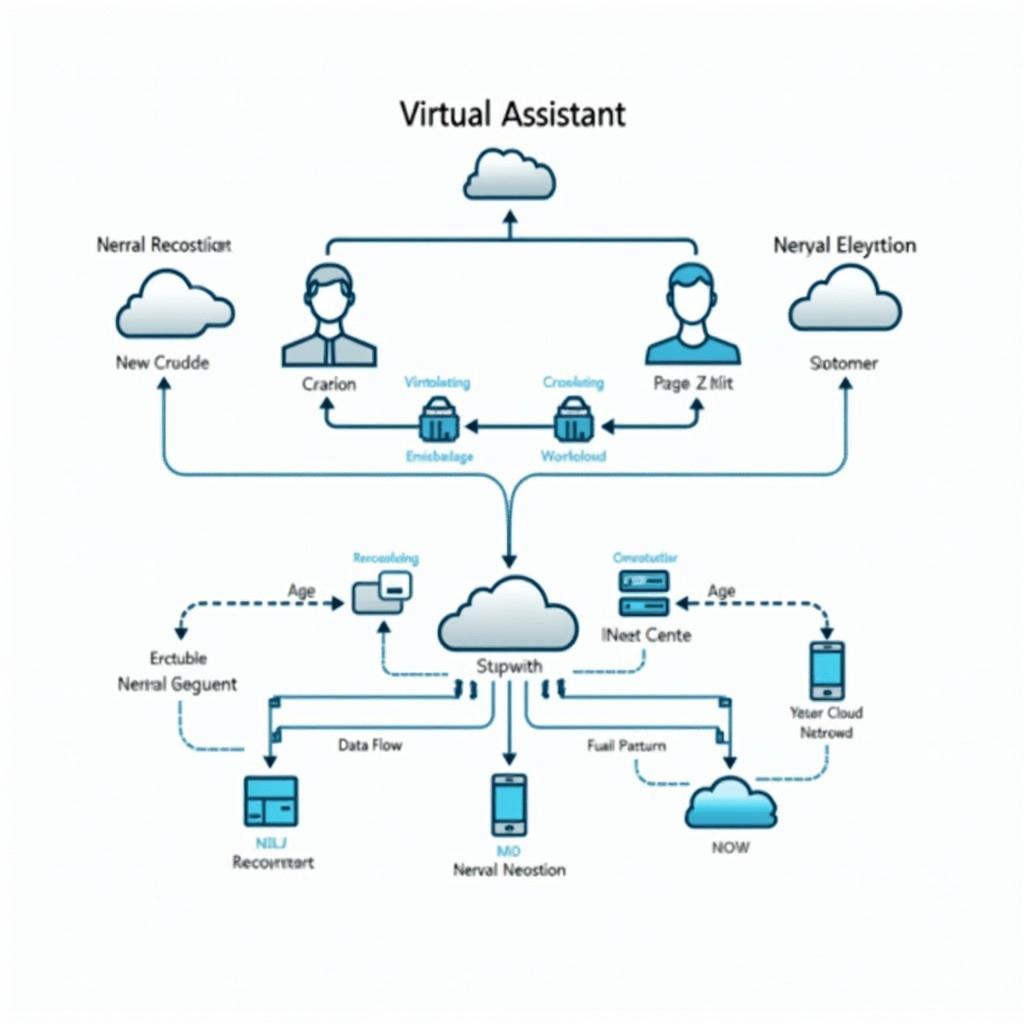 Công nghệ trí tuệ nhân tạo đằng sau hệ thống trợ lý ảo hiện đại
4. Giải Thích Đáp Án Chi Tiết
Passage 1 – Giải Thích
Câu 1: FALSE
- Dạng câu hỏi: True/False/Not Given
- Từ khóa: Early voice recognition systems, 2000s, understand any accent
- Vị trí trong bài: Đoạn 2, dòng 1-3
- Giải thích: Bài đọc nói rõ “These early systems could only understand a limited set of predetermined commands and often struggled with different accents or background noise” (các hệ thống này thường gặp khó khăn với các giọng khác nhau). Điều này trái ngược với câu hỏi nói rằng chúng có thể hiểu mọi giọng mà không gặp khó khăn.
Câu 2: TRUE
- Dạng câu hỏi: True/False/Not Given
- Từ khóa: Siri, first virtual assistant, natural-sounding conversations
- Vị trí trong bài: Đoạn 3, dòng 1-2
- Giải thích: Bài viết khẳng định “A major breakthrough came in 2011 when Apple introduced Siri… For the first time, a virtual assistant could engage in what felt like a natural conversation”. Đây là paraphrase trực tiếp của câu hỏi.
Câu 3: TRUE
- Dạng câu hỏi: True/False/Not Given
- Từ khóa: Amazon, Alexa, designed, control smart home devices
- Vị trí trong bài: Đoạn 4, dòng 2-3
- Giải thích: Passage nói “Alexa was designed to be a central hub for the smart home, capable of controlling lights, thermostats, and other connected devices”. Câu này xác nhận Alexa được thiết kế chủ yếu để điều khiển thiết bị nhà thông minh.
Câu 4: TRUE
- Dạng câu hỏi: True/False/Not Given
- Từ khóa: Natural language processing, improved, machine learning
- Vị trí trong bài: Đoạn 5, dòng 3-4
- Giải thích: Bài đọc đề cập “NLP has advanced significantly in recent years, thanks to machine learning techniques”. Đây là paraphrase của câu hỏi với “improved” tương đương “advanced” và “due to” tương đương “thanks to”.
Câu 5: FALSE
- Dạng câu hỏi: True/False/Not Given
- Từ khóa: Virtual assistants, access information, locally on device
- Vị trí trong bài: Đoạn 6, dòng 1-2
- Giải thích: Passage nói rõ “They connect to cloud-based databases and search engines, pulling relevant information in milliseconds”. Điều này cho thấy trợ lý ảo kết nối với cơ sở dữ liệu trên đám mây, không chỉ lưu trữ cục bộ.
Câu 6: TRUE
- Dạng câu hỏi: True/False/Not Given
- Từ khóa: Young people, use virtual assistants, more than older users
- Vị trí trong bài: Đoạn 7, dòng 2-4
- Giải thích: Bài viết cung cấp số liệu cụ thể: “over 65% of smartphone users aged 18-35 interact with a virtual assistant at least once per week, compared to just 28% of users over 55”, chứng minh người trẻ sử dụng nhiều hơn.
Câu 7: entertaining
- Dạng câu hỏi: Sentence Completion
- Từ khóa: Siri demonstrated, practical, as well as
- Vị trí trong bài: Đoạn 3, dòng 4-5
- Giải thích: Câu gốc trong bài: “demonstrating that virtual assistants could be both useful and entertaining”. “Useful” được paraphrase thành “practical” trong câu hỏi.
Câu 8: neural networks
- Dạng câu hỏi: Sentence Completion
- Từ khóa: Modern speech synthesis, create human-like voices
- Vị trí trong bài: Đoạn 6, dòng 4-5
- Giải thích: Bài đọc nói “Modern systems use neural networks to generate speech that sounds increasingly human-like”.
Câu 9: privacy
- Dạng câu hỏi: Sentence Completion
- Từ khóa: Major concern, virtual assistants
- Vị trí trong bài: Đoạn 8, dòng 1
- Giải thích: Đoạn văn bắt đầu bằng “Privacy concerns remain a significant issue”, trong đó “significant issue” được paraphrase thành “major concern” trong câu hỏi.
Câu 10: code-switching
- Dạng câu hỏi: Sentence Completion
- Từ khóa: Virtual assistants, difficulty, people mix languages
- Vị trí trong bài: Đoạn 9, dòng 2-3
- Giải thích: Bài viết đề cập “code-switching (when speakers alternate between languages in a single conversation)” là một thách thức.
Câu 11: B
- Dạng câu hỏi: Multiple Choice
- Từ khóa: Main limitation, early voice recognition systems
- Vị trí trong bài: Đoạn 2, dòng 1-2
- Giải thích: Câu “These early systems could only understand a limited set of predetermined commands” tương ứng với đáp án B – “They could only understand a small number of commands”.
Câu 12: B
- Dạng câu hỏi: Multiple Choice
- Từ khóa: Percentage, smartphone users over 55, use weekly
- Vị trí trong bài: Đoạn 7, dòng 3-4
- Giải thích: Số liệu được nêu rõ ràng: “just 28% of users over 55” sử dụng trợ lý ảo ít nhất một lần mỗi tuần.
Câu 13: C
- Dạng câu hỏi: Multiple Choice
- Từ khóa: Experts predict, future virtual assistants
- Vị trí trong bài: Đoạn 10, dòng 2-3
- Giải thích: Bài viết đề cập “Future developments may include proactive assistance, where the system anticipates your needs before you ask”, tương ứng với đáp án C.
Passage 2 – Giải Thích
Câu 14: B
- Dạng câu hỏi: Multiple Choice
- Từ khóa: Percentage improvement, medication adherence, voice-activated monitoring
- Vị trí trong bài: Đoạn 2, dòng 4-5
- Giải thích: Con số được nêu rõ: “reported a 23% improvement in medication adherence”.
Câu 15: C
- Dạng câu hỏi: Multiple Choice
- Từ khóa: Major concern, virtual assistants, healthcare
- Vị trí trong bài: Đoạn 3, dòng 2-3
- Giải thích: Bài đọc nhấn mạnh “the storage and processing of health data by third-party technology companies creates potential vulnerabilities” là mối quan ngại chính.
Câu 16: B
- Dạng câu hỏi: Multiple Choice
- Từ khóa: Critics, education, students may lose
- Vị trí trong bài: Đoạn 5, dòng 1-2
- Giải thích: Passage đề cập “over-reliance on virtual assistants may atrophy students’ ability to conduct independent research”, tương ứng với đáp án B.
Câu 17: C
- Dạng câu hỏi: Multiple Choice
- Từ khóa: Projected market value, retail, 2025
- Vị trí trong bài: Đoạn 6, dòng 3-4
- Giải thích: Số liệu cụ thể: “projected to reach $15 billion by 2025”.
Câu 18: C
- Dạng câu hỏi: Multiple Choice
- Từ khóa: Professions, augmented by virtual assistants
- Vị trí trong bài: Đoạn 8, dòng 2
- Giải thích: Bài viết liệt kê “from legal research and financial analysis to journalism and creative writing”, trong đó legal research và financial analysis tương ứng với đáp án C.
Câu 19: C
- Dạng câu hỏi: Multiple Choice
- Từ khóa: Virtual assistants, particularly beneficial
- Vị trí trong bài: Đoạn 10, dòng 1-2
- Giải thích: Passage nói “virtual assistants may provide valuable social surrogates for individuals experiencing loneliness or social isolation”, tương ứng với đáp án C.
Câu 20: data ownership
- Dạng câu hỏi: Summary Completion
- Từ khóa: Healthcare, questions, technology companies, sensitive information
- Vị trí trong bài: Đoạn 3, dòng 3
- Giải thích: Câu gốc: “The question of data ownership becomes particularly contentious”.
Câu 21: critical thinking (skills)
- Dạng câu hỏi: Summary Completion
- Từ khóa: Education, students may lose, rely heavily on instant answers
- Vị trí trong bài: Đoạn 4, dòng 2
- Giải thích: Bài đọc đề cập lo ngại về “the development of critical thinking skills”.
Câu 22: anthropomorphization
- Dạng câu hỏi: Summary Completion
- Từ khóa: Business world, giving them human characteristics, false trust
- Vị trí trong bài: Đoạn 7, dòng 2-3
- Giải thích: Passage giải thích “The anthropomorphization of these systems – giving them human names, personalities, and conversational styles – may create a false sense of trust”.
Câu 23: human-AI collaboration
- Dạng câu hỏi: Summary Completion
- Từ khóa: Workplace, between humans and AI
- Vị trí trong bài: Đoạn 8, dòng 4
- Giải thích: Câu trong bài: “This human-AI collaboration model has the potential to increase productivity”.
Câu 24: NOT GIVEN
- Dạng câu hỏi: Yes/No/Not Given
- Giải thích: Bài viết không đưa ra quan điểm rằng trợ lý ảo sẽ hoàn toàn thay thế giáo viên. Nó chỉ thảo luận về lợi ích và lo ngại, nhưng không khẳng định về sự thay thế hoàn toàn trong tương lai.
Câu 25: YES
- Dạng câu hỏi: Yes/No/Not Given
- Vị trí trong bài: Đoạn 11, dòng 1-2
- Giải thích: Đoạn cuối nói rõ “This requires ongoing dialogue among technologists, ethicists, policymakers, and the public”, thể hiện quan điểm của tác giả về sự cần thiết của collaboration.
Câu 26: NO
- Dạng câu hỏi: Yes/No/Not Given
- Vị trí trong bài: Đoạn 10, dòng 3-4
- Giải thích: Bài viết nói “While these artificial relationships cannot fully replace human connection”, cho thấy tác giả không đồng ý rằng chúng có giá trị ngang nhau.
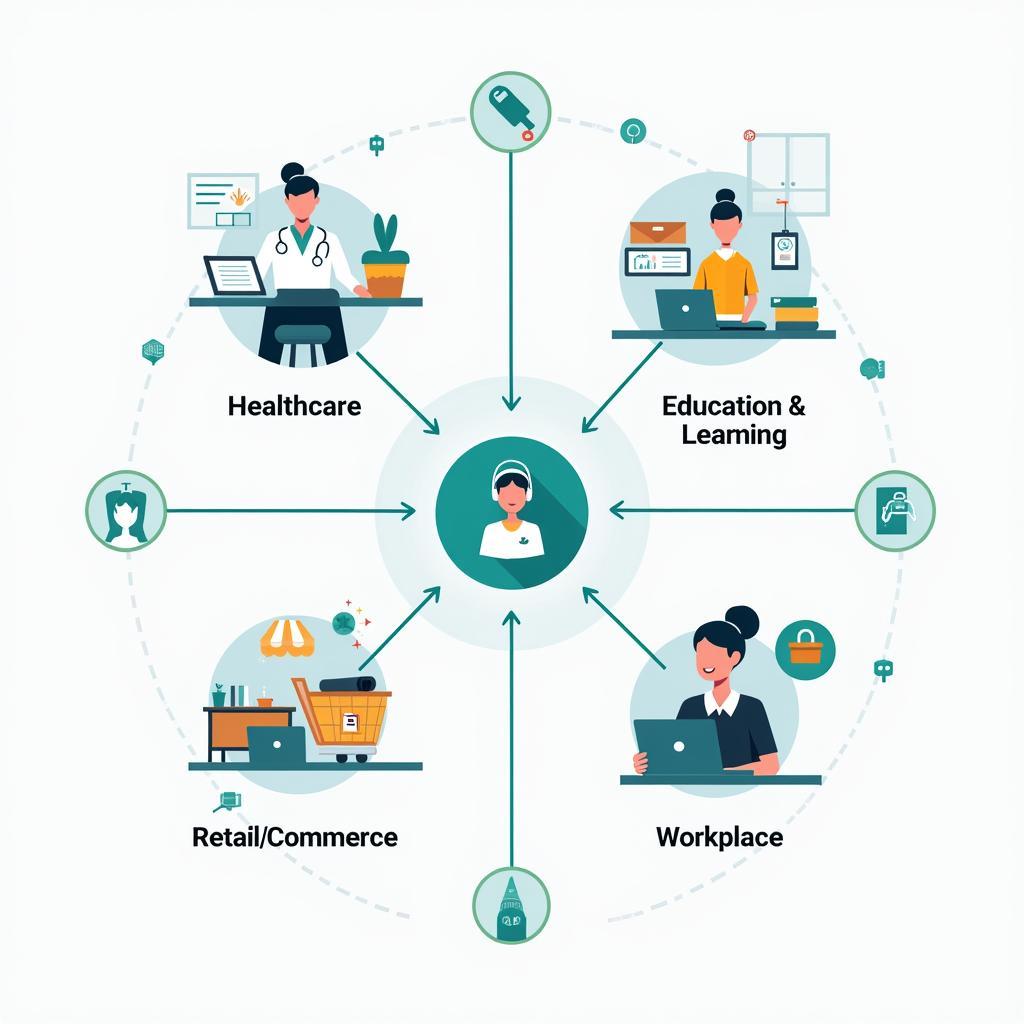 Ảnh hưởng của trợ lý ảo đến các lĩnh vực xã hội hiện đại
Passage 3 – Giải Thích
Câu 27: hierarchical representations
- Dạng câu hỏi: Sentence Completion
- Từ khóa: Deep neural networks, learn, data, training datasets
- Vị trí trong bài: Đoạn 2, dòng 2-3
- Giải thích: Câu gốc: “can learn hierarchical representations of data through exposure to vast training datasets”.
Câu 28: Tensor Processing Units / TPUs
- Dạng câu hỏi: Sentence Completion
- Từ khóa: Training neural networks, specialized hardware
- Vị trí trong bài: Đoạn 3, dòng 2-3
- Giải thích: Bài viết nêu rõ “building specialized hardware such as Tensor Processing Units (TPUs)”.
Câu 29: transformer architectures
- Dạng câu hỏi: Sentence Completion
- Từ khóa: Modern NLU systems, neural network design, 2017
- Vị trí trong bài: Đoạn 4, dòng 4-5
- Giải thích: Passage đề cập “Modern NLU systems utilize transformer architectures, a neural network design introduced in 2017”.
Câu 30: genuine comprehension / genuine understanding
- Dạng câu hỏi: Sentence Completion
- Từ khóa: Current language models, plausible responses, may lack
- Vị trí trong bài: Đoạn 6, dòng 2-3
- Giải thích: Bài viết chỉ ra “they can identify patterns and generate plausible-sounding responses… but they lack genuine comprehension”.
Câu 31: dialogue management
- Dạng câu hỏi: Sentence Completion
- Từ khóa: System, manages interaction, determines when to ask
- Vị trí trong bài: Đoạn 8, dòng 1
- Giải thích: Câu mở đầu đoạn: “The dialogue management system orchestrates the overall interaction, determining when to ask clarifying questions”.
Câu 32: NOT GIVEN
- Dạng câu hỏi: True/False/Not Given
- Giải thích: Mặc dù bài viết đề cập TPUs là phần cứng chuyên dụng, nhưng không nói rõ chúng được thiết kế cụ thể cho việc huấn luyện trợ lý ảo. TPUs có thể có nhiều ứng dụng khác.
Câu 33: TRUE
- Dạng câu hỏi: True/False/Not Given
- Vị trí trong bài: Đoạn 3, dòng 4-5
- Giải thích: Passage nói “carefully annotated to include information about speaker demographics, emotional state, and contextual factors”.
Câu 34: FALSE
- Dạng câu hỏi: True/False/Not Given
- Vị trí trong bài: Đoạn 6, dòng 2-4
- Giải thích: Bài viết khẳng định rõ ràng “they lack genuine comprehension or reasoning capabilities”, trái ngược với câu hỏi.
Câu 35: TRUE
- Dạng câu hỏi: True/False/Not Given
- Vị trí trong bài: Đoạn 11, dòng 1-3
- Giải thích: Passage giải thích “models are trained locally on individual devices using user data… This allows systems to learn from collective user behavior while preserving individual privacy”.
Câu 36: FALSE
- Dạng câu hỏi: True/False/Not Given
- Vị trí trong bài: Đoạn 13, dòng 3-4
- Giải thích: Bài viết nói “The timeline for achieving AGI remains highly uncertain, with estimates ranging from decades to never”, cho thấy AGI chưa đạt được.
Câu 37: D
- Dạng câu hỏi: Matching Features
- Vị trí trong bài: Đoạn 2, dòng 4-5
- Giải thích: “The acoustic modeling component analyzes the audio signal to identify phonemes (the smallest units of sound in language)” – phân tích tín hiệu âm thanh để xác định đơn vị âm thanh cơ bản.
Câu 38: C
- Dạng câu hỏi: Matching Features
- Vị trí trong bài: Đoạn 4, dòng 2
- Giải thích: “intent recognition (determining what the user wants to accomplish)” – xác định người dùng muốn làm gì.
Câu 39: A
- Dạng câu hỏi: Matching Features
- Vị trí trong bài: Đoạn 7, dòng 2-3
- Giải thích: “knowledge graphs that represent entities and their relationships” – cơ sở dữ liệu thể hiện mối quan hệ giữa các thực thể.
Câu 40: B
- Dạng câu hỏi: Matching Features
- Vị trí trong bài: Đoạn 9, dòng 3-4
- Giải thích: “creates filter bubbles where users are primarily exposed to information that reinforces existing preferences” – tình huống người dùng chỉ thấy thông tin phù hợp với sở thích của họ.
Câu 38 (Multiple Choice): C
- Dạng câu hỏi: Multiple Choice
- Từ khóa: Major limitation, current language models
- Vị trí trong bài: Đoạn 6, dòng 2-4
- Giải thích: Bài viết nêu rõ “they lack genuine comprehension or reasoning capabilities” là hạn chế chính.
Câu 39 (Multiple Choice): C
- Dạng câu hỏi: Multiple Choice
- Từ khóa: Purpose, explainable AI methods
- Vị trí trong bài: Đoạn 12, dòng 1-3
- Giải thích: “Research into interpretability techniques aims to make AI decision-making more transparent” – mục đích làm cho quyết định của AI minh bạch hơn.
Câu 40 (Multiple Choice): B
- Dạng câu hỏi: Multiple Choice
- Từ khóa: Future of virtual assistant technology
- Vị trí trong bài: Đoạn 14, dòng 1-2
- Giải thích: Câu cuối cùng nhấn mạnh “The trajectory of virtual assistant technology will ultimately be determined not solely by technical capabilities but by societal choices regarding regulation, ethical boundaries”.
5. Từ Vựng Quan Trọng Theo Passage
Passage 1 – Essential Vocabulary
| Từ vựng | Loại từ | Phiên âm | Nghĩa tiếng Việt | Ví dụ từ bài | Collocation |
|---|---|---|---|---|---|
| virtual assistant | n | /ˈvɜːtʃuəl əˈsɪstənt/ | trợ lý ảo | virtual assistants such as Apple’s Siri | deploy virtual assistants |
| automated systems | n | /ˈɔːtəmeɪtɪd ˈsɪstəmz/ | hệ thống tự động | evolving from simple automated systems | implement automated systems |
| voice recognition | n | /vɔɪs ˌrekəɡˈnɪʃn/ | nhận dạng giọng nói | basic voice recognition technology | voice recognition technology |
| predetermined commands | n | /ˌpriːdɪˈtɜːmɪnd kəˈmɑːndz/ | lệnh được định trước | limited set of predetermined commands | understand predetermined commands |
| accuracy rate | n | /ˈækjərəsi reɪt/ | tỷ lệ chính xác | the accuracy rate was disappointingly low | improve accuracy rate |
| turning point | n | /ˈtɜːnɪŋ pɔɪnt/ | điểm chuyển mình | marked a turning point in consumer technology | reach a turning point |
| central hub | n | /ˈsentrəl hʌb/ | trung tâm điều khiển | designed to be a central hub for the smart home | serve as a central hub |
| connected devices | n | /kəˈnektɪd dɪˈvaɪsɪz/ | thiết bị kết nối | controlling connected devices through voice commands | manage connected devices |
| natural language processing | n | /ˈnætʃrəl ˈlæŋɡwɪdʒ ˈprəʊsesɪŋ/ | xử lý ngôn ngữ tự nhiên | natural language processing (NLP) | advance natural language processing |
| machine learning techniques | n | /məˈʃiːn ˈlɜːnɪŋ tekˈniːks/ | kỹ thuật học máy | thanks to machine learning techniques | apply machine learning techniques |
| cloud-based databases | n | /klaʊd beɪst ˈdeɪtəbeɪsɪz/ | cơ sở dữ liệu đám mây | connect to cloud-based databases | access cloud-based databases |
| privacy concerns | n | /ˈprɪvəsi kənˈsɜːnz/ | lo ngại về quyền riêng tư | Privacy concerns remain a significant issue | address privacy concerns |
Passage 2 – Essential Vocabulary
| Từ vựng | Loại từ | Phiên âm | Nghĩa tiếng Việt | Ví dụ từ bài | Collocation |
|---|---|---|---|---|---|
| proliferation | n | /prəˌlɪfəˈreɪʃn/ | sự gia tăng nhanh chóng | The proliferation of virtual assistants | nuclear proliferation |
| far-reaching implications | n | /fɑː ˈriːtʃɪŋ ˌɪmplɪˈkeɪʃnz/ | tác động sâu rộng | has far-reaching implications | have far-reaching implications |
| digital dependency | n | /ˈdɪdʒɪtl dɪˈpendənsi/ | sự phụ thuộc kỹ thuật số | questions about digital dependency | reduce digital dependency |
| algorithmic bias | n | /ˌælɡəˈrɪðmɪk ˈbaɪəs/ | thiên kiến thuật toán | concerns about algorithmic bias | address algorithmic bias |
| triage | n | /ˈtriːɑːʒ/ | phân loại ưu tiên | handle basic triage services | perform triage |
| medication adherence | n | /ˌmedɪˈkeɪʃn ədˈhɪərəns/ | tuân thủ điều trị | improvement in medication adherence | improve medication adherence |
| ethical considerations | n | /ˈeθɪkl kənˌsɪdəˈreɪʃnz/ | cân nhắc đạo đức | raises ethical considerations | address ethical considerations |
| data ownership | n | /ˈdeɪtə ˈəʊnəʃɪp/ | quyền sở hữu dữ liệu | The question of data ownership | establish data ownership |
| academic integrity | n | /ˌækəˈdemɪk ɪnˈteɡrəti/ | tính chính trực học thuật | sparked debate about academic integrity | maintain academic integrity |
| personalized learning | n | /ˈpɜːsənəlaɪzd ˈlɜːnɪŋ/ | học tập cá nhân hóa | provide personalized learning experiences | deliver personalized learning |
| cognitive demanding | adj | /ˈkɒɡnətɪv dɪˈmɑːndɪŋ/ | đòi hỏi tư duy cao | the cognitively demanding process | cognitively demanding task |
| consumer engagement | n | /kənˈsjuːmə ɪnˈɡeɪdʒmənt/ | sự tương tác khách hàng | powerful tools for consumer engagement | increase consumer engagement |
| anthropomorphization | n | /ˌænθrəpəˌmɔːfɪˈzeɪʃn/ | nhân cách hóa | The anthropomorphization of these systems | avoid anthropomorphization |
| job displacement | n | /dʒɒb dɪsˈpleɪsmənt/ | mất việc làm | concerns about job displacement | minimize job displacement |
| emotional intelligence | n | /ɪˈməʊʃənl ɪnˈtelɪdʒəns/ | trí tuệ cảm xúc | uniquely human capabilities such as emotional intelligence | develop emotional intelligence |
Passage 3 – Essential Vocabulary
| Từ vựng | Loại từ | Phiên âm | Nghĩa tiếng Việt | Ví dụ từ bài | Collocation |
|---|---|---|---|---|---|
| underpinnings | n | /ˌʌndəˈpɪnɪŋz/ | nền tảng cơ bản | The technical underpinnings | theoretical underpinnings |
| convergence | n | /kənˈvɜːdʒəns/ | sự hội tụ | a convergence of multiple cutting-edge technologies | technological convergence |
| intricate architecture | n | /ˈɪntrɪkət ˈɑːkɪtektʃə/ | kiến trúc phức tạp | Understanding the intricate architecture | design intricate architecture |
| deep neural networks | n | /diːp ˈnjʊərəl ˈnetwɜːks/ | mạng nơ-ron sâu | employ deep neural networks | train deep neural networks |
| hierarchical representations | n | /ˌhaɪəˈrɑːkɪkl ˌreprɪzenˈteɪʃnz/ | biểu diễn phân cấp | learn hierarchical representations of data | create hierarchical representations |
| acoustic modeling | n | /əˈkuːstɪk ˈmɒdəlɪŋ/ | mô hình hóa âm thanh | The acoustic modeling component | improve acoustic modeling |
| phonemes | n | /ˈfəʊniːmz/ | âm vị | to identify phonemes | distinguish phonemes |
| probabilistic algorithms | n | /ˌprɒbəbɪˈlɪstɪk ˈælɡərɪðəmz/ | thuật toán xác suất | uses probabilistic algorithms | develop probabilistic algorithms |
| transformer architectures | n | /trænsˈfɔːmə ˈɑːkɪtektʃəz/ | kiến trúc transformer | utilize transformer architectures | implement transformer architectures |
| long-range dependencies | n | /lɒŋ reɪndʒ dɪˈpendənsiz/ | phụ thuộc tầm xa | capture long-range dependencies | model long-range dependencies |
| pre-training | n | /priː ˈtreɪnɪŋ/ | tiền huấn luyện | The pre-training and fine-tuning paradigm | conduct pre-training |
| supervised fine-tuning | n | /ˈsuːpəvaɪzd faɪn ˈtjuːnɪŋ/ | tinh chỉnh có giám sát | undergoes supervised fine-tuning | perform supervised fine-tuning |
| knowledge graphs | n | /ˈnɒlɪdʒ ɡrɑːfs/ | đồ thị tri thức | querying structured databases, such as knowledge graphs | build knowledge graphs |
| reinforcement learning | n | /ˌriːɪnˈfɔːsmənt ˈlɜːnɪŋ/ | học tăng cường | Reinforcement learning techniques | apply reinforcement learning |
| federated learning | n | /ˈfedəreɪtɪd ˈlɜːnɪŋ/ | học liên kết | Federated learning represents a promising approach | implement federated learning |
| explainable AI | n | /ɪkˈspleɪnəbl eɪ aɪ/ | AI có thể giải thích | development of explainable AI methods | develop explainable AI |
| artificial general intelligence | n | /ˌɑːtɪˈfɪʃl ˈdʒenrəl ɪnˈtelɪdʒəns/ | trí tuệ nhân tạo tổng quát | exploring artificial general intelligence (AGI) | achieve artificial general intelligence |
| narrow AI | n | /ˈnærəʊ eɪ aɪ/ | AI hẹp | current virtual assistants represent narrow AI | develop narrow AI |
Kết Bài
Qua bộ đề thi IELTS Reading hoàn chỉnh về chủ đề “Sự trỗi dậy của trợ lý ảo trong cuộc sống hàng ngày”, bạn đã được trải nghiệm một bài thi mô phỏng hoàn toàn giống với kỳ thi IELTS thực tế. Ba passages với độ khó tăng dần từ Easy đến Hard đã cung cấp cho bạn cái nhìn toàn diện về cách IELTS đánh giá khả năng đọc hiểu của thí sinh ở các cấp độ khác nhau.
Passage 1 giúp bạn làm quen với thông tin cơ bản và cách xác định chi tiết rõ ràng trong văn bản. Passage 2 đòi hỏi khả năng hiểu sâu hơn, nhận biết paraphrase và nắm bắt ý chính của đoạn văn. Passage 3 thử thách bạn với nội dung học thuật phức tạp, yêu cầu kỹ năng phân tích và suy luận cao. Việc luyện tập với đề thi này sẽ giúp bạn cải thiện đáng kể khả năng quản lý thời gian, nhận dạng các dạng câu hỏi và áp dụng chiến lược làm bài phù hợp.
Đáp án chi tiết kèm giải thích cho từng câu hỏi không chỉ giúp bạn kiểm tra kết quả mà còn hiểu rõ cách tìm kiếm thông tin trong passage, cách paraphrase được sử dụng và tại sao một đáp án đúng. Danh sách từ vựng theo từng passage với phiên âm, nghĩa và collocation sẽ giúp bạn mở rộng vốn từ vựng học thuật, đặc biệt trong lĩnh vực công nghệ và AI – một chủ đề đang rất phổ biến trong các kỳ thi IELTS gần đây.
Hãy sử dụng đề thi này như một công cụ đánh giá năng lực hiện tại của bạn. Nếu bạn hoàn thành tốt Passage 1 nhưng gặp khó khăn với Passage 3, điều đó cho thấy bạn cần tập trung vào việc xây dựng vốn từ vựng học thuật và rèn luyện kỹ năng đọc hiểu văn bản phức tạp. Tương tự như How does AI affect consumer privacy in the digital age?, chủ đề về công nghệ và quyền riêng tư ngày càng xuất hiện nhiều trong IELTS, vì vậy việc nắm vững từ vựng và khái niệm liên quan sẽ giúp bạn tự tin hơn trong phòng thi.
Đối với những ai quan tâm đến The role of artificial intelligence in healthcare, bạn sẽ thấy nhiều điểm tương đồng với Passage 2 trong đề thi này, nơi thảo luận về ứng dụng của trợ lý ảo trong y tế. Việc hiểu sâu về các ứng dụng thực tế của AI không chỉ giúp bạn trong phần Reading mà còn cung cấp ý tưởng cho Writing Task 2 và Speaking Part 3.
Khi nghiên cứu What are the implications of AI in ethical decision-making?, bạn sẽ thấy rằng Passage 3 đã đề cập đến nhiều khía cạnh đạo đức và xã hội của công nghệ AI, bao gồm vấn đề privacy, bias và tác động đến thị trường lao động. Những nội dung này rất quan trọng để bạn phát triển tư duy phản biện về công nghệ.
Hãy nhớ rằng thành công trong IELTS Reading không chỉ đến từ việc biết nhiều từ vựng hay đọc nhanh, mà còn từ khả năng áp dụng đúng chiến lược cho từng dạng câu hỏi, quản lý thời gian hiệu quả và duy trì sự tập trung trong suốt 60 phút làm bài. Luyện tập thường xuyên với các đề thi mẫu chất lượng cao như thế này sẽ giúp bạn xây dựng sự tự tin và đạt được band điểm mục tiêu. Chúc bạn học tập tốt và thành công trong kỳ thi IELTS sắp tới!