Mở Bài
Chủ đề “The Role Of Art Exhibits In Promoting Multicultural Understanding” là một trong những đề tài phổ biến trong IELTS Reading, xuất hiện với tần suất cao đặc biệt trong các bài kiểm tra từ năm 2018 đến nay. Chủ đề này kết hợp giữa nghệ thuật, văn hóa và xã hội – ba lĩnh vực được Cambridge IELTS ưa chuộng trong việc tạo đề thi.
Bài viết này cung cấp cho bạn một đề thi IELTS Reading hoàn chỉnh với ba passages được thiết kế theo đúng chuẩn Cambridge IELTS, bao gồm: Passage 1 dành cho band 5.0-6.5 với nội dung dễ hiểu về triển lãm nghệ thuật cộng đồng, Passage 2 ở mức độ trung bình 6.0-7.5 thảo luận về bảo tàng và trao đổi văn hóa, và Passage 3 với độ khó 7.0-9.0 phân tích sâu về nghệ thuật đương đại và đối thoại xuyên văn hóa.
Bạn sẽ được thực hành với 40 câu hỏi đa dạng bao gồm Multiple Choice, True/False/Not Given, Yes/No/Not Given, Matching Headings, Summary Completion và nhiều dạng khác. Mỗi câu hỏi đều có đáp án chi tiết kèm giải thích cụ thể về vị trí thông tin, cách paraphrase và chiến lược làm bài. Phần từ vựng được chú thích kỹ lưỡng với phiên âm, nghĩa tiếng Việt và cách sử dụng trong ngữ cảnh thực tế.
Đề thi này phù hợp cho học viên từ band 5.0 trở lên muốn làm quen với format thi thật và nâng cao kỹ năng đọc hiểu học thuật.
Hướng Dẫn Làm Bài IELTS Reading
Tổng Quan Về IELTS Reading Test
IELTS Reading test kéo dài 60 phút với 40 câu hỏi chia đều trên 3 passages. Mỗi passage có độ dài khoảng 700-900 từ và độ khó tăng dần. Điểm số được tính dựa trên số câu trả lời đúng, không có điểm âm nếu trả lời sai.
Phân bổ thời gian khuyến nghị:
- Passage 1: 15-17 phút (độ khó thấp, nên làm nhanh để dành thời gian cho các phần sau)
- Passage 2: 18-20 phút (độ khó trung bình, cần đọc kỹ hơn)
- Passage 3: 23-25 phút (độ khó cao nhất, cần thời gian suy luận và phân tích)
Lưu ý quan trọng: Bạn cần tự chuyển đáp án sang Answer Sheet trong 60 phút, không có thời gian extra như phần Listening.
Các Dạng Câu Hỏi Trong Đề Này
Đề thi mẫu này bao gồm 7 dạng câu hỏi phổ biến nhất trong IELTS Reading:
- Multiple Choice – Chọn đáp án đúng từ các phương án cho sẵn
- True/False/Not Given – Xác định thông tin đúng/sai/không đề cập
- Matching Information – Nối thông tin với đoạn văn tương ứng
- Yes/No/Not Given – Xác định quan điểm của tác giả
- Matching Headings – Nối tiêu đề phù hợp với đoạn văn
- Summary Completion – Hoàn thành đoạn tóm tắt
- Sentence Endings – Hoàn thiện câu bằng cách nối với phần kết phù hợp
Mỗi dạng câu hỏi yêu cầu kỹ năng đọc khác nhau: skimming (đọc lướt), scanning (tìm kiếm thông tin cụ thể), và detailed reading (đọc chi tiết).
IELTS Reading Practice Test
PASSAGE 1 – Community Art Exhibitions: Bridging Cultural Divides
Độ khó: Easy (Band 5.0-6.5)
Thời gian đề xuất: 15-17 phút
In cities across the world, community art exhibitions have emerged as powerful tools for bringing together people from different cultural backgrounds. These grassroots events, often held in local galleries, community centers, or even outdoor spaces, provide accessible platforms where artists from diverse ethnic groups can showcase their work while sharing stories about their heritage and traditions.
The concept of using art to foster understanding between cultures is not new, but community-based exhibitions have made this goal more achievable than ever before. Unlike traditional museum settings, which can feel intimidating or exclusive to some visitors, community exhibitions create welcoming environments where people feel comfortable exploring unfamiliar cultural expressions. The informal atmosphere encourages dialogue between artists and viewers, allowing for genuine exchanges of ideas and perspectives.
One successful example is the Multicultural Arts Festival held annually in Melbourne, Australia. This event attracts over 50,000 visitors each year and features works by artists representing more than 30 different countries. Participants display everything from traditional paintings and sculptures to contemporary digital art and installations. What makes this festival particularly effective is its emphasis on interactive elements. Visitors can watch artists at work, participate in hands-on workshops, and even collaborate on community art projects.
Research conducted by cultural sociologists has shown that regular attendance at such exhibitions can significantly reduce prejudice and increase empathy toward other cultures. Dr. Sarah Mitchell from the University of Toronto studied 200 participants over a two-year period and found that those who visited multicultural art exhibitions at least three times annually showed a marked increase in their cultural sensitivity scores. “Art has a unique ability to bypass intellectual barriers,” Mitchell explains. “When people engage with visual expressions of another culture, they connect on an emotional level first, which opens them up to learning more.”
The practical benefits extend beyond personal growth. Community art exhibitions often stimulate local economies by attracting tourists and creating opportunities for artists to sell their work. In neighborhoods with high immigrant populations, these events can strengthen social cohesion by giving newcomers a platform to share their cultural identity while integrating into their new communities. This two-way exchange benefits both immigrants and long-term residents, creating mutual respect and understanding.
However, organizing successful multicultural art exhibitions requires careful planning and cultural sensitivity. Event organizers must ensure equal representation of different communities and avoid tokenism – the practice of including minority voices only for appearance’s sake. Artists should have genuine control over how their work is presented and interpreted. Additionally, exhibitions must be financially accessible, with free or low-cost admission to ensure that economic barriers don’t prevent people from participating.
The role of local government and community organizations is crucial in supporting these initiatives. Funding for venues, marketing, and artist stipends often comes from municipal arts councils or non-profit organizations dedicated to cultural exchange. Some cities have established permanent multicultural art centers that host rotating exhibitions year-round, providing consistent spaces for cross-cultural dialogue.
Technology has also expanded the reach of community art exhibitions. Many events now include virtual components, allowing people who cannot attend in person to view artworks online and even participate in digital discussions with artists. This hybrid approach has proven especially valuable during times when physical gatherings are difficult, ensuring that the mission of promoting multicultural understanding continues regardless of circumstances.
Looking forward, the potential for community art exhibitions to transform how diverse societies interact appears promising. As urban populations become increasingly multicultural, the need for spaces where different groups can peacefully coexist and learn from one another becomes more urgent. Art exhibitions offer a neutral ground where people can explore differences without confrontation, building the foundation for more inclusive communities.
Questions 1-13
Questions 1-5
Do the following statements agree with the information given in Reading Passage 1?
Write:
- TRUE if the statement agrees with the information
- FALSE if the statement contradicts the information
- NOT GIVEN if there is no information on this
-
Community art exhibitions are always held indoors in formal gallery spaces.
-
The Multicultural Arts Festival in Melbourne attracts visitors from more than 30 countries.
-
Dr. Sarah Mitchell’s research showed that frequent visitors to multicultural exhibitions became more culturally sensitive.
-
Community art exhibitions always generate significant profits for local artists.
-
Some multicultural art centers now operate throughout the entire year.
Questions 6-9
Complete the sentences below.
Choose NO MORE THAN TWO WORDS from the passage for each answer.
-
Community exhibitions create __ where people can comfortably explore different cultures.
-
Art can __ that prevent people from understanding other cultures intellectually.
-
Organizers must avoid __, which means including minorities only for appearances.
-
Technology allows exhibitions to include __ so people can participate remotely.
Questions 10-13
Choose the correct letter, A, B, C, or D.
-
According to the passage, what makes community art exhibitions different from traditional museums?
- A. They display more valuable artwork
- B. They create a less formal and more approachable atmosphere
- C. They only feature contemporary art
- D. They charge higher admission fees
-
What did Dr. Mitchell’s research demonstrate about art exhibitions?
- A. They are expensive to attend
- B. They help people connect emotionally with other cultures
- C. They attract mainly young people
- D. They should be held more frequently
-
What is identified as essential for successful multicultural exhibitions?
- A. Celebrity artist participation
- B. International funding sources
- C. Careful planning and cultural sensitivity
- D. Large exhibition spaces
-
Why are community art exhibitions considered important for urban areas?
- A. They reduce traffic congestion
- B. They provide neutral spaces for diverse groups to interact peacefully
- C. They replace traditional museums
- D. They generate tax revenue for cities
PASSAGE 2 – Museums as Catalysts for Cultural Exchange
Độ khó: Medium (Band 6.0-7.5)
Thời gian đề xuất: 18-20 phút
The role of museums in facilitating intercultural dialogue has undergone a profound transformation over the past three decades. Once perceived as repositories of national heritage that primarily served to reinforce dominant cultural narratives, contemporary museums increasingly position themselves as dynamic spaces for cross-cultural exchange and critical engagement with diverse perspectives. This paradigm shift reflects broader changes in how societies understand cultural identity in an increasingly globalized world.
Pioneering institutions such as the Museum of Anthropology at the University of British Columbia have revolutionized traditional curatorial practices by implementing collaborative methodologies that involve source communities in the interpretation and display of cultural artifacts. Rather than presenting objects through a single authoritative lens, these museums embrace multiple narratives, acknowledging that cultural meaning is contested and contextual. This approach challenges visitors to grapple with complexity rather than passively consuming simplified representations of “the other.”
The concept of “contact zones”, introduced by anthropologist Mary Louise Pratt, has become influential in museum studies. Contact zones are social spaces where cultures meet, clash, and grapple with each other, often in contexts of highly asymmetrical relations of power. Museums that function as contact zones create opportunities for productive discomfort, encouraging visitors to confront their own cultural assumptions while engaging with unfamiliar worldviews. The National Museum of the American Indian in Washington, D.C., exemplifies this approach through exhibitions that foreground Indigenous voices and challenge prevailing myths about Native American history.
Temporary exhibitions focusing on specific cultural communities have proven particularly effective in promoting nuanced understanding. The British Museum’s “Living and Dying” exhibition, which explored death rituals across six religious traditions, attracted over 300,000 visitors and generated extensive discussion about belief systems radically different from secular Western norms. By presenting ceremonial objects alongside contemporary testimonies from practitioners, the exhibition humanized religious practices often viewed with suspicion or incomprehension.
However, the relationship between museums and multicultural understanding remains fraught with tensions. Post-colonial critiques have exposed how Western institutions have historically appropriated cultural property and perpetuated stereotypes about non-Western societies. The ongoing debate over the repatriation of artifacts – notably the Parthenon Marbles held by the British Museum and Benin Bronzes in various European collections – underscores the ethical complexities inherent in institutional custody of cultural heritage. These controversies raise fundamental questions about who has the authority to interpret cultural objects and whether encyclopedic museums can legitimately claim to represent world cultures.
Digital technologies have introduced new possibilities for museums to extend their outreach and democratize access to cultural knowledge. Virtual exhibitions enable institutions to share collections with global audiences while incorporating perspectives from geographically dispersed communities. The Smithsonian’s “Crossroads: Change in Rural America” project used crowdsourcing to gather stories and photographs from rural residents across the United States, creating a collaborative portrait of communities rarely represented in national institutions. Such initiatives demonstrate how technology can facilitate more inclusive forms of cultural representation.
Nevertheless, inequalities in digital infrastructure mean that technological solutions risk reproducing existing power imbalances. Communities in developing nations often lack the resources to create sophisticated digital content or participate meaningfully in online cultural dialogues. Moreover, the tactile and immersive qualities of physical encounters with art objects cannot be replicated in digital formats, suggesting that in-person museum experiences retain distinctive value.
The pedagogical approaches museums employ significantly influence their effectiveness in promoting intercultural understanding. Traditional didactic methods – using wall texts and audio guides to transmit expert knowledge – are increasingly supplemented by participatory programs that engage visitors as active learners. The Migration Museum in London offers workshops where participants explore their own family migration stories while learning about broader historical patterns. Such programs create personal connections to content that might otherwise feel abstract or distant.
Gallery interpreters and cultural mediators – individuals who facilitate dialogue between visitors and exhibition content – have emerged as crucial to museums’ intercultural missions. These professionals require training not only in art history and museology but also in conflict resolution and intercultural communication. Their presence transforms potential confrontations over sensitive content into opportunities for mutual learning.
Looking forward, the success of museums as agents of multicultural understanding will depend on their willingness to continually interrogate their own institutional practices and power structures. This requires sustained engagement with diverse communities, transparent acknowledgment of historical complicity in cultural oppression, and genuine commitment to sharing institutional authority. Only through such reflexive practice can museums fulfill their potential as spaces where different cultures encounter each other with mutual respect and authentic curiosity.
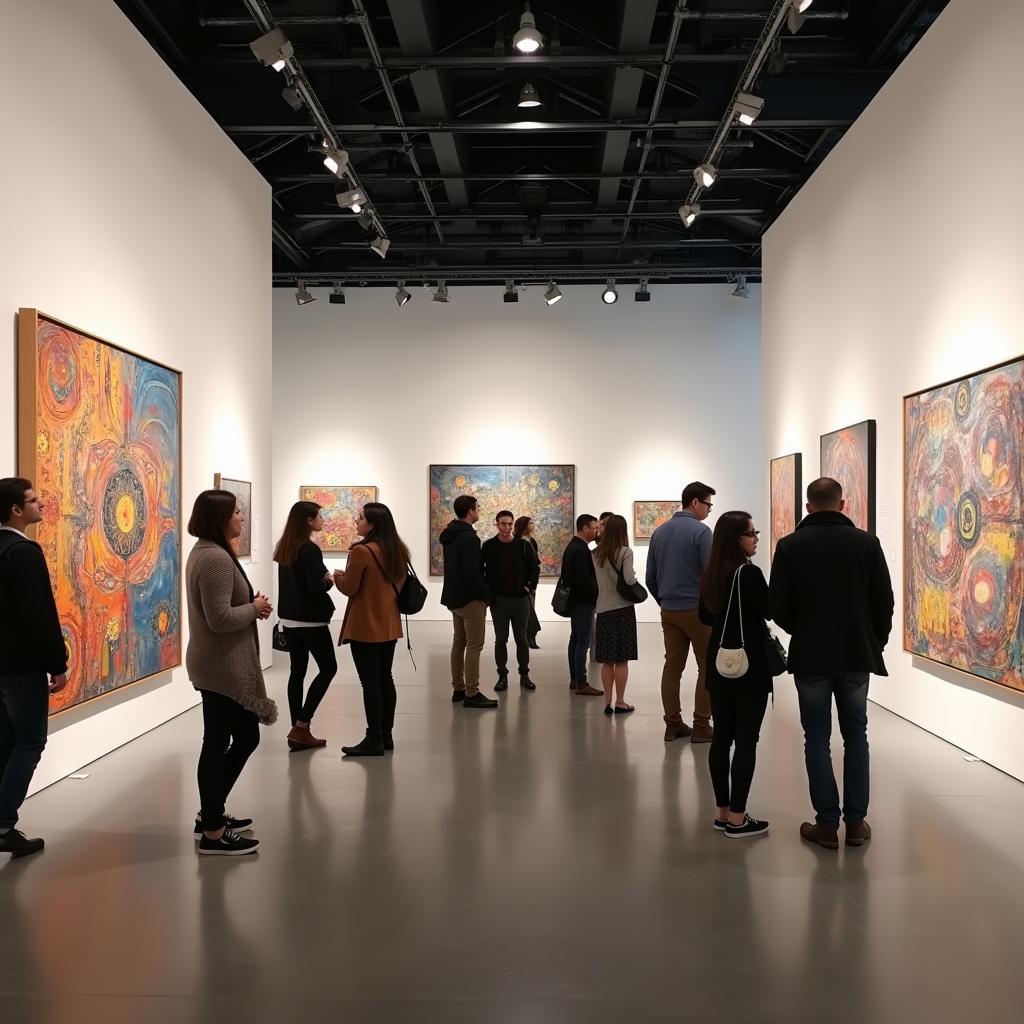
 Triển lãm bảo tàng nghệ thuật đa văn hóa với du khách đang tương tác và trao đổi
Questions 14-26
Questions 14-18
Choose the correct letter, A, B, C, or D.
-
According to the passage, how have museums changed in recent decades?
- A. They have become more expensive to visit
- B. They now focus exclusively on local heritage
- C. They have shifted from preserving national narratives to facilitating cross-cultural dialogue
- D. They have stopped displaying traditional artifacts
-
What is a “contact zone” in museum studies?
- A. A space where only similar cultures meet
- B. A social space where different cultures encounter each other, often with power imbalances
- C. A physical area for touching artworks
- D. A digital platform for online discussions
-
The “Living and Dying” exhibition was successful because:
- A. It focused on only one religious tradition
- B. It excluded contemporary voices
- C. It combined ceremonial objects with testimonies from practitioners
- D. It avoided controversial topics
-
What issue do post-colonial critiques highlight about Western museums?
- A. They charge too much for admission
- B. They have appropriated cultural property and perpetuated stereotypes
- C. They only display modern art
- D. They are too small to house collections
-
According to the passage, what limitation does digital technology have for museums?
- A. It is too expensive to implement
- B. It cannot replicate the tactile and immersive qualities of physical encounters
- C. It is too complicated for visitors to use
- D. It requires too much training for staff
Questions 19-23
Do the following statements agree with the views of the writer in Reading Passage 2?
Write:
- YES if the statement agrees with the views of the writer
- NO if the statement contradicts the views of the writer
- NOT GIVEN if it is impossible to say what the writer thinks about this
-
The Museum of Anthropology has improved museum practices by working with source communities.
-
All museums worldwide now use collaborative methodologies in their exhibitions.
-
The repatriation debate shows that museums face ethical difficulties regarding cultural heritage.
-
Digital exhibitions are superior to physical museum visits in all aspects.
-
Gallery interpreters need training in both art history and intercultural communication.
Questions 24-26
Complete the summary below.
Choose NO MORE THAN TWO WORDS from the passage for each answer.
Museums have transformed from being simple 24. __ of national heritage to becoming spaces for cultural exchange. Modern museums create “contact zones” where visitors experience 25. __ that challenges their cultural assumptions. For museums to succeed in promoting multicultural understanding, they need to examine their own 26. __ and share authority with diverse communities.
PASSAGE 3 – Contemporary Art and Transcultural Dialogue: Theoretical Frameworks and Empirical Evidence
Độ khó: Hard (Band 7.0-9.0)
Thời gian đề xuất: 23-25 phút
The proliferation of international art biennales, triennials, and transnational exhibitions over the past four decades has precipitated considerable scholarly debate regarding the efficacy of contemporary art as a medium for fostering genuine cross-cultural comprehension. While proponents argue that visual art possesses unique affordances for transcending linguistic and cultural barriers, skeptics contend that such exhibitions frequently perpetuate neo-colonial power dynamics and engage in superficial multiculturalism that commodifies cultural difference rather than interrogating its underlying complexities.
Theoretical frameworks for understanding art’s role in intercultural exchange have evolved considerably since the early postcolonial critiques of the 1980s and 1990s. Homi Bhabha’s concept of “hybridity” – the creation of new transcultural forms through the negotiation of difference – has been particularly influential in curatorial discourse. Bhabha argued that cultural identity is not fixed or essentialist but rather emerges from processes of translation and negotiation in what he termed the “third space” – a liminal zone where meanings are contested and reconstituted. Contemporary art exhibitions that embody this concept avoid presenting cultures as discrete, bounded entities, instead highlighting fluidity, interconnection, and mutual constitution.
The Venice Biennale, established in 1895, provides an instructive case study in the evolution of institutional approaches to cultural representation. Historically organized around national pavilions that reinforced essentialist notions of cultural identity, recent editions have increasingly featured thematic exhibitions that cut across national boundaries. The 2015 Biennale, curated by Okwui Enwezor, explicitly addressed themes of global migration, economic inequality, and political upheaval, positioning art as a form of “witness” to contemporary crises rather than a celebration of national achievement. This curatorial strategy generated substantial controversy, with some critics praising its political engagement while others argued it instrumentalized art for didactic purposes, compromising aesthetic autonomy.
Empirical research on viewer responses to multicultural art exhibitions has yielded nuanced and sometimes contradictory findings. A longitudinal study conducted by researchers at the University of Amsterdam examined how visitors to the “The Global Contemporary” exhibition at the ZKM Center for Art and Media processed artworks from non-Western contexts. Using eye-tracking technology, neuroimaging, and post-visit interviews, the study found that while participants showed heightened cognitive engagement with unfamiliar aesthetic conventions, this engagement did not automatically translate into sustained changes in intercultural attitudes. The research suggested that without adequate contextual framing and opportunities for reflection, viewers often assimilated unfamiliar artworks into pre-existing cognitive schemas rather than genuinely reconsidering cultural assumptions.
The role of curatorial mediation thus emerges as critical to art exhibitions’ pedagogical efficacy. Exhibition design choices – including spatial organization, interpretive texts, multimedia elements, and participatory components – significantly shape how visitors construct meaning from their encounters with artworks. The 2017 Documenta 14, which controversially split its venue between Kassel, Germany, and Athens, Greece, employed what curator Adam Szymczyk called “learning from Athens” – an explicit attempt to decenter Western cultural hegemony by positioning a peripheralized European city as co-equal with an established art world center. The curatorial apparatus included extensive public programming, collaborative workshops, and publications designed to facilitate sustained engagement with themes of migration, debt, and historical memory.
However, critics have identified inherent tensions in using art exhibitions to promote social objectives such as intercultural understanding. Claire Bishop, a prominent art historian, argues that contemporary art’s instrumentalization for educational or therapeutic purposes risks neutralizing its critical potential. According to Bishop, art’s disruptive, ambiguous qualities – its capacity to unsettle rather than reassure – are precisely what give it transformative power. Exhibitions that prioritize legibility and accessibility may inadvertently produce sanitized representations that avoid genuine confrontation with uncomfortable truths about cultural difference and historical injustice.
The question of representation – who has the authority to present whose culture, and on what terms – remains contentious. The controversy surrounding the 2017 Whitney Biennial painting “Open Casket” by Dana Schutz, which depicted Emmett Till’s mutilated body, crystallized debates about artistic freedom, cultural appropriation, and the ethics of representing traumatic histories. Protesters argued that a white artist should not aestheticize Black suffering, while supporters defended the work as legitimate artistic expression and historical commemoration. This incident exemplifies the fraught terrain contemporary art exhibitions navigate when addressing sensitive cultural content.
Emerging research in cognitive science and neuroaesthetics offers potential insights into how art experiences might facilitate perspective-taking and empathy. Studies using functional magnetic resonance imaging (fMRI) have identified neural correlates of aesthetic appreciation that overlap with regions associated with social cognition and theory of mind – the ability to understand others’ mental states. While this research remains preliminary and methodologically challenging, it suggests possible neurobiological mechanisms through which engagement with art might enhance intercultural sensitivity.
The digital transformation of art exhibitions presents both opportunities and challenges for promoting multicultural understanding. Virtual and augmented reality technologies enable immersive experiences that can simulate cultural contexts and provide layered interpretive information. The Google Arts & Culture platform has made thousands of artworks accessible to geographically dispersed audiences, potentially democratizing cultural knowledge. However, algorithmic curation and filter bubbles may limit exposure to genuinely unfamiliar perspectives, while the absence of physical co-presence with other viewers eliminates opportunities for spontaneous social interaction and dialogic meaning-making.
Institutional critique within contemporary art practice itself has become an important site for examining how art exhibitions mediate cultural understanding. Artists such as Andrea Fraser, Fred Wilson, and Tania Bruguera create works that interrogate museum practices, power structures, and the politics of cultural representation. Wilson’s landmark 1992 installation “Mining the Museum” juxtaposed museum objects in provocative ways to reveal hidden histories of slavery and racism within a historical society’s collection. Such interventions demonstrate art’s capacity for reflexive critique of the very institutions charged with promoting intercultural dialogue.
Moving forward, maximizing art exhibitions’ potential for advancing multicultural understanding will require multifaceted approaches that combine rigorous scholarship, ethical curatorial practice, community engagement, and critical self-reflection. Exhibitions must balance aesthetic experience with contextual education, provide space for multiple interpretations, and acknowledge the limitations and power dynamics inherent in institutional settings. Rather than conceiving art as a panacea for social division, a more modest yet sustainable approach recognizes that exhibitions constitute one element within broader ecosystems of intercultural exchange – valuable but insufficient on their own to transform deeply entrenched patterns of cultural misunderstanding and inequality.
 Nghệ thuật đương đại trong triển lãm Biennale quốc tế với các tác phẩm đa dạng văn hóa
Questions 27-40
Questions 27-31
Complete the sentences below.
Choose NO MORE THAN THREE WORDS from the passage for each answer.
-
Homi Bhabha described the __ as a space where cultural meanings are contested and recreated.
-
The 2015 Venice Biennale positioned art as a form of __ to contemporary global crises.
-
The Amsterdam University study used __, neuroimaging, and interviews to research viewer responses.
-
Claire Bishop argues that art’s __ qualities give it transformative power.
-
Research in neuroaesthetics has identified __ of aesthetic appreciation in the brain.
Questions 32-36
Do the following statements agree with the information given in Reading Passage 3?
Write:
- TRUE if the statement agrees with the information
- FALSE if the statement contradicts the information
- NOT GIVEN if there is no information on this
-
All scholars agree that contemporary art effectively promotes cross-cultural understanding.
-
The Venice Biennale has always organized exhibitions by themes rather than national pavilions.
-
The Amsterdam study found that unfamiliar artworks automatically changed viewers’ intercultural attitudes.
-
The 2017 Documenta 14 was held in two different cities to challenge Western cultural dominance.
-
Google Arts & Culture platform guarantees exposure to genuinely unfamiliar perspectives.
Questions 37-40
Match each artwork/exhibition with the correct description.
Choose the correct letter, A-F.
List of Artworks/Exhibitions:
37. “Open Casket” by Dana Schutz
38. “Mining the Museum” by Fred Wilson
39. “The Global Contemporary” exhibition
40. Documenta 14
Descriptions:
- A. Used eye-tracking technology to study viewer responses
- B. Split its venue between Germany and Greece
- C. Sparked controversy about cultural appropriation and representing traumatic histories
- D. Featured only Western contemporary artists
- E. Juxtaposed museum objects to reveal hidden histories of slavery
- F. Focused exclusively on digital art forms
Answer Keys – Đáp Án
PASSAGE 1: Questions 1-13
- FALSE
- NOT GIVEN
- TRUE
- NOT GIVEN
- TRUE
- welcoming environments
- bypass intellectual barriers
- tokenism
- virtual components
- B
- B
- C
- B
PASSAGE 2: Questions 14-26
- C
- B
- C
- B
- B
- YES
- NOT GIVEN
- YES
- NO
- YES
- repositories
- productive discomfort
- institutional practices / power structures
PASSAGE 3: Questions 27-40
- third space
- witness
- eye-tracking technology
- disruptive, ambiguous / ambiguous
- neural correlates
- FALSE
- FALSE
- FALSE
- TRUE
- FALSE
- C
- E
- A
- B
Giải Thích Đáp Án Chi Tiết
Passage 1 – Giải Thích
Câu 1: FALSE
- Dạng câu hỏi: True/False/Not Given
- Từ khóa: community art exhibitions, always, indoors, formal gallery spaces
- Vị trí trong bài: Đoạn 1, dòng 2-3
- Giải thích: Bài đọc nói rõ “often held in local galleries, community centers, or even outdoor spaces” – có thể tổ chức ngoài trời, không phải “always indoors”. Từ “always” làm cho câu này sai.
Câu 2: NOT GIVEN
- Dạng câu hỏi: True/False/Not Given
- Từ khóa: Multicultural Arts Festival, Melbourne, visitors, 30 countries
- Vị trí trong bài: Đoạn 3, dòng 1-3
- Giải thích: Bài viết chỉ nói festival “attracts over 50,000 visitors” và “features works by artists representing more than 30 different countries”. Đây là số quốc gia mà nghệ sĩ đến từ, không phải số quốc gia mà khách tham quan đến từ.
Câu 3: TRUE
- Dạng câu hỏi: True/False/Not Given
- Từ khóa: Dr. Sarah Mitchell, research, frequent visitors, culturally sensitive
- Vị trí trong bài: Đoạn 4, dòng 2-4
- Giải thích: Bài viết nói “those who visited multicultural art exhibitions at least three times annually showed a marked increase in their cultural sensitivity scores”, chứng minh khách tham quan thường xuyên trở nên nhạy cảm hơn về văn hóa.
Câu 6: welcoming environments
- Dạng câu hỏi: Sentence Completion
- Từ khóa: Community exhibitions, create, people, comfortably explore
- Vị trí trong bài: Đoạn 2, dòng 3-4
- Giải thích: Câu gốc: “community exhibitions create welcoming environments where people feel comfortable exploring unfamiliar cultural expressions”
Câu 7: bypass intellectual barriers
- Dạng câu hỏi: Sentence Completion
- Từ khóa: Art, prevent, understanding cultures intellectually
- Vị trí trong bài: Đoạn 4, dòng 6-7
- Giải thích: Dr. Mitchell giải thích “Art has a unique ability to bypass intellectual barriers” – nghệ thuật có thể vượt qua các rào cản trí tuệ.
Câu 10: B
- Dạng câu hỏi: Multiple Choice
- Từ khóa: community art exhibitions, different from, traditional museums
- Vị trí trong bài: Đoạn 2, dòng 2-4
- Giải thích: Bài viết đối lập “Unlike traditional museum settings, which can feel intimidating or exclusive” với “community exhibitions create welcoming environments”. Đáp án B đúng vì nói về “less formal and more approachable atmosphere”.
Câu 12: C
- Dạng câu hỏi: Multiple Choice
- Từ khóa: essential, successful multicultural exhibitions
- Vị trí trong bài: Đoạn 6, dòng 1
- Giải thích: Câu đầu đoạn 6 nói rõ: “organizing successful multicultural art exhibitions requires careful planning and cultural sensitivity”
Passage 2 – Giải Thích
Câu 14: C
- Dạng câu hỏi: Multiple Choice
- Từ khóa: museums changed, recent decades
- Vị trí trong bài: Đoạn 1, dòng 1-4
- Giải thích: Đoạn mở bài nói “Once perceived as repositories of national heritage… contemporary museums increasingly position themselves as dynamic spaces for cross-cultural exchange”, cho thấy sự thay đổi từ bảo tồn di sản quốc gia sang tạo điều kiện cho đối thoại đa văn hóa.
Câu 15: B
- Dạng câu hỏi: Multiple Choice
- Từ khóa: contact zone, museum studies
- Vị trí trong bài: Đoạn 3, dòng 1-3
- Giải thích: Định nghĩa rõ ràng: “Contact zones are social spaces where cultures meet, clash, and grapple with each other, often in contexts of highly asymmetrical relations of power”
Câu 19: YES
- Dạng câu hỏi: Yes/No/Not Given
- Từ khóa: Museum of Anthropology, improved, source communities
- Vị trí trong bài: Đoạn 2, dòng 1-3
- Giải thích: Tác giả mô tả museum này như “pioneering institution” đã “revolutionized traditional curatorial practices”, thể hiện quan điểm tích cực về việc cải thiện thực hành bảo tàng.
Câu 21: YES
- Dạng câu hỏi: Yes/No/Not Given
- Từ khóa: repatriation debate, ethical difficulties
- Vị trí trong bài: Đoạn 5, dòng 2-5
- Giải thích: Tác giả viết “The ongoing debate… underscores the ethical complexities”, cho thấy đồng ý với việc tranh luận về hoàn trả cho thấy khó khăn về đạo đức.
Câu 22: NO
- Dạng câu hỏi: Yes/No/Not Given
- Từ khóa: Digital exhibitions, superior, physical visits, all aspects
- Vị trí trong bài: Đoạn 7, dòng 3-5
- Giải thích: Tác giả nói rõ “the tactile and immersive qualities of physical encounters with art objects cannot be replicated in digital formats”, chỉ ra hạn chế của triển lãm kỹ thuật số, mâu thuẫn với ý kiến digital vượt trội về mọi mặt.
Câu 24: repositories
- Dạng câu hỏi: Summary Completion
- Từ khóa: Museums, simple, national heritage
- Vị trí trong bài: Đoạn 1, dòng 2
- Giải thích: Câu gốc: “Once perceived as repositories of national heritage”
Câu 25: productive discomfort
- Dạng câu hỏi: Summary Completion
- Từ khóa: contact zones, visitors experience, challenges cultural assumptions
- Vị trí trong bài: Đoạn 3, dòng 4
- Giải thích: Bài viết nói “Museums that function as contact zones create opportunities for productive discomfort”
Passage 3 – Giải Thích
Câu 27: third space
- Dạng câu hỏi: Sentence Completion
- Từ khóa: Homi Bhabha, space, cultural meanings, contested, recreated
- Vị trí trong bài: Đoạn 2, dòng 3-5
- Giải thích: Bhabha’s concept được giải thích: “the ‘third space’ – a liminal zone where meanings are contested and reconstituted”
Câu 28: witness
- Dạng câu hỏi: Sentence Completion
- Từ khóa: 2015 Venice Biennale, art, form, contemporary global crises
- Vị trí trong bài: Đoạn 3, dòng 4-5
- Giải thích: Câu gốc: “positioning art as a form of ‘witness’ to contemporary crises”
Câu 29: eye-tracking technology
- Dạng câu hỏi: Sentence Completion
- Từ khóa: Amsterdam University, study, neuroimaging, interviews
- Vị trí trong bài: Đoạn 4, dòng 3-4
- Giải thích: Ba phương pháp được liệt kê: “Using eye-tracking technology, neuroimaging, and post-visit interviews”
Câu 32: FALSE
- Dạng câu hỏi: True/False/Not Given
- Từ khóa: All scholars agree, contemporary art, effectively promotes
- Vị trí trong bài: Đoạn 1, dòng 2-4
- Giải thích: Bài viết nói rõ có hai phe: “proponents argue” và “skeptics contend”, chứng minh không phải tất cả học giả đồng ý.
Câu 34: FALSE
- Dạng câu hỏi: True/False/Not Given
- Từ khóa: Amsterdam study, unfamiliar artworks, automatically changed, attitudes
- Vị trí trong bài: Đoạn 4, dòng 5-7
- Giải thích: Nghiên cứu phát hiện “this engagement did not automatically translate into sustained changes in intercultural attitudes” – ngược lại với câu hỏi.
Câu 35: TRUE
- Dạng câu hỏi: True/False/Not Given
- Từ khóa: 2017 Documenta 14, two cities, challenge Western cultural dominance
- Vị trí trong bài: Đoạn 5, dòng 2-4
- Giải thích: Bài viết giải thích mục đích: “an explicit attempt to decenter Western cultural hegemony”
Câu 37: C
- Dạng câu hỏi: Matching
- Từ khóa: Open Casket, Dana Schutz
- Vị trí trong bài: Đoạn 7, dòng 1-4
- Giải thích: Tác phẩm này “crystallized debates about artistic freedom, cultural appropriation, and the ethics of representing traumatic histories”
Câu 38: E
- Dạng câu hỏi: Matching
- Từ khóa: Mining the Museum, Fred Wilson
- Vị trí trong bài: Đoạn 10, dòng 3-5
- Giải thích: Tác phẩm “juxtaposed museum objects in provocative ways to reveal hidden histories of slavery and racism”
Từ Vựng Quan Trọng Theo Passage
Passage 1 – Essential Vocabulary
| Từ vựng | Loại từ | Phiên âm | Nghĩa tiếng Việt | Ví dụ từ bài | Collocation |
|---|---|---|---|---|---|
| exhibition | n | /ˌeksɪˈbɪʃn/ | triển lãm | community art exhibitions | art exhibition, host an exhibition |
| accessible | adj | /əkˈsesəbl/ | dễ tiếp cận | accessible platforms | accessible to all, make accessible |
| foster | v | /ˈfɒstə(r)/ | thúc đẩy, nuôi dưỡng | foster understanding | foster relationships, foster growth |
| diverse | adj | /daɪˈvɜːs/ | đa dạng | diverse ethnic groups | diverse backgrounds, culturally diverse |
| intimidating | adj | /ɪnˈtɪmɪdeɪtɪŋ/ | đáng sợ, gây e ngại | feel intimidating | intimidating atmosphere, less intimidating |
| empathy | n | /ˈempəθi/ | sự đồng cảm | increase empathy | show empathy, develop empathy |
| prejudice | n | /ˈpredʒudɪs/ | định kiến | reduce prejudice | racial prejudice, overcome prejudice |
| marked | adj | /mɑːkt/ | rõ rệt, đáng kể | marked increase | marked improvement, marked difference |
| cohesion | n | /kəʊˈhiːʒn/ | sự gắn kết | social cohesion | strengthen cohesion, community cohesion |
| tokenism | n | /ˈtəʊkənɪzəm/ | sự chiếu lệ | avoid tokenism | practice of tokenism, accused of tokenism |
| stipend | n | /ˈstaɪpend/ | trợ cấp | artist stipends | receive a stipend, monthly stipend |
| promising | adj | /ˈprɒmɪsɪŋ/ | đầy hứa hẹn | appears promising | promising future, promising results |
Passage 2 – Essential Vocabulary
| Từ vựng | Loại từ | Phiên âm | Nghĩa tiếng Việt | Ví dụ từ bài | Collocation |
|---|---|---|---|---|---|
| facilitate | v | /fəˈsɪlɪteɪt/ | tạo điều kiện | facilitating intercultural dialogue | facilitate discussion, facilitate learning |
| profound | adj | /prəˈfaʊnd/ | sâu sắc | profound transformation | profound impact, profound effect |
| repository | n | /rɪˈpɒzətri/ | kho lưu trữ | repositories of heritage | data repository, knowledge repository |
| curatorial | adj | /ˌkjʊərəˈtɔːriəl/ | thuộc về quản lý bảo tàng | curatorial practices | curatorial approach, curatorial decision |
| contested | adj | /kənˈtestɪd/ | gây tranh cãi | cultural meaning is contested | hotly contested, contested territory |
| asymmetrical | adj | /ˌeɪsɪˈmetrɪkl/ | bất đối xứng | asymmetrical relations of power | asymmetrical relationship, asymmetrical design |
| foreground | v | /ˈfɔːɡraʊnd/ | đưa lên hàng đầu | foreground Indigenous voices | foreground issues, foreground concerns |
| nuanced | adj | /ˈnjuːɑːnst/ | tinh tế, nhiều sắc thái | nuanced understanding | nuanced view, nuanced approach |
| ritual | n | /ˈrɪtʃuəl/ | nghi lễ | death rituals | religious ritual, ritual practice |
| fraught | adj | /frɔːt/ | đầy rẫy | fraught with tensions | fraught with danger, fraught relationship |
| repatriation | n | /ˌriːpætriˈeɪʃn/ | sự hồi hương (di vật) | repatriation of artifacts | cultural repatriation, demand repatriation |
| custody | n | /ˈkʌstədi/ | quyền giữ gìn | institutional custody | in custody, legal custody |
| crowdsourcing | n | /ˈkraʊdsɔːsɪŋ/ | huy động đám đông | used crowdsourcing | crowdsourcing platform, crowdsourcing ideas |
| tactile | adj | /ˈtæktaɪl/ | có thể sờ được | tactile qualities | tactile experience, tactile sensation |
| didactic | adj | /daɪˈdæktɪk/ | mang tính giáo huấn | didactic methods | didactic approach, didactic tone |
Passage 3 – Essential Vocabulary
| Từ vựng | Loại từ | Phiên âm | Nghĩa tiếng Việt | Ví dụ từ bài | Collocation |
|---|---|---|---|---|---|
| proliferation | n | /prəˌlɪfəˈreɪʃn/ | sự gia tăng nhanh | proliferation of biennales | nuclear proliferation, rapid proliferation |
| precipitate | v | /prɪˈsɪpɪteɪt/ | gây ra đột ngột | precipitated scholarly debate | precipitate a crisis, precipitate change |
| efficacy | n | /ˈefɪkəsi/ | hiệu quả | efficacy of contemporary art | demonstrate efficacy, therapeutic efficacy |
| affordance | n | /əˈfɔːdns/ | khả năng cho phép | unique affordances | affordances of technology, design affordances |
| transcend | v | /trænˈsend/ | vượt qua | transcending linguistic barriers | transcend boundaries, transcend expectations |
| perpetuate | v | /pəˈpetʃueɪt/ | duy trì lâu dài | perpetuate neo-colonial dynamics | perpetuate stereotypes, perpetuate myths |
| commodify | v | /kəˈmɒdɪfaɪ/ | thương mại hóa | commodifies cultural difference | commodify culture, commodify nature |
| hybridity | n | /haɪˈbrɪdəti/ | tính lai ghép | concept of hybridity | cultural hybridity, linguistic hybridity |
| liminal | adj | /ˈlɪmɪnl/ | ở ranh giới | liminal zone | liminal space, liminal state |
| essentialist | adj | /ɪˈsenʃəlɪst/ | thuộc chủ nghĩa bản chất | essentialist notions | essentialist view, essentialist approach |
| longitudinal | adj | /ˌlɒŋɡɪˈtjuːdɪnl/ | theo chiều dọc (nghiên cứu dài hạn) | longitudinal study | longitudinal research, longitudinal data |
| neuroimaging | n | /ˌnjʊərəʊˈɪmɪdʒɪŋ/ | chụp ảnh thần kinh | using neuroimaging | neuroimaging techniques, brain neuroimaging |
| instrumentalization | n | /ˌɪnstrəmentəlaɪˈzeɪʃn/ | sự công cụ hóa | instrumentalization of art | political instrumentalization, avoid instrumentalization |
| hegemony | n | /hɪˈɡeməni/ | quyền bá chủ | Western cultural hegemony | cultural hegemony, challenge hegemony |
| decenter | v | /diːˈsentə(r)/ | phá vỡ trung tâm | decenter Western hegemony | decenter the narrative, decenter privilege |
| peripheralized | adj | /pəˈrɪfərəlaɪzd/ | bị đẩy ra ngoài lề | peripheralized European city | peripheralized communities, peripheralized voices |
| disruptive | adj | /dɪsˈrʌptɪv/ | gây gián đoạn | disruptive qualities | disruptive innovation, disruptive technology |
| neuroaesthetics | n | /ˌnjʊərəʊesˈθetɪks/ | khoa học thần kinh về thẩm mỹ | research in neuroaesthetics | field of neuroaesthetics, neuroaesthetics studies |
| reflexive | adj | /rɪˈfleksɪv/ | tự suy ngẫm | reflexive practice | reflexive thinking, reflexive process |
 Học viên đang luyện tập IELTS Reading với chủ đề nghệ thuật đa văn hóa tại lớp học
Kết Bài
Chủ đề “The role of art exhibits in promoting multicultural understanding” không chỉ là một đề tài học thuật hấp dẫn mà còn phản ánh xu hướng toàn cầu hóa và đa văn hóa trong xã hội đương đại. Việc nắm vững chủ đề này giúp bạn chuẩn bị tốt cho nhiều dạng bài Reading có thể xuất hiện trong kỳ thi IELTS thực tế.
Đề thi mẫu này đã cung cấp cho bạn trải nghiệm hoàn chỉnh với ba passages ở ba mức độ khác nhau: Passage 1 giới thiệu khái niệm cơ bản về triển lãm nghệ thuật cộng đồng, Passage 2 đi sâu vào vai trò của bảo tàng trong trao đổi văn hóa với nhiều thuật ngữ chuyên ngành hơn, và Passage 3 phân tích các khung lý thuyết và bằng chứng thực nghiệm về nghệ thuật đương đại – đòi hỏi khả năng đọc hiểu ở mức độ cao nhất.
Qua 40 câu hỏi đa dạng từ True/False/Not Given, Multiple Choice, đến Matching và Summary Completion, bạn đã thực hành hầu hết các dạng câu hỏi quan trọng trong IELTS Reading. Phần đáp án chi tiết không chỉ cho bạn biết câu trả lời đúng mà còn giải thích rõ ràng vị trí thông tin, cách paraphrase và chiến lược làm bài – những yếu tố then chốt để đạt band điểm cao.
Đặc biệt, bộ từ vựng được tổng hợp từ ba passages cung cấp cho bạn hơn 40 từ và cụm từ quan trọng với phiên âm chuẩn, nghĩa tiếng Việt và các collocations thường dùng. Đây là tài nguyên quý giá không chỉ cho phần Reading mà còn có thể áp dụng cho Writing Task 2 khi bạn viết về các chủ đề văn hóa, nghệ thuật và xã hội.
Hãy làm lại đề thi này nhiều lần, mỗi lần tập trung vào một kỹ năng cụ thể: lần đầu làm đúng giờ để đánh giá trình độ thực tế, lần sau phân tích kỹ từng câu hỏi và cách thông tin được paraphrase, và cuối cùng học thuộc từ vựng cùng cách sử dụng trong ngữ cảnh. Đây chính là cách luyện tập hiệu quả nhất để cải thiện band điểm IELTS Reading của bạn.