
Công nghệ blockchain đang tạo ra cuộc cách mạng trong quản lý chuỗi cung ứng toàn cầu, giúp tăng cường tính minh bạch, hiệu quả và bảo mật. Đây là một chủ đề ngày càng phổ biến trong IELTS Reading, xuất hiện với tần suất cao trong các kỳ thi gần đây do tính thời sự và tầm quan trọng trong nền kinh tế số hiện đại.
Bài viết này cung cấp cho bạn một bộ đề thi IELTS Reading hoàn chỉnh với 3 passages được thiết kế theo đúng cấu trúc thi thật, từ mức độ dễ đến khó. Bạn sẽ được luyện tập với 40 câu hỏi đa dạng, bao gồm các dạng bài phổ biến như Multiple Choice, True/False/Not Given, Matching Headings và nhiều dạng khác. Mỗi câu hỏi đều có đáp án chi tiết kèm giải thích rõ ràng, giúp bạn hiểu cách paraphrase và xác định thông tin chính xác trong bài đọc.
Đặc biệt, bạn sẽ học được từ vựng học thuật quan trọng liên quan đến công nghệ blockchain và chuỗi cung ứng, cùng với các kỹ thuật làm bài hiệu quả. Bộ đề này phù hợp cho học viên từ band 5.0 trở lên, giúp bạn làm quen với format thi thật và nâng cao khả năng đọc hiểu tiếng Anh học thuật.
Hướng Dẫn Làm Bài IELTS Reading
Tổng Quan Về IELTS Reading Test
IELTS Reading Test kéo dài trong 60 phút với 3 passages và tổng cộng 40 câu hỏi. Mỗi passage có độ dài khoảng 700-900 từ và độ khó tăng dần từ passage 1 đến passage 3. Điểm số được tính dựa trên số câu trả lời đúng, không bị trừ điểm khi sai.
Phân bổ thời gian khuyến nghị:
- Passage 1: 15-17 phút (câu hỏi thường dễ tìm thông tin hơn)
- Passage 2: 18-20 phút (yêu cầu hiểu sâu và paraphrase nhiều hơn)
- Passage 3: 23-25 phút (nội dung phức tạp, câu hỏi đòi hỏi phân tích cao)
Lưu ý dành 2-3 phút cuối để chuyển đáp án vào answer sheet và kiểm tra lại.
Các Dạng Câu Hỏi Trong Đề Này
Đề thi mẫu này bao gồm 7 dạng câu hỏi phổ biến trong IELTS Reading:
- Multiple Choice – Chọn đáp án đúng từ các phương án cho sẵn
- True/False/Not Given – Xác định thông tin đúng, sai hoặc không được nhắc đến
- Matching Information – Ghép thông tin với đoạn văn tương ứng
- Sentence Completion – Hoàn thành câu với từ trong bài đọc
- Matching Headings – Chọn tiêu đề phù hợp cho mỗi đoạn văn
- Summary Completion – Điền từ vào tóm tắt nội dung
- Short-answer Questions – Trả lời câu hỏi ngắn với từ trong bài
IELTS Reading Practice Test
PASSAGE 1 – The Blockchain Revolution in Supply Chain Management
Độ khó: Easy (Band 5.0-6.5)
Thời gian đề xuất: 15-17 phút
In recent years, blockchain technology has emerged as a game-changing innovation in the way businesses manage their supply chains. Originally developed as the underlying technology for cryptocurrencies like Bitcoin, blockchain has found applications far beyond digital money. Today, it is transforming how companies track products, verify authenticity, and ensure transparency in global supply chains.
At its core, blockchain is a distributed ledger technology that records transactions across multiple computers in a way that makes the records immutable and transparent. Unlike traditional databases controlled by a single entity, blockchain operates on a decentralized network where every participant has access to the same information. This fundamental characteristic makes it particularly well-suited for supply chain management, where multiple parties need to share and verify information about products as they move from manufacturers to consumers.
The traditional supply chain system faces numerous challenges. Products often pass through many hands before reaching the end customer, including manufacturers, wholesalers, distributors, retailers, and logistics providers. Each handover creates opportunities for errors, fraud, and delays. Paper-based documentation can be lost, altered, or forged. Tracking systems are often incompatible between different companies, making it difficult to get a complete picture of a product’s journey. These problems result in inefficiencies, increased costs, and a lack of trust among supply chain partners.
Blockchain addresses these issues by creating a single source of truth that all parties can access and trust. When a product moves from one location to another, the transaction is recorded as a block of data. This block contains information about the time, location, price, and condition of the product, along with other relevant details. Once recorded, this information cannot be changed or deleted without the consensus of the network, making the system highly secure and reliable.
Walmart, one of the world’s largest retailers, has been a pioneer in implementing blockchain for food safety. The company uses blockchain to track the journey of products like mangoes and pork from farm to store. Before blockchain, tracing a package of mangoes back to its source could take nearly seven days. With blockchain, this process now takes just 2.2 seconds. This dramatic improvement in traceability is crucial for food safety, allowing companies to quickly identify and remove contaminated products from shelves during a health scare.
The diamond industry has also embraced blockchain to combat the trade in conflict diamonds, also known as blood diamonds. These are diamonds mined in war zones and sold to finance armed conflict. De Beers, the world’s leading diamond company, has developed a blockchain platform called Tracr that tracks diamonds from the mine to the retail store. Each diamond receives a unique digital identity on the blockchain, recording its characteristics and journey. This system helps ensure that diamonds are ethically sourced and gives consumers confidence in their purchases.
In the pharmaceutical industry, counterfeit medicines represent a serious global health threat, causing an estimated 1 million deaths annually according to the World Health Organization. Blockchain offers a solution by creating an unbroken chain of custody for medicines. Each time a medication changes hands, the transaction is recorded on the blockchain. Pharmacists and patients can scan a code on the medicine package to verify its authenticity and see its complete history. This verification system makes it extremely difficult for counterfeit products to enter the legitimate supply chain.
The fashion industry is another sector leveraging blockchain to improve supply chain operations. Luxury brands face constant challenges from counterfeiters who produce fake goods that damage brand reputation and result in lost sales. By assigning each product a unique blockchain identity, brands can prove authenticity to customers. Additionally, environmentally conscious consumers can use blockchain to verify claims about sustainable sourcing and ethical manufacturing practices.
Despite these promising applications, blockchain adoption in supply chains faces several obstacles. The technology requires significant upfront investment in infrastructure and training. Companies must convince their supply chain partners to participate in the blockchain network, which can be challenging when dealing with smaller suppliers who may lack the resources or technical expertise. There are also questions about data privacy and who should have access to what information on the blockchain. Standardization across different blockchain platforms remains a concern, as companies may choose different systems that cannot communicate with each other.
Nevertheless, industry experts believe that blockchain will become increasingly important in supply chain management. As the technology matures and becomes more user-friendly, adoption rates are expected to rise. Pilot projects are already demonstrating substantial benefits in terms of improved efficiency, reduced fraud, and enhanced customer trust. The COVID-19 pandemic has further highlighted the need for resilient and transparent supply chains, potentially accelerating the shift toward blockchain-based solutions.
Questions 1-13
Questions 1-5: Multiple Choice
Choose the correct letter, A, B, C, or D.
1. According to the passage, blockchain technology was first created for:
A. supply chain management
B. digital currencies
C. food safety tracking
D. diamond verification
2. What is the main advantage of blockchain’s decentralized nature?
A. It is cheaper than traditional databases
B. All participants can access the same information
C. It requires less technical expertise
D. It works faster than other systems
3. Before implementing blockchain, Walmart needed approximately how long to trace mangoes?
A. 2.2 seconds
B. 2 hours
C. 7 days
D. 1 week and 2 days
4. Conflict diamonds are described as diamonds that:
A. have unclear origins
B. are sold to fund warfare
C. are of poor quality
D. are mined illegally
5. According to the World Health Organization, counterfeit medicines cause approximately:
A. 100,000 deaths per year
B. 1 million deaths per year
C. 10 million deaths per year
D. an unknown number of deaths
Questions 6-9: True/False/Not Given
Do the following statements agree with the information given in the passage?
Write:
- TRUE if the statement agrees with the information
- FALSE if the statement contradicts the information
- NOT GIVEN if there is no information on this
6. Once information is recorded on a blockchain, it can be easily modified by authorized users.
7. De Beers’ Tracr platform assigns a digital identity to each diamond it tracks.
8. Blockchain technology has completely eliminated counterfeit products in the fashion industry.
9. The COVID-19 pandemic has increased interest in blockchain for supply chains.
Questions 10-13: Sentence Completion
Complete the sentences below.
Choose NO MORE THAN TWO WORDS from the passage for each answer.
10. Traditional supply chain systems often use __ that can be easily lost or altered.
11. Blockchain creates a __ that all supply chain partners can access and rely on.
12. Fashion brands can use blockchain to verify claims about __ and ethical manufacturing.
13. One barrier to blockchain adoption is the need for significant __ in infrastructure.
PASSAGE 2 – Enhancing Supply Chain Transparency Through Distributed Ledger Systems
Độ khó: Medium (Band 6.0-7.5)
Thời gian đề xuất: 18-20 phút
The integration of blockchain technology into global logistics networks represents a paradigm shift in how organizations approach supply chain visibility and accountability. This innovative framework addresses longstanding inefficiencies that have plagued international trade for decades, offering a robust solution to problems ranging from documentation fraud to inventory discrepancies and compliance verification.
Traditional supply chain architectures rely heavily on intermediaries to facilitate trust between parties who may never interact directly. These third-party validators, including banks, insurance companies, and certification bodies, add layers of complexity and cost to transactions. Each intermediary maintains its own records, creating information silos that impede real-time visibility. When discrepancies arise, reconciliation can take weeks or months, during which time perishable goods may deteriorate, financial settlements are delayed, and business relationships suffer strain.
Blockchain’s distributed consensus mechanism fundamentally alters this dynamic. Through cryptographic algorithms, the technology enables peer-to-peer verification without requiring trusted intermediaries. Every transaction is validated by multiple nodes in the network through a process that ensures data integrity while maintaining operational efficiency. This disintermediation not only reduces costs but also eliminates single points of failure that make traditional systems vulnerable to manipulation or catastrophic data loss.
The shipping and freight industry, which moves approximately 90% of global trade, has been particularly receptive to blockchain innovation. Maersk, the world’s largest container shipping company, partnered with IBM to develop TradeLens, a blockchain-enabled shipping solution that digitizes the complex web of documentation required for international freight. A single container shipment can involve more than 30 organizations and generate over 200 separate communications. Traditional paper-based processes make this system cumbersome, expensive, and error-prone. TradeLens streamlines these interactions by providing a shared platform where all parties—from customs officials to freight forwarders—can access relevant information in real-time.
The benefits extend beyond administrative efficiency. Blockchain enables sophisticated track-and-trace capabilities that were previously impossible to implement at scale. Internet of Things sensors attached to products or containers can automatically record data about temperature, humidity, location, and handling conditions directly onto the blockchain at regular intervals. This granular visibility is particularly valuable for industries with strict regulatory requirements or quality standards. Pharmaceutical companies, for instance, must prove that medications were stored within specific temperature ranges throughout their journey—a requirement known as maintaining the cold chain. Blockchain provides an immutable audit trail that satisfies regulators while giving companies early warning of potential problems.
Smart contracts represent another transformative application of blockchain in supply chains. These are self-executing agreements with terms written directly into code. When predetermined conditions are met—such as a shipment arriving at a specified location—the smart contract automatically triggers the next action, whether that’s releasing payment, updating inventory systems, or notifying the next party in the chain. This automation eliminates delays associated with manual processes and reduces the risk of human error. It also creates a more equitable system for smaller suppliers who previously faced payment delays of 60-90 days, straining their cash flow. With smart contracts, payment can occur almost instantaneously upon delivery confirmation.
The sustainability imperative driving many corporations has found an unexpected ally in blockchain. Consumers increasingly demand proof that products are ethically sourced and environmentally responsible, but verifying these claims has been notoriously difficult. Blockchain enables companies to document their sustainability credentials with unprecedented precision. Coffee companies can show exactly which farms produced their beans and provide evidence of fair trade practices. Clothing manufacturers can prove that their cotton was grown without child labor and that factories meet occupational safety standards. This granular traceability transforms abstract marketing claims into verifiable facts, giving consumers the information they need to make informed purchasing decisions.
However, successful blockchain implementation requires overcoming substantial technical and organizational hurdles. Interoperability remains a significant challenge, as different blockchain platforms use incompatible protocols. A manufacturer using one blockchain system may struggle to share data with a logistics provider using another. Industry consortia have formed to address this issue by developing common standards, but progress has been slow. The governance of blockchain networks also raises complex questions: Who decides what data gets recorded? Who has access to what information? How are disputes resolved when the immutable nature of blockchain means errors cannot simply be deleted?
Data privacy presents another dilemma. While transparency is generally desirable in supply chains, companies also have legitimate competitive reasons to protect certain information. A manufacturer may not want competitors knowing the identity of its suppliers or the volume of its orders. Permissioned blockchains—which restrict access to approved participants—offer a middle ground, but they sacrifice some of the security advantages of fully decentralized public blockchains. Balancing transparency with confidentiality requires careful system design that may differ significantly across industries and use cases.
The scalability of blockchain technology also demands consideration. Public blockchains like Bitcoin can process only a limited number of transactions per second—far fewer than traditional centralized databases. While private blockchain networks designed for specific supply chain applications can handle higher transaction volumes, they still face performance limitations as networks grow. Second-layer solutions and alternative consensus mechanisms are being developed to address these constraints, but they remain relatively unproven in large-scale commercial deployments.
Despite these challenges, the momentum behind blockchain adoption in supply chains continues to build. Venture capital investment in supply chain blockchain startups reached record levels in recent years, and major corporations across industries are moving from pilot projects to production implementations. The technology’s ability to create trust in trustless environments—where parties can transact confidently without knowing or necessarily trusting each other—addresses a fundamental need in our increasingly complex and global economy. As technical maturity increases and integration costs decline, blockchain seems poised to become a standard component of supply chain infrastructure, much as the internet transformed business communication a generation ago.
 Sơ đồ minh họa công nghệ blockchain trong quản lý chuỗi cung ứng toàn cầu với các bên tham gia
Questions 14-26
Questions 14-18: Yes/No/Not Given
Do the following statements agree with the views of the writer in the passage?
Write:
- YES if the statement agrees with the views of the writer
- NO if the statement contradicts the views of the writer
- NOT GIVEN if it is impossible to say what the writer thinks about this
14. Traditional supply chain systems are inherently more secure than blockchain-based systems.
15. The TradeLens platform developed by Maersk and IBM has successfully reduced the complexity of shipping documentation.
16. Smart contracts guarantee that all suppliers will be paid within 24 hours of delivery.
17. Blockchain technology makes it easier for companies to prove their environmental and ethical claims.
18. All blockchain platforms can easily communicate with each other using standardized protocols.
Questions 19-22: Matching Headings
The passage has ten paragraphs, A-J.
Choose the correct heading for paragraphs D, F, G, and I from the list of headings below.
List of Headings:
i. The sustainability benefits of supply chain transparency
ii. Financial advantages for small businesses
iii. Privacy concerns in blockchain implementation
iv. The shipping industry’s adoption of blockchain
v. Technical limitations of blockchain systems
vi. The role of government in blockchain regulation
vii. Automated agreements transforming payment processes
viii. Consumer preferences for traditional products
19. Paragraph D
20. Paragraph F
21. Paragraph G
22. Paragraph I
Questions 23-26: Summary Completion
Complete the summary below.
Choose NO MORE THAN TWO WORDS from the passage for each answer.
Traditional supply chains depend on 23. __ such as banks and certification bodies to create trust between parties. These organizations maintain separate records, creating 24. __ that prevent real-time visibility. Blockchain eliminates the need for these intermediaries through its 25. __, which allows direct verification between parties. This process is secured by 26. __ that protect data integrity while maintaining efficiency.
PASSAGE 3 – The Convergence of Blockchain, IoT, and Artificial Intelligence in Next-Generation Supply Chain Ecosystems
Độ khó: Hard (Band 7.0-9.0)
Thời gian đề xuất: 23-25 phút
The contemporary discourse surrounding supply chain optimization has increasingly gravitated toward the synergistic integration of multiple emergent technologies, with blockchain serving as the foundational architecture upon which complementary systems converge. This technological confluence transcends the incremental improvements offered by isolated implementations, instead generating emergent properties that fundamentally reconceptualize the nature of value networks and inter-organizational collaboration. The orchestration of blockchain with the Internet of Things and artificial intelligence creates what scholars term a “cognitive supply chain”—a self-optimizing ecosystem capable of autonomous decision-making, predictive adaptation, and continuous learning from operational data.
The limitations of blockchain as a standalone solution become apparent when examining data provenance challenges. While blockchain excels at creating immutable records of transactions, it operates on a principle often expressed as “garbage in, garbage out.” The integrity of blockchain data depends entirely on the accuracy of information at the point of entry. If incorrect or fraudulent data is recorded on the blockchain—whether through human error or deliberate malfeasance—the system will faithfully perpetuate that flawed information with the same cryptographic certainty it applies to accurate data. This epistemological vulnerability represents a critical weakness in applications where physical-world verification is paramount.
IoT devices address this Achilles heel by automating data capture at the source, thereby minimizing human intervention and the associated risks of error or fraud. Sophisticated sensor arrays embedded throughout the supply chain continuously monitor multiple parameters—temperature, humidity, shock, light exposure, location, and even biochemical markers indicating product degradation. These devices create a continuous data stream that is recorded directly onto the blockchain at cryptographically secured intervals, establishing what computer scientists call an “oracle problem” solution—a reliable bridge between physical reality and digital records.
Consider the pharmaceutical industry’s efforts to combat the $200 billion annual global trade in counterfeit medications. Traditional anti-counterfeiting measures—holograms, special inks, serialized packaging—can be replicated by sophisticated criminal organizations. A blockchain system alone can verify that a product’s digital identity is legitimate, but cannot confirm that the physical package matches its digital representation. By integrating tamper-evident IoT tags that record environmental conditions and detect package opening, the system can verify both digital identity and physical integrity. Any discrepancy between expected and actual conditions—such as exposure to temperatures outside the specified range or unauthorized package access—triggers immediate alerts and marks the product as potentially compromised on the blockchain.
The volumetric escalation of data generated by IoT-enabled supply chains creates new challenges that artificial intelligence is uniquely positioned to address. A single global supply chain might involve thousands of IoT devices, each generating hundreds of data points daily, resulting in a data deluge that exceeds human analytical capacity. Machine learning algorithms can process this information in real-time, identifying anomalous patterns that might indicate problems: a deviation in shipping routes suggesting cargo diversion, temperature fluctuations hinting at refrigeration failure, or handling accelerations indicating rough treatment that could damage fragile goods.
More sophisticated applications leverage AI’s predictive capabilities. By analyzing historical patterns, weather forecasts, geopolitical developments, and market trends, AI systems can anticipate disruptions before they occur and automatically initiate contingency protocols. When a hurricane threatens a major port, the system might proactively reroute shipments to alternative locations. When political tensions suggest border delays, it might accelerate critical shipments or identify alternative suppliers. These decisions occur at machine speed, often preventing problems that human managers might not notice until after disruptions have occurred.
The integration architecture typically employs what systems engineers call a “layered approach.” At the foundation, blockchain provides the immutable ledger and trust framework. The IoT layer adds real-world data capture and physical-digital integration. AI constitutes the cognitive layer, processing information and generating actionable insights. Smart contracts serve as the execution layer, automatically implementing decisions based on AI recommendations and blockchain-verified conditions. This stratified structure allows each technology to focus on its comparative advantage while contributing to system-wide functionality.
Walmart’s experimental deployment of this integrated approach in its food safety program offers empirical evidence of practical efficacy. The system combines blockchain’s transaction records, IoT sensors monitoring storage conditions, and AI algorithms analyzing risk factors. When the AI identifies a potential contamination event based on sensor anomalies and epidemiological data, smart contracts automatically quarantine affected inventory, notify relevant parties, and initiate recall procedures—all within minutes rather than the days or weeks required by traditional systems. Preliminary results suggest this approach could prevent significant health incidents while reducing the economic impact of recalls by enabling surgical precision in identifying affected products.
The aerospace industry has pioneered particularly sophisticated implementations, driven by stringent safety regulations and the catastrophic consequences of component failure. Aircraft parts must maintain comprehensive maintenance records throughout their decades-long service lives, with documented provenance proving they meet exacting specifications. Counterfeit or substandard components have caused numerous accidents. Blockchain-IoT-AI integration creates “digital twins”—virtual replicas of physical components that continuously update based on sensor data. These digital twins track every aspect of a component’s history: its manufacturing parameters, installation date, stress exposure, maintenance interventions, and performance metrics. AI algorithms analyze this data to predict optimal maintenance timing, identify parts approaching end-of-life, and detect anomalies suggesting defects or counterfeiting.
Despite these promising developments, technical challenges remain formidable. Standardization across the three technology domains presents multiplicative complexity—each has its own competing standards, and ensuring interoperability requires coordinating among multiple standards bodies, industry consortia, and regulatory agencies. Edge computing requirements for real-time IoT data processing strain existing network infrastructure, particularly in developing regions where supply chains increasingly operate. The computational intensity of AI algorithms running on large blockchain datasets raises concerns about energy consumption and environmental sustainability.
Ethical considerations add another dimension of complexity. AI algorithms trained on historical data may perpetuate existing biases—for instance, discriminating against suppliers from certain regions based on past performance patterns that reflect systemic inequities rather than actual capabilities. The autonomous decision-making capacity of integrated systems raises questions about accountability when errors occur: if an AI algorithm makes a flawed decision that is automatically executed through smart contracts and recorded on an immutable blockchain, who bears responsibility—the software developers, the companies deploying the system, or the human managers who were excluded from the decision process?
Regulatory frameworks have struggled to keep pace with technological evolution. Existing laws typically address blockchain, IoT, and AI as separate domains, lacking coherent approaches to their integration. Data sovereignty regulations like Europe’s GDPR create jurisdictional complexities for global supply chains where data might be captured by IoT devices in one country, processed by AI algorithms in another, and stored on blockchain nodes distributed across multiple jurisdictions. The blockchain’s immutable nature conflicts with “right to be forgotten” provisions in privacy laws, creating legal ambiguities that remain unresolved.
Nevertheless, the trajectory of technological development and market forces suggests that integrated blockchain-IoT-AI systems will become increasingly prevalent in supply chain management. As component costs decline and technical maturity increases, the economic calculus shifts in favor of adoption. The COVID-19 pandemic exposed critical vulnerabilities in global supply chains—opacity, fragility, inflexibility—that integrated systems are specifically designed to address. Geopolitical pressures for supply chain resilience and consumer demands for transparency create additional impetus for transformation. While the path forward involves navigating significant technical, organizational, and regulatory challenges, the fundamental value proposition—trusted, transparent, intelligent supply chains—appears sufficiently compelling to drive continued innovation and adoption across industries and regions.
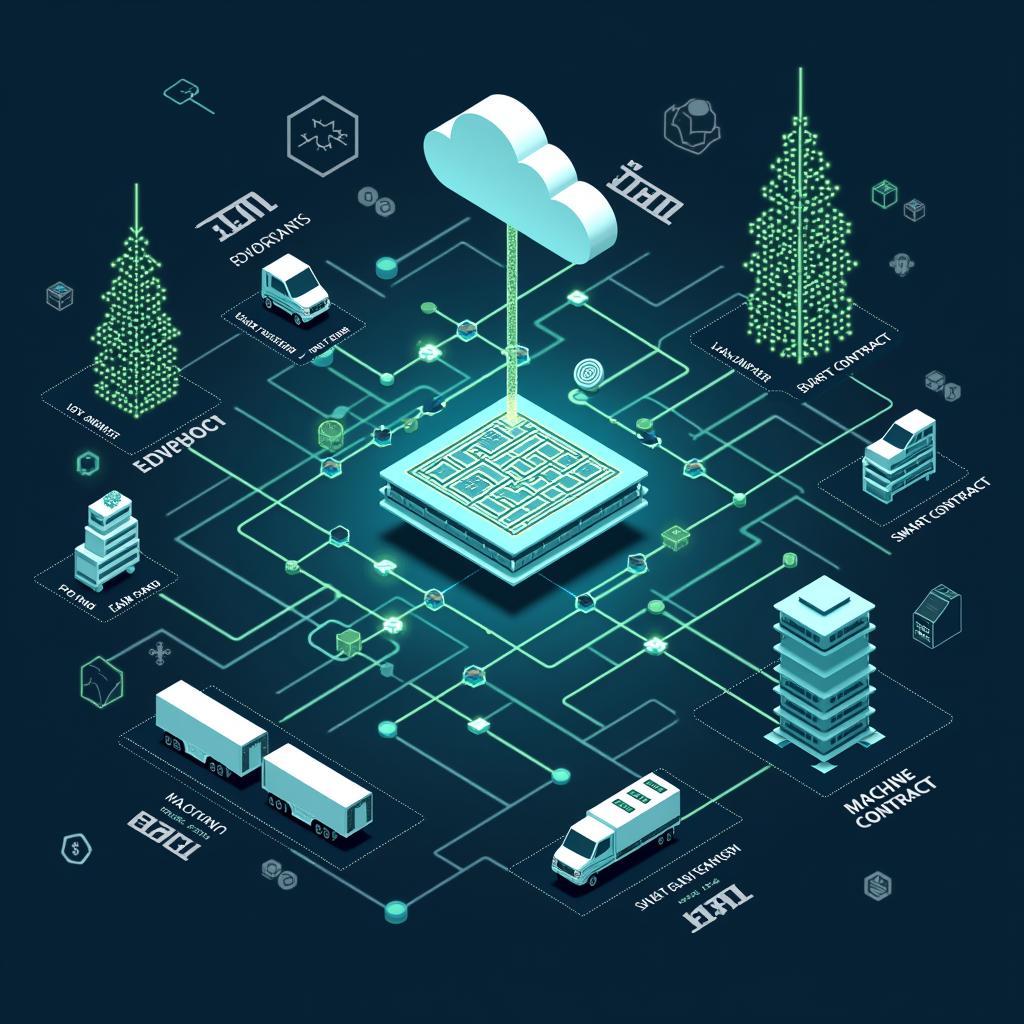 Hệ thống tích hợp công nghệ blockchain IoT và trí tuệ nhân tạo trong chuỗi cung ứng thông minh
Questions 27-40
Questions 27-31: Multiple Choice
Choose the correct letter, A, B, C, or D.
27. According to the passage, a “cognitive supply chain” is characterized by its ability to:
A. reduce costs through automation
B. make decisions and adapt independently
C. eliminate human workers entirely
D. process data faster than traditional systems
28. The “garbage in, garbage out” principle refers to blockchain’s:
A. environmental impact
B. inability to correct initial data errors
C. waste management applications
D. data storage limitations
29. IoT devices solve the “oracle problem” by:
A. predicting future supply chain disruptions
B. reducing the cost of blockchain implementation
C. providing reliable connections between physical and digital data
D. eliminating the need for human verification entirely
30. According to the passage, the global trade in counterfeit pharmaceuticals is worth approximately:
A. $20 billion annually
B. $200 billion annually
C. $2 trillion annually
D. an unspecified amount
31. Digital twins in the aerospace industry primarily:
A. reduce manufacturing costs
B. replace physical components
C. track component history and predict maintenance needs
D. train pilots using virtual reality
Questions 32-36: Matching Features
Match each challenge (32-36) with the correct aspect of technology integration (A-G).
Challenges:
32. Algorithms may perpetuate historical prejudices
33. Determining who is responsible when automated systems fail
34. Ensuring different technology standards can work together
35. Conflicts with privacy laws requiring data deletion
36. Processing demands exceed current infrastructure capabilities
Aspects of Technology Integration:
A. Interoperability issues
B. Computational requirements
C. Ethical concerns about bias
D. Accountability questions
E. Regulatory conflicts
F. Cost barriers
G. Training requirements
Questions 37-40: Short-answer Questions
Answer the questions below.
Choose NO MORE THAN THREE WORDS from the passage for each answer.
37. What type of devices does the passage mention can detect when a pharmaceutical package has been opened?
38. What weather event does the passage use as an example of something AI might predict to prevent disruptions?
39. According to the passage, what does the layered integration approach allow each technology to focus on?
40. What event exposed critical vulnerabilities in global supply chains according to the passage?
Answer Keys – Đáp Án
PASSAGE 1: Questions 1-13
- B
- B
- C
- B
- B
- FALSE
- TRUE
- NOT GIVEN
- TRUE
- paper-based documentation
- single source (of truth)
- sustainable sourcing
- upfront investment
PASSAGE 2: Questions 14-26
- NO
- YES
- NOT GIVEN
- YES
- NO
- iv
- vii
- i
- iii
- intermediaries
- information silos
- consensus mechanism
- cryptographic algorithms
PASSAGE 3: Questions 27-40
- B
- B
- C
- B
- C
- C
- D
- A
- E
- B
- tamper-evident IoT tags
- hurricane
- comparative advantage
- COVID-19 pandemic
Giải Thích Đáp Án Chi Tiết
Passage 1 – Giải Thích
Câu 1: B
- Dạng câu hỏi: Multiple Choice
- Từ khóa: blockchain technology, first created
- Vị trí trong bài: Đoạn 1, dòng 2-3
- Giải thích: Bài đọc nêu rõ “Originally developed as the underlying technology for cryptocurrencies like Bitcoin”. Từ “cryptocurrencies” được paraphrase thành “digital currencies” ở đáp án B.
Câu 2: B
- Dạng câu hỏi: Multiple Choice
- Từ khóa: main advantage, decentralized nature
- Vị trí trong bài: Đoạn 2, dòng 3-5
- Giải thích: Đoạn văn nêu “blockchain operates on a decentralized network where every participant has access to the same information”. Đây chính là đáp án B.
Câu 3: C
- Dạng câu hỏi: Multiple Choice
- Từ khóa: Walmart, trace mangoes, before blockchain
- Vị trí trong bài: Đoạn 5, dòng 3-4
- Giải thích: Bài đọc đề cập “Before blockchain, tracing a package of mangoes back to its source could take nearly seven days” – tương đương với 7 days.
Câu 6: FALSE
- Dạng câu hỏi: True/False/Not Given
- Từ khóa: information recorded, easily modified
- Vị trí trong bài: Đoạn 4, dòng 4-5
- Giải thích: Bài đọc khẳng định “Once recorded, this information cannot be changed or deleted without the consensus of the network”, điều này mâu thuẫn với việc “easily modified”.
Câu 7: TRUE
- Dạng câu hỏi: True/False/Not Given
- Từ khóa: De Beers, Tracr platform, digital identity
- Vị trí trong bài: Đoạn 6, dòng 3-4
- Giải thích: Đoạn văn nêu rõ “Each diamond receives a unique digital identity on the blockchain”, hoàn toàn khớp với thông tin trong câu hỏi.
Câu 9: TRUE
- Dạng câu hỏi: True/False/Not Given
- Từ khóa: COVID-19 pandemic, increased interest
- Vị trí trong bài: Đoạn 10, dòng 3-4
- Giải thích: Bài đọc đề cập “The COVID-19 pandemic has further highlighted the need for resilient and transparent supply chains, potentially accelerating the shift toward blockchain-based solutions”, cho thấy đại dịch đã tăng cường sự quan tâm.
Câu 10: paper-based documentation
- Dạng câu hỏi: Sentence Completion
- Từ khóa: traditional supply chain systems, lost or altered
- Vị trí trong bài: Đoạn 3, dòng 4
- Giải thích: Đoạn văn nêu “Paper-based documentation can be lost, altered, or forged”.
Câu 12: sustainable sourcing
- Dạng câu hỏi: Sentence Completion
- Từ khóa: fashion brands, blockchain, verify claims
- Vị trí trong bài: Đoạn 8, dòng 4-5
- Giải thích: Bài đọc đề cập “environmentally conscious consumers can use blockchain to verify claims about sustainable sourcing and ethical manufacturing practices”.
Passage 2 – Giải Thích
Câu 14: NO
- Dạng câu hỏi: Yes/No/Not Given
- Từ khóa: traditional supply chain systems, more secure than blockchain
- Vị trí trong bài: Đoạn 3, dòng 5-7
- Giải thích: Tác giả nêu rõ blockchain “eliminates single points of failure that make traditional systems vulnerable to manipulation or catastrophic data loss”, cho thấy hệ thống truyền thống kém bảo mật hơn, mâu thuẫn với quan điểm trong câu hỏi.
Câu 15: YES
- Dạng câu hỏi: Yes/No/Not Given
- Từ khóa: TradeLens, reduced complexity, shipping documentation
- Vị trí trong bài: Đoạn 4, dòng 5-7
- Giải thích: Đoạn văn nêu “TradeLens streamlines these interactions by providing a shared platform”, từ “streamlines” có nghĩa là giảm sự phức tạp.
Câu 17: YES
- Dạng câu hỏi: Yes/No/Not Given
- Từ khóa: easier, prove environmental and ethical claims
- Vị trí trong bài: Đoạn 7, dòng 3-4
- Giải thích: Tác giả khẳng định “Blockchain enables companies to document their sustainability credentials with unprecedented precision” và “transforms abstract marketing claims into verifiable facts”.
Câu 19: iv (The shipping industry’s adoption of blockchain)
- Dạng câu hỏi: Matching Headings
- Vị trí: Đoạn D (đoạn 4)
- Giải thích: Toàn bộ đoạn này tập trung vào việc Maersk và ngành vận tải biển áp dụng blockchain, đặc biệt là nền tảng TradeLens.
Câu 20: vii (Automated agreements transforming payment processes)
- Dạng câu hỏi: Matching Headings
- Vị trí: Đoạn F (đoạn 6)
- Giải thích: Đoạn văn tập trung vào smart contracts và cách chúng tự động hóa thanh toán, đặc biệt đề cập đến việc giảm thời gian thanh toán cho nhà cung cấp nhỏ.
Câu 23: intermediaries
- Dạng câu hỏi: Summary Completion
- Từ khóa: traditional supply chains, banks, certification bodies
- Vị trí trong bài: Đoạn 2, dòng 1-2
- Giải thích: “Traditional supply chain architectures rely heavily on intermediaries to facilitate trust”.
Câu 24: information silos
- Dạng câu hỏi: Summary Completion
- Từ khóa: separate records, prevent real-time visibility
- Vị trí trong bài: Đoạn 2, dòng 3-4
- Giải thích: “Each intermediary maintains its own records, creating information silos that impede real-time visibility”.
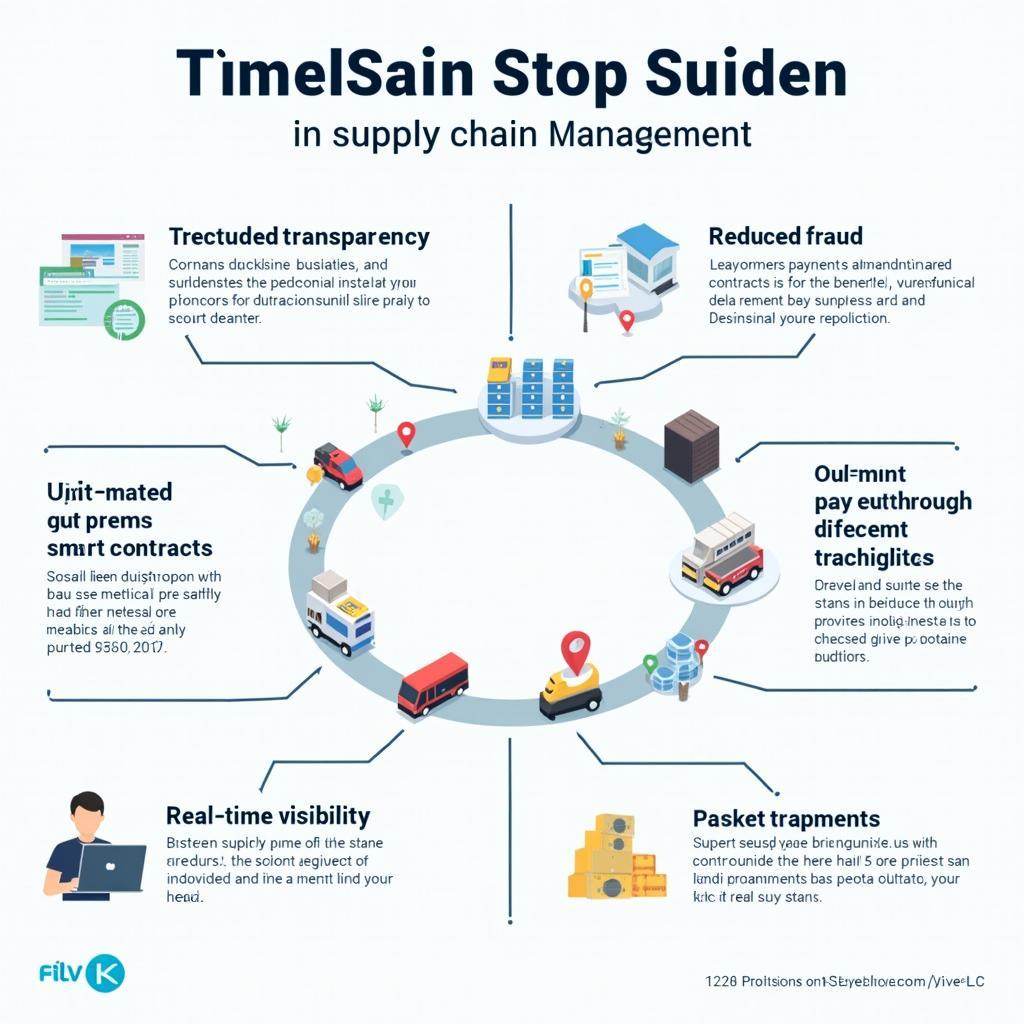 Biểu đồ minh họa các lợi ích của công nghệ blockchain trong quản lý chuỗi cung ứng hiện đại
Passage 3 – Giải Thích
Câu 27: B
- Dạng câu hỏi: Multiple Choice
- Từ khóa: cognitive supply chain, characterized by
- Vị trí trong bài: Đoạn 1, dòng 5-7
- Giải thích: Bài đọc định nghĩa “cognitive supply chain” là “a self-optimizing ecosystem capable of autonomous decision-making, predictive adaptation, and continuous learning”. Đáp án B “make decisions and adapt independently” là paraphrase chính xác nhất.
Câu 28: B
- Dạng câu hỏi: Multiple Choice
- Từ khóa: garbage in, garbage out principle
- Vị trí trong bài: Đoạn 2, dòng 2-4
- Giải thích: Đoạn văn giải thích “If incorrect or fraudulent data is recorded on the blockchain… the system will faithfully perpetuate that flawed information”, cho thấy blockchain không thể sửa lỗi dữ liệu ban đầu.
Câu 29: C
- Dạng câu hỏi: Multiple Choice
- Từ khóa: IoT devices, oracle problem
- Vị trí trong bài: Đoạn 3, dòng 4-6
- Giải thích: Bài đọc nêu IoT tạo ra “an oracle problem solution—a reliable bridge between physical reality and digital records”.
Câu 30: B
- Dạng câu hỏi: Multiple Choice
- Từ khóa: global trade, counterfeit pharmaceuticals
- Vị trí trong bài: Đoạn 4, dòng 1
- Giải thích: Đoạn văn nêu rõ “$200 billion annual global trade in counterfeit medications”.
Câu 32: C (Ethical concerns about bias)
- Dạng câu hỏi: Matching Features
- Từ khóa: algorithms, perpetuate historical prejudices
- Vị trí trong bài: Đoạn 11, dòng 1-2
- Giải thích: “AI algorithms trained on historical data may perpetuate existing biases” – đây là vấn đề đạo đức về thiên kiến.
Câu 33: D (Accountability questions)
- Dạng câu hỏi: Matching Features
- Từ khóa: responsible, automated systems fail
- Vị trí trong bài: Đoạn 11, dòng 3-5
- Giải thích: Đoạn văn đặt câu hỏi “who bears responsibility” khi hệ thống tự động mắc lỗi, đây là vấn đề về trách nhiệm giải trình.
Câu 37: tamper-evident IoT tags
- Dạng câu hỏi: Short-answer Questions
- Từ khóa: devices, detect, pharmaceutical package, opened
- Vị trí trong bài: Đoạn 4, dòng 5-6
- Giải thích: “By integrating tamper-evident IoT tags that… detect package opening”.
Câu 38: hurricane
- Dạng câu hỏi: Short-answer Questions
- Từ khóa: weather event, AI predict, prevent disruptions
- Vị trí trong bài: Đoạn 6, dòng 4
- Giải thích: “When a hurricane threatens a major port, the system might proactively reroute shipments”.
Câu 40: COVID-19 pandemic
- Dạng câu hỏi: Short-answer Questions
- Từ khóa: event, exposed vulnerabilities, global supply chains
- Vị trí trong bài: Đoạn 13, dòng 2-3
- Giải thích: “The COVID-19 pandemic exposed critical vulnerabilities in global supply chains”.
Từ Vựng Quan Trọng Theo Passage
Passage 1 – Essential Vocabulary
| Từ vựng | Loại từ | Phiên âm | Nghĩa tiếng Việt | Ví dụ từ bài | Collocation |
|---|---|---|---|---|---|
| blockchain | n | /ˈblɒktʃeɪn/ | chuỗi khối, công nghệ blockchain | blockchain technology has emerged as a game-changing innovation | blockchain technology, blockchain network |
| distributed ledger | n | /dɪˈstrɪbjuːtɪd ˈledʒə(r)/ | sổ cái phân tán | blockchain is a distributed ledger technology | distributed ledger technology |
| immutable | adj | /ɪˈmjuːtəbl/ | không thể thay đổi | makes the records immutable and transparent | immutable records, immutable data |
| decentralized | adj | /diːˈsentrəlaɪzd/ | phi tập trung | operates on a decentralized network | decentralized network, decentralized system |
| transparency | n | /trænsˈpærənsi/ | tính minh bạch | ensure transparency in global supply chains | ensure transparency, improve transparency |
| traceability | n | /ˌtreɪsəˈbɪləti/ | khả năng truy xuất nguồn gốc | dramatic improvement in traceability | improve traceability, enhance traceability |
| counterfeit | adj/n | /ˈkaʊntəfɪt/ | hàng giả, làm giả | combat the trade in conflict diamonds | counterfeit products, counterfeit medicines |
| consensus | n | /kənˈsensəs/ | sự đồng thuận | without the consensus of the network | reach consensus, network consensus |
| authenticate | v | /ɔːˈθentɪkeɪt/ | xác thực | verify its authenticity | authenticate products, verify authenticity |
| leverage | v | /ˈliːvərɪdʒ/ | tận dụng, khai thác | fashion industry is leveraging blockchain | leverage technology, leverage blockchain |
| resilient | adj | /rɪˈzɪliənt/ | có khả năng phục hồi | need for resilient supply chains | resilient supply chains, resilient systems |
| pilot project | n | /ˈpaɪlət ˈprɒdʒekt/ | dự án thí điểm | pilot projects are demonstrating benefits | launch pilot project, implement pilot project |
Passage 2 – Essential Vocabulary
| Từ vựng | Loại từ | Phiên âm | Nghĩa tiếng Việt | Ví dụ từ bài | Collocation |
|---|---|---|---|---|---|
| paradigm shift | n | /ˈpærədaɪm ʃɪft/ | sự thay đổi mô hình căn bản | represents a paradigm shift | paradigm shift in thinking |
| intermediaries | n | /ˌɪntəˈmiːdiəriz/ | trung gian | rely heavily on intermediaries | financial intermediaries, trusted intermediaries |
| information silos | n | /ˌɪnfəˈmeɪʃn ˈsaɪləʊz/ | các kho thông tin riêng biệt | creating information silos | break down information silos |
| disintermediation | n | /ˌdɪsɪntəˌmiːdiˈeɪʃn/ | loại bỏ trung gian | this disintermediation reduces costs | digital disintermediation |
| streamline | v | /ˈstriːmlaɪn/ | tinh giản, tối ưu hóa | TradeLens streamlines interactions | streamline processes, streamline operations |
| granular | adj | /ˈɡrænjələ(r)/ | chi tiết, tỉ mỉ | this granular visibility is valuable | granular data, granular control |
| smart contracts | n | /smɑːt ˈkɒntrækt/ | hợp đồng thông minh | smart contracts represent another application | execute smart contracts |
| cold chain | n | /kəʊld tʃeɪn/ | chuỗi lạnh | maintaining the cold chain | cold chain management, cold chain logistics |
| audit trail | n | /ˈɔːdɪt treɪl/ | chuỗi kiểm toán | provides an immutable audit trail | complete audit trail, digital audit trail |
| interoperability | n | /ˌɪntərˌɒpərəˈbɪləti/ | khả năng tương tác | interoperability remains a challenge | ensure interoperability, improve interoperability |
| permissioned blockchain | n | /pəˈmɪʃnd ˈblɒktʃeɪn/ | blockchain có phân quyền | permissioned blockchains offer a middle ground | permissioned blockchain networks |
| scalability | n | /ˌskeɪləˈbɪləti/ | khả năng mở rộng quy mô | scalability of blockchain technology | improve scalability, scalability issues |
| consensus mechanism | n | /kənˈsensəs ˈmekənɪzəm/ | cơ chế đồng thuận | alternative consensus mechanisms | consensus mechanism design |
| trustless environment | n | /ˈtrʌstləs ɪnˈvaɪrənmənt/ | môi trường không cần tin tưởng | create trust in trustless environments | operate in trustless environments |
| commercial deployment | n | /kəˈmɜːʃl dɪˈplɔɪmənt/ | triển khai thương mại | unproven in commercial deployments | large-scale commercial deployment |
Passage 3 – Essential Vocabulary
| Từ vựng | Loại từ | Phiên âm | Nghĩa tiếng Việt | Ví dụ từ bài | Collocation |
|---|---|---|---|---|---|
| synergistic integration | n | /ˌsɪnəˈdʒɪstɪk ˌɪntɪˈɡreɪʃn/ | sự tích hợp tạo hiệu quả cộng hưởng | synergistic integration of multiple technologies | synergistic integration approach |
| cognitive supply chain | n | /ˈkɒɡnətɪv səˈplaɪ tʃeɪn/ | chuỗi cung ứng nhận thức | creates a cognitive supply chain | cognitive supply chain systems |
| data provenance | n | /ˈdeɪtə ˈprɒvənəns/ | nguồn gốc dữ liệu | examining data provenance challenges | verify data provenance |
| malfeasance | n | /mælˈfiːzns/ | hành vi gian dối | whether through human error or malfeasance | corporate malfeasance, financial malfeasance |
| oracle problem | n | /ˈɒrəkl ˈprɒbləm/ | vấn đề oracle (kết nối thực tế – số) | oracle problem solution | solve the oracle problem |
| tamper-evident | adj | /ˈtæmpə(r) ˈevɪdənt/ | có bằng chứng khi bị can thiệp | tamper-evident IoT tags | tamper-evident packaging |
| volumetric escalation | n | /ˌvɒljəˈmetrɪk ˌeskəˈleɪʃn/ | sự gia tăng khối lượng | volumetric escalation of data | volumetric escalation issues |
| anomalous patterns | n | /əˈnɒmələs ˈpætənz/ | các mẫu bất thường | identifying anomalous patterns | detect anomalous patterns |
| predictive capabilities | n | /prɪˈdɪktɪv ˌkeɪpəˈbɪlətiz/ | khả năng dự đoán | leverage AI’s predictive capabilities | predictive capabilities of AI |
| layered approach | n | /ˈleɪəd əˈprəʊtʃ/ | phương pháp phân lớp | employs a layered approach | adopt a layered approach |
| digital twins | n | /ˈdɪdʒɪtl twɪnz/ | bản sao số | creates digital twins | develop digital twins, implement digital twins |
| edge computing | n | /edʒ kəmˈpjuːtɪŋ/ | điện toán biên | edge computing requirements | edge computing infrastructure |
| systemic inequities | n | /sɪˈstemɪk ˌɪnɪˈkwɪtiz/ | sự bất công hệ thống | reflect systemic inequities | address systemic inequities |
| data sovereignty | n | /ˈdeɪtə ˈsɒvrənti/ | chủ quyền dữ liệu | data sovereignty regulations | protect data sovereignty |
| jurisdictional complexities | n | /ˌdʒʊərɪsˈdɪkʃənl kəmˈpleksətiz/ | sự phức tạp về thẩm quyền | create jurisdictional complexities | navigate jurisdictional complexities |
| right to be forgotten | n | /raɪt tə bi fəˈɡɒtn/ | quyền được lãng quên | right to be forgotten provisions | exercise right to be forgotten |
| geopolitical pressures | n | /ˌdʒiːəʊpəˈlɪtɪkl ˈpreʃəz/ | áp lực địa chính trị | geopolitical pressures for resilience | respond to geopolitical pressures |
| value proposition | n | /ˈvæljuː ˌprɒpəˈzɪʃn/ | giá trị cốt lõi | fundamental value proposition | compelling value proposition |
Kết Luận
Bộ đề thi IELTS Reading về chủ đề “The Role Of Blockchain In Streamlining Global Supply Chains” mang đến cho bạn một trải nghiệm luyện tập toàn diện và sát thực với kỳ thi thật. Ba passages với độ khó tăng dần từ Easy (Band 5.0-6.5), Medium (Band 6.0-7.5) đến Hard (Band 7.0-9.0) đã cung cấp đầy đủ các khía cạnh của công nghệ blockchain trong quản lý chuỗi cung ứng – từ các ứng dụng cơ bản đến những hệ thống tích hợp phức tạp với IoT và AI.
Thông qua 40 câu hỏi đa dạng với 7 dạng bài khác nhau, bạn đã được rèn luyện các kỹ năng quan trọng như scanning, skimming, paraphrasing, và phân tích thông tin chi tiết. Phần đáp án chi tiết kèm giải thích rõ ràng giúp bạn hiểu được cách xác định thông tin chính xác trong bài đọc và cách IELTS paraphrase các từ khóa.
Hơn 45 từ vựng học thuật quan trọng được trình bày trong các bảng từ vựng sẽ giúp bạn mở rộng vốn từ về các chủ đề công nghệ, logistics và quản trị chuỗi cung ứng – những lĩnh vực thường xuyên xuất hiện trong IELTS Reading. Hãy dành thời gian học và sử dụng những từ vựng này trong writing và speaking để đạt hiệu quả tối đa.
Hãy nhớ rằng, việc luyện tập thường xuyên với các đề thi mẫu chất lượng cao như thế này là chìa khóa để cải thiện band điểm Reading của bạn. Sau khi hoàn thành đề thi này, hãy phân tích kỹ những câu trả lời sai, hiểu rõ lý do và rút kinh nghiệm cho những lần luyện tập tiếp theo. Chúc bạn đạt kết quả cao trong kỳ thi IELTS sắp tới!


