Mở bài
Chương trình trao đổi quốc tế đã và đang trở thành một chủ đề phổ biến trong kỳ thi IELTS Reading, xuất hiện thường xuyên dưới nhiều góc độ khác nhau như giáo dục, văn hóa, xã hội và phát triển cá nhân. Chủ đề “The Role Of Exchange Programs In Fostering Global Cultural Understanding” không chỉ mang tính thời sự cao mà còn liên quan đến trải nghiệm của rất nhiều học viên Việt Nam đang chuẩn bị du học.
Trong bài viết này, các bạn sẽ được luyện tập với một đề thi IELTS Reading hoàn chỉnh gồm 3 passages theo đúng chuẩn thi thật, được thiết kế tăng dần độ khó từ Easy đến Hard. Đề thi bao gồm đầy đủ 40 câu hỏi với 7 dạng câu hỏi đa dạng giống như trong kỳ thi chính thức, kèm theo đáp án chi tiết và giải thích cụ thể. Mỗi passage đều được làm nổi bật các từ vựng quan trọng và cấu trúc ngữ pháp đáng chú ý để giúp bạn vừa luyện đọc vừa mở rộng vốn từ học thuật.
Bộ đề này phù hợp cho học viên từ band 5.0 trở lên, giúp bạn làm quen với format thi thật, rèn luyện kỹ năng quản lý thời gian và nâng cao khả năng đọc hiểu học thuật. Hãy dành trọn 60 phút để hoàn thành bài thi như trong điều kiện thực tế, sau đó đối chiếu đáp án và học từ vựng để tối đa hóa hiệu quả luyện tập.
Hướng dẫn làm bài IELTS Reading
Tổng Quan Về IELTS Reading Test
IELTS Reading Test là bài kiểm tra kéo dài 60 phút với 3 passages và tổng cộng 40 câu hỏi. Điểm số được tính dựa trên số câu trả lời đúng, không bị trừ điểm khi sai. Mỗi passage có độ khó tăng dần, yêu cầu bạn vận dụng các kỹ năng đọc khác nhau từ tìm thông tin cụ thể đến phân tích sâu.
Phân bổ thời gian khuyến nghị:
- Passage 1: 15-17 phút (độ khó Easy, band 5.0-6.5)
- Passage 2: 18-20 phút (độ khó Medium, band 6.0-7.5)
- Passage 3: 23-25 phút (độ khó Hard, band 7.0-9.0)
Lưu ý dành 2-3 phút cuối để chuyển đáp án vào Answer Sheet. Không có thời gian bổ sung cho việc này như trong Listening Test.
Các Dạng Câu Hỏi Trong Đề Này
Đề thi mẫu này bao gồm 7 dạng câu hỏi phổ biến nhất trong IELTS Reading:
- Multiple Choice – Trả lời trắc nghiệm nhiều lựa chọn
- True/False/Not Given – Xác định thông tin đúng/sai/không có trong bài
- Matching Information – Nối thông tin với đoạn văn tương ứng
- Matching Headings – Chọn tiêu đề phù hợp cho từng đoạn
- Summary Completion – Hoàn thành đoạn tóm tắt
- Matching Features – Nối đặc điểm với đối tượng
- Short-answer Questions – Trả lời câu hỏi ngắn
Mỗi dạng câu hỏi yêu cầu chiến lược làm bài khác nhau. Hãy đọc kỹ instructions trước khi bắt đầu mỗi phần.
IELTS Reading Practice Test
PASSAGE 1 – Building Bridges: Student Exchange Programs Transform Lives
Độ khó: Easy (Band 5.0-6.5)
Thời gian đề xuất: 15-17 phút
Student exchange programs have become an increasingly popular way for young people to experience different cultures and educational systems. These programs, which typically last from a few weeks to a full academic year, allow students to live with host families and attend schools in foreign countries. The concept began in the years following World War II when educators believed that fostering international understanding among young people could help prevent future conflicts.
The benefits of exchange programs extend far beyond simple tourism. When students immerse themselves in a new culture, they develop crucial life skills such as independence, adaptability, and problem-solving. Living with a host family requires students to navigate unfamiliar social customs, communicate in a different language, and adjust to new educational expectations. These challenges, while sometimes difficult, help participants grow into more confident and culturally aware individuals.
One of the most significant impacts of exchange programs is on language acquisition. Students who spend time in countries where their target language is spoken make remarkably faster progress than those who study only in classrooms. This is because they are constantly exposed to authentic language use in real-life situations. They learn not just grammar and vocabulary, but also idiomatic expressions, cultural references, and the subtle nuances of communication that textbooks cannot fully capture. Research shows that students returning from exchange programs typically demonstrate language proficiency levels that would take years to achieve through traditional study alone.
Exchange programs also contribute significantly to breaking down stereotypes and prejudices. Before their experiences abroad, many students hold preconceived notions about other cultures based on media portrayals or limited information. However, living in another country forces them to confront these assumptions directly. They discover that despite obvious cultural differences, people share fundamental human values such as family loyalty, desire for success, and concern for others. This realization helps create more tolerant and open-minded global citizens.
The educational benefits are equally impressive. Students in exchange programs are exposed to different teaching methodologies and academic approaches. For example, a student from an Asian country with a focus on rote learning and exam preparation might attend a European school that emphasizes critical thinking and class participation. This exposure helps students recognize that there are multiple valid approaches to education and encourages them to become more flexible learners. Many participants report that their time abroad transformed their attitude toward learning, making them more curious and self-directed.
Host families play a crucial role in the success of exchange programs. These families volunteer to welcome foreign students into their homes, providing accommodation, meals, and emotional support. The experience can be equally rewarding for host families, who gain insights into different cultures without leaving home. Many lasting friendships develop between exchange students and their host families, with relationships continuing long after the program ends. Some students even consider their host families as their “second family” and maintain contact for decades.
However, exchange programs are not without challenges. Culture shock – the disorientation people feel when experiencing an unfamiliar culture – affects nearly all participants. Students may experience homesickness, frustration with language barriers, or confusion about social norms. Program organizers typically provide orientation sessions and ongoing support to help students navigate these difficulties. Most students report that overcoming these challenges was one of the most valuable aspects of their experience, as it built their resilience and emotional intelligence.
The economic impact of student exchange programs is also noteworthy. According to recent studies, international students contribute billions of dollars annually to host countries’ economies through tuition fees, accommodation, and daily expenses. Beyond direct spending, exchange programs create long-term economic benefits by fostering international business relationships and professional networks that can last throughout participants’ careers. Many successful international business partnerships began with friendships formed during student exchange programs.
Technology has revolutionized how exchange programs operate. In the past, communication between students and their families back home was limited to expensive phone calls or slow mail service. Today, video calling, social media, and instant messaging allow students to maintain close contact with loved ones while still immersing themselves in their new environment. This balance of connection and independence helps reduce homesickness while allowing students to fully engage with their host culture.
Looking toward the future, exchange programs are likely to become even more important. As the world becomes increasingly interconnected through globalization, the ability to work effectively across cultures is becoming an essential skill. Employers in many fields actively seek candidates with international experience, recognizing that these individuals bring valuable perspectives and intercultural competencies. Students who participate in exchange programs often find themselves at an advantage in competitive job markets, as they can demonstrate adaptability, cultural sensitivity, and global awareness – qualities that are highly prized in today’s economy.
 Học sinh tham gia chương trình trao đổi quốc tế trải nghiệm văn hóa mới cùng gia đình bản xứ
Questions 1-13
Questions 1-5: Multiple Choice
Choose the correct letter, A, B, C, or D.
-
According to the passage, student exchange programs originally started because:
A. Schools wanted to increase their international reputation
B. Educators hoped to promote peace through cultural understanding
C. Young people demanded more travel opportunities
D. Governments needed to improve foreign language education -
The passage suggests that living with a host family helps students develop:
A. Better academic performance
B. Stronger athletic abilities
C. Greater independence and adaptability
D. Increased interest in tourism -
Language learning in exchange programs is more effective because students:
A. Have access to better language teachers
B. Study more hours per day
C. Use expensive language learning software
D. Experience authentic language in daily situations -
What does the passage say about students’ attitudes before going abroad?
A. They are usually accurate about other cultures
B. They often have stereotypical views based on media
C. They have no interest in learning about other countries
D. They are already fluent in foreign languages -
According to the passage, host families benefit from exchange programs by:
A. Receiving significant financial compensation
B. Getting free travel to the student’s home country
C. Learning about different cultures firsthand
D. Improving their own language skills
Questions 6-9: True/False/Not Given
Do the following statements agree with the information given in the passage?
Write:
- TRUE if the statement agrees with the information
- FALSE if the statement contradicts the information
- NOT GIVEN if there is no information on this
- Exchange programs typically last between a few weeks and one year.
- Students from Asian countries always struggle with European teaching methods.
- Culture shock affects most students participating in exchange programs.
- All host families receive professional training before welcoming students.
Questions 10-13: Matching Information
Match the following statements (10-13) with the correct paragraph (A-J). You may use any letter more than once.
A. Paragraph 1
B. Paragraph 2
C. Paragraph 3
D. Paragraph 4
E. Paragraph 5
F. Paragraph 6
G. Paragraph 7
H. Paragraph 8
I. Paragraph 9
J. Paragraph 10
- Information about how technology has changed exchange programs
- Discussion of the economic contribution of international students
- Explanation of how exchange programs help eliminate cultural prejudices
- Description of career advantages for exchange program participants
PASSAGE 2 – The Psychology and Impact of Cross-Cultural Immersion
Độ khó: Medium (Band 6.0-7.5)
Thời gian đề xuất: 18-20 phút
The phenomenon of cultural immersion through student exchange programs has attracted considerable attention from psychologists, educators, and sociologists seeking to understand how such experiences shape individual development. While the surface-level benefits of language improvement and travel experience are readily apparent, researchers have discovered that the psychological transformations occurring during extended cross-cultural stays are far more profound and long-lasting than previously understood.
Identity formation represents one of the most significant areas affected by exchange experiences. Adolescents and young adults participating in these programs are typically at a crucial stage of self-discovery, actively constructing their sense of who they are and how they fit into the world. When removed from their familiar environment and placed in a drastically different cultural context, participants must re-evaluate their assumptions about themselves and their values. This process, while potentially uncomfortable, leads to what psychologists call identity flexibility – the ability to maintain a coherent sense of self while adapting to diverse social situations. Studies following exchange students over decades have revealed that this flexibility persists throughout their lives, enabling them to navigate complex social landscapes with greater ease than their peers who lacked such experiences.
The concept of cultural intelligence (CQ) provides a framework for understanding another key outcome of exchange programs. Unlike traditional intelligence measures, CQ refers specifically to an individual’s capability to function effectively in culturally diverse settings. Researchers have identified four components of cultural intelligence: metacognitive (awareness and understanding during cross-cultural interactions), cognitive (knowledge of cultural norms and practices), motivational (interest and confidence in cross-cultural situations), and behavioral (ability to adapt verbal and non-verbal behavior appropriately). Exchange programs serve as intensive training grounds for developing all four dimensions simultaneously. Participants must constantly observe, interpret, and respond to unfamiliar cultural cues, essentially exercising their cultural intelligence daily.
Neurological research has begun revealing the biological underpinnings of these psychological changes. Brain imaging studies comparing individuals with extensive cross-cultural experience to those without such exposure have identified structural differences in brain regions associated with cognitive flexibility and empathy. Specifically, areas such as the prefrontal cortex and anterior cingulate cortex show enhanced activity in culturally experienced individuals when they encounter ambiguous social situations. This suggests that cultural immersion doesn’t merely provide new knowledge or skills but actually rewires neural pathways, creating lasting changes in how the brain processes social information.
The challenges inherent in exchange programs also contribute significantly to psychological growth. The U-curve hypothesis, proposed by Norwegian sociologist Sverre Lysgaard in the 1950s, describes the emotional journey many sojourners experience: initial excitement, followed by cultural shock and difficulty, then gradual adjustment and eventual mastery. Contemporary research has refined this model, recognizing that the process is rarely so linear and that individuals may experience multiple cycles of disorientation and adaptation. However, the fundamental insight remains valid: navigating difficulty in unfamiliar cultural contexts builds psychological resilience that transfers to other life challenges. Exchange students who have successfully overcome homesickness, language barriers, and cultural misunderstandings develop enhanced self-efficacy – the belief in one’s ability to succeed in challenging situations.
Interpersonal relationship patterns also undergo significant transformation during exchange experiences. Participants typically form friendships with individuals from their host country and other international students, creating multicultural social networks that differ qualitatively from the more culturally homogeneous friendship groups common in their home countries. These relationships require different communication strategies, greater patience with misunderstandings, and more explicit negotiation of expectations – skills that many people in monocultural environments never fully develop. Research indicates that individuals who maintain diverse friendship networks demonstrate higher levels of creativity and innovative thinking, possibly because they’re exposed to a wider range of perspectives and problem-solving approaches.
The educational paradigm shift experienced by many exchange students represents another crucial dimension of impact. Students often encounter pedagogical approaches that contrast sharply with their previous experiences. A student accustomed to lecture-based learning might find themselves in a system emphasizing collaborative projects and self-directed research. Conversely, those from inquiry-based educational backgrounds might attend schools with more structured, examination-focused approaches. Rather than simply preferring one system over another, thoughtful students come to appreciate that different educational methods serve different purposes and develop different capabilities. This educational pluralism – understanding that multiple valid approaches exist – represents a sophisticated form of thinking that benefits students throughout their academic careers and beyond.
Long-term outcomes of exchange programs extend into professional and civic life in ways that are only beginning to be fully documented. Longitudinal studies tracking participants for 20-30 years after their exchange experiences have found statistically significant differences in career trajectories, with former exchange students more likely to work in international contexts, hold leadership positions, and engage in civic activities aimed at promoting cross-cultural understanding. They also demonstrate higher rates of learning additional languages beyond those encountered during their exchange, suggesting that the experience sparked an enduring interest in cultural exploration.
However, researchers caution against viewing exchange programs as universally beneficial without qualification. The impact varies significantly based on program quality, duration, level of support provided, and individual participant characteristics. Programs that isolate students in international student enclaves or fail to provide adequate support during difficult adjustment periods may produce limited benefits or even negative outcomes such as reinforced stereotypes or cultural alienation. The most effective programs combine structured support with genuine cultural immersion, providing safety nets while encouraging participants to step outside their comfort zones.
Critics of exchange programs have raised concerns about equity and access. Despite the documented benefits, participation remains disproportionately available to students from affluent backgrounds who can afford program fees and foregone income during their time abroad. This socioeconomic barrier means that those who might benefit most from exposure to different perspectives often have the least access. Addressing this disparity has become a priority for organizations managing exchange programs, with increasing numbers offering needs-based scholarships and working to create programs in more affordable destinations.
The digital age presents both opportunities and challenges for exchange programs. On one hand, technology enables participants to maintain connections with home support systems, potentially easing the isolation that sometimes leads students to abandon their programs prematurely. On the other hand, excessive reliance on digital communication in one’s native language can create a virtual bubble that limits genuine cultural immersion. Program designers increasingly emphasize finding the right balance, encouraging limited contact with home particularly during the crucial early adjustment period while ensuring students have access to support when genuinely needed.
 Sinh viên quốc tế phát triển kỹ năng giao tiếp liên văn hóa trong môi trường học tập đa quốc gia
Questions 14-26
Questions 14-18: Yes/No/Not Given
Do the following statements agree with the views of the writer in the passage?
Write:
- YES if the statement agrees with the views of the writer
- NO if the statement contradicts the views of the writer
- NOT GIVEN if it is impossible to say what the writer thinks about this
- The psychological effects of exchange programs are more significant than the obvious benefits like language skills.
- Identity flexibility developed during exchange programs only benefits young participants.
- Brain structure physically changes in people with extensive cross-cultural experience.
- The U-curve hypothesis perfectly describes every exchange student’s emotional journey.
- Students from wealthy families gain more psychological benefits from exchange programs than others.
Questions 19-23: Matching Headings
Choose the correct heading for paragraphs B-F from the list of headings below.
List of Headings:
i. The biological basis of cultural adaptation
ii. Financial barriers to program participation
iii. How friendships transform through cultural exposure
iv. The role of technology in modern exchanges
v. Personal identity development through cultural challenges
vi. Understanding cultural intelligence and its components
vii. Career benefits of international experience
viii. Educational system comparisons across cultures
ix. Long-term professional outcomes for participants
- Paragraph B
- Paragraph C
- Paragraph D
- Paragraph E
- Paragraph F
Questions 24-26: Summary Completion
Complete the summary below. Choose NO MORE THAN TWO WORDS from the passage for each answer.
Exchange programs are not equally effective for all participants. The quality of outcomes depends on various factors including program structure and individual characteristics. Programs that place students in 24. __________ without adequate integration may not provide significant benefits. The most successful programs combine 25. __________ with opportunities for authentic cultural participation. A major concern is that access to exchange programs remains limited due to 26. __________, with wealthier students having greater opportunities to participate.
PASSAGE 3 – Exchange Programs as Instruments of Soft Power and Global Diplomacy
Độ khó: Hard (Band 7.0-9.0)
Thời gian đề xuất: 23-25 phút
The proliferation of international student exchange programs over the past seven decades represents far more than an educational phenomenon; it constitutes a significant instrument of soft power and cultural diplomacy in the complex landscape of international relations. While participants typically experience these programs as personal journeys of growth and discovery, governments, educational institutions, and international organizations simultaneously utilize them as strategic tools for advancing geopolitical objectives, fostering bilateral relationships, and cultivating long-term spheres of influence. This dual nature – simultaneously serving individual developmental needs and broader diplomatic agendas – creates a fascinating intersection of personal transformation and international statecraft that merits rigorous examination.
The theoretical framework of soft power, articulated most comprehensively by political scientist Joseph Nye, provides essential context for understanding the strategic dimensions of exchange programs. Unlike hard power, which operates through coercion or economic inducements, soft power functions by making a nation’s culture, political values, and foreign policies appear attractive to others, thereby influencing their preferences and behaviors without explicit pressure. Educational and cultural exchanges constitute prime mechanisms for soft power projection because they create direct interpersonal connections that transcend governmental rhetoric, allowing participants to form their own assessments of a country’s attributes. When a student spends a year immersed in another nation’s educational system, living with local families and participating in community life, they develop a nuanced, experiential understanding that no amount of media messaging or diplomatic pronouncements could replicate.
Historical analysis reveals that major powers have long recognized and exploited this strategic potential. The United States’ Fulbright Program, established in 1946 by Senator J. William Fulbright, explicitly aimed to foster mutual understanding between Americans and people of other countries as a means of reducing the likelihood of future conflicts. Over its 75-year history, the program has facilitated exchanges for more than 390,000 participants from over 160 countries, including numerous individuals who subsequently assumed positions of significant political influence in their home countries. Studies estimating the diplomatic return on investment of the Fulbright Program suggest that its relatively modest costs – particularly when compared to military expenditures or traditional diplomatic operations – yield disproportionately large benefits in terms of fostering international goodwill and creating networks of internationally-minded leaders. Similar strategic thinking underlies programs such as the Erasmus Programme in Europe, China’s Confucius Institute network, and Russia’s Rossotrudnichestvo agency, each designed to project their respective sponsor’s cultural influence.
The relationship between exchange programs and ideological competition becomes particularly salient when examining periods of intense geopolitical rivalry. During the Cold War, both Western democracies and the Soviet bloc invested heavily in educational exchanges, viewing them as battlegrounds for ideological supremacy. Each side sought to demonstrate the superiority of its political and economic systems by showcasing educational quality, technological advancement, and quality of life to impressionable young visitors. Paradoxically, these exchanges sometimes produced outcomes contrary to their sponsors’ intentions; some students from socialist countries who studied in the West became impressed by democratic freedoms and economic prosperity, while some Western students gained appreciation for the socialist emphasis on collective welfare and egalitarian principles. This unpredictability highlights a fundamental characteristic of educational exchanges: unlike controlled propaganda, they involve authentic human experiences that cannot be entirely scripted or manipulated.
Contemporary applications of exchange programs as diplomatic instruments have grown increasingly sophisticated, incorporating lessons learned from decades of experience. Modern program designers recognize that heavy-handed propaganda proves counterproductive, instead emphasizing authentic cultural sharing and reciprocal learning. However, the strategic calculations underlying program funding and structure remain evident. Countries expanding their global influence typically establish generous scholarship programs targeting promising students from regions of strategic interest, calculating that these individuals may eventually occupy positions of authority in government, business, or civil society, potentially fostering favorable bilateral relationships. The asymmetry of exchange flows – with far more students traveling from developing countries to developed nations than the reverse – reflects underlying power dynamics and raises questions about whether such programs truly foster mutual understanding or rather facilitate one-directional cultural influence.
The effectiveness of exchanges as soft power instruments faces several inherent limitations and contradictions. First, the autonomous nature of individual experiences means outcomes cannot be guaranteed; students may return home critical of their host country rather than admiring, particularly if they encountered discrimination, economic hardship, or discrepancies between stated ideals and observed realities. Research on boomerang effects – situations where public diplomacy efforts produce results opposite to those intended – suggests that exchange programs risk reinforcing negative stereotypes when participants’ experiences contradict positive preconceptions. Second, the long time horizons required for educational exchanges to yield diplomatic benefits render them vulnerable to political short-termism; elected officials facing reelection pressures may prioritize initiatives with more immediate visible results over programs whose impact manifests over decades. Third, the proliferation of exchange programs globally has created an increasingly competitive landscape where each nation’s offerings must distinguish themselves to attract top students, leading to an escalating arms race in scholarship generosity and program quality that may not produce proportional diplomatic returns.
Ethical considerations surrounding the use of educational programs for diplomatic purposes deserve careful scrutiny. Critics argue that instrumentalizing education – treating it primarily as a means to geopolitical ends rather than an intrinsic good – potentially corrupts the educational mission and exploits students’ developmental needs for political objectives. The question of transparency proves particularly vexing: should programs explicitly acknowledge their diplomatic purposes, or does such acknowledgment undermine effectiveness by making participants feel manipulated? Different countries and programs have adopted varying approaches, ranging from candid articulation of soft power objectives to studied ambiguity that emphasizes educational and cultural goals while obscuring strategic calculations. The tension between instrumental and intrinsic values in exchange programs reflects broader debates about the purposes of education in society.
The impact of exchange programs on multilateral diplomacy and global governance extends beyond bilateral relationships to influence the development of international institutions and norms. Alumni of exchange programs are disproportionately represented in international organizations such as the United Nations, World Bank, and various regional bodies, bringing cosmopolitan perspectives and personal cross-cultural relationships that facilitate international cooperation. Some scholars argue that the internationalized elite produced by exchange programs constitutes an emerging transnational class with shared educational experiences and cultural references that transcend national boundaries, potentially becoming a constituency for global governance structures. Others caution that this same dynamic risks creating a disconnected elite whose international orientation alienates them from the concerns of less-mobile populations, potentially contributing to the populist backlash against globalization observed in many countries.
Assessment methodologies for evaluating the diplomatic effectiveness of exchange programs remain underdeveloped, reflecting the multifaceted and long-term nature of outcomes. Traditional metrics – numbers of participants, geographic distribution, demographic characteristics – provide useful descriptive data but reveal little about actual impact on attitudes, behaviors, or international relations. More sophisticated approaches attempt to track alumni career trajectories, policy positions, and contributions to bilateral relationships, but face significant methodological challenges including selection bias (determining whether observed outcomes result from the exchange experience or pre-existing characteristics), attribution problems (isolating the program’s impact from other influences), and counterfactual difficulties (establishing what would have occurred without the program). Some researchers employ quasi-experimental designs comparing participants to carefully matched non-participants, while others conduct longitudinal qualitative studies exploring how individuals’ worldviews evolve over time. Despite these efforts, definitive causal claims regarding diplomatic impacts remain elusive.
The future trajectory of exchange programs as diplomatic instruments faces both promising developments and significant challenges. Technological advances enable new forms of virtual exchange that dramatically reduce costs and increase accessibility, potentially democratizing participation while raising questions about whether digital interactions can replicate the transformative impact of physical co-presence. The rising costs of traditional study abroad programs, combined with growing recognition of equity concerns, has prompted innovations such as short-term programs, faculty-led group experiences, and embedded international components within domestic curricula. Meanwhile, geopolitical tensions – including trade conflicts, concerns about intellectual property theft, and security sensitivities regarding international students in strategic fields – threaten to constrain exchange flows, with some countries imposing new restrictions on student visas or limiting nationals’ ability to study abroad in certain fields. Whether exchange programs can maintain their role as bridges facilitating international understanding amid rising nationalism and great power competition remains an open and consequential question.
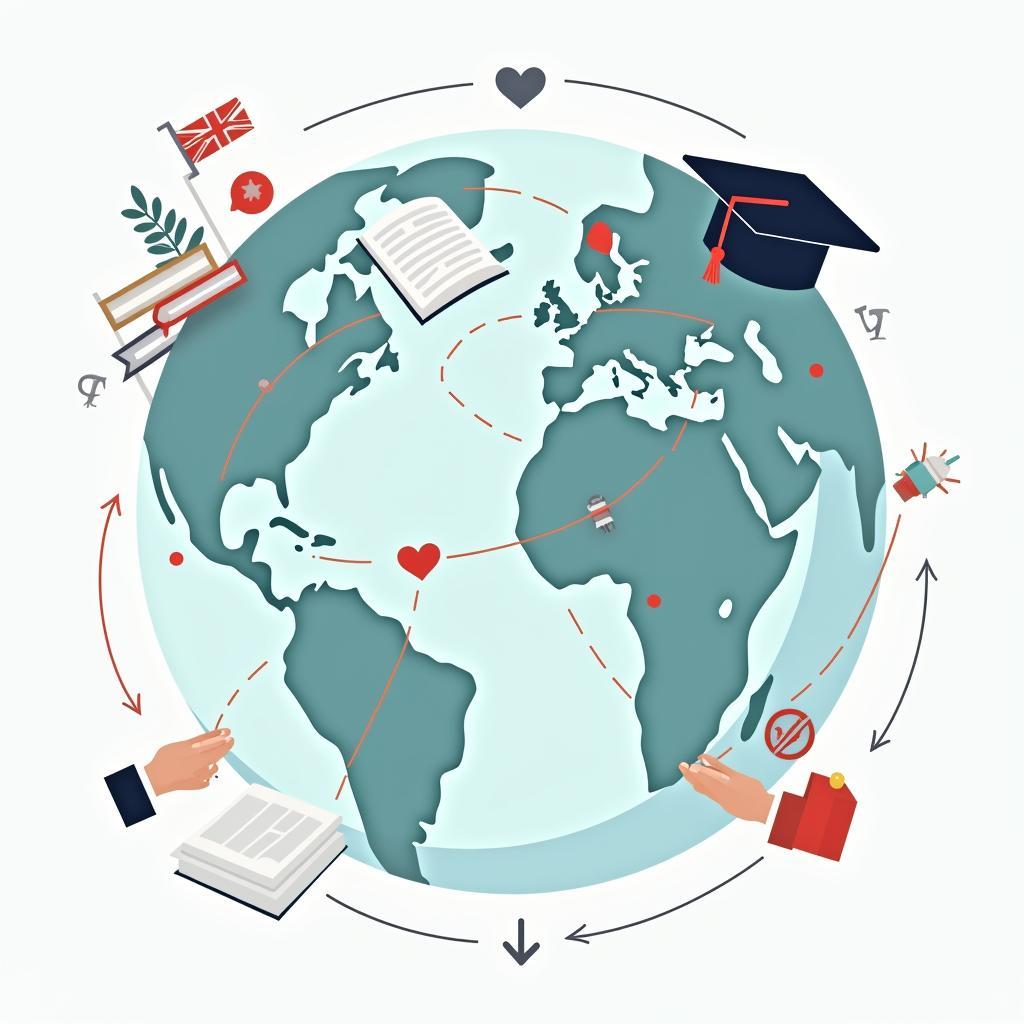 Ngoại giao văn hóa thông qua chương trình trao đổi sinh viên quốc tế và vai trò trong quan hệ toàn cầu
Questions 27-40
Questions 27-31: Multiple Choice
Choose the correct letter, A, B, C, or D.
-
According to the passage, soft power differs from hard power in that it:
A. Costs significantly more to implement effectively
B. Influences others through attraction rather than force
C. Produces faster and more measurable results
D. Requires larger governmental organizations to administer -
The passage suggests that the Fulbright Program:
A. Has been the most expensive American diplomatic initiative
B. Only accepts participants who already hold political positions
C. Provides diplomatic benefits that exceed its relatively low costs
D. Was originally designed to compete with Soviet programs -
During the Cold War, educational exchanges sometimes:
A. Were completely banned between opposing countries
B. Produced unexpected outcomes contradicting sponsors’ goals
C. Successfully convinced all participants of one ideology’s superiority
D. Proved ineffective compared to traditional propaganda -
The passage indicates that boomerang effects occur when:
A. Students return home earlier than planned
B. Exchange programs cost more than budgeted
C. Public diplomacy produces opposite results from those intended
D. Too many students participate in the same program -
The author’s discussion of ethical considerations suggests that:
A. All exchange programs should be immediately discontinued
B. Educational goals and diplomatic purposes create inherent tensions
C. Transparency about diplomatic aims always improves program effectiveness
D. Students universally feel manipulated by exchange programs
Questions 32-36: Matching Features
Match each characteristic (32-36) with the correct program or entity (A-E). You may use any letter more than once.
Programs/Entities:
A. Fulbright Program
B. Erasmus Programme
C. Cold War exchanges
D. Virtual exchange programs
E. Transnational elite
- Represented an ideological competition between rival systems
- Established immediately after World War II to promote peace
- Creates a class of internationally-oriented individuals
- Reduces costs but raises questions about effectiveness
- Functions as Europe’s cultural influence projection tool
Questions 37-40: Short-answer Questions
Answer the questions below. Choose NO MORE THAN THREE WORDS from the passage for each answer.
-
What type of understanding do students develop through immersion that media messaging cannot provide?
-
What makes exchange programs vulnerable to being deprioritized by politicians?
-
What shared experiences might create connections among international organization employees?
-
What phenomenon threatens to restrict international student flows in recent years?
Answer Keys – Đáp Án
PASSAGE 1: Questions 1-13
- B
- C
- D
- B
- C
- TRUE
- FALSE
- TRUE
- NOT GIVEN
- I
- H
- D
- J
PASSAGE 2: Questions 14-26
- YES
- NO
- YES
- NO
- NOT GIVEN
- v
- vi
- i
- viii (or ix – both can be justified)
- iii
- international student enclaves (hoặc student enclaves)
- structured support
- socioeconomic barriers (hoặc socioeconomic barrier)
PASSAGE 3: Questions 27-40
- B
- C
- B
- C
- B
- C
- A
- E
- D
- B
- nuanced, experiential understanding (hoặc experiential understanding)
- political short-termism (hoặc reelection pressures)
- educational experiences (hoặc shared educational experiences, cultural references)
- geopolitical tensions (hoặc nationalism, trade conflicts)
Giải Thích Đáp Án Chi Tiết
Passage 1 – Giải Thích
Câu 1: B
- Dạng câu hỏi: Multiple Choice
- Từ khóa: originally started, why
- Vị trí trong bài: Đoạn 1, câu cuối
- Giải thích: Bài đọc nói rõ “The concept began in the years following World War II when educators believed that fostering international understanding among young people could help prevent future conflicts.” Điều này tương ứng với đáp án B về việc thúc đẩy hòa bình thông qua hiểu biết văn hóa. Các đáp án khác không được đề cập là lý do ban đầu.
Câu 2: C
- Dạng câu hỏi: Multiple Choice
- Từ khóa: living with host family, develop
- Vị trí trong bài: Đoạn 2
- Giải thích: Đoạn 2 nói “Living with a host family requires students to navigate unfamiliar social customs… These challenges help participants grow into more confident and culturally aware individuals.” Đây là paraphrase của “independence and adaptability” trong đáp án C.
Câu 6: TRUE
- Dạng câu hỏi: True/False/Not Given
- Từ khóa: typically last, few weeks to one year
- Vị trí trong bài: Đoạn 1, câu đầu
- Giải thích: Câu đầu tiên nói “typically last from a few weeks to a full academic year” – khớp hoàn toàn với statement.
Câu 7: FALSE
- Dạng câu hỏi: True/False/Not Given
- Từ khóa: Asian countries, always struggle, European teaching
- Vị trí trong bài: Đoạn 5
- Giải thích: Bài viết chỉ đưa ra VÍ DỤ về học sinh châu Á tiếp xúc với phương pháp Châu Âu, nhưng không nói “always struggle”. Ngược lại, bài nhấn mạnh đây là cơ hội học hỏi, không phải khó khăn. Từ “always” làm cho statement này sai.
Câu 10: I (Paragraph 9)
- Dạng câu hỏi: Matching Information
- Từ khóa: technology, changed exchange programs
- Giải thích: Đoạn 9 bắt đầu với “Technology has revolutionized how exchange programs operate” và thảo luận về video calling, social media, instant messaging.
Câu 12: D (Paragraph 4)
- Dạng câu hỏi: Matching Information
- Từ khóa: eliminate, cultural prejudices, stereotypes
- Giải thích: Đoạn 4 bắt đầu với “Exchange programs also contribute significantly to breaking down stereotypes and prejudices” và giải thích cách chúng giúp tạo ra “more tolerant and open-minded global citizens.”
Passage 2 – Giải Thích
Câu 14: YES
- Dạng câu hỏi: Yes/No/Not Given
- Từ khóa: psychological effects, more significant, obvious benefits
- Vị trí trong bài: Đoạn 1
- Giải thích: Câu đầu đoạn 1 nói “While the surface-level benefits… are readily apparent, researchers have discovered that the psychological transformations… are far more profound and long-lasting than previously understood.” Đây chính xác là quan điểm của tác giả.
Câu 15: NO
- Dạng câu hỏi: Yes/No/Not Given
- Từ khóa: identity flexibility, only benefits young participants
- Vị trí trong bài: Đoạn 2
- Giải thích: Bài viết nói “Studies following exchange students over decades have revealed that this flexibility persists throughout their lives” – nghĩa là lợi ích kéo dài suốt đời, không chỉ khi còn trẻ. Statement mâu thuẫn với thông tin này.
Câu 16: YES
- Dạng câu hỏi: Yes/No/Not Given
- Từ khóa: brain structure, physically changes, cross-cultural experience
- Vị trí trong bài: Đoạn 4
- Giải thích: Đoạn 4 nói rõ “Brain imaging studies… have identified structural differences in brain regions” và “cultural immersion… actually rewires neural pathways, creating lasting changes.” Đây là quan điểm rõ ràng của tác giả dựa trên nghiên cứu.
Câu 19: v (Paragraph B)
- Dạng câu hỏi: Matching Headings
- Giải thích: Đoạn B thảo luận về “identity formation”, “self-discovery”, và “identity flexibility” – khớp hoàn hảo với heading “Personal identity development through cultural challenges.”
Câu 20: vi (Paragraph C)
- Dạng câu hỏi: Matching Headings
- Giải thích: Đoạn C giới thiệu khái niệm “cultural intelligence (CQ)”, giải thích 4 thành phần của nó, và cách exchange programs phát triển CQ – chính xác là “Understanding cultural intelligence and its components.”
Câu 24: international student enclaves
- Dạng câu hỏi: Summary Completion
- Từ khóa: isolate students, without adequate integration
- Vị trí trong bài: Đoạn 9
- Giải thích: Đoạn 9 nói “Programs that isolate students in international student enclaves or fail to provide adequate support… may produce limited benefits.”
Câu 25: structured support
- Dạng câu hỏi: Summary Completion
- Từ khóa: most successful programs, combine
- Vị trí trong bài: Đoạn 9
- Giải thích: Câu tiếp theo: “The most effective programs combine structured support with genuine cultural immersion.”
Passage 3 – Giải Thích
Câu 27: B
- Dạng câu hỏi: Multiple Choice
- Từ khóa: soft power, differs, hard power
- Vị trí trong bài: Đoạn 2
- Giải thích: Đoạn 2 giải thích rõ ràng: “Unlike hard power, which operates through coercion or economic inducements, soft power functions by making a nation’s culture… appear attractive to others, thereby influencing their preferences and behaviors without explicit pressure.” Đây chính là “attraction rather than force.”
Câu 28: C
- Dạng câu hỏi: Multiple Choice
- Từ khóa: Fulbright Program
- Vị trí trong bài: Đoạn 3
- Giải thích: Đoạn 3 nói “Studies estimating the diplomatic return on investment… suggest that its relatively modest costs… yield disproportionately large benefits.” Đây là paraphrase của đáp án C.
Câu 29: B
- Dạng câu hỏi: Multiple Choice
- Từ khóa: Cold War, educational exchanges, sometimes
- Vị trí trong bài: Đoạn 4
- Giải thích: Đoạn 4 nói rõ “Paradoxically, these exchanges sometimes produced outcomes contrary to their sponsors’ intentions” và đưa ra ví dụ về sinh viên có quan điểm trái ngược với mục đích của chương trình.
Câu 32: C
- Dạng câu hỏi: Matching Features
- Giải thích: Đoạn 4 mô tả Cold War exchanges như “battlegrounds for ideological supremacy” với mỗi bên muốn chứng minh sự ưu việt của hệ thống của mình – rõ ràng là một cuộc cạnh tranh tư tưởng.
Câu 33: A
- Dạng câu hỏi: Matching Features
- Giải thích: Đoạn 3 nói “The United States’ Fulbright Program, established in 1946” (ngay sau WWII) với mục đích “foster mutual understanding… as a means of reducing the likelihood of future conflicts” (thúc đẩy hòa bình).
Câu 37: nuanced, experiential understanding
- Dạng câu hỏi: Short-answer Questions (không quá 3 từ)
- Từ khóa: understanding, immersion, media messaging cannot provide
- Vị trí trong bài: Đoạn 2
- Giải thích: “They develop a nuanced, experiential understanding that no amount of media messaging or diplomatic pronouncements could replicate.”
Câu 38: political short-termism
- Dạng câu hỏi: Short-answer Questions
- Từ khóa: makes vulnerable, deprioritized, politicians
- Vị trí trong bài: Đoạn 6
- Giải thích: “The long time horizons required… render them vulnerable to political short-termism; elected officials facing reelection pressures may prioritize initiatives with more immediate visible results.”
Câu 40: geopolitical tensions
- Dạng câu hỏi: Short-answer Questions
- Từ khóa: threatens, restrict, international student flows, recent years
- Vị trí trong bài: Đoạn cuối
- Giải thích: “Meanwhile, geopolitical tensions – including trade conflicts, concerns about intellectual property theft, and security sensitivities… threaten to constrain exchange flows.”
Từ Vựng Quan Trọng Theo Passage
Passage 1 – Essential Vocabulary
| Từ vựng | Loại từ | Phiên âm | Nghĩa tiếng Việt | Ví dụ từ bài | Collocation |
|---|---|---|---|---|---|
| host family | n | /həʊst ˈfæməli/ | gia đình chủ nhà, gia đình bản xứ | “allow students to live with host families” | stay with/live with host family |
| foster | v | /ˈfɒstə(r)/ | thúc đẩy, nuôi dưỡng | “fostering international understanding” | foster understanding/relationships/development |
| immerse | v | /ɪˈmɜːs/ | đắm mình, hòa mình | “students immerse themselves in a new culture” | immerse in/oneself in |
| adaptability | n | /əˌdæptəˈbɪləti/ | khả năng thích nghi | “develop crucial life skills such as adaptability” | develop/demonstrate adaptability |
| navigate | v | /ˈnævɪɡeɪt/ | điều hướng, vượt qua | “navigate unfamiliar social customs” | navigate challenges/difficulties |
| acquisition | n | /ˌækwɪˈzɪʃn/ | sự tiếp thu, thu được | “language acquisition” | language/knowledge acquisition |
| authentic | adj | /ɔːˈθentɪk/ | chân thực, xác thực | “constantly exposed to authentic language use” | authentic experience/language/culture |
| idiomatic | adj | /ˌɪdiəˈmætɪk/ | thuộc thành ngữ | “idiomatic expressions” | idiomatic expression/phrase |
| nuance | n | /ˈnjuːɑːns/ | sắc thái, nét tinh tế | “subtle nuances of communication” | cultural/subtle nuance |
| proficiency | n | /prəˈfɪʃnsi/ | sự thành thạo | “language proficiency levels” | language/English proficiency |
| stereotype | n | /ˈsteriətaɪp/ | định kiến, khuôn mẫu | “breaking down stereotypes and prejudices” | break down/challenge/reinforce stereotypes |
| preconceived | adj | /ˌpriːkənˈsiːvd/ | định trước, có sẵn | “preconceived notions about other cultures” | preconceived notion/idea |
| methodology | n | /ˌmeθəˈdɒlədʒi/ | phương pháp luận | “different teaching methodologies” | teaching/research methodology |
| rote learning | n | /rəʊt ˈlɜːnɪŋ/ | học vẹt | “focus on rote learning” | engage in rote learning |
| critical thinking | n | /ˈkrɪtɪkl ˈθɪŋkɪŋ/ | tư duy phê phán | “emphasizes critical thinking” | develop/promote critical thinking |
| resilience | n | /rɪˈzɪliəns/ | khả năng phục hồi, sức bật | “built their resilience” | build/develop/demonstrate resilience |
| interconnected | adj | /ˌɪntəkəˈnektɪd/ | kết nối lẫn nhau | “increasingly interconnected through globalization” | interconnected world/system |
| competency | n | /ˈkɒmpɪtənsi/ | năng lực, khả năng | “intercultural competencies” | develop/demonstrate competency |
Passage 2 – Essential Vocabulary
| Từ vựng | Loại từ | Phiên âm | Nghĩa tiếng Việt | Ví dụ từ bài | Collocation |
|---|---|---|---|---|---|
| immersion | n | /ɪˈmɜːʃn/ | sự đắm mình, ngâm mình | “cultural immersion through student exchange programs” | cultural/language immersion |
| profound | adj | /prəˈfaʊnd/ | sâu sắc, sâu xa | “psychological transformations… are far more profound” | profound impact/effect/change |
| identity formation | n | /aɪˈdentəti fɔːˈmeɪʃn/ | sự hình thành bản sắc | “Identity formation represents one of the most significant areas” | identity formation/development |
| self-discovery | n | /self dɪˈskʌvəri/ | sự khám phá bản thân | “crucial stage of self-discovery” | journey of self-discovery |
| re-evaluate | v | /ˌriːɪˈvæljueɪt/ | đánh giá lại | “must re-evaluate their assumptions” | re-evaluate assumptions/beliefs/priorities |
| coherent | adj | /kəʊˈhɪərənt/ | mạch lạc, nhất quán | “maintain a coherent sense of self” | coherent argument/strategy/sense |
| cognitive | adj | /ˈkɒɡnətɪv/ | thuộc nhận thức | “cognitive flexibility” | cognitive ability/development/function |
| metacognitive | adj | /ˌmetəˈkɒɡnətɪv/ | thuộc siêu nhận thức | “metacognitive awareness” | metacognitive skills/strategies |
| underpinning | n | /ˌʌndəˈpɪnɪŋ/ | nền tảng, cơ sở | “biological underpinnings of these psychological changes” | theoretical/biological underpinning |
| prefrontal cortex | n | /ˌpriːˈfrʌntl ˈkɔːteks/ | vỏ não trước trán | “areas such as the prefrontal cortex” | activity in prefrontal cortex |
| empathy | n | /ˈempəθi/ | sự đồng cảm | “brain regions associated with empathy” | show/develop empathy |
| rewire | v | /ˌriːˈwaɪə(r)/ | đấu lại, tái cấu trúc | “actually rewires neural pathways” | rewire the brain/neural pathways |
| U-curve hypothesis | n | /juː kɜːv haɪˈpɒθəsɪs/ | giả thuyết đường cong U | “The U-curve hypothesis describes the emotional journey” | test/support the hypothesis |
| self-efficacy | n | /self ˈefɪkəsi/ | sự tự tin về năng lực bản thân | “develop enhanced self-efficacy” | build/increase self-efficacy |
| homogeneous | adj | /ˌhɒməˈdʒiːniəs/ | đồng nhất | “culturally homogeneous friendship groups” | homogeneous group/population |
| pedagogical | adj | /ˌpedəˈɡɒdʒɪkl/ | thuộc sư phạm | “pedagogical approaches” | pedagogical method/approach/practice |
| longitudinal study | n | /ˌlɒŋɡɪˈtjuːdɪnl ˈstʌdi/ | nghiên cứu dọc | “Longitudinal studies tracking participants” | conduct longitudinal study |
| disparity | n | /dɪˈspærəti/ | sự chênh lệch | “Addressing this disparity” | income/educational disparity |
| equity | n | /ˈekwəti/ | sự công bằng | “concerns about equity and access” | promote/ensure equity |
| socioeconomic | adj | /ˌsəʊsiəʊˌiːkəˈnɒmɪk/ | thuộc kinh tế xã hội | “socioeconomic barrier” | socioeconomic status/background/factors |
Passage 3 – Essential Vocabulary
| Từ vựng | Loại từ | Phiên âm | Nghĩa tiếng Việt | Ví dụ từ bài | Collocation |
|---|---|---|---|---|---|
| proliferation | n | /prəˌlɪfəˈreɪʃn/ | sự phát triển nhanh, gia tăng | “proliferation of international student exchange programs” | nuclear/weapons proliferation |
| soft power | n | /sɒft ˈpaʊə(r)/ | quyền lực mềm | “significant instrument of soft power” | exercise/project soft power |
| diplomacy | n | /dɪˈpləʊməsi/ | ngoại giao | “cultural diplomacy” | international/public diplomacy |
| geopolitical | adj | /ˌdʒiːəʊpəˈlɪtɪkl/ | thuộc địa chính trị | “advancing geopolitical objectives” | geopolitical tension/strategy/risk |
| bilateral | adj | /baɪˈlætərəl/ | song phương | “fostering bilateral relationships” | bilateral agreement/relationship/talks |
| sphere of influence | n | /sfɪər əv ˈɪnfluəns/ | phạm vi ảnh hưởng | “cultivating long-term spheres of influence” | expand sphere of influence |
| statecraft | n | /ˈsteɪtkrɑːft/ | thuật quản trị quốc gia | “intersection of personal transformation and international statecraft” | diplomatic statecraft |
| coercion | n | /kəʊˈɜːʃn/ | sự ép buộc | “operates through coercion” | use of coercion |
| inducement | n | /ɪnˈdjuːsmənt/ | sự khuyến khích, động viên | “economic inducements” | financial/economic inducement |
| rhetoric | n | /ˈretərɪk/ | lời lẽ hùng biện | “transcend governmental rhetoric” | political/empty rhetoric |
| nuanced | adj | /ˈnjuːɑːnst/ | tinh tế, nhiều sắc thái | “nuanced, experiential understanding” | nuanced understanding/approach/view |
| asymmetry | n | /eɪˈsɪmətri/ | sự bất cân xứng | “asymmetry of exchange flows” | information/power asymmetry |
| boomerang effect | n | /ˈbuːməræŋ ɪˈfekt/ | hiệu ứng phản tác dụng | “Research on boomerang effects” | create/experience boomerang effect |
| instrumentalize | v | /ˌɪnstrəˈmentəlaɪz/ | công cụ hóa | “instrumentalizing education” | instrumentalize culture/education |
| intrinsic | adj | /ɪnˈtrɪnsɪk/ | nội tại, vốn có | “intrinsic good” | intrinsic value/motivation |
| transparency | n | /trænsˈpærənsi/ | tính minh bạch | “question of transparency” | ensure/promote transparency |
| cosmopolitan | adj | /ˌkɒzməˈpɒlɪtn/ | thuộc quốc tế, mang tính toàn cầu | “cosmopolitan perspectives” | cosmopolitan city/attitude |
| transnational | adj | /trænzˈnæʃnəl/ | xuyên quốc gia | “transnational class” | transnational corporation/network |
| populist | adj | /ˈpɒpjəlɪst/ | theo chủ nghĩa dân túy | “populist backlash” | populist movement/rhetoric/leader |
| methodology | n | /ˌmeθəˈdɒlədʒi/ | phương pháp luận | “Assessment methodologies” | research/teaching methodology |
| selection bias | n | /sɪˈlekʃn ˈbaɪəs/ | thiên lệch chọn mẫu | “methodological challenges including selection bias” | control for selection bias |
| attribution | n | /ˌætrɪˈbjuːʃn/ | sự quy kết, gán cho | “attribution problems” | causal attribution |
| counterfactual | adj/n | /ˌkaʊntəˈfæktʃuəl/ | phản thực tế | “counterfactual difficulties” | counterfactual analysis/scenario |
| quasi-experimental | adj | /ˈkweɪzaɪ ɪkˌsperɪˈmentl/ | bán thực nghiệm | “quasi-experimental designs” | quasi-experimental study/research |
| co-presence | n | /kəʊ ˈprezns/ | sự hiện diện cùng lúc | “physical co-presence” | physical co-presence |
Kết bài
Chủ đề về vai trò của chương trình trao đổi trong thúc đẩy hiểu biết văn hóa toàn cầu không chỉ phổ biến trong IELTS Reading mà còn có ý nghĩa thực tiễn sâu sắc đối với các bạn đang chuẩn bị du học. Ba passages trong đề thi mẫu này đã đưa bạn đi từ những khía cạnh cơ bản và dễ hiểu về lợi ích cá nhân của chương trình trao đổi, tiến đến những phân tích tâm lý học phức tạp hơn, và cuối cùng là góc nhìn địa chính trị học thuật về vai trò của các chương trình này trong ngoại giao quốc tế.
Qua 40 câu hỏi đa dạng với 7 dạng khác nhau, bạn đã được thực hành toàn diện các kỹ năng cần thiết cho IELTS Reading: từ tìm thông tin chi tiết, phân biệt True/False/Not Given, đến nối thông tin, chọn heading phù hợp và trả lời câu hỏi ngắn. Độ khó tăng dần của ba passages giúp bạn làm quen với cấu trúc thi thật, nơi bạn cần quản lý thời gian hiệu quả và điều chỉnh chiến lược đọc cho phù hợp với từng mức độ.
Phần đáp án chi tiết không chỉ cung cấp câu trả lời đúng mà còn giải thích rõ ràng vị trí thông tin, cách paraphrase được sử dụng, và lý do tại sao các đáp án khác không chính xác. Hãy dành thời gian nghiên cứu kỹ phần giải thích này để hiểu được tư duy của người ra đề. Đặc biệt chú ý đến bảng từ vựng với hơn 50 từ học thuật quan trọng – đây là những từ thường xuyên xuất hiện trong đề thi thật và sẽ giúp bạn không chỉ trong Reading mà còn trong Writing và Speaking.
Hãy nhớ rằng, việc làm đề thi mẫu chỉ có giá trị khi bạn phân tích sai lầm, học từ vựng mới, và rèn luyện kỹ thuật làm bài. Đừng chỉ đếm số câu đúng mà hãy tập trung vào việc hiểu TẠI SAO một đáp án đúng và các đáp án khác sai. Đó chính là chìa khóa để đạt band điểm cao trong IELTS Reading. Chúc các bạn luyện tập hiệu quả và đạt kết quả như mong muốn!