
Trong bối cảnh toàn cầu hóa giáo dục ngày càng phát triển, chủ đề về vai trò của mentorship (cố vấn học thuật) trong việc thúc đẩy thành công học thuật xuyên văn hóa đã trở thành một nội dung được quan tâm đặc biệt trong kỳ thi IELTS Reading. Chủ đề này thường xuyên xuất hiện trong các đề thi IELTS gần đây, đặc biệt ở dạng Academic Reading, với tần suất khoảng 15-20% trong các bài đọc thuộc lĩnh vực Education và Social Sciences.
Bài viết này cung cấp cho bạn một bộ đề thi IELTS Reading hoàn chỉnh gồm 3 passages với độ khó tăng dần từ Easy (Band 5.0-6.5), Medium (Band 6.0-7.5) đến Hard (Band 7.0-9.0). Bạn sẽ được luyện tập với đa dạng các dạng câu hỏi phổ biến như Multiple Choice, True/False/Not Given, Matching Headings, Summary Completion và nhiều dạng khác. Mỗi câu hỏi đều được thiết kế giống như trong đề thi thật, kèm theo đáp án chi tiết và giải thích cặn kẽ giúp bạn hiểu rõ phương pháp làm bài.
Ngoài ra, bạn sẽ được trang bị một kho từ vựng học thuật quan trọng liên quan đến chủ đề mentorship và cross-cultural education, cùng với các kỹ thuật scanning, skimming và paraphrasing hiệu quả. Đề thi này phù hợp cho học viên từ band 5.0 trở lên, giúp bạn làm quen với format thi thật và nâng cao khả năng đọc hiểu học thuật.
Hướng Dẫn Làm Bài IELTS Reading
Tổng Quan Về IELTS Reading Test
IELTS Reading Test kéo dài trong 60 phút với 3 passages và tổng cộng 40 câu hỏi. Mỗi câu trả lời đúng được tính 1 điểm, không bị trừ điểm cho câu sai. Điểm số thô sau đó được chuyển đổi thành band score từ 1-9.
Phân bổ thời gian khuyến nghị:
- Passage 1 (Easy): 15-17 phút – Đây là passage dễ nhất, bạn cần tận dụng để ghi điểm tối đa
- Passage 2 (Medium): 18-20 phút – Độ khó trung bình, cần đọc kỹ và suy luận
- Passage 3 (Hard): 23-25 phút – Passage khó nhất, yêu cầu kỹ năng phân tích cao
Lưu ý quan trọng: Bạn cần tự quản lý thời gian vì không có thông báo khi chuyển passage. Nên dành 2-3 phút cuối để chuyển đáp án vào answer sheet.
Các Dạng Câu Hỏi Trong Đề Này
Đề thi mẫu này bao gồm 7 dạng câu hỏi phổ biến nhất:
- Multiple Choice – Câu hỏi trắc nghiệm nhiều lựa chọn
- True/False/Not Given – Xác định thông tin đúng/sai/không được nhắc đến
- Matching Information – Nối thông tin với đoạn văn
- Sentence Completion – Hoàn thành câu
- Matching Headings – Nối tiêu đề với đoạn văn
- Summary Completion – Hoàn thành đoạn tóm tắt
- Short-answer Questions – Câu hỏi trả lời ngắn
IELTS Reading Practice Test
PASSAGE 1 – Building Bridges: How Mentorship Supports International Students
Độ khó: Easy (Band 5.0-6.5)
Thời gian đề xuất: 15-17 phút
The phenomenon of international student mobility has witnessed remarkable growth over the past two decades, with millions of students crossing borders annually to pursue higher education opportunities. However, this academic journey often presents significant challenges that extend far beyond mastering course content. Cultural adjustment, language barriers, and unfamiliar educational systems can create substantial obstacles for students studying abroad. In response to these challenges, universities worldwide have increasingly recognized the critical importance of mentorship programmes designed specifically to support international students’ academic and social integration.
Mentorship, in its educational context, refers to a supportive relationship between an experienced individual (the mentor) and a less experienced person (the mentee). For international students, mentors typically serve multiple roles: academic advisor, cultural guide, and emotional supporter. Research conducted at major universities in the United States, United Kingdom, and Australia has consistently demonstrated that students who participate in structured mentorship programmes show significantly higher retention rates, better academic performance, and greater overall satisfaction with their university experience compared to those without such support.
The mechanics of effective mentorship programmes vary across institutions, but successful models share common features. First, they prioritize careful matching between mentors and mentees based on academic interests, cultural backgrounds, and personality compatibility. Many programmes pair international students with domestic students or more senior international students who have successfully navigated similar challenges. This peer mentorship approach has proven particularly effective because mentors can relate directly to mentees’ experiences and offer practical, relevant guidance.
Communication patterns within mentorship relationships significantly influence their effectiveness. Successful mentoring relationships typically involve regular, structured meetings combined with informal interactions. Monthly formal check-ins provide opportunities for goal-setting and progress review, while spontaneous coffee meetings or study sessions help build genuine personal connections. Universities that provide mentorship training for their volunteers report better outcomes, as trained mentors understand how to ask open-ended questions, practice active listening, and recognize when professional intervention may be necessary.
The benefits of mentorship extend in multiple directions. International students gain invaluable cultural capital – understanding of unspoken rules, academic expectations, and social norms that can take years to acquire independently. For instance, mentors can explain concepts like office hours, academic integrity, and class participation expectations, which may differ dramatically from students’ home countries. This knowledge transfer accelerates academic adaptation and reduces anxiety associated with cultural misunderstandings.
Importantly, mentorship relationships also provide psychological benefits. Moving to a new country for education can trigger feelings of isolation, homesickness, and self-doubt. Having a dedicated mentor creates a sense of belonging and connection during this vulnerable transition period. Studies show that international students with mentors report lower levels of stress and depression and higher levels of self-efficacy – the belief in one’s ability to succeed in specific situations.
From the mentors’ perspective, these relationships offer significant personal and professional development opportunities. Mentors develop cross-cultural competence, leadership skills, and communication abilities highly valued in today’s globalized job market. Many report that mentoring international students has broadened their worldview, challenged their assumptions, and enhanced their ability to work in diverse teams. Universities increasingly recognize these benefits and often provide formal recognition, such as certificates or notation on academic transcripts, for students who complete mentorship training and commit to supporting their international peers.
Despite these advantages, mentorship programmes face implementation challenges. Resource constraints limit the number of available mentors, creating waiting lists in high-demand programmes. Matching compatibility can be difficult, and mismatched pairs may struggle to establish productive relationships. Additionally, maintaining programme sustainability requires ongoing institutional commitment, including staff coordination, training resources, and assessment mechanisms to ensure quality.
Looking forward, technology integration offers promising possibilities for enhancing mentorship accessibility. Virtual mentoring platforms enable connections across geographical boundaries, while mobile applications facilitate easy scheduling and communication. Some universities now employ artificial intelligence to improve mentor-mentee matching based on comprehensive profile analysis. However, experts caution that technology should complement rather than replace face-to-face interactions, which remain essential for building the trust and rapport that underpin successful mentoring relationships.
Questions 1-5: Multiple Choice
Choose the correct letter, A, B, C, or D.
-
According to the passage, international students face challenges that are
A. primarily related to academic coursework
B. limited to language difficulties
C. broader than just academic content
D. easily overcome within the first semester -
Effective mentorship programmes typically match mentors and mentees based on
A. nationality only
B. academic year and age
C. multiple compatibility factors
D. random selection -
The peer mentorship approach is particularly successful because
A. peers are always the same age
B. mentors can directly relate to similar experiences
C. it requires less institutional support
D. peers speak the same native language -
Mentors gain which of the following from the mentorship experience?
A. financial compensation
B. guaranteed job placement
C. cross-cultural competence and leadership skills
D. automatic academic scholarships -
Technology in mentorship programmes should
A. completely replace in-person meetings
B. be avoided due to technical difficulties
C. only be used for international connections
D. complement face-to-face interactions
Questions 6-9: True/False/Not Given
Do the following statements agree with the information given in the passage?
Write:
- TRUE if the statement agrees with the information
- FALSE if the statement contradicts the information
- NOT GIVEN if there is no information on this
- Students with mentors have better retention rates than those without mentors.
- All universities require mentors to complete formal training programmes.
- International students with mentors experience lower levels of stress.
- Technology-based mentorship matching is more effective than human judgment.
Questions 10-13: Sentence Completion
Complete the sentences below.
Choose NO MORE THAN THREE WORDS from the passage for each answer.
-
Mentors help international students acquire __, which includes understanding unspoken rules and social norms.
-
Successful mentoring relationships combine regular structured meetings with __.
-
International students may struggle with concepts like office hours and __, which differ from their home countries.
-
Implementation challenges include resource constraints and difficulties with __ between mentors and mentees.
 Chương trình mentorship hỗ trợ sinh viên quốc tế hội nhập văn hóa học thuật tại đại học
PASSAGE 2 – Cross-Cultural Competence: The Deeper Dimensions of Academic Mentorship
Độ khó: Medium (Band 6.0-7.5)
Thời gian đề xuất: 18-20 phút
The discourse surrounding educational mentorship has evolved considerably in recent years, moving beyond simplistic models of knowledge transfer toward more nuanced understandings of cross-cultural pedagogical relationships. Contemporary research in intercultural education reveals that effective mentorship for international students requires far more than logistical guidance; it demands a sophisticated appreciation of how cultural backgrounds shape learning styles, communication preferences, and conceptions of the mentor-mentee relationship itself. This complexity presents both challenges and opportunities for institutions seeking to foster genuinely inclusive academic environments.
Cultural dimensions theory, pioneered by organizational psychologist Geert Hofstede and later refined by other scholars, provides a valuable framework for understanding these dynamics. One particularly relevant dimension is the power distance index, which measures the extent to which less powerful members of institutions accept and expect unequal power distribution. Students from high power distance cultures – where hierarchical relationships are strongly emphasized – may initially struggle with the relatively egalitarian mentor-mentee interactions common in Western universities. They might hesitate to question their mentors or express disagreement, viewing such behavior as disrespectful. Conversely, students from low power distance cultures may find more formal mentoring structures unnecessarily rigid.
The dimension of individualism versus collectivism similarly influences mentorship dynamics. Students from collectivist cultures often prioritize group harmony, indirect communication, and collective achievement over individual recognition. They may feel uncomfortable with mentorship approaches that emphasize personal goal-setting, direct feedback, and individual accomplishments. Meanwhile, mentors from individualistic backgrounds might misinterpret collectivist students’ reluctance to self-promote as lack of ambition or confidence. These cultural misalignments, if unrecognized, can undermine the mentorship relationship and perpetuate rather than reduce cross-cultural barriers.
Communication style variations extend beyond verbal expression to encompass paralinguistic features and contextual interpretation. High-context cultures rely heavily on implicit communication, shared understanding, and nonverbal cues, while low-context cultures favor explicit, direct verbal communication. An international student from a high-context background might provide subtle hints about struggling with coursework, expecting a perceptive mentor to read between the lines and offer assistance. However, a mentor from a low-context culture might miss these signals entirely, expecting students to explicitly request help when needed. This communicative disconnect can leave students feeling unsupported despite their mentor’s genuine commitment to their success.
Recent longitudinal studies tracking mentorship programme outcomes have identified several factors that distinguish highly effective cross-cultural mentoring relationships. First, successful mentors demonstrate what researchers term cultural humility – an ongoing commitment to self-reflection regarding one’s own cultural assumptions and openness to learning from mentees’ perspectives. This contrasts with cultural competence, which can sometimes imply a fixed endpoint of knowledge acquisition. Cultural humility recognizes that understanding across cultures is a continuous, dynamic process rather than a skill to be mastered and checked off a list.
Second, effective cross-cultural mentors employ adaptive communication strategies, consciously adjusting their interaction styles based on mentee feedback and cultural awareness. This might involve explicitly discussing communication preferences at the relationship’s outset, establishing mutual expectations, and creating metacommunicative spaces where both parties can reflect on how their interactions are functioning. Such conversations, though potentially awkward initially, can prevent misunderstandings and build stronger foundations for the relationship.
The concept of reciprocal learning has emerged as crucial to sustainable mentorship programmes. Traditional models sometimes position mentors as unidirectional knowledge providers, but contemporary approaches recognize that cross-cultural mentorship offers genuine learning opportunities for mentors as well. When institutions frame mentorship as mutual exchange rather than one-way assistance, they create conditions for more authentic, engaging relationships. Mentors who approach relationships with genuine curiosity about their mentees’ cultural backgrounds and educational experiences report higher satisfaction and longer-term commitment to programme participation.
Institutional infrastructure significantly determines whether cross-cultural mentorship programmes achieve their potential. Superficial diversity initiatives that add mentorship components without addressing systemic barriers ultimately prove ineffective. Successful programmes integrate mentorship into broader equity frameworks that examine curriculum design, assessment practices, faculty training, and campus climate. They provide mentors with ongoing professional development opportunities that go beyond initial orientation sessions, offering sustained support as mentors encounter complex situations requiring cultural sensitivity and judgment.
Assessment methodologies for mentorship programmes have grown increasingly sophisticated, moving beyond simple satisfaction surveys toward impact evaluation measuring actual behavioral and academic outcomes. Advanced programmes now employ mixed-methods approaches combining quantitative metrics (retention rates, GPA changes, graduation timelines) with qualitative data (interviews, focus groups, reflective journals) to capture mentorship’s multidimensional effects. This evidence-based approach enables continuous programme refinement and helps justify resource allocation in resource-constrained educational environments.
However, challenges persist. Mentor burnout remains a significant concern, particularly when institutional recognition and support fail to match the emotional labor mentoring requires. The invisible work of cultural bridging, emotional support, and advocacy can exhaust even dedicated mentors without adequate backing. Additionally, some critics question whether mentorship programmes, despite good intentions, might inadvertently place disproportionate burden on international students to adapt to dominant cultural norms rather than prompting institutions to become genuinely multicultural. These critiques highlight the need for mentorship to exist alongside, not substitute for, fundamental institutional transformation.
Questions 14-18: Yes/No/Not Given
Do the following statements agree with the claims of the writer in the passage?
Write:
- YES if the statement agrees with the claims of the writer
- NO if the statement contradicts the claims of the writer
- NOT GIVEN if it is impossible to say what the writer thinks about this
- Modern mentorship understanding has shifted from simple knowledge transfer to more complex cultural relationships.
- Students from high power distance cultures adapt easily to egalitarian mentorship styles.
- Cultural humility is more appropriate than cultural competence for cross-cultural mentoring.
- All universities have adopted reciprocal learning approaches in their mentorship programmes.
- Mentor burnout is completely eliminated through proper institutional support.
Questions 19-23: Matching Information
Match each statement with the correct concept (A-G) from the passage.
A. Power distance index
B. Collectivism
C. High-context communication
D. Cultural humility
E. Reciprocal learning
F. Assessment methodologies
G. Institutional infrastructure
- Measures how societies accept unequal power distribution
- Relies on implicit communication and nonverbal cues
- Involves ongoing self-reflection about cultural assumptions
- Combines quantitative and qualitative data to evaluate outcomes
- Prioritizes group harmony over individual recognition
Questions 24-26: Summary Completion
Complete the summary below.
Choose NO MORE THAN TWO WORDS from the passage for each answer.
Effective cross-cultural mentorship requires understanding how cultural backgrounds influence learning styles and communication preferences. Students from collectivist cultures may feel uncomfortable with approaches emphasizing 24. __ and individual achievements. Successful mentors demonstrate cultural humility and use 25. __ that adjust based on mentee feedback. Modern programmes recognize mentorship as 26. __ rather than one-way assistance, creating more authentic relationships.
PASSAGE 3 – Theoretical Frameworks and Empirical Evidence: Mentorship as a Catalyst for Cross-Cultural Academic Achievement
Độ khó: Hard (Band 7.0-9.0)
Thời gian đề xuất: 23-25 phút
The epistemological foundations of cross-cultural academic mentorship intersect multiple theoretical paradigms, drawing from social cognitive theory, cultural psychology, critical pedagogy, and organizational behavior research. This theoretical eclecticism reflects the inherently multifaceted nature of mentorship relationships, which simultaneously function as sites of knowledge transmission, identity negotiation, social capital accumulation, and institutional integration. Contemporary scholarship increasingly recognizes that to fully comprehend mentorship’s role in promoting cross-cultural academic success, researchers must transcend disciplinary boundaries and embrace integrative analytical frameworks capable of capturing these relationships’ dynamic, contextually embedded characteristics.
Bandura’s social cognitive theory provides foundational insights into how mentorship facilitates learning and development through observational learning, vicarious experience, and verbal persuasion. Within cross-cultural contexts, mentors serve as cognitive models who demonstrate not merely academic behaviors but also the cultural scripts and situated practices that constitute competent participation in unfamiliar educational environments. International students observe how mentors navigate institutional bureaucracies, negotiate with faculty members, balance competing demands, and recover from setbacks. These observations provide behavioral templates that students can adapt to their own circumstances, significantly accelerating the enculturation process that might otherwise require years of trial and error.
Critically, Bandura’s emphasis on self-efficacy – individuals’ beliefs about their capabilities to execute actions required to manage prospective situations – illuminates mentorship’s psychological mechanisms. Cross-cultural transitions frequently undermine students’ self-efficacy as previously reliable strategies prove ineffective in new contexts. Systematic mastery experiences facilitated by mentors, combined with social persuasion affirming students’ capabilities, can rebuild and strengthen self-efficacy beliefs. Longitudinal research by Chemers, Hu, and Garcia demonstrated that academic self-efficacy significantly mediated the relationship between mentorship support and academic performance among ethnically diverse students, suggesting that mentorship’s benefits operate substantially through psychological empowerment rather than purely informational mechanisms.
Tinto’s interactionalist theory of student departure, while not specifically addressing cross-cultural dimensions, offers relevant insights into how mentorship promotes institutional integration. Tinto proposes that students’ decisions to persist or withdraw stem from the interaction between individual characteristics and institutional experiences, particularly the extent to which students achieve academic integration (intellectual development and academic performance) and social integration (peer relationships and extracurricular involvement). For international students, mentorship can serve as a crucial bridge facilitating both integration dimensions simultaneously. Mentors provide insider knowledge about academic expectations while also serving as initial nodes in expanding social networks, thereby accelerating integration processes that predict retention and success.
However, critical pedagogy scholars caution against uncritically celebrating mentorship programmes without examining their ideological underpinnings and potential complicity in reproducing hegemonic power structures. From this perspective, mentorship programmes that exclusively emphasize international students’ unidirectional adaptation to dominant institutional cultures may constitute assimilationist projects that devalue students’ existing knowledge systems and cultural practices. Yosso’s community cultural wealth framework challenges deficit-based paradigms that position minority and international students as lacking cultural capital, instead recognizing the diverse forms of capital – aspirational, linguistic, familial, social, navigational, and resistant – that students from non-dominant backgrounds possess. Mentorship programmes informed by this framework would emphasize bidirectional exchange, explicitly valuing and incorporating mentees’ cultural knowledge while supporting their navigation of new educational contexts.
Empirical investigations into mentorship effectiveness employ increasingly sophisticated methodologies attempting to establish causal relationships rather than mere correlations. Randomized controlled trials, though logistically challenging in educational settings, provide the strongest evidence for mentorship’s impacts. A notable study by Crisp and Cruz utilized random assignment to place first-generation college students (a population facing similar challenges to international students) into mentorship programmes. Results indicated statistically significant positive effects on academic self-concept, sense of belonging, and credit accumulation, with effect sizes ranging from moderate to large. Importantly, subgroup analyses revealed that mentorship benefits were particularly pronounced for students from the most marginalized backgrounds, suggesting mentorship may help reduce rather than perpetuate educational inequities.
Network analysis methodologies have unveiled how mentorship influences students’ social capital formation. International students entering university programmes typically possess sparse, homogeneous networks concentrated among co-nationals. While these bonding ties provide emotional support and cultural continuity, they offer limited access to institutional resources and diverse perspectives. Mentorship relationships can catalyze network diversification, introducing students to bridging ties that span different cultural groups and connect them to structural holes in university social networks. Research by Smith and Khawaja demonstrated that international students with mentors developed significantly more diverse friendship networks and reported greater access to academic opportunities over a two-year period compared to control groups.
The neurobiological dimensions of cross-cultural stress and mentorship support represent an emerging research frontier. Chronic stress associated with acculturative processes activates the hypothalamic-pituitary-adrenal (HPA) axis, resulting in elevated cortisol levels that can impair cognitive functioning, particularly executive functions crucial for academic success. Preliminary research suggests that strong social support networks, including mentorship relationships, may buffer against stress-induced cognitive impairment through both psychological pathways (increased perceived control, reduced threat appraisal) and physiological mechanisms (attenuated HPA axis reactivity, enhanced parasympathetic nervous system activity). This biological evidence reinforces that mentorship’s benefits extend beyond informational support to encompass fundamental stress regulation processes affecting cognitive capacity.
Technological affordances are reconfiguring mentorship’s spatial and temporal parameters. E-mentoring platforms transcend geographical limitations, enabling connections between students and mentors across continents. Asynchronous communication accommodates scheduling challenges associated with time zone differences and demanding academic calendars. However, media richness theory suggests that computer-mediated communication may be less effective for building the relational depth and trust that characterize impactful mentoring relationships, particularly during initial relationship formation. Hybrid models combining face-to-face and virtual interactions may optimize accessibility while preserving relationship quality, though empirical research comparing different modality configurations remains limited.
Scalability challenges confront institutions seeking to expand mentorship programmes while maintaining quality. The mentor-mentee ratio critically determines individual attention levels, yet recruiting, training, and supporting sufficient mentors requires substantial resources. Peer mentoring networks represent one scalability strategy, creating cascading support structures where senior students mentor intermediates who in turn support newcomers. Group mentoring models offer another approach, though research suggests that while resource-efficient, they may not fully replicate dyadic mentoring’s personalized benefits. Algorithmic matching systems utilizing machine learning can improve pairing efficiency, yet the human judgment required to navigate complex relational dynamics defies complete automation.
Looking forward, the field would benefit from longitudinal cohort studies tracking mentorship participants across educational transitions and into early career stages, examining whether benefits persist beyond immediate academic contexts. Additionally, comparative international research investigating how mentorship functions across different national higher education systems could illuminate whether current knowledge – derived primarily from Anglo-American contexts – generalizes or requires cultural adaptation. Finally, exploring intersectionality in mentorship relationships, examining how multiple identity dimensions (nationality, gender, race, sexuality, disability status) interact to shape mentorship needs and experiences, represents a crucial frontier for creating truly inclusive support systems.
Questions 27-31: Multiple Choice
Choose the correct letter, A, B, C, or D.
-
According to Bandura’s social cognitive theory, mentors primarily help international students by
A. providing written instructions
B. demonstrating cultural scripts and practices
C. reducing their workload
D. teaching their native language -
The critical pedagogy perspective warns that mentorship programmes might
A. cost too much money
B. take too much time
C. reproduce hegemonic power structures
D. require too many mentors -
Randomized controlled trials on mentorship show that benefits are particularly strong for
A. students from wealthy backgrounds
B. students in science programmes
C. students from marginalized backgrounds
D. students who already have high grades -
Network analysis reveals that international students typically start with
A. diverse, extensive networks
B. sparse, homogeneous networks
C. professional business networks
D. academic faculty networks -
Hybrid mentorship models combining face-to-face and virtual interactions aim to
A. reduce all costs
B. eliminate in-person meetings
C. optimize accessibility while preserving relationship quality
D. replace human mentors entirely
Questions 32-36: Matching Features
Match each researcher/theory (32-36) with the correct contribution (A-H) from the list below.
- Bandura
- Chemers, Hu, and Garcia
- Tinto
- Yosso
- Smith and Khawaja
Contributions:
A. Demonstrated mentorship leads to more diverse friendship networks
B. Proposed community cultural wealth framework
C. Developed interactionalist theory of student departure
D. Studied neurobiological stress responses
E. Showed self-efficacy mediates mentorship benefits
F. Created algorithmic matching systems
G. Emphasized observational learning and self-efficacy
H. Researched e-mentoring platforms
Questions 37-40: Short-answer Questions
Answer the questions below.
Choose NO MORE THAN THREE WORDS from the passage for each answer.
-
What theory suggests that computer-mediated communication may be less effective for building relational depth?
-
What type of ties do international students typically have that are concentrated among co-nationals?
-
What biological system is activated by chronic stress associated with cultural adaptation?
-
What type of studies would help examine whether mentorship benefits persist beyond academic contexts?
 Nghiên cứu hiệu quả của chương trình mentorship xuyên văn hóa trong môi trường học thuật đại học
Answer Keys – Đáp Án
PASSAGE 1: Questions 1-13
- C
- C
- B
- C
- D
- TRUE
- FALSE
- TRUE
- NOT GIVEN
- cultural capital
- informal interactions
- academic integrity
- matching compatibility
PASSAGE 2: Questions 14-26
- YES
- NO
- YES
- NOT GIVEN
- NO
- A
- C
- D
- F
- B
- personal goal-setting (hoặc individual recognition)
- adaptive communication strategies
- mutual exchange
PASSAGE 3: Questions 27-40
- B
- C
- C
- B
- C
- G
- E
- C
- B
- A
- media richness theory
- bonding ties
- hypothalamic-pituitary-adrenal axis (hoặc HPA axis)
- longitudinal cohort studies
Giải Thích Đáp Án Chi Tiết
Passage 1 – Giải Thích
Câu 1: C
- Dạng câu hỏi: Multiple Choice
- Từ khóa: challenges, international students
- Vị trí trong bài: Đoạn 1, dòng 3-5
- Giải thích: Bài đọc nêu rõ “this academic journey often presents significant challenges that extend far beyond mastering course content”. Cụm “extend far beyond” được paraphrase thành “broader than” trong đáp án C. Các đáp án khác sai vì: A quá hẹp (chỉ nói academic coursework), B chỉ đề cập language difficulties, D không được nhắc đến.
Câu 2: C
- Dạng câu hỏi: Multiple Choice
- Từ khóa: effective mentorship programmes, match
- Vị trí trong bài: Đoạn 3, dòng 2-3
- Giải thích: Passage nói “they prioritize careful matching between mentors and mentees based on academic interests, cultural backgrounds, and personality compatibility” – đây là nhiều yếu tố (multiple compatibility factors). Đáp án C chính xác.
Câu 3: B
- Dạng câu hỏi: Multiple Choice
- Từ khóa: peer mentorship approach, successful
- Vị trí trong bài: Đoạn 3, dòng 6-7
- Giải thích: Bài viết giải thích “This peer mentorship approach has proven particularly effective because mentors can relate directly to mentees’ experiences”. Cụm “relate directly to similar experiences” chính là đáp án B.
Câu 6: TRUE
- Dạng câu hỏi: True/False/Not Given
- Từ khóa: students with mentors, retention rates
- Vị trí trong bài: Đoạn 2, dòng 4-6
- Giải thích: Passage khẳng định rõ ràng “students who participate in structured mentorship programmes show significantly higher retention rates…compared to those without such support”.
Câu 7: FALSE
- Dạng câu hỏi: True/False/Not Given
- Từ khóa: all universities, formal training
- Vị trí trong bài: Đoạn 4, dòng 5-6
- Giải thích: Bài viết chỉ nói “Universities that provide mentorship training” – ngụ ý không phải tất cả đều cung cấp training. Từ “all” trong câu hỏi làm cho nó FALSE.
Câu 8: TRUE
- Dạng câu hỏi: True/False/Not Given
- Từ khóa: international students, mentors, stress
- Vị trí trong bài: Đoạn 6, dòng 3-4
- Giải thích: Passage nêu rõ “international students with mentors report lower levels of stress and depression”.
Câu 10: cultural capital
- Dạng câu hỏi: Sentence Completion
- Từ khóa: unspoken rules, social norms
- Vị trí trong bài: Đoạn 5, dòng 1-2
- Giải thích: Câu đầy đủ trong bài: “International students gain invaluable cultural capital – understanding of unspoken rules, academic expectations, and social norms”.
Câu 12: academic integrity
- Dạng câu hỏi: Sentence Completion
- Từ khóa: office hours, differ from home countries
- Vị trí trong bài: Đoạn 5, dòng 3-4
- Giải thích: Bài viết liệt kê “office hours, academic integrity, and class participation expectations, which may differ dramatically from students’ home countries”.
Passage 2 – Giải Thích
Câu 14: YES
- Dạng câu hỏi: Yes/No/Not Given
- Từ khóa: modern mentorship understanding, shifted
- Vị trí trong bài: Đoạn 1, dòng 1-3
- Giải thích: Đoạn mở đầu khẳng định “The discourse surrounding educational mentorship has evolved considerably…moving beyond simplistic models of knowledge transfer toward more nuanced understandings of cross-cultural pedagogical relationships”. Đây là sự đồng thuận rõ ràng với claim.
Câu 15: NO
- Dạng câu hỏi: Yes/No/Not Given
- Từ khóa: high power distance cultures, adapt easily
- Vị trí trong bài: Đoạn 2, dòng 4-6
- Giải thích: Passage nói “Students from high power distance cultures…may initially struggle with the relatively egalitarian mentor-mentee interactions”. Từ “struggle” mâu thuẫn trực tiếp với “adapt easily”, do đó đáp án là NO.
Câu 16: YES
- Dạng câu hỏi: Yes/No/Not Given
- Từ khóa: cultural humility, more appropriate, cultural competence
- Vị trí trong bài: Đoạn 5, dòng 2-5
- Giải thích: Tác giả nói “This contrasts with cultural competence, which can sometimes imply a fixed endpoint” và “Cultural humility recognizes that understanding across cultures is a continuous, dynamic process”. Cách diễn đạt này cho thấy tác giả ủng hộ cultural humility hơn.
Câu 19: A (Power distance index)
- Dạng câu hỏi: Matching Information
- Giải thích: Đoạn 2 định nghĩa rõ: “the power distance index, which measures the extent to which less powerful members of institutions accept and expect unequal power distribution”.
Câu 20: C (High-context communication)
- Dạng câu hỏi: Matching Information
- Giải thích: Đoạn 4 giải thích: “High-context cultures rely heavily on implicit communication, shared understanding, and nonverbal cues”.
Câu 24: personal goal-setting
- Dạng câu hỏi: Summary Completion
- Vị trí trong bài: Đoạn 3, dòng 4-5
- Giải thích: Bài viết nêu “They may feel uncomfortable with mentorship approaches that emphasize personal goal-setting, direct feedback, and individual accomplishments”.
Câu 25: adaptive communication strategies
- Dạng câu hỏi: Summary Completion
- Vị trí trong bài: Đoạn 6, dòng 1-2
- Giải thích: Passage nói rõ “effective cross-cultural mentors employ adaptive communication strategies, consciously adjusting their interaction styles”.
Passage 3 – Giải Thích
Câu 27: B
- Dạng câu hỏi: Multiple Choice
- Từ khóa: Bandura’s social cognitive theory, mentors help
- Vị trí trong bài: Đoạn 2, dòng 2-4
- Giải thích: Đoạn văn giải thích “mentors serve as cognitive models who demonstrate not merely academic behaviors but also the cultural scripts and situated practices”. Đáp án B là paraphrase chính xác.
Câu 28: C
- Dạng câu hỏi: Multiple Choice
- Từ khóa: critical pedagogy perspective, warns
- Vị trí trong bài: Đoạn 5, dòng 1-3
- Giải thích: Passage nói “critical pedagogy scholars caution against…potential complicity in reproducing hegemonic power structures”. Đây chính là đáp án C.
Câu 29: C
- Dạng câu hỏi: Multiple Choice
- Từ khóa: randomized controlled trials, benefits particularly strong
- Vị trí trong bài: Đoạn 6, dòng 5-7
- Giải thích: Kết quả nghiên cứu cho thấy “mentorship benefits were particularly pronounced for students from the most marginalized backgrounds”.
Câu 32: G (Bandura – observational learning and self-efficacy)
- Dạng câu hỏi: Matching Features
- Giải thích: Đoạn 2 và 3 thảo luận chi tiết về lý thuyết của Bandura về observational learning và self-efficacy.
Câu 33: E (Chemers, Hu, and Garcia – self-efficacy mediates benefits)
- Dạng câu hỏi: Matching Features
- Giải thích: Đoạn 3 trích dẫn: “Longitudinal research by Chemers, Hu, and Garcia demonstrated that academic self-efficacy significantly mediated the relationship between mentorship support and academic performance”.
Câu 37: media richness theory
- Dạng câu hỏi: Short-answer
- Vị trí trong bài: Đoạn 9, dòng 3-4
- Giải thích: Passage nêu rõ “media richness theory suggests that computer-mediated communication may be less effective for building the relational depth and trust”.
Câu 38: bonding ties
- Dạng câu hỏi: Short-answer
- Vị trí trong bài: Đoạn 7, dòng 2-3
- Giải thích: Bài viết mô tả “International students entering university programmes typically possess sparse, homogeneous networks concentrated among co-nationals. While these bonding ties provide emotional support…”
Câu 40: longitudinal cohort studies
- Dạng câu hỏi: Short-answer
- Vị trí trong bài: Đoạn 11, dòng 1-2
- Giải thích: Đoạn cuối đề xuất “the field would benefit from longitudinal cohort studies tracking mentorship participants across educational transitions and into early career stages”.
Từ Vựng Quan Trọng Theo Passage
Passage 1 – Essential Vocabulary
| Từ vựng | Loại từ | Phiên âm | Nghĩa tiếng Việt | Ví dụ từ bài | Collocation |
|---|---|---|---|---|---|
| international student mobility | noun phrase | /ˌɪntəˈnæʃənəl ˈstjuːdənt məʊˈbɪləti/ | sự di chuyển của sinh viên quốc tế | The phenomenon of international student mobility has witnessed remarkable growth | student mobility trends, increase mobility |
| cultural adjustment | noun phrase | /ˈkʌltʃərəl əˈdʒʌstmənt/ | sự thích nghi văn hóa | Cultural adjustment can create substantial obstacles | facilitate adjustment, adjustment period |
| mentorship programme | noun phrase | /ˈmentɔːʃɪp ˈprəʊɡræm/ | chương trình cố vấn | Universities have recognized the importance of mentorship programmes | structured mentorship, implement programme |
| retention rate | noun phrase | /rɪˈtenʃən reɪt/ | tỷ lệ giữ chân sinh viên | Students show significantly higher retention rates | improve retention, retention statistics |
| peer mentorship | noun phrase | /pɪə ˈmentɔːʃɪp/ | cố vấn đồng đẳng | This peer mentorship approach has proven effective | peer mentorship model, peer support |
| cultural capital | noun phrase | /ˈkʌltʃərəl ˈkæpɪtəl/ | vốn văn hóa | Students gain invaluable cultural capital | accumulate capital, cultural resources |
| academic integrity | noun phrase | /ˌækəˈdemɪk ɪnˈteɡrəti/ | tính trung thực học thuật | Mentors can explain concepts like academic integrity | maintain integrity, integrity violations |
| self-efficacy | noun | /ˌself ˈefɪkəsi/ | niềm tin vào khả năng bản thân | Students report higher levels of self-efficacy | build self-efficacy, efficacy beliefs |
| cross-cultural competence | noun phrase | /ˌkrɒs ˈkʌltʃərəl ˈkɒmpɪtəns/ | năng lực xuyên văn hóa | Mentors develop cross-cultural competence | enhance competence, cultural skills |
| resource constraints | noun phrase | /rɪˈsɔːs kənˈstreɪnts/ | hạn chế về nguồn lực | Resource constraints limit available mentors | overcome constraints, budget limitations |
| programme sustainability | noun phrase | /ˈprəʊɡræm səˌsteɪnəˈbɪləti/ | tính bền vững của chương trình | Maintaining programme sustainability requires commitment | ensure sustainability, long-term viability |
| artificial intelligence | noun phrase | /ˌɑːtɪˈfɪʃəl ɪnˈtelɪdʒəns/ | trí tuệ nhân tạo | Universities employ artificial intelligence for matching | AI technology, intelligent systems |
Passage 2 – Essential Vocabulary
| Từ vựng | Loại từ | Phiên âm | Nghĩa tiếng Việt | Ví dụ từ bài | Collocation |
|---|---|---|---|---|---|
| cross-cultural pedagogical | adjective phrase | /ˌkrɒs ˈkʌltʃərəl ˌpedəˈɡɒdʒɪkəl/ | liên quan đến giáo dục xuyên văn hóa | Moving toward nuanced understandings of cross-cultural pedagogical relationships | pedagogical approaches, pedagogical practices |
| intercultural education | noun phrase | /ˌɪntəˈkʌltʃərəl ˌedʒuˈkeɪʃən/ | giáo dục liên văn hóa | Contemporary research in intercultural education reveals | intercultural learning, education programmes |
| power distance index | noun phrase | /ˈpaʊə ˈdɪstəns ˈɪndeks/ | chỉ số khoảng cách quyền lực | One relevant dimension is the power distance index | high/low power distance, cultural dimension |
| hierarchical relationships | noun phrase | /ˌhaɪəˈrɑːkɪkəl rɪˈleɪʃənʃɪps/ | các mối quan hệ theo cấp bậc | Where hierarchical relationships are strongly emphasized | maintain hierarchy, hierarchical structures |
| collectivist cultures | noun phrase | /kəˈlektɪvɪst ˈkʌltʃəz/ | các nền văn hóa tập thể | Students from collectivist cultures often prioritize group harmony | collectivist values, cultural orientation |
| cultural misalignments | noun phrase | /ˈkʌltʃərəl ˌmɪsəˈlaɪnmənts/ | sự không tương thích văn hóa | These cultural misalignments can undermine relationships | address misalignments, cultural gaps |
| high-context cultures | noun phrase | /haɪ ˈkɒntekst ˈkʌltʃəz/ | các nền văn hóa ngữ cảnh cao | High-context cultures rely on implicit communication | context-dependent, cultural communication |
| cultural humility | noun phrase | /ˈkʌltʃərəl hjuːˈmɪləti/ | sự khiêm tốn văn hóa | Successful mentors demonstrate cultural humility | practice humility, humble approach |
| adaptive communication | noun phrase | /əˈdæptɪv kəˌmjuːnɪˈkeɪʃən/ | giao tiếp thích nghi | Mentors employ adaptive communication strategies | adapt communication, flexible strategies |
| reciprocal learning | noun phrase | /rɪˈsɪprəkəl ˈlɜːnɪŋ/ | học tập qua lại | The concept of reciprocal learning has emerged | mutual learning, bidirectional exchange |
| institutional infrastructure | noun phrase | /ˌɪnstɪˈtjuːʃənəl ˈɪnfrəstrʌktʃə/ | cơ sở hạ tầng thể chế | Institutional infrastructure determines programme potential | build infrastructure, systemic support |
| equity frameworks | noun phrase | /ˈekwəti ˈfreɪmwɜːks/ | khung công bằng | Integrate mentorship into broader equity frameworks | equity initiatives, framework implementation |
| mixed-methods approaches | noun phrase | /mɪkst ˈmeθədz əˈprəʊtʃɪz/ | phương pháp hỗn hợp | Programmes employ mixed-methods approaches | methodological approaches, research design |
| mentor burnout | noun phrase | /ˈmentɔː ˈbɜːnaʊt/ | sự kiệt sức của người cố vấn | Mentor burnout remains a significant concern | prevent burnout, burnout symptoms |
| disproportionate burden | noun phrase | /ˌdɪsprəˈpɔːʃənət ˈbɜːdən/ | gánh nặng không cân xứng | Might place disproportionate burden on students | unequal burden, burden distribution |
Passage 3 – Essential Vocabulary
| Từ vựng | Loại từ | Phiên âm | Nghĩa tiếng Việt | Ví dụ từ bài | Collocation |
|---|---|---|---|---|---|
| epistemological foundations | noun phrase | /ɪˌpɪstəməˈlɒdʒɪkəl faʊnˈdeɪʃənz/ | nền tảng tri thức luận | The epistemological foundations of mentorship intersect paradigms | theoretical foundations, knowledge frameworks |
| social cognitive theory | noun phrase | /ˈsəʊʃəl ˈkɒɡnətɪv ˈθɪəri/ | lý thuyết nhận thức xã hội | Bandura’s social cognitive theory provides insights | cognitive development, theory application |
| identity negotiation | noun phrase | /aɪˈdentəti nɪˌɡəʊʃiˈeɪʃən/ | sự thương lượng bản sắc | Sites of identity negotiation and social capital | negotiate identity, identity formation |
| observational learning | noun phrase | /ˌɒbzəˈveɪʃənəl ˈlɜːnɪŋ/ | học tập qua quan sát | Mentorship facilitates learning through observational learning | learning mechanisms, observe behaviors |
| self-efficacy beliefs | noun phrase | /ˌself ˈefɪkəsi bɪˈliːfs/ | niềm tin về hiệu năng bản thân | Can rebuild and strengthen self-efficacy beliefs | efficacy perceptions, belief systems |
| interactionalist theory | noun phrase | /ˌɪntərˈækʃənəlɪst ˈθɪəri/ | lý thuyết tương tác | Tinto’s interactionalist theory of student departure | theoretical perspectives, interaction models |
| institutional integration | noun phrase | /ˌɪnstɪˈtjuːʃənəl ˌɪntɪˈɡreɪʃən/ | sự hội nhập thể chế | Mentorship promotes institutional integration | academic integration, integration process |
| hegemonic power structures | noun phrase | /heɡəˈmɒnɪk ˈpaʊə ˈstrʌktʃəz/ | cấu trúc quyền lực bá quyền | Complicity in reproducing hegemonic power structures | power dynamics, structural inequality |
| community cultural wealth | noun phrase | /kəˈmjuːnəti ˈkʌltʃərəl welθ/ | tài sản văn hóa cộng đồng | Yosso’s community cultural wealth framework | cultural resources, wealth recognition |
| causal relationships | noun phrase | /ˈkɔːzəl rɪˈleɪʃənʃɪps/ | mối quan hệ nhân quả | Attempting to establish causal relationships | causality, causal inference |
| randomized controlled trials | noun phrase | /ˈrændəmaɪzd kənˈtrəʊld ˈtraɪəlz/ | thử nghiệm ngẫu nhiên có đối chứng | Randomized controlled trials provide strongest evidence | RCT methodology, experimental design |
| social capital formation | noun phrase | /ˈsəʊʃəl ˈkæpɪtəl fɔːˈmeɪʃən/ | sự hình thành vốn xã hội | How mentorship influences social capital formation | build capital, capital accumulation |
| network diversification | noun phrase | /ˈnetwɜːk daɪˌvɜːsɪfɪˈkeɪʃən/ | sự đa dạng hóa mạng lưới | Mentorship can catalyze network diversification | diverse networks, expand connections |
| acculturative processes | noun phrase | /əˈkʌltʃərətɪv ˈprəʊsesɪz/ | các quá trình văn hóa hóa | Chronic stress associated with acculturative processes | acculturation stress, cultural adaptation |
| hypothalamic-pituitary-adrenal axis | noun phrase | /ˌhaɪpəˌθæləmɪk pɪˈtjuːɪtəri əˈdriːnəl ˈæksɪs/ | trục dưới đồi-tuyến yên-thượng thận | Activates the hypothalamic-pituitary-adrenal axis | HPA axis, stress response |
| media richness theory | noun phrase | /ˈmiːdiə ˈrɪtʃnəs ˈθɪəri/ | lý thuyết độ phong phú của phương tiện | Media richness theory suggests limitations | communication richness, media selection |
| algorithmic matching | noun phrase | /ˌælɡəˈrɪðmɪk ˈmætʃɪŋ/ | sự ghép cặp thuật toán | Algorithmic matching systems utilizing machine learning | matching algorithms, automated pairing |
| longitudinal cohort studies | noun phrase | /ˌlɒndʒɪˈtjuːdɪnəl ˈkəʊhɔːt ˈstʌdiz/ | các nghiên cứu đoàn hệ dọc | Field would benefit from longitudinal cohort studies | follow-up studies, cohort analysis |
 Ứng dụng công nghệ AI và nền tảng số trong chương trình mentorship xuyên biên giới văn hóa
Kết Bài
Chủ đề về vai trò của mentorship trong việc thúc đẩy thành công học thuật xuyên văn hóa không chỉ là một nội dung học thuật quan trọng mà còn phản ánh xu hướng toàn cầu hóa giáo dục hiện nay. Thông qua bộ đề thi IELTS Reading hoàn chỉnh này, bạn đã được trải nghiệm ba passages với độ khó tăng dần, từ Easy (Band 5.0-6.5) giới thiệu các khái niệm cơ bản về mentorship, đến Medium (Band 6.0-7.5) khám phá các chiều kích văn hóa sâu sắc hơn, và cuối cùng là Hard (Band 7.0-9.0) phân tích các lý thuyết và bằng chứng thực nghiệm phức tạp.
Tương tự như how traditional music and dance are incorporated into modern education, chủ đề mentorship xuyên văn hóa thể hiện sự giao thoa giữa giáo dục truyền thống và bối cảnh toàn cầu hiện đại, đòi hỏi người học phải có khả năng đọc hiểu các văn bản học thuật đa dạng với nhiều góc nhìn khác nhau.
Bộ đáp án chi tiết kèm theo giải thích cặn kẽ đã giúp bạn hiểu rõ cách xác định thông tin trong passage, nhận biết paraphrase, và áp dụng các kỹ thuật làm bài hiệu quả cho từng dạng câu hỏi. Đặc biệt, kho từ vựng học thuật được tổng hợp theo từng passage sẽ là công cụ hữu ích giúp bạn mở rộng vốn từ trong lĩnh vực giáo dục và khoa học xã hội.
Hãy sử dụng đề thi này như một bài tập thực hành trong điều kiện thi thật: đặt thời gian 60 phút, làm bài không tra từ điển, sau đó tự chấm điểm và phân tích kỹ những câu sai để rút kinh nghiệm. Việc luyện tập thường xuyên với các đề thi chất lượng cao như thế này sẽ giúp bạn làm quen với format thi, nâng cao tốc độ đọc, và tự tin hơn khi bước vào phòng thi IELTS thật sự. Chúc bạn học tập hiệu quả và đạt band điểm mong muốn trong kỳ thi IELTS sắp tới!
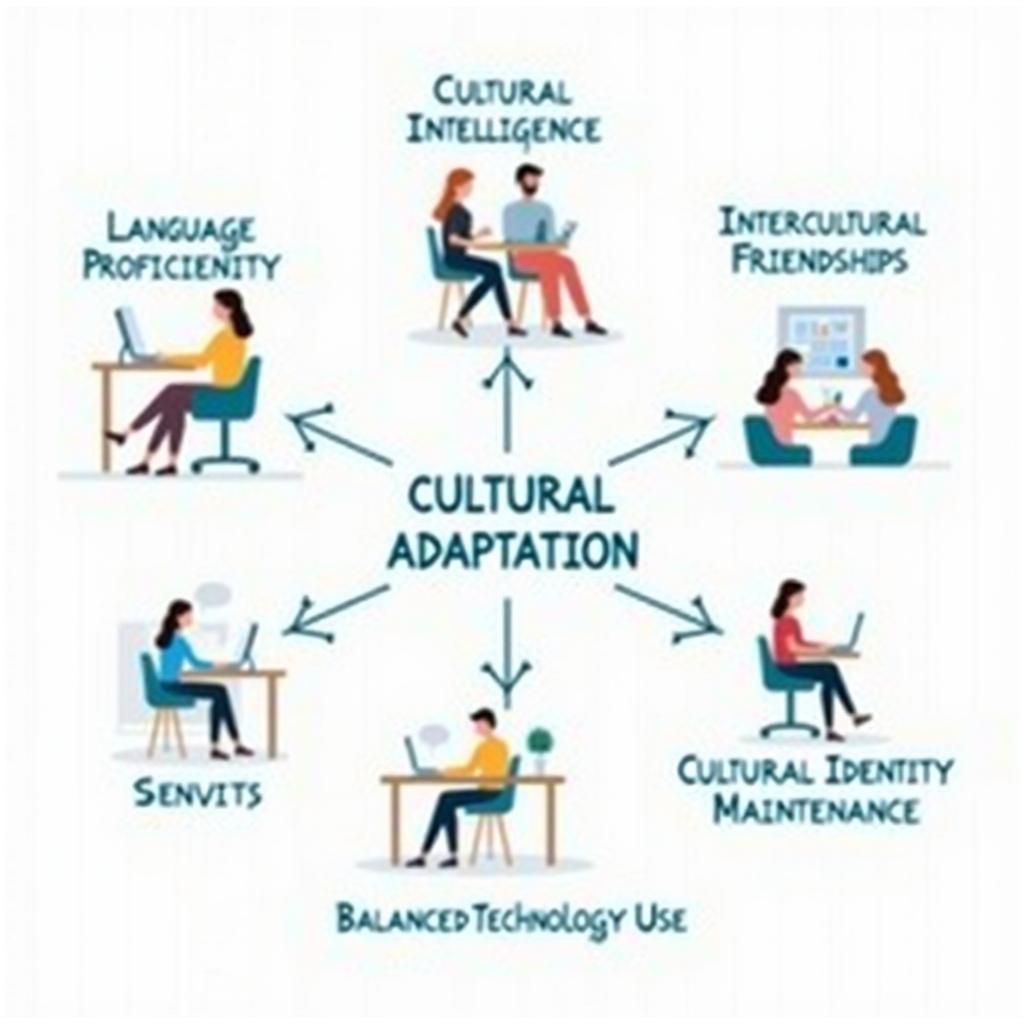


[…] đề xã hội, văn hóa, khoa học là chìa khóa để đạt band điểm cao. Cách thức giáo dục quốc tế thúc đẩy sự thành công học thuật liên văn hóa có nhiều điểm tương đồng với quá trình thích ứng văn hóa mà chúng ta vừa […]
[…] significant advantages in terms of information access and innovation potential. Tương tự như The role of mentorship in promoting cross-cultural academic success, việc xây dựng mạng lưới đa dạng giúp bạn tiếp cận nhiều nguồn thông tin […]