Mở bài
Chủ đề năng lượng tái tạo và biến đổi khí hậu là một trong những nội dung xuất hiện thường xuyên nhất trong kỳ thi IELTS Reading, đặc biệt trong những năm gần đây khi vấn đề môi trường trở thành mối quan tâm toàn cầu. Theo thống kê từ Cambridge IELTS và British Council, các đề thi liên quan đến năng lượng sạch, phát thải khí nhà kính và phát triển bền vững xuất hiện ít nhất 2-3 lần mỗi năm.
Trong bài viết này, bạn sẽ được thực hành với một đề thi IELTS Reading hoàn chỉnh gồm 3 passages từ dễ đến khó, bao phủ toàn bộ 40 câu hỏi với đầy đủ các dạng bài phổ biến. Bạn sẽ học được cách xử lý thông tin về năng lượng tái tạo, nắm vững từ vựng chuyên ngành môi trường, và rèn luyện kỹ thuật làm bài hiệu quả. Đề thi này phù hợp cho học viên từ band 5.0 trở lên, với độ khó tăng dần giúp bạn thách thức bản thân và đạt band điểm mục tiêu.
Đáp án chi tiết kèm giải thích và bảng từ vựng tổng hợp sẽ giúp bạn tự đánh giá năng lực và cải thiện điểm số một cách bài bản.
Hướng dẫn làm bài IELTS Reading
Tổng Quan Về IELTS Reading Test
IELTS Reading Test là bài thi đọc hiểu kéo dài 60 phút với 3 passages và tổng cộng 40 câu hỏi. Mỗi câu trả lời đúng được tính 1 điểm, không có điểm âm cho câu trả lời sai. Điểm số thô sau đó được quy đổi sang band điểm từ 1-9.
Phân bổ thời gian khuyến nghị:
- Passage 1 (Easy): 15-17 phút – Nội dung dễ hiểu, câu hỏi trực tiếp
- Passage 2 (Medium): 18-20 phút – Yêu cầu kỹ năng paraphrase và suy luận
- Passage 3 (Hard): 23-25 phút – Nội dung học thuật, câu hỏi phức tạp
Lưu ý quan trọng: Bạn cần tự quản lý thời gian vì không có thông báo giữa các passage. Nên dành 2-3 phút cuối để chép đáp án vào answer sheet nếu thi trên giấy.
Các Dạng Câu Hỏi Trong Đề Này
Đề thi mẫu này bao gồm 7 dạng câu hỏi phổ biến nhất trong IELTS Reading:
- Multiple Choice – Câu hỏi trắc nghiệm nhiều lựa chọn
- True/False/Not Given – Xác định thông tin đúng/sai/không được đề cập
- Matching Headings – Nối tiêu đề với đoạn văn
- Sentence Completion – Hoàn thành câu với từ trong bài
- Summary Completion – Điền từ vào tóm tắt
- Matching Features – Nối thông tin với đặc điểm
- Short-answer Questions – Câu hỏi trả lời ngắn
IELTS Reading Practice Test
PASSAGE 1 – The Rise of Solar and Wind Power
Độ khó: Easy (Band 5.0-6.5)
Thời gian đề xuất: 15-17 phút
The transition from fossil fuels to renewable energy sources has become one of the most significant global movements of the 21st century. Among various forms of clean energy, solar power and wind energy have emerged as the leading alternatives, revolutionising the way humanity generates electricity while substantially reducing greenhouse gas emissions.
Solar energy works by converting sunlight into electricity through photovoltaic cells, commonly known as solar panels. These panels are made from semiconductor materials, typically silicon, which absorb photons from sunlight and release electrons, creating an electric current. The technology has become increasingly affordable and efficient over the past two decades. In 2000, the average cost of solar panels was approximately $5 per watt, but by 2023, this figure had dropped to less than $0.50 per watt. This dramatic price reduction has made solar energy economically viable for both residential and commercial applications.
China currently leads the world in solar panel production, manufacturing over 70% of the global supply. The country has also become the largest installer of solar capacity, with more than 300 gigawatts of installed capacity as of 2022. Other nations, including the United States, Germany, and India, have also invested heavily in solar infrastructure. Many governments offer tax incentives and subsidies to encourage homeowners and businesses to adopt solar technology, recognising its long-term benefits for the environment and energy independence.
Wind power, the other major player in the renewable energy revolution, harnesses the kinetic energy of moving air to generate electricity. Wind turbines, which can be installed on land or offshore in bodies of water, consist of large blades that rotate when wind passes over them. This rotation drives a generator that produces electricity. Modern wind turbines are engineering marvels, with some offshore models standing over 200 metres tall and capable of generating enough electricity to power thousands of homes.
Denmark has been a pioneer in wind energy, deriving approximately 50% of its electricity from wind power. The country’s success has inspired other nations to develop their own wind energy programmes. The United Kingdom has become a leader in offshore wind farms, with projects like the Hornsea Wind Farm, which is currently the world’s largest offshore wind facility. Scotland has set an ambitious goal of generating 100% of its electricity from renewable sources, with wind playing a central role in this strategy.
The environmental benefits of solar and wind energy are substantial and well-documented. Unlike coal, oil, or natural gas, these renewable sources produce no direct emissions during operation. According to the International Energy Agency (IEA), if current trends continue, renewable energy could prevent the emission of approximately 6 billion tonnes of carbon dioxide annually by 2030. This reduction is equivalent to removing all cars from roads worldwide for an entire year.
However, the transition to renewable energy faces several challenges. One significant obstacle is the intermittent nature of solar and wind power. Solar panels only generate electricity when the sun is shining, and wind turbines require consistent wind speeds to operate efficiently. This variability creates difficulties for power grid management, as electricity demand remains constant regardless of weather conditions. To address this issue, energy companies and researchers are developing advanced battery storage systems that can store excess energy during peak production periods and release it when production is low.
Another challenge involves the initial investment costs for renewable energy infrastructure. While operational costs are low, building solar farms or wind installations requires substantial upfront capital. Developing countries, in particular, may struggle to finance these projects without international assistance or private investment. Financial institutions and development banks have begun offering green bonds and low-interest loans to support renewable energy projects in emerging economies.
Despite these challenges, the growth of solar and wind energy continues to accelerate. In 2022, renewable sources accounted for approximately 29% of global electricity generation, up from just 19% in 2010. Industry experts predict that this percentage will exceed 50% by 2040 if current investment trends persist. The declining costs, combined with increasing awareness of climate change and government support, suggest that solar and wind power will play an increasingly dominant role in the global energy mix.
The social impact of renewable energy extends beyond environmental protection. The solar and wind industries have created millions of jobs worldwide, from manufacturing and installation to maintenance and research. In the United States alone, the solar industry employed over 250,000 workers in 2022, while the wind sector supported approximately 120,000 jobs. These numbers are expected to grow significantly as more countries commit to carbon neutrality targets.
Questions 1-13
Questions 1-5: Multiple Choice
Choose the correct letter, A, B, C, or D.
-
What is the main reason for the increased adoption of solar energy since 2000?
A. Government regulations requiring solar panels
B. The significant decrease in solar panel costs
C. Improved weather conditions globally
D. Shortage of fossil fuels -
According to the passage, which country manufactures the majority of solar panels?
A. United States
B. Germany
C. China
D. India -
How do wind turbines generate electricity?
A. By absorbing sunlight through photovoltaic cells
B. By burning renewable fuels
C. By using the rotation of blades to drive a generator
D. By storing kinetic energy in batteries -
What percentage of Denmark’s electricity comes from wind power?
A. Approximately 29%
B. Approximately 50%
C. Over 70%
D. 100% -
According to the IEA, how much carbon dioxide could renewable energy prevent by 2030?
A. 6 million tonnes annually
B. 6 billion tonnes annually
C. 60 billion tonnes annually
D. 600 million tonnes annually
Questions 6-9: True/False/Not Given
Do the following statements agree with the information in the passage?
Write:
- TRUE if the statement agrees with the information
- FALSE if the statement contradicts the information
- NOT GIVEN if there is no information on this
- Solar panels are made entirely from silicon semiconductors.
- Offshore wind turbines can be taller than 200 metres.
- Scotland has already achieved its goal of 100% renewable electricity generation.
- Battery storage systems can help manage the variability of renewable energy production.
Questions 10-13: Sentence Completion
Complete the sentences below.
Choose NO MORE THAN THREE WORDS from the passage for each answer.
- One major challenge for renewable energy is the __ of solar and wind power.
- Developing countries may need __ to finance renewable energy projects.
- In 2022, renewable sources provided approximately __ of global electricity.
- The solar and wind industries have created millions of __ around the world.
PASSAGE 2 – The Economics of Renewable Energy Transition
Độ khó: Medium (Band 6.0-7.5)
Thời gian đề xuất: 18-20 phút
The global shift toward renewable energy represents not merely an environmental imperative but also a profound economic transformation that is reshaping industries, labour markets, and international trade dynamics. As nations worldwide commit to ambitious climate targets, the economic implications of this transition have become increasingly apparent, revealing both opportunities and challenges that will define the 21st-century energy landscape.
A. The Declining Cost Curve
The most striking economic development in renewable energy has been the precipitous decline in technology costs. This phenomenon, often referred to as the “green premium reversal,” has fundamentally altered the financial calculus of energy investments. Solar photovoltaic costs have plummeted by approximately 90% since 2010, while onshore wind costs have decreased by roughly 70% during the same period. These reductions have been driven by economies of scale, technological innovations, and increased manufacturing efficiency. Consequently, in many regions, building new renewable energy capacity has become cheaper than maintaining existing fossil fuel plants—a watershed moment that has accelerated investment in clean energy infrastructure.
B. Investment Patterns and Capital Flows
Global investment in renewable energy has reached unprecedented levels, with annual capital flows exceeding $300 billion in recent years. Institutional investors, including pension funds and sovereign wealth funds, have increasingly recognised renewable energy as an attractive asset class offering stable, long-term returns. The concept of “stranded assets“—fossil fuel reserves that may become economically unviable as climate policies tighten—has prompted a reallocation of capital toward cleaner alternatives. Financial markets have responded by developing sophisticated instruments such as green bonds, sustainability-linked loans, and climate transition funds, which specifically target renewable energy projects and related infrastructure.
C. Employment Implications
The renewable energy transition is creating a complex employment landscape characterised by both job displacement and job creation. While traditional fossil fuel industries face declining employment, the renewable sector has emerged as a significant job creator. The International Renewable Energy Agency (IRENA) estimates that the renewable energy sector employed approximately 12 million people globally in 2022, with projections suggesting this figure could triple by 2030. However, this transition presents challenges related to skill mismatches and geographical disparities. Workers in coal mining regions, for instance, may lack the technical skills required for solar panel installation or wind turbine maintenance. Addressing this workforce transition requires comprehensive retraining programmes and targeted economic development initiatives in affected communities.
D. The Energy Storage Imperative
The intermittency challenge associated with solar and wind power has spawned a parallel revolution in energy storage technology. Lithium-ion batteries, initially developed for consumer electronics and electric vehicles, have been adapted for grid-scale applications, enabling utilities to store excess renewable energy and dispatch it during periods of high demand or low generation. The global energy storage market has grown exponentially, with installed capacity increasing from less than 1 gigawatt-hour in 2015 to over 25 gigawatt-hours in 2022. This growth has been accompanied by significant cost reductions—battery pack prices have fallen from approximately $1,200 per kilowatt-hour in 2010 to under $150 per kilowatt-hour in 2023. These developments have made grid-scale storage economically viable, effectively addressing one of the primary technical barriers to renewable energy adoption.
E. International Trade and Geopolitical Shifts
The renewable energy transition is reconfiguring global trade patterns and geopolitical relationships. Countries rich in fossil fuel resources are facing the prospect of declining revenues, while nations with abundant renewable resources—particularly solar and wind potential—are gaining strategic advantages. China has emerged as the dominant player in the renewable energy supply chain, controlling approximately 80% of global solar panel manufacturing capacity and over 60% of wind turbine production. This concentration has raised concerns about supply chain resilience and energy security, prompting other nations to develop domestic manufacturing capabilities. The European Union’s “Green Deal Industrial Plan” and the United States’ “Inflation Reduction Act” represent strategic responses aimed at building competitive renewable energy industries within their respective territories.
F. Grid Infrastructure and Smart Systems
Integrating high percentages of renewable energy into existing power grids requires substantial infrastructure modernisation. Traditional grids were designed for centralised, predictable power generation from fossil fuel plants, whereas renewable energy introduces distributed, variable generation patterns. This paradigm shift has necessitated investments in smart grid technologies, including advanced metering systems, real-time monitoring capabilities, and artificial intelligence-powered forecasting tools. The International Energy Agency estimates that achieving global climate goals will require approximately $2 trillion in grid infrastructure investments by 2030. These capital-intensive projects present both economic challenges and opportunities, particularly for technology companies and electrical equipment manufacturers.
G. The Subsidy Debate
Government subsidies for renewable energy remain a contentious issue in economic policy circles. Proponents argue that subsidies are justified as a corrective mechanism to internalise the external costs of fossil fuels, particularly their contribution to climate change and air pollution. They contend that initial support has successfully driven down costs through learning-by-doing and economies of scale, making renewables competitive without ongoing assistance. Critics, however, maintain that prolonged subsidies distort market signals, create inefficiencies, and impose costs on taxpayers and electricity consumers. As renewable energy costs continue to decline, many jurisdictions are phasing out direct subsidies in favour of market-based mechanisms such as carbon pricing and renewable portfolio standards, which create demand for clean energy without directly subsidising specific technologies.
The economic transition to renewable energy represents a fundamental restructuring of the global energy system, with far-reaching implications for businesses, governments, and individuals. While challenges remain—including infrastructure requirements, workforce transition, and geopolitical tensions—the economic case for renewable energy has become increasingly compelling. As costs continue to decline and technologies mature, renewable energy is positioned to become not only the environmentally responsible choice but also the economically rational one.
Questions 14-26
Questions 14-18: Matching Headings
The passage has seven sections, A-G.
Choose the correct heading for each section from the list of headings below.
Write the correct number, i-x.
List of Headings:
i. The impact on global workforce and skills requirements
ii. Government financial support and market intervention
iii. Infrastructure challenges for renewable integration
iv. The dramatic reduction in renewable technology prices
v. Manufacturing dominance and supply concerns
vi. Consumer adoption of renewable energy
vii. Financial sector response to clean energy growth
viii. Solutions to renewable energy’s reliability issues
ix. Export opportunities for developing nations
x. Competition between energy sources
- Section A
- Section B
- Section C
- Section D
- Section E
Questions 19-22: Yes/No/Not Given
Do the following statements agree with the claims of the writer in the passage?
Write:
- YES if the statement agrees with the claims of the writer
- NO if the statement contradicts the claims of the writer
- NOT GIVEN if it is impossible to say what the writer thinks about this
- Building new renewable energy facilities is now more expensive than operating existing fossil fuel plants in most locations.
- The concentration of renewable energy manufacturing in China has created concerns about supply chain security.
- Smart grid technologies are unnecessary if renewable energy generation remains below 30% of total electricity supply.
- The debate about renewable energy subsidies will likely continue despite falling technology costs.
Questions 23-26: Summary Completion
Complete the summary below.
Choose NO MORE THAN TWO WORDS from the passage for each answer.
The renewable energy sector has experienced remarkable economic changes. Since 2010, solar costs have fallen by approximately 90%, a trend described as the “23. __.” This has attracted institutional investors who view renewables as offering 24. __ returns. However, the transition creates challenges, including 25. __ in the workforce as traditional energy workers may lack relevant skills. To address renewable energy’s variability, the development of 26. __ has become essential, with costs falling dramatically in recent years.
PASSAGE 3 – Renewable Energy and Global Greenhouse Gas Mitigation: A Complex Systems Perspective
Độ khó: Hard (Band 7.0-9.0)
Thời gian đề xuất: 23-25 phút
The role of renewable energy in mitigating anthropogenic greenhouse gas emissions has been extensively examined through the lens of climate science, engineering, and policy analysis, yet a comprehensive understanding requires synthesising these perspectives within a complex adaptive systems framework. This multidisciplinary approach reveals that while renewable energy deployment represents a necessary condition for achieving climate stabilisation goals, it is not, in itself, sufficient to ensure the systemic transformation required to limit global temperature increases to 1.5°C above pre-industrial levels—the threshold identified by the Intergovernmental Panel on Climate Change (IPCC) as critical for avoiding catastrophic climate impacts.
The direct emissions reduction potential of renewable energy substitution is considerable but often mischaracterised in public discourse. When solar, wind, or hydroelectric facilities replace fossil fuel-based electricity generation, they eliminate combustion-related carbon dioxide emissions at the point of energy production. However, a rigorous lifecycle assessment must account for embodied emissions—greenhouse gases released during the extraction of raw materials, manufacturing processes, transportation, installation, and eventual decommissioning of renewable energy infrastructure. For solar photovoltaic systems, these embodied emissions typically result in a carbon payback period of 1-3 years, meaning the system must operate for this duration before offsetting the emissions associated with its creation. Wind energy systems generally demonstrate even more favourable profiles, with carbon payback periods of 6-12 months. While these figures compare favourably to fossil fuel alternatives, they underscore the importance of comprehensive emissions accounting rather than simplified operational-only analyses.
The temporal dynamics of renewable energy deployment present critical challenges for emissions reduction timelines. Given that climate change represents a cumulative emissions problem—where total atmospheric carbon loading determines warming outcomes—the pace of transition becomes as important as its ultimate destination. Current renewable energy installation rates, while historically unprecedented, remain insufficient to achieve the exponential growth required by most 1.5°C-compatible pathways modelled by the IPCC. These scenarios typically require renewable energy to constitute 70-85% of global electricity generation by 2050, compared to approximately 29% in 2022. Achieving this trajectory necessitates not merely linear expansion but accelerating deployment rates—a logistically and politically daunting proposition given existing supply chain constraints, permitting procedures, and social acceptance challenges.
The sectoral specificity of renewable energy’s emissions reduction impact introduces additional analytical complexity. Electricity generation accounts for approximately 40% of global energy-related CO₂ emissions, rendering the electrification of this sector through renewables a substantial but incomplete climate solution. Transportation contributes roughly 25% of emissions, with heavy dependence on liquid fossil fuels whose energy density and portability pose formidable challenges for renewable alternatives. While electric vehicles powered by renewable electricity offer a viable pathway for personal transportation, aviation, shipping, and heavy trucking present more intractable problems. Similarly, industrial processes—including cement, steel, and chemical production—rely on fossil fuels not only for energy but also as chemical feedstocks, creating emissions streams that renewable electricity cannot directly address. Solving these hard-to-abate sectors requires complementary technologies, including green hydrogen, carbon capture and storage, and process innovations that extend beyond conventional renewable energy deployment.
The spatial distribution of renewable energy resources creates inherent geographical asymmetries with significant implications for global emissions reduction efforts. Solar irradiation intensity varies substantially by latitude and climate, favouring equatorial and arid regions. Wind resources concentrate in specific geographical bands and coastal areas. Hydroelectric potential depends on topography and precipitation patterns. These physical constraints mean that renewable energy abundance does not correspond to population density or energy demand centres, necessitating either long-distance transmission infrastructure or energy-intensive storage and conversion systems. The former introduces transmission losses and land use conflicts, while the latter incurs efficiency penalties and additional embodied emissions. Consequently, the theoretical renewable energy potential of a given region may diverge substantially from its practical contribution to emissions reduction.
Systems integration challenges further complicate the renewable energy transition’s emissions trajectory. As renewable penetration in electricity grids increases beyond approximately 30-40%, maintaining grid stability requires increasingly sophisticated and costly solutions. Balancing supply and demand with variable generation sources necessitates combinations of energy storage, demand response programmes, grid interconnections, and dispatchable backup generation. The last of these has significant implications for emissions: if natural gas plants provide backup power during periods of low renewable generation, the overall emissions reduction may be less than simple capacity figures suggest. Some analyses indicate that transitioning from coal to gas-backed renewable systems can reduce electricity sector emissions by 60-70% rather than the 90%+ reductions assumed in simplified models that ignore backup generation requirements.
The rebound effect and induced demand represent often-overlooked mechanisms through which renewable energy deployment may produce smaller-than-expected emissions reductions. As renewable energy lowers electricity costs, consumption may increase—a phenomenon observed across numerous jurisdictions implementing large-scale renewable programmes. While this effect may be economically beneficial and could support electrification of other sectors, it potentially undermines near-term emissions reduction goals. Similarly, abundant cheap renewable energy might inadvertently enable energy-intensive industries or activities that would otherwise be economically marginal, creating emission sources that would not exist in a higher-cost energy environment. These paradoxical outcomes highlight the complexity of energy-economy-climate interdependencies.
The political economy of renewable energy deployment intersects with emissions reduction in non-obvious ways. Incumbent fossil fuel industries possess substantial political influence and embedded infrastructure that can slow transitions through regulatory capture, lobbying efforts, and strategic litigation. The geographical concentration of fossil fuel extraction and processing creates regional economies highly dependent on these industries, generating political resistance to rapid transitions that might cause economic dislocation. Conversely, renewable energy’s more distributed nature and lower operational costs create different interest groups and political dynamics. The balance of these forces—rather than purely technical or economic factors—often determines the actual pace of renewable deployment and, consequently, its emissions impact timeline.
Emerging evidence suggests that renewable energy deployment can create positive feedback loops that accelerate both additional clean energy adoption and emissions reduction in adjacent sectors. As regional electricity grids decarbonise through renewable integration, electric vehicles and heat pumps powered by that electricity deliver progressively greater emissions reductions. Manufacturing facilities powered by renewable electricity produce goods with lower embedded carbon, potentially creating competitive advantages in markets increasingly sensitive to carbon footprints. These virtuous cycles represent crucial mechanisms through which renewable energy’s climate benefits extend beyond direct emissions displacement, though their magnitudes and timescales remain subjects of ongoing research.
The ultimate efficacy of renewable energy in reducing global greenhouse gas emissions depends not on the technology’s inherent characteristics but on the systemic context within which it is deployed. Comprehensive climate mitigation requires renewable energy expansion to proceed in concert with energy efficiency improvements, circular economy principles, sustainable land use practices, and potentially carbon dioxide removal technologies. Renewable energy represents a critical component of this multifaceted approach—perhaps the most important single element—but expecting it alone to solve the climate crisis reflects a technological determinism that underestimates the challenge’s systemic nature. The scientific consensus increasingly recognises that achieving climate goals requires not merely substituting clean for dirty energy sources but fundamentally transforming how societies produce, distribute, and consume energy within planetary boundaries.
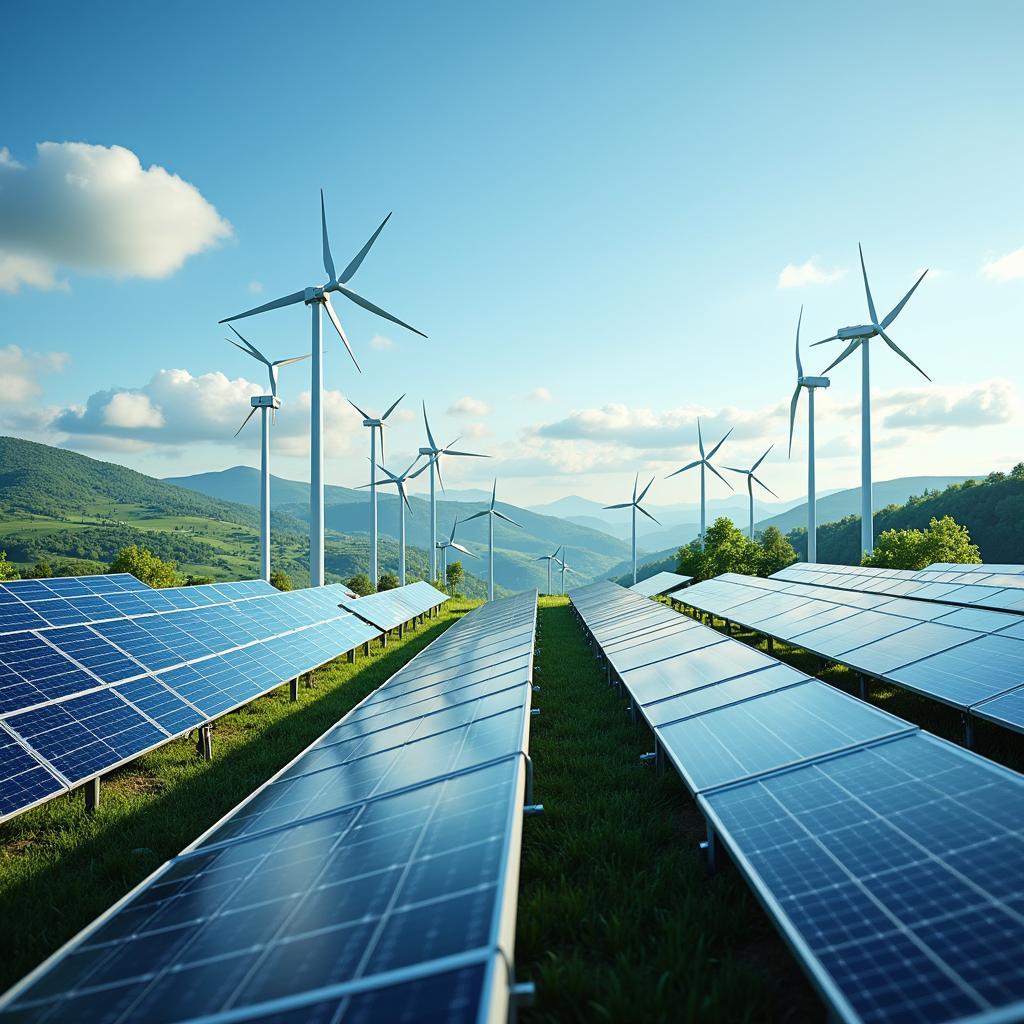 Hệ thống năng lượng tái tạo kết hợp pin mặt trời và tuabin gió giúp giảm phát thải khí nhà kính toàn cầu hiệu quả
Questions 27-40
Questions 27-31: Multiple Choice
Choose the correct letter, A, B, C, or D.
-
According to the passage, what is the main limitation of viewing renewable energy solely as a climate solution?
A. Renewable energy technologies are too expensive
B. It is necessary but insufficient for achieving climate stabilisation
C. Renewable energy creates more emissions than fossil fuels
D. The technology is not yet mature enough -
What does the passage say about carbon payback periods for renewable energy?
A. Solar systems have shorter payback periods than wind systems
B. They are irrelevant to overall emissions calculations
C. Wind energy systems typically have payback periods of 6-12 months
D. All renewable systems have payback periods exceeding 5 years -
According to the IPCC models mentioned in the passage, what percentage of global electricity should renewables provide by 2050?
A. 29%
B. 40%
C. 50-60%
D. 70-85% -
What challenge does the passage identify regarding renewable energy distribution?
A. Resources are located far from population centres
B. Renewable energy cannot be transmitted over long distances
C. All regions have equal renewable energy potential
D. Population centres consume too little energy -
What effect might cheap renewable energy have on emissions?
A. It always reduces emissions proportionally to capacity
B. It may increase consumption and enable new emission sources
C. It has no effect on overall consumption patterns
D. It immediately eliminates all industrial emissions
Questions 32-36: Matching Features
Match the following challenges (32-36) with the correct categories (A-F) mentioned in the passage.
Challenges:
32. Aviation and shipping dependence on liquid fossil fuels
33. Political influence of established fossil fuel companies
34. Balancing electricity supply with variable generation
35. Solar and wind resources not matching population density
36. Manufacturing emissions from renewable infrastructure
Categories:
A. Embodied emissions accounting
B. Sectoral specificity
C. Spatial distribution asymmetries
D. Systems integration challenges
E. Political economy factors
F. Temporal dynamics
Questions 37-40: Short-answer Questions
Answer the questions below.
Choose NO MORE THAN THREE WORDS from the passage for each answer.
- What percentage of global energy-related CO₂ emissions comes from electricity generation?
- At what grid penetration level do renewable systems require increasingly sophisticated stability solutions?
- What two mechanisms might reduce renewable energy’s expected emissions reductions?
- What does the passage suggest renewable deployment must combine with to achieve comprehensive climate mitigation?
Answer Keys – Đáp Án
PASSAGE 1: Questions 1-13
- B
- C
- C
- B
- B
- FALSE
- TRUE
- NOT GIVEN
- TRUE
- intermittent nature
- international assistance
- 29% / twenty-nine percent
- jobs
PASSAGE 2: Questions 14-26
- iv
- vii
- i
- viii
- v
- NO
- YES
- NOT GIVEN
- YES
- green premium reversal
- long-term / stable
- skill mismatches
- energy storage / battery storage
PASSAGE 3: Questions 27-40
- B
- C
- D
- A
- B
- B
- E
- D
- C
- A
- 40% / forty percent / approximately 40%
- 30-40% / 30-40 percent
- rebound effect
- energy efficiency improvements / circular economy principles / sustainable land use
Giải Thích Đáp Án Chi Tiết
Passage 1 – Giải Thích
Câu 1: B
- Dạng câu hỏi: Multiple Choice
- Từ khóa: main reason, increased adoption, solar energy, since 2000
- Vị trí trong bài: Đoạn 2, dòng 5-8
- Giải thích: Bài văn nói rõ “This dramatic price reduction has made solar energy economically viable” – việc giá giảm mạnh là lý do chính khiến năng lượng mặt trời được áp dụng rộng rãi. Đáp án B “The significant decrease in solar panel costs” paraphrase chính xác thông tin này.
Câu 2: C
- Dạng câu hỏi: Multiple Choice
- Từ khóa: country, manufactures, majority, solar panels
- Vị trí trong bài: Đoạn 3, dòng 1-2
- Giải thích: “China currently leads the world in solar panel production, manufacturing over 70% of the global supply” – Trung Quốc sản xuất hơn 70% nguồn cung toàn cầu, rõ ràng là quốc gia sản xuất phần lớn.
Câu 3: C
- Dạng câu hỏi: Multiple Choice
- Từ khóa: wind turbines, generate electricity
- Vị trí trong bài: Đoạn 4, dòng 3-5
- Giải thích: Bài văn giải thích “This rotation drives a generator that produces electricity” – cánh quạt quay và điều khiển máy phát điện. Đáp án C paraphrase chính xác cơ chế này.
Câu 4: B
- Dạng câu hỏi: Multiple Choice
- Từ khóa: Denmark, percentage, electricity, wind power
- Vị trí trong bài: Đoạn 5, dòng 1-2
- Giải thích: “Denmark has been a pioneer in wind energy, deriving approximately 50% of its electricity from wind power” – câu văn nêu rõ con số 50%.
Câu 5: B
- Dạng câu hỏi: Multiple Choice
- Từ khóa: IEA, carbon dioxide, prevent, 2030
- Vị trí trong bài: Đoạn 6, dòng 3-5
- Giải thích: “renewable energy could prevent the emission of approximately 6 billion tonnes of carbon dioxide annually by 2030” – 6 tỷ tấn hàng năm.
Câu 6: FALSE
- Dạng câu hỏi: True/False/Not Given
- Từ khóa: solar panels, entirely, silicon semiconductors
- Vị trí trong bài: Đoạn 2, dòng 2-3
- Giải thích: Bài văn nói “typically silicon” (thường là silicon), không phải “entirely” (hoàn toàn). Điều này mâu thuẫn với câu phát biểu.
Câu 7: TRUE
- Dạng câu hỏi: True/False/Not Given
- Từ khóa: offshore wind turbines, taller than 200 metres
- Vị trí trong bài: Đoạn 4, dòng 6-7
- Giải thích: “some offshore models standing over 200 metres tall” – hoàn toàn khớp với phát biểu.
Câu 8: NOT GIVEN
- Dạng câu hỏi: True/False/Not Given
- Từ khóa: Scotland, achieved, goal, 100% renewable
- Vị trí trong bài: Đoạn 5, dòng 4-5
- Giải thích: Bài văn chỉ nói Scotland “has set an ambitious goal” (đặt mục tiêu tham vọng), không đề cập đến việc đã đạt được mục tiêu hay chưa.
Câu 9: TRUE
- Dạng câu hỏi: True/False/Not Given
- Từ khóa: battery storage systems, manage, variability
- Vị trí trong bài: Đoạn 7, dòng 5-7
- Giải thích: “energy companies and researchers are developing advanced battery storage systems” để giải quyết vấn đề biến động – khớp với phát biểu.
Câu 10: intermittent nature
- Dạng câu hỏi: Sentence Completion
- Từ khóa: major challenge, renewable energy
- Vị trí trong bài: Đoạn 7, dòng 2-3
- Giải thích: “One significant obstacle is the intermittent nature of solar and wind power” – đúng ngữ pháp và ý nghĩa trong câu hoàn thành.
Câu 11: international assistance
- Dạng câu hỏi: Sentence Completion
- Từ khóa: developing countries, finance, renewable energy projects
- Vị trí trong bài: Đoạn 8, dòng 3-4
- Giải thích: “may struggle to finance these projects without international assistance” – không quá ba từ và phù hợp ngữ pháp.
Câu 12: 29% / twenty-nine percent
- Dạng câu hỏi: Sentence Completion
- Từ khóa: 2022, renewable sources, global electricity
- Vị trí trong bài: Đoạn 9, dòng 2-3
- Giải thích: “renewable sources accounted for approximately 29% of global electricity generation” – có thể viết dạng số hoặc chữ.
Câu 13: jobs
- Dạng câu hỏi: Sentence Completion
- Từ khóa: solar and wind industries, created, millions
- Vị trí trong bài: Đoạn 10, dòng 2-3
- Giải thích: “The solar and wind industries have created millions of jobs worldwide” – từ “jobs” là danh từ số nhiều phù hợp.
Passage 2 – Giải Thích
Câu 14: iv
- Dạng câu hỏi: Matching Headings
- Section A nói về: The dramatic reduction in renewable technology prices
- Giải thích: Section A tập trung vào “precipitous decline in technology costs” và “Solar photovoltaic costs have plummeted by approximately 90%” – rõ ràng về sự giảm giá mạnh mẽ.
Câu 15: vii
- Dạng câu hỏi: Matching Headings
- Section B nói về: Financial sector response to clean energy growth
- Giải thích: Đoạn văn thảo luận về “institutional investors,” “green bonds,” “sustainability-linked loans” – phản ứng của ngành tài chính đối với năng lượng sạch.
Câu 16: i
- Dạng câu hỏi: Matching Headings
- Section C nói về: The impact on global workforce and skills requirements
- Giải thích: Nội dung chính là “job displacement,” “job creation,” “skill mismatches” và “workforce transition” – tác động đến lực lượng lao động.
Câu 17: viii
- Dạng câu hỏi: Matching Headings
- Section D nói về: Solutions to renewable energy’s reliability issues
- Giải thích: Đoạn tập trung vào “energy storage technology” và “lithium-ion batteries” như giải pháp cho “intermittency challenge.”
Câu 18: v
- Dạng câu hỏi: Matching Headings
- Section E nói về: Manufacturing dominance and supply concerns
- Giải thích: Đoạn thảo luận về “China has emerged as the dominant player” và “concentration has raised concerns about supply chain resilience.”
Câu 19: NO
- Dạng câu hỏi: Yes/No/Not Given
- Từ khóa: building new renewable, more expensive than, operating existing fossil fuel plants
- Vị trí trong bài: Section A, câu cuối
- Giải thích: Bài văn nói “building new renewable energy capacity has become cheaper than maintaining existing fossil fuel plants” – mâu thuẫn trực tiếp với phát biểu.
Câu 20: YES
- Dạng câu hỏi: Yes/No/Not Given
- Từ khóa: concentration, China, concerns, supply chain security
- Vị trí trong bài: Section E
- Giải thích: “This concentration has raised concerns about supply chain resilience and energy security” – khớp hoàn toàn với quan điểm tác giả.
Câu 21: NOT GIVEN
- Dạng câu hỏi: Yes/No/Not Given
- Từ khóa: smart grid technologies, unnecessary, below 30%
- Vị trí trong bài: Section F
- Giải thích: Bài văn không đề cập đến mức ngưỡng cụ thể nào mà công nghệ lưới thông minh trở nên cần thiết.
Câu 22: YES
- Dạng câu hỏi: Yes/No/Not Given
- Từ khóa: debate, renewable energy subsidies, continue, falling costs
- Vị trí trong bài: Section G
- Giải thích: Cả đoạn G thảo luận về “subsidy debate” với các quan điểm khác nhau, ngụ ý tranh luận sẽ tiếp tục.
Câu 23: green premium reversal
- Dạng câu hỏi: Summary Completion
- Từ khóa: trend, costs fallen
- Vị trí trong bài: Section A, dòng 3
- Giải thích: “This phenomenon, often referred to as the ‘green premium reversal'” – đúng ngữ cảnh và không quá hai từ.
Câu 24: long-term / stable
- Dạng câu hỏi: Summary Completion
- Từ khóa: institutional investors, returns
- Vị trí trong bài: Section B, dòng 2-3
- Giải thích: “offering stable, long-term returns” – cả hai từ đều chấp nhận được vì xuất hiện cùng nhau trong bài.
Câu 25: skill mismatches
- Dạng câu hỏi: Summary Completion
- Từ khóa: challenges, workforce, traditional energy workers
- Vị trí trong bài: Section C
- Giải thích: “challenges related to skill mismatches” – không quá hai từ và phù hợp ngữ cảnh.
Câu 26: energy storage / battery storage
- Dạng câu hỏi: Summary Completion
- Từ khóa: address, variability, development, costs falling
- Vị trí trong bài: Section D
- Giải thích: “energy storage technology” hoặc “battery storage” đều là cụm từ chính xác từ đoạn văn, không quá hai từ.
Passage 3 – Giải Thích
Câu 27: B
- Dạng câu hỏi: Multiple Choice
- Từ khóa: main limitation, viewing renewable energy, climate solution
- Vị trí trong bài: Đoạn 1, câu đầu
- Giải thích: “renewable energy deployment represents a necessary condition…yet it is not, in itself, sufficient” – đây là ý chính của đoạn mở bài.
Câu 28: C
- Dạng câu hỏi: Multiple Choice
- Từ khóa: carbon payback periods, renewable energy
- Vị trí trong bài: Đoạn 2
- Giải thích: “Wind energy systems generally demonstrate even more favourable profiles, with carbon payback periods of 6-12 months” – thông tin chính xác.
Câu 29: D
- Dạng câu hỏi: Multiple Choice
- Từ khóa: IPCC models, percentage, global electricity, 2050
- Vị trí trong bài: Đoạn 3
- Giải thích: “These scenarios typically require renewable energy to constitute 70-85% of global electricity generation by 2050” – con số cụ thể.
Câu 30: A
- Dạng câu hỏi: Multiple Choice
- Từ khóa: challenge, renewable energy distribution
- Vị trí trong bài: Đoạn 5
- Giải thích: “renewable energy abundance does not correspond to population density or energy demand centres” – nguồn tài nguyên không nằm gần trung tâm dân cư.
Câu 31: B
- Dạng câu hỏi: Multiple Choice
- Từ khóa: cheap renewable energy, effect, emissions
- Vị trí trong bài: Đoạn 7
- Giải thích: Đoạn văn mô tả “rebound effect” và “induced demand” – năng lượng rẻ có thể tăng tiêu thụ và tạo nguồn phát thải mới.
Câu 32: B (Sectoral specificity)
- Dạng câu hỏi: Matching Features
- Từ khóa: aviation, shipping, liquid fossil fuels
- Vị trí trong bài: Đoạn 4
- Giải thích: Đoạn về “sectoral specificity” thảo luận về thách thức của ngành hàng không và vận tải biển.
Câu 33: E (Political economy factors)
- Dạng câu hỏi: Matching Features
- Từ khóa: political influence, fossil fuel companies
- Vị trí trong bài: Đoạn 8
- Giải thích: “The political economy” section đề cập đến “incumbent fossil fuel industries possess substantial political influence.”
Câu 34: D (Systems integration challenges)
- Dạng câu hỏi: Matching Features
- Từ khóa: balancing, electricity supply, variable generation
- Vị trí trong bài: Đoạn 6
- Giải thích: “Systems integration challenges” section thảo luận về “balancing supply and demand with variable generation sources.”
Câu 35: C (Spatial distribution asymmetries)
- Dạng câu hỏi: Matching Features
- Từ khóa: solar, wind resources, population density
- Vị trí trong bài: Đoạn 5
- Giải thích: “The spatial distribution” section nói về sự không tương ứng giữa nguồn tài nguyên và dân số.
Câu 36: A (Embodied emissions accounting)
- Dạng câu hỏi: Matching Features
- Từ khóa: manufacturing emissions, renewable infrastructure
- Vị trí trong bài: Đoạn 2
- Giải thích: Đoạn về “lifecycle assessment” và “embodied emissions” thảo luận về phát thải từ sản xuất.
Câu 37: 40% / forty percent / approximately 40%
- Dạng câu hỏi: Short-answer Questions
- Từ khóa: percentage, energy-related CO₂ emissions, electricity generation
- Vị trí trong bài: Đoạn 4, câu đầu
- Giải thích: “Electricity generation accounts for approximately 40% of global energy-related CO₂ emissions” – không quá ba từ.
Câu 38: 30-40% / 30-40 percent
- Dạng câu hỏi: Short-answer Questions
- Từ khóa: grid penetration level, sophisticated stability solutions
- Vị trí trong bài: Đoạn 6, câu đầu
- Giải thích: “As renewable penetration in electricity grids increases beyond approximately 30-40%” – có thể viết cả dạng số và chữ.
Câu 39: rebound effect
- Dạng câu hỏi: Short-answer Questions (chỉ cần một trong hai cơ chế)
- Từ khóa: mechanisms, reduce, expected emissions reductions
- Vị trí trong bài: Đoạn 7, câu đầu
- Giải thích: “The rebound effect and induced demand” – câu hỏi hỏi về hai cơ chế nhưng chỉ cần trả lời một (hoặc “induced demand” cũng đúng).
Câu 40: energy efficiency improvements / circular economy principles / sustainable land use
- Dạng câu hỏi: Short-answer Questions
- Từ khóa: renewable deployment, combine with, comprehensive climate mitigation
- Vị trí trong bài: Đoạn cuối, câu gần cuối
- Giải thích: “requires renewable energy expansion to proceed in concert with energy efficiency improvements, circular economy principles, sustainable land use practices” – bất kỳ một trong các cụm từ này đều đúng, không quá ba từ.
Từ Vựng Quan Trọng Theo Passage
Passage 1 – Essential Vocabulary
| Từ vựng | Loại từ | Phiên âm | Nghĩa tiếng Việt | Ví dụ từ bài | Collocation |
|---|---|---|---|---|---|
| fossil fuels | n | /ˈfɒsl fjuːəlz/ | nhiên liệu hóa thạch | The transition from fossil fuels to renewable energy sources | fossil fuel industry, fossil fuel reserves |
| photovoltaic | adj | /ˌfəʊtəʊvɒlˈteɪɪk/ | quang điện | Solar energy works by converting sunlight through photovoltaic cells | photovoltaic cells, photovoltaic panels |
| semiconductor | n | /ˌsemikənˈdʌktə(r)/ | chất bán dẫn | Panels are made from semiconductor materials | semiconductor materials, semiconductor industry |
| economically viable | adj phrase | /ˌiːkəˈnɒmɪkli ˈvaɪəbl/ | khả thi về mặt kinh tế | This has made solar energy economically viable | economically viable option, economically viable solution |
| installed capacity | n phrase | /ɪnˈstɔːld kəˈpæsəti/ | công suất lắp đặt | China has more than 300 gigawatts of installed capacity | installed capacity, generation capacity |
| harness | v | /ˈhɑːnɪs/ | khai thác, tận dụng | Wind power harnesses the kinetic energy of moving air | harness energy, harness power |
| kinetic energy | n | /kɪˈnetɪk ˈenədʒi/ | động năng | Wind turbines harness the kinetic energy of air | kinetic energy, potential energy |
| offshore | adj/adv | /ˌɒfˈʃɔː(r)/ | ngoài khơi | Wind turbines can be installed offshore | offshore wind farms, offshore installations |
| intermittent | adj | /ˌɪntəˈmɪtənt/ | không liên tục, gián đoạn | The intermittent nature of solar and wind power | intermittent nature, intermittent supply |
| variability | n | /ˌveəriəˈbɪləti/ | tính biến đổi | This variability creates difficulties | variability problem, climate variability |
| power grid | n phrase | /ˈpaʊə ɡrɪd/ | lưới điện | Difficulties for power grid management | power grid, electrical grid |
| carbon neutrality | n phrase | /ˈkɑːbən njuːˈtræləti/ | trung hòa carbon | Countries commit to carbon neutrality targets | achieve carbon neutrality, carbon neutrality goals |
Passage 2 – Essential Vocabulary
| Từ vựng | Loại từ | Phiên âm | Nghĩa tiếng Việt | Ví dụ từ bài | Collocation |
|---|---|---|---|---|---|
| imperative | n/adj | /ɪmˈperətɪv/ | điều bắt buộc, cấp thiết | An environmental imperative | moral imperative, strategic imperative |
| precipitous | adj | /prɪˈsɪpɪtəs/ | dốc đứng, đột ngột | The precipitous decline in technology costs | precipitous decline, precipitous drop |
| plummeted | v | /ˈplʌmɪtɪd/ | giảm mạnh, rơi tự do | Solar costs have plummeted by 90% | prices plummeted, sales plummeted |
| watershed moment | n phrase | /ˈwɔːtəʃed ˈməʊmənt/ | thời điểm bước ngoặt | A watershed moment that has accelerated investment | watershed moment, watershed event |
| stranded assets | n phrase | /ˈstrændɪd ˈæsets/ | tài sản mất giá, bị bỏ rơi | Fossil fuel reserves may become stranded assets | stranded assets, asset value |
| reallocation | n | /ˌriːæləˈkeɪʃn/ | sự phân bổ lại | A reallocation of capital toward cleaner alternatives | capital reallocation, resource reallocation |
| sovereign wealth funds | n phrase | /ˈsɒvrɪn welθ fʌndz/ | quỹ đầu tư quốc gia | Sovereign wealth funds have invested | sovereign wealth funds, pension funds |
| job displacement | n phrase | /dʒɒb dɪsˈpleɪsmənt/ | mất việc làm, thay thế lao động | Both job displacement and job creation | job displacement, worker displacement |
| skill mismatches | n phrase | /skɪl ˈmɪsmætʃɪz/ | sự không phù hợp về kỹ năng | Challenges related to skill mismatches | skill mismatches, skills gap |
| grid-scale | adj | /ɡrɪd skeɪl/ | quy mô lưới điện | Batteries adapted for grid-scale applications | grid-scale storage, grid-scale battery |
| geopolitical | adj | /ˌdʒiːəʊpəˈlɪtɪkl/ | địa chính trị | Reconfiguring geopolitical relationships | geopolitical tensions, geopolitical shifts |
| supply chain | n phrase | /səˈplaɪ tʃeɪn/ | chuỗi cung ứng | Concerns about supply chain resilience | supply chain, supply chain management |
| smart grid | n phrase | /smɑːt ɡrɪd/ | lưới điện thông minh | Investments in smart grid technologies | smart grid, intelligent grid |
| capital-intensive | adj | /ˈkæpɪtl ɪnˈtensɪv/ | sử dụng nhiều vốn | Capital-intensive projects | capital-intensive industry, capital-intensive investment |
| contentious | adj | /kənˈtenʃəs/ | gây tranh cãi | Subsidies remain a contentious issue | contentious issue, contentious debate |
Passage 3 – Essential Vocabulary
| Từ vựng | Loại từ | Phiên âm | Nghĩa tiếng Việt | Ví dụ từ bài | Collocation |
|---|---|---|---|---|---|
| mitigating | v | /ˈmɪtɪɡeɪtɪŋ/ | giảm thiểu | Mitigating anthropogenic greenhouse gas emissions | mitigating climate change, mitigating risks |
| anthropogenic | adj | /ˌænθrəpəˈdʒenɪk/ | do con người gây ra | Anthropogenic greenhouse gas emissions | anthropogenic emissions, anthropogenic activities |
| multidisciplinary | adj | /ˌmʌltiˈdɪsəplɪnəri/ | đa ngành, liên ngành | A multidisciplinary approach | multidisciplinary research, multidisciplinary team |
| catastrophic | adj | /ˌkætəˈstrɒfɪk/ | thảm khốc | Avoiding catastrophic climate impacts | catastrophic consequences, catastrophic failure |
| embodied emissions | n phrase | /ɪmˈbɒdid ɪˈmɪʃnz/ | phát thải ẩn chứa | Account for embodied emissions | embodied emissions, embodied carbon |
| lifecycle assessment | n phrase | /ˈlaɪfsaɪkl əˈsesmənt/ | đánh giá vòng đời | A rigorous lifecycle assessment | lifecycle assessment, lifecycle analysis |
| payback period | n phrase | /ˈpeɪbæk ˈpɪəriəd/ | thời gian hoàn vốn | A carbon payback period of 1-3 years | payback period, investment payback |
| cumulative | adj | /ˈkjuːmjələtɪv/ | tích lũy | A cumulative emissions problem | cumulative effect, cumulative impact |
| exponential growth | n phrase | /ˌekspəˈnenʃl ɡrəʊθ/ | tăng trưởng theo cấp số nhân | Requires exponential growth | exponential growth, exponential increase |
| formidable | adj | /fəˈmɪdəbl/ | đáng gờm, khó khăn | Formidable challenges | formidable challenge, formidable opponent |
| intractable | adj | /ɪnˈtræktəbl/ | khó giải quyết | More intractable problems | intractable problem, intractable conflict |
| feedstocks | n | /ˈfiːdstɒks/ | nguyên liệu đầu vào | Fossil fuels as chemical feedstocks | chemical feedstocks, raw feedstocks |
| hard-to-abate | adj | /hɑːd tu əˈbeɪt/ | khó giảm thiểu | Hard-to-abate sectors | hard-to-abate emissions, hard-to-abate industries |
| asymmetries | n | /eɪˈsɪmətriz/ | sự bất cân xứng | Geographical asymmetries | spatial asymmetries, economic asymmetries |
| topography | n | /təˈpɒɡrəfi/ | địa hình | Hydroelectric potential depends on topography | terrain topography, local topography |
| incumbent | adj/n | /ɪnˈkʌmbənt/ | đương nhiệm, đang nắm quyền | Incumbent fossil fuel industries | incumbent industry, incumbent technology |
| paradoxical | adj | /ˌpærəˈdɒksɪkl/ | nghịch lý | Paradoxical outcomes | paradoxical situation, paradoxical effect |
| virtuous cycles | n phrase | /ˈvɜːtʃuəs ˈsaɪklz/ | chu kỳ tích cực | Create virtuous cycles | virtuous cycles, vicious cycles |
Kết bài
Chủ đề “vai trò của năng lượng tái tạo trong việc giảm phát thải khí nhà kính toàn cầu” không chỉ là một nội dung thường gặp trong IELTS Reading mà còn phản ánh xu hướng toàn cầu về phát triển bền vững. Qua bộ đề thi hoàn chỉnh với 3 passages từ dễ đến khó, bạn đã được thực hành với tổng cộng 40 câu hỏi bao gồm đầy đủ 7 dạng bài phổ biến nhất trong kỳ thi IELTS.
Passage 1 giúp bạn làm quen với từ vựng cơ bản về năng lượng tái tạo và xây dựng nền tảng hiểu biết. Passage 2 đưa bạn đến các phân tích kinh tế phức tạp hơn với yêu cầu paraphrase và suy luận cao. Passage 3 thách thức khả năng đọc hiểu học thuật của bạn với nội dung chuyên sâu về khoa học khí hậu và hệ thống phức tạp.
Đáp án chi tiết kèm giải thích đã chỉ ra chính xác vị trí thông tin trong bài, cách paraphrase giữa câu hỏi và đoạn văn, cũng như kỹ thuật làm bài hiệu quả cho từng dạng câu hỏi. Bảng từ vựng tổng hợp với hơn 40 từ quan trọng, kèm phiên âm, nghĩa tiếng Việt và collocations sẽ giúp bạn mở rộng vốn từ học thuật.
Hãy ôn tập lại những kiến thức này thường xuyên, phân tích kỹ các kỹ thuật làm bài, và áp dụng vào các đề thi thực tế khác. Với sự luyện tập bài bản và phương pháp đúng đắn, bạn hoàn toàn có thể đạt band điểm IELTS Reading như mong muốn. Chúc bạn ôn thi hiệu quả và thành công!