Trong kỳ thi IELTS Reading, chủ đề sức khỏe tâm thần và quản lý căng thẳng xuất hiện với tần suất khá cao, đặc biệt là các bài đọc liên quan đến lo âu, stress và các phương pháp cải thiện sức khỏe tinh thần. Hiểu rõ chủ đề này không chỉ giúp bạn làm tốt bài thi mà còn cung cấp kiến thức hữu ích cho cuộc sống. Việc nắm vững từ vựng và cấu trúc câu liên quan đến tâm lý học, y học và các biện pháp can thiệp là chìa khóa để đạt band điểm cao.
Bài viết này cung cấp một bộ đề thi IELTS Reading hoàn chỉnh với 3 passages tăng dần độ khó từ Easy (Band 5.0-6.5), Medium (Band 6.0-7.5) đến Hard (Band 7.0-9.0). Mỗi passage được thiết kế giống như đề thi thật từ Cambridge IELTS, với tổng cộng 40 câu hỏi đa dạng về dạng bài và độ khó. Bạn sẽ học được các dạng câu hỏi phổ biến như True/False/Not Given, Multiple Choice, Matching Headings, Summary Completion và nhiều dạng khác. Đặc biệt, phần giải thích đáp án chi tiết sẽ giúp bạn hiểu rõ cách paraphrase và xác định thông tin trong bài đọc. Phần từ vựng được tổng hợp cẩn thận với phiên âm, nghĩa tiếng Việt và ví dụ thực tế từ passages, giúp bạn mở rộng vốn từ học thuật hiệu quả.
Đề thi này phù hợp với học viên từ band 5.0 trở lên, từ những người mới bắt đầu làm quen với format IELTS Reading đến các bạn muốn chinh phục band điểm 7.5-8.0+.
Hướng Dẫn Làm Bài IELTS Reading
Tổng Quan Về IELTS Reading Test
IELTS Reading Test kéo dài 60 phút với 3 passages và tổng cộng 40 câu hỏi. Mỗi câu trả lời đúng được tính 1 điểm, và tổng điểm sẽ được quy đổi thành band score từ 0-9. Không có thời gian bổ sung để chép đáp án vào answer sheet, vì vậy bạn cần quản lý thời gian chặt chẽ và ghi đáp án ngay trong quá trình làm bài.
Phân bổ thời gian khuyến nghị dựa trên độ khó tăng dần của các passages:
- Passage 1: 15-17 phút (độ khó thấp nhất, câu hỏi tương đối dễ xác định)
- Passage 2: 18-20 phút (độ khó trung bình, yêu cầu kỹ năng paraphrase tốt hơn)
- Passage 3: 23-25 phút (độ khó cao nhất, cần phân tích và suy luận sâu)
Lưu ý rằng đây chỉ là gợi ý, bạn có thể điều chỉnh linh hoạt tùy theo điểm mạnh cá nhân. Tuy nhiên, tuyệt đối không nên dành quá 25 phút cho một passage để đảm bảo hoàn thành hết bài thi.
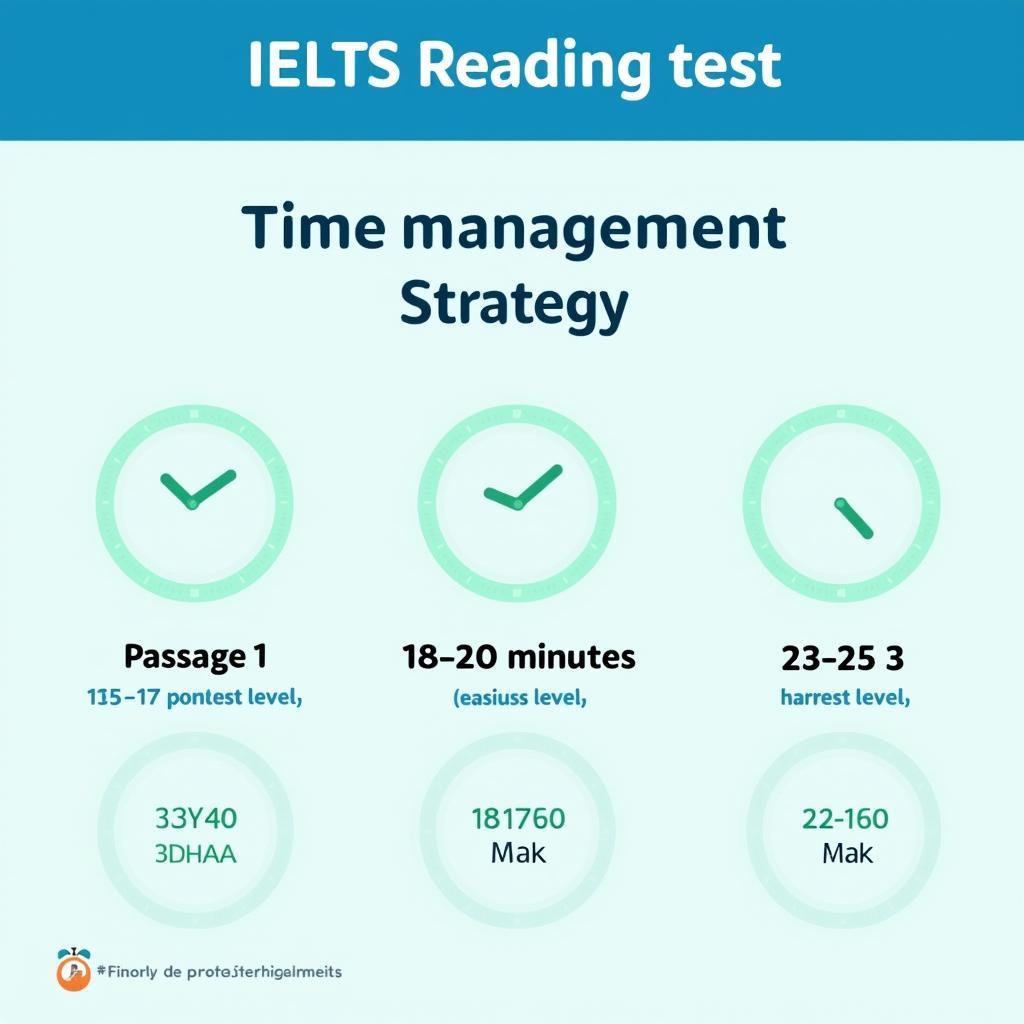 Chiến lược quản lý thời gian hiệu quả cho từng passage trong bài thi IELTS Reading
Các Dạng Câu Hỏi Trong Đề Này
Đề thi mẫu này bao gồm 8 dạng câu hỏi phổ biến nhất trong IELTS Reading:
- Multiple Choice – Câu hỏi trắc nghiệm với 3-4 lựa chọn
- True/False/Not Given – Xác định thông tin đúng, sai hoặc không được đề cập
- Yes/No/Not Given – Xác định quan điểm của tác giả
- Matching Headings – Nối tiêu đề với đoạn văn phù hợp
- Matching Information – Tìm đoạn văn chứa thông tin cụ thể
- Summary Completion – Điền từ vào chỗ trống trong đoạn tóm tắt
- Sentence Completion – Hoàn thành câu với thông tin từ bài đọc
- Short-answer Questions – Trả lời câu hỏi ngắn với số từ giới hạn
Mỗi dạng câu hỏi yêu cầu kỹ năng đọc hiểu khác nhau, từ scanning (tìm thông tin cụ thể nhanh chóng) đến skimming (nắm ý chính) và detailed reading (đọc kỹ phân tích).
IELTS Reading Practice Test
PASSAGE 1 – Understanding and Managing Anxiety in Daily Life
Độ khó: Easy (Band 5.0-6.5)
Thời gian đề xuất: 15-17 phút
Anxiety is one of the most common mental health concerns affecting millions of people worldwide. It is a natural response to stress, danger, or uncertainty, and everyone experiences it at some point in their lives. However, when anxiety becomes excessive and persistent, it can interfere with daily activities, relationships, and overall well-being. Understanding the nature of anxiety and learning effective strategies to manage it are essential skills for maintaining good mental health.
Physiological responses to anxiety include increased heart rate, rapid breathing, sweating, and muscle tension. These physical symptoms are part of the body’s “fight or flight” response, which evolved to help humans survive dangerous situations. When our ancestors encountered a predator, this response gave them the energy and alertness needed to either confront the threat or escape from it. In modern life, however, we rarely face such immediate physical dangers. Instead, our anxiety is often triggered by psychological stressors such as work deadlines, financial concerns, relationship problems, or health worries.
One of the most effective approaches to reducing anxiety is cognitive behavioural therapy (CBT), a form of psychological treatment that helps people identify and change negative thought patterns. CBT is based on the idea that our thoughts, feelings, and behaviours are interconnected. When we have distorted or irrational thoughts about a situation, these thoughts can lead to increased anxiety and unhelpful behaviours. Through CBT, individuals learn to recognise these patterns and develop more balanced and realistic ways of thinking. Research has consistently shown that CBT can significantly reduce anxiety symptoms, with benefits often lasting long after treatment has ended.
Lifestyle modifications also play a crucial role in anxiety management. Regular physical exercise has been proven to reduce anxiety levels by releasing endorphins, the body’s natural mood elevators. Even moderate activities such as walking, swimming, or cycling for 30 minutes a day can make a noticeable difference. Exercise not only improves physical health but also provides a healthy distraction from worrying thoughts and builds confidence through achieving fitness goals. Additionally, maintaining a consistent sleep schedule is vital, as poor sleep can exacerbate anxiety symptoms. Adults should aim for 7-9 hours of quality sleep each night, going to bed and waking up at the same time every day, even on weekends.
Dietary habits can significantly influence anxiety levels as well. Consuming excessive amounts of caffeine, found in coffee, tea, energy drinks, and chocolate, can increase nervousness and trigger anxiety symptoms in sensitive individuals. Similarly, alcohol might seem to provide temporary relief from anxiety, but it actually disrupts sleep patterns and can worsen anxiety in the long term. Instead, eating a balanced diet rich in fruits, vegetables, whole grains, and lean proteins provides the nutrients necessary for optimal brain function and emotional regulation. Some studies suggest that foods rich in omega-3 fatty acids, such as salmon, walnuts, and flaxseeds, may have anxiety-reducing properties.
Relaxation techniques offer immediate relief from anxiety symptoms and can be practised anywhere. Deep breathing exercises are particularly effective because they activate the body’s relaxation response, counteracting the physical symptoms of anxiety. A simple technique involves breathing in slowly through the nose for four counts, holding the breath for four counts, and then exhaling through the mouth for six counts. Progressive muscle relaxation, another evidence-based technique, involves systematically tensing and then releasing different muscle groups throughout the body, helping individuals become more aware of physical tension and learn to relax it.
Social support is another important factor in managing anxiety. Talking to trusted friends or family members about worries and concerns can provide emotional relief and different perspectives on problems. Sometimes, simply knowing that others care and are willing to listen can significantly reduce feelings of isolation and anxiety. For those whose anxiety is severe or persistent, seeking help from a qualified mental health professional is essential. Psychologists, psychiatrists, and counsellors are trained to provide specialised treatments and can prescribe medication when necessary. Remember that seeking help is a sign of strength, not weakness, and taking action to address anxiety is the first step toward feeling better.
Questions 1-5: Multiple Choice
Choose the correct letter, A, B, C, or D.
-
According to the passage, the “fight or flight” response originally evolved to help humans
A. manage work-related stress
B. deal with dangerous predators
C. improve their relationships
D. enhance their mental health -
Cognitive behavioural therapy (CBT) is based on the principle that
A. anxiety is purely a physical condition
B. medication is the best treatment for anxiety
C. thoughts, feelings, and behaviours are connected
D. anxiety cannot be effectively treated -
According to the passage, exercise helps reduce anxiety by
A. eliminating all stressful thoughts
B. producing the body’s natural mood enhancers
C. replacing the need for sleep
D. increasing caffeine tolerance -
The passage suggests that alcohol
A. is an effective long-term solution for anxiety
B. improves sleep quality significantly
C. may temporarily seem helpful but worsens anxiety later
D. should be consumed in large quantities -
Deep breathing exercises help reduce anxiety by
A. replacing professional medical treatment
B. activating the body’s relaxation response
C. increasing heart rate dramatically
D. avoiding all social interactions
Questions 6-9: True/False/Not Given
Do the following statements agree with the information given in the passage? Write:
TRUE if the statement agrees with the information
FALSE if the statement contradicts the information
NOT GIVEN if there is no information on this
- Everyone experiences anxiety at some point in their lives.
- Modern humans face the same physical threats as their ancestors did.
- CBT requires patients to attend therapy sessions for several years.
- Adults should aim for at least 7 hours of sleep per night.
Questions 10-13: Sentence Completion
Complete the sentences below. Choose NO MORE THAN TWO WORDS from the passage for each answer.
- Foods containing __ may help reduce anxiety according to some research.
- The technique of __ involves tensing and releasing different muscle groups.
- Talking to friends and family can provide emotional relief and different __ on problems.
- People with severe anxiety should consider seeking help from a qualified __.
PASSAGE 2 – The Neuroscience of Anxiety and Modern Treatment Approaches
Độ khó: Medium (Band 6.0-7.5)
Thời gian đề xuất: 18-20 phút
The experience of anxiety, while universally recognised as an unpleasant emotional state, is rooted in complex neurobiological mechanisms that scientists have only recently begun to fully understand. Advances in neuroscience and brain imaging technology have revealed that anxiety involves multiple brain regions working in intricate ways, and this knowledge has revolutionised how mental health professionals approach treatment. Unlike earlier simplistic models that viewed anxiety as solely a psychological phenomenon, contemporary research demonstrates that it represents a multifaceted interaction between genetic predisposition, brain chemistry, environmental factors, and learned behaviours.
At the heart of the anxiety response lies the amygdala, an almond-shaped structure deep within the brain’s temporal lobe. The amygdala functions as the brain’s threat detection system, constantly scanning the environment for potential dangers. When it identifies a threat, whether real or perceived, it triggers a cascade of physiological changes throughout the body. However, in individuals with anxiety disorders, the amygdala tends to be hyperactive and oversensitive, responding to situations that pose little or no actual danger as if they were genuinely threatening. This neurological hypersensitivity helps explain why people with anxiety disorders may experience intense fear in objectively safe situations, such as social gatherings or public speaking events.
Tương tự như Mental health awareness in educational institutions, việc hiểu rõ cơ chế thần kinh của lo âu giúp phát triển các can thiệp điều trị hiệu quả hơn. The prefrontal cortex, particularly its ventromedial region, plays a crucial role in regulating emotional responses and providing context to potential threats. This brain region evaluates whether the amygdala’s alarm signal is justified and can dampen or amplify the anxiety response accordingly. In healthy individuals, the prefrontal cortex effectively moderates the amygdala’s reactivity, but research using functional magnetic resonance imaging (fMRI) has shown that people with chronic anxiety often exhibit reduced connectivity between these two regions. This neural circuit dysfunction impairs the brain’s ability to distinguish between genuine threats and false alarms, perpetuating the cycle of anxiety.
Neurotransmitters, the chemical messengers that facilitate communication between brain cells, also play a pivotal role in anxiety. Gamma-aminobutyric acid (GABA), the brain’s primary inhibitory neurotransmitter, helps calm neural activity and reduce excitability. Many anti-anxiety medications, including benzodiazepines, work by enhancing GABA’s effects, thereby promoting relaxation. However, these medications carry risks of dependence and tolerance, making them less suitable for long-term use. Serotonin, another critical neurotransmitter, influences mood, sleep, and anxiety levels. Selective serotonin reuptake inhibitors (SSRIs), which increase serotonin availability in the brain, have become the first-line pharmacological treatment for various anxiety disorders due to their effectiveness and relatively favourable side-effect profile.
Recent therapeutic innovations have emerged from understanding the brain’s capacity for neuroplasticity—its ability to form new neural connections and reorganise existing ones throughout life. Mindfulness-based interventions exemplify this approach, teaching individuals to observe their thoughts and feelings without judgment. Neuroimaging studies have demonstrated that regular mindfulness practice can physically alter brain structure, increasing grey matter density in regions associated with emotional regulation while reducing amygdala reactivity. Similarly, exposure therapy, a component of CBT, leverages neuroplasticity by gradually exposing individuals to anxiety-provoking situations in a controlled manner. Through repeated exposure, the brain learns that these situations are not dangerous, weakening the fear response through a process called extinction learning.
Virtual reality (VR) technology represents one of the most exciting developments in anxiety treatment. VR-based exposure therapy allows individuals to confront feared situations in a safe, controlled, virtual environment. For someone with a fear of flying, for example, VR can simulate the experience of boarding a plane, taking off, and encountering turbulence without leaving the therapist’s office. This technology offers several advantages over traditional exposure therapy: it provides greater control over the exposure scenario, can be repeated as many times as necessary, and is often more cost-effective than arranging real-world exposures. Preliminary research suggests that VR exposure therapy produces outcomes comparable to traditional methods, with some studies indicating even superior results for certain phobias.
Personalised medicine approaches are also gaining traction in anxiety treatment. Researchers are investigating how genetic variations influence individual responses to different treatments, hoping to develop guidelines that match patients with the therapies most likely to help them. Pharmacogenetic testing, which analyses how genes affect medication metabolism and response, may eventually help doctors predict which medications will be most effective for specific patients, reducing the trial-and-error process that currently characterises psychiatric medication management. Additionally, artificial intelligence and machine learning algorithms are being developed to analyse patterns in patient data and predict treatment outcomes with increasing accuracy.
Despite these technological advances, experts emphasise that human connection remains irreplaceable in treating anxiety. The therapeutic alliance—the relationship between therapist and client—consistently emerges as one of the strongest predictors of treatment success, regardless of the specific intervention used. This finding underscores that while understanding the neurobiology of anxiety is crucial, effective treatment must address the whole person, including their relationships, life circumstances, and personal meanings, not merely their brain chemistry.
Questions 14-18: Yes/No/Not Given
Do the following statements agree with the views of the writer in the passage? Write:
YES if the statement agrees with the views of the writer
NO if the statement contradicts the views of the writer
NOT GIVEN if it is impossible to say what the writer thinks about this
- Earlier models of anxiety were too simplistic in their approach.
- The amygdala in people with anxiety disorders responds normally to threatening situations.
- Benzodiazepines are suitable for treating anxiety over many years.
- Mindfulness practice can physically change brain structure.
- Virtual reality therapy is more expensive than traditional exposure therapy.
Questions 19-23: Matching Information
The passage has eight paragraphs, A-H. Which paragraph contains the following information? Write the correct letter, A-H.
- A description of how specific medications work to reduce anxiety
- An explanation of why the therapeutic relationship is important
- Information about a brain region that acts as a threat detector
- Details about the potential for personalised treatment approaches
- A discussion of the brain’s ability to change throughout life
Questions 24-26: Summary Completion
Complete the summary below. Choose NO MORE THAN TWO WORDS from the passage for each answer.
The prefrontal cortex works to regulate emotional responses and evaluate threats identified by the amygdala. In people with chronic anxiety, brain scans have revealed reduced 24. __ between these two brain regions. This dysfunction makes it difficult for the brain to differentiate between real threats and 25. __. Research using 26. __ has helped scientists observe these patterns in the living brain.
PASSAGE 3 – Sociocultural Dimensions of Anxiety and the Evolution of Treatment Paradigms
Độ khó: Hard (Band 7.0-9.0)
Thời gian đề xuất: 23-25 phút
The conceptualisation and treatment of anxiety have undergone profound transformations throughout history, reflecting broader shifts in societal values, scientific understanding, and cultural attitudes toward mental distress. Contemporary approaches, while ostensibly grounded in evidence-based practice and biological psychiatry, cannot be fully understood without acknowledging the sociocultural contexts that shape both the experience of anxiety and the responses it elicits from individuals and healthcare systems. This sociological perspective reveals that anxiety exists not merely as a neurobiological phenomenon within individual brains, but as a socially constructed and culturally mediated experience whose prevalence, manifestation, and treatment are intimately connected to the structures and values of society itself.
Epidemiological data consistently demonstrate significant cross-cultural variation in anxiety prevalence rates and symptom presentation. Western industrialised societies report substantially higher rates of diagnosed anxiety disorders compared to many non-Western cultures, a disparity that cannot be attributed solely to differences in diagnostic practices or healthcare access. Some scholars argue that the very structure of modern capitalist societies—characterised by intense competition, social atomisation, economic precarity, and the erosion of traditional support networks—creates conditions uniquely conducive to anxiety. The neoliberal emphasis on individual responsibility and achievement, combined with the dissolution of communal bonds that historically provided emotional security, leaves individuals increasingly vulnerable to feelings of existential uncertainty and inadequacy. From this perspective, the contemporary “anxiety epidemic” represents not primarily a medical crisis but a social pathology, a collective symptom of societies organised around principles that undermine human wellbeing.
Furthermore, the medicalisation of anxiety—the process by which experiences previously considered part of normal human variation become defined as medical conditions requiring professional treatment—has itself been subject to critical scrutiny. Đối với những ai quan tâm đến Tips for achieving financial security, việc hiểu được mối liên hệ giữa lo âu và căng thẳng tài chính là vô cùng quan trọng trong xã hội hiện đại. Historians of psychiatry note that the category of “anxiety disorders” as currently defined is a relatively recent invention, with the Diagnostic and Statistical Manual of Mental Disorders (DSM) expanding dramatically in each successive edition to encompass an ever-wider range of human experiences. Critics argue that this diagnostic proliferation reflects not simply improved scientific understanding but also commercial interests, particularly those of pharmaceutical companies whose products become necessary once a condition is officially recognised. The exponential growth in anxiety diagnoses coincided with the development and aggressive marketing of anti-anxiety medications, raising questions about whether society is identifying genuine pathology or pathologising normal responses to genuinely anxiety-inducing circumstances.
Cultural anthropologists have documented remarkable diversity in how different societies conceptualise and respond to experiences that Western psychiatry categorises as anxiety. In many non-Western cultures, what clinicians might diagnose as anxiety disorders are understood through alternative frameworks—as spiritual crises, social disharmony, or somatic illnesses requiring traditional healing practices rather than psychological intervention. For instance, certain Southeast Asian cultures recognise conditions with no direct Western equivalent, involving symptoms of anxiety expressed primarily through culturally specific bodily complaints. These observations challenge the universalist assumptions underlying much contemporary psychiatric practice, suggesting that the Western biomedical model represents one culturally specific way of understanding psychological distress rather than a value-neutral scientific truth.
The therapeutic landscape has diversified considerably beyond conventional psychotherapy and medication, partly in response to these critiques and partly due to emerging evidence supporting alternative approaches. Acceptance and Commitment Therapy (ACT), a “third wave” cognitive-behavioural approach, diverges from traditional CBT by emphasising psychological flexibility rather than symptom reduction. ACT encourages individuals to accept rather than struggle against anxiety, focusing instead on living according to personal values even in the presence of discomfort. This philosophical reorientation reflects broader cultural shifts toward mindfulness-based approaches that draw on contemplative traditions, particularly Buddhist psychology, which conceptualises suffering differently than Western medical models. Rather than viewing anxiety as a pathological condition to be eliminated, these frameworks position it as an inherent aspect of human existence whose relationship to suffering depends on how one relates to it mentally.
Social prescribing initiatives, now being implemented in various healthcare systems, represent another paradigm shift by acknowledging that anxiety often stems from social circumstances rather than individual pathology. Instead of—or in addition to—prescribing medication, clinicians may “prescribe” activities such as community volunteering, artistic engagement, nature exposure, or participation in community groups. This approach recognises that addressing anxiety effectively may require changing life circumstances, not just neurochemistry. Early evidence suggests that social prescribing can produce outcomes comparable to conventional treatments while simultaneously addressing social isolation, building community resilience, and reducing healthcare costs. However, critics note that such approaches risk individualising and depoliticising fundamentally social problems, implying that people should adapt to anxiety-inducing conditions rather than collectively working to transform them.
The digital revolution has introduced unprecedented complexities into the anxiety landscape. Social media platforms, designed to maximise engagement through algorithmic amplification of emotionally arousing content, may be contributing to increased anxiety, particularly among young people. The constant availability of disturbing news, the pressure to curate idealised online personas, upward social comparison facilitated by viewing others’ highlight reels, and the fear of missing out (FOMO) all represent novel anxiety-provoking mechanisms. Điều này có điểm tương đồng với How e-learning is transforming education khi công nghệ số đem đến cả cơ hội và thách thức mới. Paradoxically, the same technologies driving anxiety also offer potential solutions: smartphone-based mental health applications, online therapy platforms, and digital therapeutics promise unprecedented accessibility and scalability of treatment. However, questions persist about the clinical efficacy, privacy implications, and potential for exploitation inherent in the commercialisation of mental healthcare delivery.
Emerging research on collective trauma and intergenerational transmission adds another dimension to understanding contemporary anxiety. The concept of “collective anxiety” recognises that entire communities may share anxiety rooted in historical traumas, ongoing oppression, or threats like climate change. Epigenetic studies suggest that trauma experiences can alter gene expression patterns transmitted across generations, meaning that descendants of people who experienced severe trauma may have heightened anxiety susceptibility even without direct exposure to traumatic events. This research validates the experiences of marginalised communities who have long asserted that systemic oppression has psychological consequences that persist across time. Một ví dụ chi tiết về The role of education in promoting sustainable practices là cách giáo dục có thể giúp giải quyết các mối lo âu tập thể về biến đổi khí hậu thông qua kiến thức và hành động.
Ultimately, the question of how best to address anxiety may depend partly on distinguishing between anxiety as adaptive response to genuinely threatening circumstances versus anxiety as maladaptive disorder. If substantial proportions of reported anxiety reflect rational responses to conditions like economic instability, social fragmentation, ecological crisis, or systemic injustice, then treatments focused exclusively on individual adaptation may prove inadequate. A comprehensive public health approach would necessarily include both individual interventions for those experiencing clinically significant impairment and collective efforts to create social conditions more conducive to psychological wellbeing—what some scholars term “upstream interventions” that address root causes rather than merely treating symptoms. This integrated approach acknowledges that anxiety operates simultaneously at multiple levels—neurobiological, psychological, social, and political—and that effective responses must similarly engage across these domains.
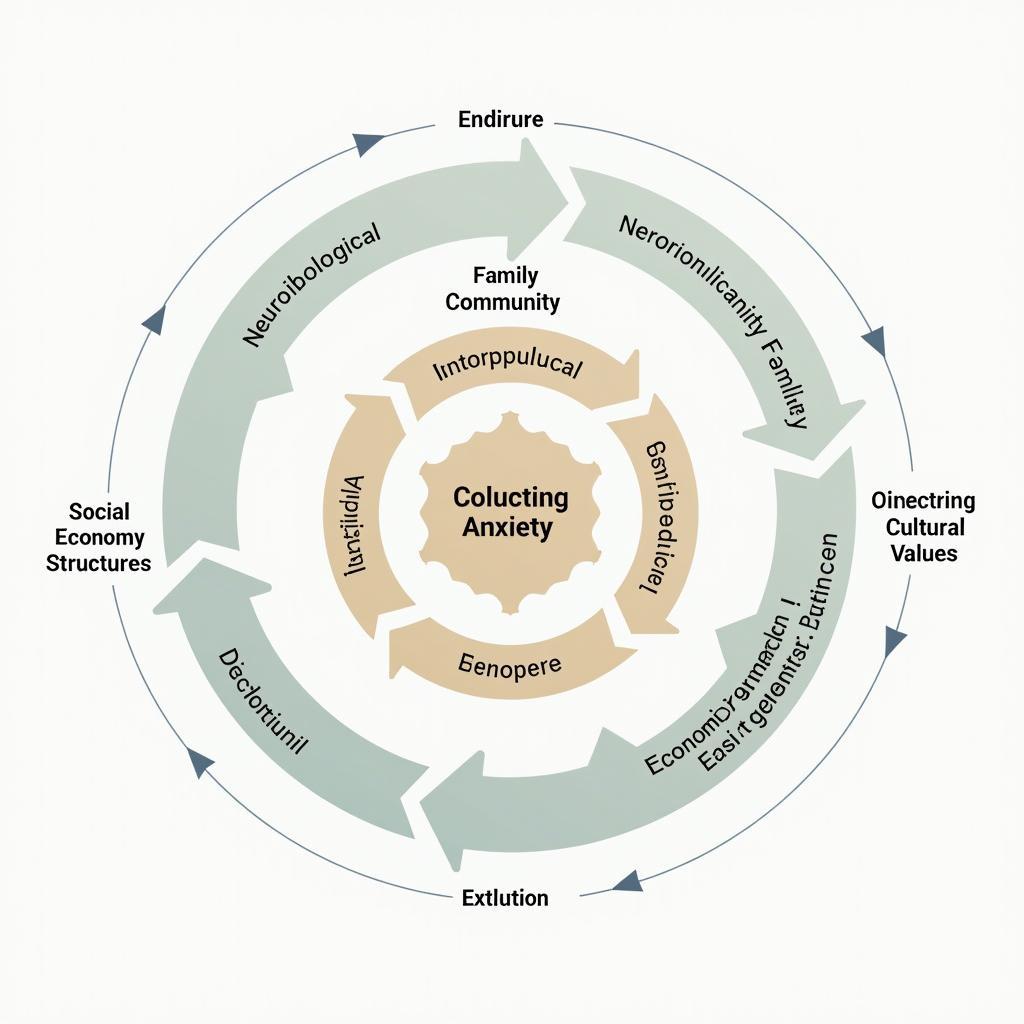 Các yếu tố văn hóa và xã hội ảnh hưởng đến sự phát triển và biểu hiện của rối loạn lo âu
Questions 27-31: Multiple Choice
Choose the correct letter, A, B, C, or D.
-
According to the passage, higher anxiety rates in Western societies may be partly due to
A. better diagnostic tools than other countries
B. genetic differences between populations
C. social structures that undermine wellbeing
D. inadequate medical training -
The expansion of the DSM diagnostic categories has been criticised because it
A. makes diagnosis more difficult for doctors
B. may reflect commercial interests rather than purely scientific progress
C. reduces the number of people who can receive treatment
D. eliminates all traditional approaches to mental health -
Acceptance and Commitment Therapy differs from traditional CBT by
A. completely rejecting all cognitive-behavioural principles
B. focusing on accepting anxiety rather than eliminating it
C. requiring much longer treatment duration
D. being more expensive than other therapies -
Social prescribing involves
A. prescribing multiple medications simultaneously
B. recommending social activities instead of or alongside medical treatment
C. forcing patients to join support groups
D. eliminating all conventional medical treatments -
The passage suggests that epigenetic research shows
A. anxiety cannot be inherited at all
B. only direct trauma causes anxiety
C. trauma effects may be transmitted across generations
D. genetic factors are irrelevant to anxiety
Questions 32-36: Matching Features
Match each research finding or concept (Questions 32-36) with the correct source or field (A-G). You may use any letter more than once.
A. Epidemiology
B. Cultural anthropology
C. History of psychiatry
D. Neuroscience
E. Epigenetics
F. Digital technology studies
G. Social prescribing research
- Different cultures have alternative frameworks for understanding anxiety
- Trauma experiences can alter gene expression across generations
- Anxiety prevalence varies significantly between cultures
- The diagnostic manual has expanded dramatically over time
- Community activities can produce outcomes comparable to conventional treatments
Questions 37-40: Short-answer Questions
Answer the questions below. Choose NO MORE THAN THREE WORDS from the passage for each answer.
- What type of bonds have historically provided emotional security according to the passage?
- What psychological concept involves the fear of missing out on experiences?
- What term describes interventions that address root causes of anxiety rather than just symptoms?
- At how many levels does the passage state anxiety operates simultaneously?
Answer Keys – Đáp Án
PASSAGE 1: Questions 1-13
- B
- C
- B
- C
- B
- TRUE
- FALSE
- NOT GIVEN
- TRUE
- omega-3 fatty acids
- progressive muscle relaxation
- perspectives
- mental health professional
PASSAGE 2: Questions 14-26
- YES
- NO
- NO
- YES
- NOT GIVEN
- D (Paragraph 4)
- H (Paragraph 8)
- B (Paragraph 2)
- G (Paragraph 7)
- E (Paragraph 5)
- connectivity
- false alarms
- fMRI / functional magnetic resonance imaging
PASSAGE 3: Questions 27-40
- C
- B
- B
- B
- C
- B
- E
- A
- C
- G
- communal bonds / traditional support networks
- FOMO / fear of missing out
- upstream interventions
- multiple levels / four (levels)
Giải Thích Đáp Án Chi Tiết
Passage 1 – Giải Thích
Câu 1: B
- Dạng câu hỏi: Multiple Choice
- Từ khóa: “fight or flight” response, originally evolved
- Vị trí trong bài: Đoạn 2, dòng 4-6
- Giải thích: Bài đọc nói rõ “When our ancestors encountered a predator, this response gave them the energy and alertness needed to either confront the threat or escape from it.” Đây là paraphrase của “deal with dangerous predators”. Các đáp án khác không được đề cập trong ngữ cảnh tiến hóa ban đầu.
Câu 2: C
- Dạng câu hỏi: Multiple Choice
- Từ khóa: CBT, based on
- Vị trí trong bài: Đoạn 3, dòng 2-3
- Giải thích: Câu “CBT is based on the idea that our thoughts, feelings, and behaviours are interconnected” trực tiếp trả lời câu hỏi này. “Interconnected” được paraphrase thành “connected” trong đáp án C.
Câu 6: TRUE
- Dạng câu hỏi: True/False/Not Given
- Từ khóa: everyone experiences anxiety
- Vị trí trong bài: Đoạn 1, dòng 2-3
- Giải thích: Bài viết khẳng định “everyone experiences it at some point in their lives”, khớp hoàn toàn với statement.
Câu 7: FALSE
- Dạng câu hỏi: True/False/Not Given
- Từ khóa: modern humans, same physical threats, ancestors
- Vị trí trong bài: Đoạn 2, dòng 7-8
- Giải thích: Bài viết nói “In modern life, however, we rarely face such immediate physical dangers”, điều này mâu thuẫn trực tiếp với statement rằng con người hiện đại đối mặt với cùng các mối đe dọa vật lý.
Câu 10: omega-3 fatty acids
- Dạng câu hỏi: Sentence Completion
- Từ khóa: foods containing, reduce anxiety, research
- Vị trí trong bài: Đoạn 5, dòng cuối
- Giải thích: Câu “Some studies suggest that foods rich in omega-3 fatty acids… may have anxiety-reducing properties” cung cấp đáp án trực tiếp.
Câu 12: perspectives
- Dạng câu hỏi: Sentence Completion
- Từ khóa: talking to friends, emotional relief, different
- Vị trí trong bài: Đoạn 7, dòng 2-3
- Giải thích: Bài viết nói “provide emotional relief and different perspectives on problems”, từ “perspectives” phù hợp với giới hạn hai từ.
Passage 2 – Giải Thích
Câu 14: YES
- Dạng câu hỏi: Yes/No/Not Given
- Từ khóa: earlier models, too simplistic
- Vị trí trong bài: Đoạn 1, dòng 4-5
- Giải thích: Tác giả viết “Unlike earlier simplistic models that viewed anxiety as solely a psychological phenomenon”, rõ ràng thể hiện quan điểm rằng các mô hình trước đây quá đơn giản hóa.
Câu 15: NO
- Dạng câu hỏi: Yes/No/Not Given
- Từ khóa: amygdala, anxiety disorders, responds normally
- Vị trí trong bài: Đoạn 2, dòng 4-6
- Giải thích: Bài viết nói rõ “in individuals with anxiety disorders, the amygdala tends to be hyperactive and oversensitive”, điều này trái ngược với “responds normally”.
Câu 16: NO
- Dạng câu hỏi: Yes/No/Not Given
- Từ khóa: benzodiazepines, suitable, many years
- Vị trí trong bài: Đoạn 4, dòng 5-6
- Giải thích: Tác giả khẳng định “these medications carry risks of dependence and tolerance, making them less suitable for long-term use”, mâu thuẫn trực tiếp với statement.
Câu 17: YES
- Dạng câu hỏi: Yes/No/Not Given
- Từ khóa: mindfulness practice, physically change brain structure
- Vị trí trong bài: Đoạn 5, dòng 4-5
- Giải thích: Bài viết nói “regular mindfulness practice can physically alter brain structure”, đồng ý hoàn toàn với statement.
Câu 19: D (Paragraph 4)
- Dạng câu hỏi: Matching Information
- Từ khóa: specific medications, how they work, reduce anxiety
- Vị trí trong bài: Đoạn 4
- Giải thích: Đoạn 4 giải thích chi tiết về GABA, benzodiazepines, serotonin và SSRIs hoạt động như thế nào để giảm lo âu.
Câu 21: B (Paragraph 2)
- Dạng câu hỏi: Matching Information
- Từ khóa: brain region, threat detector
- Vị trí trong bài: Đoạn 2
- Giải thích: Đoạn 2 mô tả amygdala như “the brain’s threat detection system”, chính xác khớp với “threat detector”.
Câu 24: connectivity
- Dạng câu hỏi: Summary Completion
- Từ khóa: brain scans, reduced, between two brain regions
- Vị trí trong bài: Đoạn 3, dòng 6-7
- Giải thích: Câu “people with chronic anxiety often exhibit reduced connectivity between these two regions” cung cấp từ cần điền.
Câu 25: false alarms
- Dạng câu hỏi: Summary Completion
- Từ khóa: differentiate, real threats
- Vị trí trong bài: Đoạn 3, dòng 8-9
- Giải thích: Bài viết nói về “distinguish between genuine threats and false alarms”, từ “false alarms” là đáp án chính xác.
Passage 3 – Giải Thích
Câu 27: C
- Dạng câu hỏi: Multiple Choice
- Từ khóa: higher anxiety rates, Western societies, partly due to
- Vị trí trong bài: Đoạn 2, dòng 3-6
- Giải thích: Bài viết giải thích “the very structure of modern capitalist societies—characterised by intense competition, social atomisation, economic precarity… creates conditions uniquely conducive to anxiety”, paraphrase của đáp án C “social structures that undermine wellbeing”.
Câu 28: B
- Dạng câu hỏi: Multiple Choice
- Từ khóa: expansion of DSM, criticised
- Vị trí trong bài: Đoạn 3, dòng 5-8
- Giải thích: Tác giả nói “Critics argue that this diagnostic proliferation reflects not simply improved scientific understanding but also commercial interests, particularly those of pharmaceutical companies”, khớp với đáp án B.
Câu 29: B
- Dạng câu hỏi: Multiple Choice
- Từ khóa: ACT, differs from traditional CBT
- Vị trí trong bài: Đoạn 5, dòng 2-4
- Giải thích: “ACT… diverges from traditional CBT by emphasising psychological flexibility rather than symptom reduction. ACT encourages individuals to accept rather than struggle against anxiety” rõ ràng là paraphrase của đáp án B.
Câu 32: B (Cultural anthropology)
- Dạng câu hỏi: Matching Features
- Từ khóa: different cultures, alternative frameworks
- Vị trí trong bài: Đoạn 4, dòng 1-3
- Giải thích: “Cultural anthropologists have documented remarkable diversity in how different societies conceptualise and respond to experiences… understood through alternative frameworks”.
Câu 33: E (Epigenetics)
- Dạng câu hỏi: Matching Features
- Từ khóa: trauma, alter gene expression, generations
- Vị trí trong bài: Đoạn 8, dòng 3-5
- Giải thích: “Epigenetic studies suggest that trauma experiences can alter gene expression patterns transmitted across generations”.
Câu 37: communal bonds / traditional support networks
- Dạng câu hỏi: Short-answer Questions
- Từ khóa: bonds, historically provided emotional security
- Vị trí trong bài: Đoạn 2, dòng 6-7
- Giải thích: Bài viết nói về “dissolution of communal bonds that historically provided emotional security” hoặc “erosion of traditional support networks”.
Câu 38: FOMO / fear of missing out
- Dạng câu hỏi: Short-answer Questions
- Từ khóa: psychological concept, fear of missing out
- Vị trí trong bài: Đoạn 7, dòng 4-5
- Giải thích: Bài viết đề cập trực tiếp “fear of missing out (FOMO)” như một cơ chế gây lo âu mới.
Câu 39: upstream interventions
- Dạng câu hỏi: Short-answer Questions
- Từ khóa: term, address root causes, rather than symptoms
- Vị trí trong bài: Đoạn 9, dòng cuối
- Giải thích: Thuật ngữ “upstream interventions” được định nghĩa rõ ràng là “address root causes rather than merely treating symptoms”.
Câu 40: multiple levels / four (levels)
- Dạng câu hỏi: Short-answer Questions
- Từ khóa: how many levels, anxiety operates
- Vị trí trong bài: Đoạn 9, dòng cuối cùng
- Giải thích: Câu cuối nói “anxiety operates simultaneously at multiple levels—neurobiological, psychological, social, and political”, có thể trả lời là “multiple levels” hoặc đếm cụ thể “four”.
Từ Vựng Quan Trọng Theo Passage
Passage 1 – Essential Vocabulary
| Từ vựng | Loại từ | Phiên âm | Nghĩa tiếng Việt | Ví dụ từ bài | Collocation |
|---|---|---|---|---|---|
| excessive | adj | /ɪkˈsesɪv/ | quá mức, thái quá | when anxiety becomes excessive and persistent | excessive drinking, excessive worry |
| persistent | adj | /pəˈsɪstənt/ | dai dẳng, liên tục | excessive and persistent anxiety | persistent pain, persistent problem |
| physiological | adj | /ˌfɪziəˈlɒdʒɪkəl/ | thuộc sinh lý | physiological responses to anxiety | physiological changes, physiological effects |
| cognitive | adj | /ˈkɒɡnətɪv/ | thuộc nhận thức | cognitive behavioural therapy | cognitive function, cognitive development |
| distorted | adj | /dɪˈstɔːtɪd/ | bị bóp méo, sai lệch | distorted or irrational thoughts | distorted view, distorted perception |
| endorphins | n | /enˈdɔːfɪnz/ | endorphin (hormone tạo cảm giác tích cực) | releasing endorphins | release endorphins, natural endorphins |
| exacerbate | v | /ɪɡˈzæsəbeɪt/ | làm trầm trọng thêm | poor sleep can exacerbate anxiety | exacerbate the problem, exacerbate symptoms |
| caffeine | n | /ˈkæfiːn/ | caffeine (chất có trong cà phê) | consuming excessive amounts of caffeine | caffeine intake, reduce caffeine |
| progressive | adj | /prəˈɡresɪv/ | lũy tiến, từng bước | progressive muscle relaxation | progressive disease, progressive approach |
| counteract | v | /ˌkaʊntərˈækt/ | chống lại, đối kháng | counteracting the physical symptoms | counteract effects, counteract the influence |
| isolation | n | /ˌaɪsəˈleɪʃən/ | sự cô lập, biệt lập | reduce feelings of isolation | social isolation, live in isolation |
| qualified | adj | /ˈkwɒlɪfaɪd/ | có trình độ, đủ năng lực | qualified mental health professional | highly qualified, qualified teacher |
Passage 2 – Essential Vocabulary
| Từ vựng | Loại từ | Phiên âm | Nghĩa tiếng Việt | Ví dụ từ bài | Collocation |
|---|---|---|---|---|---|
| neurobiological | adj | /ˌnjʊərəʊbaɪəˈlɒdʒɪkəl/ | thuộc thần kinh sinh học | neurobiological mechanisms | neurobiological factors, neurobiological research |
| multifaceted | adj | /ˌmʌltiˈfæsɪtɪd/ | nhiều mặt, đa diện | multifaceted interaction | multifaceted problem, multifaceted approach |
| amygdala | n | /əˈmɪɡdələ/ | hạch hạnh nhân (vùng não) | the amygdala functions as threat detector | amygdala activation, amygdala response |
| hyperactive | adj | /ˌhaɪpərˈæktɪv/ | quá hoạt động | hyperactive and oversensitive | hyperactive child, hyperactive thyroid |
| hypersensitivity | n | /ˌhaɪpəˌsensəˈtɪvəti/ | tính quá nhạy cảm | neurological hypersensitivity | hypersensitivity reaction, develop hypersensitivity |
| prefrontal cortex | n | /ˌpriːˈfrʌntəl ˈkɔːteks/ | vỏ não trước trán | the prefrontal cortex regulates emotions | prefrontal cortex development, prefrontal cortex activity |
| neurotransmitter | n | /ˌnjʊərəʊtrænzˈmɪtər/ | chất dẫn truyền thần kinh | neurotransmitters facilitate communication | neurotransmitter levels, neurotransmitter imbalance |
| benzodiazepine | n | /ˌbenzəʊdaɪˈæzəpiːn/ | benzodiazepine (thuốc an thần) | benzodiazepines work by enhancing GABA | benzodiazepine use, prescribe benzodiazepines |
| neuroplasticity | n | /ˌnjʊərəʊplæˈstɪsəti/ | tính dẻo thần kinh | the brain’s capacity for neuroplasticity | harness neuroplasticity, neuroplasticity research |
| mindfulness | n | /ˈmaɪndfəlnəs/ | chánh niệm, sự tỉnh thức | mindfulness-based interventions | mindfulness meditation, practice mindfulness |
| grey matter | n | /ɡreɪ ˈmætər/ | chất xám (não) | increasing grey matter density | grey matter volume, grey matter loss |
| extinction learning | n | /ɪkˈstɪŋkʃən ˈlɜːnɪŋ/ | học tập tắt lặng (tâm lý học) | weakening fear through extinction learning | extinction learning process, facilitate extinction learning |
| therapeutic alliance | n | /ˌθerəˈpjuːtɪk əˈlaɪəns/ | liên minh trị liệu | the therapeutic alliance between therapist and client | strong therapeutic alliance, build therapeutic alliance |
| pharmacogenetic | adj | /ˌfɑːməkəʊdʒəˈnetɪk/ | thuộc dược lý di truyền | pharmacogenetic testing | pharmacogenetic study, pharmacogenetic approach |
Passage 3 – Essential Vocabulary
| Từ vựng | Loại từ | Phiên âm | Nghĩa tiếng Việt | Ví dụ từ bài | Collocation |
|---|---|---|---|---|---|
| paradigm | n | /ˈpærədaɪm/ | mô hình tư duy, khuôn mẫu | evolution of treatment paradigms | paradigm shift, dominant paradigm |
| sociocultural | adj | /ˌsəʊsiəʊˈkʌltʃərəl/ | thuộc văn hóa xã hội | sociocultural contexts | sociocultural factors, sociocultural environment |
| epidemiological | adj | /ˌepɪˌdiːmiəˈlɒdʒɪkəl/ | thuộc dịch tế học | epidemiological data | epidemiological study, epidemiological evidence |
| atomisation | n | /ˌætəmaɪˈzeɪʃən/ | sự phân tán, nguyên tử hóa | social atomisation | social atomisation, process of atomisation |
| precarity | n | /prɪˈkeərəti/ | tính bấp bênh, không ổn định | economic precarity | employment precarity, financial precarity |
| neoliberal | adj | /ˌniːəʊˈlɪbərəl/ | tân tự do (kinh tế) | neoliberal emphasis on achievement | neoliberal policies, neoliberal capitalism |
| medicalisation | n | /ˌmedɪkəlaɪˈzeɪʃən/ | y học hóa | medicalisation of anxiety | medicalisation of society, resist medicalisation |
| diagnostic proliferation | n | /ˌdaɪəɡˈnɒstɪk prəˌlɪfəˈreɪʃən/ | sự gia tăng các chẩn đoán | diagnostic proliferation in DSM | diagnostic proliferation problem, diagnostic proliferation concerns |
| somatic | adj | /səʊˈmætɪk/ | thuộc về cơ thể | somatic illnesses | somatic symptoms, somatic complaints |
| universalist | adj | /ˌjuːnɪˈvɜːsəlɪst/ | theo chủ nghĩa phổ quát | universalist assumptions | universalist approach, universalist perspective |
| psychological flexibility | n | /ˌsaɪkəˈlɒdʒɪkəl ˌfleksəˈbɪləti/ | sự linh hoạt tâm lý | emphasising psychological flexibility | develop psychological flexibility, psychological flexibility training |
| depoliticising | v | /diːpəˈlɪtɪsaɪzɪŋ/ | phi chính trị hóa | individualising and depoliticising problems | depoliticising issues, process of depoliticising |
| algorithmic amplification | n | /ˌælɡəˈrɪðmɪk ˌæmplɪfɪˈkeɪʃən/ | khuếch đại thuật toán | algorithmic amplification of content | algorithmic amplification effects, algorithmic amplification concerns |
| upward social comparison | n | /ˈʌpwəd ˈsəʊʃəl kəmˈpærɪsən/ | so sánh xã hội hướng lên | upward social comparison on social media | engage in upward social comparison, effects of upward social comparison |
| intergenerational transmission | n | /ˌɪntədʒenəˈreɪʃənəl trænzˈmɪʃən/ | sự truyền qua các thế hệ | intergenerational transmission of trauma | intergenerational transmission patterns, intergenerational transmission effects |
| epigenetic | adj | /ˌepɪdʒəˈnetɪk/ | thuộc biểu sinh | epigenetic studies | epigenetic changes, epigenetic mechanisms |
| upstream interventions | n | /ˈʌpstriːm ˌɪntəˈvenʃənz/ | can thiệp nguồn gốc | upstream interventions address root causes | implement upstream interventions, focus on upstream interventions |
| clinically significant | adj | /ˈklɪnɪkəli sɪɡˈnɪfɪkənt/ | có ý nghĩa lâm sàng | clinically significant impairment | clinically significant improvement, clinically significant difference |
Kết Luận
Chủ đề lo âu và các phương pháp giảm căng thẳng là một nội dung vô cùng quan trọng và thường xuyên xuất hiện trong IELTS Reading. Qua bộ đề thi mẫu này, bạn đã được luyện tập với 3 passages tăng dần độ khó, từ bài đọc giới thiệu cơ bản về lo âu và các kỹ thuật quản lý đơn giản, qua bài đọc khám phá cơ chế thần kinh học và các phương pháp điều trị hiện đại, cho đến bài đọc học thuật phân tích chiều hướng văn hóa xã hội và sự phát triển của các mô hình điều trị.
Tổng cộng 40 câu hỏi với 8 dạng bài khác nhau đã giúp bạn làm quen với format thi thật và rèn luyện các kỹ năng cần thiết như scanning, skimming, và detailed reading. Phần giải thích đáp án chi tiết không chỉ cung cấp đáp án chính xác mà còn hướng dẫn bạn cách xác định vị trí thông tin, nhận diện paraphrase và phân biệt các đáp án nhiễu.
Bộ từ vựng phong phú được tổng hợp từ 3 passages bao gồm hơn 40 từ vựng học thuật quan trọng với phiên âm, nghĩa tiếng Việt, ví dụ thực tế và collocations hữu ích. Việc học thuộc và vận dụng những từ vựng này không chỉ giúp bạn hiểu bài đọc tốt hơn mà còn nâng cao vốn từ tổng thể cho cả bài thi Writing và Speaking.
Hãy nhớ rằng việc luyện tập thường xuyên với các đề thi chất lượng như thế này là chìa khóa để cải thiện band điểm Reading. Đừng chỉ dừng lại ở việc làm bài và kiểm tra đáp án, mà hãy dành thời gian phân tích từng câu hỏi, hiểu rõ lý do tại sao một đáp án đúng và các đáp án khác sai. Việc này sẽ giúp bạn xây dựng tư duy phản biện và kỹ năng đọc hiểu sâu sắc cần thiết để chinh phục IELTS Reading band điểm cao.
Chúc bạn ôn tập hiệu quả và đạt được mục tiêu band điểm mơ ước trong kỳ thi IELTS sắp tới!